Bali is one of the most popular travel destinations in the world,as this island which is known as the ‘Island of the Gods. Surrounded by azure seas and edged with golden beaches, Bali is of course a surfer’s paradise.As well as sea and sand however Bali has a huge number of other attractions to enjoy such as temples, caves, waterfalls and markets.If you like adventure activities, then you also won’t be disappointed on a trip here, and you can expect a fantastic array of water sports, muck and wreck diving, and the chance fly through the jungle canopy like Tarzan.
Tourists may enjoy an idyllic day at the beach, surf, dive, take a casual boat ride to gaze at the dolphins, explore the many beautiful temples, the local markets and the waterfalls, or go to the silent yoga retreats. Bali has been the subject of so many travel journals and has been famously alluded to in many works of literature, as a place of true beauty, and yet words always fail to capture the captivating magic.Bali, Indonesia’s most famous island, is located to the west of Java in the Lesser Sunda Islands. It is world-renowned for its scenic rice terraces, fragrant cuisine, stunning beaches and a galore of culture and tradition. With its elaborate temples some of the world’s best coral reefs, waterfalls and retreats. Bali combines leisure and adventure impeccably.
UBUD RICE FIELDS
Kuta is a beach and resort area in the south of the island of Bali, Indonesia. One of Bali’s first tourist developments, it’s best known for its party-centric atmosphere and surfing in the Indian Ocean.Sunbathing and people-watching are also popular along the broad sands of Kuta Beach, which stretches north toward low-key Legian and upscale Seminyak resort areas. Shoppers head to Kuta’s large malls, and vendors sell everything from jewelry to cold beer.Waterbom water park is filled with slides and pools set amid tropical landscaping. The Bali Bombing Memorial stands on the site of the 2002 terror attacks that targeted 2 nightclubs.
KUTA BEACH
Bali was the host of MISS WORLD 2013. It was the first time Indonesia hosted an international beauty pageant.
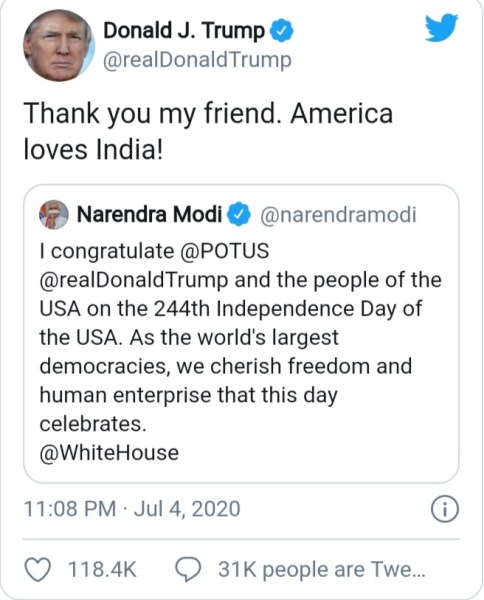
Trump thanks ‘friend’ PM Modi for Independence Day greetings, says ‘America loves India’.
Trump thanks ‘friend’ PM Modi for Independence Day greetings, says ‘America loves India’
US President Donald Trump on Saturday responded to Prime Minister Narendra Modi’s tweet greeting him and the people of the United States on the country’s 244th Independence Day. Thanking PM Modi, Trump said, “America loves India.”
The two leaders are known to share an easy and increasingly close relationship, and often refer to each other as ‘friends’.
Google removes apps that stole your Facebook credentials: Here’s the list
Google has reportedly removed 25 applications from its Play Store after French cyber-security firm Evina claimed that they stole Facebook credentials of users. The firm even mentioned that by the time they were taken down, these 25 apps were downloaded some 2.34 million times in total. mentioned was that these apps were created by the same group.
And while all of them seemed different in offerings and features, they served the same purpose under the hood. These apps were from different genres, as reported by ZDnet. While some were step counters, image editors, video editor apps, others were wallpaper apps, flashlight applications, file managers, and mobile games.
Here is the list of apps that have now been removed from the Google Play Store:
Super Wallpapers Flashlight
Padenatef
Wallpaper Level
Contour level wallpaper
Iplayer & iwallpaper
Video maker
Color Wallpapers
Pedometer
Powerful Flashlight
Super Bright Flashlight
Super Flashlight
Solitaire
Accurate scanning of QR code
Classic card game
Junk file cleaning
Synthetic Z
File Manager
Composite Z
Screenshot capture
Daily Horoscope Wallpapers
Wuxia Reader
Plus Weather
Anime Live Wallpaper
iHealth step counter
Com.tyapp.fiction
Out of these, Super Wallpapers Flashlight and Padenatef were the only apps that were downloaded 500,000 times. Most were downloaded 100,000 times while the last three were downloaded roughly 100 times.
These apps included malicious code that detected which app is opened in the background and foreground. If it was Facebook, the malicious app will show an overlaid web browser window on top of the Facebook app and load the fake login page. The user then gives his/her credentials thinking of it as a legit page.
All these apps were reported to Google in May and the company removed these apps earlier this month. Although the Play Store is now slightly more secure with these apps gone, what however still remains a question is that despite Google’s stringent processes of approving apps, how are such app still making their way to the Play Store.
For the unemployed person,it is often a damaging affront to human dignity and sometimes a catastrophic blow to family life. It falls most heavily on the young,the semiskilled and unskilled,the black person,the older worker and the underemployed person in a low income rural area who is denied the option of securing more rewarding urban employment.
The concentrated incidence of unemployment among specific groups in the population means far greater costs to society than can be measured simply in hours of involuntary idleness or dollars of income lost. Thus hope in coming years employment should be in peak and human beings can be out of depression.
India is one of the oldest civilizations in the world, spanning a period of more than 4000 years, and witnessing the fusion of several customs and traditions, which are reflective of the rich culture and heritage of the Country.The history of the nation gives a glimpse into the magnanimity of its evolution.This transformation of the nation instills a sense of national pride in the heart of every Indian within the Country and abroad, and this section is a modest attempt at keeping its flame alive.
It is a Peninsula Island which means it is surrounded by oceans from three sides such as the Bay of Bengal in the east, the Arabian Sea in the west and the Indian ocean in the South. The National animal of India is a tiger, the national bird is a peacock, national flower is a lotus, national fruit is mango and national sports is hockey.India is a land of Lord Shiva and Lord Krishna, the dream of Buddha and Mahatma Gandhi. India is a country where the people are of different castes, creed, religions, and cultures live together and they speak different languages. It is the main reason why India is said to be a country of “Unity in Diversity”.India is well known for its spirituality, philosophy, science, and technology.It is also famous for farming and agriculture which is the backbone of the country, it uses the produced food grains and other items of their own country.The agricultural land mostly produces sugarcane, cotton, jute, rice, wheat, cereals, and many other crops.
It is rich in monuments, tombs, churches, historical places of architecture, etc. are the source of income to it. India is a place where Taj Mahal,the golden temple, Qutab Minar, Red fort, Ooty, Nilgiris, Kashmir, Khajuraho,etc. are wonders exist in the country. It is the country of great rivers, mountains, valleys, lakes, and oceans. Hindi is the national language of India. In India there are 29 states and 7 union territories, in 29 states there are many small villages and cities.
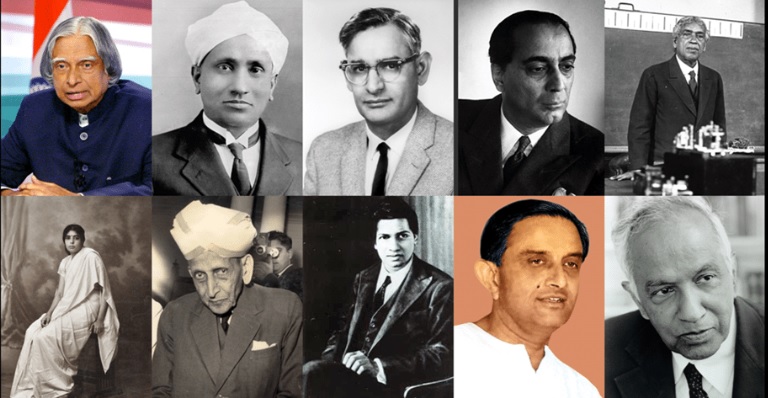
India is a country of great leaders and freedom fighters. The Indian soldiers are on borders to protect our India from terrorists. The great leaders like Chhatrapati Shivaji, Mahatma Gandhi, Jawaharlal Nehru, Dr. Babasaheb Ambedkar, etc., the great scientists like Dr. Homi Bhabha, Dr. C.V Raman, Dr. Naralikar, etc., the great reformers like Mother Teresa, Pandurangashastri Alphaville,these are great peoples took birth in India.In her lap breathe the happy followers of the various religions of the world. We have a unique culture that has developed over the centuries.
Business management and entrepreneurship are improving rapidly nowadays and one of the main roles is improving with it also, which is the line manager. The role of line manager became very important in the structure of the business entity. Line manager appeared from the business term “Line Management”. In the real life line manager normally in charge of activities and labour’s output or it is responsible for a specific product line, for example, tea production and he cannot make any alterations in production of coffee, because normally it will have its own line manager who is responsible for this product line. The functions of the line manager may increase and interfere with other management line to increase the success of an entity.
The most important skills of the manager are cooperation with all staff, leadership, motivation, planning and setting aims for the product line in which he operates and have high knowledge combined with skills, so he can use all what he or she knows effectively to approach they targets.The line manager must be a leader, because if he has no leadership no one would listen to him and everyone will do what they think is right, so they will create a chaos in the workplace, which can dramatically effect of the company, so the leadership of the manager is one of the most important skills which every manager must have.Another important skill for the line manager is planning and setting goals, which will ease the work of employee, because they will know what, is asked from him. Also, it helps to avoid demotivation in cases if the employee did not reach the output target, because he even did not know what was asked from him.These skills are essential in order to help the entity to succeed, however, there are lots of other skills which can boost the efficiency of the line manager such as: confidence,respect, employees can trust him, making decisions in critical circumstances, good relationship with everyone and can guide and inspire his or her workers.
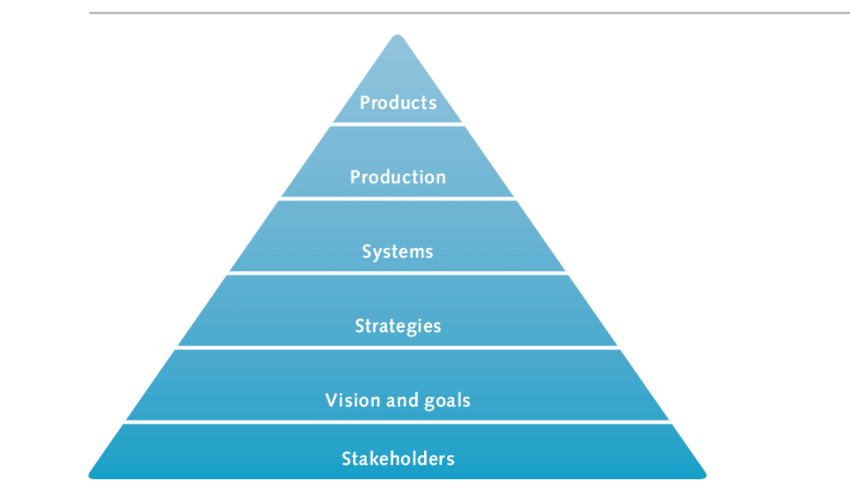
BUSINESS MANAGEMENT PYRAMID
The motivation has a direct influence on the performance of the entity and there are different theories which describe how motivation can be improved, but only few of them will be discussed.Taylor (1917) stated that employees do not enjoy their work, so they must be supervised. Also, specific training lessons should be provided to improve the efficiency of an employee and they should be paid according how many items they had produced which will force them to work more and maximize productivity. This was one of the best theories for a long time.
However, this method was close to autocratic style of management, so it was not suitable for everyone for various reasons because of diversity of cultures. Mayo’s theory is opposite to Taylor’s because he thought that money is not motivating people and aimed on motivating via employees social needs at the workplace. Mayo (1949) made a research on it and concluded that individuals are best motivated when there is teamwork, freedom of communication among themselves and involvement of manager himself in working lives. The pyramid consisted of five levels of needs of an individual. They believed that first need which needs to be fulfilled is physiological needs and physiological needs are hunger and thirst.
We live in a society comprised of two classes called the rich and the poor with a lot of differences between them. These are also referred to as the dos and don’ts of the society. The rich make up barely 40% of the population and have control over 60% of the resources while 60% of the population makes use of the remaining 40% of the resources. However, the divide between rich and poor, despite all ‘isms’ such as communism, capitalism, and socialism keeps growing all the time making the condition of the poor worse than it has all along been. However, the financial condition is not the only difference between the rich and the poor.
• Control of Life:
• Rich believe they are in control of their lives.
• Poor feel they are subject to various of life and life controls events taking place in their lives.
• Money:
• Investing in schemes to make more money is like a game for rich.
• The poor are all the time terrified of investing in the stock market with the result that more often than not, they lose money.
• It is apparent to all that the poor are playing not to lose money while the rich are playing to win more.
• Opportunities and Obstacles:
• Rich people see the opportunities while poor see the obstacles first.
• Poor keep thinking how they will overcome these obstacles whereas rich keep their focus on opportunities as they have the resources to overcome obstacles easily.
• Dreaming:
• Rich dream big and, therefore, strike rich.
• Poor dream small with the result that they have to remain content with whatever they get.
• Doers and Dreamers:
• Rich are doers; they take concrete steps to fulfill their dreams.
• Poor just dream about their dreams.
• Company:
• The company of rich people includes rich and successful.
• Poor people have the company of unsuccessful and daydreamers.
• This difference in company proves vital in deciding the future of the rich and the poor.
Pudukkottai was a kingdom and later a princely state in British India, which existed from 1680 until 1948.1913 map of the Madras Presidency showing location of Pudukkottai State.
1913 map of the Madras Presidencyshowing location of Pudukkottai State
The Kingdom of Pudukkottai was founded in about 1680 as a feudatory of Ramnad and grew with subsequent additions from Tanjore, Sivaganga and Ramnad. One of the staunch allies of the British East India Company in the Carnatic, Anglo-Mysore and Polygar wars, the kingdom was brought under the Company’s protection in 1800 as per the system of Subsidiary Alliance. The state was placed under the control of the Madras Presidency from 1800 until 1 October 1923, when the Madras States Agency was abolished, and until 1948 it was under the political control of the Government of India.
Pudukkottai State covered a total area of 1,178 square miles (3,050 km2) and had a population of 438,648 in 1941. It extended over the whole of the present-day Pudukkottai district of Tamil Nadu (with the exception of Aranthangi taluk which was then a part of Tanjore district). The town of Pudukkottai was its capital. The ruler of Pudukkottai was entitled to a 17-gun salute.
Geography.
The state of Pudukkottai extended from 10 degrees 7′ to 10 degrees 44’N latitudes and 78 degrees 25′ and 79 degrees 12′ E longitudes.and covered a total area of 1,178 square miles (3,050 km2). It extended for 52 miles (84 km) from east to west and 41 miles (66 km) from north to south.The state was bounded by Trichinopoly district to the west, Tanjore district to the east and south-east and Sivaganga estate of Madura district to the south.
The kingdom did not have fixed boundaries originally and was called “Tondaiman country” or “Tondaiman’s woods” until the end of 18th century. The kingdom started to have fixed boundaries since early 19th century. The easternmost point of Pudukkottai state was located 12 miles (19 km) from the sea. When the Pudukkottai district was formed in 1974 long after its incorporation into the Republic of India, the coastal Aranthangi taluk was detached from Tanjore district and merged with the new district.
For administrative purposes, the state was divided into three taluks: Alangudi, Kulathurand Thirumayam, each under the authority of a Tahsildar who was responsible for land revenue. There was also a few semi-autonomous zamindaris : Karambakadu, Nagaram, Palayavanam, Senthankudi and Seriyalur.
Demography..
As of 1931, the princely state of Pudukkottai had a total population of 400,694 with a population density of 340 people per square mile. Ponnamaravathi firka was the most densely populated with 498 people per square mile while Nirpalani was the most sparsely populated with 213 people per square mile.There were 435 towns and villages – 426 of them with a population less than 5,000 and nine – Pudukkottai, Ponnamaravathi, Varpet, Ramachandrapuram, Arimalam, Thirumayam, Alangudi, Kiranur and Pillamangalam-Alagapuri with population greater than 5,000.The male literacy rate was 21.62 percent and the female literacy rate, 1.87 percent.Between 1925 and 1929, the population of the state dropped by over 65 percent as more than 53,000 people left Pudukkottai for neighbouring districts due to widespread plague and famine.
Religion:
The kingdom was predominantly Hindu. However, there were significant Muslim and Christian populations. The affairs of Hindu temples was administered by a Devasthanams Department established in 1897.
According to the 1901 census, there were 353,723 Hindus who formed 93% of the state’s population. Muslims who numbered 12,268 formed 3.2% of the population while the Christians numbering 14,449 formed 3.8% of the population.In 1931, there were 367,348 Hindus (91.7 percent), 15,194 Muslims (3.8 percent) and 17,960 Christians (4.5 percent).
Languages :
The majority of the population spoke Tamil as their mother tongue. According to the 1931 census, Tamil was spoken by 378,741 people or 94.52 percent of the population as their mother tongue.Other languages spoken as mother-tongue included Telugu (12,250 speakers, 3.05%), Kanarese (5,118, 1.27%), Hindustani or Urdu (1,993, 0.49%), Saurashtri (1,172, 0.29%), Marathi (660, 0.16%), Malayalam (522, 0.13%), Hindi (187, 0.04%), Arabic (23, 0.005%), English (22, 0.005%), Danish (2, 0.0005%), Malay (1, 0.0003%), Sinhalese (1, 0.0003%), Konkani (1, 0.0003%) and Spanish (1, 0.0003%). The natives of Pudukkottai spoke Tamil which was also an official language of the state alongside English. Telugu-speakers were descendants of military chieftains who had migrated during the rule of the Vijayanagar Empire and the Madurai Nayak kingdom. Kanarese or Kannada was spoken largely by the Kuruba shepherds who had migrated from the Mysore kingdom.However, the Kurubars spoke a Kanarese dialect of their own with a heavy admixture of Tamil words.Hindusthani or Urdu was used by Pathani Muslims while Saurasthri and Marathi were spoken by the Saurashtra and Thanjavur Marathi migrants.
Education is an effort of the senior people to transfer their knowledge to the younger members.Hence an institution, plays a vital role in integrating an individual with the society and in maintaining the culture.The influence exercised by the adult generation upon those who are not yet ready for adult life.Society can survive only if there exists among its members a sufficient degree of homogeneity. A child through education learns basic rules, regulations, norms and values of society.Education thus is an essential prerequisite of modernization. It enables people to know the world beyond their own surroundings. It also transforms them to become rationalist or humanist in outlook and world view.
The traditional education system of India was quite different from the contemporary one. In traditional Indian society, the number of educational institutions were too small and the content of education was esoteric and essentially related with religion, philosophy, metaphysics and scriptural subjects.The education was confined to the ‘twice-born’ castes and the upper classes.The lower castes, particularly the scheduled castes, were denied education. Shisha Mandirs also have religion and tradition as parts of curriculum.
Modern education is exoteric, open and liberal. The world-view is scientific-rational; the theme consists of freedom, equality, humanism and denial of faith in dogma and superstitions. Science and technology, grammar and literature, history and culture, geography and ecology comprise the vast range of subjects which are taught in schools, colleges and universities.The modern education lays emphasis on the subjects like freedom, nationality, law, human rights, democracy. The other parts of education are the co-curricular and extra-curricular activities, which are often organized for total personality development of an individual.
The modern education is change-oriented and courses are modified time and again corresponding to the changes taking place in society with the needs of the changing situations in the wake of fast-changing industrial society.The present industrial society has opened up a multiplicity of occupations and professions and each one of them is associated with scientific knowledge and skills.The modern education fulfills needs of the industrial economy. A vast range of subjects like medicine, health, engineering, management etc, have become hot areas of professionalization and specialization at present.
The life of most of the working people basically revolves around their office and work. We go to huge buildings, sit at our desks all day, immerse ourselves in those laptops, and try to work relentlessly. Even when we reach home, all we can think about is the deadlines and targets that we have to achieve at work and what steps we are going to follow the next day to complete the tasks. Since most of us spend the majority of our time at work, it is given that the workplace environment plays an important role in both, our physical health as well as our mental health.
A healthy workplace is identified as the one where individuals feel valued and heard; a place that provides a positive workspace, and shows respect for all its members. As an employee, a manager, or even a CEO, you never should feel the toxicity oozing out of the place you have made your second home. Whereas a negative working environment is generally associated with depression and anxiety, harassment, and bullying among people in their prime years.
Risks to Mental Health at Workplace
Workplace Stress – Workplace stress is caused due to rigid working hours. It could also be when the employees are unclear about the organizational goals they have to achieve and the tasks they have to accomplish or there is limited participation of employees in the decision – making and they have little or no control over their area of work.
Lack of support – Colleagues often don’t support each other in decision making, there is poor communication between them. Even unproductive management practices and leadership qualities affect the employees in an organization.
Inadequate health and safety policies – Managers and leaders often neglect the health and safety of their employees by overlooking the provision of necessary health policies.
Can we create a Mentally Healthy Workspace Environment?
In reality, creating a mentally healthy workspace environment is not as difficult as it seems. Good mental health is the key requirement for workplace wellness.
Mental health should be promoted; there should be awareness and employees and employers should be able to talk freely about it.
Employees should be provided with a clean, functional, and well-lit space and have a good working relationship with all staff. Employees should feel respected, appreciated, incentivized, and rewarded. Signs of intimidation, bullying, sexual harassment, and fear should be immediately checked out and necessary action taken.
If a person has taken some measures to improve his mental health, others should support him. They could even take inspiration from him, and work on their own mental health.
Counseling sessions could be organized for the employees letting them know where they could find help if required.
There should be a provision of a comprehensive health insurance plan including smoking-cessation, weight-loss, and substance abuse programs.
It takes two to make a healthy workplace. Employees should be in a position to be held accountable for their actions. They should come with a “can-do” attitude and be willing to support each other as well as management.
10 Healthy Lifestyle Tips for Adults Last Updated :
1.Eat a variety of foods.
2.Base your diet on plenty of foods rich in carbohydrates.
3.Replace saturated with unsaturated fat.
4.Enjoy plenty of fruits and vegetables.
5.Reduce salt and sugar intake.
6.Eat regularly, control the portion size.
7.Drink plenty of fluids.
8.Maintain a healthy body weight.
9.Get on the move, make it a habit!
10.Start now! And keep changing gradually.
Eat a variety of food:. For good health, we need more than 40 different nutrients, and no single food can supply them all. It is not about a single meal, it is about a balanced food choice over time that will make a difference!
A high-fat lunch could be followed by a low-fat dinner. After a large meat portion at dinner, perhaps fish should be the next day’s choice?
Base your diet on plenty of foods rich in carbohydrates: About half the calories in our diet should come from foods rich in carbohydrates, such as cereals, rice, pasta, potatoes, and bread. It is a good idea to include at least one of these at every meal. Wholegrain foods, like wholegrain bread, pasta, and cereals, will increase our fibre intake.
Replace saturated with unsaturated fat: Fats are important for good health and proper functioning of the body. However, too much of it can negatively affect our weight and cardiovascular health. Different kinds of fats have different health effects, and some of these tips could help us keep the balance right:
We should limit the consumption of total and saturated fats (often coming from foods of animal origin), and completely avoid trans fats; reading the labels helps to identify the sources. Eating fish 2-3 times a week, with at least one serving of oily fish, will contribute to our right intake of unsaturated fats. When cooking, we should boil, steam or bake, rather than frying, remove the fatty part of meat, use vegetable oils.
Enjoy plenty of fruits and vegetables: Fruits and vegetables are among the most important foods for giving us enough vitamins, minerals and fibre. We should try to eat at least 5 servings a day. For example, a glass of fresh fruit juice at breakfast, perhaps an apple and a piece of watermelon as snacks, and a good portion of different vegetables at each meal.
Reduce salt and sugar intake: A high salt intake can result in high blood pressure, and increase the risk of cardiovascular disease. There are different ways to reduce salt in the diet:
When shopping, we could choose products with lower sodium content. When cooking, salt can be substituted with spices, increasing the variety of flavours and tastes. When eating, it helps not to have salt at the table, or at least not to add salt before tasting. Sugar provides sweetness and an attractive taste, but sugary foods and drinks are rich in energy, and are best enjoyed in moderation, as an occasional treat. We could use fruits instead, even to sweeten our foods and drinks.
Eat regularly, control the portion size: Eating a variety of foods, regularly, and in the right amounts is the best formula for a healthy diet.
Skipping meals, especially breakfast, can lead to out-of-control hunger, often resulting in helpless overeating. Snacking between meals can help control hunger, but snacking should not replace proper meals. For snacks, we could choose yoghurt, a handful of fresh or dried fruits or vegetables (like carrot sticks), unsalted nuts, or perhaps some bread with cheese.
Paying attention to portion size will help us not to consume too much calories, and will allow us to eat all the foods we enjoy, without having to eliminate any.
Cooking the right amount makes it easier to not overeat. Some reasonable serving sizes are: 100 g of meat; one medium piece of fruit; half a cup of raw pasta. Using smaller plates helps with smaller servings. Packaged foods, with calorie values on the pack, could aid portion control. If eating out, we could share a portion with a friend.
Drink plenty of fluids: Adults need to drink at least 1.5 litres of fluid a day! Or more if it’s very hot or they are physically active. Water is the best source, of course, and we can use tap or mineral water, sparkling or non-sparkling, plain or flavoured. Fruit juices, tea, soft drinks, milk and other drinks, can all be okay – from time to time.
Maintain a healthy body weight: The right weight for each us depends on factors like our gender, height, age, and genes. Being affected by obesity and overweight increases the risks of a wide range of diseases, including diabetes, heart diseases, and cancer.
Excess body fat comes from eating more than we need. The extra calories can come from any caloric nutrient – protein, fat, carbohydrate, or alcohol, but fat is the most concentrated source of energy. Physical activity helps us spend the energy, and makes us feel good. The message is reasonably simple: if we are gaining weight, we need to eat less and be more active!
Get on the move, make it a habit! Physical activity is important for people of all weight ranges and health conditions. It helps us burn off the extra calories, it is good for the heart and circulatory system, it maintains or increases our muscle mass, it helps us focus, and improves overall health well-being. We don’t have to be top athletes to get on the move! 150 minutes per week of moderate physical activity is advised, and it can easily become part of our daily routine. We all could:
use the stairs instead of the elevator, go for a walk during lunch breaks (and stretch in our offices in between) make time for a family weekend activity.
Start now! And keep changing gradually. Gradual changes in our lifestyle are easier to maintain than major changes introduced all at once. For three days, we could write down the foods and drinks we consume throughout the day, and make a note of the amount of movement we made. It won’t be difficult to spot where we could improve:
Skipping breakfast? A small bowl of muesli, a piece of bread or fruit, could help slowly introduce it into our routine Too few fruits and vegetables? To start with, we can introduce one extra piece a day. Favourite foods high in fat? Eliminating them abruptly could fire back, and make us return to the old habits. We can choose low fat options instead, eat them less frequently, and in smaller portions. Too little activity? Using the stairs daily could be a great frist move.
India Covid-19 update: 06:30 IST on Sunday 5 July (03:00 CEST)
According to the latest figures published by John Hopkins University,11,199,698 cases have been detected worldwide, with 528,953 deaths and 6,037,614 people recovered.
In India, there have been 648,315 cases confirmed, 18,655 people have died and 394,227 people have recovered from the virus.
WHO team in China next week to investigate coronavirus origins.
A team from the World Health Organisation will visit China next week to investigate the origins of coronavirus and its subsequent spread to human beings. In an exclusive interview with ANI, Dr Soumya Swaminathan, Chief Scientist, WHO said that a “thorough investigation” needs to be done into the origins of the virus.
“What is needed now is a good investigation going back before December to find out where and how it jumped from animal to human. Was there any intermediate animal or not or it directly jumped from bat to humans which are also possible? Bats have been implicated in other viral diseases — Nipah for example. It is possible it came directly. It is also possible that there was an intermediate animal-like in the case of SARS. That thorough investigation still needs to be done,” she said.
Animals, from the fruit fly to the mouse, are widely used in scientific research. They are crucial for allowing scientists to learn more about human biology and health, and for developing new medicines. The use of animals in scientific research has long been the subject of heated debate. On the one hand it is considered morally wrong to use animals in this way solely for human benefit.
On the other hand, removing animals completely from the lab would impede our understanding of health and disease, and consequently affect the development of new and vital treatments. Although sometimes these studies do reduce the quality of life of these animals, thorough regulations are in place to ensure that they are carried out in a humane way.
Millions of mice, rats, rabbits, primates, cats, dogs, and other animals are locked inside barren cages in laboratories across the country to be used in experiments. They languish in pain, suffer from extreme frustration, ache with loneliness, and long to be free. Instead, all they can do is sit and wait in fear for the next terrifying and painful procedure that will be performed on them. The lack of environmental enrichment and the stress of their living situation cause some animals to develop neurotic types of behavior, such as incessantly spinning in circles, rocking back and forth, pulling out their own fur, and even biting themselves. After enduring pain, loneliness, and terror, almost all of them are killed.
There are many non-animal research methods that can be used in place of animal testing. Not only are these non-animal tests more humane, they’re also more relevant to humans and have the potential to be cheaper and faster. Each of us can help prevent animal suffering and take a stand against vivisection by buying cruelty-free products, requesting alternatives to animal dissection at school, donating only to charities that don’t experiment on animals, and demanding the immediate implementation of humane, effective non-animal tests by government agencies and corporations.
Proponents of animal testing say that it has enabled the development of numerous life-saving treatments for both humans and animals, that there is no alternative method for researching a complete living organism, and that strict regulations prevent the mistreatment of animals in laboratories.
Opponents of animal testing say that it is cruel and inhumane to experiment on animals, that alternative methods available to researchers can replace animal testing, and that animals are so different from human beings that research on animals often yields irrelevant results.
Despite the use of over 115 million animals in experiments globally each year, only 59 new medicines were approved in 2018 by the leading drug regulator, the U.S. Food and Drug Administration. Many of these are for rare diseases. The US drug industry invests $50 billion per year in research, but the approval rate of new drugs is the same as it was 50 years ago.Only 6% of 4,300 international companies involved in drug development have registered a new drug with the U.S. Food and Drug Administration since 1950.
Diseases that are artificially induced in animals in a laboratory, whether they be mice or monkeys, are never identical to those that occur naturally in human beings. And because animal species differ from one another biologically in many significant ways, it becomes even more unlikely that animal experiments will yield results that will be correctly interpreted and applied to the human condition in a meaningful way.
What can we do to stop experiments on animals:-
Tell research-funding agencies to kick their animal experimentation habit.Virtually all federally funded research is paid for with your tax dollars. NIH needs to hear that you don’t want your tax dollars used to underwrite animal experiments, regardless of their purpose. When writing letters, be sure to make the following two points: • Animal experimentation is an inherently unethical practice, and you do not want your tax dollars used to support it. • Funding for biomedical research should be redirected into the use of epidemiological, clinical, in vitro, and computer-modeling studies instead of cruel and crude experiments on animals.
Do not Smoke, and if you’ve started, stop Smoking is dear , smells gross, and it’s 100% bound to cause health problems. There is no other way around. If you would like to be cancer-free at 50, it’s crucial that you simply stop smoking while you’re 30.
Stop eating food When you have money, you can buy the whole world. The one thing you can’t buy is health, which is that the one thing that matters. Stop eating junk food, fast food, and easily put, crap. Processed foods are even as dangerous as smoking for our health.
Maintain relationships with parents and siblings Too many families have been driven apart nowadays. People forget how important family is. Chances are you are doing not see eye to eye with a number of your siblings, cousins, or maybe maybe parents. But family can assist you learn valuable lessons, the way to get along side people you are doing not accept as true with on many issues.
Do not go out in the sun without sunblock You might think, “the sun doesn’t do me any damage now”. But wait until you’re 50, and you’ll see the results of all that sun exposure. Do you want a wrinkled skin or clean skin? Well, if you would like the latter, limit sun exposure, and don’t leave without sunblock.
Exercise regularly Lately, exercise has become a well-liked trend and topic. And rightfully so. Exercising is one of the best ways to improve the quality of your life. If you build a lively lifestyle while you’re in your 30s, you won’t have troubles maintaining it in your 50s. Try to not gain weight, as weight does all types of bad things for your body.
Start saving money, even tiny bit It might be boring, trite, and unsexy suggestion, but it’s one among the foremost valuable ones. Save money in your 30s, when you have a lot of disposable income. Some of that income can easily be put aside to be used later in life.
Be content with what you have Happiness is what matters the most. If you’re content with what you’ve got , you’ll be a touch less likely to finish up a millionaire. But you will definitely have a happier life. And if you somehow become a very wealthy person, there is no reason why not, you will be more happy. But don’t crave millions only for having millions.
Get some sleep Make sure to take care of a correct and healthy sleep management. If you would like to sleep well, use sleep shades which will block out light. Try to stay away from bright screens before bedtime. Go to bed at an equivalent time, and awaken at an equivalent time. That is healthy sleep schedule.
Do not delay life goals If you want to buy a house, go for it. If you would like to write down a book, do it. If you would like to urge a second degree or a complicated degree, absolutely choose it. And if you would like to vary your career, don’t delay pursuing that life goal also . Start today, and stop putting things off.
Take care of your teeth Go to the dentist on a regular basis. Make sure to get cavities fixed as they come up. Dental problems only worsen with times, and things like crowns and implants are uncomfortable, and admittedly , expensive.
Give something back Give to others, as not all are happy enough to possess what they have . Give to those in need. However you give, roll in the hay with full heart and soul. Do not expect anything in return.
Collect memories, not things Do not waste your life gathering possessions. Memories, unlike things, don’t dissolve and can’t be burned during a fire. They stay with you forever.
Be curious, and try to do one thing that scares you Get out of your comfort zone. Get out of the house and have a honest adventure. And do it right now. Make it as big as you’ll manage, and take as many pictures as you’ll . The activity needs to be measured in days, not hours or minutes. You will laugh about it when you are old.
Read 10 books per year Nobody at 50 says “I wish a spent longer watching TV and playing video games”. Instead, they assert “Gee I wish I read more books”. Your brain never stops growing, so confirm you exercise it on a daily basis. And that means a minimum of 10 books per annum .
Travel as much as you can Traveling will change your life like nothing else within the world. Traveling will put you in places which will force you to worry for issues that are bigger for you. Traveling is all about experiencing true risk and adventure.
The day your body stars to point out the signs of all the wear and tear and tear, you’ll not see any fun in partying or trying to impress people around you. Embark on the journey of self-discovery once you are 30, and you’ll be stronger once you are 50.
Learn to meditate There are a number of benefits and reasons to meditate. And it only costs you a small amount of your time per day. Nothing more. The change you will experience is priceless.
Become a homeowner When you buy a house at 30, you’ll nearly buy it by the time you’re 50.
Keep a journal You will forget more of your precious memories than you’ll remember. Nowadays, with a computer and everything, it’s easy to stay a journal and make the archiving easier.
Take care of your friends Choose people that cause you to desire you already are your best self, but also challenge you by example. Nurture your friends, and contribute to their survival and delight of life. Take the time to be in touch.

















 A healthy workplace is identified as the one where individuals feel valued and heard; a place that provides a positive workspace, and shows respect for all its members. As an employee, a manager, or even a CEO, you never should feel the toxicity oozing out of the place you have made your second home. Whereas a negative working environment is generally associated with depression and anxiety, harassment, and bullying among people in their prime years.
 Employees should be provided with a clean, functional, and well-lit space and have a good working relationship with all staff. Employees should feel respected, appreciated, incentivized, and rewarded. Signs of intimidation, bullying, sexual harassment, and fear should be immediately checked out and necessary action taken.




You must be logged in to post a comment.