Retirement from WWE – UNDERTAKER.

The finale of “the last ride” revealed the shocking statement of Taker of his retirement. He said he won’t be stepping back into the WWE ring, which eventually states he has taken an endless break from professional wrestling. He made his final announcement in “The Last Ride” documentary on WWE Network. “You can never appreciate how long the road was until you’ve driven to the end,” Calaway(his real name)tweeted. It has also been widely reported that Undertaker signed a 15-year contract with WWE, which he signed last year. Undertaker confessed “That extended contract is obviously not a contract that keeps me in the ring for 15 years. It keeps the brand at home, and there are a lot of ways that Vince thinks I can contribute to the company after my days in the ring are done.”

“Physically, it’s becoming harder and harder to do what I do. My mind is saying yes, but my body is saying, ‘Slow your roll.’ There’s got to be a time where I step aside. It’s a lot on my body to work even the limited schedule that I do. I still have young children, I need to think about them, too. I can’t do the things I used to do. But if my name is on the card, my goal is to try to go out and steal the show. I can’t go out and perform half-ass. Otherwise, I’m cheating somebody. Ultimately, I will be the one to make that decision.” The question is is he taking serious Retirement? 

Wrestling career.

He began his wrestling career in the year 1987 as gimmicks just to draw interest in World Class Championship Wrestling(WCCW). In 1990 he made a debut by signing with WWF and debuted as Kane the Undertaker on November 19, 1990. He continued gaining victories and fame. He debuted in WrestleMania on March 24, 1991, directly overthrowing “Superfly” Jimmy Snuka.

 He encountered González at WrestleMania IX, which turned out remarkable, Undertaker’s only disqualification win at WrestleMania after the use of chloroform. In 1994, champion Yokozuna locked The Undertaker in the casket with the contribution of other villainous wrestlers to win the match. The Undertaker rose from inside the casket on the video screen, representing his spirit, warning that he would return. The Undertaker did not appear in the WWF for about seven months after his defeat to Yokozuna. Though he was recovering from an injury during the time period.

The best matches in his career!

Obviously, a wrestler like him had uncountable impressive matches. He himself has revealed some best matches of his entire career. The Undertaker, in his documentary, talked about the four contests in his career that he is greatly delighted with. Surprisingly only two characters summed up into the list, Shawn Michaels and Triple H. “I have got a lot of moments in my career that I hold very near and dear to my heart and are very special to me with a lot of different guys. But, you know, no disrespect to anybody, I think overall what I’m most proud of as far as matches and storylines and all that, are the four matches that I had. The two with Shawn and the two with Triple H,” Undertaker admits. He further expanded “It wasn’t an organic moment that happened, it wasn’t planned. It was probably one of the special moments of my career, standing up there with those two guys, who I had the utmost respect for.”

According to the report, there will never be another Undertaker and also another match showing the WWE icon.

How to deal with stress…

Stress is really a very tough word in itself only. Stress refers to the full feeling inside a human. In this state human avoids all the things . And also disturbed physically and mentally both. This is really a painful situation. All should aware about it.

The feeling of depressen really threatened the full body of a person. And due to this problem, he can’t get concentration on his own work. Undoubtedly this condition can be make better. But for it , the person should have to aware himself. He should cherish himself through motivating quotes,through listening favorite songs, doing habitual works in which he can get pleasure. It’s really needed .

Depression can touch anyone at any condition, but more important is that to fight with it. Everyone should always look forward and try to make a positive mindset towards your goal. If you focus on your goal , you will sure be happy and also take some time for yourself only. Doing meditation is also a good cure for it.

If you know someone who’s depressed, please resolve never to ask them why. Depression isn’t a straightforward response to a bad situation; depression just is, like the weather.

The Rise of Esports in India

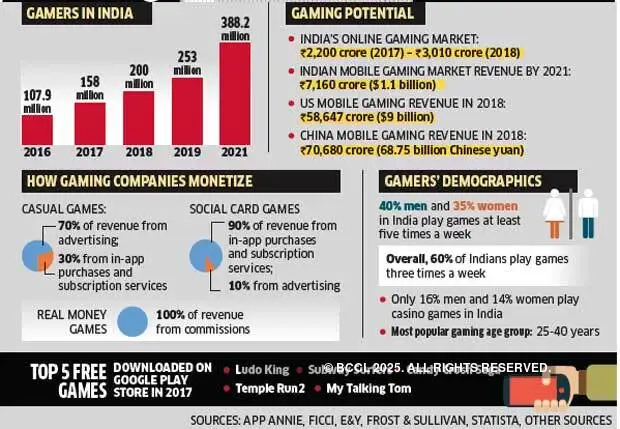
India is emerging as a leader in sports gaming, a growing field that has fascinated the interest of millennials like never before. The Indian digital gaming industry is growing rapidly with behemoths like Dream11, Mobile Premier League, Junglee Games creating their footprints globally.In the past couple of years, the country has witnessed multiple e-sports startups, namely JetSynthesys, Cobx Gaming, FanMojo, Playtonia and Nodwin Gaming, joining the online gaming space, establishing E-sports as an investor-friendly industry. According to the IFSG-KPMG report, the industry is already worth INR 43.8 billion and is said to reach INR 118.8 billion by FY23 with a growth rate of CAGR 22.1 per cent. 

This is to solicit a story on how e-sports platforms are evolving the landscape of sports gaming in India. The primary reason for investors to take an interest in the e-sports section is because India is growing as a sporting nation and the people are taking an interest in building and popularizing leagues for Football, Kabaddi, Hockey, Badminton and other sports.

Alibaba: Tencent and Alibaba-Paytm evaluating India's startup ...

Why E-sports?

More than often people confuse E-sports with Fantasy gaming. While the former is catching a certain interest, electronic sports are not far behind. This form of video gaming has a professional and competitive nature that is facilitated by an electronic system and is often based on organized multi-player video games.Sports gaming is a growing field in India and E-sports is said to be leveraging the country’s love for real sports. “Watching real sports is a passive activity. You switch on your television or open up your mobile app, sit back and enjoy the game,” Ankush Gera, CEO and Founder of Junglee Games started, adding that Online gaming has recognized India’s love for action by making a passive activity engaging.

“Today’s consumers are no longer satisfied with just clicking a button. They want action. They want to do more. They want to be a part of the experience,” he shared. A leader in skill gaming space with over 10 million users across the globe, Junglee Games has emerged as India’s answer to PUBG. The success story specifies that the growth of Indian E-sports platforms is only limited by the initiative.

The Rise of Esports

Currently, India stands at a global number 17 in the soon-to-be USD 1.5 billion Esports industry. Estimated to be about $818 million, the Indian Esports sector while vastly unstructured, is growing rapidly. The number of online gamers worldwide has increased from 20 million in 2010 to 250 million in 2018, whereas the number of game developing companies has grown from 25 in 2010 to 250 in 2018.The IFSG-KPMG reports suggested that fun and excitement are the primary motivators for 72 per cent users for playing online sports across all age and income groups. For around 81 per cent of respondents, the ‘ability to manage teams virtually’, ‘remain connected with the sport’ and ‘utilization of sports knowledge’ was other important motivators for engagement.

The mass penetration of mobile 4G, triggered by Reliance Jio, has further popularized online gaming sports (along with several other internet services) in the country. Thanks to digital innovation, sports have become more interactive, engaging and fun. However, both the real world and online sports have their own charm.Real-life games have their own adrenaline rush whereas the online community to fulfil their urge to play sports, expressed Asifa Sunar, SVP (Head of Product Quality) of Mobile Premier League. Sharing their idea of E-sports, she stated, “MPL is bridging the gap in terms of access to sports by connecting people online who were left out by the world of physical sports.”

Impact over Sports Viewership

Indians harbour a special love for sports. Cricket, especially, has been treated as more like a religion in India. However, a significant change has been noted in the consumption patterns and genre expansion, formulating a jump in the popularity & viewership of other games such as Kabaddi, Badminton, Wrestling & even Football.

“The popularity of a particular sport depends completely on the achievements of the national level teams,” provided Mujahid Rupani, the Co-founder & CEO, Cobx Gaming, an Indian E-sports company. Traditional sports are losing their appeal for the younger viewers due to the multi-hour formats and length of tournaments, making E-sports attractive for quicker gratification and results.While almost every Indian follows at least one sport and has a point of view on the game, players & team selection. Online gaming platforms are now rewarding them for testing their skills as a team selector or coach. Online gaming platforms give the nation an outlet for what they think sports should look like. 

Technology Over Traditional Mediums

“The conventional model of the single-screen broadcast is now only one of the many options at a fans disposal,” provided Sumesh Menon, Co-founder and Group CEO of U2opia Global, the parent company of FanMojo, a homegrown fantasy e-Sports platform that handpicks their players, use their skill to play games, compete and win prize money.Gera argues that Sports gaming does not negate the attraction sports fans have to view the game, in fact, it increases it. “They (Sports viewers) are so much more invested in the performance of the players, (that) watching the match on mobile or catching scores on a mobile app may hold appeal when travelling or busy, the appeal of viewing the match live on a bigger screen is much higher.”

However, he does agree that digital formats might encroach on some market share of traditional media. It would be interesting to see how traditional media adapts to technology. There could be some interesting crossovers between the two formats.

Big players in the market

With a larger appetite for gaming in India, there’s more money moving through the industry, with increased overseas investment and partnership, mostly from China. Alibaba-backed digital payments startup Paytm and Hong Kong’s AGTech Holdings launched a gaming platform Gamepind; Tencent, which has stakes in legendary games like League of Legends, Call of Duty and World of Warcraft, is planning to investin gaming in India this year, and Chinese gaming company Youzu launched local casual strategy games last year. Vietnam-based StomStudio also partnered with mobile game publisher Gamesbond to create mobile games in India.

Although most mobile games in India have a very low average revenue per user, except the casino and strategy genre games,  Manojh says, “As the market is maturing, the sector has been getting increasing attention from investors, with many startups raising funds to create niche games.”Globally, over the last few years, the games industry has seen free-to-play (F2P) hit the mainstream, tablet and smartphone games have come into the ascendent and we’ve seen Facebook gaming rise and fall, but in India though, F2P business model – in which games can be downloaded for free, but then make money through adverts – continues its growth.Between 2014 and 2016, game downloads in India more than doubled. “In terms of downloads, casual and sports genre games perform very well,” says Manojh. A survey reveals that mobile gaming is part of daily lives of more than one-third Indians — 40% men and 35% women play mobile games at least five days a week.

AI in gaming

There’s no question that there’s more interest than there has ever been. Virtual-reality gaming is also a fast-evolving vertical in the country. Digital advertising is forcing companies to look at gaming in a big way, embedding commercials through games.What makes all of this even more exciting is the introduction of artificial intelligence into gaming. Tech startup Absentia has developed Norah.ai, a AI-powered tool for quick creation and incorporation of all game elements. “Our engine is trained over 40 million data points, it generates variety at each step thereby adding countless number of possibilities to the terrains, 3D models and game play environments among others,” says Shubham Mishra, co-founder of Absentia. “At the click of a button, a fleet of 100 different variants are generated, empowering the developers with more options.”

This means that games developers don’t need to have particularly powerful hardware — they will be able to create assets for games, ranging from story, to animations, and even models quickly, and affordably. And, it’s all adding up to a fast-growing business.

PRESERVATION OF FOOD USING DRYING METHOD

Drying or dehydration can be defined as the removal of water from the food by controlled processes, which can be achieved by either of 3 ways –

  1. Evaporation due to heating of the food product
  2. Osmotic dehydration
  3. Sublimation, or freeze drying

Drying can be explained as a 2 stage process in which in the first stage, the surface water removal takes place which totally depends on the state of air surrounding that food particle such as its temperature, relative humidity, and speed. On the other hand in the second stage of the drying, the moisture which is present within the food particle is allowed to move onto the surface which can be then again removed by the process of the first stage.
The rate of drying basically depends on the time that moisture takes to come onto the surface of the food from its inside. Heating of any particle accelerated its time of drying. The shortest time period has been noted in starchy foods.
There are 5 basic methods of drying –

  1. TUNNEL DRYING –
    Many years ago, for the purpose of preservation of agricultural products by the means of drying, a solar tunnel dryer was developed. It is an amazing device which can be used for the hygienic preservation of food and also acts as a good alternative for the seasonal agricultural surplus. Also the foods which are dried using this process are more hygienic and superior rather than other methods.
  2. SOLAR DRYING –
    I t is also known as sun drying and is a method of drying any substance using natural sunlight. This drying technique offers faster drying rates and greater protection of the product. There are several problems or limitations which are associated which this type of drying technique, such as the drying areas must be free of dust and whenever there are chances of a dust storm or rain, the drying process cannot be continued.
    There is also a process known as shade drying which can be carried out for the product which can easily lose their color and turn brown if kept in sunlight i.e. they are non-photosynthetic.
  3. SPRAY DRYING –
    This is a unique technique which ultimately transforms the substrate from a liquid to dried form by spraying the feed into a hot drying medium. It is a continuous process and takes time. The dried products which are ultimately obtained can be in the form of powders, granules or agglomerates. It is a multi-step process.
  4. VACUUM DRYING –
    Since evaporation of water takes place more easily and effectively at lower pressures, so vacuum drying was developed which is faster than the process of evaporation. This is an expensive method and is used for some specific products.
  5. FREEZE DRYING –
    This method uses the process of sublimation, which is a process which directly converts solid particles to their gaseous state, without first melting them. It is a technique which is very used in preserving food at low temperatures because at less temperature, chemical reactions occur very rarely and food is rarely attacked by pathogens. It is also a multi-step process which includes freezing, vacuuming, heating and finally condensation of the product.

SYSTEM MONITORS FACES TO ADJUST THE ROOM’S TEMP

A pilot study explored how the system can provide personalized thermal comfort for nurses working in healthcare environments such as chemotherapy administration units.

A new system monitors people’s faces to maintain the temperature of indoor spaces.

Heating and cooling are the largest consumer of energy in American homes and commercial buildings. There’s a need for smarter, more flexible climate control that keeps us comfortable without heating and cooling entire empty buildings.

Researchers at the University of Michigan have developed a solution that could do away with the wall-mounted thermostats we’re accustomed to. They describe Human Embodied Autonomous Thermostat, or “HEAT,” in a study in the journal Building and Environment.

The system pairs thermal cameras with three-dimensional video cameras to measure whether occupants are hot or cold by tracking their facial temperature. It then feeds the temperature data to a predictive model, which compares it with information about occupants’ thermal preferences.

Finally, the system determines the temperature that will keep the largest number of occupants comfortable with minimum energy expenditure. The new study shows how the system can effectively and efficiently maintain the comfort of 10 occupants in a lab setting.

“COVID presents a variety of new climate control challenges, as buildings are occupied less consistently and people struggle to stay comfortable while wearing masks and other protective gear,” says project principal investigator and study coauthor Carol Menassa, associate professor of civil and environmental engineering.

“HEAT could provide an unobtrusive way to maximize comfort while using less energy. The key innovation here is that we’re able to measure comfort without requiring users to wear any detection devices and without the need for a separate camera for each occupant.”

HEAT works a bit like today’s internet-enabled learning thermostats. When it’s newly installed, occupants teach the system about their preferences by periodically giving it feedback from their smartphones on a three-point scale: “too hot,” “too cold,” or “comfortable.” After a few days, HEAT learns their preferences and operates independently.

The research team is working with power company Southern Power to begin testing HEAT in its Alabama offices, where test cameras will be mounted on tripods in the corners of rooms. Menassa explains that cameras would be less obtrusive in a permanent installation. The cameras collect temperature data without identifying individuals, and all footage deletes immediately after processing, usually within a few seconds.

A second test, also with Southern Power, will place the system in an Alabama community of newly constructed smart homes. The team estimates that they could have a residential system on the market within the next five years.

Facial temperature is a good predictor of comfort, Menassa says. When we’re too hot, the blood vessels expand to radiate additional heat, raising facial temperature; when we’re too cold, they constrict, cooling the face. While earlier iterations of the system also used body temperature to predict comfort, they required users to wear wristbands that measured body temperature directly, and to provide frequent feedback about their comfort level.

“The cameras we’re using are common and inexpensive, and the model works very well in a residential context,” says study coauthor Vineet Kamat, professor of civil and environmental engineering, and electrical engineering and computer science. “Internet-enabled thermostats that detect you and learn from you have sort of built a platform for the next phase, where there’s no visible thermostat at all.”

Coauthor Eunshin Byon, an associate professor of industrial operations and engineering, built HEAT’s predictive model. She believes that tweaks to the model could make the system useful in applications beyond homes and offices—in hospitals, for example, where care providers struggle to stay comfortable under masks and other protective equipment.

“The COVID-19 pandemic requires nurses and other hospital workers to wear a lot of protective gear, and they’ve struggled to stay comfortable in the fast-faced hospital environment,” Byon says. “The HEAT system could be adapted to help them stay comfortable by adjusting room temperature or even by signaling to them when they need to take a break.”

In partnership with the school of nursing, Menassa’s research group has already conducted a pilot study that explored how the system can provide personalized thermal comfort for nurses working in healthcare environments such as chemotherapy administration units.

The National Science Foundation supported the research. The team has filed patent applications related to the technology.

SILQ IS AN EASIER QUANTUM PROGRAMMING LANGUAGE

Silq is the first quantum programming language that is not designed primarily around the construction and functionality of the hardware, but on the mindset of the programmers when they want to solve a problem—without requiring them to understand every detail of the computer architecture and implementation,”

Their quantum language, called Silq, is the first of its kind.

“Programming quantum computers is still a challenge for researchers,” says Martin Vechev, computer science professor in ETH Zurich’s Secure, Reliable and Intelligent Systems Lab.

“Our quantum programming language Silq allows programmers to utilize the potential of quantum computers better than with existing languages, because the code is more compact, faster, more intuitive, and easier to understand for programmers.”

Quantum computing has been seeing increased attention over the last decade, since these computers, which function according to the principles of quantum physics, have enormous potential.

Today, most researchers believe that these computers will one day be able to solve certain problems faster than classical computers, since to perform their calculations they use entangled quantum states in which various bits of information overlap at a certain point in time. This means that in the future, quantum computers will be able to efficiently solve problems which classical computers cannot solve within a reasonable timeframe.

This quantum supremacy has still to be proven conclusively. However, some significant technical advances have been achieved recently. In late summer 2019, a quantum computer succeeded in solving a problem—albeit a very specific one—more quickly than the fastest classical computer.

For certain “quantum algorithms”, i.e. computational strategies, it is also known that they are faster than classical algorithms, which do not exploit the potential of quantum computers. To date, however, these algorithms still cannot be calculated on existing quantum hardware because quantum computers are currently still too error-prone.

SMOOTH AS SILQ
Utilizing the potential of quantum computation not only requires the latest technology, but also a quantum programming language to describe quantum algorithms. In principle, an algorithm is a “recipe” for solving a problem; a programming language describes the algorithm so that a computer can perform the necessary calculations.

Today, quantum programming languages are tied closely to specific hardware; in other words, they describe precisely the behavior of the underlying circuits. For programmers, these “hardware description languages” are cumbersome and error-prone, since the individual programming instructions must be extremely detailed and thus explicitly describe the minutiae needed to implement quantum algorithms.

This is where Vechev and his group come in with their development of Silq. “Silq is the first quantum programming language that is not designed primarily around the construction and functionality of the hardware, but on the mindset of the programmers when they want to solve a problem—without requiring them to understand every detail of the computer architecture and implementation,” says Benjamin Bichsel, a doctoral student in Vechev’s group who is supervising the development of Silq.

Computer scientists refer to computer languages that abstract from the technical details of the specific type of computer as high-level programming languages. Silq is the very first high-level programming language for quantum computers.

High-level programming languages are more expressive, meaning that they can describe even complex tasks and algorithms with less code. This makes them more comprehensible and easier to use for programmers. They can also be used with different computer architectures.

The greatest innovation and simplification that Silq brings to quantum programming languages concerns a source of errors that has plagued quantum programming until now. A computer calculates a task in several intermediate steps, which creates intermediate results or temporary values.

In order to relieve the memory, classical computers automatically erase these values. Computer scientists refer to this as “garbage collection,” since the superfluous temporary values are disposed.

In the case of quantum computers, this disposal is trickier due to quantum entanglement: the previously calculated values can interact with the current ones, interfering with the correct calculation. Accordingly, cleaning up such temporary values on quantum computers requires a more advanced technique of so-called uncomputation.

“Silq is the first programming language that automatically identifies and erases values that are no longer needed,” explains Bichsel. The computer scientists achieved this by applying their knowledge of classical programming languages: their automatic uncomputation method uses only programming commands that are free of any special quantum operations—they are “qfree,” the researchers say.

Silq is a major breakthrough in terms of optimizing the programming of quantum computers; it is not the final phase of development,” says Vechev. There are still many open questions, but because Silq is easier to understand, Vechev and Bichsel hope to stimulate both the further development of quantum programming languages and the theory and development of new quantum algorithms.

The researchers will share a paper on Silq with other experts in the field at PLDI 2020, a conference for programming languages. To facilitate discussion, adoption and further development, they have also released Silq on its own website.

“Desalination 97% of Water Reserves-Solution To Water Crises?”

Humans and animals have been travelling since ages in search of food and water. Fresh water and Food are required for any person not to be healthy and fit enough to carry his daily day to day routine. We have been able to find various fresh sources of these waters and their origin, and through advancement in technology we have brought them to land directly to our house. We now need not to travel distances in search of water related just turn on the taps and thus we get it anytime anywhere. This truly has transformed human life and has led cities to develop. The source of freshwater is mainly the groundwater which is assumed to be fresh and not contaminated with dust and adulterants. There are possibilities of hard water in some areas due to the geography of particular areas, but still it is drinkable and people can just boil it or just purify it through the RO or Reverse Osmosis process. 

But as we see and acknowledge these water reserves and resources, these are wasted a lot in various processes including technology and manufacturing. Due to which we are facing a lack of water in various parts of the world and has become a worldwide crisis. It is expected that around 5-6 billion people will be living in areas which will lack water resources by 2050. So it’s high time to be involved in the activities to save this essential resource and thus save humanity. 

But the big question which comes into the mind is that we have 3% of drinkable water, what about the rest 97%. “Why Can’t we use it? And What if we make that water clean and salt free, thus 100% drinkable.So what would be the results if we do remove all the salt water or no salt was ever dissolved in these oceans, how would our lives get affected ?” 

First of all what we need to know is how these water resources got salt into them ? It is assumed that since the existence of earth which was about 4.5 billion years ago,  earth was very hot and it took a few years to cool down. Then Around 3.8 billion years ago, the surface of earth got cooler and the vapours in the surrounding or atmosphere turned into liquid state and were fresh enough to drink directly. But sooner it became saltier due to various natural phenomenon especially like rain. Rain brought the carbon content in the air with it and dissolved in the freshwater. This makes the water a bit acidic, thus eroding the rocks. This water then goes into the rivers and streams residing nearby and thus dissolving those salts of rocks in it. Also there were emissions from Volcanoes which dissolved in these rivers and then into oceans. This process continues for another billion years and hence most of the water we do see around is saltier. 

Technologies and research have been followed up with the steps to remove salts from water and thus make it drinkable. So would it be beneficial for us or rather harmful ? 

  1. It is assumed that cleaning up most of these ocean waters by desalination would affect the life inside the sea and oceans. The marine life creatures have evolved to drink and remain hydrated through the salt water present in the surrounding. Cleaning this water will surely lead to death of most of this aqua life. These have evolved as per their surrounding and remove out the extra salt which helps them to survive. 
  2. The underwater algae which is assumed to be spread all around the world, is responsible for absorbing the carbon dioxide and giving out oxygen, which humans require to survive. Thus cleaning of water would affect these plants and would affect our atmosphere, filling it more with the carbon content and less pure and fresh air to breath
  3. Increase climate change making some parts of the world extremely hot to live in. Phenomenon like hurricanes and cyclones would get common as the temperature increased and this would help these tropical storms to build up. This surely looks no good for humans as per their survival would surely be at stake. 

“So it can be an option to shift towards these ocean water, make it clean and drink it, but still we should prohibit it from doing it as it can have a devastating effect on the survival of all living beings. We could rather save the resources which are present around us rather than interfering with nature. As we know everything is balanced in nature and if any interference could lead to a phase humans would never want to enter. So we all need to understand the importance of water, save it as much as we can, so as to be safe from future affects and thus remain safe.” 

Procrastination.

If you’ve ever put off an important task by, say, alphabetizing your spice drawer, you know it wouldn’t be fair to describe yourself as lazy.

After all, alphabetizing requires focus and effort — and hey, maybe you even went the extra mile to wipe down each bottle before putting it back. And it’s not like you’re hanging out with friends or watching Netflix. You’re cleaning — something your parents would be proud of! This isn’t laziness or bad time management. This is procrastination.

If procrastination isn’t about laziness, then what is it about?
Etymologically, “procrastination” is derived from the Latin verb procrastinare — to put off until tomorrow. But it’s more than just voluntarily delaying. Procrastination is also derived from the ancient Greek word akrasia — doing something against our better judgment.

“It’s self-harm,” said Dr. Piers Steel, a professor of motivational psychology at the University of Calgary and the author of “The Procrastination Equation: How to Stop Putting Things Off and Start Getting Stuff Done.”

That self-awareness is a key part of why procrastinating makes us feel so rotten. When we procrastinate, we’re not only aware that we’re avoiding the task in question, but also that doing so is probably a bad idea. And yet, we do it anyway.

“This is why we say that procrastination is essentially irrational,” said Dr. Fuschia Sirois, professor of psychology at the University of Sheffield. “It doesn’t make sense to do something you know is going to have negative consequences.”


She added: “People engage in this irrational cycle of chronic procrastination because of an inability to manage negative moods around a task.”

Wait. We procrastinate because of bad moods?
In short: yes.

Procrastination isn’t a unique character flaw or a mysterious curse on your ability to manage time, but a way of coping with challenging emotions and negative moods induced by certain tasks — boredom, anxiety, insecurity, frustration, resentment, self-doubt and beyond.

“Procrastination is an emotion regulation problem, not a time management problem,” said Dr. Tim Pychyl, professor of psychology and member of the Procrastination Research Group at Carleton University in Ottawa.

In a 2013 study, Dr. Pychyl and Dr. Sirois found that procrastination can be understood as “the primacy of short-term mood repair … over the longer-term pursuit of intended actions.” Put simply, procrastination is about being more focused on “the immediate urgency of managing negative moods” than getting on with the task, Dr. Sirois said.

Stop Letting Modern Distractions Steal Your AttentionMarch 26, 2019

The particular nature of our aversion depends on the given task or situation. It may be due to something inherently unpleasant about the task itself — having to clean a dirty bathroom or organizing a long, boring spreadsheet for your boss. But it might also result from deeper feelings related to the task, such as self-doubt, low self-esteem, anxiety or insecurity. Staring at a blank document, you might be thinking, I’m not smart enough to write this. Even if I am, what will people think of it? Writing is so hard. What if I do a bad job?

All of this can lead us to think that putting the document aside and cleaning that spice drawer instead is a pretty good idea.

[Like what you’re reading? Sign up here for the Smarter Living newsletter to get stories like this (and much more!) delivered straight to your inbox every Monday morning.]

But, of course, this only compounds the negative associations we have with the task, and those feelings will still be there whenever we come back to it, along with increased stress and anxiety, feelings of low self-esteem and self-blame.

In fact, there’s an entire body of research dedicated to the ruminative, self-blaming thoughts many of us tend to have in the wake of procrastination, which are known as “procrastinatory cognition.” The thoughts we have about procrastination typically exacerbate our distress and stress, which contribute to further procrastination, Dr. Sirois said.

But the momentary relief we feel when procrastinating is actually what makes the cycle especially vicious. In the immediate present, putting off a task provides relief — “you’ve been rewarded for procrastinating,” Dr. Sirois said. And we know from basic behaviorism that when we’re rewarded for something, we tend to do it again. This is precisely why procrastination tends not to be a one-off behavior, but a cycle, one that easily becomes a chronic habit.

Over time, chronic procrastination has not only productivity costs, but measurably destructive effects on our mental and physical health, including chronic stress, general psychological distress and low life satisfaction, symptoms of depression and anxiety, poor health behaviors, chronic illness and even hypertension and cardiovascular disease.

But I thought we procrastinate to feel better?
If it seems ironic that we procrastinate to avoid negative feelings, but end up feeling even worse, that’s because it is. And once again, we have evolution to thank.

Procrastination is a perfect example of present bias, our hard-wired tendency to prioritize short-term needs ahead of long-term ones.

“We really weren’t designed to think ahead into the further future because we needed to focus on providing for ourselves in the here and now,” said psychologist Dr. Hal Hershfield, a professor of marketing at the U.C.L.A. Anderson School of Management.

Dr. Hershfield’s research has shown that, on a neural level, we perceive our “future selves” more like strangers than as parts of ourselves. When we procrastinate, parts of our brains actually think that the tasks we’re putting off — and the accompanying negative feelings that await us on the other side — are somebody else’s problem.

To make things worse, we’re even less able to make thoughtful, future-oriented decisions in the midst of stress. When faced with a task that makes us feel anxious or insecure, the amygdala — the “threat detector” part of the brain — perceives that task as a genuine threat, in this case to our self-esteem or well-being. Even if we intellectually recognize that putting off the task will create more stress for ourselves in the future, our brains are still wired to be more concerned with removing the threat in the present. Researchers call this “amygdala hijack.”

Unfortunately, we can’t just tell ourselves to stop procrastinating. And despite the prevalence of “productivity hacks,” focusing on the question of how to get more work done doesn’t address the root cause of procrastination.
O.K. How do we get to the root cause of procrastination?
We must realize that, at its core, procrastination is about emotions, not productivity. The solution doesn’t involve downloading a time management app or learning new strategies for self-control. It has to do with managing our emotions in a new way.

“Our brains are always looking for relative rewards. If we have a habit loop around procrastination but we haven’t found a better reward, our brain is just going to keep doing it over and over until we give it something better to do,” said psychiatrist and neuroscientist Dr. Judson Brewer, Director of Research and Innovation at Brown University’s Mindfulness Center.

To rewire any habit, we have to give our brains what Dr. Brewer called the “Bigger Better Offer” or “B.B.O.”

In the case of procrastination, we have to find a better reward than avoidance — one that can relieve our challenging feelings in the present moment without causing harm to our future selves. The difficulty with breaking the addiction to procrastination in particular is that there is an infinite number of potential substitute actions that would still be forms of procrastination, Dr. Brewer said. That’s why the solution must therefore be internal, and not dependent on anything but ourselves.

One option is to forgive yourself in the moments you procrastinate. In a 2010 study, researchers found that students who were able to forgive themselves for procrastinating when studying for a first exam ended up procrastinating less when studying for their next exam. They concluded that self-forgiveness supported productivity by allowing “the individual to move past their maladaptive behavior and focus on the upcoming examination without the burden of past acts.”

Another tactic is the related practice of self-compassion, which is treating ourselves with kindness and understanding in the face of our mistakes and failures. In a 2012 study examining the relationship between stress, self-compassion and procrastination, Dr. Sirois found that procrastinators tend to have high stress and low self-compassion, suggesting that self-compassion provides “a buffer against negative reactions to self-relevant events.”

In fact, several studies show that self-compassion supports motivation and personal growth. Not only does it decrease psychological distress, which we now know is a primary culprit for procrastination, it also actively boosts motivation, enhances feelings of self-worth and fosters positive emotions like optimism, wisdom, curiosity and personal initiative. Best of all, self-compassion doesn’t require anything external — just a commitment to meeting your challenges with greater acceptance and kindness rather than rumination and regret.

That may be easier said than done, but try to reframe the task by considering a positive aspect of it. Perhaps you remind yourself of a time you did something similar and it turned out O.K. Or maybe you think about the beneficial outcome of completing the task. What might your boss or partner say when you show them your finished work? How will you feel about yourself?

What are some other, healthier ways to manage the feelings that typically trigger procrastination?
Cultivate curiosity: If you’re feeling tempted to procrastinate, bring your attention to the sensations arising in your mind and body. What feelings are eliciting your temptation? Where do you feel them in your body? What do they remind you of? What happens to the thought of procrastinating as you observe it? Does it intensify? Dissipate? Cause other emotions to arise? How are the sensations in your body shifting as you continue to rest your awareness on them?

Consider the next action: This is different than the age-old advice to break up a task you’re tempted to avoid into bite-sized chunks. According to Dr. Pychyl, focusing only on the “next action” helps calm our nerves, and it allows for what Dr. Pychyl called “a layer of self-deception.” At the start of a given task, you can consider the next action as a mere possibility, as if you were method acting: “What’s the next action I’d take on this if I were going to do it, even though I’m not?” Maybe you would open your email. Or perhaps you would put the date at the top of your document. Don’t wait to be in the mood to do a certain task. “Motivation follows action. Get started, and you’ll find your motivation follows,” Dr. Pychyl said.

Make your temptations more inconvenient: It’s still easier to change our circumstances than ourselves, said Gretchen Rubin, author of “Better Than Before: What I Learned About Making and Breaking Habits.” According to Ms. Rubin, we can take what we know about procrastination and “use it to our advantage” by placing obstacles between ourselves and our temptations to induce a certain degree of frustration or anxiety. If you compulsively check social media, delete those apps from your phone or “give yourself a really complicated password with not just five digits, but 12,” Ms. Rubin said. By doing this, you’re adding friction to the procrastination cycle and making the reward value of your temptation less immediate.

On the other side of the coin, Ms. Rubin also suggested that we make the things we want to do as easy as possible for ourselves. If you want to go to the gym before work but you’re not a morning person, sleep in your exercise clothes. “Try to remove every, every, every roadblock,” Ms. Rubin said.

Still, procrastination is deeply existential, as it raises questions about individual agency and how we want to spend our time as opposed to how we actually do. But it’s also a reminder of our commonality — we’re all vulnerable to painful feelings, and most of us just want to be happy with the choices we make.

Now go finish up alphabetizing that spice drawer before it becomes your next procrastination albatross.


Declutter your life!

It’s no secret that a home in disarray creates a less-than-ideal living environment.

The task of decluttering your closets (and therefore minimizing your wardrobe) can feel overwhelming, but taking time to create a peaceful, enjoyable living space improves more than just your aesthetic—it could also improve your overall sense of well-being. Not only is clutter linked to overall life dissatisfaction, but a disorganized household can also induce a cortisol response, negatively impacting mental and physical health.

And then there are the other, less tangible messes. From the digital clutter on our phones to a chaotic calendar, disorganization in other areas can lead to the same feelings of stress and overwhelm.

But where’s the best place to start? Have no fear: We’re here with a comprehensive, step-by-step guide to decluttering your life and improving your sense of well-being—one section at a time.


Declutter Your Digital Life
It may be less concrete (and visible) than other forms of clutter, but a cluttered phone or computer both zaps your device’s battery and takes up valuable storage space—not to mention makes your work and communication less efficient.

  1. Back up everything stored digitally
    Backing up photos and important documents not only speeds up your device and frees up memory; it also ensures that if your phone or computer crashes, your information (and memories!) are safe. Enter cloud storage. Take some time to backup the files you want to save on iCloud, Google Photos, or a paid cloud service with more storage space. You can also set your device to automatically back your files up periodically.
  2. Delete what doesn’t serve you
    When was the last time you used that karaoke app you downloaded last year on a whim? Deleting what you haven’t used recently (a good rule of thumb is anything that hasn’t been opened within the last month) is a great way to de-clutter your devices. Just like you’d throw away trash in your home or office, get rid of any apps, blurry selfies, and text threads that don’t add to your digital well-being.
  3. Organize files and apps
    Now that you’re left with only the most useful and beneficial items on your phone, it’s time to organize. How you move things around is up to you—you could try organizing by category or color—but either way, you’ll find that having an organized device streamlines your digital experience. We all need less screen time, right?


Declutter Your Home
Your home is where you spend most of your time, but what if it doesn’t feel like “home”? Reducing clutter in your living spaces and storage areas will simplify navigating and using your things and add an element of peace to your living environment.

  1. Toss the trash
    This is the fun part. Before you can organize the items you want to keep around, you literally need to trash the stuff that doesn’t belong. To begin the process of decluttering your home, walk through each room with a trash bag. Be ruthless with all the knick knacks, papers, and crusty cosmetics that are occupying valuable space. Of course, if there’s anything you can donate or recycle, keep that in a separate pile.
  2. Store specialty or seasonal items
    If your kitchen cabinets are cluttered, think about moving specialty cookware you use less frequently to a storage area. The same principle holds for seasonal home items. If it’s warm where you live, store your heavy blankets and flannel sheets in a designated area to free up storage space.
  3. Get rid of anything expired
    From your bathroom cabinet to your kitchen pantry, you’ve probably got some expired items lurking. Go through your medicine cabinet, cosmetics and toiletries, kitchen pantry, fridge, and freezer, and get rid of anything that’s either past its prime or unsafe to use.


Declutter Your Closet
Under the reign of Marie Kondo, we’re all inspired to simplify our closets. But decluttering your wardrobe goes beyond just getting rid of what doesn’t spark joy.

  1. Separate by seasons
    Storage space is hard to come by. Maximize your closet and dresser real estate—and make choosing what to wear much simpler—by storing all out-of-season items in under-the-bed bins or plastic storage totes. When seasons change, simply switch out your wardrobe.

Donate what you don’t wear
Go through all your clothes, lingerie, shoes, socks, and accessories. If anything doesn’t fit, has holes, or hasn’t been worn in the last three months (seasonal items notwithstanding, of course), it’s time to donate or toss it.

Create a uniform or capsule wardrobe
Want to go a step farther in decluttering your closet? Creating a capsule wardrobe or a uniform will naturally minimize wardrobe disarray and make outfit planning more efficient. Plus, you’ll probably save money and reduce impulse purchases by only buying what you know you’re going to wear.

  1. Go digital when you can
    Does your bank or cable company have a paperless option? If so, carving out some time to sign up for e-statements and bills is a simple way to reduce clutter before it starts. Similarly, if you have papers or documents accumulating in drawers, and you’re sure you don’t need hard copies, scan them in and store them electronically.
  2. Shred or recycle anything outdated
    No use in hanging on to outdated receipts or bills you paid last year if they’re just sitting around collecting dust. Collect all the papers you don’t need, recycle the ones that aren’t sensitive, and shred the ones that are.
  3. Invest in some storage and organization staples
    Organization in the office doesn’t have to be complicated. A magazine file, a simple pen cup or flatware organizer, and an accordion file could do wonders for keeping your desk or work space uncluttered (and more aesthetically pleasing).

Declutter Your Life
From routines and habits to relationships and social commitments, if it’s adding stress (or simply not contributing to your well-being), it might need to go.

  1. Conduct a calendar audit
    We’ve all said “yes” to things that don’t serve us. If your life feels unbearably full and your routines don’t seem to be working, look at your commitments. Does that stressful, monthly networking event actually help you succeed at work? What about that standing double date with friends you don’t feel connected with? By mindfully freeing up calendar space, you’ll not only reduce stress and chaos in your routines; you’ll also create more room for the things you do love.
  2. Find a planning system that works for you
    You know what they say: Fail to plan, and plan to add clutter. To keep your social life, finances, and other routines in order, find a planning system that works for you. There’s nothing wrong with an all-analog approach to calendaring and planning if a digital datebook stresses you out, and if you’re not into bullet journaling, try Evernote or iCal. But whatever planning method you use, be consistent.
  3. Set goals and work backwards
    The best way to declutter your life is to take time to think about what you value. Where do you want to be in 1, 5, or 10 years? Plan an afternoon to camp out at your favorite coffee shop and dream about the future. Then, work backwards from your goals by coming up with three measurable, timely action steps for each one. When you know where you want to go, it’s so much simpler to make good decisions in the here and now — and reduce the chances of a cluttered life.

The world’s first commercial airline was found in early 19th century.

The human fantasy for travelling in air took several centuries to become true. It was not until Jean-francois and Francois Laurent took off with the first manned free balloon on 21 November 1783, embarking the history of human aviation. Balloons that run on hot-air and light gases were largely used for adventure and army reconnaissance but were not suitable for transport service.

The founder of Zeppelin

German general, Count Ferdinand von Zeppelin developed interest in building a rigid airship for transport of humans. After joining hands with the Union of German Engineers and the industrialist Carl Berg, he began the construction of the first Zeppelin(or rigid airship) in 1899. After building various versions of zeppelin, the third version of Zeppelin named LZ 3 was considered truly successful which made an 8 hour flight

The Founding of Luftschiffbau Zeppelin

After the success of LZ 3 German army showed interest in buying Zeppelin but they demanded a zeppelin capable of flying for 24 hours straight. So LZ 4 was made to meet the expectation of the military but the attempt for a 24 hour flight ended when it had to make a landing because of a mechanical problem. During the stop, a storm led to the destruction of LZ 4. Following this accident they received huge donations from the public which led to the founding of the company, Luftschiffbau Zeppelin, a rigid-ship or zeppelin manufacturer.

The world’s first Airline

Luftschiffbau Zeppelin was finding it difficult to obtain orders from the military. So, the business manager of Zeppelin Luftschiffbau, Alfred Colsman thought of exploiting the public enthusiasts by starting a commercial passenger carrying company. But, Von Zeppelin refrained himself from commercializing his idea while Alfred Colsman continued to raise investment for starting the company. He sought the help of Albert Ballin who was later responsible for the one-fourth total capital raised. He found DELAG on 16 November 1909 which was the world’s first airline.

Operation history

DELAG operated the rigid airships manufactured by Luftschiffbau Zeppelin. LZ-7 named Deutschland was the first zeppelin to be built for DELAG. The ship had a capacity of 24 passengers while the cruising speed was 51 km/hr. Due to the low speed DELAG gave up the idea of providing inter-city passenger transport service and offered only cruise flights. But it was destroyed when it took off with a group of journalists that intended to generate publicity. This left the company with only one airship LZ 6 that was built for the army. The company modified it for the commercial purpose. This ship made several successful cruise flights until it was destroyed in fire when stationed in its hangar. The luck of the company changed when LZ 10 was delivered to the company which made intercity passenger transport possible. LZ 10 is considered as the first commercially successful passenger-carrying aircraft. LZ 10 was first flown on 26 June 1911 and was inducted into the service on 16 July 1911. In its career it made a total 218 flights while carrying 1553 passengers. By July 1914, DELAG had transported 34,028 passengers on 1558 commercial flights, the fleet of the company completed 3176 hours of flight covering 1,72,535 kilometers.

End of DELAG

The company DELAG flew its last airship named ‘Graf Zeppelin’ before the successor to DELAG, Deutsche Zeppelin Reederei was founded in 1935.  

Prioritize!!!

“What can I start doing today to make my life happier and more fulfilling?”

This is one of the most common questions readers ask us via email, blog comments, and social media.  So today I want to share some simple, actionable ways to improve your happiness and wellbeing on a daily basis.

In the seven years of this blog’s existence, Angel and I have had the pleasure of meeting, coaching and interacting with hundreds of truly inspiring, happy, prolific people.  And the more we have interacted with people like this, the more we realize the similarities in how they prioritize their lives, and how their priorities align with our own.

What becomes evident is that, to sustain happiness, we must focus our attention on the right things, in the right ways.  Every growing human being (that means all of us) has resource constraints: limited time and energy.  It is critical that we spend our resources effectively.

Here are 10 ways to prioritize your life and your to-do lists for increased happiness and fulfillment:

1.  One thing at a time, with full presence.

In other words, make the thing you have chosen to do the number one priority while you’re doing it.  Focus with your full attention.  See the value in where you are, while you’re there.  Enjoy what’s happening, while it’s happening.

In the end, you will come to realize that the best days are the days when you don’t need anything extreme or special to happen to make you smile.  You simply appreciate the moments and feel gratitude, seeking nothing else, nothing more.  That is what true happiness is all about.

2.  Family and close friends are at the top.

Nurture your important relationships in such a way that when you tell the people you care about that you care about them, you’re simply reinforcing what they already know based on how you have prioritized people in your life.

Give them your full attention.  Let them see their own beauty in your eyes.  Let them find their own voice through your listening ears.  Help them discover their own greatness in your presence.

Make the people you love a top priority, always.

3.  Focus on importance, not urgency.

As Johann Wolfgang von Goethe once said, “Things which matter most must never be at the mercy of things which matter least.”

Truthfully, the most important thing in life is knowing what the most important things in life are, and prioritizing them accordingly.  Sadly, most of us spend too much time on urgent things and not enough time on important things.

So do yourself a favor and implement these three action steps every time you’re building or sorting your to-do list:

  1. Think about the difference between what is urgent and what is important.
  2. Review all the obligations on your list.
  3. Do what’s important first.

Sometimes everything on your list will look important, which might be true to an extent.  But as you practice prioritizing, you will get better and better at it.  And eventually you will know, without question, when to set aside the important things in order to accomplish the vital ones, like spending quality time with loved ones. 

4.  Keep your efforts aligned with your purpose.

Getting anything worthwhile done is a matter of connecting with why you have chosen to do this thing in the first place.

Don’t allow others to confuse you.  Don’t let them convince your heart what is right for you.  Your heart already knows.  Listen to it.  Don’t let anyone else dilute the power of your inner voice.  You’ve got to stand up for something specific, on your own two legs, or you will achieve nothing worthwhile in your own mind’s eye.

Within you there is a formidable and undeniable sense of purpose.  Happiness comes from making a solid and persistent connection to that purpose.  When your intentions are supported by a “why” that has meaning, you will find the “how” to bring them to life.

5.  Play to your strengths and delegate when it makes sense.

When it comes to tackling big projects, you can try to do everything yourself, or you can reach out and find the right people to help you.  The first choice will raise your stress and blood pressure; the second choice will raise your consciousness and effectiveness.

Choosing the right perspective is so important; you CAN see life’s challenges as opportunities.  When an unexpected obstacle is suddenly standing in your way, don’t get overwhelmed.  Take a breather and regroup.  Someone else nearby knows how to get around it.  Find and engage them.

For example, if your website is suddenly having glitches with a new web browser, don’t read a giant book on web design.  Hire a professional web designer.  See the problem as an opportunity to delegate.  Life is trying to teach you that most long-term, worthy endeavors are team efforts, and so much more palatable when shared with others.  Every unexpected obstacle in life is a lesson on teamwork in disguise, solvable with the right team of people.

6.  Socialize and share with peers.

Regardless of what you’re trying to accomplish, it’s always easier if you have a group of people who understand what you’re doing, why you’re doing it, and what challenges you’re facing.  Staying in touch with these people and sharing ideas with them will accelerate your effectiveness and happiness.  Best selling author, Seth Godin, refers to these people as your tribe members.

A tribe is a group of people connected to one another via an idea, movement or common goal.  For millions of years, human beings have been part of one tribe or another.  Godin says, “A group needs only two things to be a tribe: a shared interest and a way to communicate.”

Every single one of us craves the feeling of being part of something bigger than ourselves.  By nature, we are tribal, but oftentimes we become disconnected from our tribe.  We know our people are out there – somewhere – but we feel lost and disconnected from them.  If you’re feeling disconnected, open up to your peers and initiate a conversation. 

7.  Give what you can, as you seek what you desire.

In many ways, life is a circle – what you put in to it comes back around.  When you make a positive impact in the world, the world will have a positive impact on you.

If you want to be rich, be generous.  If you want to make friends, be friendly.  If you want to be heard, listen.  If you want to be understood by others, take the time to truly understand them.  If you want to live an interesting life, be interested in the happenings around you.

You won’t always get back exactly what you wanted or expected, but when you give what you can you almost always receive what you need.  (Read The Secret.)

8.  Leave the past behind as you plan ahead.

Let old problems remain where they belong – in the past.  No matter how many times you revisit the past, there’s nothing new to see.  Don’t let what once happened get in the way of what is happening.  Just because you’ve made mistakes doesn’t mean your mistakes get to make you.  If something important didn’t work yesterday, figure out what changes can be made today.

Tame your inner critic; let go and move on productively.  You must make a conscious effort to do this, it won’t happen automatically.  You will have to rise up and say, “I don’t care how hard this is.  I don’t care how disappointed I am.  I’m not going to let yesterday’s problems get the best of me.  I’m taking the lessons and moving on with my life.”

9.  Commit to self-respect, regardless of the issue at hand.

Whenever you catch yourself in a rambling bout of negative self-talk, stop and ask yourself, “If I had a friend who spoke to me in the same way that I sometimes speak to myself, how long would I allow this person to be my friend?”

Remember, the way you treat yourself sets the standard for others, and the world at large, to follow.  Above everyone else, YOU deserve YOUR respect.  So make sure your decisions, behaviors and actions reflect your self-respect as you carry out your plans.  

10.  Leave room to breathe.

Things don’t always go as planned.  Good things can’t always be planned.  Be flexible and open to life’s twists and turns.

Organize, but don’t agonize.  Keep your space and time ordered, but your schedule under booked.  Create a foundation with a soft place to land, a wide margin of error, and room to think and breathe…

Freeing yourself from an overbooked schedule lets you experience more of life’s good surprises, and also provides you with flexibility when the unforeseen disrupts your foresight.

Afterthoughts

So, in summary…

Focus on your priorities, but take things in stride.  Make decisions, not excuses.  Live one moment at a time.  Count your blessings, not your troubles.  Let the wrong things go.  Look for lessons in unforeseen obstacles.  Ask for help.  Give as much as you take.  Make time for those who matter.  Laugh when you can.  Cry when you need to.  And always stay true to your values.

Your turn…

Which of the ten points above do you need to work on?

What other happiness tips are on your to-do list?

We would love to hear from you.  Please leave a comment below and share your thoughts and insights with the community.

Inspirational Tips for Students Motivation

One of the most important features, as well as challenges of a student is motivation. All people need motivation to keep up with their daily tasks and obligations, but, for a student, the need to be constantly motivated is enhanced.

In order to build a good career for yourself, you need to be consistent with your academic efforts. To do so, you need to be motivated not only to choose your field of study, but to actually finish your day-to-day tasks in time.

In spite of knowing this, most students aren’t thrilled about their academic obligations. There’s probably not a single student in the world who hasn’t felt lack of motivation to get up for class or do his homework. For most students, this is an almost every day experience. The tiredness and pressure can make you lose your motivation to study. Thankfully, there’s such a thing as self motivation, which means that you are the one responsible for your productivity and success.

  1. Change the Perspective

None of the motivational tricks and tips will ever work unless you change your perspective toward learning or finishing projects.

Seeing how students learn a variety of subjects and work on versatile projects to build several skills they’ll need in life, it is only natural that you won’t be interested in every topic you come across.

Even so, you’ll still have to study that topic or write a paper on it. Therefore, the best answer I can give you to the question how to get motivated is simply to accept this as something beneficial to you.

Even if you don’t like math, the skill you’ll obtain by studying will serve you a lot in life. Those who don’t like writing, see their written homework as a torture, but writing is a crucial skill to succeed in today’s world.

The sooner you change your perspective, the more willing you’ll be to do your assignments.

  1. Focus on Your Areas of Interest

You can’t love every subject you’re studying. It is unnatural and no one does. But, while you have to work on all your skills and study for all subjects, you can focus most of your efforts on the things you love. After all, pursuing something you love is the best thing you can do for your future career.

Don’t slack off in terms of other subjects, but try to turn your favorite area of study into your hobby. Research the field, get involved in it, and simply build a healthy study habit by using your area of interest.

If you do this often, you’ll be more productive to study. Focusing on the things you love can keep you productive and build a fine study habit for you, which is something that will keep you in the mood when you have to study for the other subjects.

  1. Reward Yourself for a Job Well Done

Even the smallest accomplishment can give you a sense of satisfaction. The goal of every student is to graduate, but, to get there, you need more than just one big goal.

Give yourself small goals to keep you motivated to work on them. When you are finished with a task successfully, reward yourself for it. It doesn’t have to be anything big. A night out with friends, some time in front of the TV watching your favorite TV show, or a day spent with family – every idea you like is good enough.

Learning and Motivation
If a big project gave you a lot of trouble, but you finally made it through, you deserve your reward.
4.Get Some Support

There are plenty of places where you can get support and motivation. Work with your friends and peers, ask others for help, and look for motivation in different places. When you lose focus from your studies, a bit of a competition will keep you running.

Ask your teachers for help, find and hire a professional, or simply tell your family that you feel exhausted. Having support is crucial during busy times such as your student years.

Conclusion
The constant workload and academic pressure can cause tiredness and overwhelm in every student. To keep yourself motivated to finish your studies and perform well, you need these motivation tips and tricks. Try to practice them throughout your education.

New announcement made by Madhya Pradesh government

From a long time there has been many conflicts regarding the conduction of college exams. Madhya Pradesh government had already denied the general promotion for college students. Chief minister of Madhya Pradesh had said that students studied really hard for their exams and it would be unfair with them if exams won’t be conducted.

But now, Madhya Pradesh government took a big decision in the favour of students. Yesterday, Higher education department, Madhya Pradesh, tweeted that there will be no exams for college students due to this corona virus pandemic. They announced that undergraduate students of first and second year and post graduate students of first year don’t have to give exams, they will be given marks on the basis of their previous semester result. Meanwhile, students pursuing final year in graduation and Post graduation will also don’t have to give exams and will be marked on the basis of highest marks obtained in previous semesters and those who will not be satisfied with their marks can write exams which would be conducted offline in the future and can be an opportunity to score better.

Schedule regarding reopening of the schools is not yet decided and is said to be decided after reviewing the conditions. For those students who didn’t gave 12th class exam due to some reasons, exams will be reconducted. It is possible that, the result will be announced soon for class 10th and 12th students in July.

The government didn’t gave much detailed information on this issue to the public but hope it will be cleared soon.

Depression in Men

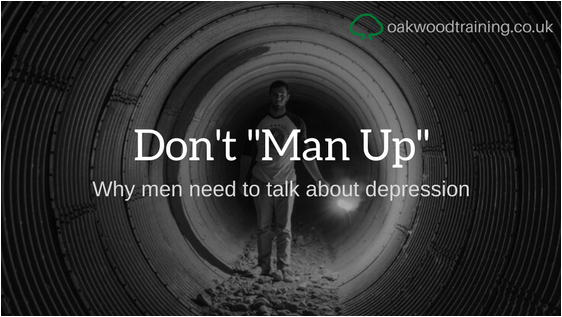
Men are often seen as strong beings that are in control of their emotions. They try to act tough whenever they feel overwhelmed by despair or hopelessness by trying to deny it or covering it up like nothing. But depression has become a common problem today affecting the daily lives of many. It is taking a heavy toll on the work and home life of people all the while expecting them to tough it out.

Depression affects millions of men of all ages and backgrounds targeting even those who are close to them – partners, family, and friends. But it is a treatable health condition, not a sign of emotional weakness. However, male depression affects your life deeply, changing the way you think, act, and feel. Sometimes it can be intense and unrelenting all the while affecting your relationships, sleep and diet patterns, and overall sense of enjoyment in life.

Depression in men often gets overlooked since they tend to be less adept at recognizing symptoms than women. This can result in it going untreated which can have serious consequences.

depression

Signs of Depression:

The classic signs are despondent mood, disturbance in weight and sleep, and concentration problems. The overlooked or stealth signs include physical pain, anger, and reckless behavior. Men often feel agitated and turn to substance abuse. They lose control over negative thoughts and feel hopeless and helpless.

How to deal with depression:

It takes courage to seek help though, be it from a loved one or a professional. Most men suffering from depression respond well to self-help steps.

  1. Connect socially
  2. Maintain a healthy lifestyle
  3. Seek help from a professional

man up

  1. Connect socially: The first step involves finding people you can really connect with, someone with whom you can share your feelings without any fear of judgment from them. Understand that you already have a non-verbal communication with those who are close to you but fighting depression needs actual words. Improve your social network and push yourself for social activities. This will help you interact with people acting as a diversion for your mood. Sometimes solving others’ problems gives a better boost to your morale than solving your own.
  2. Maintain a healthy lifestyle: The second step is maintaining a healthy lifestyle at any given time. Aim for a good night’s sleep at least eight hours long. Identify your stress triggers and find ways to regain control of your life by overcoming them. Practice relaxation techniques or meditation. Yoga helps keep your body active and soothes your mind. Indulge in more activities that interest you like taking a walk or listening to music. A positive lifestyle also includes regular exercise and a balanced diet.
  3. Seek help from a professional: Lastly, you could also seek help from a mental health professional. Even to the most skeptical males, therapy often does wonders by bringing a sense of relief to the mind. After all, there is nothing unmanly in talking to a stranger about your problems if it is doing well to you in the end.

Image Courtesy: GOOGLE

The SuperNova, the dreamer, the photon in a double slit and the achiever,a self-made man ~ Sushant Singh Rajput 🔭

A person’s death caused so many of us to become observant about the facts related to him. Where from he started his career, where did he land, about his possessions, about his family, about his relationships, about his bucket list, about his travels, about the dreams he fulfilled, how good he was as a person, about the rejections he faced, about his abandonment, about the way he was humiliated or boycotted, his interviews and what not?

Okay so imagine, you being exceptionally wonderful in your academics, cracked the engineering entrance holding a single digit rank, you get into one of the reputed colleges of your country, you are about to get your degree and you suddenly are struck by the thought of dropping engineering and following your passion although you are not sure about how successful you will be in it or will you even be able to get into that stream where you will be attacked by Nepotism. Tough decision, ain’t it? which requires alot of courage and understanding. You need to convince yourself and most importantly your family that you will surely reach heights and will not give them any chance to point out a finger at your decision. And then imagine, your family not being that good financially but you still took that decision.
You did theatres, you danced behind those famous star kids, you got a big break through a   TV series, you made a debut through a movie, you fairly did well, you gave some hits, you rejected some movies because you wanted to do a movie of your choice, you where never called to parties, you where denied the acknowledgement by your other fellow stars, you were not awarded for the movies which made crores on boxoffice, then your where boycotted not because of your skills but because of the choices you made, the movies you signed with the directors where taken away from you, lockdown hits, you are alone at your house thinking that no one tried to see the potential you got, no one tried to figure out the hardships you went through to reach where you are and people denying that they don’t recognise you. Today people are claiming that these humiliations and rejections made him fall into depression, killed his mental health, made him emotionally weak and forced him to commit a suicide?

You seriously think so? I wrote this long paragraph so that we can analyse where we are going wrong. Rejections and humiliations are a part of life and I agree that it shatters some part of you but it will never make you step into your coffin. What actually harms you is no one being around you to discuss about your problems, what breaks you is the decision that you made. You remorse about it, you are surrounded by the thoughts of what you would have been if you continued with your academics, you see yourself in dark, you get those negative feelings of you never getting a chance for any other movie because you have no godfather, people will stand against you, no one will watch your movies and so your career is finished, you failed. You let down your family, you let down your mother who was watching you from above, you could not meet their expectations, you will be bullied for your decisions because you could not become a STAR and so you finally choose to become a ⭐. Not the rejections but the repentance brings you to a situation where you just don’t have answers for those questions in your mind,   even nobody else bought you the answers and so you just want to end up thinking, you don’t want to face the cruelty prevailing outside and you want yourself out of this trauma and put a full stop to your pain.

Acceptance and dignity is what every human being craves for. Sushant Singh Rajput was not a special case. So, if his sudden demise still does not changes you, your opinions, your mindset and your choices, then that day is not far away when few among we audiences will certainly take the same step. Start respecting you near ones decision, start appreciating their  efforts, don’t humiliate them for their mistakes, give them positivity, serve them optimism, talk to them, make sure they never feel low. Stay connected because boycotting the star kids is incomplete till you start appreciating the work of the talented ones. Make sure that the journalists realise how pathetically they had put the camera on that numbed person’s face who is yet to digest his son’s loss, who is still trying to figure out where he went wrong and who is still regretting that he could have been there for his son patting his back.

We can’t have him back but we can make sure that no one else has to use ‘.’ punctuation ever in their life.

You will be the brightest among all those stars in the sky
And we will be here, gazing at you
So that you don’t have to think again that why,
those few denied of having no clue
About you!
Rest in peace dear SSR💜

Still I can’t believe that he attempted suicide. Daily something new comes up ! I am unable to move on ! Still its a question it was a suicide or a murder ?