Yoga – The art of mind and soul.

Yoga is the mixture of physical, mental and spiritual practices and discipline which was originated in India. The most essential purpose of yoga is to bring together the body, mind and spirit into a whole. Yoga leads an individual to a healthy lifestyle, good eating habits, better mental attitude and positive approach towards the world. The exercises performed during yoga will enhance an individual’s fitness and also benefit in mental well being.

The most common methods of yoga are the physical postures known as asanas and breathing techniques known as pranayama. Yoga teaches an Individual how important your body is and how you can improve your body’s flexibility and make it more strong. As the person starts to understand and value its body, the individual gets more connected with his body. Yoga makes sure a person is evolved for constant progress and has not time to get involved in other thoughts which could lead to anxiety and depression. This leads to a better approach towards the life.

Who can practice yoga?

Every person can perform yoga. There is always a suitable way for an individual to practice yoga, whether they are old or young, injured, fit or unfit, supple or inflexible, male or female. You just need to find the right mentor for you.

Physical benefits of yoga

  • Improved posture
  • Better sleep
  • Increased natural energy level and vitality
  • Greater flexibility, strength and stamina
  • Better balance
  • Stronger immune system
  • Pulse and respiratory rate decreases
  • Blood pressure decreases
  • Cardiovascular efficiency increases
  • Respiratory efficiency increases
  • Cholesterol decreases
  • Cleansing and regulating of all the body’s systems  

Mental benefits of yoga

  • Calm and clarity
  • Greater confidence and generally more positive mood
  • Sense of inner well-being and ‘centredness’
  • Increased awareness of body and movement
  • Counters depression and anxiety
  • Ability to concentrate improves
  • More self-acceptance
  • Increased social skills

Different types of Yoga.

There are many types of Yoga, today let’s discuss one of the most important type of yoga which is Bhastrika.

The Sanskrit word “bhastrika” means “bellows” mostly employed by blacksmiths to melt metal. Like the bellows fan the hearth similarly Bhastrika Pranayama surges the flow of air into the body to supply heat at both the physical and subtle level–stoking the inner fire of mind and body. When this pranayama is done regularly it tends to remove blockages from the nose and chest. It is suitable for asthmatic patients and removes inflammation of the throat. Bhastrika increases the gastric fire. Pranayama improves appetite and digestion capacity. Bhastrika, when practised with Kumbhaka Pranayama, can generate heat within the body and keep it warm in rainy and weather .

Starting position: Do preliminary conditioning in Sukhasana or the other meditative posture. Sit on a firm chair with an upright backrest, if unable to take a seat on the ground . Keep the body above the waist straight and therefore the spine erect. Eyes can be kept closed.

How to do Bhastrika Pranayama?

The Sequence of steps:

Take in a deep breath and exhale forcefully through the nose, with none strain.
Immediately, breathe in with the same force.
Inhale and exhale repeatedly, deeply and thoroughly, using the diaphragmatic muscles with vigour. The abdomen moves out during inhalation, while the diaphragm descends. The converse happens while exhaling.
The above movements should be slightly exaggerated. A strong nasal sound will accompany such breathing. The process should be rhythmic and controlled, maintaining the speed as per capacity.
Do ten cycles to finish 1 round of Bhastrika Pranayama.

Best practice: Practice 3 rounds/session, with pause in-between rounds. Bhastrika Pranayama should be practised on an empty stomach, after evacuation within the morning.

Few limitations : Heart ailments, hypertension, high BP, fever, vertigo, pregnancy, intestinal disorders, spinal abnormalities and eye ailments, e.g. like a detached retina, glaucoma.

Benefits of Bhastrika Pranayama:

Favourable effect on the respiratory and digestive system.
Drains excess phlegm from the lungs.
Provides oxygen to the blood increasing the vitality of all the organs and tissues
Strengthens and tones the abdominal region.
Calms the mind
Energizes the entire body and mind.
Now that the question of what’s Bhastrika pranayama & its benefits are answered – Do try it out and luxuriate in this monsoon season with radiant health.

So as we come towards the end we can say that yoga is the medicine to every problem. From physic attributes to the inner peace, yoga takes care of everything. Yoga is not something you do for a day but it is a life long commitment to enjoy a healthy and beautiful life.

“Nuclear Energy And Fight For Its Credibility”

Humans, since the age of their existence have invested money, efforts and ideas into developing new sources of energy generation. Which earlier focused on mostly focused manual work and manpower or animals usually has shifted to machines making the work more easily and efficiently done. The transition after the industrial revolution and drastic drift towards these technologies gave new origin to energy sources. While initially more of the non sustainable resources like coal were used as a source of energy, be it in trains, or for ironing of clothes or be it for warming oneself from the freezing cold environment. Cutting of woods for fire and cooking was also an opted source of energy in earlier times. But sooner the effects if these machines were seen and how they deteriorated our health, glaciers of the antarctic and most important lead to phenomenon called global warming which has nowadays led to climate change. The need for sustainable and eco-friendly sources of energy was a great demand in the early 40’s and then came the idea of “Nuclear Power Generation”

As soon as the nuclear atomic bomb was used as a weapon, it came into the mind of people,that it has an enormous amount of energy in it and thus could be used so as to generate energy from it and utilize it in a better and peaceful way. It was thought to be a classic idea to fight back every problem , people warriors facing. Nuclear power generation meant the cost of electric utility to go down while it’s production to achieve height,shifting to this house would lead to less consumption of fossil fuel like coal and other sustainable resources like petrol as a source of energy to run vehicles, and thus the problem of global warming could drop. And many other factors which seemed to solve energy related problems for mankind. 

But soon as most of the companies started investing in nuclear plants , it turned out to be totally different as it was assumed to be. The technicality and most important the cost to build it were more as they were right of. Complexities in the design and working were still unknown to many of the scientists. But still most of the counties thought of investing in these plants. The growth of nuclear plants significantly grows as soon as the oil prices hit the stock to highest amounts. Thus nuclear energy was thought of to be the best and better alternative. But it was soon seen that this nuclear power generation was too risky not only for the company but also for their country as well as the whole world, if not properly taken care of, since many accidents were observed in quick span

But still various countries are using nuclear energy as a energy generation with almost covering 10% of total energy demand around the world while most of the power still depending on coal. But the main question which comes to mind is “Do we really need these nuclear plants knowing their harmful effect to humanity”. There have been many accidents which have led man to lose life and still it’s outcome are observed in the future genes. Nuclear energy has enormous power to destroy the population around the world if used in the other way. So “Why do we still focus on nuclear energy rather than investing in other sustainable energy resources easily available with almost the same setup cost”. Also the waste of these plants which are mostly chemicals is very dangerous and the smoke which comes out in the form of emissions is too toxic, which could lead to breathing problems in living beings and also add up to the pollution. 

“The results show the how the disadvantages of these nuclear plants are way ahead of its positive outcomes as being positive being the fact that it leads to reducing of carbon dioxide emissions in the environment or be it providing more jobs as workers in construction and worker in the plant but still seen the bad side of these, it seems to be more dangerous and harmful for the humanity. We believe that it’s high time to think for nature and shift towards more better energy sources like sustainable energy sources which are present in enormous amounts and which do not harm nature , along with the fact of not risking life’s and finding alternatives at the cost of human life”. 

Coronavirus: Dexamethasone proves first life-saving drug

A cheap and widely available drug can help save the lives of patients seriously ill with coronavirus.

The low-dose steroid treatment dexamethasone is a major breakthrough in the fight against the deadly virus, UK experts say.

The drug is part of the world’s biggest trial testing existing treatments to see if they also work for coronavirus.

It cut the risk of death by a third for patients on ventilators. For those on oxygen, it cut deaths by a fifth.

Had the drug had been used to treat patients in the UK from the start of the pandemic, up to 5,000 lives could have been saved, researchers say.

And it could be of huge benefit in poorer countries with high numbers of Covid-19 patients.

The UK government has 200,000 courses of the drug in its stockpile and says the NHS will make dexamethasone available to patients.

Prime Minister Boris Johnson said there was a genuine case to celebrate “a remarkable British scientific achievement”, adding: “We have taken steps to ensure we have enough supplies, even in the event of a second peak.”

Chief Medical Officer for England Prof Chris Whitty said it would save lives around the world.

Latest coronavirus updates
About 19 out of 20 patients with coronavirus recover without being admitted to hospital.

Of those who are admitted, most also recover but some may need oxygen or mechanical ventilation.

And these are the high-risk patients dexamethasone appears to help.

The drug is already used to reduce inflammation in a range of other conditions, including arthritis, asthma and skin some conditions.

And it appears to help stop some of the damage that can happen when the body’s immune system goes into overdrive as it tries to fight off coronavirus.

This over-reaction, a cytokine storm , can be deadly

In the trial, led by a team from Oxford University, about 2,000 hospital patients were given dexamethasone and compared with more than 4,000 who were not.

For patients on ventilators, it cut the risk of death from 40% to 28%.

For patients needing oxygen, it cut the risk of death from 25% to 20%.

Chief investigator Prof Peter Horby said: “This is the only drug so far that has been shown to reduce mortality – and it reduces it significantly. It’s a major breakthrough.”

Lead researcher Prof Martin Landray said the findings suggested one life could be saved for:

every eight patients on a ventilator
every 20-25 treated with oxygen
“There is a clear, clear benefit,” he said.

“The treatment is up to 10 days of dexamethasone and it costs about £5 per patient.

“So essentially it costs £35 to save a life.

“This is a drug that is globally available.”

When appropriate, hospital patients should now be given it without delay, Prof Landray said.

But people should not go out and buy it to take at home.

Dexamethasone does not appear to help people with milder symptoms of coronavirus who do not need help with their breathing.

The Recovery Trial, running since March, also looked at the malaria drug hydroxychloroquine, which has subsequently been ditched amid concerns it increases fatalities and heart problems.

The antiviral drug remdesivir, meanwhile, which appears to shorten recovery time for people with coronavirus, is already being made available on the NHS .

The first drug proven to cut deaths from Covid-19 is not some new, expensive medicine but an old, cheap-as-chips steroid.

That is something to celebrate because it means patients across the world could benefit immediately.

And that is why the top-line results of this trial have been rushed out – because the implications are so huge globally.

Dexamethasone has been used since the early 1960s to treat a wide range of conditions, such as rheumatoid arthritis and asthma.

Half of all Covid patients who require a ventilator do not survive, so cutting that risk by a third would have a huge impact.

The drug is given intravenously in intensive care and in tablet form for less seriously ill patients.

So far, the only other drug proven to benefit Covid patients is remdesivir, which has been used for Ebola.

That has been shown to reduce the duration of coronavirus symptoms from 15 days to 11.

But the evidence was not strong enough to show whether it reduced mortality.

Unlike dexamethasone, remdesivir is a new drug with limited supplies and a price has yet to be announced

Personal Development

Personal development can include any skill that you build to improve yourself—your emotions, thoughts, or behaviors. It doesn’t really matter which skills you want to improve; the key to personal development is taking the right steps — steps that help ensure that you reach whatever goal you are pursuing.

What are the most important personal development skills? It really depends on what you’re trying to achieve. But here are 9 that I have found to be important to successful personal development.

1. Start by figuring out which personal development skills you need to build. The first step in any personal development strategy is to figure out how to best use your time. It makes little sense to learn how to code if you don’t plan to be a coder or to bench press 400 pounds if you don’t plan to be a weight lifter. These can be hobbies, but personal development is more about building skills to reach your goals. So it’s good to take some time to self-reflect. (If well-being is a goal of yours, take this well-being quiz to see which skills you need to build.)

2. Develop entrepreneurial thinking. Everyone can benefit from learning how to think like an entrepreneur, regardless of whether or not you are one. Why? Because entrepreneurs are innovative, good at planning for all possible outcomes, and skilled at getting others to buy into their vision or dream. And perhaps more importantly for personal development, they tend to be adaptable to all sorts of situations.

By developing entrepreneurial thinking, you better adapt to whatever your circumstances are so you can more easily achieve your goals, whether those goals are to start a business that makes a positive impact in the world, to set yourself up for an early retirement, or climb Mount Everest.

3. Develop a growth mindset. If we have a “fixed mindset,” we may shy away from challenges that could help us grow. But this can be problematic because our fear of making mistakes can lead us to avoid challenges and new experiences—experiences which would help us grow, improve ourselves in important ways, and create the life we desire.

If we have a “growth mindset” we seek out challenges because we value learning and growth more than we value feeling smart or knowing what we’re doing. That’s why those with a growth mindset often build new skills more easily: They believe they can and so they really work at it.

4. Develop your self-soothing mechanism. High levels of stress are not only bad for our health and well-being, they can prevent us from effectively pursuing and achieving our self-development goals. By learning effective, long-lasting stress-reducing strategies, your body and mind will be more equipped to handle the inevitable challenges that arise when you’re trying to develop yourself.

5. Develop resilience. Resilience is that super-important skill that helps you bounce back quickly after being knocked down. This is one of the most important skills for success because none of us will achieve anything if we don’t keep trying when we fail. We can build resilience by improving skills like emotion-regulation, mindfulness, and positivity.

6. Develop your value compass. It’s not always easy to live by our core values. But when we go through life without following our personal values, we can easily get lost. We may suddenly “wake up” and realize that we are not who we want to be or where we want to be. This is why it’s so important to stay in alignment with our personal values.

What are your values? Perhaps: kindness, curiosity, creativity, hard work, or personal relationships. Define your personal values so you know which actions are in alignment with those values.

7. Create a personal development plan. A good personal development plan takes all these factors into consideration — the WHAT, the HOW, the WHY, and the WHEN. So ask yourself:

What skills will you build?

How will you build them?

Why will you build them?

And when will you build them?

8. Record your progress towards personal development. Keeping track of our progress as we move toward our personal development goals is key to making sure we’re on the right track. Then we can pause and take a different direction if we’ve gone off course. By maintaining self-awareness and frequently checking in with ourselves, we can identify things that we need to devote more attention to. As a result, we can make better progress toward our personal development.

9. Keep developing yourself in new ways. The science is clear: The more ways we develop ourselves, the broader our skill set, and the more success we tend to have. So try learning some new emotional skills or do some activities to build new skills. You just might learn something that changes your life.

MYTHS WE SHOULD STOP BELIEVING

Hello everyone so today we are going to talk about myths and their facts, So what do you what is myth! Myth is a combination of stories or narratives which is told by our ancestor. At night time, our ancestors will speak about the stories of god and devils. They are so many myths that people usually believe in them. We should stop believing in myths and think about the facts.

Now I am going to tell you some myths and also their facts.

1.MYTH:- People say that when we sneeze our hearts skip a beat for a second.

FACT:- Sometimes our heart changes its rhythm but our heart never stops for a second, while sneezing.

2. MYTH:-Since from our childhood, it has been told that we should or we get blind.

FACT:-Carrot help us to prevent us from muscle degeneration but carrot don’t improve your sight.

3.MYTH:-We should not use the phone during the light storm.

FACT:-Smart phone has the radio waves which doesn’t conduct electricity.

4.MYTH:-In science we had studied that our body have 5 sense.

FACT:- It’s not true we have at least 21 senses in our body like the sense of balance and temperature.

So these are some myths and facts.

There is a myth or a story about Tiyanak. There is a story that while we walk alone in woods and we hear about the baby crying that is called Tiyanak. When people start to follow the sound of a baby crying and found out a baby and when they hold the baby it suddenly will change into a monster and swallow you.

There are also other stories like Kapre, Orpheus and Eurydice.

So this is a famous story which must have heard from our ancestors. Some common myths seem to be true that we must learn from our parents or school.

When we hear something like this type of thing which seems to be impossible then we should start searching for the fact.

I hope you all enjoyed reading the article. Let me know in the comment box which you have heard.

Thank you for reading the article and have a delightful day.

Flavors of Delhi

Aloo Tikki, Afghani Street Bites, Chaat, Kebabs, Kachori Aloo, Chhole Bhature, Rajma Chawal, Parathas – these are reasons enough to call the Capital Delhi-Belly.

Delhi has always been a diverse city with people coming from all over India to settle and start a new life here. Many people know Delhi to be a city of rich cultural heritage. But Delhi, as a city, is so much more than that. And one aspect of this is the food in Delhi that makes it a great tourist place. The people of different cultures and traditions have brought with them their unique tastes to Delhi too.

It is not a hidden fact that Delhi has no particular food culture; the city acquires the identity of all types of people living here in its food preferences. The maze-like alleyways and marketplaces of Delhi are known to lure foodies with their curbside kiosks serving rich in taste street food while the studded restaurants add their own charm and elegance to the cuisine of the city.

Being an amalgamation of several cultures, Delhi is among the few places where you can find a South Indian devouring a serving of Butter Chicken and a Bengali enjoying Idli Sambhar, and it is not even astonishing anymore. The best part about this is that all these recipes are age-old, being handed down from generations after generations, helping them stay true to their original flavors.

Here’s what Delhi has to offer, apart from the traditional cuisine from all the states:

  • Mughlai Cuisine: One of the oldest cuisines being served to the Delhiites is the Mughlai cuisine. Even today the taste of the Mughal era can be felt in the Kebabs from the time of Delhi Sultanate while Nihari and Biryani have become a household name. The delicious fruit-flavored sorbets or Kulfi as we know them today were originally served in the Mughal kitchens. Karim’s and Ghantewala, famous for their Kebabs and Karachi Halwa respectively, have also served many of the Mughal emperors in the past.

  • Street Food: Another group of delicacies bringing the people together is the street food available in almost every lane of the city. Names like Sita Ram Diwan Chand, Bittu Tikki Wala, Nataraj Dahi Bhalla, Daulat Ki Chaat, and Al Jawahar have been churning out some of the country’s best street grub. There is a street named Parathe Wali Gali in Chandni Chowk which in itself is enough to show the love people of this city have for Parathas.

  • International Cuisine: Along with the traditional dishes, Delhiites have also truly embraced the authentic International cuisines which means there is no trouble finding Chinese, Thai, Italian, and French cuisine to name a few. The Churros with chocolate sauce at La Bodega, the Glass Noodles at Gung, and the Cheese Kunafa at Zizo are gradually making their way into the hearts of Delhiites.

The diversity that Delhi shows in its food culture is a mere reflection of the people who have lived here in the past and the people who call it their home in the present. It is this diversity that brings the people together and makes Delhi a better tourist spot.

Impact of Climate Change on International Business Strategies…..

A recent KPMG report, highlights ten “sustainability megaforces” that will shape markets in the decades to come. The list includes population growth, energy and fuel, ecosystems decline, and material resource scarcity, among others. These interconnected trends will create risks and opportunities for business. In response, companies need new strategies, particularly for market impacts relating to what KPMG calls the “megaforce” influencing all others: climate change. Forward-thinking companies are starting to draw links between climate change and other major trends that impact business.

It is the demand of the era that businesses have to do their part in response to the threat of the climate change. Most of the large companies these days see to the managing of the greenhouse gas emissions. They also help in minimizing the level of energy consumption as an integral part of the environment based management practices. Many people have set the targets for the reduction of the greenhouse gas emission. One can work with the suppliers and the consumers for causing a reduction in the rate of emission.

One can consider climate change as the strategic issue. It is the logical conclusion that companies should seriously think about the risks related to the change in climate. This can cause possible danger to the various business opportunities. One should be able to predict in advance that how a change in climate can cause difference in business. Based on the thoughts and the predictions one can decide how to protect the business strategies from the possible climatic risks. This way, one can reduce the downside risks, and there can be augmentation in the upside opportunities.

2019 may be remembered as the year when climate change activism went mainstream. At the end of September, in a series of rallies timed to coincide with the United Nations climate summit, an estimated six million people in more than 180 countries took to the streets to demand far more action to cut greenhouse emissions. This was probably the biggest climate protest in history.  Protests in the form of school walkouts had taken place throughout the world for a whole year. The ‘Extinction Rebellion’ initiative has added a further edge by seeking to demonstrate the potentially catastrophic consequences of inaction.

Central banks and other supervisory authorities are now considering climate change as a risk to financial stability. This has led to the establishment of the Task Force on Climate-related Financial Disclosures (TCFD) in 2015, and the Network for Greening the Financial System (NGFS) in 2017. Both are concerned with enhancing the quality of climate-related awareness, risk management and transparency.

It is important for the companies to develop the sort of corporate data expertise and knowledge based on climate change. There are companies to go furthest in causing integration in the change in climate as part of the various business strategies. This however, can emphasize the amount of time and effort being invested in the testing of the new technicalities and the set of the inventive approaches. However, before making an investment, the companies should understand the several implications made in business.

Hence, the conclusion for the above lines would simply be that of cutting down greenhouse emissions, going green and using resources by means of sustainable development.

Refrences:-

arabessay.com

http://www.wri.org

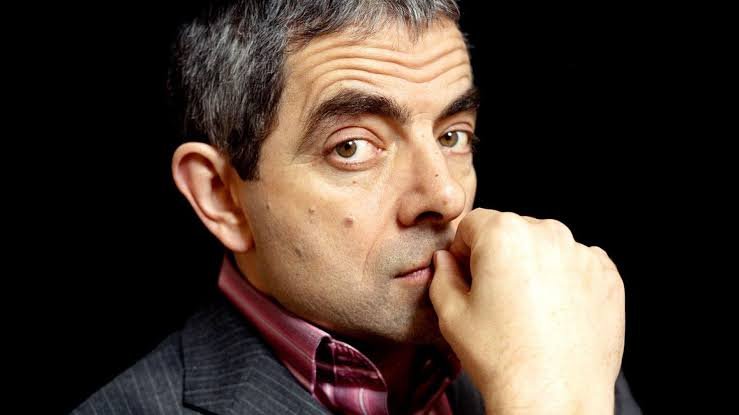
Rowan Atkinson AKA Mr Bean

Rowan Atkinson or as we know him better by the name Mr. Bean, is an important memory of everyone’s childhood. He is an outstanding comedian and an incredibly talented actor, who made us life without uttering a word.

But there is a lot more about this multi-talented personality than we know.

  • Degree in Electrical engineering

He pursued his degree in electrical engineering from Newcastle University in 1974 and earned his masters from Queen’s College, Oxford in the same subject.
He also began his doctoral work but then he decided to step into comedy.

It was an unexpected change of the field in which he pursued his career.

  • Love for cars

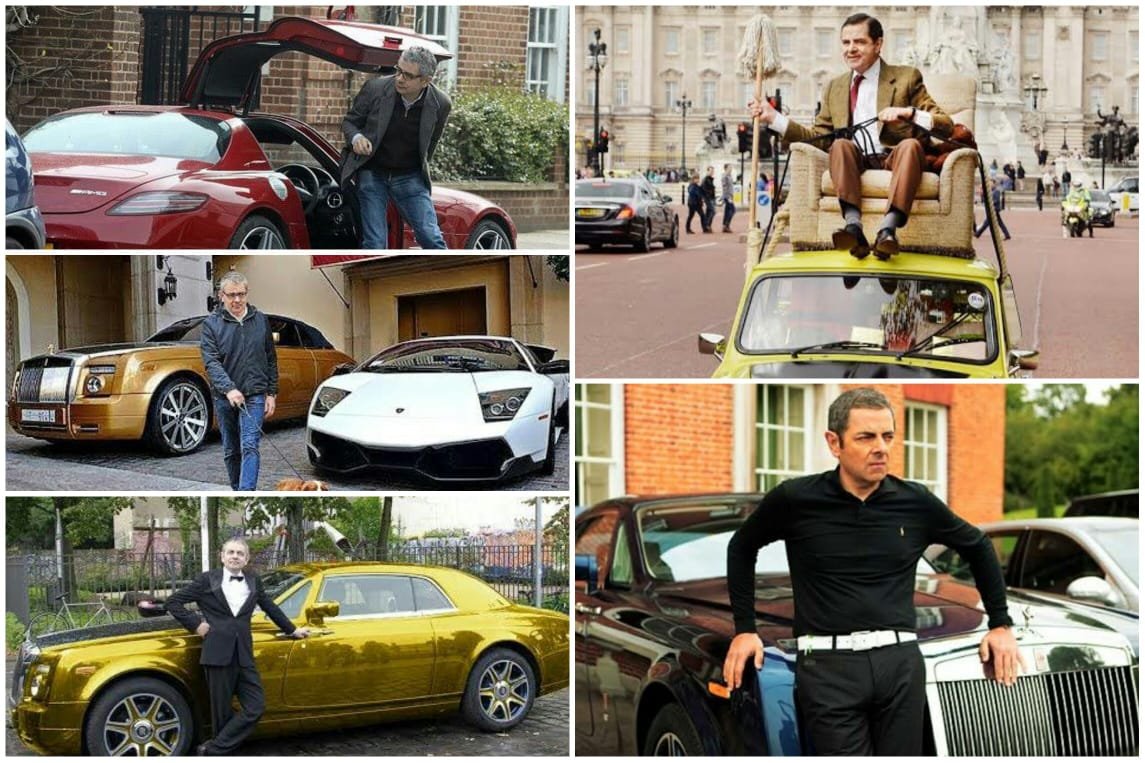
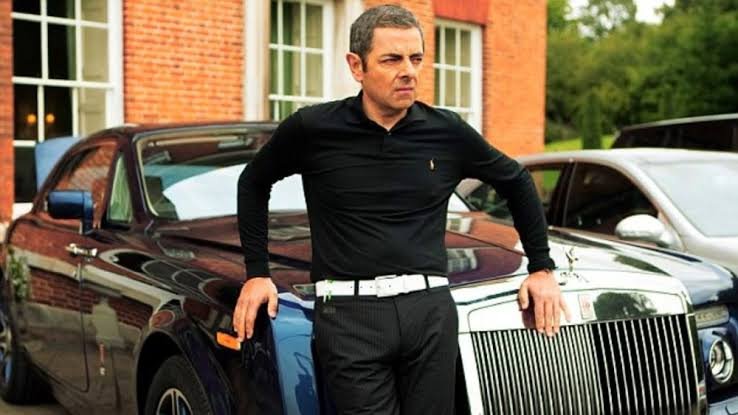
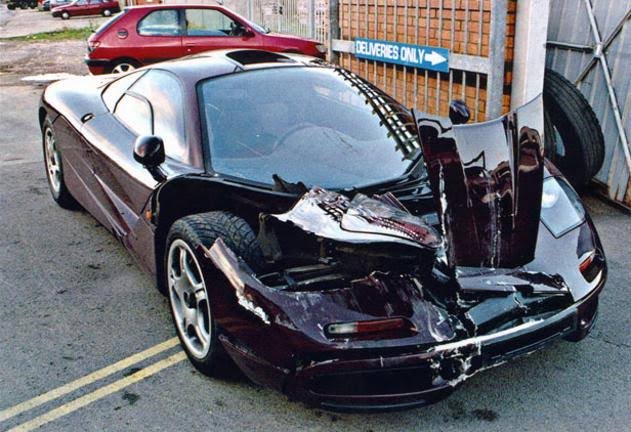
We have seen him driving a mini in the Mr. Bean series but in real life he loves cars and has a great collection of them. He also writes for some Car magazines.

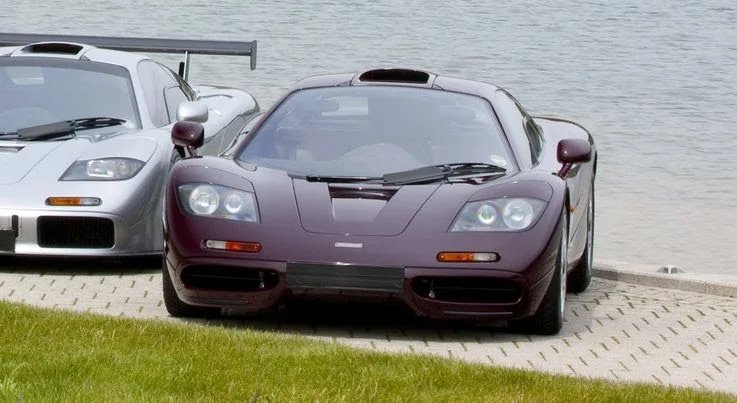
His car collection include some cars as follows:

  • Classic 1939 BMW 328

  • Rolls Royce

  • McLaren F1

  • Jaguar MK7

  • Lancia Thema 8.32 series 1

  • Land Rover Defender 90 heritage

  • BMW 328

  • Aston Martin Vantage

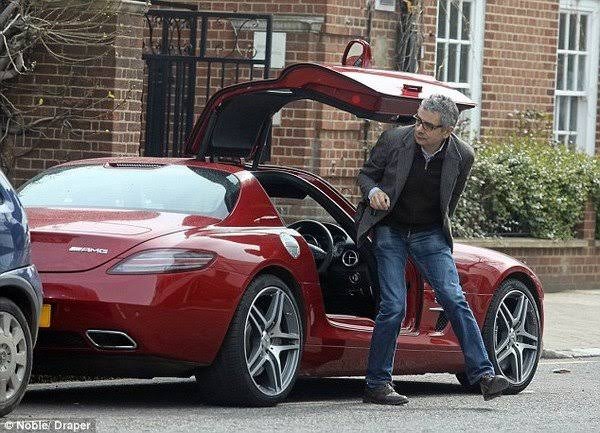
  • Mercedes Benz SLS AMG

  • Skoda superb

  • Mercedes Benz 500E

  • Aston Martin V8 Zagato

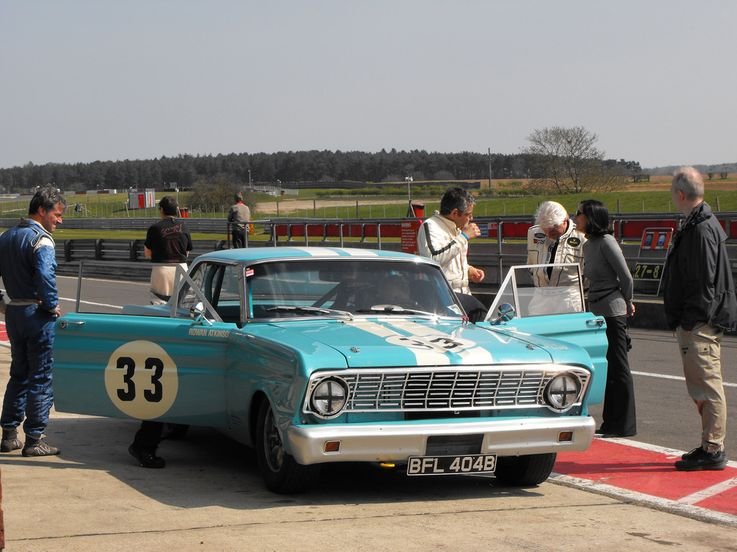
  • Ford Falcon

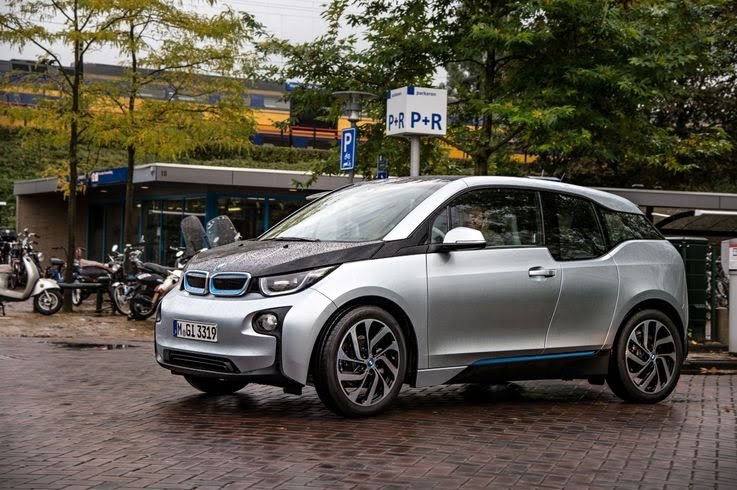
  • BMW 13

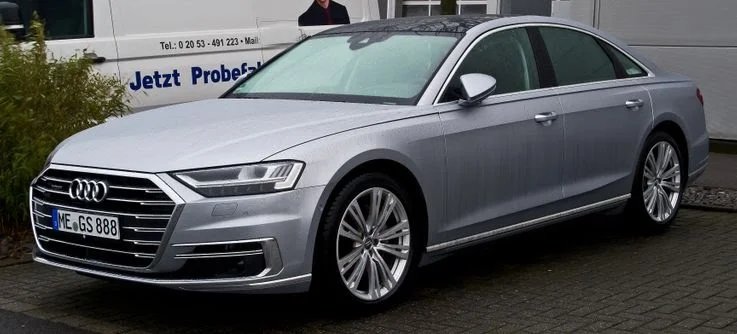
  • Audi A8

This list goes on so long that Rowan Atkinson was working on building a mansion to store his cars as they were all very expensive and needed a comfortable parking space to be maintained.

He also went into some accidents but came out with no injuries. He says that he is a thrill seeker.

Hence, he’s not only just a funny guy, but also a car guy.

  • Saved his family from a plane crash

Rowan Atkinson was flying in a private plane over Kenya along with his family. The pilot passed out and Rowan Atkinson took control of the plane even though he never piloted a plane before. He controlled the plane till the pilot gained back his consciousness and landed the plane at the Wilson Airport, Nairobi.

  • The name “Mr. Bean”

We often wondered what is Mr. Bean’s first name as we only knew his surname. This question was answered in the Mr. Bean movie where in one scene we get to see his passport.

Mr. Bean’s first name is “Mr”. Which means that his full name is Mr. Mr. Bean. Sounds strange yet funny.

Instead of the name Bean, Mr. White was finalized but Rowan Atkinson wanted to name his character after a vegetable. So the name Mr. Cauliflower was decided at first and then he came to his final choice, Mr.Bean .

  • Difficulty with the letter ‘B’

Rowan Atkinson has difficulty while pronouncing the letter ‘B’ when it is followed by a vowel. For example the name ‘Bob’. He has to take a pause before pronouncing such words.

  • Had a stammer problem for years

Rowan Atkinson had the stammer problem for many years which made him perfect for the role of Mr. Bean. It was also a reason behind him giving very few interviews.

  • Fan of James Bond

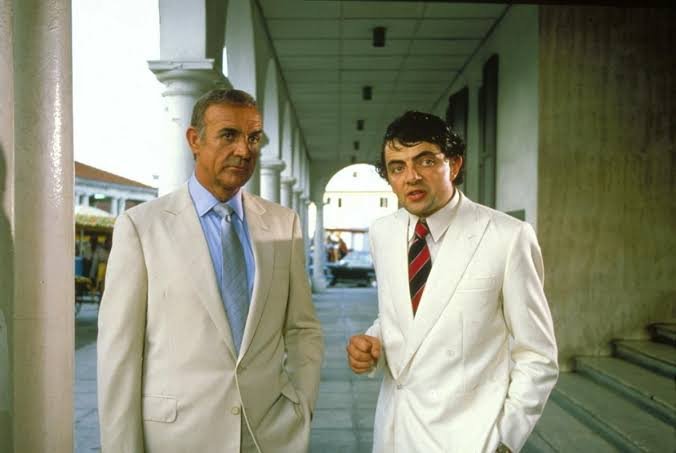
He has always been a fan of James Bond. You can imagine how great it must have been for him to play a supporting character in a James Bond movie ‘Never say Never’.

  • Private person

Rowan Atkinson likes to keep is life private to an extent that not even his close friends knew that his wife was pregnant until the child was born. Privacy is very important to him, especially when it comes to his family.

  • BCC comedy sketch show

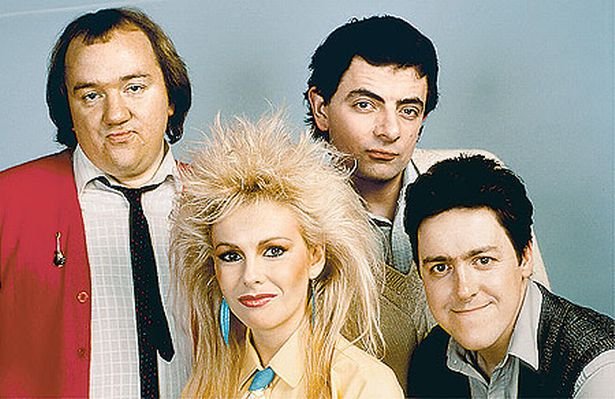
‘Not the Nine O’clock News ‘ gave a boost to his career and his name was known in the industry since then.

  • Known by the Royalties

He is one of the few celebrities who were invited to attend Prince Charles and Camilla Parker- Knowles wedding ceremony. It might be because of his charitable work for The Prince’s trust.

  • Famous shows and movies

Other than Mr. Bean, Rowan Atkinson has entertained the audience since ages by his various performances in some of the following movies and series:

  • Johnny English
  • The Tall Guy
  • Love actually
  • Never say never
  • Keeping Mum
  • Blackadder
  • The Thin Blue Line
  • Maigret
  • Not the Nine O’clock News
  • Dead On Time

His show Mr. Bean is evergreen and is watched since generations and is still a mood booster for people.

MECHANICS FOR JEE

1. KinematicsBe clear with Vectors and Basic Math, and you are done. Practice tons at this stage because you’d have an early practice of solving equations fast.
2. Newton’s Laws of MotionIt might be seeming very tough to you, but don’t worry, by the end of your course you would be really comfortable with it. Practice a lot of questions. I can’t emphasize it more. Be thorough with concepts like friction, strings, and pulleys, Normal force, Circular Motion, etc. Practice till you are perfect.
3. Work Power Energy and GravitationPractice conservation of Energy a lot. It is very important in Physics. Gravitation is linked to this. Again, look out for Energy conservation and Kepler’s law when solving Gravitation questions. Work-Energy Theorem is another important concept. Make yourself comfortable with the topic.
4. Centre of Mass and MomentumOne of the toughest chapters after Rotation. Tough nut to crack. Step one could be trying to remember all concepts and equations. It helps a lot. Be thorough with vectors. Momentum conservation relies a lot on it. Collisions has some interesting problems. Be thorough with the main formulae. Conservation of Momentum and Energy are central here. Remember positions of COM of various objects. It will be very helpful in future. Remember some basic cases in collisions(small object, heavy object, same masses, etc.) Spring questions are common. Be aware of springs in parallel/series, and basic equations.
5. RotationRotation may be a real tough nut, and JEE asks some really awesome questions from this section. This is tough and has got a good weightage. You must give a good amount of time to it. It begins with Moment of Inertia. Learn the MI of varied standards objects, and be thorough with the derivations. It will assist you just in case some questions supported calculating MI comes in JEE. Then there is a discussion of angular velocity, rotational Kinematics, etc. Pretty easy if thorough with basic trigonometry and Kinematics. Then comes torque, angular momentum, etc. This seems tough, but it will come naturally to you with time if you are clear with NLM. Remember there are only few equation, T=I(alpha), and L=Iw. Try to remember these employing a correlation with NLM. Conservation of Angular momentum is very important. Lots of questions are asked from this topic. Be clear with the axis of rotation and the point about which you are trying to conserve it. Massive problem solving will help.
6. Simple Harmonic MotionAnother basic and important topic. Remember the derivation and equations of SHM. Remember the Time Period formulae. It will save a lot of time on the final day. Questions involving finding the period of time of any system are common. Be thorough with them.
7. Fluid Dynamics and ElasticityNot vital but few easy questions come needless to say . You don’t want to miss them. Continuity equation, variation of pressure with depth, and Bernoulli equation are important. Try to do some questions of Surface Tension too(JEE has asked some really tough questions from this topics). Elasticity has a graph of Stress vs Strain. Remember it well. These chapters have a bunch of long equations. Try to remember them. There might be a few questions at least in JEE(Main) where you would need to evaluate the expression.
So, this was it. Coming to the preparation strategy, first of all hear your coaching lecture/online lecture and do homework, and discuss in school if you’re during a coaching. This will help you clear Mechanics.
Coming to books(and hence the self-study guys too) HCV is that the god-book for Mechanics. Read every line(irrespective of whether you’re during a coaching or not), understand everything and solve each question. Solutions are available somewhere on the Internet I guess(don’t know if they are copyrighted or something, so beware). Discuss with teachers. If you sincerely solve all questions of Mechanics then nobody can stop you from being a Master of Mechanics. I also recommend reading NCERT. It gives a wonderful insight into the subject and will prepare you for JEE(Main) and Boards too. If you would like more objective practice, choose DC Pandey Problems book. Deb Mukherjee’s book is really good for conceptual questions. And then comes the GOD- I.E. Irodov. This will prepare you for Olympiads, and for facing any question in JEE(Advanced). Solve this only if you have time and are done with the above stuff. Better do it during Holidays. But trust me, Irodov will offer you an upper edge if you’re aiming for a top 100 rank approximately .

The Paradox of Behavior Change

The natural tendency of life is to find stability. In biology we refer to this process as equilibrium or homeostasis.

For example, consider your blood pressure. When it dips too low, your heart rate speeds up and nudges your blood pressure back into a healthy range. When it rises too high, your kidneys reduce the amount of fluid in the body by flushing out urine. All the while, your blood vessels help maintain the balance by contracting or expanding as needed.

The human body employs hundreds of feedback loops to keep your blood pressure, body temperature, glucose levels, calcium levels, and many other processes at a stable equilibrium.

Martial arts master George Leonard points out that our daily lives also develop their own levels of homeostasis. We fall into patterns for how often we do (or don’t) exercise, how often we do (or don’t) clean the dishes, how often we do (or don’t) call our parents, and everything else in between. Over time, each of us settles into our own version of equilibrium.

Like your body, there are many forces and feedback loops that moderate the particular equilibrium of your habits. Your daily routines are governed by the delicate balance between your environment, and many other forces. As time goes on, this equilibrium becomes so normal that it becomes invisible. All of these forces are interacting each day, but we rarely notice how they shape our behaviors.

That is, until we try to make a change.

The Myth of Radical Change

The myth of radical change and overnight success is pervasive in our culture. Experts say things like, “The biggest mistake most people make in life is not setting goals high enough.” Or they tell us, “If you want massive results, then you have to take massive action.”

On the surface, these phrases sound inspiring. What we fail to realize, however, is that any quest for rapid growth contradicts every stabilizing force in our lives. Remember, the natural tendency of life is to find stability. Anytime equilibrium is lost, the system is motivated to restore it.

If you step too far outside the bounds of your normal performance, then nearly all of the forces in your life will be screaming to get you back to equilibrium. If you take massive action, then you quickly run into a massive roadblock.

Nearly anyone who has tried to make a big change in their life has experienced some form of this. You finally work up the motivation to stick with a new diet only to find your co-workers subtly undermining your efforts. You commit to going for a run each night and within a week you’re asked to stay late at work. You start a new meditation habit and your kids keep barging into the room. 

“Resistance is proportionate to the size and speed of the change, not to whether the change is a favorable or unfavorable one.”

The forces in our lives that have established our current equilibrium will work to pull us back whether we are trying to change for better or worse. In the words of George Leonard, “Resistance is proportionate to the size and speed of the change, not to whether the change is a favorable or unfavorable one.” 

In other words, the faster you try to change, the more likely you are to backslide. The very pursuit of rapid change dials up a wide range of counteracting forces which are fighting to pull you back into your previous lifestyle. You might be able to beat equilibrium for a little while, but pretty soon your energy fades and the backsliding begins.

The Optimal Rate of Growth

Of course, change is certainly possible, but it is only sustainable within a fairly narrow window. When an athlete trains too hard, she ends up sick or injured. When a company changes course too quickly, the culture breaks down and employees get burnt out. When a leader pushes his personal agenda to the extreme, the nation riots and the people re-establish the balance of power. Living systems do not like extreme conditions.

Thankfully, there is a better way.

Consider the following quote from systems expert Peter Senge. “Virtually all natural systems, from ecosystems to animals to organizations, have intrinsically optimal rates of growth. The optimal rate is far less than the fastest possible growth. When growth becomes excessive—as it does in cancer—the system itself will seek to compensate by slowing down; perhaps putting the organization’s survival at risk in the process.” 

By contrast, when you accumulate small wins and focus on one percent improvements , you nudge equilibrium forward. It is like building muscle. If the weight is too light, your muscles will atrophy. If the weight is too heavy, you’ll end up injured. But if the weight is just a touch beyond normal, then your muscles will adapt to the new stimulus and equilibrium will take a small step forward.

The Paradox of Behavior Change

In order for change to last, we must work with the fundamental forces in our lives, not against them. Nearly everything that makes up your daily life has an equilibrium—a natural set point, a normal pace, a typical rhythm. If we reach too far beyond this equilibrium, we will find ourselves being yanked back to the baseline.

Thus, the best way to achieve a new level of equilibrium is not with radical change, but through small wins each day.

This is the great paradox of behavior change. If you try to change your life all at once, you will quickly find yourself pulled back into the same patterns as before. But if you merely focus on changing your normal day, you will find your life changes naturally as a side effect.

DREAMS WE LIVE FOR

Usually dream is our imagination that we see while sleeping . Dream is both positive and negative, Negative one is called nightmare. Dream is not to fulfill something, dream is to imagine something and through that imagination make It true.Dreams are just like flowers,we can’t imagine our life without and as such we have to take care of just as we do with flowers to grow up as we want. Every one in this life has his own dreams and lam that one who has alot of dreams and l would like all my dreams to come true one day. One of my dreams is to take a trip around the world, so that l would be able to get knowledge and insight about that an unknown world for me. I know that is impossible to happen but l belive in God’s power that can be able to turn the impossible to possible. For that l keep on praying him to make it true. And doing hardwork for my dreams to make it true. Dreams are not just dreams for me , it is very important in my life and I want to fullfil my all dreams. I don’t have a single dreams , I have a lot of dreams like learning guitar, trained in Kathak, learning swimming, horse riding, write a book on my dad, buy a penthouse, live in high hills for few months, punchy jumping, want to go Paris and a lot.

Every human being has a dream which he/she believes to make that actually happen in the near future.

I dream of a world made up of good people which includes their choices, their passions, their likes & all the good things that they desire. In fact we cannot live in such a world which exists in my dream but I think in dreams we can make anything happen.

My dream is big, wide and far away from this real world. My dream world has no place for violence and hatred. We all are seeing a lot of bad things in the televisions and newspapers that is happening in various parts of this world today. I want to see those world which their is no place for violence. I want to see a peace world with happy and helpful people. And all support each other and understand each others feelings and give respect to their feelings.

I dream of a world where everybody helps each other and there is no place for jealousy among people. It is a place where people are not segregated in terms of caste and creed. There is no difference between the poor and rich, but all are considered as equals.

My dream world is full of goodness & fun which we hardly see in this real world. Today we are not safe to live in this world no matter where we are but in my dream world everybody is safe. Though I dream of an imaginary world still deep down in my heart I sincerely wish that someday this world become a better place to live by replacing hatred with love & harmony. It’s high time for all of us to realize our responsibilities and guide our new generation towards the right path. Teach our new generation how they make our world more beautiful and free from all disturbing particles ( including better environment, humanity, respect, peace, love for each other, no discrimination on the basis of caste, religion, rich and poor etc.)

KASHMIR: Heaven turned to Hell!

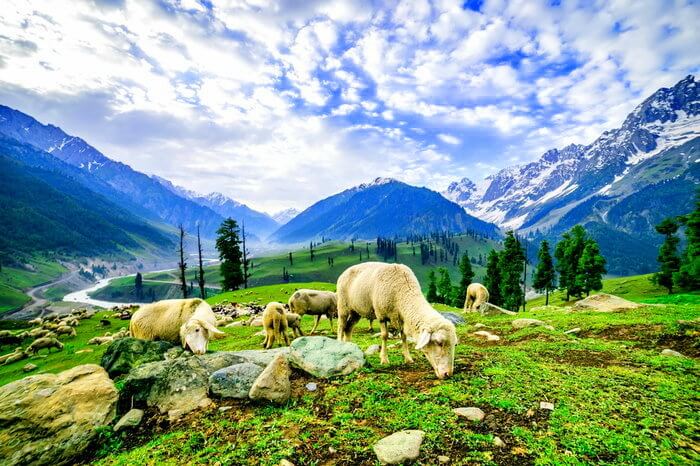
Heaven on Earth, KASHMIR!A beautiful valley in the northernmost part of India is KASHMIR. It is a part of the state called Jammu & Kashmir, and, is surrounded by a few highest mountain ranges.
HISTORY OF KASHMIR: This place was known as KASHYAPAMAR, later KASHMIR. During 300BC, Kashmir Was Ruled By King Abisares Princely Kingdom Part Of Indian Rulers. A few Years Later Kashmir Was Re-Captured By Indian King Ashoka, during this period Kashmir was the hub of Hindus and Buddhists, this was the time when Mauryan Empire built the City of Srinagar.
Kashmir was ruled by the Afghan Durrani Empire from 1752 to 1819. After that, in 1846, Gulab Singh took the title of Maharaja of Jammu & Kashmir, till 1947, Maharaja’s of Gulab Singh’s Dogra dynasty ruled Kashmir as a princely state under British Paramountcy.
At the time of partition, the rulers of princely states were given the right to choose between being the part of either India or Pakistan or to remain independent. Maharaja Hari Singh decided not to be the part of any country; neither India nor Pakistan, and to stay neutral. India respected the decision, but Pakistan did not! Pakistan tried a lot to make Maharaja of Kashmir agree for being ready to part of Pakistan. The soldiers of Pakistan attacked J&K, Maharaja asked India for the help of the people of Kashmir who were being killed and looted, he agreed for making J&K part of India. Prime Minister Jawaharlal Nehru agreed to rescue his people from Pakistani attackers. Indian soldiers were thrown out the Pakistani raiders from J&K, but, a large area remained in their control. Their areas were not so easy to reach as they were surrounded by big mountain ranges. The fight ended in 1949 as India did not want the war to continue. The state was termed as ‘Distributed Territory’.
KASHMIR: A HAPPY PLACE!
The state is divided into three administrations under Article 370 – J&K under India, Azad Kashmir under Pakistan and Aksai Chin under china. Kashmir Valley is under Indian governance. The most beautiful tourist spots are in Kashmir, Shalimar Bagh, Chasme Shahi and Pari Mahal, few lakes such as Dal Lake, Wular lake, Manasbal lake – lie within the Kashmir Valley. The Kashmiris have dual citizenship, Indian as well as Kashmir citizenship. Asia’s fourth longest railway tunnel is located in Kashmir, the Banihal railway tunnel which is 11,215 km long. Lives in Kashmir were full of enthusiasm and joy, there were no friendship barriers based on caste and religion, but, Pakistan wanted to rule over the whole state, which leads to several fights and protests.
CHANGED KASHMIR!
In July 1988, the Jammu Kashmir Liberation Front (JKLF) started speaking for the independence of Kashmir from India. On 14 September 1989, they killed Tika Lal Taploo and a prominent leader of Bhartiya Janta Party. This incident made the Kashmiri Pandit’s anxious, they felt unsafe there. On 4 November 1989, Highcourt judge Neelkanth Ganjoo was killed in Srinagar, and, this continued.
On 4 January 1990, a threatening message was printed for Kashmiri Pandits in Srinagar-based newspaper about leaving Kashmir immediately, On 14 January 1990, the same warning was re-published. The walls were painted with threatening messages for Kashmiri pandits for accepting Islamic rules, The buildings, shops were coloured green as a sign of Islam. Homes, factories, shops of Kashmiri Pandits were burned and destroyed. All these actions were being held for forcing Hindus to leave Kashmir. On 18 and 19 January, during the middle of the night, a blackout took place in Kashmir Valley except for the Mosques. On 21 January 1990, Gawkadal massacre took place, many Kashmiri Pandit’s were killed, burnt alive. this resulted in the mass migration of Kashmiri Pandits. On 29 April 1990, a Kashmiri poet, Sarwanand Kaul was brutally murdered. On 2 February 1990, Satish Tikoo, a young Hindu social-worker was murdered near his own house. Many Hindu women kidnapped, raped and murdered.

A bolt from the blue

After a whole day of posting stories and posts about mental health issue, that they are there for you, people are returning to their real self. I mean that the people posting stories and post about mental health and depression after Sushant Singh Rajput’s death are brilliant at doing hypocrisy but what amazes me is that their hypocrisy level is improving with every passing year.


How can these people even think that just by updating posts and stories on Instagram, Facebook, Twitter and WhatsApp people in distress will reach them out . If reaching out was that easy amazing people like Sushant would never have committed suicide.


People are ignorant to the fact that it’s difficult for people suffering from depression and anxiety to share their feelings and thoughts with others. They will only seek your help if they trust you and are comfortable sharing their suffering with them. How can they expect that their once in a blue moon social media stories about mental health will make them frank enough to share their feelings with you. A depressed person will only come to you if they are fully assured of the fact that no matter how ugly the situation gets they can rely on this person or this person will always be there for supporting their back.


The tragic death of Sushant Singh Rajput is a warning bell for all of us that we need to stop doing back bitching, stop demotivating a person because while we are doing all these things we really aren’t aware of the situation which the person in front of us is going through. We don’t know what his mental condition is or how he reacts to different situations. Everybody has a different approach to deal with negative things. Some might take it in a positive way, some might get affected and start feeling depressed, some might not be affected at all. We really don’t know how a person gonna react to the negativity which we are pouring on him/her by intent or unintentionally. So it’s always better to not force a person into any negative situation or suffering by one’s actions and words it won’t do any harm to us.


A year back no one would have ever thought that such a brilliant actor like him would end his life on such a sad note. The news of actor demise came to the countrymen as a bolt from the blue. A person who came from a non-filmy background who achieved such a high position in the film industry just with his sheer hard work and perseverance without the help of any godfather, left us so soon. It’s hard to believe that a person with such a bright future ahead lost his life to depression. What forced a person with such a infectious smile and innocent heart to take such a drastic step of ending his life is not known to anyone. What hurts the most is that a person with millions of fans around him didn’t found a single friend reliable to share his pain. Not a single person in his group circle got the warning message behind his different behaviour.


It can be said that he was destined to leave us so soon and it’s not always easy for the closed ones to know what a person is going through. How is that possible family and friends are there to help you out and lift you up, and if a person wasn’t able to share his feelings with you then there must have been some instances in the past when he has asked for your help and you would have just ignored his request.


I just pray and wish that he find a better place where he and his talents get as much acknowledgement as they deserve. SSR deserve a life much better than this and I hope he get one soon.


It’s high time we should realise that money has nothing to do with peace of mind and happiness as they come from the people around you and the things that really excites you. When a person with all sufficient means was forced to take such an action we need to get that straight that mental health is as important as physical health and we should start giving it as much attention it deserves.


Life is quite very unpredictable, you don’t know what is going to happen the very next moment, so it’s better to take care of people who really matters to you and at least help those who are around you, because your single positive effort can save and change someone’s life.

Spread and Impact of Fake News

Fake news is nothing new. We have entered a new world of the media with a speed unheard of and technology makes the spread of ideas faster and more adaptable, hence making it easier for propaganda material to reach more people. Also the advance of new forms of digital media have posed serious challenges for quality journalism. These challenges include a decrease in critical thinking among audiences making them more susceptible to disinformation and manipulation and results in false information reaching the public either deliberately or by accident which results in what we know as fake news today. Fake news is /can be defined as the promotion and propagation of news articles via social media. These articles are promoted in such a way that they appear to be spread by other users, as opposed to being paid-for advertising. The news stories distributed are designed to influence or manipulate users opinions on a certain topic towards certain objectives. Fake news has gained great prevalence in intergovernmental and national policies and regulation. Some believe it is an old media practice of propagating false information that has been in existence since the media was established and journalism became a profession. Others see it as a brand new threat and challenge to democracy and international order. At the same time no general standardized, judicial and institutional framework on how to deal with the phenomena behind the notion of fake news has been found so far.

Fake news is indeed a descendant of propaganda, false rumors, and political manipulation. They include satire or parody ( which has no intention to cause harm but has potential to fool),  false connection (when headlines, visuals of captions don’t support the content), misleading content (misleading use of information to frame a person or an issue), False content (when genuine content is shared with false contextual information), imposter content (when genuine sources are impersonated), manipulated content (when genuine information or imagery is manipulated to deceive), fabricated content (new content is 100% false, designed to deceive an individual). Fake news creators make money in very similar ways from how traditional news companies make money, from advertisements. They have display advertising for which they receive a small portion for every person who visits that page. Their goal is to get the news to go viral so a lot of people will visit hence more social shares mean more page views which result in more money. Since a lot of the fake news appears and is shared through Google and Facebook, they have taken steps to do something about it which include cracking down on fake news sites, restricting their ability to garner ad revenue. Google announced that it will prohibit “misrepresentative content” from appearing on its advertising network. Facebook says it will not place advertisements from fake news publishers on third party apps or websites, because the content falls under the category of “illegal, misleading or deceptive” content. Perhaps that could dissipate the amount of foolishness and hogwash online, though news consumers themselves are the best defense against the spread of misinformation.

As readers or general public, we can respond to fake news by looking out for signs such as misspellings in content and awkwardly laid out website, click-bait headlines, doctored photos and image, absence of publishing timestamps, lack of author, sources, and data etc. Lets hope that by becoming aware of the techniques used, we become more resistant to these methods and hence keep our society progressive for the future generations.

The bitter truth about the “wokeness” surrounding mental health.

Depression is termed as a mood disorder that makes the person affected be constantly in a state of low mood with an aversion to activity. It is said to be a constant feeling of sadness. But is it though? I don’t think it so simple to term something that can eventually lead you to take your own life, or at the very least haut you with suicidal tendencies for the rest of your life. I think we all know where I am going with this, Sushant Singh Rajput. He surely was a brilliant actor, a profound intellectual and definitely a charming person overall. However, this isn’t one of those posts. I am not going to jump to either bandwagon be it that he wasn’t strong enough or that he was yet another victim. This isn’t simply a black and white issue, and for what it’s worth, there isn’t simply one culprit in this case.

Photo by VisionPic .net on Pexels.com

Sushant was the very definition of someone who struggled against the real world to make it to the reel industry. But since he didn’t have much of a background or a godfather so to say, he was often relegated. That is all I am going to say on this topic, because unnecessarily bringing up his name seems a bit desecrating. Which brings me to the point out the despicable behavior of not just the media and the supposed “heavenly” B-town members but also the common people on social media. In an effort to seem much more emotionally matured and woke, every one gave their own eulogy to him constantly tagging him on social media. These people never once thought about what his family and loved ones would think when they saw a gazillion fake eulogies and crocodile tears, all the while they themselves aren’t ready to accept this death. I believe we as a society get a voyeuristic pleasure from doing all this. Some people based on tiktok and similar apps even devised click-baits surrounding this issue. As if this wasn’t enough, another trend that has risen is a supposed wokeness in terms of mental health, where people would post on social media that they are ready to listen and mend the depression of random strangers online, never considering the fact that they are the same people who unnecessarily troll and bully others. They say whether or not I know you I’ll help you out, even when they have never helped their family or friends. Its easy to assume that people can talk to random strangers or call helplines to prevent their depression. How can they do that when they aren’t even able to approach their friends or family. While the present generation at least acknowledges depression and suicidal tendencies of those suffering from it, a majority of the older generations feel that it isn’t something to worry about, that those who feel or do so are simply weak minded. Its not that easy to approach someone, when you yourself keep on doubting your self-worth. And the fact that people have taken the mantra of “I’ll help you just reach out” in order to increase their social standing and to seem hip in the present times doesn’t feel leave a good taste in anyone’s mouth. I do not think I even have to mention how despicable and self-serving Indian media is, which while being controlled by money-hungry media houses isn’t that surprising. For you need to be worse than the lowest scum to term someone’s suicide as a “hit-wicket”. For someone to take their own life, they definitely must have suffered when they had lived. However, by doing so we do not let the dead rest even in death.

This “wokeness” is definitely a nine days wonder, and soon this too will pass and we all will be back to our hateful and spiteful selves. Should something change in our way of living would certainly be a god blessed miracle