

it is the basic of something i post completely details later tomorrow
Author: Educational News
Educational News Portal
Importance of Internship in College

Internship is important for career advancement and gaining new skills.

Section 66A Of IT Act,still relevant ?
How does this act came into existence ?
Section 66A of the Information Technology Act (“IT Act”), 2000, came into existence through an amendment in 2008. This section penalised sending “offensive messages” via online communication. provision was often misused by enforcement authorities and caused problems over freedom of speech on internet.
Case of shreya singhal vs Union of India
Two girls were arrested in Mumbai over criticising the bandh in maharashtra over demise of shiv sena chief Bala sahib Thackeray in November 2012. One of them posted illegal content while another one simply liked it, both of them were booked under section 66A of IT ACT and section 295A of IPC.
Although,both of girls were released and charges were dropped but this act invited criticism from all over the country.
Shocked by misuse of law by the authorities, Shreya singhal filed an PIL in 2012 to declare section 66A of IT ACT 2000 as unconstitutional.
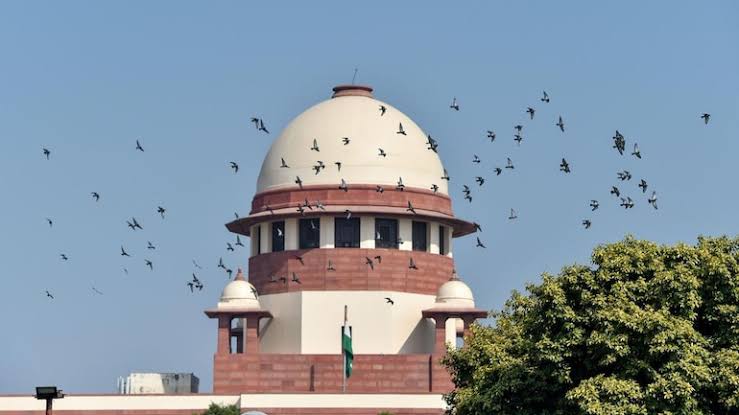
On March 24, 2015 the Hon’ble Supreme Court of India passed a landmark judgement in this matter. The Hon’ble Supreme Court came out with judgement that Section 66A of the IT Act is arbitrarily and disproportionately affects the right to freedom of speech. Also, all the pending cases were directed to be dismissed and no fresh cases were to be registered under this scrapped section 66A of IT ACT.
Why is section 66A of IT Act in news in 2021 ?
Even,after this section was scrapped,many fresh cases were registered under this section of IT act. A plea was filed by PUCL ,it came into light that even after 7 years of the law being scrapped. total of 745 cases are still pending and active before the district courts in 11 states, under Section 66A of the IT Act. Supreme court have sent a notice to centre, demanding why this scrapped section is still in use and why not proper measures are taken till now.
My source of inspiration 방탄소년단

“Tell me your story. I want to hear your voice, and I want to hear your conviction. No matter who you are, where you’re from, your skin color, gender identity: speak yourself.”
-BTS(UNICEF)
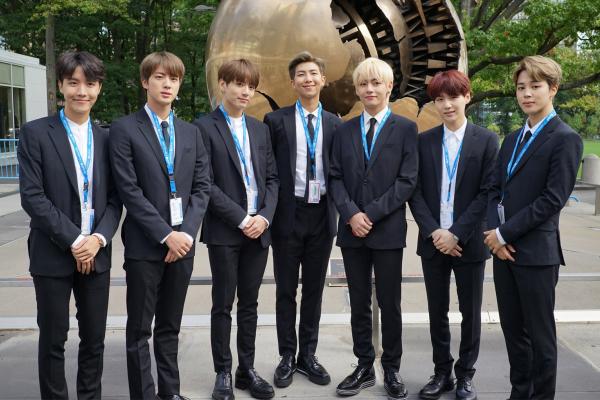
Bangtan Boys also known as BTS is a Korean-pop group, currently the biggest phenomenon of the music industry with a huge fandom named A.R.M.Y. It is a seven-member boyband and their names go like this, Kim Namjoon(RM), Kim Seokjin(Jin), Min Yoongi(Suga), Jung Hoseok(Jhope), Park Jimin(Jimin), Kim Taehyung(V), Jeon Jungkook. BTS debuted on 13th June 2013 under Bighit Entertainment.

BTS, through their songs, talk about personal issues and society’s expectations, and commentary on youth. They focus on mental issues, depression, and almost everything that people usually don’t prefer to talk about. Moreover, they are inspiring and touching the hearts of millions of people every day through their lyrics. From the beginning of their career, they told stories that are very much familiar to our stories like teenage love affairs, the desire to achieve everything, society’s expectations on you, depression. So basically, it’s like a guy next door story which we all can relate.
“If you want to love others, I think you should love yourself first.”
-RM
“Don’t be trapped in someone else’s dream“
-V
Back in 2013, BTS was completely unknown to the world they hardly had 200 to 300 people to cheer them up. All seven of them used to live in a small dorm with very little to no luxury, they were discriminated against by the other companies as they come from a small and completely underrated company(Big Hit). They were never invited to big shows, got so much hatred and criticism from the pop community because of their looks, clothes, make-up, and were accused of false plagiarism. But despite the hardships they have faced, they’ve pushed themselves and never lost hope. They fought together, stood against the negativity, and motivated themselves to just moved on to make a better version of themselves every day. They released 22 albums till now each album sharing a different story. They have learned to love themselves for who they are and accept their flaws. Just like that, they want us to love ourselves and end self-hatred and bring peace into our lives.






“In the middle of the road, at the moment you want to give up, shout out even louder: “So what?”
-BTS
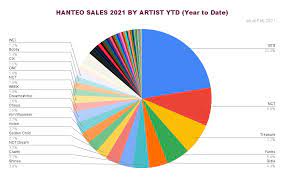
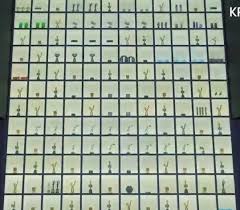
And now, their efforts paid off. They have won 370 awards including National awards, Billboard awards, Asian artist awards, the American Music Awards, etc. 549 nominations including the Grammys. And attained 26 Guinness World records and broke the records of Michael Jackson and The Beatles. They got covered by TIME magazine as “The next generation heroes”. They are the brand ambassadors of Hyundai, FILA, Louis Vuitton, Samsung, Coca-Cola, and many more. BTS delivered a speech at the UN general assembly as a part of the “LOVE MYSELF” campaign that they have launched in 2017 and partnered with UNICEF’s “End Violence” program. BTS generates 4 trillion Korean won as economic value to their country per year and 1.42 trillion won as added value per year, according to the 2018 report( Hyundai Research Institute). BTS contributes 1.7% of total Korean consumer goods export.
“Love myself, love yourself, peace.”
-Suga




“Find your name, find your voice by speaking yourself.”
-RM
Their growth is phenomenal.
From small dorms to spacious hotel rooms.
From congested practice rooms to a multi storey building.
From 200 fans to millions of ARMYs.
From a few lightsticks to an ocean of purple lights.
From small-town boys to Global leaders.
From ordinary teenagers to legends.
“In the dark night, don’t be lonely, Like the stars, we shine, Don’t disappear, because you’re a great existence, Let us shine”
-BTS(Mikrokosmos)
“Purple is the last colour of the rainbow colours. So means I will trust and love you for a long time.”
― Kim Taehyung

They have achieved everything they wanted but always stay the same as they were a few years ago. This is a story of models, dancers, singers, philanthropists, the next generation leaders, and more importantly our well-wishers.
Their journey is worth telling, as an ARMY I will not stop narrating this story to the world.
credits to the right owners of the pictures used.
When my thoughts met the two faced words.
Never in my life had I thought you’ll fade away. Never in my dreams had I thought you’ll forget everything. Never in million years had I thought I will lose you.
Nothing lasts forever; neither things nor people. Life is all about accepting these facts. That’s all I have heard from people and I hate to agree but they are right.
But are changes easy to adapt?
BUT: always grabs people’s attention. There is always a but that makes people more attentive and conscious.
What if things come back on track?
WHAT IF: always makes people observant. There’s always a what if that brings hope or despair in a sentence. And it is hope that every tomorrow hurts a lilttle less than yesterday and it is despair that weakens us every now and then.
Words are just a medium to express our emotions. There are thousands of words expressing enormous amount of emotions in a sentence, but these two words added a lot of aspiration, distress, consciousness, attentiveness in my thoughts:
But what if my plan works?
PLANS: are made to be cancelled; unsuccessfull. Maybe that’s why I had planned some meetings, some trips, me dancing at your wedding and you singing channa mereya at mine. Lol.
But what if you’re happy this way?
HAPPINESS: a state of mind. Never knew whether I made you happy or not. Maybe that’s why I was always scared and awkward before doing something for you. Lol.
But what if we are destined together?
DESTINY: a predetermined state. One never knows their fate still we hope. Maybe that’s why I was holding onto you for so long.
But what if I lose you?
YOU: my all. My best friend, my love, my soulmate, my strength, my weakness. My all. You have been my comfortzone all these years; have made me laugh in my toughest times; have been my support throughout.
Never in my life had I thought I would be writing this to you. Never in my life had I thought life will lead to this. Never in my life had I thought you will fade away.
TYPES OF REFLECTION
We have learnt that not all bodies can reflect light rays. The amount of reflection of light depends on the nature of the reflecting surface of the body. Based on the nature of the surface, reflection can be classified into two types namely,
Regular reflection
Irregular reflection

REGULAR REFLECTION
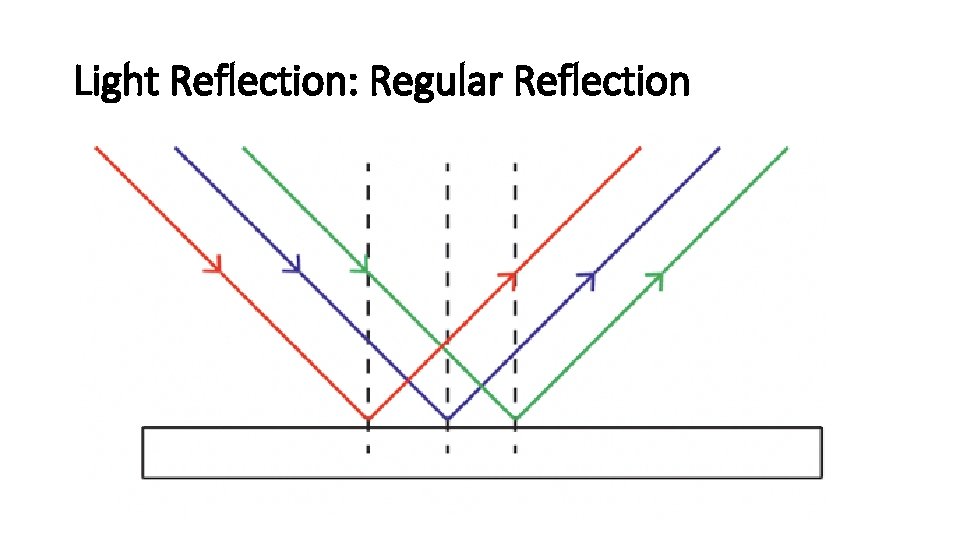
When a beam of light (collection of parallel rays) falls on a smooth surface, it gets reflected. After reflection, the reflected rays will be equal. Here, the angle of incidence and the angle of reflection of each ray will be equal. Hence, the law of reflection is obeyed in this case and thus a clear image if formed. This reflection is called ‘regular reflection’ or ‘specular reflection’.

Example: Reflection of light by a plane mirror and reflection of light from the surface of still water.
IRREGULAR REFLECTION
In case of a body having a rough or irregular surface, each region of the surface is inclined at different angles. When light falls on such a surface, the light rays are reflected at different angles. In this case, the angle of incidence and the angle of reflection of each ray are not equal. Hence, the law of reflection is not obeyed in this case and thus the image is not clear. Such a reflection is called ‘irregular reflection’ or ‘diffused reflection’.
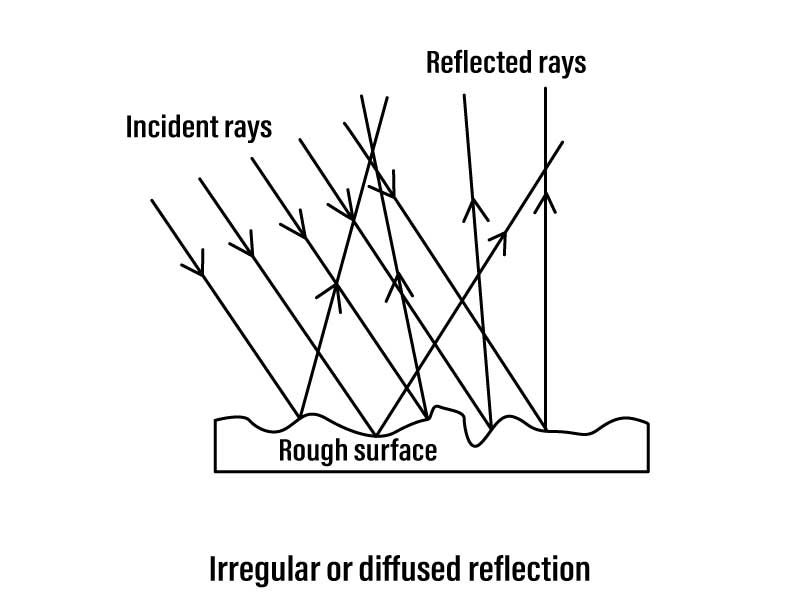
Example: Reflection of light from a wall.

Importance of internship
internship sound daunting, don’t they?
It may be your first real job, the pay is low, the hours long, and you are at the bottom of whichever career ladder you seek to climb.
But—
Though these points are true in most cases, there are many benefits of internships, as well. In fact, taking that internship now may just help you skip a few rungs on your way up that career ladder in the future.
Application of education and career exploration.
Internships are a great way to apply the knowledge from the classroom to real world experience. Learning is one thing, but taking those skills into the workforce and applying them is a great way to explore different career paths and specializations that suit individual interests.
Actual Work Experience
When you’re in college or a fresh grad, your resume probably looks as if it was printed in invisible ink—there’s not much on there, right?
The number one reason for taking an internship is for gaining actual work experience.
Sure, you may have worked as a barista or SAT tutor part-time, and you can definitely add those items to your resume. However, if your dream is to be a web developer at Facebook or practice environmental law to help fighting climate change, those high school jobs or college gigs are nothing more than filler on your job resume or cover letter.
On the other hand, internships are where you get to obtain experience in the field you’ll pursue on your career path. It’s a job, and likely the first one on your resume and cover letter that’ll make a future hiring manager sit up and take notice.
Gain experience and increase marketability
Having an internship gives you work experience in the career field you want to pursue. Not only does this give individuals an edge over other candidates when applying for jobs, it also prepares them for what to expect in their field and increases confidence in their work.
A Paycheck
For most intern programs that don’t offer college credits, and even for some that do, a regular paycheck is one of the most desired benefits of internships.
While interns’ paychecks are usually considered peanuts when compared to the “real” employees at the company, were you to compare, it’s still money in the bank. Rather than bartending to help you pay for college expenses (unless that’s where your heart lies), a paid internship in your chosen field will put some cash in your wallet while earning invaluable industry experience—a win-win, right?
Professionalism
Internships can provide students with the soft skills needed in the workplace and in leadership positions. In a (2018), 57% of people rated soft skills as being more important than technical skills. Skills, such as communication, leadership, problem-solving, and teamwork can all be learned through an internship and utilized beyond that experience.
Build your resume
Most organizations and jobs that you apply to following graduation want employees to have some sort of professional experience, even for entry level job. In the event that you are a finalist for a position and haven’t had an internship experience but the other finalist has, you may lose out on a job opportunity, so make sure you at least have one internship on your resume before leaving college to give you a leg up on the competition.
Malala Day-12th July
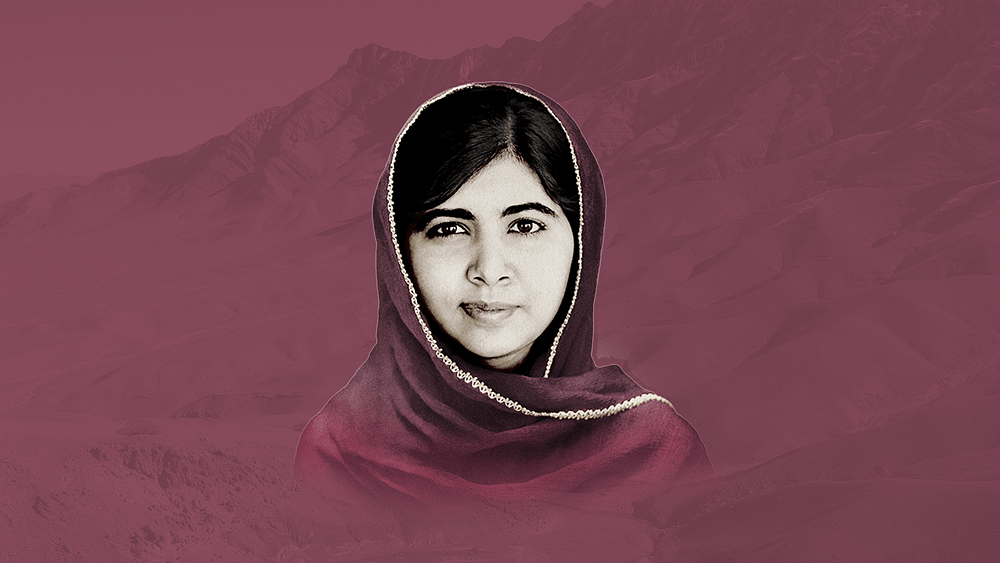
Through education, we can fight terrorism,
not through guns, not through weapons.” -Malala Yousafzai
On 12th July, 2013, Malala day was declare in the honor of the young activist Malala Yousafzai by United Nations (UN), which is also her birthday. On 12th July a sixteen-year-old girl delivered declamatory speech at the United Nations headquarters on the need for gender equality in education, engaged in promotion of women’s education. Malala Day is commemorated to honour women and children’s rights around the world.
Who is Malala Yousafzai?
Malala was born on 12th july,1997, in Mangora Swat district in North-West Pakistan into a Sunni Muslim family. She born and raised in a country where only boys were allowed an education and Taliban dominated the law. But she had her father and family on her side. Her father is also an activist who believed that the lack of education was the root of all problems in Pakistan. She studied in public school which was funded by his father. Her father always encouraged her to fight against wrong and pursue politics.
The Taliban took over the city in which she lived and banned girls for attending schools in 2007 but Malala refused to renounce her right to an education. Her father noticed her passion to fight for her and others against the Taliban’s oppressive campaign. He took to Peshawar to speak to local press club and at the age of 11 she gave her first speech at Peshawar, where she asked “How dare Taliban take away my basic right to education?”. Malala started to write a blog about life under Taliban rule under pseudonym of “Gul Mkai” in 2009 and also expressed her desire to go to school for the BBC. However she was revealed in December of the year. But with growing platform, malala continued to speak out about her right and the right of all women to education. All these her actions resulted in her nomination for the International Children’s peace prize in 2011 and same year she was awarded Pakistani’s National Youth Peace Prize.
The Taliban attempted to silence her with violence but Malala demonstrated fierce bravery by standing up to the Taliban. Because she knew that if she joined everyone with silence, nothing would change. Malala and her family came to know that the Taliban had issued a death threat against her because of her activism. Her family initially felt that they will not harm a child.
A ruthless attempt to silence her
On 9th October, 2012, Malala was riding a bus to return home with her friends, a masken gunman boarded the bus and demanded to know which girl is Malala and as her friends fearfully turned to look at her, he fired three shots. One bullet hit her in the left side of her head and the bullet travelled down her neck then she collapsed and the gunman made his escape. The shooting left Malala in critical condition so she was airlifted to a military hospital in Peshawar. Despite the bullet was removed she was far from stable. She was in an induced coma. Considering her critical condition offer to treat Malala, were poured from around the world, and she was transferred to Germany and then United Kingdom for further treatment.
She fights back again
In January 2013, she was finally released from hospital. After the shooting her life was very different, she had two choices i.e, retreat to safe or continue to fight. And she choose to fight for human rights. “Malala, you have already faced death. This is your second life. Don’t be afraid — if you are afraid, you can’t move forward”, she told herself.
The murder attempt inflamed worldwide outrage and protest across Pakistan. For the first time in her country a Right-to-Eduaction bill was passed and she gained global support to promote her cause. And on her 16th birthday, 12 July, 2013 she went to new York an delivered a speech. where she urged the world to challenge extremism with education. In the year 2014 she was nominated and awarded the Nobel Peace Prize and became the youngest person ever to win the Nobel Prize. She was also chosen as the ‘Woman of the Year 201 3’ by Glamour Magazine and was in the time’s list of “100 Most Influential People in the World” the same year.
Since then, she has continued her activism with renewed courage. With over 40 honorary awards to her name, she has become a messenger of peace and a leading spokeperson for the girls’ right to education. Through her own non-profit Malala Fund, the devoted activist has funded education projects in six countries and keeps raising her voice to empower girls and become agents of change in their communities.
At a very young age she understood the importance of change and take actions to make change for good, for herself and for others like her. She was fearless and she always stood against terrorism and she said, “With guns you can kill terrorists, with education you can kill terrorism.” Her voice has inspired millions and brought education to many. She is a super hero to many girls and women. She proved that if you fight for right nothing could stop you. She also wrote an autobiography, “I Am Malala: The Story of the Girl Who Stood Up for Education and was Shot by the Taliban.”
Bill Gates

William Henry Gates is an American business magnate, software developer, investor, author, and philanthropist. He is a co-founder of Microsoft Corporation, along with his late childhood friend Paul Allen.
He was on 28th October 1955 (65 years) in seatle, Washington, unitedstates he was dropped out from harvard University, and schooling in lakeside school.
- Co-chairperson of the Bill & Melinda Gates Foundation
- Chairman and founder of Branded Entertainment Network
- Chairman and founder of Cascade Investment
- Chairman and co-founder of TerraPower
- Founder of Breakthrough Energy
- Technology advisor of Microsoft

He has three children’s named Jennifer Katherene Gates, phoebe adele Gates, rory jhon Gates. And his net worth is about 12,930 crores usd (2021)
10 FINANCIAL BOOKS YOU SHOULD READ

Financial education is something that everyone should know about it .Everybody should know about how to handle their expenses ,how to plan their future, how to start their start-ups .So here is 10 books that helps you in many ways and you should read this book before start your earning or startups. I hope you all find these books as interested as I liked them. Here is the list of 10 books:-
- Rich Dad Poor Dad (1997)

Author:-ROBERT T KIYOSAKI
Genre:-Financial Investment , non-fiction
Description:-Robert T Kiyosaki is an American author and business man .he is the founder of Rich Global LLC and the Rich Dad company. he wrote rich dad poor dad which is one of the best selling book of New York times .It has sold over 32 million copy . He wrote in book how people denied to accepting the truth and how the fear and greed control them through out their life. He also talks about financial strategies . It’s one of the best book on financial education.
2.Why Didn’t They Teach Me This in School? (2017)

Author:-Cary Siegel
Genre:- Financial education ,Business
Description:-Cary Siegel is a MBA graduate from a university of Chicago. After Graduating from one of the top business school. He started his carrier in sales and marketing and lead several companies in sales and marketing. He shared his experience and finance lesson that he learned through out of his life.
Why didn’t They Teach Me This in School? covered numerous topics like budgeting, spending, credit cards, investing, mortgages, insurances and much more which you will never learn in your school.
3. The Automatic Millionaire (2003)

Author:- David Bach
Genre:- financial Investment, self-help
Description:-David Bach is an American author, Motivational speaker ,entrepreneur and founder of Finish rich.com.
He wrote many books on finance such as Finish Rich series and Automatic Millionaire series.
The Automatic Millionaire is about how can you become financially stable without taking so much risk or if you are frugal then you must read this book.
“The first person who deserves your money is yourself” by DAVID BACH
4. The One-Page Financial Plan (2015)

Author:- Carl Richards
Genre:- Financial Investment and education
Description:- Carl Richards is a certified Financial planner and the author of The Behavior gap and appearing weekly on New York times since 2010.
The one page financial plan is all about how can you do budgeting and make savings to be fun. Set your future goals but change your strategies according to the situation.
5. I Will Teach You to Be Rich (2009)
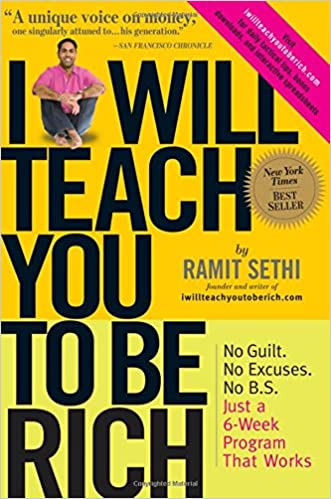
Author:- Ramit Sethi
Genre:-Financial education and Investment
Description:-Ramit Sethi is an American personal finance advisor and entrepreneur. he is the best selling author of New York times in 2004.
i Will teach you to be rich talks about how people blame others about their financial problems, smartly spending your earning and start investing from today as it will help you in future.
6. Your Money or Your Life (1992)

Author:-Joseph R. Dominguez, Monique Tilford, and Vicki Robin
Genre:- Financial education and Investment
Description:- Author talks about the minimize spending ,excessive investing and save for Emergencies .
7. Think and Grow Rich (originally published:-1937)
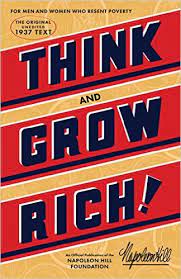
Author:- Napoleon Hill
Genre:- Non-Fiction, Self-help, Financial education
Description:-Oliver Napoleon Hill was an American author who wrote so many self-help books. Think and Grow rich is one of them and it’s one of the best self-help book of all times.
Hill talks about the belief in yourself ,becoming a stubborn and never your change your decision once you decided and accompany those who are mastermind on your field.
8. The Millionaire Next Door ( originally published:-1996)

Author:-Thomas J. Stanley, William D. Danko
Genre:- Non-fiction
Description:- Thomas J. Stanley was an American author and business theorist . He wrote The millionaire next door which was the New York times best sellers.
The millionaire next door covered about the healthy spending and avoid silly mistakes that mostly people do to handle their financial expenses. It’s one of the most practical book that I had ever read till now
9. Zero to One (2014)
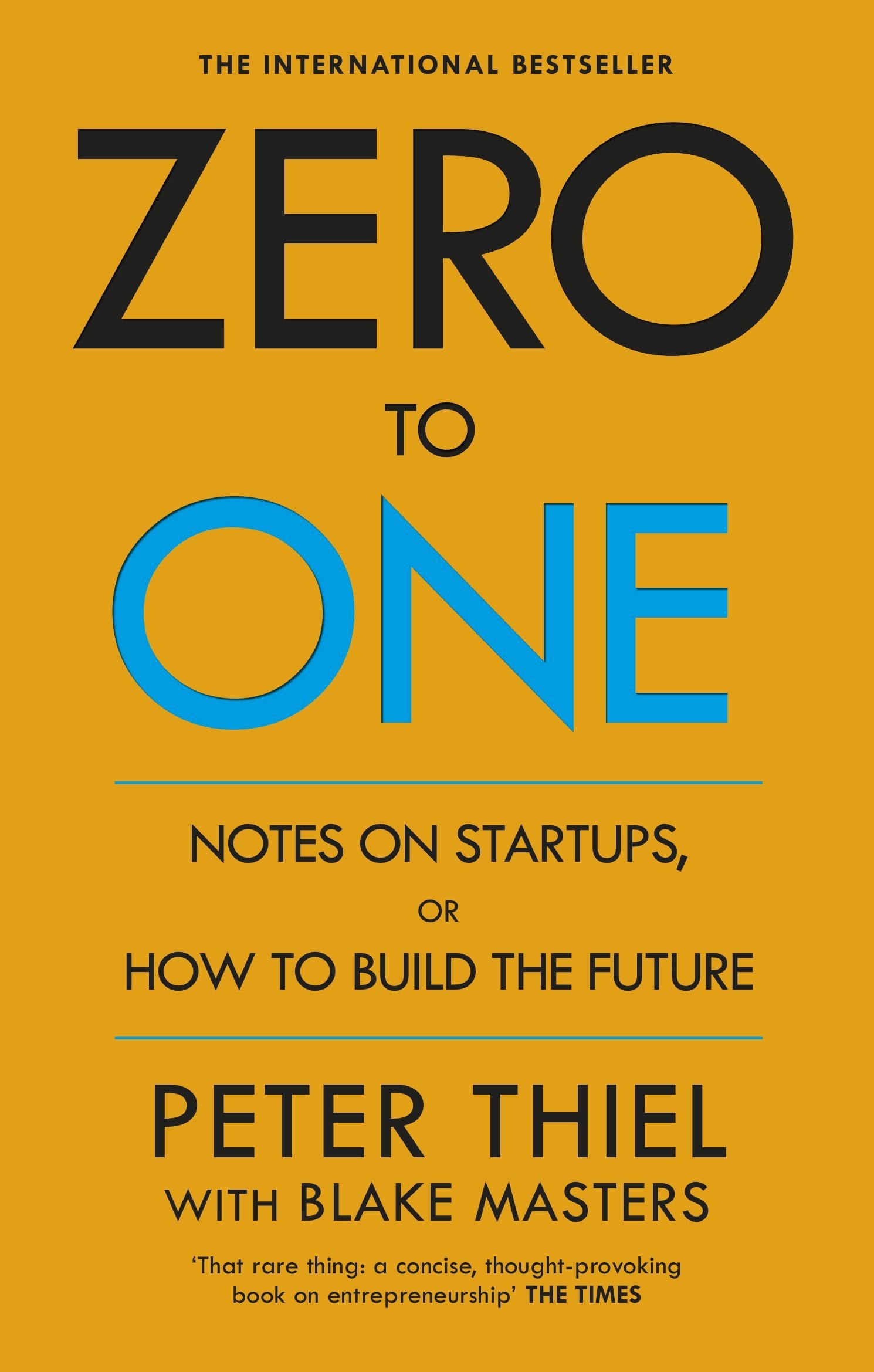
Author:-Blake Masters and Peter Thiel
Genre:- Business, Politics and Government
Description:-Peter Theil is German-American billionaire entrepreneur and venture capitalized. he is the co-founder of PayPal ,Palantir technologies .he was the first outside investor in Facebook .he was ranked four on the Forbes Midas list 2004. peter write about how he thinks about his business and how an you shape the future of the world in the process.
10. The Lean Startup(2011)

Author:-Eric Ries
Genre:-Self-help book
Description:- Eric Ries is an American entrepreneur, blogger and author of The Lean Startup.
the lean startup talk about the customer needs and quickly learn about it, changing the strategies according the customer needs and previous result. Eric Ries divide the book in three section:-
1. vision
2.steer
3.Accerlate
I hope you liked the article .Thank you for giving your precious time to read this article if you like the article pls tell us and comment your feedbacks .
Have a Good day and Happy Reading.
KERALA – HISTORY AND CULTURE

Kerala is a state in Southern India is known as a tropical paradise of waving palms and wide sandy beaches. Parasurama, an avatar of Vishnu threw his battle axe into the sea after he reached Gokuram from Kanyakumari. as a result, the land of Kerala arose, reclaimed from the waters. He was the sixth of the ten avatar (incarnation) of Vishnu. It is a narrow strip of coastal territory that slopes down the western ghats in a cascade of lush green vegetation, and reaches to the Arabian seas. The culture of Kerala evolved through the Sanskritization of Dravidian ethos, revivalism of religious movements and reform movements against caste discrimination. Kerala showcases a culture unique to itself developed through accommodation, accumulation of various faculties of civilized lifestyle. Hinduism an Islam are the two major religions of Kerala. More than 50 percent of people in Kerala follow Hinduism, and more than 25 percent follow Islam. Around 20 percent are Christians, and others follow Buddhism, Jainism, and other religions. The cultural diversity of Kerala is well known. Kerala is also well-known for its mesmerizing backwaters, ecotourism initiatives, scenic beauty, beaches and mouth watering cuisine.
Old name of Kerala
A treaty brought it under British protection in 1795. Travancore was known for its relatively high literacy rate and its progressive government. After Indian Independence, Travancore and Cochin merged to form the state of Travancore-Cochin, boundaries were redrawn, and it was renamed Kerala in 1956.
Kerala famous spices
Kerala is famous for its spices and hence is popularly known as the Spice Coast of India. It flavor an assortment of species originating from the cultures of Jews, Christians, Muslims and merchants who settled down in this state. Kerala is one of the prominent tourist destinations of India, with coconut-lined, sandy beaches, backwaters, hill stations, ayurvedic tourism and tropical greenery as its major attractions. Kerala is a home to a variety of spices pepper, vanila, cardamom, clove, cinnamon, nutmeg, ginger and turmeric. The flavor of species lingers long in one’s tongue and even longer in one’s memory. Spices shaped Kerala’s tryst with destiny.
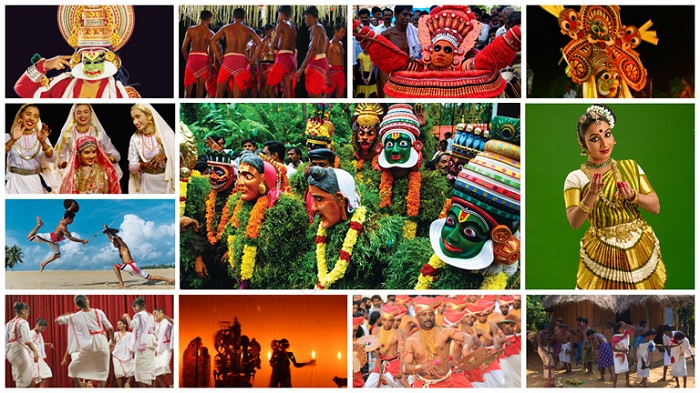
Major Festival
- ONAM – Onam is a harvest festival celebrated extravagantly by the people of Kerala, India. It is also the state festival of Kerala with State holidays on 4 days starting from Onam Eve (Uthrdom) to the 4th Onam day. Onam Festival falls during the Malayalam month of Chingam (August-September) and marks the commemoration of Vamana avatara of vishnu and the subsequent homecoming of King Mahabali, who Malayalees consider to be just and fair King who was exiled to the underworld. It is one of the festivals celebrated with the most number of cultural elements. Some of them are Vellam Kali, Pulikali, Pookalam, Onatthappan, Thumbi Thullal, Onavillu etc. Another distinct feature of the festival is Ona Sandhya (Onam Feast) and consists of numerous dishes served on a banana leaf and Ona Kodi (Onam Dress).
- VISHU – Among the various Hindu festivals in Kerala. Vishu occupies a unique position in more than one respect. As a symbol of the Keralite, Vishu, is free from the usual pomp and show and merry-making associated with other festivities. The frist day of the Malayalam month of medam is the unchangeable day of Vishu. The day on which Vishu falls is the astronomical New Year day. The Malayalees believe that the subject one sees first in the morning of Vishu day. In order to fulfill the desire to look at the auspicious articles, they prepare a “Kani” on the previous day for seening in the next morning. The eldest member of the family takes some silver coins and gives them to a junior member with some raw rice and konna poovu.
Desertification and it’s impact
Desertification, an intentionally foreboding term, is at its core land degradation in dryland
environments. After nearly 40 years of international attention, the analysis of the causes and
consequences of land degradation in dryland systems remains shrouded in the nuanced
complexities of multiple interwoven variables (biophysical, anthropogenic, and climatic) working
simultaneously to bring about change in these ecologically and socially vulnerable areas. In order
to fully grasp the complexities of desertification, this chapter follows a fivefold approach. First, it
provides a synthesis of the history and politicization of the term. Second, it establishes
desertification’s geospatial context. Third, it identifies the interrelated drivers of land degradation
and their impacts, with special focus placed on North Africa, the Middle East, and Central Asia.
Fourth, it outlines the current approaches to studying land degradation and desertification. Finally,
it concludes by situating the desertification dynamic in the context of sustainability and poverty eradication.
Introduction :-
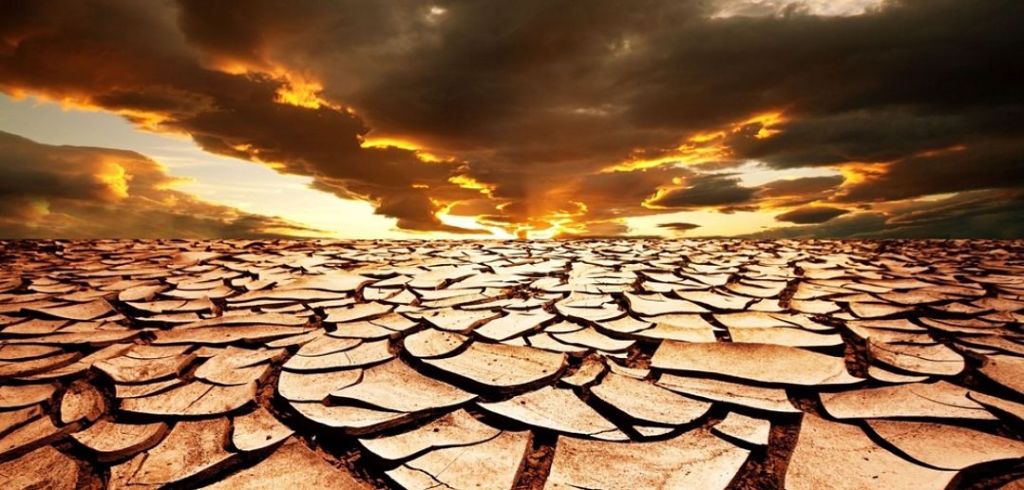
Desertification is defined as a process of land degradation in arid, semi-arid and sub-humid areas
due to various factors including climatic variations and human activities. Or, to put it in another
way, desertification results in persistent degradation of dryland and fragile ecosystems due to
man-made activities and variations in climate.
Desertification, in short, is when land that was of another type of biome turns into a desert biome
because of changes of all sorts. A huge issue that many countries have is the fact that there are
large pockets of land that are going through a process that is known as desertification.
Overgrazing is the major cause of desertification worldwide. Other factors that cause
desertification include urbanization, climate change, overuse of groundwater, deforestation,
natural disasters, and tillage practices in agriculture that make soils more vulnerable to wind.
Desertification affects topsoil, groundwater reserves, surface runoff, human, animal, and plant
populations. Water scarcity in drylands limits the production of wood, crops, forage, and other
services that ecosystems provide to our community. According to UNESCO, one-third of
world’s land surface is threatened by desertification, and across the world, it affects the
livelihood of millions of people who depend on the benefits of ecosystems that drylands provide.
Desertification is another major environmental concern and a significant barrier to meeting basic
human needs in drylands and is being constantly threatened by increases in human pressures and
climatic variability.
It is caused by a variety of factors, such as climate change and human activities. Desertification
is a significant global ecological and environmental problem.”
Through my project, we’re going to give you an idea as to what are the causes of desertification,
the effects that desertification has, and what we can do in order to deal with the problem at hand.
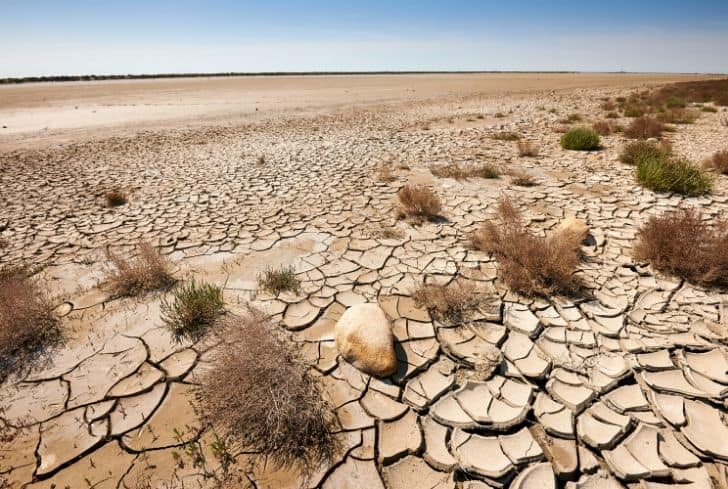
CAUSES OF DESERTIFICATION :–
1. Population Growth :- The population in some desert areas is increasing. In places where
there are developments in mining and tourism, people are attracted by jobs. An increased population is putting greater pressure on the environment for resources such as wood and water.
2. Removal of wood – In developing countries, people use wood for cooking. As the population in desert areas increases, there is a greater need for fuel wood. When the land is cleared of trees, the roots of the trees no longer hold the soil together so it is more vulnerable to soil erosion.
3.Overgrazing – An increasing population results in larger desert areas being farmed. Sheep, cattle and goats are overgrazing the vegetation. This leaves the soil exposed to.
4. Soil erosion – This is made worse by
overgrazing and the removal of wood.
Population growth is the primary cause for soil erosion.
5. Deforestation-When people are looking to move into an area, or they need trees in order to make houses and do other tasks, then they are contributing to the problems related to desertification. Without the plants (especially the trees) around, the rest of the biome cannot thrive.
6. Climate change – The global climate is getting warmer. In desert regions conditions are not only getting warmer but drier too. On average there is less rain now in desert regions than there was 50 years ago.
7. Over drafting of groundwater- Groundwater is the freshwater found underground and also one of the largest water sources. Over drafting is the process in which groundwater is extracted in excess of the equilibrium yield of the aquifer that is pumping or theexcessive pulling up of groundwater from underground aquifers. Its depletion causes desertification.
Devastating Effects of Desertification
:-
1. Farming becomes next to impossible-If an area becomes a desert, then it’s almost impossible to grow substantial crops there without special technologies. This can cost a lot of money to try and do, so many farmers will have to sell their land and leave the desert areas.
2. Decrease in Crop Yields-A major effect of desertification is the decrease in crop yields. Once land turns from arable to arid, it is often on longer suitable for farming purposes anymore. If their land becomes arid, they may no longer be able to provide sufficient crop yields to make a living out of it.
3. Flooding- Without plant life in an area, flooding is a lot more imminent. Not all deserts are dry; those that are wet could experience a lot of flooding because there is nothing to stop the water from gathering and going all over the place. Flooding can also negatively affect the water supply, which we will discuss next.
4. Poor Water Quality-If an area becomes a desert, the water quality is going to become a lot worse than it would have been otherwise. This is because plant life plays a significant role in keeping the water clean and clear; without its presence, it becomes a lot more difficult for you to be able to do that.
5. Biodiversity Loss- In general, the destruction of habitats and desertification may also
contribute to a loss of biodiversity. While some species may be able to adjust to the
altered environmental conditions properly, many species will not be able to do so and may suffer from serious declines in population.
6. Destruction of Habitats-Desertification often leads to a loss of habitats for many
animals and plants. Desertification may alter the living conditions of the local flora and fauna that makes it impossible for animals and plants to sustain their populations.
7. Overpopulation-When areas start to become desert, animals and people will go to other areas where they can actually thrive. This causes crowding and overpopulation, which
will, in the long run, end up continuing the cycle of desertification that started this whole thing anyway.
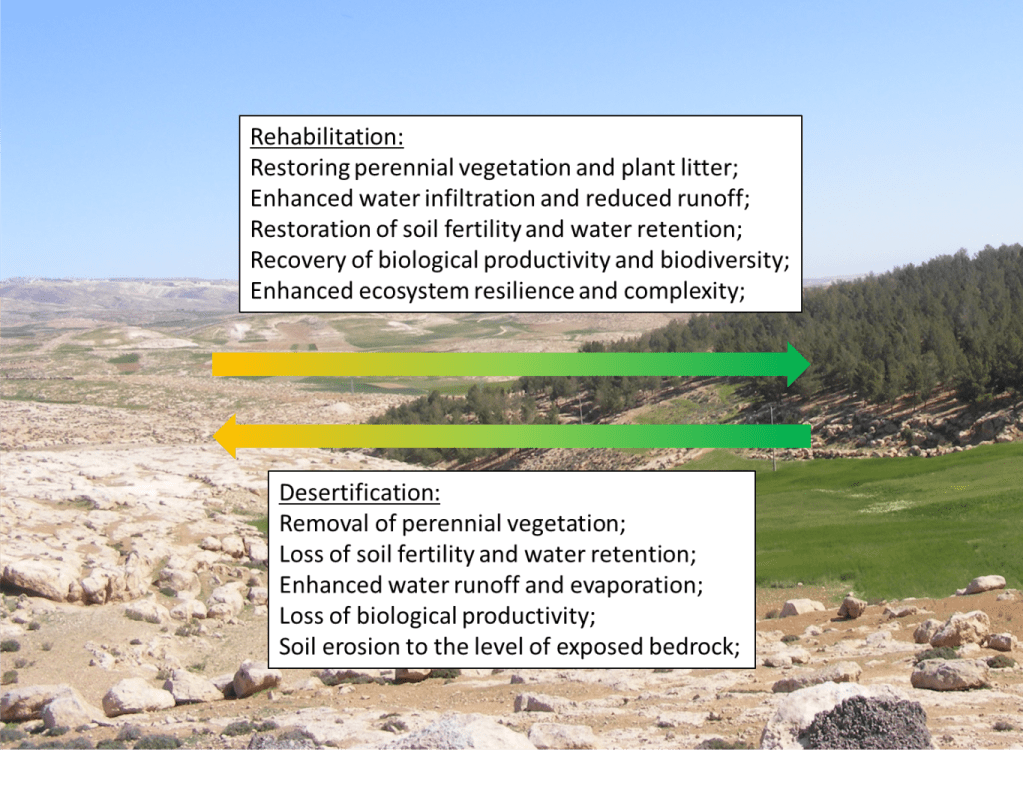
Desertification Is Increasing Because of Global Warming :-
Desertification is a phenomenon that is increasingly understood by scientists. While high
temperatures and droughts prevent plants from growing, arid soils aren’t as good at retaining
water. Human activity (agricultural overexploitation, soil artificialization, deforestation)
contributes to this phenomenon by destroying the environment.
It also leads to biodiversity losses locally, which further accelerates desertification -a positive
(though negative) feedback loop. Desertification also causes the carbon stored in the soil and
plants to be released, which in turn contributes to global warming. These vicious circles are now
well-identified in the scientific community and they are increasingly taking place across the
globe.
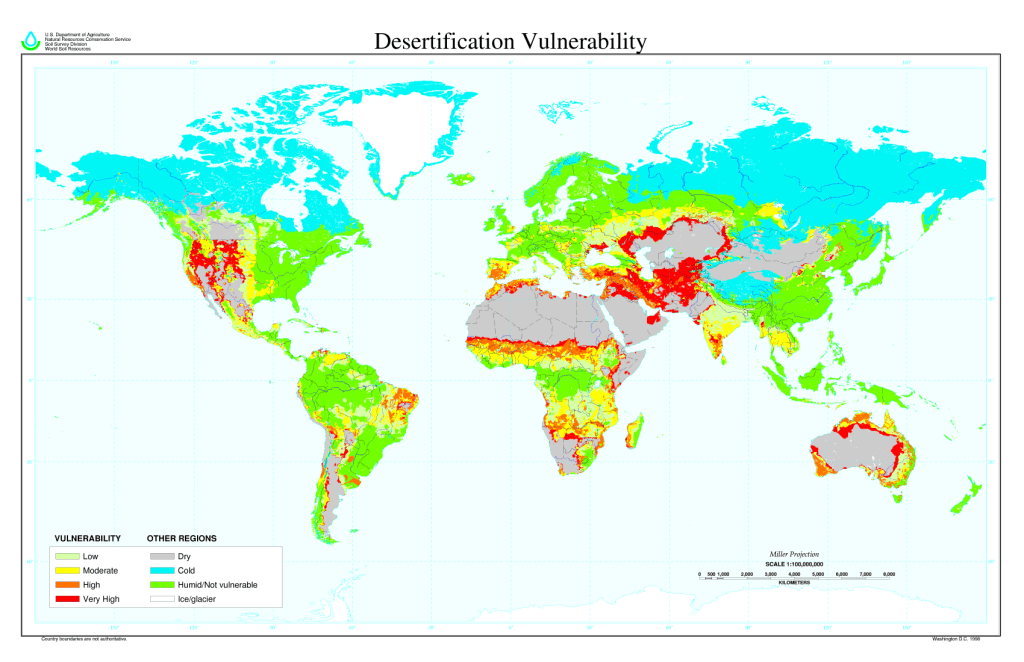
But recent studies give us a more precise idea of the speed and extent of these desertification caused changes and how they’re related to global warming. According to a study published in
early January 2018, global warming is helping to accelerate desertification and between 24% and
32% of the globe’s land area could be affected by 2050.
Soil Hydrology of Desertification and Rehabilitation :-
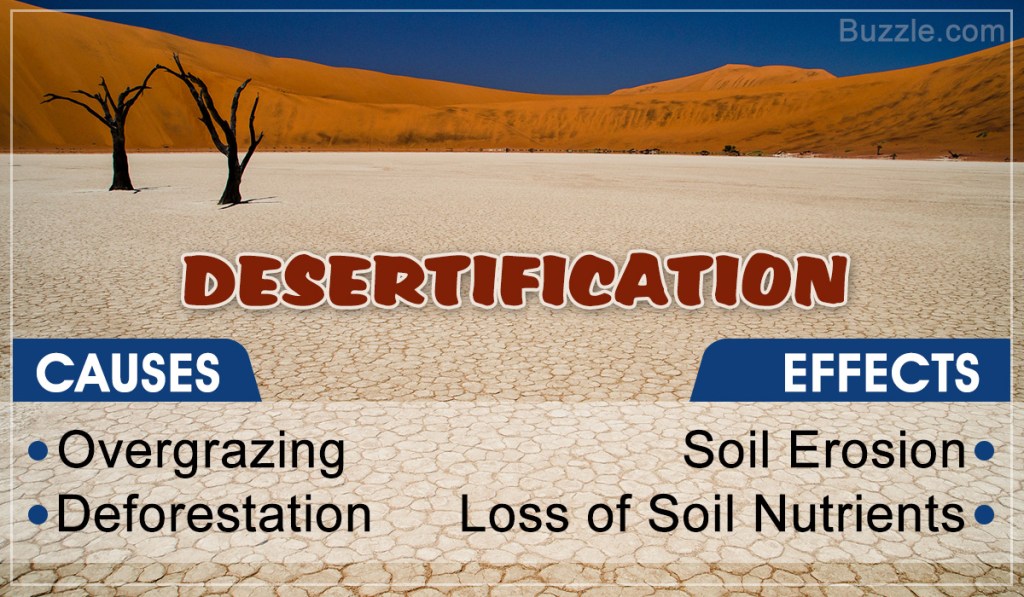
Desertification dramatically alters the hydrology of the degraded soil surfaces. Decertified surfaces are either rocky surfaces or exposed crusted soils with very low water infiltration capacity; water immediately runs off at high speed, causing further soil erosion. Remaining humidity in exposed soils rapidly evaporates in the intensive sunlight, so that resulting biological productivity is a fraction of that of restored ecosystems. In intact or restored ecosystems, large amounts of water can infiltrate through layers of plant litter into rich topsoil, whereby decomposing litter releases the nutrients required for vigorous plant growth Shade provided by perennial plants and plant litter layers also reduces soil surface temperatures and, consequently, evaporation, so that most precipitation becomes available to plants, resulting in water use efficiency.
Parental Care in animals
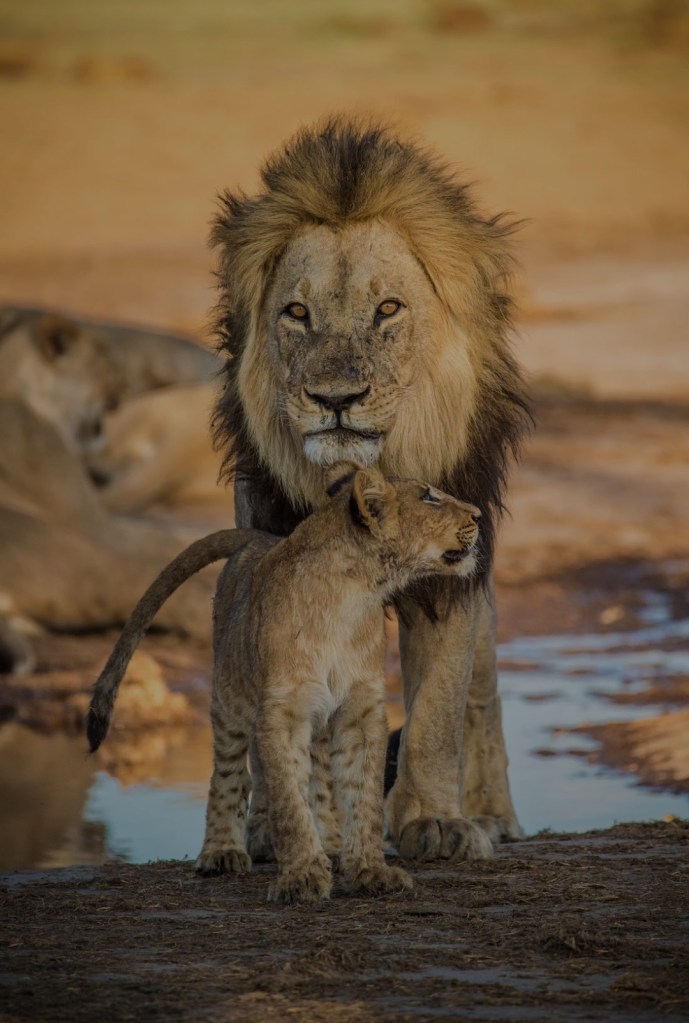
Like humans many other animals live on this planet with family. Even non-symbiotic organisms, for any period of their lives, take care of their families. If a family does not build its own, the unconscious biological awareness, its species should be endangered to endemic. Elephants, chimpanzees and other of all kinds: relatives to their family members, many times more than human beings who wish to call themselves the most intelligent and noble animal.
Parental Care
Mating refers not only to sex and courtship behaviors. It may also include the cooperative rearing of offspring by the parents. Parental care refers to any behaviors on the part of either or both parents that help their offspring survive. In many birds, parental care includes building a nest and feeding the young. Parental care generally is longest and most complex in mammals, in which it always involves the mother feeding milk to the young (see the Mammals concepts). Parental care in mammals may also involve teaching the young important skills that they will need when they are older and no longer cared for by the parents. For example, meerkat adults teach their pups how to eat scorpions. They show the pups how to safely handle the poisonous insects and how to remove the stingers. Penguin is protecting her chick and will continue to do so until the chick is able to protect itself.
If the concern for all members of their group is one type, then the concern for their offspring is different. Almost all animals are nurtured in their own way, as are humans who love, feed, and care for children more than ever. Depending on what kind of organism cares for the organism, the organism’s reproductive kind. If any organism has a reproductive kind of ovulation, little undeveloped spawning. Chicks are born when such an egg undergoes external fertilization. Generally most species of fish and frogs have this type of reproduction. Care of these eggs before and after fertilization will raise the parental concern of these organisms. In general, studies have shown that both male and female frogs are of concern in fish and frogs in fish, however, frogs have little to do with this generalization; many recent findings suggest that there are many different types of parental care in frogs, not in any species. Surprisingly there are 41 types of parental care in the genus of frogs. Ovulation Kind of Fish with breeding grounds, In organisms such as the frog, little nourishment is required for little parental care within the mother’s body. No more reproduction of ovulation type in some fish, such as sharks, many insects, lizards, and even some snakes, the eggs hatch into the mother’s body, leaving the chicks imperfectly developed. Since these are nourishment within the mother’s body, the need for postnatal parental care is little more than that of ovarian organisms. Others, including mammals, and other animals with advanced bodies in biosynthesis, have the ability to reproduce germ cells. In this way, the birth of a fully developed offspring within the mother’s body is the same as parental care. Teaching and countless other jobs are hidden in parenting. Without taking care of offspring No other living organism is found in this world. In most organisms, either the mother is usually nurtured, or both the father and mother are involved. Fathers have been more concerned with seaweed and some fish. Surprisingly, relatives like aunt and aunty are raising children, elephants, lions, wolves, and a bird called ‘Jay Battler’. Further, some species of bees and sister wineries participate in the nourishment. Males are also rarely involved in parenting in promiscuous mating systems. Biology-based history has shown that when it comes to the question of survival, extinction is the lie that “there may be bad children in the world but not bad mothers.” The death of an incapacitated child for their survival or the survival of a child who is physically capable of their own children requires an example of the mother or father or both parental beings being exploited. This is not true in principle, but is the truth of evolution all the time.
The Disease Isn’t Over yet!
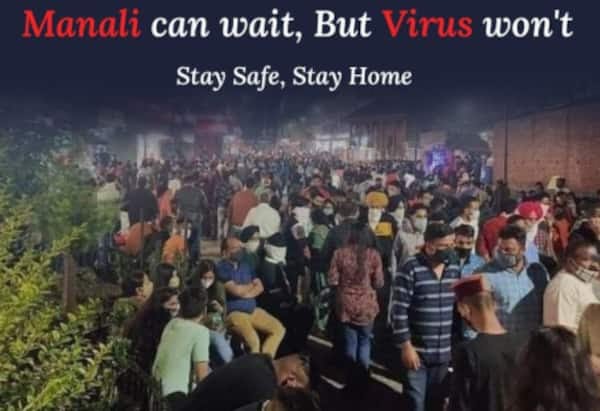
It’s almost been an year and a half since we have been caged in our homes for most of the time. Adults couldn’t go to their offices, children couldn’t go to their schools and coachings, ladies couldn’t go shopping. Holidays seemed useless and the urge to get out, breathe fresh air at mountains and beaches and enjoy the outside world, vacations again is like dream come true to every person in the country. Now as from the start of July after the relaxation in cases after second wave there’s a certain initiation towards beginning of offline schools and colleges along with offices and even openings of tourist places. In such situations the immense curiosity in each one of us to move out now is natural and common. But, the question is ‘In order to acquire our rights to freedom again’, should we forget our duties towards our nation and people around us. Was all the mourning for all the dead people across the country was a lie. And did we even really learn from mistakes done by us during the relaxation after first wave, which lead us to a more deadly return of a COVID wave. The answer can be seen in this picture below;
The Time to Face Together.
Under such critical circumstances for the whole world, it’s not only the duty of Government to protect the nation but also the responsibility of citizens to understand the situation and act accordingly to preserve themselves from this widespread killer disease. However, From the start of July itself Indians aren’t found working wisely anymore. Even after so many guidelines, precaution measures and rules been provided to the people they have become careless as shown. We need to understand that the relaxations done by government in travels are firstly for the needy people and then for us amd thereafter for little bit of casual movements here and there while considering the interest of individuals as well. All of us were and are crystal clear with the intensity of the conditions, and the country as a whole needs to deal with it with uttermost sincerity. There are still some states which are yet under high risks and high number of people are suffering regularly. Thousands are bearing the pain of loosing their loved ones. Still there are various alerts for another dangerous variants of virus coming up and the most risky part to be noticed i.e. the upcoming arrival of third Wave. The decision is upon us. Whether we want to enjoy much for a few days and get locked for next few months again or take precautions today and greet a goodbye to these cages and live freely again as soon as possible. Surely, Noone will like to choose Warmly welcoming and providing a home to the virus again over leading you way to a healthy normal life again.
FOLLOW THE GUIDELINES YET AGAIN!
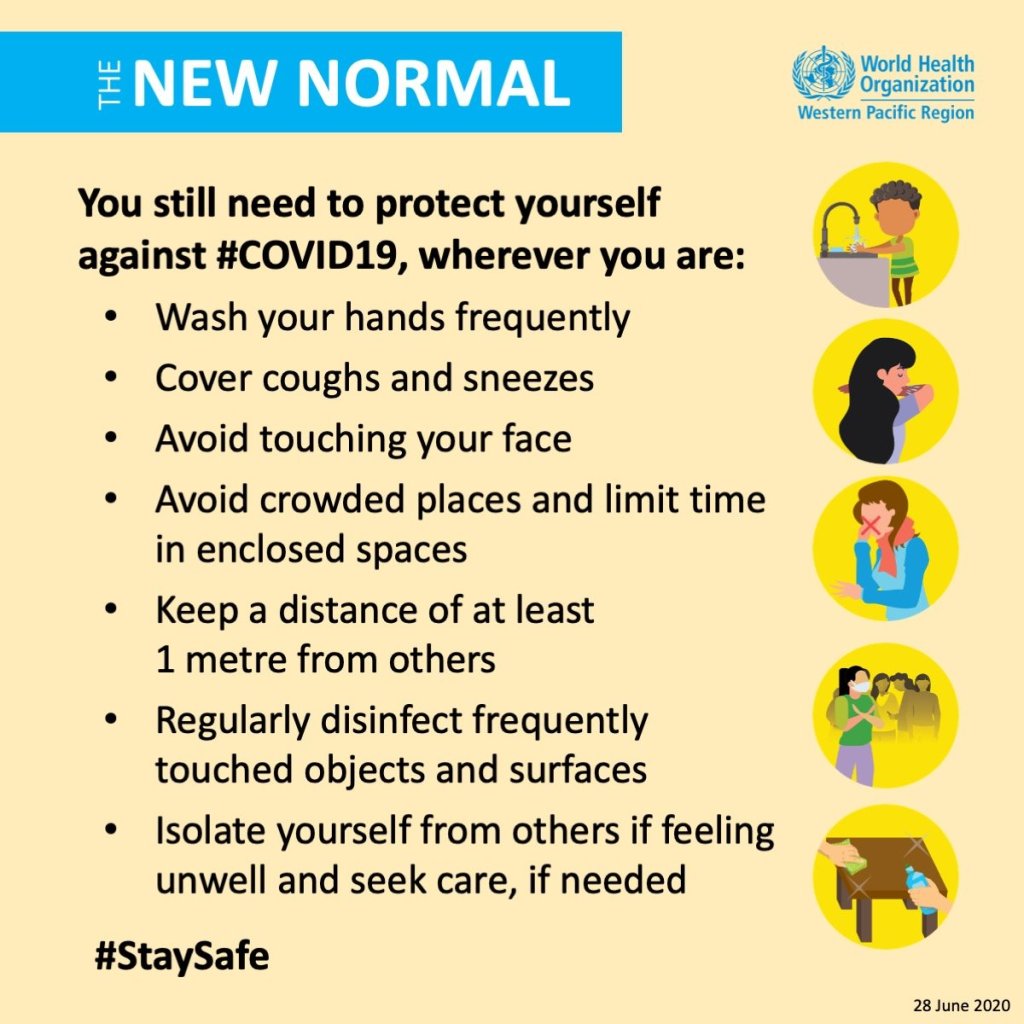
A very well known fact is “Prevention is better than cure”. One should keep in mind that not all rules are meant to be hated. Some could really be very profitable to you too. Health should always be looked on to as the most important part of life and currently, it has to be your No. 1 priority. The officials are doing their part to keep you safe. Our Doctors are dying forgiving us live, standing like the most efficient soldiers in from of the battleground with one of the biggest emmemies of the world. Hemcex it is our duty to support them. And mainly. Support ourselves and rescue ourselves by following regulations as given by government like; Washing your hands thoroughly each time you return home, avoid going to crowdy places, staying at a distance from anyone, WEARING MASKS, etc. As given in the picture above.
Here are some more precaution methods to be safe:
https://www.gonzaleshealthcare.com/guidelines-on-preventing-the-spread-of-covid/
India’s stand on population control

11 July is observed as world population day every year. It’s main focus is on the various problems arising due to surging population. Growing population is a major concern for developing countries and india is also having the same concerns. With population around 1.39 billion approximately India is inching towards overtaking china as most populous country.
China had adopted one child policy to control it’s growing population but due to demographical reasons it ended this policy in 2015. Aging population was the reason presented,but decline in fertility rate was another reason. China’s communist government is very strict in implementing it’s policies and citizens also abide by the rules.
India’s five year plans gave emphasis to population control. Ministry of health and family welfare covers the population control policy. Main strategy is to persuade people to accept the small family norm by way of various advertisment and educational efforts.

In 2019, ‘Population Control Bill’ was introduced into Rajya sabha and was signed by 125 MP’s. This bill was about imposing penalties for couples not adhering to the two-child policy.

Later, in 2020 ‘Constitution Amendment Bill’ was introduced into Lok sabha. It’s main objective was to amend the Article 47A of the Constitution of India. This amendment was to introduce a two-child policy per couple and provide incentives like tax, educational benefits etc.
Two-child policy in Indian states

States of Assam and Uttar Pradesh have initiated to bring in two-child policies, this will limit government benefits to people with only two children. people with more than two children are barred from contesting elections in Gujarat, Rajasthan,Maharashtra, Uttarakhand, Odisha, Telangana and Andhra Pradesh.
Few more States are eyeing to bring these type of policies in upcoming future for betterment of the citizens. Government and few NGO’s are working towards educating people about these policies. Task ahead is tough,but not impossible.
 Eduindex
You must be logged in to post a comment.