Amazon CEO and other returns from their space voyage

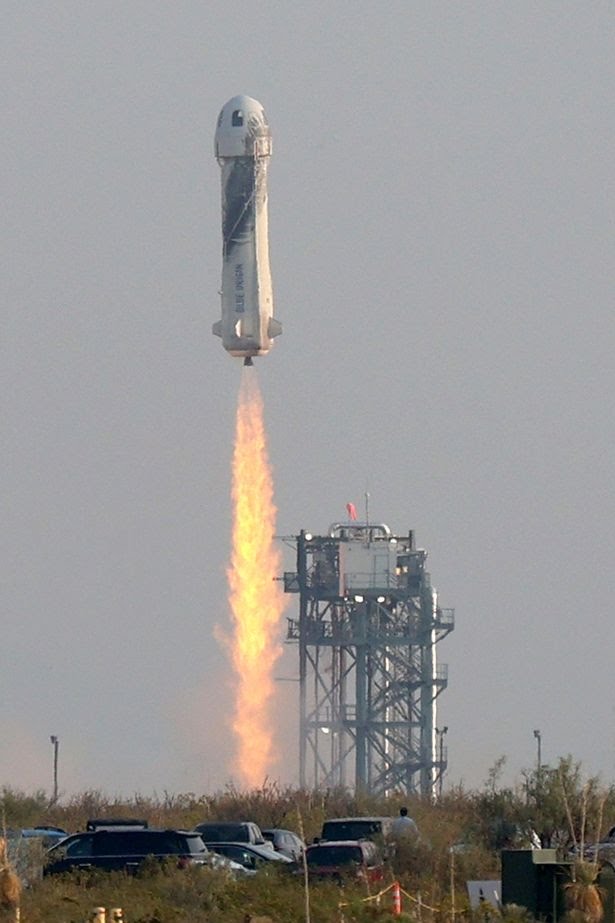
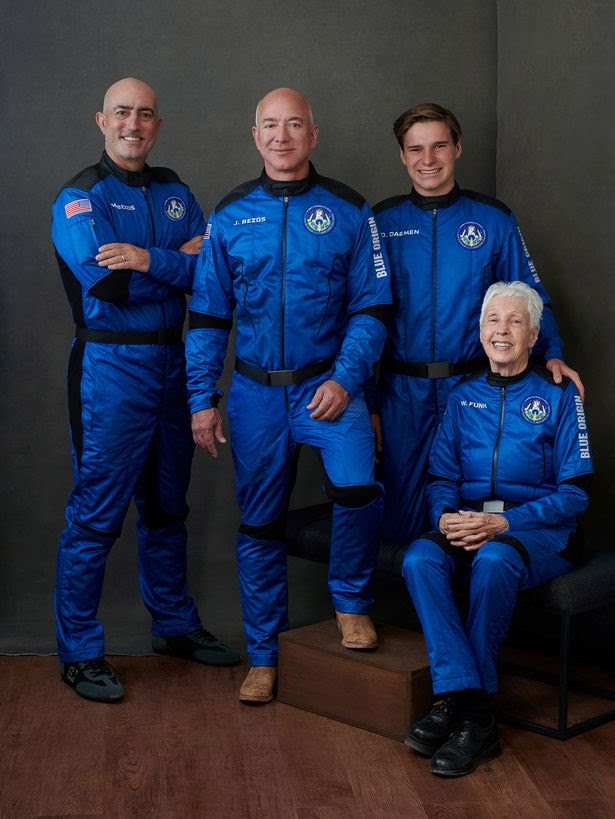
Amazon CEO Jeff Bezos returned to earth after his maiden space voyage. Mark Bezos, Wally Funk and Oliver Daemen were his other co-passengers in this journey. He spent total of 10 minutes in space. He went there on Blue Origin’s New Shepard spacecraft from its Launch Site One located in the West Texas desert (United States).

Happy, happy, happy!,You have a very happy crew up here!

Jeff Bezos said in space

For the first time in the history a commercial company launched a privately funded and built spacecraft from a private launch range with astronauts on board.

Congratulations to all of Team Blue past and present on reaching this historic moment in spaceflight history. This first astronaut crew wrote themselves into the history books of space, opening the door through which many after will pass

Blue origin released this statement after safely return of the passengers on earth.

Private companies are competing in space travels and explorations, let’s hope this competition may result in affordable space travel ,well within reach of common man. Space travel is still dream of many people.

Current Scenario of Water Resources in India

[9:54 PM,20/07/2021]Priyanshi: Current Scenario of Water Resources in India

Water resources are sources of water that are useful or potentially useful to humans. Water resources come in many forms but the three major forms are saltwater, groundwater, surface water. Although our earth is called the ” Blue Planet” as 70% of the earth is covered by water yet only 2.5% of the world’s water is fresh, while 97.5% is saline being oceans. Of this small percentage of fresh water, only 0.3% of this freshwater is available from rivers, lakes, and reservoirs, 30% from the groundwater while the rest is stored in distant glaciers, ice sheets, mountainous areas, places that we hardly access. The demand for water from various water users, namely domestic, municipal, agricultural, horticulture, recreation, power, and industrial sectors are increasing.
Now for discussing the current scenario of water resources, we will be discussing two things the availability and the quality of water resources. Firstly, discussing the availability factors, the renewable freshwater resources of the country are only about 4% of those of the world. As in many countries, the water resources of this country are not evenly distributed in space and time. Although some water is received from the upstream countries, precipitation is the main source of water availability. India is an agricultural country and a greater share of the population lives in rural areas. There prevails so much inadequacy of water resources in some areas whereas there is excess supply of water resources in other areas. This much inequity in distribution leads to so many problems. One side of the country is facing floods whereas another side is facing drought , these two opposite phenomena are hitting the country simultaneously. The increased pressure is spilling over the groundwater resources as well because of unhydrological uncertainty growing groundwater contamination problems. Our government is trying to solve this problem that exists due to inequity in distribution of water resources by working on certain projects like transferring huge volumes of water from one basin to another whether there is a lack of water resources.
If we talk about the quality of water resources then we must be aware of the fact that with increasing population, the amount of wastewater discharge also increases. This poses a crucial problem of water pollution to rivers as well as groundwater and thus meeting human water needs and sustenance of aquatic ecosystems remain one of the greatest. Indian rivers such as Ganga, Yamuna are showing a very poor state of water quality in many stretches. Also, the groundwater contamination by arsenic in West Bengal and fluoride contamination in Rajasthan is posing a serious threat to mankind as the drinking water supply is at the stake of great hydrological risk. Arsenic poisoning and fluoride contamination are becoming major bottlenecks in safe drinking water supply and health. Thus water quality management is the most complicated task.
Appropriate water management plans are required to be adopted by the industries to reduce wastewater, water scarcity and to have less stress on the water resources so that they could be used for other essential drinking water supplies. This will facilitate water accountability to industrial consumers and in turn, it will be a significant contribution to water resource planners and for the sustainability of resources as well.

Vikram Vedha- A review

Oru Kadha Sollutama sir (Shall I Tell you a story sir)

There are very few movies that you watch multiple times and yet the magic is never lost. Vikram Vedha is one such movie.

Imagine that a simple folk tale evolved into such a well structured modern story! Beautiful characters!!

Like, every time we see Vedha, we see this playful guy, who wants to get stuff done as well , Cheerful at all times, but doesn’t want work half boiled.

A caring guy, who just wants to earn some money so he does whatever he has to

On the other hand, Vikram, an honest police officer. Honest to the core.

Characters AMAZINGLY well written that honestly, at times The dialogues make the jaw drop.

“Ungalukku pona ratham, engalukku pona thakkali chutney aa!?”

Translation: “if you bleed, it’s blood, but if we bleed is it tomato chutney?”

A BEAUTIFUL DIALOGUE. You know there are certain dialogues that we can imagine Vedha would say. But none of us can imagine Vikram saying the same thing. Cuz, character sketch…

Just EXTRAORDINARY characters, amazingly written and honestly, i don’t think there could’ve been better actors to portray the characters…
Every single time this movie is watched i feel the same excitement as watching it for the first time, which is a really hard feeling to evoke… Every time I listen to Tasaku, i feel like dancing! Every time i imagine the climax fight scene, i laugh at the part where Vedha asks “vikram sir, gun na style aa pudichikkena”

Translation: vikram sir, am I holding the gun in a stylish manner?

That excitement… It’s just… Over and above words!!!

Why Silence is So Powerful

“Silence is a source of great strength” – Lao Tzu the founder of Taoism philosophy

Silence nourishes our mind and soul and makes us reflective as it is our internal necessity. Through silence we ingress into the imaginary world where we can expand our creativity beyond our boundaries. Silence makes us physically, mentally, emotionally, and morally strong.

  In today’s increasingly stressful and fast-moving world, we rarely apply wisdom while taking our decisions. Instead, we prefer the mechanics of quick problem-solving to get immediate outcomes. Decisions that are taken without thinking are mostly irrational and random. For making proper decisions, we need to use silence as a tool. It often provides us the opportunity to have sufficient time to think deeply and understand the matter before jumping to a random decision.

 When you are in silence, your mind and soul are deeply connected, and in this phase, your inspirations may bubble-up. You may find solutions suddenly for which you might have been struggling for a long time.

You all might have once heard these famous lines “At times silence can speak louder than voice.” Choosing silence is the best way to enhance conversations and strengthen your bonds as it’s a space between our feelings and response. When you keep silent, naturally, you would listen more in a conversation, and others would have the opportunity to speak and share more. Active listening is the key for trust-worthy and effective relationships. Silence helps us in thinking deeper, wakes us up, and increases our emotional regulation.

“Silence” is an explicit power that can either glorify or destroy your life, depending on your choice. Your engagement to its lighter or darker side would decide your transformation.

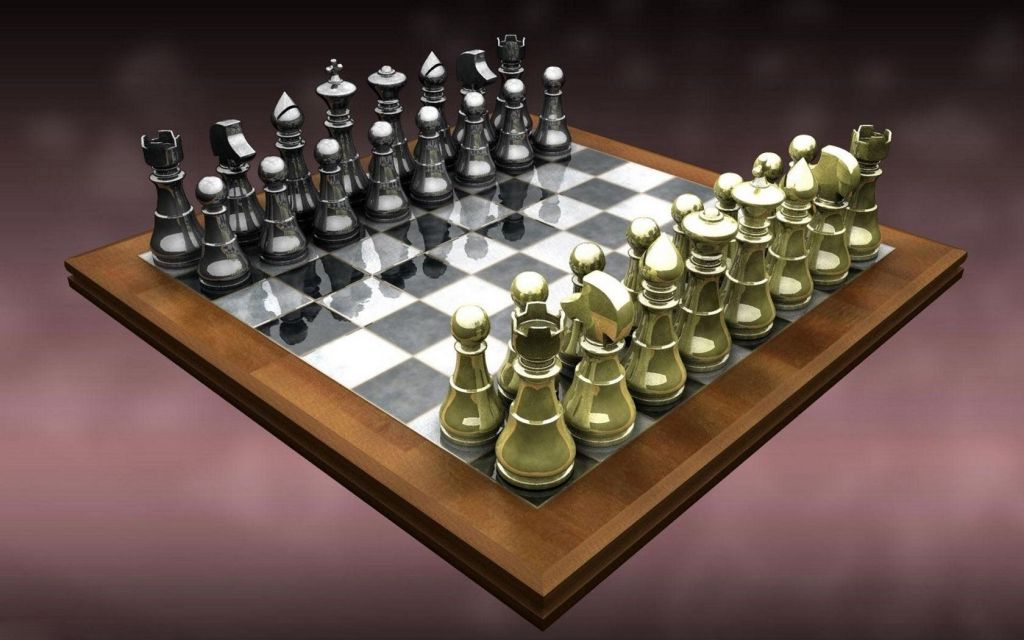
INTERNATIONAL CHESS DAY 2021

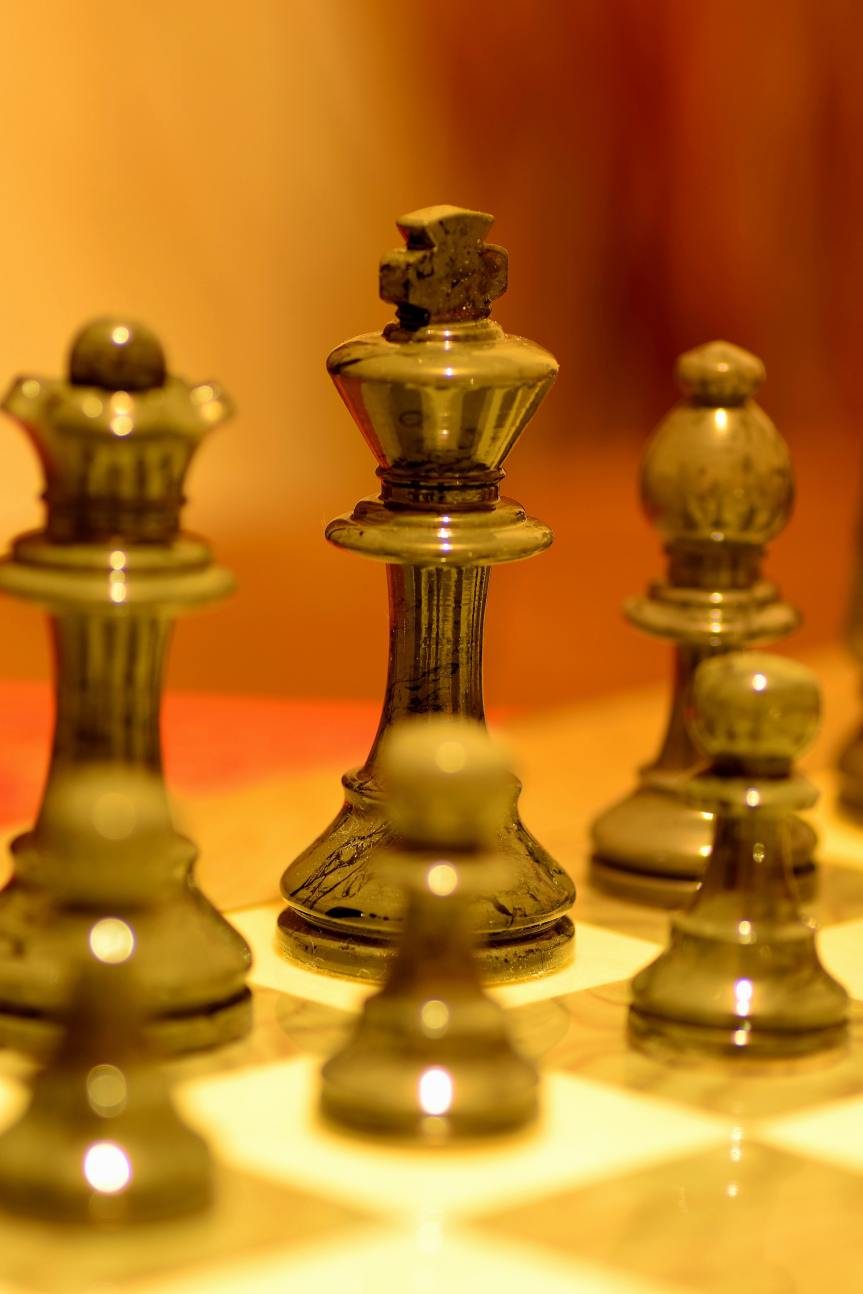
International Chess Day is celebrated on July 20, every year as the founding day of World Chess Federation (FIDE). The concept of celebrating this was presented by UNESCO and this year marks FIDE’s 97th anniversary.

Chess is likely one of the oldest games of our era. It was invented in India in the fifth century and was then named “Chaturanga”. Later, the game moved to Persia, and when the Arabs invaded Persia, chess became an important part of the Muslim population’s existence, and it spread to Southern Europe from there. Chess took on its modern shape in Europe during the 15th century and evolved into a contemporary sport. Ever since then it has been a popular sport. Today, Chess competitions are held with fresh and interesting variations all around the world

Chess helps you increase your fluid intelligence and processing speed , elevates your creativity and enables you to enter a flow state , leads to better planning and strategy skills, and can improve the symptoms of ADHD (Attention Deficit Hyperactivity Disorder). Studies prove that Electronic chess may help stave off a panic attack when you play on the right level. Playing Chess also increases the effectiveness of any mental therapy.

Here are few recommendations of books and movies related to chess

Books

  • Chess 101 by Dave Schloss
  • Bobby Fischer teaches chess by Bobby Fischer
  • The steps method by Rob Brunia and Cor Van Wijgerden
  • Pandolfini’s Ultimate Guide to Chess by Bruce Pandolfini
  • Winning Chess strategy for Kids by Jeff Coakley
  • Tips for young players by Matthew Sadler
  • How not to play chess by Eugene A. Znosko-Borovsky
  • The art of checkmate by Renaud and Kahn

Movies , Documentaries and Series

  • Searching for Bobby Fischer (1993)
  • Magnus (2016)
  • Brooklyn Castle (2012)
  • Bobby Fischer Against the World (2011)
  • The Queen’s Gambit (2020)
  • Pawn Sacrifice (2014)
  • Queen of Katwe (2016)
  • Geri’s Game (1997)

MIRRORS- Spherical and parabolic mirrors

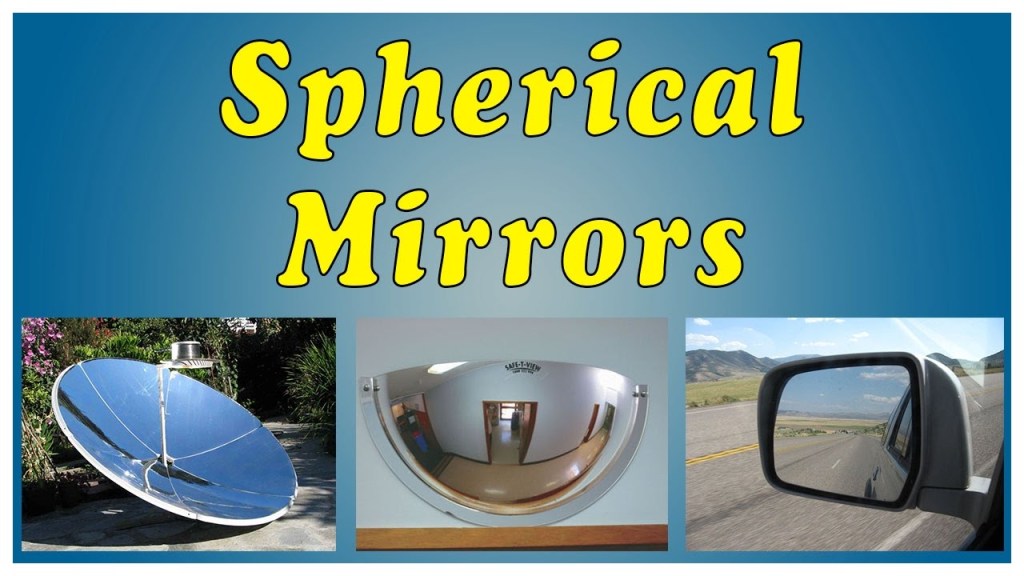
We use mirrors in our daily life for various purposes. Mainly, we use them for beautifying us. The mirror is an optical device with a polished surface that reflects the light falling on it. A typical mirror is a glass sheet coated with aluminum or silver on one of its sides to produce an image. Mirrors have a plane or curved surface. Curved mirrors have surface that are spherical, cylindrical, parabolic and ellipsoid. The shape of a mirror determines the type of image it forms. Plane mirrors form the perfect image of an object. Whereas, curved mirrors produce images that are either enlarged or diminished.


SPHERICAL MIRRORS
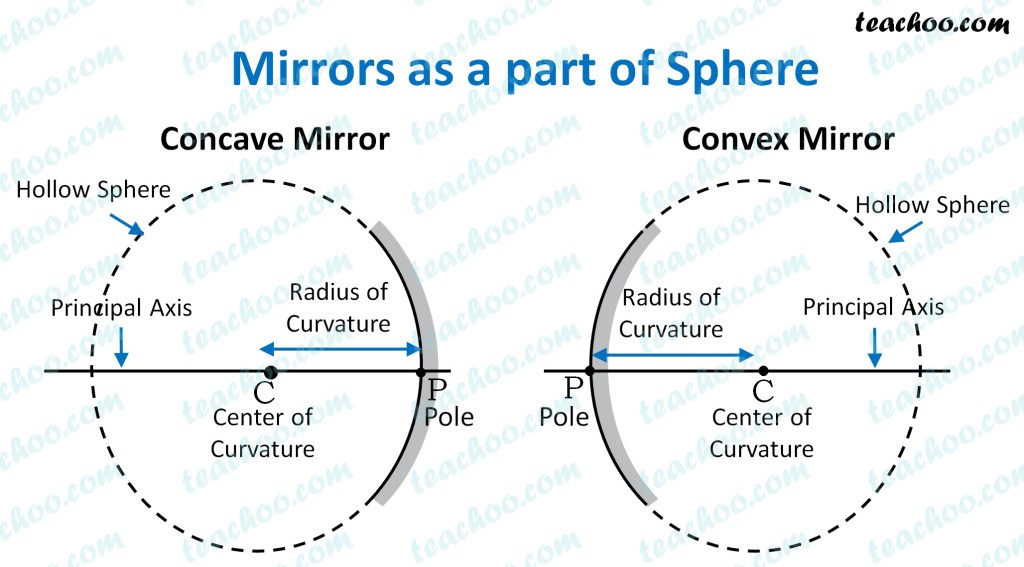
Spherical mirrors are one form of curved mirrors. If the curved mirror is a part of a sphere, then it is called a ‘spherical mirror’.

It resembles the shape of a piece cut out from a spherical surface. One side of this mirror is silvered and the reflection of light occurs at the other side.


CONCAVE MIRROR
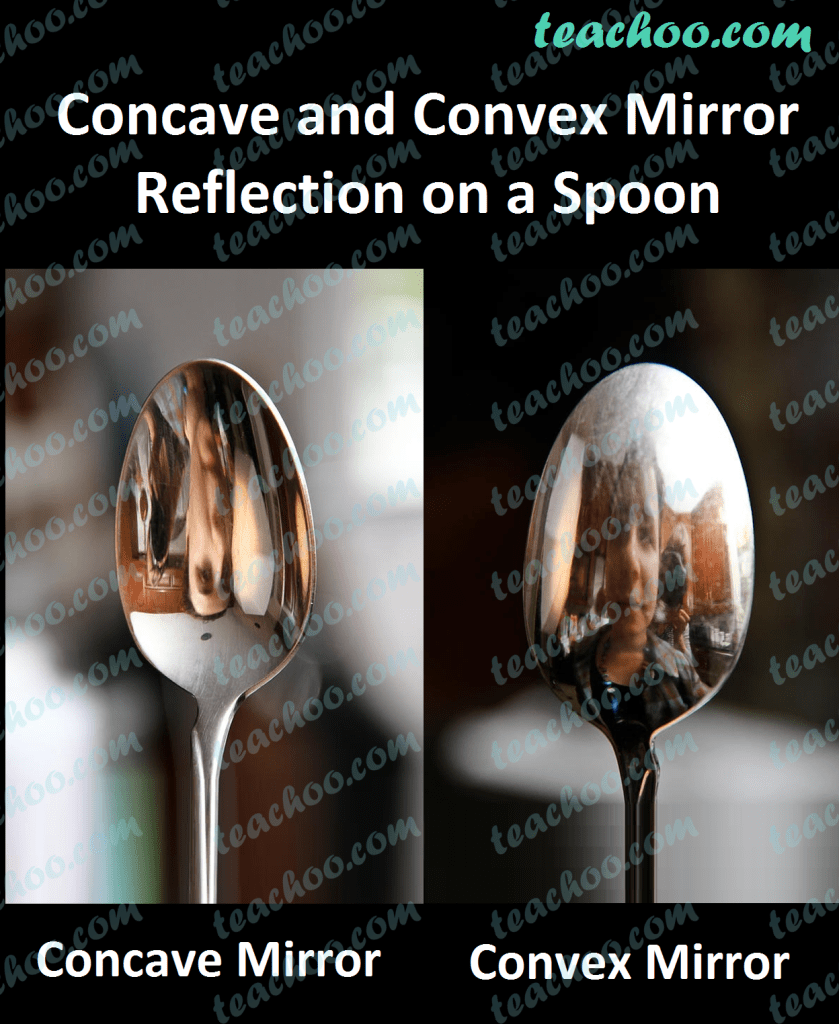
A spherical mirror, in which the reflection of light occurs at its concave surface, is called a concave mirror. These mirrors magnify the object placed close to them. The most common example of a concave mirror is the make-up mirror.


CONVEX MIRROR
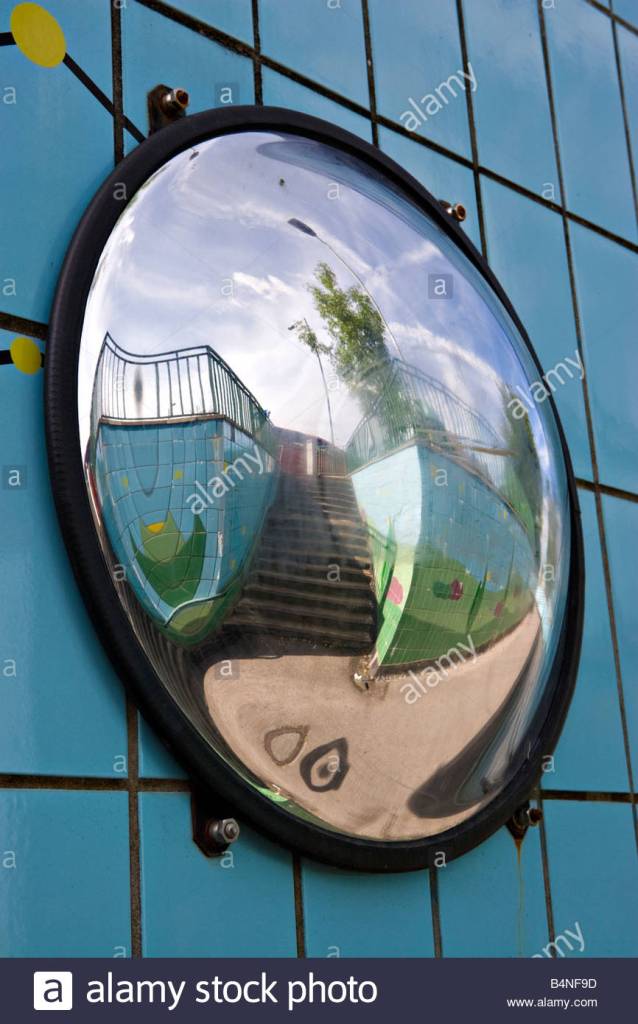
A spherical mirror, in which the reflection of light occurs at its convex surface, is called a convex mirror. The image formed by these mirrors is smaller than the object. Most common convex mirrors are rear viewing mirrors used in vehicles.


PARABOLIC MIRRORS
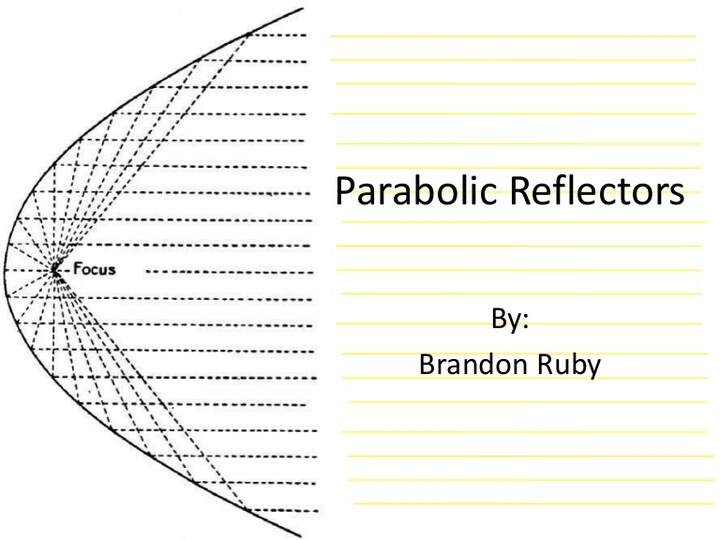
A parabolic mirr, which is in the shape of a parabola, is one type of curved mirror. It has a concave reflecting surface and this surface directs the entire incident beam of light to converge at its focal point.


In the same way, light rays generated by the source placed at the focal point will fall on this surface and they will be diverged in a direction, which is parallel to the principal axis of the parabolic mirror. Hence, the light rays will be reflected to travel a long distance, without getting diminished.


Parabolic mirrors, also known as parabolic reflectors, are used to collect or project light energy, heat energy, sound energy and radio waves. They are used in reflecting telescopes, radio telescopes and parabolic microphones. They are also used in solar cookers and solar water heaters.

Peer pressure

yes or no

According to the Cambridge dictionary, peer pressure is defined as “the strong influence of a group, especially of children, on members of that group to behave as everyone else does”. In other words, peer pressure is the direct influence on a group or an individual by peers who are encouraged or want to follow their peers. It generally happens among the same social group. Peer pressure is also used to describe the effect this influence has on an individual to correspond to be accepted by the group. If you’re with your friends and they convince you to do something you do not like or you typically would not do. And likely if you continue doing that particular thing you may start to like to do even that was bad or good.  A situation like this is an example of peer pressure where an individual changes their behavior, norms, and values to be liked by their peers. The pressure applied by peers may vary. For example, sometimes they do not force you but they make you feel inferior, or they might force you to do it, or they tease you if you do not agree, or they make you feel outcast by ignoring you.

The way you respond to peer pressure can indicate who you are as an individual, a leader, or a follower.

Generally, peer pressure is considered as having a bad impact on people or an individual but indeed, it has a positive impact too. Sometimes peer pressure turned out positive.

Types of peer pressure

  • Positive peer pressure:- Positive peer pressure is defined as when a peer encourages people or an individual to do something positive or pushes them to grow positively and beneficially.

 For example:-  When a peer pushes someone to study hard and to score good grades. Like when in a study group someone is procrastinating and does not want to do homework others motivate him/her to complete the work on time by explaining the bad outcomes of procrastination or not doing homework.

By disapproving of bigoted jokes. Like when someone is trying to pass bad comments on someone their friends come forward to stop them by doing so.

Looking down on illegal or risky behaviors. Like when someone in the group trying to drive drunk and the other stop him/doing so instead of supporting him.

  • Negative peer pressure:- On the other hand negative peer pressure involves doing something dangerous.

For example:- when someone convinces a friend to skip school to watch a movie or to do something unproductive.

When someone pushes their friends to smoke and drink or try the drug.

When someone encourages their friends to fight or bully.

As there are two types of peer pressure then its effect will also be of two types positive and negative. Positive peer pressure leads one to make good choices in their life, they can rely on their friends in a state of confusion. Peer also helps each other develop new skills. But negative peer pressure leads one towards ruin. An individual becomes worse when, surrounded by people, who encourage to do things, which should not be done. Peer pressure influences an individual’s emotional behavior, it can stimulate mental disorders. It also leads to self-doubt.

Peer pressure is very common among teens. And they are most affected. To be cool they do things, which should be not done. In most of the cases, it has been seen that they come under peer pressure in the pressure that they will be outcasted by their friends.

If you are facing the problem of peer pressure then you need to learn to say no and if the pressure continues then you have to leave them. And if you have decided to wait until you are ready to do things then you have to stick to your decision.

So, learn to say no.

WHAT TO DO WHEN WE FAIL?

We all fail at some point. It’s unavoidable and definitely not a pleasant experience. Our self-confidence and self-esteem might hit the ground. Constant questions of self-doubts arises. But any kind of failure can be an amazing opportunity for growth and development when we approach it the right way.

Here are few things to remember when something doesn’t go your way.

FAILURE IS NOT FATAL

It’s never too late to re-start and pursue your dreams and goals, in one way or another. If you look around there always be hidden opportunities waiting for you to showcase your abilities and skills. There will always be another chance, and this time you can approach with greater readiness and experience. Remember that everything happens for a reason, each opportunity has something to teach you.

LEARN YOUR LESSON

One of the greatest advantages of failures, is that it makes you wiser. It gives you a chance to question yourself about the faults in the process and gives you a chance to re-invent and re-discover yourself. Helps you consider your situations from multiple perspectives. This is also the time when you seek for help from trusted  friends and colleagues for their inputs and reviews.

BE PREPARED FOR THE WORSE

It is harder to accept failure when you did not consider it be one of the outcomes of your process. Confidence is a good trait but being fully prepared for any outcome is helpful since this mindset will help you avoid feeling devastated when something doesn’t turn out the way you envisioned it.

Always keep a plan B and act on it immediately. This doesn’t mean that you need to give up or have a defeatist attitude, just to be ready for any outcome. This might help you have a backup or consider your resources more carefully than if you go all in.

NOTHING IS PERSONAL

A problem with failure is that we see it as something that reflects on us and our personal failings. But just as often, our failure happens due to factors that have nothing to do with us. Maybe we offer something that is not wanted or maybe there are objective circumstances that  change the situation beyond our control. Learn from your mistakes but don’t pin each situation solely on yourself. By Acknowledging that we don’t have control over the world, we can become resilient and focused on what’s within out purview.

keep going, keep growing

BE KIND TO YOURSELF

Approaching the failure with compassion is an important thing to remember. Often, we are really harsh to ourselves and that discourages us from trying again or learning from the mistakes we made.

Failure is not pleasant but is significant, and looking at any story of success, we will always find the failures that built it. See it as a necessary step, a chance to learn, and you will bounce back better and faster.

Supernatural Creatures

Supernatural creatures are not explainable by the laws of nature. They have abilities which are superhuman. Abilities like magic, levitation, mind control, extra sensory perceptions.
They have been mentioned in various forklore and mythological books and contexts. It states that humans believe in a superior power, good and bad. We can know more about these supernatural creatures from various movies and tv shows like the vampire diaries, lucifer, twilight, conjuring, supernaturals, etc. But they have showed some creatures like hybrids (vampire and werewolf) , and heretics (vampires with magical powers) which are not mentioned in any mythological history and are fictional.
Although there is no proof that they still exist but some paranormalists believe that ghosts and spirits do exist.
Some supernatural creatures and phenomenons :
1. Deity – They are the believed to be god, a supreme power. They are worshipped by people.
2. Angels – They are said to be the intermediataries between god and earth. They protect the children of god.
3. Prophecy – They are said to be the ones who completes God’s task on earth.
4. Revelation – When god or the good spirit appreas in form of visions or dreams.
5. Reincarnation – When the supernatural starts living inside the bodies of others.
6. Spirits – They are ghosts or angels.
7. Demon – A bad entity as said in religious history.
8.  Witchcraft – Practice of magical powers in a person.
9.  Miracles – Events which are not explainable by nature or scientific laws.
10. Banshee – Female spirit who’s whining amd crying is fatel.
11. Elf – Legendary beings who are mysterious and small.
12. Devil – Evil subordinates or bad spirits who harm humans.
13. Dwarf – Small creatures with magical powers.
14. Fairies –  Who are human like with magical powers and seem to keep others happy.
15. Genie – Creature who fulfils his master’s wishes.
16. Ghost – Spirit of a dead person who haunts people.
17. Giant – A mythical creature of superhuman size.
18. Golem – Artificially created human being by supernaturals.
19. Guarding angel – Who protects a person.
20. Imp – A small creature
21. Leprechaun – A small creature who is mysterious and troublesome.
22. Pixie – A fairy or elf.
23. Vampires – Human like creatures who cannot stand sunlight and drink human blood to survive.
24. Werewolf- A human like creature who turns into a wolf on certain specific occasions.
25. Wraith- A supermatural spirit who reanimates a dead body
26. Sirens – The legend of Greek mythology states that the monstrous women would sing enticing songs and lure sailors to their doom to eat them.
27. Basilisk – A serpentine creature who, much like the Gorgons of Greek myth, can kill with one look.
28. Phoenix – The golden bird who, at the end of its life, burst into flames only to be reborn again.
29. Cyclopes – The one-eyed giant who captured and ate people.
30. Centaurs – With the top half of a human and the full body of a horse.
31. Goblin –  a small grotesque supernatural creature, regarded as malevolent towards human beings.
32. Troll – one of a class of supernatural creatures that dwell in caves or mountains and are depicted either as dwarfs or as giants.

Land Policy since Ancient era

Introduction

Land policy in India has been an important topic of government policy discussion. Since the ancient era, various changes took place in land policy. It was only after independence, the major issues of land has been somewhat sorted out.

In the regime of Akbar, his land revenue officer Todar Mal gave the shape to land policy by introducing various features like land measurement, fixed land revenue and classification of lands. It was the possible beginning of systematic efforts in this field. Under the pre-British era, land revenue was collected by state and it was the sole owner of land who confirmed their rights to land produce. During British rule, existence of non-cultivating intermediaries made the condition even worse by extracting high revenues and sustaining the political hold on the country. At the time of independence, Indian agrarian system was characterised by parasitic intermediaries, high rent, different land revenues, small farmers holding large lands etc.

After Independence-

Immediately after the independence, the newly formed government appointed a Committee under J. C. Kumarappa. His Committee recommended comprehensive reforms in agrarian system. However, mostly of its recommendations were rejected.
Since then, India’s land policy has undergo many changes like abolition of intermediaries, tenancy reforms, redistribution of lands using land ceilings, bringing uncultivated land into cultivation while maintaining the land revenue administration simultaneously.

Moreover, the Constitution of India also provided Article 39 which says that the  ownership and control of material resources of the country should be distributed as best to serve the common good and no concentration of wealth in hands of few that may result detrimental. The Constitution also made land a state subject. However, the central government played a significant advisory role and also provide finances to states.

The focus and emphasis on land policy has changed from last 50 years but some of the issues remain persistent. India’s economy is significantly based on agriculture. Hence, the government should make some policies to improve agrarian structure.

Domestic Violence and Its Types

What is Domestic Violence?

Domestic violence is violence or other abuse in a domestic setting, such as in marriage or cohabitation. Domestic violence is often used as a synonym for intimate partner violence, which is committed by one of the people in an intimate relationship against the other person, and can take place in heterosexual or same-sex relationships, or between former spouses or partners. In its broadest sense, domestic violence also involves violence against children, teenagers, parents, or the elderly. It takes multiple forms, including physical, verbal, emotional, economic, religious, reproductive, and sexual abuse, which can range from subtle, coercive forms to marital rape and to violent physical abuse such as choking, beating, female genital mutilation, and acid throwing that results in disfigurement or death. Domestic murders include stoning, bride burning, honour killing, and dowry death.

A 2014 study reports that although the reported sexual violence rate in India is among the lowest in the world, the large population of India means that the violence affects 27.5 million women over their lifetimes. However, an opinion survey among experts was carried out ranked India as the most dangerous country in the world for women.

Globally, the victims of domestic violence are overwhelmingly women, and women tend to experience more severe forms of violence. They are also likelier than men to use intimate partner violence in self-defence. In some countries, domestic violence may be seen as justified or legally permitted, particularly in cases of actual or suspected infidelity on the part of the woman

Domestic violence often occurs when the abuser believes that abuse is an entitlement, acceptable, justified, or unlikely to be reported. It may produce an intergenerational cycle of violence in children and other family members, who may feel that such violence is acceptable or condoned.

Types of Domestic Violence:-

All domestic violence are not equivalent. Differences in frequency, severity, purpose, and outcome are all significant. Domestic violence can take many forms, including physical aggression or assault (hitting, kicking, biting, shoving, restraining, slapping, throwing objects, beating up, etc.), or threats thereof; sexual abuse; controlling or domineering; intimidation; stalking; passive/covert abuse and economic deprivation. It can also mean endangerment, criminal coercion, kidnapping, unlawful imprisonment, trespassing, and harassment.

  • Physical Abuse:

It is a violence which is intended to cause fear, pain, injury, other physical suffering or bodily harm. Physical violence can be the culmination of other abusive behaviour, such as threats, intimidation, and restriction of victim self-determination through isolation, manipulation and other limitations of personal freedom. Denying medical care, sleep deprivation, and forced drug or alcohol use, are also forms of physical abuse.

Strangulation in the context of domestic violence has received significant attention. It is now recognized as one of the most lethal forms of domestic violence; yet, because of the lack of external injuries, and the lack of social awareness and medical training in regard to it, strangulation has often been a hidden problem.

During pregnancy, a woman is at higher risk to be abused or long-standing abuse may change in severity, causing negative health effects to the mother and foetus.  Pregnancy can also lead to a hiatus of domestic violence when the abuser does not want to harm the unborn child.

Acid attacks, are an extreme form of violence in which acid is thrown at the victims, usually their faces, resulting in extensive damage including long-term blindness and permanent scarring.

Bride burning or dowry killing is a form of domestic violence in which a newly married woman is killed at home by her husband or husband’s family due to their dissatisfaction over the dowry provided by her family. The act is often a result of demands for more or prolonged dowry after the marriage.

  • Sexual Abuse:-

Sexual abuse, is defined by World Health Organization as any sexual act, attempt to obtain a sexual act, unwanted sexual comments or advances, or acts to traffic, or otherwise directed, against a person’s sexuality using coercion. It also includes obligatory inspections for virginity and female genital mutilation.

In many cultures, victims of rape are considered to have brought dishonor or disgrace to their families and face severe familial violence, including honor killings.This is especially the case if the victim becomes pregnant.

Incest, or sexual contact between a related adult and a child, is one form of familial sexual violence.[  In some cultures, there are ritualized forms of child sexual abuse taking place with the knowledge and consent of the family, where the child is induced to engage in sexual acts with adults, possibly in exchange for money or goods.

Reproductive coercion are threats or acts of violence against a partner’s reproductive rights, health and decision-making; and includes a collection of behaviors intended to pressure or coerce a partner into becoming pregnant or ending a pregnancy.

Marital rape is non-consensual penetration perpetrated against a spouse. It is under-reported, under-prosecuted, and legal in many countries, due in part to the belief that through marriage, a woman gives irrevocable consent for her husband to have sex with her when he wishes.

  • Emotional Abuse:-

Emotional abuse is a pattern of behavior that threatens, intimidates, dehumanizes or systematically undermines self-worth. According to the Istanbul Convention, psychological violence is “the intentional conduct of seriously impairing a person’s psychological integrity through coercion or threats”.

Emotional abuse includes minimising, threats, isolation, public humiliation, unrelenting criticism, constant personal devaluation, coercive control, repeated stonewalling and gaslighting. Stalking is a common form of psychological intimidation, and is most often perpetrated by former or current intimate partners. Victims tend to feel their partner has nearly total control over them, greatly affecting the power dynamic in a relationship, empowering the perpetrator, and disempowering the victim.


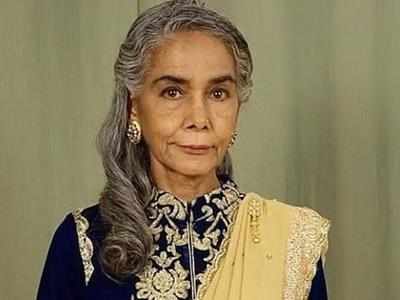
Who Is Surekha Sikri?

Actress Surekha Sikri

The veteran actor who passed away at the age of 75 of a cardiac arrest has starred in about 29 films and 19 Indian television shows and has been honoured with three National film awards for Best supporting actress (highest than any other actress in this category) and also is a recipient of a Filmfare award, a Screen Award, Sangeet Natak Akademi Award and six Indian Television Academy awards.

                  She was born in New Delhi , 1945 and attended Aligarh Muslim University and graduated from National School of Drama in 1971 and later went on to work with NSD Repertory company for a decade and then moved to Mumbai. Her notable works include playing the characters of ‘Durga Devi kaushik’ in the movie Badhaai Ho (2018) , ‘Kalyani Devi Singh’ (aka ‘dadisa’) in the prime-time soap opera Balika vadhu ( 2008-2016), Fayyazi in Mammo (1994) and ‘Rajo’ in Tamas (1986).

                   The news of her death has saddened her fans and colleagues. Her co-actors Ayushmann Khurrana, Avika Gor, Shashank Vyas and Avinash Mukherjee paid a heartfelt tribute to her by penning down their memories while working with the actress. She was humble, grounded, hardworking and was devoted to work. Her impeccable performances on screen has always left the audience in an awe, her demise has certainly left a void in the film and television industry but she will be cherished and remembered for the legacy she left behind. May her soul rest in peace.

The Great Indian Kitchen- A Review

  •  A much needed movie at this point of time. The movie discusses everything related to the Indian Patriarchal society, and how most people, women and men alike are oblivious of such a thing. Rather than a problem, it is accepted as a custom.. a norm.

    The movie shows how a woman was part of this norm as she was forced by the others who followed the norm, found out her mistake, and found a way out of it.

    Her husband and father in law are the perfect example of male privilege and patriarchy. They act progressive by claiming to adjust… The father in law is adjusting by eating chutney that was made with a blender rather than a cooking stone. Yet at the same time he wants rice to be cooked in a firewood flame, and not a pressure cooker and his clothes hand washed. The husband says he’ll “allow” her to go to work, but his actual response was “we’ll think about it later” which was his standard response to every thing the wife asks.

    The movie perfectly shows the situation of women where they have to take care of every single thing in the house, from literally handing the father in law a toothbrush to cleaning the kitchen sink it it gets clogged. All this, only to be locked away in a single room, for a week, probably even without windows during the time of their periods. The movie also shows that it’s not just a problem with the male, but also the females who are conditioned.. an elder lady asks our protagonist why she is still in the house during her periods and not in the outhouse.

    But the beauty of the movie lies in its characters. The director hasn’t vilified the husband and father in law. They are seen as people who are trapped in the old norms, and who mean no harm to women in any way. They aren’t chauvinists. They’re just “conservative” if I may.

    Every single scene is well thought and executed. And the movie ends with a message too, where the woman yells at her own brother who asks their mother to get him some water.

    .
    The movie also shows the hypocrisy of the husband being a social science teacher teaching about the importance of family saying “it is a communion and a collaborative effort of a man and a woman” and then goes home to treat his own wife in a regressive way.
  • Apart from these, the movie has also covered a lot of important aspects like sex, table manners, and in general freedom of a woman and male privilege.
    Coming to the actors, all actors in the movie have done their role in no less than perfection. That’s all that has to be said about the acting. Just plain simple perfect.
    Overall, the movie is a slap on the face of the patriarchal society and doest mince words or beat around the bush. Straight to the point from the start.

When she quiver gently..! Evolution of Electric Guitars

The Guitar is a fretted musical instrument that typically has six strings. Apart from normal guitars electric guitars, first patented in 1937. Electric guitars can have solid, semi-hollow, or hollow bodies; solid bodies produce little sound without amplification. The sound is frequently modified by other electronic devices or the natural distortion of valves or the pre-amp in the amplifier. The first successful magnetic pickup for a guitar was invented by George Beauchamp, and incorporated into the 1931 Ro-Pat-In (later Rickenbacker) “Frying Pan” lap steel; other manufacturers, notably Gibson, soon began to install pickups in archtop models. Well..! Take a look at the evolution of electric guitars…..

The Rickenbacker “Frying Pan” 1931
Manufactured by Rickenbacker Electro. The Frying Pan was created in 1931 by George Beauchamp. The name was derived from the flat body and its neck ‘handle’. It was designed to cash in on the popularity of Hawaiian music.

The Rickenbacker “Electro String” 1935
Created by Electro String, its name was changed to Rickenbacker. Was sold until 1953 when FC Hall a California music-business entity acquired it.

Les Paul “Log” 1941
Les Paul’s “Log” has a Gibson pickup mounted on a 4×4 block of solid maple wood with strings. He attached the body of an Epiphone hollow-body guitar for improving the instrument’s aesthetics, and for the purpose of reducing feedback and increasing acoustic sustenance. These were constantly modified by Paul, and the famous instrument designer used them long after creating his eponymous Gibson model.

Bigsby-Travis Guitar 1947
Best known as the creator of “Bigsby Vibrato”, Paul Bigsby’s instrument was important in the development of solid-body electric guitars. These have all six tuners on one side of the headstock, as opposed to the three-a-side headstock arrangement popular during that time.

Fender Broadcaster (Telecaster) 1948
With less focus on design, Leo Fender created a regular guitar that had clear sound. The Broadcaster is a two pickup model, and its necks are incorporated with truss rods. Since it violates the trademark for its Broadcaster line of drums, Fender changed its name to Telecaster.

Gibson Les Paul 1952
A design collaboration between Les Paul and Gibson Guitar Corporation gave birth to the Gibson Les Paul after the introduction of Telecaster created a rage for electric guitars. Les Paul went through 50-60 prototypes before finalizing the design.

Fender Stratocaster 1954
Often referred to as “Strat”. This instrument is a model of the electric guitar designed by Leo Fender, George Fullerton, and Freddie Tavares in 1954. It has a double cut-away neck with beveled edges, a Fender engineered “tremolo” unit in the floating bridge, and three pickups – the first solid body guitar to be fitted with such an arrangement.

Van Halen “Frankenstrat” 1979
Made from an ash Stratocaster body with a routing, Frankenstrat was Eddie Van Halen’s idea of combining a Fender and a Gibson. It had a maple neck, chrome hardware. And red, black, and white stripes. It also made a mark for hyper-fast technical playing.

Jackson Randy Rhoads 1982
Commissioned by guitarist Randy Rhoads, it was supposed to be called The Original Sin. He wanted to produce a guitar that resembled a shark’s fin. The vibrato in the guitar is of very high quality, and the pickups are designed to capture the treble more efficiently. Vinnie Vincent, formerly of Kiss, was the first professional guitarist to be offered an early Rhoads guitar by Jackson after Rhoads’ death.

Ibanez 7-String Guitar 1994
The seven-string, solid-body guitar became famous when the band Korn featured the Ibanez Universe in their 1994 debut album. Today. The 7-string still rumbles on with Muse, Dream theater etc.

Guitar Hero Controller
The series has helped to rekindle music education in children. Many consider Guitar Hero to be one of the most influential products of the first decade of the 21st century, attributing it as the spark leading to the growth of the rhythm-game market, for boosting music sales for new and old artists.

Guitar Hero Live 2015
Once again taking the shape of the old faithful fender Stratocaster. This guitar takes on a new approach with a 6-fret design arranged in two rows of three. The frets are represented by three scrolling lanes on-screen, containing either black or white notes representing the two rows. Due to the new design, the controller cannot be used for backwards compatibility with other guitar hero games.

SPACE RACE

On July 11 British billionaire Richard Branson and crewmembers (which also included Indian origin Sirisha Bandla making her third Indian origin woman in space) from his space tourism company Virgin Galactic, reached an altitude of 88 km from the deserts of New Mexico from where it took off. Reports pointed up they experienced three to four minutes of weightlessness and safely returned and the total time taken by them was approximately fifteen minutes. Although few doubted if it was space as it did not pass over the Karman line(100 km above the earth), the business community celebrated his feat and his competitors congratulated him. Virgin Galactic has already started receiving requests for reservations from the rich.

Former Amazon CEO Jeff Bezos stepped down and one of the areas he wanted to focus on post-retirement from the CEO job was space exploration. Talking of space who would not know Elon Musk’s SpaceX which persistently is working in this domain and who’s out of the space ideas and heavy experiments and trails is always making news.

But what is common in Elon Musk’s SpaceX, Jeff Bezos’s Blue Origins, and Richard Branson’s Virgin Galactic is that their main motive is the commercialization of space route. Unlike previous many space travel who’s main aim was expanding scientific knowledge through research, observation, and exploration this time the entrepreneurs are more or less involved in the “space race”, and their main motive- dominating the space tourism industry and or achieving the feat first. Anyways whatever the motive(unless not far extremely on the wrong side) given the leverage they have exploring the unknown, and the less-traveled road is not completely a bad idea and might bring us something exciting in the future. It would be exciting only when it does not as a result end up slowly poisoning and degrading the space like the other capitalist industries are degrading Earth.