Contributions of Raja Rammohan Roy

Raja Ram Mohan Roy is considered as the pioneer of modern Indian Renaissance for remarkable reforms brought in 18th and 19th century India. Among his efforts the abolition of Sati pratha was the most prominent his efforts were instrumental in eradicating the purdah system and child marriage.

Contributions:

Anti Sati campaign- started in 1818 with the citation from various texts that no religion sanctioned the burning alive of Windows. He also visited cremation ground, filed petitions to the government. His efforts brought about the  abolition of Sati in 1829, by the government declaring Sati a crime.

Women’s rights- He was a campaigner of women’s rights, condemned the general subjugation of women and misconceptions to form the basis of inferior status of women he attacked polygamy and wanted property rights for women and widow remarriage.

Modern Education- He supported David Hare’s effort to establish the Hindu College in 1817.  He established Vedanta college in 1825 where both Indian learning and western social and physical sciences were offered.

Freedom of press- He was a bold supporter of freedom of press and a pioneer of Indian Journalism. About journals like Mirat ul Akhbar in Persian and a Bengali weekly to educate and inform the public and represent their grievances before the government.

As a political activist- He demanded reduction in land revenue in export duties on Indian goods abroad. He vehemently demanded judicial equality between Indians and Europeans and that trial to be held by jury.

Founded Brahmo Samaj- He laid the foundation of Brahmo Samaj which discarded faith in divine Avatars, opposed the rigidity of caste system, believed in unity of all religions and focused mainly on prayers, meditation and reading of scriptures.

Hence, Raja Ram Mohan Roy has been rightly called the ‘father of modern India and father of Indian Renaissance’. There was hardly any aspect of nation building which he left untouched, he started with the Reform of Hindu religion but he also laid the foundation for reform of Indian society.

JUVENILE DELINQUENCY

Delinquency is a kind of abnormality when an individual deviates from the course of normal social life this behaviour is called delinquency when a Juvenile below an age specified under a statute exhibits behaviour which may prove to be dangerous to society and or himself he may be called Juvenile delinquent.

Juvenile delinquents are those offenders including boys and girls were normally under 16 years of age

The acts of delinquency may include running away from home without the permission of parents, use of multiple languages, wandering about railroad street, market places, visiting gambling centers, shoplifting, stealing, etc.

Causes of Juvenile delinquency:

Broken homes- The broken homes and families lack of parental affection, security, absence of a loving mother in the childhood or lack of family ties, parental responsibility for all contributory factors to delinquency. Interaction at home is a very important means for socializing the child.

Poverty- A very large proportion of delinquent children come from poor homes. Poverty compels sometimes both of the parents to be outside the home for a very long period to earn their daily bread, the children will be uncared for and they may join hands with the Gangsters and become delinquents.

School dissatisfaction some student get dissatisfied with the school life there is lack of entertainment and sports facilities in schools, indifference of the teachers may contribute to such dissatisfied students become regular absentees in schools and start wandering in streets.

Emotional problems of the individual- Mental troubles and emotional maladjustments are strong factors in delinquency. From the psychological point of view “delinquency is a rebellion and an expression of aggression which is aimed at destroying, breaking down or changing the environment”.

Remedies for juvenile delinquency:

  • Creating and inspiring a team of work  of private and public agencies devoted to preventive work.
  • Establishing a child guidance clinic to give appropriate treatment to the disturbed children.
  • The problems of beggary and poverty are to be removed or controlled and the general economic standards of the people must be increased to prevent children from becoming delinquent due to economic exigencies.
  • Under section 399 of the Indian Criminal Procedure Code convicted young offenders below the age of 15 could be sent to reformatory school established by the state government. Section 562 of the C.P.C. also permitted discharge of certain convicted offenders on probation.
  • Certified schools are established to give some general education and Technical training to the children here are the children 10 and for the long-term treatment. After their release they are put under the charge of a probation officer or a welfare officer who watches their activities.

A great problem such as Juvenile delinquency cannot be solved by means of legislation and government efforts alone. Government as well as private agencies must work hard with all sincerity and seriousness to find an effective remedy for the problem of Juvenile delinquency. The public attitude towards Juvenile delinquent must also change.

Ramkrishna Mission

Shri Ramkrishna Paramhans was one of the most notable and inspiring spiritual personalities who created a silent revolution in the realm of spirituality and inspired millions of people.

The Ramakrishna movement was started by Swami Vivekananda in 1897.The motto is “Atmano Mokshartham Jagat Hitaya Cha ( one’s own salvation and for the welfare of the world). 

Ramkrishna Mission is a Hindu religious and spiritual organisation which forms the core of a worldwide crystal movement known as the Ramkrishna movement of the Vedanta movement.

Contributions of Ramakrishna Mission:

Regeneration of humanity- It is a non political and non sectarian organisation. It works in spiritual regeneration of humanity without emphasising on a particular religion dog or Holy text. Unity of religion and selfless service is at the core of Ramakrishna Mission.

Social services- Ramkrishna paramhans used to say “service of man is the service of God”. Ramkrishna Mission work in the field of health education welfare of different sections spread of our culture, ethics, spirituality for this purpose Ramakrishna Math and Ramakrishna Mission was founded.

Work for women- The Ramakrishna Math and Ramakrishna Mission serve women through opening of Maternity success old age homes, vocational training centres for rural women and providing monthly allowance to widows. 

Hence, this movement founded after the death of Ramkrishna paramhans continues to serve the society as stated in this motto and based upon the teachings of Ramkrishna Paramhans it is it works for the fulfillment of twin ideas of renunciation and walking for self emancipation and social service.

Innovation and its types

Innovation is the discovery of new knowledge. It is neither automatic nor accidental rather it is a product of deep thinking, careful observation, and systematic activity. Scientific inquiry is an unending process and the object of this inquiry is innovation.

Types of innovation:

Product- Innovation in this category refers to the innovation in the quality of the product and both improvements to existing product lines or completely new offerings. The key is to add significant value.

Service- It involves the improvement of the consumer’s experience. It includes innovation in the offerings of the product, making it easier to use, fixing common problems. Here the objective is to make the product stand out.

Process- It is an inward-looking innovation, improving core competencies. It includes significant changes in technology, equipment, or software. For example, Henry Ford’s invention of the assembly line shortened the time necessary to produce a single-vehicle.

Management- It is the process of managing innovative ideas. The planning and process behind coming up with ideas, turning them into action plans, and developing them for the business until they become a reality. Implementation of new management practices, processes, etc that shows a departure from older norms.

Open- It refers to the innovation process to collaborate globally, bring out newer ideas, working beyond boundaries and expand the markets for external use of innovation.

Value-creation- It means to give something valuable for receiving something valuable in return. Value creation involves a process to make the product stand out,to deal with competitions, create demand in the market.

Radical innovation- It involves the birth of new industries and the application of revolutionary technologies. They allow society to take a leap forward. It brings about revolutionary changes in society like the industrial revolution.

Incremental innovation- Majority of innovation are of this type. It includes making improvements in existing products. the aim is to make the product stand out in the market and reduce competition around it. For example, the newer updates in smartphones and various apps add new features and improve their efficiency.

Disrupting Innovation- It involves the creation of newer markets and value networks which eventually disrupts the existing market and value network. It describes a process that initially a product is at the bottom of the market, it is less expensive and more accessible and gradually comes to rule the market. For example, Netflix disrupted the video rental business.

Architectural Innovation- It refers to innovation in the architecture of any product that changes or modifies the way various components of the system relate to each other.

Religious Policy of Akbar

Akbar grew up in an environment where remarkable saints like Kabir, Chaitanya emphasized on a religion based on devotion and love rather than one based on rituals and interpretations of revealed books.An atmosphere where liberal sentiments and views propagate greatly influenced Akbar’s religious policy. 

Main features of his religious policy:

Protective measures- Abolition of pilgrim tax, giving up policy of religious conversion of the prisoners of war.This laid the foundation of the empire based on equal rights irrespective of religious faiths.

Sulh-I-kul (peace to all)- This involved the adoption of the idea of how a true sovereign should behave . Akbar adopted the idea that a true ruler should show parental love towards his subjects without any discrimination , not allow sectarian strife to rise.

Ibadat khana- Initially Akbar was influenced by the Chief Qazi but after his betrayal he grew increasingly inclined towards mysticism, repeating God’s name . In 1575, he established Ibadat Khana at Fatehpur Sikri where he invited theologians, preachers of different religions. He held discussions about the Quran , features of different religions, the nature of God etc.

“Decree of Infallibility “- To deal with Mullahs Akbar issued a declaration or Mazhar that to consider fit  to interpret the Quran among different persons Akbar is the one. Since he is wise , just and ranks higher in the eyes of God so he will choose which interpretation of the Quran is correct among many others.

Maintained contacts- Abar maintained contacts with different religious scholars and continued to invite them to his court. For example , he had invited from Hindu religion Puroshottam and Devi , from Christianity Aquaviva and Monserrate.

Tauhid-I-Illahi- Contact with different religious leaders provided Akbar with great understanding, although all religions had different good points but they all preached the creation of an atmosphere of peace , amity and good for the country. This understanding made Akbar to create a new religion combining all the good of other religions. This was the Tauhid-I-Illahi. It was an order of the Sufistic type, Sunday was the day of initiation where those willing to join placed head at the feet of the Emperor who raised him up and gave him the formula-the shast to repeat upon , Allah-o-Akbar was the motto.

Enrolling Murids- They were a personal band of nobles completely loyal to the Emperor who had to give up their property, life, honour and religion and become devoted to Akbar. Badayuni has criticized this move of Akbar as a strategy to gain loyalists and many unworthy flatterers.

Translation department- Akbar made sure to translate works like Singhasan Battisi , Atharva Veda , Ramayana, Mahabharata etc.

Hence the religious policy of Akbar shows his attempt to maintain peace and cordial relations between different sections in society. 

|Gender Discrimination at the Workplace |

Hiliary Clinton has rightly said,”Women are the largest untapped reservoir of talent in the world.”

Today we see more and more women coming out of the four walls of their home and participating in public activities. They are doing the jobs which were earlier believed to be reserved for men. Now women are engineers,doctors, advocates, astronauts etc. 

Recently they have been granted permanent commission in the Indian Army enabling them to be deployed at the borders and fight equally as their male counterparts. 

In Spite of this there is still a long way to go ,women still face discrimination at workplace, they are sexually harassed and time and again forced to prove their worth and prove that they have got this job on their merit and not because they are women.

Forms of gender-based discrimination at workplace:

Direct forms- These direct forms of discrimination are the visible ones. They involve unequal pay where female employees are paid less than the male employees. Then there is the case of restrooms, women especially in the unorganised sector face sanitation problems making them work for long hours without relieving themselves. Women are stereotypically offered positions like HR, receptionists and very rarely they are given the position of a team lead. Most common of this the termination of the women when they speak up against or complain about the sexual harassment. 

Indirect forms- These may not be visible but they takes place more than the direct forms of discrimination. We hear a lot of cases where sexist questions are asked from women in the interview. They are often questioned about how they would manage their personal and professional lives, if they are married and have children then they may not even be offered the job. These same questions are however asked from men in the interview. Women also become the victims of sexist jokes,comments on their dressing , obscene statements that show how their dressing affects their productivity.

Some reasons identified behind this discrimination is the patriarchal attitude of people that the only work a women can do is the taking care of her family.Also there is this attitude of seeing women as an object of male satisfaction rather than an equal participant in the economy.

Hence the need of the hour is to change the patriarchal mindset of people. The successful women leaders like Mrs.Indira Gandhi the 1st woman PM of India, Indira Nooyi CEO of Pepsico , Jacinda Arden PM of New Zealand among others have proved the spokespersons of patriarchy wrong.

Swami Vivekanand has rightly said,”it is impossible to think of the welfare of a nation , without improving the condition of its women.It is impossible for a bird to fly with one wing.”

|Birsa Movement|

Birsa Movement

Birsa movement named after Birsa Munda is one of the prominent 19th-century tribal rebellions in the subcontinent. It took place in the region south of Ranchi in 1899-1900. The Ulgulan or the great tumult sought to establish Munda Raj and independence.

Causes:

Economic causes- Mundas traditionally enjoyed the role of ‘Khuntkattidars’ or the original cleaners of the forest. With the coming of the non-tribals, the Mundas could see the erosion of this system. They started facing land alienation. The incidences of forced labor or Begar also increased.

Spread of Education- The spread of education through Christian missionaries made the tribals more organized and conscious of their rights. They became aware of how their culture was perceived by non-tribals.

Role of Birsa Munda- He played an important role in spreading awareness among the tribals and providing definite direction to the movement. He called upon the Mundas to fight against superstition, give up animal sacrifice, etc. He organized masses to stop paying debts to the moneylenders.

The course of the movement:

Birsa awakened the masses and sowed the seeds of revolt in them against the landlords as well as the Britishers. He formed two military units, one for military training and armed struggle and the other for propaganda. He traveled far and wide across villages giving discourses and building a politico-military organization.

The British fearing a conspiracy jailed Birsa for two years in 1895. The rebels attacked the police stations, officials, zamindars, and moneylenders. On 9th January 1900, the rebels were defeated and Birsa Munda was arrested and died in jail.

Result of the movement:

The struggle against the exploitation and discrimination of the tribals led to passing of the Chotanagpur Tenancy Act in 1908.

Chotanagpur Tenancy Act 1908 restricted the passing of land from the tribal people to non-tribals,recognised the ‘Khuntkatti rights’ and banned forced labour.

Hence , the Birsa Movement continues to remain one of the most significant revolt fought for the rights of the tribals. 

|Ways of acquiring Mate|

How does one gets married? Normally people get married by publishing matrimonial ads in newspapers, online sites, or with the help of relatives who acts as mediators. This was about the modern industrial society, but the tribal society is unique, so their ways of getting married are also unique. Tribes have nine different ways of acquiring a mate.

In this article, I will show the different ways of acquiring a mate prevalent in tribal society.

Marriage by capture– When a man snatches away a woman from her village and marries her, it is called marriage by capture. This form of marriage is most popular among the Naga who invade villages and capture girls. 

Marriage by exchange- Under this marriage, two households exchange women with each other and thus avoid paying the bride price. Bride price is the payment made by the groom’s side to the bride’s side to marry her. This form of marriage is found all over India and is also found among the non-tribals.

Marriage by purchase- In this form of marriage bride price is the central theme. Among the Munda, Ho, Santhal it is the most prevalent. The high bride price has the worst consequences as is seen in the case of the Ho tribe of Chotanagpur where to escape the bride price many youth resorts to marriage by capture or remain unmarried.

Marriage by elopement- It is a peculiar feature of tribal India. Anthropologists believe this kind of marriage has emerged as a result of boys and girls shedding their traditional submissiveness. If the parents’ consent is not forthcoming, they resort to elopement and get married.

Marriage by service- In this form of marriage the groom serves in the house of the bride as suitor-servant and marries her after a lapse of few years. they have to work in the bride’s household for three years and have to fulfill all the responsibilities of a son. This form of marriage is a way to avoid payment of bride price completely or minimizing it through service rendered by the prospective groom at the bride’s residence. For example, marriage by service is found among the Gond Baiga, Birhor.

Marriage by intrusion- Here a girl desirous of marrying an unwilling young man thrust herself on the groom and his parents. She tries to serve her prospective in-laws and can be tortured in return. If she persists in her intentions and her endurance lasts for a considerable period she is finally accepted as a daughter-in-law.

Marriage by trial- In this form of marriage, the prospective groom has to prove his prowess before he can claim the desired girl. Thus he is required to undergo a trial.It is most popular among Bhils. During Holi festival, young men and women perform a folk dance known as ‘gol gadhedo’ around a pole or a tree to the top of which there is a coconut and jaggery tied. The girls make a ring around the tree and the boy to marry the girl has to break the ring and eat the coconut and jaggery after climbing the tree. In all this, he is beaten up, and inspite of all this if he succeeds he gets the right to demand any girl from the group as his wife.

Marriage by mutual consent- In this formalities of marriage are arranged by parties concerned through the process of mutual consent and consultation. This practice is result of tribal contacts with Hindus, Christians, etc.

Marriage by probation-  Under this the prospective husband and wife are expected to live together for some time for marriage in the bride’s house. If they like each other and willing to marry, elders arrange their marriage.Otherwise, the man has to pay compensation to the girl’s parents. This form of marriage can be called a primitive version of the modern practice of courtship. It is prevalent among Kuki tribes of Andhra Pradesh.

Hence this was the nine different ways of acquiring mate found among the tribals. These kind of marriages is in contrast to the marriages in mainstream society. These interesting ways of getting married make the tribes even more unique.

Measures to deal with Communalism

Remembering partition we are immediately reminded of the immense bloodshed that followed it. The two major communities were at war with each other. This was communal violence. Since Then communalism has been a menace to India. Now and then communal riots erupted in India. People engaged in those riots become faceless the only thing that matters to them is their religious or community identity. Religious identity overrides everything else and they develop the mindset “our belief alone is true and rest is false and incomplete.” 

According to historian Harbans Mukhia,” communalism is the phenomenon of religious differences between groups, often leading to tension and even rioting between them.” 

Measures to deal with communalism:

  • Reforms in the present criminal justice system, speedy trials should be undertaken. Specialized training for the police force to handle communal riots and setting up special investigating agencies can help.
  • Emphasis on value-oriented education with a focus on peace, non-violence, compassion, secularism, and rationalism as core values in children in school and colleges can prove vital.
  • Developing an attitude that all religions are equal and teach us the same values of humanity, humility, and kindness can help maintain peace.
  • Inspiration can be taken from other countries for example Malaysia maintains a perception index to gauge people’s needs and feelings about race relations in their area.
  • Non-governmental organizations can tie-up with the government to create communal awareness build stronger community relations and cultivate values of communal harmony.
  • News channels play a huge role in influencing the views and mindset of people so when they are biased towards one community or religion, this can develop biasness in the attitude of people watching those news channels. So media houses must always present a balanced viewpoint on any issue.

Hence communalism can be combated in the best way when people are able to develop a balance between their religious sentiments and national interests, they need to understand that nation comes first that is nationalism is greater. We have to understand that there will always be anti-nation elements propagating communal tensions but we have to be rational and have a mindset that is free from all kings of biasness towards any religion or community.

Anything violence does, peace can do it better.”

Role of family in the social construction of gender

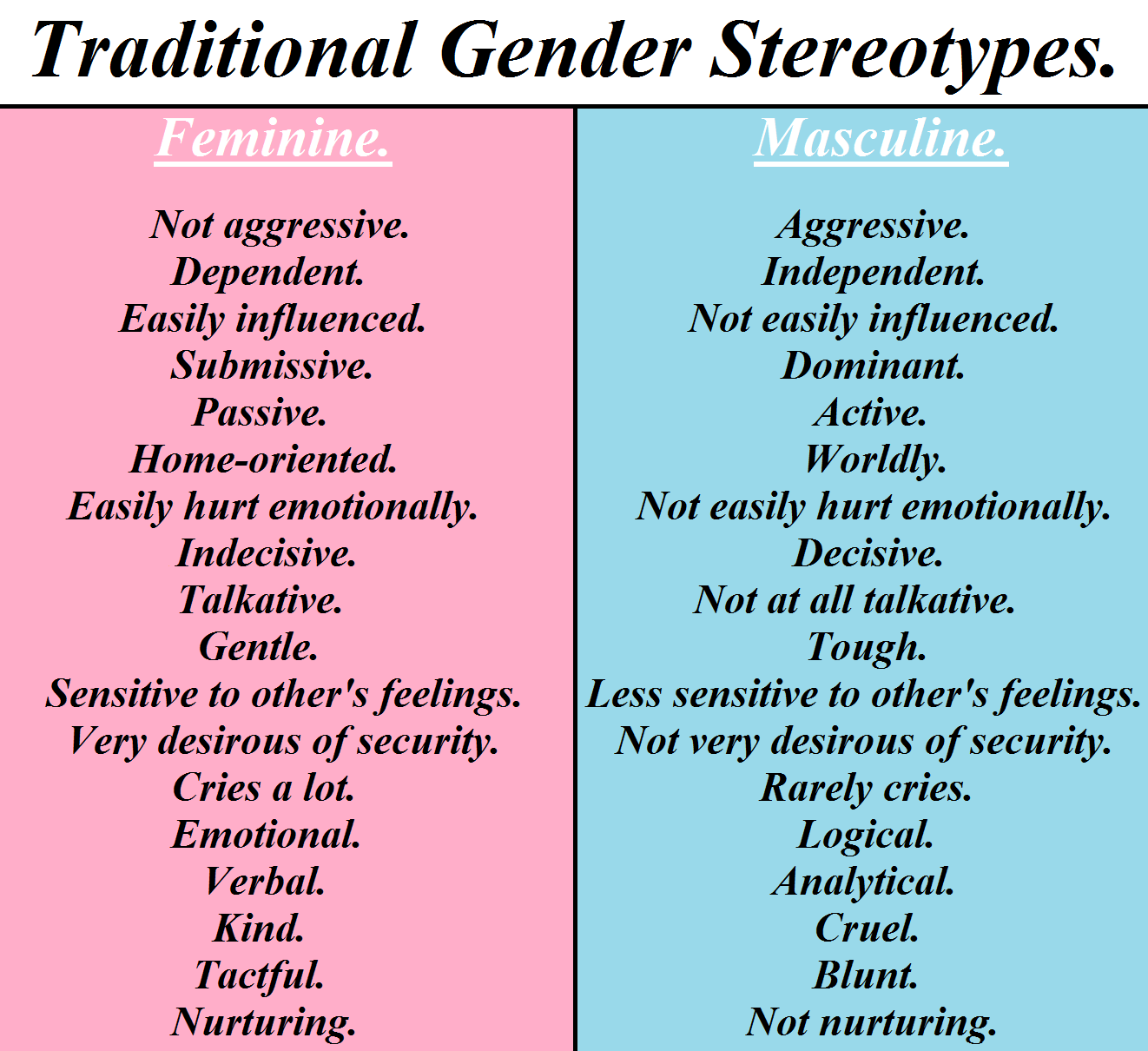
Gender in contrast to sex is a social construct. It is an established set of characteristics of society according to which people are categorized into males or females. Gender roles vary from society to society. There are many agencies present in society that facilitate the social construction of gender. Family is one such agency.

In this article, I will try to show the various processes through which gender identity is established in children by their families. 

As a child grows the gender identity is established through four processes namely:

  1. Reinforcement or moulding-Parents at home treat their children differently depending on their sex. Boys are normally given more freedom than girls while girls are treated more protectively. Any ‘effeminate’ behaviour on the part of the boy is highly discouraged and if such tendencies continue they are regarded as ‘psychological disturbances.’As a result of this training, children learn their sex roles effectively and quickly. 
  2. Opportunities-Opportunities go a long way in determining gender roles. While boys are encouraged to take up technical jobs girls are discouraged . Girls are encouraged to go along the ‘the feminine way’ and boys are expected to develop themselves along ‘the masculine way’.Boys are given cars, building blocks etc to play with while girls are given kitchen set, dolls to play with. The boys are expected to help their fathers and girls are expected to help their mothers.
  3. Role modelling-It is a major mechanism of gender socialisation. By the age of three, nearly all children know whether they are male or female and by the age of four, they have very definite ideas of what masculinity and femininity must involve. A male child usually identifies with his father and a female child with her mother. The boys considering their father as a role model emulates them and the same is the case with girls who look up to their mothers. Role modelling is more effective when the child has a strong and warm relationship with the role model.
  4.  Explicit verbal instruction-Certain instructions also determine gender identity.” Boys don’t cry like girls”,” Pink is the colour of girls”,” You are a girl you should know how to cook” etc are some very common instructions. Hearing the same everywhere and on daily basis influences the mind of an individual and determines the gender identity.

Hence, families give the earliest reinforcement for acting appropriately according to one’s gender, and the environment continues to teach what is acceptable for men and women.

Mahatma Gandhi’s philosophy of Sarvodaya

Mahatma Gandhi’s philosophy of Sarvodaya aimed at rural reconstruction and uplifting the people of rural India by peaceful and cooperative means.

Sarvodaya, in simple terms, means welfare and upliftment of people and of all living beings . It means the welfare of not only oneself but of others as well. Sarvodaya stresses coexistence and love.

Ideals of Sarvodaya:

  • Economic implications-Under this philosophy, one should be given the opportunity to contribute to national production. The surplus should be distributed equally and inequalities of wealth should be reduced. Sarvodaya also emphasizes that industries should be decentralized and land should be redistributed.
  • Based on Trusteeship-This philosophy involves that everyone must utilize only that part of his wealth that enables him to lead an honorable livelihood and the rest of the wealth belongs to the community and must be used for its welfare. So all industrialists must act as trustees of wealth and not its owners.
  • Social implications- In the social aspect, this philosophy believes in individual freedom, opposes untouchability, and promotes widow remarriage. It believes in the promotion of brotherhood and human dignity Sarvodaya believes in functional education and decentralized society.
  • Political implications- In Sarvodaya philosophy, political power is not an end in itself but it is only means to an end, the end is human welfare. It believes in the universal adult franchise and favors decentralized democracy. Sarvodaya condemns the majority rule and centralization of power and majorly believes in self-sufficiency. 

Hence, the philosophy of Sarvodaya is an example of the Gandhian philosophy of ‘Simple living and high thinking. It envisages a new pattern of life-based on the decentralization of economic and social power, ensuring the moral freedom of man.

Some beautiful quotes!

Beautiful Quotes

I measure the progress of a community by the degree of progress which the women have achieved.”- B R Ambedkar

“If all men are born free, how is that all women are born slaves?”- Mary Astell

“Knowledge makes a man unfit to be a slave.”- Fredrick Douglas

“I alone cannot change the world, but I can alone cast a stone across waters to create many ripples.”-Mother Teresa

“A nation’s strength ultimately lies in what it can do on its own ,and not in what it can do with the help of others.”-Indira Gandhi

“I have fought against white domination and I have fought against the black domination. I have cherished the ideal of democracy and a free society in which all people live in harmony and with equal opportunities. It is an ideal that I hope to live for and to achieve. But if need be ,it is abnn ideal for which I am prepared to die.”-Nelson Mandela

“India is a cradle of the human race, the birthplace of human speech, the mother of history, the grandmother of legend, and the great grandmother of tradition. Our most valuable and most constructive materials in the history of man are treasured up in India only.”-Mark Twain

“We can complain because rose bushes have thorns, or rejoice because thorn bushes have roses.”-Abraham Lincoln

“Justice implies something which is not only right to do and wrong to do, but which some individual person can claim from us as their moral right.”-John Stuart Mill

“The Ganga to me is a symbol of India’s memorable past which has been flowing in the present and continues to flow towards the ocean of future. ”-Jawaharlal Nehru

…I step down the ghats, bathe in the Ganga, walk up to the Masjid for namaz, and then head straight to the Balaji temple for riyaz… ”-Bismillah Khan on living in Benaras

Zero Budget Natural Farming

Zero Budget Natural Farming(ZBNF) is a chemical free agriculture drawing from traditional Indian practices. It marks a departure from the use of expensive chemical fertilizers , insecticides and pesticides.  

Subash Palekar, known as the father of ZBNF introduced it in the mid 1990s to move away from the use of chemicals in farming as an alternative to Green Revolution method of use of fertilizers and intensive irrigation. 

Need for ZBNF:

  • Rising cost of agricultural inputs leads to indebtedness and suicide among farmers.
  • Use of chemicals has a devastating impact on the environment and long term fertility of soil.

Features of ZBNF: 

  • Application of Jeevamrutha which is a mixture of fresh desi cow dung, aged desi cow urine, jaggery , pulse flour , water and soil on farmland. It is a fermented microbial culture that adds nutrients to the soil and acts as a catalytic agent to promote activity of microorganisms and earthworms in the soil. The requirement is of only one cow that too of Indian breed.
  • Application of Bijamrutha to treat seeds to increase their chances of germination. It is a mixture of cow dung , cow urine, lime and water.
  • For pest management and insects, a concoction is prepared using neem leaves and pulp, tobacco and green chillies .

Limitations concerning ZBNF:

  • This method of farming is being debated. There is not much research going on about this .
  • Many farmers reverted to conventional methods of farming after seeing drops in ZBNF returns.

Implementing States of ZBNF:

  • Haryana – 80 acres in Gurukul, Kurukshetra
  • Punjab – 1000 acres
  • Karnataka – 10 Agro climate zones
  • Andhra Pradesh – 5.01 lakh acres
  • Himachal Pradesh – Across the state

Mental Health in India

According to the World Health Organization(WHO) there is a 10-25% life expectancy reduction in patients with severe mental health disorders. WHO has labelled India as the most depressing country.  

These might be facts but they present the glaring reality of the stigma attached to mental health in India .

In India when a person feels anxiety or has panic attacks , they are described as doing drama to gain attention. If someone expresses desire to see a psychiatrist they are labelled as mad, lunatics by the society. Mental illness is not considered an illness , it is just seen as something which will become alright in a day or two. This mindset of people needs to undergo a change , they need to understand mental illness is an illness and it is real .

The stigma attached to mental illness prevents the ones who are suffering from seeking timely help which further worsens their condition. 

Some steps to improve the situation are:

  • First and foremost there is a need for empathy and sensitivity in people regarding mental health. 
  • There is a need to create awareness regarding mental disorders in India . Through the means of workshops, films, TV people must be made aware that mental illness is real .
  • There is also a requirement of active policy intervention and resource allocation by the government. 
  • There should be creation of a peer network to connect patients with each other so that they are able to support each other.
  • There should be an increase in the number of health personnel in the mental health care sector.
  • There is a need for more counseling facilities especially in the rural sector and counseling centres for women with women doctors. 
  • There can be establishment of telephone based helpline numbers and mental health apps.
  • School based programmes on mental health can improve and teach children about mental health. 

Hence, immediate steps should be taken to deal with the menace of mental illness in India . Awareness should be created about mental health to reduce the discriminatory attitudes of people.

Education in times of Covid-19

Covid-19 pandemic is wreaking havoc across the globe.It has disturbed the pattern of our lives and livelihoods. Numerous restrictions have been placed upon the people to tackle the pandemic . One such restriction is the closure of schools and colleges across the country . This closure has transformed one’s house into one’s school . Online teaching through zoom , Google meet has become the new normal . 

“Am I audible?” “Mam please let me in!” . These phrases have replaced the ones like “Keep quiet everyone” , “All of you sit down”.

Online learning is the need of the hour. But it is not without certain limitations. 

In India, there has been a rich-poor divide, literate-illiterate divide but online teaching has fostered a digital divide. Not everyone has access to laptops , 4G connectivity, and smartphones to attend the classes.  Many families lost their means of livelihood in this pandemic forcing them to make a brutal choice between child’s hunger and child’s education.

To understand the havoc of Covid-19 pandemic upon education, one can analyse the situation class-wise.

  • Pre-school- Online teaching has deprived these students of a playful classroom environment. Learning is primarily a social activity and small children are unable to comprehend anything taught online . They are missing out on the valuable experience of getting up early, going to school, making friends, playing and just enjoying their life.
  • Primary school- Here also the children are stuck to their laptops , smartphones for hours . Since they lack a structured environment they get easily distracted . They lack concentration and lag behind in learning things.
  • Secondary- They suffer the most . They are in their prime both in terms of academics and development.  They get easily distracted and spend most of their time playing games and chatting with friends . Even when exams take place they pass taking help of their books, internet and friends. Most of them don’t take online classes seriously and hardly understand anything .
  • University- Some colleges across India never opened . The students are cooped up in their homes missing out on all the college experience. They give open book exams and just copy paste things from the internet. The seriousness, anxiety about exams has vanished . The students who need to do practicals like in engineering study 3D representation of things which creates a vacuum in their learning.

This was about limitations of online teaching class wise . However there are many other limitations: 

Technical difficulties like network problems interrupt the class.

Most children lack a conducive environment at home , making them give up their studies, lack concentration etc.

In India government schools provide mid day meals to the students. With the schools closed they miss out on a nutritious meal and it is known that some of the children used to have only that proper meal in their entire day. Some girls are even forced to give up their studies and household duties are thrusted upon them . 

It has also been found that for some children school was a safe haven away from their unstable families . But online teaching has disrupted this, they can’t feel the same warmth on a virtual platform nor can they escape the tensions of their homes . Their conditions become all the more deplorable. 

Not just students but  parents too have become overburdened as now they have to manage their offices and also have to become an equal participant in their child’s education. 

The teachers too face a lot of problem because many of them are not tech-savvy and due ot pandemic they had to start afresh and educate themselves about the new digital platforms. 

Having understood some of the limitations of online teaching , some ways to improve the situation could be:

  • Making rural areas , remotest corners of the country well equipped with better network and connectivity. 
  • Providing smartphones, laptops to students so that they don’t lag behind.
  • Parents must guide their children that they should pay attention to their online classes and gain the best out of it. 
  • Students must understand it is not new normal, but it is the normal. 
  • Teachers must be trained to use the different digital platforms .
  • Adequate arrangements must be made to impart quality education even in these trying times .

Covid-19 pandemic is a test for India . But in these times of crisis one must look for opportunity. Adequate steps should be taken to provide quality education to everyone and to lessen the growing digital divide in India.