Book Review – Norwegian Wood

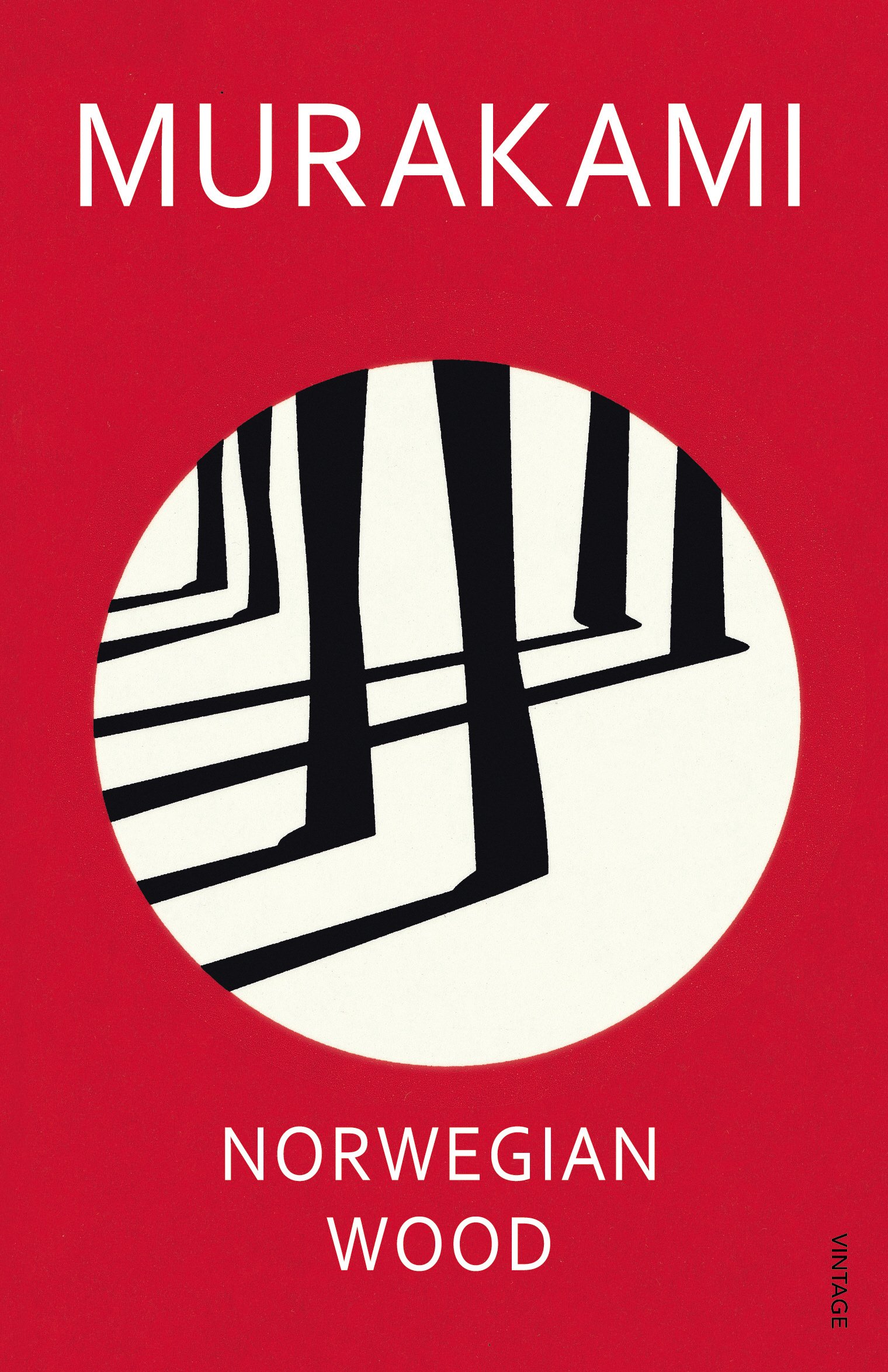
Amazon.in: Buy Norwegian Wood Book Online at Low Prices in India | Norwegian  Wood Reviews & Ratings

Norwegian Wood by Haruki Murakami is a coming-of-age story of Toru Watanabe, set in the late 1960s in Tokyo during the main character’s early student life. Toru narrates the story himself. Having lost his close friend, Kizuki, to suicide, Toru moves out of his hometown in Kobe and to Tokyo to study theater, which he clearly isn’t really interested in. Their lives in those days have a background context of a weak student revolution which fizzles out too soon, only to reveal the hypocrisy of the people leading it.

Here in Tokyo, Toru once accidentally bumps into Naoko, his deceased friend’s girlfriend. Naoko, if not more, is clearly as affected by Kizuki’s death as Toru (only to know later that Kizuki isn’t the only close one Naoko has lost to suicide). Naoko is broken and in dire need of someone’s emotional support in order to heal. And here comes ToruToru & Naoko share a bond, albeit a sad one, a bond strengthened by the death of the third partner of their group. They spend multiple Sundays together, wandering through the streets of Tokyo and, as one may expect, Toru falls for her. Unfortunately, that is where things take the melancholic path further down hill.

Naoko ends up in an institution called Ami Hostel up the hills, an hour from the city of Kyoto. Ami Hostel is a sophisticated version of (to put it subtly) a mental hospital. It’s secluded, clean, peaceful, and more of a community living where the lines between doctors & patients are blurred. While back in Tokyo, Toru finds Midori Kobayashi, his ‘History of Drama’ classmate. Midori, despite her own multiple problems — family, boyfriend, her family bookstore — to name a few, helps Toru to live through his lonely days, while he still yearns for Naoko to reach out to him. Toru is equally attracted to both Naoko and Midori. The story progresses as he sways back and forth and spends time with Naoko and Midori alternatively. While in his mind he is always rooting for Naoko to come back to his life, he doesn’t allow him to register that fact that he loves & misses Midori equally well. Naoko is troubled deeply & doesn’t want to come back to Toru until she is in a much better shape while Midori hates the fact that Toru always prioritizes Naoko over her, even though Midori Toru have never discussed Naoko even once. This is a tough choice Toru has to make and a journey he’ll have to take in his mind moving from Naoko to Midori or vice versa. What choice does he make? Do read the book to find out.

The two women in Toru’s life couldn’t have been more contradictory — One doesn’t speak much, the other doesn’t stop at all. One goes all out in showing affection for Toru while the other never confesses even though Toru keeps asking for it. Both have seen death, grief and loss, up close and personal, but one gets accustomed to it, jokes about it while the other gets crushed by it.

In the end, Toru has to make a choice between Naoko and Midori. Before he decides, you would have definitely made up yours. It’s not a grey area anymore. Norwegian Wood is a love story, with some ecstatic, arousing moments and with some dark, melancholic, heart wrenching ones as well — just like life, as one may say.

Bottom line, we will lose the people we love, friends and lovers will fall out of our lives, and there will be mistakes we make in our lives or watch others make towards other people we won’t be able to rewrite, because that’s the power of time. It can only go forward, not back. The characters interacting with each other are nostalgic; they recount the times that made them to be the person they are today. The lessons from this book aren’t any easy pills to swallow, so if you’re intending for a happy-go-lucky read, then I’d probably request you to skip Norwegian Wood.

Understanding gender- review

Title of the book: Understanding Gender 

Author: Kamla Bhasin 

Publisher:  Women Unlimited

Year of Publication: 2003 

Kamla Bhasin was born in 1946 and grew up in Rajasthan, India. She received a BA at Maharani’s College in Jaipur and an MA in Economics at Rajasthan University. In addition, she studied Sociology of Development for four semesters at Muenster University in West Germany. Bhasin’s work focuses on gender, education, human development, media, human rights, and peace. In particular, Bhasin acts as a tireless advocate for Indian and South Asian women and their right to equality.

The author, Kamla Bashin in his book Understanding gender talk about the concept of gender in feminism discourse deals with such difficult questions as the relationship between gender and women; the difference between ‘women and development’ and ‘gender and development; gender and patriarchy; and how religion, caste, and class affect gender. Bashin tries to bring light on the aspect which many people are not aware of and tries to serve reality to them. 

Gender and sex are misunderstood, as the same thing but the concept of gender us to share that sex is one thing, but gender is quite another. Everyone is born male or female and our sex can be determined by our genitalia, but the social and cultural packaging that is done for girls and boys from birth onwards is gendering. As in our society discrimination starts right away from the birth of a child if a baby boy is born then there will be decorated with blue balloons in room and many celebrations conducted on the other hand for baby girl pink balloon is preferred And there is no celebration and rituals necessarily conducted. As we can see that how gender is associated with even colors.

The author tries to readers to understand that there is nothing they do that men cannot do or that men can do and women cannot. Sex is universal but gender keeps changing according to the time and place For example middle-class girl may be limited to home or school while a tribal girl may roam around in the jungles freely. 

Every society prescribed different roles for both the gender as dresses in some societies. Women are made to cover their body from top to toe including their faces, while men are allowed to wear according to their comfort. Attributes in most society’s women are accepted to be soft, caring, and obedient while men are accepted to be strong. Another one is roles and responsibilities’ men are considered the head of the family all the decisions are controlled by him while women are trained to do household chores and look after the children. This shows the lack of education, employment.

Issues like language also gendered have been highlighted by the author. Language is patriarchal and reflects gender biases and inequalities as men can use the words they want but women are always advised to use soft words. For example words of abuse with sexual connotation mostly used by men but if women do the same then it is not considered good. Another example the words like a nurse, secretary, nursery teacher always assumed to be women whereas boss, pilot, manager, politician, etc refers to men.  It shows that public spaces and jobs continue to be dominated by men.

Bashin tries to cover patriarchy as an issue as its means male domination. Patriarchy is not the same everywhere it is different in every situation. For example, patriarchy was not the same in our grandmother’s time; it is different for tribal women and upper-caste Hindu women, for the women in the USA and women in India.  Women’s work never considers as worth because their work doesn’t count in the economic growth of the country so society mention it is worthless and it strengthens the modes of production and economic system in which women play very little roles. Therefore in reality it is women’s relationship to work and property which determines their status.

She points out that separation between private and public challenges the inequality and conflict within the household. The divide between the domestic and public sphere also creates a problem for women who take up jobs outside the home. Words like gender oppression and gender subordination. She explains that gender oppression does not mean women’s oppression; although because women are generally the ones who are subordinate, it is assumed that gender oppression and gender subordination refers to them. 

 The author tries to highlight the Developmental program leading to marginalization of women mostly major credit of agriculture field were given to males and little income activities like papad and pickle making, sewing allotted to female this is nothing but myths about masculine and feminine.

Male control over women’s reproduction and sexuality made for the world-historic defeat of the mother right. Further, the position of the middle-class women is much worse than that of working class women because middle-class women themselves are property; they are merely the carrier and producers of babies.

How “women and development” change into “gender and development” she discussed many factors under it like the difference between men and women’s achievement and participation are as a result of socially constructed gender role rather than of biological difference

A large number of women and men all over the world have made a different kind effort at different levels to change patriarchal thinking, attitude, structure, and organization some examples: – School curriculum has been analyzed and made more gender-sensitive, many laws are made, NGOs for help, etc.

 The author concludes the book by saying that gender equality requires each one of us, man and woman to look into ourselves and overcome our negative male and female qualities.

This book according to me is a good read for everyone; it is a perfect combination of reality and humor. The author has dealt with various sensitive issues like gender, patriarchy, to make understand people by giving examples and situations which can be relatable for many. Bashin leaves no stone unturned in making people understand the sensitivity of the issue and the most touching thing of this book which I feel it also talks about the pressure faced by men in our society. One thing which I felt was lacking is including the third gender (transgender) their problems and difficulties also can be talked about. This book tries to give a real picture of what happens in society.

References 

Bashin, K. (2003). Understanding gender. New Delhi: Women Unlimited

Book Review – Half Torn Hearts

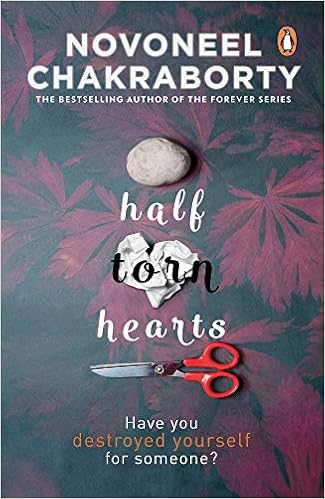
Half Torn Hearts is the 14th novel of Novoneel Chakraborty. Novoneel usually writes the suspense and thriller novel, but this novel differs from Novoneel’s other books, and is definitely a masterpiece.

Half Torn Hearts : Chakraborty, Novoneel: Amazon.in: Books

SYNOPSIS

Shanay Bansal, a young and successful entrepreneur, is looking forward to his engagement with Afsana Agarwal. But a few weeks before the engagement, he receives intriguing voice message from someone from Afsana’s past. Curious, Shanay plays the voice message and through those other such messages, a different world from the past opens up about a beautiful relationship that got broken because of a terrible lie.

PLOT

There are mainly three characters: Nirmaan, Raisa and Afsana. Nirmaan and Raisa are childhood, good friends. They meet in the year 1996 in Guwahati. Nirmaan offers her to play with him and his friends. In the beginning, she doesn’t but later agrees and becomes good friends. Besides Nirmaan, she doesn’t have any friends.

After six years, in 2002, they again meet in Kolkata in the school named St. Peter’s High. In the beginning, he gets surprised to see her. She tells how she gets admission in the school. Time has changed, and they have grown up, but Raisa doesn’t prefer to change. She wants everything to be like earlier times. She doesn’t leave Nirmaan most of the time and he gets annoyed. He tries to explain to Raisa that things have changed, time has changed, but she didn’t seem to understand. 

Later, in the same school, she meets Afsana Agrawal, and they become best friends. They become soul sisters; whereas Nirmaan doesn’t like Afsana and tells Raisa to stay away from Afsana, but she still hangs out with Afsana. Time passes and these innocent minds did not know how thier lives would turn. Raisa fails in class X whereas Afsana and Nirmaan pass the exam. They get admission to the same college. With time, both fall in love but they weren’t able to express their feelings. 

On the one hand, Afsana is in with Nirmaan and her parent has searched her guy ten years elder and her parents want her to marry when she returns 18. She couldn’t share this with Nirmaan and shares with Raisa. Raisa is one who makes them together and gets intimate with him, but she doesn’t share about her so-called soon fiancée.

With time, they get separated. What is the reason for the separation, and why is she getting married to Shanay? What will Shanay do after knowing the truth?

CONCLUSION

This story has three main characters and their selfless love and that willingness to destroy owns self for the person they love. There are quite few many difficulties in their life but the way their love has been portrayed it won my heart. Some secrets, some revelations and then an unexpected climax – everything is just so catchy that I could not put the book down till I completed reading it. So, half torn hearts will definitely win many hearts of the readers!! And the most beautiful part about this book is the Hindi poems in between the story which gave that storyline the perfect essence of emotions.

While reading the novel, we can tell that not every relationship is about flowing together forever. People who meant the world to us at one time will seem like a distant memory at another.
In conclusion, I could say it’s interesting and engaging. It’s a heart crushing story with surprising revelations and a touching climax.

The ode

Introduction:

The Ode may be defined as a ‘rhymed lyric often in the form of an address, generally dignified or exalted in the subject, feeling and style’. It is also defined as any ‘strain of enthusiastic or exalted lyrical verse directed to fixed purpose and dealing progressively with a dignified theme’. An ode is noted for its logical evolution of thoughts and it has a certain amount of complexity and elaboration, unlike a simple lyric.

An ode usually begins with an address to somebody or something. Sometimes the opening line or lines may contain an apostrophe as in the case of Shelley’s ‘Ode to the west wind’ or Tennyson’s ‘To Virgil’s. An ode may be written on an important public event or the death of a distinguished person. Marvell’s ‘Ode upon Cromwell’s Return from Ireland’ belongs to the first category and Tennyson’s ‘Ode on the Death of Duke of Wellington’ belongs to the second category.

Origin of Ode:

The ode is of Greek origin. There were two traditions of odes in Greece. The first type of the Dorian mode was so called from the district and dialect in which it arose. It is also called the Pindaric ode because Pindar, the ancient Greek poet, was its greatest exponent. The second type of ode is the lesbian old so-called because it flourished at first on the island of lesbos. It is also called the horatian ode because the great Latin poet Horace was its best practitioner. Thomas Gray’s odes ‘The progress of Poesy” and “The Bard” belong to the Dorian or Pindaric school. Marvell’s ‘Ode upon Cromwell’s Return from Ireland’ is the best example of a Horatian ode in English.

A pindaric or Dorian ade consists of three parts:

The strophe, the anti-strophe, and the epode. they correspond to the three stages of the recital of an ode during a dance. The Horatian ode consists of several short stanzas similar in length and arrangement.

In the early stages, the English ode was influenced by the two Greek models. But gradually the English ode begins to pursue a course of its own. There are two types of odes in English, the regular and the regular.

Regular odes:

The regular odes have a series of exactly similar stanzas as in the odes of Keats. Other examples of regular verbs are Collin’s ‘ode to evening’ and Shelley’s ‘ode to the west wind’.

Irregular odes:

Irregular odes have tons of different lengths and arrangements. There are sudden changes in versification, meter, and mood. Wordsworth’s Ode on Intimations of Immortality from recollections of early childhood and Coleridge’s ‘Dejection: An Ode’ are good examples of irregular odes.

Some famous odes:

  • Ode To A Nightingale John Keats. My heart aches, and a drowsy numbness pains.
  • Ode On A Grecian Urn John Keats.
  • Ode To Autumn John Keats.
  • Ode To The West Wind Percy Bysshe Shelley.
  • Ode To Wine Pablo Neruda.
  • Ode To Sadness Pablo Neruda.
  • Ode On Solitude Alexander Pope.
  • Ode To The Book Pablo Neruda.

Conclusion:

In English Ben Jonson, Milton and Gray wrote Pindaric Odes. Marvell road Horatian odes. Other important poets who wrote odes were Spenser, Collins, Keats, Shelley, and Tennyson. Perhaps the ode is the most popular lyrics form except the Sonnet.

The Lyric

The Science Fiction

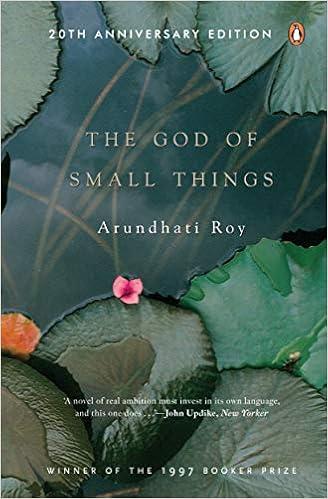
The god of small things: A Book Review

Buy God of Small Things: Booker Prize Winner 1997- English Book Online at  Low Prices in India | God of Small Things: Booker Prize Winner 1997-  English Reviews & Ratings - Amazon.in

A broken marriage can mean a lot of things to a family. Marriages can be broken by a lot of things including laws defined by societies about whom to love, whom to marry and whom not to.

The god of small things is a caricature of human pain and life built on the layers of political leanings, the realities of Indian conservative societies, casteism and of course on how other people exploit it just to feel away and free from their own realities.

A multi-generational family lives in a small village in the state of Kerala – a communist stronghold. A woman from the family falls in love with an Irish priest, despite the opposition of her father, but failing to get any near him, is left bitter and becomes the antagonist of the narrative. Two twins witness a rape and murder wherein this lady, their aunt, the one who once loved an Irish priest is almost implicated for lying about the criminal and she tricks the poor children into blaming their servant. All this happens in the backdrop of a violent and turbid communist politics of which the servant who dies due to police beating turns out to be a member of. The aunt hates the communists because they once forced her to weave the red flag while forcible stopping her car on the road. To save herself of any implications, the lady gets rid of the children – blaming them of the death of the raped girl and the servant, breaks down their family – the mother dying at 31 and the father never really bothered. The twins grow broken, traumatized and never really heard or cared for. And the climax of the story just leaves one crying when the two twins finally meet at 31 – the age their mother died. The girl twin no longer speaks and the boy is just a lost one. They, for the first time realize the meaning of love and warmth and that it is them alone who share it with each other.

This review will and any review will, as a matter of fact, fail to capture the perfection Roy has achieved in this book. The 1997 Booker’s Prize winner is a masterpiece of storytelling and narrative. And it is a wonderful critique on politics, religion and casteism.

Happy reading!

arundhati roy
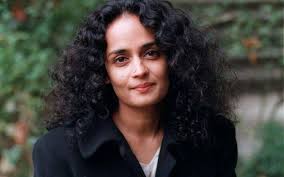
Arundhati Roy, who might be in news due to her remarks in the present day has penned a beauty.

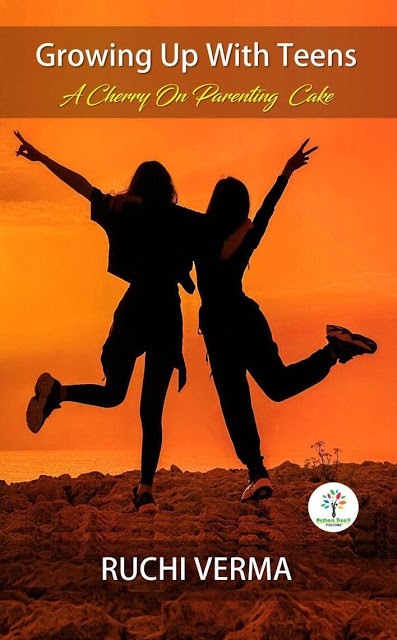
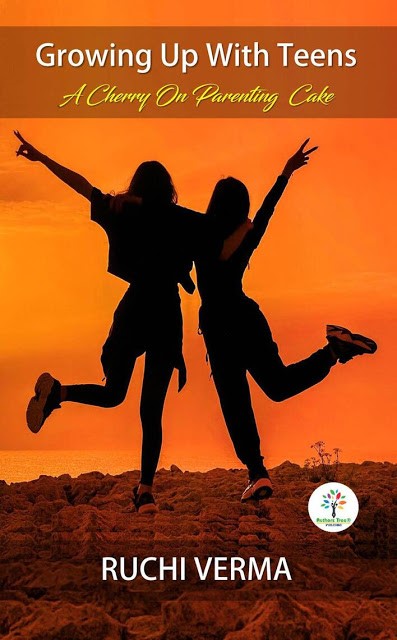
Book Review: ‘Growing up with Teens’ by Ruchi Verma

Title: Growing Up with Teens

Author: Ruchi Verma

Publisher: Authors Tree Publishing

Genre: Non-fiction, Parenting

Pages: 92

‘Growing up with Teens’ by Ruchi Verma, is a psychological approach that revolves around the lives of Teens. I loved to explore this genre. It intrigues me a lot, how parents establish connections with their offspring, how they involve in the process of long-term behavioural management. So, to explore the reality I read this book.

This book was all about the vision of teen parenting. It is not an easy task to raise a teenager, but with the right approach, every parent puts forward to make this journey easier. As communication should not be a barrier in your relationships with your offspring, and these methods will definitely help you to begin better conversations with your teenage kids.

Ruchi Verma states ‘Each day as a parent we too are growing up and understanding the other side of the story.’ This book comprises of 12 chapters. Every section deals with new challenges that emerge in the road of family life. There are so many questions that arise with this set of age, in regards to emotional, physical and social changes. And the perspective, author shared here, is really a nice construct if you can agree to put it into practice this book is really helpful to parents.

Ruchi Verma offers a whole section on communication that I liked the most about this novel. The author acknowledges many important points, for example─ why communication is important? How your teens want to communicate? Do and don’ts of communications.

‘Don’t assume or read their mind. If you don’t understand certain behaviour change or less communication or even, they are not doing things according to the rules made by you’.

‘Listening means letting them finish their story and their thoughts. Just make sure when they talk, look in their eyes, and show interest in their versions. Your opinion on that same topic might differ but remember to give them equal opportunity to put forward their opinions so that they don’t feel neglected.

As a reader, I have mixed feelings about this novel. On the positive side, Ruchi Verma shared some absolute gems of tips and advice based on her personal and professional experiences. She comes up with the idea of talk about adolescence, depression, anxiety. Adding to this, she explored myths and taboos of sex education in India. ‘We carry a hush-hush talking attitude for years. It’s high time to change and break this taboo. Teaching your child this aspect is as important as giving them any other education’.

Not only had she incorporated discussion on daughter’s puberty but also added her son’s too. I have found it to be immensely practical and loved reading it. 

The author has rightly convinced me to go on reading the book because every page gave me a new idea about the way she handles the teen’s mind swings. On the other side, I found the information bit repetitive. I so wish it were organized a bit differently.

Reading this book has enhanced the way we look at the behaviour of teens, and the way we feel their life is easy, but they also go through various emotional traumas. ‘It is important to teach both boys and girls that they are equal in the society, and one should respect the other gender’s emotions and consent always.

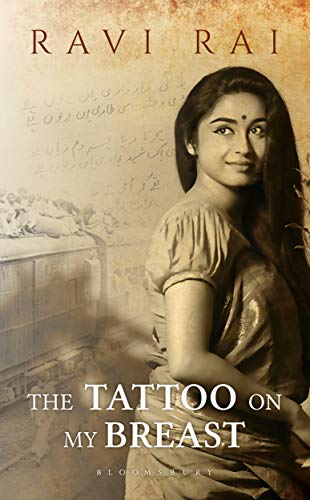
Book Review: The Tattoo on My Breast by Ravi Rai

‘The Tattoo on My Breast’ is the debut novel by acclaimed television director and writer Ravi Rai. The story is a mixture of an epic tale of love, passion, emotion, drama and romance set in the times of partition through the eyes of our protagonist women.

The story is set in the 1940’s era, around the time of the Quit India movement and Independence. A Spanish aid worker named Abella Alejandro had come with the International Red Cross to Nepal after the 2015 earthquake and there she learns about Sadhana’s story, the childish granddaughter of a rich Sindhi grain merchant who was getting married to Prakash, when Rehman, the meek, poor boy living next to Sadhana’s house and was Sadhana’s childhood friend realizes his love for her.

On the other hand, Jinnah and Nehru have started displaying their influence on the young and the restless of the yet undivided India, where the several Gurdwara’s Sikh flags are replaced with the green flag of Islam and Prakash becomes a fatality in one such crossfire.

Barely 15 days into her marriage and Sadhana is a widow. And Rehman is back in her life. But little does she know that her radical Hindu father has fixed her marriage to Sunil, a Sindhi millionaire running his looms in Dhakka, which is soon to become East Pakistan.

Sadhana and Rehman plan an escape, but destiny plays a cruel role with the breakout of riots and Rehman is once again late in claiming his love. The Radcliffe line has been drawn and has divided India. The lovers had parted painfully.

Sadhana, now a nurse, is attending to the injured when she meets Sunil, the man she was slated to marry. His brother, Anil is a doctor at the hospital and has fallen in love with the young nurse. But Sadhana’s heart only beats for Rehman. In this hour of difficulty, Sadhana’s grandfather plans a sinister conspiracy and poisons Sadhana’s mind against Rehman; causing her to marry Anil.

And just when connubial happiness begins to set in and Sadhana gets pregnant, Rehman returns for her causing her heart to beat for him once again. What will Dr. Anil, who till now was unaware of their undying love, do when he comes to know of Rehman’s presence? Will Sadhana follow her heart or will she bind herself in chains that have always distanced her from her true love? Will Rehman accept a pregnant Sadhana as his soulmate or leave her at the crossroads once again? To known these answers read the beautifully written book by Ravi Rai ‘The Tattoo on My Breast’ which is easily available on Amazon.in offline and online as well.

I feel the story is well researched and beautifully executed. The plot and some of the imagery make it evident that the writer used to write dramatic shows, which explains the dramatic plot and graphic visualisation. The book gives readers a deep look at the hardship and inequality of suffering around the turbulent times in Indian history. Despite the backdrop, the story is predominantly a love story, and this book is a great gift to romantic book readers. Personally, I feel it describes the sorrow of separation and make you realise the importance of your loved ones in your life.

Must read!!!

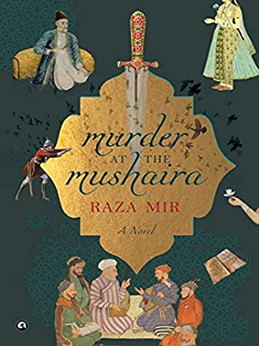
Book Review: ‘Murder at the Mushaira’ by Raza Mir

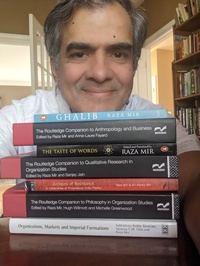
About the author

Raza Mir’s ‘Murder at the Mushaira’ is not his first book and the author is almost an expert in writing novels and various other books like Ghalib: A Thousand Desires, The Taste of Words: An Introduction to Urdu. But ‘Murder at the Mushaira’ is most certainly his ‘magnum opus. Each and every page of this novel is worth reading and re-reading. There is no denying or any dilemma in mind because we can see the years of effort and intense research that must have gone into this exquisite work of art by Raza Mir. The fact jumps out at the reader as one is compelled to halt, ponder, smile and sigh at the careful selection of words that create a vivid, elaborate and exuberant imagery of the then Shahjahanabad, amid the rising tensions, chaos and tumult of the 1857 Sepoy Mutiny.

So, the story of this historical fiction by Raza Mir, set against the backdrop of the revolt of 1857.. India stands on the brink of war. Everywhere in its cities, towns, and villages, rebels and revolutionaries are massing to overthrow the ruthless and corrupt British East India Company which has taken over the country and laid it to waste. In Delhi, the capital, even as the plot to get rid of the hated foreigners gathers intensity, the busy social life of the city hums along. Nautch girls entertain clients, nawabs host mushairas or poetry soirees in which the finest poets of the realm congregate to recite their latest verse and intrigue, the wealthy roister in magnificent havelis, and the drinking dens of the city continue to pack in customers.

One morning, Kallu, a retainer at a Delhi haveli, cleaning up after a grand mushaira, discovers a poet stabbed to death with a polished agate dagger. The poet was the nobleman. Gruesome as it is, the murder appears to be a fairly run of the mill crime until anxious officials of the East India Company make it a matter of the highest priority.

Instructions are issued for the murderer to be found and arrested immediately. But who is the killer? The dead man had many enemies, and the investigating officer Kirorimal Chainsukh soon discovers there are dozens of suspects, an equal number of motives, and waves of secrets and lies that threaten to overwhelm him. As the pressure on him to solve the crime increases, Chainsukh turns to Mirza Ghalib, poet laureate and amateur detective, for help.

Ghalib’s tools are his formidable intelligence, intimate knowledge of the machinations of Delhi high society, ferocious curiosity, and reliance on the new science of forensics that his friend the scientist Master Ramachandra has introduced him to. As Ghalib begins to collect evidence and dig into the case, he uncovers an ever-widening list of suspects, and a sinister conspiracy that involves many of Delhi’s most important men and women. By the time you think you have caught up to puzzle, it’s already fades away. The narrative of conspiracy entwines with myriads of secret and lies, entertaining and believable tale.  

Murder at the Mushaira is at once a brilliantly constructed murder mystery and the finest historical novel by an Indian author in recent times. One can judge the novel by its cover, a real pristine beauty so dramatic and mysterious at the same time. I genuinely suggest you to pick this phenomenal novel read it because it would be an intoxicating experience for you. I loved this book to eternity and beyond. Must Recommend!!!

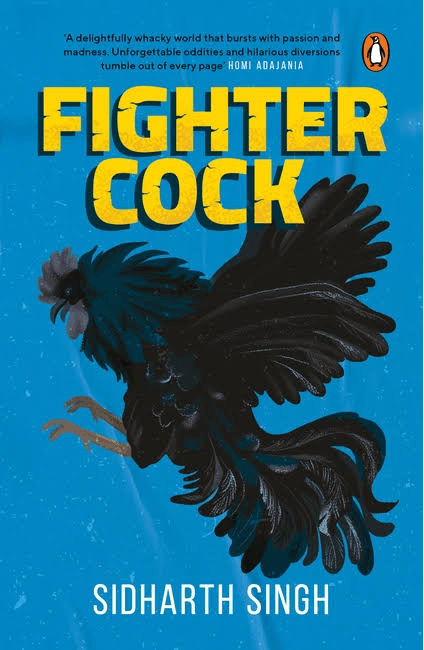
Book Review: Fighter Cock by Sidharth Singh

Title: Fighter Cock

Author: Sidharth Singh

Genre: Contemporary Fiction

Publisher: Penguin India

Pages: 256

Lines from the novel: ‘This is not livestock, Mr Suri. This is black cock, Karianath. As you can see in the painting above me, this black cock is everything to us here in Shikargarh. It is our identity, our culture and now it will also be our business.’

‘Fighter Cock by Sidharth Singh’ is a book that gives you the vision of the universe of petty politics, rivalry and obsession for sex, drugs, and cockfighting. Each character retains their flaws yet is absorbing and dramatic. Although, in the beginning, I am not into this type of genre as much, still this debut gave me enough reason to carry on with it. 

Fightercock is a story based on the life of Sher Shah aka Sheru, who has a dangerous past. In a search for a job, he enters this unusual world of royal heritages, patriarchal society, and vengeance. This story is set in Shikargarh, Central India. An untamed wilderness is ruled by Raja Rattan Shah with a passion of blood sport. As Kings always need a new territory to conquer, Raja sahib launches his dream project, the black cock poultry farm, which rears top- class Karianath.

‘Sheru glanced up again at the shabby painting of the Shikargarh coat of arms and inspected the black rooster, framed by two crossed swords below and a fortress above, trying to find meaning in its bizarre heraldry.’

As the story unfolds and discover, more characters come into the spotlight with the basic plotline, that is ─ The Raja’s Karianath fighter cocks are the undisputed champions of the area, but their reign is challenged by the new Aseel fighters imported by Teja, his bastard son, who also schemes to take his position the Aseels had taken the cockfights by storm and upset the status.

In the next few chapters, we have been getting introduced to Sheru’s past life and his connection with Bombay’s underworld.

In the story the author has also described sheru’s childhood he says- as a child our Sheru often asked his mother why she had given him the name Sher Shah. And her answer set the environment of this novel, ‘because you are a tiger, the king of the jungle. You don’t know that yet, but one day you will.’

Once he lost both his parents, he questioned his life journey ‘Why on earth had Anna (his guardian) sent him to Shikargarh, of all places, when he could have easily packed him off down south or even abroad? What was Anna’s real connection with Murugan (Raja Sahib’s Assitant)? How long would he be able to survive here knowing that Anna’s life may be in danger?

As in projects, you need to construct a flow chart into your mind, you need to do the same here to understand the story because there are not a couple of plots but subplots and various tales and references, it is a wild trip, characters do clash, worlds rebuild and it really demands the reader attention.

Personally, I think Fighter Cock is a political thriller that reveals the difficult world of poor Kairus, who were caught in an endless web of debt and delusion. This weekly spectator-sport extravaganza and sports like cockfight was the only form of public entertainment in the area and brought in substantial revenue from illegal gambling, mahua and ganja sales, whereas the raja took the lion’s share of the proceeds.

The only thing interrupted in this novel is the usage of superabundant characters. The prose is clear, and moving sentences. The author managed to captivate drama in right place. I liked the nuances between Sherub and Kanya. ‘If you stay in Shikargarh long enough, you will stop wearing one. Time moves slowly around here,’ she said and extended a delicate but firm hand towards him. ‘I am kanya’.

Fighter cock novel is a kind of political thriller that will keep you hooked with each and every page of the book, it is interesting as well as boring at the same time. But I would definitely suggest this book is not for children below 16years.

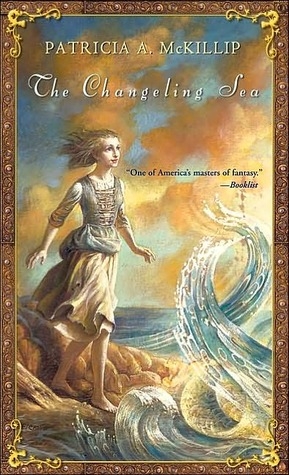
Book review of The Changeling Sea

Introduction:
The changeling sea is a fantasy novel for juvenile readers by Patricia McKillip. It is a slender book, but one written with lush and evocative prose that is as beautiful as it is simple. It is a fable about a changeling whose heart is tied to the sea. It is a book about yearning for something that no longer exists.


When Peri completes her hexes and casts them into the water, she includes an offering from the prince. To her surprise, her magic succeeds beyond expectations, disrupting the sea queen’s magic. A chained sea dragon appears, the wandering magician Lyo arrives in the village in response, and Kir’s sea-dreams grow even more tortured.


Peri’s efforts to help Kir eventually lead to her undertaking a strange journey into the depths, uncovering a tragic secret from the king’s past and the true identity of the sea dragon, and a dawning realization of her own power.


The sea drowned Peri’s father and even took away her mother through depression. Peri respected and saw an old wise woman as a caring figure gets taken away by the sea or when she suddenly disappears, she decides to hurt the sea or avenge the deaths of her loved ones. She decides to draw three hexes to curse the sea and somehow, her magic works beyond her expectations.
Peri was a hardworking young girl who worked at the inn, mopped floors, cleaned tables. After the death of her father, she could not care less about her appearance, she always looked untidy, her hair undone/unwashed. Her clothes were too tight or too loose, torn and not in a good shape. The only thing she really cared about was her revenge on the sea.


One night, she witnesses a man on a dark horse and the next afternoon realizes that it is none other than prince Kir. He was acquainted with the old woman. He too, notices Peri that night. The next day when he arrives at the sea, he asks her about the old woman and she is fascinated that he knows the old woman. He wants to visit the old woman as he was hoping for the wise woman’s aid in curing his own haunting obsession with the sea.


Kir has deep troubles of his own, also connected to the watery depths, and hopes that Peri can help him make his peace with the ocean that haunts his every waking moment. When Peri finishes her hexes and throws them deep into the great water, she also includes an offering from Kir hoping it would be of help to him.


A great sea dragon starts to appear amongst the fishermen’s boats on the sea, with an impossibly large gold chain around its neck. Then, a magician comes to town, promising that he will be able to remove the chain and give the gold to the villagers – for a price. And most importantly, Kir’s dreams of the sea grow more fevered and frantic, as his own unknown, hidden past catches up to him. And it is all up to Peri to set everything back to rights.


Conclusion:
I would recommend this book to those who have found their new interest in the genre fantasy and all in all it is a book which captures the attention of its readers from the beginning. I rate this book a 8.1/10.

Metamorphosis – Book Review

Buy Metamorphosis Book Online at Low Prices in India | Metamorphosis  Reviews & Ratings - Amazon.in

Gregor Samsa is a salesman who wakes up to find himself transformed into a monstrous vermin. Lying on his bed, he worries about himself and while he has time, contemplates upon the consequences of his metamorphosis. He wonders about his life, his family and the way in which his life and career has turned out to be. He thinks about he is struck with his job only because of his father’s debt and that no relationship in his life ever came from heart.

His family is horrified when they learn of this transformation when the office clerk pushes his way into Gregor’s room. The family, no longer financially stable decide to get jobs and when they do, they start neglecting Gregor more and more only to end up using his room as a store room and giving away a room in their house on rent. Gregor’s sister is the only one willing to give him food in all this while. One day, when Gregor’s sister accidentally breaks a bottle of medicine, his father hurls an apple on him, which gets struck in a sensitive spot on his back and he lies in his room in agony. And one day, he scares the tenants who threaten legal action over the unhygienic conditions of the house.

Grete, Gregor’s sister realises that Gregor is but a liability and asks her parents to get rid of “it”. Hearing the conversation, Gregor goes into his room and dies before sunsrise. The family rejoices his death by taking a day off and ride on a ferry down the countryside. Gregor’s mother exclaims that Grete has grown beautiful despite all problems and they must find her a good husband.

Kafka’s metamorphosis is considered to be a classic in literature. It is a story of a changing society and how necessities cause a metamorphosis in households and in society in general.

When are you reading this tale of humanity?

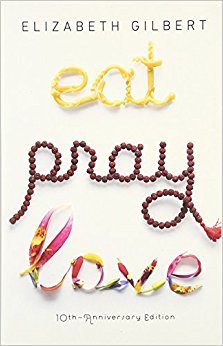
Eat, Pray and Love| Life lessons to look forward to!

You need to learn how to select your thoughts just the same way you select your clothes every day. 

Summary:

Elizabeth Gilbert’s perfect world comes shattering down when she gets divorced. She then embarks on a journey across the world in an attempt to rediscover her true self.

Book adapted from: Eat, Pray, Love: One Woman’s Search for Everything Across Italy, India and Indonesia

 “Happiness is the consequence of personal effort. is the consequence of personal effort. You fight for it, strive for it, insist upon it, and sometimes even travel around the world looking for it.

Review:

Liz Gilbert- a women in a subtly failing marriage, successful life, and a safe home. She has everything one dreams about. She hits the stage of crisis in faith and realizes hard truths of her marriage. She leaves him and travels around Italy, India and Indonesia to find herself. Doing so isn’t easy. She hits roadblocks and understands that she, herself is her biggest hater.

Liz went to Bali for a Yoga magazine work, and she met Ketut Liyer. He reads her palm and lays out her near future. He inspires her to travel to know answers to her questions. She regains her love for cuisine, her body, her likes, and her dislikes. After meeting and conversing with people she meets in Italy, her love for food and meaning of life starts building. The notion of perfect body, extreme diet, and insecurities one might have about their body is pondered upon here.

She visits her guru’s ashram, introduced by David, a short love-interest she had after her divorce. Her initial days at ashram is challenging. She meets Richard from Texas, who gives her a push in understanding the true meaning of meditation and life here.

Instead of trying to forcefully take your thoughts out of your mind,  give your mind something better to play with. Like pure divine love.

She then tries to focus her prayers on someone and find more meaning to “Praying“. She then decides to stay there for few more months. Richard helps her to find freedom- letting go, forgiving- and resolves things between her and her ex-husband. She is greatly affected by meditating in Ashram. The Author has left 2 poems to express gratitude.

“I’m here. I love you. I don’t care if you need to stay up crying all night long, I will stay with you. If you need the medication again, go ahead and take it—I will love you through that, as well. If you don’t need the medication, I will love you, too. There’s nothing you can ever do to lose my love. I will protect you until you die, and after your death I will still protect you. I am stronger than Depression and I am braver than Loneliness and nothing will ever exhaust me.”

She visits Bali, Indonesia to meet Ketut Liyer again, She meets Felipe and her journey to refine the meaning of “Love” and trust again begins.

“Happiness is the consequence of personal effort. You fight for it, strive for it, insist upon it, and sometimes even travel around the world looking for it. 

This movie, book and several more books by Elizabeth Gilbert is going to be a part of my life forever. The moment we let ourselves be receptive to healthy thoughts, they are bound to be grown when you nurture them occasionally with love and faith. Even the slightest beam of sunlight (Metaphors for faith and hope) is enough to keep you going, trying again and again without pondering over growth rate compared to others. Go with your own pace.

it is a book and a movie which you must see and read at least once.

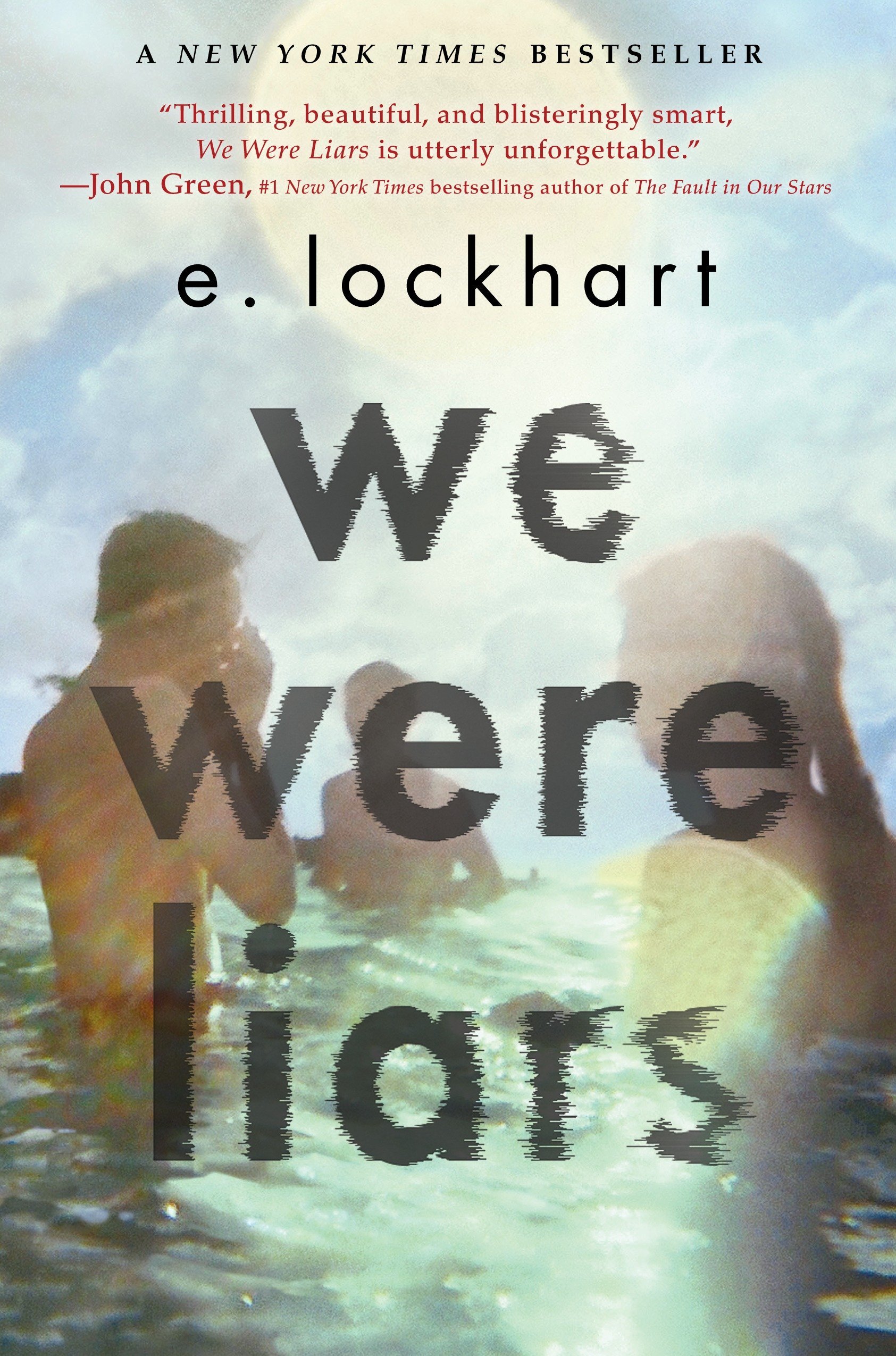
We were Liars: A book review

Cadence is a girl born to rich family that owns large estates and an island. Her best friends are her cousins and the son of the manager. This group together is called the liars. The liars are the best of friends, and enjoy each other more than their families which are bound quite unlovingly in threads of race and economic dependencies. One day Cadence is found unconscious near the shore and is not allowed to visit the island again for the next couple of years. The worst part is she remembers nothing of what happened to her. Her mother even forces her to improve relationships with her estranged father. She returns however to the island only to find the liars living in a far end of the island and her family broken down and her once strong headed and commanding grandfather suffering from dementia.

She roams around the island and is saddened that the liars do not want to get very close to her. She discovers not only the ugly relationships and secrets of her family but also slowly comes to remember and accept the fate that she has given to her friends and her family.

Awarded the Good Reads Book of the year in young adult literature in 2015, We were liars is a book that deals with love, romance, a decaying aristocracy and the decaying state of mind within it, not to forget issues like mental health and defenses.

Buy We Were Liars Book Online at Low Prices in India | We Were Liars  Reviews & Ratings - Amazon.in

Happy Reading!!!

THE LYRIC

Introduction:

The Lyric is the most delightful and pleasing form of poetry. It is generally subjective. Lyric poetry, in its original meaning, was poetry composed to be sung to the accompaniment of a lyre. The lyre was a simple Greek musical instrument. The Greek idea of the lyric suggests its intimate connection with music.

A lyric is defined as a poem that Expresses a single emotion. Over elaboration of emotion results in the loss of effectiveness. So a lyric is generally short. In a lyric the quality of emotion is important. It must embody emotion and it must impress us by the sincerity of its utterance. The language and imagery of a lyric must be characterized by beauty, propriety, and harmony.

Personal poetry touches almost all aspects of experience. As a result, there are various types of lyric poetry such as the love lyric, the lyric of patriotism, the lyrics of religious emotion, the lyric of joy, and so on. The essence of a lyric is the personality of a poet, the majority of the world’s good lyrics express also what is typically human. The reader finds in them the expression of experiences that he can share with the poet. The reader finds this experience in the poetry of Keats, Shelley, and the metaphysical poets like Donne and Marvell

In lyric poetry, the poet is occupied with himself. His thoughts, feelings, and emotions constitute the subject matter of his lyric. The lyric becomes a mirror to his personality. Even the titles of poems are no indication as to their themes. “Ode to a Nightingale” and “An ode to a skylark” are not about birds. In highly composite poetry it is difficult to distinguish between subjective and objective. So it is generally said that the Epic, The ballad and dramatic poetry are objective and lyric is subjective. Some forms of lyrics lead us to meditative and philosophic modes as in them the elements of thought and reflection or dominant.

Another trait of a lyric is its unity. A lyric is self-contained and everything in it it is related to the central idea or emotion. So there is hardly any place for descriptions or elaborations in a lyric. Since the lyric is a unified experience, generally, it is not very long. Edgar Allen Poe said, “a long poem does not exist” this is true of a lyric.

It is difficult to identify the I in a lyric poem. Through the poet express his own emotions and feelings, they are also universal. Thus, Wordsworth Tintern Abbey lines or Milton’s Sonnet on his blindness, express universal emotion. Most of the Elizabethan songs, poems of the metaphysical like Donne and the short poems and the dramatic monologues of Browning and Tennyson come under the category of lyric.

Three parts of Lyric:

Structurally, a lyric can be divided into three parts.

Motive:

The first is the motive. It states the emotion and comprises the first few lines. The motive is the sudden provocation for the poet to compose. It may be Nightingale’s song as in the case of kids are the song of reaper girl as in the case of Wordsworth. The motive is only an excuse for the poet to express his own emotions and feelings.

Statements:

The second part of the lyric consists of the poet’s emotions and feelings. These may be termed as statements. In “the ode to the west wind” Shelley muses over evolution. In “The Ode to Nightingale” Keats meditates over the weariness of life and the ease of death.

Conclusion:

The third part of the lyric is the conclusion that comes when the emotions subside. It is a conclusion, reflection, or resolution. Keats reflects on beauty at the end of the famous Ode on a Grecian urn” Herrick reflects on the fragility of beauty and power of death towards the close of “To blossoms”.

Much of the beauty of a lyric depends on its expression. So the poet has to choose words and their arrangements with great care. The combination of lines, rhyme scheme, and rhythm are important. Each stanza should correspond to the mood expressed. Smoothness or hardness of the words, slowness or rapidity of the movements, alliteration, rhyme, rhythm, melody, and even some irregularities get hold upon the reader’s imagination and intensify his enjoyment of the lyric. Every lyric poet must be conscious of this fact.

What is a short story?

Traits of an Epic

IGNITED MINDS – Unleashing the power within India

BOOK REVIEW

Author ​​-Dr. APJ Abdul Kalam

Language​ – English 

Copies sold-​ Over 1 Million 

No. of pages – ​​189 

Publication -​​Penguin books 

Year of publication ​- 2002 

It’s been three years since we lost the Missile Man of India, one of the most celebrated Indian scientists of this era. Even though the man himself, Dr. A P J Abdul Kala​    m, left us, his works​    and his writings are still present with us to guide and re-shape this rising India. 

Dr.Kalam is a man who needs no introduction. He spent the bulk of his career in the prestigious Indian government organizations ISRO,​ and DRDO and also served as the 11th President of​    India. 

So in his book ‘IGNITED MINDS’, he has talked a lot about it. “Ignited Minds” revolves around the topic of transforming India’s mentality by inciting the blossoming youth to take action. The book ruminates on a lot of topics but starts with the most important one – peace of mind. Without it, no country can soar to new heights, and as a result, stagnation will prevail. 

He has dedicated ignited minds to an intermediate school child, named Snehal Thakkar, whom he met at a school and while talking to the students, a question had come up: ‘who is our​    enemy?’ He recalled that many answers came up, but the answer on which all agreed came from​    her ‘our enemy is poverty​. It is the root cause of our problems and should be the object of our​    fight, not our own. The small book contains dynamic and original ideas, examines attitudes afflicting the Indians and presents prescriptions for the rapid growth of India to enable the country to emerge as a developed country. 

Big Picture, Coordination, and Inclusiveness- an aspect that was heavily and regularly cited in the book was that Dr.Kalam felt a lot of institutions work separately instead of moving together with a common goal in mind. He cited several examples for this. One of them was the lack or absence of any industries, which can use steel as the input material and convert them to finished products, around the Bokaro steel plant in Jharkhand. If the State and Central governments could have coordinated and industrialized this area in a coordinated manner, the created steel can be transported to nearby industries in a quick time, for a cheaper cost and overall, give us a finished product with a quick turnaround. It helps in the development of this area and also with getting a finished product at a better price. The lack of this inclusiveness is not doing India any favors. 

Connectivity - expanding on the idea that India should look to achieve the status of a developed country with urgency, he looks at the current rate of urbanization. He says that the way to become a developed country is not via its populace abandoning villages and migrating to the cities. He says that we should try to emulate and provide similar facilities, like those available in the cities, in the villages. The biggest problem for overcoming this obstacle is the lack of connectivity or transportation facilities between the villages and their nearby cities. He suggests that nearby villages must be pooled up and roads or highways should be built between this pool and the nearby city. He goes on to say that once this problem is solved, and once people get similar facilities as cities at their doorstep, no one will be interested in migrating away from their original homes. 

Determination​ -Dr. Abdul Kalam explained that the conviction, the drive to live with freedom is what energized an entire generation of Indians. He says that the current generation of Millennials should yearn to live in a developed nation with a similar zeal. He feels that this is what will provide the acceleration for the country’s development. 

Education - For India to become the next superpower that it is expected to be, manpower is the biggest requirement. Dr.Kalam believes that it is possible only by achieving 100% literacy. He feels that at the same time that India improves her higher education facilities by establishing more research-oriented organizations, she should also improve her primary school facilities which will enable and give a direction to the younger generation during their initiation itself. 

Value Addition- Dr.Kalam says that India is a country that is blessed with so much variety w.r.t. minerals and raw materials. But as long as India concentrates on just extracting and exporting the low-income raw material, he says that India is not going to take huge steps w.r.t. development. For this, he gives us the example of beryllium diaphragms which are used in missiles. When India was taking its baby steps towards missile development, a committee was formed to procure the necessary beryllium diaphragms. For this, the committee approached a certain company from the US but they had backed out at the last minute citing the US government’s objection to the export of any parts which can be used in missiles. The startling observation that Dr.Kalam’s team made during this phase was that the raw material, Beryllium was being mined in India and exported to Japan. Japan purifies it and later sends it to the US where the final product is being manufactured. The difference in the price of the finished product to the price of the raw material is huge and due to the absence of the industry making the final product, India is losing a huge amount of income. So, without any value addition, India is just exporting all the raw materials for a dead cheap price and making a net loss when they are importing the final product. 

The above are only a few points made by Dr.Kalam in this excellent book. It’s not a very long read and something that should be picked up by all non-fiction book lovers who want to understand the current challenges that India as a country is facing. 

Conclusion 

The nation consists of people and with their effort, a nation can accomplish all it​ could ever want. Motivating India’s youth especially is the central theme of Ignited minds. 

Ignited Minds is all about breaking away from the forces that would prefer selling cheap labor and raw materials and providing a large market for goods and services of other nations. It is about developing that conviction in ourselves and discarding the things that hold us back. 

Reflection

Dreams are the raw materials of actions. Dreams initiate thoughts and thoughts result in actions. Children are the architects of the future of our country. They can transform dreams into realities through hard work and determination. The outcomes of these realities will bring peace, prosperity, strength, and bliss to our nation. 

To ignite the minds of the children of our country, APJ Abdul Kalam has emphasized motivating them by giving examples of great minds that had worked hard in their respective fields to transform their dreams into realities. He has met thousands of teachers, school children, scientists, saints, and industrialists to take up different issues and themes. 

His main focus lies in education. He has urged the children to integrate spirituality with education. Education without spirituality is like a man without ambition. Each one of us must become aware of our capabilities. One should try to achieve one’s higher self to achieve in life. 

Vision ignites the mind. This Abdul Kalam has successfully explained by citing examples of a few great scientists and teachers such as Dr.Vikram Sarabhai, Aryabhatta, Prof. Satish Dhawan, and Dr.VergheseKurien who have excelled in their respective fields of science and academics and have made our country achieve great heights. 

Kalam has urged the Indian people to unite and work together to take our country to soar heights. He has cited examples of great leaders who irrespective of their religion work hand in hand with people of different faiths for the development of our nation. 

To progress in life one should work in a planned and systematic manner. Kalam urges the people to use the resources efficiently and implement their policies and programs into a mission mode to succeed. He has, in his book, emphasized motivating the youths to unleash the powers of their minds to transform their dreams into realities. 

The beauty of this book lies in the fact that, while emphasizing the technology development​    of the nation to make India stand in the elite group of developed Nations of the author also drew attention to the social and cultural aspect. The author mentioned how spiritual education along with knowledge can create wonders.  

The book talks about how one should Integrate our cultural and social values with modern​    thinking. The enthusiasm of youth. This integration will produce potential leaders, role models for tomorrow who will have integrity, respect, and the thought of “Nation comes first” embedded in their hearts and minds.