Modern life feels like a constant movement forward. Industries evolve, consumer expectations rise, and technologies that once seemed futuristic have quietly become part of our routines. As the world integrates digital habits into nearly every sphere, the line between professional and personal life continues to blur. Today, business is no longer a separate domain — it is woven into the rhythm of daily experience.
A World Built on Rapid Adaptation
In just a few years, business models that seemed unshakable have transformed beyond recognition. Automation has become the backbone of efficiency, data stands at the center of every serious strategy, and flexibility has become a core value for companies of all sizes. Consumers expect seamless experiences, instant communication, and clear ethical positioning. These expectations reshape how brands operate, measuring success not only in revenue but also in trust and transparency.
The Human Side of Economic Shifts
As economies integrate and global networks grow stronger, individuals are increasingly aware of how their choices influence broader systems. People think more critically about the companies they support and the technologies they rely on. Economic behavior mirrors lifestyle: dynamic, highly connected, and shaped by continuous learning. Understanding these patterns is essential not only for investors or entrepreneurs but for anyone who wants to navigate the future with confidence.
Finance For You: Expert Guidance for a Changing World
In an environment where trends shift quickly, Finance For You (finanz4u.com) has established itself as a trusted source of clarity. The platform offers accessible explanations and practical insights, helping readers understand key aspects of finance without unnecessary complexity.
Its analytical articles explore major finance, economy and business fundamentals, showing how global markets, policy decisions, and consumer habits interact. Through this lens, readers can better anticipate shifts instead of merely reacting to them.
Finance For You also examines how new technology is transforming business, revealing how artificial intelligence, digital logistics, and advanced analytics influence long-term strategy. These materials explain why innovation is no longer optional — it is the primary driver of competitiveness.
Additionally, the platform highlights emerging business opportunities in tourism, a sector experiencing rapid reinvention. By covering sustainable travel, hybrid work mobility, and digital booking ecosystems, Finance For You helps readers see new potential in an industry once defined solely by leisure.
The Acceleration of Innovation
Across the world, companies are reinventing themselves. Startups challenge traditional industries, established brands invest heavily in digital tools, and governments push for smarter infrastructure. These movements show that innovation is not a trend but a necessity. With technology influencing everything from logistics to customer experience, the market rewards those who can adapt quickly and consistently.
Moving Toward a Connected Future
The coming years promise deeper integration of technology, creativity, and global cooperation. People will expect more personalized services, faster solutions, and smarter systems that anticipate their needs. Businesses that recognize these expectations now will be the ones shaping tomorrow’s landscape.
Progress has always depended on connection — between ideas, cultures, and opportunities. Today, that connection is stronger than ever, offering a world full of possibilities for those ready to learn, adapt, and lead.null
In today’s digital economy, technology isn’t just a competitive advantage — it’s a necessity. Small businesses across the United States are under increasing pressure to operate with the same efficiency as large enterprises, all while working with smaller teams and tighter budgets. One of the areas where technology makes the biggest impact is inventory and warehouse management.
This is exactly where HandiFox steps in. As a trusted provider of warehouse automation and sales management tools for more than 15 years, HandiFox delivers cutting-edge solutions that allow small businesses to work smarter, not harder.
Innovation at the Core
HandiFox was designed with a forward-thinking philosophy: give small businesses access to the same technology that powers big corporations but make it simple, mobile, and affordable. By combining barcode technology, real-time inventory tracking, and seamless integrations with accounting and e-commerce platforms, HandiFox transforms how businesses handle daily operations.
The result is more than just efficiency — it’s the ability to stay competitive in a fast-changing market.
How HandiFox Uses Technology to Empower Businesses
Mobile-first design – With iOS and Android support, HandiFox turns smartphones and tablets into full-featured warehouse tools. Employees can scan barcodes, manage stock, and process orders anywhere.
Smart automation – Routine tasks like stock counts, purchasing, and order updates are automated, reducing human error and saving valuable time.
Data-driven insights – By centralizing sales and inventory data, HandiFox helps owners make smarter purchasing decisions and forecast demand.
Cloud-enabled flexibility – With secure synchronization, businesses can access accurate data anytime, from any location.
Seamless integrations – QuickBooks users gain advanced inventory functions without leaving their trusted accounting system. Shopify retailers enjoy automatic order and inventory sync, keeping online stores updated in real time.
Why Technology Matters for Small Businesses
Many small companies hesitate to adopt advanced software, fearing complexity or cost. But outdated manual processes are far more expensive in the long run. Errors in stock counts, slow fulfillment, or poor visibility can quickly erode profit margins.
By embracing modern tools like HandiFox, businesses benefit from:
Faster workflows with minimal training.
Accurate, up-to-date information available on mobile devices.
The ability to scale without dramatically increasing overhead.
Improved customer trust thanks to reliable fulfillment.
In other words, technology levels the playing field, allowing small businesses to compete with much larger organizations.
A Future-Ready Solution
What makes HandiFox unique is not just its current features, but its commitment to continuous improvement. The software evolves based on feedback from thousands of users, ensuring that it keeps pace with new trends and challenges in the business world.
As supply chains become more complex and customer expectations rise, having a future-ready platform becomes critical. HandiFox isn’t just solving problems today — it’s preparing businesses for tomorrow.
Technology is no longer optional — it’s essential for survival and growth. HandiFox empowers small businesses across the USA with innovative, easy-to-use tools that bring order, accuracy, and scalability to warehouse and inventory management.
By combining mobility, automation, and seamless integrations, HandiFox delivers the efficiency of enterprise systems in a package designed for small business needs.
The shift to remote work has become a defining trend in modern business, with 86% of office employees now expressing a preference for telecommuting. As this practice gains traction, businesses are increasingly relying on tools that can track productivity, monitor attendance, and maintain accountability across dispersed teams.
In response to these challenges, companies are adopting advanced workforce management solutions. Selecting the right time tracking software for employee management is essential for optimizing operations, enhancing productivity, and fostering collaboration in remote and hybrid work environments.
One highly effective option is WorkTime tracking software. With more than 20 years of experience, WorkTime delivers comprehensive tools designed to simplify workforce management and improve overall business performance.
Why Remote Teams Need Time Tracking Software
Managing remote teams presents distinct challenges, such as ensuring consistent productivity, tracking performance accurately, and keeping employees engaged. WorkTime addresses these challenges by offering practical solutions that streamline management processes and promote a positive work culture.
WorkTime’s Essential Features
Accurate Time Tracking:
WorkTime provides employees with a straightforward way to log their work hours accurately. This feature ensures payroll consistency and allows managers to analyze time allocation across different projects and tasks.
Real-Time Productivity Monitoring:
With its advanced software employee time tracking, WorkTime gives managers real-time insights into team productivity. This functionality helps identify inefficiencies, track task progress, and implement necessary improvements quickly.
User-Friendly Interface:
WorkTime’s intuitive design ensures a seamless user experience for both employees and managers. Its simplicity reduces the need for lengthy training sessions and accelerates platform adoption.
Performance Evaluation for New Hires:
WorkTime offers specialized tools to evaluate the productivity of new employees, providing actionable insights that support onboarding efforts and foster team cohesion.
Cost-Effective Operations:
By automating time tracking and productivity analysis, WorkTime helps businesses reduce administrative costs while boosting overall efficiency.
Customizable Reporting:
WorkTime enables the creation of customized reports that offer in-depth insights into performance metrics, project timelines, and productivity trends, aiding in strategic decision-making.
Resource Allocation Optimization:
WorkTime helps align tasks with employees’ skills and availability, ensuring that resources are used effectively and that workloads are evenly distributed.
Robust Data Security:
WorkTime employs industry-standard security protocols to protect sensitive information, ensuring compliance with privacy regulations and safeguarding business-critical data.
Seamless System Integration:
WorkTime integrates easily with existing systems and applications, allowing businesses to enhance productivity without disrupting established workflows.
Dedicated Customer Support:
WorkTime’s support team is available via live chat to assist with any technical or operational queries. Positive feedback from satisfied clients highlights the platform’s reliability and ease of use.
Conclusion: Why WorkTime is a Reliable Choice
For more than two decades, WorkTime has supported industries such as IT, healthcare, education, finance, and non-profits. Its extensive features help businesses effectively manage remote and hybrid teams by providing accurate time tracking, real-time productivity monitoring, and secure workforce management. WorkTime continues to be a trusted partner for organizations seeking to streamline their operations and achieve sustainable growth.
The ASEAN-India and Thailand trade relations have witnessed significant growth over the years, leading to positive impacts on the economies of the participating countries. This paper highlights the benefits and opportunities arising from the flourishing trade relations between India, Thailand, and ASEAN countries, including enhanced market access, increased trade volume, and strengthened economic ties. The study also sheds light on the challenges faced by the ASEAN-India and Thailand trade relations, such as non-tariff barriers and limited infrastructure. The paper concludes that the ASEAN-India and Thailand trade relations have the potential to be a driving force for economic growth and regional integration, and recommends measures to further enhance the trade and investment ties between the regions.
Keywords:
ASEAN, India, Thailand, Trade Relations, India and Thialand
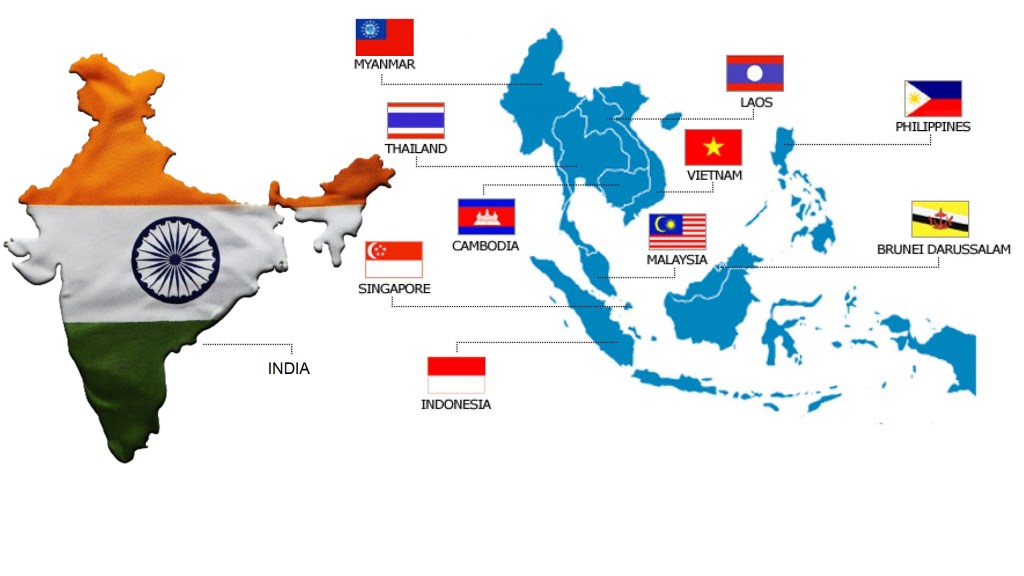
The aim of the Association of Southeast Asian Nations (ASEAN) is to promote economic, political, and security cooperation among its member countries in Southeast Asia. ASEAN was established on August 8, 1967, with the signing of the ASEAN Declaration, also known as the Bangkok Declaration. The founding members of ASEAN were Indonesia, Malaysia, the Philippines, Singapore, and Thailand. Brunei Darussalam joined in 1984, Vietnam in 1995, Laos and Myanmar in 1997, and Cambodia in 1999.
ASEAN’s role in Asia is significant. It is a regional organization that fosters economic integration and cooperation, political stability, and social progress among its member states. ASEAN plays an important role in promoting peace, security, and stability in the region, as well as in enhancing regional economic growth and development. ASEAN also serves as a platform for dialogue and cooperation between the member states and with other countries in the region and beyond. It has established several partnerships with countries such as China, Japan, South Korea, India, and the United States, among others.
In recent years, ASEAN has become increasingly important in the evolving regional security architecture of Asia, particularly with the rise of China and its growing influence in the region. ASEAN-led forums such as the East Asia Summit (EAS) have become key platforms for discussing security issues in the region, including the South China Sea disputes.
India and Thailand share a long-standing historical and cultural relationship that dates back several centuries. India and Thailand have been trading partners for over two thousand years, with cultural and economic exchanges flourishing during the ancient times along the land and sea routes. In recent times, India and Thailand have developed a strong strategic partnership based on shared values and interests. The two countries have close economic ties, with Thailand being one of India’s important trading partners in the ASEAN region. The total trade between India and Thailand stood at USD 13.76 billion in 2020-21.
India’s main exports to Thailand include gems and jewelry, machinery, iron and steel, organic chemicals, and vehicles. Thailand’s main exports to India include pearls, precious stones, electrical machinery, boilers, machinery, and parts. India and Thailand also cooperate in areas such as defense, security, tourism, and cultural exchanges. In the defense sector, the two countries have been conducting joint military exercises, and Thailand has purchased military hardware from India.
Tourism is another area of cooperation, with over a million tourists from each country visiting the other annually before the COVID-19 pandemic. Cultural exchanges between the two countries are also vibrant, with several cultural festivals and events being held in each other’s countries. India and Thailand also collaborate in regional forums such as ASEAN, BIMSTEC, and the Mekong-Ganga Cooperation. The two countries share a commitment to promoting regional integration and connectivity in the region.
The 13th Meeting of the India Thailand Joint Trade Committee (JTC) took place in New Delhi today. Ms. Auramon Supthaweethum, the Director General of Department of Trade Negotiations, Ministry of Commerce of Thailand, and Ms. Indu C. Nair, the Joint Secretary, Department of Commerce, Ministry of Commerce & Industry, India, co-chaired the meeting. This was the first in-person meeting of the JTC since its revival in 2020, after a 17-year hiatus.
Thailand is an important trading partner for India in the ASEAN region, with a total trade of USD 16.89 Billion in 2022-23, accounting for 13.6% of India’s total trade with ASEAN. India exports gems and jewelry, mechanical machinery, auto and auto components, and agricultural products, especially marine products, to Thailand.
During the meeting, the chairs reviewed the current status of bilateral trade and discussed the need to identify new potential products and priority sectors to expand bilateral trade. They also discussed market access issues and technical barriers faced by exporters and agreed to resolve them through regular and sustained bilateral discussions. India raised concerns about the restrictions it faces in exporting marine, poultry, and meat products.
Both sides identified several potential commodities and sectors for a stronger partnership, such as value-added marine products, smartphones, electric vehicles, food processing, and pharmaceuticals. They also agreed that there is a vast scope for collaboration in the service sector and decided to explore establishing mutual recognition/cooperation arrangements in nursing, accounting, audio-visual, and medical tourism. The meeting also reviewed the progress of the ongoing efforts to connect India’s Unified Payment Interface (UPI) with Thailand’s Prompt Pay Service and the settlement of trade transactions in local currency.
Some recommendations for enhancing the India and Thailand trade relations are:-
Strengthen bilateral economic engagement through the establishment of joint ventures, investment, and technology transfer.
Enhance connectivity between the two countries by improving transport links, including air and sea connectivity.
Promote cooperation between small and medium enterprises (SMEs) in both countries to enhance trade and investment.
Work towards establishing mutual recognition/cooperation arrangements in various sectors, including nursing, accounting, audio-visual, and medical tourism.
Address trade barriers and technical issues faced by exporters through regular and sustained bilateral discussions.
Explore the possibility of signing a Free Trade Agreement (FTA) to further enhance economic engagement between the two countries.
Overall, there is significant potential for India and Thailand to deepen their trade and economic partnership. By addressing trade barriers, promoting cooperation in key sectors, and enhancing connectivity between the two countries, India and Thailand can further strengthen their relationship and realize the untapped potential of their trade and economic ties.
References
Sivadasan, S. K., Susheel, M. A., & Bindu, C. (2012). India-Thailand Bilateral Trade A Review against the Backdrop of the Framework Trade Agreement. ABAC Journal, 32(3).
Asher, M. G., & Sen, R. (2005). India-East Asia integration: A win-win for Asia. Economic and Political Weekly, 3932-3940.
Chenoy, A. M. (2023). The Multipolar Global Political Economy. Economic & Political Weekly, 58(2), 31.
Francis, S. (2011). A sectoral impact analysis of the ASEAN-India free trade agreement. Economic and Political Weekly, 46-55.
Marwah, R. (2020). Reimagining India–Thailand Relations: A Multilateral and Bilateral Perspective.
Nataraj, G., & Sekhani, R. (2015). China’s One Belt One Road: An Indian Perspective. Economic and Political Weekly, 67-71.
Sen, R., Asher, M. G., & Rajan, R. S. (2004). ASEAN-India economic relations: current status and future prospects. Economic and Political Weekly, 3297-3308.
In today’s fast-paced world, the pursuit of productivity is often accompanied by an alarming rise in burnout. Whether you’re a student, a professional, or a stay-at-home parent, the pressure to perform can sometimes feel overwhelming. However, achieving greater productivity doesn’t have to come at the expense of your well-being. Here are several effective strategies to help you enhance your productivity while maintaining a healthy balance to avoid burnout.
Recognizing your limits is the first step toward sustainable productivity. Pushing yourself beyond your capacity can lead to exhaustion and decreased performance. It’s essential to assess your workload realistically. Consider keeping a journal for a week, documenting your tasks, energy levels, and feelings. This reflection can help identify patterns and pinpoint when you’re most productive, allowing you to plan your most demanding tasks during those peak times.
2. Prioritize Tasks
Once you’ve gained insight into your limits, it’s time to prioritize tasks. The Eisenhower Matrix is a useful tool for categorizing tasks based on urgency and importance. Divide your tasks into four quadrants:
Urgent and Important: Do these tasks immediately.
Important but Not Urgent: Schedule these for later.
Urgent but Not Important: Delegate if possible.
Not Urgent and Not Important: Consider eliminating these tasks.
By focusing on what truly matters, you can allocate your energy more effectively, reducing the feeling of being overwhelmed.
3. Set Realistic Goals
Setting clear, achievable goals is vital for maintaining motivation and productivity. Instead of overwhelming yourself with a long to-do list, break your goals into smaller, manageable tasks. This approach not only makes tasks seem less daunting but also allows you to celebrate small victories along the way, boosting your morale and motivation.
4. Embrace Time Management Techniques
Effective time management is crucial for enhancing productivity without leading to burnout. Techniques like the Pomodoro Technique can help you work efficiently while providing necessary breaks. This method involves working for 25 minutes, followed by a 5-minute break. After four cycles, take a longer break (15-30 minutes). This structure allows you to maintain focus and prevents fatigue, ensuring you stay productive throughout the day.
5. Take Breaks
It may seem counterintuitive, but taking regular breaks can enhance productivity. Research shows that short breaks can improve focus, creativity, and overall performance. Use these breaks to step away from your workspace, stretch, or take a short walk. Engaging in a brief physical activity can rejuvenate your mind and body, helping you return to your tasks with renewed energy and focus.
6. Practice Mindfulness and Stress-Relief Techniques
Incorporating mindfulness practices into your daily routine can significantly enhance your productivity while reducing stress. Techniques such as meditation, deep breathing exercises, or even simple moments of silence can help center your thoughts and calm your mind. Taking a few minutes each day to practice mindfulness can increase your focus, improve decision-making, and foster a positive mindset.
7. Create a Supportive Work Environment
Your environment plays a crucial role in your productivity levels. A cluttered, noisy, or uncomfortable workspace can lead to distractions and decreased focus. Take the time to create a space that promotes productivity. This could involve organizing your desk, using ergonomic furniture, or adding elements that inspire you, such as plants or motivational quotes.
Additionally, to minimize interruptions, consider establishing boundaries with colleagues or family members regarding your work hours. A dedicated workspace, even if it’s just a corner of your home, can signal to yourself and others that it’s time to focus.
8. Prioritize Self-Care
Self-care goes beyond a mere trend; it’s essential for sustaining productivity while avoiding burnout. Prioritizing sleep, nutrition, and exercise is vital. Insufficient sleep can impair cognitive function and elevate stress levels, so aim for 7-9 hours of quality rest each night.
Investing in a comfortable pillowtop queen mattress can significantly enhance your sleep quality. Maintaining a balanced diet and incorporating regular exercise into your routine will boost your overall well-being and resilience.
9. Learn to Say No
One of the most challenging aspects of maintaining productivity is knowing when to say no. It’s easy to become overwhelmed with commitments, whether they’re work-related, social, or personal. Learning to say no allows you to focus on your priorities and prevent overcommitting yourself. Remember, it’s okay to prioritize your well-being and existing responsibilities over additional tasks or obligations.
In Conclusion
Increasing productivity doesn’t have to mean sacrificing your health and well-being. By understanding your limits, prioritizing tasks, and implementing effective time management techniques, you can achieve a more balanced approach to productivity. Embracing mindfulness, creating a supportive work environment, and prioritizing self-care are all essential components of this balancing act.
Remember, it’s not just about working harder but also about working smarter. With these strategies, you can enhance your productivity while safeguarding against burnout, ultimately leading to a more fulfilling and sustainable work-life balance.
A Dallas lady started off an American Carriers departure from Texas to Orlando in the wake of going ballistic on video had the option to get back to the solid side of the air terminal after various endeavors to go through a Transportation Security Organization designated spot, police records uncover.
Tiffany Gomas, a 38-year-old promoting leader, was accused of intruding after the viral implosion before departure from Dallas-Post Worth Worldwide Air terminal July 2.
She deliberately got off the plane and left the terminal, however at that point supposedly attempted on numerous occasions to help back through air terminal security.
In spite of the fact that her ticket had been repudiated, evidently it was as yet dynamic in the TSA framework, as per a police report.
A proposal to extend PLI scheme benefits to different sectors such as toys and leather is at advanced stages of finalisation and there is a likelihood that it may figure in the Budget, expert says.
The 14 sectors are mobile manufacturing, manufacturing of medical devices, automobiles and auto components, pharmaceuticals, drugs, specialty steel, telecom & networking products, electronic products, white goods (ACs and LEDs), food products, textile products, solar PV modules, advanced chemistry cell (ACC) battery, and drones and drone components.
The key objective of the PLI schemes is to make domestic manufacturing globally competitive by boosting existing capacities in manufacturing for sunrise (new businesses) and strategic sectors, creating global champions in manufacturing and curbing cheaper imports, while also reducing import bills, enhancing export capacity and generating employment.
With the advent of the smartphone era, majorly two OS (Operating System) which are Google’s Android and Apple’s iOS have been dominating the market. India has a population of more than 140 crore people and smartphone users account for more than 75 crores and we are dependent on the big tech giants for OS services. Also, the problem with renowned names such as android and iOS is that they come primarily with pre-installed apps and users have limited alternatives to switch to, which creates the issue with user privacy. So, there is a need for our own indigenous OS for Indian smartphone users. An IIT Madras Incubated organization has developed BharOS, a made in India Operating System.
BharOS is an AOSP (Android Open Source Project) Operating System based on the Linux kernel. It is developed by JandKops (JandK Operations Private Limited), which is a non-profit organization incubated at Indian Institute of Technology Madras.
BharOS is basically a really clean fork of AOSP that provides an NDA (No Default Apps) setting, which means that users do not have to keep or use pre-installed apps in this mobile operating system. NDA is key as many pre-installed apps that currently ship with other smartphones can slow down the device or take a toll on battery life by acting as bloatware. Going with an NDA design for BharOS was intentional as it will let users have more control over the apps on their mobile phones based on the user’s trust in the app and the kind of data they store on their phone.
BharOS also provides access to a Private App Store Service called PASS, which is a list of apps that have been thoroughly vetted and have been verified to comply with businesses’ privacy and security needs.
BharOS would offer NOTA (Native Over the Air) updates, meaning that security updates and bug fixes will be automatically installed rather than users having to check for updates and implement them on their own.
As of now, BharOS is not rolled out for public use but developers claimed that they have given access to the OS to certain organizations with stringent privacy and security requirement. BharOS developers claim that BharOS is better than both Android and iOS in terms of features and security. On top of that, they also claim that BharOS could even improve the battery life of the device. It will also allow users to install apps of their interest and will ship with an India-based app store. BharOS is a contribution towards the idea of a self-reliant India or ‘Atmanirbhar Bharat’ by creating a secure OS environment for India-based users.
Bengaluru topped the startup funding chart in India with $10.8 billion in 2022, followed by Mumbai at $3.9 billion, and Gurugram at a distant $2.6 billion.
Startups based in Delhi and Chennai registered $1.2 billion each in funding, followed by Pune at $1 billion, according to data provided by Tracxn, a leading global market intelligence platform.
In 2021, Bengaluru-based startups had raised $20.8 billion in funding and Mumbai-based startups had pocketed $5.2 billion in the same year, showing the impact of the deepening funding winter last year.
There were 22 unicorns in 2022, compared to 46 in 2021, and average funding before the unicorn round was around $160 million.
It is now taking an average of 5.1 years from Series A funding to the Unicorn round for the Indian startups.
Vostro accounts are accounts a bank holds on behalf of another, often foreign bank, and this forms a key part of correspondent banking.’
In July 2022, the Reserve Bank of India introduced a new mechanism for international trade settlements in rupees, aiming to promote exports and facilitate imports.
Rupee Vostro Accounts keep a foreign entity’s holdings in the Indian bank, in Indian rupees. When an Indian importer wants to make a payment to a foreign trader in rupees, the amount will be credited to this Vostro account, and when an Indian exporter needs to be paid for supplying goods or services, this Vostro account will be deducted, and the amount will be credited to the exporter’s account.
“The banks are acting in a fiduciary relationship and they share a principal-agent relationship. The correspondent foreign bank is a financial intermediary in the transactions that they are involved in. The foreign bank acts as an agent that provides services such as executing wire transfers, performing foreign exchange, enabling deposits, enabling withdrawals, expediting international trade on behalf of the domestic bank. It is most used in settlement of foreign exchanges or foreign trade. No interest will be paid on the vostro account maintained, as per the directives that have been issued by the RBI in India. An overdraft facility can only be availed if it is specifically sanctioned,” explained tax experts at Clear.
“In order to promote growth of global trade with emphasis on exports from India and to support the increasing interest of global trading community in INR, it has been decided to put in place an additional arrangement for invoicing, payment, and settlement of exports / imports in INR,” the RBI had said in a statement.
India’s steel production has reached a historic level of 120 million tonnes per year making it the world’s second-largest producer of Steel, the government informed the Rajya Sabha.
Steel Minister Jyotiraditya Scindia said India intends to double its steel production to 300 million tonnes per annum by 2030.
“There has been a doubling in the last eight years of steel production in the country, which has been historic and which is why we have become the second largest steel producer in the world today,” he informed the Rajya Sabha during question hour.
The minister informed that steel production in the country has increased at a historic level. In 2013-14, we had only close to about 60 million tonnes per annum production of steel, we are today at 120 million tonnes,” he said.
The success rate of startups in India is relatively higher than the rest of the world, Union commerce minister Piyush Goyal said while answering a question in the Lok Sabha on 14th december.
The number of recognised startups has increased from 452 in 2016 to 84,012 as on November 30, 2022, the Minister said. Startups are offered the funding at various stages of their business cycles through the Fund of Funds for Startups (FFS), Startup India Seed Fund Scheme (SISFS), and Credit Guarantee Scheme for Startups (CGSS).
The SISFS has been approved with a corpus of 945 crore and has also been sanctioned for four years beginning in 2021–22. It aims to give entrepreneurs financial support for concept proofing, prototype development, product trials, market-entry, and commercialization.
India, with 20 of the most valuable companies in the world, has moved into the fifth position among countries that are home to the world’s top 500 firms. Last year, it ranked ninth with eight companies. The US continued to top the charts, according to the 2022 Hurun Global 500 list.
Of the 20 Indian companies featuring on the list this year, 11 are based in Mumbai, four in Ahmedabad and one each in Noida, New Delhi, Bengaluru and Kolkata. The list, released by the Hurun Research Institute, is a compilation of the 500 most valuable non-state-controlled companies in the world. Companies were ranked according to their market capitalisation (for listed companies) and valuations for non-listed companies.
Led by energy giant Reliance Industries with market capitalisation of $202 billion, the list includes Tata Consultancy ($139 billion) and HDFC Bank ($97 billion).
Billionaire Gautam Adani controlled Adani Group has debuted in the global top 500 companies list with four companies — Adani Enterprises ($63 billion), Adani Transmission ($44 billion), Adani Total Gas ($43 billion) and Adani Green Energy ($40 billion). The other new entrants in the list from India include ITC ($52 billion), Avenue Supermarts ($33 billion), Axis Bank ($33 billion), Bajaj Finserv ($32 billion) and Larson & Toubro ($32 billion)
In the span of weeks, the United States’ Silicon Valley which has been a reliable source of high-paying jobs and booming stocks is now witnessing a tough time with major big tech companies including Meta, Twitter, Snap, and Microsoft announcing mass layoffs, which have tens of thousands of people unemployed.
Layoffs are happening as the world ponders whether a global recession is coming. Whatever label people end up putting on this era, companies are struggling with consecutive lackluster quarters, inflation, price hikes, and uncertainty. Varying interest rates, a plummeting stock market, and a downturn in consumer confidence are only making matters worse.
Here are some alternatives to layoffs that may help HR avoid all the drama:
Remote Work
Thanks to the pandemic, most, if not all, companies with knowledge workers are now set up for remote work.
Hiring Freeze
Many companies that are laying off people are still hiring at the same time. It is a bad look. Employers should have a hiring freeze to save money and stay on budget.
Furloughs
Furloughs can be a short-term way to avoid at least some layoffs. A furlough is a mandatory but temporary leave of absence. A furloughed employee works a reduced schedule or takes unpaid leave.
Pay cuts
Pay cuts can help prevent a business from bleeding jobs. However, to be noted that this strategy can be costly for employees, particularly those living paycheck to paycheck amid high inflation.
Cuts in benefits or perks
Aside from pay cuts, an employer might temporarily reduce benefits or perks to “buy the company some time” to turn around its finances.
Joining as a guest in season 14 of Shark tank, Emma Grede is a self-made businesswomen and the first black women to hold an investor position on the popular ABC show, Shark Tank.
In 2008, she established the marketing firm ITB Worldwide for fashion and entertainment.
She is also known for brands such as SKIMS, Good American and Safely.
She is also the chairwoman of the Fifteen Percent Pledge, a campaign that calls on stores to provide Black-owned firms 15% of their shelf space.
The Kardashian clan
Grede is a close business partner with the Kardashian-Jenner family, being the co-founder and CEO of Good American, a size-inclusive clothing line, in 2016 with Khloe Kardashian.
She is a founding partner and the chief product officer of shapewear company SKIMS, owned by Kim Kardashian where her husband is the CEO.
Along with Kris Jenner, she also co-founded the plant-based cleaning company Safely.
History and the start of the career
Born and raised in East London, England by a single mother, she started a side job when she was 12 years old and used her savings to purchase fashion magazines.
She attended the London College of Fashion to study business and left after landing an internship at Gucci.
Post that she quickly drew the attention of Inca Productions, one of Europe’s top producers of fashion shows and events.
Emma oversaw the department that handled sponsorship and endorsement deals after beginning as a producer.
She helped Inca establish the field of “designer collaborations,” which are partnerships between high fashion and consumer brands.
She did this by working with some of today’s top designers, including Alexander McQueen, Christopher Kane, Vivienne Westwood, and Zac Posen, as well as companies like Chivas, Mercedes-Benz, and Sky.
itb
Emma was appointed managing director of the newly established Independent Talent Group and Saturday Group joint venture, ITB, which represents brands’ interests in the entertainment industry, in 2008.
She was appointed CEO of ITB Group when the company bought the licensing firm Brand 360 in 2010.
She is currently the chairman of the business, which has offices in London, New York, and Los Angeles and serves customers like H&M, Calvin Klein, and Net-a-Porter.
ITB Group is active in the fields of artist representation, brand development, and entertainment marketing.
Good American and beyond
As a co-founder she established the Good American company in 2016 with Khloe Kardashian .
It is a US-based luxury clothing brand that supports the idea of a healthy physique and offers a wide range of sizes.
Sales of upwards of $1 million on the first day of the brand’s launch in October 2016 made it the largest apparel launch in history, further demonstrating a void in the market before Good American’s entry.
Instead of the straight body found in the traditional fashion establishment, Good American has been created to serve to a curvier, sexier, and stronger type of woman.
The company backs the nonprofit Step Up, which assists young women in reaching their full potential.
Soon after collaborating with Khloe’s sister and celebrity Kim Kardashian, they launched SKIMS, a all-women type shapewear affordable by the masses.
Recently she also collaborated with Kris Jenner herself for the plant based cleaning company Safely.
Emma Grede with her husband Jens Grede and four children, Grey, Lola, and twins Lake and Rafferty
Today, due to accumulating massive amount of success with so many brands, Forbes declared Emma Grede as one of the top 100 in America’s self-made woman.
Currently she has a net worth of $360 million and is happily married to Swedish entrepreneur Jens Grede. the couple reside in Los angles with their four kids.

















 Eduindex
You must be logged in to post a comment.