NOVAL APPROACHES TO BUILD A STRTUP TEAM FOR AN AGILE WORLD

Start ups are different from large established companies .So in order to thrive in technological world the corporate culture must be changed from traditional mind set to agile mind set. So, in order to change the traditional cultures of start ups they must need a perfect team which converts the entrepreneurial ideas into reality. Corporate culture has been changing extensively from the last two decades on wards with its instinctive technology, salary package and benefit factors. In todays competitive situations every startup or an established company must have a team with agile mindset.

WHAT IS AN AGILE MINDSET?

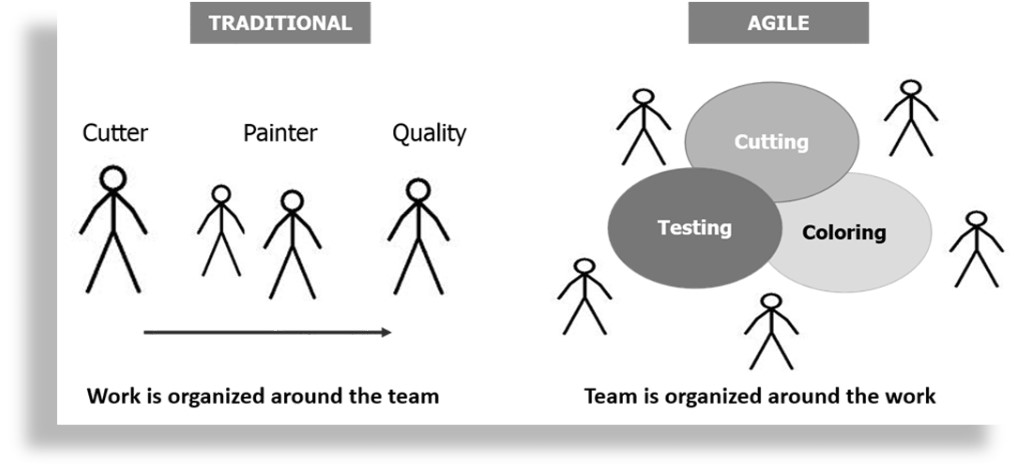
The Agile Mindset is a movement away from traditional, which avoids the bureaucratic leadership like which can involve office politics and a “whoever is loudest is right” mentality. Instead, the agile mindset keeps ego aside from the teams and focus on what is right, instead of who is right. This agile methodology was emerged in 2001 for the development of software practices by providing more reliable workspaces and improved management but now it is a globally embraced framework and mindset which enables business to be better in almost every field with its viability of vision.

THE CHARACTERISTICS OF AGILE MINDSET ARE AS FOLLOWS:

PRINCIPLES OF VISION TO VIABILITY FOR AN AGILE TEAM ARE AS FOLLOWS:

Keeping the above picturized principles in mind which can help a start up to build a perfect team to become more open-minded to the agile mindset approach. These are the core values which helps to nurture more efficiency in teamwork.  This methodology can be used for our personal development also, in order to determine the clear goals or achievements that we want to reach. Now, let’s have an idea about ” How to build an agile team ? “

THE SEVEN MAJOR VISIONARIES TO BUILD AN AGILE TEAM IS AS FOLLOWS:

1 ATTRACT AWSOME TALENT: Try to choose every individual with complementary skills who share the excitement for the company vision. So that they give their best for growth of the company.

2 CREATE FOCUSED & ALIGNED TEAMS: Companies should create the teams which concentrate on the key initiatives to meet the desired goals and achievements of the company.

3 CREATE A LEARNING ORGANISATION: The team must posses the flexibility to manage or make some adjustments to the plan to avoid un necessary risks.

4 BUILD A COHESIVE TEAM: Building a cohesive team adds a marks to the company because this type of team celebrates the collective win over the individual gain and learns from the failure.

5 BUILD A TEAM TO EMBRACE THE DIFFICULT DECISIONS: The team must address the mistakes that has been done previously or during the running project and should change them according to needs of project growth.

6 Foster a culture into the team which can embrace flexibility and also to thrive in good time or bad time.

7 Give an allow for both GEN Y and GEN Z categories in order to tap the high performance energy and fresh thinking ability.

Finally, founders or HR’s of the start ups must cross check all the abilities in hiring a person. Try to maintain some techniques while hiring a person i.e give priority to the aptitude over the experience because fresh thinking always enhances better results and look for the passion in the candidate who want’s to join in the company. Always remember that hiring persons from different cultures can give a strong grip to the foundation of a start up because diversity creates better decisions and the most important thing in hiring process is constantly polishing the way of hiring. Try to look for the culture “FIT” and always be recruiting so that we can form the best teams than the previous once which helps in the growth of the company.

Entrepreneurship Development

Entrepreneurship is the ability to develop, organize and run a business enterprise, along with any of its uncertainties in order to make a profit. Entrepreneurship is basically the act of creating a business or businesses while building and scaling it to generate a profit. It’s about building a life on your own terms. No bosses. No restricting schedules. And no one holding you back.
Entrepreneurship development is a process of developing certain skills in an individual which are required to make him/her a successful entrepreneur. The success of an entrepreneur can be judged by success of his project or business. Finding a way to sell oneself before anyone believes in one or ones business, being able to explain and prove why their product or service is worth the price or investment, knowing when something is valuable, even if no one else does etc. are some of the features a successful entrepreneur possess.
Big successful companies like Microsoft, Google, Apple etc. have all attained the status they have now because of their respective entrepreneurs. Success of such start-ups not only benefits the people associated with it but also the economy as a whole. It slowly changes the world. Off course not every start up is a massive hit, some might be pretty mediocre and some might even do more losses than gains but nevertheless in the contemporary world, the need and urge for entrepreneurship development has drastically increased.
There are certain characteristics which are observed in entrepreneurs who write big success stories. These characteristics are a prerequisite for becoming a successful entrepreneur. The first and foremost skill is creativity. It means thinking out of the box. Coming up with new ideas, being open to new methodologies, creating something new etc. are some examples of being creative. Creativity gives birth to Originality. Risk taking is another characteristic of a successful entrepreneur. Without the will to explore the unknown, one cannot discover something unique. Risk-taking involves a lot of things. Using unorthodox methods is also a risk. Investing in ideas, nobody else believes in but you is a risk too. Good entrepreneurs are always ready to invest their time and money. But, they always have a backup for every risk they take.
Planning is another characteristic and probably the most important one. They say “If you fail to plan, you plan to fail.” Planning is strategizing the whole thing ahead of time. It basically sums up all the resources at hand and enables one to come up with a structure and a thought process for how to reach ones goal. It involves how to make optimum use of these resources. Facing a situation or a crisis with a plan is always better. It provides guidelines with minimum to no damage incurred to a business.
Other characteristics include passion for the work or business one choose to do, professionalism in the way the work is done, knowledge of the field of work or business, social skills including relationship building. An entrepreneur must be open minded towards learning, people and even failures.

https://www.jbcnschool.edu.in/blog/characteristics-of-an-entrepreneur/

https://www.entrepreneur.com/article/250564

Amazon Prime Day sale is here!!!

Are you planning to buy a smartphone or an Appliance or a TV? And you’re an Amazon Prime member then you should wait for a little. Amazon Prime Day sale is all set to go live this month on the 26th of July and it’ll conclude on the 27th of July.  

Every year Amazon comes up with the Prime Day sale for its existing Prime members and attracts new subscribers. You’ll get great deals and offers on the categories including; Smartphones, Consumer Electronics, TVs, Appliances, Amazon devices, Furniture, Home & Kitchen. The good news is that Amazon is also offering discounts on Flagship devices like iPhone 12 and Oneplus 9. 

Aside from discounts on smartphones, Amazon will also provide a 10% instant discount for HDFC cardholders. Buyers can also exchange their old phones for new phones. Amazon also disclosed that the Echo devices will be sold at discounts up to 50%. Amazon also has teased the smartphones that are getting discounts namely; iPhone 12 Pro, OnePlus Nord CE 5G, Redmi Note 10 Pro Max, Samsung Galaxy M51, iPhone 11,iQOO 7 legend, Redmi Note 10and others.

Prime day sale is not the only perk of being a Prime member, you also get to enjoy free-fast delivery, Prime Video, ad-free music. exclusive deals and more. If you are not a Prime member of Amazon, you can be one today just by buying Prime membership according to monthly/yearly plans provided by Amazon.  

Well if you are so impatient and want to buy an iPhone before the Prime day sale, then you should go for the Apple Days sale. Amazon has announced the Apple Days sale before the Prime Day sale. Apple Days sale will be live until the 17th of July. You can get various deals and discounts on the iPhone 12 series and iPhone 11, and more. You can get iPhone 12 for Rs 70,900 with a discount of Rs 9,000 and HDFC cardholders will get additional Rs 6,000 discount on HDFC credit card transactions. 

CSR at Cafe Coffee Day

Corporate social responsibility, often abbreviated “CSR,” is a corporation’s initiatives to assess and take responsibility for the company’s effects on environmental and social wellbeing. The term generally applies to efforts that go beyond what may be required by regulators or environmental protection groups.

As the business environment changes, customer’s expectations from a company also change. Nowadays, Customers prefer brands that are socially responsible and give back to the society. Let’s take a look at CSR initiatives taken by the Cafe Coffee Day, one of India’s leading coffee brands.

CSR goals at Cafe Coffee Day

  1. Improving livings standards for communities through increasing employment opportunities- CCD believes in working for the people, and working with the people. It ensures that it creates new employment and livelihood opportunities for millions across the globe. This is done through direct employment and contracts, as well as through inclusive business opportunities.
  2. Enhancing the health and wellbeing of communities– It works with communities at large and aims to help them become healthier and happier.
  3. Reducing environmental footprint– It works towards reducing its environmental footprint by ensuring that it allows the legislation regarding carbon production and release. It works towards designing operational processes that reduce water and land pollution. All products manufactured and distributed come with a disposal method to reduce wastage, and increase recycling.

Corporate social responsibility is an integral part of CCD’s operations. They are committed to offering ethically purchased and responsibly produced products of the highest quality, and serving quality coffee that is responsibly grown and ethically traded. They facilitate UTZ and Rainforest certification for their major coffee supplier’s estates. The UTZ Code of Conduct is a recognized global ‘decency’ standard for coffee and production criteria for socially and
environmentally appropriate growing practices and efficient farm management techniques. The Rainforest Alliance works to conserve biodiversity and improve livelihoods by promoting and evaluating the implementation of the most globally respected sustainability standards in a variety of fields which are designed to generate ecological, social and economic benefits. CCD aims to create the most value in the following aspects:

  1. Nutrition- The primary focus remains on ensuring health safety for children and infants.
  2. Water- It administers all its internal sewage plants to dispose of waste optimally without risking water life.
  3. Air Cleansing- The company also takes responsibility for ensuring that all its industrial sites and operations are placed away from residential areas to reduce maximum exposure of plant operations to the public.
  4. Rural Development– It created varied employment and livelihood opportunities for these communities to help them raise their living standards and quality of life.
  5. Protecting water- With the high scarcity of clean drinking water, CCD works and strives to provide communities with clean drinking water through having installed filter plants.
  6. Protecting natural resources- It ensures that all its operational sites are designed in a way that they do not harm or risk the natural ecosystem. In addition, the company works towards protecting the environment by building green spaces.
  7. Safeguarding the environment- The operations of CCD, like other players in the industry, are being affected by the climatic changes, and the weather alterations. To fight this change, and to safeguard the environment, CCD works towards creating safe green spaces through high rate plantations. This is to ensure environmental sustainability and
    enrichment of the ecosystem.

Commitments made by CCD

Commitments at CCD have helped shape its CSR and CSV approach based on multiple trends from across the globe. These commitments have helped maintain focus in giving back to the community as well as in developing a more sustainable environment and workplace. Commitments are the long-term goals that CCD wants to fulfil and
achieve in the following different aspects:

  1. For individuals and families
    Living healthier lives– Helping individuals attain a balance between healthy nutrition and physical exercise as a means of a healthier lifestyle and healthy living. With today’s work style and busy schedules, this is quite a challenge. 
    Having Nutritional Knowledge- CCD works with the long-term aspiration of enhancing the lifestyles of communities. The company plans to do it by sharing information regarding nutritional facts, and by raising awareness of nutritional intake.
  2. For Communities

Rural Development– It works towards developing rural communities-especially where it is operational and present. The company engages not only in employment creation but also infrastructure development and education deployment programs to help communities improve their living standards.
Promoting Diversity– It works towards inclusion through its diversity programs. The company has designed programs and policies to ensure the inclusion of all community groups in the employment cycle. In addition, the company also conducts training and skill enhancement sessions for all community groups including disabled and special persons.

Finding the potential in coffee is a key part of success. Similarly, CSR activities focus on finding
the potential in the people, society and environment.

TRAINING
CCD works through a unique partnership model wherein they have established strategic partnerships with various training bodies, non-governmental organizations, and government and leverage their relationship to provide skill training and employability to the under privileged. In states like Jammu and Kashmir and Orissa, they have provided self-improvement and vocational training to youth.

DIFFERENTLY-ABLED EMPLOYMENT
Coffee Day Global has also tied up with NGOs such as “Enable India” to work out avenues to employ more differently-abled people. Over 150 speech and hearing-impaired people are employed at their cafés, popularly called as “silent brew masters”.

WATER, SANITATION AND HYGIENE
During the manufacturing process and value additions, Cafe Coffee Day maintains an emphasis on water, sanitation and hygiene. All plants and manufacturing units operated by Cafe Coffee Day have an authorized sanitation system in place which ensures minimal water wastage. Besides, all industrial waste is disposed of off through authorized channels only ensuring that no natural water body and water source is harmed or polluted.

NATURAL RESOURCE STEWARDSHIP
Cafe Coffee Day is also an active pioneer of natural resource stewardship. Cafe Coffee Day has devised ways to ensure that natural resources are sustainably used for industrial operations, and are not damaged during business processes. Cafe Coffee Day shares this knowledge publicly for the overall welfare of the environment and the planet.

WOMEN EMPOWERMENT
During its manufacturing process, Cafe Coffee Day also ensures to employ women labour in various managerial and operational level jobs. These women are usually from local communities and are trained for new skill development and enhancement. In doing so, Cafe Coffee Day ensures that women are equipped with the confidence and decision-making abilities that they advance not only in their professional but also in their personal and social lives.

ANIMAL WELFARE
In all its sourcing, CCD ensures that no animals are harmed. CCD makes sure that all animals are fed high quality fodder, and that they are kept in a clean and safe environment. In addition, it also provides safe breeding grounds for
animals and regularly authorizes veterinary check-ups for all animals in partner farms.

HUMAN RIGHTS
CCD is also particularly careful to ensure that all human rights are upheld in its business operations. This
includes no child labour, and inclusive diversity, amongst other things. Also, the business operations of CCD also include high dependence on local workers for labour and management, making sure all local and global human rights are followed thoroughly.

CCD changing lives with Education and Employment

· Their social transformation initiatives are led by SVGH Vocational Training College (VTC) at Chikmagalur, Karnataka and are fully funded by their Promoter. VTC seeks to promote education to economically underprivileged rural youth and supporting them to be independent, responsible and adaptable to urban environment. VTC has trained over 2,500
students, many of whom have since joined CCD Group companies, including Coffee Day Global’s outlets across the country. The entire expenses of the course which includes imparting education, providing food and accommodation, uniforms and transport facilities is borne by VTC.

· The institute provides free education and training to youngsters, with all their expenses being covered by the chairman’s trust. The chairman and founder, V G Siddhartha, was keen to create employment for the rural youth, so that they could lead a productive life and contribute to society. A large number of youths were unemployable due to skill gaps, so it was decided to offer hotel management courses at Yuva (their vocational training institute).

· The institute provides a one-year course in hotel management, which includes six months of theory and six months of internship, where students get an on-the-job experience. Apart from hotel management, the institute also provides courses in audit, micro-finance, supply chain and culinary skills, which depends on the needs and demands of the organisation.


· It provides them an opportunity for personal and professional development thereby equipping them with skills to handle the rapidly changing environment. The college has trained 1180 students many of whom have found employment at CCD outlets across the country. Courses offered include Certificate Course in Hospitality Management & Micro Finance. The Trust bears the entire expenses of the course which includes imparting education, providing food
and accommodation, uniforms and transport facilities. The trained students are guaranteed employment. Current employees are involved actively in SVGH programs and help by conducting modules etc.


· “Communication skills are critical to success in customer-service roles and there is a strong commitment to building job-ready skills.” The focus has been on right skilling and reskilling to keep pace with the dynamic market needs. They aim to groom students who can think, ideate, solve problems, communicate and collaborate. They also provide specialisation studies to the students in the last quarter of the course, so as to place them in various roles at CCD in
accordance with their skills. Placements are done within the organisation. By providing quality education and employment to these students, the organisation is changing their lives and offering them a great career path. 


· Every year, around 350 students pass out from the institute and are employed by the organisation. Almost all of them are hired by Café Coffee Day. This kind of programme also creates loyalty in the minds of the employees and they are likely to stick around for a longer period of time.


· Providing a good career path, professionalism and quality skill training, the institute— which had taken birth as a simple CSR activity—is changing the lives of its students and their families. This is the best way to not only educate the underprivileged but also provide jobs to those who actually need them.


Declaration of Dividend

As more and more people invest in the stock market, dividends as a source of income gains popularity. Therefore, it is important to understand the legal framework of the process and its details in order to make a well-informed investment.

Sources of Dividend declaration

The basic principle of declaration of dividend is that it shall be paid out of profits only. However as per companies act dividend can be paid out of-
1) Current year’s profit of the company, or
2) Undistributed or accumulated profits of the previous years, or
3) Out of money provided by the Central Government or a State Government for the payment of dividend by the company in pursuance of a guarantee given by that Government.

Dividend Declaration Provisions

1) Depreciation: – Before the declaration of dividend, a company shall provide depreciation to all its depreciable assets, in accordance with the rates or useful life, as the case may be provided in Schedule – II of Companies Act -2013.
2) Transfer to Reserves:- A company may, before the declaration of any dividend in any financial year, transfer such percentage of its profits for that financial year, as it may consider appropriate to the reserves of the company.
3) Set off of previous year losses and depreciation: –A company shall not declare dividend unless carried over previous losses and depreciation not provided in previous year or years, are set off
against profit of the company for the current year.
4) Free Reserves: – A company shall not declare or pay dividend out of its reserves, other than free reserves.

Conditions for declaration of dividend out of surplus reserves

As per Companies (Declaration and Payment of Dividend) Rules, 2014 a company may declare dividend out of surplus reserves subject to the fulfilment of the following conditions, namely: –
1) Rate of Dividend: – The rate of dividend declared shall not exceed the average of the rates at which dividend was declared by it in the three years immediately preceding that year. However, this condition shall not apply to a company, which has not declared any dividend in each of the three preceding financial year.
2) Total Amount to be withdrawn: – The total amount to be drawn from such accumulated profits shall not exceed one-tenth of the paid-up share capital and free reserves as appearing in the latest audited financial statement.
3) Utilization of withdrawn amount: – The amount so drawn shall first be utilized to set off the losses incurred in the financial year in which dividend is declared before any dividend in respect of equity shares is declared.
4) Balance amount of Reserves:- The balance of reserves after such withdrawal shall not fall below 15% of its paid up share capital as appearing in the latest audited financial statement.

Payment of dividend: According to section 123(5):

■ Dividends are payable in cash. Dividends that are payable to the shareholder in cash may be paid by cheque or
warrant or in any electronic mode.

■ Dividend shall be payable only to the registered shareholder of the share or to his order or to his banker.
■ This subsection shall apply to the company, subject to that any dividend payable in cash may be paid by crediting the same to the account of the member, if the dividend is not claimed within 30 days from the date of
declaration of the dividend
.
■ Nothing in sub-section 5 of section 123, shall prohibit the capitalization of profits or reserves of a company for the
purpose of issuing fully paid-up bonus shares or paying up any amount for the time being unpaid on any shares held by the members of the company.

The utterly butterly delicious story of Amul

Over the years, Amul, one of the most beloved brands of our country, has become the taste of India, just as its tagline claims. Every Indian millennial has grown up listening to the jingles of its many dairy products, and the Amul girl, the brand’s mascot in the polka-dotted dress, has become a nostalgia-evoking symbol. Amul has truly come a long way since its founding in 1946.

The beginning

Amul was formed as a part of a cooperative movement against Polson Dairy in Anand, Gujarat, which procured milk from local farmers of Kaira District at very low rates and sold it to the then Bombay government. Everyone except the farmers benefited from this trade. The farmers took their plea to Sardar Patel, who had advocated farmers’ cooperatives since 1942. The result was the formation of the Kaira District Co-operative Milk Producers’ Union Limited in Anand.

The union started pasteurising milk produced by a handful of farmers for the Bombay Milk Scheme and grew to 432 farmers by the end of 1948. The rapid growth led to problems including excess production that the Bombay Milk Scheme couldn’t accommodate. To solve this issue, a plant was set up to process all that extra milk into products such as milk powder and butter.

Amul is born

The late Dr. Verghese Kurien, rightly called the Milkman of India, was Amul’s true architect. His journey at Amul began in 1949 when he arrived in Anand to manage a dairy as a government employee. He went from helping farmers repair machinery to revolutionising India’s dairy industry with the White Revolution (or Operation Flood), the largest dairy development programme in the world.

The new dairy with the milk processing plant was ready for operation in October 1955, the year that also saw a breakthrough in dairy technology —buffalo milk was processed to make products for the first time in the world. The word ‘Amul’, derived from ‘Amulya’, which means ‘precious’ or ‘priceless’ in Sanskrit, was used to market the range of milk products developed by the Kaira Union. It is also an acronym for Anand Milk Union Ltd.

Dr Kurien had a vision. He wanted to offer small-scale dairy farmers quality-control units and centralised marketing, which were missing at the time in the dairy economy. Thus, the Gujarat Cooperative Milk Marketing Federation (GCMMF) was created in 1973 to market milk and all milk products produced by six district cooperative unions in Gujarat. GCMMF is the largest exporter of dairy products in India and Amul is the umbrella for all of its products.

Awards, accolades, and a global presence

Over the years, Amul, together with GCMMF, has won numerous awards. Some of these include the Rajiv Gandhi National Quality Award, 1999; the Golden Trophy for Outstanding Export Performance, 2009-10; Best Marketing Campaign, 2014; and World Dairy Innovation Award, among many others. Amul earned recognition all over the world when GCMMF  introduced it on the Global Dairy Trade (GDT) platform, where only the six top dairy players across the world sell their products.

More than a mere slogan

Amul’s famous slogan, which is now a part of its logo, was created in 1994 by Shri Kanon Krishna of a Mumbai-based advertising agency called Advertising and Sales Promotion (ASP). According to Amul, the Taste of India slogan is more than just corporate positioning or advertising jargon. This slogan lends meaning to the brand’s never-ending commitment to taking quality food and products to the rural man, which he otherwise couldn’t have afforded.

The Butter Girl

Amul did not always have the round-eyed moppet as its mascot. The Butter Girl was born in 1966 when Sylvester daCunha, the then MD of the advertising agency handling Amul butter’s account, created her for its campaign. It was a pleasant change from the dull, corporate ads that the previous agency had come up with. Being a seasoned marketer himself, Dr Kurien gave daCunha complete creative freedom to create and release the ads without taking the company’s permission. 30 years later, the Utterly Butterly Girl still wins hearts wherever she is, whether on a billboard or on the packet of butter.

Amul is not just a brand; it is also a movement that represents farmers’ economic freedom. The name is now a household term that is here to stay, and the chubby-cheeked Amul girl will continue to cast a spell on the public.

Video Game crash of 1983

In 1983 the video games industry was hit with a recession that almost ended the existence of video games of that time period. This period lasted for almost two years from 1983 to 1985. Many people and journalists who were critical were calling video gaming a fad. Numerous companies went bankrupt or stopped making video games entirely. This recession is known as the Great North American Video Game Crash or Atari Shock (Primarily in Japan).

Video games in the 1970s were dominated by arcade machines and by the end of the decade home game consoles were also getting popular. With the start of the 1980s, the video gaming industry witnessed a boom with numerous companies like Mattel, Atari, and Coleco dominating the market. The early 80s was a time of innovation and growth in the video game industry but there was instability in the industry as well. This was a time period when video games were becoming more mainstream and popular. Many new players entered the market ranging from industries to small developers that had no association or prior experience in game development in general.

Pacman was a big hit in the early 80s and it was not of the most popular video games in the arcades. Its successor Miss. Pacman improved on the formula and was a success as well. After the success of Pacman in the arcades, Atari wanted to replicate the success in the home game consoles. But with the limited constraints with the memory and short development period, the game was not well received by the consumers and critics alike. In 1982 Atari also brought the license to release the video game of the movie for 21 million. The game was developed in a time period of only 5 weeks. The game was negatively received and only 1 million copies of the game were sold off the 5 million manufactured. Many of the sales were also returned to the retailers furthering the damage. During this period video games were being published by small developers with very poor quality and many big developers were producing games that were more of a marketing token than the game. There were many clones of the same games with little to no redeeming quality and replayability. There were also numerous consoles unlike today with too many options that were no different from one another. With the abundance of supply and low sales of games, retailers started to remove stocks of video games and this led to the shrinking of the industry. Atari had lost $500 Million in 1983 and had to cut its workforce from 10,000 employees to just 400 employees.

During the 1980s there was a boom in the Personal Computers market as well. The PCs were much more powerful than consoles and they could play games and do many tasks like word processing and spreadsheets. The PC industry was unaffected by this low point of video game consoles.

In 1985 Nintendo Corporation launched the Nintendo Entertainment systems in North America and Nintendo ensured that only a limited number of games to be released under their license agreement. This ensured a certain threshold of quality for the games that were released for the system and Nintendo emerged out of the survivor from the video game crash. The Nintendo Corporation started to dominate the video game industry with an assurance of quality that was unmatched by any other corporation at that time. Many other entrants like SEGA also emerged after the crash. Nintendo with its approach and license and quality assurance of video games has left a big impact on the industry to this date. Video games industry has only grown since then and also overtaken other source of entertainment. Nintendo can be credited to provide the industry a trajectory that was severely needed after the crash of 83.

References:

A UNIQUE FASHION ; for a Safe environment!

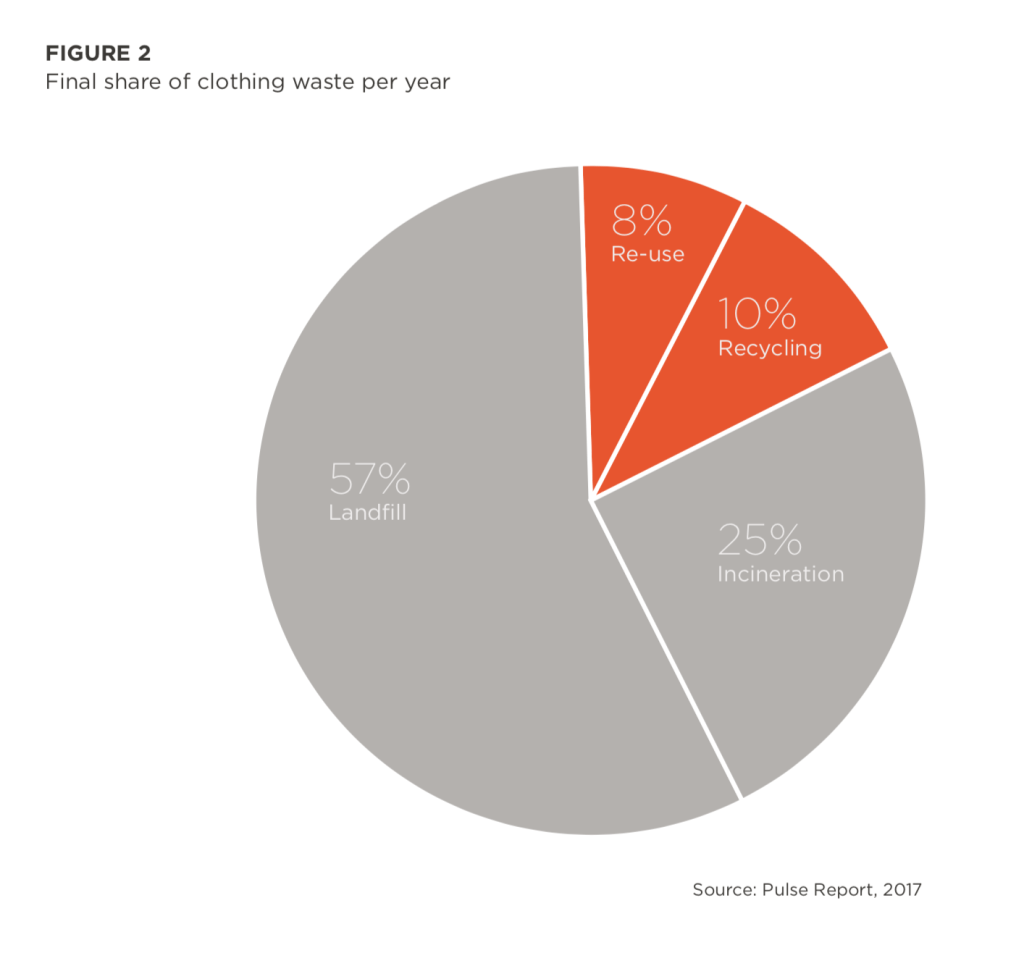
India consists a total population of 139.978 crore individuals and cloths being the most basic necessity of a person to recite on this planet is produced in hundreds and thousands of square metres regularly. Over this, Increasing modern and western culture in the country has boosted up the demands and production of these Industries at a huge percentage. Wishing to have a good appearance is a very usual part of human Psychology. For which, wearing good clothes plays an important role. Majorly, teenagers and youth are the ones’ who tend to follow the trends, look attractive, maintain their social status high which is often judged by how Fancy / cool / branded one’s clothes are and not only them but even elders are seemed to be changing and adapting these notions. Celebrities and fashion bloggers are currently one of the most influential people on social media. India is expected to have 34.33% share of youth in total population by 2020. Thus, clearly desire for fashion and numerous clothing apparels of each person is rapidly rising. In such case, Butobviously tones of material is used everyday and production process of anything is incomplete without Waste Discardation. Previously, population was less, needs were lesser and technology amd productions were limited. However, now with too much demand and availability of all the materials production processes have reached a high pace of resultant hazardous and non- biodegradable waste. Large manufacturers can also recycle these wastes up to a very limited extent only and most of the waste acts as a contribution to landfills which are tragically harmful for environment in present and for several upcoming years.

Image source

As per the Indian Textile journal – 2011, the study mentions that more than 1 million tonne textiles are disposed every year based on estimates, with most of this coming from household sources. But, as we have heard ” Where there’s a will, there’s a way”.

A DOOR TO SOLUTION.

Back in 2012, Kriti Tula after completing her Masters degree in design management from London College of Fashion, studied and analysed a lot over wastage created by fashion industry on a regular basis. She saw that a study cites that approximately 16.36% of fabric is wasted from the total material intake during the process of cutting, 6.37% of it is wasted in the stitching process and approximately .09% goes out in quality check. According to calculations last done in 2010, in an optimistic scenario, about 40 billion square meters of leftover fabrics and scraps are created every year.
“As a kid raised in the 90’s in India, upcycling was a deeply rooted tradition in most middle and upper-middle class families. Every garment was cherished and every piece lasted more than we hoped. We were simply not so wasteful and everything was less disposable as everyone had much lesser money to spend. It was a good time for earth.” – Kriti Tula, Co-Founder and Creative director Doodlage. So as to live a dream of doing something to sort these problems in a beautiful manner while, trying to return the Environment it’s happiness again, There she ended up finding the concept of producing and selling sustainable and up-cycled garments from the waste collected by other textile Or fashion industries, which gave a birth to her label “DOODLAGE” Settled in New Delhi, India

Image source
Image source

THE IDEA BEHIND.

The aim of Doodlage is to create a sustainable clothing brand, which is an initiative towards protecting the earth from non biodegradable fabric waste and simultaneously fits as per the choices of today’s generation. Each and every attire here is not just eco-friendly but is also very precisely designed and processed. Outfits are all made from scrap, used and leftover materials yet are absolutely stunning, comfortable, cool and highly fashionable in appearance. In 2016, Doodlage collection was also recognised by LAKME FASHION WEEK and they are present in over 40 stores in the country. Kriti got the idea while interning with mass producing brands and export houses. She said “After graduating from Pearl in 2010, I worked with a number of export houses and noticed a lot of fabric was getting wasted at every level of production – cutting, stitching and piece rejection. I knew that I wanted to work on something that already exists and supports a circular economy.” According to her, recycling or up- cycling the products and making the best use of them even if it’s from scrap is what can be called an essential part of lifestyle.

In addition to that, she says art is easy to replicate but doodles are not.
“Every doodle is one of a kind. Similarly every piece at Doodlage is one of a kind”.

The brand started at a time where nobody even understood the terms like ‘ethical fashion’. They believe, the reason for its sucess is the Good quality of products. The story doesn’t ends here ; Because the biggest motive of the label was to convert the left over fabric wastes of the industry or the other companies into usable apparels, they even came up with an idea to prevent the wastage of cut outs produced within processing of their own garments by shredding them to create new fabrics and use them as materials for making bags and furnishings. Team of Doodlage for sure is a great inspiration for fashion industry today and in future.

Want to start your own successful business? Here’s a book for you.

Peter Theil in his book ‘ZERO to One’ has given descriptive pathways on every aspect of entrepreneurship. The author is a German-American billionaire entrepreneur and a co-founder of Pay-Pal and various other successful businesses.

  In this book, the author suggests starting a business that is new in the market and the first of its kind. Doing what we already know how to do, takes the world from 1 to n, adding more of something familiar. But every time we create something new, we go from ‘Zero to 1’, and that’s how the book is named. “Creating something new is absolutely difficult, but not impossible”, says the author. One needs to find a problem, and a business should be erected by focusing on solving that problem. Similarly, a business can be focused on fulfilling a ‘need’ as well. There is a simple problem that we face every day ie. not able to find a cab or an autorickshaw easily. Bhavish Agarwal focused on solving this problem and started a business that each one of us is familiar with ie. OLA. Now people can easily book cabs/auto rikshaws through their mobile phones and can also get ‘pick-up’ service right outside their building/colony.

  The writer further shares insights into his entrepreneurial journey. It was in the 1990s when the US was undergoing a recession. Unemployment was proliferating. Commercial use of the internet was allowed in 1992 and the ‘Mosaic browser’ was officially released in Nov 1993. With the advent of a search engine, people started seeing a prospective online business opportunity. Subsequently, there was a ‘Dot Com’ boom. Many startups were emerging in the US, precisely in Silicon Valley. There was exuberance all over. Some people started having 5-6 startups at a time. Pay Pal was a startup that provided a service of sending money through email. Initially, they did not get much of the anticipated response and audience. So, the team came up with an excellent scheme which proved to be very effective. They gave customers $10 for joining and $10 more every time they referred a friend. They gained thousands and thousands of new customers and an exponential growth rate. But this scheme wasn’t financially viable as they gave out money for getting customers. But seeing such exponential growth within a short span, they received a lot of funding later.

  The author, further, suggests that one should not start a business related to a market that already has a lot of competition. For example, launching a new biscuit brand wouldn’t be a good idea because there already exist many biscuit brands and people are very familiar with them. So, why would they abandon other brands and buy yours? Rather, a lot of revenue has to be spent on marketing. On the other hand, by creating a monopoly, your customers do not have many choices and will continue to be your customers. Besides, a considerable part of your revenue can be spent on research and development, which would’ve rather been spent on marketing had we entered into a competitive market. You can update and develop your product from time to time which would help you gaining customer loyalty, just as Google does. Most people use Google despite there being many other search engines. They constantly upgrade their functions, bring in new features, etc.

  Further, the author has emphasized the need to use technology. Amazon, when launched, claimed to be ‘Earth’s largest bookstore’. Amazon didn’t need to physically store any books. It only requested the title from its supplier whenever a customer made an order. To create a monopoly, your product/service should be 10 times better than your immediate competition. The author has profoundly highlighted the need for innovation and has quoted, “Always invent-Never stop”. Nokia was a successful brand, but since it did not cater to the developing times, it has completely vanished from the market.

   While highlighting few aspects of Human Resource Management, the author has suggested that hire employees who are not just talented but will enjoy working with you. While hiring, sell mission and not perks. Paying salaries, in the initial stages would not be viable and would be difficult. Instead, you can give a stake (share) of your company to them. The initial employees of your startup are very important and giving them a stake in your company would make them feel like being the owner and would put in more effort.

  Similarly, the author has excellently talked about every aspect of starting a startup and further scaling it. Hence, I awfully suggest you to read this book and start your journey to become a successful entrepreneur.

CONTRACT LAW.

contract law according to Indian contract act 1872 is an agreement enforceable by law and contract is agreement made between two or more parties which the law will enforce.

The essential elements of a valid contract are offers and acceptance it is one of the essential of valid contract that must be an offer from either side of the party without the offer a contract cannot be formed there must be an offer from one party and acceptance from the other party secondary legal relationship the parties to an agreement must create legal relationship agreements of a social or domestic nature do not create legal relations and as such cannot give rise to a contract early lawful consideration consideration is something in return consideration has been defined as the price paid to one party to the promise of the other fourth capacity of parties it means that the parties to an agreement must be competent to contract accountant by a person of unsound mind is void ab initio does and contact enter into by a minor or by a lunatic is void fifth free consent for a valid contract it is necessary that the consent of parties to the contract must be free sixth lawful object it is also necessary that agreement should be made for a lawful object every agreement of which the object or consideration is unlawful is illegal seventh certainty for a valid contract the terms and condition of agreement must be clear and certain 8 possibility of performance if the act is legally or physically impossible to perform the agreement cannot be enforceable at law ninth not expressly declared void agreement must not be one of those which has been expressly declared to be void by act certain agreements are declared void under the Indian contract act 1872 finally legal formalities according to contract act and contract may be oral or in writing. Although In practical it is always in the interest of parties that the contract should be made in writing so that it may be convenient to prove in the court.

The contract are classified on the following basis 1 on the basis of enforceability consisting of of valid contract voidable contract void agreement void contract enforceable contract express contract implied contract executed contract E-Commerce contract by letter contract. Valid contract is a contract which are enforceable in a court of law voidable contract if one party to the contract as the option of enforcing a contract by law but not at the option of the other it is and voidable contract void agreement agreement not enforceable by law void contract it is an agreement it may be enforceable at the time when it was entered into but later on due to certain reason impossibility or illegality of the contract it may become unenforceable express contract is a contract with the offer or acceptance of any promise is made in words the promise is said to be express unenforceable contract is a contract which as not properly fulfill the legal formalities that means unenforceable contract suffers from some technical defect like insufficient stamp executed contract is a contract with both the parties and perform their obligations bilateral contract is a contract with both the parties to perform their obligation E-Commerce contract is a contract basically done through online mode using internet.

Business and their Objectives

Basically, business is any human activity undertaken on a daily basis in order to make money through production, distribution, purchase and sales of goods and services.

Business activities are classified on the basis of size, ownership and function. Under the basis of size, business activities are divided into two categories.

Starting with small scale business whereas small scale units require less capital. They only require small number of workers. Eg: Handloom and powerloom businesses.

Adding to, Large scale business requires huge capital. They require large number of workers and produce the goods on large scale. Eg: Manufacturing textiles in a large textile mill.

On the basis of ownership business activities may be grouped into three catogories.

Private Enterprises, an enterprise said to be aprivate enterprise where it is owned, managed and controlled by persons other than government. Public Enterprise, an entrrprise where it is owned, managed, and controlled by Government or any other agencies. Joint enterprise is said to be a joint enterprise owned, managed and controlled by Government and private enterpreneurs.

Every business enterprise has certain business objectives which regulate and generate its activities. Objectives are needed in every area where performance and results directly affects survival and prosperity of a business. They may be classified into five catogories.

Economic objective of business refer to objective of earning profit and also other objectives that are necessary to be pursued to achieve the profit objective, which includes creation of customers, regulation innovations and best possible service use of available resources. Social objectives of business, which are desired to be achieved for the benefit if the society by utilizing its scarce resources, the society expects something in return for its welfare. No activity of the business should be aimed to giving any kind of trouble of the society.

The organizational objectives denote those objectives an organisation intends yo accomplish during the course of its existence in the economy like expansion and modernization, supply of quality of goods to customers, customers satisfaction. Human objectives refers to the objectives aimed at the well being as well as fulfillment of expectations of employees as also of people who are disabled, handicapped and deprived of proper education and training. The human objectives may include economic well being of the employees, social and psychological satisfaction of employees and development of human resources. National objectives is an important role in the country, every business must have the objective of fulfilling national goals and aspirations. The goal of the country may be to provide employment opportunity to its citizens, earn revenue for its exchequer, become self-sufficient in production of goods and services, promote social justice. Business activities should be conducted keeping these goals of the country in the mind, which may be called national objectives of business.

The Flash Theory: Iris Brings Back The Arrowverse Multiverse Post-Crisis

Warning! Spoilers ahead for The Flash season 7 episode 16, “P.O.W.”

The Flash season 7 is barreling towards its two-part finale and Iris West-Allen’s latest storyline could bring back the Arrowverse’s multiverse following its collapse in Crisis on Infinite Earths. Time and interdimensional travel have been heavily utilized in the shared universe ever since The Flash unlocked the titular character’s abilities to move backwards and forwards in time. The team’s trip to Earth-2 opened up yet another gateway to traversing the multiverse. While Crisis on Infinite Earths changed that for good, Iris’ situation could unlock the multiverse once again. 

Iris has been noticeably absent from two episodes of The Flash. In season 7’s episode 15, Barry revealed she wasn’t feeling well and was recovering from a bout of illness at home. In the following episode, however, Iris confirmed what she was experiencing was far more than a regular cold; when she sneezed, her eyes briefly and startlingly flashed green before returning to their normal color afterward. Why the illness is affecting Iris in this way remains unclear, but her symptoms have led her molecules to become unstable, inducing headaches and time displacement.   

At the end of the episode, Nora West-Allen confirms that Iris will be okay, but there’s no telling when her symptoms will clear up or what will happen before they do. That said, it’s possible Iris moving in and out of the timeline could play a crucial role in the future of the multiverse and the reason for her predicament may be hiding in plain sight.

Iris Is Phasing In & Out Of The Timeline

Iris’ absence from The Flash season 7’s episode 15 was suspicious, especially since it involved a possible pregnancy storyline that was happening without her. In the following episode, however, fans learned why Iris has been absent. As it turns out, her cold wasn’t a normal one and it was somehow causing her to phase in and out of the timeline. It got so bad apparently that Deon, the Still Force, swooped in to protect Iris by using his abilities to stabilize her from phasing through various temporal planes, moving her to “pure temporal strains” to keep her alive. If it wasn’t for Deon, Iris would have fractured through time itself, which doesn’t sound very pleasant and could have unprecedented repercussions.

This subplot creates an interesting twist considering everything happening on The Flash right now. Between what’s going on with Iris, the Godspeed clones, August Heart — who originated as Godspeed in 2049 pre-Crisis on Infinite Earths — coming into the picture, and Barry dreaming about Nora telling him there seems to be something wrong in the future, Iris’ timeline instability may be the one thing connecting each of these separate storylines. That said, the reason why she’s suddenly phasing in and out of the timeline has yet to be confirmed on the show, but all roads seem to be leading back to one cause.  

Iris Being Pregnant Is Causing Her To Be Unstuck From Time

Barry and Iris have been trying to conceive for a few episodes now. After Barry dreamed about Nora the first time, he assumed Iris was pregnant only for the results of the test to come back negative. However, this could have been a false negative. Considering that Iris’ presence in the timeline has been unstable, it’s possible that she is already pregnant and doesn’t realize it. What’s more, being pregnant with speedster babies won’t follow the same patterns of a normal pregnancy and it’s possible that Iris carrying metahumans is causing her to be unstuck from time. Her phasing in and out of the timeline could be The Flash’s equivalent to morning sickness. 

This could also explain why she will be able to regain her speedster powers in the season 7 finale. In the comics, Iris phases back and forth in time because it’s revealed she is actually from the future and was sent back to the 20th century by her birth parents. The Flash showrunner Eric Wallace has teased this storyline coming into play, but like with all things that make their way onto the show, it will probably be a loose adaptation from the comics storyline it’s based on. Traveling between timelines because of a pregnancy might be the closest the series gets to this particular comics arc in this instance.

Jay Garrick’s The Flash Return Hints At Alternate Earths Connection

Jay Garrick (aka, The Flash of Earth-3) was last seen prior to Crisis on Infinite Earths, warning Barry of the impending doom facing the multiverse. However, the speedster didn’t participate in the crossover, nor was he confirmed to be alive in the aftermath that saw the multiverse rebooted and Earth-1 merge with others (including Supergirl’s Earth-38) to become Earth-Prime. Jay will be appearing in The Flash’s two-part season 7 finale to aid in the Godspeed clone war. How his reappearance will be explained remains to be seen, but it’s possible he will show up courtesy of Iris’ temporal phasing. Jay originally hails from Earth-3 and his return to The Flash coinciding with Iris being able to phase through time (and maybe dimensions) could be connected. Iris may be acting as the bridge between Earth-Prime and Jay’s world without even realizing, and the superhero series might confirm that he is now from Stargirl’s Earth-2 instead.

Theory: Iris’ Temporal Phasing Brings Back The Multiverse

In The Flash season 6, Nash Wells detected particles of Eternium, an interdimensional (and multiversal) element, on Iris prior to the events of Crisis on Infinite Earths. At the time, nothing much came of it, just another tease that seemed to lead nowhere. However, this could come back into play now that Iris is phasing through temporal planes in season 7. It’s possible the combination of Eternium and her moving in and out of time now allows her to connect to not only different time periods on Earth-Prime, but alternate universes as well. Perhaps before she is finally stabilized, Iris will indeed fracture through time and that’s what breaks the barrier separating Earth-Prime from the rest of the multiverse, which has remained a secret post-Crisis.

Namely, Iris’ temporal instability could alert her and The Flash to the fact there are still other worlds out there despite the collapse of the multiverse during Crisis. After all, Stargirl exists on the rebooted Earth-2 and it’s been confirmed that Jay Garrick will make an appearance on the series in its sophomore season. And so Iris’ temporal imbalance could open the gateway to interdimensional travel once more, reestablishing the connection between Earth-Prime and other earths. There has to be a reason for why Nash detected Eternium on her. All of this could also be setting up The Flash’s five-episode crossover event in the fall. Whatever the reasons behind Iris’ phasing in and out of time, the introduction of this storyline for her could finally tie together so many loose plot threads for The Flash and the Arrowverse at large. 

CSR INITIATIVES BY INFOSYS FOUNDATION

Image Source: google.com

Infosys Limited is an Indian multinational information technology company that provides business consulting, information technology, and outsourcing services. The company was founded in Pune and is headquartered in Bangalore. The company changed its name to Infosys Technologies Private Limited in April 1992 and to Infosys Technologies Limited when it became a public limited company in June 1992. Infosys has been an early adopter of corporate social responsibility (CSR) initiatives. Corporate social responsibility (CSR) has become an integral part of the standard business models for many companies, serving as a platform for businesses to give back to society and create social value, especially within the industry and community in which they function in. Infosys foundation was established in 1996 with a vision for boosting CSR initiatives.

It is a non-profit organization with Sudha Murthy as the chairman of Infosys foundation in India. It also partners with various non-government organizations (NGOs) to make a difference along with local communities. The company has always aimed at contributing to the sustainable development of society and the environment for the betterment of planet earth. The CSR committee comprises two independent directors and the COO and Whole-time Director. The members of the CSR committee are – Kiran Mazumdar-Shaw, Chairperson; U.B. Pravin Rao and Dr. Punita Kumar-Sinha.

Infosys foundation supports programs in areas of Education, Rural Development, Healthcare, Arts & Culture, and Destitute care. It has implemented many programs across various states of India. During the last financial year 2019-2020, it supported COVID-19 PAN India by contributing to the PM CARES fund. This helped hospitals, the destitute, daily wage workers, and underprivileged sections of the society. Also, it took part in the Construction of a Dharamshala at AIIMS, Jhajjar, and providing training to teachers in Andhra Pradesh and Odisha.

The foundation provides access to primary healthcare, awareness of basic hygiene, and treatment for underprivileged patients. It organizes health camps in rural India and also has donated medicines and medical equipment to hospitals. It partners with schools in rural India to enhance and education and library facilities, and promote primary education among underprivileged children. It promotes traditional art, crafts, and dance. They offer financial assistance to underprivileged artists and authors to promote their art. It supports programs of NGOs in the rural areas across India. It also provides vocational training to help the destitute to live with dignity and earn a livelihood. It undertakes programs to improve the welfare of people in rural India. It conducts livelihood projects awareness campaigns on hygiene, sanitation, vocational training, and entrepreneurship.

Recently, Infosys foundation donated 4,000 PPE kits to Mysuru City Corporation. Due to a shortage of PPE kits, the MCC had appealed to Infosys Foundation to donate the kits under its CSR. Infosys Mysuru Manager Anant Bondade handed over the kits to MCC Health Officer Dr. M.S. Jayanth at the MCC Office. Through CSR, the company promotes change and progress throughout the world.

There are myriad reasons why Infosys foundation inspires others. It adds to the prosperity of society. They provide an opportunity to the people who require it and thus subsequently making a positive effect on them and society, in general. Moreover, it inspires people in their surroundings to do the same.

Greed vs Generosity: Which Gives a Better Competitive Advantage?

Many people think that in the professional world, selfishness and greed are the characteristics that pay dividends. But the truth is, excepting win-lose situations, that the most successful people in the medium and long term are those who are the most generous in their business and personal lives.

Ambition is a desire to take on more than you can realistically accomplish, to constantly strive for improvement, to grow both personally and professionally, and, of course, the desire to generate more income. However there comes a time when ambition crosses a line, and when that happens it becomes greed. Greed is the desire to chew more than you can eat, a desire that distracts you from realistically possible goals. Greed is wanting to get more than what you have actually earned, obtaining maximum profit at minimum cost, or as an old adage has it: “Grasp all, lose all.”

Today there is an abundance of courses and books on finance, limitless knowledge on hand with a simple click. But to know what is right, to subdue the pirates of greed and to follow your trading plan- this is another story. People who look for easy money invariably find that there is no such thing, paying a heavy price for this lesson. Ego, vanity, and revenge play a part, causing people to fail on their trading accounts. This is one of the factors that explains why people might not fall into the exclusive 10% that ‘win’, and find themselves one of the 90% that lose.

Literature and film are full of greedy and stingy characters, and the moral of films like ‘A Christmas Carol’ or ‘The Wolf of Wall Street’ is always the same: the fate of the greedy is heartbreaking. Their addiction to work means that they live a lonely life, and their search for wealth means that at the end of their lives, they have only the sober memory of their friends from the Stock Exchange.

GIVE AND TAKE

People do not realize that giving without expecting something in return could be a competitive advantage, as well as making ones outlook more positive. Studies have shown that the most successful people are generous. At least this is the affirmation of Adam Grant, a psychologist and professor at Wharton and author of “Give and Take”.

A generous person builds bigger and stronger networks, improves communication with their existing contacts, and also finds it easier to interact with people outside of their core network- this gives them access to new contacts and valuable sources of information. Generous people inspire in others a predisposition, or positive receptivity, to reconnect with them, as well as a greater willingness to collaborate.

Moreover, being a giver encourages persistence because givers are able to enthusiastically motivate people, inspiring confidence, because they are liberal with praise. They create a generally positive environment. Talent is important, but the most important factor in success is persistence. And what’s even more interesting is that being a giver has an energizing effect that increases levels of happiness.

According to Bill Williams, famous trader and writer of “Trading Chaos”, people with a ‘giving’ mindset enjoy more happiness and success. For example, later in his career Bill always traded two accounts, one for himself and one for his charities. The charity account always made more money, even though he traded using the same method with both accounts. In the charity account he never veered from his strategy, while in his own account he would sometimes take a trade based on a “feel”, or get in a trade before the actual signal. This shows us the importance of sticking to a plan, but also the importance of being a ‘giver’.

Giving distracts us from our problems, adds meaning to our lives and helps us feel valued by others. This explains why avidity and egoism are the trader’s worst enemy. Having a benevolent mindset while trading helps the trader to increase performance. Happy people earn more money on average, score higher yields, make better decisions and contribute more to their organizations. Furthermore, traders who are givers are at the top of the most successful trading operations.

THE GREED EFFECT

Focusing only on money results in the ‘greedy effect’, something that all professional traders know. In fact, one of the most common pieces of (rarely followed) advice that newbies receive is to shift their focus from trade results to the trading process, analyzing and following the rules of their trading system. Another suggestion is to start reasoning in pips and ticks instead of dollars. This reduces the greedy mindset and develops a more reliable attitude.

However we can make a further effort to improve our performance by shifting our focus to be more generous. One example is trading for charitable purposes like the aforementioned Bill Williams, another could be simply committing a small part of your monthly or annual profit to microcredits, which promote a world of stability and self-sufficiency, key to overcoming poverty.

Material things can be recovered, but feelings of guilt, helplessness and loneliness cannot be solved with money. If humans would be more understanding of and generous to others, the world would be a very different place. And that is why those who practice generosity, making it part of their daily lives, experience an uplifting of their mental and emotional state, and are generally filled with more satisfaction in their professional and personal lives.

In conclusion, we see that generous people are the most successful in their daily trading performance for the reasons described above. Having a giving mindset helps professionals become part of that exclusive group, the 10% of winners.

Anger

Anger is one of the basic human emotions, as elemental as happiness, sadness, anxiety or disgust. These emotions are tied to basic survival and were honed over the course of human history. Anger is related to the “fight, flight, or freeze” response of the sympathetic nervous system, it prepares humans to fight. But fighting doesn’t necessarily mean throwing punches. It might motivate communities to combat injustice by changing laws or enforcing new norms.

Of course, anger too easily or frequently mobilized can undermine relationships or damage physical health in the long term. Prolonged release of the stress hormones that accompany anger can destroy neurons in areas of the brain associated with judgment and short term memory and weaken the immune system. For those who struggle with chronic anger, or for those who only experience occasional outbursts, learning skills to identify and navigate this powerful emotion can lead to growth and change.

What causes anger?

The question of why some shrug off annoyances while others explode in rage is a fascinating one. One model of anger, put forth by psychologist Jerry Deffenbacher, posits that anger results from a combination of the trigger event, the qualities of the individual, and the individual’s appraisal of the situation.

The trigger is the event that provokes anger, such as being cut off in traffic or yelled at by a parent. The qualities of the individual include personality traits, such as narcissism, competitiveness, and low tolerance for frustration, and the pre-anger state, like levels of anxiety or exhaustion. Perhaps most importantly is cognitive appraisal—appraising a situation as blameworthy, unjustified, punishable, etc. The combination of these components determines why and if people get mad.

How can I manage my anger?

If you are often carried away by anger, it can be helpful to understand the patterns that trigger you. It’s possible to intervene at different points along the way to deal with anger effectively.

1. Sleep: Sleep deprivation makes it harder to control angry impulses, so regular, healthy sleep can prevent you from being provoked.

2. Consider alternative interpretations: And ask yourself what evidence you have to support your angering interpretation. Consider different perspectives.

3. Take deep breaths: Take long, slow, deep breaths, using the diaphragm rather than the chest.

4. Avoid the “catharsis myth”: Venting anger, acting with aggression, and viewing aggressive content does not tend to release anger effectively.

5. Know that it’s ok to get mad: If you have been wronged, treated unfairly, or provoked, you should get angry, but express it assertively instead of aggressively.

How can I manage anger that’s warranted?

In cases of warranted anger, such as a coworker who never contributes to collaborative projects, you may want to use a different set of anger management tips. In those situations:

1. Distance yourself from the angering situation. This will help you stop ruminating and develop a clear path forward.

2. Dedicate time to thinking about how to solve the root problem so it doesn’t occur again.

3. Express your anger assertively, with a solutions-oriented approach, rather than aggressively.