The rising burden of E- waste

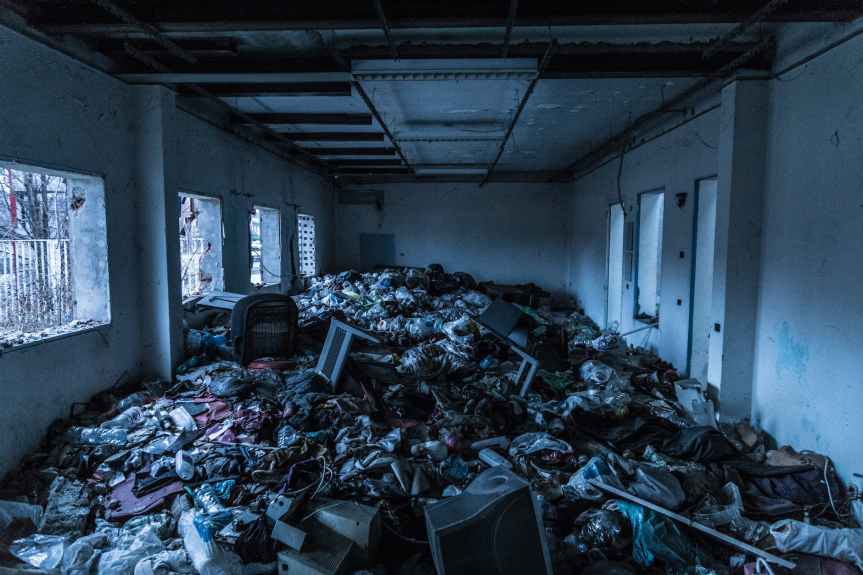
E- waste or electronic waste refers to the waste created by discarding the electronic devices which is rather caused due to its end of useful life, high repair cost , outdated technologies etc. which makes it underrated for further use. These waste includes TV, mobile phones, computer/ desktop, electronic items, wires, machineries etc. This is one of the fastest waste generated.

Everyday lakhs and lakhs of e-waste is generated. The country’s e-waste output is growing at over 30 per cent year on year, and stood at over 10 lakh tonnes in 2019-20, according to government data, comparable to about one lakh six-wheeled truckloads of waste.

It is the third largest in volume globally and growing at a rate ten times faster than its plastic waste output.

Mountains of e-waste pile up, which are as much a threat to the environment as they are to the health of their handlers .It proves vulnerable as people are sifting and processing the waste of the privileged without knowing that it could cause them cancer, reproductive disorders, endocrine disruption and other health complications.

Problems:

The most alarming aspect of e-waste is that less than a quarter of it is being processed.It possess hazardous metals and can contaminate soil, air, water, posing significant risk to human health by entering the food chain.

Unsafe disposal of e waste: About 95% of e waste is recycled by informal sectors and scrap developers without knowing the hazardous effect and use of safe handling practice.

Concern : Majority of e waste are imported to developing countries like India, China, Ghana etc from developed countries for recycling purpose.

With advancement in technologies, standard of living people are more inclined towards use of more gadgets, phones and tend to change them more frequently.

Way forward

E waste clinics for proper segregation, processing and disposal of e waste. Effective ways to implement proper and safe handling of waste.

Initiative taken by government includes: Prime Minister Narendra Modi launched the LiFE or Lifestyle for Environment movement in June—a concept that he said is borrowed from the past and focuses on the future.

The right to repair is introduced to reduce the e waste and it’s proper management as it is environmental friendly too. But this also concerns the major industries involved in sector as it could lead to their loss and some technologies can’t be added to existing devices .


Government budget

The government budget is an annual fiscal statement depicting the revenues and expenditures for a financial year that is often moved by the legislature, sanctioned by the Chief Executive or President, and given by the Finance Minister to the country. The budget is also known as the Annual Financial Statement of the nation.In terms of Article 112 (1) of the Constitution of India, a statement of estimated receipts and expenditure of the Government of India is presented to the Parliament every year. Article 112(2) provides that the estimate of expenditure embodied in this annual financial Budget, shall show separately. This Annual Financial Statement comprises the main budget document of the government.
Whilst the budget document relates to the receipts and expenditures of the government for a particular fiscal year, the effect of it will be there in the following years.

•There is an obligation to have two accounts that are associated with the current financial year and are incorporated in the revenue account which is also known as revenue budget.
• Those that concern the assets and liabilities of the government into the capital account are known as the capital budget.
• In order to comprehend the accounts, it is significant to understand the aims of the government budget.

The two basic elements of any budget are the revenues and expenses. In the case of the government, revenues are derived primarily from taxes. Government expenses include spending on current goods and services, which economists call government consumption; government investment expenditures such as infrastructure investment or research expenditure; and transfer payments like unemployment or retirement benefits.The government may need to correct fluctuations in income and employment.
The overall level of employment and prices in the economy depends upon the
level of aggregate demand which depends on the spending decisions of millions
of private economic agents apart from the government. These decisions, in turn,
depend on many factors such as income and credit availability. In any period,
the level of demand may not be sufficient for full utilisation of labour and other
resources of the economy. Since wages and prices do not fall below a level,
employment cannot be brought back to the earlier level automatically. The
government needs to intervene to raise the aggregate demand. On the other hand, there may be times when demand exceeds available output under conditions of high employment and thus may give rise to inflation. In such situations, restrictive conditions may be needed to reduce demand.

Horticulture

The word horticulture is derived from Latin word -‘ hortus’ meaning garden and ‘ cultura’ meaning culture or growing.

Horticulture is the branch of plant agricultural science involving cultivation of fruits, vegetables, flowers, ornamental plants, medicinal plants, gardening etc. It even involves landscaping and gardening.

It includes components like:

Olericulture : production of vegetables; Pomology: production of fruits ; viticulture: growing of grape vines for wine making and good quality grapes production; Floriculture: production of flowers and ornamental plants; production of aromatic plants, spices, medicinal plants , Arboriculture: cultivation of herbs, shrubs, woody plants for landscape and beautification. It even involves nursery management of plants by using techniques like grafting, cutting, pruning etc, bonsai etc..

Fruits

Scope of horticulture:

It involves propagation of plants, landscaping and garden designing, cultivation of exotic and indigeneous fruits and vegetables, nursery production, topiary { it is an art of training, cutting, trimming trees or shrubs into various shape for ornamental purpose}, growing plantation crops like rubber, tea, coffee, coconut etc, production of spices like black pepper, cardamom, ginger, turmeric etc ,cultivation of aromatic and medicinal plants like patchouli, stevia, aloe vera, tulsi, lemon grass, rosemerry etc. , cultivation of flowers, involves greenhouse cultivation of crops too, bonsai ( Japanese art to cultivate small tree that mimicss large tree) , turf and lawn preparation etc.

Importance of Horticulture:

It helps us to meet the nutritional aspects through consumption of fruits and vegetables.

It provides us medicinal plants, herbs to cure ailments. It too provides spices that adds aroma and flavour.

It increases asthetic value through landscaping and beautification.

Gardening helps us to destress and relax and can be done as a habit too.

Urban gardening through use of nursery and kitchen gardening to meet everyday kitchen needs.

It can be used to beautify our indoor places in house and adds asthetic value to it.

Helps to increase income and generate employment opportunities through value addition and food processing industry.

So, it serves as an all purpose as well as recreational activities in our daily life.

Business Software and Types.

Software is a generic term, used to refer to a set of algorithms, instructions, or programs which instruct a computer to complete specific tasks.

Business software (or a business application) is any software or set of computer programs used by business users to perform various business functions. These business applications are used to increase productivity, to measure productivity and to perform other business functions accurately.

Popular types of business software are :

Accounting Software

Accounting is, as everyone knows, an integral part of operating any business. Choosing the best accounting software for your business needs is highly important. But there are many types of accounting software which cater to a variety of different needs. 

Payroll Software

One of the best accounting software options for small businesses to use is payroll software. Easy to use payroll software can be a lifesaver for over encumbered small business owners, allowing smooth daily operation of business activities and making sure that employee satisfaction and morale is kept high through competent pay management.

Tax Software

A comprehensive, easy to use and easily implemented tax software application can provide exactly what business owners need in order to navigate the complexities of any nation’s tax framework. It is well known that fulfilling legal tax obligations and calculating the best tax outcome for your business is one of the most important aspects of maintaining business integrity.

Book-keeping Software

Streamlined and easy to understand bookkeeping software programs are the lifeblood of any successful business of any size. When it comes to accounting software for small businesses, the ability for layman business owners to have important accounting information delivered in an easy to use, easy to understand format can be absolutely essential, allowing business owners to focus less on understanding complex accounting mechanics and more on running their business. 

Communication Software

Effective and efficient communication, both internally within the business and externally towards customers, is vitally important to the successful operation of any small business. It is important to identify and make use of competent workflow software in order to maximise the efficiency of your business communications.

Customer Relationship Management Software

One of the best ways to better understand relationship with customers and to drive business growth is to use a CRM software tool in order to better analyse the ways in which your business interacts with its customer base. Small businesses are able to successfully manage customer relationships through the best CRM for small businesses.

Concept of Agricultural Marketing

The term market is derived from the Latin term’ marcatus ‘ which means trade or place where business is conducted.

In real terms ; market is defined as place where the sellers of particular good or service can meet with buyer of that good and services where there is potential for transaction to occur.

Agricultural marketing is study of all activities, agencies and policies that are involved in procurement of farm inputs by farmers and movement of agricultural products from farm to ultimate consumers. So it can be said to serve as link between farm 🚜🐄🌾 and non farm sector.

Thus it is a collaborative effort including marketing functions from post – harvest handling to pre- sowing; assembling, handling, storage, transport, processing, retailing, wholesaling, export of agricultural commodities and purchasing inputs for next agricultural season. It also includes marketing services as market information, weighing, standardization, financing, price risk mechanism and institutional development.

Dimension of agricultural marketing system includes market structure, it’s conduct and performance. The purpose of marketing is to find the right place, right time, right product and right time to make it selling superfluous.

Importance of agricultural marketing :

Agricultural market plays a important role in various ways to increase farm income, provide employment opportunities, optimum utilisation of resources, creation of utility and growth of agro-based industries.

The agricultural product differ from industrial product in many ways:

1.Nature of product: Most agricultural products are perishable in nature and hence cannot be stored for longer duration while industrial products can be stored for longer duration .

2.Weather and Season dependent: Most agricultural products are season bound and produced in particular season whereas industrial products are available throughout the year.

3.Bulkiness in nature : Agricultural products are bulky in nature and are difficult to handle, transport, storage etc. which adds to transportation cost.

4. Supply lag: As agricultural commodities are season bound so there is difference in supply and demand of goods.

5. Requirements of land area: For production of agricultural goods we needs more land as compared to industrial products like cultivation practices etc.

So from this role of agricultural markets can be determined as they hold separate importance in the economy .

Apiculture: Art of Bee rearing 🐝

Apiculture Or beekeeping refers to the rearing , caring, and management of honeybees to obtain honey ,wax ,pollen ,royal jelly etc. and other useful substance.

In apiculture, an area is selected for the commercial maintenance of bees in artificial beehives, and such areas are called apiaries. Nectar is collected by honey bees naturally from flowers and stored in their hives. Beehives are a source of wax, which is used in a variety of medicinal preparations in addition to honey.

Types of honeybee in hive include queen bee, drone and worker bee. Queen bee is the mother of colony . She lays eggs out of which drone emerge from unfertilized egg and worker bee and queen bee emerge from fertilized egg. Drones are young male to fertilize young queen. Worker bee are female but are sterile, they are involved in indoor activities, scavenger and nurse bees.

The various species used for honeybee rearing are as follows:1.Apis cerana indica (Indian bee) 2. Apis dorsata (Rock bee) 3. Apis florea (Little bee) 4. Apis mellifera ( Italian bee).

Among there Apis mellifera is mostly used because of gentle nature, good honey collection capacity, prolific queen etc.

The establishment of apiary depends on :Location of apiary, surrounding flora and nectar collecting flower, varities of honey bee used in rearing.

Importance :

Honey is found to be quite useful in the treatment of various disorders of humans related to digestion, dysentery, vomiting and stomach or liver ailments.

Honey is considered as a blood purifier, a cure against cough and cold, sore throat, ulcers of the tongue, stomach and intestine.

Bee wax is used in cosmetics, creams and ointments.

Royal jelly is taken as an invigorating tonic.

Propolis is a health supplement with antibiotic properties.

Bee venom is employed as a cure for rheumatism, arthritis and certain central nervous system diseases.

Pollination depends on honeybees leading to an increase in the yield .

Overall bee rearing helps in maintaining the ecological balance .

History of India & Indian National Movement.

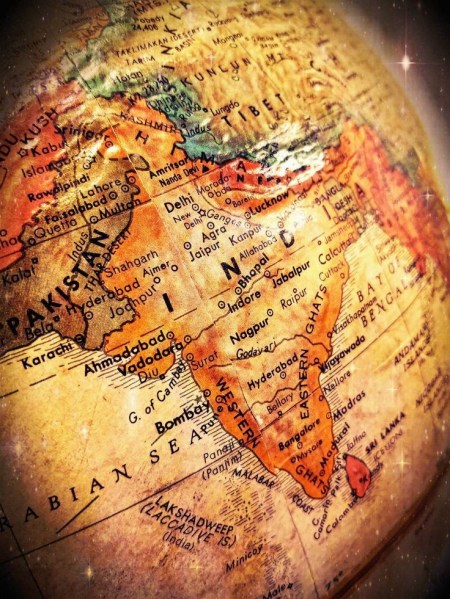
Early times the Indian subcontinent appears to have provided an attractive habitat for human occupation. Toward the south it is effectively sheltered by wide expanses of ocean, which tended to isolate it culturally in ancient times, while to the north it is protected by the massive ranges of the Himalayas, which also sheltered it from the Arctic winds and the air currents of Central Asia. Only in the northwest and northeast is there easier access by land, and it was through those two sectors that most of the early contacts with the outside world took place.

Within the framework of hills and mountains represented by the Indo-Iranian borderlands on the west, the Indo-Myanmar borderlands in the east, and the Himalayas to the north, the subcontinent may in broadest terms be divided into two major divisions: in the north, the basins of the Indus and Ganges (Ganga) rivers (the Indo-Gangetic Plain) and, to the south, the block of Archean rocks that forms the Deccan plateau region. The expansive alluvial plain of the river basins provided the environment and focus for the rise of two great phases of city life: the civilization of the Indus valley, known as the Indus civilization, during the 3rd millennium BCE; and, during the 1st millennium BCE, that of the Ganges. To the south of this zone, and separating it from the peninsula proper, is a belt of hills and forests, running generally from west to east and to this day largely inhabited by tribal people. This belt has played mainly a negative role throughout Indian history in that it remained relatively thinly populated and did not form the focal point of any of the principal regional cultural developments of South Asia. However, it is traversed by various routes linking the more-attractive areas north and south of it. The Narmada (Narbada) River flows through this belt toward the west, mostly along the Vindhya Range, which has long been regarded as the symbolic boundary between northern and southern India.

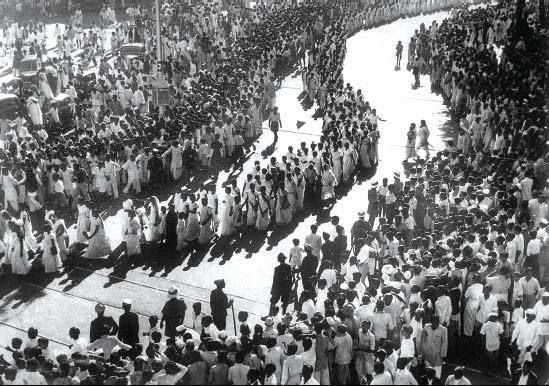
India’s movement for Independence occurred in stages elicit by the inflexibility of the Britishers and in various instances, their violent responses to non-violent protests. It was understood that the British were controlling the resources of India and the lives of its people, and as far as this control was ended India could not be for Indians.

On 28 December 1885 Indian National Congress (INC) was founded on the premises of Gokuldas Tejpal Sanskrit School at Bombay. It was presided over by W.C Banerjee and attended by 72 delegates. A.O Hume played an instrumental role in the foundation of INC with an aim to provide Safety Valve to the British Government.
A.O Hume served as the first General Secretary of INC.
The real Aim of Congress is to train the Indian youth in political agitation and to organise or to create public opinion in the country. For this, they use the method of an annual session where they discuss the problem and passed the resolution.
The first or early phase of Indian Nationalism is also termed as Moderate Phase (1885-1905). Moderate leaders were W.C Banerjee, Gopal Krishna Gokhale, R.C Dutt, Ferozeshah Mehta, George Yule, etc.
Moderates have full faith in British Government and adopted the PPP path i.e. Protest, Prayer, and Petition.
Due to disillusionment from Moderates’ methods of work, extremism began to develop within the congress after 1892. The Extremist leaders were Lala Lajpat Rai, Bal Gangadhar Tilak, Bipin Chandra Pal, and Aurobindo Ghosh. Instead of the PPP path, they emphasise on self-reliance, constructive work, and swadeshi.
With the announcement of the Partition of Bengal (1905) by Lord Curzon for administrative convenience, Swadeshi and Boycott resolution was passed in 1905.


ONE INDIVIDUAL MAY DIE; BUT THAT IDEA WILL, AFTER HIS DEATH, INCARNATE ITSELF IN A THOUSAND LIVES.

-Netaji Subhash Chandra Bose

Impact of Social Media on Youth.

Social media is an plateform which is build that facilitates the users to create content and sharing of information, ideas, interests and different contents ,through virtual communities and networks technology.

Over the last two decades, social media has gained tremendous growth and fame. Despite the fact that almost everyone in the world is connected to at least one social media platform, youth and teens are the ones who who are using social media and are becoming so socially hampered that they even interfere their lives with social media. According to researchers, they have found that these different social media plateforms have a profound impact on the lives of our youth in society in terms of morality, behavior, and even education.

The use of social media has both negative and positive impacts on our youth today. The positive effects of social media on young people today is keeping up to date with what’s happening around the world and being able to network and stay connected with classmates and friends without physical meetings. For example, people in one city can connect and interact with friends in other cities and neighborhoods, bridging the gap between them. In addition, social media platforms allow young people to create pages and groups based on their profession, beliefs, and other aspects of life, creating more connections and more opportunities in their respective fields. This could even create more employment opportunities for unemployed youth.

According to a BBC News report, social media sites appear to continue to connect and inform more people, but it’s also causing social isolation among youths as it reduces the number of face-to-face interactions between young people, as they usually spend most of their time on these online social platforms. Analysis of many studies by various scientists has shown that social isolation can have a variety of effects on youth’s physical, emotional, mental and psychological estate which can create different problems in them. This, in turn, can lead to depression, anxiety, and many other problems. Also, using short forms and abbreviations can lead to misspellings and misuse of words and tenses. This has a direct impact on the student’s language skills and tends to adversely affect the student as it leads to poor language performance.

Also, young teens under the age of 18 can be exposed to online content that may not be appropriate for their age. Social media often introduce these teens to pornographic content which may be shared on online social groups and this may mislead them . The morals of these teenagers are also manipulated because they are granted access to immoral literature and video. This can harm their phycology of seeing things differently in life.

The social media can be used effectively by youth as long hours on social media can be devoted to productive activities that enable people to grow, earn a living, and be educated, such as using online tutorials and online research materials.
Social media may harm ones creativity and also can reduces the productivity of teens by chatting for long periods on social media sites . This may cause young people to not be independent, and rely on the help from others . Social media also provides a great platform for cyber theft and bullying. This increases the chances of personal information theft and incidents. This poses a lot of risk to young people as their personal information can be stolen because they are stored in places they do not know or where security is unknown or suspicious.

At last, social media opens a communication channel for young people and has many benefits. This includes the development of oneself and opening to wide range of social networks that promote opportunities and cultural abilities. However, it is very important that youth should use different social platforms carefully to avoid being victimized by cybercriminals and using it in limit so that it may not harm their mental and phycology abilities.

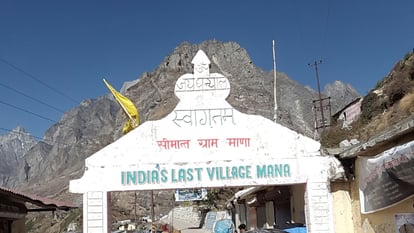
India’s last village Mana.

Mana Village is located in the Chamoli district of Uttarakhand, at an altitude of 3200 m , on the banks of the Saraswati River, about 5 km from the famous Hindu pilgrimage site Badrinath. This beautiful place is located 26 km from the border between India and Tibet and is the last village of India.
According to the 2011 census, the village was home to about 558 households and with population of about 1214 people . Most of the population here belong to Marchhas and Jads or Bhotias. During the winter, the area is covered with snow, so the entire population moves to lower altitudes. Many cafes here tell people that their store is the last cafe on the Indian border. Most of the people here speaks Garhwali Or Hindi languages.
If you visit this place, you will notice that the shopkeepers in the area sell their products under the title “Last Village”, such as “The Last Tea and Coffee Corner in India”.

Religious importance of mana village:

The village of Mana is of great religious importance to Hindus as it is associated with the Mahabharata era. Pandavas, the five mythical figures of the epic Mahabharata, is believed to have passed through the village of Mana on his final journey to heaven. There is also a stone bridge called “Bheempul” near the Saraswati River. It is believed to have been created by Bheem, one of the Pandava’s .

How do you get to Mana village?
You can reach Mana village easily as it is easily accessible from Rishikesh / Haridwar/Dehradun and situated just 5 km from Badrinath Temple. The nearest train station is located in Haridwar, about 275 km away, and you can reach the village by bus / taxi from outside this station. Mana is just 315 km from Dehradun and there is a regular bus in front of the train station.

Mana attractions :

Neelkanth Peak: At an altitude of 6597 feet above sea level, Neelkanth Peak is one of the region’s main attractions. Also known as the “Queen of Garhwal”, this snow-capped peak rises beautifully above the Badrinath Temple and is a must-see for adventure and trekking lovers.

Tapt Kund: According to Hindu mythology, Tapt Kund is the Sanctuary of the Lord of Agni (Fire). This natural hot spring is thought to have medicinal properties, and it is said that soaking in Tapt Kund water will cure skin diseases.

Vasudhara: This is a scenic waterfall about 9km from Badrinath Temple. According to Legend it is the place where Pandavas stayed for some time during their exile.

Vyas Gufa: As the name implies, Ved Vyas, a famous scholar and author of the epic Mahabharata, lived in this cave while writing the four famous vedas. What makes this cave interesting is a small shrine dedicated to him, which is said to be over 5,000 years old.

Beehma Pul: One of Mana Village’s main attractions is Beehma Pul. Beehma is said to have built this Bheem Pul, a stone bridge to allow his wife Draupadi to cross the Saraswati River on a journey to heaven.

Web 3.0 : Financial Service Industry

How will the evolution of the web have an effect on Financial Services? This is a question that puts many financial institutions in peril but is it really something that will put banks out of business? 

What is Web 3.0?

Web 3.0 is a new evolution phase that is coming into reality. The web as we know, is evolving into something more secure with more opportunities and various features. A lot of people don’t understand Web 3.0 and are scared of it. This will be a massive change on how we see the internet and how we will use it. It is going to be a decentralized platform and it will be individualized wherein you can customize your internet browsing experience. 

The Royal Bank of Canada is utilizing millions of data points to train its own AI, resulting in fewer client calls and faster application delivery. Meanwhile, BNY Mellon, the world’s largest cross-border payments service provider, improved its fraud prediction accuracy by 20%. By researching real-time market data within nanoseconds, AI and high-performance computing (HPC) are combining to provide better and faster trading intelligence.

What does this mean for Financial Services?

Web 3.0 is transforming the finance sphere slowly into a decentralized place. Basically, you don’t need a financial institution governing your transaction or authorizing them. The transaction will only be initiated by you and reaches the receiver, in a matter of moments, without any middlemen. Using cryptocurrency, you can make transactions over blockchain that eliminates that bank server from between. Cryptos are digital assets that let users transact directly without a payment service provider in the intermediary, which means that they enable new forms of capital. Although Bitcoin remains comparatively low now, it still may provide effective money governance by preserving and protecting the data or memory of what our money represents. Then there is the unparalleled manipulation of fiat money. We can observe how central banks have significantly extended their balance sheets since the GFC and the ongoing pandemic COVID-19. 

DeFi

DeFi is short for decentralized finance where there are no middlemen between you and the receiver. The transaction will be on the blockchain where the transaction time is reduced from time of hours/days, to moments that you can count on your hands. With DeFi, you can perform all transactions and services that are offered by traditional banks, without the bank in between. Now, you might wait for your transaction to be passed through because your bank should allow it and then it has to pass through the bank’s server. 

DeFi uses cryptocurrency as the main currency because they are programmed using blockchain technology. There is a huge difference between CeFi and DeFi. 

Effect on Financial Services

Undoubtedly, Web 3.0 has opened its doors for infinite opportunities and many FinTechs are utilizing them while traditional institutions are being left behind. These organizations are investing in their technology and its improvement in this rapidly changing market. These FinTechs’ major part of investment is into AI which are being programmed to understand the different problems faced by people and able to give out the solutions in a matter of seconds. This dependance on AIs is being constantly improved which are learning from their own errors and giving better and more efficient solutions. A survey by NVIDIA , according to it, nearly 83% of finance service professionals say that AI is essential for the companies’ success. It is also said that AI can improve company growth by 20%.

Conclusion

Web 3.0 is bringing so many opportunities while improving the present technology and organizations that are utilizing it will not be taking rest anytime soon. This technology is just going to become better and better. Every single day that we see this technology step up just shows that we are not done with technology, it can be better and more efficient and these companies are proving that to use everyday. Web 3.0 is showing more freedom of speech and thoughts than the present restricted web 2.0, decentralization is going to put back the control back in the hand of the User.

“Where there is life, there is growth

Where there is age, there is evolution.”

~Charles Darwin

Thank you so much for reading this article. I have added information from different websites and I thank them for their view on this topic. Do leave comments on different aspects of Web 3.0 that you think will change us.

The links to pages that helped me understand Web 3.0 better:

Financialit.net: How web 3.0 is transforming the financial services industry?

https://www.finextra.com/the-long-read/231/how-ai-is-powering-the-future-of-financial-services

https://n26.com/en-eu/blog/what-is-defi#:~:text=How%20does%20DeFi%20work%3F,are%20secured%20through%20blockchain%20technology.

Importance of Cybersecurity.

Cyber security is the protection of Internet-connected systems such as hardware, software, and data from cyber threats. This technique is used by individuals and businesses to protect against unauthorized access to data centers and other computerized systems.

Cyber security is important because it protects all categories of data from theft and damage. This includes sensitive data, intellectual property data, government and industry information data and systems information,personally identifiable information , protected health information and personal identified information . Without cybersecurity programs, organizations cannot protect themselves from data breaches campaigns and are attractive targets for cybercriminals.
Global connectivity and the use of cloud services such as Amazon Web Services to store sensitive and personal information increase both inherent and residual risks. Along with increasingly sophisticated cybercriminals, widespread misconfiguration of cloud services means an increased risk for businesses suffering from successful cyberattacks and data breaches. Executives can no longer rely solely on off-the-shelf cybersecurity solutions such as antivirus software and firewalls, cybercriminals are smarter, and their tactics are more resilient to traditional cyber defense. It is important to cover all areas of cybersecurity to remain fully protected.
Cyber threats can come from all levels of an organization. Organization should educate employees about common cyber threats such as social engineering fraud, phishing, ransomware attacks and other malware designed to steal intellectual property and personal information. Should include cybersecurity awareness training for.

Types of Cyber Threats :
Malware-This is a type of malicious software that can use arbitrary files or programs to harm computer users. This includes worms, viruses, Trojan horses, and spyware. Ransomware-This is another type of malware. This involves an attacker locking the victim’s computer system files and requesting payment to unlock them.
Social Engineering-This is an attack that relies on human interaction to trick users into breaking security procedures and gaining sensitive information that is normally protected.
Phishing-This is a form of social engineering that involves sending deceptive emails or text messages similar to those from trusted or known sources. Often in random attacks, the purpose of these messages is to steal sensitive information such as credit cards and login information.
Spear phishing – This is a type of phishing attack aimed at targeted users, organizations, or businesses.

Cyber security is very important today. Our society is more dependent on technology than ever before and in today’s digital time data breaches that could lead to the theft of personal information which are easily disclosed to social media accounts. Sensitive information such as social security numbers, credit card information, and bank account details are now stored in cloud storage services such as Dropbox and Google Drive. In fact, whether you are an individual, a small business, or a large multinational company, in today’s time everyone rely on computer systems every day .

Setting financial goals that one can achieve

Photo by Pixabay on Pexels.com

When we hear the term ‘goal’, the very first thing that comes to our mind is a certain objective that a person desires to achieve at some point of time of his life owing to his determination, capability and will power. We all have certain goals in our life. One of the most common goals that everyone shares is ‘to achieve financial stability’. Speaking about financial stability, here, we put forward the idea of being monetarily sufficient to lead a stable life without facing any issues related to money. Financial goals do vary from person to person. Although each one’s goals vary, it is not a compulsion or a possibility at everyone’s part to fulfill those goals. This is due to the difference between the determination and capability of different people. There are certain cases where a person sets much high of a goal than what he is capable of achieving, resulting in nothing but failure and discouragement. One has to keep certain things in the mind while setting the financial goals.

Given below are few basic points that a person should keep in mind while setting any financial goal:

1. When should a person start setting a financial goal? There is no particular age as to when a person should set a financial goal. The age can be as low as 16 to as high as 25-30. The most preliminary thing to be kept in mind is how much the person is aware of his/ her capabilities and validness of his/ her goals. Of course, this can be a bit confusing. This leads to our next point.

2. Know your capabilities: This is the very thing a person should be aware of while setting his/ her financial goal. There is no point of setting a very big goal irrespective of one’s capabilities, as it will result in nothing but inability to fulfill the goal followed by sheer disappointment. It is good to step out of the comfort zone but that does not mean setting higher goals and falling short in completing them.

3. Evaluate the validity of your goal and the deadline set to achieve the same: This is the second most important thing one should keep in mind. A person should set a valid goal that ensures success owing to his/ her capabilities and determination to complete them. It is also important to keep the deadline practical. There is no use of setting a high goal to be completed within a year or two but falling short in completing so due to lack of time and skills. Knowing one’s capabilities and evaluating the validity of his/ her goals go hand in hand.

4. Have appropriate knowledge regarding financial benefits of your goals: Having appropriate idea about how much benefit one is supposed to gain from his/ her goals is another important point one should keep in mind. Thoughts such as “Whether the goal will only provide short term benefit?” or “whether it will provide a long-term benefit?” must be taken into consideration.

5. Take help of a person who has already succeeded in achieving his/ her financial goals: Having some advice from experienced person can help a lot in setting the financial goal. With proper guidance it becomes easier to achieve one’s goal. For example, a student while facing a problem in mathematics asks the respective subject teacher his doubt and not to someone who specializes in any another subject. Similarly taking help of someone who has already achieved financial stability will give a person a true picture of his/ her goal validity and fulfillment.

6. Start investing during an early age and start from a small amount: Investment in various share markets, stock markets and mutual funds is the new age shortcut way of achieving financial goals. No doubt these markets have innumerable number of risk factors. Thus, first try investing in small amounts in different firms and thereafter go for any big amount. Also, investing at an early age is more beneficial than investing at the later age.

7. Do not make any hasty decisions while doing an investment: Do not make quick investments in the mentioned areas such as, mutual funds or share markets, without having proper and adequate knowledge about the entire thing. Do not fall prey to any fraudulent calls or messages and make quick decisions.

8. Consult a financial advisor, if necessary: While facing any difficulties, one can always take help of a verified financial advisor while setting his/ her financial goals. As stated previously, these are a few basic points to be kept in mind while setting a financial goal and actually being able to achieve them. One can always delve deeper into the ocean of knowledge before setting his/ her goal and making the achievement possible. Setting of goals on a long-term basis is very helpful in the modern world which is full of uncertainty and risk.

Shortage in Indias Power Supply.

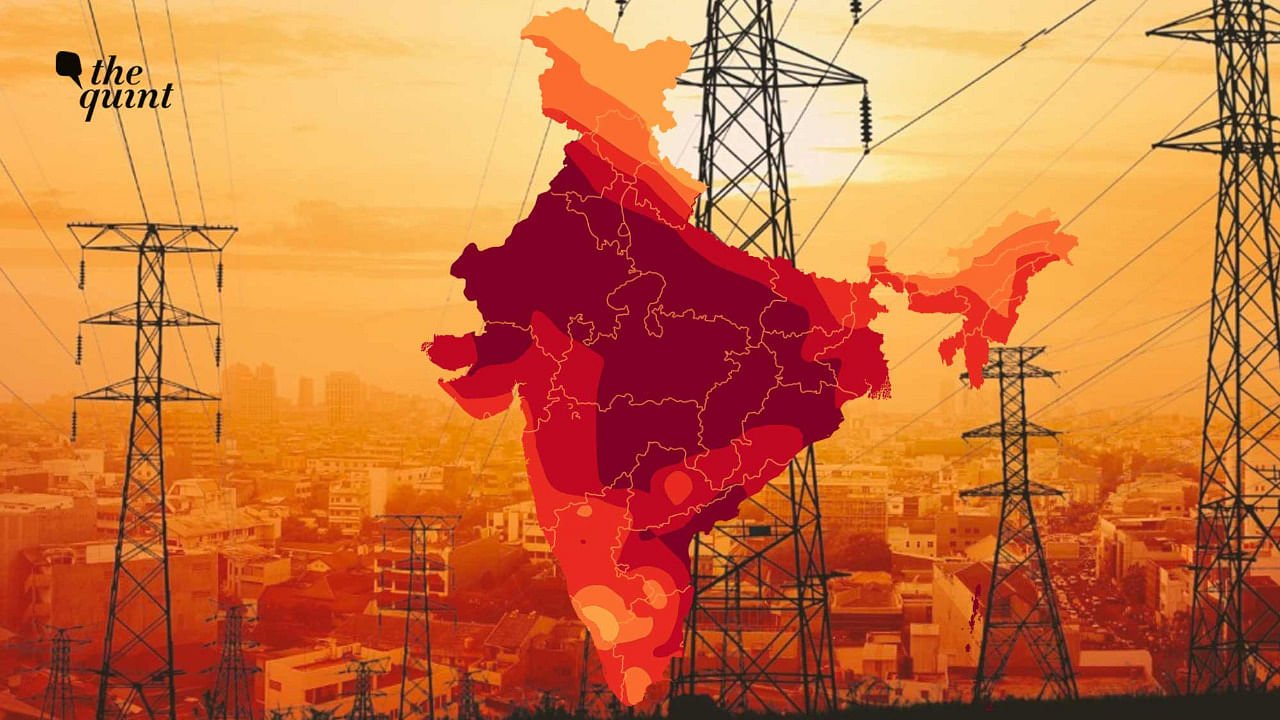
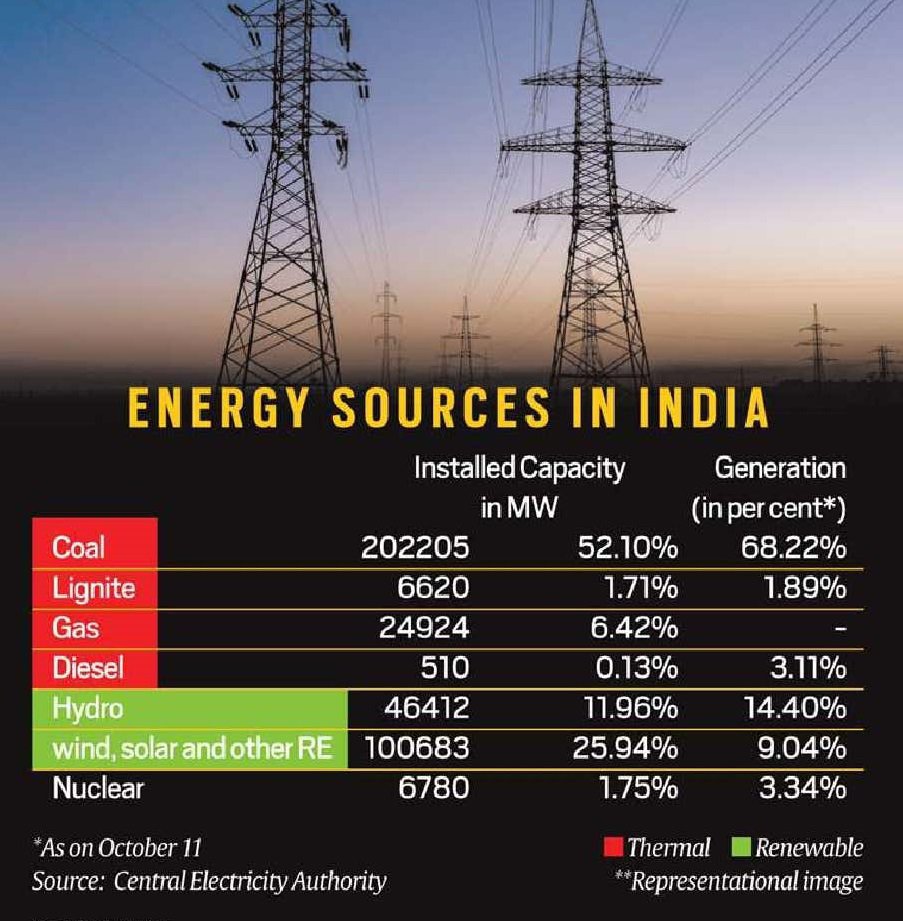
India has the fourth largest coal deposit in the world. It is the second largest fossil fuel producer after China and is home to Coal India, the world’s largest coal mining mine, which accounts for 80% of domestic production. Already allocated coal block mining capacity exceeds expected demand in 2030 by approximately 15% to 20%.


So why are India’s power plants facing coal shortages each year, leading to widespread power outages, exposing parts of the country to darkness and endangering industry?
There are several factors. India has a long time policy of minimizing coal imports. In February 2020, Coal Minister Pralhad Joshi announced that the country would stop importing steam coal from 2023 to 2024.
Mr Joshi said the Ministry of Coal will work with the Ministry of Railways and the Ministry of Shipping to allow Coal India, prisoners and commercial miners to discharge more coal from their supply by 2030. And the coal supply at power plants is running out at an alarming rate. The Department of Energy is currently blaming the decline in coal imports due to the current crisis. In 2018-19, 21.4 million tonnes of coal were imported for mixing, down to 23.8 million tonnes in 2019-20 and 8.3 million tonnes in 2021-22.


Power plant coal inventories have fallen by about 13% since April, reaching pre-summer lows. And for the first time since 2015, Coal India will import fuels used by state-owned and private power companies. The Ministry of Energy said almost all states showed that multiple state bids for coal imports would cause confusion and that the decision was made after calling for centralized procurement by Coal India.
Imported coal costs five times as much as domestic mining, so the center is being pushed back by the state.
Recently, the government has also pressured utilities to increase imports to mix with local coal. Last year, after a two-year break, three tranches of coal auctions were held and nine blocks were successfully awarded.

In September 2021, the Ministry of Coal issued a strict warning to owners of confined coal blocks, stating that their mines should increase production or face restrictions on coal supply by the CIL.
The ministry has discovered that these mines are producing below target.

Of the 43 coal mines outsourced to private companies in the energy, steel and metals sectors, none have met their annual production targets.
On May 6, Coal India announced that it would provide the private sector with 20 closed and abandoned underground coal mines and reopen and operate its revenue sharing model.

According to journalist Shreya Jai the current power supply chain does not seem ready to handle periods of high growth and state discos cannot pay gencos, but the power supply chain starts with state discos and needs repairs. Railroads, on the other hand, are struggling to align the thermal power industry’s demands for faster coal supply with those from other industries. Rakes must be prepared to meet the growing demand for almost all other bulk commodities, from cement and steel to sand and edible grains. By strengthening the value chain of the electric power sector, it is possible to resolve the coal supply-demand mismatch in the long run.

NFT’s – All you need to know

Nowadays, NFT’s are in trend. You must be hearing the word ‘NFT’ on social medias, newspapers, news channels and various other sources. But what exactly is an ‘NFT’?

Today, we’ll discuss about NFT’s and understand what they exactly are and what’s going on around them that has created a great hype among the people.

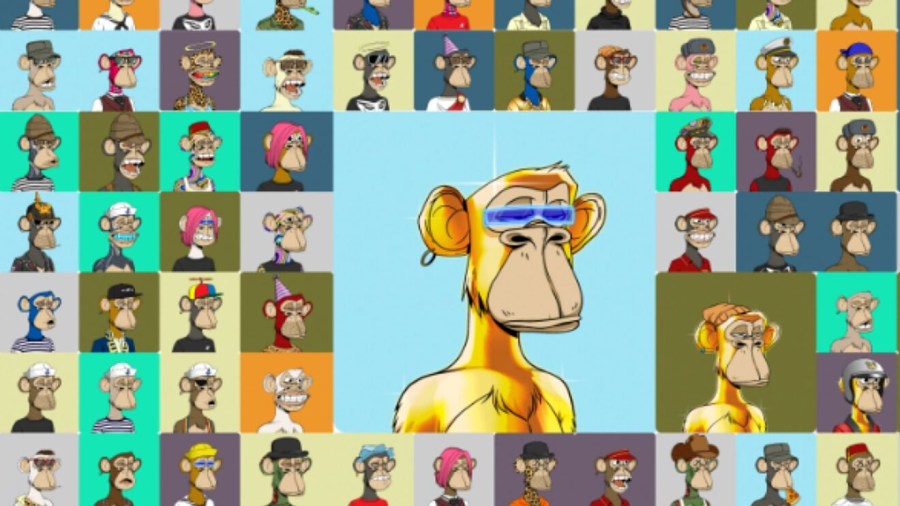
Example of an NFT(Source- Google Images)

The term “NFT” stands for Non-Fungible Tokens. In layman language, NFT is a possession which is unique and one of its kind. If we go deep into the concept of NFT’s then basically they are digital assets that one possess. Each NFT has a specific identification code that distinguishes it from the other.

A NFT works upon the blockchain technology which is the same that is used in cryptocurrencies. It can be sold and traded on various online platforms like Binance NFT Marketplace, crypto.com, WazirX NFT Marketplace etc.

A NFT can be literally anything( manual drawings, graphics, art, animations, music, even real estate). Most of the NFT’s are based upon the cryptocurrency Ethereum(ETH). So now after reading all this, you might be getting an idea about what exactly an NFT is but here comes the main question that “WHY NFT?” So to answer this question, let’s take a simple example. Suppose you have a book and you customized the book with a cover of your own and bordered the pages using tapes. So now, it is one of its kind. And now, if you want to sell that book to a buyer for example at Rs. 500 and if the buyer wants to own the book then there has to be a way to prove that he/she owns it. We considered a physical book as an example but what if it’s an image or a video or a music file that is unique and only one of it’s kind. Then, how do you prove the ownership of that one unique piece? This is done by creating an NFT. That is how NFT’s work.

They are a legitimate way to transfer the ownership of a digital item in such a way that your ownership remains on record and is proven. It cannot be edited or modified. If we consider an image(of a monkey let’s say) then you can find numerous images all over the internet that are openly accessible for downloading and using without any copyright issues. And on the other hand, if I create an image and post it online then there is no legit way to prove that I’m the owner of that thing. Also if I list it for sale online on multiple image selling platforms, then too there is no legitimate proof that I’m the owner and I’m ready to transfer the ownership to someone, whosoever is ready to pay me for my work.

I’d rather create an NFT of the same image and then post it online on certified NFT Marketplaces for sale. This will ensure the ownership of the NFT and also prove it’s uniqueness. If anyone tries to copy my work then I can easily claim a copyright by showing that I’m the valid owner of this NFT.

Bored Ape NFT’s

The above is an image of the collection of the famous “Bored Ape NFTs”. These NFT’s are very expensive and some of the owners of these NFT’s are celebrities like Eminem, Serena Williams, Shaquille O’Neal, Justin Bieber etc.

At last, we come to a conclusion that NFTs are the real game changer and blockchain technology is going to change the entire world because now technology has a way by which you can define ‘Ownership’. In the coming years, NFT Marketplace is going to boom and investors seeking towards investing on NFT’s can definitely consider investing by doing the required research before exploring the NFT Marketplace.

RBI and credit control

ReserveBankOfIndia (@RBI) / Twitter

RBI governor, Shaktikanth Das, on May 4 2022 revised the repo rates. On this context, let us look more about the credit control measures adopted by Reserve bank of India.

Reserve bank is the apex body to control the banking system in India. As we all know banks are the major link in money supply. Thus, RBI can control the money in the economy by controlling the banks. These policies are termed as monetary policy.

RBI could adopt either quantitative or qualitative methods.

Quantitative methods

Statutory Liquidity Ratio

Statutory Liquidity Ratio or SLR is the minimum percentage of deposits that a commercial bank has to maintain in the form of liquid cash, gold or other securities. It is basically the reserve requirement that banks are expected to keep before offering credit to customers. The SLR is fixed by the RBI and is a form of control over the credit growth in India.

The government uses the SLR to regulate inflation and fuel growth. Increasing the SLR will control inflation in the economy while decreasing the statutory liquidity rate will cause growth in the economy. The SLR was prescribed by Section 24 (2A) of Banking Regulation Act, 1949.

Cash Reserve Ratio

CRR is an essential monetary policy tool used for controlling the money supply in the economy, a regulation implemented in almost every nation by the Central Bank of that country.

CRR rate is the minimum percentage of cash deposits (as specified by RBI) that must be maintained by every commercial bank as per the requirement of the Central Bank.

Cash Reserve Ratio Rate is computed as a percentage of the net demand and time liabilities of each bank. Net Demand and Time Liability is reached with the total of the savings account, current account, and fixed deposit balances.

Bank rate

Bank rate is a rate at which the Reserve Bank of India (RBI) provides the loan to commercial banks without keeping any security. There is no agreement on repurchase that will be drawn up or agreed upon with no collateral as well. The RBI allows short-term loans with the presence of collateral. This is known as Repo Rate. Bank Rates in India is determined by the RBI. It is usually higher than a Repo Rate on account of its ability to regulate liquidity.

Open market operations

Open market operations refer to the selling and purchasing of the treasury bills and government securities by the central bank of any country in order to regulate money supply in the economy.

It is one of the most important ways of monetary control that is exercised by the central banks. Under this system, the central bank sells securities in the market when it wants to reduce the money supply in the market. It is done to increase interest rates. This policy is also known as the contractionary monetary policy.

Similarly, when the central bank wants to increase the money supply in the market, it will purchase securities from the market. This step is taken to reduce the rate of interest and also to help in the economic growth of the country. This policy is known as the expansionary monetary policy.

Qualitative methods

Margin Requirement:

Margin requirement refers to the difference between the current value of the security offered for loan (called collateral) and the value of loan granted. It is a qualitative method of credit control adopted by the central bank in order to stabilize the economy from inflation or deflation.

Rationing of Credit:

Rationing of credit refers to fixation of credit quotas for different business activities which is introduced when the flow of credit is to be checked particularly for speculative activities in the economy.

Moral Suasion:

The central bank makes the member bank agree through persuasion or pressure to follow its directives which is generally not ignored by the member banks. The banks are advised to restrict the flow of credit during inflation and be liberal in lending during deflation.