KALA KUMBH – Handicrafts Exhibitions for promotion of GI Crafts

With an objective to promote Geographical Indication (GI) crafts and heritage of India the Ministry of Textiles is organising Kala Kumbh – Handicrafts Thematic Exhibition in various parts of the country through the Office of Development Commissioner (Handicrafts). The exhibitions are planned in various major cities like Bengaluru, Mumbai, Kolkata and Chennai. The exhibitions sponsored by Export Promotion Council for Handicrafts (EPCH) started on 14th February, 2020 and will continue till 23rd February 2020 at Bengaluru and Mumbai and will also be organized in Kolkata and Chennai in March 2020.

The GI tag is used on handicrafts which correspond to a specific geographical location or origin (e.g., a town, region, or country). As on August 2019, 178 GI handicraft products were registered from all over India. The artisans are the backbone of Indian handicraft sector and possess inherent skill, technical and traditional craftsmanship.

During the 10 day exhibitions, the visitors will be able to see a wide variety of handicrafts with their friends and family and by buying these handicrafts they can directly contribute in the improvement of the livelihood of these artisans and also create awareness of the rich heritage of the country.

In Bengaluru exhibition, GI crafts like Mysore rosewood inlay, Channapatna lacquerware, Dharwad kasuti embroidery, Kolhapur chappal, Bidriware, Molakalmur handblock printing, Ananthapur leather puppet, Thrissur screwpine, Vishakapatna lacquerware, Sandur lambani embroidery, Jodhpur terracota, Jaipur handprinted textile, bronze casting, Medinipur mat weaving, Birbhum artistic leather and Khurdah palm leaf engraving are being displayed.

In Mumbai exhibition GI crafts like Chittoor kalamkari painting, Thrissur screwpine crafts, Pokharan terracotta crafts, Kutch embroidery & crochet crafts, Pingla patachitra, Birbhum kantha embroidery, Jajpur photachitra painting, Madhubani Mithila painting, Kolhapur chappal, Palghar Worli painting, Kondagaon wrought iron craft, Agate stone crafts and Krishna handblock printing are being displayed.

***

Photo by julie aagaard on Pexels.com

Go For Western Economy With These Pioneering

but it is too much for my strength — I sink under the weight of the splendour of these visions!

I am alone, and feel the charm of existence in this spot, which was created for the bliss of souls like mine. I am so happy, my dear friend, so absorbed in the exquisite sense of mere tranquil existence, that I neglect my talents.

Continue reading “Go For Western Economy With These Pioneering”

Taxation, Labour and Other Laws being simplified to boost the growth of the Corporate Sector

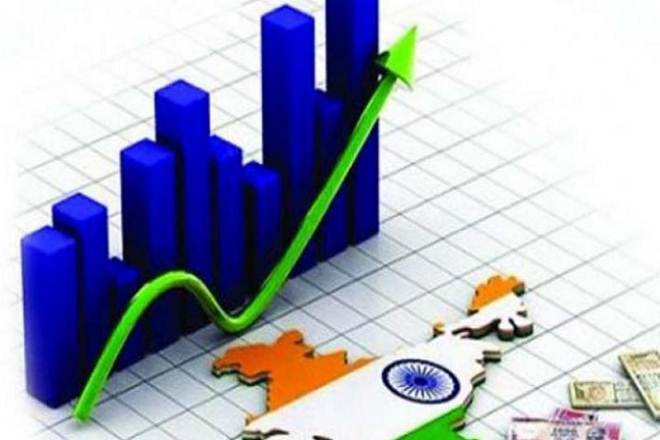
Prime Minister Shri Narendra Modi said that the goal of achieving the 5 Trillion Dollar Economy is achievable.

Indian Economy
Indian Economy

He was participating at the inaugural session of the Hundred Years of ASSOCHAM in New Delhi today.

Addressing a gathering of leaders from the Corporate World, Diplomats and others, the Prime Minister said that the idea of making India a 5 Trillion Dollar worth economy is not a sudden one.

He said that in the past five years the country had made itself so strong that it not only could set for itself such a target but also make efforts in that direction.

“Five years before, the economy was heading for disaster. Our Government not only stopped this but also brought in a discipline in the economy”

“We brought in fundamental changes in India’s Economy so that it can run with set rules in a disciplined manner. We have met with the decades old demands of the Industrial Sector and we have built a strong foundation for a 5 Trillion Dollar Economy”

He said, “We are building the Indian Economy on two strong pillars of formalisation and modernisation. We are trying to bring in more and more sectors into the horizon of formal economy. Along with this we are linking our economy with latest technology so that we can speed up the process of modernisation”

“Now instead of several weeks it merely takes a few hours to register a new company. Automation is helping quick Trading across borders. Better linking of Infrastructure is reducing the turn-around time at Ports and Airports. And these are all examples of a modern economy. “

“Today we have a Government that listens to the Industry, understands its needs and which is sensitive to its suggestions.

Prime Minister said that the country could make a significant jump in the rankings of Ease of Doing Business due to a sustained effort.

“Ease of Doing Business may sound just like four words, but in order to improve its rankings there is a lot of effort that goes into it including changing the policies and rules at the ground level”

Prime Minister also emphasised the efforts being made towards a faceless Tax Administration in the country in order to reduce the human interface between the tax payer and the authorities.

“In order to bring about transparency, efficiency and accountability in the Tax System, we are moving towards a faceless Tax Administration”, he said.

Prime Minister said that the Government has decriminalised several laws in the Corporate Sector in order to reduce the burden and allow the industry to function in a fearless ecosystem.

“You know that there were several provisions of the Company Act as per which even small deviations were also dealt as a Criminal Offence. Our Government has now decriminalised many such provisions. And we are trying decriminalise many other provisions.”

Prime Minister said that the Corporate Tax at this time in the country is the lowest ever and this would propel a boost in the economic growth.

“The Corporate Tax is the lowest at the moment, meaning if there is any Government that is taking the lowest Corporate Tax from the Industry, then it is ours”

Prime Minister also spoke about the efforts being made towards bringing about Labour Reforms.

He also spoke about the sweeping reforms in the Banking Sector to make it more transparent and profitable.

“Owing to the steps taken by the Government today 13 Banks are on the path of profit which 6 banks are out of PCA. We have also hastened the process of unification of the Banks. Today banks are expanding their countrywide networks and are in the direction of achieving Global recognition”

He said with this overall all round positivity the economy is propelling towards a 5 Trillion Dollar target. Prime Minister said that the Government would invest 100 Lakh Crore Rupees in the infrastructural sector and another 25 Lakh Crore Rupees in the Rural Sector in order to provide support to achieve the target.

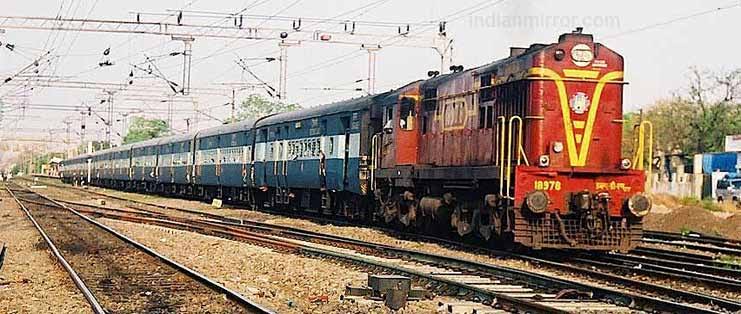
Non-fare Revenue and FDI in Indian Railways

Several steps have been taken to increase non-fare revenue of Indian Railways by monetization of land and other assets. These include:

i. Policy for leveraging Mobile Assets, Out of Home Advertising, Rail Display Network, Unsolicited proposals and Content on Demand.

ii. Commercial utilization of vacant land through Rail Land Development Authority (RLDA).

Government of India has permitted 100% Foreign Direct Investment (FDI) on automatic route in the following activities/areas of Railway Infrastructure:

i. Suburban corridor projects through Public Private Partnership.

ii. High speed train projects.

iii. Dedicated freight lines.

iv. Rolling stock including train sets, and locomotives or coaches manufacturing and maintenance facilities.

v. Railway Electrification.

vi. Signalling systems.

vii. Freight terminals.

viii. Passenger terminals.

ix. Infrastructure in industrial park pertaining to railway lines or sidings including electrified railway lines and connectivities to main railway line.

x. Mass Rapid Transport Systems.

Foreign Direct Investment in these areas is subject to sectoral guidelines, which include necessary safety certification from central government or its authorized entity. The FDI policy is also open for U.S. businesses.

In order to give a facelift to the Indian Railways and cater to diverse needs of passengers, some of the steps taken include:

i. Significant step-up in investment for capacity enhancement, Safety and Modernization of Railways.

ii. Improvement and upgradation of various passenger amenities like foot over bridges, lifts, escalators, toilets, battery operated vehicles, wheel chairs, waiting rooms.

iii. Leveraging information technology for online ticketing and enquiry services.

iv. Introduction of various premium train services like Humsafar, Tejas, Antyodaya, Utkrisht Double Decker Air-conditioned Yatri (UDAY), Mahamana and coaches like Deen Dayalu and Anubhuti.

This information was given by the Minister of Railways and Commerce & Industry, Shri Piyush Goyal in a written reply to a question in Lok Sabha today.

****

Dr. Harsh Vardhan calls for developing innovative cooling solutions

Union Minister for Science & Technology, Earth Sciences and Health & Family Welfare, Dr. Harsh Vardhan addressed an Award Ceremony here today to announce the finalists of the ‘Global Cooling Prize’. He called for developing innovative cooling solutions which are energy efficient.  During the ceremony, he said energy efficient and climate friendly cooling solutions are the Government’s priority.
“We recognise the power of innovation to catalyse climate friendly development and growth.  Accordingly, we have bolstered our research, development and innovation efforts to further global climate agenda and strengthened our commitment to accelerate clean energy innovation so that it plays a key role in Mission Innovation.
Dr. Harsh Vardhan said India has been leading from the front in the global campaign to tackle Global Warming and Climate Change. The Prime Minister Shri Narendra Modi had spelled out India’s agenda during the 2015 United Nations Climate Change Conference in Paris, He said. “In fact, the Mission Innovation programme was coined by Shri Narendra Modi,” he added.


Dr. Harsh Vardhan said the world today needs an extremely efficient cooling technology, a solution that can sustainably meet the comfort-cooling needs of our growing population without contributing to runaway climate change or costly stresses on already burdened electricity systems.
“It becomes even more relevant for a country like India which is on the path of economic growth and has relatively low penetration of air conditioning.  .  The Government recognises this need and is fully committed to provide “Thermal comfort for all” which has been articulated so well in the India Cooling Action Plan,” he said.
Dr. Harsh Vardhan hoped the finalists of the ‘Global Cooling Prize’ will deliver the prototypes having capability to deliver climate friendly solutions within the broad parameters of energy efficiency and costs.
Speaking on the occasion, Professor Ashutosh Sharma, Secretary Department of Science and Technology (DST), said our goal is to cut carbon footprint by as much as 80 percent and reduce energy consumption by half. The High Commissioner of the United Kingdom to India, Mr. Dominic Asquith also addressed the gathering.
During the ceremony, Dr. Harsh Vardhan presented Awards to the eight finalists of the GCP. The finalists are Daikin Air Conditioning India Pvt. Ltd., Godrej and Boyce Mfg. Co. Ltd., and S&S Design Startup Solution Pvt. Ltd. – all three from India; M2 (Square) Thermal Solutions, Transaera Inc. and Kraton Corporation (in collaboration with IIT Bombay, Infosys and Porus Labs)- all three from the US; Gree Electric Appliances Inc. of Zhuhai, China; and Barocal Ltd of UK.
The eight selected teams showcased a wide range of technology ideas, from smart, hybrid designs of vapour compression technology to smart, hybrid designs of evaporative cooling to solid-state cooling technologies with application of low or no global warming potential refrigerants.
A global coalition led by the Department of Science and Technology, Government of India; Rocky Mountain Institute (RMI)— a leading global research institute; and Mission Innovation — a global initiative of 24 countries and the European Union to accelerate global clean energy innovation — launched the Global Cooling Prize in November, 2018 with the aim of spurring the development of a radically more efficient, climate-friendly residential cooling solution.
Innovation and new technologies in the cooling industry are especially crucial for India, Studies suggest that the cost to the Indian economy due to lost productivity from extreme heat could exceed $450 billion by 2030. While the household ownership of ACs in India today is a mere 7%, the demand for comfort cooling is expected to drive the total stock of room ACs in India to over 1 billion by 2050 — a 40-fold growth from 2016. Growth in the demand for cooling will be dramatic, particularly in urban areas, due to the underlying need for a solution to the problem of heat stress. 
Since its launch, the Prize has received overwhelming international participation — over 2,100 participant registrations were received from innovators, start-ups, research institute, universities, and key Air Conditioning industry manufacturers in over 95 countries. Of these registered entities, 445 teams submitted their preliminary ideas and 139 teams from 31 countries around the globe followed through with their submission of the full Detailed Technical Application. The teams selected to go forth to the next round are being awarded US$ 200,000 each to develop their prototypes, which will then be tested in India in the summer of 2020.
The winner of the Global Cooling Prize will be announced in November, 2020 and awarded more than US$1 million in prize money.
*****

Central GST Delhi-West Commissionerate unearthed racket of issuance of fake invoices

Central GST Delhi-West Commissionerate has unearthed racket of issuance of fake invoices without actual supply of goods and services by M/s Royal Sales India and 27 other dummy companies.  Two persons have been arrested in this matter and remanded to judicial custody for 14 days by Duty Magistrate, Patiala house Courts, New Delhi. The accused were found to be operating 28 fake companies to facilitate fraudulent Input Tax Credit (ITC), thus defrauding the exchequer. Prima facie, fraudulent ITC of about Rs 108 Crore has been passed on using invoices involving amount of Rs 900 Crore. Final duty is subject to outcome of the investigation.

On basis of search at various suppliers & recipients of goods of the said firms, it was revealed that Modus operandi of these 28 bogus firms involved obtaining GST registration of fake firms all across Delhi using KYC documents of lowly paid individuals and generating goodless invoices and e-way bills of these firms. On preliminary scrutiny, it was seen that the inward supplies of the said firm were not in correlation with outward supplies. All these firms have resorted to sale or cause effect of sale of goods, by issuing good-less invoices and on collection of the payment by cheque, pay back in cash to the party in question. This is done in order to facilitate these firms under investigation to avail Input Tax Credit for offsetting any likely tax liability and in some cases availing IGST refund etc.
Till now, 15 buyer firms have already admitted their liability vide their Voluntary Statement and further deposited voluntarily approx Rs.1.30 Crore towards ITC wrongly availed, Interest and Penalty under Section 74(5) of CGST Act, 2017 till date. Further, approx. Rs 1.58 Crore has been frozen in Bank Accounts of these fake firms.
Therefore, both accused have committed offence under the provisions of Section 132(1)(b) and (c) of CGST Act 2017, which are cognizable and non-bailable under section 132(5) being punishable under Section 132(1)(i) of the said Act and have been remanded to judicial custody for 14 days on 15.11.2019. Investigations are underway to identify key beneficiaries of this fraud and to further recover GST involved.
***********

The 15th Finance Commission meets with the Ministry of Women and Child Development

The 15th Finance Commission headed by Shri N.K. Singh and including Members and senior officials of the Commission held a meeting with the Union  Minister for Women & Child Development Smt. Smriti Z Irani and her team of senior officials of the Ministry of WCD.
  
The Ministry’s proposals for enhanced allocations for its important schemes covering Anganwadi Services, Poshan, Women Welfare, Women Safety, Women Empowerment were discussed in details.
Among its major recommendation for the consideration of the Commission: 
  • The Ministry of WCD has requested the 15th Finance Commission to include gender Budgeting in its fiscal devolution formula. 
  • In the Commission’s Vertical Devolution the Ministry has requested for prioritizing gender concerns within schemes/ programmes – with a minimum compulsory allocation of 25% to 40%.
  • In its horizontal devolution the Commission has been requested to incorporate gender criteria (Child Sex Ratio and Female Labour Force Participation) as a criteria for horizontal devolution of funds between States. 
  • The Commission has also been asked to provide for basic and performance grants under which additional activities could be added to current activities of Local Bodies for promoting gender equality.
The Ministry of WCD has also called for: 
  • Incentivizing performance: States with better performance in Women Education/ Health Outcomes/ LFPR/ Nutritional Outcomes may be considered for incentive grants.
  • Fiscal Equalization: Gap funding for States to reach normative levels of social sector spending.
  • Enhanced Funding: up from 1% to 1.5% of the Union Budget for WCD.
  • Development of CDI/ GDI based on International Practice.
  • Revamped indicator for women participation in workforce.
  • Increased allocation for Health and Education.
  • Reservation of certain percentage of funds for Women centric development works by local bodies.
  • Increased funding for capacity building of elected women representatives.
  • Women & Wataer: Jal Shakti Abhiyan / Augmentation of Water Resources.
  • Mechanism for single data source for SDGs with Annual Measurements.
The Commission has noted all the issues raised by the Ministry and has assured that they would look into all of them carefully while framing its  report to the Union Government

Nine Lakh Youth from Pune have benefitted from MUDRA Scheme: Union Minister Shri Prakash Javadekar

Nine Lakh Youth from Pune have benefitted from Mudra Scheme, schemes like Bharatnet, Ayushman Bharat, Pradhan Mantri Matrutv Vandana Yojana too are making rapid progress, said Union Minister for Environment, Forest & Climate Change and Information & Broadcasting, Shri Prakash Javadekar. He was speaking after the first meeting of District Development Co-ordination and Monitoring Committee (DISHA) in Pune, which took place today under the chairmanship of Shri Javadekar.
The Minister said, “Meetings of Disha are held to plan for the schemes, and monitor their execution. Mudra scheme is making rapid progress in the district and 9 lakh youths from district have been allotted loans worth Rs 8000 crore under it. Out of 58 railways stations in Pune division, 46 have been equipped with wifi facility. 5 Escalators too have been installed.”
“The Passport Seva Kendra in Baramati has distributed 5000 passports so far and has made the life of layman easier. Passport seva kendras have been started at 50 places in 5 districts. Bharatnet has given optical fibre connections to 790 Gram Panchayats in district and among them 155 have wifi facility, with average daily use of 20 GB. The schools are being provided with sports material and sports hour too will be made compulsory in schools”, Shri Javadekar added.
The Minister further said that National Health Mission comprising Ayushman Yojana and othe schemes has succeeded in reducing the Infant Mortality rate, Maternal Mortality rate, birth rate and death rate in Pune. “60,000 women in Pune have so far benefitted from Pradhan Mantri Matrutva Yojana.The target for building of toilets has also been achieved and the ranking of Pune in Swachhta has jumped from 10th place to 2nd place. The anganwadis are making rapid progress due to participation of people”.
While wishing the people on the occasion of Hindi Divas, Shri Javadekar reiterated the government policy of promoting all regional languages. He allayed the fear of local languages dying out and cited the increasing use of Hindi on the internet. He further said, rarely ever is such linguistic diversity seen in any other country. 
Members of Parliament Shri Girish Bapat and Smt Supriya Sule were also present on the occasion.

‘India’s participation at WorldSkills International Competition must be seen as big as the Olympics’

The 48-member Indian Team representing the country at WorldSkills Kazan 2019 was given a grand send-off at a ceremony in the capital today, organized by National Skill Development Corporation (NSDC) under the aegis of Ministry of Skill Development and Entrepreneurship (MSDE), to motivate the participants as they gear up to pit their skills against the best in the world. India is the sixth largest team that will take part in the competition.

Nearly 1,500 competitors from 60 countries will compete in 56 skill competitions at this mega event in Kazan, Russia on August 22-27. The 48-member Indian team will participate in 44 skills, including mobile robotics, prototype modelling, hairdressing, baking, confectionary & patisserie, welding, brick laying, car painting, floristry, etc. Forty-four experts and 14 interpreters are also accompanying the participants to Kazan. In 2017, a 28-strong contingent took part in the WorldSkills International at Abu Dhabi, winning one silver, one bronze and nine Medallions of Excellence.
Addressing the candidates Dr. Mahendra Nath Pandey, Minister for Skill Development and Entrepreneurship, said, “My heartiest congratulations to the 48 of you who have proven your mark at the national level. You all will now represent the country at the world’s biggest skill competition in Russia. My advice to you is to compete in the true spirit of participation and make India proud on the global platform and at the same time learn from your international peers competing with you. You are the brand ambassadors of India and your victory will be an inspiration for every Indian youth who aspires to make it big in their life. Participating at events of such scale adds to the larger cause of skill development which is integral to Prime Minister, Shri Narendra Modi’s vision of a Skilled India.”
“I am happy to learn that we have six young girls also bearing the flag of the country at Kazan. I am positive you will inspire many more and we will see increased female participation in the years to come. I also hope with Team India’s participation at WorldSkills, the event will gain the same level of popularity in the country, as the Olympics and the Asian Games,” he added.
The desire to excel in the trades of their choice has played a crucial part in the candidates realising their dream of performing at a global stage. Mohammed Rabith from Malappuram, Kerala is one such example of grit and determination. The 22-year-old whose father works as a coolie and mother is a homemaker, aims to make his parents and his country proud by winning the gold medal in Wall & Floor Tiling Skill at the WorldSkills. Stories like Rabith are abound in the Indian team, where the spirit of youth is motivated by aspiration and the desire to excel.
Himanshu Vohra, a final-year civil engineering student from Chitkara University in Punjab, is representing India in Plumbing and Heating Trade. Himanshu’s passion and interest in plumbing has taken him to multiple competitions, including Global Skills Competition in Australia, before he found himself as a contender for the WorldSkills in Russia.
About 75% participants come from tier II and tier III cities, with 25% from rural areas. Most belong to humble backgrounds, parents work as farmers, coolie, daily wage laborers and security guards. Among states/UTs, Maharashtra tops the chart with seven contestants participating in the competition, followed by five from Karnataka and four from Uttar Pradesh. Over 50,000 youth had registered for the IndiaSkills Competitions that was organized across several legs last year.
Participants spoke about their experiences at the send-off. Present among the audience were proud parents who greeted them with loud cheers as the Minister felicitated all 48 contestants.
The 48 contestants have been shortlisted through a series of contests conducted at district, state, regional and national levels over the past year. These candidates were provided extensive training in skills ranging from Wall and Floor Tiling, Brick Laying, Cabinet Making, Car Painting, CNC Turning, Hair Dressing, Welding, Restaurant Service, Beauty Therapy, Auto-body Repair to Mobile Robotics, Mechatronics, Prototype Modelling, Visual Merchandising, etc, by leading corporate entities with NSDC acting as a facilitator and have been gained extensive support from Sector Skill Councils, Industry and Corporates.
Candidates have been exposed to international training with industry support from over 100 companies. More than 100 companies have Renowned experts such as Vinesh Johny – Chef/Trainer, winner of Forbes 30-under-30; Samantha Kochhar, renowned beauty expert and director of Aroma Magic; JP Shroff, Chairman of Kushal Credai; Seema Jhaveri, Director of IFD and Vaishali Shah, Principal of LTA Beauty School came together to prepare the contestants for the mega-event. Leading organisations such as Maruti, Mahindra, Toyota, Daikin, Saint Gobain, Tata Motors are among the 100+ partners which have extended support via infrastructure, equipment, expert trainers, facilities, training and more.
Aimed at promoting world-class standards in technical education and vocational training, NSDC, under the aegis for MSDE, is working to make skills aspirational and create a pathway for a career in vocational trades. 

Finance Commission to visit Rajasthan

The 15th
Finance Commission headed by Chairman, Shri N.K. Singh and including
Members of the Commission, Shri Ajay Narayan Jha, Dr. Ashok Lahiri,  Dr.
Ramesh Chand and Dr. Anoop Singh  will visit the State of Rajasthan
from 16
th August to 19th August, 2019.

The
Commission will begin its visit with a meeting with the Senior
Economists including Prof. Anil Mehta,  Ms. Archana Surana,  Dr. Arvind
Mayaram,  Dr. Ashok Bapna,   Mr. Atul Sharma, Mr. Basantt Khaitan,  Ms.
Divya Maderna, Mr. Edward Dickinson, Prof. G. K. Prabhu,  Dr. Govind
Sharma,  Mr. K. B. Kothari,  Smt. Krishna Bhatnagar,  Mr. L. N.
Nathuramka,    Dr. Manjit Singh,  Prof. N. D. Mathur,    Dr. Prabhat
Pankaj,  Dr. Prashant Gupta, Mr. Rakshat Hooja,   Dr. Rima Hooja,  Prof.
S. S. Somra,    Prof. (Dr.) S. L. Kothari,          Amb. Satish C.
Mehta,  Amb. Savitri Kunadi,   Prof. T. K. Jain   and Dr. Vijay Vir
Singh.   
 
The
Commission will hold the other meeting with the representatives of the
State’s Panchayati Raj Institutions and Rural Local Bodies,
representatives of the Urban Local Bodies and the representatives of the
Political Parties of the State.  The Commission will also have a
meeting with the representatives of Trade and Industry bodies in the
State.  
         
On the second day of its visit, the Commission will have a detailed meeting with Shri Ashok Gehlot, Chief
Minister of Rajasthan alongwith his cabinet colleagues and senior
officers.  There will be a presentation to the Finance Commission on the
State Finances by PFS and also on Developmental/ Flagship Programmes of
State Govt.
The
Commission will also undertake field visits in and around Jodhpur
including an interaction with the District Administration of Balasamund.

Mobile Phones and Its Evolution

Introduction

A
mobile 
phone is a portable mode of telephone that can make and receive calls.
What makes it different from telephone is its wireless mode of communication as
it allows the user to move while communicating.  
Phones have come a long way since Bell made the first call. Now we have
cellphones which need no wires. The early cellphones were bulky, hard to use
and could do only calling. However with evolution of technology, we have now
camera, music and even internet in mobiles. While the radiations from mobile
have not been proved to be substantially harmful, judicious use of mobiles is
only wise.

The First Phone

 The first
cellular mobile [1] that came in practice was invented in 1980s by Motorola.
This device was named Motorola DynaTAC 8000X. it was the first commercialized
phone that was developed by efforts begun at Bell Labs, which first proposed
the idea of a cellular system in 1947. A series of phone was manufactured in US
from 1983 to 1994 under the name in United States of America. It was first
introduced in market on September 21, 1983.
It was having normal feature of receiving and
sending messages but it was a revolution then as it took communication to a new
height. Undoubtedly it was a revolution then as it changes the concept of
interaction accelerating development at an amazing scale.  Early Cellular phones used analog CDMA technology.
The first commercially available handheld cellular
phone, Motorola DynaTAC 8000x, which hit the market in 1983 weighed in at 2
pounds. It was priced at $3,995 and offered a half-hour of talk per batter
charge.

2G, GSM, mobile internet

CDMA technique of mobile continued its regime for
almost a decade and was later replaced by Global System for Mobile
Communications (GSM) in original termed as Group Special Mobile). It was the forerunner
of the mobile data bloom. It made its first debut in Finland and termed as 2G
network [2].
Phones like the 5110 and 3300 from NOKIA became
iconic and dominated the market during 1992. Till 90s Nokia was supreme leader
in the market. Primarily internet service was availed via GPRS (General Packet
Radio Service) and moving to the faster EDGE (Enhanced Data rates for GSM
Evolution, or EGPRS).

Camera phone

Cell phone later introduced a special feature in
2000 having tiny 0.11-0.35 megapixel resolutions cameras fitted in back cover
of the mobile. In India, the earliest camera phone was the Nokia 7650.

Bluetooth, WiFi

Bluetooth was another unique feature that is still popular.
With the help of Bluetooth user can send receive text and files, photos and videos?
There is no wire needed; only devices must interconnect across short distance.
The first Bluetooth-enabled phone became available in 2000 was Ericsson T36.

3G

 3G is termed
as the third-generation of mobile phone technology standards. The main service
that 3G is associated with wireless voice telephony and broadband wireless
data, all in a mobile environment. Initially introduced in japan, in 2001 [3],
it- is very fast, efficient mobile network. 
With its varying level of speed it allowed addition of numerous applications
on mobile phone making it multitasking device.
 For example,
using 2g to download a 10 MB video or song takes usually 10 to 12 minutes but
with 3G it can be done in a minute. This made the cellphone a utility device.

 Android

It’s an operating system owned by Google and came
into existence in 2005. It runs on majority of phone these days with its
upgraded version. The first Android touchscreen device (G1) came out in 2008
for the US market. It is the modified version of Linux [4].

4G or LTE

The first 4G network, made its début in 2009 in
Sweden based on the LTE standard. Airtel, a cellular company introduced 4G
network in India. 4g relies heavily on internet as most Indian have their
strong focus on music, video and social media.

The Present of Cellular Phones

Cellular phone is now the part and partial of our life.
With upcoming features and high focus on internet availability, gave a massive
boost to mobile usage. From android phone to I phone, the significant change in
cellphones has made it a strong utility device. From keypad to smartphone,
people have witnessed a considerable change in, appearance and efficacy of cell
phones.

The Criticism

Cellular phones work on high
frequency radio waves, which essentially are radiations. These radiations are
non-ionizing. And though it has not been substantially proved, the radiations
of mobile phones have been blamed to cause many diseases including cancer.
While these claims can be neither
accepted nor rejected [5], it is wise to use mobile phones
carefully. Avoid unnecessary usage, keep it at safe distance from body, use
hands-free whenever possible- are some best practices of cellphone use.

PMAY(U) Awards for Beneficiaries instituted

Ministry of Housing & Urban Affairs has instituted PMAY(U) Awards for Beneficiariesfor
the first time to recognise the contribution of States/UTs, Urban Local
Bodies and Beneficiaries. This special award for beneficiaries is
likely to enthuse the States / UTs to fulfil the dream of house for
millions, a reality, and also encourage beneficiaries to build their
house aesthetically using sustainable methods. The winners will be
awarded during a National level Event. The procedure of selection for
these awards has been made transparent by linking it with the progress
being uploaded in MIS system by States/UTs.  This award is in addition
to CLSS Award for recognising the contribution of PMAY (U) Banks and
Housing Finance Companies.

The
Pradhan MantriAwasYojana(Urban)- PMAY(U)- Mission has achieved a
significant milestone of approving more than85 Lakh houses against a
demand of about 112 Lakh houses in urban areas. Out of these, around 50
Lakh houses are at various stages of construction and more than 26 Lakh
houses have already been completed.
The
highlight of the PMAY(U) awards is that it will also recognise and
reward the selected beneficiaries from each State/UT under
‘Beneficiary-led Construction’ component for building their house in a
most aesthetic and innovative manner. To facilitate this, a PMAY(U)
mobile application was launched by ShriHardeep S Puri, Minister of State
(I/C)for Housing and Urban Affairs,in February this year for direct
interface of beneficiaries with the PMAY(U) mission.The mobile app has
been designed for beneficiaries to upload high-resolution photographs
and videos clips highlighting their success stories of owning a house
under PMAY (U). These stories are an emotional recount of experiences
such as increased self-esteem, social upliftment, sense of pride and
dignity, safety and security for the family, protected environment for
girl child and children’s education. The mobile app has marked its reach
to more than 50 thousand beneficiaries so far across all States/ UTs.
The last date to participate in the Awards is 20th August ‘2019.

Landmark Consumer Protection Bill, 2019 gets Parliamentary approval

The
Parliament today gave its nod to the landmark Consumer Protection Bill,
2019 which aims to protect the rights of consumers by establishing
authorities for timely and effective administration and settlement of
consumers’ dispute. The Bill was passed by the Lok Sabha on 30th
July, 2019 and was passed by Rajya Sabha today through a voice vote.
The Bill will replace the more than three decades old Consumer
Protection Act, 1986.
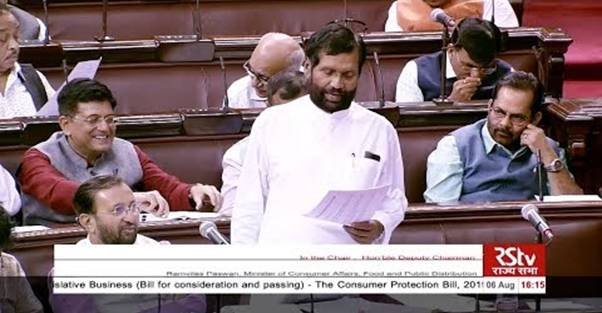
Moving
the bill for consideration and passing in Rajya Sabha, Union Minister
of Consumer Affairs, Food and Public Distribution Shri Ramvilas Paswan
said that the new legislation would ease the overall process of consumer
grievance redressal. Shri Paswan said that this new bill will provide a
better mechanism to dispose consumer complaints in a speedy manner and
will help in disposal of large number of pending cases in consumer
courts across the nation. Shri Paswan stated that this bill was a long
pending legislation and all the recommendations of the Parliamentary
Standing Committee were incorporated in the bill except for five
recommendations.  Shri Paswan also assured all the members of Parliament
that their suggestions would be incorporated in the rules to the extent
possible within the legal framework.
The
bill, among other things, proposes setting up of a Central Consumer
Protection Authority (CCPA) to promote, protect and enforce the rights
of consumers as a class. The CCPA would make interventions to prevent
consumer detriment arising from unfair trade practices. The agency can
also initiate class action, including enforcing recall, refund and
return of products.
The
Bill also envisages simplified dispute resolution process, has
provision for Mediation and e-filing of cases.  The Consumer will be
able to file cases in the nearest commission under the jurisdiction of
which he resides.
For
the first time there will be an exclusive law dealing with Product
Liability. A manufacturer or product service provider or product seller
will now be responsible to compensate for injury or damage caused by
defective product or deficiency in services.
Additional
swift executive remedies are proposed in the bill through CCPA. There
are provisions for deterrent punishment to check misleading
advertisements and adulteration of products. Product liability provision
to deter manufacturers and service providers from delivering defective
products or deficient services. The Bill also enables regulations to be
notified on E-commerce and direct selling with focus on protection of
interest of consumers.

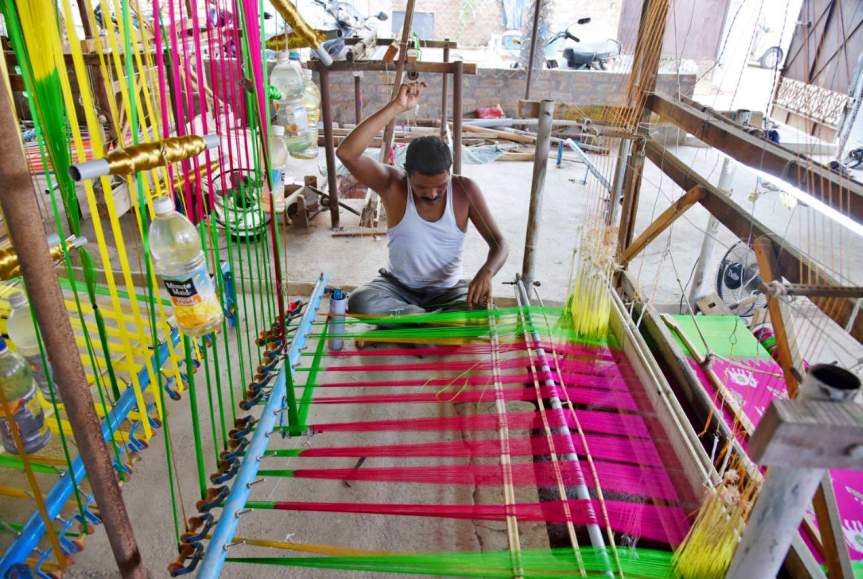
5th National Handloom Day celebrations on August 7

The 5th
National Handloom Day will be celebrated tomorrow across the country.
Union Minister of Textiles and Women and Child Development,
SmritiZubinIrani, will preside over a function at VigyanBhawan in New
Delhi to mark the occasion.
Minister
of Petroleum & Natural Gas, Dharmendra Pradhan, and Minister of
State for Animal Husbandry, Dairying & Fisheries and Micro, Small
& Medium Enterprises, Pratap Chandra Sarangi, will also be present
on this occasion. 

The
main event will be held in Bhubaneswar, Odisha. Bhubaneswar has been
chosen as the venue for the main event due to its rich tradition of
Handlooms. More thanfifty percent of total weavers population of India
resides in Eastern and North Eastern Regions and most of them are women.
The prime objective of holding the National Handloom Day in Bhubaneswar
is to empower women and girls.
The following activities will be undertaken all across the country
  • Distribution of Pehchan Cards and Yarn Passbooks
  • Distribution of MUDRA loan
  • Distribution of lighting units and certificates for construction of work sheds.
  • National Handloom Day to be observed at Weavers’ Service Centres in different States.
  • At
    16 NIFT Campuses and Handloom Mela and exhibition, workshops, panel
    discussions, special stalls for handloom products at Gandhinagar and
    Kolkata NIFT campuses.
  • Live
    broadcast of discussion on Twitter from digital studio of IMG Reliance,
    involving young designers and prominent personalities from the handloom
    sector.
  • Symposium
    at Crafts Museum in New Delhi by Fashion Design Council of India with
    participants from Ministry of Textiles, master weavers, textile
    designers, fashion designers and textile experts. 
  • Workshop through IGNOU/NIOS to impart information about educational opportunities to weave and their wards.
The National Handloom Day is observed annually on 7th
August to honour the handloom weavers in the country and also highlight
India’s handloom industry. National Handloom Day seeks to focus on the
contribution of handloom to the socio economic development of the
country and also increase the income of weavers.
The Union Government had declared 7th
of August as the National Handloom Day in July 2015 with the objective
of generating awareness about the importance of the handloom industry to
the socio economic development of the country. August 7 was chosen as
the National Handloom Day to commemorate the Swadeshi Movement which was
launched on this day in 1905 in Calcutta Town Hall to protest against
the partition of Bengal by the British Government. The movement had
aimed at reviving domestic products and production processes.
The first National Handloom Day was inaugurated on 7th August 2015 by the Prime Minister, Narendra Modi, at the centenary of Madras University in Chennai.