A method used by businesses to buy products and/or services. A purchasing system manages the entire acquisition process, from requisition, to purchase order, to product receipt, to payment. Purchasing systems are a key component of effective inventory management in that they monitor existing stock and help companies determine what to buy, how much to buy and when to buy it.
FUNCTIONS OF PURCHASE DEPARTMENT
Purchase materials at lowest possible cost while maintaining quality. Maintain good relationship with the suppliers. Take advantage of economies of scale. Maintain records efficiently. Develop highly competent personnel. Co-ordinate with all the departments of the organization.
TYPES OF PURCHASING SYSTEM Tender System Stockless Purchase System Blanket Order E-Purchasing / E-Procurement Subcontracting Rate Contract Method Petty Cash System Capital Equipment Purchase
Subcontracting refers to the process of entering a contractual agreement with an outside person or company to perform a certain amount of work. The outside person or company in this arrangement is known as a subcontractor. Many small businesses hire subcontractors to assist with a wide variety of functions
. Example: A small business may use an outside firm to prepare its payroll.Subcontracting is probably most prevalent in the construction industry, where builders often subcontract plumbing, electrical work, drywall, painting, and other tasks. In some cases, a general contractor may only be used as the construction manager or supervisor. In that case, subcontracting accounts for all of the physical work done on the premises. The general contractor’s only responsibility is to approve the contracts, keep the project within budget, and inspect the work.
Size range – 0.21nm(0.008inch)-5cm(2inch) in length.
Usually 4 membranous wings
Forewing and hindwing are held together by small hook.
Hind pair smaller than front pair
Complete metamorphosis (Holometabolous).
Mouthparts modified for chewing and sucking
In some form especially bees, certain Mouthparts (labium and maxillae) form a structure for sucking liquid food.
Antennae usually with 10 or more segment.
Larvae usually maggot like(i.e. Leg less)
Large compound eyes, usually 3 simple eyes(ocelli) present.
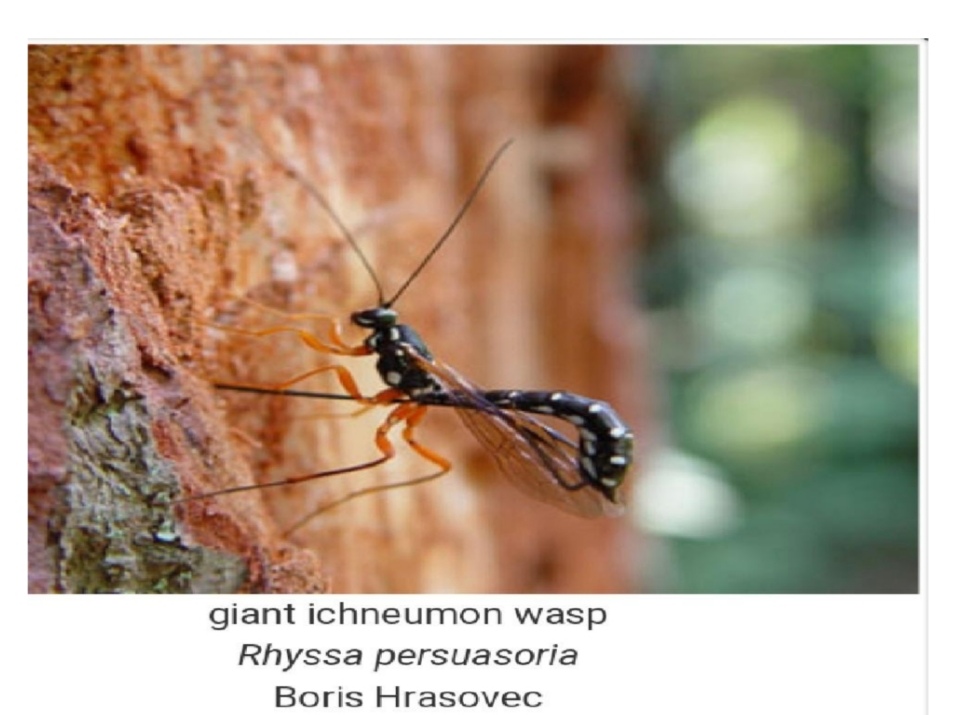
Females typically have a special ovipositor for inserting eggs into host or places that are otherwise inaccessible.
Most have constriction between the first 2 segment of the abdomen which is known as a wasp waist.
Worldwide there are over 100,000 species included in the Hymenoptera.
In Australia, there are about 1275 ant, 10,000 wasp, 2000 bee and 176 sawfly species.
Habitat
Found in all terrestrial habitat throughout Australia.
May occur in soil, leaf litter and range of vegetation types especially flowers.
Life Cycle
Some female produce young one without mating, while other can store sperms and spread out their egg laying to coincide with available food.
Most species lay their egg to the host plant or paralysed food sources they have gathered into specially constructed nest.
The Larvae will moult several times before they pupate.
Development may range from a few weeks for some parasitoid to much longer in social species.
Feeding Habit
Feed on a wide range of foods depending on the species.
Adult wasp mostly feed on nectar and honeydew.
Some species are predator or parasites and spend their time searching out invertebrate hosts to lay their eggs on.
Some are predator, scavenger, omnivores, seedeaters, fungus feeders or honeydew feeders
Suborder of hymenoptera :
1) Symphyta(sawflies and horntails)
2)Apocrita(ants, bees and wasps)
Symphyta :(sawflies)
Most primitive Hymenoptera
Have a broad junction between thorax and abdomen.
Body has no waist.
Paraphyletic group
Females have a saw-like egg laying device for cutting slits in plants into which eggs are laid.
Larvae are caterpillar-like and feed on outside and inside of plant tissue.
There are one or two parasitic families
lack of constriction at the base of the abdomen
fly-like appearance and more extensive wing venation.
They are often confused with lepidopteron larvae but it include–six or more pair of abdominal prolegs(which lack chrochet ), one lateral ocellus on each side of head.
Apocrita :(wasps,bees,ants)
The body has a distinct waist.
The first segment of the abdomen is incorporated into the thorax. A narrow region called the petiole joins this to the rest of the abdomen, called the gaster.
Characterized by Larvae that feed on other Arthropods.
The larvae are maggotlike.
Have narrow junction between thorax and abdomen.
Contain largest no. of species.
Node is usually present.
Further divided into:- Terebrantia(parasitica) which use their ovipositor for egg laying and the Aculeata, which have the ovipositor modified as a sting.
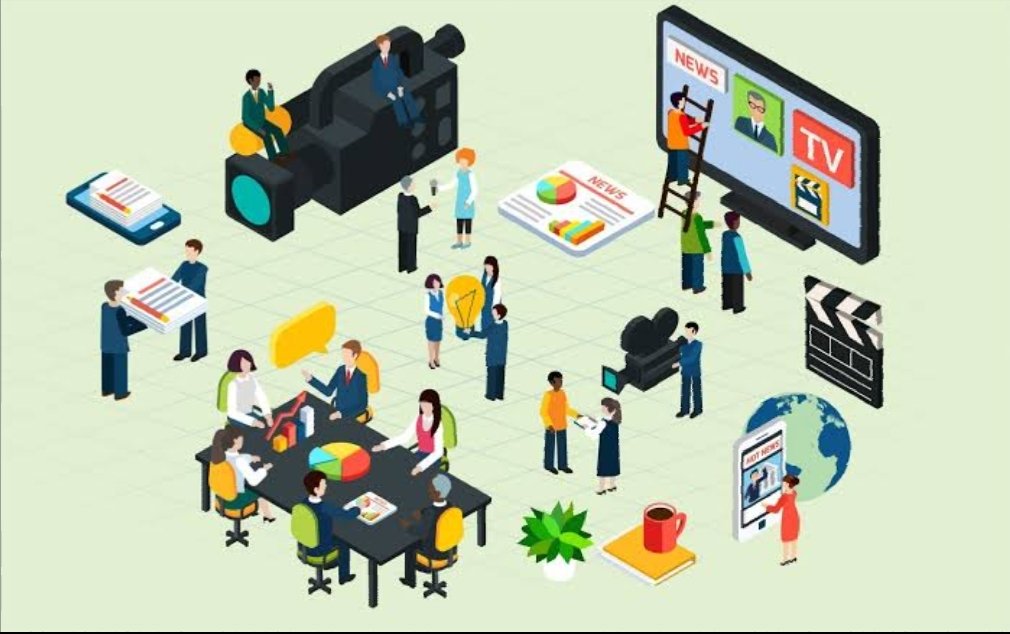
Mass communication is the study of spread the information to large scale of audience in different modes of communication. Where Journalism is the activity of writing about recent developments for newspapers, magazines and etc. It has enveloped reporting done through radio and television.
ABOUT TYPES IN JOURNALISM
Fashion journalism means foreign correspondent, and investigate journalism comes under freelance writing, photojournalism means newspaper reporter, social media – sports journalism. And now a days journalism is playing a key role. Who are worked as journalists takes risks to get the news.
CAREER OPTIONS FOR MASS COMMUNICATION AND JOURNALISM
Mass communication job opportunities
After the completion of mass communication the one could eligible for above jobs.
Journalism job opportunities
After the completion of journalism course the above are the jobs which they can choose
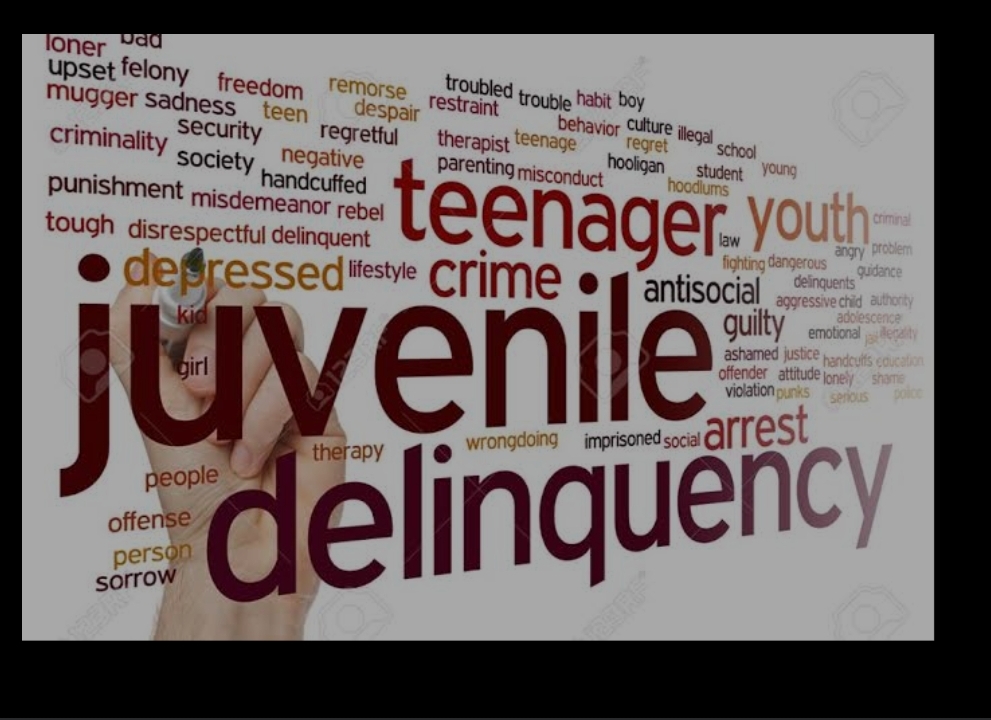
Juvenile Delinquency is one of the most serious problems of the society , a huge cause of disorganisation.
Mr. G.C.Dutt states, “Juvenile Delinquency is rapidly becoming a serious menace in India and with the progressive industrialization of many parts of the country , this problem will soon assume the same proportion as many of the Western Countries . ”
What is Juvenile Delinquency ?
Delinquency undoubtedly is a social evil. It is a socially unacceptable behaviour .Delinquency in general means misconduct . When an individual deviates from the course of normal social life ,his behaviour is called delinquency. Delinquency implies conduct that does not conform to the legal or moral standards of society; it usually applies only to acts that, if performed by an adult, would be termed criminal.
Delinquency in the view of Coleman (1981) refers to “behaviour of youths under 18 years of age which is not acceptable to society and is generally regarded as calling for some kind of admonishment, punishment or corrective actions”.
Delinquency includes all sorts of crimes committed by children. Starting from the business and use of illegal drugs and homicide murder, it may include various types of dangerous criminal offences.
It is a crime categorized mainly based on age. The age of juvenile delinquency has not been similarly determined in all countries . It varies from country to country but is within the usual limits of 16 and 20 .
Definitions :-
Cyril Burt defines delinquency as occurring in a child ” When his antisocial tendencies appear so grave that they become the subject of official action .”
Friedlander says , ” Delinquency is a juvenile misconduct that might be dealt with under the law .”
The Second United Nations Congress on the Prevention of Crime and Treatment of Offenders (1960) states , ” By juvenile Delinquency should be understood the commission of an act which , if committed by an adult , would be considered a crime .”
C.B Mamoria writes , ” The phrase ‘ juvenile delinquency ‘ may be loosely used to cover any kind of deviant behaviour of children which violates normative rules , understanding or expectations of the social system .”
In simple words , juvenile delinquency is a type of abnormal or antisocial behaviour by a juvenile who is below an age specified by statute .
Who is a juvenile delinquent ?
Juvenile delinquents are minors, usually defined as being between the ages of 10 and 18, who have committed some act that violates the law. Read on to learn about different types of delinquent acts as well as how to detect and prevent juvenile delinquency. Deliquescent acts may include running away from home , spending time idly beyond limits , visiting gambling centers , committing sexual offences etc.
Offence Committed :-
Offenses committed by juveniles aren’t called “crimes” as they are for adults. Rather, crimes committed by minors are called “delinquent acts.” Instead of a trial, the juvenile has an “adjudication,” in which they receive a “disposition” and a sentence.
Juvenile proceedings differ from adult proceedings in a number of other ways as well.
Delinquent acts generally fall into two categories.
The first type of delinquent act is one that would be considered a crime had an adult committed it. For particularly serious crimes, some jurisdictions will even try children as adults. When children are tried as juveniles, on the other hand, parents are often required to pay the court costs for the child.
The second type of delinquent act is one that wouldn’t normally be a crime had an adult performed it. These are typically known as “status” offenses since it’s considered an offense because of the person’s age. The most common examples of status offenses are staying out past curfew, alcohol possession or consumption, and truancy, which is the continued failure to attend school.
Causes of Juvenile delinquency :-
There’s no single cause or simple reason for the development of delinquent behaviour . Causes can be external factors including social elements or internal factors including physical and psychological Causes.
In the book , “ Approach and Concept of Criminology “ , the causes of Juvenile delinquency may be classified under two major factors • Social Factors • Personality Factors
1) Social Factors includes :–
• Family:- The major situations in the family that cause many factors that may lead to juvenile delinquency . Situations such as a broken house , attitude of parents , conduct of parents etc.
A study of juvenile delinquency has revealed that the greatest number of delinquents come from broken families . A broken family ,as the term indicates home where all ties are broken ,where there’s no interaction or family love to make one feel like they belong . Interaction in home is a very important means for teaching the child socialisation . Lack of parents’ affection , security , absence of loving mother or father etc. has a huge contribution in factors in spreading juvenile delinquency.
• Poverty :-
Crime and poverty are intimately related. Study conducted by Shaw , McKay and Elliot revealed that among juvenile delinquents a majority belonged to families with a high poverty ratio . According to Bonger and Fornasiri , poverty acts as an incentive to crime .
Poverty compels the children to consciously or unconsciously join hands with gangsters and become delinquents. Poverty leads to family quarrels and dissensions , inadequate education , lack of affection from parents , necessity of basic life products etc. which are more active factors that lead to juvenile delinquency behaviour .
• Delinquency Areas :-
The delinquents come mostly from the areas that are underground , crime dominated , liquor shops , motels and clubs etc. Such a neighborhood places a high influence upon a child .
• Bad Company :-
Charles Shaw said ,” delinquency is a product of community forces ” .
As a child grows older he goes into the neighborhood and becomes a member of the peer group . If by chance he joined the group or the gang that fosters delinquent attitudes he is likely to become a delinquent. In slum areas peculiar social groups called gangs are found . These gangs are found to be associated with crime in all aspects like delinquency , rioting , corrupt politics , etc.
According to famous criminologist Edwin H. Sutherland , criminal behaviour is acquired through interactions with others . Hence , bad companionship leads to juvenile delinquency behaviour.
• School Dissatisfaction :- Some students get dissatisfied with school life and such dissatisfaction makes them regularly absentee , wandering around in the streets forming gangs if their own , gambling , eve teasing , pickpocketing , smoking , drugs etc. leads them on .
2) Personality Factors
Personality factors are mainly factors related to mental deficiency and emotional disturbances .
• Mental Deficiency
It has been observed that a good number of delinquents are mentally deficient . Some Psychiatrists and neurologists believe that the psychopathic personality is a cause of crime . According to Tappan , psychopathic children are very crude , obstinate , suspicious , self centered , lonely , revengeful , hyper sexual , etc . Such persons are devoid of repentance over their own crude doing and the pain and suffering of others.
• Emotionally/ Psychological Problems of the Individual :-
Emotional instability is one of the most common causes of crime . A child’s personality is rendered unbalanced through lack of love and affection, emotional insecurity , strict discipline , feeling of insufficiency and inferiority, such factors that inspire the mind of the child to criminal behavior.
From a psychological point of view , “Delinquency is a rebellion and an expression of aggression which is aimed at destroying , breaking down or changing the environment .” This rebellion is mostly against the social conditions which deny the individual his basic rights and the satisfaction of his fundamental needs . Thus delinquents are not born but they become so due to social circumstances and personal deficiencies .
The delinquent individual who is governed by the “pleasure principle “ wants to get immediate pleasure and immediate satisfaction for his needs and so they become a victim to his own impulses.
Remedies For Juvenile Delinquency
It is said , “ a delinquent child today may turn out to be a chronic criminal tomorrow “. Discussions have been made at national and international level by scholars to seek out effective remedies for this problem .
The three most suggested methods are • Preventive measures • Rehabilitative or curative measures. • Legislative Measures
1) Preventive Measures
• Giving proper training to the members and staff of all organisations concerned with delinquency control .
• Establishing child guidance clinics to give appropriate treatment to the disturbed and maladjusted children.
• Educating the family so as to help the parents to realise the importance of giving proper attention to the needs of their young children .
• Establishing wholesome recreational agencies to prevent young children from becoming law abiding .
• Improving the social environment – slum areas , busy market places , gambling centers etc .
• Spotting potential delinquents by predictive tests in schools or society and giving treatment to such cases.
• The problem of beggary and poverty are to be removed or controlled and the general economic standards of the people must be increased to prevent children from becoming delinquents due to economic exigencies.
2) Rehabilitation or Curative Measures
The main purpose of the method of rehabilitation is not to punish or to treat them mentally disabled but the intention is to help the delinquent children to get proper guidance and training so that they don’t become victims of their own impulses and lead a normal life .
Some institutions to rehabilitate Juvenile Delinquents :-
• Juvenile Courts :- Juvenile Courts are established in order to treat Juvenile delinquents and adult criminals separately. There are currently 39 Juvenile Courts in India . This court is different from the normal civil courts . Juvenile delinquents cannot be chained or produced to courts by police , no advocate arrangements are made for plead . The intention behind this treatment is to create positive feelings in the minds of juveniles .
• Remand Homes :- When a child is arrested under the Act ,he is produced before the magistrate within 24 hours and kept in Remand Homes till the case is investigated. The child is kept until the final disposal of the case .. Sometimes persons convicted are sent to Remand Homes for a few days and released later .
• Certified School :- Certified Schools are established to give some general education and technical training to children . Children are sent for long term treatment and voluntary bodies or local authorities with financial assistance of the government and the public . There are two types of schools :- • Junior School for under 12 • Seniors Schools for under 16
The children are confined here for about 2 to 3 years . After the release they are put under the charge of a Welfare or Probation officer who watches their activities .
• Auxiliary Homes :- The auxiliary homes are attached to Certified Schools just like remand homes are to juvenile courts . Here the convicted delinquents are kept for some time and studied by a social worker and sent later to certified school on the basis of their attitude and behaviour.
• Reformatory Schools :- In states where there are no Children Acts , Reformatory Schools are established . They are meant for the education and vocational training of delinquent children. The young convicted offenders below 15 years are detained here for 3to 7 years . The delinquents are removed from bad environments through these schools .
• Borstal Institutions :- Under Borstal Institutions special treatment is provided for adolescent offenders between the ages of 15 to 21 years . Offenders are sent to Borstal Institutions for rehabilitation rather than kept under imprisonment . The term of Borstal Institutions are 2 to 3 year but may exceed in any serious case . Separate arrangements are made for offenders , training , physical and education are given to prevent them from committing offences again .
Fit persons Institutions and Uncared Children Institutions :- These two non government institutions managed by private bodies and give refuge and protection to destitutes , neglected children and children in pre – delinquent stage .
3) . Legislative Measures :-
Various legislations have been made in India from time to time to deal with juvenile delinquency . Some acts are :-
• Apprentices Act of 1850 • Reformatory Schools Act 1897 • Children Acts • Juvenile Smoking Acts • Suppression of Immoral Traffic Acts . • Probation of Offenders Act • Borstal Schools Act for Adolescents. • Provision in the Criminal Procedure Code ( under section 399 of ICPC )
A grave problem such as juvenile delinquency cannot be solved by means of legislation , government or private institutions efforts alone . The public attitude towards juvenile delinquents must also change to make them feel accepted and initiate their treatment as a cure not abnormality . A juvenile delinquent is a product of unwholesome environmental factors hence in order to change his attitude he needs to be supported emotionally , mentally and physically by all .
Wireshark is a free and open-source packet analyzer. It is used for network troubleshooting, analysis, software and communications protocol development, and education. Originally named Ethereal, the project was renamed Wireshark in May 2006 due to trademark issues. Wireshark is cross-platform, using the Qt widget toolkit in current releases to implement its user interface, and using pcap to capture packets. It runs on Linux, macOS, BSD, Solaris, some other Unix-like operating systems, and Microsoft Windows.
Features
Available for UNIX and Windows.
Capture live packet data from a network interface.
Open files containing packet data captured with tcpdump/WinDump, Wireshark, and many other packet capture programs.
Import packets from text files containing hex dumps of packet data.
Display packets with very detailed protocol information.
Save packet data captured.
Export some or all packets in a number of capture file formats.
Filter packets on many criteria.
Search for packets on many criteria.
Colorize packet display based on filters.
Create various statistics.
Requirements
The amount of resources Wireshark needs depends on your environment and on the size of the capture file you are analyzing.
Microsoft Windows
Wireshark should support any version of Windows that is still within its extended support lifetime. •
At the time of writing this includes Windows 10, 8.1, Server 2019, Server 2016, Server 2012 R2, and Server 2012.
The Universal C Runtime. This is included with Windows 10 and Windows Server 2019.
Any modern 64-bit AMD64/x86-64 or 32-bit x86 processor.
500 MB available RAM. Larger capture files require more RAM.
500 MB available disk space. Capture files require additional disk space.
Any modern display. 1280 × 1024 or higher resolution is recommended.
A supported network card for capturing.
macOS
Wireshark supports macOS 10.12 and later.
Similar to Windows, supported macOS versions depend on third party libraries and on Apple’s requirements.
UNIX, Linux, and BSD
Wireshark runs on most UNIX and UNIX-like platforms including Linux and most BSD variants.
The system requirements should be comparable to the specifications listed above for Windows.
security attacks considered in wireshark
LOCAL AREA NETWORK ATTACKS
ARP Poisoning Attack
MAC Flooding Attack
DOS Attacks
DHCP Spoofing Attack
VLAN Hopping
Working diagram of Wireshark
Advantages of using Wireshark
Free software
Available for multiple platforms – Windows & UNIX
Can see detailed information about packets within a network
Not proprietary can be used on multiple vendors unlike Cisco Prime
Disadvantages of using Wireshark
Notifications will not make it evident if there is an intrusion in the network
Can only gather information from the network, cannot send
Removal of nirogenous waste produce during metabolism of protein and nucleic acid.
Human excretory system includes:- Pair of kidney Pair of ureter Urinary bladder Urethra
Function of kidney
Kidneys regulate the osmotic pressure of a mammal’s blood through extensive filtration and purification, in a process known as Osmoregulation.
Kidneys filter the blood; urine is the filtrate that eliminates wastes from the body via the ureter into the urinary bladder.
The kidneys are surrounded by three layers:
Renal fascia
perirenal fat capsule
Renal caps
EXTERNAL ANATOMY
A typical adult kidney (mass – 135–150 g) is:
10–12 cm- long 5–7 cm – wide 3 cm cm- thick
The concave medial border of each kidney faces the vertebral column.
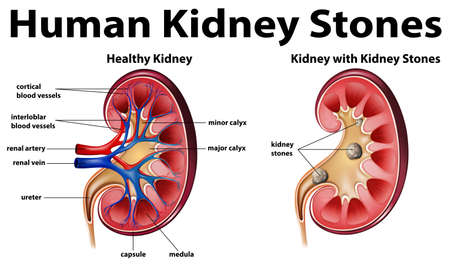
Near the centre of the concave border is an indentation called the Renal hilum, through which the ureter emerges from the kidney along with blood vessels, lymphatic vessels and nerves.
Human kidney are Retroperitoneal(covered with peritoneum)
Present between 12th thoracic vertebrae to 3rd lumber vertebrae.
Left kidney is higher than the right kidney due to position of liver in right side.
Three layers of tissue
a) .The Renal capsule(Deep layer) – Smooth, transparent sheet of dense irregular connective tissue that is continuous with the outer coat of the ureter.
It serves as a barrier against trauma and helps maintain the shape of the kidney.
b) The adipose capsule (middle layer) – Mass of fatty tissue surrounding the renal capsule.
Protects the kidney from trauma and holds it firmly in place within the abdominal cavity.
c) The renal fascia(superficial layer) – Thin layer of dense irregular connective tissue
Anchors the kidney to the surrounding structures and to the abdominal wall
On the anterior surface of the kidneys, the renal fascia is deep to the peritoneum
Internal anatomy
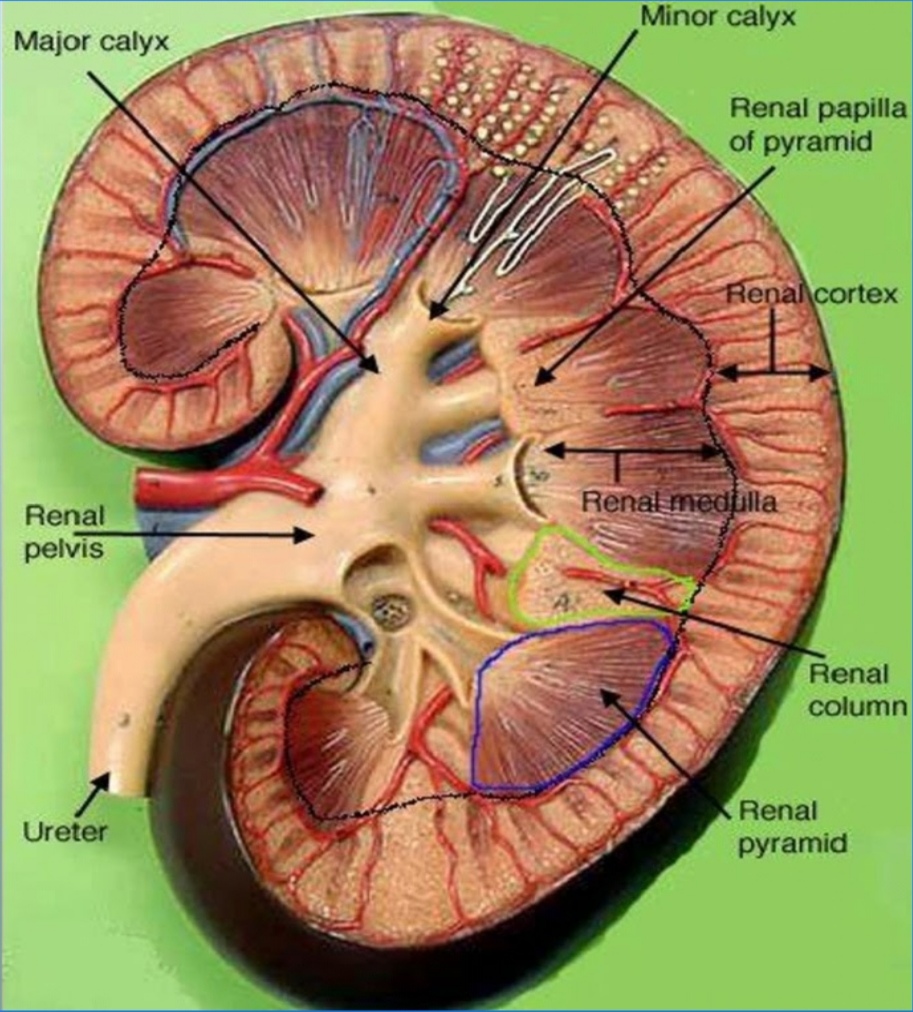
A frontal section through the kidney reveals two distinct regions:
Renal cortex (outer)
Renal medulla (inner).
The renal medulla consists of several cone-shaped renal pyramids.
The base (wider end) of each pyramid faces the renal cortex, and its apex (narrower end), called a renal papilla, points toward the renal hilum.
The renal cortex, smooth textured area extending from the renal capsule to the bases of the renal pyramids.
It is divided into an outer cortical zone and an inner juxtamedullary zone.
Ureter
Muscular tubes of 25-30cm length, 3m in diameter.
Wall of Ureter
Innermost-Transitional epithelium
Middle layer-Muscular(longitudinal and circular muscle)
Outermost layer – Tunica adventita.
Urine is move through ureter by peristalsis.
Urethra conduct the urine from urinary bladder to outside. Female urethra is short. Male urethra is long.
Urinary bladder
Urinary bladder
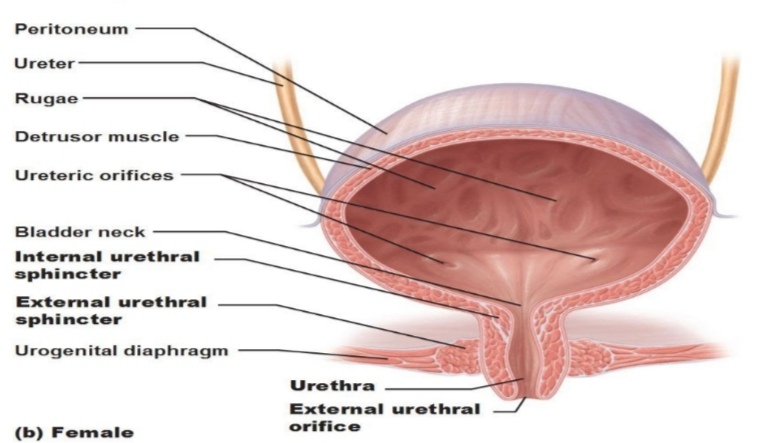
It is hollow muscular organ that stores urine from the kidneys before disposal by urination.
In humans the bladder is a hollow distensible organ that sits on the pelvic floor
Urinary Bladder
Nephron
Structure of nephron
Structure and functional unit of kidey.
Each kidney contain about 1 million nephron
Each nephron has 2 part
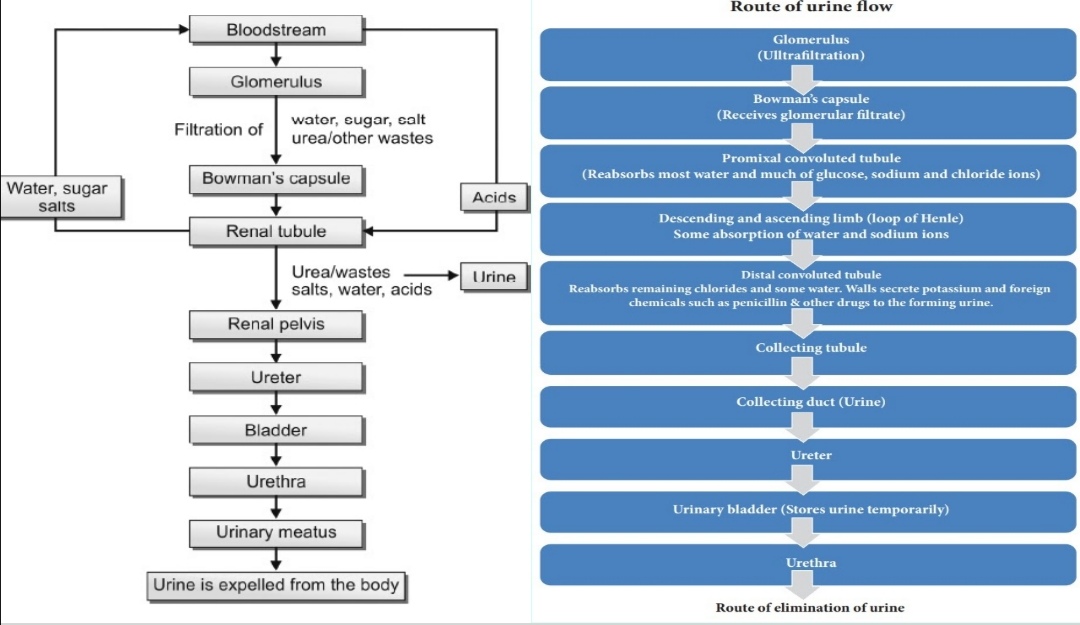
Glomerulus
Renal tubules.
Take a simple filtrate of the blood and modify it into urine.
Cleanse the blood and balance the constituents of the circulation.
Many changes take place in the different parts of the nephron before urine is created for disposal.
The term urine will be used here after to describe the filtrate as it is modified into true urine.
The principle task of the nephron population is to balance the plasma to homeostatic set points and excrete potential toxins in the urine.
RENAL CORPUSCLE
It CONSISTS OF A GLOMERULUS SURROUNDED BY A BOWMAN’S CAPSULE.
THE GLOMERULUS ARISES FROM AN AFFERENT ARTERIOLE AND EMPTIES INTO AN EFFERENT ARTERIOLE.
THE SMALLER DIAMETER OF AN EFFERENT ARTERIOLE HELPS TO MAINTAIN HIGH BLOOD PRESSURE IN THE GLOMERULUS.
THE BOWMAN’S CAPSULE IS DIVIDED INTO THREE LAYERS:
OUTER PARIETAL LAYER- MADE UP OF EPITHELIAL CELLS WITH MINUTE PORES OF DIAMETER 12NM.
MIDDLE BASEMENT MEMBRANE-IT IS SELECTIVELY PERMEABLE.
INNER VISCERAL LAYER-IT CONSISTS OF LARGE NUCLEATED CELLS CALLED PODOCYTE(BEAR FINGER-LIKE PROJECTIONS CALLED PODOCEL)
Renal tubule
It IS A LONG AND CONVOLUTED STRUCTURE THAT EMERGES FROM THE GLOMERULUS
IT CAN BE DIVIDED INTO THREE PARTS BASED ON FUNCTION:-
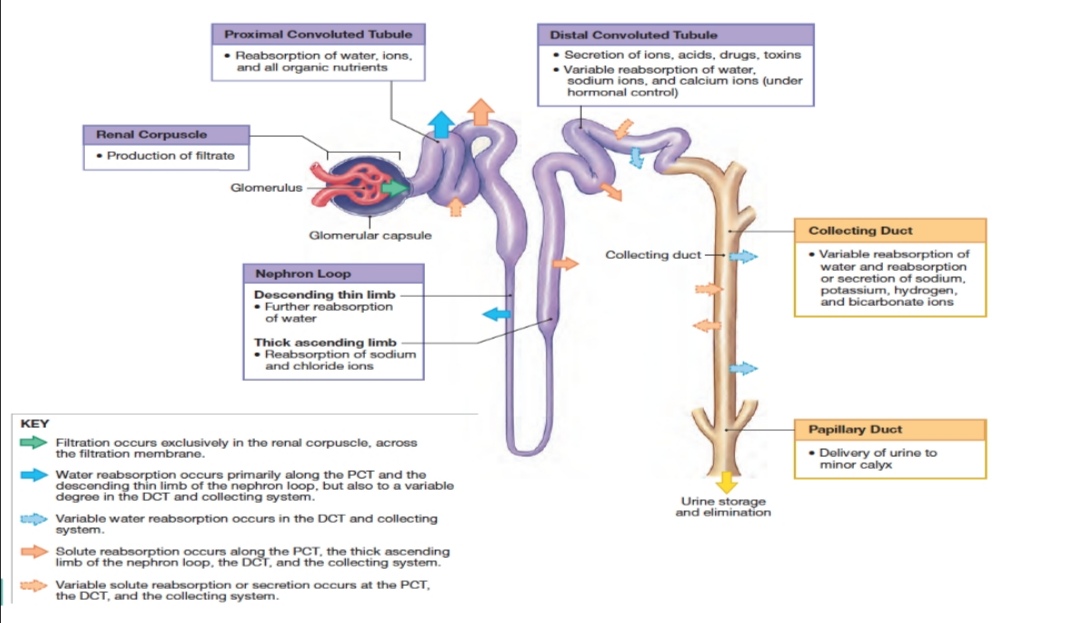
PROXIMAL CONVOLUTED TUBULE (PCT) – IN THE RENAL CORTEX.
THE LOOP OF HENLE, OR NEPHRITIC LOOP – IT FORMS A LOOP (WITH DESCENDING AND ASCENDING LIMBS) THAT GOES THROUGH THE RENAL MEDULLA.
DISTAL CONVOLUTED TUBULE (DCT)- IN THE RENAL CORTEX.
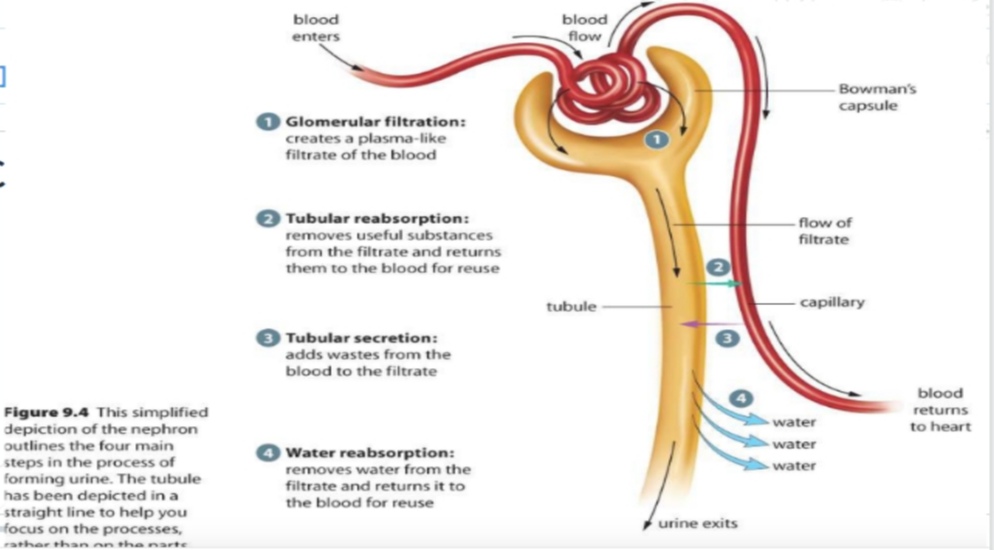
WATER AND SOLUTES ARE FORCED THROUGH THE CAPILLARY WALLS OF THE Glomerulus INTO THE BOWMAN’S CAPSULE (GLOMERULARCAPSULE)
FILTRATE –THE FLUID THAT IS FILTERED OUT INTO BOWMAN’S CAPSULE.
Glomerulus filtrate-same as plasma but protein are absent.
Contains-Water, ions, Glucose, amino acid, water soluble vitamin, urea, uric acid etc.
Tubular reabsorption
OCCURS BOTH PASSIVE AND Actively.
GLUCOSE, AMINO ACIDS, AND OTHER NEEDED IONS (NA, K, CL, CA, HCO3) ARE TRANSPORTED OUT OF THE FILTRATE INTO THE PERITUBULAR CAPILLARIES ( REABSORBED BACK INTO THE BLOOD)
ABOUT 65% OF THE FILTRATE IS REABSORBED IN THE PCT.
AS THESE SUBSTANCES ARE Reabsorbed, THE BLOOD BECOMES HYPERTONICSO WATER EASILY FOLLOWS BY OSMOSIS.
REABSORPTIONIN THE DCT IS UNDER Hormonal CONTROL ALDOSTERONE CAUSES MORE SALT TO BE ABSORBED
ADH CAUSES MORE WATER TO BE ABSORBED
TUBULAR SECRETION
WASTE PRODUCTS SUCH AS UREA AND URIC ACID, DRUGS AND HYDROGEN AND BICARBONATE IONS ARE MOVE OUT OF THE PERITUBULARCAPILLARIES INTO THE FILTRATE; THIS REMOVES UNWANTED WASTES AND HELPS REGULATE PH
Urine
It is pale yellow in colour due to Urochrome pigment that is byproduct of red blood corpuscles(RBC) breakdown.
Around 1-1.5 litre of urine is formed per day.
PH =6 (vary 4.2 – 8.2)
It can be four times as concentrated as the blood i. e-1200mosmol/L.
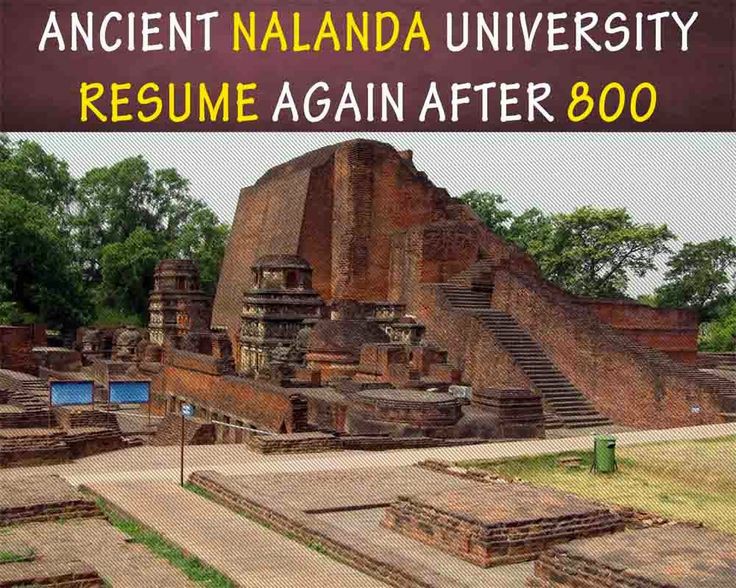
Since ancient times to the modern world, the Higher Education System has always been remarkable in our country, India. From ancient Bharat to modern India, higher education has always occupied a place of prominence in Indian history. In ancient times, Nalanda, Taxila and Vikramsila universities were renowned seats of higher learning, attracting students not only from all over the country but from far off countries like Korea, China, Burma, Sri Lanka, Tibet and Nepal. Today, India manages one of the largest higher education systems in the world.
UGC
The University Grants Commission of India (UGC India) is a statutory body set up by the Government of India in accordance to the UGC Act 1956 under the Ministry of Education, and is charged with coordination, determination and maintenance of standards of higher education. It provides recognition to universities in India, and disbursements of funds to such recognized universities and colleges. The headquarters are in New Delhi, and it has six regional centers in Pune, Bhopal, Kolkata, Hyderabad, Guwahati and Bangalore. A proposal to replace it with another new regulatory body called HECI is under consideration by the Government of India. The UGC provides doctoral scholarships to all those who clear JRF in the National Eligibility Test. On an average, each year more than a $100 million is spent on doctoral and post-doctoral fellowships by the commission.
University grant commission logo
Basic information
Established
28 December 1953 First
executive
shanti Swaroop bhatnagar
Headquarter
new Delhi
Chairman
Dp Singh
Department
department of higher education, ministry of education
Sector
higher education
History
The present system of higher education dates back to Mountstuart Elphinstone`s minutes of 1823, which stressed on the need for establishing schools for teaching English and the European sciences. Later, Lord Macaulay, in his minutes of 1835, advocated “efforts to make natives of the country thoroughly good English scholars”. Sir Charles Wood`s Dispatch of 1854, famously known as the ` Magna Carta of English Education in India`, recommended creating a properly articulated scheme of education from the primary school to the university. It sought to encourage indigenous education and planned the formulation of a coherent policy of education. Subsequently, the universities of Calcutta, Bombay (now Mumbai) and Madras were set up in 1857, followed by the university of Allahabad in 1887. The Inter-University Board (later known as the Association of Indian Universities) was established in 1925 to promote university activities, by sharing information and cooperation in the field of education, culture, sports and allied areas.
The first attempt to formulate a national system of education in India came In 1944, with the Report of the Central Advisory Board of Education on Post War Educational Development in India, also known as the Sergeant Report. It recommended the formation of a University Grants Committee, which was formed in 1945 to oversee the work of the three Central Universities of Aligarh, Banaras and Delhi. In 1947, the Committee was entrusted with the responsibility of dealing with all the then existing Universities.
Soon after Independence, the University Education Commission was set up in 1948 under the Chairmanship of Dr. S Radhakrishnan “to report on Indian university education and suggest improvements and extensions that might be desirable to suit the present and future needs and aspirations of the country”. It recommended that the University Grant Committee be reconstituted on the general model of the University Grants Commission of the United Kingdom with a full-time Chairman and other members to be appointed from amongst educationists of repute. In 1952, the Union Government decided that all cases pertaining to the allocation of grants-in-aid from public funds to the Central Universities and other Universities and Institutions of higher learning might be referred to the University Grants Commission. Consequently, the University Grants Commission (UGC) was formally inaugurated by late Shri Maulana Abul Kalam Azad, the then Minister of Education, Natural Resources and Scientific Research on 28 December 1953.
The UGC, however, was formally established only in November 1956 as a statutory body of the Government of India through an Act of Parliament for the coordination, determination and maintenance of standards of university education in India. In order to ensure effective region-wise coverage throughout the country, the UGC has decentralized its operations by setting up six regional centers at Pune, Hyderabad, Kolkata, Bhopal, Guwahati and Bangalore. The head office of the UGC is located at Bahadur Shah Zafar Marg in New Delhi, with two additional bureaus operating from 35, Feroze Shah Road and the South Campus of University of Delhi as well.
In 1994 and 1995 the UGC decentralized its operations by setting up six regional centres at Pune, Hyderabad, Kolkata, Bhopal, Guwahati and Bangalore. The head office of the UGC is located at Bahadur Shah Zafar Marg in New Delhi, with two additional bureaus operating from 35, Feroze Shah Road and the South Campus of University of Delhi as well.
In December 2015 the Indian government set a National Institutional of Ranking Framework under UGC which will rank all educational institutes by April 2016.
Role
The main aim & role of UGC in higher education is to provide funds to universities and coordinate, determine & maintain the ethics in institutions of higher education. The commission upholds the interpretation among the universities, government, and the community. UGC has also set some standards for the universities for being UGC Approved Universities. With the growth of higher education in India, many top, medium, and small universities are being established day by day. Among these universities, there are many universities that are fake and not fit as per the UGC standards. Therefore, the University Grants Commission has released the list of Fake Universities in India to help the students to recognize these rejected universities
Functions
It provides funds and it also arranges for the coordination and maintenance of the universities in India. The UGC controls the following in India:
1.Maintaining the standard of research, teaching and examination in the university maintaining standards of teaching, examination and research in universities & Framing regulations on minimum standards of education.
2.It is a link between the union government and the institutes of higher education system.
3. It also advises the government about the steps to be taken in order to improve the education system.
4.Allocates grants to the universities and colleges out of its own funds for their development or other general purpose.Advises the central and state government on disbursing grants to the universities out of the Consolidated Fund of India. Advises any authority on the establishment of new university or on the proposal seeking expansion of any university.
5.Collects information on university education in India and in other countries.
6.Seeks information from the universities from time to time. The information may range from the financial position of the university, their various branches of learning to the rules and regulations followed in a particular university.
Imparts education to the students in various streams through its Country wide classroom teachings and a four-year old 24 hours educational channel ‘Vyas’.
8.Conducts National Eligibility Test (NET) through its National Educational Testing Bureau in a bid to determine eligibility for lectureship. It also awards Junior Research Fellowship (JRF), which has been set as the minimum standards for Indian nationals to enter teaching profession and research. Humanities (including languages), Forensic Science, Computer Science, Social Sciences, Environmental Sciences, and Applications and Electronic Science are the subjects in which a student can appear for a JRF.
9.The University Grants Commission has recently launched an ‘e-scripting’ course in television for all those students who want to make a career in broadcast media. The course is being run by its Consortium of Educational Communication, an Inter University Centre of the UGC on electronic media.
10.Monitoring developments in the field of collegiate and university education; disbursing grants to the universities and colleges.
Digital marketing the world become digitalizing day to day.
Every things we can do with digital, we are become digital life’s.
Marketing is main source for improve companies, on before digital life’s there was we have person to person and posters to expose their products and services
Now , we are in surviving digital life’s . every things will get on internet so the bases of internet ,we have recognised by Digital marketing .
The digital marketing it is high level, digital marketing refers to advertising delivered through digital channels such as search engines, websites, social media, email, and mobile apps.
by help of these online media channels, digital marketing is the method by which companies endorse goods, brands and services.
On these digital marketing we have a wide range of digital marketing jobs out there meaning there are a huge variety of career options.
Video/audio production.
Interactive technology (such as AI)
Mobile marketing.
Search engine optimization (SEO)
Search engine marketing (SEM)
Social media.
E-commerce.
Email marketing.
Scopes for digital marketing
The scope of digital marketing is quite good. Anyone who is looking to learning digital marketing would surely get a good benefit from it. There are also huge of job opportunities available in the field .
How can you start
There we have many web sites and blogs, start learning digital marketing help of reading books or blogs, enrolling in courses, watching videos on YouTube, listening to podcasts, watching webinars, and more.
The objectives of material requirement planning in operations management are:
(a) It determines the quantity and timing of finished goods demanded.
(b) It determines the time phased requirements of the demand for materials, components and sub-assemblies over a specified planning time horizon.
(c) It computes the inventories, work-in-process batch sizes and manufacturing and packing lead times.
(d) It controls inventory by ordering materials and components in relation to orders received rather than ordering them from stock level point of view.
(e) It improves customer service by meeting delivery schedules promised and shortening the delivery lead times.
(f) It reduces inventory cost by reducing inventory levels.
(g) It improves plant operating efficiency by better use of productive resources.
Material requirements planning (MRP) is a production planning and inventory control system. An MRP integrates data from production schedules with that from inventory and the bill of materials (BOM) to calculate purchasing and shipping schedules for the parts or components required to build a product.
There are three primary functions of an MRP system. First, the system helps ensure that the appropriate materials are available for production and the necessary products are available for customers to avoid shortages. Second, MRP reduces waste by maintaining only the lowest possible materials and product levels in stock. Lastly, an MRP system helps plan manufacturing functions, delivery schedules and purchasing. When an MRP system is doing its job, it reduces material waste while also avoiding product shortages. Data integrity, however, is a major issue for successful material requirements planning. The data fed into the system must be accurate; otherwise, serious production and stock errors may occur.
MRP was developed by engineer Joseph Orlicky as a response to the Toyota Production System, the famous model for lean production. The first computerized MRP system was tested successfully by Black & Decker in 1964.
” Time and tide wait for none”. No matter how many times we hear or see this clichéd quote, not all of us actually understand the essence of these words. Time management is an essential skill for aspirants of all kinds. In this fast-evolving world, one must keep up par with others to achieve their goal. The fact that smart work is better than hard work is of the essence. Productivity is smart work. One such method to maintain productivity in our daily life is the Pomodoro technique.
Pomodoro technique is a time management method where a timer is used to break down the work at hand into intervals, separated by short breaks. This method was developed by Francesco Cirillo in the late 1980s. Each interval is called a ‘Pomodoro’ the Italian word for tomato, the tomato-shaped kitchen timer that Cirillo used as a college student.
The original technique has 6 steps
1. Choose a task you would like to get done
No matter how small or big the task is, it deserves your full undivided attention.
2. Set the timer for 25 minutes
Keep a promise to yourself that you don’t interrupt yourself for just 25 minutes. You can use your mobile timer or a good old clock for timing your session.
3. Work on the task until the timer rings
Immerse yourself. Meanwhile, if you remember anything other than the work at hand, write it down on a sheet of paper. You can give them thought later.
4. When the timer rings, tick off your completed task
Hurray! You have given your undivided attention to the task for 25 minutes.
5. Take a short break
Take a deep breath, meditate, grab a cup of your favourite beverage go for a stroll or do something that is relaxing for your brain to reward yourself.
6. After every 4 Pomodoros take a longer break
A break of 20 to 30 minutes is good enough to rest, preview the information and prepare yourself for the next set of Pomodoros.
To make the best out of these Pomodoro sessions you can:
Use the first few minutes of the session to review what you have done earlier.
Set up a timetable and try to be devoted to it.
You can use airplane mode or do not disturb mode on your mobile. (Apply only if you are not accountable for not picking up calls 🙂
Be mindful of the shorter breaks. They might prolong at times, thus unsettling your next Pomodoro cycle.
Understand your body — find out which part of the day you are most productive. This can work wonders and get a lot of things done.
The rules of the Pomodoro technique are not necessarily rigid. If you are not able to pull up 4 Pomodoros continuously, opt for one or two Pomodoros in a day. At the end of the day, what matters the most is how much productive and focus you are in those sessions and how much work gets done. You can also vary the time interval as 50/10 (50 minutes of focus and 10 minutes of break) instead of the traditional 25/5 technique if you are quite confident about your focus.
This technique is useful if you feel distracted or overwhelmed to focus on what matters to you. It has worked well for me in this lockdown and has helped a lot in my exam preparations. Hope it works for you too!
The world we live in today consists of people belonging to different religions, castes, places, people who speak different languages, have differing political opinions and the list goes on. Human beings are unique in their thinking as well as the way they express their thoughts. They are inherently different so many ways and sometimes conflicts can arise between people due to this. But having difference of opinion always does not necessarily mean it is bad or it can end up in conflicts, it can sometimes give insight into how differently and parallelly things work in the other paradine.
This can result in Political Liberalism, where people are more attentive and acceptable of other people’s religion and are not ethnocentric. This is what John Rawls talks about, he brings in the idea of Political Liberalism where he claims that people who are reasonable would have a liberal approach towards the differing views. And hence the idea that conflicts or fights will happen between people because of their differences is flawed.
People who hold different comprehensive doctrines can only be acceptable of others differences if they are reasonable. This is what Rawls point out in his study, he says that people living in a society, if they are reasonable people and rational in thinking and attitudes.
Rawls talks about ‘Reasonable Pluralism’ where people are accommodative of other people’s differences and views. Even though people are inherently different and have different ideas and beliefs people choose to understand them and let this not cause a divide between them. It instead made people more accommodative of these changes and will make them more cosmopolitan in approach.
This is how Political Liberalism comes into play, people who are liberal and rational tend to understand these diversities and learn to be more adaptive of these differences. This is termed as overlapping consensus. A term used to define the consensus between people having different opinions and view points but are still accommodative of each other. Rawls believed that this would only happen if people were reasonable enough to understand these differences in its moral sense.
Although this idea behind Rawls is really good, the problem here is that he only takes into account the reasonable citizens. He never accounts for people whose thinking lies beyond reasonable one. Hence, we cannot really say if this is applicable to everyone in the state. Flawless his theory was but it failed to capture people with different perspectives and opinions as different from the crowd of reasonable people. This is one of the major problems which has gone unanswered.
In this cutting-edge World, who would mind having an extra set of skills. Having proficiency in more than one language is one of the skills needed in today’s era. Being bilingual/multilingual doesn’t mean one can only connect with the world in a more meaningful way but being bilingual/multilingual one can also stand out from the crowd, and advance their career. These are not the only benefits, let’s have a look at some of the benefits in brief. Mentioned below are some of the many benefits a bilingual/multilingual can have:–
Advance your career
Learning a second language can set you apart from your monolingual colleagues and provide you with opportunities for better employment. Companies with overseas clients and foreign customers are looking for fluent professionals in a second language, who can deal with various communities.
Improves decision-making skills
It is found in a study by the University of Chicago that a multilingual person is better at decision making than a monolingual.
When you learn a foreign language, you try to learn native expressions and their hidden meaning, which enhances your decision-making process. It is also proved that the decision you make in a foreign language is more reasonable than the decision you make in your native language.
Connect with people
One of the most incredible advantages of learning a foreign language is opening new windows of opportunities and meeting new people of different communities. When you learn a foreign language, you also generate a sense of better understanding and appreciation towards people from different communities. And you might end up having a lifelong connection with people from different parts of the world. Isn’t it magical?
Sharpens memory
When you learn a new language, your mind is been introduced to various rules, different grammar, and an entirely new set of vocabulary, which exercises your memory. It has also been claimed that people who are into learning a new language find it easier to remember names, facts, directions, and figures.
Makes traveling easy
When you have fluency in more than one language, it is easier to travel to different parts of the world, as it makes it easier to connect with different cultures and native speakers. When you can talk to a native person you can get more information about the place, even the information that is not on the web. Hence, being bilingual/multilingual can make your traveling so much easier.
Be it learning a foreign from a university or online classes. If you are planning to learn one, it will for sure provide you several benefits and will boost your career to new heights.
Today is math 2.0 day, but what exactly does that even mean?.With or without knowing we all use math several times every single day. The subject is also important for the advancement of technology. And thus, to celebrate the combination of maths and technology, Math 2.0 Day is celebrated on July 8. Read on to know other details.
Imagine the way the world used to be viewed! Math as known to be important but not thought to be something you could make a living at and the rising tide of technology was considered a fad! Math 2.0 Day reminds us that technology is here to stay!
Every year, Math 2.0 Day is celebrated on July 8. The day is observed to highlight the importance of the combination of maths and technology. The day was formed to celebrate the achievement made through the combination of maths and technology. Math 2.0 Day also helps to educate the masses about the benefits of maths and technology. Without maths and technology, it would have been impossible for us to achieve the various entertainment mediums we have now.
History of Math 2.0 Day
In 2009, the Math Interest Group formed Math 2.0 Day. Math is extremely important for the advancement of science, technology and education.Math 2.0 Day is a celebration of the blending of technology and mathematics. For a lot of us, math wasn’t a favorite subject, we’d spend the entire period staring at the equations and wondering what sort of livid madman designed these torture chambers on paper. Ultimately, however, we realized that math is utterly indispensable in our modern world. If you’ve ever wondered who uses math in their day to day careers, you aren’t alone and we have some answers for you.
Programmers deal with mathematics every day, as it’s the framework upon which all computer operations are formed. Everything from the order of operations to quadratic equations is necessary to make even the simplest program. Scientists are one of the biggest users of mathematics, whether they’re calculating the statistical variance of their data or figuring out how much to add to their chemistry experiment, it’s involved at every step.
One presumes you live in a house, drive a car, or operate a computer? The engineers responsible for designing those things so that they work, and especially in the case of the house, use math to ensure it doesn’t come crumbling down on your head. Math 2.0 day celebrates all these mathematical heroes and more.
How to celebrate Math 2.0 Day
If you’re like me, you probably have your old math books from college laying around. I suggest busting them open and studying them again. Who knows, in the intervening years you may have secretly developed a love for those dancing numbers. If not, make sure that you stop by those people who use math every day and thank them for doing the work so you don’ thave to.Mathematics is one of the most important fields in the world today, and just about everything we know and love is built on its back.
WHO is bringing the world’s scientists and global health professionals together to accelerate the research and development process, and develop new norms and standards to contain the spread of the coronavirus pandemic and help care for those affected.
The R&D Blueprint has been activated to accelerate diagnostics, vaccines and therapeutics for this novel coronavirus.
The solidarity of all countries will be essential to ensure equitable access to COVID-19 health products.
Global research database
WHO is gathering the latest international multilingual scientific findings and knowledge on COVID-19. The global literature cited in the WHO COVID-19 database is updated daily (Monday through Friday) from searches of bibliographic databases, hand searching, and the addition of other expert-referred scientific articles. This database represents a comprehensive multilingual source of current literature on the topic. While it may not be exhaustive, new research is added regularly.
The WHO evidence retrieval sub-group has begun collaboration with key partners to enrich the citations and build a more comprehensive database with inclusion of other content. The database is built by BIREME, the Specialized Center of PAHO/AMRO and part of the Regional Office’s Department of Evidence and Intelligence for Action in Health.
For further information or questions, please contact the WHO Library via email.
Disclaimer: the designations employed and the presentation of the material in publications listed in this database does not imply the expression of any opinion whatsoever on the part of WHO concerning the legal status of any country, territory, city or area or of its authorities, or concerning the delimitation of its frontiers or boundaries. Dotted and dashed lines on maps represent approximate border lines for which there may not yet be full agreement.
The mention of specific companies or of certain manufacturers’ products in publications listed in the database does not imply that they are endorsed or recommended by WHO in preference to others of a similar nature that are not mentioned. Errors and omissions excepted, the names of proprietary products are distinguished by initial capital letters.
By listing publications in this database and providing links to external sites does not mean that WHO endorses or recommends those publications or sites, or has verified the content contained within them. The database has been compiled without warranty of any kind, either expressed or implied. The responsibility for the interpretation and use of publications included in this database lies with the reader. In no event shall WHO be liable for damages arising from its use.
The 2nd half 20th Century – the socio cultural movements that effected people are merging and becoming more. Post Colonial literature became popular, Ngugi wa thiongo a Kenyan thinker – Moving the Centre – The plurality of culture and literature, the shift from Eurocentric understanding of the world. Grand narratives centred around the Eurocentric understanding, and postcolonial works thus became a shift from these Grand Narratives. The way art aesthetics and literature were looking at the past and the grand narratives became problematic, because people felt a need to bring back the past, but simultaneously in every country there was this need to bring something new back. Every age becomes a response to a previous period and the previous period is a response to resistance. Literatureis not something that is just to entertain people, the position of literature is embedded in our social systems, part of your existence. To understand postmodernism, is to lie on modernism. France Fanon, Meena Kandasamy, examples of theoretical perception are taken forward with people of different discipline. Thiongo’s work becomes important for the possibility of multiple centres and multiple meanings – a product of European imperialism and internal resistance as well.
Mcluhan’s Medium as message, depending on the medium the reachability is different and the access as well is differing.
Susan Sontag – a revolt against ‘the departure from modernism can be regarded as new sensibility, a revolt against canonised modernism’s avant-guard revolution’ – Critiquing the high culture of Modern Capitalist world, against the cannon. On one hand Modernism tried critiquing the Grand narratives and on the other it cerated a canon for itself.
Modernism is adopting plurality like Postmodernism, but was lamenting fragmentation even though working through it, trying to work on a wholesome unity, they continued to believe that with lit or artistic expression we may achieve a ‘self’ while postmodernism are embracing fragmentation, praising dissent, rather celebrating fragmentation.
Arnold Toynbee – birth of postmodernism, and questioning the tradition moral values and beliefs (grand narratives); and by questioning this he’s talking about the development of cultural modernists and the different understanding of the world, a better apparatus of understanding world and culture. Grand Narratives continue to be over – aching and totalising and replace or silence other narratives around us. And how mini-narratives can replace grand narratives by promoting plurality and heterogeneity as it becomes local. [Culture in modernism – a cultural innovation – development of new meanings.] Postmodernism is branching out to different ways, questioning the requirement and the need for plurality and heterogeneity.



















 Eduindex
You must be logged in to post a comment.