FEMINISM : Good or Bad ?

Feminism is the advocacy of the equality of the sexes. It does not seek exploitation and harassment of men by women in any field as many ‘intellectuals’ think! It only seeks to eradicate the violence against women and their poor treatment by their male counterparts wherever it is happening. People think feminism is giving women another superpower through which they can rule others , but this is not the true side , Feminism means equality in education & professional fields , equality in terms of rights , & this equality is not only for women but for men also . Feminism seeks to achieve the political, economic, personal, and social equality of BOTH the sex & not just females. Societies around the world often give exclusive rights and privileges to men (like standing up for themselves without being branded as being ‘loud’ and ‘bossy’, doing what they love to do, not being responsible for bringing up the kids and many more!) while women, in general, are treated unfairly. Feminism fights against gender stereotypes and seeks equal educational and professional opportunities for women. Feminists work for women’s rights, like the right to work, to remove the gender pay gap, to get an education, to have equal rights and respect within marriage, and to have paid maternity leave , to do what ever they want to , etc.

FIVE REASON WHY FEMINISM IS STILL A NEED OF THE HOUR ARE :

  1. Gender inequality is very bad for women health : Gender inequality is bad for women health , it makes them think that they are not superior to others , which leads to bad mental health . Further mental health leads to many diseases like PCOD, heart diseases, etc.
  2. Equal pay for all genders : Since work hours are same , so should be the pay range is the moto of feminism. Women are often paid less as compare to men & gives the reason that they work less , this belief should be removed & females should be paid equal to men .
  3. Education : Girls are pressurized to marry , then what about their dreams & education ? This is why we need feminism , just like men are asked to study so do women should have been asked too .
  4. Right to work : Still there is this stereotype in our brain that women can not do this job or this job is not meant for women . to remove this thinking from the society , feminisms is the need of the hour.
  5. Have equal rights & respect within the marriage .

At last i would like to conclude this article with a quote , ” Feminism is not a dirty word. It does not mean you hate men. It does not mean you hate girls that have nice legs and a tan, and it does not mean you are a bitch or a dyke, it means you believe in equality.”

– Words of REBBICA WEST

WORLD NATURE CONSERVATION DAY – JULY 28

“Earth provides enough to satisfy every man’s needs, but not every man’s greed.” ― Mahatma Gandhi

July 28 is celebrated as “World’s Nature Conservation Day” and reminds us that healthy environment is the foundation of a stable and productive society. This day is observed every year and is celebrated to educate people about the best techniques and practices adopted in different areas of the world to protect and preserve our natural resources as our planet has limited amount of resources left but the reliance on these resources is increasing day by day. This day aims to create and increase the awareness about the importance of natural resources and environment. It shows how we can live sustainably. This day encourages the people to save and protect the natural resources of earth because they are depleting in a rapid rate and are getting exploited and even misused.

This day recognizes that a healthy environment is the most vital part of stable and productive society. And sustainable practices are important for maintaining this stability and this environment for the future generations as well. The day reminds us about our responsibility as the child of the planet and urges us to be responsible and practice sustainable living practices and bring small changes in our lifestyle which can bring sustainability in our life style and lives. This day motivates us to find alternatives which could decrease our dependency on the natural resources.

This day ensures sustainability of present and future generation. How can we help in conserving the nature ? Lets have a look!

  1. WATER CONSERVATION: Everything starts from home and can be done by using less water while showering and bathing. By practicing Rain water harvesting methods in home to reduce our dependency on other water sources and rely on rain water without wasting it. It is important to conserve water because it is estimated that 2050 we may run out of water.
  2. PLANTING OF TREES : This helps in preventing soil erosion and promoting greenery. Home gardening, kitchen garden etc. can be practiced at home and at any scale for planting trees. Green roof is also one such initiative which helps in promoting greenery at homes. Spending few minutes in planting and amid nature can greatly promote mental well being too.
  3. WASTE MANAGEMENT : Reduce, reuse and recycle waste. Practice rainwater harvesting and using wastewater treatment plants for treating the waste water. This waste water when treated can be used in landscaping purpose. Organics can also be used.
  4. SUSTAINABLE COMMUNICATION : Sustainable communication can help in reducing the carbon footprint and lessen the pollution. It is good if people use public transport and sustainable modes of transport while commuting to different places as fewer vehicles will ensure lesser pollution.
  5. Reduce your electricity consumption; switch off electrical appliances when not in use, or every time you walk out of a room.
  6. REDUCE PAPER USE : Saving papers means saving trees and in todays digital age, all the devices are capable of taking notes which saves the need of print outs.
  7. AVOID SINGLE USE OF PLASTIC : The plastics which we are using are getting discharged into the oceans and grasslands or forests etc. which is destroying the lifeforms, ecosystem as well as the natural resources. Single use plastic consumption has increased during the pandemic and the amount of gloves and face masks being used is also increasing. Landfills are getting filled with the large amount of plastics which is polluting the environment.

The main objective of the day is to be live, promotive consciousness and mindful living. The aim is reduce overexploitation of resources and reduce the non-essential travel and play our part of role in building a sustainable future.

Bermuda Triangle

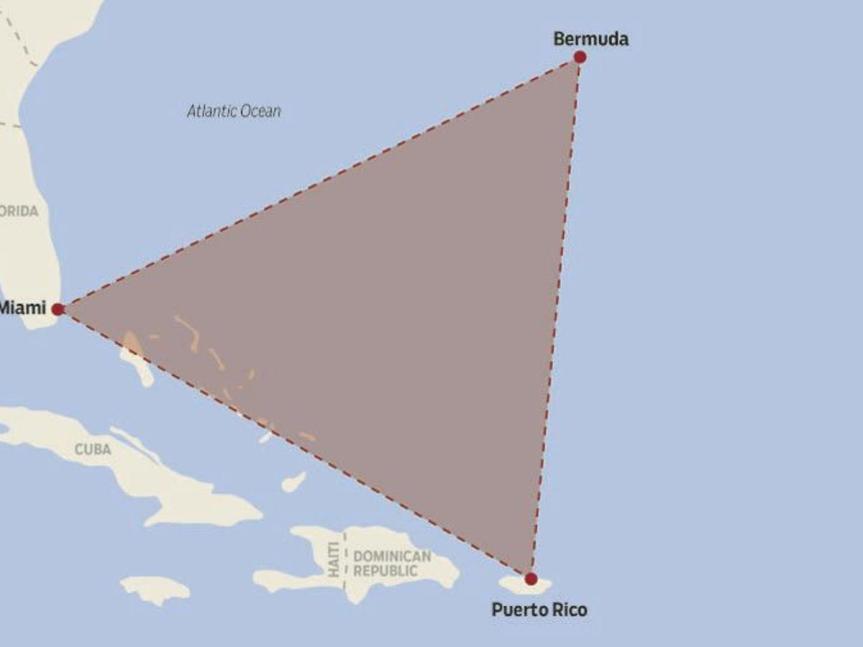
The area referred to as the Bermuda Triangle, or Devil’s Triangle, covers about 500,000 square miles of Atlantic Ocean off the southeastern tip of Florida, bounded by Miami, Bermuda and Puerto Rico. When Christopher Columbus sailed through the area on his first voyage to the New World, he reported that a great flame of fire (probably a meteor) crashed into the sea one night and that a strange light appeared in the distance a few weeks later. He also wrote about erratic compass readings, perhaps because at that time a sliver of the Bermuda Triangle was one of the few places on Earth where true north and magnetic north lined up.

Did you know? After gaining widespread fame as the first person to sail solo around the globe, Joshua Slocum disappeared on a 1909 voyage from Martha’s Vineyard to South America. Though it’s unclear exactly what happened, many sources later attributed his death to the Bermuda Triangle.

Nonetheless, reports of unexplained disappearances did not really capture the public’s attention until the 20th century. An especially infamous tragedy occurred in March 1918 when the USS Cyclops, a 542-foot-long Navy cargo ship with over 300 men and 10,000 tons of manganese ore onboard, sank somewhere between Barbados and the Chesapeake Bay. The Cyclops never sent out an SOS distress call despite being equipped to do so, and an extensive search found no wreckage. “Only God and the sea know what happened to the great ship,” U.S. President Woodrow Wilson later said. In 1941 two of the Cyclops’ sister ships similarly vanished without a trace along nearly the same route.

A pattern allegedly began forming in which vessels traversing the Bermuda Triangle would either disappear or be found abandoned. Then, in December 1945, five Navy bombers carrying 14 men took off from a Fort Lauderdale, Florida, airfield in order to conduct practice bombing runs over some nearby shoals. But with his compasses apparently malfunctioning, the leader of the mission, known as Flight 19, got severely lost. All five planes flew aimlessly until they ran low on fuel and were forced to ditch at sea. That same day, a rescue plane and its 13-man crew also disappeared. After a massive weeks-long search failed to turn up any evidence, the official Navy report declared that it was “as if they had flown to Mars.”

Bermuda Triangle Theories and Counter-Theories

By the time author Vincent Gaddis coined the phrase “Bermuda Triangle” in a 1964 magazine article, additional mysterious accidents had occurred in the area, including three passenger planes that went down despite having just sent “all’s well” messages. Charles Berlitz, whose grandfather founded the Berlitz language schools, stoked the legend even further in 1974 with a sensational bestseller about the legend. Since then, scores of fellow paranormal writers have blamed the triangle’s supposed lethalness on everything from aliens, Atlantis and sea monsters to time warps and reverse gravity fields, whereas more scientifically minded theorists have pointed to magnetic anomalies, waterspouts or huge eruptions of methane gas from the ocean floor.

In all probability, however, there is no single theory that solves the mystery. As one skeptic put it, trying to find a common cause for every Bermuda Triangle disappearance is no more logical than trying to find a common cause for every automobile accident in Arizona. Moreover, although storms, reefs and the Gulf Stream can cause navigational challenges there, maritime insurance leader Lloyd’s of London does not recognize the Bermuda Triangle as an especially hazardous place. Neither does the U.S. Coast Guard, which says: “In a review of many aircraft and vessel losses in the area over the years, there has been nothing discovered that would indicate that casualties were the result of anything other than physical causes. No extraordinary factors have ever been identified.”

Reproductive Health

Total well being in all aspects of the reproduction such as physically mentally and emotionally is called Reproductive health.

All the reproductive organs should be healthy with normal function.

Major problems associated with reproductive health

Overpopulation

  • Overpopulation causes a scarcity of every basic need.
  • It affect the well-being of reproductive health also.
  • To overcome the problem of overpopulation India started family planning program in 1951.
  • Later it was changed to reproductive and Child Health Care program in 1997.
  • A rapid decline in death rate, maternal mortality rate and infant mortality rate leads to overpopulation.

Small family, happy family

Steps to control population explosion

  • People should be educated about the advantages of smaller family.
  • Raising the marriageable age of male and female is an effective way to control the population.
  • Couples should be motivated to family planning by adopting birth control measures.

Step under reproductive and Child Health Care program

  • Increase in awareness about disease related to reproductive system example – sexual transmitted disease (STDs).
  • Increase in awareness through the audio visual media.
  • Increase in awareness about different contraceptive methods.
  • Increase awareness about sex education.

Female foeticide

  • Female foeticide can affect reproductive and sexual health of a Woman.
  • Due to the use of amniocentesis cases of female foeticide increases.
  • Amniocentesis is the technique in which amniotic fluid is studied for any type of enzyme disorder, chromosomal disorder or other bio-chemical disorder.
  • Amniocentesis method is misused to know the sex of an Unborn baby.

Sex education

  • Due to lack of education, people are not concerned about safe and hygienic sexual practice.
  • Introduction of the education in school and colleges its another step to provide right information to the youth.
  • Sex education can save the young youth people from myths and misconceptions about sex related issues.
  • Should provide knowledge about birth control methods and care of mother and child.

Our health is in our own hand…

Sexually transmitted disease

Chlamydiasis

  • Caused by Gram Negative bacteria Chlamydia trachomatis.
  • Causes urethritis which result in painful urination and pus discharge.
  • In male, it causes infertility by causing oligospermia.
  • It increases the chance of ectopic pregnancy.
  • Treatment
    • Treated by antibiotics.

Gonorrhea

  • Causes by negative bacteria Neisseria Gonorrhea.
  • Causes inflammation of reproductive tract, urinary tract infection, and urethritis.
  • Treatment
    • Newly born child is given 1% AGNO3 dose to prevent eye. infection

Genital herpes

  • Causes by herpes simplex virus
  • Causes painful blisters
    • In male – glans penis and foreskin
    • In female – external genitalia
  • There is no proper treatment
  • Treatment is only to extend life.

Genital warts

  • Caused by human papiloma virus.
  • Causes Cancer of different organs such as-
    • cervical cancer
    • penile cancer
    • vaginal cancer
    • vulvar cancer
    • anal cancer
  • Treatment
    • Alpha interferon
    • cryotherapy
    • electrocautery

It is very important to provide information to the couple or who are in marriageable age group about birth control methods, care of pregnant women, important of breastfeeding, equality to the gender and equal opportunity to the male and female child, reproductive tract infections etc.

The education of reproductive health should be provided to all

People who single handedly brought a CHANGE in the society

What we learn from our society we follow that and pass on the same to the generation which follows. In India, if anyone wants to make a change in the normal dynamical functioning of a society, they are generally demotivated by the statement that “What will happen by a SINGLE PERSON’s efforts”. This is what we have heard since ages and this is what is being passed on to us from the older generations. As people prefer security in every sense, whether it be life security, job or financial security. Because to make changes requires guts to stand alone and continue doing what one believes in.

Also, we inspire each other in the way we may have never thought of. How many of you after watching a sport inspired movies have at least once tried that sport? Inspiration lies in every corner of the world i.e. if you really open your eyes to see it.

This blog will tell you about some INDIANS who single handedly managed to bring a drastic change in the society.

  1. JADAV PAYENG– Popularly known as the “FOREST MAN OF INDIA”, a title which was conferred to him by the vice Chancellor of the Jawaharlal Nehru University in 2012, Jadav is a man responsible for creating the  forest that stands at 550 hectares today on the island of Majuli near Jorhat.

It all started when a teenager Jadav living in the state of Assam near the Brahmaputra river region noticed the decreasing number of reptiles and snakes from the forests near his house due to excessive cutting of the trees. The elders of his village told him that if a house is not made for the animals they will all die. He thought about how he will feel when instead of snakes, the number of human started to decrease. He knew he had to do something, so he went to the forest department with his problem which was actually everyone’s but it was conveniently ignored. The forest department then taunted him to start planting trees himself and that is what he did. He started planting saplings on a small deserted island near the Brahmaputra river for nearly three decades and now this full grown forests spread over many hectares of land.

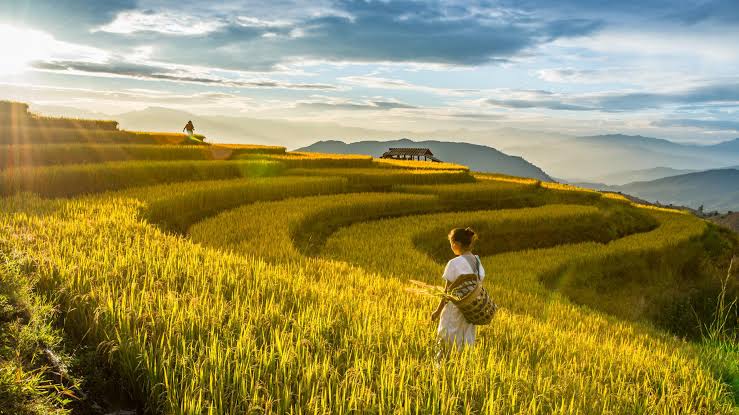
People travel from across the globe to see his forest that is visited by 120 species of birds, including migratory ones; and elephants, rhinos, and tigers that visit from Kaziranga National Park. Also, a herd of 50 to 150 elephants remains in the forest for nearly three months a year. Locals call it ‘Mulai forest’; Mulai is Jadav’s nickname.

While rest of his friends have a stable , comfortable life in the cities, Jadav refused to leave the forests which was his home and live with his wife and 3 children in a hut in the village. He says that his awards are his wealth.

2.SUDHANSHU BISWAS- A revolutionary freedom fighter who was one of those many unsung heroes who were the support to the ones at front on the battlefront, is the founder of 18 schools which educates poor and orphan children with the aim of giving them a brighter life. After India gained Independence , Biswas wen toff to Himalayas to understand true purpose of life and when he came back , there was a new mission he decided to embark upon. Biswas established two Ashrams in South 24 Parganas. Later, in 1973, he set up Sri Ramakrishna Sevashram near Baruipur. By 1996, he had built 18 free schools for the poor and downtrodden in the most underdeveloped areas of Sundarbans. He also has a old age home for people from nearby villages .

It is truthfully said that a REVOLUTIONARY NEVER DIES. Now in his 90s, Biswas still continues to run the schools and even teaches mathematics to the students. Biswas has proved that Age is just a number, it is the will power that matters.

3. RITU BIYANI – After having suffered and recovered from Breast cancer herself, she made it a point to educate the women living in the tribal , urban and rural areas to educate them about Breast cancer and help them find adequate treatment for the same. In India, women generally tends to ignore their health problems as they do not wish to disturb the dynamics of her family by bringing forth her health issue. The reason being that In Indian households women carry the ultimate responsibility of the family from feeding to taking care of everyone. In the process of fulfilling their responsibilities , they often tend to care about themselves and this carelessness then leads to dangerous consequences.

Many women doesn’t know or fail to notice the early signs of breast cancer and even if they do , they fail to get proper help for the same. Ritu Biyani holds a LIMCA BOOK OF RECORDS recognition in being the only woman to travel across the four points of the country to spread awareness about the same. If she might also have “minded with her own business” after getting recovered, then the many whose lives have been saved because of her efforts may have died.

Her BREAST CANCER AWARENESS CAMPAIGN continues to help those who have been living under darkness and scaredness of this disease taking them away soon.

4.GANGADHARA TILAK KATNAM-Once on a rainy day in Hyderabad, the car driven by Mr. Tilak suddenly fell, into a pothole and he ended up accidentally spoiling the uniform of kids standing nearby. He felt so ashamed for the same but again it was not his fault. Gangadhar like many other Indians could have left the matter at this but no he decided to find a solution by himself as such things which are the responsibility of the authorities are blatantly ignored by them. Now, a retired railway officer at 67, instead of enjoying his retirement he set off every morning in his car filled with gunny sacks containing tar to repair the roads himself. He picks these left over sacks from the roadsides and when the quantity fell short of the required amount , he even uses money from his own pocket.

It is his dream to see a pothole -less Hyderabad. He has until now  fill over 1,125 potholes so far. For two and half years, he filled potholes single-handedly and with his own money. Now many citizens and software engineers are joining in Gangadhara’s Shramadaan (voluntary contribution of labor). From June 2012, the GHMC (Greater Hyderabad Municipal Corporation) started supplying BT MiX material to Gangadhara.

Social Movements.

Social movements seek to bring in social change in our everyday society and our everyday lives, Social movement’s role in society is not necessarily to achieve an agenda or solely change laws. Social movement’s role is to allow people the opportunity to come together, speak their mind, and make people aware of an issue that is close to their heart. Social movements often arise with the aim of bringing about changes on public issues which concern a specific group. Social movements are a prime example of our democratic rights. Being able to practice free speech, organize peaceful protests and having the power to make a difference in our government are all great privileges of living in our country. Social movements have achieved many great things like women’s rights, environmental rights, rights for backward caste and classes and Dalit’s. People can practice their constitutional rights, while making a difference in the world they live in.

Across India, the post-independence movements of women, students, SCs, STs and peasants had a particular significance as they were deprived in the British Period of some fundamental rights and remained largely non-beneficiary of development gains. Social movements in India, contribute to the emergence of a radically new social, economic and political structure. The majority of social movements strive to create new ideas which are expected to be adopted and implemented by the leaders of the party. We had some hope for the upliftment of the Indian Constitution and subsequent legislative initiatives. Now they are motivated to suit the affluent sectors of Indian society. The revolution that started in India’s struggle for liberty centered on throwing the British Empire out of control by becoming self-sufficient Swadesh. This motivated people to speak against their authority and the courage to share their opinions.

 Sometimes, these social movements don’t work or are ineffective but, just because their main goals aren’t met or nothing was achieved on their “agenda” does not mean the social movement was not successful.  For a social movement to be successful, all they have to do is make someone aware of an issue, that they were not aware of before. Overall, social movements have played an integral role in our societal advancement and have ensured that the people have the power to make a difference in their government, one of the great privileges that come along with living in our country.

Social development, an approximately coordinated however supported mission on the side of a social objective, ordinarily either the execution or the counteraction of an adjustment of society’s construction or qualities. Albeit social developments contrast in size, they are on the whole basically aggregate. That is, they result from the pretty much unconstrained meeting up of individuals whose connections are not characterized by rules and strategies however who simply share a typical attitude toward society.

Aggregate conduct in groups, alarms, and rudimentary structures (processing, and so on) are of brief term or wordy and are directed generally by motivation. At the point when brief motivations offer approach to long haul points, and when supported affiliation replaces situational groupings of individuals, the outcome is a social development.

Qualities of social developments

A development isn’t just a propagated swarm, since a group doesn’t have authoritative and persuasive instruments fit for supporting enrollment through times of inaction and pausing. Besides, swarm components can’t be utilized to accomplish correspondence and coordination of movement over a wide region, like a country or landmass. A development is a combination of association and suddenness. There is typically at least one associations that give character, initiative, and coordination to the development, however the limits of the development are never coterminous with the associations.

Panchakanya- The story of 5 Eternal Virgins despite being married.

अहिल्या, तारा, मंदोदरी, कुंती दृापदी स्मरणं, नित्यं, महापातक नाशनाम.

Ahalya, Tara, Mandodari, and Sita, while Draupadi and Kunti from the Mahabharata. Sita and Kunti are often replaced by each other according to people’s beliefs.

These five women were born in  Kanya Rashi or the constellation of Virgo. The word ‘Kanya’ is used to denote a woman who is a ‘Virgin’. These women were the symbol of “Purity” and were considered the Eternal Virgins group despite being married.

Virgin women were supposed to have great powers of ‘Tapa’. So, all these women, despite being married, had the power of Tapa. These panchakanya are ones who owned their virginity and could revive it. The panchakanya’s were so pure that even through the fire they could pass unharmed.

Ahalya

The Bala Kanda of the Ramayana mentions that Brahma molds Ahalya out of pure creative energy. Brahma created her out of the water as the most beautiful woman in order to break the pride of Urvashi, the foremost celestial nymph. Brahma places her in the care of Gautama rishi until she reaches puberty. When that time arrives, the sage returns Ahalya to Brahma, who, impressed by Gautama’s sexual restraint and asceticism, bestows her upon him. Indra, who believes that the best women are meant for him, resents Ahalya’s marriage to the forest-dwelling ascetic.

In another tale, it is said Ahalya is created from the ashes of the sacrificial fire by the Saptarishi (seven seers) and gifted to sage Gautama.

The king of the gods, Indra, was infatuated with her beauty and comes disguised as Gautama when the sage was away, and requests to have physical relationships with Ahalya. In some versions, Ahalya sees through his disguise but still complies out of “curiosity” and because her husband would neglect his matrimonial duties. In later versions, Ahalya falls prey to Indra’s trickery and does not recognize him. In all narratives, Ahalya and her lover Indra are cursed by Gautama. Gautama then curses Ahalya to remain invisible to all beings for thousands of years, fast by subsisting only on-air, suffer and sleep in ashes and be tormented by guilt. Nevertheless, he assures her that her sin will be expiated once she extends her hospitality to Rama, who will visit the ashram. Thereafter, Gautama abandons the ashram and goes to the Himalayas to practice asceticism. Indra was cursed to be castrated or be covered by a thousand vulvae that ultimately turn into a thousand eyes.

The Ayodhya prince Rama, with his brother Lakshmana and their guru, the sage Vishvamitra pass Gautama’s desolate ashram while travelling to King Janaka’s court in Mithila. As they near the ashram, Vishvamitra recounts the tale of Ahalya’s curse and instructs Rama to save Ahalya. Ahalya is said to have been touched by Rama’s feet and rises from her stone state to human form and goes to her abode, the Gautama’s hermitage.

Tara

Tara was the wife of the monkey king Bali who was presumed dead after a battle with a demon after which she married his twin brother Sugriva according to the custom of the time. The lack of the description of formal marriage suggests that Tara’s relationship to Sugriva is neither widow re-marriage nor polyandry, but simply appropriation by Sugriva. In the references of the coronation of Sugriva as king, Angada is also described as the heir-apparent crown prince, while Tara is mentioned as Sugriva’s wife. The Adhyatma Ramayana declares that Sugriva acquires Tara.

It turns out that Bali isn’t killed in reality. When Bali returned, he was livid and abducted Sugriva’s first wife, Ruma, as revenge. As battle lines between the brothers were drawn, wise Tara counseled her first husband to return Ruma to his brother. Tara said Sugriva had not snatched her but married her legitimately only because Bali’s death had been confirmed. Tara, the mother of Bali’s son Angad, finally managed to wrest a promise from him that he would not kill his own brother. The brothers fought a duel in which Bali was killed by Sugriva’s mentor Rama. Sugriva was crowned king of the kingdom of Kishkindha. As dowager queen, Tara diplomatically left the question of the ascension of her son to the throne for his stepfather to resolve. She knew well that the guilt-ridden uncle Sugriva would not deny her son his right to the throne.

In his dying breath, Bali reconciles with Sugriva and instructs him to follow Tara’s wise counsel in all matters.

While all was well with the king and his lustful nature got the best of him and he eventually ignored his promise to Rama to help him win Sita back. Lakshaman was livid to find Sugriva had backtracked on his words. He entered Sugriva’s personal chambers to bring upon his wrath on the king but Queen Tara very diplomatically pacified the prince.

Thus she was instrumental in saving the king from the wrath of the Lakshmana and brought coherence in the Rama camp to fight the great war to avenge Sita.

Mandodari

Mandodari is the daughter of Mayasura, the king of the Asuras, who are god-like demons. He rescued a beautiful girl child from the well. He and his, wife, Hema, adopted her and named her Mandodari. She was taught aspects of architecture by King Mayasura. He taught Mandodari about the various landforms of Bharatvarsh which were Swarga (heavenly plateaus), Bhoomi (plains) and Patala (underworld). When she turned fifteen, he started involving her in his projects and eventually met Ravana when he came to seek her counsel.

Valmiki’s Ramayana describes Mandodari as a very beautiful, pious and noblewoman whose appearance once led Hanumana to mistake her for Sita. She was known to be extremely patient with Ravana’s attitude towards women, but always questioning his actions and rebuking his choices.

Despite Ravana’s faults, Mandodari loved him and was proud of his strength. She was aware of Ravana’s weakness towards women. A righteous woman, Mandodari tried to lead Ravana to righteousness, but Ravana ignored her advice.

Draupadi

Draupadi is also referred to as Panchali (meaning one from the kingdom of Panchala), Yajnaseni (meaning one born from a Yajna or fire-sacrifice), Mahabhaaratii (great wife of the five descendants of Bharata) and Sairandhri (an expert maid, her assumed name during her second exile in which she worked as Virat kingdom’s queen Sudeshna’s hair-stylist).

Panchali is the Dharma Pathini of the Pancha Pandavas. The concept behind her marrying five people is that she is the Shakthi Roopa of the five devas, Dharma – Yudhishthira, Vayu – Bheema, Indra – Arjun, Nakul and Sahadev – Ashwini Kumaras.

No woman ever faced the trials and tribulations that Draupadi faced in her life. Even after being born out of the fire to Drupada, even if she had heroic husbands, she had to undergo Vastra harana, exile, Agnata. Post-war she was faced to watch her entire clan being killed.

Kunti

She is one true Matriarch of the Saga of Mahabharata. Kunti or Pritha was the daughter of Shurasena and the foster daughter of his cousin Kuntibhoja. She is the sister of Vasudeva. She was married to King Pandu of Hastinapur and was the mother of Karna and the first three Pandava brothers Yudhishthira, Bhima, Arjuna. She was the paternal aunt of Krishna, Balarama, and Subhadra. She was the stepmother or foster mother of Nakula and Sahadeva.

Kunti’s marital life was also unusual. Having chosen Pandu as her husband in a svayamvara ceremony, she never had a child by Pandu. Her husband had received a curse from the sage Kimdama that he would die on having intercourse with his wife because he had shot the sage with an arrow when he was copulating with his wife in the guise of a deer. Deeply hurt by the turn of events, Pandu decided to retire into the forest and live the life of renunciation. Kunti accompanied him. She invoked her boons for herself and Madri and had 3 children of her own and two for Madri. Pandu dies unable to abstain.


HISTORICAL EVENT ON JULY 27th.

Battle Of Maiwand on July 27th.

On 27th July, 1880, the Battle of Maiwand was fought between nation soldiers and also Afghan army, during the Second Anglo-Afghan War. during this battle, the Afghan forces, headed by Mohammad Ayub Khan, turned triumphant against Brits army.

2000 Fiji George Speight on July 27th.

The Rebel coup leader George Speight who led the coup to overthrow Fiji’s democratically elected government in May by taking Fiji’s Indian Prime Minister, Mahendra Chaudhry, and members of his multi-racial government hostage for 8 weeks has been arrested and can possibly face treason charges. He was found guilty of treason and is currently serving a term of captivity for his role within the overthrow of the constitutional government.

29 Interesting facts about 29 different states(part-2)

Here is the part-2 of this article, in part-1, we have seen some interesting facts about some states in India. In this article, we are going to see some facts about rest of the states.

Telangana

Do you know once a Indian ruler was the world’s richest person in the world. He is Osman Ali Khan Bahadur, the last ruler of Nizam. In 1937, the time magazine featured Mir Osman Ali Khan Bahadur in there cover page as the world’s richest person. His estimated net worth is $2 billion in 1940, as of now $236 billion.

Karnataka

Do you know that 5 rivers flow in a single district in Karnataka. Vijayapura district in Karnataka witness flow of five rivers through it, they are Krishan, Doni, Bhima, Ghataprabha and Malaprabha. This district is also known as land of five rivers.

Haryana

Several historic battles like Mahabharata were fought in Haryana. Haryana is the home land for Indus and Vedic civilizations.

Punjab

According to the world records, The Golden Temple in Amritsar is the most visited place. The golden temple is located in Punjab. As by its name, it is really made of gold. This is the most popular tourist attraction in Punjab.

Odisha

In Odisha, you can find some of the oldest rocks in the world. The old rocks are about 3 Billion years ago. Our earth is believed to 4.5 Billion years old.

Sikkim

Each and every state in India have there own official language. Every state in India, have up to 1 or 2 official language. But Sikkim is the only state in India which 11 official languages.

Arunachal Pradesh

Do you known earlier Arunachal pradesh was a union territory, but later on 20th February it become a independent state.

Manipur

It is believed that the sport polo has originated in Manipur and was spread in the western countries by the Britishers during the colonial rule.

West Bengal

Have you ever wondered West Bengal is located at east but called as West Bengal? The answer is when India got its independence, the Bengal region was partitioned, the western part went to India and the eastern part went to Pakistan(Now Bangladesh). That’s why it is called West Bengal.

Chattisgarh

In Chattisgarh, motorcycle ambulances are used to save people life in the remote villages where ambulances cannot reach. So far it has saved about 200 pregnant women.

Bihar

Nalanda University is one of the world’s oldest university is located at Bihar. It was established in 5th century and it was functioned between 5th to 13th century. However it was destroyed in during some battles.

Tripura

Do you know 91 percent of the land in Tripura is under Cultivation? Rice is the crop of Tripura.

Meghalaya

Mawsnyram is the place located in Meghalaya, which receives highest amount of rainfall on this planet. The average rainfall here is 11,871mm.

Jharkhand

The state Jharkhand is rich in minerals such as iron ore, coal, mica, and limestone. It accounts for 40 percent of the total minerals found in India.

Nagaland

Nagaland is the only state in India to register population decline from 2001 to 2011 by 0.46 percent.

Himachal Pradesh

There is a village in Himachal Pradesh, which is called village of taboos. You cannot touch anything in there villages without there permission. If you touch anything without there permission then you have to pay fine to them.

Goa

Portuguese ruled Goa for more than 450 years. The rule of ended on 17th December 1971, by the invasion of Indian army.

That’s all from my side. I hope you like it.

Health Benefits Of Natural Medicines.

NATURE’S MEDICINES.

The plant world is an immense store of active chemical compounds. Nearly half = the medicines we use today are herbal in origin, and a quarter contains plant extracts or active chemicals taken directly from plants. Many more are yet to be discovered, recorded and researched; only a few thousand have been studied. Across the globe, the hunt will always be on to find species that could form the bases of new medicines. Humans have always used plants to ease their pains. They imbued them with magical powers and then gradually learnt to identify their properties. We can now enjoy the benefits of herbal medicines because, over thousands of years, our ancestors discovered which plants were medicinally beneficial and which were highly toxic.

Thousands of years ago, the ancient Egyptians discovered simple ways to extract and use the active ingredients within plants. Egyptian papyrus manuscripts from 2000 B.C. record the use of perfumes and fine oils, and aromatic oils and gums in the embalming process.

In ancient Greece in the 5th and the 4th centuries BC, Hippocrates, the father of medicine, was already recommending asparagus and garlic for their diuretic qualities, poppy as a way of inducing sleep and willow leaves to relieve pain and fever. In the 1st century AD, another Greek doctor, Dioscorides, established the first collection of medicinal plants. His treatise on the subject was translated into Arabic and Persian. Centuries later, his work was also used by the Muslim scholars who influenced great universities of the period, particularly at Montpellier, Europe’s most famous centre for the study of botany.

As a result of trade with Africa and Asia, the Western world’s store of herbal medicines was enriched by the inclusion of camphor, cinnamon, ginger, ginseng, nutmeg, sandalwood, turmeric and henna. For a long time, however, the use of both local plants and those with more distant origins was based on more or less fanciful beliefs. Throughout the Middle Ages herbal medicine consisted of a mixture of magic, superstition and empirical observation. From the Renaissance onwards, scientists and their scientific studies, discoveries and inventions came to the fore, rejecting alchemists’ elixirs and other magical remedies. Local plants were carefully collected and widely used to make infusions, decoctions and ointments. These plants make up the major part of the traditional cures that we have inherited.

Chandan or sandalwood sticks.

History behind Nature’s Medicines:

In the late 1700s, Carl Wilheim Scheele, a gifted Swedish chemist, obtained tartaric acid from grapes, citric acid from lemons and malic acid from apples. The techniques that he and his contemporaries used led to the isolation of the first purified compounds from plants that could be used as drugs. First came the isolation of morphine from the opium poppy in 1803, then caffeine from coffee beans in 1819, quinine from cinchona bark and colchicines from meadow saffron both in 1820 and atropine from deadly nightshade in 1835.

Image Source -google.

One tree that generated considerable interest among scientists was the willow. In the early 1800s, chemists from Germany, Italy and France began the search for the compounds responsible for the acclaimed pain-relieving effects of its bark. In 1828, the German pharmacist, Johann Buchner, was the first to obtain salicin, the major compound in a pure form. In 1838, the Italian chemist, Raffaele Piria also obtained salicylic acid from the bark by various chemical processes. But these early compounds caused blisters in the mouth, and stomach upsets when ingested. In 1853, a French chemist, Charles Frederic Gerhardt, synthesised a modified form of salicylic acid-acetylsalicylic acid. But still it wasn’t further modified form developed for more than 40 years until a German chemist, Felix Hoffman, working for Bayer, rediscovered Gerhardt’s compound. Hoffman gave it to his father who suffered from arthritis and reported the beneficial effects.

Bayer decided to market the acetylsalicylic acid as a new drug for pain relief and patented the compound acetylsalicylic acid in 1899. At last from the willow, the first modern drug was born and, with 12000 tons of aspirin sold every year throughout the world, it has kept its number one position.

From the 1930s onwards, advances in chemistry have made it much easier to reproduce the active ingredients in plants. But plants will continue to have a medicinal importance in their own right. Their active constituents may be slightly modified to improve their efficiency or to reduce their undesirable effects, but they are still vital for the treatment of disorders such as cancers and heart diseases or as a means of combating malaria. And they remain the essence of herbal medicine-an area that has still not been fully understood and explored.

THE AGRARIAN REVOLUTION

The term Agrarian Revolution implies the great changes that took place in the agricultural methods of England during the second half of the 17th century and the first half of the eighteenth century.

Causes of the Revolution:

  • The old open field system was wasteful of land because, according to this arrangement, every year one of the three fields was to be out of cultivation.
  • Secondly, come the old system of distribution of land was wasteful of time.
  • Thirdly, there was the necessity of confirming the customs of the village and thus made experiments in agriculture method possible.

In the 18th century, the population was increasing and so more food was needed. Owing to the scarcity of food materials there was a rise in prices. The old-fashioned farmers thought that they could get more money if they produce more. This idea was an incentive for them to improve their agricultural methods.

Reallocation of Lands:

Reallocation of lands in consolidated blocks which could be enclosed, several Enclosure Acts were passed in the reign of George II and George III. There were many cases of the poor peasants being not satisfied with the reallocation. Such people sold their small holdings to wealthy businessmen of the city who were eager to possess lands of their own. The final result of this tendency was that the class of rural inhabitants known as yeomen disappeared.

Advantages of enclosure system:

One of the advantages of the enclosure system was that it gave scope for many enterprising people to make experiments. Jethro Tull of Berkshire was the inventor of the drill for sowing seeds. He also emphasized the necessity of capital selection of seeds if good crops were to be obtained.

Another pioneer is Charles Townshend of Norfolk. He adopted Tull’s principles and paid much attention to the question of rotation of crops. He introduced the four-course rotation of turnips, barley, clover, and ryegrass, and wheat. These measures prevented an unprotective fallow. His innovation made Norfolk a leading agricultural country. With the result that in the thirty years the rental of the one farm rose from 180 pounds to 800 pounds a year.

The work of Townshend was continued by Thomas Cook. He followed the precepts of Tull and in addition fed the soil with manures including bones. In nine years he was able to grow excellent wheat crops. He also introduced new artificial foods such as oil cake under led the way in fattening cattle for the London markets. He held a yearly meeting for farmers at his house and these meetings farming topics were discussed and much advice was given and received. It is estimated that the annual rental of his estate Rose from 2,200 pounds in 1776 to 20,000 pounds in 1816.

Cattle farming:

While Norfolk landlords were thus making great improvements in arable farming, a Leicestershire farmer, Kama Robert Bakewell was revolutionizing English methods of stock breathing. Up to this time sheep had been valued chiefly for their wool, the production of mutton had been only secondary. Bakewell was the first to turn his attention to the production of meat as the main consideration of stock breeding. By patient choice and experiment, he succeeded in producing a new breed of sheep with fattened quickly and weighed heavy. His success attracted the attention of many. Farmers from far and wide visited his farm at Dishley and became converts to his new methods. Others who did pioneering work in this field were George Culley, Charles Colling, and John Salman.

Board of agriculture:

Royal patronage was also given to the moment of revolutionizing the agriculture methods. George III, affectionately known to his subjects as a farmer George, established a model farm at Windsor. The success of the moment was due to the writings of agriculture writers, the most famous was Arthur Young. When a board of agriculture was established in 1793. Young was made its secretary.

Conclusion:

With the advent of the enclosure system, the English banking system also grows, for even the wealthy landlords did not have money to do the fencing and other improvements. So they have to borrow money from the banks. Through all those methods was very desirable from the point of view of production, it had a harmful effect on the partition. The system deprived him of the privilege of grazing his cattle and cutting fuel from the commons.

What is a Novel

Picaresque Novel

The Missile Man

Introduction

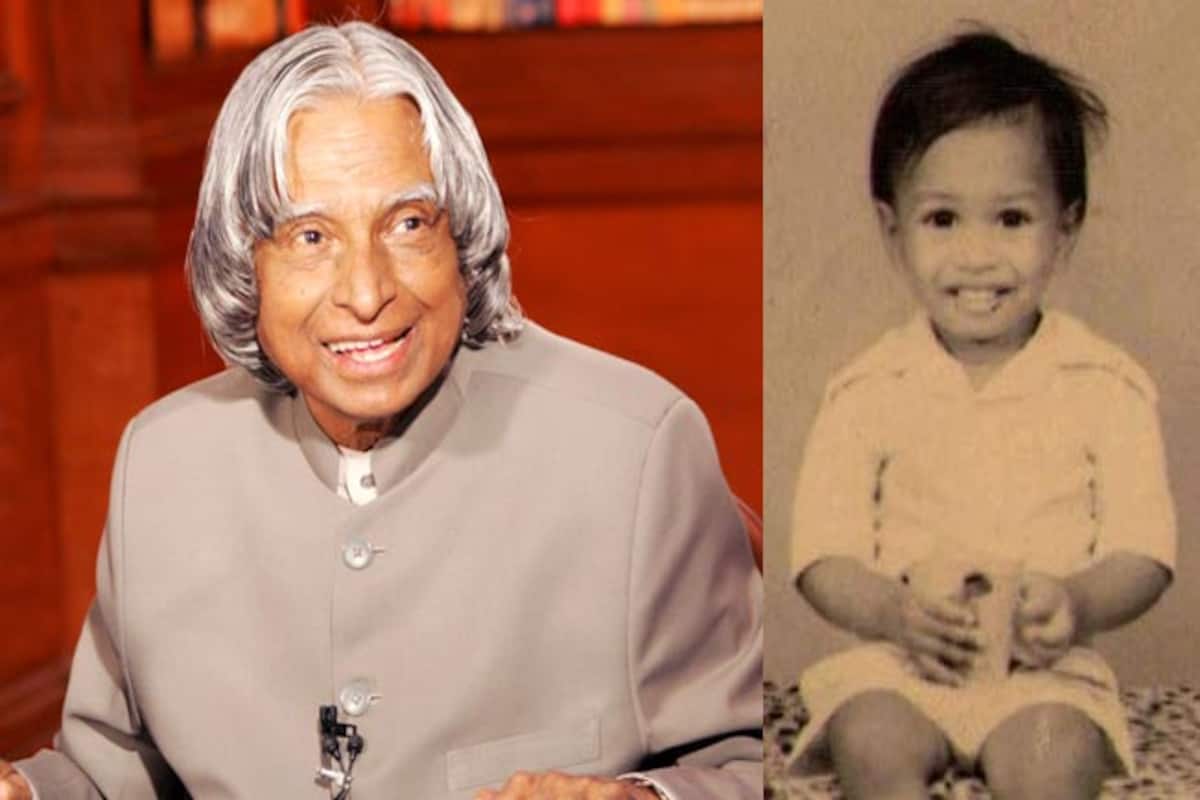
Dr. APJ Abdul Kalam was famously known as the “Missile Man” of India. He was also known for his humility. All the citizens of India are remembering him on his death anniversary on July 27th, when in 2015 he passed away because of a heart attack he suffered in Shillong. He is known to be the people’s President because of his simplicity and humility. He was one of the few Presidents every citizen loved and was fond of. He was the only President of India who did not have a political connection, that is, came from a non-political background. He was the 11th President of India, from 2002 to 2007. This year, July 27th, 2021 is his 6th death anniversary.

About Him

His full name was Avul Pakir Jainulabdeen Abdul Kalam. He was born on 15 October 1931. He was an Indian scientist and politician who played a major role in developing India’s missile and nuclear weapons programs. He was born into a Tamil Muslim family in the pilgrimage center of Rameswaram on Pamban Island, which was then in the Madras Presidency, which now is the State of Tamil Nadu. His father was a boat owner and an imam of their local mosque and his mother was a homemaker. He was the youngest of four brothers and one sister in his family. His ancestors were wealthy Marayakar traders and landowners but the family had lost all fortunes during the poverty-stricken time. Marayakar is a Muslim ethnic found in Tamil Nadu and Sri Lanka who are claimed to be descendants of Arab traders and local women. As a young boy, he sold newspapers to help his family in contributing income.

During his school years, he scored average grades but he was said to be a bright and hardworking student with a desire to learn. He spent a lot of his time studying, especially Mathematics. On completing his education, he went to Saint Joseph’s College, Tiruchirappalli, which was at that time affiliated with the University of Madras. He graduated from there in Physics in 1954. In 1955, he moved to Madras to study aerospace engineering from Madras Institute of Technology. Once while he was working on a senior project, the Dean was dissatisfied because of the lack of progress and he threatened Kalam to either finish the project in three days or get his scholarship revoked. To his surprise, Kalam met the deadline and impressed the Dean. His dream was to become a fighter pilot which he missed by one place.

Career as a Scientist

He had joined the Defense Research and Development Organization (DRDO) in 1958 as a senior scientific assistant. Later on, in 1969, he joined the Indian Space Research Organization (ISRO) where his responsibility was as the project director of the SLV-III, which is known as the first satellite launch vehicle.

He then rejoined DRDO in 1982 as the director. This is when he got the name of the “Missile Man” because of the implementation of the Integrated Guided Missile Development Program. He was then appointed as the senior scientific adviser to India’s defense minister in 1992. He also played an eminent role in the Pokhran-II tests in May 1998.

Awards

He won various awards:

  • Padma Bhushan – 1981
  • Padma Vibhushan – 1990
  • Bharat Ratna – 1997
  • Indira Gandhi Award for National Integration – 1997
  • Veer Savakar Award – 1998
  • SASTRA Ramanujan Prize – 2000
  • Von Braun Award – 2013

Conclusion

We should take a look at his inspiring quotes on this death anniversary and follow the great inspiration that he is to all of us. One of the most important one is “We are all born with a divine fire in us. Our efforts should be to give wings to this fire and fill the world with the glow of its goodness.”

References

Photography – The Poetry of Images

Photography is nothing less than an art form of absolute purity. Silent poetry with the moments
captured in an image is photography. The most memorable and beautiful way to remember the
special things in life with full clarity. Photos are a way of preserving the best memories and
moments for eternity. Photos are the permanent reminder of the past. Never get forgotten. They
will always be alive. The past, the memories, everything is hidden in the photos. Hidden but so
transparent in emotions. All the feelings just in a single place. They get old but are
unforgettable. But on the bright side, photos are a way of expressing your emotions in a
completely different and innovative way.

Photo by Kaique Rocha on Pexels.com


Photography is not just work, it is a passion filled with excitement and hope. It is a specific but
not so specific piece of art. It can be done in various forms with no boundaries. There’s nothing
to dislike in photography. It’s just another way to showcase talent of immense beauty.
Everything, every moment can be captured and kept for the rest of your life. Photos have the
finest texture and the most amazing depiction of a thing. It feels like it’s real.
Photographers have the ability and power to make a photo so great that it magnifies the
moment. They are able to drastically change the outcome of an image by using various
equipment for high quality and definition. Every small detail is shown through photos. It gives
pleasure to experience and relive the moments in life through photos.

Photos are not just a piece of paper or a file occupying a little space in your mobile or camera roll. They are an
explicit version of your life in brief. The small moments to the big memories, all are stored in a
single place for you to look after decades and enjoy living in the moment again. Photography depicts the vulnerability of the photographers through their art. Photographers use photography as a medium for creative expressions. They pour their heart out in the photos. They are artists of very fine quality and beauty in its purest form. The beauty and creativity can not be ignored by any living heart in this world. Embrace moments and capture them in real time
with photography.

5 best places to visit while you are travelling to Aurangabad

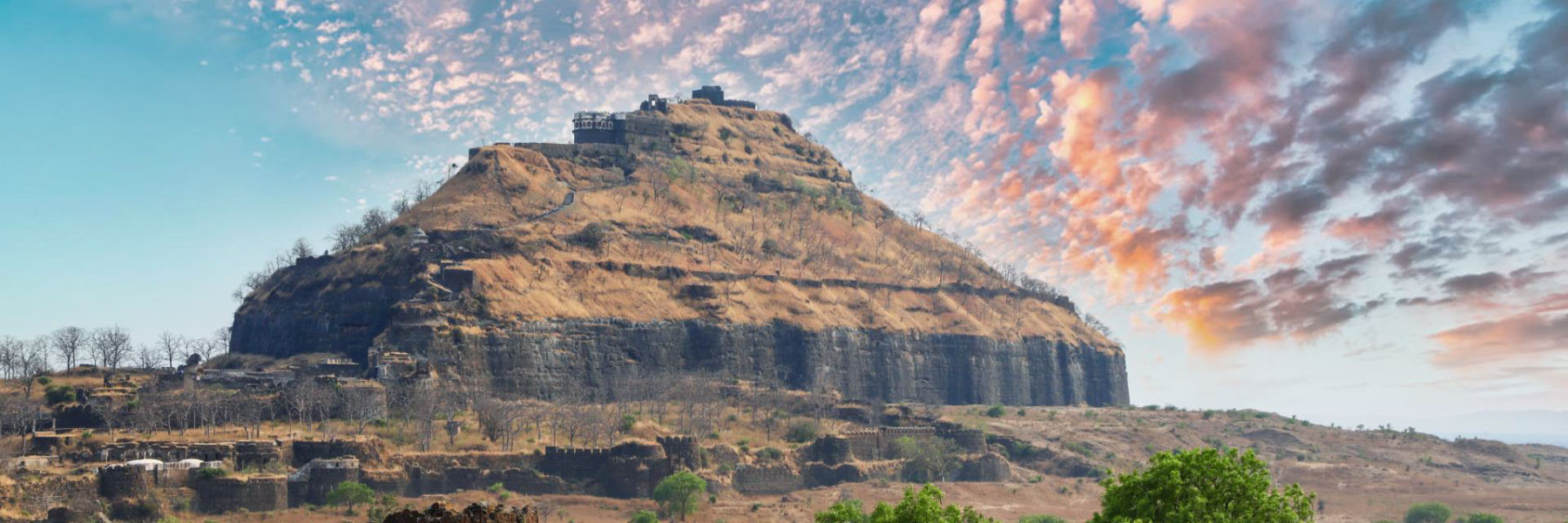
1. Daulatabad Fort

Daulatabad “The City of Fortune” also called as Devgiri. Daulatabad was built in 1187 by Yadava Dynasty. Later Muhammad Tughlak renamed it as “Daulatabad : the city of fortune”.
Just 15 km away from main city of Aurangabad, Daulatabad Fort is located. Often known as one of the “Seven Wonders of Maharashtra”, Daulatabad fort is the best example of powerful architecture. It’s built on a 200m high conical hill, surrounded by the greenery with architecture beauty and protection from enemies. The view after hiking about 700 odd steps up to the top is mesmerising, fascinating and irreplaceable. If you like trekking then you must visit Daulatabad Fort, reaching the top is the most challenging part for every trekker.
The one more reason to visit Daulatabad Fort is “Chand Minar” also called as Tower of the Moon located near the Fort.

Timing = 8am to 6pm

2. Bibi ka Maqbara

Bibi ka Maqbara (Tomb of Rabia) has similar architecture like “Taj Mahal”. A symbol of love and remembrance Bibi ka Maqbara is a beautiful place to visit in Aurangabad. Maqbara has a Charbagh styled garden and it sits pretty right in centre with the surrounding structure, having a water pool and 61 fountains. Located just 3km away from main city.

Timing = 8am to 8pm.

3. Jayakwadi Dam

The largest irrigation dam in Maharashtra and one of the largest earthen dams in Asia, the fascinating Jayakwadi dam is located on Godavari river at site of Jayakwadi village in Paithan taluka of Aurangabad. Watching the dam will make you feel like you are watching a real ocean with no end. Also visit the bird sanctuary near it and don’t forgot to buy famous “Paithani” for your lovely ladies from Paithan.

Timing = 10am to 6pm

4. Ajanta Caves

Located from just 107km away from Aurangabad, Ajanta caves is the most attractive place for foreign tourist’s. A group of around 32 Buddhist caves that are carved out of rocks, these caves date back to the 2nd century and is considered as the most brilliant form of ancient Indian art.
Since 1983, Ajanta caves has been declared a UNESCO World Heritage Site. On the walls of caves there are paintings which recounts the life of Lord Buddha. From the architecture, shape, and form of the caves, it is pretty sure that the ancient Buddhist monks used these caves for studying, living and worship purposes. The murals, paintings, and carvings on the wall reveal many unknown facts about the way of living, the cultures and tradition.

Timings: 8 AM to 5 PM

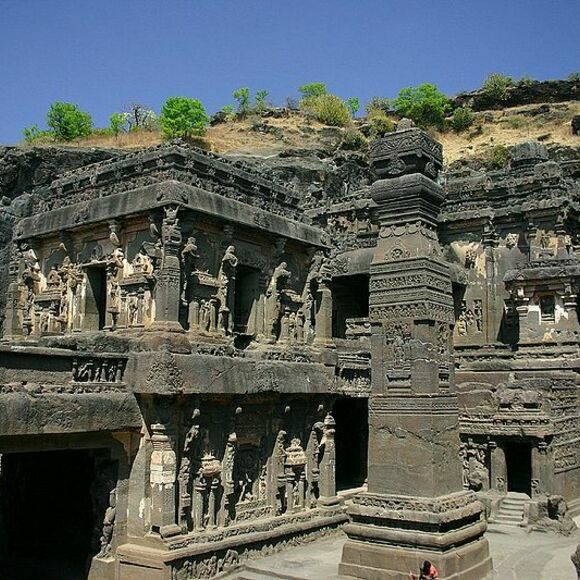
5. Ellora Caves

Another famous tourist place to visit near Aurangabad is Ellora caves, the another powerful example of Indian architecture. Located around 29 km from the city. This chain of caves were built by the Rashtrakuta dynasty of the Buddhist clan and Yadav group of the Jains.
A must visit UNESCO World Heritage site in Maharashtra, this series of caves also showcases the perfection and epitome of the pre historic times of the Indian culture.
There are all 34 caves of which, 12 are Buddhist, 17 Hindu and 5 Jain.

Timings: 6 AM to 6 PM

THE BIGGER THE AGE DIFFERENCE, THE SHORTER THE MARRIAGE

There are numerous factors which can affect a relationship. Some of them are income levels, age difference or commitment etc. With the help of different researches and studies, it was concluded that age difference can also emerge as one of the factors for divorce and for creating odds in an relationship. Studies have concluded that, the greater the age difference between couples, the greater is the chance of ending a marriage and having divorce. Different studies were conducted for understanding the situation of marriage in different age intervals . According to different studies, couples having one or less than one year age difference have only 3% chances of getting divorced. If there is a difference of 5 years then the risk increases to 18%. And if the age difference is 10 years then the risk factor is 39%. This rate keeps on increasing with the increasing age gap. Couples who have less age gap have lesser chances of getting divorced and ending the marriage than those with someone who is very young or old as compared to the other. Individuals who are close in age belong to the same generation and have similar mindsets and outlook towards society and life. This provides a strong foundation to the relationship. These people have similar cultural references and taste, life experiences and will be achieving milestones in the same time. According to different findings, the chances of ending a marriage is highly reduced if marriage is done with the person having same age.

SMALL GAPS : Researchers have found that the couples having small age gaps have less chances of getting divorced. That’s not to say those marriages will not end in divorce. They certainly could. But the age difference would not be the reason for the divorce.

LARGE GAPS :The problem arises when the age difference is higher and the bigger the gap there is between people’s age, the more likely they are to end in divorce.

Changes happen slowly. The marriage may feel to be successful in the starting but the feeling change with time if there are unsuitable conditions. And in case of large age difference, it is seen that the people of more age feel to be more satisfied than the younger one and this eventually pushes the couple to divorce. People find themselves in different places and phases of and in life. If one thinks about his career or good health while the other will be focusing on retirement or declining health due to old ages. Despite the age differences and perspectives, people also have similar feelings and must have felt the happiness but in the similar way there will be numerous differences also. While examining or understanding any relationship it is necessary to understand both the partners. Relative ages of spouses affect if the husbands will leave their wives or the wives leave the husband and mostly it is found that the older spouses are left by the younger. Hence, spouses start to look less appealing and the thinking styles differs more and more as he or she ages, and it is absolute age that is driving divorce.