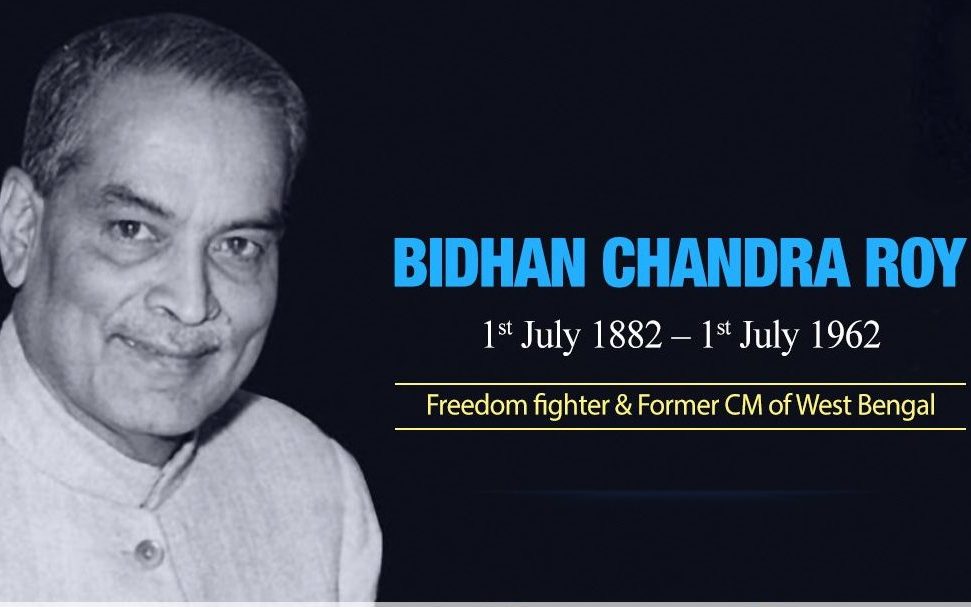
Every year,July 1 is observ d as National Doctor’s Day in the memory of Dr. Bidhan Chandra Roy, who had his birth and death anniversary on the same day.
The day, commemorated by Indian Medical Association (IMA), is dedicated to all the doctor’s and healthcare workers who have been serving people by risking their lives. Dr.Roy , former Chief Minister of Bengal, was known for his selfless service.
Dr. Roy was born on July 1,1882, and passed away on July 1,1962. Since 1991, National Doctor’s Day, also called Doctor’s Day has been celebrated across the nation every year. This day is celebrated on different dates across the world.
“This world has become a better and healthier place to live in with doctors bringing the joy of health and goodness to our lives. Happy Doctor’s Day.”
“Medicines cure diseases, but only doctors can cure patients.” – Carl Jung
Dr. Roy played a great role in establishing medical institutions like Jadavpur TB Hospital, Chittaranjan Seva Sadan for women and children, Victoria Institution (college). He was also referred to as the first medical consultant in the subcontinent of Indian and was more successful and dedicated than his contemporaries in several fields, mentioned British Medical Journal.
For his outstanding contributions, he was also awarded the Bharat Ratna, on February 4,1961. National Doctor’s Day is observed to acknowledge the role doctors play in saving numerous lives.
Amid the pandemic, the role of frontline workers has been even more emphasised. Cheers to the spirit and dedicated of our frontline workers who immensely contributed in the hour of crisis.
From the starting of the pandemic, the doctors and all the other frontline workers are doing their duty 24×7 just to save people. During this, many doctors died too but still they tried to save the patients till their last breath.
“Doctors are the boon directly sent from God for us. Salute to the heroic job you do. Hats off to you! Happy Doctor’s Day.”
“At the time of emergency, doctors are like God for the patient.”
Zen Buddhism is a Japanese school of philosophy that is said to have evolved from Mahayana Buddhism. It is more centred on meditation and intuition, and it is seen as a lifestyle rather than a fixed form of prayer or religion.
The term “Zen” is the Japanese rendering of the Chinese word “Ch’an,” which means “meditation.” Around the eighth century, Ch’an arrived in Japan and became known as “Zen.” Though Zen Buddhism made its way to Japan via China, but it’s true home is India. Today, the term “Zen” is more often used in the West.
For many individuals from East Asian cultures, Zen is particularly essential in helping families show their continuing love and respect for their ancestors—departed family members who are in the afterlife awaiting rebirth.
CHARACTERISTICS OF ZEN BUDDHISM
Zen Buddhism is a simple, determined, uncompromising, to-the-point, meditation-based Buddhism that is uninterested in theological subtleties. Zen, which does not rely on scripture, dogma, or ritual, is validated by personal experience and is passed down ineffably from teacher to pupil, hand in hand, via rigorous, intimate practice.
Though Zen accepts – at least in part – the legitimacy of traditional Buddhist scriptures, it has developed its own writings over time. Much of ancient Zen literature is based on legendary stories of the great masters, and is liberally flavoured with Taoism, Confucianism, and Chinese poetry, as well as written in casual language studded with Chinese folk sayings and street slang.
One of the most key characteristics of Zen Buddhism is Zazen or Zen meditation. Zen meditation’s objective is to control one’s attention. It is also referred to as a technique of “thinking about not thinking.” In zazen, practitioners sit on a cushion in a structured pose with a straight back, eyes half open, and legs crossed onto the opposite thigh in what is known as the full-lotus position.
HOW TO PRACTICE ZEN MEDITATION
Keeping an eye on one’s breath – During zazen (sitting meditation), meditators should adopt a comfortable position such as the Burmese, half-lotus, or Seiza pose. Sitting on a cushioned mat or cushion is preferable, although sitting in a chair is also fine. The focus of awareness focuses on a specific object of meditation, most commonly the breath and how it travels in and out of the abdominal area.
Stillness of mind – This type of meditation does not rely on a single point of focus, such as the breath. Meditation students are taught to let thoughts pass through their brains without judgement or rejection. This is known as shikantaza, or “simply sitting” in Japanese. This Zen Buddhist meditation technique is performed without the need of an object of concentration, attachments, or contents.
Intensive group meditation – Committed meditators conduct intensive group meditation on a regular basis in meditation centres or temples. This is known as sesshin in Japanese. During this stage of intense meditation, practitioners dedicate the majority of their time seated. Each class lasts approximately 30 to 50 minutes and is interspersed with walking meditation, brief breaks, and meals.
Finally, Zen Buddhism provides practitioners with means to mend their minds and hearts while also connecting with the world. Many practitioners nowadays turn to Zen in search of mental clarity and peacefulness through meditation. Zen, like other schools of Buddhism, begins with the recognition that humans suffer, and it offers a remedy to this suffering by realising the interconnection of all creatures and learning to live in accordance with this reality.
Avatar is an American animated series which first aired in 2005. Avatar: The Last Airbender series was created by Micheal Dante DiMartino and Bryan Konietzto. It used to air on Nickelodeon. The show was targeted towards kids but today it has a fanbase comprising of not just kids but adults as well. It’s fandom has been growing and is quite active. Last year, ATLA was released on Netflix and broke one of the major Netflix record. By appearing on Netflix’s chart for 60 consecutive days, The Last Airbender set a record of becoming the show with the longest consecutive run on streamer’s top 10 TV series chart.
This show has an IMDb rating of 9.3/10, 97% Rotten Tomatoes and 9/10 TV.com ratings. These ratings are enough to prove what a great show ATLA has been. It’s last episode aired 13 years ago, still ATLA’s fanbase is continuously growing. This is because it is much more than a regular kid’s show. The story takes place in a world which is divided into four nations: water tribe, earth kingdom, fire nation and air nomads. Avatar, the master of all four elements is the only hope for peace. The 61 episode series is divided into three seasons referred to as ‘Books’ and each book deals with avatar’s journey in mastering a single element. What makes this series so great is the theme and it’s characters. Every single character is explored thoroughly and given relatable backstory and character development. Zuko’s redemption throughout the series is probably the best redemption arc ever. The themes it covers are really mature. War, genocide, class inequalities, colonialization, identity crisis, gender inequality, etc. are some of the prominent themes of the series. The world building done in this show is phenomenal. In the first 10 minutes of episode 1, the whole world of avatar is explained. Throughout the series, and especially in season 2, world exploration is done very correctly. The depiction of cultural diversity is done flawlessly. Each nation is inspired from a different culture and the way they all are depicted make the avatar world relatable and believable. The lessons and morals that it teaches can be easily applied to our lives. Lessons like not letting your past affect your present, choosing your own destiny etc. are really inspirational. The animation it uses is traditional and is inspired by anime. Even though it is quite an old show, the animation is way ahead of it’s time and can be considered as good as all the modern animations. ‘The Last Agni Kai’ a fight sequence, is phenomenal both in terms of animation and music and probably the best fight of the series. The music and ost are really good which make the scenes more impactful. Overall, Avatar: the last airbender is one of the greatest show of all times and has become timeless. There are two types of people- 1. those who love ATLA and 2. those who have not watched avatar. So go ahead and give this masterpiece a try. It is a must watch!!! https://www.polygon.com/animation-cartoons/2020/5/15/21260461/avatar-the-last-airbender-netflix-best-episodes-characters-animation
It is said , “diamonds are chunk of coals that did well under pressure”
Do you know about human diamonds ? Think again, you might know them . Yes you might have seen them ,even talked ,shared your problems ,they might have shined for you ,helped you solve your issues physically , mentally , emotionally .
Yes ,yes you are going the right way pal. They help us without any time limit . They are available anytime whether it’s day or night .
Yes you got their dress code right, They wear white coats and stethoscopes as their ornament .
Finally, here’s your answer. They are doctors.
Amid the Covid-19 outbreak, when the world had no hope , when there was no Almighty omnipresent to save the world , when death threatening situation have elevated tremendously, the medical doctors have been working 24/7 risking their lives and desperately making an attempt to save several lives. Standing at the frontline battle of Covid -19 , facing the life threatening situations , instead of thinking about their own safety and their family’s safety they choose to serve the nation, putting their own lives at risk with selfless determination for the sake of saving lives despite of every possible chance of not seeing the world again .
The doctors and the staff have gone above and beyond everything one can ever expect them to during this Covid-19 battle.
Just like diamonds , taking pressure just to shine for others . Doctors are just humans with white coats but with extraordinary will to serve and save people .
No words are enough to appreciate their service. But one can always give a day to celebrate and appreciate their commitments.
In India , July 1st is celebrated as National Doctor’s Day . A day when one can show their gratitude for all the support, dedicated service, care, and humbleness and surely the effective treatment by doctors .
National Doctor’s Day :-
Every year, July 1 is celebrated as National Doctors’ Day by the Indian Medical Association (IMA). The day is dedicated to all the doctors and healthcare workers who have been serving the people by risking their lives.
History of Doctor’s Day in India :-
The National Doctor’s Day 1st July was first observed in 1991, commemorating the birth and death anniversary of former Bengal’s Chief Minister Dr Bidhan Chandra Roy to honour his contribution in serving humanity as a doctor .
About Dr Bidhan Chandra Roy :–
Bidhan Chandra Roy , was an Indian physician, educationist, philanthropist, freedom fighter and statesman who served as the Chief Minister of West Bengal .
Dr Roy was a great doctor who made an enormous contribution to the medical field. He was born on July 1, 1882.
On 1 July 1962, his 80th birthday, around 11 in morning , after treating his patients , he died . He had gifted his house for running a nursing home named after his mother, Aghore Kamini Devi. He had also constituted a trust for his properties at Patna to carry out social service, with eminent nationalist Ganga Sharan Singh (Sinha) .
He played a significant role in establishing medical institutions like Jadavpur T.B. Hospital, Chittaranjan Seva Sadan, Kamala Nehru Memorial Hospital, Victoria Institution (college), Chittaranjan Cancer Hospital and the Chittaranjan Seva Sadan for women and children. He was responsible for setting up a framework for dispensing grant-in-aid to hospitals and charitable dispensaries He was honoured with Bharat Ratna, on February 4, 1961.
July 1 is celebrated as ‘National Doctor’s Day’ as National Doctors’ Day by the Indian Medical Association (IMA) in account of his service and for being the pedestal of the medical line in India .
Celebration around the world :-
The date of celebrating National Doctor’s Day varies from nation to nation depending on the event of commemoration that is marked as the national Day of celebrating the service of doctors.
Cards or red carnations are gifted to doctors , physicians and their spouses to celebrate their commitment and service by patients and staff. A flower is also placed on the graves of deceased physicians.
Red Carnations bouquets are specially gifted to doctors because of its specific symbol. Red carnations symbolises love, affection and sacrifice which represents the gratitude of a patient towards his healthcare professionals.
The day is celebrated by health care organizations as well .
Significance The National Doctor’s Day :-
This day is observed to pay heed towards the medical doctors’ role and responsibilities in serving lives. The day is supposed to recognise their functions and obligations as well as their service of healing mankind . A good doctor who works hard to serve humanity and handle his/her patient with care always deserves appreciation . Thus , doctor’s day is a day to celebrate and appreciate their selfless service.
“Medicines can cure, but a good doctor’s inspirational words can give the strength to fight from within “
Being at hospital can be a terrible experience for a person but a good doctor not only provides the best treatment but also strength to fight the disease and treat a person not only physically but also mentally and emotionally with their positive thoughts .
Oncologists, pediatricians, cardiologists, neurologists, general physicians, dermatologists, gynecologists, and psychiatrists , all such kinds of doctors take the Hippocratic Oathand through this oath, they swear to follow ethics laid down for medical practices.
Doctor’s services are the foremost necessary for life. Doctors all over the world are given the stature next to God because of their life saving role play .
So let us all appreciate and show your gratitude to the Warriors and Life Savers for all their commitments and selfless deeds .
7. Mallikarjuna Jyotirlinga, Andhra Pradesh: According to the Shiva Purana, Lord Ganesha was married off before Kartikeya which left Kartikeya angered. He went away to the Kraunch Mountain. All the Gods tried to console him but in vain. Ultimately Shiva-Parvati themselves travelled to the mountain but were turned away by Kartikeya. Seeing their son in such a state they were very hurt and Shiva assumed the form of a Jyotirlinga and resided on the mountain by the name of Mallikarujna. Mallika means Parvati, while Arjuna is another name of Shiva. It is also known as “Kailash of the South” and is one of the greatest Shaivite shrines in India.
8. Ghrishneshwar Jyotirlinga, Aurangabad: According to the Shiva Purana, a couple named Sudharm and Sudeha resided on the Devagiri Mountain. They were childless, and thus Sudeha got her sister Ghushma married to Sudharm. They bore a son who rendered Ghushma proud and Sudeha jealous of her sister. In her jealousy, Sudeha threw the son in the lake where Ghushma used to discharge 101 lingams. Ghushma prayed to Lord Shiva who ultimately returned her the son and told her of her sister’s deeds. Sudharm asked Shiva to emancipate Sudeha which left Shiva pleased with his generosity. On Sudharm’s request, Shiva manifested himself in the form of the Jyotirlinga and assumed the name Ghushmeshwar.
9. Trimbakeshwar Jyotirlinga, Nasik: According to the Shiva Purana, it is on the earnest request of River Godavari, Gautam Rishi and all the other Gods that Shiva decided to reside here and assumed the name Trimbakeshwar. Gautam Rishi earned a boon from Varuna in the form of a pit from which he received an inexhaustible supply of grains and food. The other Gods were rendered jealous by him and they send a cow to enter the granary. The cow was mistakenly killed by Gautam Rishi who then asked Lord Shiva to do something to purify the premises. Shiva asked Ganga to flow through the land to make it pure. Everyone thus sang praise for the Lord who then resided beside Ganga in the form of Trimbakeshwar Jyotirlinga. Hindus believe that this Jyotirlinga in Maharashtra is the one which fulfils everyone’s desires.
10. Rameshwar Jyotirlinga, Tamil Nadu: It is believed that Ram on his way to Sri Lanka stopped at Rameshwaram and was drinking water on the seashore when there was a celestial proclamation: “You are drinking water without worshipping me.” Listening to this Ram made a linga of sand and worshipped it and asked for its blessings to defeat Ravana. He got the blessings from Lord Shiva who then turned into a Jyotirlinga and resided at the place for eternity.
11. Bhimashankar Jyotirlinga, Maharashtra: The legend about the existence of this Jyotirlinga is related to Kumbhakarna’s son Bhima. When Bhima learned that he was the son of Kumbhakarana who was annihilated by Lord Vishnu in his incarnation as Lord Ram, he vowed to avenge Lord Vishnu. He performed penance to please Lord Brahma who granted him immense power. On achieving this power, he started creating havoc in the world. He defeated the staunch devotee of Lord Shiva- Kamrupeshwar and put him in the dungeons. This angered the Lords who requested Shiva to descend Earth and put an end to this tyranny. A war ensued between the two and Shiva ultimately put the demon to ashes. All the Gods then requested Shiva to make that place his abode. Shiva then manifested himself in the form of Bhimashankar Jyotirlinga. It is believed that the sweat which poured from Shiva’s body after the battle is what formed the Bhima River.
12. Baidyanath Jyotirlinga, Jharkhand: According to a famous legend, the demon king Ravana meditated and asked Lord Shiva to come over to Sri Lanka and make it invincible. Ravana tried to take Mount Kailash with him, but Lord Shiva crushed it. Ravana asked for penance and in turn, was given of the twelve Jyotirlingas on the condition that if it was placed on the ground it would remain rooted to that spot till eternity. While transporting it to Sri Lanka, Lord Varuna entered Ravana’s body and he felt an urgent need to relieve himself. Lord Vishnu came down in the form of a lad and offered to hold the lingam in the meantime. However, Vishnu placed the lingam on the ground and it got rooted to the spot. As a form of penance, Ravana cut off nine of his heads. Shiva revived him and joined the heads to the body, like a vaidya and hence this Jyotirlinga came to be known as Vaidyanath.
If the ongoing pandemic has taught us anything, it’s to appreciate, respect and value our strong-willed and hard working doctors and healthcare workers who have worked selflessly day and night beyond the call of duty to get our country through two deadly waves of the outbreak with whatever resources they had. Today, we celebrate and thank them for all that they do, without worrying about their own safety. As a nation, we are proud and grateful for our doctors and all front-line healthcare workers for giving their all- saving, treating and advising us and our loved ones.
In India, Doctor’s Day is celebrated on 1st July to honour Dr. Bidhan Chandra Roy, a physician, philanthropist, social worker, freedom fighter, Bharat Ratna awardee and the former Chief Minister of West Bengal. He was born on 1st July, 1882 and died on 1st July, 1962. He, not only ensured availability of quality health services for common people at a critical period for India’s Independence, but also played a vital role in the creation of two prominent medical institutions- Indian Medical Association (1928) and Medical Council of India, of which he was the first President as well.
He also kickstarted the Indian Institute of Mental Health and opened Kolkata’s first postgraduate medical college. He also opened centres for women for social work and nursing training. The British Journal described Dr. Roy as “the first medical consultant in the subcontinent of India, who towered over his contemporaries in several fields. At his professional zenith, he may have had the largest consulting practice in the world, news of his visit to a city or even railway station bringing forth hordes of would-be patients.”
Pre-Independence
Dr. Roy was born in Patna, Bihar. He studied Mathematics in Bihar and medicine from Calcutta Medical College. Later, he served as the Vice-Chancellor of the University of Calcutta. After his postgraduation from London in 1911, he became a member of the Royal College of Physicians (MRCP) and a Fellow of Royal College of Surgeons (FRCS). He is one of the few to have obtained MRCP and FRCS degrees simultaneously.
After returning to India, he joined Mahatma Gandhi’s Civil Disobedience movement and became his friend and personal physician. During Gandhi’s 21 day ‘self-purification’ fast in Pune, Dr. Roy was by his side and took care of him.
Post-Independence
After Independence, he became the Governor of Uttar Pradesh and shortly after that in 1948, he became the second Chief Minister of West of Bengal, which at the time was torn by communal violence and influx of refugees. However, West Bengal finally saw peace within three years under his stewardship. He also practiced medicine and treated patients during this time. He served as the Chief Minister of West Bengal for 14 years till he died on his birth date in 1962, aged 80. After his death, his house was donated to the public to run a nursing home.
In 1961, he was awarded the Bharat Ratna. B.C. Roy National award was instituted in 1976 to award work in the areas of politics, philosophy, medicine, science, literature and arts.
A computer is a machine that performs tasks and calculations according to a series of instructions or program operations (circuits, etc.) and software (OS, the underlying software that controls the hardware when the user issues instructions).
Programming
You don’t need a car, its function is the same as a jukebox that keeps playing tracks. For example, they want to tell the music box to play different music every time. They want to program the music box so that it can play different music. This part of the history of computers is called “the history of programmable machines.” “This is a concise sentence in the history of machines. When I speak their language, I can order to do different things.”
The role of computers in daily life
Today’s computers are fast, small and small. Powerful. Computers can save money, time and labor; otherwise it would take months or years to complete in a few seconds with computers. Launch satellites using a simple application on our desktop. According to the requirements, the storage capacity and speed of the computer will be different. For example, NASA and other companies that use high-speed supercomputers, because speed is an important part of your business. Computers are cheaper than smart phones. The essence is in hand. At home, computers provide opportunities to access social networks, read books, or work from home.In the office, they are the most important because they are the most important form of work. Although computers can help with almost everything from shopping to work to taking notes or playing games, people rely heavily on computers for almost everything. Computers make life easier and faster than ever. Large storage rooms are of great help to today’s business. The data received from different systems is stored on the computer for later use. In addition, previous shopping, reading, work, arithmetic, calling appointments and events or activating alarms all occurred in different places. Now everything can be done with our smart phone. If the book is bulky, it would be great to bring ten books. Now; millions of books are within reach. There is no need to check calendars anymore, because they have been replaced by reminders that automatically remind us of important events and clocks that only need to be activated once. These are some basic tasks that are performed daily, and it is difficult to work without a computer. Computers are no longer a luxury, they can be used in different forms on different platforms, for example as smart phones. Computers are also very helpful in medicine and have undergone extensive development in the past decade. Addictive.All in all, we can say that computers have profoundly affected our lives, and changes are no longer associated with ease, habit, and popularity.
The above is a small example of computers, but as far as modern technology is concerned, computers have changed our way of life. Computers are not only used for arithmetic but are now active in teaching, industrial purposes, automated processes, data management, analysis, personal and group entertainment, Music synthesis, professional photo and video editing, hardcore games, research goals, creating new software and applications to make life easier, shopping, banking, marketing, and even participating in the artificial creation of intelligent creatures with deep learning concepts and machine learning.
SYRIA: Millions of people have been displaced from their homes , Conflicts in Syria’s northeast and northwest have increased levels of hunger and food insecurity as families have lost their homes, businesses and incomes
In December 2019, conflict escalated in northwest Syria and western
Aleppo. Close to one million people were forced to flee their homes in the largest wave of displacement since the crisis began.
WFP launched an immediate response and scaled up its ongoing humanitarian operations in the northwest and is now providing emergency food assistance to more than one million people each month through cross-border operation from Turkey.
Across Syria, WFP continues to ensure that food reaches the most vulnerable families when they need it the most.
4.8 million people in Syria receive lifesaving food from WFP each month.
The Nobel Peace Prize 2020 was awarded to World Food Programme (WFP) “for its efforts to combat hunger, for its contribution to bettering conditions for peace in conflict affected areas and for acting as a driving force in efforts to prevent the use of hunger as a weapon of war and conflict.”
And just like that, when the World Food Programme were offered UN Peace Price amidst all the harsh realities, and morbidities, the deaths, the wars — 2020 acknowledged the work and effort that the Food Programme have constantly been putting in, in order to create an equal, and secured environment.
The Nobel Peace Prize is one of the 5 Nobel Prizes established by the will of Swedish inventor Alfred Nobel, along with the prizes in Chemistry, Physics, Physiology or Medicine, and Literature.The Nobel Peace Prize has been awarded 101 times to 135 Nobel Laureates between 1901 and 2020, 107 individuals and 28 organisations. The International Committee of the Red Cross has been awarded the Nobel Peace Prize 3 times. The Office of the United Nations High Commissioner for Refugees has been awarded the Nobel Peace Prize 2 times . The most recent prize was awarded to the World Food Programme in 2020; nominations for the 2021 prize closed in January 2021. WFP was established in 1961, when George McGovern, director of the US Food for Peace Programmes, proposed establishing a multilateral food aid programme. WFP launched its 1st programme in 1963, in Sudan. WFP operations are funded by voluntary donations principally from governments of the world, and also from corporations and private donors. In 2019, funding was recorded around US$8 billion, of which the largest donors were the United States ($3.4 billion) and Germany ($886.6 million).
The Motto of the UN World Food Programme stands for, “Saving Lives – Changing Lives become substantial. In 2015 the global community adopted the 17 Global Goals for Sustainable Development to improve people’s lives by 2030. With priority of achieving Goal 2 – Zero Hunger –which pledges to end hunger, achieve food security, improve nutrition and promote sustainable agriculture,
This is the WFP’s vision – 5 steps to Zero Hunger.
a. Put first those who are furthest behind
b. Pave the road from farm to market
c. Reduce food waste
d. Encourage a sustainable variety of crops
e. Make nutrition a priority
For more than 50 years, the World Food Programme (WFP) has provided emergency food assistance, often in conflict, post-conflict or disaster situations. WFP has evolved to combine frontline action with the quest for durable solutions.
This also includes – Cash transfers, that is Empowering the people through provision of cash and/or value vouchers, In-kind food distribution to most vulnerable household.
Please read the following post for more information.
When someone dies, they can reincarnate in the same family—sometimes only a few months or years after death. The signs that a child is a loved one reborn are often apparent in the young child’s personality, quirky mannerisms, or shocking statements he or she makes about their previous life as a family member. The statements can include details of the death the family never talks about. In Return From Heaven, I describe a number of these amazing, not uncommon, cases that show the different ways parents recognize their child as a relative who had died before the child was born, someone they knew well and loved.
Now, here is a case that just came to me from a participant in one of my recent workshops. Her name is Tricia. It’s an example of how just knowing that souls can reincarnate in the same family can change a person’s perceptions about life, death, and the meaning of reincarnation.
Origin of Reincarnation
Hinduism is the origin of concept . Later reinforced by rise of Buddhism and Jainism. This put a lot of emphasis on getting out of cycle of Rebirth and attaining Moksha.Hinduism also emphasizes a lot on Worshiping and Rituals.Jainism and Buddhism focuses more on Actions by which person can improve his Karma.
HINDU MYTHOLOGY
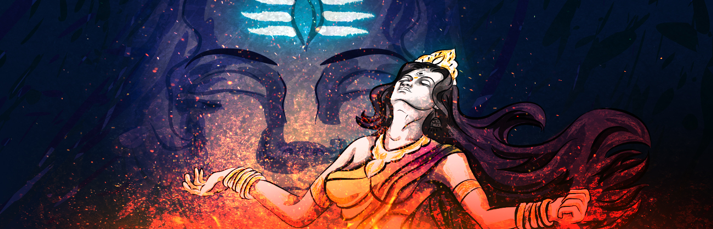
Sati is also known as Daksyani is the Hindu goddess of marital felicity. She was the first wife of lord Shiva, other being Parvati who was her reincarnation after her death.Daksha-Prajapati refused to invite Shiva to his yagna, sati flow into such a rage that she burnt herself in protest and disrupted the entire ceremony.
Daksha-Prajapati and his guest saw the fury and power of Shiva. After the death of Sati, she was reborn as goddess Parvati successfully.In Hindu legend both sati and Parvati successfully play the role of beginning Shiva away from ascetic isolation into creatively participation with the World.The act of Sati, in which a Hindu widow self immolates on her husband pyre as a final and consummate act of loyalty and devotion is patterned after the dead committed by this goddess to uphold the honor of her husband.
Reincarnation is the religious or philosophical belief that the soul or spirit, after biological death, begins a new life in a new body that may be human, animal or spiritual depending on the moral quality of the previous life’s actions. The phenomenon of reincarnation is very complex. The idea was to tell and inform the major concept and circle of it.
Ethnic complexities or relations in India have historically been complex. “Ethnic relations” refers to attitudes, behaviors and opinions towards people of other ethnicity or races. India is one of the most ethnically diverse countries, with more than 2,000 different ethnic groups. There is also significant diversity within regions, and almost every state/province has its own distinct mixture of ethnicities, traditions, and culture. Throughout the history of India, ethnic relations have been both constructive with mutual cultural influences and destructive with discrimination against other ethnicities. In this research paper we will talk about the progress or the current scenario of racial discrimination in India and its various problems.
Racism is most commonly used to name a form of prejudice in which a person thinks that their “race” is better or superior over other races. This most often takes the form of believing that those with other skin colors especially darker skin colors are inferior physically, intellectually, morally, and/or culturally, and mistreating and discriminating against them because of this. Such a belief typically promotes the notion that white people are “the default” that whiteness is “normal” and that people with other appearances are the ones who are “different” (and “inferior”).Racism has existed in our society from ages right from the time of colonization of India.
According to local sources, unity in diversity has been growing in India, making the country more tolerant. One World Values Survey reported 43.5% of Indians responded that they would prefer not to have neighbors of a different race.
What is race?
To fully understand racism, we have to understand the meaning of race. Throughout history, the word race has been used to classify humans based on various physical characteristics, especially skin color, facial form, and eye shape. But sorting people into such races is truly arbitrary they’re not based on meaningful scientific differences (like, for example, those used to determine legitimate scientific classifications such as species and genus). The obsession with the difference in people’s skin color is one of the foundations of racism.
Biases related to the caste system
Racism is linked to the prevalent caste system which is hierarchical in nature. The broad orderings and the sub-orderings in India seem complex and confusing as classifications are often overlapping: region, religion, caste, sub-caste, Jati, Gotra, Kula, Varna and language. “Any effort to simplify them beyond a point can lead to a distortion of social reality.”
earliest classification, as found in Rig Veda, was not based on birth but on the hierarchy that was determined by one’s occupation; however, it is certain that at some particular point in history it became birth-based and rigid
The killing or discrimination was not rooted in color, which some scholars mistakenly believe it to be the case rather this was a time of constant wars and conflicts between the invader immigrants and the actual tribal population of the time..
earliest classification, as found in Rig Veda, was not based on birth but on the hierarchy that was determined by one’s occupation; however, it is certain that at some particular point in history it became birth-based and rigid
The killing or discrimination was not rooted in color, which some scholars mistakenly believe it to be the case rather this was a time of constant wars and conflicts between the invader immigrants and the actual tribal population of the time.
Status of Racial discrimination in the 21st century
The next part of this research paper will discuss how skin tone is still so deeply attached to the normal Indian psyche that it gets confused with the societal value system of caste, class, and religion
Skin tone also forms various strata of variables and acceptability in society. Beauty ideals are now governed by the media, which glorifies lighter skinned models–both male and female–who are chosen to advertise almost all products over darker skinned models
In the wake of George Floyd’s death the debate about colorism and skin tone in India has been discussed in several media outlets, and as part of the general critique a big Indian matchmaking website, Shaadi.com has removed a filter where people could use to mark skin color preferences for their potential partner
In the state of Maharashtra, a group of young tribalgirls trained to be flight crew through a government scholarship program that aimed to empower women; however, the program seems to have actually disempowered darker skinned women. The majority of girls were denied employment due to their darker skin tone. A few of those women obtained jobs, but only as out-of-sight ground crew.
Sometimes it seems true that ‘I’ in India stands for ‘incredibility’. Yess! Udaipur is incredible. It is known as ‘the city of lakes’.In 1559, Udaipur was founded by Maharana Udai Singh (2nd) in the fertile circular Girwa Valley to the southwest of Nagda, on the Banas River. This city served as the capital of Mewar kingdom between 10th and 12th century. It is in the state of Rajasthan.
CLIMATE OF UDAIPUR-
Basically Udaipur is a place of tropical climate.There are three main seasons, summer, monsoon and winter. The weather of the city is usually hot for being located in the desert land of Rajasthan. Iy is an area of 598m above sea level that’s why it has a sultry type of climate. It is the only one place in Rajasthan where the place is made hot in summer for the scorching sun and pleasant in winter.Summer runs from mid- March to June and July is the Monsoon season. Winter is actually a pleasant and beautiful season. In winter this city is relatively cold than summer but not too cold. The winter season runs from October to March.
CULTURE OF UDAIPUR-
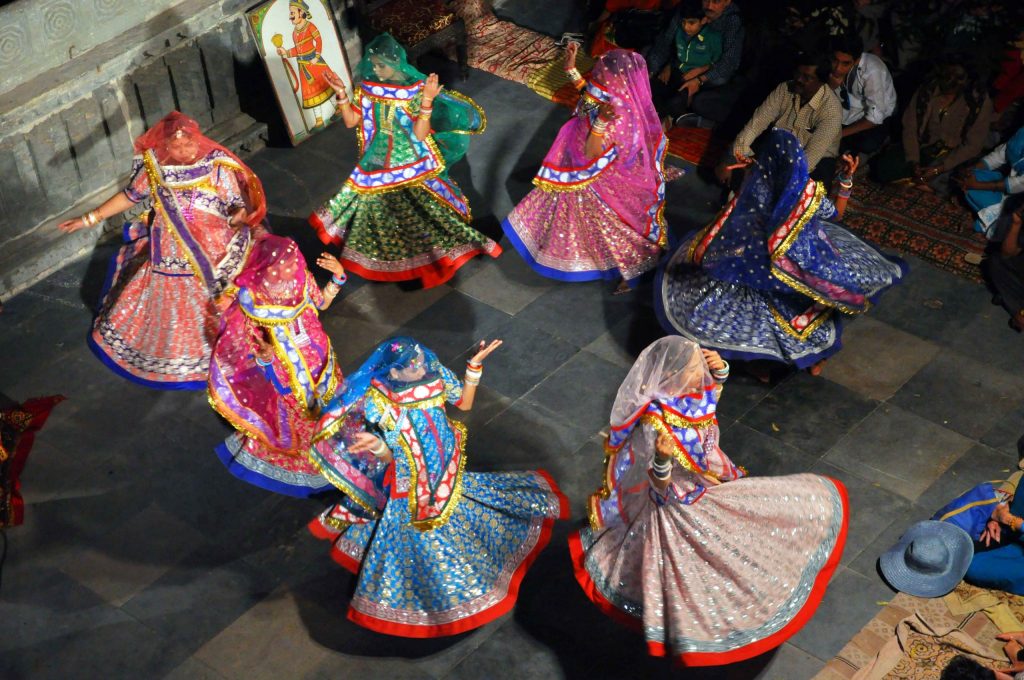
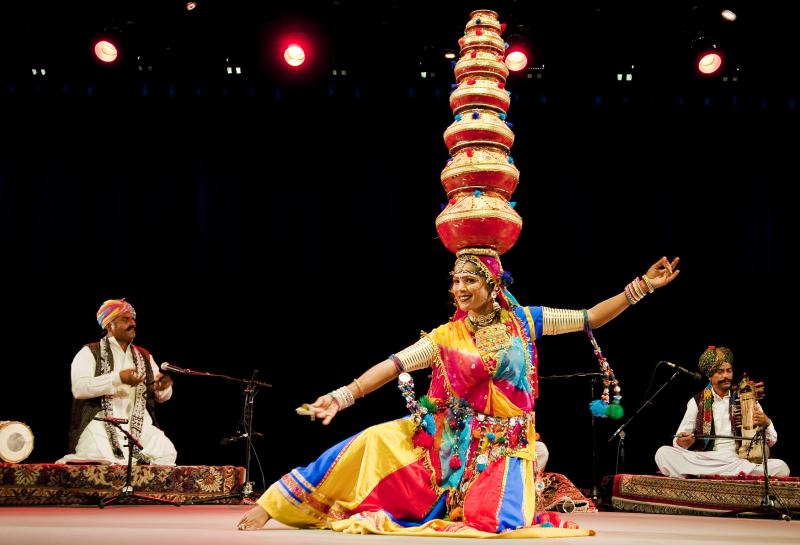
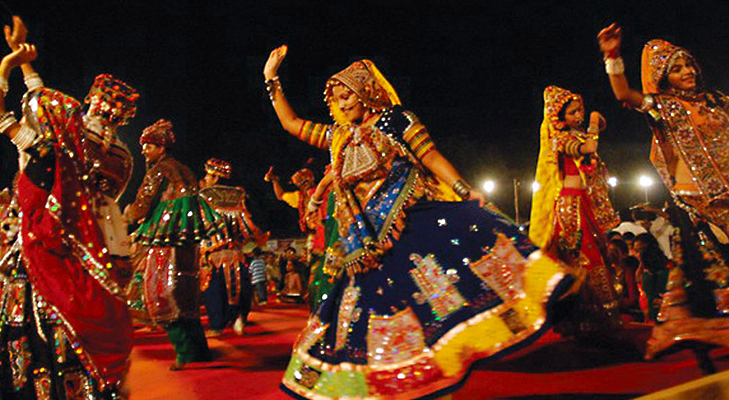
Udaipur is so colourful. It is the owner of the rich cultural heritage from the bygone ages. The lakes, temples, huge forts,and palaces maintain the culture. There is the Bhil tribe till now, so it’s possible that we could see the people with typical colourful rajasthani dresses with silver jewelry. The colourful people, their colourful festivals and fairs delimitate the culture of Udaipur. The city has kept the balance between the past rituals and the modern advancements. The folk dance and music colored the culture and tradition more. Dance like- Ghoomar, Kalbelia,Bhavai, Kachchhi Ghodi and Terahtaali etc.
Ghoomar or Ghumar is a traditional folk dance which was performed by the Bhil tribe to worship Goddess Saraswati. The veiled women who wear flowing dresses are called ghaghara,and chiefly perform this type of dance. It was ranked 4th in the list of “Top 10 local dances around the world” in 2013.The Kalbelia dance is an integral part of their culture and performed by men and women. In the Bhavai dance the male or female performers balance a number of earthen pots or brass/metal pitchers as they dance nimbly, pirouetting and then swaying with the soles of their feet perched on the top of a glass bottles, on the edge of the sword, on the rim of a brass/metal thali (plate) and on the broken glass during the performance. Kachchhi Ghodi is mainly performed during weddings to welcome the bride grooms party and it has an interesting novelty horse costume. And when we come to the music, the dwellers of Udaipur find solace in the melodious music of Morchang, Naad, Tanpura, Sarangi and many other instruments that used to echo the courts of Mewar rulers.
FESTIVALS-
India’s most exciting and colourful part is its festival. Udaipur looks different during festivals. There are observed Mewar festival, Shilpgram festival, Diwali, Teej festival,Dussehra, Hariyali Amavasya, Gangur festival,Jagannath Ratha Yatra, Jal-Jhulni Ekadashi etc.
TOURIST SPOTS-
Udaipur is the city of lakes .It is a beautiful tourist spot. The main tourist spots are-
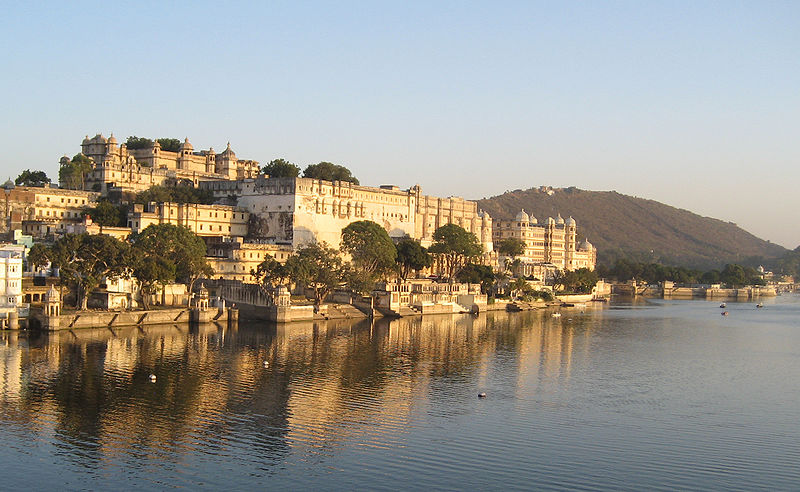
CITY PALACE, UDAIPUR- It is located on the east bank of Lake Pichola. Its main entrance is through the triple-arched gate. This gate leads to a series of courtyards, overlapping partitions, terraces, corridors and gardens. The palace now houses a museum with many antique articles, paintings, decorative furniture and utensils from the royal era.
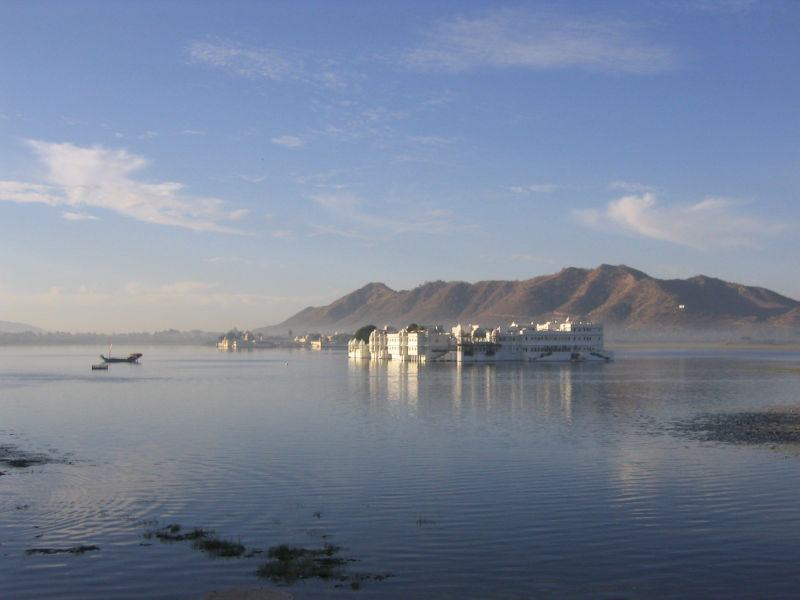
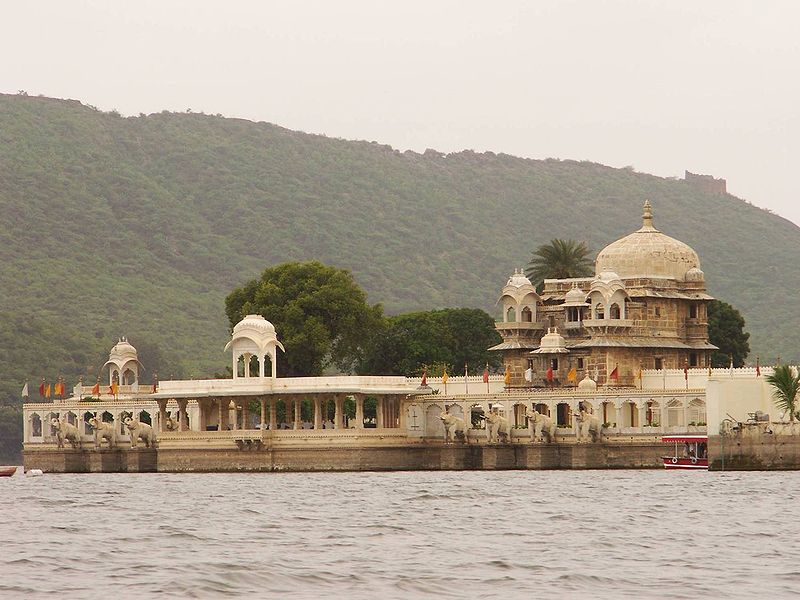
LAKE PALACE- It is located over an island in Lake Pichola and it served as a royal summer palace. It is made of white marble and it is now transferred into a 5 star hotel.
JAG MANDIR- It is also located on Lake Pichola island. This is also known as ‘Lake Garden Palace’. The royal family used the palace as a summer resort and pleasure palace.
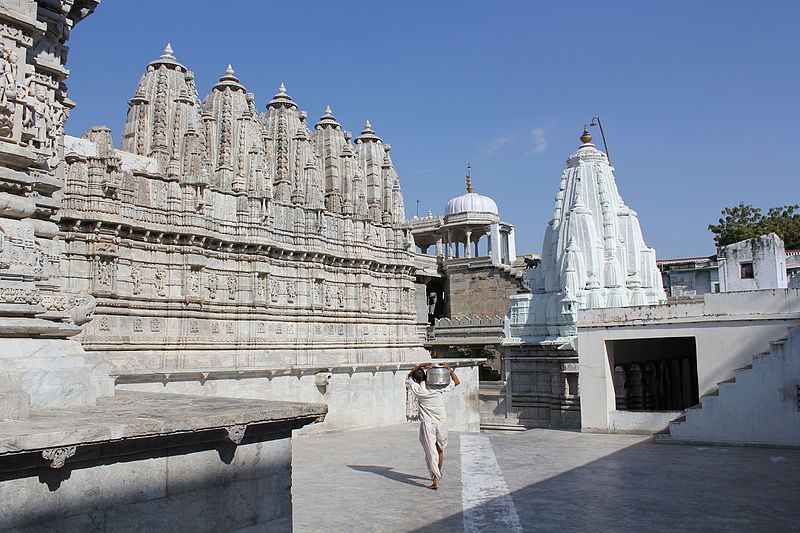
KESARIYAJI TEMPLE- The temple is dedicated to Lord Rishabh dev, the first Jain Tirthankara. The fifty-two pinnacles of the temple are seen from a long distance. The main idol in the temple is of Tirthankara Rishabha, carved in black stone in padmasana posture.
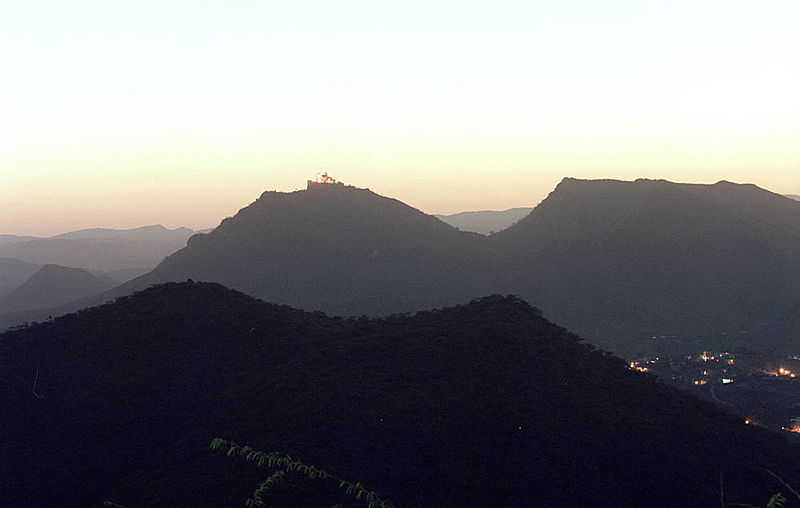
MONSOON PALACE- Monsoon Palace is known as Sajjan Garh Palace. It is made with white marble and it is located on Bandera peak of the Aravalli hill. From this palace we can take a view of the city’s lakes, palaces, and surrounding countryside.
JAGDISH TEMPLE- Maharana Jagat Singh founded this temple which is a large Hindu temple in the middle of Udaipur.
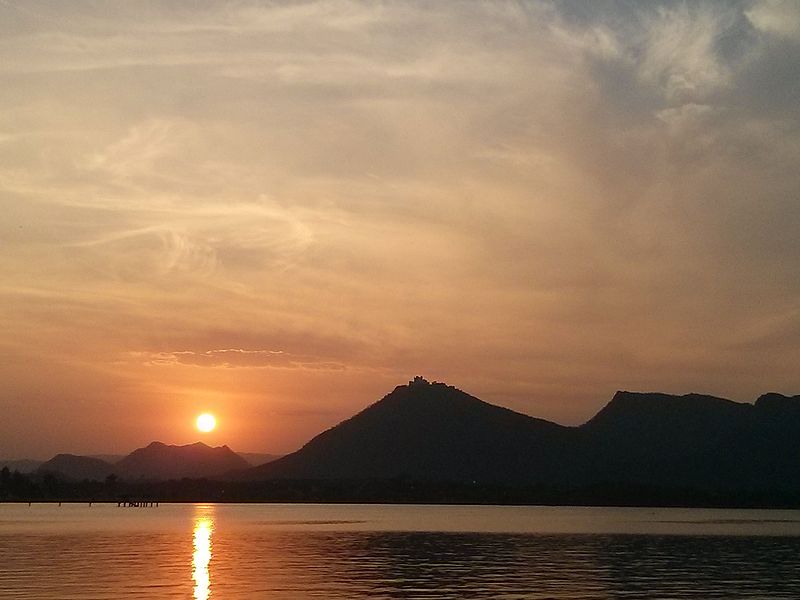
FATEH SAGAR LAKE- It is located in the north-west part of Udaipur. It was originally built by Maharana Jai Singh and later it was reconstructed by Maharana Fateh Singh.
SUKHADIA CIRCLE- It is a large roundabout in the city’s northern suburb of Panchwati, on the road to Ranakpur and Mt. Abu. There are fast food centers, camel and horse rides, boat rides and kids play zone areas.
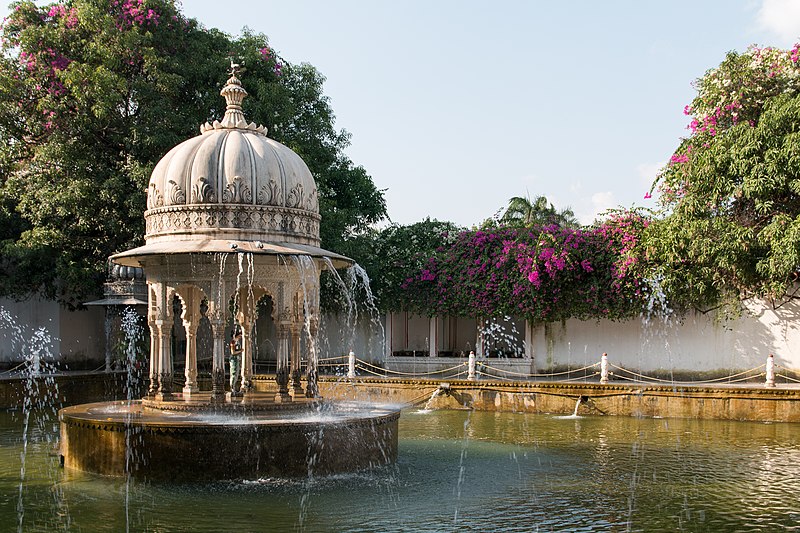
SAHELIYON-KI-BARI – It is a garden and tourist space which is in the northern part of the city. There has garden with its fountains and kiosks, a lotus pool and marble elephants, was laid for a group of forty-eight young women attendants who accompanied a princess to Udaipur as part of her dowry.
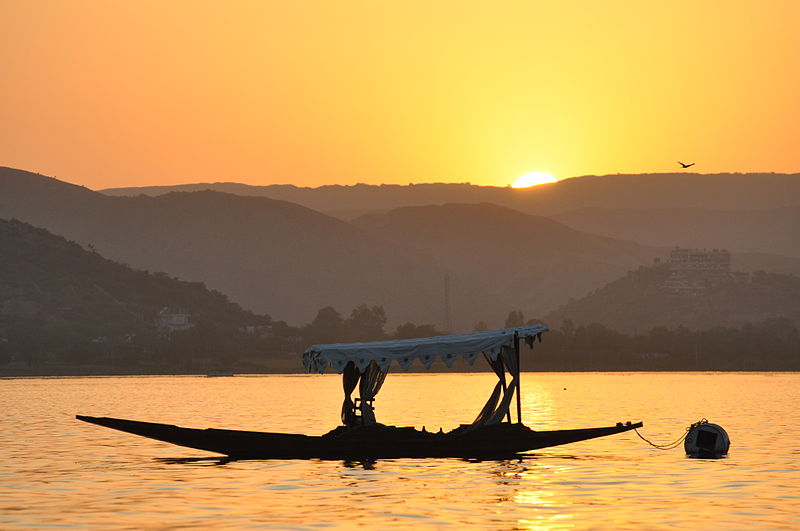
LAKE PICHOLA- It is an artificial freshwater lake .Two islands, Jag Niwas and Jag Mandir are located within Pichola Lake, and have been developed with several palaces to provide views of the lake.
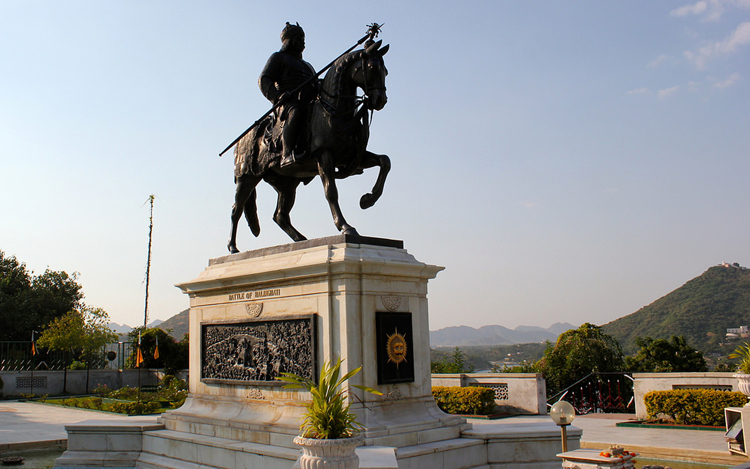
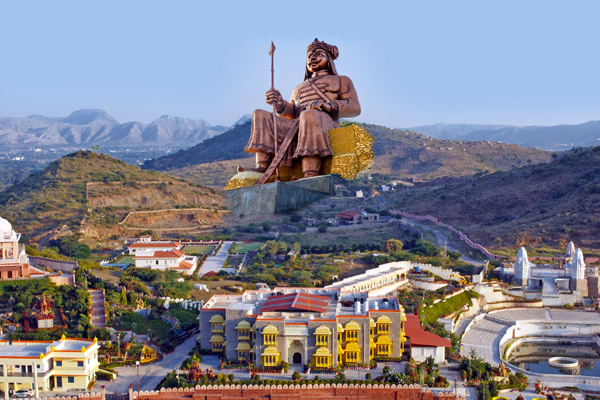
MOTI MAGRI- Moti Magri is a memorial of Maharana Pratap.It is basically a small hill, atop of which there is a bronze statue of the Maharana astride his favourite horse “Chetak”.
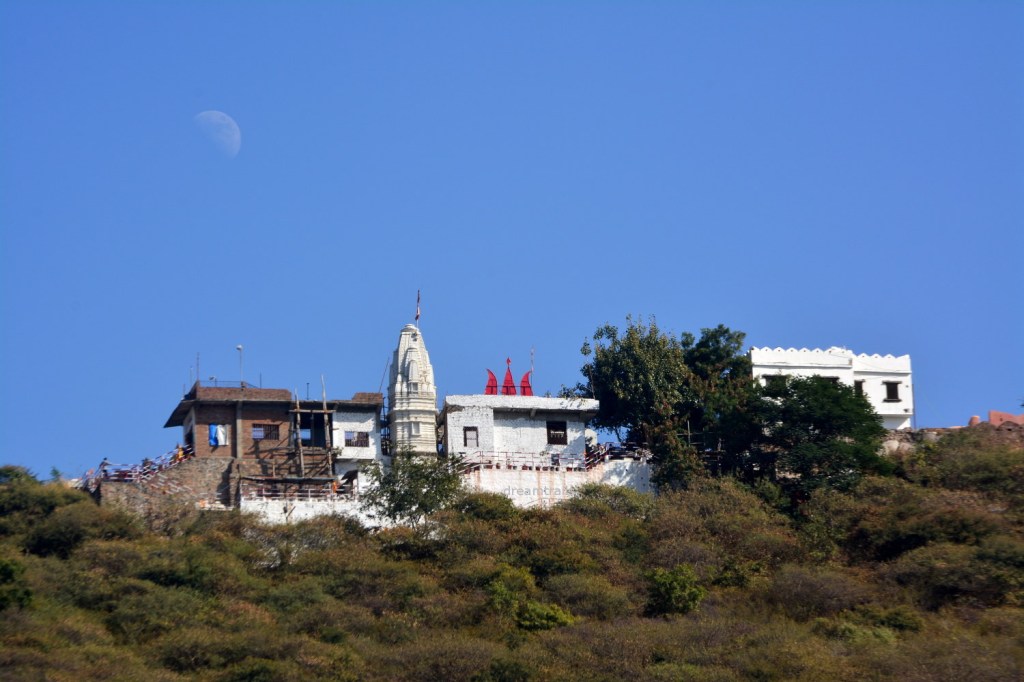
NEEMACH MATA TEMPLE- It is located on a hill near Fateh Sagar Lake. From this location we can take a holistic view of the entire Udaipur.
KERNI MATA, UDAIPUR- It is located on Doodh Talai near Pichola lake. There is a rope-way which takes visitors to a hill at which this temple is located. We can take views of Pichola Lake, Jag Mandir and Doodh Talai. One can view the whole city from the top .
PRATAP GAURAV KENDRA- It is located at Tiger Hill. It aims at providing information about Maharana Pratap and the historical heritage of the area with the help of modern technology.
The month of June is observed as the Pride Month to honor the Stonewall Uprising of 1969 in Manhattan which marked a monumental turning point in the LGBTQ history of America. But today, it has grown much more than that and celebrates the richness and diversity of the LGBTQ community with parades, festivals and several other events. The pride march is a call for unity and togetherness in the community. With the 2021 pride month coming to an end, let’s take a look at what each day of the month celebrates.
Credits: Google Images
1. Gay Pride
June 1st celebrates Gay pride. It refers to people who are emotionally and sexually attracted to others of their own gender. Also commonly used to denote men or man aligned person who are attracted to other man-aligned people.
2. Lesbian Pride
June 2nd celebrates Lesbian Pride. It refers to women or woman-aligned person who are emotionally and sexually attracted to other women or women-aligned people.
3. Bisexual Pride
June 3rd celebrates Bisexual Pride. It refers to people who are emotionally and sexually attracted to two or more genders.
4. Polysexual Pride
June 4th celebrates Polysexual Pride. It refers to someone who is attracted to many or multiple genders but not all.
5. Pansexual Pride
June 5th celebrates Pansexual Pride. It refers to someone who is attracted to different kinds of people regardless of their gender identity. They are attracted to all genders.
6. Omnisexual Pride
June 6th celebrates Omnisexual Pride. It refers to someone who is attracted to all genders. But unlike Pansexuality, they are not gender-blind and recognise the other’s gender. Gender plays a role in one’s attraction.
7. Queer Pride
June 7th celebrates Queer pride. It refers to an identity and is regarded as an umbrella term for sexual and gender minorities, and people who fall outside of the cultural norms around sexuality and gender identity.
8. Demisexual Pride
June 8th celebrates Demisexual Pride. It refers to a sexual orientation which falls under the asexual spectrum. It is defined as someone who does not feel sexual attraction until they form a deep emotional bond with someone.
9. Greysexual Pride
June 9th celebrates Greysexual pride. It refers to a sexual orientation that falls under the asexual spectrum. It refers those who relate to asexuality, yet feel that there are parts of their experience that aren’t fully described by the word asexual.
10. Asexual Pride
June 10th celebrates Asexual Pride. It refers to a sexual orientation which is defined by the lack of sexual attraction. Asexual experiences may also include: not wanting to have sex, not being interested in sex, not experiencing a sex drive/libido, or being repulsed by sex.
11. Polyamory Pride
June 11th celebrates Polyamorous pride. It is the capability or desire to be in a relationship with more than one person at once. Polyamorous can be used both as a description of a relationship with more than two people and as description of people who desire such relationships. Polyamorous relationships can be romantic, sexual, or both.
12. Intersex Pride
June 12th celebrates Intersex pride. Intersex is a term for those born with physical sex characteristics that cannot be traditionally classified as male or female. Variations may appear in a person’s chromosomes, natural hormones, genitalia, gonads, secondary sex characteristics, or some combination of these things.
13. Trans Women Pride
June 13th celebrates Trans Women pride. It refers to a woman who was assigned male at birth. Trans women may experience gender dysphoria and may transition. This process includes hormone replacement therapy and sometimes sex reassignment surgery.
14. Trans Men pride
June 14th celebrates Trans Men pride. It refers to a man who was assigned female at birth. Trans men may experience gender dysphoria and may transition. This process includes hormone replacement therapy and sometimes sex reassignment surgery.
15. Agender Pride
June 15th celebrates Agender pride. It is complete genderlessness, or the lack of gender. It is a non-binary identity in which one is not male, female, or any other gender. They may identify as most strongly as just a person, rather then as any given gender.
16. Genderfluid Pride
June 16th celebrates Genderfluid pride. Genderfluid refers to someone whose gender identity changes over time. A genderfluid person can identify as any gender, or combination of genders at any given time. Their gender can change at random or it may vary in response to different circumstances. One’s gender can change over the course of hours, days, weeks, months, or years.
17. Bigender Pride
June 17th celebrates Bigender pride. Bigender is a non-binary gender identity in which someone has two distinct gender identities. They could feel both genders at the same time or be fluid between them, in which case they may also identify as genderfluid. Bigender people can experience any two genders, including binary and non-binary genders.
18. Trigender Pride
June 18th celebrates Trigender Pride. Trigender is a form of multigender in which someone has three distinct gender identities. These three gender identities can be any genders, either binary or non-binary, so long as it is exactly three. Trigender people may experience these genders simultaneously or fluidly.
19. Pangender Pride
June 19th celebrates Pangender Pride. Pangender is a form of multigender in which someone experiences all genders. It is a non-binary gender which refers to a vast and diverse amount of genders in the same individual that can extend infinitely.
20. Genderqueer Pride
June 20th celebrates Genderqueer Pride. Genderqueer is a term for people who feel that they have a queer or non-normative experience with gender, either through their gender identity, their gender presentation, or other experiences of gender.
21. Demigirl Pride
June 21st celebrates Demigirl pride. It refers to a non-binary gender in which one is partially, but not fully, a girl or woman. They may or may not identify as another gender in addition to being partially a girl. The other part of one’s gender can be any gender or combination of genders, including a lack of gender.
22. Demiboy Pride
June 22nd celebrates Demiboy Pride. It refers to a non-binary gender in which one is partially, but not fully, a boy or man. They may or may not identify as another gender in addition to being partially a boy. The other part of one’s gender can be any gender or combination of genders, including a lack of gender.
23. Androgyne Pride
June 23rd celebrates Androgynous Pride. Androgyne is an identity under the non-binary umbrella. It is described as being simultaneously male and female or in between male and female, or as being simultaneously masculine and feminine or in between masculine and feminine.
24. Intergender Pride
June 24th celebrates Intergender pride. Intergender is a gender for intersex people only, referring to any gender identity that is fundamentally tied to one’s intersex identity. It denotes that being intersex has an important affect on one’s gender identity. It commonly involves a gender that is in between male and female or a gender that is partially male and/or female, but it does not necessarily have to.
25. Nonbinary Pride
June 25th celebrates Nonbinary Pride. It refers to someone whose gender does not fall strictly within the category of the binary genders. Non-binary can be a gender identity on its own, or it can be used as an umbrella term for anyone whose gender is something other than male or female.
26. Questioning Pride
June 26th celebrates Questioning pride. Questioning is the process of exploring, learning, or experimenting with what one’s gender, sexual orientation, romantic orientation, or another part of one’s identity is.
27. Homoromantic Pride
June 27th celebrates Homoromantic Pride. Homoromantic refers to the romantic attraction to the same gender or genders similar to one’s own. A homomantic person may or may not be sexually attracted to the same/similar gender(s).
28. Biromantic Pride
June 28th celebrates Biromantic Pride. It is a romantic orientation in which someone is romantically attracted to two or more genders.
29. Panromantic Pride
June 29th celebrates Panromantic Pride. Panromantic is the romantic attraction to people regardless of gender, and as a result, one is attracted to all genders.
30. Aromantic Pride
June 30th celebrates Aromantic Pride. It refers to a romantic orientation defined by a lack of romantic attraction.
Kolkata was initially the capital of the British Raj, which means that several structures constructed by them during the pre-Independence era still stand strong along with other iconic ones in the city. From rajbari and museums to churches places, our City of Joy boasts of many beautiful heritage sites that you must check them out.
Now kolkata (calcutta) is capital of India’s West Bengal state. Kolkata is also known for architecture, art gallery, cultural festival.
1. Victoria Memorial :-
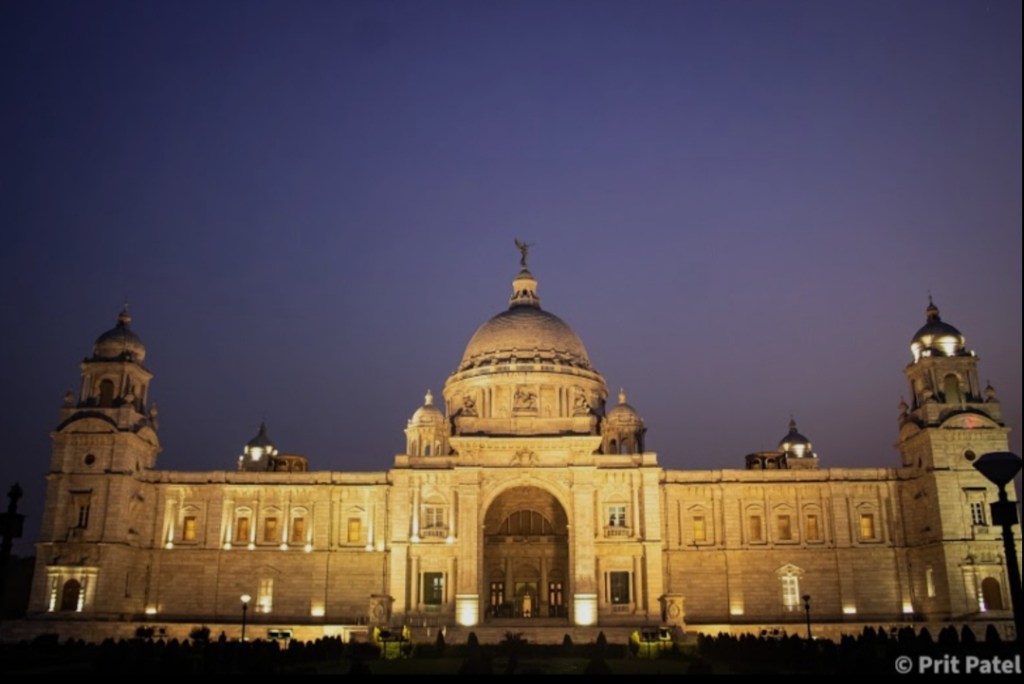
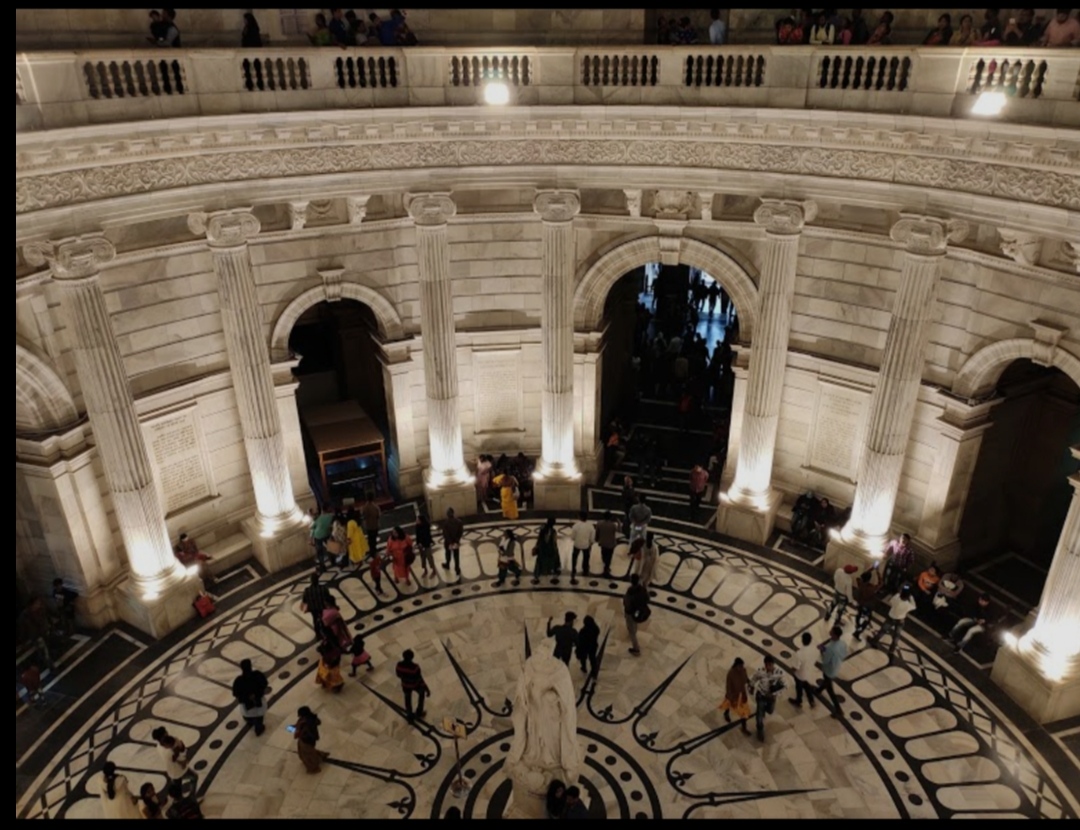
The Victoria Memorial is possibly the most awesome reminder of the Raj to be found in India. It is one of the famous and beautiful monuments of Kolkata.It was built between 1906 and 1921 to commemorate Queen Victoria’s 25-year reign in India. After the Sepoy Mutiny of 1857, the British government gathered the reins of control of the country directly, and in 1876 the British parliament made Victoria the Empress of India. Her reign ended with her death in 1901.
Victoria Memorial
2. Maidan :-
Maydan is a massive green place trails, Riverside, picnic spot including some sports venu. The Maidan (literally, open field), also referred to as the Brigade Parade Ground,is the largest urban park in Kolkata in the Indian state of West Bengal.The Maidan is dotted with statues and architectural works, the most notable being the Victoria Memorial. For the greenery and refreshment this place known as ‘Lungs of Calcutta’. The property of the Indian Army, the Maidan hosts the army’s Eastern zone high command in Fort William.
Maidan, kolkata
3. Nandan :-
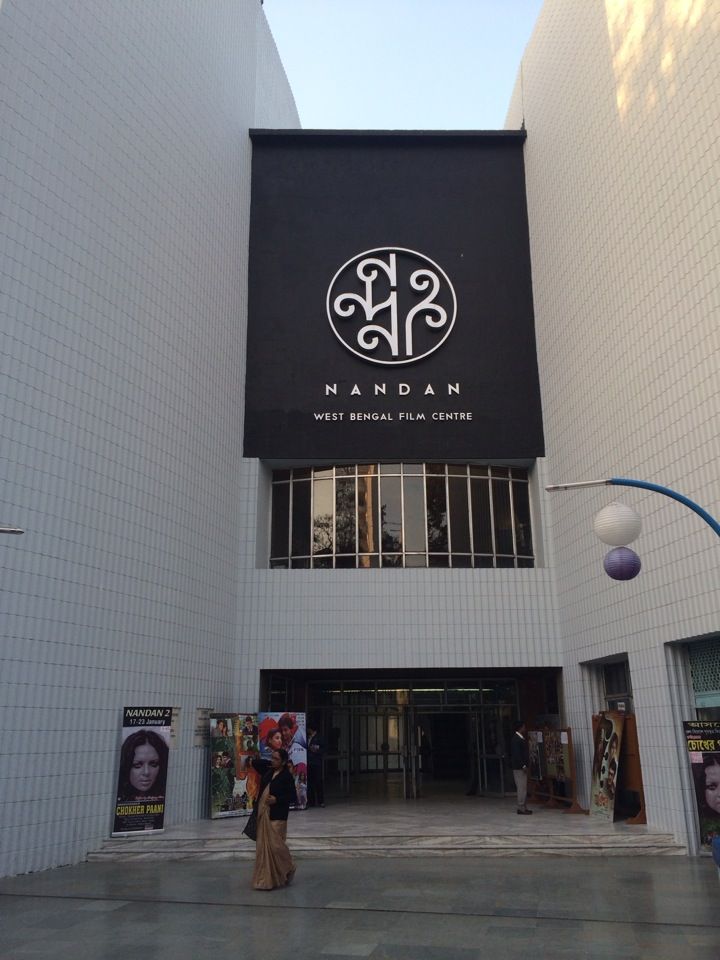
Nandan is one of the main venues of the Kolkata International Film Festival, hosting it till 2010. It is a government-sponsored film and cultural centre in Kolkata, India. The primary aim of the cultural hub is to encourage and facilitate cinematic awareness in society. While in 2011 the opening and closing ceremonies was shifted to Netaji Indoor Stadium, Nandan remains the main centre for the festival.The foundation stone of Nandan was laid by former Chief Minister of West Bengal Jyoti Basu in 1980[3] and it was inaugurated by film-maker Satyajit Ray on 2 September, 1985. Most favorite place of film lovers all around Kolkata.
Nandan, Kolkata
4. South Park-street Cemetery :-
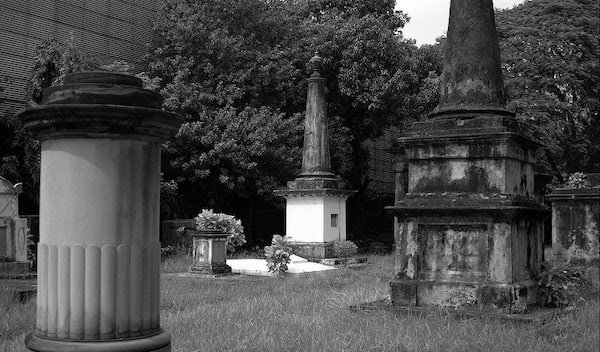
The Park Street Cemetery was one of the earliest non-church cemeteries in the world, and probably the largest Christian cemetery outside Europe and America in the 19th century. Opened in 1767 on what was previously a marshy area, the cemetery was in use until about 1830 and is now a heritage site, protected by the Archaeological Survey of India (ASI). The tombs are an admixture of the Gothic with a rich flavour of the Indo-Saracenic style. Of the latter, mention may be made of a unique and composite brick structure built in the ‘panchyatana’ manner, with a central dome flanked by miniature replicas of Orissan ‘rekha deul’ on four sides. Coupled with this peculiarity, the black basalt carvings on the frontal façade indicate a distinct respect for the Hindu faith.
South Park-street Cemetery, Kolkata
5. Dakshineshwar Kali Temple :-
The Dakshineswar Kali Temple was founded around the middle of the 19th century by Rani Rashmoni.Rani Rashmoni was a Mahishya by caste and was well known for her philanthropic activities. This temple is a Hindu navaratna temple located at Dakshineswar. Situated on the eastern bank of the Hooghly River, the presiding deity of the temple is Bhavatarini, a form of Parashakti Adya Kali, otherwise known as Adishakti Kalika.This temple is one of the most visited temple in Kolkata.
Dakshineshwar Kali Temple
6. Howrah Bridge :-
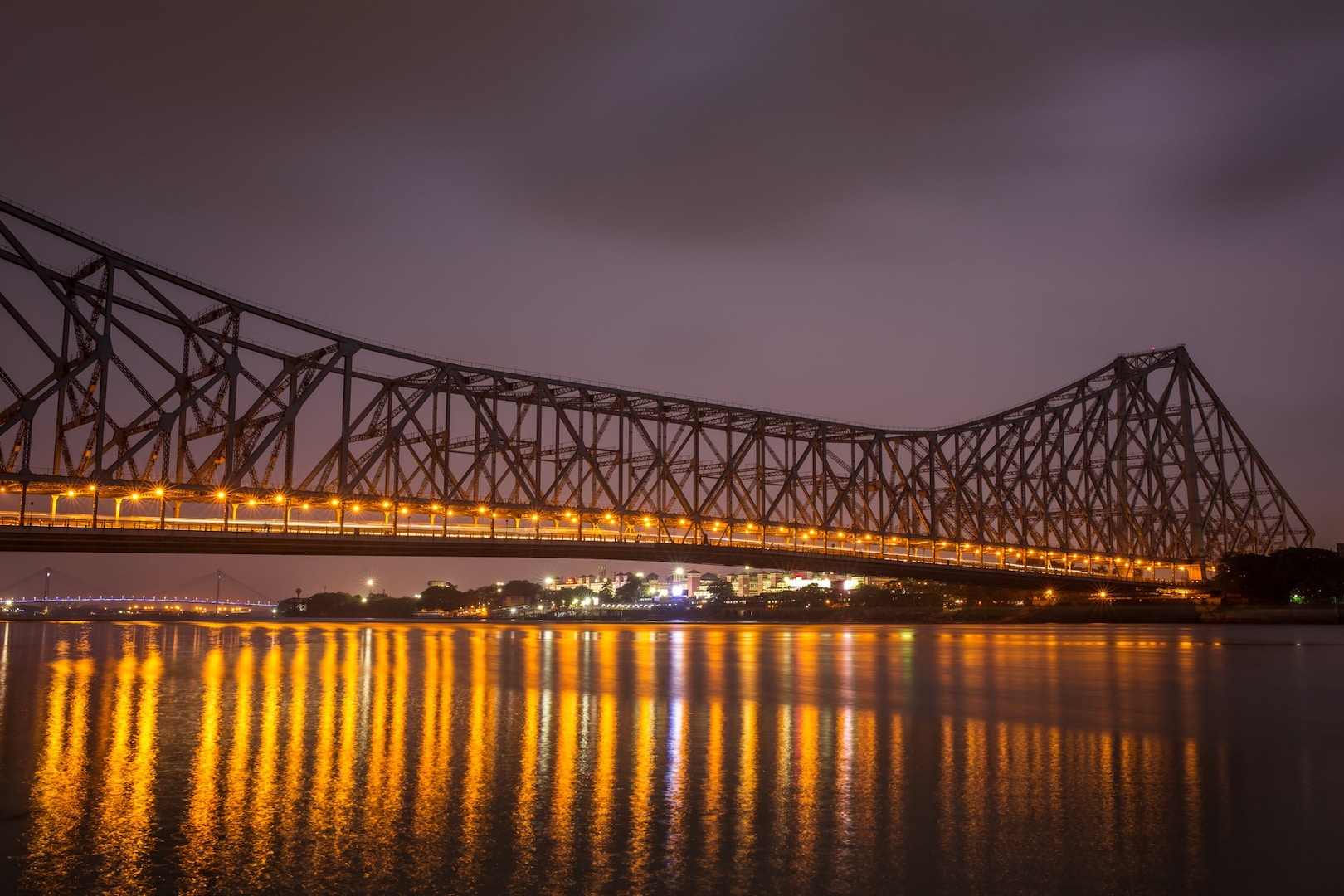
The Howrah Bridge is one of four on the Hooghly River and is a famous symbol of Kolkata and West Bengal.The Bridge is a balanced cantilever bridge over the Hooghly River in West Bengal, India. Commissioned in 1943,the bridge was originally named the New Howrah Bridge, because it replaced a pontoon bridge at the same location linking the two cities of Howrah and Kolkata (Calcutta). The night lightning of Howrah bridge is mesmerizing.
Howrah Bridge
7. Thakur Bari :-
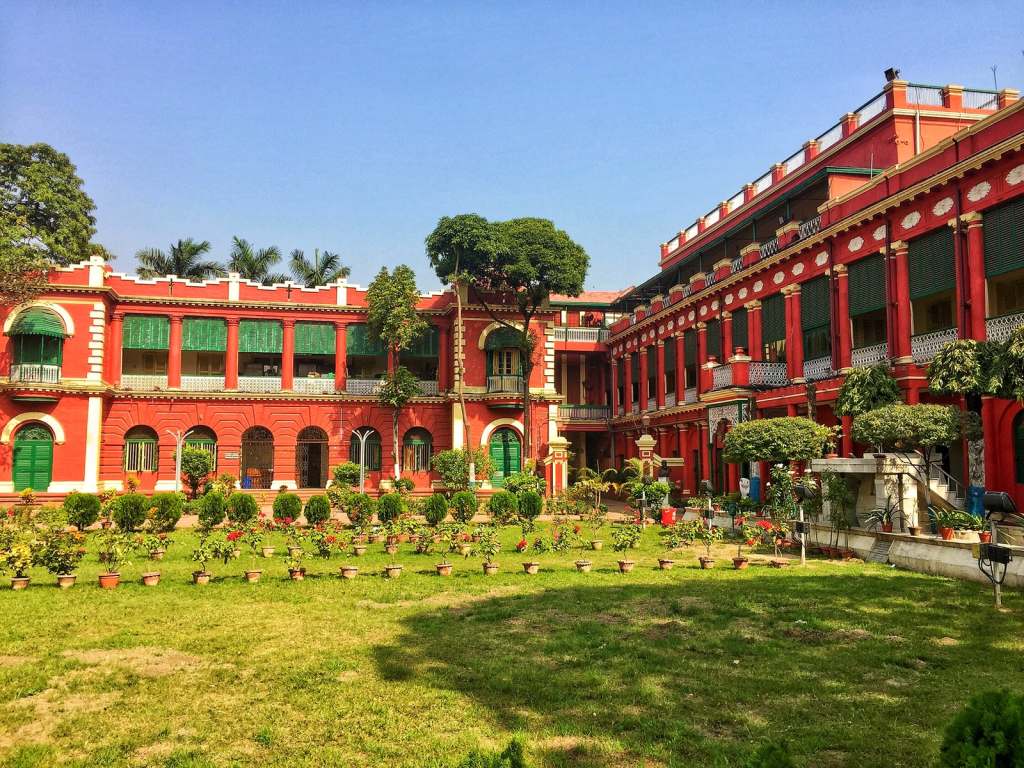
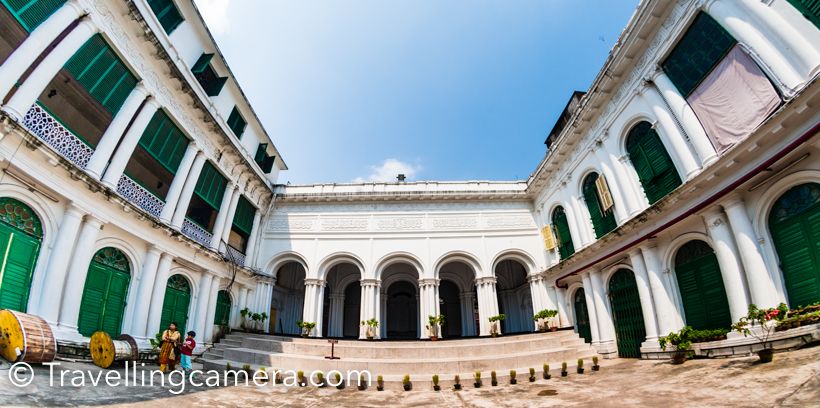
Jorasanko Thakur Bari or House of the Thakurs (anglicised to Tagore) in Jorasanko, North Kolkata, West Bengal, India, is the ancestral home of the Tagore family. It is the place where Rabindranath Tagore was born and spent most of his childhood. It was built in the 18th century on the land donated by the famous Sett family of burrabazar to ‘Prince’ Dwarkanath Tagore (Rabindranath Tagore’s grandfather).The house has been restored to reflect the way the household looked when the Tagore family lived in it and currently serves as the Tagore museum for Kolkata.
Jorasanko Thakur Bari
8. Prinsep Ghat :-
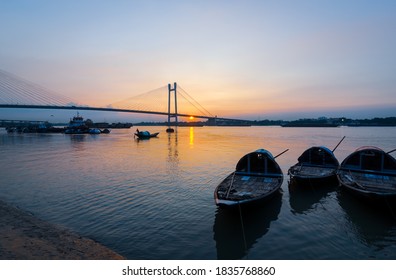
Prinsep Ghat was located between the Water Gate and the St George’s Gate of the Fort William, the monument to Prinsep is rich in Greek and Gothic inlays. It was restored by the state’s public works department in November 2001 and has since been well-maintained.The Palladian porch in the memory of the eminent Anglo-Indian scholar and antiquary James Prinsep was designed by W. Fitzgerald and constructed in 1843.Prinsep Ghat is one of the oldest recreational spots of Kolkata.[4] People visit it in the evenings on weekends to go boating on the river, stroll along the bank and purchase food from stalls there.One of the songs in the Bollywood film Parineeta was shot here on the ghats.
Prinsep Ghat
9. Rabindra Sarobar :-
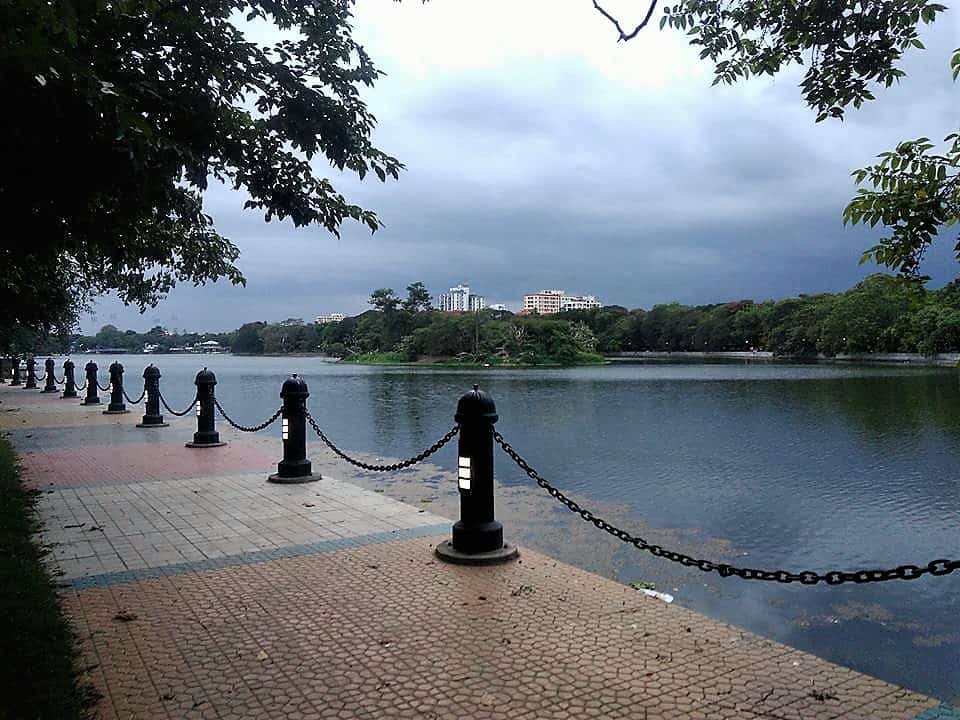
Rabindra Sarobar also known as Dhakuria Lake is an artificial lake in South Kolkata in the Indian state of West Bengal.The lake and the surrounding green cover occupy an area of 192 acres. The water body is of 73 acres while the green cover has an area of 119 acres. It has a unique bio diversity and attracts 107 species of birds, which includes 69 resident birds, 14 local migrants, 23 long distant migrants and one summer visitor. The green cover has 11,000 trees of which 7.500 are over 75 years old. Sometimes there was a opportunity of rowing in this lake for visitors. Many bangali films shooted in this place.
Rabindra Sarobar
After visiting all those place you will definitely agree with that – ‘Kolkata , The City Of Joy’.
The ability to build real relationships is one of the most important aspects of social media and a key factor in attracting people of all ages, genders and nationalities. It is an important part of developing healthy social networks and powerful social network tools. People can share their business, products and services with the world as long as they stay connected and use social media. Social networks allow people to communicate, and everyone can update and report at any time. Companies make full use of social media to improve your online reputation and greatly help increase sales and personal income.
You need to make sure to use all social media platforms to gain insight into the needs of your customers. To make the most of social media for your business, make sure you have a content marketing plan. If you need content on any social media platform, you can use social media asset management tools to create high-quality content.
You can also use social media to track what people say on social media. Although social media is mainly used by the public, the government also uses it to raise public awareness.
Although the use of social media for teaching can be distracting, educators can do everything they can to guide students to develop good habits and practices, Benefit. Regarding the advantages provided by social networks.
If you consistently and continuously invest time and effort, you will see the real benefits of social media marketing. Social media can give your business a huge advantage by helping you connect with your target audience. It can cover a large number of people, but for social media, it is also a media sharing network.
Social media advertising is one of the two components used together to attract potential customers and spread information and brand awareness. Different from classic ads. When you actively post on social media pages, social media marketing is easy.
SOCIAL MEDIA AS A BLESSING
There are some people who actually make a good or can say the best use of the social media. Like if we talk about the young entrepreneurs who have just begun with a start up but is lacking in public attraction and funding so they create a short 30seconds advertisement and attach it with the trending apps which work through network connection . Talking about the awareness ;both the social media and mass media have been playing their roles very well by keeping their viewers updated with the latest screamers , exposing the Scams ,scandals , and even the worse parts of humanity .




















 Eduindex
You must be logged in to post a comment.