The Current World powers have always had some sort of geographical shields protecting them. India is no exception and is blessed by many natural geographical factors which has effectively shielded the country from various external forces. The Himalayas, Indian Ocean and the Thar desert are some of the of regions which act as a shield for India.
The Himlayas
The Himalayas
The Himalayas are largest and tallest mountain ranges in the world. Many of the world’s tallest peaks like Mt.Everest, K2, Kanchenjunga, Nanda Devi are situated in this majestic range. The Himalayas stretch from the edges of the Hindu Kush mountains of northeastern Afghanistan, through the Indian states of Jammu & Kashmir, Ladakh, Himachal Pradesh, Uttarakhand, Sikkim and Arunachal Pradesh and countries like China(Tibet), Nepal, Bhutan and Northern Myanmar. The Himalayas have historically acted as a buffer between India and China and was even considered as a factor which prevented Genghis Khan’s ferocious Mongol Armies from invading India. During the 1971 Bangladesh Liberation war, India chose to declare war on Pakistan in winter as it was almost impossible for China to mobilize their armies during the brutal Himalayan winter. India has fought many wars with it’s neighbor Pakistan in the region to maintain the status quo as both understand how vital control over this region is.
The Thar Desert
The Thar desert in Rajasthan acts as a natural border between India and Pakistan. The scorching desert and sand means it’ll be difficult for Pakistan to maintain supply lines and logistics incase of an invasion of India. This applies for India as well but it would be far easier to defend than to attack through this frontier.
The Seas
India is a peninsula, as it is surrounded by water on three sides. The Arabian sea to the west, Indian ocean to the south and the Bay of Bengal to it’s east. All these water bodies ensure India will be well protected by a natural barrier as it would require an external navy to invade, ensure naval supremacy so a land invasion is possible which is an almost impossible task given India’s naval strengths.
How does one gets married? Normally people get married by publishing matrimonial ads in newspapers, online sites, or with the help of relatives who acts as mediators. This was about the modern industrial society, but the tribal society is unique, so their ways of getting married are also unique. Tribes have nine different ways of acquiring a mate.
In this article, I will show the different ways of acquiring a mate prevalent in tribal society.
Marriage by capture– When a man snatches away a woman from her village and marries her, it is called marriage by capture. This form of marriage is most popular among the Naga who invade villages and capture girls.
Marriage by exchange- Under this marriage, two households exchange women with each other and thus avoid paying the bride price. Bride price is the payment made by the groom’s side to the bride’s side to marry her. This form of marriage is found all over India and is also found among the non-tribals.
Marriage by purchase- In this form of marriage bride price is the central theme. Among the Munda, Ho, Santhal it is the most prevalent. The high bride price has the worst consequences as is seen in the case of the Ho tribe of Chotanagpur where to escape the bride price many youth resorts to marriage by capture or remain unmarried.
Marriage by elopement- It is a peculiar feature of tribal India. Anthropologists believe this kind of marriage has emerged as a result of boys and girls shedding their traditional submissiveness. If the parents’ consent is not forthcoming, they resort to elopement and get married.
Marriage by service- In this form of marriage the groom serves in the house of the bride as suitor-servant and marries her after a lapse of few years. they have to work in the bride’s household for three years and have to fulfill all the responsibilities of a son. This form of marriage is a way to avoid payment of bride price completely or minimizing it through service rendered by the prospective groom at the bride’s residence. For example, marriage by service is found among the Gond Baiga, Birhor.
Marriage by intrusion- Here a girl desirous of marrying an unwilling young man thrust herself on the groom and his parents. She tries to serve her prospective in-laws and can be tortured in return. If she persists in her intentions and her endurance lasts for a considerable period she is finally accepted as a daughter-in-law.
Marriage by trial- In this form of marriage, the prospective groom has to prove his prowess before he can claim the desired girl. Thus he is required to undergo a trial.It is most popular among Bhils. During Holi festival, young men and women perform a folk dance known as ‘gol gadhedo’ around a pole or a tree to the top of which there is a coconut and jaggery tied. The girls make a ring around the tree and the boy to marry the girl has to break the ring and eat the coconut and jaggery after climbing the tree. In all this, he is beaten up, and inspite of all this if he succeeds he gets the right to demand any girl from the group as his wife.
Marriage by mutual consent- In this formalities of marriage are arranged by parties concerned through the process of mutual consent and consultation. This practice is result of tribal contacts with Hindus, Christians, etc.
Marriage by probation- Under this the prospective husband and wife are expected to live together for some time for marriage in the bride’s house. If they like each other and willing to marry, elders arrange their marriage.Otherwise, the man has to pay compensation to the girl’s parents. This form of marriage can be called a primitive version of the modern practice of courtship. It is prevalent among Kuki tribes of Andhra Pradesh.
Hence this was the nine different ways of acquiring mate found among the tribals. These kind of marriages is in contrast to the marriages in mainstream society. These interesting ways of getting married make the tribes even more unique.
Lifestyle (sociology), the way a person lives Otium, ancient Roman concept of a lifestyle Style of life, dealing with the dynamics of personality.
Lifestyle is the interests, opinions, behaviours, and behavioural orientations of an individual, group, or culture. The term was introduced by Austrian psychologist Alfred Adler in his 1929 book, The Case of Miss R., with the meaning of “a person’s basic character as established early in childhood”. The broader sense of lifestyle as a “way or style of living” has been documented since 1961. Lifestyle is a combination of determining intangible or tangible factors. Tangible factors relate specifically to demographic variables, i.e. an individual’s demographic profile, whereas intangible factors concern the psychological aspects of an individual such as personal values, preferences, and outlooks.
But why does everyone wants a good standard of living life. As in this is a mental tandancy human wants are unlimited. And the resources are scarce but that doesn’t matter the thing is lifestyle as all of us want to live a good life eat what we want Live where we want and spend the whole money where we want to the best.
Lifestyle may also refer to:
*Lifestyle business, a business that is set up and run with the aim of sustaining a particular level of income. *Lifestyle center, a shopping center or mixed-used commercial development that combines the traditional retail functions of a shopping mall with leisure amenities. *Lifestyle (department store), a retail fashion brand which is part of the Dubai-based Landmark Group.
And many more, but all this centers, businesses offers the best for an individual’s lifestyle.
News is information about current events. This may be provided through many different media: word of mouth, printing, postal systems, broadcasting, electronic communication, or through the testimony of observers and witnesses to events. … The genre of news as we know it today is closely associated with the newspaper.
What is current affairs
Technically Current Affairs is defined as a genre of broadcast journalism where the emphasis is on detailed analysis and discussion of news stories that have recently occurred or are ongoing at the time of broadcast.
Difference
Current affairs is a genre of broadcast journalism. This differs from regular news broadcasts that place emphasis on news reports presented for simple presentation as soon as possible, often with a minimum of analysis.
Day to Day life many things happened that information will pass to us in the form of news and current affairs
The favourite season of India – Monsoon! Doesn’t only bring us lots of rains but also some tremendous amounts of magnificent and calming naturic beauty too. While the fragrance of soil and tasty snacks brewing up in our houses encourages one to be happy dancing like peacocks in rains, the greens spread everywhere gives away utter positivity and peace to our minds. The cheerfulness of kids when playing and getting drenched in the rains even rejoys the child within adults. And as soon as the moist clouds fill the skies families wish to go out together for small time rides on their vehicles or for the car rides to hill stations or other beautiful places to enjoy the views and have famous snacks of moonsoon like tea, corn, etc. While sitting in front of an alluring landscape and not to forget the most necessary part of trips these days, clicking pretty pictures for one’s social media handles and creating lots of memories. So, in order to help you get the best experiences and even more attractive pictures with enticing backgrounds. Here I have some great suggesstions for adding up to your travel plans this moonsoon.
WESTERN GHATS, KARNATAKA
Western Coastal regions of karnataka with an average annual rainfall of 3456mm is one of the most rainy regions of the country. Karnataka is a home to several famous and beautiful waterfalls, namely Hebbe waterfalls, Abbey falls, Magod falls, Dudhasagar falls out of which the most famous waterfall is Jog Falls, is a waterfall on the sharvati river located in the Western Ghats Siddapur taluk, near Shimoga district. It is the second highest Plunge waterfall in India. It is a major attraction for tourists. While, karnataka’s greenery, rich biodiversity and culture catches an eye of every nature lover, it’s long list of tremendously amazing hill stations, forest reserves, destinations such as Nandi hills, Coorg famous for pleasant nature all around, Agumbe for pristine waterfalls, Chikamagalur famous for it’s huge Coffee producing estates. It is said that Western Ghats in karnataka is the birth place of almost all the rivers like Tunga, Harangi, Sipa, Kali, Bhadra and many more.
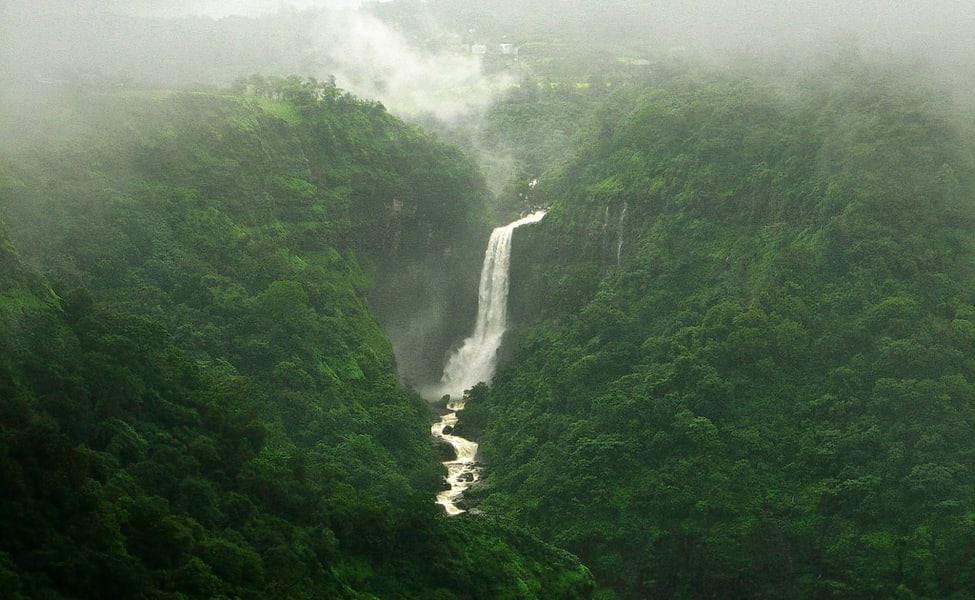
Lonawala is one of the most famous hill stations in Maharashtra. It lies within the shayadri range with an altitude of 625 m above the sea level and is 95 kms away from Mumbai in the Southweat direction. It’s covered with pretty dense forests all around with uniquely structured waterfalls flowing from amidst the greens and damns. Lonavala haves a variety of adventurous places to serve you an absolute and most satisfactory fun holiday. The popular tourist attractions here are Bhaja caves, Bushi dam, Karla caves, Rajmachi fort, Ryewood lake, among others. Lonavala is also very popular for the treks like the Andharban trek that starts from a village called Pimpri and ends in Bhira. It’s also very famous for production of ‘chikki’ – hard bars made up of nuts and jaggery. There exists another destination with exhilarating views here, Tiger’s Leap is an unusual name given to this place due to the resemblance of the shape with that of a tiger leaping into the valley. This point, which provides an interesting view of the valley below, is just a short distance away from INS Shivaji. It’s popularly known for appealing sunrise and sunset views seen from here. Another venturesome sites here are Ambey valley a beautiful township situated near about 24km from Lonavala, and ‘Imagica’ which is one of the largest and a very famous amusement park in the country, being a must visit place for children especially.
MAHABALESHWAR, MAHARASHTRA
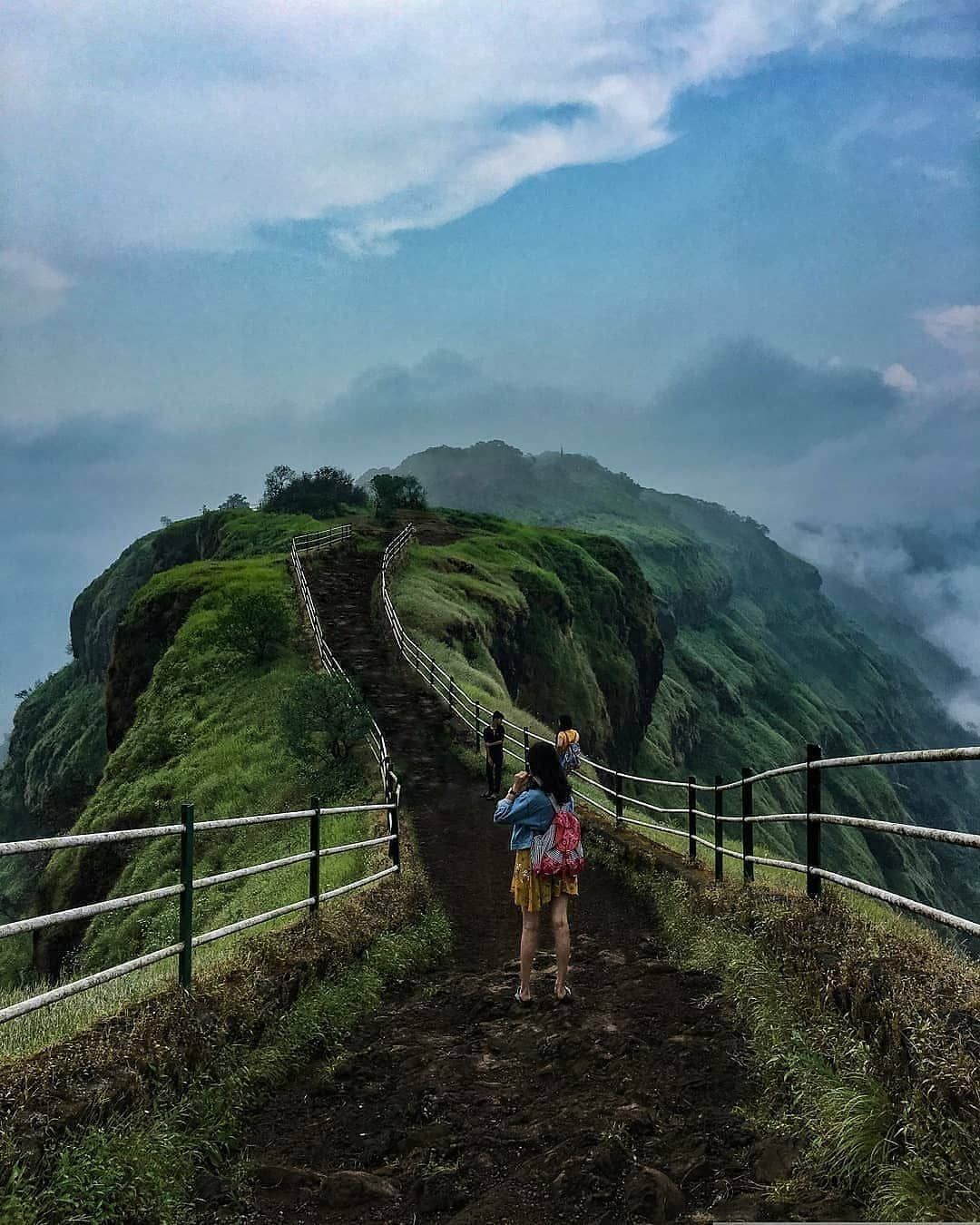
Another one of the most famous hill stations in Maharashtra is Mahabaleshwar know for it’s cloudy, pleasant weather all throughout the year. You could find a good range of visitors up here during every time of the year. Though, Moonsoon is generally considered the best due to the presence of moisture filled air and a picturesque village feeling you get. Even this place has a lot to serve you with. Firstly, you get to taste the best ‘Vadapavs’ here, the most favourite snack of Mumbaikars. Mahabaleshwar is enriched with stunning strawberry farms which are sold on main street market which is also charmingly constructed with colorful figures and public attractions. From the beginning of journey to Mahabaleshwar until the time you enter the main town there are some stupendous valleys, waterfall and majestic peaks. There are approx five hill top points which are mainly visited by tourists here, visiting these places inculcate a sense of freshness in your mind, the calm breeze, the mind blowing views are all rejuvenating for one’s soul. There are also other activities which you can do here are boating in the lake with mountains surrounding it, buy lots of tasty candies, feed monkeys playing on the hill tops, etc.
Munnar, kerala
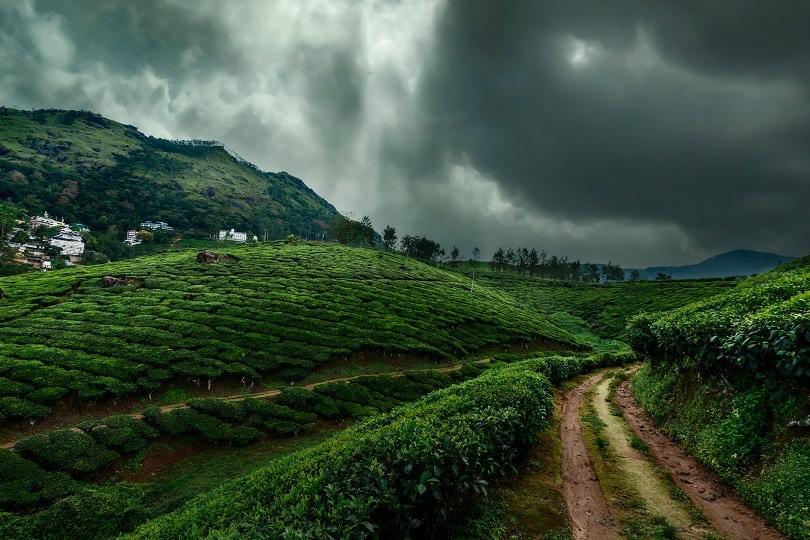
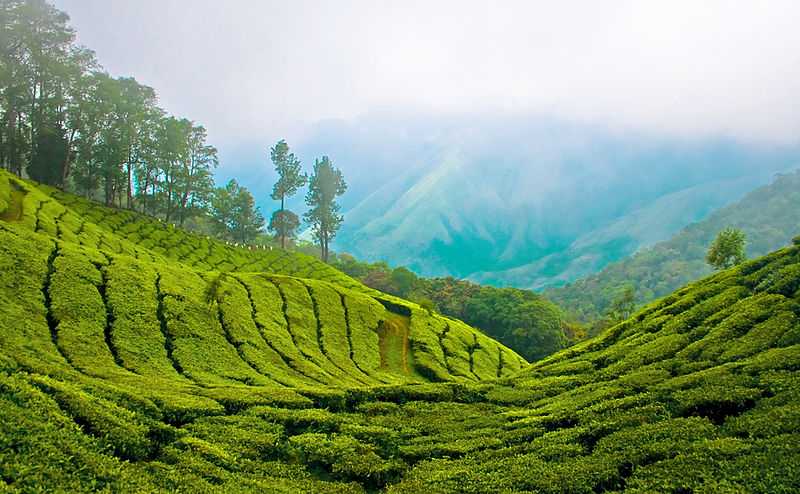
Munnar’s sceneric beauty comes to life due to moonsoon rains. It is popularly known for it’s elegant tea plantation estates. The landscape of the place reminds you of those pretty, magistic paintings which would seem unreal to the eyes, but memorises your heart inside. It is the most preferred holiday destinations by travellers in Kerala. It is situated in Idukki district of kerala. It is worth a while to take a cycle tour here and enjoy stupendous views of valleys around. This place has a lot more activities to offer such as camping under the starry night sky; staying in a tree house covered with grassy tea gardens; wildlife sight seeing in Eravikulam National Park; Shikara ride in Kundala Lake; rock climbing in Fun Forest Adventure Park. Other eye catchy sights include Cheeyappara and Valara Waterfalls; Echo Point, Photo Point, and Pothamedu View Point; Rose Garden and Blossom Park excude some soothing and delightful vibe to visitors. Here you can also spot Nilgiri Tahr and the rich wildlife at the Eravikulam National Park of Munnar. There is also a kids-friendly attraction, Wonder Valley Adventure and Amusement Park and more such wonderful adventures to experience, thus making it a adequate choice for your next holiday.
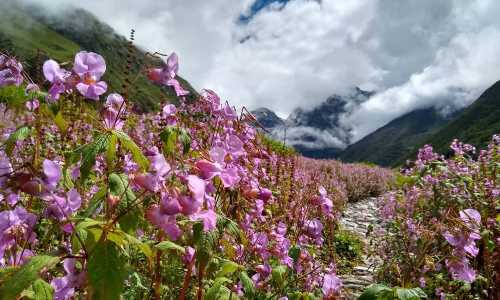
With a stunning backdrop of the imperial Himalayan ranges, the Valley of Flowers National Park presents an splendid view and an unforgettable experience for visitors. It is Spread over an area of 87 sq km in the Chamoli district, the Valley of Flowers National Park is a UNESCO World Heritage Site and forms one of the two core zones of the Nanda Devi Biosphere Reserve. The valley is believed to have been discovered in 1931, when three British mountaineers – led by Frank S Smythe – lost their way and reached by chance upon this spectacular valley. Attracted by the beauty of this place they named it the “Valley of Flowers”. As the name suggests, Valley of Flowers is a destination where nature blooms in full glory offering a breathtaking view. Exotic flowers (over 600 species) like orchids, poppies,primulas, marigold, daisies and anemones are spectacles to eyes. Sub-alpine forests birch and rhododendron cover parts of the park’s area. The trek to the valley haves some very amusing and cascading waterfalls and wild streams. It is Situated at an altitude of around 3,600 m above the sea level, the valley is also home to rare and amazing wildlife species like the gray langur, the flying squirrel, the Himalayan weasel, and black bear, the red fox, the lime butterfly, the snow leopard and Himalayan monal, to name a few. There exists an abundance of flowers here in july and september.
“Earth provides enough to satisfy every man’s needs, but not every man’s greed.” ― Mahatma Gandhi
FORESTS: SOURCES OF MANY ESSENTIAL MATERIALS
Forests are very important for the survival of man on earth. They fulfil our fundamental needs-food, clothes and shelter. Whatever we eat are the product of plants and trees. The clothes we wear are made from the plant fibre. The houses we live in are made of wood or have wooden materials. Not only this, the plants and trees are the sources of many essential materials-firewood, varieties of resin and gum, herbal medicines, etc. They also attract clouds and thus cause rain which is essential for agriculture. They defend soil from erosion and purify atmosphere by absorbing carbon-di-oxide and releasing oxygen. They also give shelter to birds and animals.
POPULATION EXPLOSION AND DEFORESTATION: DANGEROUS
“To be poor and be without trees, is to be the most starved human being in the world. To be poor and have trees, is to be completely rich in ways that money can never buy.” ― Clarissa Pinkola Estés, The Faithful Gardener: A Wise Tale About That Which Can Never Die
But the growth of civilization has led to the removal of forests. The population explosion and industrialisation have led to the indiscriminate felling of trees. It has proved to be very dangerous. It has reduced the amount of rainfall. As a result, vast areas of land have become barren. Many pools and ponds have lost their existence. The rarity of pure air has led to many dangerous diseases. The pollution of air has caused crack in the ozone-layer which saves life on earth from the scorching sunrays. The rise of atmospheric temperature year by year is the result of deforestation.
PRESERVATION OF FORESTS IS VERY NECESSARY
“Wildness is the preservation of the World.”― Henry David Thoreau, Walking
So, the preservation of forests is indispensable. Deforestation was done for the progress of civilization; afforestation is necessary for the continuity of civilization. Destroy forest is to destroy life; to save forest is to save life. Nature does not betray the heart that loves her; she does not spare the heart that disturbs her. Man’s ignorance has upset the balance of Nature; Nature’s wrath has upset the joy of man.
Bombay/Mumbai city of dreams, I get that, at a certain age my grandfather was such a believer too, and it didn’t disappoint him either, but does this belief still stand such waves of life and reality?
The answer is pretty simple to me, and that is a NO. Mind you, I am not demotivating the zeal that you have to come here, probably would take it as once in a lifetime opportunity to do and be better, and still for some it may hold true too.
Having being in conversations with people who came here to study, while also get their experience of Bombay, they are quite disappointed with what they have seen. A city with barely any space and hidden opportunities, that is difficult to tap into. So what is worth it? The experience perhaps, to live in a metropolitan region, to experience a diverse and translucent culture, to celebrate this divergence, but beyond that I don’t find a lot that makes me wanna stay in this city of shared nightmares.
Safety is an issue that we’ve never addressed with this region because it never sleeps, but someone who hasn’t ever slept has faced issues that tears at them, and similarly with this region security is something that isn’t even close to what it should ever be.
Moreover, I could just be a bitter biased person, because I stay here but since I have stayed here, I find that there isn’t much that city could offer me, and the thing that makes me stay here are connections, but I could just move on and find a better place and better opportunity that could suit my need and wouldn’t force me to be a certain way just so that I could stay at a certain place, there are definitely lot of factors to be considered and majority of which is personal and subjective to everyone of us.
So, do you consider that I wrap it up, k honestly can’t there is too much for me to say that might offend someone because I’m subjectively biased and therefore I’d ask you to let me know what you think of your own experience ad possibly change my prejudice.
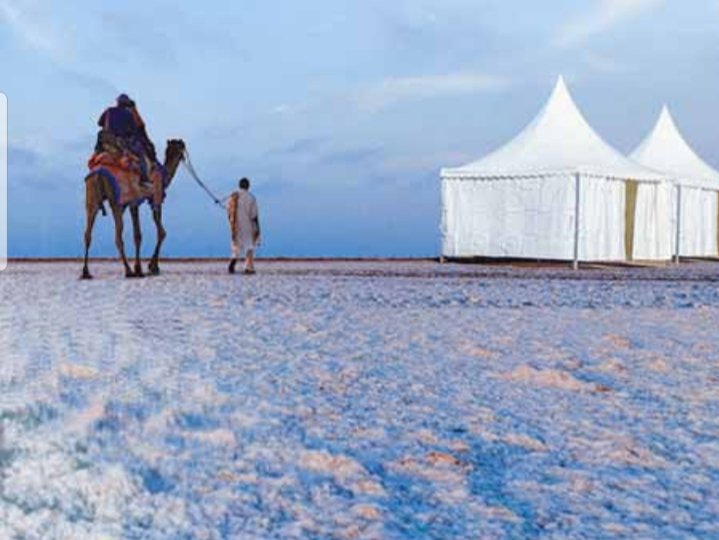
The Great Rann of Kutch is a salt marsh in the Thar Desert in the Kutch District of Gujarat, India. It is about 7500 km2 (2900 sq miles) in the area and is reputed to be one of the largest salt deserts in the world . It is an extension of the Thar Desert.
The Rann of Kachchh is a salt marshy land in the Thar Desert in the Kachchh district of western Gujarat. It lies between Gujarat in India and the Sindh province in Pakistan. … The Rann of Kachchh is famous for its white salty desert sand and is reputed to be the largest salt desert in the world.
Winter is really the best time to go to Rann of Kutch. It really comes into its own during this season. There’s nothing like sitting around a warm bonfire and enjoying a night of the local culture, especially on a full moon night.
If you prefer greater comfort in your choice of accommodation, then the Rann Utsav is definitely the best time to visit the Rann of Kutch! Sightseeing: Rann Utsav packages come with many included and optional sightseeing tours of other interesting places nearby such as Bhuj, Dhordo, Mandavi Beach, and Dholavira etc.
Rann Utsav, the Carnival of Music, Dance & Culture of Gujarat. Enhance the natural beauty of White Rann when the light of Full Moon spread it on the white land.
Rann Utsav is a festival of crafts, art, music, dance, food, nature and the people of Kutch attended by thousands of people every year. This annual festival celebrates the rich heritage of the ecologically and ethnically diverse land of Kutch district, Gujarat.
Handicrafts and Traditional Shopping during Rann Utsav –
• Embroidery. Kutch is renowned world over for its mirrored embroideries.
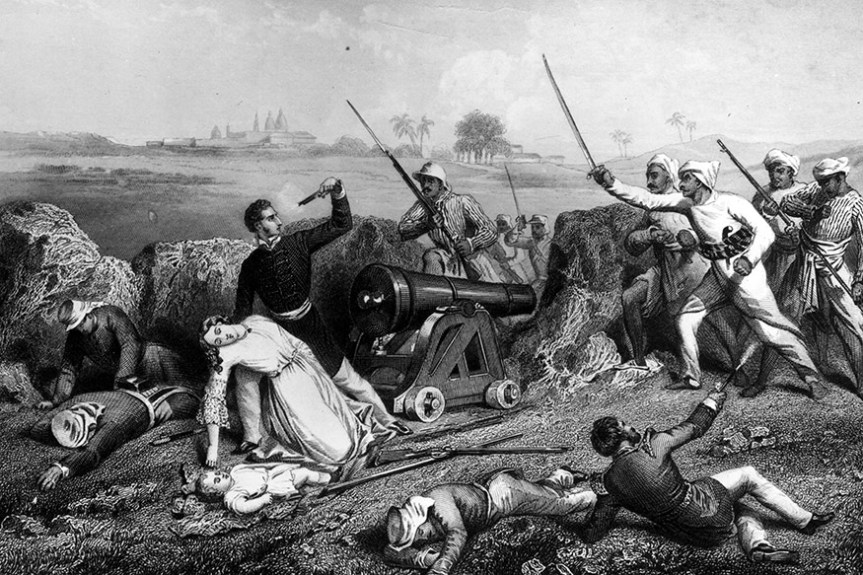
It was the first rebellion against the British East India Company in India which functioned as a sovereign power under the British Crown. The revolt began in Meerut when Sepoys of the British East India Company rebelled against the Company which led to widespread participation of the masses across the nation. The revolt is known by several names like the Sepoy Mutiny, the First War of Independence, the Great Rebellion.
Causes of the Revolt
The immediate cause of the revolt was from a rumour that spread that catridges used in rifles were greased with fat of cows and pigs. Before loading into the rifle the sepoy had to bite of the covering on the catridge. This was a big insult to the ritual of the Hindus and the Muslims. Lord Canning made ammends in the manufacturing of the catridges but the damage was done. In March 1857, Mangal Pandey refused to use the catridges and infuriated he attacked his British superiors. He was executed on April. On 9th May, 85 sepoys in Meerut refused to use the new catridges and were sentenced to ten years imprisonment.
Mangal Pandey
Indian sepoys formed a large majority of the British troops but they were considered inferior and paid less than a European sepoy who held the same rank. The General Services Enlistment Act Required the sepoys to be ready to serve even in the British land in the West.
The adoption of a new British policy called the Doctrine of lapse. The policy sought annexation of a Hindu ruler’s kingdom if had no natural heir, and also prohibits adopted successor of the ruler from seeking the throne, after the ruler dies. The rule was imposed by Lord Dalhousie. The rule annnexed many kingdoms and a large number of rulers were dislodged. Rani Lakshmi Bai’s adopted son was prohibited from acquire the kingdom of Jhansi. Satara, Nagpur, Jhansi were annexed under the rule. The kingdom of Awadh was also annexed which lead to discontent among the people.
Lord Dalhousie
The abolition of social practices like sati, and the legalizing of widow remarriage were perceived as threats to the culture. The introduction of acts like changing the Hindu law of inheritance allowing a Hindu who converted into a Christian inherit their ancestral properties. Introduction of Western style of Education was perplexing for the Indains.
The local peasants and zamindars were enraged ny the heavy taxes imposed on their land. Borrowal of money from money lenders in order to meet the heavy taxation demands eventually lead to bad debts, thereby losing their land that survived for generations.
The post Industrial Revolution in the West brought in an influx of British machine made goods into India. The action ruined the small scale industries like the textile and the handicraft.
Rani Lakshmi Bai
Many rulers also revolted. Begum Hazrat Mahal lead the revolt in Awadh when the British annxed the kingdom. Nana Saheb the adopted son Peshwa Baji Rao II, led the revolt in Kanpur. Rani Lakshmi Bai led the revolt in Jhansi after British suppressing her adopted son to ascend the throne.
Jaipur or pink City, is the capital of Indian state of Rajasthan, and its largest city. The city was built in the 18th century by Sawai Jai Singh as India’s first planned city, and today it’s a major tourist attraction for Indians and for international visitors. It is a very picturesque city with splendid palaces, forts and historical monuments. Some of the tourists places are —
1 – City Palace in Jaipur
City Palace has stood at the heart of the Old City of Jaipur for nearly three centuries, shortly after Maharaja Sawai Jai Singh II decided to relocate his court from the city of Amber. Protected by huge guard walls, the fairy-tale-like structure is still the home of Jaipur’s modern-day royal family, and is more extravagant and enchanting than you might imagine.
City Palace is more than a sand-colored regal abode—it’s a sprawling complex of buildings built around a series of landscaped garden courtyards overlooking Jaipur and Lake Palace. The entire property is a stunning display of Rajasthani and Mughal architecture.
The current occupants reside in the most eye-catching building, the Chandra Mahal, an elegant structure with curved eaves and domed rooftops. Each of its seven stories features an entirely different style. The ground floor is included in the price of admission, but you’ll need to book a private tour to go upstairs.
2 – Jantar Mantar
At first glance, Jantar Mantar may look to be nothing more than a bunch of larger-than-life abstract sculptures. But this is not an art gallery—it’s a special collection of astronomical tools started by Rajput ruler Jai Singh II to measure the heavens nearly 300 years ago.
Each of the 20 or so structures at the UNESCO World Heritage Site serves a distinctive purpose. The observatory’s massive sun dial, known as Samrat Yantra, is particularly striking. At 27 meters tall, it casts a huge shadow that accurately measures time down to two seconds.
3 – Hawa Mahal
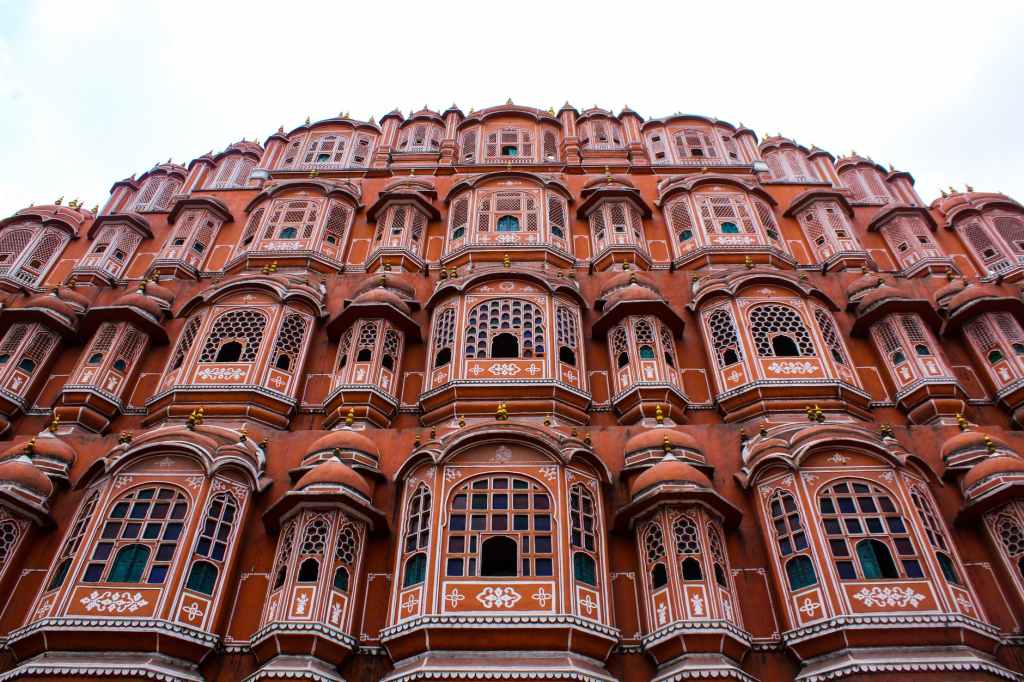
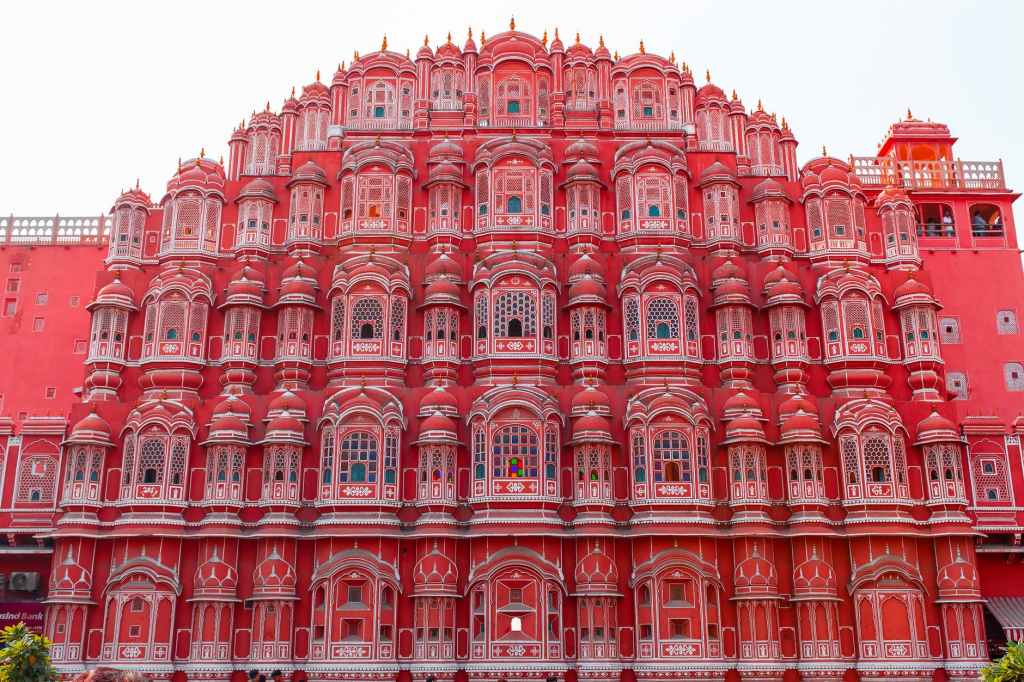
If you had any preconceived notions about how the buildings in Jaipur look, they probably came from Hawa Mahal (Palace of Breeze). It has all of the distinctive architectural features that appear in postcards of the city, from the salmon-pink, honeycombed facade, built to resemble the crown of Hindu god Krishna, to the geometric accents and rows of tiny windows.
The landmark was built in 1799 to allow royal ladies to watch festivals on the street without being seen by the public. Its 953 windows allow plenty of breeze to pass through, making it an ideal summer palace.
4 – Amber Fort
Jaipur is home to one of India’s most-visited forts: Amber Fort. Built in the year 1592, the sandstone and marble monolith stands atop a small hill roughly 20 minute’s driving distance northeast of the center of Jaipur. It’s best known for being a pristine example of Rajasthani architecture.
Getting to Amber Fort typically involves a short uphill hike that’s well worth the effort. It’s decked out with intricate patterns of inlaid marble in nearly every color of the rainbow. The fort is laid out into four separate sections, each of which has a spectacular garden courtyard outside. While you’d never know it from above, you can actually explore the fort’s underground tunnels, some of which have been restored.
5 – Albert Hall Museum
When English writer Rudyard Kipling visited the Albert Hall Museum in Jaipur, he wrote that it was a “rebuke to all other museums in India from Calcutta downwards.” That’s high praise coming from the son of a curator, and fitting for this renowned institution.
The oldest museum in Rajasthan, the Albert Hall Museum boasts an extensive collection of art and historically significant artifacts. Come for the Egyptian mummy, stay to see antique coins from different periods in India’s history, charming permanent exhibits of miniature paintings, 18th-century costumes worn by members of different castes, and a peculiar collection of 19th-century clay figures demonstrating all the yoga poses.
6 – Birla Mandir
In a city that seems to be dipped from top to bottom in pink, the stark white marble Birla Mandir stands out—big time. The Hindu temple pays tribute to Lakshmi, the goddess of wealth and purity, and Vishnu, one of the religion’s main deities.
7 – Nahargarh Fort
When it comes to sightseeing around Jaipur, the views don’t get better than what you’ll find at Nahargarh Fort. Also known as Tiger Fort, the nearly 300-year-old fort overlooks the entire city from atop the Aravalli Hills—a prime location for the structure to defend Jaipur against enemies many years ago.
More than just a formidable barrier though, this fort also contains Madhavendra Bhawan, a summer destination for royalty. The sumptuous Rajasthani building features a dozen identical boudoirs for the queens, which all connect to the king’s suite through mural-filled corridors.
8 – Jal Mahal on Man Sagar Lake
One look at the Jal Mahal, and you might think you’re seeing a mirage. The graceful palace seems to float atop the twinkling Man Sagar Lake , a calm sight compared to the rest of the frenzied city.
While it appears to have just one story, the Water Palace has four other levels submerged beneath a reservoir. Tourists can’t access the site, however, that may change in the future.
Jaipur is also known as the Pink City, due to the dominant color scheme of its buildings. It is located 268 km (167 miles) from the national capital New Delhi. Jaipur was founded in 1727 by the Kacchawa Rajput ruler Jai Singh II, the ruler of Amer, after whom the city is named.
Jaipur is the Capital City of Rajasthan. Jaipur is famous for Rajasthani traditional Jewelry, traditional fabrics and handicrafts, and also for traditional rajasthani cuisine.
This nicknames arise from the distinctive architectural features of each city. The Pink City of Jaipur, for example, is so named because its buildings were painted pink in the 19th century, back when India was a British colony, to prepare for a visit by Edward, Prince of Wales.
Maharaja Sawai Ram Singh II, who was the then ruler of Jaipur, in his infinite spirit of hospitality, had the whole city painted pink terracotta in honour of the royal guest. Pink was considered the colour of hospitality. … Historic accounts state the city was coloured in white before it was turned pink.
A romantic dusty pink hue — which has defined the city since 1876, after it was painted pink to welcome Queen Victoria’s husband, Prince Albert — gives Jaipur its status as the “Pink City,” as it is commonly known.
The number of tourists visiting these monuments and paying tribute to the historical traditions of the city, this city’s nickname is Paris of India.
Something which caught my attention across all the classes I had was the striking connections between the advantages and disadvantages of globalization. It stopped me to think of the kind of world we live in.
People living in the 21st century had turned around the whole concept of globalization with the coming of inventions and technologies. It now connected every single thing in a whole new level. Not just commodities but culture and lifestyles are also exchanged between the people. With these advantages came the disadvantages. People made use of technology with religious fundamentalism making us go way back in time.
The Modern Era came with the cosmopolitan outlook among people and everyone was more secular. People left behind the conservative outlook towards life and were more adapting and absorbing. Or so we thought, because globalization spread the stereotypes of one place to another. Religious identities also were spread among people. A very bad effect of globalization was the spread of terrorism among the nations.
Now terrorists groups could make use of the technology to make large connections around the world, this has resulted in lots of attacks in different places. With the good side of technological advancements came this very bad side.
People have turned a blind eye to this twisted fact, a very common say that if something has a good side, there definitely will be a bad side. For a minute where we believed that people had changed from being ethnocentric, we directly get a blow from various examples like this.
From the beginning to this day, women have always been oppressed be it by men in their family or by the state that was and is still highly patriarchal. Earlier, the private (households) and the public (political, business world) were strictly kept separate. State had no roles in what was happening in the private sphere. And the major factor of this separation was that public was controlled by males and private appeared to be in control of females.
The separation between private (home) and public (work) made a significant difference in the lives of males and females, and of course, it was negative for women. For example, males were expected to work out and hence they dominated the outside world while females were expected to stay at home and decide the household decisions and thus they happened to be the controllers of the households.
However, the above situation was far away from reality. In most cases, as public was controlled by males it used to have a direct influence on the private sphere. And therefore, the then feminists and scholars labelled this distinction as baseless and started demanding for political rights of females like voting rights, reproductive rights and like. It was through the second wave of feminism in 1960s, feminists began to bring up more such marginalised communities and issues into the picture.
Earlier only a “white heterosexual male” normative was followed in the world and especially in western civilisations. Feminists have rejected the public-private boundary as an acceptable rationale for legal action or inaction. A feminist argument is that such a separation disadvantages women of their rights and advantages privileged groups like white heterosexual males.
Three major arguments that were brought by feminists which aimed to challenge the public-private distinction are, first, politics and society, both had ignored the domestic sphere, second, public-private distinction is deeply gendered and sexist as its assigns roles to people based on their biological characteristics and because of this women become the most affected underprivileged group, third, calling “family” a private sphere was an attempt to hide domination and abuse in the relationships in families from legal discourse.
To put an end to all of this ignorance, women activists fought against the injustices and demanded the states to intervene in household matters like laws against domestic violence, divorce rights to women, abortion rights and other rights to choose. Along with these domestic protection rights, many other rights on the public sphere were also demanded.
Feminists from the second feminist wave asked for equal representation in politics, law-making and other decision making procedures which were of both public and private significance.
Examples:
1) Paid Work:
Even though working environment has changed nowadays as compared to earlier times, females suffer from hard labour but less payment. From corporate houses to films and television everywhere females are paid less than their male counterparts even though all of them do the same work. At times, female actors do more work as they have dance sequences in addition in the movies but still get paid less for the work. This has witnessed a change in recent times where female actors have begun to charge lump sum amount.
2) Patriarchal State:
States can be extremely patriarchal to women in terms of legal and political rights. This can happen in two ways- one by creating patriarchal and misogynist laws for women, two by not doing anything progressive for women (because not interfering into women’s rights is also equal to creating misogynist laws for women). Over the past few decades, this has also witnessed a change where we have seen governments making women friendly laws like reservations and special commissions for women or anti dowry and anti-domestic violence rights.
3) Male Violence:
This can mean anything that happens both in public and private sphere. Sexual harassment at workplaces is at peak all over the world. Thanks to social activists and NGOs in India who all fought for implementation of sexual harassment act back in 1990s when a social worker was brutally sexually assaulted for stopping a child marriage in the Indian state of Rajasthan.
At the end, we all as a society collectively need to understand that opposite of patriarchy is gender equality, that is, feminism, nothing else.
Istanbul is the main attraction of Turkey. Istanbul is the center of this country for its culture,economic status and history. Also Istanbul is the capital city. According to history , in 657 BCE , Istanbul was founded as Byzantion by Megarian colonists. Later it became Istanbul .
Galata tower
Istanbul is a country which is covered by empires across the centuries and stands in both Europe and Asia. It is one of the most popular travel spots in the World. Some popular and attractive tourist spots are- Aya Sophia, Topkapi Palace, Basilica Cistern, Blue Mosque,Istanbul Archaeology Museum, Hippodrome,Süleymaniye Mosque,Grand Bazaar,Spice Bazaar,Chora Church,Dolmabahçe Palace,Little Aya Sofya,Museum of Turkish and Islamic Arts,Rüstem Pasa Mosque,Yedikule Fortress,Galata Tower,Carpet Museum,Fatih Mosque,Pera Museum,Istiklal Caddesi and Taksim,Üsküdar and most popular Cappadocia hot balloon.
Let’s be introduce with some of them-
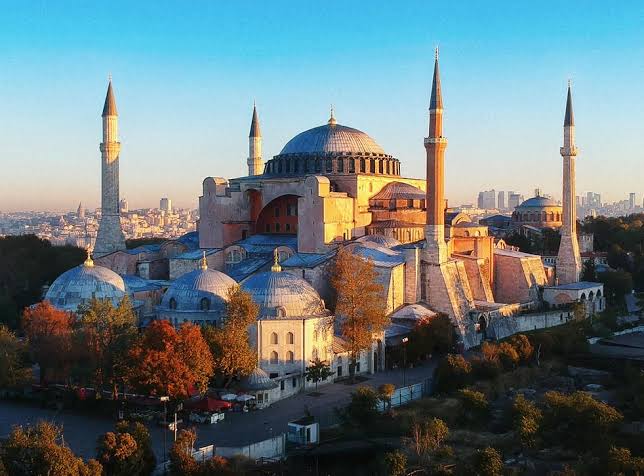
Aya Sofya or Hagia Sophia
Aya Sofya or Hagia Sophia
According to history in AD 536, for the 1st time when the Byzantine Emperor Justinian entered his finished church, he cried out “Glory to God that I have been judged worthy of such a work. Oh Solomon, I have outdone you!” Aya Sofya or Hagia Sophia means ‘holy wisdom’. It is a domed monument of Constantinople (6th century AD). It was the emperor’s swaggering statement to the world of the wealth and technical ability of his empire. Tradition maintained that the area surrounding the emperor’s throne within the church was the official center of the world.
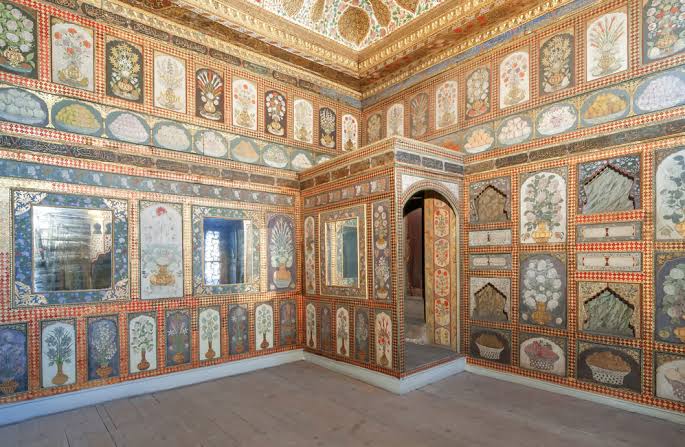
Topkapi Palace
The Topkapi Palace is a large museum in the east of the Fatih district of Istanbul in Turkey, there are the imperial collections of the Ottoman Empire and maintains an extensive collection of books and manuscripts in its library.
Topkapi Palace
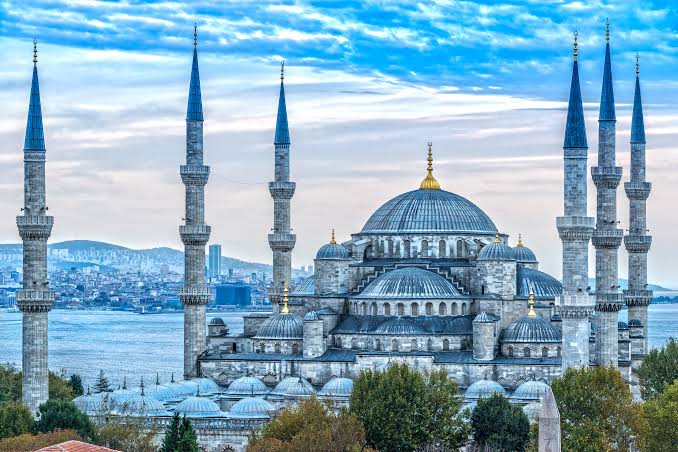
The Blue Mosquewhich
The Blue Mosquewhich
The Blue Mosquewhich is called Sultanahmet Camii in Turkish is an historical mosque in Istanbul .For the blue tiles surrounding the wall it is known as Blue Mosque. It was situated between 1609 and 1616 years, like many other mosques, it also comprises a tomb of the founder, a madrasa and a hospice.
The Basilica Cistern
The Basilica Cistern
The Basilica Cistern is the largest among the ancient cisterns beneath the city which provided a water filtration system for the nearby buildings. This underground chamber measures approximately 138 meters (453 ft) by 64.6 meters (212 ft) and is capable of holding 80,000 cubic meters (2,800,000 cu ft) of water. The ceiling is supported by 336 marble columns.
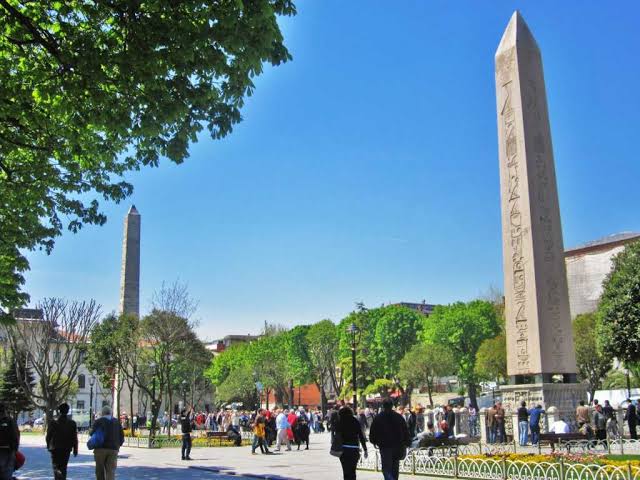
The Hippodrome
The Hippodrome
The Hippodrome’s name comes from Greek word hippos(horse) and dromos(course). It was an ancient Greek stadium for horse racing and chariot racing. But in present day there isn’t much of the Hippodrome left to see, except for a small section of the gallery walls on the southern side, but the At Meydani (park), which now stands on the site, is home to a variety of monuments.
Archaeology Museum
Archaeology Museum
The Istanbul Archaeology Museums are a group of three archaeological museums which are located in the Eminönü quarter of Istanbul, Turkey, near Gülhane Park and Topkapı Palace. The three museums are- in the main building the Archaeological museum, Museums of the Ancient Orient and Museum of Islamic Art.
Grand Bazaar
Grand Bazaar
In Istanbul, the Grand Bazaar is one of the largest and oldest covered markets in the world. It has a total area of 30,700 m2. There are 61 covered streets and over 4,000 shops attracting between 250,000 and 400,000 visitors daily.
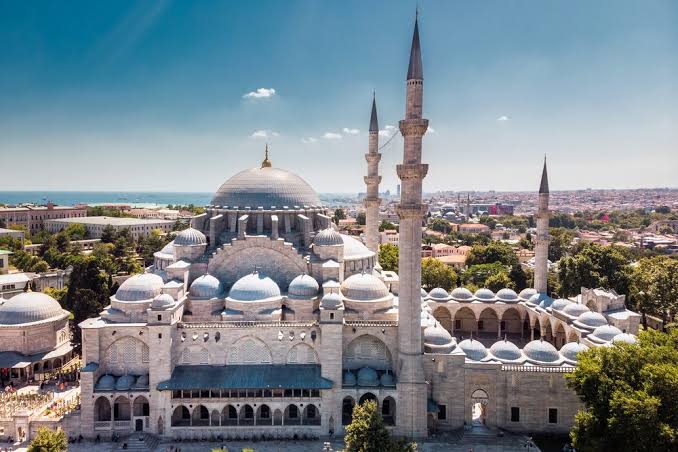
The Süleymaniye Camii
The Süleymaniye Camii
The Süleymaniye Camii (Suleymaniye Mosque) is one of its most distinctive features with its truly staggering size which was built by the legendary architect, Mimar Sinan, it is one of his masterpieces and his largest design. It is not only the inspiring size that is impressive (the central dome stands 47m high), but also the elegantly decorated interior. The sense of space and light is emphasized by the supporting semi-domes to the northwest and southeast and the monumental arched spaces to the southwest and northeast.
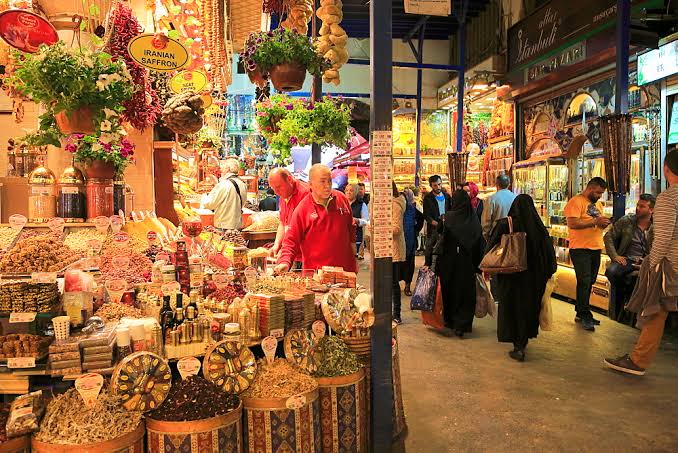
The Spice Bazaar
The Spice Bazaar
The Spice Bazaar is one of the largest bazaars in this city. Located in the Eminönü quarter of the Fatih district, it is the most famous covered shopping complex after the Grand Bazaar.
Cappadocia
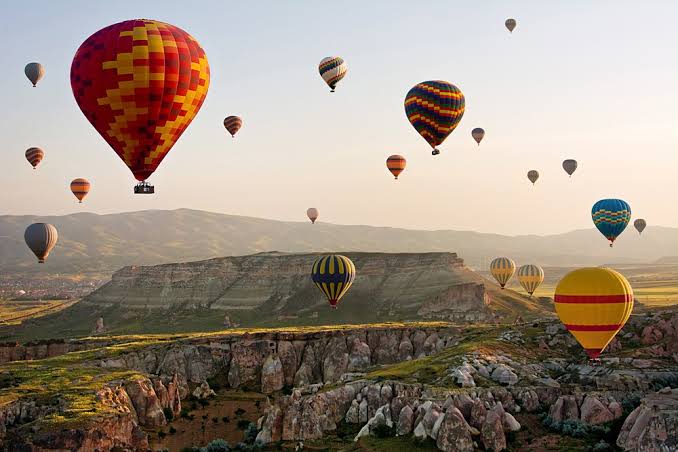
Cappadocia the hot balloons
Cappadocia is in central Anatolia, in the heartland of what is now Turkey.The area is popular for the hot balloon ride. As it has many areas with unique geological, historic, and cultural features.Hot-air ballooning is very popular in Cappadocia and is available in Göreme. Trekking is enjoyed in Ihlara Valley, Monastery Valley (Guzelyurt), Ürgüp and Göreme.
Somnath Jyotirlinga, Gujarat: According to the Shiva Purana, the moon was married to 27 daughters of Daksha Prajapati, out of which he loved Rohini the most. Seeing his negligence towards the other wives, Prajapati cursed moon that it would lose all its radiance. A disturbed moon along with Rohini came to Somnath and worshipped the Sparsa Lingam after which he was blessed by Shiva to regain his lost beauty and shine. On his request, Lord Shiva assumed the name Somchandra and resided there eternally. He became famous by the name Somnath. it is very holy pilgrimage site.
Nageshwar Jyotirlinga, Gujarat: This Jyotirlinga holds special significance as it symbolises protection from all types of poison. According to the Shiva Purana, a Shiva devotee by the name Supriya was captured by the demon Daaruka. The demon imprisoned her with several others in his capital Daarukavana. Supriya advised all prisoners to chant “Aum Namaha Shivaya” which enraged Daaruka who ran to kill Supriya. Lord Shiva manifested in front of the demon and put an end to him. Thus the Nageshwar Jyotirlinga came into being.
Kashi Vishwanath, Varanasi: It is believed that Banaras is the site at which the first Jyotirlinga manifested its supremacy over other gods, broke through the earth’s crust and flared towards heaven. This temple is said to be the dearest to Lord Shiva, and the people believe that those who die here achieve liberation.
Mahakaleshwar Jyotrilinga, Madhya pradesh(Ujjain): According to the Puranas, there was a five-year-old boy Shrikar who was enthralled by the devotion of King Chandrasena of Ujjain towards Lord Shiva. Shrikar took a stone and started worshipping as Shiva. Many people tried to dissuade him in different ways, but his devotion kept growing. Pleased by his devotion, Lord Shiva assumed the form of a Jyotirlinga and resided in the Mahakal forest. The Mahakaleshwar Temple is considered significant by the Hindus for another reason. It is among one of the seven “Mukti-Sthal” – the place that can liberate a human.
Kedarnath Jyotrilinga, Uttrakhand: According to the legends, pleased by the severe penance of the Nara and Narayana – two incarnations of Lord Vishnu, Lord Shiva took up permanent abode in Kedarnath in the form of this Jyotirlinga. People believe that praying at this site one gets all his desire fulfilled.
Omkareshwar Jyotrilinga, Madhya pradesh: The word Omkareshwar means “Lord of Omkara” or the Lord of the Om Sound! According to the Hindu scriptures, once upon a time, there ensued a great war between the Devas and Danavas (Gods and Demons), in which the Danavas won. This was a major setback for the Devas who then prayed to Lord Shiva. Pleased with their prayer, Lord Shiva emerged in the form of Omkareshwar Jyotirlinga and defeated the Danavas. This place is thus considered to be highly sacred by the Hindus.
















 Eduindex
You must be logged in to post a comment.