LEARNING FROM THE CLEANEST CITY OF INDIA: INDORE

“A journey of a thousand miles begins with a single step. “

Indore has been awarded as the “Cleanest City” of India for fourth time in a row and the most important reason behind this success is the combined efforts of the public, public representatives, government officials and other stakeholders engaged in this process. The journey made by the city is inspiring and as of now there are many other cities of the country and globe who are following the strategies for becoming cleanest city.

INDIAN SCENARIO: TRASH EMERGENCY

According to the Annual Report of the Ministry of Housing and Urban Affairs, in year 2016-17, India generated approximately 1,50,000 tones of solid waste per day. According to World Bank by 2050, it is estimated that India will generate nearly 3.5 times (over 5,43,200 tones) of solid waste per day. It has also been estimated that local bodies collect nearly 90% of this waste, out of which nearly 80% is dumped in dumping sites or landfill site without getting treated. Under Article 21, it is provided that Clean Environment is (the) Fundamental Right of every citizen and it is the responsibility of the urban local bodies and the State to ensure that clean and hygienic environment is provided to the citizens which preserves their health. In case of Indian cities, it is very important to learn from the best practices and techniques applied in different urban areas for efficiently dealing with the solid wastes.

THE JOURNEY TO CLEANEST CITY

HOW IT STARTED

The journey of Indore for becoming the cleanest city started from 2016 and it faced many challenges.

Some of technical challenges were:

  1. Inefficient infrastructures, systems and processes for Municipal Waste Management.
  2. Absence of infrastructures for material recovery, transfer stations and processing unites and non – operational composting facilities.
  3. Inefficient door to door waste collection system with no scope of source segregation practice.
  4. Unorganized trenching grounds with nearly 13 lakh tons of waste which caused methane induced fire, bad odor and increased the chances of diseases.
  5. Unorganized and inefficient waste collection, transportation and dumping.

In addition to all these technical issues, there were various non – technical challenges like:

  1. Cooperation and support of citizens,
  2. Unorganized municipal workers
  3. Lack of mechanism to monitor and reviews all the processes being involved
  4. Inefficient citizen grievance redressal system.
  5. Lack of political awareness to achieve the cleanliness goals
  6. Lack of awareness about solid waste management process among citizens, local media, administrations and Resident Welfare Associations (RWA).

THE PROCESS

Indore had to implement many strategies in each and every step associated with solid waste management. Along with these strategies the Indore Municipal Corporation (IMC) had partnered with private bodies, NGOs etc. for boosting the entire [process and empowered the citizens regarding their roles and responsibilities as citizens of the city for making Indore a clean city.

Waste Collection, Segregation and Transportation :
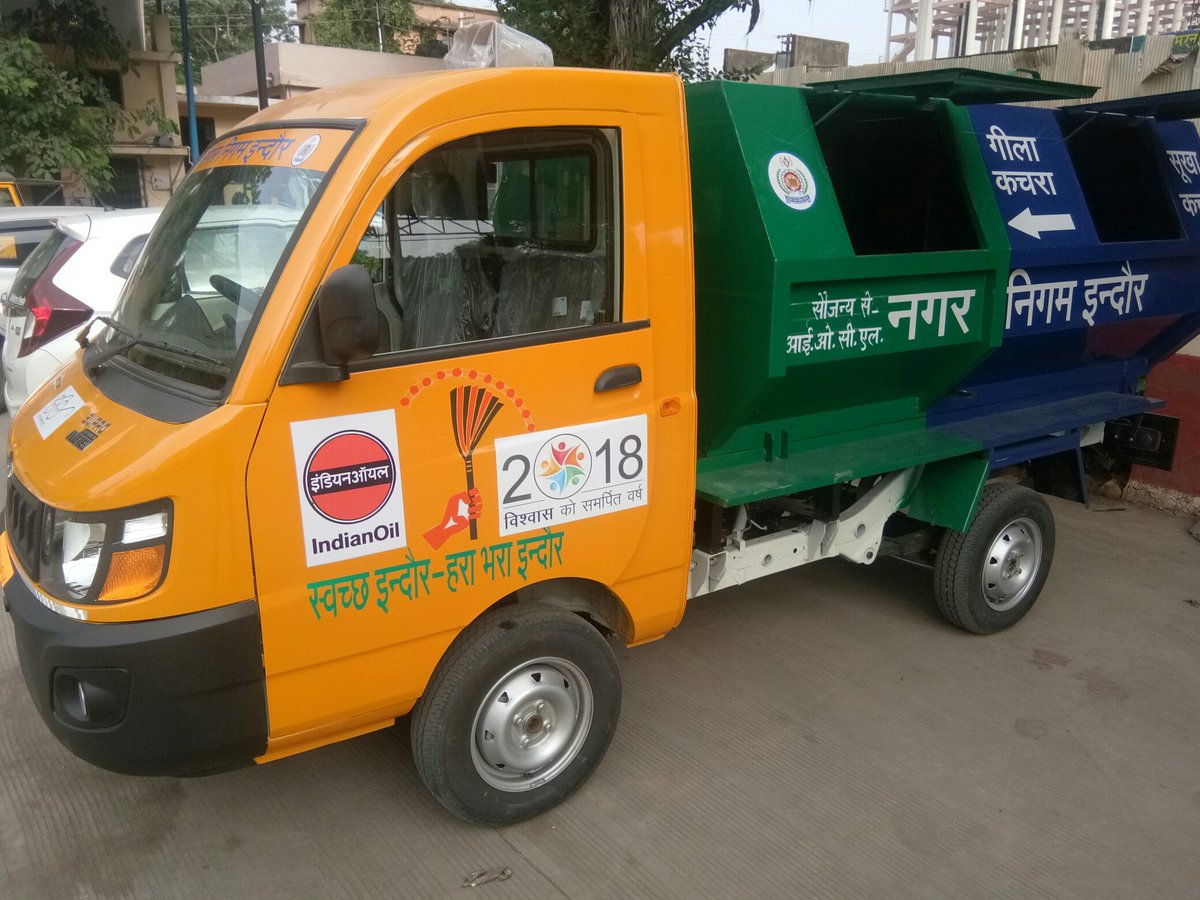
Vehicles having different compartments for waste collection

IMC started the process of waste collection from households on daily basis from 2016 and at the same time it also started asking and motivating the citizens to segregate their waste. Some of the strategies undertaken for increasing the efficiency of waste collection were :

  1. Collecting the wastes from household on regular basis and studying the lifestyle of different localities to finding the most suitable for waste collection.
  2. Explaining the people about the need of waste segregation and on repeated disposal of unsegregated wastes, households had to pay the fine as decided by the Supervisors of IMC.
  3. Tracking the routes of the garbage vans and vehicles that collect the wastes from door to door and monitoring it.

Some of the steps undertaken for creating awareness among citizens were :

  • Visiting of different localities and colonies by Municipal officials to persuade and create awareness among citizens regarding waste segregation.
  • Providing common platforms were religious leaders created awareness among people, on the basis of importance of cleanliness as mentioned in the religious texts, schools etc. and organizing oath taking ceremonies for children pledging a clean city and conduction of mass road sweeping exercise at different areas of the city.
  • Involving 850 Self Help Groups, comprising almost 8500 women for spreading awareness for waste segregation and conducting mass campaigns.
  • Campaigns for zero waste localities and markets.
  • Creating awareness regarding home composting, as a result of which nearly 50,000 households started doing home composting.

Involvement of Private Bodies and NGOs for Boosting the process

The IMC partnered with non-governmental organizations for creating awareness campaigns to change the attitude and behavior of citizens, to facilitate the functioning of solid waste management systems, use of proper technologies for increasing efficiency and improved capacity for ensuring proper implementation of all strategies and actions decided for being clean.

Waste Management System

The city adopted the strategy of processing the waste near the source. For example: All food outlets separate food waste and transport it to the small garden inside a traffic triangle at one end of the street. This strategy is more cheaper, hygienic and sustainable way for processing the wastes. The responsibility of waste composting is given to an NGO named Swaha and this organization uses a machine which simple and easy to handle. Most the waste generated from Indian cities contain higher proportion of organic wastes and are generally wet, which makes the waste more difficult to handle. These machines work efficiently even if the material is not organic with minimum spillage, minimum human contact with waste and has mechanism which can easily lift heavy trash cans.

Waste to Fuel

For processing of organic wastes, a Biomethanation facility is provided which converts the organic waste into methane. The city produces nearly 20 tones of waste everyday and this waste is converted into 750 – 800 kg of bio compressed natural gas (bioCNG). This task is assigned Mahindra Waste to Energy Solutions Ltd. The gas produced is used to run city buses, and sold as cooking fuel to hotels and the Indian Institute of Management, at a subsidized rate. Waste from the flower market is kept separately (1-2 tons a day), and mixed with slurry to produce compost.

Street Sweeping

For the purpose of street sweeping machines are used. Every night 800 km of main roads are swept using machines and water mist are used for cleaning footpaths and road dividers. For the cleanliness of roads nearly 400 liters of water is used every night and most of these are recycled water which are derived from the three sewage treatment plants. In case of internal roads which are 2200 km, the wastes are swept and are collected in gunny bags, collected by vans and transported to waste processing facility.

Clean Streets of Indore

CURRENT SCENARIO

Before and After images of Indore

As of now, 100% of household wastes are segregated at source and are processed. Ten ultra modern mechanized transfer stations are used for final processing and disposal. The city makes use of ICT based devices and Weighbridge mechanism for sustainable integrated solid waste management systems. For road sweeping purpose, Ultra modern mechanized road sweeping machines are used, which clean the bypasses, super corridors and bridges.

The city uses a collection and transportation app which is fully digital in nature for monitoring entire process, from door to door segregation to final disposal of waste. The wat wastes are processed and are used in public transports and today 15 city buses operate on this bioCNG gas. Similarly, construction and demolition wastes are reused for making non-structural concrete, paving blocks, lower layers of road pavements etc.

Through the process of bio-remediation, 100% of wastes has been remediated and 100 acres of land has been reclaimed. The dumping yard or landfill site had been converted into green belt. There is a proposal to develop this land into a golf course and city forest.

The entire journey of Indore has been based on more that 3Rs- reduce, reuse and recycle. These include Food Bank, disposable free events, Bartan Bank, art and crafts made out of wastes etc. All these initiative have ensured sustainability of the city.

Other than all these technical strategies, the city also took many social media initiatives and Information, Education and Communication (IEC) techniques for ensuring community Engagement. The song, “HO Halla” by Indian singer Shann became the Swachhta Anthem of the city in 2017 and motivated the citizens to keep doing their part of work towards this Swacchta mission. The song also has many new versions.

CONCLUSION

Since 2016, Indore went through a commendable journey for providing its citizen the urban environment which will protect their health. The IMC took strategies which are the most efficient and using them, it eliminated garbage dumps, 100% household waste collection and segregation, reusing all the wastes etc. The success of Indore’s solid waste management shows that other Indian cities can also clean the entire area and make it more hygienic and sanitized for the people by engaging NGOs, private bodies and citizens.

Thus, trust between all the stakeholders being involved in the process is the major pre-requisite for achieving the goal.
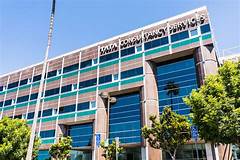
Tata Consultancy Services(TCS)

Tata Consultancy Services (TCS) is an Indian multinational information technology (IT) services and consulting company. It’s main headquartered is located in Mumbai, Maharashtra, India and largest TCS campus located in Chennai, Tamil Nadu, India. TCS is the second largest Indian company by market capitalisation. TCS was ranked 64th overall in the Forbes World’s Most Innovative Companies ranking, making it both the highest-ranked IT services company and the top Indian company. TCS  has also became the first Indian IT company to reach $100 billion in market capitalisation.

Tata Consultancy Services Limited, initially started as “Tata Computer Systems” and was founded in 1968 by Tata Sons Limited. It was initially started as taking contracts which included punched card services to sister company TISCO (now Tata Steel), working on an Inter-Branch Reconciliation System for the Central Bank of India, and providing bureau services to Unit Trust of India. TCS established India’s first dedicated software research and development centre, the Tata Research Development and Design Centre (TRDDC) in Pune. In 1981, it established India’s first client-dedicated offshore development centre, set up for clients Tandem. TCS later (1993) partnered with Canada-based software factory Integrity Software Corp, which TCS later acquired. In 2006, it designed an ERP system for the Indian Railway Catering and Tourism Corporation. TCS received the 2019 American Business Awards from Four Stevies.

TCS and its 67 subsidiaries provides a wide range of information technology-related products and services including application development, business process outsourcing, capacity planning, consulting, enterprise software, hardware sizing, payment processing, software management, and technology education services. The firm’s also established software products which include TCS BaNCS and TCS MasterCraft.

TCS’ services are currently organized into the following service lines (percentage of total TCS revenues generated by each respective service line is shown below ): 2012-13 financial year data-

Application development and maintenance (43.80%) value

Asset leverage solutions (2.70%)

Assurance services (7.70%)

Business process outsourcing (12.50%)

Consulting (2.00%)

Engineering and Industrial services (4.60%)

Enterprise solution (15.21%)

IT infrastructure services (11.50%)

Cognitive Business Operations

Cloud Infrastructure

Automation and AI

Tata Consultancy Services has 285 offices across 46 countries and 147 delivery centers in 21 countries.

Tata Consultancy Services(TCS) is also located in-

India: Ahmedabad, Bengaluru, Baroda, Bhubaneswar, Chennai, Coimbatore, Delhi, Gandhinagar, Goa, Gurugram, Guwahati, Hyderabad, Bhopal, Indore, Jamshedpur, Kochi, Kolkata, Lucknow, Mumbai, Nagpur, Noida, Nashik, Patna,[88][89] Pune, Thiruvananthapuram, and Varanasi.

Asia (excluding India): Bahrain, China, Israel, UAE, Hong Kong, Indonesia, Japan, Malaysia, the Philippines, Saudi Arabia, Singapore, South Korea, Taiwan, Thailand, and Qatar.

Oceania: Australia.

Africa: South Africa, Morocco.

Europe: Belgium, Denmark, Finland, France, Germany, Hungary, Iceland, Republic of Ireland, Italy, Luxembourg, the Netherlands, Norway, Portugal, Spain, Sweden, Switzerland, and the United Kingdom.

North America: Canada, Mexico, and the United States.

South America: Argentina, Brazil, Chile, Colombia, Ecuador, Peru, and Uruguay.

TCS is one of the largest private-sector employers in India, and the fourth-largest employer among listed Indian companies (after Indian Railways, Indian Army, and India Post). TCS has crossed more than 500,000 employees as of 8 July 2021.

Poverty – The massive trap

  • Almost half the world- over 3 billion people live on less than $2.5 a day
  • More than 80 % of humanity lives on less than $10 a day.
  • Around 27-28 percent of all children in developing countries are estimated to be underweight.
  • According to UNICEF 22000 children die each day due to poverty.
  • Infectious diseases continue to blight the lives of the poor across the world.

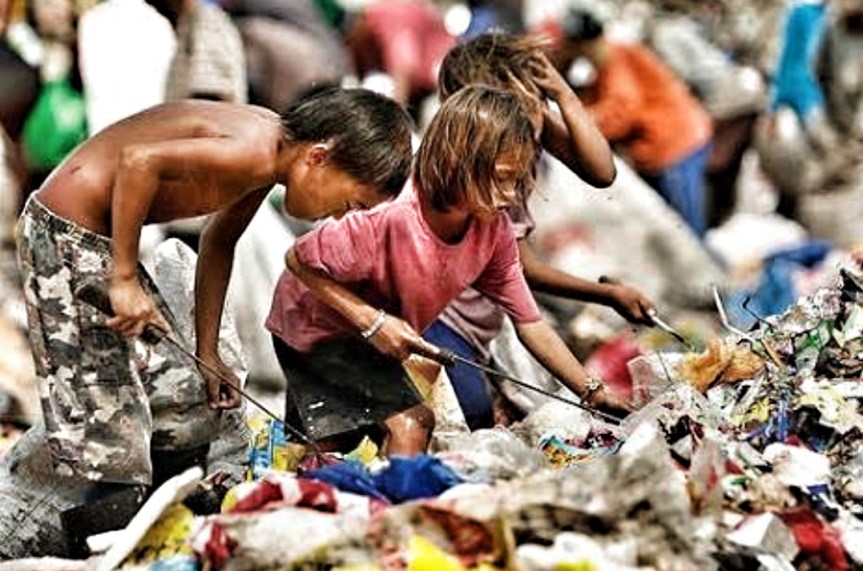
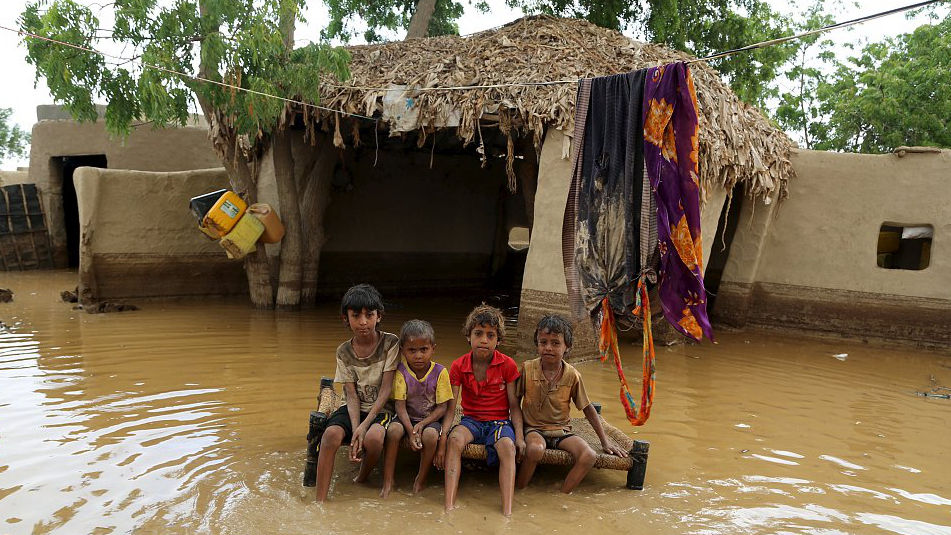
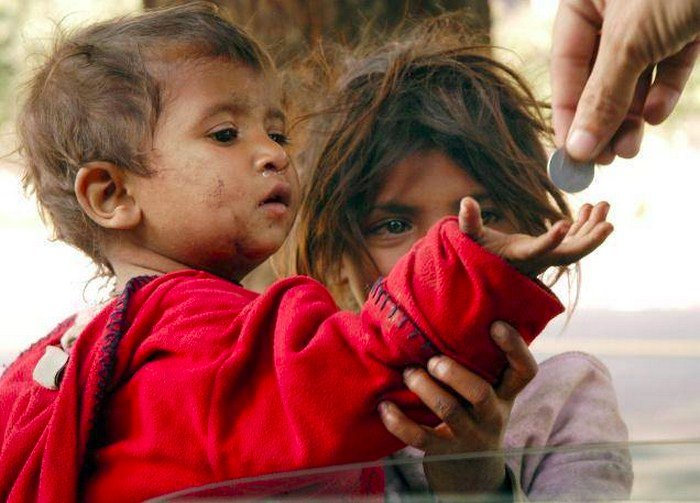
and we can pile up many such pathetic situations faced by the folks all over the world by getting trapped in poverty. Poverty is a state in which a person or a community  lacks the financial resources( like the income level of people will be very low to meet the daily human needs) and essentials to lead a minimum standard of living. What could be more disadvantaging of a factor than ruining people’s life ? This also contributes as a loophole in the Indian economy. Development of a country has a lot to deal with the effect of poverty. It is interrelated to many problems of underdevelopment. Both the rural and the urban communities tend to face this issue but they can be different. In rural areas people may not have much access to education, health and many such factors but people are exposed to a healthier and natural environment whereas in urban places people are provided with adequate education and health but many of the problems caused by poverty are made worse by things like overcrowding, rising expenses, pollution, unhygienic conditions etc. There may be some serious economic decline due to poverty. Reduces productivity and economic output by about 1.3 % of GDP. Raises the costs of crime by 1.3% of GDP. Raises health expenditures and reduces the value of health by 1.2 %. This can also make the developing countries to hang back from emerging into a developed country.

Impact of poverty in the environment

In addition to the effects on economic development of a country, Poverty also has an adverse impact on the environment leading to pollution, such a lifestyle leads to unnecessary depletion of resources. It encompasses a combination of factors. The first reason is people hit by poverty create an unhealthy lifestyle around them because most of the houses of such people are located in the slum areas. The houses would be devoid of a proper drainage system and sewage disposal, lack of sanitation and would let all the effluents and filthy water on the road. Such waters would be flowing rapidly in between houses, which to a drastic level will pollute the environment.

Every house may not hold the service of individual toilets and there would be a common one among them, and that would increase the risks of infectious diseases because there would be lack of proper maintenance. People over there use flex banners for house roofing and have them as a sleeping mat but the fact is flex banners are made of poly vinyl chloride( they are made of plastics which do not degrade biologically and it causes a serious threat to the environment as it is not bio degradable. It may have serious effects on the health and can even cause cancer and infertility problems. There are high chances of polluting the water resources due to lack of knowledge and poor water management. Humans who are lesser educated live shorter lives than who are educated more, such intangible gaps are a huge loss for people and the country.

What could be the promising measures to alleviate poverty?

  • Many people are pushed into such a state due to the lack of employment and education opportunities so it would be an important measure to generate such opportunities for the poor and to raise their productivity is the speedy development of infrastructure.
  • Further for the mitigation of poverty growth of non farm employment in the rural areas holds a special importance. Non farm employment is created in marketing, transportation, handicrafts, dairying and forestry, food processing and other agricultural products.
  • Educating a girl child is very prominent for the society. Educated girls can grow into skilled workers and get well paying jobs. Working women can earn and support the families and lead to sustainable development.
  • The public distribution system should be strengthened to remove poverty. Poor section should get food grains at subsidized rates and in adequate quantity.
  • Even a common man are not able to afford things these days due to the constant escalation of prices and just imagine the plight of the impoverished. Stability in prices helps to remove poverty. If the prices increases constantly the poor becomes poorer. So the Government should render the best to keep the prices under control.
  • Development in agriculture can aid the eradication of poverty. Rapid rate of growth of agriculture production will help to remove urban as well as rural poverty. Agriculture should be mechanized and modernized.

“ATITHI DEVO BHAVA” – Part 2.

Some points prepared by the Ministry of Tourism & Government of India, Part – 2:

The Seven Point of Atithi Devo Bhavah Programme:

Atithi Devo Bhavah is a programme of hospitality and training. Sensitization- sensitize various sections of the tourism industry about how each of them has to contribute for the growth of the tourism industry and how they will benefit from the programme .

Training and Induction- explaining to them the needs and expectations of the tourist, how they should respond and behave in order to satisfy the needs and expectations of the tourist.

Motivation- must be generated to participate in this programme through various measures e.g. Awards for the best worker in the segment. An enthused worker can do wonders. Certification to ensure standards at various stages.

Feedback- Feedback must be obtained from tourists about the service they have received and the experience they have had, in order to improve the training programme on a continuous basis.

General Awareness- The mass media communication campaign must be undertaken to create general among the public about the necessity and the benefits of the Atithi Devo Bhavah Programme.

Ownership-The Atithi Devo Bhavah programme is a movement which will urge all segments of the Indian society to adopt, and look upon it as their own.

The Charter of the Programme:

Hygiene and Cleanliness: Hygiene and Cleanliness shall cover the areas of product, for example, vehicles like taxies, hotel rooms, restaurants, shops, etc., personal hygiene and cleanliness of the person providing the service and cleanliness of the monuments / places of tourist interest.

Conduct and Behaviour: The person concerned, for e.g. the taxi driver / hotel employee shall behave in a courteous and polite manner towards tourists.

Integrity and Honesty: The person providing service to the foreign tourists should display honesty and integrity.

Safety and Security: The safety and security of the tourists shall be ensured.

PR Road Shows : Besides training, PR Road shows are also undertaken with the tourism trade in order to generate active participation and create an ownership of the Atithi Devo Bhavah programme. Right now the contact programmes are being conducted in several cities.

Mass Media Communication : Communication in newspapers, TV, cinema and outdoors is also carried out to create general awareness about the Atithi Devo Bhavah programme and to communicate to key stakeholders as to how it is in their own interest that foreign tourists be treated well so that they will go back happily carrying fond memories.

Courtesy : Ministry of Tourism Government of India 2004, webmaster@incredibleindia.org

Image Source -google.

ECO TOURISM “

Eco tourism means responsible travel to natural areas conserving the environment and improving the well being of local people.

The Ecotourism Society of India is dedicated to the promotion of sustainable development in tourism and to develop responsible practices in and among the tourism fraternity. It works towards continuous identification of new ecotourism destinations, strengthening ecotourism and making India a preferred ecotourism destination. Its objectives are : –

Make strategy for ensuring long-term (perpetual) sustenance of the environment. Work with empowered bodies to establish carrying capacity and sustainable tourism practices which include conservation of nature and wildlife, and allow ENS local communities to benefit from tourism. To balance tourists and visitors’ numbers and ensure good tourism practices that would allow nature to re-generate itself. To work with government bodies to develop policies and code of conduct for promotion of sustainable tourism, and help implement the same. To work towards certification of tourism service providers. To act as watchdog for excessive consumption of natural resources and any negative impact in the tourism sector. To support research in tourism environment related areas.

Work with service providers to enhance quality of their product and eco-friendly services. Encourage use of appropriate local practices, materials, art, craft, architecture, food. Encourage minimal conspicuous consumption and prevent excessive consumption of energy. Encourage energy saving practices, water harvesting, use of solar and other natural energy sources. Encourage good waste management practices especially non-biodegradable materials. Encourage low pollution-generating practices to minimize carbon footprint. Organise training and other activities to create awareness on ecotourism, sustainable and responsible tourism. To collaborate with like-minded bodies and implement ecotourism objectives all over the world.

Indian Fiscal System

It refers to the management of revenue and capital expenditure finances of the state.

  1. Fiscal system of a country refers to the revenue and capital resources that can be raised by government, the procedure to be observed in raising and spending funds and in case of a federation such as ours the provision that governs the relationship of the constituent unit of federation. It includes with in its purview taxation, expenditure, debt management and inter- governmental fiscal relation.
  2. Indian fiscal system is based on the constitution of India which is federal in character. The constitution envisages two layers of government: the Union of central government and the state government. Local bodies do not find a place in the constitution and the function and resources allotted to them are delegated by the state government.

Fiscal Policy:- It is how a government rectifies its spending levels and tax ratios to monitor and influence a nation’s economy. It is the sister strategy to Monetary Policy through which a Union Bank influences a nation’s money reserve. These uses can affect the following macroeconomic variable in the economy:

• Aggregate demand and the level of economic activity;

• The distribution of income;

• The pattern of resource allocation within the government sector and relative to the private sector.

Sources of Revenue:- The main sources of revenue are custom duties, excise duties, service tax, taxes on property, corporate taxes, and income taxes.

Sources of Expenditure:-

Plan Expenditure includes agriculture, rural development, irrigation, and flood conrol, energy, industry, minerals, transport, and communications, etc.

Non-Plan Expenditure:- It consists of interest payment, defence, subsidies, and general services.

Public Dept:-

Internal Debt comprises loans raised from the open market treasury bills issued to the RBI, Commercial Banks, etc.

External Debt consists of loans taken from World Bank, IMF, ADB, and individual countries.

Deficits:- In a budget statement, four types of deficits are mentioned:

• Revenue Deficit

• Fiscal Deficit

• Capital Deficit

• Primary Deficit

(1) Revenue Deficit: There are various ways to represent and interpret a government’s deficit. The simplest is the revenue deficit which is just the difference between revenue receipts and revenue expenditures.

Revenue deficit = Revenue expenditure – Revenue receipts

(2) Capital Deficit: An imbalance in a nation’s balance of payments capital account in which payments made by the country for purchasing foreign assets exceed payments received by the country for selling domestic assets.

In other words, investment by the domestic economy in foreign assets is less than foreign investment in domestic assets. This is generally not a desirable situation for a domestic economy.

Capital deficit = Capital receipts – Disbursement on Capital acoount

Fiscal Deficit: This is the sum of. revenue and capital expenditure less all revenue and capital receipts other than loans taken. This gives a more holistic view of the government’s funding situations since it gives the difference between all receipts and expenditures other than loans taken to meet such expenditures.

Fiscal Deficit = Difference between country’s expenses and earnings

Fiscal deficit = Revenue receipts (net tax revenue+non tax revenue) + Capital receipts (only recoveries of loans and other receipts) – Total expenditure ( Plan and non- plan) .

Primary Deficit: Amount by which a government’s total expenditure exceeds its total revenue, excluding interest payments on its debt.

Primary deficit = Fiscal deficit – Interest payments.

“ATITHI DEVO BHAVA” – Part 1.

Land of all Seasons:

India is the current tourism hot spot. The other epithets used while referring to the nation include ‘Destination of the Millennium’ and ‘Land of All Seasons’. Spanning an area of 3,287,263 square kilometers, India is a vast country and includes dry desert areas, evergreen forests, snowy Himalayas, a long coast, and fertile plains.The natural beauty and cultural diversity of the place echoes a rich tradition. India flaunts with equal grandeur bays and beaches, deserts and mountains, enigmatic green valleys and backwaters. There exists in India a comfortable juxtaposition of contrasts- the existence of bustling haats and swanky malls, emergence of nuclear families but a reluctance to let go on the joint family system, a rush to embrace modernity yet a firm resolve to preserve traditions; destination for both ayurveda and modern medical tourism; bustling communities and indigenous tribes.

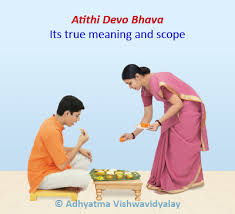
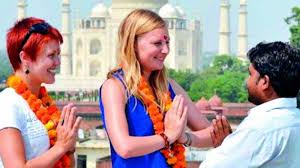
India has a rich heritage and culture of warm hospitality. In India it is believed that honouring guests equals to honouring God. A guest is welcomed into our home and hearth with cheerful gratitude. The Sanskrit adage ‘atithi devo bhava’ dictates the respect granted to guests in India. This wonderful tradition of our country has become the unique selling point of the modern tourism industry. Ministry of Tourism, Government of India has pioneered an initiative that will help tap into the full potential of tourism in India. Ministry of Tourism, Government of India has introduced “Atithi Devo Bhavah Program”- a nation wide campaign that aims at sensitizing key stakeholders towards tourists, through a process of training and orientation. The endeavour is to boost tourism in India, which in turn would act as a catalyst for India’s economic growth.

The ‘Incredible India’ Campaign has been launched to create awareness about the effects of tourism and sensitizing people about preservation of our rich heritage and culture, cleanliness and warm hospitality. It also re-instills a sense of responsibility towards tourists and reinforces the confidence of foreign tourists towards India as a preferred holiday destination.

Some points prepared by the Ministry of Tourism, Government of India, Part -1:

‘Guest Is God – Atithi Devo Bhavah’

Image Source -google.

As the old saying goes, “Treat others as you would like to be treated yourself.” That is the essence of Atithi Devo Bhavah campaign. And for that to happen, we need to change our attitude towards tourists. Some of us have lost touch with the hospitality that we were famous for. Let us bring that warmth back. Let us truly embrace the spirit of Atithi Devo Bhavah.

WHY ATITHI DEVO BHAVAH? : Last year we had 3.3 million visitors, but when you consider that Singapore gets 7 million a year, Thailand 9.6 million a year and Malaysia 11.5 million, it is a small number. There is no reason why we can’t aim to increase our numbers by 100%. And that too would be just a beginning. However to do this we need to change our attitude towards those who visit us. Often tourists are mistreated, cheated and rudely dealt with. It is simple logic: if someone in a house is rude to you, as a guest, you don’t encourage your friends and relations to go there. This is perhaps the reason why, in spite of an incredible wealth of tourist spots, cultural attractions, natural wonders and destinations for the soul, India still isn’t amongst the top 15 tourist destinations of the world. The time has definitely come to get together to change this.

INSPIRATION BEHIND ATITHI DEVO BHAVAH ? : Respect has always been an integral part of the Indian soul. From time immemorial we have always respected our teachers, our elders, our parents and our guests. Perhaps this is why a great Indian Emperor once observed-‘In Hindustan our manner is very respectful and our hearts are always open’. In many ways, at that time India was the ultimate destination for the enlightened travellers. Now, thousands of years later, we can when bring that golden age back again. This inspired us to go back to those years, when Indian hospitality set the standard for the world. And we found the keystone of what we want to do ,

Or guest is blessed, Our visitor is God. That was how we arrived at our mission called ‘Atithi Devo Bhavah’.

To be continued………………

Poverty in India

Poverty is a social phenomenon where few sections of society is unable to live sustainable life. Planning Commission(now NITI Aayog) is the aithoriy, which publishes the poverty estimates based on various rounds of National Sample Survey Organization (NSSO) on monthly per capita consumption expenditure. In India the poverty line is defined on the basis of calories a day has been fixed for urban areas and 2400 calories in rural areas.

Universal Recall Period, consumption data for all items are collected for a 30 day recall period.

Causes of Rural Poverty:-

• Rapid population growth.

• Lack of capital.

• Lack of alternative employment opportunities other than agriculture.

• Excessive population pressure on agriculture.

• Illiteracy

• Regional disparities

• Joint family system

• Child marriage

• Lack of proper implementation of PDS ( Public Distribution System).

Causes of Urban Poverty:-

• Migration from rural areas.

• Lack of skilled labor.

• Lack of housing facilities.

• Limited job opportunities in cities.

• Lack of vocational training.

Poverty and its Study in India:- Various economists and organizations have studied the extent of poverty in India. Some of them are as follow:

Dandekar and Rath’s study of poverty in India:- Dr. VM Dandekar and Mr. Nilkantha Rath estimated the value of the diet with 2250 calories as the desired lowest level of nutrition.

Montek Singh Ahluwalia’s study of Rural poverty:- MS Ahulawalia studied the trends in incidence of rural poverty in India for the period 1956-57 to 1973-74. He used the concept of the poverty line, i.e. an expenditure level of rupees 15 in 196-61 for rural areas and rupees 20 per person for urban areas.

Estimate Poverty by the Seventh Finance Commission 1978:- The Seventh Finance Commission attempted to have a more inclusive concept of the poverty line. Since the NSS data cover the only household consumer expenditure, thus to get a more inclusive measure of welfare or deprivation, an estimate of the benefit of public expenditure was added to the private consumer expenditure norm for calculating the augmented poverty line.

Tendulkar Committee Report:- This committee moved away from just calorie criterion definition to a broader definition of poverty that also includes expenditure on health, education, clothing expenditures in addition to food. According to this report, 41.8% population in rural areas and 25.7% population in urban areas were living below the poverty line.

Rangarajan Report on Poverty:- The expert group under the Chairmanship of Dr. C Ranganrajan to review the methodology for measurement of poverty in the country constituted by the Planning Commission in June 2012 has submitted its report on 30th June 2014. The report retained consumption expenditure measures of NSSO as the basis for specifying poverty. Based on this, it pegged the total number of poor in India at 363 million or 29.6% of the population. This is higher than 269.8 million poor people or 21.9% pegged by the Suresh Tendulkar Committee.

Highlights of the Report:-

• The daily per capita expenditure is pegged at rupees 32 for rural areas and rupees 47 for urban areas.

• Poverty line based on the average monthly per capita expenditure is pegged at rupees 972 for rural areas and rupees 1047 for urban areas.

Bad Bank

Have u ever heard of bad bank? Well, in this article we will know about what bad bank is and how is it taking shape in India. 

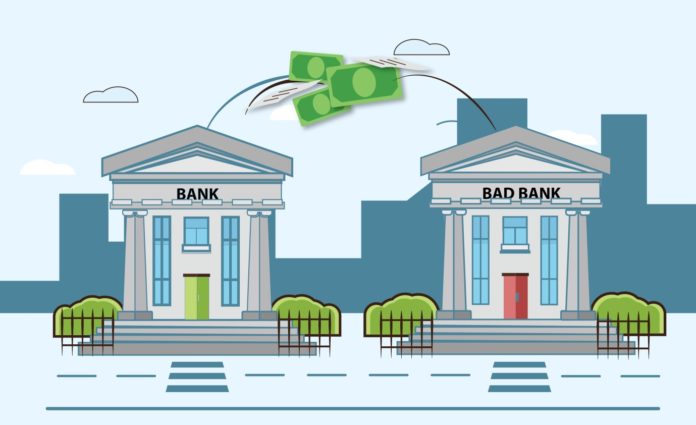
So to start over, A bad bank is a financial entity that was formed to purchase the risky loans and other illiquid assets of another financial institution. The company with many nonperforming assets will sell them to the bad bank at market value. The goal of Bad Bank is to bring financial stability to the banking industry. It would store bad loans for public sector banks, which will be offered to investors at a discount which will eventually assist banks in cleaning up their balance sheets. 

Recently, Nirmala Sitharaman, the Union Finance Minister, has announced the establishment of a bad bank in the nation. Sitharaman said in her budget address that an Asset Reconstruction Company Limited and an Asset Management Company will be established to manage the bad debt of public sector banks such as the State Bank of India, Punjab National Bank, and others.

However, Experts were perplexed by this because IBC known as insolvency and bankruptcy code was considered to be pretty efficient in settling problematic debts. But the government was concerned about delays and low asset realization under the IBC. Furthermore, the loans were offered at steep discounts. The assets were liquidated in some circumstances. There were also issues regarding the public sector bank’s(PSB) lack of cooperation. 

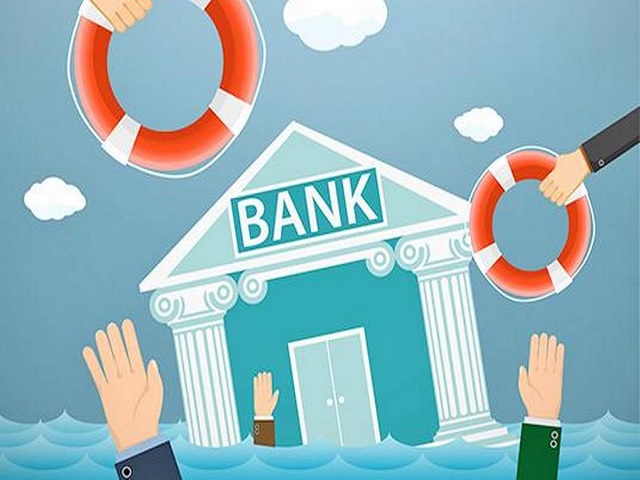
So, to consolidate and take over the current stressed debt, an ARC and AMC will be established. It will then manage and sell the assets to Alternative Investment Funds and other potential buyers in order to realize their full worth. To put it another way, it will store bad loans for public sector banks, which will subsequently be sold to investors at a lower cost which will aid in the cleaning up of the balance sheet and will eventually lessen the financial burden of future capital requirements. So, India’s bad bank is now taking form. With the formation of the National Asset Reconstruction Company Ltd, the much-anticipated wait for the “Bad Bank” came to an end. 

Given its size and development potential, the Indian economy will experience a steady supply of distressed assets. When the one-time loan arrangement finishes, Covid-19 will be a source of concern for many businesses. For public sector banks, the existing portfolio of problematic loans is a major source of concern. As of September 2020, the banking system’s total gross nonperforming assets (NPAs) accounted for 7.5% of the entire loan book. 

This is anticipated to rise to 13.5 percent by March-September this year, according to the Reserve Bank of India (RBI). Moreover, Many people believe that running a bad bank successfully necessitates a variety of factors. One, it must be for a defined purpose and include a time limit. For instance, Sweden AMC, supported by the government, recovered over 90% of bad loans in six years in the early 1990s. However, the Chinese AMC, which is supported by the government, failed to deliver. Now it’s up to NARCL, private ARCs, and IBC to preserve the value of stressed assets by restructuring and resolving them in a timely manner.

Building a learning culture for Remote employees?

Learning is an important part in the growth of any organization, and building a culture that encourages and empowers this is essential.

Photo by fauxels on Pexels.com

Through adaptive learning an organisation can build a learning culture for remote employees. They can be given a set of problems to solve online and make observations on qualitative and quantitative financial parameters such as rating, growth and financial stress.

With the flexibility to take the test multiple times, employees are motivated to acquire relevant skills. Instructors can review, curate, and assign multiple projects for employees to solve and enhance skills.

This solution is approved by the Ministry of Education under NEAT program and was implemented with learners at Indian School of Business.

Moreover, when employees are rewarded for enhancing their skills – with better roles or pay – there is always incentive for these remote workers to keep signing up for more workshops, courses and adaptive learning.

Photo by Christina Morillo on Pexels.com

To build a future – ready remote workforce, one needs to go an extra mile to ensure learning in the virtual environment

Reference

http://www.timesofindia

http://www.badrinarayan.com

Economics

Introduction:- The term economic comes from the ancient Greek word oikonomia means ‘management of a household’. The term economic process refers to those activities, through which goods and services aimed at satisfying human needs, are produced distributed, and used. Economic includes the study of labor, land investment of capital, income, and production, and taxes and government expenditures. Adam Smith regarded as the Father of Economics, defines Economics as “the science relating to the laws of production, distribution, and exchange”.

Branches of Economics:- The two chief branches of economics are as follow:

Micro Economics – It examines the behavior of basic elements in the economy including individual agents, such as households and firms, or as buyers and sellers and market and their interactions.

Macro Economics – It studies the economy as a whole and its features like national income, unemployment, poverty, the balance of payments, and inflation. It deals with the formulation of models explaining the relationship between factors such as consumption, inflation, savings, investment, national income, and finance.

Economy:- It represents production, distribution, or trade and consumption of goods and services in a given geographical area by different agents which can be individuals, businesses, organizations, or governments. The study of the economy of any country helps us to find out the financial condition of the population as well as the different working sectors of the economy.

A modern economy is a complex machine. Its job is to allocate limited resources and distribute output among a large number of agents mainly individuals, firms, and governments allowing for the possibility that each agent’s action can directly or indirectly affect another agent’s actions. There are two major types of economies they are:

Open Economy: It belongs to a market economy, which is mainly free from trade obstructions and where exports and imports comprise a lush large percentage of the GDP. No economy is absolute whether open or closed in terms of trade restraints and all governments have fluctuating levels of control over the activities of capital and exchange.

The degree of the vulnerability of an economy determines a government’s freedom to pursue monetary policies of its choice and the exposure of the country to the international economic cycles.

Closed Economy- An economy in which no exercise is conducted with outside economies. A closed economy is self-sufficient, meaning that no imports are brought in and no exports are sent out. The goals of such an economy are to furnish consumers with everything that they need from within the economy’s perimeters.

The degree of exposure of an economy is decided by their respective governments by using policy controls like tariffs, import, and export quotas, and exchange rate limits. In india, since independence, the government has played a major role in planning economic activities.

Present status of the Indian economy: Indian economy is the world’s 6th largest economy or nominal GDP basis and the 3rd largest by Purchasing Power Party (PPP) in 2017. According to CSO, the growth in GDP during 2017-2018 is estimated at 6.5% as compared to the growth rate of 7.1% in 2016-17.

Save a ‘GEOLOGICAL HERITAGE’ Part-2.

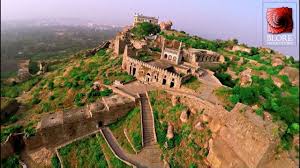
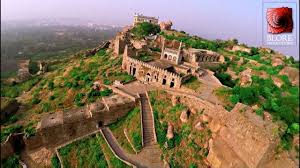
Golconda fort.

Development at the cost of nature. Part-2 :

Growth and development are inevitable and necessary to absorb the growing needs of the economy. But the problem lies in the truth that none of this growth is monitored. Giant machines dig the earth out and transport mud to all corners of the city. Ratty trucks with the broken remains of gigantic rocks can be seen ferrying the roads primarily during dusk or night. Most of this quarrying is illegal. Contractors excavate mud and destroy rocks in remote spots often under the dark cover of night for a paltry sum.

Mass destruction of rocks has exacerbated the depletion of green cover. Precious fauna and flora has been destroyed. Loss of these rocks has meant ground water depletion which has further compounded the city’s water woes. Years ago tiny lakes dotted the entire city including the famous Jubilee and Banjara hills localities. Today lakes are found only on the city outskirts in places like Shamirpet. Lakes closer to the city are shrinking every passing year.

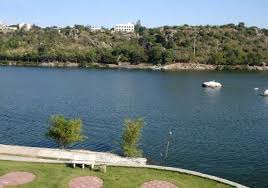
Durgam Cheruvu.

Fighting For Conservation :

Though Hyderabad has seen the gradual depletion of rock cover, ecological conservation is an issue that has not found much voice with the population. Most citizens, especially those new to the city, are too busy focusing on seeing a snazzy Hyderabad finding its spot on the global map. But even in this bleak scenario there is a ray of hope for the rocks.

Since 1996, a group of concerned citizens have come together to prevent indiscriminate destruction of the rocks and protect the rocky landscapes. Their organization ‘Society to Save Rocks’ (STSR) has since then been working hard to preserve the rocky ecosystem in the city and state.

Due to their dedicated campaigning, the Government of Andhra Pradesh has added nine rock formations in Regulation No. 13 of the Hyderabad Urban Development Authority (HUDA) for the protection of Heritage Buildings and Precincts. This act of the governments was hailed by conservationists across the country as a great step in recognising the importance of the rocks and the need to protect them. Today Hyderabad is the only city in India where rocks are protected as a natural heritage. Encouraging the government to preserve these rocks by promoting them as tourist attractions i5 an alternative that the Society is pushing for.

Image Source -google.

But despite STSR’s dedicated efforts, the city faces a challenge as much land in and around the city has already been sold off. Durgam Cheruvu, one of the designated heritage sites is the best place where the government’s attempt at conservation and apathy towards rocks, are both visible. Years ago the lake lay hidden between rocky cliffs and was inaccessible. A few years ago it was converted to a model tourist spot with boating and other leisure facilities. But entire stretches of hills on one bank of this protected area have been destroyed in the past decade to accommodate the fast-growing Hi-tech city. Durgam Cheruvu thus epitomises the ongoing conflict between development and protection in the city.

However some individuals have successfully managed to integrate rocks that abut their house into the structure of their homes. The rock forms as much a part of their home’s interior as does their sofa or any other furniture. Some builders and companies too have taken the initiative to include rocks in their building complexes. While they have included a natural rock structure within their building premise, their focus remains on decorative appeal rather than ecological consideration for the rocks.

Over the years, due to the efforts of organizations like the STSR, the rocks of Hyderabad have found a voice. But the din of the construction industry and growing needs of an expanding city are far louder than the voice of these few individuals. What the rocks require are greater public support and a deeper appreciation of their existence. Locals, tourists and governments need to take a pro-active approach to ensure that growth includes preservation of rocks and their eco-systems. After all if a booming economy overtakes billions of years nature, the consequences and blame will have to be borne by none other than the citizens themselves for the only people who stand to gain will in reality be the ones of who lose.

The Violence of Development: Lakshadweep Development Authority Regulation, 2021

ABOUT LAKSHADWEEP

Lakshadweep is the smallest Union Territory of India and covers an area of 32 sq. km. It has 36 islands out of which 10 are inhabited. The island is directly under the control of Central Government through an administrator. It has 3 main group of islands:

  • Amindivi Islands (Northernmost Island)
  • Laccadive Islands
  • Minicoy Islands (Southernmost Island)

It has tiny islands of coral origin and are surrounded by fringing reefs (hence called as Atoll). The capital is Kavaratti, which is the principal town of the UT and the Pitti Island (uninhabited) has a Bird Sanctuary.

The island has a population of 64,429 (according to Census of India, 2011). More than 93% of the population is indigenous and are Muslims. Because of the populations economic and social backwardness, the entire population is classified as Scheduled Tribes and there are no Scheduled Castes in the UT. The main occupation of the people is fishing, coconut cultivation and coir twisting. And tourism is an emerging industry. Under Participatory Guarantee System (PGS) of India, the entire island was declared as an Organic Agricultural Area.

WHAT IS LDAR 2021 ?

The latest Draft Lakshadweep Development Authority Regulation, 2021, for the creation of a Lakshadweep Development Authority (LDA) which will be the administrative body for the island and will pan the development of the island.

PROVISIONS

  1. CONSTITUION OF LAKSHADWEEP DEVELOPMENT AUTHORITY : The LDAR empowers the government to be identified as the administrator of the island and has the power to constitute Lakshadweep Development Authority. The authority will plan the development of any area in the island, which could be identified in a bad layout or in obsolete condition. This authority has power to prepare land use pans, zonation’s of land uses, indicate areas for different types of development etc. And only Cantonment areas are exempted from this.
  2. Definition of ‘Development: Development is defined as the process of carrying out of building, engineering, mining, quarrying or other operations, in, on, over or under land, cutting of a hill or any portion thereof or the making of any material change in any building or land or in the use of any building or land.
  3. LEGAL PENANLTIES: As per the DDAR, the development plan will not be questioned by anyone, either before or after being approved. It empowers the administering body to forcibly relocate or remove residents or citizens from their own property for carrying out any developmental activity. It establishes penalties for those who will violate the laws. Such as imprisonment for obstructing the development plan’s work or workers.
  4. FEES FOR CHANGING ZONES: It stipulates that islanders and citizens must pay a processing fee for changing zones, which implies that localities will be paying fees to gain approval for altering or changing zones as per the development plan as well as for permission to develop their own land.

CRITICISMS

Following concerns were raised by the people of Lakshadweep:

  1. VIOLATION OF FUNDAMENTAL RIGHTS : The LDAR provides the Government and Development Authority constituted by Government, the supreme powers to acquire, alter and transfer the properties owned by the residents of the island which violates the fundamental rights of the residents of Lakshadweep as guaranteed in Article 14 and 21 of the Constitution.
  2. INTERESTS ON REAL ESTATE : Many residents have been suspecting and fearing that LDAR might seeking real estate interests to usurp the small landholdings and properties owned by the native islanders. There have been proposals of bringing “Transferable Development Rights” to the island which has raised another major concern and fear among islanders for being migrated forcefully.
  3. FORCIBLE RELOCATION AND EVICTION: The LDAR has given the power to relocate people for development plans has become one of the major concerns and issues. According to the regulations provided, the owner has to develop his holding as per the plan prepared by the authority or else they will be penalized in case of non-compliance with the regulation.
  4. ECOLOGICAL CONCERNS: Lakshadweep is a part of coral ecosystem and it has inherited this cultural and ecological uniqueness as well as fragility. This ecosystem can get destroyed easily if the development activities around them are not regulated. The regulations which provide the government supreme powers for acquiring and developing land can be disastrous for this ecosystem.
  5. THREATEN THE CULTURE AND LIFE: The island is very vulnerable to destruction and any further large-scale infrastructural development can have large ecological and social footprint which can negatively affect the potentiality and sustainability of the area as well as the life forms present in the island.
  6. IGNORES PEOPLE’S NEEDS AND GEOGRAPHICAL REALITIES: Lakshadweep has unique geography, ecology and culture and for protecting and preserving this uniqueness it is important to limit the development activities in the island. The LDAR tries to expand the road connectivity ignoring the geographic conditions of the island and the interests of the people. And the LDAR has also provided the regulation that no one can raise or question the strategies or actions provided by the development authority, before or after being approved. This shows that the needs, interests and concerns of the people are undermined.
  7. VIOLATES THE OBJECTIVES OF LAND ACQUISITION ACT, 2013: The Act promotes the consultation with institutions of self-government and Gram Sabha’s, local people and tries to have a transparent and informed process for land acquisition.

ENGAGING CONTENT WRITING TIPS ON AFFILIATE MARKETING

People who are flourishing as an industrialist thinks of a way to grow their business. The best way is to look for an alternate income. An alternate income doesn’t mean starting a new business but, a way of finding customers and supporters.

The best way to earn money is affiliate marketing. If you don’t have an idea on affiliate marketing, have one now. With affiliate marketing, the customer buys the product, the company gets a new customer and the affiliate also gets a commission. Marketing products is an effective way to increase product sales.

So, the content you provide must be engaging that the readers can read and get clarified with their doubts. Here are some tips to write engaging content for affiliate marketing.

10 TIPS TO WRITE ENGAGING CONTENT FOR AFFILIATE MARKETING:

1. UNDERSTAND THE CONCEPT:

     Affiliate marketing is a marketing strategy that makes the product owner earn money by letting on third persons sell or promote their products. The third person is an affiliate. An affiliate promotes the products through blogs, articles, social media platforms, and other possible ways. An affiliate finds the product he likes, promoting it to others, and earns commission by selling it.

Here, this is the basic concept of affiliate marketing. Understanding the concept and using your own words to write the article. Understanding is the basic step in writing engaging content. Without understanding, you can’t write a reader-friendly article.

2. DO RESEARCH:

     For writing an article, you should do research and make notes of the key points you searched. Use advanced search options and avoid the sites with mistakes. The information you gather through research should be reliable.

     The quality of your content relies on the research make. You should do extensive research and follow the content path.

3. INVOLVE PUBLIC OPINION:

     One should know people’s feedback on a product and need to know what they feel about the product. Keep yourself in their shoes and note the pros and cons of a product. An affiliate should gain trust by making people satisfied with the product. By doing so, the people will feel the product you recommend will be trustworthy.

     A writer should include a public opinion on the product and write content based on those opinions. A reader should think the writer cleared all their doubts and queries about the product. The content you write should answer the questions which people search for.

4. ADD RELATED DATA:

     Adding data to content makes readers interested in your article and will read it. Add data and statistics related to the product. Data can be attracted more by people than a word or sentence. Data and statistics have a sight of attraction towards the people. Try to add data related to the product and make the content engaging and reader-friendly.

15 Best Affiliate Marketing Networks in India in 2021

5. USE SIMPLE KEYWORDS:

     Always remember  Search Engine Optimization (SEO) and keyword search play an important role in affiliate marketing. It is not enough just to publish your content on an affiliate website but should also increase web traffic.

You should know the basics of SEO and keyword search which help in increasing web traffic. One must know what keywords people would search for a related topic and use those keywords. Understand how the keyword you use intends the keyword search and analyze it.

For example, A person searches for “How to start a vlog” for content you want to create. A vlog means a video log or video blog where people post their short videos. What the person’s intent behind the search will induce the direction of your article. Whether the person wants to start an individual vlog? Or he wants to know the steps in the vlog? This will lead to a search accordingly.

One fine idea is to search for the keyword yourself in the search engine and get to know more about it. Use anchor phrases that are not wordy or spammy.

6. DRAFT QUALITY CONTENT:

     As we know, content marketing is one of the best ways to advertise a product. Write more simply so that people can understand your thoughts easily. The quality of the content lies in its originality. Try to use your own words to draft it. The content you provide must answer the question “how to” because people search for the sample or product review before buying it. So, your content must clear all the doubts and queries of the reader.

Focus on the main theme of the content. The content you provide must be trustworthy and should be reader-friendly. Writing the content with good English and using simple keywords can make the content engaging. The content you draft must be unique that express your company’s personality.

7. ADD PROPER AFFILIATE LINK:

     Affiliate links help in increasing the online performance of an industrialist. If you want to add some affiliate link, take some time and research it properly. Because affiliate marketing is based on the concept of sharing and publish online platforms.

The content you write must attract the target audience. Furnishing high-quality content will help you to attract the target audience which involves the adding of proper affiliate links. Provide some information about the affiliate link you provide.

For example. High ticket affiliate marketing will be the best one for a beginner affiliate. It is a program that provides commission per referral. This high ticket affiliate marketing will allow you to earn more without any effort from your side. Provide some information about the affiliate link you provide. Promoting high ticket affiliate products is one of the most profitable affiliate programs nowadays.

8. USE SIMPLE ENGLISH AND SHORT PARAGRAPH:

     The content you draft must not be too wordy.

  • Use simple English to draft the content and make it reader-friendly.
  • Avoid the use of passive voice, use active voice instead.
  • Avoid overuse of prepositions.
  • Use contradictable words or sentences.
  • Use a shorter paragraph than a longer one. Because people will like it when it’s simple and understandable. Using longer paragraphs may irritate the readers to finish it.

9. BE SINCERE:

     Be sincere while writing the content. Don’t make up a story that people will buy your product. When you are true, people will always buy the product you recommend. So, give your true research ideas and visual treat. If you find any fault in the product you recommend mention it in your article.

Give the positive as well as the negative feedback of the product. In this way, people will feel your article trustworthy. If the article only has positive views and no negative views, it will make people not trust your article. So, be true to the people and yourself.

10. PROOFREADING:

     Proofreading is a way to correct the errors in the article you drafted. The article may have grammatical errors, punctuation errors, etc. So, take proofreading seriously while writing an article. Proofreading is important because, if the article you drafted is published online and contains some errors, it will influence your career.

Proofread your content with the help of some error-checking tools such as Grammarly etc. Check your content before publishing it. It is important to produce an article without any errors in it.

These are some tips to write engaging content for affiliate marketing. However, affiliate marketing is the best way to earn money without any effort. Just follow the tips and make your content engaging. Then what are you waiting for? Start writing your content soon. Affiliate marketing is a money-making side in which its price will rise to $16 billion in 2021.

Read more;

Jhunjhunwala plans to have 70 planes in four years of airline

Billionaire investor Rakesh Jhunjhunwala is planning on having 70 aircraft within four years for a new airline he wants to set up.

Photo by Pixabay on Pexels.com

Jhunjhunwala, who is considered to be investing 35 dollar million and would own 40% of the carrier, is expected to get a no-objection certificate from the aviation ministry in the next 15 days, he said in an interview on wednesday.

The ultra low cost airline will be called Akasa Air and the team, which includes a former senior executive of Delta Air Lines Inc is looking at planes that can carry 180 passengers, he said.

Its a bold bet by Jhunjhunwala, who’s known locally as India’s Warren Buffett, in a market that has seen some airlines collapse in the face of intense fare wars and high costs.

Still, what was once the world’s fastest -growing aviation market holds an allure and Jhunjhunwala is looking at opportunities to woo flyers with a brand new carrier offering low fares.

Photo by Alexander Mils on Pexels.com

All of these facts, however, do not prevent Jhunjhunwala from investing in the aviation industry, as he is well-versed in the reality of doing business in this area. “I believe some of the increment players will not recover,” he remarked, but he praised his partners, saying, “I have some of the best airline people in the world as my partners.”

Jhunjhunwala is investing $35 million in Akasa and expects the Aviation Ministry to provide a no-objection certificate (NOC) soon. A fleet of 70 planes is planned. The new arrival into India’s aviation sector comes at a time when the COVID-19 pandemic is having a significant influence on the industry.

Reference

http://www.moneycontrol.com

http://www.hindustantimes.com

http://www.timesofindia.com

HOW DID K-POP AND K-DRAMA BECOME SO POPULAR ?

Prior to going to that point we should concentrate some set of experiences about South Korea also called Republic of Korea. South Korea got it autonomy on 15 August 1947 same as India. However, why it grew so quick that now it is considered as evolved country. At the point when South Korea got it’s freedom around then it was extremely poor. The food that U.S.A used to supply was just sustenance around then for individuals. Pushing forward, in the year 1997 South Korea was confronting major financial emergency. It was such a lot of that individuals didn’t have anything to eat, they were losing their employment and were neglecting to accomplish considerably pitiful assets. Around then Korean government took a credit of 58 billion dollar from I.M.F which should be paid off by 24 August 2001. So without with nothing to do the entire nation comes right into it. They began giving their gold, cash to the public authority.

K-Drama Couples - Free Instagram Stories Template by @itsmariaalyssa |  Korean drama list, Korean drama tv, Kdrama

SETTING UP THE K-POP INDUSTRY

Yet at the same time in the wake of doing that much they had the option to gather just 8 billion dollar actually left with 50 billion dollars. To take care of the remainder of the cash, they set up Korean inventive substance agency(KOCCA)which objective was to put Korean melody on the map in other nation to bring in cash. They got going by playing a Korean show in a Hong Kong’s T.V station free of charge. This didn’t give cash however offered a brief look at Korean culture in western market which as a trade off benefits them. They before long passed a law in which they will give 1% of state financial plan in culture. Three major organizations accepted the open door and they made the Korean Music Industry.

12 Times K-Pop Groups Made History In The Last Decade | Soompi

Korean music doesn’t have any one performer, it comprises of numerous individuals actually like BTS has 7 individuals. To interface with more western crowd they keep their gathering name in English and they additionally have some English verses in their tunes. These gathering individuals are prepared for quite a long time in singing, rapping and dancing. They buckle down since youthful age to turn into a part in a K-Pop group. However, online media likewise assumed a significant part in accomplishment of K-Pop and K-Drama. Gangnam style was the primary Korean music to contact the worldwide crowd. It was the first run through when individuals paid attention to Korean music however bunches like BTS, BLACKPINK and EXO have mainstreamed it. Till now BTS has added 3.6 billion dollar to Korean economy. BTS has additionally started a mission with UNICEF called Love Myself mission and they likewise gave 1 million dollars to BLACK LIVES MATTER.

BTS are encouraging the world to #SpeakYourself in their UN speech

Isn’t it’s extraordinary that the music business which was framed to take care of the obligation turned into the greatest music industry on the planet. This is the primary driver of South Korea’s turn of events.

RESOURCES: