World Nature Conservative Day

Conservation of nature is basically conservation of resources such as wind, water, sunlight, land, vegetation, animal life and minerals. We get all these resources by nature without any human intervention. These resources are further employed to create various things that make the lives of humans as well as other creatures present on Earth comfortable.

Natural resources have been mainly classified into renewable resources and non-renewable resources. Renewable resources are those that can be naturally regenerated. It includes air, water and sunlight. The emphasis is generally on the use of renewable resources rather than nonrenewable resources as nonrenewable resources are depleting rapidly and are difficult to compensate.

Photo by Artem Podrez on Pexels.com

Conservation of nature is an issue that needs to be taken seriously. Governments of various countries are using many methods to conserve resources, in the same way people should also come forward to contribute in this direction. There are some ways through which the common man can help in the preservation of nature. Those methods include planting trees, limiting paper usage, preventing wastage of water and electricity, stopping animal poaching, and employing rainwater reuse systems. It is not difficult to put the above measures into practice in a planned way. If each of us gave our meaningful contribution for the protection of nature, then whatever benefits it would bring would be truly tremendous for mankind.

Nature has provided us numerous gifts such as air, water, land, sunlight, minerals, plants, and animals. All these gifts of nature make our earth a place worth living. Existence on Earth would not be possible without any of these. Now, while these natural resources are present on Earth in plenty. Unfortunately, the necessity of most of these has increased extremely over the centuries due to growth in the human population.

What is Conservation of Nature?Conservation of nature means the preservation of forests, land, water bodies, and minerals, fuels, natural gases, etc. And to make sure that all these continue to be available in abundance. Thus all these natural resources make life worth living on Earth. Life would not be imaginable without air, water, sunlight as well as other natural resources present on the earth.Thus, it is essential to conserve these resources in order to retain the environment integral. Here is a look at the types of natural resources existing on Earth and the ways to conserve these:Types of Natural Resources:Renewable Resources:

These are resources such as air, water, and sunlight that refill naturally.Non-Renewable Resources: These are resources like fossil fuels and minerals that do not restock reform very slowly.Biotic: These originate from living beings and organic material like plants and animals.Abiotic: These come from non-living things and non-organic material. These comprise air, water, and land as well as metals like iron, copper, and silver.Natural resources are also categories such as actual resources, reserve resources, stock resources and potential resources based on their development stage.

How to Conserve Nature and Its Resources?Many of the natural resources are being used at a faster rate as compared to their speed of production. There is so a necessity for conservation of nature and the natural resources it offers. Here are some of the ways in which these resources can be conserved:Reduce Water ConsumptionWater is available in abundance on Earth. This is one of the reasons people do not consider much before using it. However, if we keep using it at this speed. In the future, we may not be left with as much of it. Therefore, simple things such as turn off the tap while brushing or reuse the leftover water to water the plants can help in this direction.Reduce Usage of ElectricityUse only as much energy as you require. It is thus advised to limit the usage of electricity. Simple habits such as turning off the lights before parting your room, turn off the electric appliances after use. Switching to energy-saving fluorescent or LED bulbs can make a change.

Restrict Usage of PaperPaper manufacturing depends only on trees. Increasing the use of paper means encouraging deforestation. This is one of the key reasons for concern is in today’s time Always ensure you use only as much paper as necessary. Stop taking print outs and use e-copies instead to do your bit.Use Newer Agricultural MethodsThe government must aware the methods such as mixed cropping, crop rotation. Also, the government should teach the minimum use of pesticides, insecticides. Appropriate use of manures, bio-fertilizers, and organic fertilizers to the farmers.Spread AwarenessSpreading awareness about the conservation of nature is always a necessary step. It can be achieved only when more and more people understand its importance and the ways in which they can help. Besides this, it is essential to plant more and more tress. It is necessary to contribute towards lowering air pollution. We must use shared transport and employing rainwater harvesting systems to conserve nature.ConclusionNature comprises of everything that surrounds us.

The trees, forests, rivers, rivulets, soil, air all are the part of nature. Keeping nature and its resources integral. So, it is very important for the continuation of life on earth. It would be difficult to imagine life on earth, which has a spoiled natural environment.Therefore, taking appropriate steps to conserve nature in its untouched form. It must be a priority for the human race. Only human beings with their power and ability can save nature in its purest forms.
TAMIL NADU ECONOMY

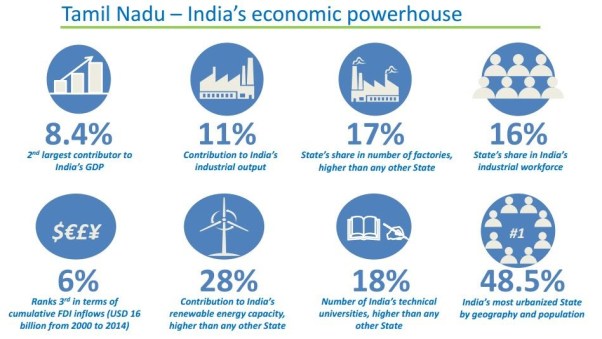
The economic and social development of states in India are not uniform. The western region and southern regions are better off than the other regions. Tamil Nadu is geographically eleventh largest and population wise third largest. Tamil Nadu fares well with many achievements. It stands second to second in terms of contribution to GDP, third highest in terms of capita income, investment, Foreign Direct Investment (FDI) and industrial output. It has been ranked as the most economically free state by the Economic Freedom.

In social and health sector also Tamil Nadu’s performance is better than many other states and better than national average in terms of health, higher education, IMR and MMR.

PERFORMANCE OF TAMIL NADU ECONOMY:

Some of the states like Gujarat and Maharashtra seem to perform well in some of the economic indicators. Kerala tops in literacy, IMR and MMR. In recent years Tanil Nadu’s performance is outstanding and far ahead of all other states in the spheres of health, higher education, growth of MSMEs, poverty alleviation and employment generation. The reason for the relative success of Tamil Nadu lie in extending social policies to cover most of the population. For instance the publisher distribution system, midday meals and public health infrastructure have near universal coverage.

PER CAPITA INCOME:

The per capita GSDP of Tamil Nadu also ($ 2,200) which is higher than that of many other states in India. Per capita GSDP of Tamil Nadu is nearly 1.75 times higher than the national average, as per 2018 data. In term of the per capita income in Tamil Nadu was 1,03,600 in 2010-11 and it has increased to 1,88,492 in 2017-18 as per the budget figures 2018.

HIGHLIGHTS OF TAMIL NADU ECONOMY: Growth of SGDP in Tamil Nadu has been among the fastest in India since 2005. Poverty reduction in Tamil Nadu has been faster than that in many other states. Tamil Nadu contains a smaller proportion of India’s poor population. Tamil Nadu is the second largest contributeor to India’s GDP. Tamil Nadu ranks 3rd in terms of invested capital (2.29 lakh crore ) and value of total industrial output (6.19 lakh crore). Tamil Nadu ranks first among the states in terms of numbers of factories with 17% share and industrial workers of the country. Tamil Nadu is placed third in health index as per the NITI AAYOG report. Tamil Nadu has a highest Gross Enrolment Ratio in higher education. Tamil Nadu has the largest number of engineering colleges. Tamil Nadu has emerged as a major hub for renewable energy. Tamil Nadu has highest credit Deposit Ratio in Commercial and cooperative banks. It has the highest ranks first on investment proposal filed by MSMEs.

“If the nature of the work is properly appreciated and applied, it will stand in the same relation to the higher facilities as food is to the physical body”

-J.C. Kumarappa

Tamil Nadu state has come third after Kerala and Punjab in a health index report. The neo natal mortality rate is 14 lower than that of many other states and that the under 5 mortality has dropped from 21 in 2014 to 20 in 2015.

The Tamil Nadu economy which is not rich in natural resources has good record of agricultural growth, industrial progress, infrastructural development and good record of strong growth of service sector especially banking, education, transport and tourism. It occupies top three ranks in health index, education, development of MSMEs. It has good record of poverty allevation and employment generation. India in general and Tamil Nadu in particular need to work to eliminate female foeticide,reduce the population lying in slums, sleeping on roadsides, beggers and rag picker. Development is meaningless as long as the eyesore continues.

Mid-Day Meal (MDM) Scheme

The Mid-Day Meal Scheme was launched in India on August 15, 1995, as the ‘National Programme of Nutritional Support to Primary Education (NP-NSPE).’ In October 2007, it was renamed the “National Programme of Mid-Day Meal in Schools,” commonly known as the Mid-Day Meal (MDM) Scheme. It is the world’s largest school meal programme aimed to attain the goal of universalization of primary education. Under the MDM plan, one meal is supplied to all students enrolled in government schools, local body schools, government-aided schools, special training centers (STC), maktabs, and madrasas funded by the Sarva Shiksha Abhiyan. Cooked lunches are served to every child aged six to fourteen who is enrolled in and attending school. Meals are served to pupils in Classes I through VIII.

Key Points:

(A) Needs –

According to research, a healthy breakfast in the morning hours can be productive for the study of cognitively more demanding subjects, and so these hours can be maximised by offering a simple yet stimulating breakfast in addition to midday meals.

(B) Challenges –

Severe financing The scheme is likely to be pushed back due to the crunch.
The present spending on the Midday Meals Scheme by the Centre is around Rs. 11000 crore. Free breakfast will require an additional budget of 4000 crore, while the School Education Department has seen a budget decrease of over 5000 crore for the fiscal year 2020-21.

Objectives Of Mid-Day Meal Scheme:-

  1. To increase the number of students enrolled in schools who come from underprivileged backgrounds.
  2. To increase the number of pupils enrolled in government and government-aided schools.
  3. To keep the children in grades I through VIII.
  4. To provide nutritional assistance to primary school-aged children, particularly in drought-stricken areas.
  5. To combat starvation and malnutrition while also improving caste socialization.

Features Of Mid-Day Meal Scheme:-

  1. Every school should have a sanitary cooking infrastructure for sanitary mid-day meals.
  2. Mid-day lunches are only to be offered on school grounds on all school working days.
  3. The headmaster or headmistress has the authority to use school money due to the depletion of the mid-day food fund. However, the money will be returned to the mid-day food fund as soon as the school receives it.
  4. AGMARK-certified products are purchased for use in the preparation of mid-day meals in schools.
  5. The school administration committee’s cooked meals are tasted by two or three adult members.
  6. The State Food and Drug Administration might collect samples to ensure the quality and nutritional content of the meals.
  7. The State Steering-cum Monitoring Committee (SSMC) will oversee the scheme’s execution, including the establishment of a system to ensure the meals’ quality and nutritional criteria.
  8. When prepared meals cannot be delivered due to unforeseen circumstances, the following food allowance is given to the children:

(a) Quantity of food grains based on a child’s entitlement, and

(b) The cost of cooking in the individual state.

Issues and Challenges:

  1. Corrupt Practices: There have been reports of simple chapatis being given with salt, water being mixed into milk, food poisoning, and so forth.
  2. Caste Bias and Discrimination: Because food is essential to the social system, many schools require pupils to sit separately based on their caste position.
  3. Covid-19: Covid-19 has created significant risks to children’s health and nutritional rights. Access to critical services, such as Mid-Day Meals, has been hampered as a result of the national lockdown.
  4. Malnutrition is a threat: According to the National Family Health Survey-5, some states have reversed direction and recorded rising levels of child malnutrition.
  5. Global Nutrition Report-2020: According to the Global Nutrition Report 2020, India is one of 88 nations that are on track to fall short of global nutrition objectives by 2025.
  6. 2020 Global Hunger Index (GHI): The Global Hunger Index (GHI) 2020 ranks India 94th out of 107 nations. India has a “severe” degree of hunger.

TOP 10 BILLIONAIRES LIST : 2021

The following are the people who secured Top 10 Billionaires post in the world during this pandemic period.

1)JEFF BEZOS :

CEO and chairman, Amazon

Jeff Bezos founded e-commerce giant Amazon in 1994 out of his garage in Seattle.He stepped down as CEO to become executive chairman on July 5, 2021.

2)Elon Musk :

CEO and Chairman, Tesla

BILLIONAIRE NET WORTH : $151B (as of 4/6/21)

Elon Musk is working to revolutionize transportation both on Earth, through electric car maker Tesla — and in space, via rocket producer SpaceX. He owns 21% of Tesla but has pledged more than half his stake as collateral for loans; Forbes has discounted his stake to take the loans into account.

3)Bernard Arnault & family :

Chairman and CEO, LVMH Moët Hennessy Louis Vuitton.

BILLIONAIRE NET WORTH :$150B (as of 4/6/21)

One of the world’s ultimate taste-makers, Bernard Arnault oversees an empire of 70 brands including Louis Vuitton and Sephora.

4)Bill Gates:

Cofounder, Bill & Melinda Gates Foundation

BILLIONAIRE NET WORTH : $124B (as of 4/6/21)

He has invested in dozens of companies including Canadian National Railway and Auto Nation and is one of the largest owners of farmland in the U.S.To date, Gates has donated $35.8 billion worth of Microsoft stock to the Gates Foundation.

5)Mark Zuckerberg :

CEO, Facebook.

BILLIONAIRE NET WORTH : $97B (as of 4/6/21)

Zuckerberg started Facebook at Harvard in 2004 at the age of 19 for students to match names with photos of classmate. Facebook, the social network Zuckerberg runs, has become a go-to communications tool during the coronavirus pandemic lockdown.

6)Warren Buffett :

CEO, Berkshire Hathaway

BILLIONAIRE NET WORTH : $96B

Buffett runs Berkshire Hathaway, which owns more than 60 companies, including insurer Geico, battery maker Duracell and restaurant chain Dairy Queen.The son of a U.S. congressman, he first bought stock at age 11 and first filed taxes at age 13.

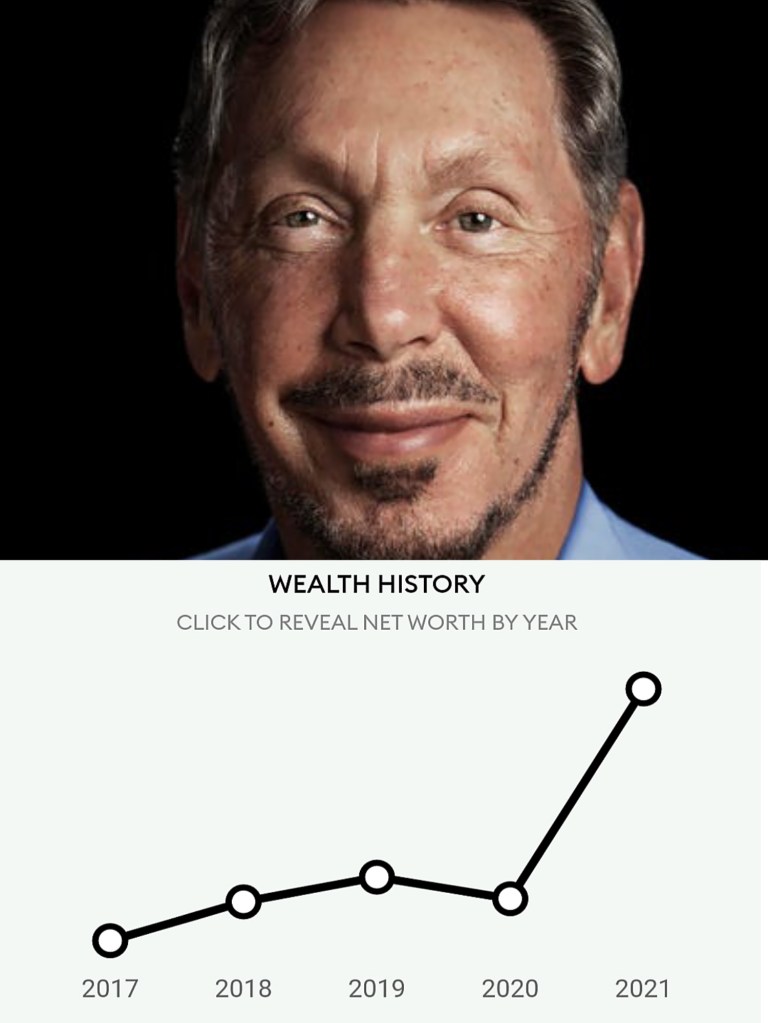
7)Larry Ellison:

CEO and Founder, Oracle.

BILLIONAIRE NET WORTH :$93B

Larry Ellison is chairman, chief technology officer and cofounder of software giant Oracle, of which he owns about 35%.He gave up the Oracle CEO role in 2014 after 37 years at the helm.

8)Larry Page :

Cofounder and board member, Alphabet.

BILLIONAIRE NET WORTH : $91.5B

Larry Page stepped down as CEO of Alphabet, the parent of Google, in December 2019 but remains a board member and a controlling shareholder.

9) Sergey Brin:

Cofounder and board member, Alphabet.

BILLIONAIRE NET WORTH : $89B

Sergey Brin stepped down as president of Alphabet, parent company of Google, in December 2019 but remains a controller shareholder and a board member.

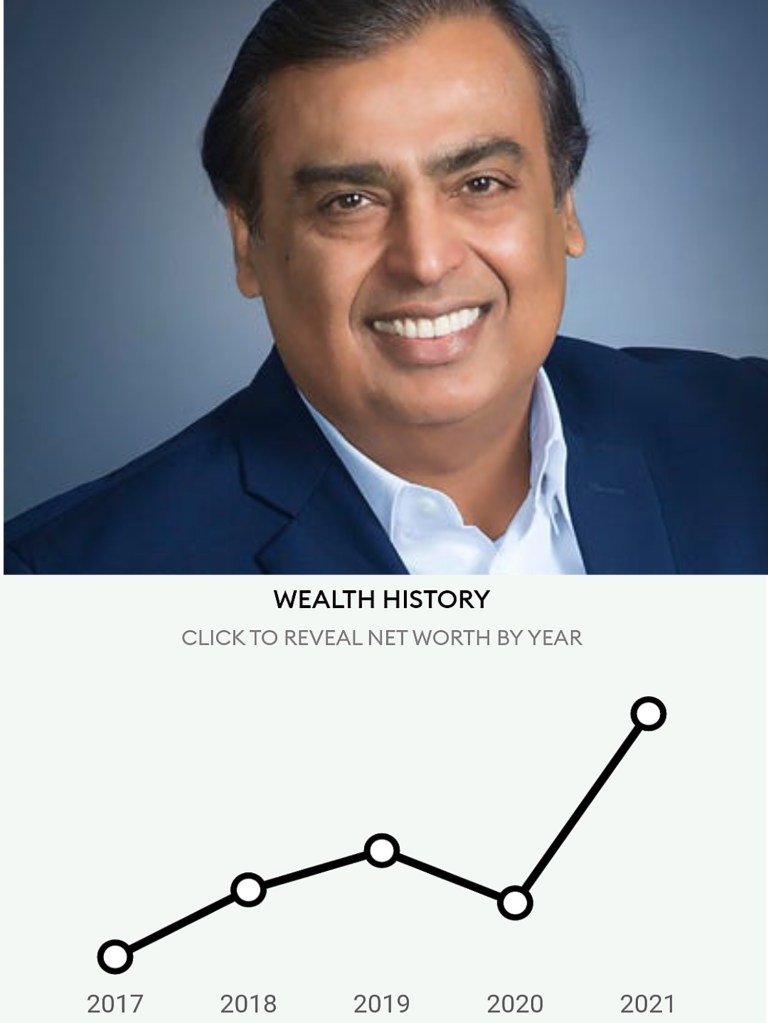
10)Mukesh Ambani :

Founder and Chairman, Reliance Industries.

BILLIONAIRE NET WORTH : $84.5B

Mukesh Ambani chairs and runs $74 billion (revenue) Reliance Industries, which has interests in petrochemicals, oil and gas, telecom and retail.

Gig Economy

What Is the Gig Economy?

In a gig economy, temporary, flexible jobs are commonplace and companies tend to hire independent contractors and freelancers  instead of full-time employees. A gig economy undermines the traditional economy of full-time workers who often focus on their career development.

Understanding the Gig Economy

In a gig economy, large numbers of people work in part-time or temporary positions or as independent contractors. The result of a gig economy is cheaper, more efficient services, such as Uber or Airbnb, for those willing to use them. People who don’t use technological services such as the Internet may be left behind by the benefits of the gig economy. Cities tend to have the most highly developed services and are the most entrenched in the gig economy. A wide variety of positions fall into the category of a gig. The work can range from driving for Lyft or delivering food to writing code or freelance articles. Adjunct and part-time professors, for example, are contracted employees as opposed to tenure-track or tenured professors. Colleges and universities can cut costs and match professors to their academic needs by hiring more adjunct and part-time professors.

The Factors Behind a Gig Economy

America is well on its way to establishing a gig economy, and estimates show as much as a third of the working population is already in some gig capacity. Experts expect this working number to rise, as these types of positions facilitate independent contracting work, with many of them not requiring a freelancer to come into an office. Gig workers are much more likely to be part-time workers and to work from home. Employers also have a wider range of applicants to choose from because they don’t have to hire someone based on their proximity. Additionally, computers have developed to the point that they can either take the place of the jobs people previously had or allow people to work just as efficiently from home as they could in person.

Economic reasons also factor into the development of a gig economy. Employers who cannot afford to hire full-time employees to do all the work that needs to be done will often hire part-time or temporary employees to take care of busier times or specific projects. On the employee’s side of the equation, people often find they need to move or take multiple positions to afford the lifestyle they want. It’s also common to change careers many times throughout a lifetime, so the gig economy can be viewed as a reflection of this occurring on a large scale.

During the coronavirus pandemic of 2020, the gig economy has experienced significant increases as gig workers have delivered necessities to home-bound consumers, and those whose jobs have been eliminated have turned to part-time and contract work for income. Employers will need to plan for changes to the world of work, including the gig economy, when the pandemic has ended.

Criticisms of the Gig Economy

Despite its benefits, there are some downsides to the gig economy. While not all employers are inclined to hire contracted employees, the gig economy trend can make it harder for full-time employees to develop in their careers since temporary employees are often cheaper to hire and more flexible in their availability. Workers who prefer a traditional career path and the stability and security that come with it are being crowded out in some industries.

For some workers, the flexibility of working gigs can actually disrupt the work-life balance, sleep patterns, and activities of daily life. Flexibility in a gig economy often means that workers have to make themselves available any time gigs come up, regardless of their other needs, and must always be on the hunt for the next gig. Competition for gigs has increased during the pandemic, too. And unemployment insurance usually doesn’t cover gig workers who can’t find employment.

In effect, workers in a gig economy are more like entrepreneurs than traditional workers. While this may mean greater freedom of choice for the individual worker, it also means that the security of a steady job with regular pay, benefits—including a retirement account—and a daily routine that has characterized work for generations are rapidly becoming a thing of the past.

Lastly, because of the fluid nature of gig economy transactions and relationships, long-term relationships between workers, employers, clients, and vendors can erode. This can eliminate the benefits that flow from building long-term trust, customary practice, and familiarity with clients and employers. It could also discourage investment in relationship-specific assets that would otherwise be profitable to pursue since no party has an incentive to invest significantly in a relationship that only lasts until the next gig comes along.

Causes And Impact Of A Recession

What is a Recession?


Recession is a massive decline in economic activities. When the spending capacity falls, recession takes place. Recession hinders the growth of the economy. It affects the economic indicators such as GDP, employment, income. All these indicators experience a fall due to recession.
Simple concept of recession: When unemployment rate increases, purchasing power of the consumers falls. Due to less demand, market declines and businesses can face bankruptcy. Eventually, the overall economic growth is severely affected, which results in fall in GDP.


How does a Recession affect the Economic Indicators?


Recession has a negative effect on the economic indicators like income, employment, GDP.
Recession causes fall in the employment rate. Since, people have lost their jobs, there is no source of income.
GDP is the most important indicator. Real GDP measures the total value generated in a given time. When GDP becomes negative, productivity falls.
When real income of the consumers fall, so does the demand for goods and services.
Employment and real income are interlinked. Negative employment breeds negative income.
Lack of demand in the market forces the businesses to produce less, causing fall in overall industrial production and manufacturing of goods.
Sharp decline in the consumer spending is seen. The economic growth becomes negative and GDP of the country drastically falls and becomes negative.


Causes of a Recession

1.Rise in Interest Rates

Interest rates determine the investment strategies. The relationship between interest rate is negative. When interest rate falls, it encourages to invest more. But in case of recession, it is the opposite. Interest rates are higher during recession which leads to less investment.

2. Lower Confidence

Fall in employment opportunities compels consumers to restrict themselves from buying. This way the businesses face financial constraints caused by slow sales and have to cut back on the employees they have. Manufacturing of goods lowers. The confidence of consumers and sellers has lost.

3. Slow Production and Manufacturing

Decline in manufacturing orders reduces the production of goods and services. Less manufacturing orders is one of the causes of recession.

4. Deflation

Economy is slowed down due to falling prices. Reduction in the value of goods and services gives rise to high consumer expectation of lower prices which declines the present demand. Recession takes on the market as the demand falls.

5. Decline in Asset Prices

When prices of assets like gold, property falls, the overall wealth falls. Negative wealth leads fall in the spending capacity of the consumer

Impact of a Recession

  1. Unemployment

Unemployment rate rises because when firms go bankrupt they will have to lay off the existing workers in order to reduce production cost and will higher limited workers. Rise in unemployment rate will have an impact on the income of the workers. Income of the consumers will decrease due unemployment.

2. Lower Wages

Salary of the workers will be affected due to recession. To keep lower cost of production, firms will reduce the salary of their employees. Workers will have to accept lower salaries due to rising unemployment.

3. Fall in Asset Prices

Falling prices of properties or lands will hamper the wealth of the consumer. Negative wealth will affect consumer’s confidence and this will cause less spending.

4. Rise in Government Spending

Government spending will have to be increased due to unemployment and lower incomes. Financial help will have to be given to the consumers. Expansionary fiscal policies will be implemented by the government in order to stabilize economic activities.

Entry tax

• Central government – Entry tax in states – State
governments control over the goods which enter
their boundaries.

• Entry tax – Fee levied by the state governments
on the transfer of goods from one state to another.
 Type of indirect tax levied.

• The State Entry Tax Act maintains rates for the
goods of each state.
 Tax rates vary for each state.

• Enforcement of entry tax -Department of
Commercial Taxes of that state.

• Essential commodities – Usually do not attract entry tax.
 Varies from state to state depending on the state’s policies.

• Entry Tax has been replaced by the Goods and Services Tax (GST)
 Inter-state movement of goods – IGST (Integrated GST)
 Intra-state transfers – CGST (Central GST) and SGST (StateGST).

PRADHAN MANTRI GARIB KALYAN YOJANA ,” MAGIC WAND IN COVID SITUATION “

The numbers of Unemployment rate of India were not good & this pandemic have done the work of fuel in the fire . In January 2021, India saw an unemployment rate of over six percent. This was a significant improvement from the previous month. A damaging impact on an economy as large as India’s caused due a total lockdown was imminent. Unemployment went up to nearly 24 percent in April 2020. This was possibly a result of a decrease in demand as well as the disruption of workforce faced by companies.

The most drastic impact of pandemic was lockdown , & the most drastic impact of lockdown was on economically backward class ,because these people don’t have good medical system , & people from these sections mostly were of labour class , all factories & construction sites were shut , without employment & with no money left in their hands , these people were left unemployed . In India employment rate in 2019 was 5.36% which increased by over 6 % in 2021. These were not good numbers for India. Before numbers of unemployment one major thing to keep in consideration was these economically backward class . For these people , our honorable prime minister , Shri Narender Modi Ji launched a yojana named as “PRADHAN MANTRI GARIB KALYAN YOJANA” .

Just to give you all a gist of what this yojana is & what are the benefits of this yojana , & how this yojana worked as a magic wand for all the poor people who were left unemployed & lost their loved ones due to COVID19 .

The Pradhan Mantri Garib Kalyan Yojana / Package is a comprehensive relief package of Rs 1.70 Lakh Crore Yojana for the poor to help them fight the battle against Corona Virus. This was announced in March 2020, to reach out to the poorest of the poor, with food and money in hands, so that they do not face difficulties in buying essential supplies and meeting essential needs. The package included the measures listed hereunder from 30th March 2020:

  • Insurance cover of Rs 50 Lakh per health worker fighting COVID-19 to be provided under Insurance Scheme – extended for one year effective April 2021
  • 80 crore poor people will to get 5 kg wheat or rice and 1 kg of preferred pulses for free every month for the next three months – extended to November 2021 (initially, the package was extended to May & June 2021; originally, it was extended to November 2020)
  • 20 crore women Jan Dhan account holders to get Rs 500 per month for next three months
  • Increase in MNREGA wage to Rs 202 a day from Rs 182 to benefit 13.62 crore families
  • An ex-gratia of Rs 1,000 to 3 crore poor senior citizen, poor widows and poor disabled
  • Government to front-load Rs 2,000 paid to farmers in first week of April 2020 under existing PM Kisan Yojana to benefit 8.7 crore farmers
  • Central Government has given orders to State Governments to use Building and Construction Workers Welfare Fund to provide relief to Construction Workers.

Our government is providing food , money & insurance facility to the weaker sections of the society, so that though being unemployed they don’t sleep empty stomach. Under the Pradhan Mantri Garib Kalyan Yojana, 312 billion Indian rupees were accrued and provided to around 331 million beneficiaries that included women, construction workers, farmers, and senior citizens. More aid was announced in mid-May, to mainly support small businesses through the crisis. Coming to the conclusion , though unemployment numbers are rising but government is much concerned about the living of people , & is much concerned about health of people , because govt. knows that is people will live , they can make living too.

Urban Agriculture

Urban agriculture can be described as the agricultural practices to producing fresh food or other agricultural products in urban areas and their surrounding regions (peri-urban). This can function centrally where plants can be grown and animal husbandry, horticulture, and aquaculture can be practiced. It also involves the processing, packaging, marketing, and delivery of food. In purview urban agriculture extends to establish food production sites within the city’s sphere.

As more land area is getting urbanized and larger number of people are coming to the urban areas to reside. It becomes very critical to properly utilize the space in our cities and suburban areas. Research in the last two decades is has proven that Urban agriculture can be a viable option for food production. It can also help in decreasing the effects of climate change and make the food supply chain more efficient.  Proper land use and spatial planning are crucial to practice this effectively. There are various methods to practice urban agriculture including ground-level farming, hydroponic farming, rooftop farming, vertical farming, greenhouses, and other new technologies.

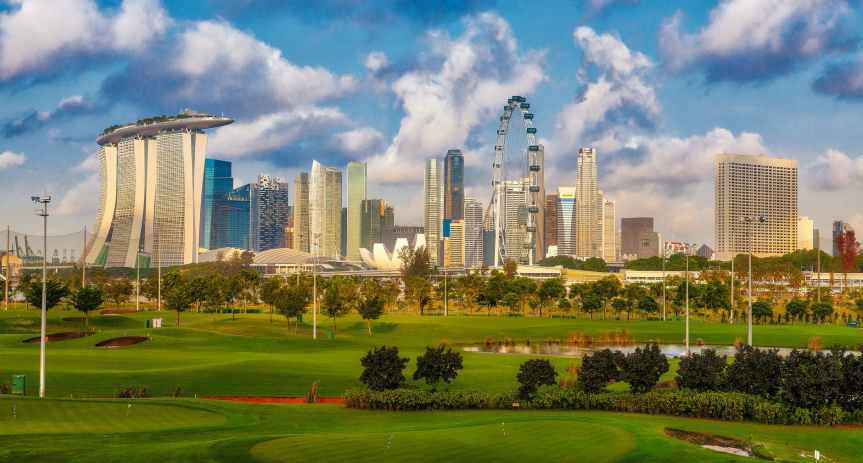
As cities are expanding, this has created new sets of issues like the urban heat island effect, waste management, lack of biodiversity, and high levels of air pollution. With more people moving around the urban space, this has also increased carbon emissions. With urban agriculture, we can try to offset some of the adverse effects of these problems. This kind of agriculture is now being practiced in many cities. Cities like Tokyo, Seoul, and Sao Paulo have their own urban agriculture initiatives. But one of the cities is betting on urban farming in Singapore. The city-state currently imports 90 percent of its food. This also means that any kind of geopolitical tension or a global crisis can severely affect the food supply of Singapore. This means that growing own food becomes critical and essential. Due to this, the Singaporean government has envisioned an ambitious goal to produce 30 percent of its food in the city itself by 2030. This is a special challenge in Singapore’s care due to its tiny land area and highly urbanized population. The city has almost non-existent agriculture land and this is why the focus of food production is on the unutilized urban spaces, on top of shopping malls, hotels, schools, homes, rooftops in parking lots across the city, etc.

In 2009 Singapore government launched a program that incentivizes injecting greenery into development projects across the nation The program was aptly named ‘Landscaping for Urban Spaces and High-Rises’ (LUSH). Their current initiative to build urban food-growing areas within the city will be built upon this program.

Some of the benefits that Urban farming enjoys are immunity from water pollution, a better-controlled environment from the physical forces, and minimal to no use of pesticides and insecticides. But there are some limitations as well. This type of farming can be quite energy-intensive and the outputs can be comparatively lower than traditional farming. This also makes it more expensive.

To make Urban farming more effective governments will also need policies that will make use of the maximum amount of land across the city. Hydroponic farming can be a very effective way to rapidly scale the production where plants are grown with the help of water and the additional nutrients and minerals are added to the water to substitute soil. Additional Urban farming can also help in reducing carbon emissions and making cities cooler. Private firm involvement can also help in stepping up the scale of this kind of farming. This will be the step towards sustainable food production in the cities of the future but to make this happen greater involvement across the citizens and sectors will be needed.

References:

Feminism in India

Ideally, what should be said to every child, repeatedly, throughout his or her school life is something like this: ‘You are in the process of being indoctrinated. We have not yet evolved a system of education that is not a system of indoctrination. We are sorry, but it is the best we can do. What you are being taught here is an amalgam of current prejudice and the choices of this particular culture. The slightest look at history will show how impermanent these must be. You are being taught by people who have been able to accommodate themselves to a regime of thought laid down by their predecessors. It is a self-perpetuating system. Those of you who are more robust and individual than others will be encouraged to leave and find ways of educating yourself — educating your own judgements. Those that stay must remember, always, and all the time, that they are being moulded and patterned to fit into the narrow and particular needs of this particular society.

Doris Lessing, The Golden Notebook

Feminism in India is a set of movements aimed at defining, establishing, and defending equal political, economic, and social rights and opportunities for women in India. It is the pursuit of women’s rights within the society of India. Like their feminist counterparts all over the world, feminists in India seek gender equality: the right to work for equal wages, the right to equal access to health and education, and equal political rights.Indian feminists also have fought against culture-specific issues within India’s patriarchal society, such as inheritance laws.

The history of feminism in India can be divided into three phases: the first phase, beginning in the mid-19th century, initiated when reformists began to speak in favor of women rights by making reforms in education, customs involving women; the second phase, from 1915 to Indian independence, when Gandhi incorporated women’s movements into the Quit India movement and independent women’s organisations began to emerge; and finally, the third phase, post-independence, which has focused on fair treatment of women at home after marriage, in the work force, and right to political parity.

Despite the progress made by Indian feminist movements, women living in modern India still face many issues of discrimination. India’s patriarchal culture has made the process of gaining land-ownership rights and access to education challenging. In the past two decades, there has also emerged a trend of sex-selective abortion. To Indian feminists, these are seen as injustices worth struggling against and feminism is often misunderstood by Indians as female domination rather than equality.

As in the West, there has been some criticism of feminist movements in India. They have especially been criticized for focusing too much on privileged women, and neglecting the needs and representation of poorer or lower caste women. This has led to the creation of caste-specific feminist organizations and movements

According to Maitrayee Chaudhuri, unlike the Western feminist movement, India’s movement was initiated by men, and later joined by women. But feminism as an initiative by women started independently a little later in Maharashtra by pioneering advocates of women’s rights and education: Savitribai Phule, who started the first school for girls in India (1848); Tarabai Shinde, who wrote India’s first feminist text Stri Purush Tulana (A Comparison Between Women and Men) in 1882; and Pandita Ramabai, who criticized patriarchy and caste-system in Hinduism, married outside her caste and converted to Christianity (1880s). The efforts of Bengali reformers included abolishing sati, which was a widow’s death by burning on her husband’s funeral pyre, abolishing the custom of child marriage, abolishing the disfiguring of widows, introducing the marriage of upper caste Hindu widows, promoting women’s education, obtaining legal rights for women to own property, and requiring the law to acknowledge women’s status by granting them basic rights in matters such as adoption.

The 19th century was the period that saw a majority of women’s issues which came under the spotlight and reforms began to be made. Much of the early reforms for Indian women were conducted by men. However, by the late 19th century they were joined in their efforts by their wives, sisters, daughters, protegees and other individuals directly affected by campaigns such as those carried out for women’s education. By the late 20th century, women gained greater autonomy through the formation of independent women’s own organisations. By the late thirties and forties a new narrative began to be constructed regarding “women’s activism”. This was newly researched and expanded with the vision to create ‘logical’ and organic links between feminism and Marxism, as well as with anti-communalism and anti-casteism, etc. The Constitution of India did guarantee ‘equality between the sexes,’ which created a relative lull in women’s movements until the 1970s.

Link

ARE WE REALLY ENJOYING OUR WORK?

Work is worship for those who take work seriously and it should be so because your work reflects your personality to some extent and how we do it is also part and parcel of our identity. Here in, comes the real trouble because when you do the work you enjoy, you try to put in your heart and mind into it but, if you are unfortunate enough to be doing the kind of work that you are not proud of, then surely enough it shows in your outcome.

Money, being the prime factor in today’s world and so, when your sole priority is to mint money, then it hardly matters whether you are an engineer or an interior designer. You would try to impress upon the authorities in your field with the sole objective of prosperity in your field. For this, you may go to any extent of unethical attempts, without even thinking about its aftermath.

Mental tension and stress and the related health hazards are all part and parcel of today’ s changing world. Today’s young generation is the first generation of professionals who are earning, four times more than what their parents have earned and so they have a lot of money at their disposal, which is making them spend more All this was possible only because of India’s changing economic condition and the advent of multinational companies with huge capital investment and infrastructure.

In fact, the call centre culture has also changed our lives for the worst, since lifestyle patterns are changing drastically. Initially, youngsters seem to be enjoying the western influence of working like asses on five days and reserving the weekends for parties and celebrations. And to get those two days of relief, they are ready to slog whether they like their job or not. It henceforth, becomes a mechanical slogging where, you are not concerned, whether your mind is at work but it’s just about the finished product that they look forward to. On the whole, we cannot rule out the fact that there are people, who are fortunate enough to bag the job they desire or those who have ultimately landed in those fields, where they have wanted to be. Such people are really lucky in the sense that they do their work with the utmost dedication and they have a fulfilment in life, even if they are not taking home fat salaries like their counter-parts, but don’t have any satisfaction to boost of.

There is a third side to all this and that is trying to derive meaning in whatever meaningless things we are doing to make both ends meet. So even if, one is in a job that is detested by him, he can still work towards generating a positive attitude to one’s Work. Try and enjoy, what one is doing and thus try to attain a sense of satisfaction, that he supposes, he could have otherwise got.

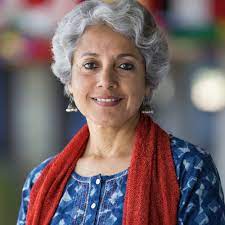
SOUMYA SWAMINATHAN!!!

In this highly competitive world, everyone is trying to prove themselves in their areas of interest. Like men, now women are also pursuing their dream wilfully. They are the most competitive persons when compared to men. This doesn’t mean that men are incapable. Just that women are firm and strong enough to prove themselves. You may have a thought why am I talking about women too much? There is definitely a reason. Yeah! Today, I am going to share with you about an Indian Woman who marked her identity in WHO. I think you may have guesses or you should have found who she is? I think, your guess is correct. It’s our Soumya Swaminathan.

Dr. Soumya Swaminathan

Everyone know about the “Father of Green Revolution of India”, Dr. M.S. Swaminathan, right? Soumya Swaminathan was the daughter of Dr. M.S. Swaminathan. She was born on 2nd May 1959 at Kumbakonam, Chennai, Tamil Nadu. Her full name is Soumya Swaminathan Yadav. Her mother, Mina Swaminathan, was an Indian Educationalist. Soumya has two siblings namely Madhura Swaminathan and Nithya Swaminathan. She was married to Ajit Yadav who was an orthopedic surgeon.

Dr. Soumya Swaminathan with her parents and two siblings

Now, let’s see about Dr. Soumya Swaminathan’s educational qualifications and her academic achievements.

  • She received her M.B.B.S degree from the Armed Forces Medical College, Pune.
  • She completed her M.D. in AIIMS, New Delhi.
  • She got her Diplomate of National Board from National Board of Examinations.
  • She completed her Ph.D., in neonatalogy and pediatric pulmonology.

Let’s see about her Career achievements.

  • In 1989, she was a Research Scholar in the Department of Pediatric Respiratory Diseases in United Kingdom till,1991.
  • She also worked as a Senior Research Registar, at Cardiopulmonary Medicine Unit in New Jersey.
  • In 1992, she joined National Institute for Research in Tuberculosis, as a coordinator and later she became it’s Director.
  • From 2009 to 2011, She worked as the Coordinator of WHO/UNICEF/UNDP, for a research and training on Tropical diseases in Geneva.
  • She was the Director of ICMR and Secretory of the Ministry of Health and Family Welfare, in India from August 2015 to November 2017.
  • From 2017 to March 2019, Dr. Soumya Swaminathan was the Deputy Director-General of WHO.
  • In 2019, she has become the Chief Scientist of WHO in research about the SARAS CoV-2 and worked hard in this pandemic getting detailed reports from all the countries. And she conducted interview once in two week to make us know the exact situation of the covid.
Gross inequity in vaccine access hurting; China way ahead, says WHO's Dr  Soumya Swaminathan - The Financial Express

Let me tell you some of the awards won by her. In 2008, She received Kshanika Oration Award from ICMR. In 2011, she was given an Lifetime Achievement award by the Indian Association of Applied Microbiologists. In 2016, She received Research Endowment Award from NIPER and ASTRAZENECA.

I am inspired so much by Dr. Soumya Swaminathan. Yes, now I have the spark to achieve something big in my career and want to reach heights like her. What about you? I hope you too have your own dreams. Give your full effort and just do it. She had proven herself and made her Father proud. Let’s be like her and make our parents proud. Her achievements show us, how capable women are!! How strong!! Okay, Come on! Women, have confidence in yourself that you can do anything and everything! If you can’t, who can!! Let’s make our India proud.

Some Reference Links;

Top brands that represent India

Atmanirbhar, A word that entered every Indian’s vocabulary by the end of the year 2020. This gave a hype to use made in India products. people started to check for the made in India label. Now the era is of brands. Everybody wish to wear top brand accessories and cloths and drive a branded car. How can someone fulfil this desire while being Atmanirbhar? There are some brands which represent India and are listed at top. World has many brands, which appear as foreign brand by their names but are Indian.

The golden old times had brands like Parle-G, Vadilal, Godrej etc. The new era is dominated by these brands.

the royal enfield

As the name suggests, the brand is truly royal. It is an Indian multinational company. The headquarters is in Chennai, Tamil nadu. The brand was originally owned by a British company Enfield Cycle and was stared in 1893. In 1994 an Indian company Eicher Motors bought it and renamed it as Royal Enfield India. The brand is special and admired for its retro charm and the thumpy sound. The fuel tank is hand painted. The bike brand is known for its affordability. The bikes price starts at rupees 1.34 lakh and most expensive model is of 3.13 lakh. And it is not complex and easy to repair. Owning a Royal Enfield has been a matter of pride.

a Royal Enfield bike

van heusen india

It is a clothing band. The brand is under PVH corporation which is founded in 1889 and named after a Dutch immigrant john manning van heusen. The Indian section of this brand is owned by Aditya Birla fashion and retail limited. The company calls itself to be a fashion powerhouse. Aditya Birla group has a network of 3,212 stores across the country. Aditya Birla fashion and retail limited is the first billion dollar fashion house of India.

peter england

This brand is also a clothing brand. In 1889 the brand was founded in Londonderry of Ireland. The purpose of establishment was to provide khaki trousers to the British soldiers. The Brand entered India in 1997. In 2000 Aditya Birla group owned this brand. The headquarter is in Bangalore, Karnataka. The brand is the top men’s wear brand and has huge market. The customer base is estimated to be 4 million people. The brands target customers are the corporate employees. The brand offers collection of denims, festive wear, Indian kurtas, accessories etc.

lakme

The brand offers beauty products like cosmetics, skincare products and beauty saloons. It is India’s first cosmetic brand. It is the first to introduce makeup to Indian women and its been more than 50 years for the company for being a beauty brand. The main Idea of establishing a makeup brand of India was of prime minister Jawaharlal Nehru and He asked JRD Tata to execute this. The brand was named after a French opera coincidently which was derived from the name of the goddess Laxmi. Now also the brand tops in the popularity list.

jaguar

This brand is also stared as a British company founded by William Lyons. But now it is owned by Tata motors from 2008. The models are still manufactured in UK and headquarters is in Whitley Coventry, England. The car is one of the luxury vehicle. The cars are very much classy and show a great performance. The car price starts at 46.64 lakh.

these represent some of the success stories of Brands. There are many more brands too in the market who represent India internationally. These are the examples that India can do a great job in establishing brands and can lead the world.

Poverty In India

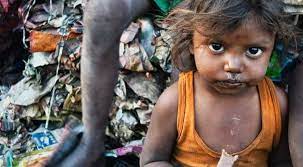
Poverty is defined as a condition in which a person is deprived of fundamental needs of existence. Furthermore, the individual does not have an insufficient amount of food, housing, or clothing. In India, the majority of the poor cannot afford to pay for a single meal each day. They also sleep on the side of the road and dress in filthy old clothing. Furthermore, they do not receive appropriate healthy and nutritious food, as well as medicine or any other required item.

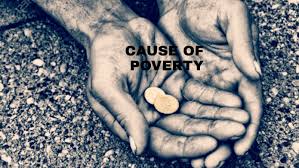
Causes of Poverty:-

Poverty in India is growing due to a rise in the urban population. People from rural areas are flocking to cities in search of better opportunities. The majority of these individuals find a low-wage employment or an activity that just pays for their meals. Most significantly, lakhs of urban residents live below the poverty line, with many more on the verge of destitution.

Furthermore, a large number of people live in slums or low-lying regions. These individuals are generally uneducated, and despite their best efforts, their situation stays unchanged and there is no satisfying outcome.

Furthermore, there are several factors that may be identified as important causes of poverty in India. Corruption, increasing population, poor agriculture, a huge disparity between wealthy and poor, ancient customs, illiteracy, unemployment, and a few more factors are among these causes. A significant number of people work in agriculture, yet the compensation is relatively low in relation to the labour done by employees.

Furthermore, as the population rises, so does the need for food, housing, and money, and in the absence of these resources, poverty spreads rapidly. Furthermore, being extremely poor or extra affluent widens the divide between rich and poor.

Furthermore, the affluent are getting richer while the poor are increasing poorer, creating an economic divide that will be difficult to close.

Effects of Poverty:-

It has a wide range of effects on people’s lives. It also has a variety of impacts, such as illiteracy, bad nutrition and food, inadequate housing, child labour, unemployment, poor hygiene and lifestyle, and feminization of poverty, among others. Furthermore, impoverished people cannot afford a good and balanced diet, attractive clothing, appropriate education, a stable and clean housing, and so on since all of these amenities cost money, and if they can’t afford to eat two meals a day, how can they afford to pay for these amenities?

The Solutions for Ending Poverty:-

It is critical that we act swiftly and appropriately to address the issue of poverty. One approach to addressing these issues is to equip farmers with enough infrastructure. So that they can make agriculture lucrative rather than migrating to cities in search of work.

Illiterate individuals should also be provided the necessary instruction in order to live a better life. Family planning should be practised in order to control the growing population. Furthermore, steps should be done to eliminate corruption so that we can address the wealth disparity.

List of Indian states and union territories by poverty rate:-

India’s GDP per capita income is around $2241 (or 168,075). This is a list of Indian states and union territories rated in terms of poverty as of 2021. Number and Population – The rank is determined by the percentage of persons living below the poverty line and is based on MRP consumption.

State/U.T.Percentage of population living below the national poverty line
Goa5.09
Kerala7.05
Himachal Pradesh8.06
Sikkim8.19
Punjab8.26
Andhra Pradesh9.2
Haryana11.16
Uttarakhand 11.26
Tamil Nadu11.28
Meghalaya11.87
Tripura14.05
Rajasthan14.71
Gujarat16.63
Maharashtra17.35
Nagaland18.88
West Bengal19.98
Mizoram20.4
Karnataka20.91
Uttar Pradesh29.43
Madhya Pradesh31.65
Assam31.98
Odisha32.59
Bihar33.74
Arunachal Pradesh34.67
Manipur36.89
Jharkhand36.96
Chhattisgarh39.93
TelanganaN/A
Andaman And Nicobar Islands1
Lakshadweep2.77
Puducherry9.69
Daman and Diu9.86
Delhi9.91
Jammu and Kashmir and Ladakh10.35
Chandigarh21.81
Dadra and Nagar haveli39.31

Conclusion

To summarize, poverty is a national problem, not a personal one. It should also be addressed as soon as possible by the deployment of appropriate solutions. Furthermore, poverty eradication has become critical for the long-term and inclusive progress of individuals, society, country, and economy.

WANT TO KNOW ABOUT INDIAN ECONOMY

A country’s growth is usually measured by National income, marked by Gross Domestic Product (GDP). The GDP is the total monetary value of the goods and services produced by that country over a specific period of time, usually one year. The level of economic development also indicated by Human Development Index (HDI), Physical Quality of Life Index (PQLI), and National Happiness Index (GNHI).

Indian economy is the seventh largest economy of the world. Being one of the top listed countries. In terms of industrialization and economic growth, India holds a strong position with an average growth rate of 7%.

STRENGTHS OF INDIAN ECONOMY:

1. INDIA HAS A MIXED ECONOMY- Indian economy is a typical example of mixed economy. This means both private and public sectors co-exist and function smoothly. Some of the fundamental and heavy industrial units are being operated under the public sectors. The private sectors has gained importance. This makes it a perfect model for public-private partnership.

2. AGRICULTURE-Agriculture being the maximum pursued occupation in India. It plays an important role in its economy as well. Around 60% of the people in India depend upon agriculture for their livelihood. Green revolution and inventions in bio technology have made agriculture self sufficient and also surplus production. The export of agriculture products such as fruits, vegetables, spices vegetable oils, tobacco, animal skin etc.

3. AN EMERGING MARKET- India has emerged as vibrant economy sustaining stable GDP growth rate even in the midst of global down trend. This has attracted significant foreign capital through FDI and FII. This also makes it an emerging market for the world.

4. EMERGING ECONOMY-India bags the seventh position in terms of nominal Gross Domestic Product (GDP) and third in terms of Purchasing Power Parity (PPP). Indian economy has a place among the G20 countries.

5. FAST GROWING ECONOMY-Indian economy is well known for high and sustained growth. It has emerged as the world’s fastest growing economy in the year 2016-17.

6. FAST GROWING SERVICE SECTOR-The service sector, contributes a lion’s share of the GDP in India. The sectors like Information Technology, BPO have contributed to the growth of the economy.

7. LARGE DOMESTIC CONSUMPTION-With the faster growth rate in the economy the standard of living has improved a lot. The standard of living has considerably improved and life style has changed.

8. RAPID GROWTH OF URBAN AREAS- Urbanization is a key ingredient of the growth of any economy. There has been a rapid growth of urban areas in India after independence.

WEAKNESS OF INDIAN ECONOMY:

1. LARGE POPULATION-India stands second in terms of size of population next to China. Population growth rate of India is very high and this is always a hurdle to growth rate. The population growth rate in India is as high as 1.7 per 1000.

2. INEQUALITY AND POVERTY-There exist a huge economic disparity in Indian economy. The proportion of income and assets owned by top 10% of Indian goes on increasing. This has led to an increase in the poverty level in the society.

3. INCREASES PRICES OF ESSENTIAL GOODS-Even though there has been a constant growth in the GDP and growth opportunities in the Indian economy. The continuous rise in prices erades the purchasing power and affects the poor people, whose income is not protected.

4. WEAK INFRASTRUCTURE-Even though there has been a gradual improvement in the infrastructural development in the past few decades, there is still a scarcity of the basic infrastructure like power, transport, storage.

5. UNEMPLOYMENT-With growing youth population, there is a huge need of the employment opportunities. The Indian economy is characterised by jobless growth.

6. OUTDATED TECHNOLOGY- The level of technology in agriculture and small scale industries is still outdated and passed.

CURRENT INDIAN ECONOMY:

In 2019-20, India’s GDP was Rs 146 trillion. In other words, India had produced goods and services worth Rs 146 trillion that year. Then, in the last financial year, that is, in 2020-21, it fell to Rs 135 trillion. That’s the fall of minus 7.3% we were talking about earlier.

“India will be a global player in the digital economy” -Sundar Pichai, CEO Google