Ethics

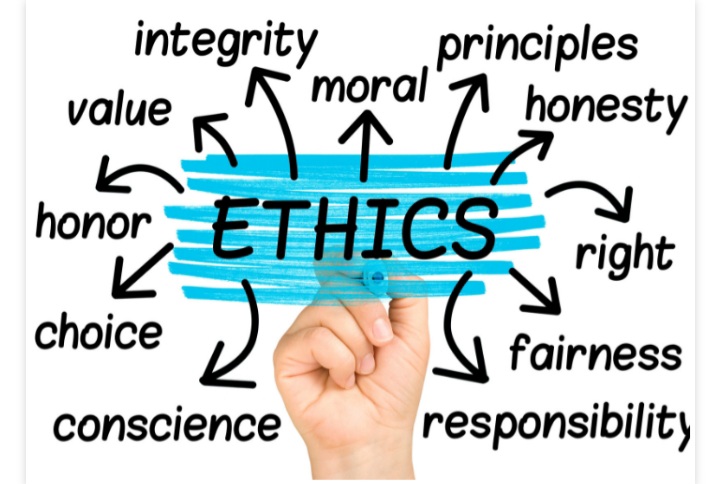
Ethics is a branch of philosophy dealing with the issue of morality. It implies the concepts of what right and wrong conducts are. Ethics define how a person should act in some specific situations. It is not a new term, but it has been there since the Stone Age. Different religions and many philosophers have also made a substantial contribution to ethics.

There are different branches of ethics. First of all, comes descriptive ethics. Descriptive ethics include what people actually consider right and wrong. Accordingly, laws are made regarding that and if they are even acceptable or not. The moral principles of society keep on changing from time to time. However, the basic ethics remain the same. Descriptive ethics are also called comparative ethics. They are given the name comparative ethics as they are used to compare the ethics of past and present scenarios. Also, they are used to compare the ethics of different societies as well.

Then comes the next branch of ethics- Normative Ethics. Normative Ethics deals with some specific norms or a set of considerations. These norms indicate how people should act in some given situations. These ethics set out the rightness or wrongness of people’s actions. Normative Ethics are also known as prescriptive ethics. This name is given as there are principles involved with these ethics and those principles determine whether the actions of people are right or wrong in different situations.

Types of ethics :

1. Deontological Ethics :

* In moral philosophy, deontological ethics or deontology is the normative ethical theory that the morality of an action should be based on whether that action itself

* Deontology is an ethical theory that uses rules to discern the moral course of action. Diffusion of responsibility. Diffusion of responsibility occurs when people fail

* Deontology morality is about following a system of rules, like ” Do Not Lie ” or ” Do Not Steal” .

* Ethics or moral philosophy is a branch of philosophy that involves systematizing, defending Deontological ethics.

2. Utilitarianism :

* The most common example of normative ethical theories are utilitarianism, kantian duty- based ethics and divine command theory.

* utilitarianism means, act in your own self- interest. Utilitarianism is that which is moral only if the act produces the greatest.

* Utilitarianism is a moral theory that implements fair choices is an effort to ensure the least amount of harm is done to all parties involved.

* However, some contemporary utilitarians , such as peter singer, are concerned with maximizing the satisfaction of preferences, hence prefernce utilitarianism.

* utilitarianism is an ethical theory that asserts that right and wrong are best determined by focusing on outcomes.

3. Consequentialism :
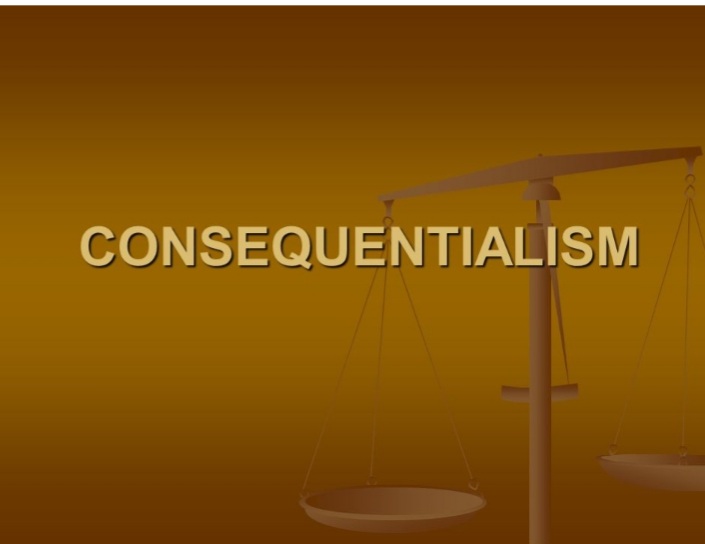
* consequentialism refers to moral theories that hold the consequences of a particular action form the basis for any valid moral judgment about that action.

* consequentialism is a class of normative, teleological ethical theories that holds that the consequences of one’s conduct are the ultimate basis for any judgment.

* consequentialism is an ethical theory that judges an action’s moral correctness by its consequenes. Corporate social Responsibility.

* on our definition of consequentialism, only the direct view is a genuinely consequentialist position, and rule consequentialism.

4. Professional Ethics :

* Rules imposed on an employee in a company, or as member of a profession. For instance, journalists, doctors, lawyers. Etc.

* professional ethics encompass the personal and corporate standards of behavior expected by professionals.

5. Applied ethics :
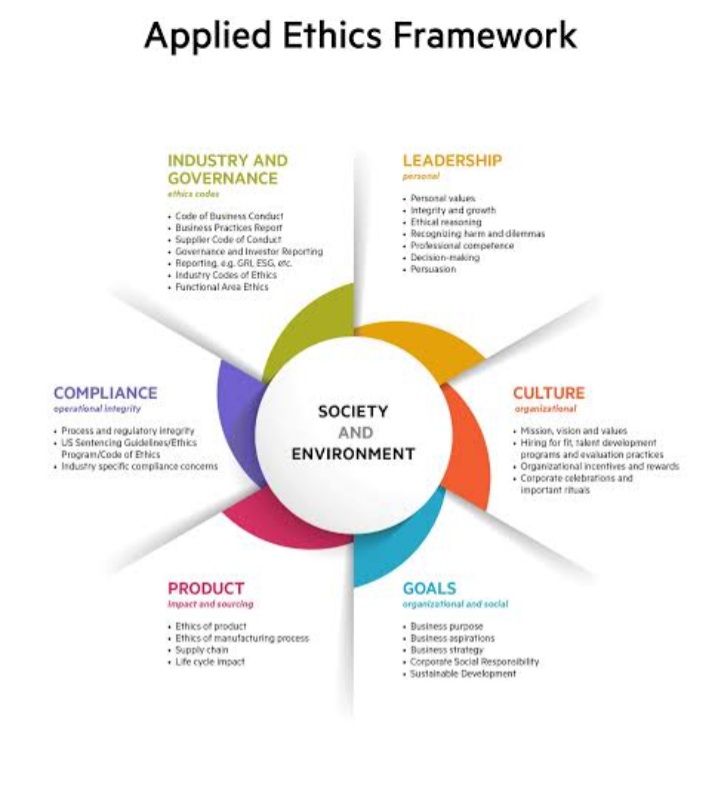
* Applied ethics is the branch of ethics which consists of the analysis od specific, controversial moral issues such ad abortion, animal rights, or euthanasia.

*Applied Ethics includes a philosophical examination of certain public and private life problems. The examination of those issues generally takes place from a moral standpoint. This branch of ethics is generally used by professions like doctors, teachers, etc.

* Applied ethics which deals with the actual application of ethical priniciples to a particular situation. While it is helpful to approach the field of ethics.

6. Virtue Ethics :
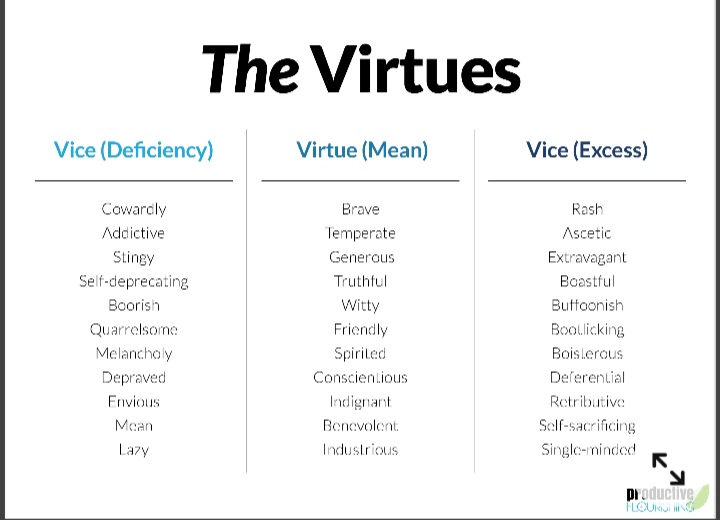
* virtue ethics is an approach to ethics that emphasizes an individual’s character as the key element of ethical thinking, rather than rules about the acts themselves.

* virtue ethics not only idea deals with the rightness or wrongness of individual actions, it provides guidenece as to the sort of characteristics and behaviour a good person will seek to achieve.

An abstract way of analyzing ethics is called Meta-Ethics. They do not deal with whether the actions are right or wrong, rather they question what morality is.
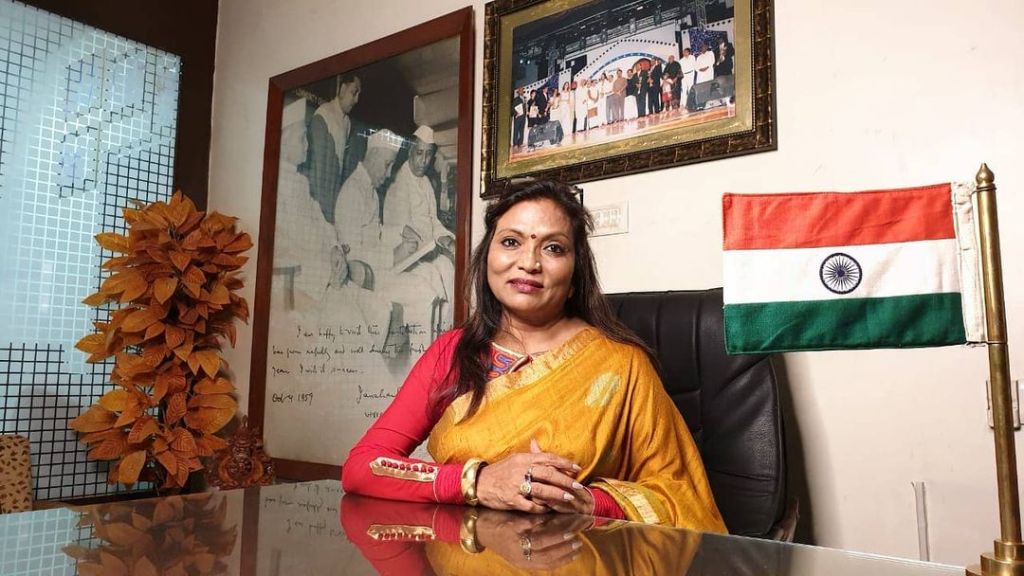
THE REAL SLUMDOG MILLIONAIRE- KALPANA SAROJ

Most of us are well known about Indian famous women personalities like Kalpana Chawla, Kiran Bedi, Indira Gandhi, Saina nehwal and etc.. because we always do listen their successful stories in many meeting as an inspiration. Today I’m going to post about the life story of Kalpana Saroj who is the most struggled women personality and who became as an industrialist with out having any degree and competed equally with the top most business personalities.

Kalpana Saroj is a female entrepreneur and Tedx speaker. She was born in 1961 in Roperkheda village, Maharashtra, India. She is the chair person of “ kamini Tubes” and bagged the honourable “Padma shri “ award in 2013 in the field of Trades and Industries. She is described as the real “ SLUMDOG MILLIONAIRE ” and also sometimes considered  as India’s first women entrepreneur.

EARLY ROOTS OF HER LIFE:

Kalpana was born in a Dalit family and her father was a constable. As she was from Dalit community, she is refused by everyone in her school. At that time’s, there was a custom to marry of the girls at an early age. Similarly, Kalpana parents were also fixed her alliance at the age of twelve years. After her marriage she move to the slum area of Mumbai along with her husband’s family. At a very tender age she faced torture in both physically and mentally at her mother-in-law house. She became as a sex toy to her husband and as a maid to her mother-in-law.

When her father visited her after the six months of marriage, he was shocked to see her daughter in horrible situations at her home and he immediately took her back to home. After moving back to her native place she was taunted by every person in her village and later after same days, she mentally got weaken and attempted suicide. After her suicide attempt, she became strong and empowered with regained energy and again moved to Mumbai in the search of her new life.

BUILDING A NEW PATH IN HER LIFE:

As and when she moved to Mumbai she started working as a tailor in a garment factory, with in a few months she mastered at the art of sewing and managed to get get a decent hike but when the things in her life was improving suddenly her life took an U-turn with death of her younger sister who was died because of insufficient amount of money for the treatment, Then she got realized about the importance of money in once life.

After few months of her sister’s death, she decided to begin a new life in the form of business. One day she heard about the Government loan scheme for Dalits in radio and she applied for that scheme. After the Government loan got sanctioned, she turned that amount into a few sewing machines and started working sixteen hours per day on them. As it is a profitable venture she got profits in her first business and she started investing the profits on the furniture business along with the tailoring business.

ENTERING INTO THE REAL TIME BOOM MARKET:

One day, a man approached Kalpana with a proposal of buying land, at a price of 2.5 lakhs which was caught in legal troubles because of having the need of money urgently, he supposed to sell his land to kalpana. Kalpana grabbed that opportunity and gave him a lakh in advance and paid the remaining amount within a few months. For two years, she fought the legal battle and cleared the litigation issue of the land.

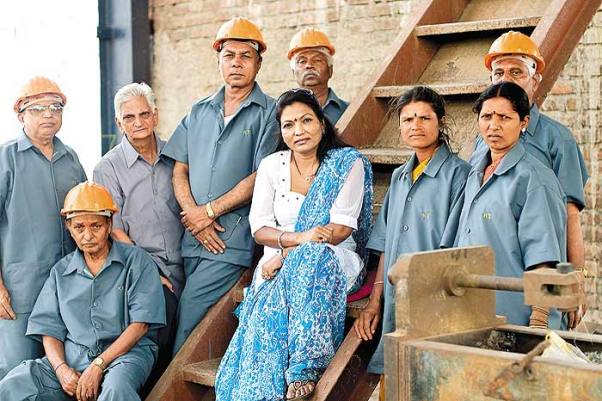
The workers of Kamani Tubes( A metal engineering company) got impressed with her logical and entrepreneurial skills in dealing with the land litigation issue they approached her to take charge over the company and settle the debts. With her perseverance and patience she cleared all the debts of company in the short span of time and restructured that company to bring back to profit’s path with her entrepreneurial and managing skills.

Today, She is the chairperson of an Industrial setup and owns net worth of 112 million dollars(Rs. 2000 crore). She also started a film production house which is named as KS FILM PRODUCTION. This is the successful story of Kalpana Saroj who crossed many barriers to reach this position. Her life shows us the reality of facing hardships with out giving up. Soon, Kalpana Saroj biopic is going to be filmed out in future where we can see her struggles clearly in that film.

CONCLUSION:

Guys finally do remember that, “Life is full of events and situations which act as a sources of infinite wisdom. We have to find ways out of the multitude of adversities which will teach us valuable lessons on the importance of will power and hard work”

Steam Deck: Nintendo Switch’s newest competitor

Steam is a digital marketplace and is owned by Valve Corporation. Valve Corporation has published numerous games but in recent years they have been trying to enter the space of hardware. On November 10, 2015 Valve launched its first game controller for connecting to PCs and their own Steam machines (A prebuilt PC developed by Valve which was designed to operate Valve’s Linux-based SteamOS via the Steam client). The Steam controller was discontinued in 2019 and with modest sales.

Steam deck is Valve’s foray into the handheld console space. The Handheld space is currently dominated by Nintendo Switch. With 84.59 million of units sold since its launch in 2017, Switch has been one of the most successful consoles in the current gaming generation.  The most unique thing about Switch is that it can be switched from a handheld design to a home console with the help of a dock accessory.

Steam deck is essentially a PC on the go with very impressive hardware specifications. The handheld is equipped with a 7-inch diagonal display with 1200x800 pixels and 60 Hz refresh rate. It has an AMD APU (Processor) with Zen 2 architectures and 4 cores/8 threads. With 16GB LPDDR5 RAM and storage options ranging from 64GB eMMC($399) , 256GB SSD($ 529) and 512GB SSD($ 649).

Since the late 80s, Nintendo has been the reigning king in the portable gaming space. After the success of Switch, Nintendo revealed the new switch pro which has an OLED display upgrade. This will surely enhance the experience in the console but many were disappointed with no hardware upgrade. Nintendo Switch is still running an Nvidia Tegra custom chip which is severely underpowered and the console struggles to even play Nintendo’s core games with 30 FPS. This means that compromises have to be made to make a game run of the system. Another aspect is that the failure of Sony’s PS Vita (Sony’s portable handheld) failed against the Nintendo 3DS of the previous generation. Sony did not attempt to compete against Nintendo. This meant that there were no major competitors against Nintendo and the company has become somewhat complacent. The launch of Steam Deck also means that there is another competitor against the Switch and this will lead to healthy competition and ultimately it’s a win for the consumers. With 1.6 TFLOPS of GPU power its significantly more powerful than the Switch. Another point to be noted is the versatility that the Steam ex provides. The Deck essentially is a PC and this means that it runs on Valve’s version of Linux OS and by connecting it to a dock via a USB C and it also has full Bluetooth 5.0. This means that you can use it to hook the device up to a full-sized monitor and work on any productivity applications as well. Due to its open nature, even Windows can be installed on the deck. This means that it will be much more flexible than any of its competitors. There have been many recent smaller projects that have attempted a similar portable gaming PC, but Valve (Steam’s parent company) has a much deeper pocket and experience in its hands. The console will be shipped by the end of December 2021. There is no guarantee that this system will be a success but it surely will make the handheld space more exciting.    

Pilpantri: a model of environmentalism and feminism

Pilpantri, a village with a population of 8000 , located in Rajasmand district of Rajasthan has been a matter of pride for the entire nation. It is the perfect example of how the cycle of change starts from one person itself. This small village has been attracting attention from all over the world due to its efforts of saving the environment and promoting the girl child birth and education. Now, feminism and Rajasthan in one sentence may be shocking to some as Rajasthan has a tanned image for female infanticide, child marriage and is considered to be one of the least progressive state for females. However, times are changing. Pilpantri, itself being an example of this change which has made it a role model of eco feminism.

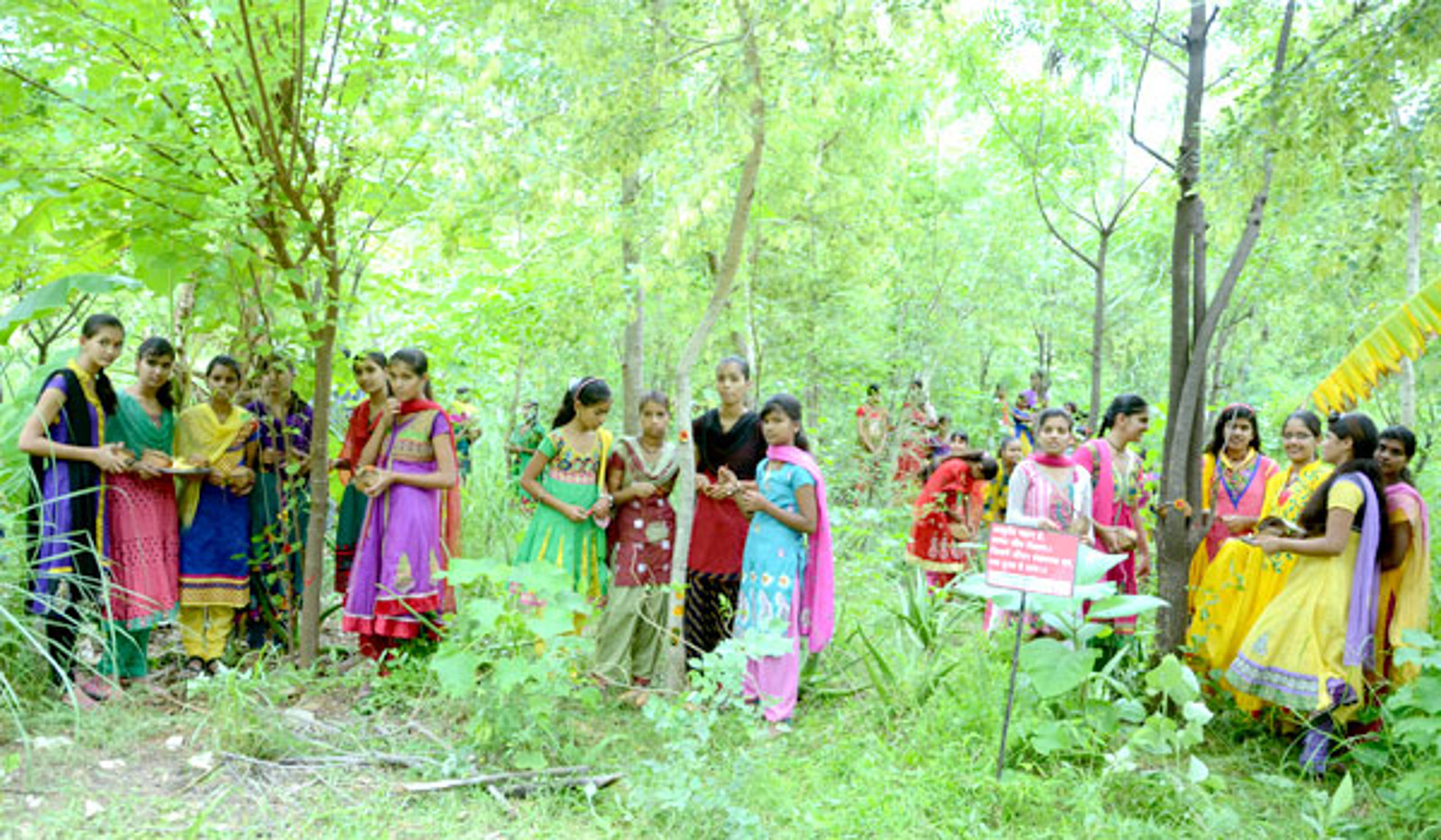
This village plants 111 trees for every single girl child being born there. The number of trees being “111” for every girl child has a different story behind it. India is a land of traditions which is what makes us unique. It is a tradition in India that on every auspicious occasion a donation of 101, 111, 1100 or the similar numbers being made ,which is termed as “shagun” in Indian terms. The traditions when used in an innovative way may prove extremely beneficial for the present times. The plantation of such a huge number for every girl child born increases the green cover around the village protecting the people there from the pollution and its aftermath, which is one of the biggest problems in India. The saying “Nature has solution to every problem provided you regard it well” holds true.

History of the plantation drive

In 2005, when Shyam Sunder Paliwal had taken over as the village sarpanch, the entire area surrounded by hills was denuded for mining. The district of Rajasmand is known for marble block mining and is the largest producer of marble in the entire country. Mining leads to the loss of vegetation and invites several problems in the mined areas such as floods, water logging, soil erosion as the natural protectors of environment i.e. the trees are sacrificed in mining and no or least attempt is made to restore them.

Two years later, when Kiran , Paliwal’s 17 year old darling daughter died due to dehydration, he decided to honor her by planting a tree in her name on the village entrance. He then thought of implying this scheme for the birth of every daughter in the village . Not only to celebrate the birth of a girl (which is a very rare practice in India) are trees planted but also to commemorate the lives of those who died. The village plants 11 trees in the memory of every person that dies here.

Pilpantri as a model of feminism

In India, where patriarchy has a strong hold, females are neglected since birth and are seen only as an institution to carry on the generations forward. The birth of the female becomes a matter of shame for the family while some starts to worry about the dowry of a new born girl. To put a stop to all these problems, the people came with a very “horrifying” solution which is to kill the girl before she is born. A report suggests that in Rajasthan, the child sex ratio is 888 girls per 1000 boys. The census also revealed that of total deaths in Rajasthan, over 20% of them were infant deaths. Overall, the female child population (age 0-6) between 2001 and 2011 dropped by 3 million. One journalist referred to this as “the silent genocide.” Female infants are sometimes tragically killed by opium poisoning, starvation, or even being crushed with stones or drowned in water.

Pilpantri , a small hamlet not only cares for the environment with every girl born but also secures her future through the various schemes implemented by the village. As reported by The Hindu, Rs. 21,000 is collected from the village residents at the birth of a girl child and Rs.10,000 from the girl’s father and this sum of Rs. 31,000 is made into a fixed deposit for the girl, with a maturity period of 20 years. Also, the village authorities make these parents sign an affidavit promising that they would not marry her off before the legal age, send her to school regularly and take care of the trees planted in her name.

When the girls grow up, they tie Rakhi( a holy sibling bond signifying the protection of each other) to the trees.

Pilpantri as a model for environmentalism

According to a report by BBC, the region now has more than 350,000 trees, from mango and gooseberry to sandalwood, neem, peepal and bamboo, growing across the once-barren lands and covering an estimated 1,000 hectares. To plant the trees what is required is soil and water along with the saplings. The more the greenery, it will attract higher numbers of birds , bring more rain and prosperity to the region.

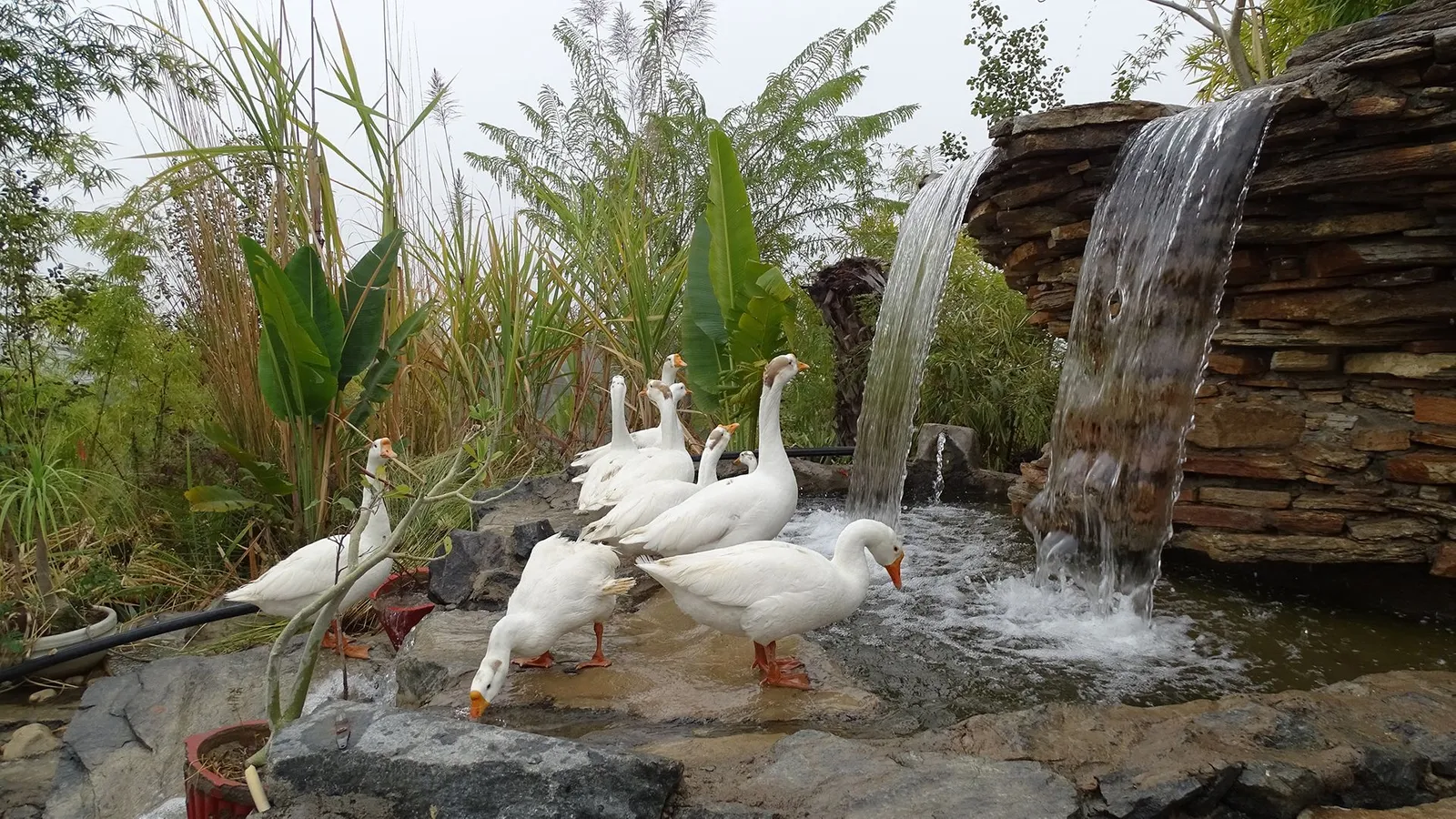
The village has also developed a water harvesting system , where the run off rain water is collected through ditches, bunds and dams. Now, clear pools of water shone and adorn the village attracting animals like geese and rabbits.

Also, to protect the large number of trees from termites villagers plants aloe vera in large amounts near the trees which in turn is utilized by the women of the village to make aloe juice ,gels and cosmetics for sale in the market, increasing the village economy and their independency.

In 2018 the state government instituted a training center there to educate people on the “Piplantri Model”. The building hosts engineers, officials and residents from other districts who hope to replicate Piplantri’s model of water harvesting and tree planting elsewhere in Rajasthan and the country. As many as 50 to 60 visitors come to Piplantri some days – most of whom come to attend workshops in the training center – and the village even has a set of cottages to house them. 

Now, the birth of a daughter is no more considered to be a burden but a matter of pride and celebration. It is the efforts of Shyam Sunder Paliwal which have adorned the earlier dried village considering females as a burden , into a developed hamlet which is an inspiration for the entire country in more than one ways. The woman has been associated with “fertile lands” in literary terms by many poets since ancient times . It is not only because of her ability to reproduce which gives her this association but also her ability to nurture and regrow an arid land of which Pilpantri is the best example.

A LETTER TO THE MOTHERLAND

Hello motherland, I hope you are fine, I can only hope this because your children living here are not completely loyal to you.

Since long time you have been through many things and faced a lots of challenges. You have seen people changing, their changing lifestyles and even their behaviour towards you. During ancient times people used to discover things from you, they only used natural things like branches of trees to cook food, stones to setup fire and made tools from them. People at that time were totally dependent on you for everything from eating to wearing to shelter. As the time passes, in the medieval time people were more developed and found ways to rule over you. Different communities were made and people got divided according to their power and started making policies and planning to rule over a large piece of land this way you got divided into several religion and genders. Coming to the Modern Times now no one is afraid of you, everyone is seeking their benefit and doing whatever they wish to do without taking any precautions. Use of plastic bags, burning of crackers on festivals, wastage of water, deforestation etc all are leading to the serious conditions of the health of the motherland. Today’s society is always busy on technology and this too is creating a lot of junk on land and in people’s mind. They are harming the land as well as their health conditions. Due to huge amount of pollution, Ozone Layer has got a black hole in it and still people are not aware that it can cause serious skin problem like skin cancer.

As human beings have troubled you so much, the day will come when you will trouble us and I think the day has arrived, that is why in many parts of the world people are facing floods and even drought, heavy rainfall and even areas with graphic heat. You have suffered a lot and now that one day is very close when everybody will suffer and realise that what you have gone through.

Nowadays oxygen is free of cost and is God gifted but that day is very near when people will have pay for it. Everyone on the streets would walk by carrying oxygen cylinders on their back and masks on their face due to pollution and harmful waves. The harmful rays or pollution are not only affecting the life of people but also affecting the biodiversity. India, which is famous for its Bengal tiger is now found very rarely, butterflies which were in large quantities are now decreasing rapidly. Many of the birds and animals have been extinct because of unnecessary hunting in past and present by various kings and famous personalities in order to outshine others. Due to the overuse of the resources the time will come when the rivers will dry up and nothing will be left for the future, due to the present scenario it seems that the only thing we can leave for future generations are the photographs and paintings of the wildlife resources.

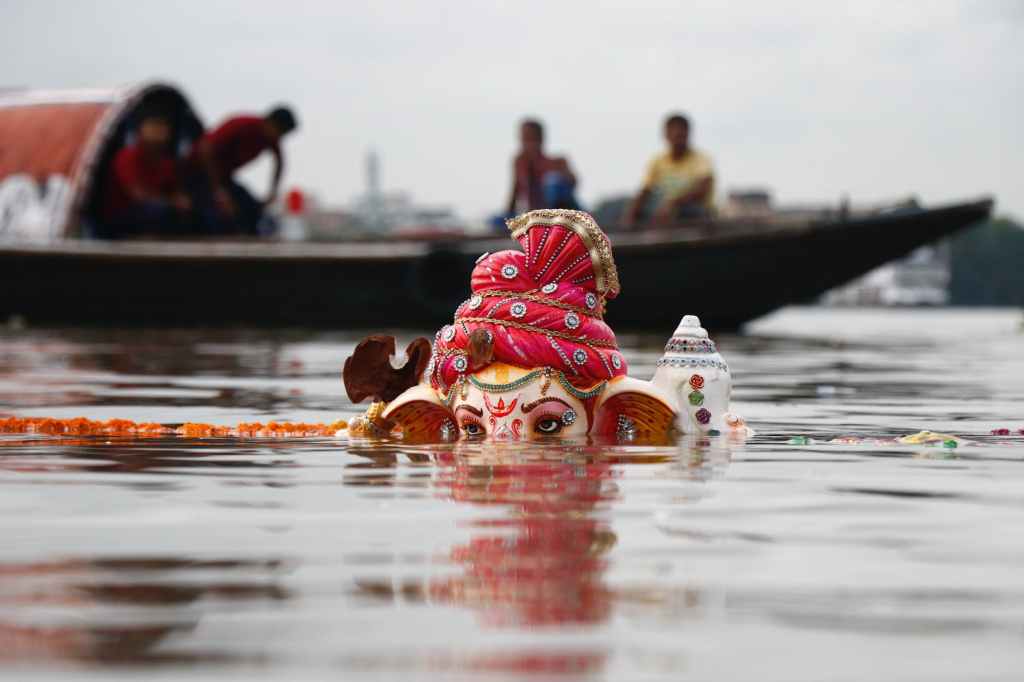
Human beings are not respecting their God then how can you expect that they will give you that respect which you deserve. It can be concluded by example of Ganesh Visarjan when tons of Ganesh idols are been sank in the rivers and later these were all collected by cleaners to take them to the safer place. The idols seems half dissolved in water and some even didn’t desolved because they are usually made of Plaster of Paris (POP). Government had insisted the public to buy idols made of mud instead of POP but for the beauty of the home they are destroying the beauty of nature.

There are very few helping hands which are not enough to protect you or conserve you. But we need more human efforts to protect you from big natural calamities.

To prevent the motherland from being old and unhealthy everyone should stop using plastic and start using alternative methods like paper bags, cloth bags, bamboo bottles, etc. Use of less pollutants should be encouraged and bicycle should be used for smaller distances to prevent the atmosphere from harmful chemicals. Candles and earthen lamps should be lighten up on festivals instead of firing crackers. These little steps by everyone can bring greater changes and will improve your health. If we talk about last year then due to covid-19 when the whole world was locked and everyone stayed at their homes, the ozone layer healed itself and pollution started to decrease.

I hope that my letter to motherland will somehow influence and aware people and hope that they will gain some more respect towards our motherland and I thank you to all those citizens who are engaged directly or indirectly in conserving it and contributing their bit for the world.

This is Ifrah Javed signing off.

It’s okay, if you feel the same.

Best things happens in life unexpectedly, it often catches you off guard and takes you by suprise, and sometimes you are not ready for that, sometimes you are not assure or you can’t trust anyone, as you have bad past, so it takes time to believe.
And then, when you feel the right person came, you get stuck and starts feeling bad for being low and not believing in them.
But it’s absolutely fine, it’s okay to be like that, time will heal everything. It’s then if your partner stand by you through the process, it’s lets you see how much he/she love and honor you.

It’s true “waiting is hard, for the right person,the outcome can be worth it.”

JEE mains 4 attempt postponed

In order provide the gap between JEE mains 3 and JEE mains 4 , NTA has announced to postponed the JEE mains 4 ( may session) .Now Jee mains 4 will be conducted on August 26,27 ,31 , September 1 and 2 ,2021.

The Hon’ble education minister Pradhan says “In view of the persistent demand from the student community and to enable the candidates to maximize their performance, the NTA has been advised to provide a gap of four weeks between session 3 and session 4 of the JEE(Main) 2021 Exam.”

Now the application will be accepted till 20th july 2021.Students whose who have not applied at can do so before 20th july 2021.

The NTA releases official notice stating “With a view to remove hardships caused to candidates and to ensure larger participation of candidates, it has been decided to extend the last date further for: submission of online application form by new candidates and withdrawal/ correction by the existing/ interested candidates for the exam,”

Impulsive Buying

Every person has to shop things from time to time. Shopping is a part of our day to day life because it is requisite to supply our families with the basic necessities. Some do shopping to escape the stress built within them and they enjoy by doing so. They find it as a way of relaxing from the monotonous life. While some consumers plan the things that they need to buy before hand by preparing the list of items for every week/month, they surf through the price tags to afford the good quality products at the lowest price, there are others who indulge in impulsive buying. It is the tendency of a customer to buy goods and services without planning anything in advance. When a customer makes impetuous decisions to buy products off the cuff, it is usually provoked by emotions and feelings. Impulsive buying is not just restricted to few products it can be observed on a wide range of goods like clothing, electronic devices, jewellery, sports pieces, pastries and so on, by the consumers when they get fascinated with a sudden impulse.

TYPES OF IMPULSE PURCHASES:

  • PURE IMPULSE BUYING – The consumers crack their normal pattern of consumption
  • REMINDER IMPULSE BUYING – When the consumers sees items in the shop that they forgot to add to the shopping list before, they purchase them when he/she is reminded by seeing those things displayed in the stores.
  • SUGGESTION IMPULSE BUYING – When the customers notice things that they never used or seen before they plan to buy them at the moment by a conviction that it would be very obliging.

Dealers try to exploit this behavior of the customers to promote their sales/services. The hyper markets tries to captivate people from the entrance of their space. They provide a great window display which increases the curiosity of potential customers, introduce combo packs using the demand of the primary products for the sale of secondary products, work with brands, offer suggestions with new products and influence the mind of customers and such plentiful tricks. Marketing companies are more likely to get benefitted because of this trait because customers end up purchasing products even without any actual intent of doing so.

Some of the customers even realize this when half of the wallet is swiped off as they return back to home ending up with random products which may not be of a great use to them. A study published in the June 2008 issue of the Journal Of Consumer Research suggests that consumers are more susceptible to impulsive buying from one brand over another when distracted while shopping. Consumers are also likely to make an impulse purchase, when a consumer perceives that the environment is over stimulating. Emotional appeal contributes largely to impulsive buying. Scientists state that this happens because some items help us feel better and temporarily dampen our unhappiness. Some customers want to stock up things even when there is not an immediate need for them. Many get attracted on the spotting of discounts on products and at times our brain get fooled by the idea that we are getting a good deal and get defeated.

How to get rid of impulsive buying ?

  • Design a budget and cling to it. A budget doesn’t all of a sudden save all your money we should sincerely stick to them. If not planned for a budget don’t go in for spending money.
  • Try not to shop when you are emotional. It takes an major part in triggering a person to go for an impulsive buying. We just buy things in the thrill of the moment and later realize the unnecessary investments made. Retail therapy just makes you feel goo at the spur of the moment.
  • Have a clear monitor on the budget and savings and review it every month. By this we can avoid the dispensable products.
  • When shopping on a larger basis find support and accountability which can go a long way in refraining us from impulsive buying.
  • When tempted to buy a new product go through its reviews and we can realize the worth of buying such products.

EDUCATION DEVELOPMENT DAY IN TAMILNADU!!!

Though many National leaders rendered their selfless service to our country, one among them to be noted was the Kingmaker Kamaraj. K. Kamaraj, familiarly known as Kamarajar was an independent activist and the former Chief Minister of Tamil Nadu. He was popularly known as the Kingmaker of India during the 1960s. He supported Lal Bahadur Shastri, to be the President of India after the death of Nehru. After the sudden dismissal of Lal Bahadur Shastri, he supported Indira Gandhi to be the President of India. He was a man of simplicity and known for his best leadership in the development of Tamil Nadu. The Midday Meals Scheme introduced by him was very popular in India. He was popularly known as Karmaveerar, KalviKan Thirantha Mudhalvar, etc.

K KAMARAJ – Former Chief Minister Of TamilNadu

Kamaraj was born on 15th July 1903 at Virudhunagar in TamilNadu to Kumarasamy and Sivagami Ammal. His birth name was Kamatchi and later changed to Kamarajar. He studied primary education in a traditional school and he was to drop out because of his father’s death to support his family. He had a younger sister named Nagammal. He worked in his uncle’s shop and begun to attend political meetings and common meetings related to Home Rule Movement. He developed his interest in politics by reading daily newspapers. In 1920, at the age of 18, he became a very enthusiastic person and joined Indian National Congress. He organized public meetings for leaders in Virudhnagar and was very eager to meet Mahatma Gandhi. As he wished, he met Gandhiji for the first time in the meeting. Kamaraj went to jail for two years for taking part in ‘Salt Sathyagraha’ led by C. Rajagopalachari at Vedaranyam.

At the age of 34, he contested in the Legislative election for the first time and marked his first victory at Sattur in 1937. He stuck by the principle ‘ One should not accept any post/leadership to which one could not do full justice ‘. In 1954, Kamaraj became the Chief Minister of Tamil Nadu. Various schemes and deeds introduced by him as a Chief Minister are as follows:

  • He removed Hereditary Education Policy introduced by Rajaji.
  • He reopened more than 12,000 schools during his leadership as a Chief Minister.
  • Education and trade hiked during his period.
  • Kamarajar aimed to eradicate illiteracy and introduced compulsory education. The literacy rate was 7% during the British period but during his period, the literacy rate increased to 37%.
  • He also introduced the Midday Meals Scheme to provide atleast one healthy meal per day to the poor and needy children. He introduced the uniform scheme to the school children to eradicate the germination of caste-based flaws in young minds.
  • He built several irrigation canals during his period. He built nine dams which are appreciated till now and they are as strong as him.
  • Huge investment industries such as Neyveli Lignite Corporation, BHEL, etc. were started during his period.

He has been the Chief Minister of Tamil Nadu for three consecutive terms, by the victory in 1957 and 1962. His ruling period was known as the Golden Age of Tamil Nadu. Kamaraj was a great follower of Mahatma Gandhi, yet to this fact, he died on 2nd October 1975 during his sleep in his native Virudhunagar. He was awarded ‘Bharat Ratna’ posthumously in 1976. The Chennai Airport is named after him as Kamaraj Terminal.

His birthday is celebrated as ‘ Education Development Day ‘ in Tamil Nadu every year. Though he died, his good deeds remain in the hearts of the people.

Intelligence plus character – that is the goal of Education.

– K Kamaraj.

Doping – How is it Affecting Sports?

“Science has learned recently that contempt and indignation are addictive mental states. I mean physically and chemically addictive. Literally! People who are self-righteous a lot are apparently doping themselves rhythmically with auto-secreted surges of dopamine, endorphins and enkephalins. Didn’t you ever ask yourself why indignation feels so good?”

~ David Brin

Introduction

Doping in sport is a widespread problem not just among elite athletes, but even more so in recreational sports. In scientific literature, major emphasis is placed on doping detection, whereas detrimental effects of doping agents on athletes’ health are seldom discussed. Human growth hormone also increases muscle mass, although the majority of that is an increase in extracellular fluid and not the functional muscle mass.

The term doping is widely used by organizations that regulate sporting competitions. The use of drugs to enhance performance is considered unethical, and therefore prohibited, by most international sports organizations, including the International Olympic Committee.

History

According to the World Anti-Doping Agency (WADA), the term “doping” probably comes from the Dutch word “dop,” an alcoholic beverage made of grape skins that was used by Zulu warriors to make them stronger in battle.

Ancient Greek athletes used special diets and stimulating potions to improve performance, and 19th century endurance athletes indulged in strychnine, caffeine, cocaine and alcohol.

The American specialist in doping, Max M. Novich, wrote: “Trainers of the old school who supplied treatments which had cocaine as their base declared with assurance that a rider tired by a six-day race would get his second breath after absorbing these mixtures.”[8] John Hoberman, a professor at the University of Texas in Austin, Texas, said six-day races were “de facto experiments investigating the physiology of stress as well as the substances that might alleviate exhaustion.”

Effects of doping in sports

It builds muscle but causes abnormal growth, heart disease, diabetes, thyroid problems, hypertension, blood cancers and arthritis. Other adverse effects include joint pain, muscle weakness, visual disturbances, enlarged heart and diabetes.
Other side effects include:

  • Heart palpitations.Heart rhythm abnormalities.
  • Weight loss.
  • Tremors.
  • Mild high blood pressure (hypertension)
  • Hallucinations.
  • Stroke.
  • Heart attack and other circulatory problems.
  • Constipation.Skin rash or dermatitis.
  • Diarrhea.
  • Dizziness.
  • Drowsiness.
  • Dry mouth.
  • Headache.
  • Insomnia.

UFC ( Ultimate Fighting Championship ).

In December 2013, the UFC began a campaign to drug test their entire roster randomly all year-round. Random testing, however, became problematic for the promotion as it began to affect revenue, as fighters who had tested positive would need to be taken out of fights, which adversely affected fight cards, and therefore pay-per-view sales.

According to Steven Marrocco of MMAjunkie.com, about 31% of UFC fighters subjected to random testing since the program first started have failed due to using performance-enhancing drugs. That is approximately five failed tests for every sixteen random screenings.

From July 2015, the UFC has advocated to all commissions that every fighter be tested in competition for every card. Lorenzo Feritta, who at the time was one of the presidents of the UFC, said, “We want 100 percent of the fighters tested the night they compete”. Also, in addition to the drug testing protocols in place for competitors on fight night, the UFC conducts additional testing for main event fighters or any fighters that are due to compete in championship matches.

Link

Assam-Mizoram border dispute

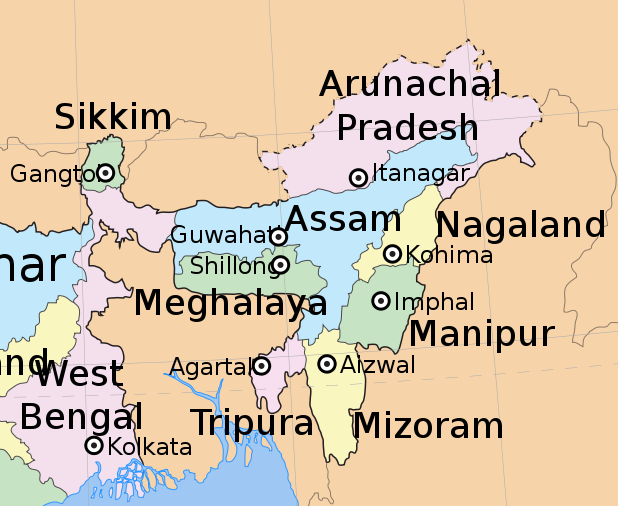
On July 11, 2021, two grenade explosions occurred in Cachar district in Assam near Mizoram border, targeting construction workers. This attack was followed by counter attack from the people of Assam. The main reason appears to be the infamous, unrelenting Assam-Mizoram border dispute.

Image source: https://commons.wikimedia.org/wiki/File:Northeast_india_map.png#filelinks

The Assam-Mizoram border dispute, one of the many state border disputes in India, dates back to the colonial era when several state boundaries were demarcated to suit the British administrative needs. The states of Assam, Meghalaya, Nagaland, Mizoram and Arunachal Pradesh were earlier collectively known as the ‘Greater Assam’. The regional and cultural diversity in this large state was the cause of internal conflict in the state. Also keeping in mind the 1962 border dispute with China, the division of state was essential for national integrity as well as internal peace.

So, the state of Assam was disintegrated to form Arunachal Pradesh(union territory in 1972 and upgraded to a state in 1987) , Nagaland(1987), Meghalaya(1972) , Mizoram(UT-1972 and state-1987) . However, Britishers passed two notifications- 1. The notification of 1875- Defines the boundary between Lushai Hills(present day Mizoram) and Cachar Hills 2. The notification of 1933- Defines the boundary between Lushai hills and Manipur, And thus, when the state of Mizoram was formed, the conflict between Mizoram and Assam started. The state of Assam and Mizoram share a 164 km (approx.) border between Cachar, Hailkandi and Karimganj districts of Assam and Kolasib, Mamit and Aizwal district of Mizoram. Both sides follow a natural border(those of mountains). While disintegrating Assam, the government did not pay due attention to the Tribal realities and ethnic composition. Hence, there continues to be a considerable population of Mizos and Nagas in the Cachar Hills, making it possible for both Mizoram and Nagaland to claim these territories in Assam. Also, the people of Mizoram follow the 1875 notification(they believe the Mizo community was not consulted before issuing the notification) and those of Assam follow the 1933 notification.

This is a long unresolved dispute and its high time that it be solved. Amidst this raging pandemic and its socio-economic implications and growing international tensions, the central government has already got a lot in its plate and dumping these inter-state disputes upon the central government in such times of crisis in no wise move on anybody’s part. And so, the states must themselves come together for a peace negotiation as early as possible or otherwise accept a third party intervention. Or, the central government should revive the inter-state council or set up a zonal council to effectively address these disputes. With the NDA government in power in all these states as well the center, a political solution seems a relatively lucrative option. With growing concerns of Chinese developments amongst several Asian countries, addressing disputes of states that are bound to face Chinese interference via its BRI near India’s North-east becomes all the more important.

CALL FOR A CHANGE

THE WORSE CONDITIONS FACED BY CHILDREN WHO LOST THEIR PARENTS DUE TO COVID-19

We all are aware about the worse situations in INDIA due to new phase of pandemic. We all listened and watched about several heart touching incidents that happened around us, many families has destroyed because of covid-19 but we never think about the survival of children who lost their parents in these situations. Let me show you a video on statistics of children who became orphans because of pandemic.

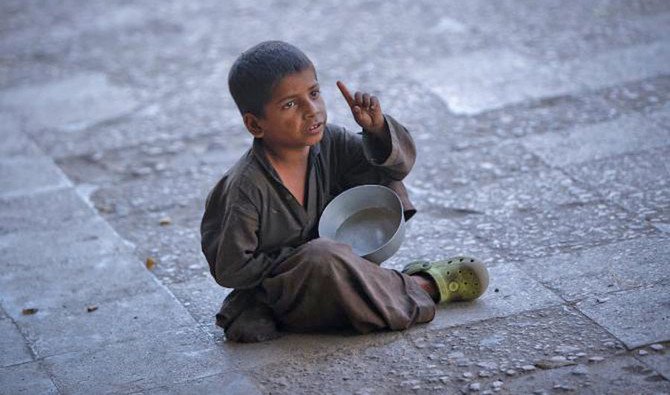
Child hood phase is the critical phase in everyone’s life and it is essential to take care about the child in this phase because in this phase only the personality and emotional resilience will be developed but because of this pandemic situations the children who lossed their families are facing a lot of troubles in the hands of child traffickers and illegal adopters. Let me share you a story about a child who lost his parents in this pandemic and turned as a beggar on the streets.

” Once I encountered a tot on our street, he asked me 5/- to obscure his hunger. I offered him a meal instead of giving him money and later I asked him about the reason why he has turned into a beggar then he replied me that, he lost his both parents a few months ago because of covid virus and no one of his relatives doesn’t like to take care of him and with in few days one of their relatives left him in the bus stop and went away. ” After hearing to his words, I felt bad for the situations he faced with out any takecarer and immediately I decided to make a call for childline number to give him better future. I explained him about what I did for him but initially he felt scared about my proposal but after sometime he realised and felt happy. With in few days volunteer’s of some NGO who received information from childline help center rescued him successfully.

We all crave to sleep like a child. Do you savvy, there are more than twelve million children who can’t sleep due to starving stomach in India and that number has increased much more due to these pandemic situations. ”If God is the one who writes the fate, then be the demigod for these tots.” Childline 1098 is a service of Ministry of women and child development. ” CHILDLINE INDIA” a foundation which is non-governmental organization in India. It operates with a telephone helpline called childline, for children in distress. It is India’s 24-hour toll-free phone outreach service for children.

A single phone call can make a large change in the entire life of a child, It cost’s nothing guys for making a phone call guys but it can give a new life to the child who is in tough situations. We all know the role play of youth in building a nation and also we know that, today’s children are tomorrow’s leader’s. Let us all unite and play as a role of gardener’s of a garden named as India and fill it with blossoms of children’s smile.

I think I have sown a seed of spreading awareness about rescuing the homeless children using the helpline number of childline India. Remember guys nature of helping others will give us a lot self satisfaction. Guy’s please Join your hands to continue this chain, So that we can at least save few children from our side. Finally, Guys do remember the childline India helpline number (1098) to save the distressed children in our surroundings.

” LET US CHANGE!
BE FOR CHANGE! & CALL FOR THE CHANGE! ”

Right to repair

Right to repair is the movement started by the activist and oragination all around the world. Joe -Biden ,US president ,signed an executive order on Federal Trade Commission to institute rules to curb anticompetitive restrictions that limit consumers’ ability to repair gadgets on their own terms. The Uk too had introduced this .

The agenda of the movement is to get compinies to make spare parts of the gadget and the consumers can repair them rather than replacing the product.

Large tech compinies like Apple, Microsoft,Amazon and Tesla are opposing the movement stating that its opening up their intellectual property to third party to repair them.

Gender inequality

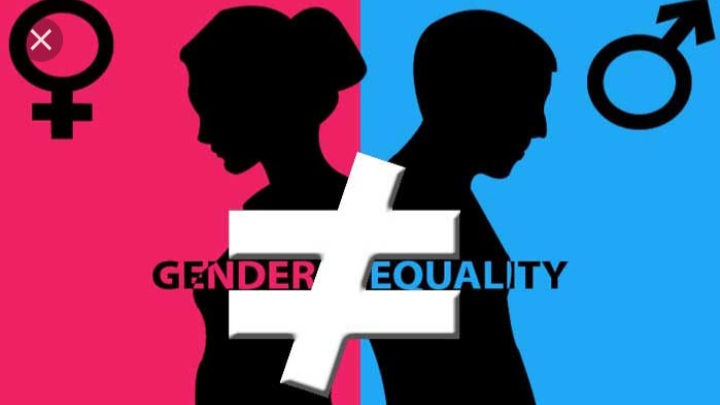
Discrimination is the state when all individuals are not treated equally and not given equal rights. Every individual in the community yearns for equal status, opportunities, and equal rights. People generally say these days that everyone is treated equally but they are not. Discrimination usually exists because of cultural differences, geographical differences, and gender. Inequality on the basis of gender is something that is not appreciated, but it is seen many times in many companies. There are many areas where equal opportunities are not provided to women.

We are in the 21st century, and even now, women are not treated equally as men. It is generally believed that women are more talented than men, and it has been proved many times, but society is not yet ready to accept this fact. Gender equality is the term used when equal opportunities in the fields of politics, economics, education, and health are provided to both men and women.

As per the World Economic Forum’s gender gap ranking, India holds the rank 108 out of 149 countries. The rank should be a major concern in the country as it signifies the immense gap between the opportunities given to women when compared to men. The structure in India is such that women are neglected in many fields like education, health, finance, etc. They are just limited to household chores which should not be the scene here. There are many places in India where women are considered as a burden and they are not allowed to go to school and study as well. Also, a preference for sons prevails in many areas in India.

The seven important forms of gender inequality :

1 . Women works Longer than Men :

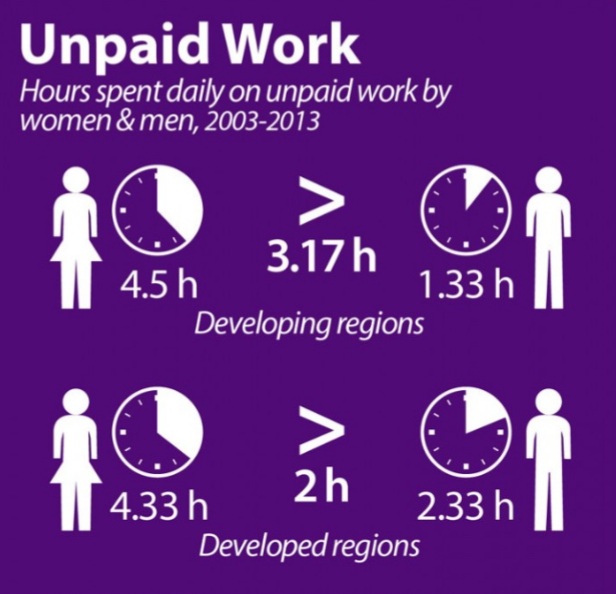
In most of the societies the male – stream is the main stream who argues that women have comparative advantage in household non- market production, like cooking and cleaning for the family that cant be called emotional and personal caring work. Based on this thinking, household jobs are then asymmetrically distributed. Women are more valued in home. Men are specialised in market- baesd production. Thus, being the bread- earners, males enjoy both power and status.

2. Inequality in Employment and Earnings :

Historically, men have greater participation in work outside home than women. But women ( particularly of poor households) share unequally household duties in addition to economic production. Thus they work longer than males. This kind of ‘ division of labour’ may be seen as the ‘ accumulation of labour’ on women, as described by Amartya sen. Household activites are often viewed as ‘ sedentary activites’ which require less ‘ calore’ to gain energy.

3. Ownership Inequality :

A case of social inequality. Let us turn to another kind of inequality, called ownership inequality a classic case of social inequality. In most of the societies, ownership over property and means of production rests mainly on male members . The law of inheritance provides such ownership rights on male child. Such denial coming out of hierarchical dualism within the family not only reduces the voice of women but also prevents them from participating in commerial, economic and social activites.

This kind of social deprivation means absence or lack of capability or because of ‘capability deprivation’, women are subject to various kinds of exploitation and unfreedoms. Social inequality distorts the process of development. Unfortunately, ownership inequality in any country is not of recent origin. In her earlier life, a woman comes under the influence of her father, then husband as she enters a married life and finally, under sons ownership right over property is skilfully avoided. A telugu proverbs corraborates this understanding: ” Bringing up a daughter is like watering a plant in anothers courtyard.”

4. Survival Inequality :

Another crudest from of gender disparity is the unusally high mortality rates of women , though biologically, women live longer than men! Thus more boys than girls are born evrywhere leading to a ‘ deficit’ of women and a ‘ surplus’ of men. In developed countries beacuse of absence of gender bias in health care and nutrition, women outnumber men. In Europe and in north America, 105 or more girls are born per 100 boys. Such high female- male genderd survival rate in different age groups.

5. Gender Bias in the Distribution of Education and Health :

Health and education are the major forms of human capital are realted to economic development . Human capital gets accumulated as a society advances in education . The contribution of human capital towards Japan’s remarkable economic progress attracts our attention . Improvement in health capital also improves the return to investments in education .

However, one finds a huge education and health gaps between developed and developing countries. In recent times, despite a large increase in econoc advancement on times, despite a large increase in economic advancement in asia and africa, these countries lag far behind the developed countries in terms of educational attainment particularly in respect of women’s education. Gender disparity not only hindrrs economic progress but also exacerbates social inequality.

6. Gender Inequality in Freedom Expression :

Let us talk about gender inequality beyond economic issues or factors. Women are not only subject to income or asset inequality but also in terms of freedom and power deprivation of women goes beyond one’s imagination. They lack not only economic freedom at home because of absence of autonomy in house hold decisions, limited or poor wages earned but also lack any freedom in airing opinions over education of children.

In some backward poor societies the right of women giving options is completely denied. Such un – freedoms, however, are not uncommon even among the educated elites who enjoy enormous power and authority in the male domined society. Historically , this sort of law socioeconomic status of women has been continuing nowasdays.

7. Gender Inequality in Respect of viloence and victimisation :

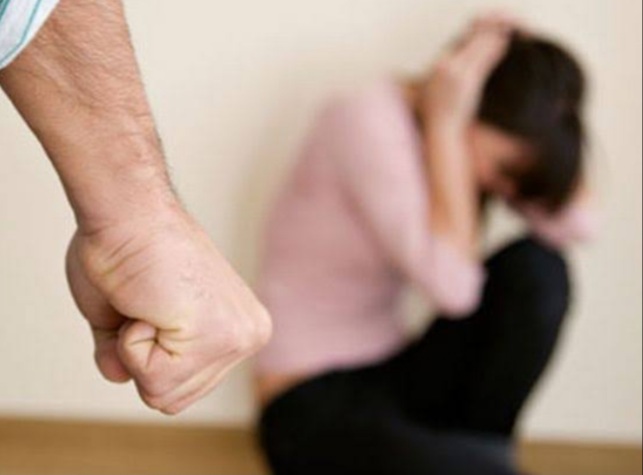
Finally, anti – female bias starts before the girl child is born and this attitide of the society a female member carries throughout her life. It is because of the unequal sharing of income, property, household benefits . Women are subject to both physical and sexual violence – the oppsite of freedom, and an extreme form of coercion. This is common for both poor and not too much uncommon in rich countries as well as among rich people. One in three women in the word is beaten or raped during her life times.

Dowry harassement is considered as an ‘ instrumental use’ of violence. Dowry death is the most serious form of domestic violenece. Wife beating is not uncommon. Sexual violence is an obnoxious form of human rights violation.

Specifically, public health can contribute to reducing health inequities by integrating health equity considerations into policy and programs, collebrating with other sectors to address inequities engaging with communities to support their efforts to adress inequities, identifying the reduction of health inequities.

Reducing inequality requires transformative change. Greater efforts are needed to eradicate ectreme poverty and hunger and invest more in health, education, social protection and decent jobs especially for young people, migrants and other vulnerable communities.

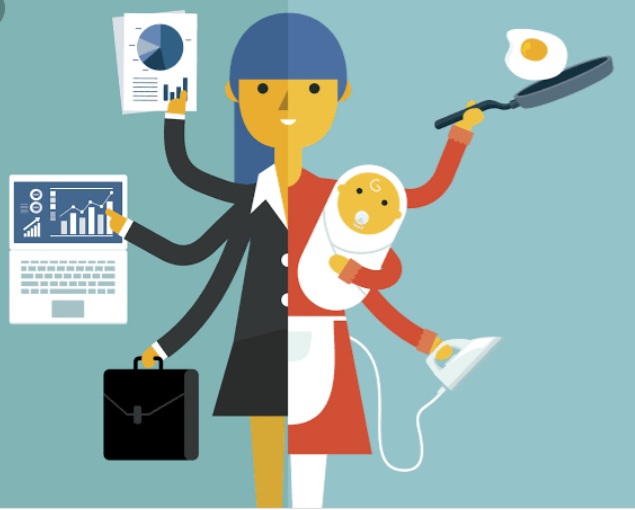
We should understand that women are the part and parcel of any family. When it comes to flexibility, they can manage their home and offices at the same time. If equal opportunities are not given to them, they will be led down and won’t be able to achieve big milestones which they are obviously capable of.

GENDER INEQUALITY

Gender is one of the major sources of inequality in the world today. Girls are usually deprived of their rights and are likely to suffer from abuse and violence.

Discrimination based on gender gives rise to food insecurity, health risks, and exclusion from several opportunities. The United Nations (UN) estimates that 70% of the 1.3 billion people in poverty globally are women. According to World Food Program USA, more than 60% of the world’s hungry are women and girls, in nearly 2/3rd of countries, women are more likely than men to report food insecurity and one in three women with anemia are left untreated.

In a lot of countries women are not allowed to pursue higher education and they are married off early. In addition, domestic violence is a major problem in many countries including India. The women get beaten up by their husbands as men think they are superior to their wife and many women stay in abusive relationships and don’t speak up because of the fear of society.

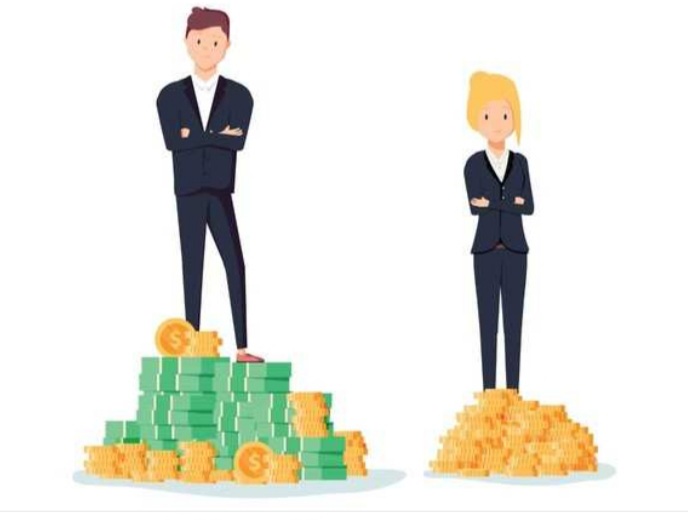
Sometimes women face discrimation even at work, women who do actually work get paid less than their male counterparts and are disproportionately impacted by poverty. It is just unfair to pay someone less for the same work because of their sex. Therefore, we see how women empowerment is the need of the hour. We need women empowerment so that these women can speak up for their rights and never be a victim of injustice.

Women have suffered a lot at the hands of men. In earlier times, women were treated as non-existent and as if all the rights belonged to men. With the passage of time, women realised their power and began the revolution for women empowerment. Women’s empowerment can be defined as empowering the women to make their own choices, to instil a sense of self-worth and to influence social change for themselves and others.

Promoting women’s empowerment has emerged as a major global movement and has been continuously gaining momentum. While the western countries are still making progress, third world countries still fall behind in empowering the women.  While there has been progress with the passage of time, even then women continue to face discrimination and exploitation in every part of the world.

Women can be empowered through government schemes as well as on an individual basis. The people of the society and government must both come together to make it happen.  At the societal level, we should start respecting women and encourage them to take up jobs, higher education,etc. Women should get equal opportunity in every field, irrespective of their gender. Various programs or schemes must be made available for women so they can be learn skills to fend for themselves in case they face financial crisis.

Today, more than ever, women enjoy their rights. However, there are many women who are still fighting to come out of the cluthes of patriarchy and there is a long way to go.