Right to repair

Right to repair is a proposed legislation/movement that allows consumers the ability to modify and repair their own electronic devices.  

Planned obsolescence is the practice when goods are manufactured with a pre-determined expiry date aimed at forcing consumers into repeat purchases. The term was first termed in the 1950s by American industrial designer Brooks Stevens. This practice was introduced in the advent of mass-produced manufacturing at the start of the 20th century. But the practice was not as severe and prevalent as it is in recent years. One of the recent changes in the product design has been to make the goods very hard for end consumers to repair.

For instance smartphones, a couple of years back had a user-replaceable battery but with more features crammed into the chassis of a phone. Manufacturers have not only made it unnecessarily difficult to replace the battery but also to even open the panels of smartphones. With the recent MacBook Pro releases, Apple has soldered the SSD (Solid State Drive) on the motherboard. The reasoning for justifying the soldering by Apple is better reliability and the thinness of the laptops. But there is also another aspect. Apple’s business model is about selling laptops and not upgrading the systems. Upgrading an SSD can be a potential loss for them and to counter that Apple might have decided to make the laptop non-upgradable. The problem is that even SSDs are definitely much more reliable than mechanical hard disks but SSDs still fail and combining them with the motherboard means that if one of the two fails, the whole system fails. This also makes it much more difficult for end-user to repair their laptop. It also becomes a problem for the third-party repair business to access the repairing of these devices. This is just one of the instances of how access to repair is being restricted by the manufacturers but various companies are attempting to follow similar practices with varying degrees.          

With the introduction of newer and sophisticated technological components in electronic devices, it has become much more complicated to operate these modern devices. To reduce the access to repair these devices, manufacturers state that repairing the devices might violate their “Proprietary” rights. These repair limitations are a critical problem for not just the first owners but also for the second-hand/ used market. Due to proprietary information and diagnostics tools while evaluating a device. It has become difficult for third parties and end-user to even attempt the repair their own devices that they own. It took Apple the lawsuit to introduce the battery replacement program after the fiasco of the performance throttling issue on older iPhones. It clearly indicates that companies do not like it when consumers try to fix their products and companies deliberately try to reduce the user experience of older devices so that they can sell the newer models to maximize profits. With a monopoly on repair manufacturer’s intent is to lock down the user to the official service centers which can be significantly expensive than third-party service shops.

The right to repair movement intends to enact power into the consumer’s hands for the devices that they own. This means that consumers can open and modify everything they own. Also to root, unlock or jailbreak the software in their devices.

References:
Indian scientists discover novel plant species in Antarctica named after the Hindu goddess, Bharati.

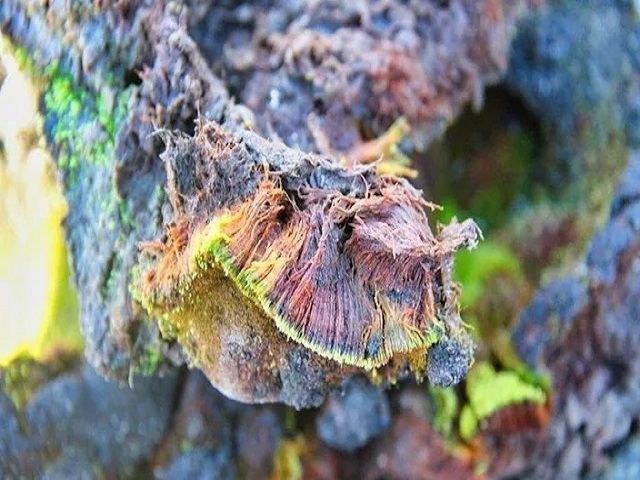
Polar biologists found a species of moss during their search to the ice-covered continent in 2017. It took scientists five years to confirm that the species had been discovered for the first time.

The Indian biologists, from the Central University of Punjab, have named the specie Bryum Bharatiensis(Bharati which means learning) . This arduous process of identification involved the collection of samples, and then five years of sequencing DNA and comparing its forms with other plants.

Prof Felix Bast, one of the six-month-long expedition scientists to the continent discovered the dark green specie at Larsemann Hills, in January 2017, while inspecting the Southern Ocean, located near Bharati, one of the remotest research stations in the world.

 “The big question was that how does moss survive in this landscape of rock and ice landscape,” Prof Bast said as per the fact that plants needs nitrogen, along with potassium, phosphorus, sunlight and water to survive. Which here works with the fact that only 1% of Antarctica is ice free.

Later, scientists figured out that this moss mainly grew in areas where penguins bred in large numbers. Penguin poop contains nitrogen. “Basically, the plants here survive on penguin poop. It helps that the manure doesn’t decompose in this climate,” said Prof Bast.

Now comes the sunlight. Scientists say they still fully don’t understand and is unsure with fact that how the plants survive under thick snow during the six winter months with no sunlight and temperatures dropping to as low as -76°C.

They claim that the moss “dries up to a dormant stage, almost to a seed” at this time, further they germinate again during summer in September when they start getting sunlight again.  And then the dried up moss absorbs water from the melting snow.

Later after collecting the required samples, Indian scientists spent five years sequencing the plant DNA and comparing its form with other plants.

“Antarctica is getting greenified. Many temperate species of plants that previously could not survive in this frozen continent are now seen everywhere because of the warming up of the continent,” said Prof Bast.

The scientists were highly worried about the “alarming evidence” of climate change that they saw during the inspection. They say they came across melting glaciers, crevasse-infested ice sheets and glacial melt-water lakes on top of ice sheets.

Bharati is located between Thala Fjord and Quilty Bay, in Antarctica. The specie has been named after the Indian research station called Bharati.

“The finding that Antarctica was greenifying was disturbing,” said Prof Raghavendra Prasad Tiwari, a leading biologist and the vice chancellor of the Central University of Punjab.

This is the first time India has discovered a plant species in the four decades since it first set up a research station in the continent. A proud moment for Indians.

Demand and Supply

What is Demand?

Demand refers to the quantity of goods that consumers are willing to buy at given level of income during a given period of time. In order to understand the relationship of demand with different variables, let’s take a look at the factors that can influence demand.

Factors affecting demand

  1. Price of the Given Commodity: One of the most important factors affecting the demand of the commodity is its price. An inverse relationship exists between price and demand of a commodity. This means that as the price of a good increases its demand falls due to fall in the level of satisfaction of the consumer.
  2. Price of Related Goods: Demand of a product is also determined by the prices of other related products. Related products include Complementary and Substitute goods. Complementary good refers to goods that are usually bought together by consumers. For example, pencil and erasers. If the price of pencils goes up, the demand for erasers also decreases because they are used together (direct relationship). Substitute goods refer to goods that can replace each other. For example, Coke and Pepsi. If the price of Coke increases, the demand for Pepsi would increase. (inverse relationship)
  3. Income of the Consumer: Income of a consumer plays a major role in determining the demand of the product. Higher level income groups generally have higher demand than lower level income groups. If the income of a consumer increases, his demand and purchasing capacity also increases (direct relationship).
  4. Tastes and Preferences: Tastes and preferences of the consumer directly influence the demand for a commodity. They include changes in fashion, customs, habits, etc. An individual who prefers rice over bajra might not get affected by the increase in the price of rice where as a small increase in price of bajra will discourage them to buy bajra.
  5. Expectation of Change in the Price in Future: If the price of a certain commodity is expected to rise in future, then consumers will demand more of that product in the future than they normally would. There exists a direct relation between expectations of change in prices in future and its demand in current period of time.

What is Supply?

In economics, supply is the amount of a resource that firms, producers, laborers, providers of financial assets, or economic agents are willing and able to provide to the marketplace or directly to another agent in the marketplace.

Factors affecting Supply

  1. Price of the given Commodity:
    Price of a commodity is one of the most important factors which determine the supply of a commodity. Generally, price of the commodity and its supply are directly related, that is as the price of product increases, its supply will also increase and vice-versa. The price rise in the market promotes the producers to produce more, in order to earn more in the market.
  2. Prices of Other Goods:
    The quantity supplied of a commodity depends not only on its price, but also on the prices of other commodities. Increase in the prices of other goods makes them more profitable in comparison to the given commodity. As a result, the firm shifts its limited resources from production of the given commodity to production of other goods, reducing its supply (Inverse relationship).
  3. Prices of Factors of Production (inputs):
    If there is a rise in price of factors of production like:- land, labour, capital etc. the cost of production also increases as a result of which the product becomes less profitable and suppliers might reduce the production of that commodity and vice-versa (inverse relationship).

4. State of Technology: Advancements in technology plays a major role in determining the supply of the product. Introduction of new technology in the market reduces the cost of the product which increases the profit margin and induces the supplier to increase production of the product.

  1. Government Policy (Taxation/ Subsidy Policy):
    Increase in government taxes reduces the profit margin of product due to increase in the cost. This demotivates the supplier as a result of which he will reduce the production of that particular commodity (inverse relationship).

Ghost Villages of Uttarakhand

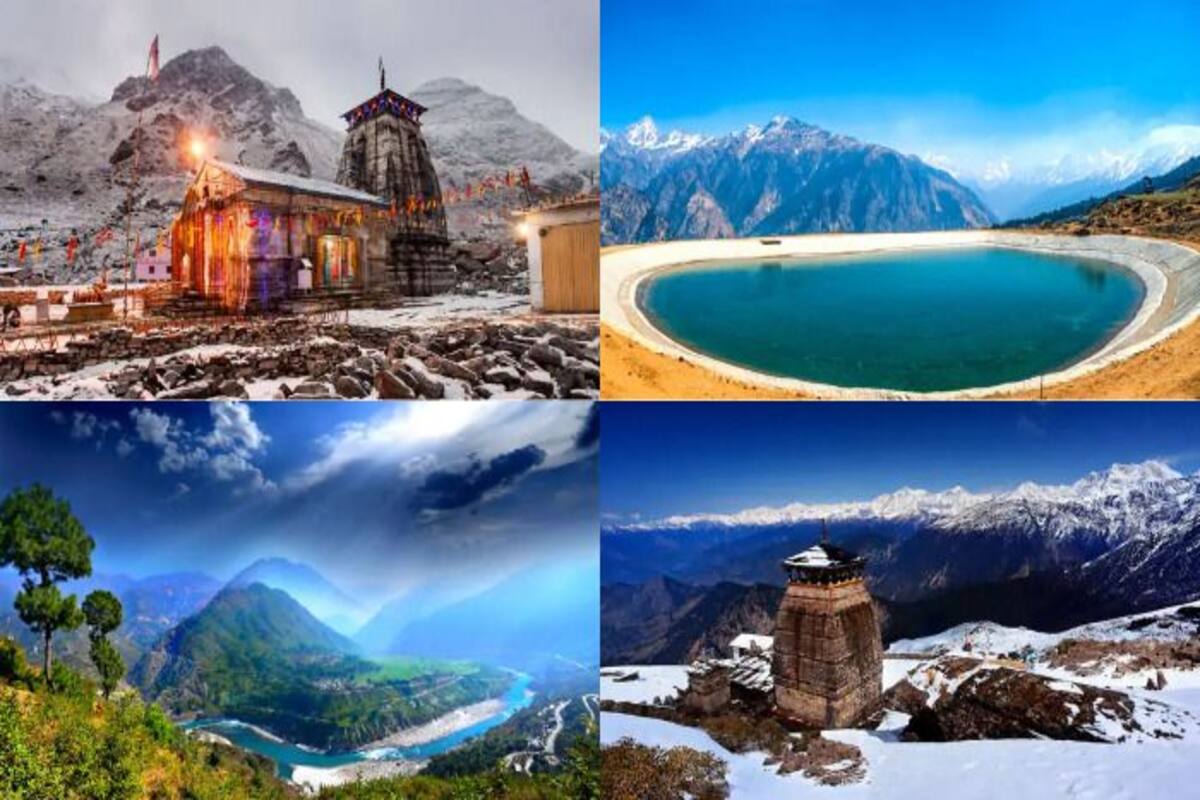
Uttarakhand fondly known as the Abode of God due to its rich cultural and religious history which is still stored in many temples sprawled across the state is also the origin of river Ganga and Yamuna , two of the most sacred rivers of India. The shrine of Baba Amarnath and Kedarnath in the state makes it a famous destination for pilgrims from all over the world not to mention the large number of tourists it attracts every year due to the picturesque scenery which the state offers . Despite such rich heritage of the state, in the last two decades it has faced a major issue where out of 16.739 villages in the state, 1702 villages were declared “Ghost villages” as they have no inhabitants. Whereas about 405 villages have less than 10 people as its residents( The data is based on the Census of 2011). The question is that why the area which was separated from Uttar Pradesh to form a separate state of UTTARAKHAND so that the people here may have better growth opportunities, has seen such a drastic decline in population over the last decade. Is there really some ghost as the title “ghost village” suggests that has occupied the place of the human beings? What is the reason that despite such a large number of tourists and pilgrims visiting the state every year, the villages here which act as a treasure chest preserving the culture, the heritage and the history of the place, are empty? This blog will answer all these questions.

Why are the villages devoid of any human habitant?

People from the villages have migrated to other states and other cities of Uttarakhand such as Rishikesh , Haridwar , Dehradun etc. in search of employment with an aim to have better lives. Initially, it was just the youngsters who would migrate to other places for earning but eventually as the time passed and the villages remained remote, elders also started to shift simultaneously as the cities offer better healthcare facilities. Imagine the emotional turmoil which people go through when they have to leave their homeland, their birthplace just to feed themselves.

The reasons for migration

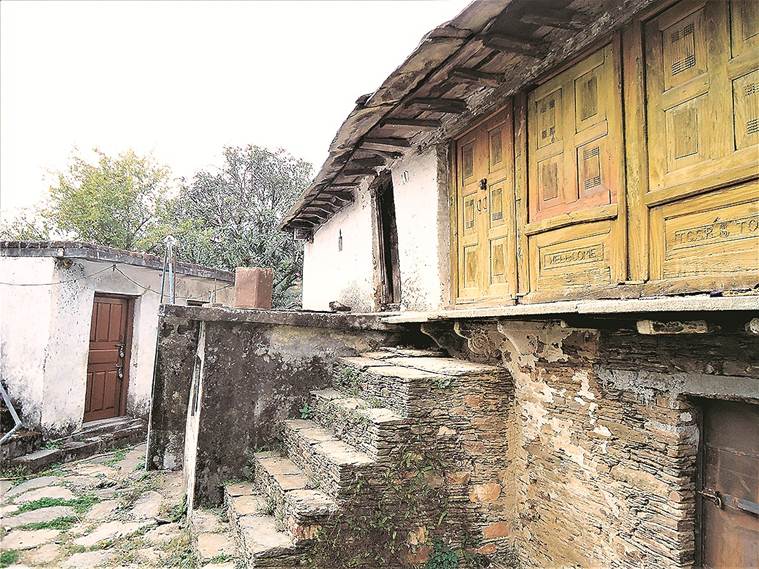
  • The villages in Uttarakhand are least developed with many villages still having a narrow risky trek which connects them to the main road. Electricity till a decade ago was foreign to these places. Authorities pay absolutely no attention in catering to the needs of the people living there. Though the state is blessed with two of the most sacred rivers, yet the residents specially in the villages have to struggle even for water. Urbanisation in the hills brought with it such affects that many villages which were blessed with the streams full of water almost the entire year many decades back are now witnessing dried streams and barren land . Though the famous tourist places of the state, such as Almora, Nainital, Rishikesh, Haridwar, the capital city Dehradun etc. are provided with the facilities which ensures the safety and well being of humans, villages are still untouched.
  • Safety is another big issue which the residents have to face. The villages which are located amidst the dense jungles of the Himalayas are home to many wild animals many of which are man eaters. Even if the animal is not a man eater, wild animals such as wild boar , wild pig destroys the crops leaving no source of living for the people.
  • Since the entire state is situated in the mountains, the paths there are steep which leaves scope only for terrace farming and does not allows the growth of many crops. The crops which are grown are either destroyed by wild animals or by the famous mountain rains with very little left to fill the stomach with. Owing to these reasons, people have gradually stopped farming. Also, the extremely effective implementation of welfare schemes like the Mahatma Gandhi National Rural Employment Guarantee Act (MGNREGA) which allows the people working as laborers under the MGNREGA projects give them enough amount for sustenance and the enforcement of the food Security Act gives them enough ration to survive with . The reasons mentioned under this bullet point can be considered as the reasons for the decline of farming which was the sustenance profession of the state since years and validates the moving of people in search of better life opportunities.
  • Also, the people in the villages feel that City life is a heaven with all sorts of opportunities something which is rarely visible to them in the naturistic villages. Litle did they realize , that the reason for a large number of tourists coming to the state every year is their want to escape from the monstrous daily problems of the city life. How ironic it is , that geography has created such a vast opinion between two sets of human beings each one thinking that the other set resides in heaven! Well, this is how life is full of oxymorons and ironies!

Is the presence of ghost villages good for the state?

The answer is a big NO. Experts say that migration leads to abandonment of villages which causes degradation of land, makes villages unlivable, and further fuels migration. In fact, the migration to cities has been in such great numbers that Uttarakhand has recorded the highest increase in the share of urban population in any of the Himalayan states of the country while its rural decadal growth rate is the lowest. The inter state migration which was at its peek during the early 2000s when the state was newly formed was transformed into an intra-state migration after the devastating floods which destroyed Uttarakhand in 2013. The consequences being that the cities are overpopulated as they had no proper arrangements made to accommodate such a large number with the standards of living deteriorating for everyone. Whereas the villages have lost their mark.

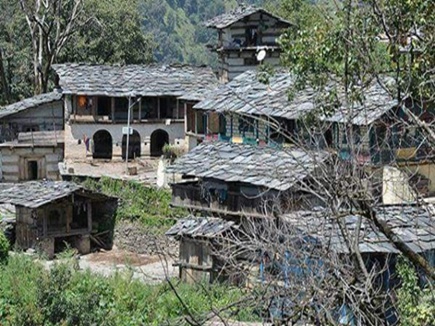
The empty village homes are now covered with the wild shrubs and has increased the area of exploration to the wild animals such as tigers and leopards many of which are man eaters. The increase encroachment of animalsin the human settlements may prove fatal to the villages which are still lively though in less numbers.

Owing to the nationwide lockdown in 2020, many of the migrants have come back home to resettle in their roots and are now trying farming which is more difficult now owing to the covering of the farming areas by the wild shrubs which are difficult to remove. The resettling phase will again be a difficult one as these villages are still the same with no better facilities.

Environmentalist Anil Joshi, who in 2015 undertook a 20-day march across Uttarakhand as part of the Gaon Bachao Andolan (“save village movement”) to address the issue of migration from villages says ” we should ask the government why there is still a need to migrate”. His words hits a deep chord forcing us to think, why is it this difficult to fulfill the basic needs of the simple villagers so that they can stay close to their roots saving our culture and our future.

ALL THAT GLITTERS IS NOT GOLD

The line “all that glitters is not gold” occurs in William Shakespeare’s well-known play The Merchant of Venice”. It comes as a shock to Prince of Morocco when he, led by the exterior glitter of gold, chooses the gold casket and loses the lottery of caskets. The line has since then become a proverb. It means, in simple words, that appearances are deceptive. The seemingly beautiful and valuable object may turn out to be something most ugly and worthless.

Therefore, like all proverbs, ‘all that glitters is not gold contains the time-tested truth. It enjoins upon us to be cautious in our approach while judging the worth of a person or object. We should not be led by external appearance. A seemingly good apple may be rotten at the centre. A person may smile and smile, and yet prove to be a villain. An extremely beautiful face of a woman may hide her ugly, vicious character. A charming Cleopatra often proves to be a siren.

It is, of course, human to be attracted by good and beautiful persons and things. When a young man falls in love or goes to select a life partner, he is first tempted or repulsed by the outward appearance of the girl. If he does not pause and judge the real character of the girl, he is destined to rue and suffer for his choice throughout his life. So, it is equally true in the case of a girl in the choice of her would- be husband.

There is a beautiful story in the Bible which warns us against falling in to the seemingly attractive exterior. Eve gets attracted to the beautiful and yet forbidden fruit of knowledge (an apple). She fails to resist the temptation of tasting it. The moment she and Adam eat the forbidden fruit, they are thrown out of the Paradise forever. They bring upon them and their progeny (the whole mankind) endless sufferings in many forms.

In our modern world of glitter and glamour, there are many temptations around us. Most of us get attracted to glittering cars and bikes, gadgets and products of several kinds. Youngsters force their parents to buy them, which land their parents in vicious debt circles. The young men and women realise quite late how some of these attractive gadgets tell upon their health and ruin their careers.

Advertisements on the screen and in newspapers often coax people to buy things which are neither worth their money nor as useful as claimed. Most of us are misled by the utility of some products as they are advertised by some beautiful actresses, popular actors or other celebrities.

Descriptive Writing-How to write, improve English.. creative writing..

Descriptive writing is a tool to make the audience imagine the event or place through your words. Below is a fictional description of visit to a café, mentioning details observed at the place:

A Visit to ” The Blue Café “

It was a regular Sunday afternoon but the discount coupons of The Blue Café on the occasion of their fresh opening, made it special. The café was only at a walking distance from home. The decoration on the entrance of that single-storey building turned out to be a strategy to attract people in the marketplace. Wonder how expensive it would have been to get a shelter on the main road of the city! There used to be a sweet shop before, which the owner sold for being unprofitable. Now it has been reconstructed to cater the demands of a wide range of consumers by offering a variety of food at one place. The café is making way for a large customer base since day one by bringing out luxurious offers for residents nearby.

Sunday was obviously attracting more customers. The guard at the entrance was well dressed and welcoming. The air conditioned hall and sitting arrangements were the most satisfactory. There was plenty of space to dine even on a busy day. The blue lights reflecting from the green walls had a soothing effect on the mind. They were neither too flashy nor too dark. The walls were holding fun and interesting posters compelling visitors to click several photos after lunch.

The tables were made of glass having beautifully prepared menu cards on them which offered a variety of dishes native to different places. The prices were on the peak but the discount coupons had our back for now. The service was fast enough since they had a good number of employees at work. Their uniforms had it written- ‘a day here gives a memory forever’. The kitchen was visible to an extent from the washbasin area. It was well equipped with modern cooking machines arranged in an order; leaving ample space to work. Proper sanitation facilities were provided for the customers which is a key point at public places. The management was really good and the food was delicious. There were free chocolate candies at the table for first hundred customers. The café was new and so was the crockery design. It was majorly a family dine-out at night and attracted young generations the most, during the day. The music at the background was pleasant and refreshing. The place is best suited for the working population since it calms down the mind, helps release stress and energises the body with its tasty food. The seats are arranged in a manner that no other gets disturbed.

Besides the blue lights, the name of the café also matches to the special dish called ‘Blue Bucket’ which is available only during the day at a high rate and unfortunately, the discount coupons doesn’t work on that. As the manager briefed, it is a dish having a basket of fruit salad, a cup of blue-berry ice cream and a special Thali. The veggies offered in the Thali are costly which is why this dish is unaffordable for many. Youngsters come here in groups just to have a taste of the famous Blue Bucket. Surely it is not a dish a single person can finish.

The place is really cherishing, especially for the youngsters. It is operative from nine to three during the day and seven to eleven at night. The café building adores the street with beautiful green lights hung upon the adjoining trees at night.

Brownian motion

Brownian motion is the random movement of particles in a gas or liquid caused by the unequal bombardment of other molecules in the medium. In 1827, Robert Brown first noticed that a pollen grain suspended in water was moving in a random pattern. Later in 1905, Albert Einstein derived a quantitative expression for Brownian motion using the kinetic theory of molecules. Brownian motion is that it’s all around us! The Brownian motion model applies to everyday life: it explains how molecules are transferred throughout a cell to the navigation of robots on random terrain to computing genetic drift in biology to the prediction of stock prices in finance. The movement of pollen grains on still water. Dispersal of pollutants in the air. It is amazing how physics and science have given humanity a way to deal with random situations. All thanks to the Brownian motion.

Julius Mayer was the first person to state the law of the conservation of energy, one of the most fundamental tenets of modern-day physics. The law of the conservation of energy states that the total mechanical energy of a system remains constant in an isolated system of objects that interact with each other only by way of conservative forces.

J = R/(Cp – Cv)

R is the ideal gas constant expressed in work units. Cp and Cv are the specific heats at constant pressure and constant volume. They are expressed in heat units. One problem with Mayer’s work was that he had an accurate value of R, but Cp and Cv data were flawed. Therefore, his value of J was far less accurate than Joule. We call the law of conservation of energy the First Law of Thermodynamics. It says energy is conserved over its many forms’ potential, kinetic, thermal, and so on. Energy can neither be created nor destroyed.

Engineers for developing Biological Systems

Engineering has already shaped the view of systems biology and its application to fundamental knowledge, bioremediation, and human health. Already, systems bioengineering has begun to establish a core set of principles for problem-solving that fuses experiments and computation. Some of which are discussed below-

Engineering of artificial gene networks-  Significant efforts were recently undertaken in the design of artificial genetic networks in prokaryotic and eukaryotic systems. Here, different genetic elements or parts are ultimately rationally combined to devices to realize specific cellular behaviors that have frequently analogies to elements from electric circuits such as switches and oscillators.

Networks for intercellular communications-  Creating macroscopically observable artificial functional behaviour in a cell population requires synchronization. Such synchronization can be enforced by adding chemical inducers or by letting the cells themselves produce a signal in response to a change in a culture property. One example for such a property is cell density which can be communicated by quorum sensing, for example via the luxR/luxI system of Vibrio fischeri or artificially engineered systems

Engineering of systems- Engineering biology is a very young discipline that follows a powerful technological vision. However, there are no examples available where the whole approach has been implemented. Still, in some cases, specific aspects of biology have been of critical importance. The design of an E.coli capable of image processing, refactoring of the phage T7, the design of novel polyketide antibiotics and the manufacturing of precursors for the anti-malaria drug artemisinin.

THE RIGHT TO BE PRIDE

It takes no compromise to give people their rights ... it takes no money to respect the individual. It takes no political deal to give people freedom. It takes no survey to remove repression.

Pride is the stand for dignity, equality and justice for the people who are in relationship or prefer same gender .

Pride has lent its name to LGBT-themed organizations, institutes, foundations, book titles, periodicals, a cable TV station, and the Pride Library.

Pride Month

THE HISTORY OF PRIDE MONTH

During the time of 1950s and 60s the LGBTQ community in United State of America . The initiative to Fight against the odds was taken by two homophile organizations Daughter of Bilitis and Mattachine Society. These two pioneered in carrying out pickets called Annual Reminders. These two organization woke up people to inform and reminded that LGBTQ community didn’t receive civil rights protection.

Gay Is Good
The anti-LGBT discourse of these times equated both male and female homosexuality with mental illness. Inspired by Carmichael’s “Black is Beautiful“, gay civil rights pioneer and participant in the Annual Reminders “Gay is Good” a slogan Originated by Frank Kameny in 1968 to counter social stigma and personal feelings of guilt and shame.

CRITICISM FACED BY LGBTQ COMMUNITY.

The criticism faced by the community outside And inside is against the movement of Pride Events. In Many countries the initiative to promote LGBTQ community was taken by the Government officials. Brazil In August 2011, Carlos Apolinário the Aldernman of Sao Paulo City the right-wing Democrats Party sponsored a bill to organize and sponsor “Heterosexual Pride Day” on the third Sunday of December. Apolinário, an Evangelical Protestant, stated that the intent of the parade was a “struggle … against excesses and privileges“. Members of Grupo Gay da Bahia and the Workers’ Party opposed the bill as enhancing “the possibility of discrimination and prejudice”. The bill was nevertheless passed by the city council, but never received the signature of mayor . Turkey. In 2015 police dispersed the LGBT Pride Parade using tear gas and rubber bullets.

In 2016 and 2017, the Istanbul Governor’s Office did not allow the LGBT Pride Parade to take place, citing security concerns and public order.

The Pride March

CONCLUSION.

• people are marginalized and suffer a lot for their human rights. •Their are several Anti-Gay bills passed by some States and some states fought against the odds and help the LGBTQ community to attain their human rights.The issues, challenges and the opportunity experienced by this group in the labor force will draw the attention towards the issues.

OLDEST LANGUAGES OF THE WORLD

World’s Oldest Language
It is not possible to answer exactly how many languages ​​of the world are there. According to an estimate, the total number of languages ​​in the world is about 6809, out of which the number of speakers of 90 per cent of the languages ​​is less than 100000. There are about 200 to 150 languages ​​that are spoken by more than 1 million people. There are about 357 languages ​​that only 50 people speak. Not only this, but there are also 46 languages ​​whose number of speakers is only one.

But do you know which is the oldest language in the world? If you are not aware of the answer to this question then after reading this article you will know which is the oldest language in the world, because in this article we are giving the details of the 10 oldest languages ​​of the world according to the origin.

World’s 10 oldest languages

10. Armenian Language
The Armenian language is also part of the Indo-European linguistic group, which is spoken by the Armenians. Bibles written in the fifth century exist as its earliest appearance. The Armenian language originated in 450 BC. At present, about 5 per cent of people speak this language. This language is spoken in Mesopotamia and the intermediate valleys of the caucus and in the southeastern region of the Black Sea. The region falls in Armenia, Georgia and Azerbaijan (northwestern Iran). It is the official language of the Republic of Armenia.

9. Korean language
The Korean language is spoken from around 600 BC. At present, about 80 million people speak the Korean language. The script of this language is Hangul. In ancient times, the Chinese settled in Korea, so the Korean language is strongly influenced by the Chinese language.

8. Arabic language
This language is found in Hebrew and Arabic languages ​​today. It was once the official language of the Armenian Republic. There is evidence of its presence even 1,000 years before Christ. Even today the Arabic language is spoken in Iraq, Iran, Syria, Israel, Lebanon and modern Rome.

7. Chinese Language
Chinese is the most spoken language in the world. It is spoken in China and some countries of East Asia. The Chinese language belongs to the Chinese-Tibetan language-family and is actually a group of languages ​​and dialects. Standardized Chinese is actually a language called “mandarin”. This language is 1200 years old even before the arrival of Jesus. Currently, about 1.2 billion people speak Chinese.

6. Greek Language
The Greek language is the oldest language in Europe, spoken since 1450 years before Christ. Currently Greek is spoken in Greece, Albania and Cyprus. About 13 million people still speak Greek today.

5. Egyptian Language
The Egyptian language is the oldest known language in Egypt. This language belongs to the Afro-Asian linguistic family. it is 2600–2000 years old from Christ. This language is still keeping its nature alive.

4. Hebrew Language
Hebrew is the language falling under the Semitic branch of the Sami-Hami language-family. The Hebrew language is about 3000 years old. It is currently the official language of Israel, after its extinction, the Israeli people revived it. The Jewish community considers it to be ‘holy language’ and the Old Testament of the Bible was written in it. The Hebrew language is written in the Hebrew script, read and written from right to left. Studies of Hebrew are relatively popular nowadays in Western universities. The official language of Palestine after the First World War is also modern Hebrew.

3. Latin Language
Greek is the third oldest language in the world. Latin was the official language of the ancient Roman Empire and ancient Roman religion. It is currently the official language of the Roman Catholic Church and the official language of the Vatican City. Like Sanskrit, it is a classical language. Latin comes in the romance branch of the Indo-European language family. From this, French, Italian, Spanish, Romanian, Portuguese and the most popular language of the present time, English has originated. Due to the dominance of Christianity in Europe, Latin language in medieval and pre-modern times was the international language of almost all Europe, in which books of all religions, science, higher literature, philosophy and mathematics were written.

2. Tamil Language
The Tamil language is recognized as the oldest language in the world and it is the oldest language of the Dravidian family. This language had a presence even around 5,000 years ago. According to a survey, 1863 newspapers are published in the Tamil language only every day. At present, the number of speakers of Tamil language is around 7.7 crores. This language is spoken in India, Sri Lanka, Singapore and Malaysia.

1. Sanskrit Language
World’s oldest language is Sanskrit. The Sanskrit language is called Devbhasha. All European languages ​​seem inspired by Sanskrit. All the universities and educational institutions spread across the world consider Sanskrit as the most ancient language. It is believed that all the languages ​​of the world have originated from Sanskrit somewhere. The Sanskrit language has been spoken since 5,000 years before Christ. Sanskrit is still the official language of India. However, in the present time, Sanskrit has become a language of worship and ritual instead of the language of speech. All the auspicious works performed in Hindu religion are recited by Veda Mantra, whose language is Sanskrit.

All About Background Stories of Characters With Liney- The Notebook!

“You can, you should, and if you’re brave enough to start, you will. Writing is magic, as much as the water of life as any other creative art. The water is free, so drink. Drink and be filled up.”

  • Stephen King

Today’s article highlights everything regarding the usage of background stories for your bookish characters! When we come up with characters in our story, it becomes essential to give a short or a long background story in order to introduce their lives and make it interesting for us as readers to empathize or criminalize the character in our head. Background stories thus, not only introduce the character, but also can act as an important medium for retaining the suspense factor in the story. Let us learn how and when to incorporate background stories with Liney who will be addressing you!

Hello Folks! I am Liney – A Notebook which is always so very handy when it comes to Writing. I guess my purpose of being here has been already explained to you! So, without wasting any more time, let us begin.

“Background Stories Can Be Incorporated In Two Possible Ways!”

“Firstly, it could be used simply to elaborate on the life of the protagonist or any other character of the story and secondly it can be used to reveal the suspense. For instance, a serial killer’s background story could be revealed at the end, that it was the family torture and tyranny that made him follow the heinous profession. In short, a simple background story is at the beginning which could be short or long depending on the amount of information you wish to reveal about that specific character while a suspenseful background story is at the end to conclude the story effectively.”

“Background Stories At The Beginning Must Be Short.”

“This is essential to maintain the suspense factor. Background stories must be short in the beginning or you could possibly narrate an incomplete background story in the beginning and reveal the remaining matter at the end in order to make the story engaging.”

“There Are Three Types Of Narrating Background Stories!”

“Let us take an example of a character here named Amanda who is the protagonist. First type of narration would involve her own confession at the end may be for the suspenseful story and the second one could involve her boyfriend Dave who narrates it on behalf of her. The third type involves third person narration that is you, as an author narrate it and make the readers acquainted with it thereby breaking the ice!”

“A Background Story Could Be Shown As A Thought Process Of That Particular Individual.”

“Yes! This is an interesting way of revealing a background story. Again let us consider Amanda here. She could be shown in a state of trance and then a vivid description of her background story as to how she imagines it, could be jotted down word to word. This could be better done in the middle or at the end of the story.”

“A Background Story May Or May Not Include Setting!’

“There isn’t any compulsion to incorporate the setting in the background story of the character. Sometimes, authors prefer to do that in the middle of the story. Background stories could be shown as explaining the criminal life of the character, or the torturous family life of the character, or to project the memories of the character which could be haunting or hunky dory. Simple background stories that explain the setting follow an ancient version of writing. People prefer beginning stories abruptly and then in the middle section of the story, is the background and current life of that character revealed.  Also, background stories that include setting are mostly third person narrations made by the author himself. Narrations made by the characters don’t or shouldn’t ever incorporate settings because that makes the content look amateurish and you don’t want your readers to judge you on the basis of that, do you?”

“Addition Of Background Stories For Characters Depends On The Genres!’

“It totally does. You don’t require background stories for characters in a motivational genre book whose main object is to motivate the readers through the characters and not emphasize on the story. Background stories mostly adorn, fictitious stories because of the prime focus on the unfolding of the story and the personality of its characters. Non Fiction too involves background stories but that is as stated earlier, third person narration by the author which is a simple way of acquainting us with the reality since emergence of the suspense factor isn’t mandatory here. Thus, it is all linked with the suspense factor which makes us decide accordingly.”

List of Book Types or Genres

Now, that you know some ways of using background stories for your amazing characters effectively, why not begin writing your book now?

Thank You So Much, Liney!

Thank You For Reading!

LINUX

After it’s first launch , thousands of programmers and users got attracted towards LINUX . Today we can say that Linux is the first choice of millions of people all over the globe . It is different from other operating systems as it comes with a host of positive developments . This is because of what LINUX offers to users and programmers , such as scalability , security , consistency , user friendliness , freedom and non pirated enterprise software . Many of the advantages of Linux are an aftermath of its origins , deeply rooted in UNIX .

Linux is Free : Linux is a freely distributable operating system . The first thought that comes to mind is what does free means . When we say Linux is free that does not mean it is always free of cost . Here , free implies the freedom to work . You can download the Linux for free from Internet , without registration and without going into per user per year kind of licensing . You are free to use , free to customize , free to modify , free to distribute and also free to brand your modified variant . Modification is possible because its source code is freely available . This makes the Linux free . It has already been explained that no licensing is required for Linux . Again , this does not mean that there is no license . Like any other software Linux also has a license . Linux comes with GNU Public License (GPL) . The license states that anybody who may want to use and apply Linux can do so . Anybody has the right to change Linux and eventually redistribute a changed version , on the condition that he makes available the code after redistribution . In other words we can say that you are always free to grab a kernel image , for any of your functionality as long as your client can still have a copy of that code .

Linux is Hardware Independent : Linux is compatible with nearly all available hardware . As mentioned in the previous section , its source code is freely downloadable and that also comes with the GPL license , you are free to follow the documentation available and customize so as to work with your unsupported hardware . This makes the Linux hardware independent .

Linux is Secure : Linux has proven , beyond doubt , the sound security level it offers . This security aspect is the key feature of Linux and its security model is entirely based on UNIX , which we all know is very robust and of proven quality . In Linux , security is not only restricted to the security from internet threats but it is also very much secure from other system related breaches or malpractices . Linux offers security at all levels , such as User level , Application level , System level , Device level , Inner threats , External threats .

Linux is Scalable : When Linux was in the gestation process , its creators wanted to make an operating system that was extensively suitable for any application , any hardware , and any process . They wanted it to work with computers with high power and capacities like of super computers , mainframes , and with computer for personal use like PCs , laptops and even with computers of limited resources like Palmtop , PDAs , etc., so that Linux fits everywhere .

Tender and its types

WHAT IS TENDER?
In this system the entity invites suppliers to give their
quotations.
The supplier with the lowest quotation wins the contract.
It is a kind of contract mostly followed by large organisations
and governments when purchases are of large value.

Open Tender
This is where an opportunity (including all tender documents) is
advertised inviting providers to bid directly for a contract.
All interest parties then submit a tender.
Scoring takes place and the successful organisation is
awarded the contract.
Sometimes there is a selection stage first, which is then
followed by the award stage.

Restricted Tender
This involves the opportunity being advertised in the relevant
places and media.
Organisations will then submit an expression of interest and fill
in a pre qualification questionnaire.
Successful organisations will go onto select list and be given
an invitation to tender with the tender documents.
Tender documents are completed and submitted.
From the submitted tender documents scoring takes place and
the successful organisation is awarded the contract.

Advantages:
Competitive
Lower Cost
Transparent Process
Disadvantages:
Low Price usually Detriment of Quality
Time consuming

PROCESS

Invitation
Pre/Post
Qualification
Questionnaire
Bid Bond
Site Visit Tender Box
Receipt of Tenders
Withdrawal of Offer
Tender Offerings Evaluation
Recommendations
Letter of Award
Conditions of Award

BLANKET ORDER

Company purchase many small items on day to day basis. It
becomes difficult to have inventory for all.
It is most popular method for purchasing items which are used
regularly.
There are two methods:
Agreement is made to supply a Fixed Quantity of the product at
a Fixed Price for a Specific Period.
Agreement is made to supply for a Specific Period but the
Quantity is unknown.

Basic Information about viruses

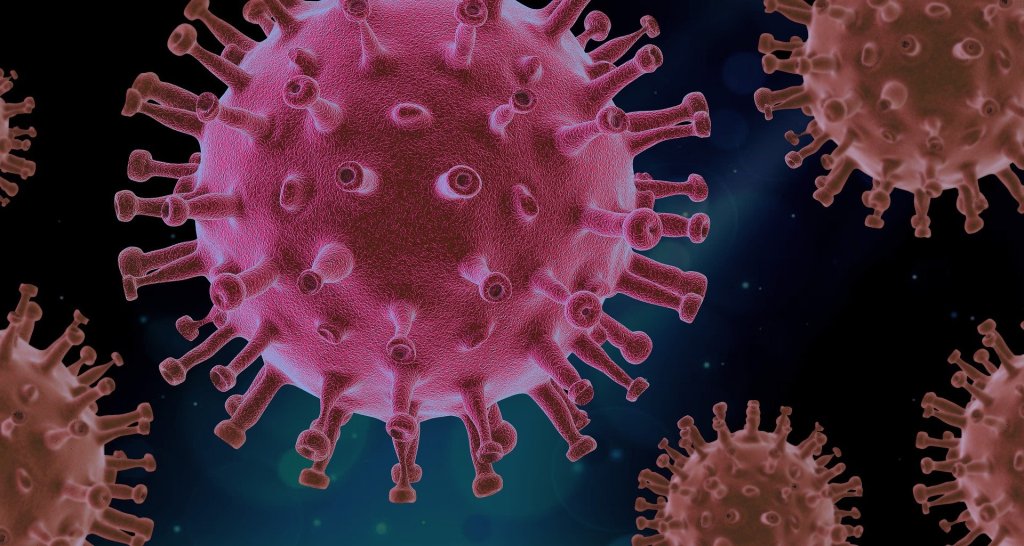
We are in the middle of a pandemic which is caused by a virus. Viruses are ultramicroscopic, disease causing entity of organic matter, It can replicate or multiply only in the presence of a living host cell. They are called as entity because they exhibit both living and non living characters and it is difficult to conclude them as any one.

history

Russian botanist Dimitri Ivanovskii reported the virus for the first time in 1892. He explained tobacco mosaic virus. In 1898 M. W. Beijerinek recognized that viruses were smaller than bacteria, and they can easily pass through bacterial filters. In the same year, Friedrich Loeffler and P. Frosch, in Germany demonstrated the cause of Foot and mouth disease in cattles are due to viruses. In 1900 Walter Reed et al. explained yellow fever disease in humans was due to viruses. And in1915 F. W. Twort in England discovered bacteriophages.

In 1935 W. M. Stanley isolated Tobacco mosaic virus and crystalized. He explained that virus also contain proteins. In 1936 Bawden and Pirie demonstrated viruses to be nucleoproteins, they are made up of Nucleic acids and proteins. The major development was determining the ultrastructure of TMV by x-ray diffraction which was accomplished by R. Franklin and A. kling. Discovery of cyanophages was done in 1963.

What are the general characters of a virus
  • They are very small, so small that even they are not visible under compound microscope. Their size varies from 20nm to 400nm.
  • they are obligate parasites, They multiply only in the presence of a living host cell.
  • Viruses do not contain any type of cells.
  • Like Bacteria, viruses can not be cultured in labs on a synthetic media.
  • Viruses are highly specific. While infecting they just do not infect randomly any cell. They find specific cells for them which varies from virus to virus. They are also specific to tissues, organ, organism and species.
  • Viruses can be inactivated by heat or chemicals.
  • Viruses also lack metabolism. They are totally dependent on the host cell.
  • Viruses undergo mutation very often.

Living characters shown by viruses:

Are viruses living? we don’t know. But they contain nucleic acids which we consider the basis of life. As every other organism they have definite form and size. They grow and reproduce in the host cell. They can infect the host cells and cause diseases. They show mutation and inherit their characters to their reproduced offspring. These call characters are shown by living organisms.

non living properties of viruses:

Even though they exhibit some of the living characters as mentioned above they lack cellular organizations like other organisms. This arises the biggest confusion. They behave like non living outside the host cell. Some of the viruses can be crystalized and stored in bottles and jars. And they lack metabolism which is the basic characteristic of a living organism.

how viruses are classified?

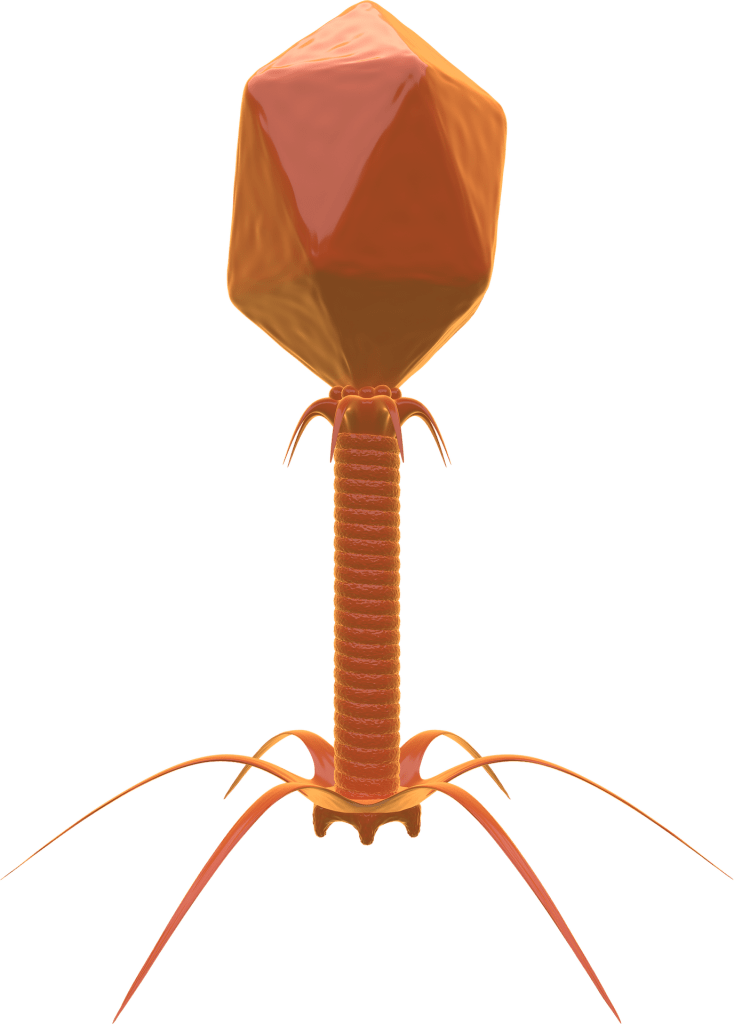
The types of virus based on the hosts they infect includes, Bacteriophages- Which infect bacteria, Cyanophages- which infect blue green algae, phytophaginae-which infect plants and the Zoophages- which infect animals.

a bacteriophage

The viruses are considered to be DNA virus if the nucleic acid present in them is DNA and RNA virus if the nucleic acid present is RNA.

No matter how they are classified or what are their features, viruses are unique and mostly dangerous to animals. Even though vaccinations can help, Avoiding exposure to them will be the best way to keep oneself safe.

Indian air force

The Indian Air Force, also known as Bharatiya Vayu Sena is the air arm of the Indian Armed Forces. Its key role is to keep the Indian aerospace resistant to attacks and manage aerial warfare during the conflict.

Established on October 8, 1932, it possessed the strength of 25 soldiers of which 19 were combat pilots. Ever since then, the air force has gone through extreme modernisation and expansion, both in the strength of man and technology.1. With around 1,70,000 personnel and 1,500 aircraft, it is the fourth largest air force in the world after the US, China, and Russia

2. It is also the seventh strongest Air Force in the world, better than that of Germany, Australia and Japan

3. The IAF flag, adopted in 1951, is blue in colour and contains the National Flag in the first quadrant and a roundel of the Tricolour

4. Its crest is considered to be of great historical and sentimental value and is approved by the President of India

5. Its motto Nabha Sparsham Deeptham is taken from the eleventh chapter of the Bhagvad Gita. The way Lord Krishna shows his divine form to Arjuna, in a similar way, the Indian Air Force aims to overwhelm adversaries with aerospace power to defend the nation

6. It has its own museum in New Delhi. It has a rich collection of memorabilia of Indian Military Aviation and displays the history of the Indian Air Force7. The chief of the Indian Air Force is Air Marshal Birender Singh Dhanoa. He was commissioned the position on January 1, 2017.

8. Arjan Singh is one of the most respected Indian Air Force Marshals. In recognition of his services, he was awarded a ‘Five Star’ rank in the year 2002

9. The latest addition to the Air Force arsenal, Mirage 2000, French single-seated air defence and multi-purpose fighter jet, is powered by a single engine with a maximum speed of 2,495 kilometre per hour. On external stations, it carries two 30mm integral cannons and two Matra Super 530D medium-range and two R-550 magic ll close combat missiles

10. From October 1, 1993, to December 21, 1994, the IAF took part in peacekeeping duties in Somalia as part of the Indian contingent supporting UN operations.It has been over eight decades that the Indian Air Force has been shielding the country and its people. The IAF has the core purpose of safeguarding Indian territory and national interests from all threats in connection with the other branches of the armed forces by protecting Indian aerospace.