youtube

YouTube

YouTube the way of leaning

What Are the Main Functions of YouTube?

  • Users can search for and watch videos.
  • Create a personal YouTube channel.
  • Upload videos to your channel.
  • Like/Comment/share other YouTube videos.
  • Users can subscribe/follow other YouTube channels and users.
  • Create playlists to organize videos and group videos together.

What is the main purpose of YouTube?

YouTube provides a simple way for people to store videos online and share them with others. YouTube videos cover any topic anyone cares to upload a video about. These videos are easy to share via other forms of social media, email and websites and can also be embedded in other websites

What are the benefits of being a YouTuber?

Benefits of Having a YouTube Channel

Give the Audience More Content. One really good reason to add video and a YouTube channel to your site is to give the audience more content. …

Extra Source of Traffic. …

Closer Personal Connection. …

Another Source Of Revenue. …

Modernizing. …

Creative Outlet. …

Get Outside Your Comfort Zone.

Teens Like YouTube because?

YouTube is a free to use service and a can be a great space for teens to discover things they like. For many young people, YouTube is used to watch music videos, comedy shows, how to guides, recipes, hacks and more. Teens also use the video-sharing service to follow their favourite vloggers (video blogger), subscribe to other YouTubers and celebrities they are interested in.

By YouTube what the people wish to like ?

The way the their mind sets and Intrest videos

there are different kind of people

Wish to learn new things

spend time on their mind sets

giving live news and events

Advantages and Disadvantages

1.       In education YouTube help in term of provide the video of teaching and learning for the students to get the knowledge from the professors in another part of the world.

2.       The students are able to access to the sources of learning anytime anywhere they want without any payment.

3.       Provide the chance for all the learner to study with the high professional teacher especially for those who have no chance to go university.

4.       There are many skill people who upload their video and we can learn from their skill.

5.       YouTube is the very wide classroom for teaching and learning which we can save our time and budget.

6.        It is a biggest source of study which easy to understand by the video such as video on how to make up, video on how to cook, video on how …etc.

Change is what.. you need..! : A turning point

Just make you first step….please now for me just for yourself

Change have you ever think of that. Defiantly no one like to leave the comfort but if you want to make some changes in your personality and behavior in a positive way you need to change some of your habits your needs and your addiction

A girl who studied in a typical Hindi medium school used to study English only when she want to sleep.. Yes Yes..!! she was full occupied with her other subject and did not want to learn English.

The same girl do not want to watch TV or do not want to play outside she thought that may effect her study. She is afraid of spending money moreover she do not know how to buy things

The one who do not want to make friend specially boys just her parents was very strict so what is new in this.. many other are also same even thought they faced societal issue as well.

That little girls grows up now reality comes she realized. What if she did not get any job? What if our family run out of money and not be able to give education to sibling, mediation to mother and support for father?

This question.. Yes when you faced reality the very next step is arriving question inside your mind that you do not know how to react or how it will solve.

Then you my dear will change your self.. you will start reading English, now this time not to get sleep rather to get a high profile job as per your education. you will start working on your body its not waste of time rather it will give you physical and mental stability. This time you can able to travel the whole world with and for that you do not need partoner.

you would be able to make decision on what you like what not? what will be good or not? Is it correct or not? this all will be happen when you are ready to change your life.

Will that be easy??

We are living in 21st century and nothing is easy here. Changing your self is the biggest challenge. But it is not impossible You Can Do It If You Really Want To Do.!

Just think in this way. How can you expect anyone else to change for you if you are the only one who can’t change your self. JUST THINK!

How can you pray god to give you highest mark even you do not want to study. As I mentioned Think Think Think !!!

How can you expect that someone should love you if you cant love your self first. Again think..!!

Just want to add do not think in negative. every one comes with a body and sole. It is up to you how you want to use it

Several example are out there which you can prefer

There is no late.. some can be billionaire at age of 18 and some took 60 long yr to be but why comparing our self with other. No one is perfect all are having some issue. Some might be suffering internally some are mentally and other are from physically. So just do not compare you self.

Do not be 18 yr girl, be a smart and hardworking woman. Do not be 18 yr old boy, be a mature and understanding man.

National mission on education

Introduction

The National Mission on Education through Information and
Communication Technology (ICT) has been envisaged as a Centrally
Sponsored Scheme to leverage the potential of ICT, in teaching and learning
process for the benefit of all the learners in Higher Education Institutions in
any time any where mode.

Objectives

The objectives of the National Mission on Education through ICT shall
include:
(a) building connectivity and knowledge network among and within institutions of higher learning in the country with a view of achieving critical mass of researchers in any given field;
(b) spreading digital literacy for teacher empowerment;
(c ) development of knowledge modules having the right content to take care of the aspirations of academic community and to
address to the personalized needs of the learners;
(d) standardization and quality assurance of e-contents to make
them world class;
(e) research in the field of pedagogy for development of efficient
learning modules for disparate groups of learners;
(f ) making available of e-knowledge contents, free of cost to
Indians

Components

The Mission has two major components:
(a) providing connectivity, along with provision for access
devices, to institutions and learners;
(b) content generation.

It aims to extend computer infrastructure and connectivity to over 18000 colleges in the country including each of the departments of nearly 400 universities/deemed universities and institutions of national importance as a part of its motto to provide connectivity upto last mile. Therefore, the
Mission, in addition to utilize the connectivity network of BSNL/MTNL and other providers, shall explore the possibility to provide connectivity utilizing
Very Small Apperture Terminal (VSAT), Very Personal Network (VPN) and
EduSat channels.
It seeks to bridge the digital divide, i.e., the gap in the skills to use
computing devices for the purpose of teaching and learning among urban and rural teachers/learners in Higher Education domain and empower those, who have hitherto remained untouched by the digital revolution and have not
been able to join the mainstream of the knowledge economy so that they can make best use of ICT for teaching and learning.
The Mission would create high quality e-content for the target groups.
National Programme of Technology enhanced Learning (NPTEL) Phase II and
III will be part of the content generation activity.
The peer group assisted content development would utilise the wikipaedia
type of collaborative platform under the supervision of a content advisory
committee responsible for vetting the content. Interactivity and problem solving approach would be addressed through “Talk to a Teacher”
component, where the availability of teachers to take the questions of
learners shall be ensured appropriately.

Functioning

The Mission have a three tier committee system to monitor and guide its functioning. The National Apex Committee of the Mission is chaired by

Hon’ble Minister of Human Resource Development, and decides on all policy
issues and prescribes guidelines for the functioning of the two sets of
Committees namely ‘Empowered Committee of Experts (also known as ‘Project Approval Board’) and ‘Core Committees of Domain Experts’. It has a
‘Mission Director’, who heads the Mission Secretariat and also acts as the
Secretary to the National Apex Committee and Project Approval Board.

Income Inequality in India

Income inequality refers to the unevenness in the distribution of income throughout the population. In India, income inequality has emerged as one of the major economic problem and is increasing. According to World Inequality Report 2018, inequality in India has increased substantially from the 1980s onwards. The top 0.1 per cent earners have captured more growth than bottom 50 per cent all combined.
There are several reasons for this inequality. Firstly there is an extreme concentration of wealth and economic power in the hands of large industrialists. They have acquired massive assets over time. This can be due to easy availability of money in form of loans from banks. Secondly, inequalities have existed for a very long time, since the time of colonialization. The zamindari system was responsible for inequalities in land ownership which resulted in concentration of tangible wealth. Even though zamindari system was abolished, the damage had been done. The concentration of land ownership could not be broken. Even today, the main reason for income inequalities in rural areas is the concentration of ownership of lands.

Another reason for income inequality is the rising capital intensity of technology. Over the years, due to digital tsunami and consecutive rise of IT sectors, the demand for labour have significantly reduced over the demand for capital. Reduction in wages and unemployment has increased. More skilled workers have a higher demand and wage in comparison to low skilled workers. This has contributed towards increasing gap in income levels. Furthermore, there exists urban bias in private investments. Mostly rural people are the ones who are not very advanced with the technology. Majority of population in India belongs to rural sector and therefore a pattern of urban bias is observed in private investments. It can be seen as the use of highly mechanised projects. Here the share of wages added is relatively low. This naturally leads to inequality in income distribution and wealth accumulations.
Inflation has also greatly contributed in rising income inequality. It has affected the real incomes of working class while benefited traders, farmers, industrialists. Not much has been done to prevent this effect of inflation and hence the result is income inequality. Even the credit facilities are responsible for income inequalities. Large business frims or individuals have an easy access to loans and financial supply on favourable and supporting terms. They have an access to formal capital market but the vast majority of small marginal farmers, labours etc. do not have this. They depend largely on moneylenders who exploit them by charging high interest rates.
The government has desperately tried to curb these inequalities by taking various measures. Various land reforms and redistribution of agricultural land has taken place and the government has even tried to control monopolies and restrictive trade practices. Several employment and wage policies and social security measures have been undertaken and special programmes for the upliftment of rural population have been taken up. Even then, income inequality exists. All of these measures have little impact on poverty and thus inequality continues to grow.

Skin problems!

So before I write this article I want to say that doesn’t matter how you look how we look the most precious and beauteous thing in this world is the inner beauty!

Skin disorders vary greatly in symptoms and severity. They can be temporary or permanent, and may be painless or painful. Some have situational causes, while others may be genetic. Some skin conditions are minor, and others can be life-threatening.

While most skin disorders are minor, others can indicate a more serious issue. Contact your doctor if you think you might have one of these common skin problems

There are many different types of skin disorders. Here is a list of 25 with pictures

1.eczema.
2.psoriasis.
3.acne.
4.rosacea.
5.ichthyosis.
6.vitiligo.
7.hives.
8.seborrheic dermatitis.

And so on but all of these skin diseases can be cured. Don’t take a lot of time just sitting at the home and thinking about these diseases go to a dermatologist and make sure you have a Open conversation with him/her. You’ll definitely get the better results after that treatment.

And guys if you’re bullying someone due to these diseases then please this article is not for you! You need to be honest with yourselves that am I giving my best to everyone.

Forest Law in India: A Critical Analysis

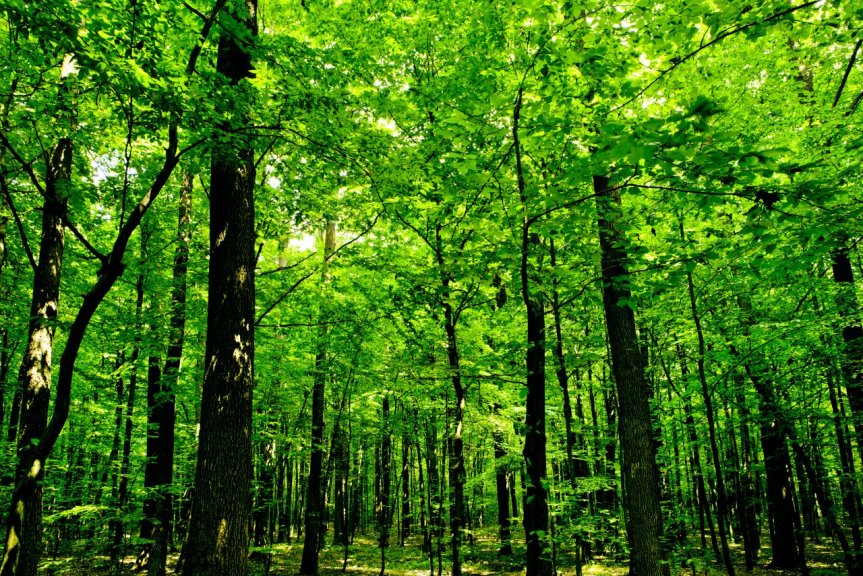
Forests are a valuable resource for humans. And India is the 7th largest nation in the world occupying almost 3% of the world area. But on the other hand, the forests cover lies in India is only 1.8%. Forests are one of the most important natural resources, as well as a vivid expression of nature. They are also regarded as guardians and protectors of the country’s wildlife. Forests are important not only for their botanical value, but also for their recreational and scenic beauty, which brings glory and attraction to many places in India and other countries. Forests often contribute to the agriculture of the area in which they are located, whether in terms of soil fertility, soil erosion prevention, or promoting perennial stream flow in rain-fed rivers. They provide a sanctuary for wild animals, protect tribal populations, and preserve cultural identities. As a result, forests contribute to the ecological balance.

Forests also provide income, provide raw materials, and serve as a source of fuel and fodder, in addition to these environmental and ecological benefits. Conflicting views are inevitable when it comes to forest management. Ecological stability would be jeopardized if claims of growth were made.

Forests in India are under significant pressure today, and are rapidly decreasing as a result of rapid human and livestock population growth, over-use and exploitation of forest resources, conversion of forest land for non-forestry activities, agricultural development, and other illegal on forest land. Each & every legislation carries the expectations and desires of the social and political forces at work at the time it was enacted.

Historical Background

Initially, it was about the worship of holy groves, elephants in the medieval age, and how society was before colonial rule, as well as people’s attitudes toward forests.

Then there was the change in conservation strategies, with the emphasis moving from community management to more analytical management under the umbrella of the state. And lastly, the evolution of the forest laws Post Independence.

Until the early 18th century, a large number of communities on the Indian Subcontinent relied on hunting and gathering for food. The abundant rainfall and lush vegetation aided livelihoods. These communities traded forest products like herbs and honey for salt, clothes, tools, and sometimes grain with the local agricultural communities. These hunting and gathering cultures thrive on the forest products. The importance of trees, forests, and wildlife is stated in the Vedas, Puranas, and Arthashastra.

The forests were divided into four groups: Forest for wood, Reserve forest, Elephant forest and Forest for hunting.

Forests were held by local chiefs during that period, with access rights given to the peasants.

Only surplus grain production was claimed by the mughals, as well as a tax on animals above a certain weight. Villages were self-sufficient and dealt with the state as a whole. Taxes were collected both as a group and as a household. Horticulture, sheep farming, fishing, and forest holdings were all exempt. Apart from hunting preserves, the state had no clear claims to territory.

When Europeans arrived in India, the Industrial Revolution was in full swing, and a wide variety of items had become commodities. This had a major influence on Indian society.

It shifted the emphasis away. It also resulted in the disintegration of local communities. Now with manufacture and commerce became the dominant practices everything was measured in money.

The main aim of colonial law was to take over the forest land for its expansion, so resolution rights were not granted, and tribal rights were barely documented in areas where they were.

After independence, the proclaimed forests of princely states, zamindars, and private owners were transferred to the forest department, worsening the situation.

Analysis

In year 1856, Lord Dalhousie stressed the importance of a clear forest policy in India. The reason behind this awareness was the increasing difficulty in securing adequate supplies of wood (which was needed for the massive extension of railway lines that was being undertaken at the time). The first Indian Forest Act was passed in 1865. It came into effect on May 1, 1865. The Act granted the government the authority to classify any land covered in trees as government forests and to create rules for their protection. This was the British government’s first attempt at forest legislation in India. In 1878, a revised Forest Act was passed, putting an end to decades of traditional community use of their woods and giving colonial government power over forestry. On the one hand, the provisions of this Act created a virtual State monopoly over the forests in a legal sense, and on the other, they attempted to establish that the villagers’ traditional use of the forests was not a “right,” but a “privilege” that could be revoked at any time.

A new comprehensive Forest Act was passed in 1927 to make forest laws more practical and to strengthen the Forest Act. It replaced all previous laws. The Act is divided into 13 chapters and contains 86 sections. The Act’s key goals were:

1) Consolidate forest-related legislation.

2) Regulation of and the transportation of forest produce.

3) To impose a tax on timber and other materials.

There is no specific definition for forests in this Act. It divided Indian forests into three categories: Reserved forests (completely regulated by the government), Protected forests (partially controlled by the government), and Village forests (controlled by attaching villages).

Drawbacks of The Indian Forest Act, 1927

A thorough examination of the act shows that it was never intended to preserve India’s vegetation cover, but instead was passed to:

1) Ensure that cutting down of trees is governed.

2) Make money by cutting down trees and selling forest products.

Furthermore, it denied nomads and indigenous peoples of their rights and privileges to use the forests and its product. Its primary goal was to supply raw materials to forest-based industries. Forests have long been recognized as an important component of ecological equilibrium and environmental sustainability. It is important to note that the revenue-driven mentality toward the forests prevailed even after independence. As a result, the 1927 act failed miserably to protect the forest from exploitation.

The Indian Forest Policy of 1952 was a straightforward continuation of colonial forest policy. It became conscious, however, of the need to increase forest cover to one-third of total land area. Total annual revenue from forests was a critical national need at the time. Due to the two World Wars, the need for defense, construction projects such as river valley projects, industries such as pulp, paper, and plywood, and communication, forest produce was heavily reliant on national interest, and as a result, large areas of land were cleared to generate revenue for the state.

The Forest Conservation Act of 1980 was passed in order to prevent further deforestation and to protect forests. In essence, the Act simply transfers jurisdiction over forest land use decisions from the state to the central government.

On December 18, 2006, both the Lok Sabha and the Rajya Sabha passed the Scheduled Tribes and Other Traditional Forest Dwellers (Recognition of Forest Rights) Act, 2006. This law aims to give traditional forest dwellers ownership rights to forestland. The law addresses the rights of forest dwellers to land and other resources, which have been denied to them for decades as a result of India’s colonial forest laws. The Act was informed into effect on December 31, 2007, just over a year after it was passed.

The wildlife conservation lobby and the Ministry of Environment and Forests fiercely opposed the Act, describing it as the “ideal formula” for ensuring the destruction of India’s forests and wildlife by “legalizing encroachments.” Some of the criticism stems from those who see the legislation as a land-distribution system that will result in tribes and forest dwellers receiving forest land. Wildlife conservationists, on the other hand, have voiced their opposition to the Act, claiming that it would make it difficult to establish “inviolate spaces,” or areas free of human presence, for the purposes of wildlife conservation. Conservation of tigers, in particular, has been a source of concern. Many conservationists have also expressed support for amending the Act.

The Act’s proponents claim that major construction projects, such as dams, power plants, and mining operations, should be monitored rather than the forced removal of conventional forest-dependent communities in order to save the forests. Several organizations argue that it is not tribes who are introducing commercial activities into forests, but rather external commercial forces that are degrading forest resources and eroding tribal communities’ traditional lifestyles.

Role of Judiciary on Forest Laws

Forest conservation is extremely important. The area covered by forest is steadily shrinking as the Indian population grows. At least 30% of the country’s land should be covered in sufficient forest cover to ensure ecological stability. There was widespread deforestation, and the forest cover was reduced to less than 18%. Originally, forests were put on the State List, allowing states to pass forest laws on their own. Forests were added to the Concurrent List in 1976, allowing Parliament to pass legislation on the subject. Despite the government’s main efforts, deforestation has persisted. The Supreme Court issued broad guidelines in 1996 to oversee the implementation of forest laws throughout the country. In India, the courts have played a pivotal role in environmental and eco-system preservation. The Indian Supreme Court has given numerous directives and instructions to avoid environmental degradation in a number of cases. The framework of the judicial system, as well as the constitutional and legislative provisions, must be considered in order to comprehend the role of the courts in this regard. In India, litigation has enunciated a web of doctrines and interpreted Constitutional law from an environmental standpoint. Non-forest activities and the awarding of leases for non-forest activities were also outlawed by the court.

The article focused on many of the major forest laws; during the British time, several laws were enacted in order to generate revenue. For the continuation of human society as we know it, forests and the goods they provide are universally needed. We generally do not consider it worthy of further inquiry since shifting our society to one that is not dependent on the forest and its associated benefits requires such a massive fundamental change. Given this situation, it is critical that we develop mechanisms to sustainably manage the forest for all of the benefits it can bring. The first step was taken in the form of the Indian Forest Act, 1927, whose main goal was to categorize forests and determine to what degree the government could intervene in private forest matters, as well as how the notification for reserved forest was made. At times, I believe the state intervened in private affairs as well. With the enactment of the Forest (Conservation) Act in 1980, a significant change in post-independence forest management regimes occurred. The Act was enacted to control large-scale forest land diversion for non-forest purposes. It did not, however, include a blanket prohibition on such diversion. As a result, large areas of forest have been diverted for agriculture, mining, and construction purposes, such as dams that cause forest destruction. Furthermore, the legislation was criticized for restricting local communities’ rights. The Government of India launched a new National Forest Policy, which represented a significant departure from the 1952 policy by focusing on environmental stability and forest conservation while meeting the domestic needs for fuel, wood, fodder, and minor forest produce for rural and tribal populations. As discussed above it is clear that we must strictly enforce the forest laws, and that all administrative organs must work together in a normative approach to ensure that the forest laws are properly implemented, since laws are worthless without the aspect of enforcement and remedies.


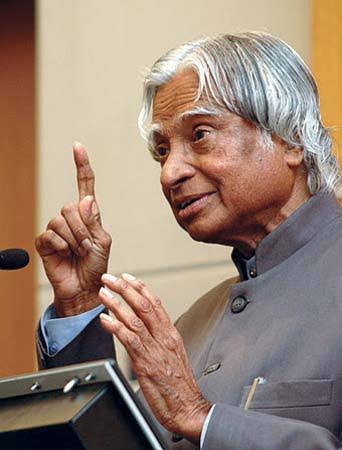
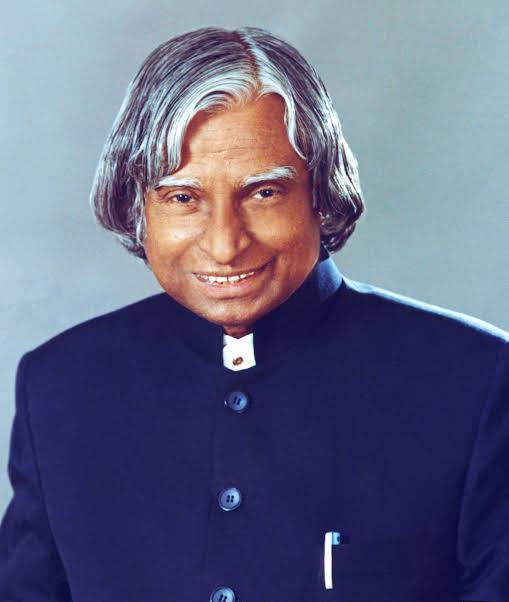
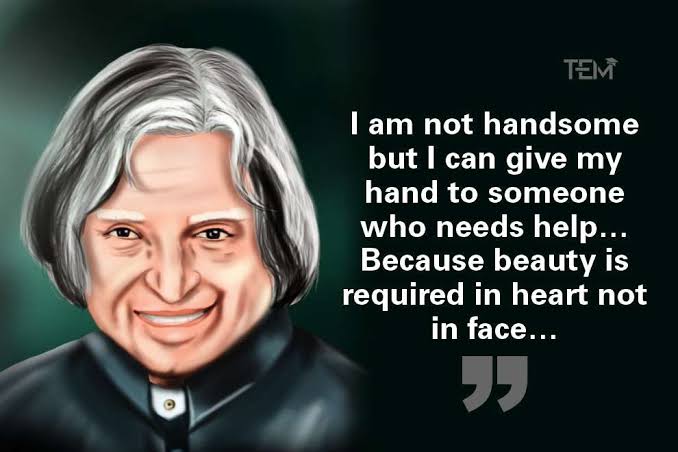
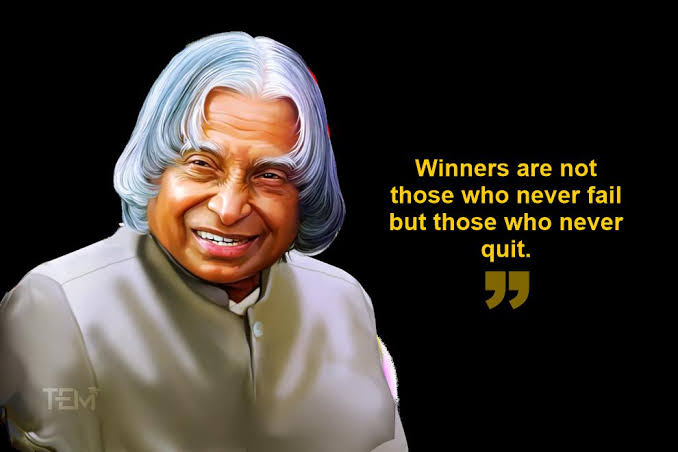
LIFE HISTORY OF APJ ABDUL KALAM

Early life :
His full name is Abul Pakir Jainulabdeen Abdul Kalam. He was born on 15th October, 1931 in Rameswaram, Madras Presidency, British India which is presently known as Tamil Nadu, India. His father’s name was Jainulabdeen Marakayar who was a boat owner and imam of a local mosque. His mother’s name was Ashiamma. She was a housewife. He was the youngest of four brothers and one sister in his family. Even though his ancestors had numerous properties and were wealthy, they lost most of their fortunes by the 1920s. This is why Kalam was born and grew up during poverty.

Education:
He studied in Schwartz Higher Secondary School. Previously he had average grades but later he was described as a bright and hardworking student who had a strong desire to learn. He went to Saint Joseph’s College, Tiruchirapalli, then affiliated with the University of Madras. He graduated in Physics in 1954. In 1955 he moved to Madras to study Aerospace Engineering in Madras Institute of Technology. The Dean was dissatisfied with his lack of progress in a senior class project and threatened to revoke his scholarship unless the project was finished within the next three days. He met the deadline impressing the Dean who later said to him that he was putting Kalam under stress and was asking him to meet a difficult deadline. He narrowly missed achieving his dream of becoming a higher pilot, as he got ninth position and only eight positions were available in Indian Air force.

Career as a Scientist:
After graduating from Madras Institute of Technology in 1960 he joined the Aeronautical Development Establishment of the Defence Research and Development Organisation. He started his career by designing a small hovercraft but remained unconvinced by his choice of job. He was also a part of the INCOSPAR Committee. In 1969 he was transferred to the India Space Research Organisation (ISRO) where he was the project director of India’s first Satellite Launch Vehicle.

Presidency:
APJ Abdul Kalam served as the 11th President of India, succeeding KR Narayanan. He won the Presidential election held in 2002. His term lasted from 25 July 2002 to 25 July 2007.

Books written by Dr. APJ Abdul Kalam:
He played an important role in the second pokhran nuclear test in 1998. He was also associated with India’s Space Program and missile development program. Therefore, he is also called the “Missile Man” of India. He wrote many books. The name of these books are as follows:-
1. India 2020: A Vision for the New Millennium
Publishing year: 1998
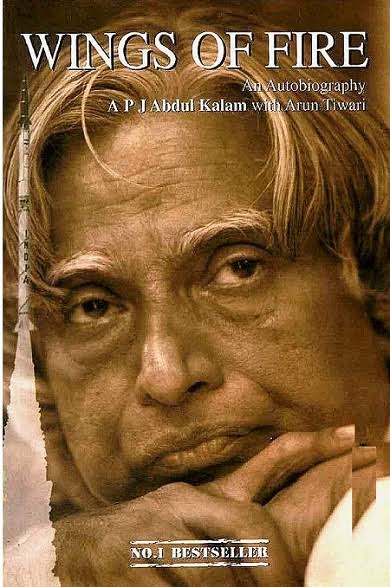
2. Wings of Fire: An Autobiography
Publishing year: 1999
wings-of-fire-biography-kalam
3. Ignited Minds: Unleashing the Power within India
Publishing year: 2002
4. The Luminous Sparks: A Biography in Verse and Colours
Publishing year: 2004
5. Guiding Souls: Dialogues on the Purpose of Life
Publishing year: 2005
Co-author: Arun Tiwari
6. Mission of India: A Vision of Indian Youth
Publishing year: 2005
7. Inspiring Thoughts: Quotation Series
Publishing year: 2007
8. You Are Born to Blossom: Take My Journey Beyond
Publishing year: 2011
Co-author: Arun Tiwari
9. The Scientific India: A Twenty First Century Guide to the World around Us
Publishing year: 2011
Co-author: Y. S. Rajan
10. Failure to Success: Legendary Lives
Publishing year: 2011
Co-author: Arun Tiwari
Ramnath Kovind: 10 facts about 14th President of India
11. Target 3 Billion
Publishing year: 2011
Co-author: ‎Srijan Pal Singh
12. You are Unique: Scale New Heights by Thoughts and Actions
Publishing year: 2012
Co-author: S. Poonam Kohli
13. Turning Points: A Journey through Challenges
Publishing year: 2012
14. Indomitable Spirit
Publishing year: 2013
15. Spirit of India
Publishing year: 2013
16. Thoughts for Change: We Can Do It
Publishing year: 2013
Co-author: A. Sivathanu Pillai
17. My Journey: Transforming Dreams into Actions
Publishing year: 2013
18. Governance for Growth in India
Publishing year: 2014
19. Manifesto for Change
Publishing year: 2014
Co-author: V. Ponraj
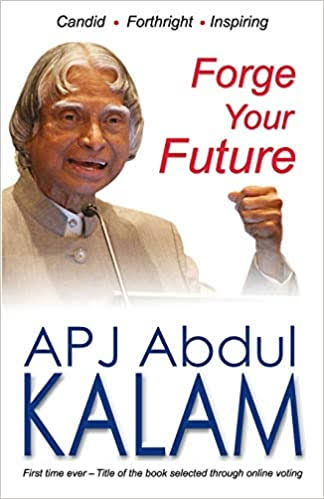
20. Forge Your Future: Candid, Forthright, Inspiring
Publishing year: 2014
21. Beyond 2020: A Vision for Tomorrow’s India
Publishing year: 2014
22. The Guiding Light: A Selection of Quotations from My Favourite Books
Publishing year: 2015
23. Reignited: Scientific Pathways to a Brighter Future
Publishing year: 2015
Co-author: ‎Srijan Pal Singh
24. The Family and the Nation
Publishing year: 2015
Co-author: Acharya Mahapragya
25. Transcendence My Spiritual Experiences
Publishing year: 2015
Co-author: Arun Tiwari

Awards:
He won many awards. The list are as follows:-
1981: Padma Bhushan- Government of India
1990 : Padma Vibhushan- Government of India
1997 : Bharat Ratna- Government of India
1997 : Indira Gandhi Award for National Integration- Government of India
1998 : Veer Savarkar Award- Government of India
2000 : SASTRA Ramanujan Prize- Shanmugha Arts, Science, Technology and Research Academy, India
2013 : Von Brown Award- National Space Society

Death:
Dr. APJ Abdul Kalam breathed his last on 27th July,2015 due to a cardiac arrest while delivering a lecture at th Indian Institute of Management, Shillong.

@track2traininginstitute @track2trainingseminar @edunewsnetwork @pen2prints

Right to Privacy (Post-Puttaswamy Judgment)

In this modern age, information is power. And allowing the government to exercise this power over us is not only a grave breach of our privacy but also a betrayal of the idea on which this nation stands on i.e, free and democratic. And this project by the government doesn’t allow us to be free and democratic as it stands as an obstacle for us to enjoy the right to privacy which means having control over your own personal data and the ability to grant or deny access to others. Even though many might argue that, the right of privacy is nowhere specified under the constitution as a fundamental right, but it has been declared by the SC as implied to the Fundamental Right to Life and Personal Liberty. (Govind v. State of MP SC, 1975)

Apart from the threat of mass surveillance through the AADHAR Scheme, one of the major concerns is the issue of confidentiality of the database. And the same was mentioned in the case of K.S. Puttaswamy (Retd) vs Union of India (SC, 2017). In this case, a PIL was filed against the government in the SC. It was contended that the government was storing all the acquired data in a centralized database without any proper safety measures any private entity can use that data. And it was also contended that the govt. was implementing this project without any legislative backing. It was pointed out that the NIAI Bill, 2010 which introduced in the Rajya Sabha was still pending. That since UIDAI was running on only an executive order, it cannot collect biometric data of citizens as it would be a violation of privacy under Article 21 of the Constitution.

The Supreme Court overruled verdicts given in the M.P. Sharma v. Union of India (SC, 1954) case and the Kharak Singh (SC, 1963) case, both of which said that the right to privacy is not protected under the Indian constitution. And held that all citizens enjoy a fundamental right to privacy, a right that is protected under Article 21 of the constitution.

In 2019, the Bombay High Court (High Court) was given the opportunity to rule on the law of phone tapping and surveillance in the post-Puttaswamy era, applying the principles of the right to privacy to section 5(2) of the Information Technology Act. In Vinit Kumar (Writ Petition 2367/2019) case, a businessman accused of paying bribes to bank staff in order to obtain credit, and challenged certain CBI orders directing the interception of his phone calls, claiming that such orders were ultra-vires of section 5(2) of the IT Act. The Court ruled that intercepting the businessman’s communications was unlawful, overturned the orders, and ordered that any information gathered through the surveillance be destroyed. This case is important in ensuring that fundamental rights are protected and that authorities do not abuse the authority of phone surveillance to target individual people for economic crimes or to evade legal procedures. In the time we live in, it appears that the judgment given in Puttaswamy case will be tested again and again.

Right to Information as a tool to Fight against Corruption

Our ruling party has declared the battle against corruption to be a top priority. However, corruption is still widespread in the country, with numerous cases of political and bureaucratic corruption, public funds theft, fraudulent procurement practices, and judicial corruption. It is the abuse of authority and money by governments and individuals for personal gain, such as lobbying or diverting funds intended for public welfare into private sectors.

Corruption is a problem that, like a weed in a crop, threatens government transparency and citizen accountability. However, where there is a problem, there is also a solution: RTI.

Yes, Information is power but not by itself. Information, on the other hand, is an essential first step in the exercise of economic and political power. Changes in who can do what are brought about through opening up information channels.

In India, the government passed the landmark Right to Information Act in 2005 after a statewide movement driven by grassroots and civil society organizations. Since then, social activists, civil society organizations, and ordinary citizens have used the Act to effectively combat corruption and increase government transparency and accountability.

Right to Information laws give citizens the legal right to access information stored by their governments, bringing much-needed transparency to the government’s otherwise opaque operations. More than 80 countries have now passed such legislation, with the number expanding every year. The RTI Act of India is widely regarded as a robust and effective statute. Over the last six years, ordinary Indian residents have used the RTI to demand a wide range of information from their government.

The RTI Act of 2005 was enacted by the Government of India to provide transparency to an environment riddled with intrigue, secrecy, and corruption. This law has been used quite effectively by Indian citizens to bring about both large and little changes. The RTI Act has profoundly altered the power dynamic between the government and the governed, bringing together individuals who wield state authority in any form on the one hand, and millions of people who are impacted by the state’s decisions and operations on the other. No other law in India’s statute book allows citizens so much ability to question any public authority in the country in such a straightforward manner. And every citizen needs to take advantage of this power which is given to them by asking questions to their government by filing RTI requests, rather than assuming that they are answering us because it is their right to inquire.

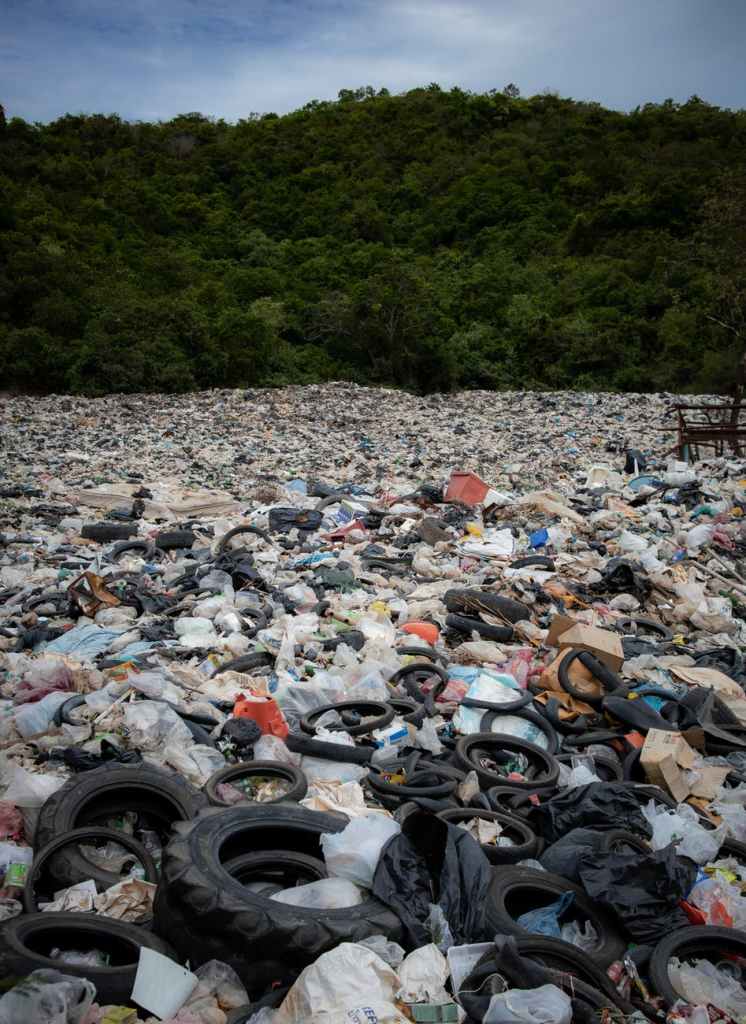
POLYTHENE BAGS ARE HARMFUL FOR THE ENVIRONMENT

Introduction

Plastic bags are the main cause of plastic pollution. The pollution which is destroying our environment. To reduce pollution plastic bags must be banned. Humans try to decompose them but it does not decompose instead it leads to air, water as well as soil pollution. It is said that plastic bags are the leading causes of increasing pollution.
For this reason plastic bags are banned in various countries. In spite of knowing the consequences, plastic bags are still used widely in most parts of the world making it harmful for the environment.

Plastic bags are readily available in the market and are used widely.These are popular at the grocery stores, markets, etc because they are handy and are comfortable to carry the grocery items like rice, wheat flour, pulses. Apart from grocery items it is used to carry veggies, fruits etc.

It is available in various sizes; these are quite economical and also easy to carry or use. But the cost for using these bags -is overlooked. These bags are costing us our beautiful environment. The plastic bags that we use in our everyday life are very much harmful to the environment. The actual problem is much more severe than it appears to us.

Plastic bags are destroying the soil making our agricultural lands infertile. It also causes several other serious problems. To ensure a cleaner and greener environment many countries have banned the use of plastic bags. Among those countries, India is one of them.

Our country has banned the use of plastic bags in many states. However, the implementation of this rule hasn’t been proper.

These are still available in the market. The retailers provide goods in these bags, and the shoppers gladly take their stuff in these easy to carry bags. And another reason for this does not have a proper option to replace them.

It is time for each one of us to understand the severity of the issue and stop the use of plastic bags.

Plastic Bags – A Boon or A Bane /A Curse?

Plastic bags are lightweight and can be carried anywhere without much effort.

This may sound like a blessing to us, but in reality it is much more harmful than its uses. They get carried away by the wind and water because of its light weight. They end up landing on the seas and water and pollute them. They get stuck in fences and pollute the environment while getting carried away with the wind.

The material used to make plastic bags is polypropylene. This material makes them durable thus making them last for a longer time. This polypropylene is prepared from natural gas and petroleum. They are non biodegradable in nature.
Green-house gases like Methane Carbon, Monoxide, and Carbon Dioxide are released during the production of various plastics products including plastic bags. This is a significant cause of global warming in the world today.

There is a misconception that recycling is an alternative to the misuse of plastic bags but recycling of plastic products cannot be a good choice because only 5% of the plastic bags can be recycled and the remaining 95% find their way in soil, water and landscape causing pollution. Only 35-40 percent of plastic bags are being recycled and the remaining 60% is not even known where it is gone.

As 60% of the plastic bags are not being traced, the producers are forced to produce more products to meet the needs of people. Everyone considers plastic bags as the most convenient bags to carry loads but it has the most harmful effects on human health.
Synthetic substances present in the polythene bags can disturb the typical working of hormones in the body.Most plastic pieces in the seas, like plastic bags, have a few contaminations, for example, PCBs (polychlorinated biphenyl) together with PAHs (Polycyclic fragrant hydrocarbons), which disturbs the normal function of our hormones.

When the marine creatures eat these synthetic substances, they travel through the food web then later into the people who consume sea animals, especially the fish.

How can we minimize their use?
In many countries across the world plastic bags have been restricted in several nations all over the world.

In many states the Government of India has already restricted the utilization of plastic bags.

Strict measures must be taken to ensure that the use of these bags is stopped. There must be curbs on the production of plastic bags altogether.
Retailers for selling as well as those who are carrying and using plastic bags must be fined.
Good quality plastic available in the market must be made chargeable. This is a good strategy to minimise the use of plastic bags.
To provide a proper alternative of polythene bags is another good strategy. The alternative must be cost efficient and have to be similar in use.

Conclusion
We had often overlooked and underestimated the harmful consequences caused due to plastic bags because we don’t notice the long term effect of these small, easy to carry bags used in our daily life.

People keep on using these bags owing to their convenience. They completely ignore the real fact about these bags that they are harmful for the environment and are a threat to life on earth.

@track2trainingseminar @track2traininginstitute @edunewsnetwork @pen2prints @

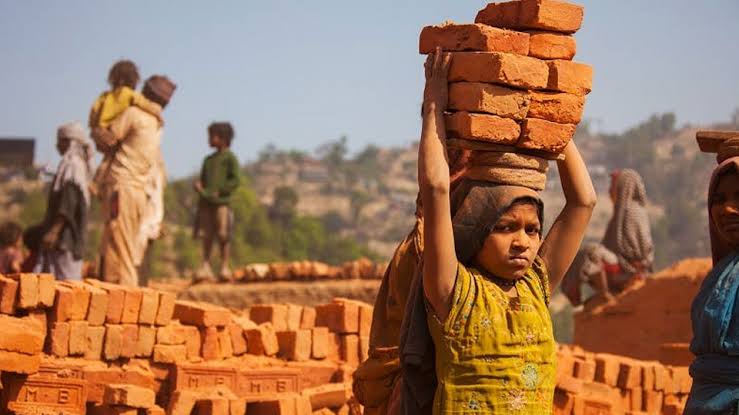
CHILD LABOUR

INTRODUCTION
The best phase of human life is childhood. It is the most innocent phase of our life. In this stage human foundations are laid for successful adult life. In this phase we spend the most cosy, carefree and tension free lifestyle. We pass our time by playing, and leading a tensionless fun life. But there are many children who spend their life supporting themselves instead of spending it in a carefree and fun-loving manner because for them learning and playing are scared and tormented. They are controlled & tortured by others.

They want to get out from this dark world but they are forced to stay in this world. This is the true story of the child labour. Child labour is term that we all heard about in news or in movies.

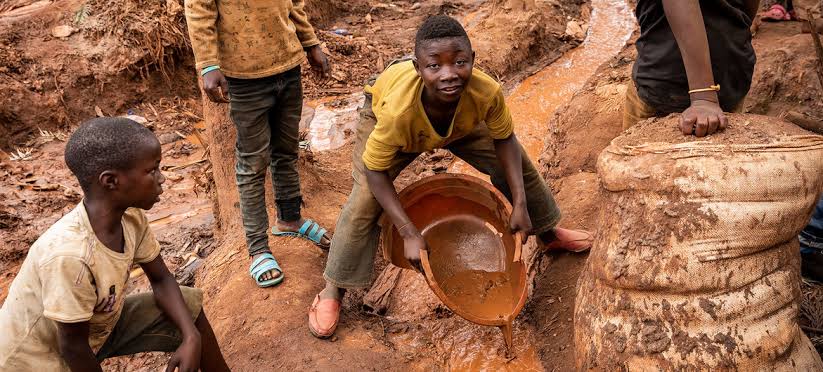
Child labour is a crime. In some underprivileged families who are suffering from poverty, children are forced to work from a very early age to support themselves economically because they expect their kids to take responsibilities of working and provide food for them.
Industries and individuals take the advantage of their poverty and employ children to put them to work at very low payables.

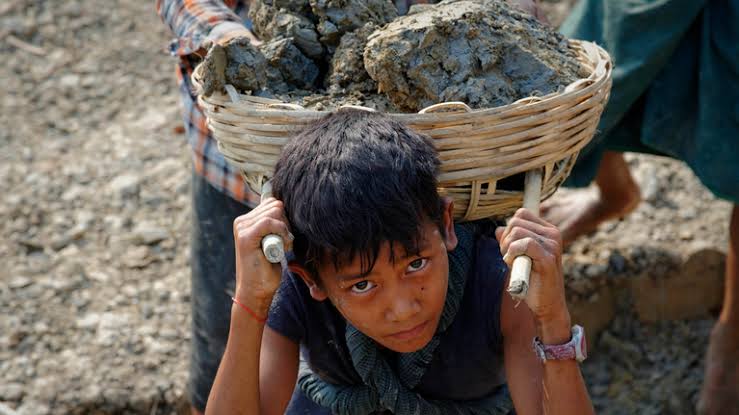
They are forced to work for long hours in dangerous factories. Sometimes they are forced to carry heavy loads that weigh even more than their body weight.

Then comes some individuals’ who hire children in their house for domestic help. They are so rude that when the children make a single mistake they beat them and torture them physically.

Those children do not get proper food to eat or clothes to wear. Sometimes they are made to starve and given worn-out clothes to wear. This is the story of many children who are suffering in this cruel world.
The average age for a child to be appropriate to work is considered 15 years or more, below this age limit won’t be allowed to indulge in any work forcefully.
Child labour takes away the kid’s opportunity of having a normal childhood a proper education and physical and mental wellbeing in some countries. It is illegal, but still now it is practiced in many countries.

CAUSES OF CHILD LABOUR
The main reasons for the ever-growing child labour are poverty and lack of education.
The parents think that their children are money-making machines. To earn more money by getting sympathy from other people they carry infants on the street begging.
Then when they grow up, they take them and eventually sell them to employers.This is a sickness that is rampant across the length and breadth of India
But other than poverty and lack of education, many other reasons are also responsible for child labour.
Firstly, it is common in those countries where unemployment is more than poverty. When the families are unable to earn enough money to support their lifestyle they put the children to work so they can have enough money to survive.
At the same place if the adults
are unemployed. The younger ones have to go to work. When people are illiterate then it is very common that they will send their children to work. This is because being uneducated all they care about is short term results due to which they send children to work even if the earning is less to survive their present . This destroys the future of children. They also remain uneducated and later after growing up when they start their own family they repeat the same thing as their parents did i.e., sending their children to work at an early age.

WORST CONDITION FACED BY CHILD LABOUR

India is in the second-highest number of child labour after Africa.
The worst employment bfir children is bonded child labour which is also known as slavery for lifetime.
Indian Parliament passed an act on the bonded labour system in 1976 but in spite of this act people still keep on practicing this system. It is estimated that almost 10millions children are victims of the bonded child labour. They work as domestic servants in India. Apart from India, almost 55 millions of children are hired across the world for bonded child labour.
The children are sold to money lenders as a payment of the money borrowed by their parents which they failed to return.
Children living in streets, instead of going to school, work in streets as a beggar, or selling flowers. This also is an example of child labour of different category. They are made to stay without eating food for many days so that people feel sad for them and give some.
Nowadays child labour couples who abuses child has become one of the greatest maladies across the world.
Every year the number of child abuse increases especially in the case of the girl child.This usually happens when someone abuses a girl at home, then to hide this fact her family sell her to an employer or money lenders as domestic help or the girl gets married to a man older than her age.

ERADICATION OF CHILD LABOUR
To eradicate child labour we should formulate some efficient solutions which will save our children. The future of other countries dealing with these social issues will also get enhanced. With the help of this one can create several unions that work to prevent child labour solely. It would help the children to indulge in this work and punish those who make them do it.
Stakeholders must take responsibility
Increased access to education
Provide support for children
Improve economic growth
Engage with the Sustainable Development Goals

@track2traininginstitute @track2trainingseminar @edunewsnetwork @hariyaliinsitute

TOXIC FOOD FOR PET ANIMALS

Toxic food for pet animals
INTRODUCTION:A pet is a companion animal kept primarily for a person’s company or entertainment rather than working animal or laboratory use. In my point of veiw each and every animal in the world are pet animals. Even a lion can also be grown as pet animal. Toxic is a very harmful or unpleasent in a pervasive or insidiousway ,it can be said as a poisonous one. We should be carefull about the heath of our lovable pet, it is a necessary to notice all around the world . Now everybody who reads this article have understood about what is pet and toxic . Hear we going to see about toxic foods that must not give to your pet. MY STORY :I hope everyone is ready to hear my story, I have one Labrador and one Himalayan cat and one Mumbai cat. Totally I have 3 pet animals . I love each and every animal in this bueatiful world . My pets names are Scooby the Labrador, Tiger the Himalayan cat , Molly the Mumbai cat . I always give more imporatnce to my pets health both physically and mentally . Morning me and pets will go for a walk , due to pandamic they used to play in my garden area. Every time both my cats used to drink milk and only sea fish , which is cooked , my dog used to eat a dog food which is prescribed his vetnerian and used to eat curdrice and non veg. I wont give them chocolates , uncooked food and food which have onion and garlic and mainly I avoid avacados for my lovable pets . Still now they are very healthy and energeticit .
TOXIC FOODS FOR PET ANIMALS :ALCOHOL : It rapidly absorbed into the bloodstream and affects all part quickly. Pet can easily attracted to wine and beer , it may cause damage to their heart .
CAFFEINE : Coffe , tea and every drink which contain caffeine may affect the heart , stomach and nervour system of our pet animals .CHOCOLATE : If someone asks “ what food are toxic to dogs ?” chocolate is often the first to come to my mind . Chocolate may cause diarrhea , heart problems and seizures, this is because THEOBROMINE , which is present in the chocolate .MUSHROOMS : If your pet can roam your yard, remove any wild mushrooms. Even a few bites can cause seizures and vomiting .AVOCADO : The large seeds found in the avacado can become lodged in your pets stomach , esophagus or intestinal tract. If you live near avacado trees, be sure to monitor your pet to prevent choking.GRAPES AND RAISINS : Grapes and raisins can cause kidney issues in dogs and cat . every small amounts can result in lethargy , shivers and a decreased appetite . more extreme cause of grapes poisoning can cause kidney failure and even cause death .YEAST : It is a common incredient in bread dough that is dangerous for dogs , as it can expand in their stomach and cause organs to tear or twist .comsuption of yeast may cause vomiting , diarrhea and stomach bloating .FRUIT WITH PITS: Beware of fruits with pits . they can cause your pet to choke or obstruct their intestines, particulary plum and peach pits , ehich also contains poisonous cyanide.FAT TERMINATING AND BONES:Fat trimmed from meat, both cooked and uncooked, can cause pancreatitis in dogs. And, even though it seems natural to give a dog a bone, they can choke on it. Bones can also splinter and block or cause cuts in your dog’s digestive system.OUR MEDICINE : Dogs shouldn’t take people medicine. It can make them very sick. Just as you do for your kids, keep all medicines out of your dog’s reach. And, never give your dog any over-the-counter medicine unless your vet tells you to. Ingredients such as acetaminophen or ibuprofen are common in pain relievers and cold medicine. And, they can be deadly for your dog.SUGAR BASED FOOD : Too much sugar can do the same thing to dogs that it does to people. It can make your dog overweight and cause problems with their teeth. It can even lead to diabetes.KITCHEN PANTRY : No Dogs allowed many other things often found on kitchen shelves can hurt your dog. Large amounts of baking powder or baking soda are both highly toxic. So are large amounts of nutmeg and other spices. Keep food high enough to be out of your dog’s reach and keep pantry doors closed.Rather than these food there are many foods which are very toxic for our pet animals such like fatty foods , onions and garlic , nuts, raw egg ,raw fish ,cherries ,rhubarb ,nutmeg , salt (must be consumed in limit ),candy etc…Non-Edible Dangers :Pets, especially dogs, will often eat non-edible items. Some non-edible items in your house or yard that may be dangerous for your pet include:• AntifreezeIce melting products Insecticides and pesticides (even flea and tick products for dogs can be dangerous, or possibly life-threatening, if used on cats or other animals)•Lawn fertilizers and week killers•Liquid potpourri•MothballsPlants and Flowers :Threats to your pet’s health can also come from outside the home. Some plants and flowers can be harmful if your pet eats them. Below is a list of the more common plants and flowers that may be dangerous for your pet:•Almond and shrubs•Aloe Vera•English Ivy•Foxglove•Hydrangea•Kalanchoe•Daffodil and JonquilP•Oleander•Tomorrow Plant•Yew Bush

PET CARE NUTRITION : ADULT PET :Cats are meat eaters and need diets that are high in animal protein. Your cat should not become a vegetarian, because they need amino acids like taurine, arginine, methionine, and tyrosine that come from an animal source. The food you choose for your cat should also have fat, which provides energy and vitamins A, D, and E. Your dog must have water, protein, fat, carbs, and some vitamins and minerals to be healthy. The amount of food they need will depend on their size and how active they are. Ask your vet to help you figure out how much to give and what kind of food would be best. Animals that are pregnant or have recently given birth will need a high-calorie food. Cats often lose weight as they nurse their kittens, so they need to gain as much as 50% of their pre-pregnancy weight before they give birth.BABY PETS :Baby puppies typically drink their mother’s milk until they are 7 to 8 weeks old. You can introduce small amounts of pet food around 3 or 4 weeks. Be sure to give your young pets specially formulated food, because as they grow, they need extra nutrients and caloriesWhen they are 1 year old, you can begin to give your pet adult food. Really big pets , like Great Danes and mastiffs, may continue to grow until they’re 18 months old, so they should eat puppy food for longer. SENIOR PETS : Your pet may have different nutritional needs as they get older. In general, pets can be considered “senior” when they are around 7 years old. Large dogs age more quickly and may enter their senior years when they are 6 years old.You’ll want to take your senior pet to the vet for a thorough checkup more often. While you’re there, ask for advice about food. Your pet might be among the many pets in the U.S. that need to lose weight. However, in older animals, weight loss can also be a problem. Food for senior pets can be easier to digest, have different ingredients and nutrients, and help with weight control.

CONCLUSION : I hope every one have enjoyed and learnd few things about the toxic foods which we do not feed our pet animals . Every animal in the world deserves to live in this earth , we have no rights to kill any of the animals in the world. We must treat them as our frinds . At last I wish to give few tips to keep your pet happy and healthier always ,• Give them proper nutrition •Exercise – give them a morning andd evening walk , make them play activly• Go for a regular check up .• Show them affection . • Grooming – Trim their nails , brush them trice a week , regular baths and take care of their skin. THANKYOU

Bullying in Schools

“To educate a person in the mind but not in morals is to educate a menace to society.-Theodore Roosevelt

Bullying, an unfortunate human activity, has always been prevalent across human society since Neanderthals. The nerdy, scrawny one may not always be the victim or the big burly be the bully. There is no specific type of someone who gets bullied or the way bullying is done despite what may be generally portrayed in movies and on TV.

The term “bullying” covers a broad, encases a myriad of activities, but sums up to targeting an individual who is unlikely to retaliate under the radar, put in control and domination ,shredding their esteem to pieces and making them feel as insignificant as possible. Bullying is intentional, it’s a power grab, and it is repeated. Even the rude and mean behavior, snide remarks made, veiled hostile joking cloaked in ‘playful teasing’ and “just kidding” if all it does is crush someone from inside out. Bullying behavior cuts across all socio-economic, racial/ethnic, and cultural lines. It is estimated that 20 -30 percent of school-age children are involved in bullying incidents, as either perpetrators or victims.

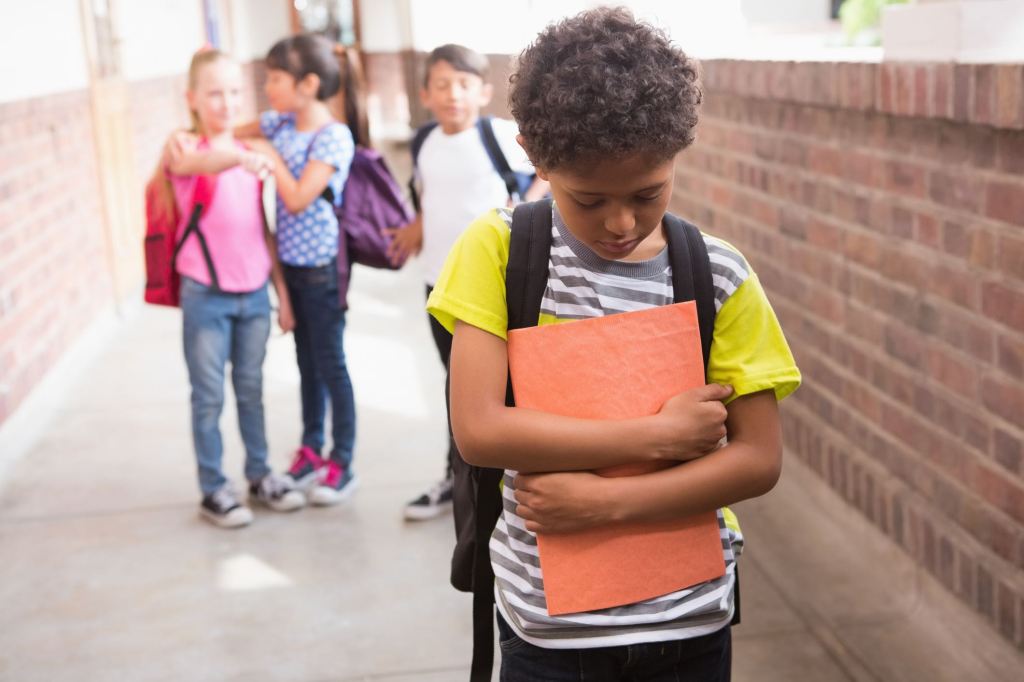
Pupils friends teasing a pupil alone in elementary school

Bullying is a hot button issue for sure, and people feel it is overplayed. This atrocity isn’t an alien to our educational institutions despite the more recent increase in demands to end bullying in schools. As many as 42% of students of Class 4 to 8 and 36% of Class 9 to 12 in India said they are subjected to bullying by peers on school campuses.If all we do is “raise awareness” about bullying rather than teach kids how to respond to it, then guess what happens? They report a lot of bullying but there’s no antidote.

 While the legal and institutional repercussions cause even swing of a fist to get the assaulter land into jail or pending expulsion in schools , bullies have wrestled their way out to vent anger without leaving any physical traces of harm proving it is no cliché that words cause more pain than actions. Aggression that was once channeled into  fist fights and bloodying knuckles and noses has now  dragged on with more silent ways such as exclusion or being talked about behind their backs to make up for the lost thrill of shaming someone.

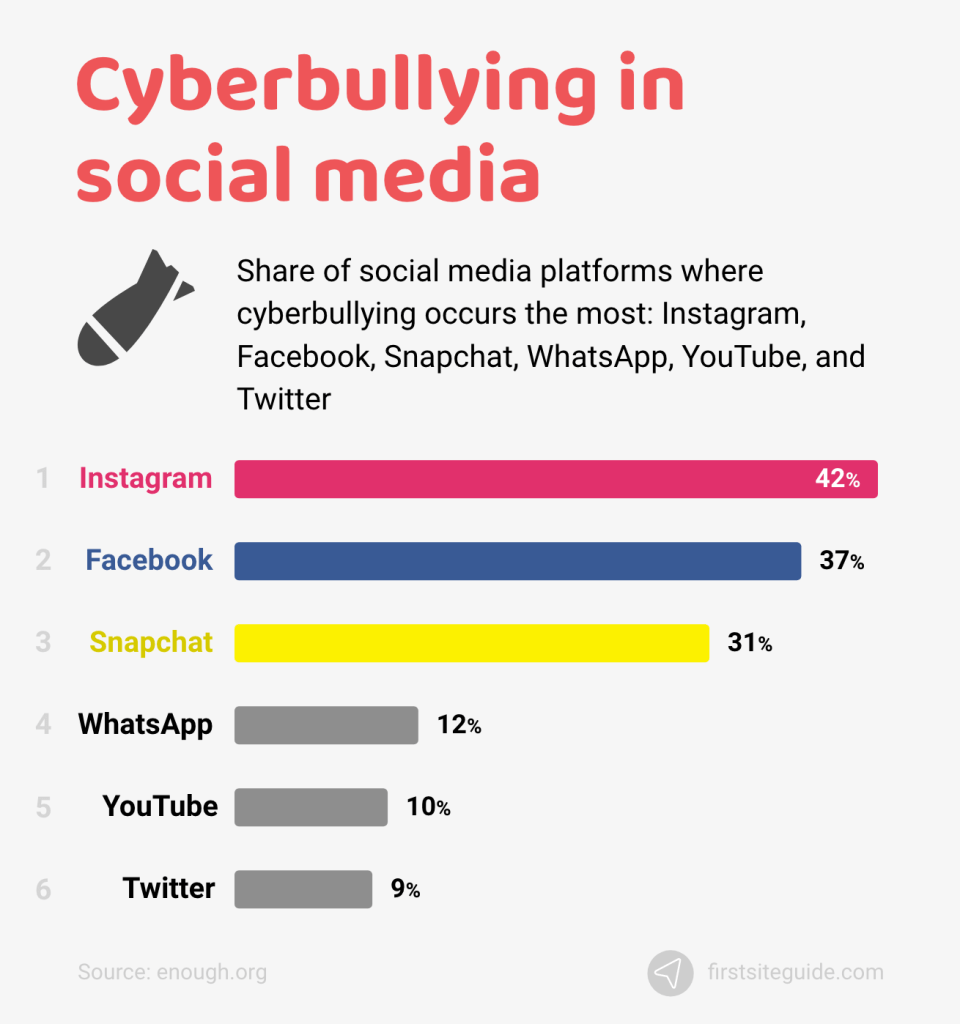
Bullying once stayed within the confines of school property campus and the dread of  being away from home in the morning to attend eight-hour long torture sessions full of squeamish humiliation had always an end for the day upon returning back to homes. But today unfortunately, technology-equipped bullies possess the evil ability to harass their targets  24/7, right at their fingertips. Cyberbullying is making some researchers rethink the definition of what it means to bully.

Gut wrenching,hurtful words once expected between 8 a.m. and 3 p.m. now pierce through anyone’s heart without warning at any hour,just a phone notification away. Even upon leaving school,profanity-spewing texts, and social media comments follow you everywhere like goons, right there,ready to be read and cause the innumerable amount of hurt that has no end to.Bullies may be sitting next to you but prefer to bully through social media for there’s always a wall to hide behind in the cyber world and that way the actions can be viewed by more and they feel a false sense of power and invasion over your personal space.

Today’s problem isn’t  the bullying which we have been familiar with since years, it’s the escape out of the vicious spiral of hate,hurt and harm which is difficult to find. Despite campaigning, bullying itself won’t become extinct, but the safety felt by victims can be increased.

‘Strong people stand up for themselves, but the strongest people stand up for others.’

 It is important that we empower children to morph from a Bystander to Defender. We have to give kids the courage and confidence they need to stand up for others instead of them feeling fear of getting hurt or  feeling powerless against the bully. Stepping in and speaking up is the greatest support a victim could get to tackle the wrong.Parents, school staff, and other adults in the community can help kids prevent bullying by talking about it, building a safe school environment, and creating a community-wide bullying prevention strategy. Parents need to sit down and have a conversation with their kids about bullying and praise them whenever they help someone being bullied.

Cyberbullying shouldn’t lead parents to ban a teen’s social media usage, rather there’s a need to have a room for conversation about how they need to responsible about what they write and post over their feeds and if it hurts anyone’s sentiments and that social media is about interactions with others and not your invitation for people to invade into your privacy.If a child is being bullied, it’s the foremost priority of the parents and teachers to ensure that they know that they don’t feel like a coward or tattletale while talking to someone about it- a trusted friend or another adult to find a solution.

              ” I survived bullying.”

 Let’s work together so no one else has to ever declare this again.

Unite to end bullying!

TECHNOLOGY IN EDUCATION IS IMPORTANT

TECHNOLOGY IN EDUCTION IS IMPORTANT
In the modern world, new technologies play a crucial role in all fields such as business or healthcare, and education system is not an exception. Students of new generation feel comfortable using their devices in everyday lives, so it is important to make them feel more comfortable during the learning process with the help of new technologies which can help to make this process to be more effective and interesting. It is much more comfortable for students to have their textbooks on computers or tablets than carrying a paper copy to each class. Also, new technologies give a great number of opportunities to make the learning process more interactive and engage students in work with a higher level of effectiveness. In this way, the school will demonstrate to students the importance of work with new technologies, so they will demonstrate an interest in the learning process and integrate into the class activities with great enthusiasm.

HUMANITY

HUMANITY
Humanity can be defined as quality of being human; the peculiar nature of man, by which he is distinguished from other beings. Being human does not mean that an individual possesses humanity.

We live in a world that, although it has borders, it is limitless. People can travel anywhere, see anything, experience every feeling that ever existed, but we are not satisfied. We try to impose borders on ourselves, we fight today to be recognized as not belonging to “their community”, to be labeled as part of a smaller group. We fight today to impose limits to a world in which yesterday people have fought so that it didn`t have any. And we applauded them.

Humanity is an important part of life which tells that to help others, try to understand other and realize the people problems with our own eyes and try to help them

For showing humanity you don’t need to be a rich person, even a poor person can sow humanity by helping someone or sharing his or her food, etc.

When you show humanity you have a feel click or a pinch from your inner soul which you cannot get from something else.

Every religion tells us about humanity, peace and love that is why no religion is higher than humanity.

Humanity is an important part of life which tells that to help others, try to understand other and realize the people problems with our own eyes and try to help them

For showing humanity you don’t need to be a rich person, even a poor person can sow humanity by helping someone or sharing his or her food, etc.

When you show humanity you have a feel click or a pinch from your inner soul which you cannot get from something else.

Every religion tells us about humanity, peace and love that is why no religion is higher than humanity.

“I should like to help everyone if possible, Muslims, Hindus, Christine’s, Jew, gentile, black men, white. We all want to help one another; human beings are like that. We all want to live by each other’s happiness, not by each other’s misery. We don’t want to hate and despise one another. In this world there is room for everyone and the earth is rich and can provide for.

Yeah today I will tell stories of three people who are the biggest example of humanity and they are human lover.

Firstly just imagine yourself I fill this class with garbage how will you feel like you will not stay in this but there is one who go in that garbage search there and you what he found. He found a dead body of child he took that body washed it and buried that body and from that day he used to search in garbage with his wife this man is no other than Mr. Abdul Sattar Edhi the lover of humanity . He is the founder and head of the Edhi Foundation, a non-profit social welfare organization in Pakistan. He is the man who serve is whole life serving for humanity without any selfishness. He has bathed and buried over a thousand unclaimed bodies in a time when selfishness and greed are at their peak and nobody seems to know the meaning of words like altruism and selflessness. His achievements in the field of charity are bound to make one think that his name is synonymous to nobility and humanity. And today he is running Pakistan biggest network of ambulances and shelter.

Moreover his charity does not discriminate based on religion, race or gender. For him, religion is human rights. Edhi has spent many sleepless nights working and serving for humanity whether it is to bury unclaimed bodies or feeding any poor. Besides it he lives a simple life living in small house many of times he used to sleep on the concrete or on the small batch outside his shop his qualities makes him the man of simplicity and human being lover.

As Edhi Said: “No religion is higher than Humanity”

Secondly I will talk tell you about a person who is basically a Pakistani but he is living in Canada he had son named as Ali and his son was 18 years old this man lost his son in accident. The accident was like that his son was working part time as pizza delivery boy when he was on the way for the delivery one black guy who was also of his age come before him and said him money but Ali was honest with his job he refuse that and that guy shoot him that time. When Ali’s father came to know about his son’s death he was in shock and after few days police caught the person who killed his son and called Ali’s father to come when he reach there he came to know that boy who killed his son is 18 years old he is orphan u people know at that time what he said u guys can’t believe it Ali’s father said “I don’t want to do any case on this boy I want to adopt this boy and want to take all responsibilities of this boy because today I lost my son I don’t want tomorrow somebody else lose his 18 years old son”. Just for a minute place yourself on the place of Ali’s father what will be you feeling your 18 years old son shoot dead. Ali’s father this act of humanity raise whole mankind and today he has 4 orphanages in Canada where he take responsibility of around 800 children.

Thirdly the person I am talking about is the well-known personality the person who give us world cup in 1992 he is great leader and humanity lover he is Imran Khan. Most notable among his humanitarian efforts has been the establishment of Shaukat Khanum Memorial Cancer Hospital and Research Centre, named after his late mother. It is Pakistan’s first and only cancer hospital that provides 75% free health care, and was built on public donations. Imran is now building a second hospital in Karachi, based on the successful Lahore model. In 1994, he inaugurated Namal College, a technical college which is now an associated college of University of Bradford.

Although these people do things for humanity on larger scale we should come on ourselves what we have do for humanity every day we spend our time hanging around with friends going outside for parties have we ever feed a poor person on the road have we ever realize how poor people live their lives no we haven’t because we never realize that for what we are in this world we never realize our duties towards humanity.

We should must realize for what we are in this world because every religion teach us humanity and one who serve humanity is the happiest man on the globe real happiness is your inner satisfaction which you can get by serving humanity what so ever how much you are rich you can’t buy inner happiness