The Homecoming by Rabindranath Tagore

The Homecoming”, also known as “Chutti” is a Bengali short story written by Rabindranath Tagore (1892-93). This story depicts how much parental love and care is required for every child in its childhood days. It also depicts that if we abandon a child, definitely tragedy will take place.

SUMMARY

Phatik Chakravarthi was a fourteen year old Bengali boy whose father died very early. He grew up lazy, wild and disobedient. Makhan Chakravarthi, his younger brother, was quiet, good and fond of reading. Phatik thought about doing new mischief every day. One day, he and his gang of boys pushed a wooden log shaped like a boat’s mast into the river. Makhan, objecting to this and sitting firmly on the log, was thrown into the river along with the log. 

At home, when he was questioned about this, he beat not just his brother, but also his mother. His uncle from Calcutta City arrived at that time. He agreed to take the Phatik to Calcutta and educate him there. Phatik was excited to leave, but his mother was torn between relief and sadness.

Phatik’s uncle had three sons of his own, and his aunt was not pleased with the new addition to their family. A fourteen-year-old boy is bound to have his own set of challenges. He was neither a child nor a man, crossing the line in between.

He missed the meadow, mountain and river of his native village. As a result, it’s no wonder that he struggled in school. He refused to answer any questions, was severely beaten at school every day, and was mocked by everyone, including his cousins.

Despite these negative signs, Phatik begins penning a letter to his mother. At first he lies and asserts to her that everything is rosy with his life in Calcutta.  But when he starts recollecting how harshly he was treated by his aunt on the occasion of his losing his school bag, he changes his tone – he writes that he wants to return home.  He promises that he will be a good boy from now on and do whatever his mother tells him to do. 

Then Phatik goes to his uncle and tells him he wants to be taken back home. He tells Phatik that the soonest he can take him back to his home village is when Durga Puja holiday comes, which is several months away. Phatik insists he wants to go right away, but he can’t convince his uncle to listen to him. That night Phatik goes to bed and makes a decision.

The next morning his uncle learns that Phatik has run away during the night, and he notifies the police about the missing boy.  Now for the first time his uncle, aunt, and cousins feel anxiety about their own culpability in Phatik’s disappearance. 

That evening in a pouring rain, the police carry the weakened-by-fever Phatik back to the residence.  It is clear that the delirious boy is critically ill, and a summoned doctor is not optimistic.  Meanwhile, in his delirious state, Phatik has idyllic visions of his mother and little brother, evidently recalling, or dreaming of, some precious moments when he felt loved.

Soon Phatik’s mother, have been notified about her boy’s serious condition, tearfully rushes to his bedside and lovingly fondles his feverish head.  Phatik looks up at her, and in his closing words asks, “has the holiday finally come?”  Indeed it has.

The story is a sad one and reminds us that the awkward years of early adolescence, while displays the first impulses of boastful assertiveness, it also features a newly intense, but unexpressed need for love and affection. Instead of abandonment, Phatik would have survived if he had been treated with love and care. Finally, his uncle and aunt could only express their regret for failing to convey their love for Phatik.

Mud Therapy

Mud corresponds to prithvi (earth), one of the element among panchamahabhutas. It is considered as one of the ancient wisdom of universe in curing sickness and also for rejuvenation of health. Mud therapy in Naturopathy involves scientific use of moistened earth in a proper manner, so as to benefit the body from within.

It is a treatment in naturopathy. Clay holds the quality to get inside the system and treat all the imbalances. In naturopathy, Mud Therapy involves the scientific use of moistened earth in a proper manner to benefit the body from within. Mud possesses the quality of absorbing toxins from the body which eventually helps in the prevention of many diseases. There are many advantages of mud therapy such as:

  • The application of mud over the body causes cooling and helps to retain the moisture. 
  • The shape and consistency can be changed easily by adding water.
  • Mud therapy is easily available and is an affordable procedure. 
  • It has the property of absorbing all the colours from the sun and radiate them to the body. 

The quality of Mud used

Mud used for therapeutic purpose should be clean and free from contamination. It should be taken at a 60cm depth from the surface of ground. Before using, the mud should be dried in sun rays, powdered and sieved to separate impurities.

Mud Pack-Local Application 

It is a pack that is made by keeping soaked mud in a thin, wet muslin cloth and making it into a thin flat brick according to the size of the patient’s abdomen. The duration of the pack would be 20 to 30 minutes. It is advised to place a blanket over the mud pack and cover the body as well when it is applied in cold weather.

Benefits:

  • The mud pack is applied to the abdomen to relieve all the forms of indigestion. It is also effective in stimulating and decreasing intestinal heat. 
  • A thick application of mudpack over the head proved to be effective in congestive headaches as it heals the pain quickly. 
  • The application of mud over the eyes is recommended in case of conjunctivitis, haemorrhages in eyeball, itching, errors of refraction like short sighted and long sight especially efficient in glaucoma as it helps to reduce eyeball tension. 

Mud Pack for Face 

Mud therapy exerts positive effects on various organs of body but most of all it does wonders to the face. It creates cooling effect on skin and also improves the complexion of the skin. To reap the benefits of mud therapy, you must apply a thick application on the face and allow it to dry for 30 minutes. From helping in controlling the effects of pitta to treating dark circles, Mud Therapy is regarded as one of the best ways of detoxification since ancient times. 

Mud Bath

In the Mud Bath therapy, mud is applied to the patient in a sitting or lying position. It involves the application of minerals rich mud and natural salts over the body. It successfully treats diseases like Psoriasis, Leprosy, Urticaria, leukoderma, and other skin allergy conditions. In this therapy, thorough care must be taken to ensure that the patient is safe from catching a cold during bath. Then, thorough washing of the patient with cold water jet spray is followed after the bath. In case a patient is feeling cold, warm water can be used. Afterward, the patient must be taken to a warm bed to avoid sickness. It should be noted that the duration of a mud bath should be 45 to 60 minutes. 

Benefits:

  • The effects of mud are refreshing, invigorating, and vitalizing.
  • Gives a cooling effect to the body.
  • It dilutes and absorbs the toxic substances of body and ultimately eliminates them from body.
  • It relaxes the muscles, improves blood circulation and helps to regulate the metabolism.
  • Useful in conditions of inflammation/swelling and relieves pain.
  • Anti-inflammatory and anti-aging effects.

Panchakarma Therapy

What is Panchakarma Therapy?

In Ayurveda there are several ways to keep the body and mind fit. That is why, Panchakarma is important. To reduce the problems of body and mind with Panchakarma is helpful. Ayurveda says that the human body is made up of 5 elements (earth, water, fire, sky and air), the universe is also made of those same elements. When there is a disturbance in the ratio of these 5 elements in the body, then dosha i.e. problems occured. Ayurveda brings these elements back to normalize and thus cures diseases. Panchakarma is a special medical method of Ayurveda. is believed. It is used for purification and rejuvenation of the body. Through this method, all the 3 physical doshas: Vata, Pitta and Kapha are brought back to normal and they are removed from the body. Different types of procedures are used to remove different chemical and toxic substances from the body that contaminate the different organs and blood. 

WHO CAN AVAIL PANCHKARMA?

It has 3 categories

First category

In this category a person who want to relax and detox their body are come under this.

The body is purified during detoxification by eliminating toxins (harmful chemicals) from the body. Disease can also be healed in this manner. It is the process of purification of the body which is also beneficial for a healthy human lifestyle. 

Some of common problems in which one can take panchakarma:

  • Body relaxation
  • Headache
  • Stiffness in body
  • Tiredness due to hectic routine
  • For beauty purpose
  • For skin brightness and smoothness
  • to improve blood circulation

Therapies included:

  • Abhyanga (body massage)
  • Lepas
  • Sirodhara
  • Akshi tarpan
  • Fruit Mukha Lepam (Traditional Ayurvedic Fruit Facial)

Second category

Ayurveda is based on the principle of curing a patient’s condition and maintaining one’s health. As a result, Panchakarma is believed to be the ideal therapy for the treatment of both physical and mental disorders.

In second category severe patients with lifestyle disorders can have panchkarma.

Some of common problems in which one can take panchakarma:

  • Hypertension
  • Diabetes
  • Knee pain
  • Back pain 
  • Thyroid
  • Migraine
  • Obesity
  • Stomach ailments
  • insomnia 

Therapies include:

Herbs used according to doshas and diseases

  • Abhayanga
  • Patra Pinda Sweda (Leaf Bundle massage)
  • Shastik Shali Pinda Sweda (Medicated Rice massage)
  • Parishek (Medicated herbal water therapy)
  • Utsadan (Powder massage/ obesity massage)
  • Nabhi Vasti ( Umblical oil reservoir therapy)
  • Whole Body Lepam (Full Body Lapping)
  • Kati basti
  • Nasyam
  • Shirodhara
  • Janu basti
  • Dhoompan

Third category

This is primarily for chronic diseases. With the use of panchakarma, several major disorders that are persistent and untreatable in conventional ways can be treated.

Few common problems in which one can take panchakarma:

  • Arthritis,
  • Paralysis, 
  • Stomach related diseases,
  • Sinus
  • Cervical spondylitis, 
  • Sciatica, 
  • Sever Joint pain,
  • Eye and intestinal diseases 
  • Knee replacement
  • Depression
  • Neurological disorders
  • Varicose vein
  • Osteoporosis
  • Conjunctivitis
  • Psoriasis others..

Therapies includes:

Herbs are used according to doshas and diseases

  • Sarvangya Abhayanga (Traditional Ayurvedic massage)
  • Patra Pinda Sweda (Leaf Bundle massage)
  • Shastik Shali Pinda Sweda (Medicated Rice massage)
  • Parishek (Medicated herbal water therapy)
  • Utsadan (Powder massage/ obesity massage)
  • Nabhi Vasti ( Umblical oil reservoir therapy)
  • Whole Body Lepam (Full Body Lapping) 
  • Churna Pinda Sweda (Herbal powder massage
  • Udvartana (Dry powder massage
  • Anuvasna Vasti (Oil enema therapy)
  • Niruha Vasti (Herbal enema therapy)
  • Jaluka & Leech Therapy (Blood purifier therapy)
  • Kati basti
  • Nasyam

Gender differences or what?

I completely agree with J Ann when they talk about gender differences and how society had deeply created that image in peoples mind. It is that widely accepted that even if you ask a small child if boys can cry, they simply would say otherwise. All of this questions us the very idea of the kind of generation we are breeding into. Society had laid down certain characteristics as to how a man should behave and how a women should too. This line is so wide that people are terrified of crossing it. 

We have all been conditioned to believe that women are born to be weak, emotional, always in distress, home makers and always crying. While on the other hand men are strong, not emotional and always the hero. This have been taught to us in the forms of books, academic sessions, moral policing, films etc. It has become so much rigid that people who do not feel the same are alienated and ridiculed. They are forced to believe that they are not normal when in reality no barrier has been kept or the definition of normal haven’t been defined yet to be judge of someone’s gender. 

We can understand this very closely if we take a dive into our childhood. Ever since we were kids there always have been certain set of rules for a girl child and a boy child, the latter being more liberal than former. Girls were asked to come home early while boys weren’t. Young boys were taught to not cry and be strong and if you cry then it simply means that you are a girl and being a girl was projected as a shame. Directly or indirectly we all have been a part of this system which fosters a toxic environment for people who do not identify their sex and gender as same to grow. At this point of time, they would feel dejected, left out from society and people always mock them, making them feel inferior of who they chose to be. 

Although recently things have taken a turn, we now live in a world where people come out and chose out be who they are than living beneath a mask that society force them to wear. We see a greater representation of gender diversity in all forms in books, media, novels, social media etc. All of this had made people more comfortable with the idea of acceptance than denial. Numerous people live in denial of who they actually are and find it hard to fit in with the right crowd. 

We can see examples of people exhibiting different sorts of characters despite the gender factor in today’s world. In 21stCE, the idea of acceptance has become much easier with lot of people coming out of their shells and being who they actually are. Celebrities like Harry Styles, have recently been center of attention in terms of their representation for gender issues. Harry dressed up in a way he loved and broke all barriers of gender disparity. And because of which celebrities, especially in the K pop industry have increasing become gender diverse in terms of their representation. 

It doesn’t take much to understand and be empathetic to people who feel lost when in terms of identifying who they want to be. After all, we all want to be accepted and loved for who we are than anything else. We all should move forward to a nation, transparent and more open to needs and diversity in gender and inclusion from all sides so that people can learn to be who they want to be and not forced to.

Solar Energy: Advantages and Challenges

What is Solar Energy?

Sunlight is a renewable source of energy which can be converted into usable energy by solar panels. There are two main types of solar energy. Solar photovoltaic (PV) panels which directly convert solar energy into a usable form of energy using a PV cell containing a semiconductor material. CSP (concentrating solar power) on the other hand, concentrates energy from sunlight to a heat receiver which transforms energy from heat into mechanical energy, and in turn, solar thermal electricity.

Photo by Pixabay on Pexels.com

Advantages of Solar Energy

  • Because solar energy does not emit greenhouse gases, there will be no negative environmental impact. It is a pollution-free and non-polluting source of energy.
  • Solar energy is a renewable source of energy. As a result, there will be no trouble using it all up without leaving any for future generations.
  • Expanding the solar energy business will result in a large number of green jobs.
  • Solar energy will benefit the economy in the long run because there will be no need to import fossil fuels like coal for energy.
  • There is no need to buy any resources because sunlight is free.
  • Solar energy requires money to install, but the energy generated is the cheapest electricity. So, many more people can have access to affordable electricity.
  • Even in disaster-hit places, off-grid solar systems provide power. Off-grid means buildings designed to be self-sufficient without depending on public electricity and water lines.
  • The production of electricity from fossil fuels requires a large amount of water. Solar energy production does not require the use of water. As a result, it saves water. Therefore, this makes solar energy more reliable. Even if there is a drought, power generation will not be affected.

Challenges in using solar energy 

  • Solar power generation on a huge scale requires a large area of land.
  • Solar cells currently only use a small portion of sunlight. Increasing the efficiency of solar cells is a big challenge. Moreover, as efficiency improves, the amount of land required decreases.
  • Solar energy production facilities need a huge investment to set up.
  • Not every part of the earth gets enough sunlight to totally rely on it.
  • Storage is required to ensure power supply during the night when there is no sunlight.
  • The clean energy industry is facing a skilled labour shortage. Another challenge is to train a large number of people in the required skill set to keep up with the increasing solar industry.
  • Toxic chemicals such as sulfuric acid and hydrochloric acid are used in the production of solar cells. Developing efficient solar cells using less toxic chemicals is a big challenge.

Conclusion

The use of solar energy will result in energy transformation from fossil fuels to clean and sustainable energy. It also helps in the fight against global warming. Government should provide subsidies and widespread awareness to encourage roof-top solar grids and solar farms, so that everyone will have access to affordable and clean energy.

Brave New World by Aldous Huxley

Brave New World is a dystopian social science fiction novel by English author Aldous Huxley, written in 1931 and published in 1932. The book presents a nightmarish vision of a future society.

In 1999, the Modern Library ranked Brave New World at number 5 on its list of the 100 best English-language novels of the 20th century. In 2003, Robert McCrum, writing for The Observer, included Brave New World chronologically at number 53 in “the top 100 greatest novels of all time”, and the novel was listed at number 87 on The Big Read survey by the BBC. Despite this, Brave New World has frequently been banned and challenged since its original publication. It has landed on the American Library Association list of top 100 banned and challenged books of the decade since the association began the list in 1990.

Summary

This is a story about a world where people are born in test tubes and their lives are predetermined by their social status. Mothers, fathers, children, and other social relationships do not exist, and all of the primary human needs are met by forced or fabricated social experiences.

The Alphas, the top social class, are the most brilliant and enjoy more of life, whereas the lower classes, who have been genetically stunted in a lab, perform the society’s less important chores. To further assure their future social rank, each generation of children is created in batches via cloning and suggestive conditioning.

Bernard, a government psychologist in London, is an Alpha, but he’s physically small and doesn’t like society’s artificial social aspects, such as unrestricted sex and soma, a drug that makes people feel drunkenly good.

Bernard is sent to New Mexico as a psychologist to study a “savage” reservation, a place where the “old” society still exists. He brings Lenina, a young and attractive woman, with him, and the two of them enter the reservation together. There, Bernard meets Linda, a lady who grew up in London but was abandoned in the reservation several years ago. It is also discovered that, Linda had a son named John.

This is problematic because the father is Bernard’s boss, the Director of Hatcheries and Conditioning, and Bernard’s society does not accept procreation through natural means. Instead, Bernard decides to bring Linda and John back to London.

Bernard, who is normally quiet, becomes outgoing, as his fame for bringing back John, “The Savage”, grows. However, when John fails to show up for a social event, his social status returns to one of an outcast.

After his mother’s death, John understands that something is wrong with society. He attracts the attention of the Controller, the regional leader of Western Europe, and then John and the Controller talk.  

The Controller explains how and why things are the way they are.  That the coexistence of truth and happiness is a balancing act and that they have chosen a life of extreme happiness with very little truth.

Bernard is sent to an island with other freethinkers like himself, and John decides to move to the countryside and live alone. In the end, after being made a spectacle, John hangs himself out of shame.

Review

There’s a lot to say about this story, but what draws my interest is the concept of predisposing individuals for a specific course before they’re even born, similar to putting them on a train track. We learn in the story that lower-level individuals learn what is comfortable to them early on so that when they grow up and have to do menial duties, they are not angry because they have been conditioned to believe that what they are doing is good. In other words, a social ceiling has been created for them.

What’s even more interesting is that the same thing could be happening today. For example, if a person is raised in a high-status social network, he or she is bound to stay in that high-status social network. Similarly, someone who grew up in a poor social network is more likely to stay in that network. Of course, these paths aren’t cast in stone, and there’s always the possibility of deviations, but for the most part, one’s environment has a significant impact on the type of person they become and the decisions they make.

What’s exciting to see are individuals, through their own talents or luck, who shift their social circumstances and assimilate themselves into other social networks. In essence, they are shifting the direction of their tracks and arriving at new destinations.

Cycling for Health and Fitness

Physical activity is required to be fit and healthy. Obesity, heart disease, cancer, mental illness, diabetes, and arthritis are all diseases that can be prevented by regular physical activity. One of the most effective strategies to lower your risk of health problems related with a sedentary life is to ride your bicycle on a regular basis.

Cycling is a low-impact, healthy activity that may be enjoyed by people of all ages, from toddlers to seniors. It’s also enjoyable, inexpensive, and environmentally friendly.

Riding to work or the shops is one of the most time-efficient ways to combine regular exercise with your everyday routine. An estimated one billion people ride bicycles every day – for transport, recreation and sport. It only takes two to four hours a week to achieve a general improvement to your health.

Photo by Andrea Piacquadio on Pexels.com

Health benefits of regular cycling

Cycling is mostly an aerobic activity, which means that your heart, blood vessels and lungs all get a workout. You will breathe deeper, sweat more, and have a higher body temperature, all of which will improve your overall fitness.

The health benefits of regular cycling include:

  • increased cardiovascular fitness
  • increased muscle strength and flexibility
  • improved joint mobility
  • decreased stress levels
  • improved posture and coordination
  • strengthened bones
  • decreased body fat levels
  • prevention or management of disease
  • reduced anxiety and depression.

Cycling and specific health issues

Cycling can improve both physical and mental health, and can reduce the chances of experiencing many health problems.

1) Obesity and weight control

Cycling is a good way to control or reduce weight, as it raises your metabolic rate, builds muscle and burns body fat. If you’re trying to lose weight, cycling must be combined with a healthy eating plan. Cycling is a comfortable form of exercise and you can change the time and intensity – it can be built up slowly and varied to suit you.

2) Cardiovascular disease and cycling

Cardiovascular diseases include stroke, high blood pressure and heart attack. Regular cycling stimulates and improves your heart, lungs and circulation, reducing your risk of cardiovascular diseases. Cycling strengthens your heart muscles, lowers resting pulse and reduces blood fat levels.

3) Cancer and cycling

Many researchers have studied the relationship between exercise and cancer, especially colon and breast cancer. Research has shown that if you cycle, the chance of bowel cancer is reduced. Some evidence suggests that regular cycling reduces the risk of breast cancer.

4) Diabetes and cycling

The risk of developing type 2 diabetes is rising, posing a severe threat to public health. Physical inactivity is known to be a primary factor in the development of this condition. Large-scale research in Finland found that people who cycled for more than 30 minutes each day had a 40% decreased chance of acquiring diabetes.

5) Bone injuries, arthritis and cycling

Cycling improves strength, balance and coordination. It may also help to prevent falls and fractures. Riding a bike is an ideal form of exercise if you have osteoarthritis, because it is a low-impact exercise that places little stress on joints.

Cycling does not specifically help osteoporosis (bone-thinning disease) because it is not a weight-bearing exercise.

6) Mental illness and cycling

Regular bike riding can help with mental health issues like sadness, stress, and anxiety. This is due to the effects of the exercise itself and because of the enjoyment that riding a bike can bring.

7) Hand cycling and health

Hand cycles are similar to recumbent tricycles, but instead of using foot pedals, they use hand power. If necessary, Velcro straps can be used to hold the hands to the pedals.

This style of tricycle allows amputees, people with spinal injuries and those recovering from certain conditions such as stroke to cycle as a form of exercise and recreation. Hand cyclists get the same cardiovascular and aerobic benefits as normal bicycles.

The Great Gatsby by F. Scott Fitzgerald

The Great Gatsby, third novel by F. Scott Fitzgerald, published in 1925 by Charles Scribner’s Sons. Set in Jazz Age New York, the novel tells the tragic story of Gatsby, a self-made millionaire, and his pursuit of Daisy Buchanan, a wealthy young woman whom he loved in his youth. Unsuccessful upon publication, the book is now considered a classic of American fiction and has often been called the Great American Novel.

Summary

This is the story of a man named Nick who lives in America in the 1920s. He moved to New York to work as a bond trader and discovers that he lives next to a large mansion occupied by a mysterious man named Gatsby.

Gatsby throws huge parties every night, along with loads of women and alcohol, and when Nick is invited, he learns that Gatsby served in the army as well. However, no one knows how Gatsby became so rich.

Nick reunites with his cousin, Daisy, a flirty young woman who is married to Tom, a wealthy businessman. Tom, on the other hand, is having an affair with Myrtle, the wife of a mechanic.

Nick meets Daisy’s friend Jordan, a young professional golfer, and the two fall in love. In the meantime, Nick and Gatsby become friends, and Gatsby tells Nick about how he inherited his wealth from a yacht owner.

Gatsby also reveals that he knew Daisy when they were younger and that he is still in love with her. In fact, Gatsby secretly watches Daisy from across the lake, where she lives with Tom and her daughter.

When Gatsby and Daisy finally reunite, a flood of emotions returns. They acknowledge their love for each other. To escape the heat, they all drive into town.  When Tom finds that Daisy wants to leave him, he gets upset and tells Daisy and Gatsby to drive back home and talk about it. However, Daisy, driving Gatsby’s yellow car, accidentally runs over Myrtle.

Tom then tells the mechanic that it was Gatsby who ran over Myrtle. The mechanic shows up and shoots Gatsby when he is swimming at home. Unfortunately, no one attends Gatsby’s funeral, and Nick, confused and saddened, sells everything and returns to the Midwest.

Analysis

First of all, this novel provides a historical perspective on the 1920s, a fascinating period in American history.  We get the vividness of the time, with the lights and glitz that saturated the people. Drinking and parties were to be encouraged rather than discouraged.

It should also be highlighted that expressing this energy and culture through writing  is a difficult task. It’s not only saying that there were bright lights and cocktails, but also engaging the reader in a world with subtle reminders of the culture.

Identity is another major theme, as the characters, like real people, have complicated identities that frequently involve deceit. People aren’t who they say they are, as seen by Tom and Myrtle’s affair and Gatsby’s ambiguous history, as Gatsby’s name isn’t even his real name. And as readers, we are reminded of this when Gatsby’s father shows up and corrects Nick, saying his name was “James Gatz.”

There are various theories of how Gatsby became wealthy. Readers learn early on how he had gained his wealth , but are still wondering how he kept it over the years. Even after Gatsby’s death, ambiguous phone calls seem to be coming to the house, which hints at illegal gambling as a source of income for Gatsby.

Nick makes an interesting point regarding parties that may still be relevant today. That, despite the fact that parties happen every weekend, there is a sense of emptiness experienced at parties.  This emptiness stems from how easily people may be replaced. That if you go to enough parties, they all start to look the same.

Gatsby also wishes he could travel back in time to when he first met Daisy. And any character who wishes the present were the past, that things were the way they used to be, is doomed.  This is a strong literary strategy that many of the best stories use in their tragic characters. So be forewarned, living in the past is dangerous.

FAHRENHEIT 451 by Ray Bradbury

Fahrenheit 451, dystopian novel, first published in 1953, that is regarded as perhaps the greatest work by American author Ray Bradbury and has been praised for its stance against censorship and its defense of literature as necessary both to the humanity of individuals and to civilization.

In 1954, Fahrenheit 451 won the American Academy of Arts and Letters Award in Literature and the Commonwealth Club of California Gold Medal. It later won the Prometheus “Hall of Fame” Award in 1984 and a “Retro” Hugo Award in 2004. Bradbury was honoured with a Spoken WordGrammy nomination for his 1976 audiobook version.

Summary

This is a story about a man named Guy Montag who is a fireman.  However, by today’s standards, he is not a fireman. Rather than putting out fires, he starts them by burning books, which are outlawed by the government.

After talking to his neighbour, Clarisse, Guy begins to doubt his work. When he looks around, he sees a wife who doesn’t love him and a world wrapped in technology and war. Every day, people kill each other and  no one seems to care.

After learning that Clarisse died, Guy further begins to question himself whether or not he is doing the right thing by burning books. He is so enraged that he steals a book before burning a lady and a pile of books.

Beatty, his fire captain, notices changes in Guy and keeps a close eye on him. Guy tells his wife that he has a small book collection at home, and they try to read them together, but his wife seems disinterested.

Guy meets Faber, an old English professor, and the two decide to fight the government together.

Meanwhile, when Guy is at work, they receive a notification that books have been found. Surprisingly, the firemen arrive at Guy’s residence.

Guy is forced to burn all of his books with a flamethrower, but when provoked, he kills Beatty. He grabs what books he can and rushes over to Faber’s house for a final farewell. 

The government has launched a full-fledged broadcast hunt for Guy, which includes the use of a mechanical search dog. Guy escapes the city and walks down the river, where he encounters a group of runaways. There, he discovers that they have all memorized books, thus creating a human library of literature.

Finally, the runaways watch the city being destroyed by enemy bombs and prepare themselves for a grim future.

Analysis

So, why does this society dislike books? What did books ever do to humans?  In this society, people have chosen not to read books. The majority of people quit reading and instead found entertainment in the form of bite-sized  portions of educational information. 

The administration then decided that books should be forbidden because they contained contradictory views that caused debates and conflicts. Rather than creating a marketplace of ideas, the government wanted to streamline thinking so that everyone had the same viewpoint. What’s even scarier is that this doesn’t seem too farfetched to occur in real life.

Most importantly, this story tries to answer the question: Why are books so important?  As Faber discusses with Guy, books are important for three reasons.  The first is that books are excellent sources of information. The second reason is that reading books takes time and dedication. The third reason is that we have the power to react to our surroundings based on what we learn from reading. That the words in books aren’t just meaningless words, but have practical applications in our lives.

It’s not just because this old dead guy wrote some things for me to read hundreds of years later, but also because how do those words apply to our society today? 

Despite the fact that technology has progressed our society, we still tent to see the same human problems as in the past, so it seems that technology makes our life simpler but does not solve many of our most basic problems, such as war, disease, and poverty.

It’s quite scary to think that the author may have imagined some of the technology that we use presently. Fast cars, mechanical dogs, large TV screens, reality TV, bluetooth, and a variety of other technologies are included in the novel. It makes you question how far we are from a world without books.

Benefits of Surya Namaskar

In Surya Namaskar, Surya refers to “the sun,” and Namaskar means “bowing down in respect.” This has been the most popular yogic kriyas for many decades now, as it combines 12 yoga asanas in a yogic sequence. Practicing Surya Namaskar daily helps in balancing three constituents of your body, i.e., Kapha, Pitta, and Vata, which will help you lead your life in a greater way and influence your creativity and intuitive abilities. It’s simple yet powerful poses are what make it possible for people of all age groups and all sizes to perform it, anytime, anywhere.

Benefits of Surya Namaskar

1) Helps lose weight

Surya namaskar at a fast pace serves as an effective cardiovascular workout. It includes poses that stretch the abdominal region which is helpful in burning the extra fat layer around the belly. Hence, it is effective in losing weight.

2) Improves overall flexibility

Along with the spine, the entire body experiences deep stretches while performing Surya Namaskar. It expands and contracts most of the muscles and keeps the body flexible and agile.

3) Relieves gastrointestinal issues

Surya Namaskar stimulates the digestive tract due to alternate stretching and contraction of abdominal muscles and organs. It keeps the digestive and gastrointestinal issues at bay.

4) Cures insomnia

Surya Namaskar includes a set of 12 poses along with synchronized breath that calms the mind and ensures sound sleep.

5) Regulates and eases the menstrual cycle

Females experiencing irregularity in their menses or pain or discomfort before or during menstruation find Surya namaskar quite relieving.

6) Lowers blood sugar levels

Surya namaskar involves poses that stimulate heart muscles and act as a natural remedy for controlling blood pressure. It regulates the blood sugar level keeping the heart healthy.

7) Helps getting rid of anxiety, stress, and depression

The deep breathing involved in Surya namaskar poses draws oxygen to the brain which brings the state of calm. Along with the nervous system, it benefits the endocrine system, especially the thyroid gland which uplifts the mood and fights against anxiety and depression.

8) Increases the focus and concentration power

As already mentioned that the benefits of Surya Namaskar are not limited to physical health as it also relaxes the mind. Therefore, the physical postures along with breath regulation in Surya Namaskar are helpful in increasing awareness levels along with enhancing the concentration power of the brain.

Conclusion

Various studies have shown how beneficial Surya Namaskar is for uplifting the overall health. Therefore, doing few rounds of Surya Namaskar before starting your hectic regular routine is a must if you want to live life to the fullest.

So, next time you wake up to start your day, consider how much productive you could be if you added Surya Namaskar to your daily routine.

The Pros and Cons of Drones (UAVs)

What is Drone technology ? 

By definition, drones are unmanned aerial vehicles that are operated and navigated by a smartphone or a remote control.

As per records, the earliest version of drones was launched in 1849. Since then, drones have primarily been used for military purposes. Only a few years ago, the miniaturization of drones allowed different businesses to start utilizing drone technology.

Now, the drone industry is rapidly expanding. Drone technology is increasingly being used by organizations to manage their business and deliver services. In the near future drones may be used to deliver items and services. With this new technology, drones have their own set of benefits and drawbacks.

Pros of drone technology

  • Drones are used in a various sectors. They go to places that people find difficult to get.  For example, they can be used to quickly deliver medicines in hilly areas.
  • During natural disasters, drones can be used to deliver food. Not only can drones be used to distribute food, but they may also be used to locate and rescue those who are stuck. Drones can thereby save lives.
  • They can also be used in agriculture to disperse seeds, pollinate flowers, and identify crop diseases, and so on.
  • They can reduce human workload by performing monotonous chores such as delivering goods, sowing seeds, and so on.
  • Drones are extremely useful in substituting humans  for working in dangerous places such as mining.
  • Drones are being used in the military. By replacing humans, they can prevent or reduce the loss of life during wars.
  • They can also be used to provide internet access in remote areas.
  • Drones can replace various jobs, especially those that are monotonous. However, the good news is that drone technology is generating a lot more jobs in different sectors.
  • Drones are cost-effective. Many people who buy drones for personal use, for example, use them to take aerial shots. Taking aerial pictures used to be quite expensive before drones were affordable to the general people.

Cons of drone technology

  • Drones are vulnerable to cyber-attacks.
  • It’s possible that they’ll crash with flights.
  • Drones can be misused to stalk people, vandalize homes and  engage in a variety of other anti-social behaviour. There have been numerous instances where drones have posed a security threat.

Conclusion

Unmanned Aerial Vehicles (UAVs) have a wide range of applications. Drones have the potential to transform a variety of industries. Many industries, including agriculture, construction, mining, and filmmaking, are already using them.

Non-Fungible Tokens (NFTs)

What are Non-Fungible Tokens?

NFTs (Non-Fungible Tokens) are units of data that are stored on a blockchain.  They are non-fungible, which means they cannot be replaced by another identical item, which means they are unique.

 For example, if an artist wishes to sell digital art online, he or she can convert it to NFT and then sell it. People can buy this artwork using cryptocurrency.  They will be the official owners of digital artworks if they buy them as NFTs. They can resell it to someone else for a higher price. So, there will be only one official owner for NFT at a time.

Any digital work/art can be converted into NFTs. Music, video clips, photos, URLs, tickets, and metaverse virtual lands are just a few examples of the things that are being converted into NFTs.

Ethereum was the first blockchain to support NFTs. That’s why the Ethereum blockchain is mostly used for NFTs. Because of their growing popularity, several other blockchains are now adding support for NFTs.

The present situation

People are buying and selling NFTs through NFT marketplaces.Currently, the majority of NFTs are digital arts.

Bitcoin and Ethereum are cryptocurrencies that cannot be used for regular purchases. Only a few platforms, such as Xbox games and Overstock, accept cryptocurrency as a payment method. At present, cryptocurrencies are mostly used for trading.  So, people who own cryptocurrencies now have something to invest in: NFTs. So, some NFTs were sold for millions of dollars.  In February 2021, a Nyan cat gif that had been converted to NFT was sold for $58000. Another example is Jack Dorsey, the co-founder of Twitter, who sold his first tweet for $2.9 million. In August 2021, clip art of rock was sold for 400 ether  ($1.3 million).

They are digital assets, according to some. Several people who have bought NFTs have stated that they bought these as an investment in the hope that their value will increase in the coming days.

Benefits of Non-Fungible Tokens

  • NFTs enable artists to sell their paintings, music, and other works for a high price, which may not be possible before NFTs.
  • Even though at present NFTs are mostly used to sell digital artworks and video clips, they can also be used for a variety of other reasons such as preserving important documents.

Problems with Non-Fungible Tokens

  • The transaction of selling or buying an NFT consumes a lot of electricity. Because we are already fighting against climate change, this massive energy consumption is a serious problem.
  • The copies of digital artworks that were sold as NFTs are now available online and can be seen for free by anyone.
  • In the hope of becoming rich, many people are burning money to buy these overhyped digital artworks. Many will lose money when people lose interest in buying these NFTs. According to some, NFTs are a bubble that is going to burst.
  • The non-financial-transactions sector is mostly unregulated.
  • Hackers are stealing NFTs. They’re also sending malicious NFTs to steal cryptocurrencies. Recently, hackers stole $150k worth of crypto from Twitch co-founder’s Fractal NFT project.

The future of Non-Fungible Tokens

The technology offers a wide range of applications for storing and transferring digital assets. NFTs are still new and the technology is still in its early phases. So, with the new developments, the energy consumption of NFT transactions may also be reduced.  Furthermore, the use of NFTs may increase.

Conclusion

Non-fungible tokens are unique pieces of data that are stored on a blockchain. Digital art, music, video clips, and tickets are just a few examples of the digital assets that are being transformed into NFTs. Some believe that this is a bubble  that will burst, while others believe that NFTs will drive the digital economy. The technology is still in its early phases, so we must wait and see how it evolves.

Benefits of Game-Based Learning

What is Game-Based Learning?

Game-based learning (GBL) is a teaching method that is designed to help students learn and explore certain subjects and acquire skills while playing the game. This type of game has defined learning outcomes and is designed to help students in remembering and applying the learning in the real world. Game-based learning defies the old school method of ‘rote memorization’, in which the focus is on learning by memorization and recall of information.

The core concept behind game-based learning is repetition, failure and the achievement of goals. Students work toward a goal. During the process, they choose actions and experience the consequences of those actions. While doing so, they actively participate, learn and practice the right way to do things.

Benefits of Game-Based Learning

1. Boost self-confidence

Motivation is one of the core benefits of game-based learning.  As students progress through the game’s various stages, they feel a sense of accomplishment. Game-based learning has been shown to increase student’s self-confidence by 20%.

2. Sharpen Memory

According to studies, game-based learning sharpens memory by 90%. Because the principles are taught visually, this leads to better retention power.

3. Better Analytical Skills

Game-based learning encourages students to think critically and logically, allowing them to increase their analytical skills by four times more. 

4. Better Conceptual Knowledge

Game-based learning improves student’s conceptual understanding and knowledge by 11%. The game’s interactive aspects boost their degree of involvement and promote better learning.

5. Simplifies Complex Concepts

Theoretical concepts might be difficult to propagate. Games can be used to break them down into more manageable chunks. This trait of Game Based learning is also useful for students writing an expository essay as a college assignment.

6. Motivate towards completing tasks

Game-based learning keeps students engaged and allows them to accomplish three times as many activities as they would with traditional learning techniques.

7. Enhance real-world skills

Game-based learning encourages students to “learn by doing.” The learner gains a 20% better understanding of real-world applications through hands-on experience.

8. Inquiry-based learning

By performing certain actions and then understanding and facing the consequences of those actions, the learner takes an active role in acquiring knowledge.

9. Encourages Teamwork

Since game-based learning involves complex activities, the entire group can  team up in the learning environment, conceptualize the potential results and offer their plans in solving the problems.

10. Provide immediate feedback

Students feel motivated when they get their scores immediately, pushing themselves to play until they get the perfect scores.

Conclusion

Game-based learning improves a student’s ability to acquire and retain new information. It helps students in learning new concepts, remembering them, and applying them when needed.

As a student, you can try to find games that are related to the subjects you are studying. You will notice a big change in your learning abilities as you dive deep into the virtual world of knowledge.

The science of Sleep

Sleep is one of the most important part of our lives . We spend about one third of our life sleeping. It is as necessary as food and water. Sleep affects almost every type of tissue and system in the body.

Anatomy of sleep

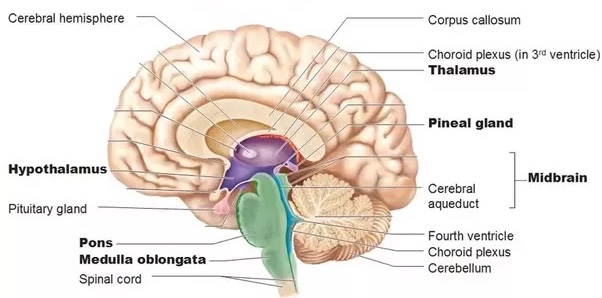
Hypothalamus

It is a peanut- sized structure above the Pituitary gland deep in the brain. It acts as the control centre responsible for shutting down the brain’s arousal signals that affect sleep. The nerve cells of neurons in the hypothalamus are strongly activated during sleep. Within the hypothalamus is the Suprachiasmatic nucleus (SCN)- groups of thousands of cells that receive data about light exposure directly from the eyes and controls the sleep rhythm.

Brain stem

The Pre-optic neurons and the brain stem produce a neurotransmitter called Gamma Amino Butyric Acid (GABA) which acts as an inhibitor as it blocks certain of signals and decreases activity in the nervous system.

Pons and Medulla

Pons, Medulla and mid brain send signals to relax or `paralyse’ muscles essential for body movement in the REM( rapid eye movement )sleep. This prevents The body to move the limbs in dreaming state and protects it from any damages by acting out.

Thalamus

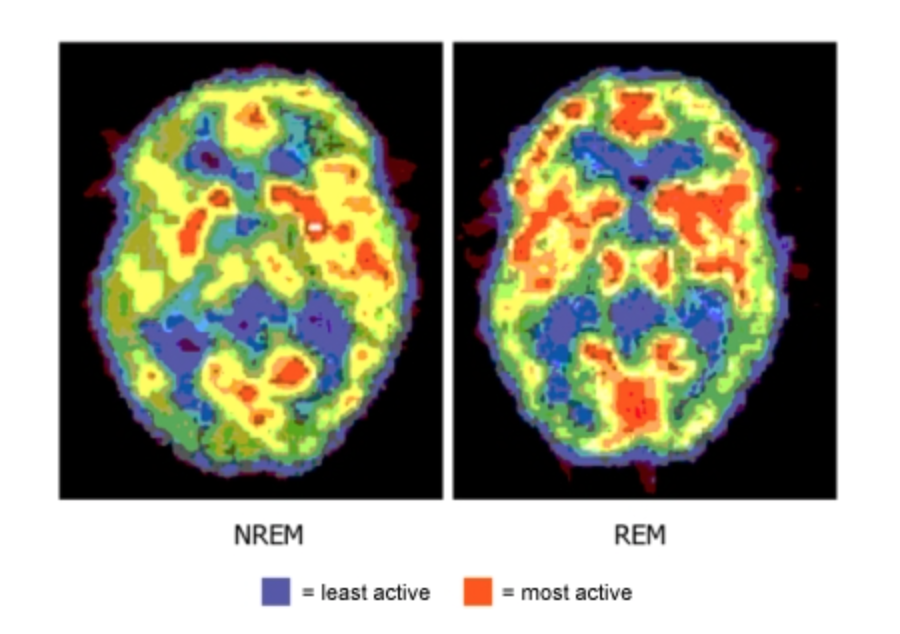
It acts as a relay for information from the senses to the Cerebral Cortex. The cerebral cortex processes data from memory. In deep sleep stage, thalamus becomes quiet but during REM sleep or when we are dreaming, it becomes active sending out sounds,pictures or emotions that make our dreams.

Pineal gland

It is situated in the middle of the brain and is the major site for the production of hormone called Melatonin. This hormone helps put the body asleep when the lights go off. It helps with the timing of Circadian rhythm (internal biological clock) and with sleep.

Amygdala

An almond -shaped structure located deep within the temporal lobes of the brain. It is involved in the processing of emotions and memories. It becomes highly active during REM sleep.

Release of adenosine ,which is a chemical released by cells in the basal forebrain supports sleep drive. Taking caffeine blocks the action of this chemical.

Stages of sleep

Stage 1 Non REM sleep (NREM)

  • The brain slows down.
  • The heartbeat , eye movements and breathing slows.
  • Body relaxes and muscles may twitch.
  • Lasts 5-10 mins.

Stage 2 NREM sleep

  • The body becomes less aware of the surroundings.
  • Body temperature drops.
  • Eye movements stop.
  • Lasts about 20 minutes per cycle

The brain also produces rapid,rhythmic brain waves known as sleep spindles. This allows it to gather ,process and filter newly acquired memories.

Stage 3 NREM

  • Slow brain waves called Delta waves are produced.
  • It allows you to feel refreshed the next day.
  • This is the state of deepest sleep.
  • You are blood pressure drops and breathing slows.

REM sleep

  • Voluntary muscles become immobilised.
  • Rapid eye movement from side to side.
  • You are breathing becomes faster and irregular.
  • Heart rate and blood pressure increase.
  • You dream ( about 2 hours every night).
  • Begins about 90 minutes after falling asleep.
Brain wave activity

An average sleep cycle lasts about 90 minutes . Ideally, we need 5-6 cycles of sleep every 24 hours. Adults need 7 to 8 hours of sleep a night. Although scientists are still trying to learn exactly why we need sleep but studies show that sleep is necessary for survival. The amount of sleep affects our immune system ,nervous system, growth and memory. After all , it is a well know fact that:

Sleep is the best medicine.

Web 3.0

Previous versions of Internet Era

Web 1.0: The first version of the web was started with the development of the web browser in 1991. It consisted of static websites with content written by a few people and organizations. Other people can only read the content, they cannot comment or provide new information, so it is just one-way communication. It worked very well but had one big problem there was no way to make money off it. For instance, a Web 1.0 startup called Google had heavy traffic, but couldn’t encash it.

Web 2.0: The next version of the web, which is web 2.0 was started approximately from 2004. It allowed consumers to add content through comments, blogs etc. People began creating a lot of content on social media websites as well. So, people can read and write on this version of the web, which allowed two-way communication.

What is Web 3.0 ?

Any innovation starts with a vision. So, many people had different version on how the next version of the web should be. The majority of them wanted a web that ensured data privacy and free speech. The invention of Blockchain technology, which enables peer-to-peer online payment transfers without the interference of banks, gave hopes of creating the decentralized web, where user privacy and free speech are guaranteed. The latest technologies, such as blockchain technology, artificial intelligence, and the Internet of Things, are being used to create Web 3.0.

Web 3.0 is defined as a decentralized web, where content does not lie in the hands of big corporations. Instead, it uses peer-to-peer infrastructure, so the information cannot be censored by corporations or the government. So, it can ensure free speech.

However, the reality may or may not match the vision. It may change somewhat from the vision or take a whole different direction.

The vision of web 3.0

  • Web 3.0 will most likely be a decentralized internet. Now there are already so many Decentralized applications (dApps), which are based on blockchain technology to give more control to users over their data and finances.
  • As the data is not controlled by big companies, user privacy will be guaranteed.
  • The accuracy of the information may also be improved by making Artificial intelligence learn to distinguish between good and bad data. AI is already being used to accomplish this goal. Google, for example, uses Artificial Intelligence to delete millions of fake reviews.

  • Web 3.0 allows 3D graphics in apps. Big tech companies have already begun to invest metaverse – virtual environments. Some of the most popular metaverses include Decentraland, Sandbox, and CryptoVoxels. Metaverses are made possible with the help of Virtual Reality (VR) and Augmented Reality (AR) technologies. We may use our digital avatars to interact, shop, and play games in the virtual world. There, we can use cryptocurrencies for financial transactions.
  • Web 3.0 is already being included by several websites and apps. According to some experts, web 3.0 will not be able to totally replace web 2.0 in the near future. Instead, both will run simultaneously.

Challenges with Web 3.0

  • Vastness: The internet is huge and it contains billions of pages and the SNOMED CT medical terminology ontology alone includes 370,000 class names, and existing technology has not yet been able to eliminate all semantically duplicated terms.
  • Vagueness: User queries are not really specific and can be extremely vague at the best of times. Fuzzy logic is used to deal with vagueness.
  • Uncertainty: The internet deals with scores of uncertain values. For example, a patient might present a set of symptoms that correspond to many different distinct diagnoses each with a different probability. Probabilistic reasoning techniques are generally employed to address uncertainty.
  • Inconsistency: Inconsistent data can lead to logical contradiction and unpredictive analysis.

Conclusion

Web 3.0 is the next step in the internet’s evolution, and its foundations have already been set. According to current standards, web 3.0 will be a huge advance in network technology since it will be a hyper-intelligent network capable of understanding information like a human. Aside from the technological marvels proposed by web 3.0, it also proposes the application of certain ideas that will drastically alter existing mode of operation of today’s networks.  And we as the end-users will usher into a new era of networking, one that will further blur the lines between the physical and the digital space.