“Silence does not mean yes. No can be thought and felt but never said. It can be screamed silently on the inside. It can be in the wordless stone of a clenched fist, fingernails digging into palm. Her lips sealed. Her eyes closed. His body just taking, never asking, never taught to question silence”
Amy Reed
I came across a post on Feminist’s Instagram.
This post struck a nerve that no other post ever did. Mainly because whoever this person (thedarkchocolatedandy) is, didn’t insult anyone, nor did they try to persuade anyone to believe them. All they did was point out how humans are different than animals and also that women aren’t a piece of meat.
I decided to make a post on what crosses the line from being intimate to being considered rape. I am not sure how comfortable I am with men and most women not knowing or understanding what rape is and who the assailant is, and also that no reason is justifiable for rape, however, I wanted to make it clear and give no one who reads this an opportunity to claim they were unaware.
Take this post as a guide to know what is rape.
What is Consent?
The general definition of consent is to allow or permit for something to happen.
Consent in terms of sex or intimacy refers to agreeing to have sexual intercourse with someone and letting them know about it. It also includes finding out where the other person stands.
Consent is restricted and comes with thick boundaries. A person may consent to sexting, but not actually having sex, or vice versa.
Consent could also be restricted to just being physical and not actually having sex.
Take for instance the Netflix Original, “GUILTY”. A beautiful movie loudly stating that consent doesn’t give permission for anything and everything. Tanu (Akansha Ranjan), accuses VJ (Gurfateh Singh Pirzada) of raping her. Throughout the movie everyone had numerous reasons to tag her a fibster, they refused to believe her, they ridiculed her, said she was asking for it. The biggest reason was that she was very into VJ and that she threw herself on him quite a lot. In the end it was revealed that she wanted to have sex with VJ. She was consenting to the sex. What she wasn’t consenting to is being watched by VJ’s friends and being recorded. She didn’t consent to being sexually assaulted while the two bystanders ridiculed her and lead VJ on.
This movie is an eye-opener and covers many reasons rape culture still persists in our society.
When do you NOT have Consent?
When a person is sleeping or unconscious
When a person is drugged or intoxicated
When you are threatening them
You use a position of authority or trust
Consent is withdrawn
When you ignore their NO, cries and physically being pushed away
When you have consent for only one form of sexual act and not the other
When they are pressured
Verbal Consents:
Yes
I am sure
I want to
Don’t stop
Go on
I still want to
I want you to
I’m ready
Yes please
I am comfortable
I want to continue
Verbal Disagreements:
No
Stop
I don’t want to
I am not sure
I don’t think so
Please don’t
Please stop
This makes me uncomfortable
I want to stop
I don’t want to continue
This feels wrong
Maybe we should wait
Diverting the topic
I want to, BUT
Saying Yes fearfully
Non-Verbal Disagreement:
Pushing Away
Pulling Away
Crying
Avoiding Eye Contact
Silence
Shaking their head no
Standing/Lying motionlessly
Looking Scared
Not removing their own clothes
What is Rape?
Sexual Assault refers to any form of sexual contact or behaviours without explicit consent by the victim. Attempted Rape, Unwanted touching, forcing a victim to perform sexual favours, oral or penetrating penis or any other object.
The Medical definition of Rape is, “Forced sexual intercourse, and/or forced sexual assault between two or more people is considered rape. Rape may be heterosexual or homosexual. Rape involves insertion of penis or any inanimate object into a person’s vagina, anus, mouth. Rape also includes any other sexual acts.” Force here doesn’t just refer to physical force; blackmail, psychological manipulation to coerce someone into being sexually active is also considered rape.
Sexual intercourse between an adult and a minor is legally considered statutory rape. The adult is found guilty even if the minor was consenting.
Intimacy with a minor wife is considered rape in India.
Marriage is not a licence for either partner to force an unwilling partner to have sex. Marital/Spousal Rape is now recognized and is a criminal offence.
Date Rape, sexual assault followed by the victim being drugged or psychologically manipulated.
Intoxicated Rape is when the victim is drunk and unconscious, not in the state to make a sober choice.
Consent taken by threatening the victim or victims loved ones is also considered rape.
Gang Rape occurs when a group of people rape a person.
Rapes in prisons and jails by other inmates or prison officials is also an offence, often overlooked and unreported.
Serial Rape is the rape committed continuously over a relatively long time period.
Payback/Punishment Rape is when a person rapes another out of spite.
War Rapes are rapes committed by soldiers during war as a way to force prostitution and slavery to insult an entire country.
Deceptive Rape is the rape that occurs when the rapist rapes a victim by gaining consent by misleading them.
Corrective Rape is a hate crime where homosexuals, trans and queer individuals are raped hoping to “correct” them. To force them to “turn” heterosexual.
Custodial Rape is the rape occurred in custody of police, hospitals, old age homes, orphanages or any other employee of the state.
Prostitution Rapes are rapes where rapists force prostitutes to have sex without paying them for their services, to inflicting pain and torture (cigarette burns, slapping, choking).
Exchange Rape is the rape where sexual favours are exchanged for money, rent, food, drugs or any other resource.
Punitive Rape is when rape is used to punish or discipline someone. Usually by an abusive teacher, parent, Religious leader, or a peer.
Incest Rape is when a victim is raped by family member.
Consenting Rape is when a consenting partner withdraws consent, but the rapist doesn’t stop and continues to get sexually intimate. Consenting rape is also when the victim consents, but isn’t completely “into it.”
Rape Culture
Rape Culture refers to the sociological concept of normalizing rape, and blaming victims for dressing or acting provocatively. A few illustrations of Rape Culture include:
Blaming the victim
She dressed provocatively
She shouldn’t have been out so late
She is already sexually active, who says she didn’t want it?
Boys will be boys
Tolerating sexual harassment
Assuming only immoral women get raped
Making degrading jokes about women
Associating “manhood” as dominant and sexually aggressive
Associating “womanhood” as submissive and sexually passive
Offensive memes
Not believing people who speak out
“You haven’t been raped yet, so chill”
Slut-shaming and congratulating men on “scoring”
Calling young women gold diggers when they marry old and older woman, cougars
Objectifying Women
Associating Rape to Victims character and not the rapists
Rape Culture is the direct consequence of toxic masculinity. The heavily patriarchal world teaches and forces boys and men to be strong and exert “masculinity” in the form of dominance, arrogance and sexual and physical aggression.
The only solution is to fight patriarchy.
Support for Those in Distress
The National Commission for Women, provides a set of helpline numbers, legal aid, and counselling contacts.
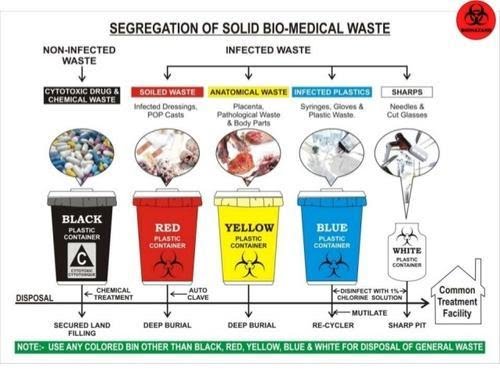
Biomedical Waste Management & Handling Rules, 1998 (“1998 Rules”) in India govern the handling, disposal and management of bio-medical waste (“BM Waste”)in India have been notified by the Central Government in the exercise of the powers conferred by Section 6,8 & 25 of the Environmental Protection Act, 1986. These rules provide for the framework of the management and Handling of disposal and scientific management of BM Waste
In wake of the COVID-19 pandemic, the Centre Pollution Control Board (“CPCB”) recently issued guidelines dated March 27, 2020 for handling, treatment and safe disposal of BM Waste generated during treatment, diagnosis and quarantine of patients confirmed or suspected to have COVID-19 (“Guidelines”).
The Guidelines have been necessitated due to the super infectious nature of the Novel corona virus and provide for a mechanism for the segregation, packaging, transportation, storage and disposal of BM Waste in order to avoid further spread of the virus through BM Waste.
So what do you mean by the BM Waste and what are the categories of BM Waste that the hospitals generate?
The Bio-Medical Waste Management Rules 2016[1] (“2016 Rules”) define the BM Waste as any waste, which is generated during the diagnosis, treatment or immunisation of human beings or animals or research activities pertaining thereto or in the production or testing of biological or in health camps, including the categories mentioned in Schedule I the 2016 Rules.
The 2016 Rules apply to all persons who generate, collect, receive, store, transport, treat, dispose, or handle bio medical waste in any form. The next imminent question that comes to our minds is what are the categories of BM Waste that the hospitals generate?
BM Waste generated from a hospital could be human anatomical waste, animal waste- microbiology & biotechnology, waste sharps, discarded medicines and cytotoxic drugs, solid & liquid waste.
Now that we know what’s the meaning and various categories of BM Waste, the most pertinent question arises that how is it supposed to be treated and disposed of by the hospitals in India during the ongoing COVID-19 pandemic?
While the hospitals in their usual course deal with the segregation, management and storage of BM Waste, the situation in times of COVID-19 is extraordinary the reason being the highly contagious nature of the virus and also it’s transmission cycle and multiplicity rate.
As the hospitals are being flooded with the suspected and confirmed cases, the Ministry of Health and family welfare (“MoHFW”) and the CPCB have issued various guidelines for the handling and management of waste generated from the COVID-19 facilities.
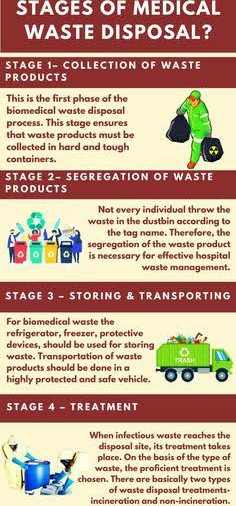
Under the 2016 Rules, while the hospitals are required to ensure that there is a secured location within its premises for a spill/pilferage free storage of segregated BM Waste in labelled/coloured bags or containers, the duty to transport the stored BM Waste from the hospital premises onwards to the common BM Waste treatment and disposal facility is of an ‘operator’ as defined in the Rules.
Specifically, in wake of COVID-19, the CPCB has issued Revision 1 to the Guidelines dated March 25, 2020 for Handling, Treatment and Disposal of Waste Generated during Treatment/Diagnosis/ Quarantine of COVID-19 Patients (“CPCB Guidelines”).
[2] The said CPCB Guidelines inter-alia, state that hospitals are required to depute separate BM Waste sanitation workers to COVID-19 isolation wards and maintain records of all waste generated in such isolation wards and ensure that the BWM generated is collected and separately stored in separate leakproof color-coded double layered bags or bins /containers labelled as “COVID-19 waste” as per the 1998 Rules and the Guidelines.
In fact the Bombay High Court in a recent pending public interest litigation has, while issuing notices to local municipal corporations and the State Pollution Control Board, also directed the Maharashtra government to clarify whether it was ensuring that all COVID-19 related biomedical waste generated in the state was being disposed of in a safe manner[3].
Now that we have a thorough understanding of how the BM Waste is supposed to be treated and disposed of the most important and the widely discussed about topic is that what are the measures that a hospital is required to take for the safety of its employees doctors, nurses and other support staff who are known as the (“healthcare personnel”) from the dangerous diseases like COVID-19?
In order to answer this pertinent question which is often there in the limelight, one must keep in mind that the Healthcare personnel who are the Frontline workers have a high risk of contracting the COVID-19.
While the hospitals are taking precautions and measures to control any spread of infection within the premises, it is particularly difficult given the highly super-infectious nature and hyper-speed feature of the virus. Due to this feature it spreads widely and it becomes a bit difficult to contain it in an over-crowded environment but it’s not impossible to achieve that as we all have been deterrent enough to contain it’s spread but still there is always scope for improvement.
The first steps towards controlling the spread of a virus is personal protective equipment also known as PPE which should preferably be a two-layered fluid-resistant apron and basic items like N-95 masks, face shield, full cover gowns and sanitisers but the same are rendered ineffective against the COVID-19 if the quality of these equipments is not up to the standard as required.
Greater emphasis is also to be laid upon the proper training and awareness of healthcare personnel towards proper use and disposal of the equipment. The spread of the COVID-19 virus is also particularly fast due to the heavy load of asymptomatic patients coming into the hospital and hence a greater need for the formulation of national COVID-19 protocol.
The MoHFW has vide its revised guidelines for clinical management of COVID-19 dated March 31, 2020[4] (“Clinical Management Guidelines”) impressed upon strict compliance of Infection prevention control (IPC) protocol for Hospitals and a consequent effect of the same is prevention and management of COVID-19 in the hospital staff.
This protocol inter-alia, standard precautions such as hand hygiene, use of PPE to avoid direct contact with patients’ blood, body fluids, secretions (including respiratory secretions) and non-intact skin, prevention of needle-stick or sharps injury, safe waste management, cleaning and disinfection of equipment and cleaning of the environment around a COVID-19 patient.
The 2016 Rules also provide as follows that in order to and for ensuring the safety of the healthcare workers and others involved in the segregation and pre-treatment of BM Waste, the hospital is required to train to all its healthcare workers, immunise them for protection against diseases which likely to be transmitted by handling of BM Waste, in the manner as prescribed in the National Immunisation Policy[5].
Also, hospitals are required to ensure occupational safety of all its health care workers and others involved in handling of BM Waste by providing appropriate and adequate PPE and also they must conduct health check ups at the time of induction and at least once in a year maintain the records for the same.
Now due to the pandemic if one is an employee ie the Healthcare personnel of the hospital one must understand the Legal aspect and angle also and the most important aspect of all is that what is the Legal obligations of the hospital, if and when an employee of the hospital tests positive for COVID-19.
Let’s answer this as it’s the most crucial and critical aspect. The present COVID-19 pandemic is an unprecedented event and is unlike any other infectious disease known to mankind and the medical world which is yet to fully decipher its modus operandi of infecting humans.
In a hypothetical situation wherein a hospital employee contracts COVID-19, it will be imperative for the employee in such a situation to establish that his possible exposure to COVID-19 was in the Hospital itself not in the community after considering that the employee is spending time outside as well apart from the hospital premises.
While in an ideal case, if it is proved that a hospital staff has contracted it ,i.e., it shall amount to ‘a hospital acquired infection’, then the hospital would be ordinarily liable. However, in the case of COVID-19 since it is seemingly impossible to trace down the exact source of the infection, in absence of such evidence and in light of utmost safety measures and precautions taken by the hospitals as per the guidelines, fastening of any liability on the hospital would be peculiarly difficult.
The defence available to the hospital may be culpability and negligence of the employee and proving that the hospital itself took all possible measures to avoid any mass spread of the infection.
The next relevant point to be analysed and answered is that when a Non COVID-19 patient contracts the virus during his term of being admitted in the hospital what are the Legal obligations of the hospital when this happens?
The National Consumer Dispute Redressal Commission in the matter of Apollo Emergency Hospital vs Dr. Bommakanti Sai Krishna & Anr.[6] observed that “As already observed, the infection occurred during the stay of the Complainant at the hospital. On the other hand, there is nothing to show that the source of infection lay outside the hospital. Thus, there is preponderance of possibilities of the infection having been acquired in the hospital itself. We therefore, do not accept the contention that it was necessary for the Complainant to produce expert evidence to prove negligence on the part of the concerned doctors in the hospital.”
The afore-stated judgement implies a presumption of liability on the hospital that in cases where the probability of acquiring the infection is much higher inside the hospital than from other sources. However, the same may not apply in COVID cases in light of the peculiar difficulty of tracing the source of acquiring the COVID-19 infection. Therefore, the presumption rendered by the aforesaid judgement will not be ipso facto applicable to cases of COVID patients.
As we have discussed the various pertinent relevant questions another one is that what are the legal obligations of the hospital, if and when a patient is misdiagnosed positive or negative for COVID-19 by the hospital due to a fault in the COVID-19 rapid testing kit (“testing kits”)?
The liability of a hospital in cases of misdiagnosis depends on the methodology of procuring of testing kits. A hospital may procure testing kit either from third party manufacturer or may manufacture them internally i.e. by itself or its subsidiary.
In cases where the misdiagnosis is on account of faulty testing kit procured externally, the hospital cannot be held directly liable as the liability may be shifted upon the manufacturer.
In cases where the misdiagnosis is on account of faulty testing kit is due to testing kits produced internally the hospital may be liable subject to it being proved that the misdiagnosed patient was indeed positive. However, factors such as the success rate of any testing kit not being 100% may have an interplay in determining the liability.
We have to be aware of what are the Legal liability of a hospital in a situation where the hospital discharges a mild/very mild/pre-symptomatic COVID patient to ramp up the capacity for serious COVID-19 patients.
A hospital will not be held liable for a systematic discharge of a mild/very mild/pre-symptomatic/moderate COVID-19 patient as the same is directed by the Central Government. On May 8, 2020, the MoHFW released its revised policy for the discharge of COVID-19 patients.[7] This revised policy provides that hospitals can discharge mild/very mild/pre-symptomatic in accordance with the protocols given therein.
In the earlier advisory[8], COVID-19 patients could be discharged only after chest radiograph clearance, viral clearance in respiratory samples, and if two of the patient’s specimens were negative within a period of 24 hours. The discharged patient would then have to home quarantine themselves in accordance with the revised policy.
So what is the protocol to be followed by a Hospital while disposing of the dead bodies of the COVID-19 patients?
The corpses are a source of infection for healthcare personnel/ other patients and cannot be disposed of by usual methods of disposal and therefore, the MHFW issued guidelines dated March 15, 2020 on dead body management in COVID-19.[9] The guidelines provide inter-alia, the protocol to be followed at the time of removal from the isolation room or area, put in bio-hazard bag and disinfection. Further, all surfaces of the isolation area (floors, bed, railings, side tables, IV stand etc.) should be wiped with 1% Sodium Hypochlorite solution and then it should allow a contact time of 30 minutes, and allow it to air dry as well.
While treating patients infected with the COVID-19 virus, what is the protocol for the treatment?
The All India Institute of Medical Sciences (AIIMS) has issued clinical protocol dated April 21, 2020 for treatment of Covid-19 patients and states such as Madhya Pradesh and Delhi have directed Hospitals and health centres dedicated to treating COVID-19 patients to follow the said clinical protocol.[10]
Treatment must be affordable for all. One must know whether or not there is a standardisation of costs of treatment of a COVID-19 for private hospitals?
Government hospitals are reaching their intake capacities and for that reason COVID-19 patients have been resorting to treatment in private hospitals. While some private hospitals are charging exorbitant amounts as costs of treatment, the same is worrying not just for the patients but also to the insurers.[11]
In a first, the State government of Maharashtra has capped treatment costs in private hospitals for people without medical insurance and for other patients, the capped prices will come into effect once they exhaust their medical insurance cover.[12]
The Hon’ble Gujarat High Court has vide its order dated May 22, 2020 directed the state government to issue a notification making it mandatory for all multi-speciality hospitals private/ corporate hospitals in Ahmedabad and on its outskirts to reserve 50% of their beds (or such other capacity as maybe specified by the state government) for COVID-19 patients.
In view of the same, the Government of Gujarat may come up with similar caps on costs as Maharashtra.[13] The Hon’ble Gujarat High Court also observed that the certain private hospitals authorised by the government to treat COVID-19 patients in Ahmedabad are charging exorbitant fees which is unaffordable for a massive section of the society and directed the state government to ensure that private hospitals do not charge exorbitant fees. [14]
Also in light of the same The Hon’ble Bombay High Court recently directed a charitable hospital to make court deposit of monies in a case pertaining to levy of exorbitant charges for treatment of COVID-19 patients belonging to poor strata of the society despite reserving 20% of its beds for poor and the needy.[15]
Getting angry on someone is the most easiest thing because it almost happens all the time. Can we control anger? Can we stop before we get it? Anger is a sudden reaction of the pressure inside that occurred due to disagreement of your opinion. Anger has a great impact because we speak without control. Words that come out of our mouth were actually came from our heart. Usually people hide the true opinions and try to fake friendships. But due to this sudden process the opinion of us over others comes out in a sudden manner.
Things done can never be undone so think before you do. Thinking about done doesn’t erase done. Neither can we change the past not set the future. So think about present because it’s the only thing that’s in our control. May be I can modify the sentence as present is also not in our hands atleast we have a feel that it’s in our control. The feel of real is not real but we are atmost in real. It gives us confidence and hope of our chances to change our present. Going with the flow is a old phrase which makes our lives flow like a wave in a sea. Have focus because its something that stops us from making something. Our conscience reacts only when it’s emergency, so depending on it is not trustworthy.
Have a clarity over your doing. Anger can’t be stopped from getting started. But we can decrease the intensity. We don’t know the initial point of the anger when it’s about to start. But we can remember it only after the incident. So try to stop the origin isn’t in our hands because it happens all of sudden and we don’t have control over it. So try to save ourselves from becoming worse is the only option left with us. We get to know about ourself at the time of anger. We need to control ourselves by shifting our thought to some other thoughts.
Manage your anger by thinking of something else and let your brian think in different direction. Have a shift over your thoughts and manage your anger. Don’t try to stop anger because you can’t stop it. Try to control the intense when you have conscience over your doing. It decreases the intense of your anger and thereby letting you mange your anger.
We go to schools, colleges, universities to complete our educated and start earning our livelihood. We take up jobs, practise professions or start our own businesses so that we can earn money to make our living. But which of these institutions make us capable of managing our own hard-earned money? Probably a very few of them. Our ability to effectively manage our money by drawing systematic budgets, paying off our debts, making buying and selling decisions and ultimately becoming financially self-sustainable is known as financial literacy.
Financial literacy is knowing the basic financial management principles and applying them in our day-to-day life.
Financial Literacy – What does it Involve?
From simple practices like keeping a track of our expenses and understanding the need to spend money if we like a product to striking a balance between the value of time saved and money lost, paying our taxes and filing of tax returns, finalizing the property deals, etc – everything becomes a part of financial literacy.
As human beings, we are not expected to know the nitty-gritty of financial management. But managing our own money in a way that it does not affect us and our family in a negative way is important. We certainly do not want to end up having a day with no money at hand and hunger in our stomach.
Why is Financial Literacy so Important?
Financial literacy can enable an individual to build up a budgetary guide to distinguish what he buys, what he spends, and what he owes. This subject additionally influences entrepreneurs, who incredibly add to financial development and strength of our economy.
Financial literacy helps people in becoming independent and self-sufficient. It empowers you with basic knowledge of investment options, financial markets, capital budgeting, etc.
Understanding your money mitigates the danger of facing a fraud-like situation. A few strategies are anything but difficult to accept, particularly when they’re originating from somebody who is by all accounts learned and planned. Basic knowledge of financial literacy will help people with foreseeing the risks and argue/justify with anyone learned and well-informed.
What should you read on / get informed about in Financial Literacy?
Budgeting and techniques of budgeting
Direct and indirect taxation system
Direct tax slabs
Income and expense tracking
Loans and debt – EMI management
Interest rate systems: fixed versus floating
Business and organisational transaction studies
Elementary Book-keeping and Accountancy
Cash in-flow and out-flow Statements
Investment & personal finance management
Asset management:
Business negotiation skills and techniques
Make or buy decision-making
Financial markets
Capital structure – owner’s funds and borrowed funds
Fundamentals of Risk Management
Microeconomics and Macroeconomics fundamentals
While there are various media to learn about financial literacy, we recommend that you join a short-term, weekend programme which helps you get financially literate.
Strap yourself in, we are going on a trip in our favorite rocket ship, steering through the clouds like little Einsteins. Climb aboard and get ready to explore, the Red Planet- Mars. From hostile deserts, to lonely islands and the highest mountains, wherever there is space to expand into, humans do so.
Hence it is hardly surprising that we are all ready to set foot into Mars and create the first permanent colony outside of Earth maybe even terraform another planet and turn it into a second blue home.
If you don’t know who is Elon Musk, then you better start googling his name and get to know him. Not only is he the billionaire founder of Tesla Motors, this a.k.a. Iron man superhero Tony Stark has ambitious plans to send humans to Mars by 2025.
If this is a trip then like any other, there is a need for a checklist with list of items to be taken to Mars and items we can conveniently leave back on Earth. Let’s get started fellow Martians.
A MARS COLONY CHECKLIST :
PORTABLE OXYGEN GENERATOR- You need to breathe. In case of emergency, a standby kit to generate oxygen is required. But considering humans, we might need a mask too because air is our favourite natural element to pollute.
PORTABLE SOLAR POWER KIT- Low battery and no charger sounds as scary as the trip itself. Whatever electronics you are bringing, as long as there is no electricity, forget about your entertainment. You don’t want to die of boredom.
PORTABLE WATER FILTER- We know there is frozen water on the planet. But we dont know if ita drinkable. All the ice deserves a drink, so bring a filter and soda-making machine if excess luggage permits (check with your airline)
PLANT SEEDS- Once you run out of your snacks you should look into farming. Be prepared, bring some seeds and check some tutorials on gardening (preferably in space).
LONELINESS- Self isolation might be needed to avoid radioactive exposure, well looks like the year 2020 is indeed a good practice for it. Also aren’t we all lonely from inside (No? just me? Okay…. *crawls back into my hole*)
NUCLEAR REACTORS- For creating a safe atmosphere and not the nuclear weapons that Nations own for “defense purposes” Let those weapons stay on Earth along with the people who threaten to use them because there isn’t much spice in their lives.
MULTIMILLION DOLLAR SPACESHIP – So large that it could fit the 150 Million homeless around the world, people who have been disappointed by the Politicians and their promises.
A HIGH TOLERENCE – A tolerance level higher than what we have to everything on social media and to the lifestyle of new generations.
MAA KE HAAT KA KHANA – A nice Tupperware tiffin box with food made by your Moms because, The M.O.M on Mars doesn’t cook or do ALL your work. (M.O.M –Mars Orbiter Mission also called Mangalyaan)
Lastly a desire to get away from it all. Elon Musk is not crazy, but a visionary, a modern adventurer who dares to dream. NASA is behind him by committing to send the first batch of astronauts on his mission. More than 200,000 people have signed up for the one-way ticket to Mars including Leonardo DiCaprio. Musk hopes to send 1 million people to the Red Planet and a ticket is estimated to cost around USD200,000 for each passenger (Hefty I know, but you get to travel with Leo as your travel buddy, hopefully this space- SHIP doesn’t sink).
Well as scary and uncertain as everything sounds it all comes down to one very important factor, Does Mars have Wi-Fi?
Section 58 of transfer of property act defines the terms mortgage, mortgagor, mortgagee, mortgage money and mortgage deed.
Section 58 of transfer of property act. Mortgage is the transfer of an interest in specific immovable property for the purpose of securing the payment of money advanced or to be advanced by way of loan, existing or future debt, performance of an engagement which may give rise to a pecuniary liability.
What is a Mortgage ?
A mortgage or charge is granted by a borrower in favour of a lender to secure repayment of a loan. If the borrower fails to pay back the debt, the mortgage gives the lender the right to take possession or to sell the property. The mortgage must be registered against the property at the appropriate registry. Each province has its own mortgage and registration rules.
What is a mortgage discharge ?
A mortgage discharge (also known as a “release”) is the removal of a mortgage from the registry in which it was listed. Once the mortgage has been discharged, the lender loses any rights it had against the property under the mortgage. The borrower must pay the legal fees for preparing and registering the mortgage, as well as any administrative fees charged by the lender.
Conclusion
Mortgage is a legal instrument which is used to create a security interest in real property held by a lender as a security for a debt it is the lenders security for a debt. In other words the mortgage is a security for the loan that the lender makes to the borrower.
The case of Kanti Ram vs Kutubuddin is perfect to answer this question. Sale of mortgage property or suit for sale of mortgaged property without redeeming prior mortgage form of decree sections 48,58,60,86,88,96 and 97 of transfer of property act. The plaintiff is not entitled to bring to sale the mortgaged property without first redeeming the prior mortgages. The lower court have proceeded upon a mistaken view of the law on the subject, and that they are entitled to bring to sale the mortgaged property subject to the lien of the prior mortgages and that would be acquired by th purchaser under the sale is the equity or redemption which existed in the hands of the mortgagor at the time of the second mortgage. The right of the mortgagor to redeem the prior mortgages. And on the other hand it has been contended on behalf of the respondents relying mainly upon the case of mata din kasodhan vs Kazim Hussain.
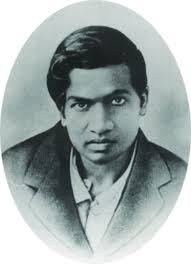
Srinivasa ramanujan (1887-1920) was born on 22nd Dec 1887, ThursdayKumbakonam city, Erode District atTamilnadu. Mother’s name was Komlattamal and father’s name was Srinivas Iyengar. He learnt bhajan, Ramayana and mahabharata stories from his parents. Srinivasa Ramanujan was an Indian mathematician who lived during the British Rule in India. He made great contributions in such areas as number theory, continued fractions, and infinite series, despite not having any formal education in math.
Ramanujan’s primary education was started on 1st Oct 1892 and day was Vijayadhashami. One day in maths class, teacher taught if you distribute 8 bananas into 8 children, each will get 1 banana. It means if you divide any number by same number then result comes out be 1.
Ramanujan :- What if we divide 0 from 0.
Teacher :- Obviously 1.
Ramanujan :- It’s not 1 sir, it’s undefined actually. If there is no banana and nobody then how it is possible to distribution of banana.
Teacher was baffled.
During school time, he had solved college level Mathematics. His estimated IQ was 185. Srinivasa was in such poverty that he often sustained on minimal foods and did not even have enough money to obtain paper for his studies. As a result, he used slates for his mathematics and cleaned them with his elbow, leading to bruises and marks. A child prodigy by age 11, he had exhausted the mathematical knowledge of two college students who were lodgers at his home. He was later lent a book written by S. L. Loney on advanced trigonometry. He mastered this by the age of 13 while discovering sophisticated theorems on his own. By 14, he received merit certificates and academic awards that continued throughout his school career, and he assisted the school in the logistics of assigning its 1,200 students (each with differing needs) to its approximately 35 teachers.
At the age of 15, Srinivasa Ramanujan obtained a copy of Synopsis on Elementary Results in Pure and Applied Mathematics, which contained 5,000 theorems, but had either brief proofs or did not have any. C Ramanujan then took to solving each of the theorems, eventually succeeding. Ramanujan had obtained a scholarship for the University of Madras, but he ended up losing it because he neglected his studies in other subjects in favor of mathematics.
On 14 July 1909, Ramanujan married Janaki ammal (1899 – 1994). After the marriage, Ramanujan developed a hydrocele testis. The condition could be treated with a routine surgical operation that would release the blocked fluid in the scrotal sac, but his family could not afford the operation. In January 1910, a doctor volunteered to do the surgery at no cost. After his successful surgery, Ramanujan searched for a job. He stayed at a friend’s house while he went from door to door around Madras looking for a clerical position. To make money, he tutored students at Presidency College who were preparing for their F.A. exam. In 1913, he sent a letter of 11 pages with 120 theorems to Cambridge University Professor G.H.Hardy. He invited him to England. Overcoming his religious objections, Ramanujan traveled to England in 1914, where Hardy tutored him and collaborated with him in some research.
some of his integration work
With the help of Hardy within 1 year he published 9 research papers. Just because of his research papers he got degree of B.A. and he was elected as Fellow of Royal Society. He was the youngest Indian to receive this honor.
Ramanujan’s knowledge of mathematics (most of which he had worked out for himself) was startling. Although he was almost completely unaware of modern developments in mathematics, his mastery of continued fractions was unequaled by any living mathematician. He worked out the Riemann series, the elliptic integrals, hyper geometric series, the functional equations of the zeta function, and his own theory of divergent series. On the other hand, he knew nothing of doubly periodic functions, the classical theory of quadratic forms, or Cauchy’s theorem, and he had only the most nebulous idea of what constitutes a mathematical proof. Though brilliant, many of his theorems on the theory of prime numbers were wrong.
In England Ramanujan made further advances, especially in the partition of numbers (the number of ways that a positive integer can be expressed as the sum of positive integers,for instance, (4 can be expressed as 4, 3 + 1, 2 + 2, 2 + 1 + 1, and 1 + 1 + 1 + 1). His papers were published in English and European journals, and in 1918 he was elected to the Royal Society of London. In 1917 Ramanujan had contracted tuberculosis, but his condition improved sufficiently for him to return to India in 1919.
Once a interesting incident took place. Ramanujan was ill and admitted at hospital. Prof. Hardy came to visited him. Then midst conversation Hardy said, i came from the cab and number of that cab was 1729.
“It is a very interesting number, it is the smallest number expressible as the sum of two cubes in two different ways.” He found a special property, and even tested that it was the smallest number with such a property, all in a few seconds.
1729 = (10)3 + (9)3 = (12)3 + (1)3.
After that this kind of numbers were known as Ramanujan Numbers.1729 is smallest Ramanujan number.
After contracting tuberculosis, eventhough the mathematician recovered enough in 1919 to return to India, but died the following year, without much recognition. However, the mathematics community recognized him as a genius without peer.The genius mathematician left as his legacy three notebooks and a huge bundle of pages, which contained unpublished result which were being verified by mathematicians many years after his death.
India was ruled by Muslims from 1206 to 1857. Their rule, however, was almost on the verge of end since Aurangzeb died in 1707. The British Empire in India was laid down by a company, the East India Company. The ultimate purpose of the company was to grow the British interests in the overseas countries. The representatives of the Company arrived first in the country in 1604.
By 1661, the Company had developed factories in Surat, Madras and Bombay in India. The Company started delivering justice arbitrarily which could be called as “traders’ justice” under the Charters. The Company’s officials, however, were all traders and had no legal background. Before 1726, judiciary developed in the three presidencies without any uniformity of laws. Then came in the Charter of 1726 which focused on this specific issue in all the three places. Importantly, this Charter derived authority of adjudication from just the Kings and not the Company officials.
Municipal institutions were established in the presidency towns which strictly followed the laws of England. Especially since the charter allowed disputes between natives to be heard by these institutions only on request by the Indians. This act of the Company gained the trust as it showed respect the sovereignty of local rulers. The main role of the company until 1757 was the facilitation of trade and commerce.
By 1717, the Company had secured the right to control and collect revenue of villages near Calcutta. After the battle of Plassey, the Company had installed Mir Jafar as the Nawab of Calcutta. He surrendered the Zamindari of the twenty-four Parganas to the Company which is around eight hundred square miles. It was called the “moffussil”. The Company then provided the adalat system for the administration in the moffussil.
In 1765, Shah Alam granted the Diwani also called revenue administration the three cities Bengal, Bihar and Orissa to the Company for an amount of twenty-six lacs of rupees per annum. Then came in the 1772 plan which provided for a Moffussil Diwani Adalat in each district. It comprised of a Collector as judge to decide civil cases. The court was to apply the Quran for the Muslims and for Hindus it applied the Shastras. The Regulations of 1793 later modified the same and referred them as “Hindu Law” and “Mohammedan Laws” instead of the Quran and the Shastra respectively. Similarly, the Collector took the advice of a Qazi for Muslim cases and in the case of Hindus, the advice of a Pundit.
The criminal justice system in 1790 was taken from the Muslim Qazis, Muftis and Maulvis and handed over to the Company’s English officials. The Muslim Law officers advise the courts. Subsequently, the Regulation of 1773 authorized the Calcutta Supreme Court to enroll English, Irish and Scottish advocates in law.
In 1793 Cornwallis created a regular profession by authorizing the Sadar Diwani Adalat to enroll pleaders or lawyers for all Company’s courts. It could be both Muslims and Hinds. The War of Mutiny also called the war of independence, 1857 changed the fate of India as the Bill of 1858 handed the entire possession of government of the Company of all the territories to the Crown. In 1833, the Privy Council was established. High Courts were established in 1861 in the presidency towns Calcutta, Madras and Bombay. Early Law reporting as a private enterprise was introduced for the evolution of the doctrine of precedent. Authentic law reporting began alongside the Indian Law Reports Act, 1875. Thus, Early Law reporting and Authentic Law reporting served as the two indispensable necessities for implementation of the doctrine of precedent. It also proved successful in drawing the hierarchy of courts and the emergence of authentic law reporting was positively executed in 1875.
In 1937, a Federal Court for India was established.
The Supreme Court of India was established on the same set of principles. An appeal from the federal court laid to the privy council which served as the ultimate court of request. But the system could not prevail for much time with the independence of India. The independence of India also made inescapable changes to the structure of the judiciary. The replacement of the Privy Council with the Supreme Court to serve as the ultimate court in India being the hugest of all changes. The Indian Legal System now, consists of various level of courts and one Supreme Court. The Supreme Court serving as the ultimate court of request.
This year has been unpredictable in many ways. We have seen terrible occurrences right from the very beginning of the year. What with the bushfires that started around south wales, Australia that a third state emergency had to be called. This was just day 2 of the New Year 2020. Then we saw war threats between the United States of Americas military and Iran. And I don’t even need to mention the corona virus pandemic that took over the entire world. A lot experienced in such a short span of time. We didn’t know what more to expect from this year.
But as everything came to a standstill with complete shutdowns and lockdown and social distancing taking over, many panicked on how they will be handling this new normal. I am focusing on the student community especially the final year students who were supposed to be having farewell parties and reminiscing their college years that had come to an end.
With this sudden take-over of the pandemic, all colleges shutdown adhering to the government issued guidelines. Mid-March that’s when it started in India. We however did not know how long this would be and honestly no one took this serious enough. We underestimated this issue to a great extent.
As time progressed colleges started taking classes online and giving out assignments. As this was happening, simultaneously the corona cases started rapidly increasing. Despite the best efforts taken by the government and the frontline and essential workers the cases were blowing out of proportion. This delayed the time as lockdown kept getting extended. As time was running short, colleges were forced to conduct online exams especially to the final year students. The UGC issued guidelines regarding this and gave the colleges the authority to conduct online exams for the final years.
Online exams were conducted and the results declared. This was a major change for the students as they had least expected the turn of events. They definitely exercised something new and scary. They would not in their wildest dreams imagine that they’ll take up their final exams of their college in this manner.
The most important part was that during a crisis like this the placements were not welcoming. With loyal employees being forcefully terminated and the market crashing, it was not a favourable situation to the fresh graduates. Unemployment was peaking with major layoffs from even reputed companies.
These young adults had to go through so much unprecedented activities during their last days of college life. They missed on some cherishable memories of farewell parties, the final exams with their friends, hanging out around the college campus and remembering fond memories of their college life in the campus. But what’s more important for them now is how they take their career and move forward. I’m sure this is not what they expected at the end of their carefree college times but I’m very sure that they have the ability and capacity to take failures in their stride and come up in life. I wish all of you the very best.
A bare reading of the definition of lynching states,
“To punish (a person) without legal process or authority, especially by hanging, for a perceived offense or as an act of bigotry”
One clear understanding from the above-mentioned definition is that there is no place for Mob lynching in a civilized land and especially in the world’s largest democracy.
The drafters of the Indian Constitution knew that laws in the country could be twisted to challenge the Fundamental Rights which were assured to the citizens and that’s exactly why The Right to Constitutional Remedies, that is, a process to seek justice through courts, was included in it.
Also going to through the epics, it holds no substantial, memorable or any quoted reference to this stated vicious practice.
Thus, in today’s world, Lynching stands as an exception.
The biggest irony and misfortune of our country is that everything and anything is politicized for insignificant political interests and vote bank. The same is true with most inhuman and abominable activity of mob lynching.
Early political context has been witnessed in the Kherlanji massacre in 2006. It was when four people were lynched over a land dispute at Kherlanji in Maharashtra. A mob of at least 50 villagers captured Bhaiyyalal Bhotmange’s house, and lynched four members of his family. Bhotmange’s wife and their daughter were marched naked in the village and sexually abused before being brutally murdered. The attack was after these women filed a police complaint against 15 villages who thrashed a relative. And despite such chaos, there were efforts to normalise the lynching later saying it was a casteist outrage against Dalits by the politically dominant Kumbi caste.
The next lynching that shocked the nation happened in Dimapur in 2015. A mob of least 7,000 to 8,000 infuriated people broke into Dimapur Central Jail, dragged Syed Farid Khan accused in a rape case out, marched him naked, stoned him, thrashed him, dragged him for over seven kilometres. There were attempts of tying a rope to his waist from a motorcycle. Ultimately, killing him and displaying his body on a clock tower. The brutal punishment was for the rape on a superficial level but what the mob thought was that they were lynching a Bangladeshi migrant. Khan, originally from Assam, had been living in for over Dimapur eight years. What is conflicting in this case is that the medical reports about the rape initially said the woman, who filed the complaint, was raped and then denying the same. Khan’s family claimed he was framed and said that the woman invited Khan to a hotel, forced him to drink and demanded Rs 2,00,000 from him. Ironically, this horrific mob violence executed was quoted by many as an example of serving justice.
Not much time later, Dadri lynching was witnessed. A 52-year-old Muslim man, Mohammad Akhlaq and his son, were attacked by a village mob with sticks and bricks, accusing them of stealing and slaughtering a cow calf and storing and consuming beef. The son was severely injured in the attack. Akhlaq was beaten till he died. This incident in Uttar Pradesh’s Bisara village near Dadri, was the first case of a Muslim lynched by a Hindu mob in the name of cow and beef. A primary inquiry by the Uttar Pradesh Veterinary Department said the meat recovered from Akhlaq’s refrigerator was not beef but of “goat progeny”. After a year in Mathura’s forensic department, the report said that the meat was of a cow or its progeny. And not much to surprise, the report was said to be politically motivated to normalise the lynching saying the mob was “emotionally charged” since cow slaughter is an extremely emotional issue for Hindus.
India is a multi-religious, multi-cultural, multi-ethnic, multi-dimensional and diverse country where people belonging to various faiths and religious denominations live together in peace and tranquillity. In such a diverse country, mob lynching in the name of protecting cow has the potential of leading to communal disharmony which may lead to national disintegration when national integration is badly required for peace, economic development and societal upliftment of the country.
Even since, Government imposed a ban on the sale and purchase of cattle for slaughter at animal markets across India, under Prevention of Cruelty to Animals statutes in 2017, it flashed a new wave of cow vigilante throughout the country. Though the SC suspended the ban on the sale of cattle in its judgment in 2017, giving relief to the multi dollar beef and leather industries and several states where beef is one among the primary foods, there was a rise in attacks on Muslims accusing them as beef eaters. Several innocent Muslims were murdered in such mob attack.
Law and order is a state subject and therefore all State Governments should deal with this inhuman activity strictly to maintain the rule of law and its supremacy. No one should be allowed to tinker with the law and the law violators and unruly mobs that resort to mob lynching should be put behind bars and severe punishment should be given to them so that this issue will be curbed and the country is saved from disturbance and violence. The primitive mindset and mob lynching are alien to our culture and should as such be discouraged and the secular democracy saved for the welfare of its citizens without any distinction of caste, creed, color or sex. Otherwise we will stoop to the 18th century which will take us back to the days of ignorance and illiteracy.
The government, though, has taken initiatives as it has asked States to appoint a nodal officer in each district to prevent the incidents of mob lynching. It has also asked to set up a special task force to procure intelligence reports about the people who are likely to commit such crimes or who are involved in spreading hate speeches, provocative statements and fake news.
Two high-level committees have also been constituted by the Centre to suggest ways to deal with incidents of mob lynching. One of the committees is being headed by Union Home Minister and the other by Union Home Secretary. The move came a week after the SC asked the Centre to enact a law to deal with incidents of lynching and take action on mob violence. The government respecting the directions of the Apex Court on the issue of mob lynching has issued an advisory to the State governments urging them to take effective measures to prevent such incidents, and also take severe actions as per the law.
Mob lynching should be dealt with an iron hand as it has the ramification of disturbing communal amity and peace in the diverse society and as such should not be tolerated and no one should be allowed to take law into his or her hands. It cannot be associated with any particular religion as it is a criminal activity and the criminal mindset does not come into people of any specific community. Thus to associate it with majority community is unjustified. But the majority community has the moral responsibility to protect and safeguard the minorities and supplement the efforts of the Government in this regard otherwise we cannot claim to build a new India where everyone irrespective of religion and faith will be safe and sound. We can rebuild new India only when there will be peace and the sectarian and communal violence will be things of yesteryears.
Thus, mob lynching should be condemned, discouraged and curbed if we have to build a strong and new India as a big economic power.
Aim of Untied Nations charter is to maintain international peace and security and to that end to take effective collective measures for the prevention and removal of threats to the peace and for the suppression of acts of aggression or other breaches of the peace and to bring about by peaceful means.
Purpose of the United Nations are:-
1. To maintain international peace and security, and to that end: to take effective collective measures for the prevention and removal of threats to the peace, and for the suppression of acts of aggression or other breaches of the peace, and to bring about by peaceful means, and in conformity with the principles of justice and international law, adjustment or settlement of international disputes or situations which might lead to a breach of the peace;
2. To develop friendly relations among nations based on respect for the principle of equal rights and self-determination of peoples, and to take other appropriate measures to strengthen universal peace;
3. To achieve international cooperation in solving international problems of an economic, social, cultural, or humanitarian character, and in promoting and encouraging respect for human rights and for fundamental freedoms for all without distinction as to race, sex, language, or religion,
4. To be a center for harmonizing the actions of nations in the attainment of these common ends.
5. To develop friendly relations among nation based on respect for the principle of equal rights and self determination of people’s.
Article 2
The Organization and its Members, in pursuit of the Purposes stated in Article 1, shall act in accordance with the following Principles.
1. The Organization is based on the principle of the sovereign equality of all its Members.
2. All Members, in order to ensure to all of them the rights and benefits resulting from membership, shall fulfil in good faith the obligations assumed by them in accordance with the present Charter.
3. All Members shall settle their international disputes by peaceful means in such a manner that international peace and security, and justice, are not endangered.
4. All Members shall refrain in their international relations from the threat or use of force against the territorial integrity or political independence of any state, or in any other manner inconsistent with the Purposes of the United Nations.
5. All Members shall give the United Nations every assistance in any action it takes in accordance with the present Charter, and shall refrain from giving assistance to any state against which the United Nations is taking preventive or enforcement action.
6. The Organization shall ensure that states which are not Members of the United Nations act in accordance with these Principles so far as may be necessary for the maintenance of international peace and security.
7. Nothing contained in the present Charter shall authorize the United Nations to intervene in matters which are essentially within the domestic jurisdiction of any state or shall require the Members to submit such matters to settlement under the present Charter; but this principle shall not prejudice the application of enforcement measures under Chapter VII.
The charter of the United Nations establishes a fundamental distinction between legal and illegal resort to force. By this it has in a way revived in international law the old distinction between just and unjust war.
The preamble of the charter of the United Nations starts with the determination of the people’s of the United Nations to save succeeding generations from the scourge of war and their willingness to practice tolerance and live together in peace with one another as good neighbors and not use armed force except in the common interest.
The prohibition of the threat or use of force in international relations against the territorial integrity or political independence of any state.
The use of force is necessary if it’s not possible to maintain peace by talks like things going on in Syria Iraq. But it’s not possible world or human being alwasys devide in two sides one is favour and one in against as positive negative or heads and tails this is impossible to fix everything and take stance at one side.
Brahmaputra is one of the largest river of the world. it flows through china, India and Bangladesh and then merges with the Ganges, and then flows into the Bay of Bengal. The Brahmaputra is among the world’s top five rivers in terms of discharge as well as the sediment it brings. The river is known to cause havoc in the state of Assam during the monsoon season. The destruction caused by the flood is humongous as it affects the lifestyle of the people in a large way. The government has made some efforts but those efforts have not been successful in finding the solutions to the floods.
Almost every year the river causes flood in the state, making many people homeless and taking lives of many. This year almost 75 people have died due to the flood and a staggering 3 million people have been affected due to it till now. The flood also causes a lot of damage to the flora and fauna of the state. Nearly 95% of the area of Kaziranga National park is under water during these floods which causes the death of many animals in the National Park. It has been found that more rhinoceros have lost their lives due to the floods than poaching. The one horned Rhinoceros have been listed as vulnerable species in the IUCN red list , found only in Assam now. Also, many other animals like Elephant, Hog Deer and wild bear also die every year due to this flood.
There are both man-made and natural reasons behind these floods. The earthquake which cause the landslides are one of the many reason behind these floods as they send in a lot of waste and debris in the river which causes the riverbed to rise above the normal point. The soil erosion and the bank erosion are also an important reason in causing this flood as it has been estimated that nearly 10000 hectares of land is lost to bank erosion every year. The width of Brahmaputra is also increasing every year by substantial figure and has nearly doubled in the past century. Building of dams and encroachment of forest land has also caused the increase in the chances of flood every year.
The government has made embankments to control the floods, but many argue that making embankment causes more problems than solving them. the embankments cause water logging and more floods in the areas where the embankments have not been made because it makes the level of the river to rise. This can be seen from that no. of deaths and damage has not changed despite extensive embankments. Building embankments is only a temporary solution to the problem.
Some solutions have been suggested by the experts to deal with this situation of flood in the Assam. firstly, the government needs to improve the drainage system in the state, so that the problem of water logging can be solved. The government needs to make better safety alarm system which can alarm the people regarding the floods before hand. Also, the infrastructure which can withstand flood needs to built. Houses need to built above the flood level in the state. China which also suffers from lot of floods can also be looked upto as an example as it has been building “sponge cities”, in which instead of hard concrete, more permeable and green spaces are being used to soak up the rainfall. The same solution can be reached out in assam.
The Government need to find some innovative solutions to these floods because it is very disappointing that people are still dying from floods and the state has to deal with so much damage every year due to these floods, when we are living in 21st century. With the help of proper technology, we can create cities which can withstand floods. The media also needs to highlight the situation, so that proper attention can be brought out to this problem which can force the state to take this problem more seriously. It is hard to find a permanent solution to this problem. But, the government can at least try to find some solutions which can reduce the damages caused due to these floods to the minimum.
The unconstitutional amendment of Juvenile Justice Act, 2015 begins its contradictions from the initial provisions itself. The section 2(12) of the main Act states that a juvenile means a person who has not completed the age of 18 years and on the other side this amended version contradicts its own law as it states that children from 16-18 years of age can be tried as adult criminals. It also reflects how arbitrary it is on testified along with the tests under Art. 14.
The test of Intelligible differentia, another test under Art. 14, is found unreasonable too due to the logic and the reasons behind the Act. Firstly, it replaces the word juvenile with child in conflict with law which was supposedly more humane. But this very child in conflict with law is meant to be tried for adult offences and this inhumane idea is conceived by the Government. Furthermore, the terms child alleged to be in conflict with law and child found to be in conflict with the law are not defined clearly and are used interchangeably in the Act. It stands as a great flaw due to the general understanding of the evident difference between alleged to be and found to be.
In the second test, the nexus between the classification and the object is absent as the authorities have acted without following the procedure to unequal treatment. The object or the purpose of the Juvenile Justice Act is to provide care, protection and child friendly approach but the approach suddenly disappears towards the child between the ages of 16-18 years. The objective of Juvenile Justice Act is not being fulfilled as Juveniles are being treated as adult criminals and sent to the prison where they would be influenced to be more hardened criminals since the purpose of the Act is to protect the juvenile from committing further crimes and evidently not fulfilled with the amendment. Instead the government through this specific provision is giving a hand in converting the juveniles into hardened criminals unlikely of the main idea which stands to reform the juveniles so that they could be accepted into the society.
There is also a violation of fundamental right under Art. 21 as the rights of opportunity to be heard and right of fair trial are infringed. The right of the juvenile to be tried infront of the Children’s Court gets him infront of the Session court with the other hardened criminals and consequently, the degree of punishment is harsher.
Section 15 of the Act seeks to repeal and replace the existing Juvenile Justice Act, 2002 with a draconian and unconstitutional amendment which instead of providing care and protection to the children deems them as an adult in cases where the alleged commission of crime by them is heinous in nature. It seeks to punish the child in conflict with the law for the failure of the society at large in providing the child with adequate care and protection. Juveniles in conflict with the law are more capable of change given the fact that their brains are still learning. Honest efforts made towards rehabilitation — including visits by a mental health professional three-four times a month — will have a significant positive impact on them. Unfortunately, there is no psychiatric screening in Indian prisons. No mental health professional would meet the juvenile convicted in any case and would lead to its worser development, totally against the objective of the Act. Every child develops in different background factors and considering to bring most of them into a similar set would be unethical since their mental faculty would not be equal.
The provision does not necessarily decide on the child in respect to his psychological or social factors but only governs on his mental faculty while committing the crime. It is totally undermined by the government that the mental faculty actually develops through these factors. More often than not the children who are put into rehabilitation centres come through as a changed human being. Under the existing law of a child in conflict with law between the age of 16-18 years who were found to have committed an offence by Juvenile Justice Board, there was an arrangement of rehabilitation supposition that could be passed by the Board. This rehabilitation disposition includes admonition community service, imposition of fine, probation group counselling and an extreme measure of deprivation of liberty by way of placement of the child in the special home for three years. The same facilities however could take a drastic turn in for cases when they are handed over the sessions court.
There are many further circumstances under the Indian law a person under the age is not allowed to vote, is considered minor for entering into a contract, a girl of age less than eighteen years cannot give consent for sexual relationships, a child of age less than eighteen years cannot marry. Yet by the amended Act that child can be tried as an adult after a preliminary assessment, the child shall be presumed to have the knowledge and understanding of the alleged crime that he has committed. Such a scenario would be travesty of justice. The idea behind treating a certain age group as children is to protect the most vulnerable section of the society where the government would have analysed in such matters that they are not mature enough to deal with these things. It is unjust and against the well-established principle lex iniusta non est lex that states that unjust law is not a law.
Section 15 of Juvenile Justice Act, 2015 is hence against natural conscience, unjustified and unconstitutional to which we hope, no child falls as prey.
Starting to start that has not been started before is a great start. Have guts to innovate something. Being different isn’t doing something that exists already. Create something on your own and work on it. Don’t work on something that is something to someone. Work on something that makes you feel something.
Do it because it’s not done. Doing the undone isn’t that easy. But regular work towards something makes you feel it’s essence. Have a great thought and have a good start. Great things take time but when you are in the process of making it, the time flies. Don’t work if you feel uninterested for the next day. Have a feel to have a feel the very next day. Lead a happy life because money isn’t something that you remember. Have a happy life and do something different if you feel doing different makes you happy. Following is very easy but to gain followers is tougher. Don’t nake your life simple and easy because that’s too boring. Go and experience the unexpected and have a unimaginable life.
Being different is not that easy. The toughest time is to survive the rest. Have a faith, if you can’t believe you then why do you hope for someone to have a belief in you. You must be able to push yourself to the extent where you can be able to push others. Have confidence to gain some others confidence. Have a great thought and have a great zeal to explore the possibility of making something great.
Remember that no one remembers you when it’s time to remember someone. So make something big to have a big name. Being someone is the same thing that every one does. Dieing in downtown is so easy. Make sure to have a great life not a great day. Getting a good job might make your day a good one. Have guts to feel your gut feeling. Feel to have a great feel everyday because that’s something you will have the rest of your life. Life isn’t something you can learn in a lifetime. You have to study the new chapters that were never taught by any of the teachers. You don’t know when the syllabus changes. You have to change your colleges all of sudden. You have to play a game with yourself. If you go for a wrong move there are great chances that you end up by keeping checkmate to yourself. Life is something similar to chess. You will die the very moment you lose. Surviving there as long as you make some fixings with your opponent is how the game is played. If you go for man to man, you end up soon before your start.
Being different is so different because it’s difficult. Easy is so easy because it’s tend to be easy. Dare enough to make a dare move in your life. You will end up dieing whether you play safe or make a dare. Daring to die is better than living like a slave. Change your life because you can. Live a life that was never lived before. Loosing is easy but accepting the fact is so difficult. Die as a gentleman , if you can’t atleast try. Don’t kive just to survive. If you have a chance to create an impression of your life, then try for it. Go for something big because if you fail, there’s nothing to loose. Keep in trying, never quit. Have a different and difficult life. Anyways you will forget all the pain you had and all the gain you had, so better to have a tough one. Believe you are not that easy.
Banks and financial institutions have been experiencing considerable difficulties in recovering loans and enforcement of securities charge with them. The procedure for recovery of debts due to the banks and financial institutions, which is being followed, has resulted in a significant portion of the funds being blocked.
The Committee on the Financial System has considered the setting up of the Special Tribunals with special powers for adjudication of such matters and speedy recovery as critical to the successful implementation of the financial sector reforms. An urgent need was, therefore, felt to work out a suitable mechanism through which the dues, to the banks and financial institutions could be realised. In 1981 a committee had examined the legal and other difficulties, faced by banks and financial institutions and suggested remedial measures including changes in law. This committee also suggested setting up of Special Tribunals for recovery of dues of the banks and financial institutions by following a summary procedure. Keeping in view the recommendations of the above Committees, the Recovery of Debts due to Bank and Financial Institutions Bill, 1993 was introduced in the Parliament.
THE RECOVERY OF DEBTS DUE TO BANKS AND FINANCIAL INSTITUTIONS ACT, 1993
An Act to provide for the establishment of Tribunals for expeditious adjudication and recovery of debts due to banks and financial institutions and for matters connected therewith or incidental thereto.
After a decade or working of the (RDDBI ACT) it was felt that RDDBI act was unable to achieve the desired result of efficiently recovering money from the borrower’s. This led to the enactment of the Securitization and reconstruction of final assets and enforcement of security interest act 2002.
SARFAESI 2002
The SARFAESI Act was passed on December 17, 2002, in order to lay down processes to help Indian lenders recover their dues quickly. The SARFAESI Act essentially empowers banks and other financial institutions to directly auction residential or commercial properties that have been pledged with them to recover loans from borrowers. Before this Act took effect, financial institutions had to take recourse to civil suits in the courts to recover their dues, which is a lengthy and time-consuming process.
As per the SARFAESI Act, if a borrower defaults on a loan financed by a bank against collateral, then the bank gets sweeping powers to recover its dues from the borrower. After giving a notice period of 60 days, the lender can take possession of the pledged assets of the borrower, take over the management of such assets, appoint any person to manage them or ask debtors of the borrower to pay their dues too, with respect to the asset. This recovery procedure saves banks and financial institutions a lot of time which otherwise would be long drawn out due to the intervention of courts.
With an attempt to revamp the slow pace of recovery of defaulting loans and mounting levels or non performing assets of banks and financial institutions. The SARFAESI act provides the secured creditor the right to enforce the security without the intervention of either court or tribunal by following procedure prescribed under section 13 of SARFEASI act. Thereafter the constitutional validity of SARFAESI act was challenged in Mardia chemicals Ltd V Union of India.
In the landmark judgement delivered in Mardia chemicals V Union of India the hon’ble supreme court held that provision of the securitization and reconstruction of financial assets and enforcement of security interest act 2002, SARFAESI ACT 2002, are valid except section 17 (2). Which is ultra vires of article 14 of the constitution of India.
It’s a new weapon to strengthen the hands of co-operative banks, but a small one still.
IBC 2016
The Insolvency and Bankruptcy Code 2016 offers a uniform comprehensive insolvency legislation to Corporations, Firms and Individuals (other than financial firms).
One of the fundamental features of the Code is that it allows creditors to assess the viability of a debtor as a business decision, and agree upon a plan for its revival or a speedy liquidation.
The IBC creates a new institutional framework, consisting of a regulator, insolvency professionals, information utilities and adjudicatory mechanisms, that will facilitate a formal and time bound insolvency resolution process and liquidation.
Insolvency and Bankruptcy code is a sound legal framework of bankruptcy law is required for achieving the following objectives:-
Improved handling of conflicts between creditors and the debtor It can provide procedural certainty about the process of negotiation, in such a way as to reduce problems of common property and reduce information asymmetry for all economic participants.
To consolidate and amend the laws relating to re-organization and insolvency resolution of corporate persons, partnership firms, and individuals. To fix time periods for execution of the law in a time-bound settlement of insolvency (i.e. 180 days).To maximize the value of assets of interested persons.
To establish higher levels of debt financing across a wide variety of debt instruments. To deal with cross-border insolvency .To resolve India’s bad debt problem by creating a database of defaulter list.
In short we can say that SARFAESI is upgraded version of RDDBI, and IBC is upgraded version of SARFAESI.







 Eduindex
You must be logged in to post a comment.