India and Quality Education – SDG 4

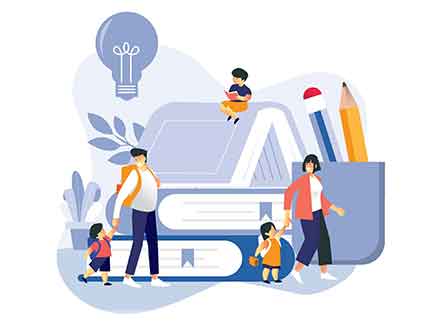
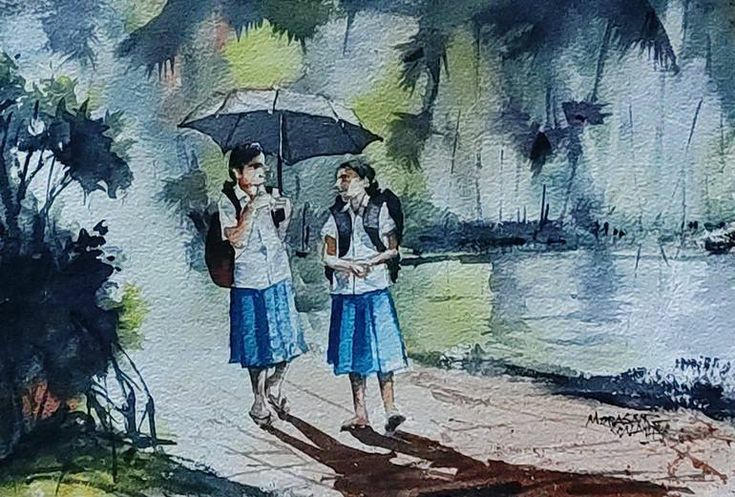
Education is an integral part for the mental development of a human being. Not just education on paper but ‘Quality Education’ which in turn allows the beings to add to the well-being of themselves as well as others without comprising anyone’s needs. Given the importance of quality education in ensuring sustainable growth of the world, one of the sustainable development goals is “Ensure Inclusive and Equitable Quality Education and Promote Lifelong Learning Opportunities for All” (SDG 4).

Around 11 indicators have been decided by UNDP to ensure Quality Education across countries, which are:

  1. Free Primary and Secondary Education
  2. Equal Access to Quality Pre-Primary Education
  3. Equal Access to Affordable Technical, Vocational and Higher Education
  4. Increase the number of people with relevant skills for financial success
  5. Eliminate all discrimination in education
  6. Universal literacy and numeracy
  7. Education for sustainable development and global citizenship
  8. Build and upgrade inclusive and safe schools – in terms of electricity, toilets (including gender neutral toilets), apt infrastructure for disables, gender inclusive.
  9. Expand higher education scholarships for developing countries – by ensuring the sufficient volume of ‘Official Development Assistance’ flows for scholarships.
  10. Increase the supply of qualified teachers in developing schools
  11. Custodian agencies such as UNDP

The article attempts to throw light on the performance of India in the sphere of Education based on NSSO Education data. It is with no doubt that India has made great strides in this particular aspect but the challenges are always present – which will be taken up in the later section of the article.

As per the data, in 2014, total urban literacy rate stood at 86% (male: 91%; female: 81%) while total rural literacy rate was 71% (male: 80%; female: 61%). The difference between rural and urban male and female literacy rate is quite large. The reasons among many can be lack of initiatives; income-deficit; ingrained favoritism; lack of safe and inclusive schooling etc.

To better understand the Gender-gap/parity, data on Gender-Parity Index (GPI) based on Gross Enrolment Ratio (GER). It has been defined as “the ratio of GER of female students enrolled at Primary, Secondary and Tertiary Levels of education to the corresponding ratio of male students at that level” (ESAG, 2018). During 2015-16, the gender parity stood at 1.03 (Primary); 1.05 (Elementary); 1.01 (Senior-Secondary) to 0.92 (Higher Education). While up to +2 level, gender parity favors females but when it comes to higher education, it favors males. Interestingly, if we focus on the annual dropout rate in school education, 2014-15, it will come to notice that boys dropout percentage is higher in secondary (17.21%) than girls (16.88%).

To get a better grasp of gender equation, the article looks into the teaching section. The data for percentage of teachers who are females, 2014 speaks that the percentage is less than 50 at all levels – with dropping percentage as we move from Primary (49.49%), Secondary (43.21%) to Tertiary (39.03%).

Evaluation of reasons for dropout among both males and females as per NSSO brings out – for males, engagement in economic activities has been vetoed as the major reason while for females, reasons such as engagement in domestic activities followed by marriage stand out. The distance between home and school has also been one of the reasons of dropout among females.

Another set of data released by UNESCO as part of the realization of SDG 4 – ‘State of the Education Report: No Teacher, No Class’ for India, 2021 can be used as reference to right the wrongs, fill in the holes in the education scenario of the country. The report points out that there is shortage of 11.6 lakh teachers and about 1.2 lakh are single-teacher school, with 89% being in rural areas. However, in the private sector, the pupil teacher ratio increased from 21% in 2013-14 to 35% in 2018-19. With variation among states, the national average for percentage of females employed stands at 50.

The pandemic has only thrown obstacles testing the efficiency of the country in this sphere. As the world and its works shifted online, this country and sector did too. The shifting to online classes has led to many dropouts, leading to a break in the education of many pupils. When it comes to teaching, the country has faced certain inadequacy in the percentage of trained government school teacher – to use and teach using electronical devises. The Hindu (2021) reports that only 15% of government school teachers were trained and about 31% in private school.

However, when the world was still in offline mode and so the sector – various government schemes had benefitted the children. In this era of everything being online – government need to come up with new schemes focusing towards digital India, co-operating with various grassroot levels can be quite helpful in percolating the benefits to lower levels.

Image Credit: Google

The Awe-Inspiring Journey of Captain Lakshmi

The era of Indian Independence Struggle is one of the most painful and shattering phases in the country’s history. But it was also a period which saw the emergence of some of the finest leaders of the country.

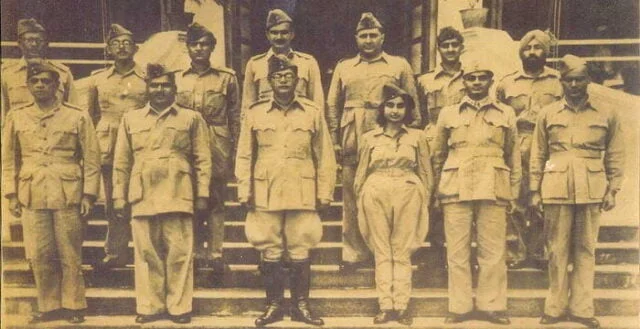
Captain Lakshmi Sehgal is one such leader who ardently fought for the freedom of India. At a time when most Indian women rarely stepped outside of their society approved roles, here was a woman who not only broke all the social conventions but also aced her roles as a firebrand revolutionary and a medical practitioner.

Source: thetalentedindian.com

Early Life

Born to a progressive family in Madras, to S.Swaminathan, a criminal lawyer at Madras High Court and A.V Ammukutty, a renowned social worker and activist, Lakshmi Sehgal aka Captain Lakshmi was an iron lady who dedicated her entire life to public service in various capacities. She wore many hats: she was the commander of Rani of Jhansi regiment – the all-women regiment of the Indian National Army, a doctor,  social activist and a member of the Communist Party of India (Marxist).

Right from her childhood, she never missed a chance to voice her opinions or rebel against the social evils. She came from a family of active Gandhi supporters who had strong nationalist leanings, so it was only natural that she was drawn into the ongoing freedom struggle.

Lakshmi Swaminathan to Captain Lakshmi – The Journey

In 1940, she left for Singapore, where she set up a clinic with a focus on making medical treatment and facilities available for people from all walks of life. Meanwhile, she also joined the Indian Independence League, formed by Rashbehari Bose. It was around this time, in 1942, that an army for Indian independence was formed by Captain Mohan Singh and a few other Indian war prisoners in Singapore. The army was slowly losing its initial momentum due to the lack of a firm commitment from the Japanese side regarding their participation in the war. It was the arrival of Subhash Chandra Bose which proved to be a real game changer for the Indian independence movement in Singapore.

Captain Lakshmi was one among the many who had gathered to listen to Bose while he addressed the crowd in 1943 at Singapore. He was keen on forming an army not only composed of Indian war prisoners but also of civilian Indians settled in Malaysia, Singapore and Thailand. He also wanted to create an all-women regiment.

Rani of Jhansi Regiment

The turning point in Lakshmi Sehgal’s life came when she was asked by Netaji to form and lead the all-women regiment. Whether it was healing wounds or holding firearms, she always put her heart and soul into whatever she did. This young woman took charge and managed to mobilise around 25-30 women for the regiment. These were mostly second or third generation Indian women who had grown up in South East Asia, who were fighting for the freedom of their motherland that they hadn’t even seen. Her ability to galvanize such a group of civilians, train them and form a regiment speaks volumes about her determination and charisma.That was the beginning of the Rani of Jhansi regiment and her life as Captain Lakshmi.

Source:edtimes.in

The INA marched to Burma in 1944, but before they could enter Imphal they had to beat a retreat and she, along with others, was captured by the British army. She was placed under house arrest in Burma and was later sent to India in 1946. 

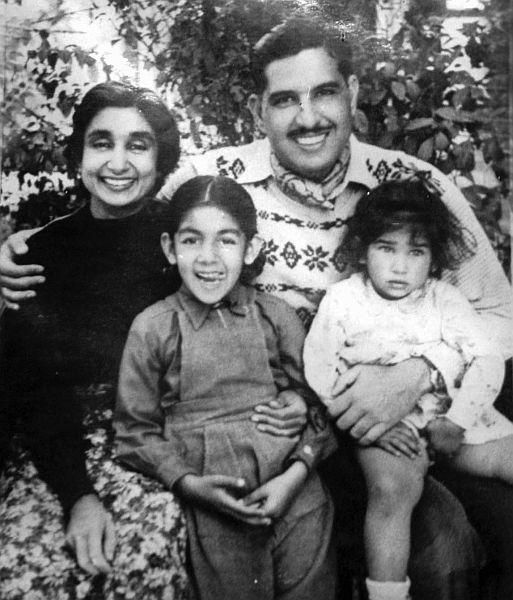
She was a woman of mettle and nothing could ever dampen her spirits. She continued to fight for the freedom of the country once she was back in India and actively campaigned for the release and rehabilitation of the imprisoned INA personnel. Her fight for freedom continued even after the release of the war prisoners, including Col.Prem Kumar Sehgal, in March 1947. Later she got married to Col.Prem Kumar Sehgal and moved to Kanpur.

Later Life 

For a person as enthusiastic and passionate as her, every day was a new opportunity to serve her country and its people. She continued her medical practice in Kanpur and was actively involved in providing aid for the refugees pouring into the country following the partition.

In the early 1970s, through her daughter Subhashini who had joined CPI(M), it was brought to her attention the need for doctors and medical supplies for the refugees from  Bangladesh. She didn’t have to think twice before packing up enough supplies, clothes and medicines and leaving for Calcutta to provide her service in the Bangladesh refugee camps along the border areas.Her ideologies were inherently communist, and hence, she joined the Communist Party of India (Marxist) in 1971 and represented the party in Rajya Sabha.

Source: penbugs.com

She never shied away from going out onto the streets of Kanpur during the anti-Sikh riots of 1984,  to confront the anti-Sikh mobs and to ensure the safety of the Sikhs and Sikh establishments near her clinic. She participated actively in the restoration of peace during the riots.

She was rightly called Captain Lakshmi for she was a born leader. Be it leading the campaigns and activities of the All India Democratic Women’s Association or the medical camps in Bhopal  following the Gas Tragedy, she conducted it all with ardent passion and dedication. 

Her charisma, dedication and undying spirit to fight for what she believes in were a few of the many reasons why she was selected jointly by all four leftist parties as the sole opponent of Dr. APJ Abdul Kalam in the 2002 Presidential elections. In spite of knowing that her chances of winning are slim, she took that as a golden opportunity to scrutinise a political system that allowed the weeds of poverty and injustice to grow by feeding divisive and irrational thoughts to the society.

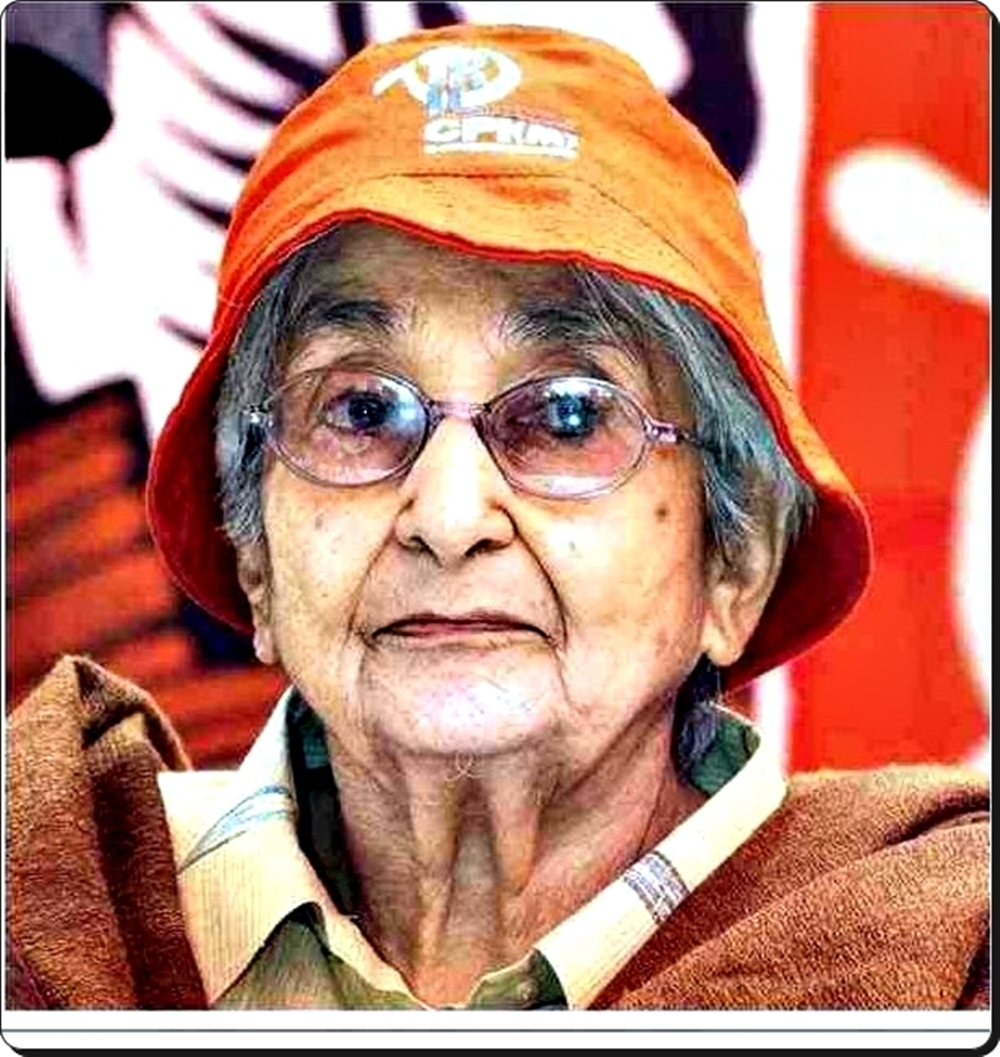
At an age when most people retired to the comforts of their homes,  she regularly treated patients at her clinic. Service to humanity was the motto of her life and she never let her age get in the way of service.

She was honoured with Padma Vibhushan in 1998 and was also bestowed with an honorary doctorate by Calicut University.

source:thebetterindia.com

Captain Lakshmi was one such person who was hard to box in by the conventions of the society. During the course of her entire life, which was only a couple of years short of a century, she had seen it all – the colonial rule, India’s struggle for independence and the post-independence nation building and transformation of the country. And through it all, she had been an active contributor to the society, who always positioned herself firmly on the side of the oppressed and needy. 

Captain Lakshmi passed away on 23rd July 2012 following a cardiac arrest, but not before leaving behind her a legacy of sheer will, compassion and valour, which continues to inspire thousands of people across the country.

Google honors Dr. Kamal Ranadive with a Google doodle on her birthday

IMAGE: GOOGLE

On the occasion of the 104th birth anniversary of Dr Kamal Ranadive, an Indian biomedical researcher, Google dedicated a Google doodle to her where she can be seen holding a microscope. She is well-known for her revolutionary cancer research and her commitment towards promoting social justice through education and science.

Dr. Kamal Ranadive was born in Pune on November 8, 1917. Her father, who was a biologist, encouraged her to study medicine but she had different aspirations. She decided to study botany and zoology as her main subjects and got her Bachelor of Science (B.Sc) in the same field from Fergusson College in Pune. She then moved to the Agriculture College in Pune for her post-graduation.

She successfully won a doctorate in Cytology (also known as cell studies) in the same year as working as a researcher at the Indian Cancer Research Center (ICRC), and thereafter, was qualified to gain a fellowship at Johns Hopkins University in Baltimore, USA. She thereafter returned to India and established the first tissue culture laboratory in the country in Mumbai.

She closely examined the links between cancer and different viruses, and also the link between breast cancer and heredity. She also studied Mycobacterium leprae (a type of bacterium that causes leprosy) and gave her contribution in the development of a leprosy vaccine.

Dr. Kamal Ranadive and a few of her workmates initiated the establishment of the Indian Women Scientists’ Association (IWSA) in the year 1973 to promote women in the scientific field. The organization as of now has 11 branches across the country. It provides scholarships and childcare to women in working or researching in the scientific area.

Ranadive received the Padma Bhushan, the third highest civilian award, in 1982 for her contributions to medicine. In 1964, the Medical Council of India presented her with the first Silver Jubilee Research Award. This award comprised of a gold medal and an amount of Rs. 15000. Another award that she received was the G. J. Watumal Foundation Prize in 1964 for her work in leprosy.

Dr Kamal Ranadive was loved and admired by many of her students and colleagues. They fondly called her ‘bai’. She always encouraged her colleagues and students to work and do various scientific researches in their own country. She also worked in rural Maharashtra after her retirement, training women as healthcare professionals and teaching them about health and nutrition.

Dr. Kamal Ranadive passed away in the year 2001 but she still continues to inspire the youth especially the women of this country to work hard and be an inspiration for many.

Reflecting on a quote

“Education is the most powerful weapon which you can use to change the world.” – Nelson Mandela

If we turn the pages of history it will be vivid that the root of every revolution – be it French Revolution or India’s struggle for freedom – lies in the vision that was bestowed on the leaders through education. Raja Rammohan Roy, known as the Father of Modern India was one of the pioneers of socio-religious movements in 19th Century. Having been educated in modern sciences, literature, he chose the path of modernization and not the westernisation of natives. B.R Ambedkar was not just bluffing or rambling around when he wanted people belonging to the so-called, “lower castes” to be educated which would lead to their ultimate emancipation. Mahatma Gandhi who led many mass movements is the best manifestation of how powerful this weapon is!

Now, let’s not confuse between a literate and an educated one, doing so will make you look so not educated and so literate! Back then in the 19th Century, many elite and middle class were literate but only educated visionaries took a stand for what they thought would lead to the ultimate well-being of the people – be it Dayanand Saraswati’s “Back to Vedas” or Narayan Guru’s effort towards the upliftment of the lower sections of society or even Greta Thunberg’s “Friday for Future.”

The youth anywhere have that caged, powerful energy within them and the lack of proper channelization of energy is the sole reason for high crime rates, for escalating crisis in the world. If only it was imparted education on how to put to use that powerful flow of energy we wouldn’t have to read about heinous crimes, about devastating effect of environmental degradation, about all those taboos prevailing in the society taking its toll on people’s lives every day.

The reason that we are in the midst of such a grave crisis, which seems like every good thing is retreating from our life, from our world is because the ones who are literate did not actually turn out to be educated. They have actually let everything slide away, being so keen on getting a degree, a job in this ever-competitive world and meeting their aspirations; but these aspirations might turn out to be futile in the long run if the knowledge we possess has never been used to bring a change in ourselves nor in others while the world still continues to wait for someone to come to its rescue. It’s time that we become that “someone”.

It’s high time that we use education, the weapon that we possess to fight against the evils and to change the mind-set of people. It is not a work that would be done overnight like an assignment but it will be a long one which might go on for years. However, the important concern is that it needs to be started with oneself, bringing changes at micro level, moving towards the greater goal. After all, it’s those “little drops of water that makes the mighty ocean.”

It is equally necessary that people in every corner are aware about things happening around them. Governments need to focus on seriously implementing all those policies meant for imparting quality education to all girls and boys alike – channelizing their potential energy and enabling them to be a part of the process of emancipation of the world in crisis for it is not a hidden truth anymore that political freedom will be rendered redundant and futile if people are devoid of social freedom.

Education is the basic and a natural right that every individual should have as it is the only way for the world to escape the devastation that awaits – or why not say the devastation which has already started.

Image Credit: Google

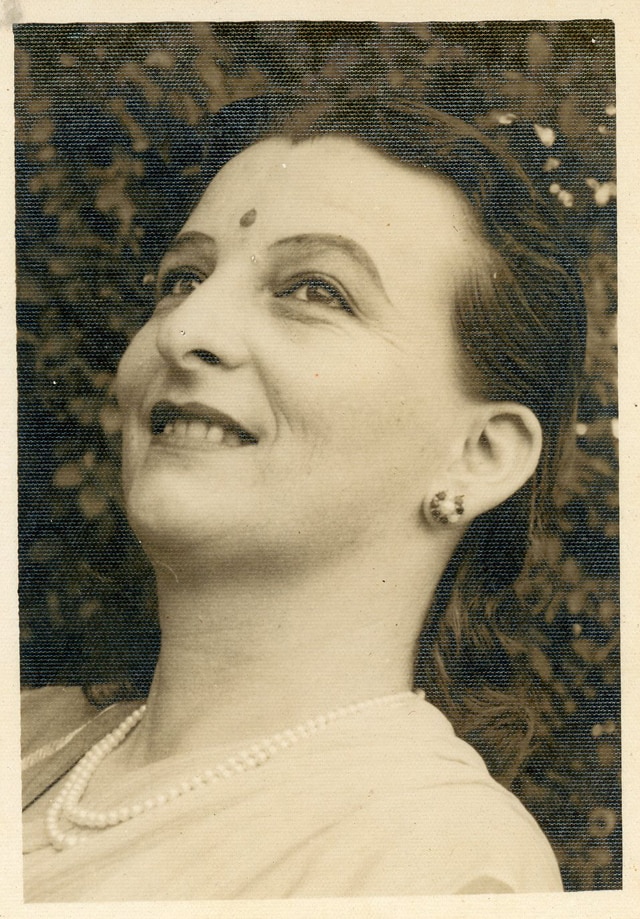
Remembering Savitri Khanolkar, The Designer of Param Vir Chakra

Param Vir Chakra is India’s highest gallantry award.From Major Somnath Sharma to Captain Vikram Batra, 21 brave hearts of the Indian Armed Forces have so far received the prestigious Param Vir Chakra award. When Major Somnath Sharma, the first recipient of this award, laid down his life while defending his motherland, this award actually did not exist. It was later, when India became a republic in 1950, that the award was introduced, but with effect from 15th August 1947.

I’m sure most of you might have heard about this award, but what many are unaware of is that India’s highest military decoration was designed by a Swiss-born woman Eve Yvonne Maday de Maros aka Savitri Bhai Khanolkar. 

Image source: dnaindia.com

Life as Eve Yvonne Maday de Maros

Eve was born in Neuchatel, Switzerland, to a Hungarian father Andre de Maday and a Russian mother Marthe Hentzelt, on the 20th of July 1913. She was raised by her father, after her mother’s death. She spent her early childhood in Geneva. As a child, she loved nature and liked being outdoors. 

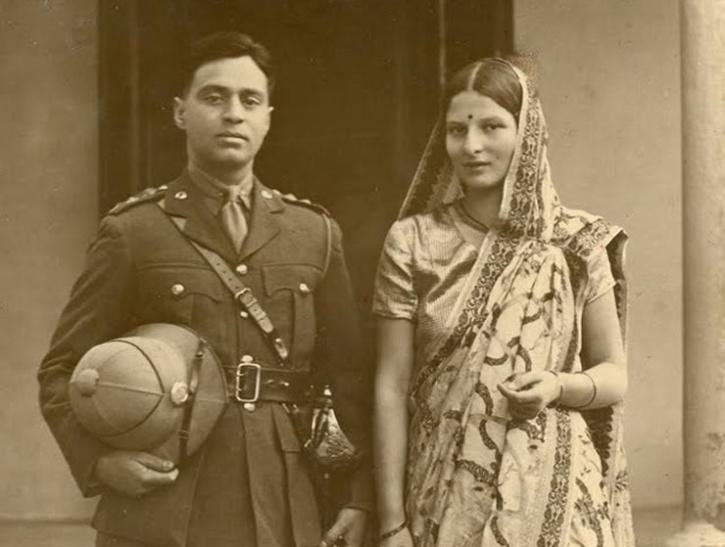
A turning point in her life was when in the winter of 1929, on a skiing holiday, she met Vikram Ramji Khanolkar, a young Indian Army cadet. Vikram, at that time was undergoing training at the Royal Military Academy, Sandhurst and was holidaying in  Switzerland during a team break. The meeting was just the beginning of what later blossomed into a cross country love story. Neither Vikram’s age nor her father’s disapproval stopped her from pursuing her love. She moved to India a few years later and got married to the love of her life in 1932. She converted to Hinduism and adopted the name Savitri Bhai Khanolkar after moving to India.

Life as Savitri Khanolkar

Savitri Khanolkar was a European lady with an Indian soul. She loved everything about India and its culture, which made her cross-cultural transition rather smooth and comfortable. She picked up Hindi, Marathi and Sanskrit within a couple of years and could converse fluently in all the three. She was keenly interested in India’s history and culture and devoted herself to learning more about the country’s mythology, traditions and religious scriptures. She was a talented artist and made a series of paintings depicting the various ideals and principles of Vedanta and Hindu philosophy. She also wrote two books – ‘Sanskrit Dictionary of Names’ and ‘Saints of Maharashtra.’ Those who knew her personally described her as a warm and compassionate person with a great passion for the Hindu philosophy.

Maj General Vikram Khanolkar and Savitri Khanolkar | Image Source: indiatimes.com

Designer of Param Vir Chakra

After India became independent in 1947, especially in the light of the Indo-Pak war that had broken out, there was a pressing need to create new military honours and awards for independent India. Adjutant General Major General Hira Lal Atal had been assigned this responsibility. Major Atal hardly needed to think twice before choosing Savitri Bhai for the task. Her passion for Indian culture and Vedanta philosophy, talent as an artist  and her in-depth knowledge of the country’s ancient history and traditions made her an ideal candidate for the job. Her military association as an army wife was an added bonus. She was asked to design the Indian equivalent of the British Victoria Cross – the Param Vir Chakra.

Param Vir Chakra : Design Inspiration

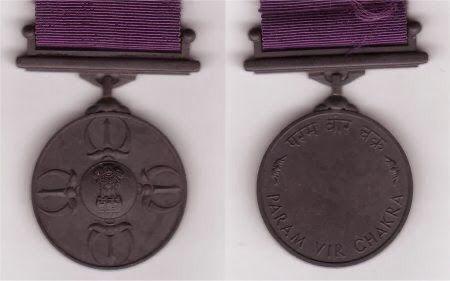
Savitri Bhai took inspiration from India’s ancient puranic literature and legends to design the Param Vir Chakra medal.She selected Indra’s weapon, the Vajra, which was made from the bones of Maharshi Dadhichi for the design. Maharshi Dadhichi was known for the ultimate sacrifice that he had made by giving up his body and thereby enabling the Gods to fashion the deadly weapon Vajra from his bones. The presence of Vajra in the medal is symbolic of the power and the selfless sacrifices of our legendary war heroes. 

The final design consisted of the National emblem embossed in the centre, surrounded by four replicas of the double Vajra imprinted on the medal face and the rear side had the words ‘Param Vir Chakra’ inscribed both in English and Hindi, separated by Lotus flowers.The medal was cast in bronze and held by a purple ribbon.

Apart from the Param Vir Chakra, she also designed other gallantry medals including Ashok Chakra, Maha Vir Chakra, Kirti Chakra, Vir Chakra and Shaurya Chakra.

Coincidentally, the first PVC recipient turned out to be Savitri Bhai’s future son-in-law’s brother, Major Somnath Sharma.

Image Source : twitter

Later life 

During the course of her life, Savitri Bhai always found time to engage in social work. She was a follower of Sri Ramakrishna and she immersed herself in numerous social activities through Ramakrishna Mission. She also worked for the welfare of Jawans and their families and refugees who had been displaced during partition. She lost her husband to a heart attack in 1952, after which she found solace in spirituality and retired to Ramakrishna Math.

The life of Savitri Bhai Khanolkar was truly a remarkable one. Be it joining the North India Flying Club or learning Indian classical dance and music or attending Patna university, she enjoyed every bit of her life as an Indian woman. She passed away on 26th November 1990, after leading a full life.

Things to know before taking up Mass Media and Communication courses.

Photo by Caleb Oquendo on Pexels.com

Let’s begin by knowing what Mass Media or Mass Communication is. Mass media refers to the media technologies such as movies, songs, news, podcasts, advertisements and photos, that are utilized to carry information to the masses. 

Importance of Mass Media

This blog you are reading is helping you gain knowledge about Mass Media and communication. Hence this blog becomes a media technology and educating you in the field of Mass Media defines its importance. From applying for a job to reaching out to a friend on your phone, everything becomes a portion of Mass Media as they help users pass on information from one place to another or one person to another. 

Here are some advantages of Mass Media to highlight its importance. 

  • It becomes a voice for the voiceless: Mass Media provides every individual with an opportunity to practice their freedom of speech and spread their ideas among the world. YouTube is a great example of Mass Media. As a platform in this 21st century it helps both small and large creators publish their videos for everybody to watch. 
  • Enables widespread communication: Today, the world is often referred to as a global village. This is made possible due to several types of mass media technologies such as social media, internet, and other digital content. It helps governments, businesses and organizations to communicate with each other and stay connected. 
  • Diversifying culture: Mass Media helps in diversifying languages and cultures beyond its place of origin. A good internet connection and a mobile phone or a computer is all you need to learn a new language or gain knowledge about a new culture. You can even take a peek around the world without leaving your home. 

The Evolution of Mass Media

Mass Media can be traced back to the 800 AD which consisted of prehistoric arts, writings and some basic printing technology. The introduction of Gutenberg’s printing press in the 1450s helped art and literature gain a wider reach among the people.The year 1605 witnessed the publishing of the first weekly newspaper in Antwerp, known as ‘Relation’. This was followed by the inventions of radio and television in 1895 and 1925 respectively. Finally in 1990, the world wide web was introduced by Tim Berners Lee. 

The number of people benefiting from these media technologies witnessed a steady growth from a handful, to thousands, and millions with the introduction of newspapers, radios and televisions. Today, due to the internet, these numbers are reaching billions. In 2018, the number of  World Wide Web’s users was estimated to be 4 billion. 

The 21st century has introduced the ability for even individuals to broadcast a customised message for thousands across the globe. You no longer need to be a part of some huge networking channel to do so. A good internet connection and a hand held device can do the job. 

The functions of Mass Media

Mass Media, in the form of writing, podcasting, and publishing, has a significant effect on the masses. Commercials on television, billboards and social media influence the audience into buying a product or availing a service. Hence companies across the world look for suitable mediums such as social media, blogs, forums, or video streaming platforms to convey their messages based on their businesses. Once they find the right mass media technology, they conduct campaigns to communicate their ideas. 

Majority of the companies today create and maintain their social media pages, maintain blog posts on their websites, and run advertisements on video streaming platforms to educate viewers about their products or to entertain them. These define the functionality of Mass Media. 

Courses in the field of Mass Media and communication

Photo by Redrecords u00a9ufe0f on Pexels.com

After addressing the ‘Wh’ questions of Mass Media, let us dive into the courses one can opt for in the field of Mass Media and communication. There are three kinds of courses available for aspiring students in the field of Mass Media and communication. Courses at undergraduate, postgraduate and diploma levels.

Both the course levels familiarise students both practically and theoretically in the field of Mass Media and Communication. 

Eligibility for courses in Mass Media and communication (UG PG) 

A student aspiring to seek admission in a Bachelor of Arts in Mass Communication course, he or she must fulfil some eligibility criterias. 

  • The applicant should have completed senior secondary schooling (10+2) from a recognized university. 
  • The applicant must have scored a minimum of 50% from the aggregate in their senior secondary schooling. 

Similarly, students aspiring for seeking admission in the Master of Arts in Mass Communication course must fulfil the following eligibility criterias. 

  • The applicant must have a Bachelor’s degree in any stream from a recognized university. 
  • The applicant must have scored a minimum of 50% from the aggregates in their Bachelor’s degree. 

Institutes may also require you to give an entrance exam to fulfil the admission process.

Here’s what you will learn from Mass Media and Communication courses

Courses in Mass Media helps you get acquainted with subjects such as Public Relations, Design and Graphics, Digital Media, Reporting and Editing for Print Media, Data Journalism, Photojournalism, Event Management, and Media Law and Ethics. The courses are inclusive of Computer based learning, Guest Lectures, Seminars, Workshops, Massive Open Online Courses, Individual and Group projects, and community based projects. 

Scope for Mass Media courses under employment prospect.

Photo by Pixabay on Pexels.com

With an increase in media technologies following new inventions and establishments such as Television Channels, Radio Stations, Advertising Agencies, PR Agencies, etc. Scope in this field is also parallely increasing. Here are some of the job profiles candidates can look out for upon completion of the course. 

  • Journalism
  • Public Relations
  • Advertising
  • Media Planner
  • Broadcasting and Production
  • Event Manager

Conclusion

Mass Media and Communication as a field in academics has a great scope in India and overseas. Freshers with expertise in specific areas and sufficient experience will be hired by prominent media companies for different job profiles. Individuals with good communication skills, writing proficiency, and passion for learning can pursue an undergraduate or a postgraduate course in Mass Media and Communication. 

References

Ritika Shrivastava, May 17, 2021 09:36 IST, shiksha.com

Akanksha Sirohi, July 15 2020, collegedekho.com

https://www.careers360.com/courses/mass-communication-course

Major Somnath Sharma – The Hero of Battle of Badgam

The day November 3rd 2021, marked the 75th anniversary of the Battle of Badgam. This battle was one of the most prominent defensive encounters which took place at Badgam in Kashmir valley, between troops of the Indian Army and Pakistani tribal raiders, on the 3rd of November 1947.

On this occasion, let’s take a look at the life of the legendary war hero, Major Somnath Sharma whose name has become synonymous with the Battle of Badgam. Major Sharma was martyred in action during the battle, while repulsing the infiltrators. He made history by becoming the first recipient of Param Vir Chakra, India’s highest military decoration, for his exemplary leadership and gallantry.

Early life

Major Somnath Sharma was born on 31st January 1923 at Dadh, Kangra (present day Himachal Pradesh).He was a second generation army officer. His father Amar Nath Sharma was an Army Medical Corps Officer and several of siblings have also served in the military services. His uncle Captain K. D Vasudeva, who had died during the Malayan Campaign in World War II, was also a great influence throughout his career.

Somnath, fondly called as Somi, and his brother, called as Tindy in the army circles, were sent  to Hampton Court Convent Mussoorie at a young age, as their father was sent to England for a medical course. The brothers then went on to pursue their studies together in Sherwood College, Nainital. Somnath was enrolled in Prince of Wales Royal Military College in Dehradun after his schooling. After passing out from there, he joined the Indian Military Academy, in 1941 but the military training program had to be stopped in between due to the World War.

Major Somnath Sharma. Source: Honourpoint

“The enemies are only 50 yards from us. We are heavily outnumbered. We are under devastating fire. I shall not withdraw an inch but will fight to our last man and our last round.”

Param Vir Chakra Citation

Military Life

After a rigorous training of 9 months, in February 1942, he was assigned to the 8th Battalion, 19th Hyderabad Regiment(which later came to be known as 4th Battalion, Kumaon Regiment), at the age of 19.

Arakan Campaign

Under the command of Col. K.S. Thimmayya, he saw action against the Japanese in Burma. Once during a deadly combat with Japan, when a saw a wounded Kumaoni soldier who was stranded on the field due to his injury, Somnath picked him up and carried him on his back through the Japanese shelling to a safe place. He was mentioned in dispatches for many such acts of bravery exhibited during the Arakan campaign.

Battle of Badgam

On the 22nd of October 1942 the Kashmir valley was invaded by Pakistan. In response to that, on 27th October 1942, a contingent of troops of the Indian army was airlifted to Srinagar. Around this time, Major Somnath Sharma had returned to India and was an adjutant in 4 Kumaon, where he had picked up his duty to ensure internal security of Punjab. That and his experience in working with the police and administration during the 1947 unrest, qualified him to be chosen as a commander of D company of the 4th Battalion of Kumaon Regiment. Somnath at this time, was recovering from an injury sustained previously on the hockey field and his left hand was still in plaster cast and hence initially, the commanding officer of 4th Battalion  Kumaon was hesitant in sending Somnath along with the troops, but ultimately had to give in to Somnath’s persistence.On 31st October, D Company of 4 Kumaon Regiment was flown to Srinagar.

On November 3rd 1942, a batch of 3 companies – A and D company of 4 Kumaon, led by Major.Sharma and 1 Para Kumaon commanded by Captain Ronald Wood –  was deployed to Badgam to search for the infiltrators and stem their advance towards Srinagar. 

Major Somnath’s company had taken position and dug trenches on a hill west of  the village and 1 Para Kumaon had positioned themselves  in the south east part of the village. According to the Major’s report, the village seemed calm and eerily quiet. Detecting no enemy movements, 1 Para Kumaon was instructed to take a round of the east and go back to the airbase in Srinagar. By around 2 p.m, A company was also removed from the field and D company was instructed to stay in position until 3 p.m. 

Meanwhile, on the other side of the border, the Lashkar, under the leadership of a Pakistani major was planning an attack on the Indian soldiers patrolling the area and was accumulating in small units, to avoid suspicion.

Half an hour after the withdrawal of A company, a group of villagers who had gathered around a nala (water body), began to move around and disperse in different directions. Little did the Kumaonis know that these were the infiltrators disguised as civilians with their weapons hidden inside their loose cloaks.The company was hence shocked when firing commenced from the houses in the village. In order not to endanger the lives of innocent civilians, counter-fire was not ordered. While Major Sharma was reporting the changed situation in the village, a large group of around 700 odd raiders barged in and surrounded the company from three sides. The enemy opened heavy mortar fire on the company.

The company suffered heavy casualties from the attack and were vastly outnumbered by a ratio 7:1. Realising that the city of Srinagar and the airfield would be vulnerable if they failed to engage the raiders, Major Sharma held onto his position and urged his men to fight tenaciously. Even when he knew that his company wouldn’t be able to stop the enemy for long, he and men fought ferociously. It was a real challenge to keep up the spirits of his men alive in the given circumstances. This is when he displayed his exemplary leadership skills by rushing from one post to another boosting the team’s morale and motivating them to put up a brave defense. He laid out panels to guide the Indian aircrafts, which were coming for their aid, to the enemy targets. On realising that his company’s firing power had been adversely affected as a result of the heavy casualties suffered, he took up the task of filling the magazines and issuing them to his men operating on light machine guns. While he was at it, a mortar shell exploded on a pile of ammunition right next to him, leading to his death.

His exceptional courage set an example for his men, who continued to fight even after his death with all the vigour that they had. However, by the time reinforcements arrived, the company had suffered severe damage including the death of Major Somnath Sharma, one Junior Commissioned Officer and 20 other soldiers. Sharma’s company was successful in inflicting much heavier losses on the enemy. The raiders had lost over 200 men and their leader had been incapacitated, which resulted in their movement losing its momentum. The fierce resistance of Sharma’s company delayed the enemy for 6 crucial hours, thus giving the Indian Air Force enough time to get into position and thus preventing the infiltrators from gaining the airfield. 

For his exceptional valour, exemplary leadership and supreme sacrifice, Major Somnath Sharma was awarded the Param Vir Chakra posthumously, on June 21st 1950.

On the 75th ‘Battle of Badgam Day’, November 3rd 2021, the Indian Army paid tribute to this brave son of India who laid down his life to defend his motherland.

Logical Reasoning and Analytical Ability.

This is an image for logical reasoning
Photo by Pixabay on Pexels.com

Although it sounds complex, Logical Reasoning is a simple process that involves effective thinking. It is put into action when we ask questions like, “If this is true, what else is true?, If this isn’t true, what else couldn’t be true?” These questions raised are inferences, they form connections between the given primary sentence and the secondary sentence. There are rigid rules that determine if something can be considered an inference or not. 

For Example:

If there are puddles of water on the road, it rained yesterday.

Considering this sentence to be true, the following sentence could also be true. 

  • If there are no puddles of water on the road, it wouldn’t have rained yesterday.
  • Just because there are puddles of water on the road, it doesn’t mean that it rained yesterday. 

Ludwig Wittgenstein states that, “Logic takes care of itself; all we have to do is to look and see how it does it.” 

There are two types of Logical reasoning that are categorized by their respective inferences. 

Deductive Logical Reasoning:

Deductive logical reasoning is identified when the secondary sentence in accordance with the primary sentence, must be true. For example, if it is true that there are always puddles of water while it rains and it’s true that it rained. Then it must be true that there will be puddles of water. Obviously the world doesn’t always conform to the conditions of deductive logical reasoning. There wouldn’t be a puddles of water every time or everywhere it rains as mentioned in the above example But deductive logical reasoning is an important quotient in fields such as law, science, and engineering that possess rigid principles.

Inductive Logical Reasoning

Inductive logical reasoning can be associated with when the secondary sentence, which is in accordance with the primary sentence, could probably be true. The secondary statement in Inductive reasoning is less definitive in comparison with deductive reasoning. But this kind of reasoning proves to be more useful. Induction helps us to guess what will happen in the near future. We observe how things are happening, how things had happened before, and draw conclusions about how things will happen in the future. However these conclusions are based on estimations and not certaninity. For example, there is a probability that it will rain tomorrow. But it is not certain as there are several other factors that could have caused the formation of dark clouds. 

Importance of Logical Reasoning

Logical Reasoning, in accordance with Analytical Ability, is useful in everyday situations. It helps you make decisions, identify truths, and arrive at solutions while solving complex problems. It also helps you formulate new ideas and set achievable goals. Logical reasoning is also an important factor for testing intelligence in IQ tests. 

Analytical Ability

This is an image for Analytical Ability
Photo by Lukas on Pexels.com

Analytical ability is a skill which helps you understand the complexities of a problem and provide solutions for it. Analytical thinking is a process involving utilization of existing resources to accurately assess situations. Analytical ability heavily focuses on the cause and effect relationship that predicts the impacts of different solutions. Employers expect their potential employees to possess the skill of analyzing as it is important for making decisions that benefit their company. 

Here are some common factors of analytical ability that can be put to fair use:

  1. Attention to detail: This is an important factor of analytical ability that involves identifying specific details, picking up on social cues, and finding subtle patterns in an aspect that helps you stock up on data necessary to think analytically. 
  2. Research: A factor of analytical ability that helps in identifying relevant information and reliable sources for the information through research. It further enhances the ability to analyze. 
  3. Data mining: Data mining involves looking through large sets of data and finding patterns among them to make analytical projections about situations in the future. 
  4. Data analysis: Data analysis is the process of using information uncovered by data mining to make models, tables, and other visual representations to help others understand your analysis. 
  5. Diagnostics: Diagnosing the cause of a problem and clearly defining it forms an integral part of analytical ability. 
  6. Organising: Organising information into different categories makes it easier to access the most relevant information and create convenient patterns for analysing information. 
  7. Problem-Solving: Problem-solving is an analytical ability that involves utilising the information gathered on real-world situations to arrive at solutions. 
  8. Forecasting: This process involves making predictions about the future with the information in hand. It encourages further analysis to create plans for handling foreseen challenges. 
  9. Decision making: Taking a course of decision adds credibility to your analysis as it shifts the focus from theories to strategies. 

Importance of Analytical Ability

Analytical ability is important because it helps people to arrive at a solution while dealing with complex problems by taking necessary decisions and fruitful actions. This ability comprises several related skills such as decision making, critical thinking, attention to detail, research skills, etc as mentioned above. 

References:

Philosophical terms/logical reasoning

https://www.thebalancecareers.com/analytical-skills-list-2063729

Impact of Pandemic on School’s Education of Girls.

Given that the patriarchy in vivid as well as in subtle way has been ingrained in the functioning of society since time immemorial – women have to struggle harder for anything and everything. Every gender has their own share of struggle to keep trudging forward, however, given the limited scope of time and resources, the article attempts to understand the impact of pandemic on school’s education on girls, precisely adolescent girls.

The Pandemic has not only ruined the very fabric of health but also has ravaged every sector and sections of society. One of the most impacted sectors of importance is the Education sector. According to the United Nation’s report, about 24 million children are at risk of not returning to school. Further, more than 1.6 billion learners across the world have been affected and the condition is worse in low-income countries. For instance, as reported by The Hindu (2020), ‘during the second quarter of 2020, 86% of children at the primary level have been effectively out of school in poor countries, compared to 20% in highly developed countries.’ Moreover, UNESCO has estimated that about 23.8 million children and youth might have to drop out of the school next year because of the pandemic. Out of these, 5.95 million are from South and West Asia as compared to the other regions. The pandemic has also increased the disparities in the imparting of education across the world. The low and middle-income countries have resorted to cut in funding to deal with the crisis.

In India, the pre-pandemic statistics weren’t already promising – as per NSS 75th Round Household Survey 2017-18, around 3.22 crore children in the age group of 6-17 years were out of school and about 31 percent never attended one (Sonawane, 2020). The pandemic has only worsened it. UNESCO reports that the school closures have affected about 30 million students in India. However, only 37.6 million children across 16 states are continuing education through various online sources, UNICEF states. This school closure has not affected every section with the same intensity. The worst bearer again here are the girls especially those of poor households and so-called lower castes. In India, various social processes and factors already deter girls from completing their education successfully – for instance, as per the NSS, 30.2 percent girls reported that they discontinued education due to their engagement in domestic activities. The number is higher in rural areas (31.9%) than in the urban areas (26.7%). Moreover, U-DISE Flash Statistics for 2016-17 estimate that adolescent girls are more likely to dropout from secondary education (19.8%) than primary education (6.3%) and this figure is higher for government schools (26.8%). Given such dire situation already, the Malala Fund estimates that 10 million more secondary school age girls could be out of school after the COVID-19 crisis has passed especially from developing countries like India (Sonawane, 2020).

These numbers do not show the entire picture, if we would delve a bit deeper, it will be noticed that the disparities are only growing wider. However, given the limits, this section of article focuses on the reasons behind the estimation of school dropout by the girls. One of the most common reason cited is the increasing involvement of the girls in domestic work. During lockdown, the time spent doing the household-chorus has increased leading to ultimate tiredness and missing out on classes. The foremost decision of a family to fight increasing financial instability is to cut off the funds invested on the education of the girl child – prioritizing the education of the male child, as per the gender norms.

The switch to online classes has only brought out the ‘gender digital divide’, which has become another hurdle in female education. Though the gap is narrowing, the gender gap in mobile internet use in low-and middle-income countries remains substantial, with over 300 million fewer women than men accessing the internet on a mobile. This gender gap is still the widest in the South Asia (51%). Study has revealed that in India, in 2020, 79% of the males were mobile owners as compared to 63% of female mobile owners. Furthermore, with respect to mobile internet users, 42% of males had access to internet on mobile while just 21% of women had access to internet on mobile (GSMA, 2020). Such disparities are sharper in poor households, wherein girls always have to give up their education and during this pandemic, when everything has turned online – girls are ultimately bound to struggle. The statistics have brought into light that most dropout are expected to be from government schools – this only shows that poverty and financial instability are one of the main causes of dropouts.

Another important factor in play is the consideration of girl as the ‘burden’ on the family and this thinking is still prevalent – one of the consequences of which is the Child Marriage. Though, the practice has been lawfully banned, it has not vanished entirely. During and after lockdown, a surge in child marriage cases have been reported. Childline in India claims to have compiled reports of 5214 child marriages reported between March to June (National Herald, 2020). These are the just the reported cases, it is likely that there must be a number of such cases which are going unreported. Such prevalent practices pose another major hurdle in the completion of education of the girl child.

The Pandemic has hit the jobs of many but it has been widely reported that the women has been worse hit. The situation of women in the labor market is already dire – there is huge disparity in terms of opportunity of work, wages etc., and pandemic has only added to their woes. Given the drop in source of income, mothers too find themselves incapable of standing or supporting their girl child, in most cases.

Thus, it is necessary that NGOs should involve into different such issues at the very grassroot level – channeling the help to lower level. The involvement of community to spread the reach and help can be quite impactful. The co-operation between local government, local community and the NGOs can be a powerful force against the odds we are in.

Image Credit: Pinterest

Are more women dying of Covid-19 in India?

New research by a group of scientists in India and US shows that although men make up the majority of infections, women face a higher risk of dying from the coronavirus than men.


The study, based on Covid-19 deaths in India until 20 May, shows early estimates that 3.3% of all women contracting the infection in India were dying compared to 2.9% of all men. (India had a caseload of more than 110,000 with 3,433 deaths and a fatality rate of 3.1% when the study was conducted.)In the 40-49 age group, 3.2% of the infected women have died, compared to 2.1% of men. Only females have died in the 5-19 age group.

Five key questions about India’s rising Covid-19 infections
I asked SV Subramanian, a professor of population health at Harvard University and one of the leader authors of the study, what this implied.


He told me that the narrative of calculating the Covid-19 fatality rate by groups has conflated two key metrics – mortality risk and mortality burden.

Mortality risk measures the probability of death in a specific group- in this case, total number of deaths of women divided by confirmed infections among women.

On the other hand, mortality burden gives you the number of deaths among women as a percentage share of the total deaths, both men and women.Prof Subramanian says for the large part, the statistics have looked at the latter – men having a greater share of total deaths (63% in India, hewing to international data) – but “inferred the former risk”.


“Our overall conclusion is that, when infected, women do not seem to have any specific survival advantage [in India],” says Prof Subramanian.

“How much of this can be attributable to biological factors and how much of this is associated with social factors is unclear. Gender can be a critical factor in Indian settings,” he says.

The ‘mystery’ of lndia’s low Covid-19 death rates
But the findings are certainly striking because they run counter to what has been observed elsewhere in the world.

For one, men are more likely to suffer from co-morbidities or underlying health conditions, like cardio-vascular disease and hypertension, says Kunihiro Matsushita, a professor of epidemiology at the Johns Hopkins Bloomberg School of Public Health.

Men also smoke more than women in many countries, and some studies have shown that men wash their hands less frequently than women.

Prof Matsushita says that studies he had participated in had shown that male patients have a higher risk of contracting severe Covid-19 infection.

Scientists also believe that women have a lower mortality risk because of sturdier immune defences. And have hormones like oestrogen which has “beneficial effects on upper and lower airways and is associated with stimulation of the immune response to upper airway infections”.

“In that regard, a higher case fatality rate in women than men in this report is certainly unique,” Prof Matsushita told me.

But he says the research data needs to be scrutinised in the context of how Covid-19 is diagnosed in India. “For example, is the opportunity to get a test same between men and women?” he wonders.There could be more to this puzzle than what meets the eye.

Women outlive men in India and there are more older women than men. Is this leading to more deaths among women, as elderly people are vulnerable to the infection?

Also, women in India are more likely to delay going to doctors, and often self-medicate at home. And a woman’s health is more likely to be ignored in a household. So are women arriving late for testing and treatment?

Homemaker caregivers are more prone to contracting the infection – during the 1918 Spanish flu more women in India – relatively undernourished, cooped up in unhygienic and ill-ventilated dwellings, and nursing the sick – died than men.


“We need to dissect the gender data to find out more about what’s going on,” says T Jacob John, a retired professor of virology at Christian Medical College, Vellore.

Researchers agree. “We will keep a close watch and keep updating the results,” Prof Subramanian says.

Written by: Ananya Kaushal

About that Artist – Jan van Eyck

Jan Van Eyck was one of the earliest Netherlandish painters, most renowned for his religious and naturalistic oil paintings in the 1400s and is also believed to be the inventor of oil paintings. His work includes portraits, single panels, triptychs and polyptychs, most of them are speculated to be painted in the 1430s. He paid special attention to the religious subjects and realism. 

Even though the exact year and place of Jan van Eyck’s birth is unknown but is believed to be born in the 1390s in Maaseik, a territory that belonged to the Holy Roman Empire, a city now known as Belgium. He is classified under the Flemish painters (artists who were active during the 15th and 16th centuries in Flanders). He was working in Hague somewhere between the years 1422 and 1424. Van Eyck, was the official painter to John of Bavaria, Count of Holland and continued to to work in the palace of Hague until 1325, the year in which the Count died.

After the Count’s death, he began working for Philip the Good, duke of Burgundy and worked for the duke until his death. Under Philip the Good, he did not just work as a painter but was also given political and diplomatic tasks, for which Van Eyck travelled all around Europe.

He took a lot of trips around the continent on Philip the Good’s behalf working on projects that were kept a secret and was given a salary for the same and his income did not depend solely on commissions.

It is believed that Van Eyck came from a family of painters. His brother Hubert van Eyck and he collaborated on perhaps one of Jan’s famous works Ghent Altarpiece, a polyptych altarpiece in St Bavo’s Cathedral, Ghent, Belgium which is considered as one of the most profound oil paintings. It began in 1420 and was completed about 12 years later in 1432. 

In around 1431 Jan Van Eyck, bought a house in Burges and married a lady, Margaret with whom he had 2 children. The prime of his career began in the mid 1430s, a time during which he painted Madonna of Chancellor Rolin, Lucca Madonna and Virgin and Child with Canon van der Paele.

Madonna of Chancellor Rolin, in which Virgin Mary is being crowned by an angel while holding Jesus in her lap and presenting him to Rolin. This painting was kept in a church in  Notre-Dame-du-Chastel in Autun until a fire burnt the church down in 1793 and then later, it was moved to Musée du Louvre, Paris.

Lucca Madonna, an oil painting depicting Mary sitting on a throne with Jesus Christ sitting on her lap.

In July, 1441, Van Eyck passed away and was buried in the Church of St Donatian’s graveyard. After the artist’s death, his widow was paid Van Eyck’s annual salary by Philip as a sign of utmost respect towards the artist. His reputation continued to grow after his death and many of his unfinished works were completed after his death. His brother Lambert van Eyck conducted a workshop after his death as well. 

About 20 paintings are known to be made by him in the 21st century and all of them are still waiting for the mystery that encompasses them to unwind itself.

Stephen Hawking’s final theory of black holes -The Hawking radiation

When a massive star dies, it leaves a small but dense remnant core in its wake. If the mass of the core is more than 3 times the mass of the sun, the force of gravity overwhelms all other forces and a black hole is formed. Imagine the size of a star is 10 times more massive than our sun being squeezed into a sphere with a diameter equal to the size of New York City. The result is a celestial object whose gravitational field is so strong that nothing, not even light can escape it. The history of black holes was started with the father of all physics, Isaac Newton. In 1687, Newton gave the first description of gravity in his publication, Principia mathematica, that would change the world.

Then 100 years later, John Michelle proposed the idea that there could exist a structure that would be massive enough and not even light would be able to escape its gravitational pull. In 1796, the famous French scientist Pierre-Simon Laplace made an important prediction about the nature of black holes. He suggested that because even the speed of light was slower than the escape velocity of black hole, the massive objects would be invisible. In 1915, Albert Einstein changed physics forever by publishing his theory of general relativity. In this theory, he explained space time curvature and gave a mathematical description of a black hole. And in 1964, john wheeler gave these objects the name, the black hole.

The Gargantua in Interstellar is an incredibly close representation of an actual black hole

In classical physics, the mass of a black hole cannot decrease; it can either stay the same or get larger, because nothing can escape a black hole. If mass and energy are added to a black hole, then its radius and surface area also should get bigger. For a black hole, the radius is called the Schwarzschild radius. The second law of thermodynamics states that, an entropy of a closed system is always increases or remains the same. In 1974, Stephen hawking– an English theoretical physicists and cosmologist, proposed a groundbreaking theory regarding a special kind of radiation, which later became known as hawking radiation. So hawking postulated an analogous theorem for black holes called the second law of black hole mechanics that in any natural process, the surface area of the event horizon of a black hole always increase, or remains constant. It never decreases. In thermodynamics, black bodies doesn’t transmit or reflect any radiation, it only absorbs radiation.

When Stephen hawking saw these ideas, he found the idea of shining black holes to be preposterous.  But when he applied the laws of quantum mechanics to general relativity, he found the opposite to be true. He realized that stuff can come out near the event horizon. In 1974, he published a paper where outlined a mechanism for this shine. This is based on the Heisenberg uncertainty Principe. According to the principle of quantum mechanisms, for every particle throughout the universe, there exists an antiparticle. These particles always exist in pairs, and continually pop in and out of existence everywhere in the universe. Typically, these particles don’t last long because as soon as possible and its antiparticle pop into existence, they annihilate each other and cease to exist almost immediately after their creation.

In the event horizon that the point which nothing can escape its gravity. If a virtual particle pair blip into existence very close to the event horizon of a black hole, one of the particles could fall into the black hole while the other escapes. The one that falls into the black hole effectively has negative energy, which is, in Layman’s terms, akin to subtracting energy from the black hole, or taking mass away from the black hole. The other particle of the pair that escapes the black hole has positive energy, and is referred to as hawking radiation.

The first-ever image of a black hole by the Event Horizon Telescope (EHT), 2019

Due to the presence of hawking radiation, a black hole continues to loss mass and continues shrinking until the point where it loses all its mass and evaporates. It is not clearly established what an evaporating black hole would actually look like. The hawking radiation itself would contain highly energetic particles, antiparticles and gamma rays. Such radiation is invisible to the naked eye, so an evaporating black hole might not look like anything at all. It also possible that hawking radiation might power a hadronic fireball, which could degrade the radiation into gamma rays and particles of less extreme energy, which would make an evaporating black hoe visible. Scientists and cosmologists still don’t completely understand how quantum mechanics explains gravity, but hawking radiation continues to inspire research and provide clues into the nature of gravity and how it relates to other forces of nature.

CYBER CRIME CASE STUDY IN INDIA

Computer Crime Cyber crime encompasses any criminal act dealing with computers and networks (called hacking).Additionally, cyber crime also includes traditional crimes conducted through the internet. For example; The computer may be used as a tool in the following kinds of activity- financial crimes, sale of illegal articles, pornography, online gambling, intellectual property crime, e-mail spoofing, forgery, cyber defamation, cyber stalking.The computer may however be target for unlawful acts in the following cases- unauthorized access to computer/ computer system/ computer networks, theft of information contained in the electronic form, e-mail bombing, Trojan attacks, internet time thefts, theft of computer system, physically damaging the computer system

Cyber Law is the law governing cyberspace. Cyberspace is a wide term and includes computers, networks,software, data storage devices (such as hard disks, USB disks), the Internet, websites, emails and even electronic devices such as cell phones, ATM machines etc.

Computer crimes encompass a broad range of potentially illegal activities. Generally, however, it may be divided into one of two types of categories

(1) Crimes that target computer networks or devices directly; Examples – Malware and malicious code, Denial-of-service attacks and Computing viruses.

(2) Crimes facilitated by computer networks or devices, the primary target of which is independent of the computer network or device. Examples – Cyber stalking, Fraud and identity theft, Phishing scams and Information warfare.

CASE STUDIES

Case no:1 Hosting Obscene Profiles (Tamil Nadu)

The case is about the hosting obscene profiles. This case has solved by the investigation team in Tamil Nadu. The complainant was a girl and the suspect was her college mate. In this case the suspect will create some fake profile of the complainant and put in some dating website. He did this as a revenge for not accepting his marriage proposal. So this is the background of the case.

Investigation Process

Let’s get into the investigation process. As per the complaint of the girls the investigators started investigation and analyze the webpage where her profile and details. And they log in to that fake profile by determining its credentials, and they find out from where these profiles were created by using access log. They identified 2 IP addresses, and also identified the ISP. From that ISP detail they determine that those details are uploaded from a café. So the investigators went to that café and from the register and determine suspect name. Then he got arrested and examining his SIM the investigators found number of the complainant.

Conclusion

The suspect was convicted of the crime, and he sentenced to two years of imprisonment as well as fine.

Case no:2 Illegal money transfer (Maharashtra)

ThIS case is about an illegal money transfer. This case is happened in Maharashtra. The accused in this case is a person who is worked in a BPO. He is handling the business of a multinational bank. So, he had used some confidential information of the banks customers and transferred huge sum of money from the accounts.

Investigation Process

Let’s see the investigation process of the case. As per the complaint received from the frim they analysed and studied the systems of the firm to determine the source of data theft. During the investigation the system server logs of BPO were collected, and they find that the illegal transfer were made by tracing the IP address to the internet service provider and it is ultimately through cyber café and they also found that they made illegal transfer by using swift codes. Almost has been  The registers made in cyber café assisted in identifying the accused in the case. Almost 17 accused were arrested.

Conclusion

Trail for this case is not completed, its pending trial in the court.

Case no:3 Creating Fake Profile (Andhra Pradesh)

The next case is of creating fake profile. This case is happened in Andhra Pradesh. The complainant received obscene email from unknown email IDs. The suspect also noticed that obscene profiles and pictures are posted in matrimonial sites.

Investigation Process

The investigators collect the original email of the suspect and determine its IP address. From the IP address he could confirm the internet service provider, and its leads the investigating officer to the accused house. Then they search the accused house and seized a desktop computer and a handicam. By analysing and examining the desktop computer and handicam they find the obscene email and they find an identical copy of the uploaded photos from the handicam. The accused was the divorced husband of the suspect.

Conclusion

Based on the evidence collected from the handicam and desktop computer charge sheet has been filed against accused and case is currently pending trial.

Hacking is a widespread crime nowadays due to the rapid development of the computer technologies. In order to protect from hacking there are numerous brand new technologies which are updated every day, but very often it is difficult to stand the hacker’s attack effectively. With some of these case studies, one is expected to learn about the cause and effect of hacking and then evaluate the whole impact of the hacker on the individual or the organization.

The Genius of da Vinci- 3

Leonardo and Science                                                                       

Leonardo’s genius went beyond art and paintings, he shared just as much of a connection with science as he did with his art if not more. His contribution to science and scientific inventions were most probably a result of his artistic abilities.             

Leonardo studied anatomy, botany, light, chemistry, astronomy, mathematics, to name a few without receiving any sort of formal education.                                                    

Leonardo kept a log of his ideas, observations, and scientific drawings. According to him science and art shared a resemblance with each other which is quite evident from his journals that seem to blend art and science together.

FACTOID  Leonardo sometimes wrote from right to left because he was a lefty. Therefore most of his writing is in mirror image.

Leonardo learned the basics of anatomy and the human body when he was working for Verrocchio. Leonardo dissected about 30 human corpses in his lifetime. The hospitals in Italy let him continue his studies for research purposes after he established himself as a great artist.

In his dissection studies, he would pull on different muscles to see the effect it would have on the movement of other muscles. His anatomy research also included his studies of facial features. He studied the changes that different emotions caused in the facial features and those of people with a facial deformity or a sickness as well. He studied the human skeleton and pointed out that the sacrum (a bony structure in the vertebral column) is a fusion of 5 bones, which now holds to be true. He did all of this back then, when relatively close to no resources existed.

He studied the human heart and figured out how the valves of the heart work but couldn’t figure out the whole circulation system. In 2005, a heart surgeon in The UK took aid from Leonardo’s journals of the human heart. His studies are being used by top surgeons in the 21st century, over 500 years later.

Leonardo da Vinci was granted the permission to perform his experiments and do all this research after establishing himself as a profound artist during that time. The hospital gave him corpses to dissect and so he did.

Leonardo’s journals contain drawings of some flying machines that he was working on at that time. One such machine had wings that resembled the wings of a bat. Though his drawings were not fully correct and would not have worked in practicality, it is still exceptional that a man like him without major resources could do so much. 

His journals contain much more than whatever has been mentioned so far and will probably remain alien to the world or even if someone is able to somehow get their hands on said journal will also need the intellect to understand it.

Leonardo was much more than an artist but sadly that’s exactly what most people know him as. His ability to blend art and science made him extremely special. Imagine the things he could have achieved if he were born in today’s time. We would know so much more about the things unknown to mankind. He was an artist ahead of his time and needs to be recognized not just for his art but his true genius.

The Genius of da Vinci – 2

Adoration of the Magi 

One of the many paintings that Leonardo left unfinished, that is a skill all artists possess. The painting portrays the Virgin Mary with her chid and the Magi (the three wise men who paid homage to Jesus as the king of Jews) kneeling in adoration in front of them. Behind them, some ruins along with a few horsemen that appear to be fighting and a palm tree which holds a significance in the Bible.

This unfinished masterpiece now resides at the Uffizi Gallery in Florence, Italy.

The Last Supper                                                                               

The Last Supper is a mural painting that depicts Jesus having his last supper (the last meal of Jesus with his disciples in Jerusalem before he was arrested and crucified). In the painting, Jesus’ Apostles can be seen reacting to him saying “one of you will betray me”, “one of you”, referring to one of his apostles.                                                          This was painted by Leonardo in the late 15th century and started to deteriorate quite quickly, due to humidity and the painting techniques used by the artist. It took a long time to restore this painting with the final restoration being done in 1999 and was then returned back to where it belongs- Convent of Santa Maria Delle Grazie in Milan, Italy.

Salvator Mundi                                                                                    

In this painting, Leonardo shows Jesus wearing a robe, with the fingers of his right hand forming a cross pointing upwards while holding a crystal ball in his left.                        

This painting was sold for $450 million to Badr Bin Abdullah, a Saudi minister, in 2017.   What makes it worth $450 million?                                                                                

Well, you see no piece of art is only famous for its artistic grandeur, most pieces of art involved in some sort of controversy have a tendency to embark themselves in textbooks. Salvator Mundi went through it’s fair share of controversies. There were multiple times since the birth of this painting when it was thought to be destroyed. The painting vanished from the public eye in the year 1763 and was found in the 1900s in a rather impaired condition. Then in 2005, a group of individuals bought this painting for about $10,000 and was densely overpainted which made it look like a knock-off. Dianne Dwyer Modestini was given the job to restore this painting and the process came to an end around 2010.                                                                                                       

Even now, theories exist about the whereabouts of this piece which adds to the fascination.

Mona Lisa                                                                                          

One of the greatest paintings to ever be painted. Mona Lisa is a portrait painting of an Italian woman Lisa Gherardini painted in the early 1500s. The painting shows the woman looking directly at the observer. The woman in the painting possesses a certain amount of poise and grace. The landscape shown by Leonardo looks very surreal making the painting all the more captivating. The lady’s smile has been a subject of discussion among art lovers but a 2003 study suggested that the smile vanishes when you look directly at her mouth and reappears when you observe the face as a whole.  Leonardo used a technique called ‘sfumato’ with this one which is a technique involving the blending of colors into one another making the transition between different tones easier and giving life to the painting.                           Mona Lisa is housed by the Louvre museum in France