“ADAM SMITH” Biography

“Adam Smith” was an Economist and Philosopher. He was born in Kirkcaldy, Fife, Scotland, on 15 June, 1723. His father’s name was Adam Smith and Mother’s name was Margaret Douglas. His father was a lawyer which mother had a great influence on this education.

He went to Burgh School of Kirkcaldy where he learnt writing, mathematics and history he later studied philosophy from University of Glasgow when he turned 14. He also attended Balliol college at Oxford to study European literature. Soon after Smith finished graduation a series of public lectures delivered by at Edinburgh led him to collaborate with clause about David Hume during the Scottish Enlightenment in 1750. Smith shared a very close intellectual Bond with Hume and they wrote on politics, history religion and economics Smith became a professor of moral philosophy Glasgow in 1751. He wrote his Classic ” Theory of Moral Sentiments” around this time. He was elected as a member of Philosophical Society of Edinburgh in 1752. Smith spent the next thirteen years as an academic which he recalled as his best years. In 1763, Smith resigned from his professorship to tutor Henry Scott’s step son. Henry Scott was introduced to Smith through David Hume. He was elected a fellow of the Royal Society of London and was elected as a member of the literary club in 1775 the wealth of nations was published in next year and it become an instant success in 1788 Smith returned to France where was Mother was living and he was appointed as commissioner of customs between 1787 and 1789 he was given the position of Lord Rector of University of Glass gow. During Smith professorship at Glassgow in 1759, he wrote and published one of his classic theory of moral sentiments. His bestseller the wealth of nations which was published in 1776 was a powerful and very influential book Smith never married in his life. Smith was conferred with the title of “Father of modern economics” the book came to be known as the first modern work of Economics. He died in Edinburg Scotland on 17 July 1790, at the age of 67.”ALL MONEY IS A MATTER OF BELIEF”.

SCIENCE AND TECHNOLOGY

Science and Technology have now become crucial parts of our life and our life has many luxuries and we are able to utilize them because of science and technology. It has helped us to do all these in short time because of the advancement in science and technology. Every day new technologies get introduced in the field of science and technology which makes human life easier and comfortable. And now it is difficult to imagine our loves without science and technology. Because of this we are now living in modern civilization and our evolution has occurred. This development in the field of Science and Technology is present in every aspect of our life and has great contributions in it.

There have been many new inventions in the field of Science and Technology which has changed the overall perspective of humans towards life and helps in modernizing the human civilization. Hence, people get the chance to enjoy the lives more comfortably and make it more pleasurable. In other days, humans now have a simple life because of science and technology. It has now expanded its wings into the fields of medical, education, manufacturing and many other areas.

WHAT IS SCIENCE ?

Science is the consists of systematic study of the behavior and structure of physical and natural world through observation, experiment and technology with the application of scientific knowledge for practical purposes. And Like everything, Science also has a journey and it has long lasting impact on the humans. Science has large contributions in the evolution of human.

WHAT IS TECHNOLOGY ?

“Technology” is the application of this scientific knowledge for practical purposes. Thee mobile, laptop etc. have now become the essential parts of our life and make use of connectivity or communication or smart technology for doing our activities. From the machines used in industries to the robots created, all fall under technological invention. So, in simpler words we can say that technology has made our lives comfortable.

Science and Technology: India

Ever since British rule, India was famous for many things and after gaining independence, science and technology, played a great role in shaping the present and future of India. Now, it has emerged as an essential source of creative and scientific developments all over the worlds. All these advancements have led to the improvement of Indian economy and assisted development in various fields including Space Technology, Mathematics, Space Technology and many more. Some of the prominent examples of these developments are railway system, smart phones etc. Such advancements only helped in launching Chadrayaan 2 and helped India earn critical acclaim from all over the world.

In conclusion, we must admit that science and technology have led human civilization to achieve perfection in living. However, we must utilize everything in wise perspectives and to limited extents. Misuse of science and technology can produce harmful consequences. Therefore, we must monitor the use and be wise in our actions.

Advancement in science and technology has changed the modern culture and the way we live our daily life.

Computer technology, a boon or bane?

Computer is one of the biggest revolution for the human society today we cannot imagine a world without a computer. Computer is one of the major priority for todays world so lets talk about it in some detail one by one.

DISCOVERY OF COMPUTER

In the early 19th century ,an English mechanical engineer made the first mechanical computer and the name of  that person is Charles Babbage and also considered as a father of computer. He work on different engines and then finally invented a engine that fits with his idea of mechanical computer and that how the huge change in human society starts begin.

(source:https://en.m.wikipedia.org/wiki/Computer#:~:text=Charles%20Babbage%2C%20an%20English%20mechanical,in%20the%20early%2019th%20century)

TYPES OF COMPUTER

  1. Mainframe Computer : It is high capacity and costly computer. It is largely used by big organizations where many people can use it simultaneously.

2. Super Computer : This category of computer is the fastest and also very expensive. A typical supercomputer can solve up to ten trillion individual calculations per second.

3. Workstation Computer : The computer of this category is a high-end and expensive one. It is exclusively made for complex work purpose.

4.  Personal Computer (PC) : It is a low capacity computer developed for single users.

5 . Apple Macintosh (Mac) : It is a sort of personal computer manufactured by Apple company.

6. Laptop computer (notebook) : It is a handy computer that can be easily carried anywhere.

ADVANTAGES OF COMPUTER

1.Stores data in digital format: Computers can store millions of pages of information in digital format.


2.Huge storage: We can store huge information. The present day hard-disks can store 100s of Gigabytes (GB) of information. Large businesses store their marketing and sales data in their computer systems. Even sensitive data of customers are securely protected in a computerized environment.


3. Play games: When it comes to games, the choices are almost unlimited.


4. Calculations : Businesses are increasingly using spreadsheets and other software as a tool for performing mathematical calculations.


5.Prepare and store official documents : You can use a word processing software to prepare, edit and save any text document. The concept of paperless offices is finally taking its shape. excel- calculations


6.Presentations : If your office demands that you prepare presentations, you can prepare it in a Power Point.

DISADVANTAGES OF COMPUTER

1.Ever changing technology: The technology that is new today, may soon become obsolete. We need to regularly upgrade the hardware and software in a computerized environment. This involves additional time and cost.


2.Increased manpower cost: The computer needs to be operated by skilled person. This has led to an increase in manpower cost for organizations. Due to the inherent risks, huge expenditure are made ensure data security.


3.Computer stops responding: At times the operating system of the computer may stop responding or functioning. Though this problem is generally solved by restarting the computer, but sometimes you may have to take the support of the technician.


4.Viruses: The threat of virus and malware attack always remains in the computerized environment. To cope up with these risks, various anti-virus software are available in the market. If you are using a good antivirus, you are almost sure that your private information and other sensitive data are secured.

Minor as a Partner: Comprehensive Study

INTRODUCTION

Partnership is described as “a relationship between parties who have decided to share the proceeds of a company carried on by both or all of them working for all in Section 4 of the Indian Partnership Act, 1932.” A partnership is a relationship between two or more than two people who choose to do business together in order to make money and share profit or loss proportionately. The meaning of relationship is reciprocal trust, absolute good faith, and mind identification among the partners.”

According to the “Indian Majority Act of 1875”, a minor is anyone who has not yet reached legalage of majority. “The Indian Majority Act of 1875, Section 3 tells that a individual who is domiciled in India will reach majority at the age of eighteen.”

“Section 30 of Indian Partnership Act” regulates admission of minor within the partnership. This clause covers rights & responsibilities of minor who joins relationship. A extensive analysis of provision, specially “section 30(1) makes it very clear that a minor cannot be admitted in the partnership as a full-fledged partner, but with the authorization of the other partners, a minor can be admitted in the partnership to the benefits of the partnership.”

MINORS – ADMITTED ONLY TO BENEFITS

The basic principle is set out in “Section 11 of the Indian Contract Act, 1872, which discusses who is qualified to contract and states that a minor does not have the right to contract.”

A special committee has drafted the “Indian Partnership Act. Since partnership provisions were administered by “Indian Contract Act” prior to  passage of “Indian Partnership Act”, The special committee found that there was no reason to depart from “Section 11 of the Indian Contract Act’s definition of a minor’s failure to enter into a relationship contract.”

Following this, it was decided by special committee that minors could not become partners in a relationship, but they could be entitled to the partnership’s benefits with the permission of both of the standing partners.

In judicial decisions such as the S. C. Mandal case, the same theory is proclaimed. It was noted that a firm is described as a collective of people who have formed a partnership contract with one another. under “Section 4 of the Indian Partnership Act, and when read in conjunction with Section 11 of the Indian Contract Act, it can be inferred that a minor cannot be a party to a partnership contract.
A minor should only be in a relationship for the good of the partnership, according to the ruling. It also claimed that before a minor may be entitled to its privileges, there must be a relationship between two major partners.”

The Allahabad High Court also ruled a partnership deed void in which a partnership firm’s rights and liability were split between the minor and main partners. The court ruled that in the current case, not only the partnership’s gains but also its obligations are being imposed on the minor, which is in violation of the Indian Partnership Act.

While there were different judgments along the same line, there was also a lot of doubt about whether a minor should become a full-fledged partner in a partnership company and there were some contradictory judgments as well.

In the historic decision Commissioner of Income Tax vs D. Khaitan and Co., the Supreme Court took the legal position that if a minor is made a full-fledged partner in a company, the relationship cannot be registered with the Income Tax Department.

If the relationship is to be registered with the IRS, a new contract must be written in which the minor is only allowed to participate in the firm’s benefits, and the old contract may be nullified until the new contract is in effect. It was further specified that the revised contract would expressly specify that the minor was accepted to the relationship only for the sake of receiving compensation and that the minor is not responsible for any damages.

Except in the case of Banka Mal Lajja Ram & Co. vs. Commissioner of Income Tax, Delhi , it was determined that even though any of the other members of the relationship agree to make the minor a full-fledged partner, the decision can be implemented.

Commissioner of Income Tax vs. Kedarmall Keshardeo , a Guwahati High Court decision, holds that a contract deed is applicable when a guardian enters into a relationship on behalf of a minor, but that no responsibility should be levied on the minor, and that the minor’s income from the company should not be considered for income tax purposes.

The courts even come to the conclusion that when a guardian contracts with a minor, the damages must be measured based on the guardian’s damages, not the minor’s. The courts have also provided that if a minor contracts with a guardian, the benefits bestowed on the guardian must be approved by the guardian, but the minor may reject the arrangement if it is not entered for his benefit.

RIGHTS AND LIABILITY OF A MINOR

According to “Section 30(2) of the Indian Partnership Act, a minor is entitled to a share of the income and property of the company, as determined at the time the minor was admitted to the partnership’s benefits. A minor has the freedom to audit the partnership’s accounts under this clause, but he or she does not have the right to inspect the partnership’s other records. This restraint on the minor’s privilege, however, is fair and egalitarian, since the minor is not responsible to the same degree as the full-fledged spouses, i.e., individually. The minor will even appeal for the benefits of the relationship to which he has been admitted.”

If a minor chooses not to become a partner, he has the following rights:

  1. Up to the day of public notification, his rights and liabilities would be those of a minor;
  2. His share is exempt from liability for all actions taken by the company since the date of the notice;
  3. He has the right to sue the other partners for his share of the income and land.


Also under “Section 30(3) of the Indian Partnership Act, a minor may only be held responsible for his share of the partnership’s losses and cannot be held individually liable for the firm’s losses.” In a Calcutta High Court decision, it was reported that creditors can only recover money from a minor to the degree of his share in the company, but they cannot sue the minor personally; this advantage is not available to the main member of the firm.

POSITION/STANCE OF MINOR ATTAINING MAJORITY

“After reaching majority, a minor has two options: sever the relation with the firm or become a full-fledged partner in the firm, according to section 30(5) of the Indian Partnership Act.” Within six months of reaching majority, the minor must make a decision.

If the minor decides to become a full partner, he must give a public notice as required by “Section 72 of the Indian Partnership Act.” “The minor retains his rights as a minor before he takes a definitive determination on whether or not to enter the relationship as a full-fledged partner or to cut ties with it.”

“The presumption of arguing that the minor had no idea that he was entitled to the privileges of relationship lies with the party asserting it under Section 30(6).”

“Section 30(7)(a) of The Indian Partnership Act also specifies that if a minor partner is admitted as a full-fledged partner, he is responsible not only for the firm’s potential liabilities, but also for the firm’s past liabilities dating back to the date of his entry.

“That when a minor agrees to become a full-fledged member of the relationship, there is no split in the partnership and it continues as is, it is just that the liabilities of becoming a full-fledged partner are now upon him, Section 30(7)(b) notes that his position after he attains majority will be the same as it was when he was a minor.”

“Section 30(8) of The Indian Partnership Act specifies that if a minor refuses to remain as a full-fledged member of the partnership, he will be responsible for all of the partnership’s obligations before he gives the public notice required by Section 72 of The Indian Partnership Act.” After serving the partnership’s ties, the minor may file a lawsuit to regain the benefits to which he was entitled.

Conclusion

We may conclude from the preceding debate that a partnership company cannot be established with a minor as the only other participant. A contract establishes the partnership agreement. A minor is not competent to enter into a deal, according to “Section 11 of the Indian Contract Act.” Even in the Dwarkadas Khetan case, the country’s Supreme Court rules that a minor cannot be a full partner in the company. In the Shah Mohandas Case, the Supreme Court ruled that a minor could be admitted to the company solely for its benefits. The Indian Contract Act, Section 30. Although a minor is not a full-fledged partner in any event, he or she will only benefit from such a relationship with the consent of both partners and is not individually responsible for the firm’s losses. A guardian may enter into a relationship on behalf of a minor as long as it is not detrimental to the minor’s interests. Furthermore, a minor’s income from a relationship cannot be classified as “earning income” and therefore cannot be counted for income tax purposes. After reaching majority, the minor has the option of remaining in the partnership and becoming liable for losses, or ending the relationship entirely.


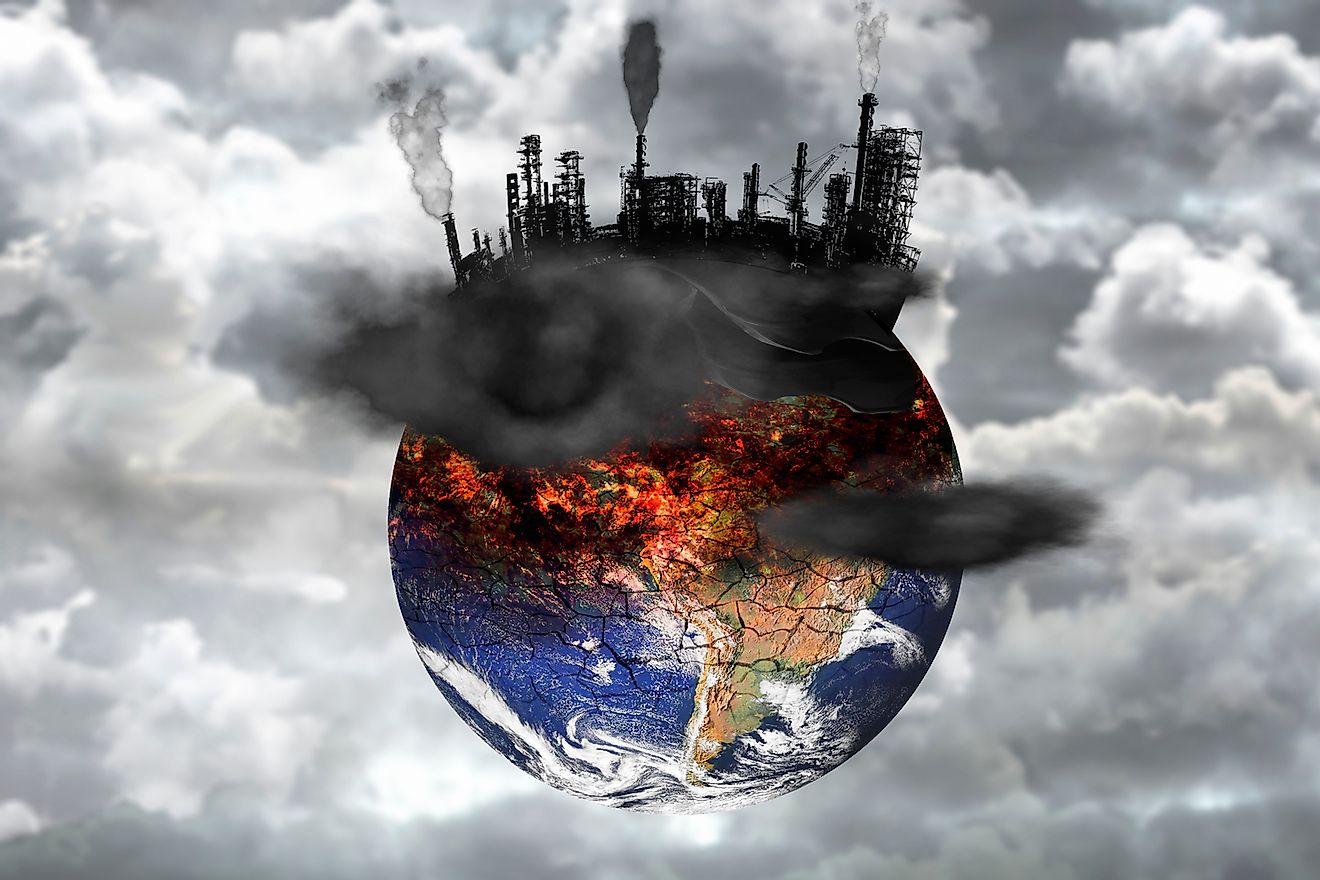
Pollution

Pollution is the containment of material particles or energy into the natural environment, causing adverse effects on the ecosystem.

Types of pollution

(1) Air Pollution: It occurs when any harmful gas, dust smoke enters the atmosphere and makes it difficult to survive living organisms like plants, animals, and human beings as well. And causes common respiratory diseases such as asthma, bronchitis.

(2)Water Pollution: It is due to the presence of foreign substances like sewage, algae, soluble salts, etc in water. It can also be due to the presence of some metals in water. Some metals like chromium and Arsenic cause diseases like cancer, cadium can cause Itai-Itai disease, and mercury causes Minamata disease.

For a healthy aquatic life, dissolved oxygen (DO) is 5-6ppm. For clean water, BOD (Biochemical Oxygen Demand) is less than 5ppm while for highly polluted water is 17ppm or more.

(3) Soil Pollution: It is an alternation in soil. It is caused by pesticides, insecticides, for example, DDT, BHC, etc, herbicides for example sodium chloride, fungicides like organomercury compounds.

Hazardous Effects of Pollution

Greenhouse Effect- It is the heating of the earth and its objects because of the trapping of Infra-Red radiations by carbon dioxide(CO2), methane, (CH4), nitric oxide (NO), ozone (O3), chlorofluorocarbons(CFCs), and water vapours.

.• Global Warming- It is a result of the increased concentration of greenhouse gases. It may result in the melting of ice caps and glaciers, spreading several infectious diseases like malaria, sleeping sickness, etc.

• Acid Rain- It has a pH of less than 5. It is due to the presence of oxides of nitrogen and sulphur in air that dissolve in rain water and forms nitric acid and sulphuric acid. It damages the buildings and other other structures made up of limestone and results in several diseases such as qskin infections. pH of normal rain water is 5.6.

Pollutants

There are the substances that contaminates the environment and of two types:

(1) Primary Pollutants: These persist in the environment in the form which they have produced, for example, sulphur dioxide(SO2), nitrogen dioxide (NO2), etc.

(2) Secondary Pollutants: These are the products of nitrogen of primary pollutants, for example, PAN (Perocyacylnitrates), nitrogen dioxide (NO2), etc. The order of different pollutants to cause pollution is carbon monoxide (CO, SO2 hydrocraban particulates nitrogen oxides.

Carbon monoxide (CO)- It is formed by incomplete combustion. It is colorless, odourless gas. It contains a triple bond and are fairly polar, resulting in a tendency to bind permanently to haemoglobin molecules, displacing oxygen, which has a lower binding affinity.

Particulates- These are minute solid particles and liquid droplets dispersed in the air, for example, mists, dust, smoke, fumes, etc. They result in causing many serious diseases like pneumoconiosis, due to inhalation of coal dust, silicosis due to inhalation of free silica (SiO2), black lung disease found in workers of coal mines, white lung disease found in textile workers, byssinosis due to inhalation of cotton fiber dust.

Smog- It is a consequence of particulate pollution and is of two types they are:

• Classical smog

• Photochemical smog

Digital Banking

Digital Banking has completely changed the way we bank in today’s times. With Digital Banking, you can transact with higher speed, ease and convenience.

What is Digital Banking? 

In simple terms, Digital Banking means availability of all banking activities online. Here, you have the luxury to freely access and perform all traditional banking activities 24*7 without having to personally go to a bank branch to get your work done. Some of the major online banking activities include-

(1) Money Deposits, Withdrawals, and Transfer
(2) Checking/Savings Account Management
(3) Applying for Financial Products
(4) Loan Management
(5) Bill Payment
(6) Account Services

Many banks also offer other integrated services like investing in Mutual Funds and other investment options online. Thus, making Digital Banking a widely used concept.

Digital Banking in India

Digital Technology has drastically changed the way banks interact with us. Similarly, it has completely changed the way we transact and interact with the bank. This is especially true in the case of a booming technological and financial economy like India, where more and more people are being connected to Digital Banking Platforms with each passing day. 

With Digital Banking you can perform every transaction, from start to end in a seamless, secure manner. You can withdraw money, deposit money, apply for loans, invest in Mutual Funds- all at a click of a button.

With the introduction of mobile banking you can perform transactions on the go. Mobile banking is a convenient and easy way to finish your transactions. For example, you can do over 125 transactions through HDFC Bank’s mobile banking app. 

The latest addition to mobile banking feature is the Mobile Banking LITE app.The HDFC Mobile Banking app can work without an internet connection, italso doesn’t take up too much space and is quick to install over slow connections. It’s a safe and secure way of making transactions on the go.

Digital Banking services are offered by all major retail banks in the country today and have, in fact, become an integral part of their services. So, one can now bank from the ease of one’s home, with the convenience of smartphone screens.

(1) Indian Financial System Code (IFSC)
The Indian Financial System Code (IFSC) is an 11-character code in alphanumeric format to uniquely identify all bank branches within the NEFT, RTGS, and the Immediate Payment Service (IMPS) network within India. This code is printed on every cheque leaf in your personal or company chequebook. To transfer funds to an account electronically, the receiver must share his IFSC code as it identifies the receiver bank and branch.Magnetic Ink Character Recognition (MICR)
Magnetic Ink Character Recognition (MICR) is a technology used to verify the legitimacy or originality of paper documents, especially cheques. A special ink sensitive to magnetic fields is used in the printing of certain characters. Every bank branch has a unique MICR code, which helps the RBI speed up the cheque clearing process, with MICR readers.

(2)Magnetic Ink Character Recognition (MICR)
Magnetic Ink Character Recognition (MICR) is a technology used to verify the legitimacy or originality of paper documents, especially cheques. A special ink sensitive to magnetic fields is used in the printing of certain characters. Every bank branch has a unique MICR code, which helps the RBI speed up the cheque clearing process, with MICR readers.

(3) Electronic Clearing Service (ECS)
Electronic Clearing Service (ECS) is another method of transferring funds from one bank account to another. It is most often used to pay regular bills (telephone, mobile, credit card, electricity, etc, to make EMI payments (Personal, Car, Home Loan), and SIP investments. This is done by invoking the auto debit facility. ECS is also used by entities for payment of salaries, pensions, distribution of dividend interest etc.

(4) Immediate Payment Service (IMPS)
Since NEFT may not be available for use on weekends and bank holidays, you could try using IMPS or Immediate Payment Service. The service is available 24X7. The minimum transfer value is Rs 1 and the maximum value is Rs 2 lakh.
But to use this service, you will need to register via your bank and provide the mobile number and MMID of the beneficiary as IMPS transfer can also be done through mobile phones. Mobile Money Identifier (MMID) is a seven-digit unique number issued by the bank.

(5) National Electronic Funds Transfer (NEFT)
The National Electronic Funds Transfer (NEFT) system allows individuals, companies, and other entities to transfer funds electronically from one bank to another within India. Normally, funds from the remitting bank will be sent to the RBI within three hours of the transaction. However, the time taken to credit the beneficiary bank’s branch account depends on how long it takes the bank to process the transaction. It should be noted that NEFT operates only during business hours on weekdays. NEFT transactions cannot be done on Sundays, bank holidays, and second and fourth Saturdays of the month. The minimum transfer value is Rs 1 and there is no upper limit.

(6)Real Time Gross Settlement (RTGS)
Another method for transferring money electronically, from bank to bank, within the Indian banking system is Real Time Gross Settlement (RTGS) scheme, where the minimum amount for each transaction is Rs 2 lakh and there is no upper limit. The beneficiary account receives the money immediately.
The RTGS system is primarily meant for large value transactions.With effect from 00:30 hours on December 14, 2020, RTGS facility is available round the clock on all days i.e. 24 hrs. India one of the few countries to operate the system 24×7. This comes within a year of the Reserve Bank of India (RBI) operationalising NEFT 24×7. NEFT is the popular mode for small-value transactions. RTGS, which started on March 26, 2004 with a soft launch involving four banks, presently handles 6.35 lakh transactions daily for a value of Rs 4.17 lakh crore across 237 participant banks. The average ticket size for RTGS in November 2020 was Rs 57.96 lakh, making it a truly large-value payment system. RTGS uses ISO 20022 format which is the best-in-class messaging standard for financial transactions. The feature of positive confirmation for credit to beneficiary accounts is also available in RTGS.
Earlier, the RBI had decided not to levy charges on transactions through NEFT and RTGS in order to promote digital transactions, and had asked banks to pass on the benefits to customers. The RBI used to levy minimum charges on banks for transactions routed through RTGS and NEFT. Banks, in turn, levied charges on their customers. RTGS is meant for large-value instantaneous fund transfers, while NEFT is used for fund transfers of up to Rs 2 lakh.
It should be noted that NEFT, RTGS and IMPS impose transaction fees in slab rates.

(7) Society for Worldwide Interbank Financial Telecommunication (SWIFT)
SWIFT is an acronym for Society for Worldwide Interbank Financial Telecommunication. It is an internationally recognised identification code forbanks worldwide, and is usually used for international wire transfers. Only those banks that are SWIFT-enabled can take part in this system. In EU nations SWIFT is also known as BIC or Bank Identification Code. When dealing with international transfers also be aware of IBAN or International Bank Account Number. IBAN (International Bank Account Number) appears in bank statements and the bank’s online systems. IBAN and BIC (Bank Identification Code ) contain your bank account number and sort code written in an internationally recognised format. All these numbers can make your wire transfers happen quickly and securely.

Rights of Pawnee and Pawnor

The bailment of goods as a security for payment of a debt or performance of promise is called ‘pledge’. The person with whom the goods are pledged is known as ‘Pawnee’ or Pledgee’. The person pledging the goods is known as ‘Pawnor’.

The rights of the pledgee or pawnee are mentioned in Section 173 to 176 of the Indian Contract Act,1872.

Rights of Pawnee

  1. Right to retain the goods pledged (Section 173 and 174): According to Sec. 173, the right of a pawnee to retain the goods pledged shall not be only for payment of the debt or the performance of the promise, but he can also exercise this right for interest on the debt and all necessary expenses incurred by him in respect of the possession or for the preservation of the goods pledged. According to Section 174, a pawnee can retain the goods pledged only as a security for that debt or promise for which they are pledged, but there is a presumption that if there are subsequent advances, they are also the part of the original debt and the pawnee may retain the goods and to recover subsequent advamces also. This is merely a presumption which could be rebutted by contract to the contrary. The pawnee is bound to redeliver the goods after he gets what is due to him.
  2. Right to recover extraordinary expenses incurred by pawnee (Section 175) : According to section 175, the pawnee is entitled to receive extraordinary expenses incurred by him for the preservation of the goods pledged from the pawnor.
  3. Right of suit to recover debt etc., and sale of the pledged goods (Section 176) : Section 176 confers right on the pawnee, including right of selling the pledged goods if the pawnor makes a default in payment of debt or performance of promise at the stipulated time. This section confers following rights on pawnee on the pawnor’s default in fulfilling promise:-. a) he may bring a suit against the pawnor upon the debt or promise and retain the goods pledged as collateral security. b) he may sell the good pledged on giving reasonable notice of the sale to the pawnor.

Right of Pawnor

Right of Pawnor to Redeem (Section 177): The pawnor has right to redeem the goods pledged, i.e., take back the goods from pawnee on payment of the agreed debt or performance of the promise in accordance with the agreement. He can exercise the right to redeem before the pawnee has made an actual sale of the goods.

Legal Heir’s Right to Redeem: In case of death of a pawnor, the pledge made by him can be redeemed by his legal heirs on meeting the liabilities concerning the pledge.

Covid -19, Society and Law

Introduction

Humankind is going through a new and unprecedented experience with the rapidly spreading Covid-19 pandemic. We still do not know who ‘patient zero’, the first person to be infected and transmit it to others, was. The severity of this virus, which has caught the world by surprise, lies not only in the delay of laboratories in finding an effective and efficient vaccine, but also in the fact that the measures taken to counter it differ considerably from what was previously adopted to confront various acute crisis, whether health, political, social or economic.

There is no doubt that the Covid-19 pandemic will change the face of human society, but it forces us to ask some important questions. Will this change only affect the healthcare systems, or will it extend to consumption patterns, value systems, political regimes and legal systems, thus leading to the fall of the huge financial and economic empires? Will the major transformations the world will undergo be determined by how we recover from the effects of this situation?

According to the World Health Organization, the problem does not lie in Covid-19 alone but rather in the fear, panic and terror caused by the spread of this virus, and amplified by the media, which has been presenting the situation as if it were the end of the world. Barring the measures adopted by China, where the virus originated, the methods used to manage the crisis around the world are somewhat similar. To some extent, China succeeded in curtailing the spread of the virus, thanks to the spirit of discipline in its people, and due to its health infrastructure, the plethora of research centres and laboratories, and the ability to control the sources of information from the onset. Most other countries have wasted precious time after the first cases appeared, relying on legal and security control in dealing with the pandemic and information about it, rather than establishing a single entity to disseminate information backed by science.

The current crisis is not of the pandemic alone. Rather, it is of the far-reaching consequences on human behaviour. Addressing these repercussions should not be limited to taking ad-hoc costly measures limited to the current situation but should prompt us to think about putting into place innovative measures and actions that go beyond the pandemic. Measures like imposing quarantines, enacting new laws to manage the pandemic, using modern tools for e-learning and telework, ensuring a minimum standard of living for all, granting loans, exemptions from paying water and gas bills and taxes, assisting the unemployed, and using the military to assist in security measures during the epidemic have cost countries billions of dollars. These are funds that could have been invested in infrastructure or other major projects, but instead have now been used to respond to the immediate needs of the people.The pandemic will radically change the modern world, leading to three likely outcomes.

The first outcome

A new theory will be integrated within political science in the future. Indeed, traditional legitimacies in the systems of government, which are derived from ballot boxes, hereditary legitimacy or religion, are beginning to decline, leaving room for a new theory called the “theory of achievements”. Since the Cultural Revolution of Mao Zedong in the 1960s, China has worked on this emerging legitimacy, as the Chinese Communist Party has distinguished itself from the rest of the Communist parties in the world.

The second outcome

The traditional conflict between wrong information and right information will transform into a conflict between convincing information and unconvincing information, as legal arsenals and control tools are no longer effective in the spread and prevalence of correct information. The method of producing information and choosing its dissemination channel is becoming a means of turning it into convincing information, regardless of if it is true or false.

The third outcome

The process of monitoring people will transition from external to internal control using smartphones. This is also what happened in China, to curb down on misinformation on Covid-19 during its early stages and as a preventive measure in the absence of a vaccine. These smart devices have become effective tools for measuring citizens’ reactions at home to what is happening in their surroundings.

A coming human revolution

Humankind is going through a humanitarian revolution, the kind that has occurred only thrice before: first, after the discovery of fire; second, with the advent of agriculture; and third, following the industrial revolution. The most prominent sign of this ‘fourth revolution’ is the predominance of new technology and the supremacy of modern means of communication, which have spawned a conflict between two major concepts of using the internet. The first can be described as social perception with a human connect, while the second is non-social perception, and can be termed as wild and unbridled. The humanitarian-minded perception is likely to win this conflict, as this human revolution is making its mark on our social existence and old behaviours. This will impact the current value system and will have political andeconomic implications.

The post-epidemic stage will see the emergence of a new human being, whose daily behaviour and thinking will differ from what it was before the Covid-19 outbreak. The political, legal and economic systems will have to adapt to this new human being. Despite the timely importance of the current safety measures being put into action around the world, there is a great need for these to be integrated into a comprehensive post-pandemic thinking. In fact, we will find ourselves faced with a generation who thinks differently from the pre- pandemic generation.

In light of the impact of Covid-19 on the individual and collective behaviours of society and State, and people’s continued thirst for information, it is necessary to keep in mind the post- pandemic world when it comes to decision-making. The Covid-19 storm will pass and mankind will survive, despite the loss of many lives. Humankind will soon live in a world that is very different from the one before the virus. However, the pandemic will succeed where the other movements of the 20th century have failed in their struggle to establish democracy and human rights, and preserve a safe environment for all.

Doctrine of Notice

INTRODUCTION

The concept of Notice for the purpose of The Transfer of Property is given under Section 3 of Transfer of Property Act, 1882 (TPA). Notice means to have knowledge of something i.e. to know something. In law, it means knowledge of a fact. It is used to decide on conflicting claims of two parties. In law, the Notice or Knowledge of a fact affects one’s legal rights and liabilities.

Under Section 3 of TPA Notice can be; “Actual or express Notice” or “Constructive Notice”, or it may be imputed to the transferee when information of the fact has been obtained by his Agent.

Constructive notice

It is based on the law of presumption or it is presumed that in certain circumstances that the person knows the fact. He cannot afterwards say against it. This type of notice can be divided into five.

  1. Notice imputed by wilful abstention from enquiry
  2. Notice from gross negligence
  3. Notice by registration
  4. Notice by possession
  5. Notice by agent

Actual notice.- Actual notice, to constitute a binding force, must be definite information given by a person interested in the thing in respect of which the notice is issued, as it is settled rule that a person is not bound to attend to vague rumours or statements by mere strangers, and that a notice to be binding must proceed from some person interested in the thing. A mere casual conversation in which knowledge of a certain thing is imparted, is not notice of it, unless the mind of a person has, in some way been brought to an intelligent apprehension of the nature of the thing, so that a reasonable man or any normal man of business would act upon the information, and would regulate his conduct accordingly. In other words, the party imputing notice must show that the other party had knowledge which would operate upon the mind of any rational man, or man of business, and make him act with reference to the knowledge he has so acquired. A vague or general report or the mere existence of suspicious circumstances is not in itself notice of the matter to which it relates. A general claim is not sufficient to affect a purchaser with notice of a deed of which he does not appear to have knowledge. If a person knows that another has or claims an interest in property for which he is negotiating he is bound to inquire what his interest is, and if he omits to do so, he will be bound, although the notice was inaccurate as to the particulars to the extent of such interest.

The notice must be given in the same transaction. A person is not bound by notice given in a previous transaction which he may have forgotten. Notice to a purchaser by his title papers in one transaction will not be notice to him in an independent subsequent transaction in which the instruments containing recitals are not necessary to his title, but he is charged constructively with notice merely of that which affects the purchase of the property in the chain of title of which the payer forms the necessary link.

Constructive notice.- Constructive notice is the knowledge which the Courts impute to a party upon a presumption so strong that it cannot be allowed to be rebutted, that knowledge must have been communicated. “The doctrine of constructive notice” said Lord Brougham in Kennedy v. Green, depends upon two considerations first that certain things existing in relation or the conduct of parties, or in the case between them, begets a presumption so strong of actual knowledge that the law holds the knowledge to exist because it is highly improbable it should not, and next, that policy and safety of the public forbids a person to deny knowledge while he is so dealing as to keep himself ignorant or so as that he may keep himself ignorant, and yet all the while let his agent know, and himself perhaps, profit by that knowledge. The broad principle underlying the doctrine of constructive notice is that a person who is bound to make an inquiry and fails to do it should be held to have notice of all facts which would have come to his knowledge had he made the inquiry. Where, on the other hand, a person is not bound to make an inquiry he cannot be charged with constructive notice of the facts that might havebeen ascertained on such inquiry. Again, where a fact, of which a person has notice, would not put him on inquiry as to the matters in question, it cannot be constructive notice of such matter.

Classes of constructive notice

(1) Wilful abstention from search which one ought to make.
(2) Gross negligence.
(3) Registration as a notice.
(4) Possession as notice.
(5) Notice to agent
(5.1)Notice should have been received in his capacity as agent.
(5.2)Notice must have been given in the course of agency business.
(5.3)Notice must be of a fact which is material to the Agency Business.
(5.4)Fraud by an agent.

Conclusion

Thus it can be said that Constructive notice is a manifestation of the rule of Caveat Emptor. This is because according to Constructive notice, a person ought to have known a fact as if he actually does know it. It presupposed that in property translation a transferee ought to ascertain and verify certain facts for safeguarding his own interest. Thus he must be aware of the nature of the transaction. These facts may relate to property or the transferor, like whether the property is free of any charge or encumbrances or whether the transferor is competent to transfer the property or not.

If the property is encumbered, then the exact nature of the encumbrance ought to be ascertained by the transferee. Law puts it as the duty of the transferee, as a reasonably prudent person to be reasonably vigilant and diligent to ascertain the facts, inspect the documents relating to property in possession of the transferor, inspecting concerned persons, even with relevant statutory authorities, if required. Failure to do this would result in the imposition of Constructive notice.

“CHARLES BABBAGE” Biography

“Charles Babbage” is the father of “Computer”. He was born on December 26, 1791 in London. His father’s name was Benjamin Babbage and mother’s name was Betsy Plumleigh Babbage. Charles was one of the four children born to Benjamin Babbage who was a banker and merchant. The Babage family was wealthy.

Charles received much of his early education from private tutors. In 1810 he entered Trinity College of Cambridge University. There he found that he knew more about Mathematics then his instructors in 1814 the same year of Charles graduation from Cambridge. Same year, he married Georgiana Whitmore. They had 8 children together but only 3 live beyond childhood after his graduation he lectured on astronomy at the royal Institution and in 1816 was elected a fellow of the Royal Society in 1820 he helped to established the astronomical society in 1822 Charles began work on his difference engine. That machine or capable of performing mathematical calculations. At the time numerical tables were calculated by humans which resulted in high error rates in the table they produced his first prototype which was not finished during Charles lifetime was composed of 25,000 parts and would have weighed around 15 tons. A second prototype was also designed by Babbage the London science museum constructed the machine from Babbage original plan in 1991. It performed its first Calculation at the Science Museum London returning result 231 digits Babbage then began work on a more advanced machine known as the analytical engine. This machine can be programmed through a series of hole punched cards and intended to use several techniques that are still used in modern computing. In 1838, he invented the pilot a metal frame in front of locomotives that clears the tracks of obstacles and designed a dynamometer car that would record the progress of the locomotiv. Babbage also invented an ophthalmoscope, which is used in eye examination. Charles Babbage died on October 18, 1871, at the age of 79. “PERHAPS IT WOULD BE BETTER FOR SCIENCE. THAT ALL CRITICISM SHOULD BE AVOWED”.

Internet and Mobile Association of India v. Reserve Bank of India

Statement of Facts

  1. On 5th April,2018 Reserve Bank of India issued a press release raising the concern about the consumer protection from trade of virtual currencies. They were of the view that trading in virtual currency also referred as crypto currency are prone to hacking and therefore would lead to money laundering, terrorist activities, etc. In this view RBI asked the banks to not to deal with the transactions related to the trading of virtual currency.
  2. The services which RBI directed the bank not to deal with were – maintaining the accounts, registering, trading, settling, clearing, giving loans against virtual currencies, accepting virtual currency as collateral, opening accounts of exchanges dealing with them and transfer of sale/purchase of virtual currencies.
  3. The matter was challenged by Internet and Mobile Association of India. The Supreme Court of India allowed the petition on the ground of proportionality. Earlier in 2013 the Reserve Bank of India do issued a public caution to the traders and holders of virtual currency in context with the legal and security related risks associated with it.

Issues Raised

  1. Whether the Reserve Bank of India had the jurisdiction to disallow the trade of virtual currency?
  2. Whether the Respondent had the powers to regulate virtual currency as they were not equivalent to money or legal tender?
  3. Whether the circular which was issued by the RBI was proportional?

Critical Analysis of the Case

A step in the right direction was taken by the Supreme Court of India, in the judgment of Internet and Mobile Association v. RBI. The court quashed the circular of the RBI that directed financial agencies to disocciate themselves from entities involved in virtual trading or transactions relating to VC’s. Some of the concerns that led to the issuance of circular include the anonymity of the transactions and the protection of investors when dealing in cryptocurrency. The major apprehension of the RBI was the inherent difficulty in tracking the source of money which has led to an increase in the number of cryptocurrency scams in the country. Still a very volatile technology, we have not had enough discussion around its shortcomings, leading to an adverse preference of this technology in the monetary circuit.

The Petitioner relied on the case of MS Gill v. Chief Election Commissioner, which led that there was an express prohibition of any authority to do anything which may improve its case. The contention of the petitioners rested on the premise that denial of banking services to those activities of trade recognized by law, would be extremely disproportionate, leading to the violation of extremely disproportionate, leading to a violation of Article 19(1)(g) of the Constitution. Therefore, an understanding of whether there was an infringement of this constitutional right was necessary and to this end, the court relied on the case of Md. Yasin v. Town Area Committee, which makes it amply clear that the right under article 19(1)(g) would be affecyted “In effect and in substance” when there is a complete stoppage of a particular business activity, owing to a certain measure that was undertaken. In Keshavlal Khemchand and Sons Pvt. Ltd. v. Union of India, the court pointed out that “Reserve Bank of India is an expert body to which the responsibility of monitoring the economic system of the contry is entrusted, under various enactments like the RBI Act, 1934, the Banking Regulation Act, 1949.”

The judgement of the court has started an effective discussion on lines that were never traversed before, and while that is indeed commendable, we need to look ahead and anticipate the potential risks on the economy. With that in mind, VC’s promise a more feasible future, especially in this era where people are connected through technology in ways previously unimaginable. Various stakeholders have posted many suggestions, particularly with regarding to creating a model that can monitor and regulate crypto currency, without bringing a blanket ban of the same, which ought to be considered by the government in the light of pending bill. What we need to do is find a balance and not discourage startups from adopting this technology, and if this is ignored, India could be handicapped from exploring opportunities that crypto currencies have to offer. Instead of shying away from addressing these concerns, we need to be proactive and have a structured policy in pace to assuage any potential concerns in the future.

World Lung Cancer Day 1-Aug 202|What others days are celebrated today.

World Wide Web Day, Sisters Day, International Childfree Day, Friendship Day, World Lung Cancer Day, Swiss National Day.

World Lung Cancer Day

2nd most common form of cancer and major cause of death around the world

Significance:

To raise awareness about the causes and treatment of lung cancer. The lack of sufficient research and funding has made Lung Cancer a deadly one. According to data collected by the World Health Organization (WHO), approximately 2.09 million deaths annually. New research and experiments continue to make breakthroughs in the study and treatment of lung cancer, it ranks among one of the lowest in terms of survival rate when compared to breast cancer or prostate cancer. It is majorly due to lack of funding and late detection.

Survival Rate: 22%

HIstory:


The campaign was first organized in 2012 by the Forum of International Respiratory Societies, in collaboration with the International Association for the study of Lung Cancer and the American College of Chest Physicians. They provide support to those who have been affected with lung cancer and who have survived it.

LCFA’s World Lung Cancer Day 2021 Hashtag:  #LivingWithLungCancer


The symptoms:

  • Laboured breathing
  • Coughing blood
  • Chest or back pains
  • a cough that doesn’t go away after 2 or 3 weeks.
  • Persistent breathlessness
  • Pain in the chest, back or shoulders that worsens during coughing, laughing or deep breathing.
  • Wheezing, cough with blood, and weight loss. (These symptoms often don’t appear until the cancer is advanced.)

The causes:

  • Smoking or being exposed to smoke.
  • Exposure to radon, secondhand smoke, air pollution, asbestos, diesel exhaust or certain other chemicals, tobacco products, industrial products (uranium, radiation, asbestos), and nutritional deficiencies.
  • long-term respiration of carcinogenic materials.

You can find legit donations nearby or on websites like these below. Lung cancer has very low funding compared to others. Amy amount of donation is going to save a life.

https://www.lung.org/get-involved/ways-to-give

https://lcfamerica.org/get-involved/events/world-lung-cancer-day/

Other Days celebrated today.

International Childfree Day

It was created in 1973 in the United States by the National Alliance for Optional Parenthood, at the time the National Organization for Non-Parents (N.O.N.), under the name of Non-Parents’ Day. It has also been described as “a day of celebration worldwide for those couples who have faced criticism, ridicule, and rejection because they chose to be Childless by Choice.” The initiative, resurrected in 2013 by author Laura Carroll, also bestows Childfree Person of the Year.  The 2020 winners were Elizabeth Hintz, an American doctoral candidate who “has dedicated her professional career to understanding and normalizing childfree experiences”, and the Russian internet community “Childfree”, which “has helped so many people to find a point of support in so pro-child, so patriarchal Russian society.”

Friendship Day –

In India, Every first Sunday of August is celebrated as “Friendship’s Day”. Good friends play a huge role in our lives. They can be a sister, brother, parent, partner in crime and what not. This day is celebrated to bring us together and cherish each other’s company.

Swiss National Day –

It is inspired by the date of the Federal Charter of 1291, Pacte du Rütli, placed in “early August”, when “three Alpine cantons swore the oath of confederation” (Schwyz, Uri and Unterwald), an action which later came to be regarded as the founding of Switzerland.”  It has only been an official holiday since 1994. 1 August is celebrated each year with paper lantern parades, bonfires, hanging strings of Swiss flags, and fireworks. Since, 2014 the event format has changed with the motto Back to the roots

In Britain it is also Yorkshire Day, celebrating the country of Yorkshire.

World Wide Web Day –

The World Wide Web (WWW) was conceived in 1989 at the CERN lab in Geneva, Switzerland, as a way for scientists to share knowledge. It aims to remember Sir Tim Berners-Lee for bringing WWW into the world.

Jean Armour Polly, a librarian, is credited with coining the term surfing the web.

Anatula Sudhakar v. P. Buchi Reddy

Statement of Facts

This appeal for special leave is by the defendant in a suit for permanent injuction. Puli Chandra Reddy and Puli Buchi Reddy were the plaintiffs in the said suit. Both the plaintiffs claimed to be the respective owners in possession of the said two sites having purchased them under two registered sale deeds dated 9.12.1968 from Rukminibai. When they were digging trenches in order to commence construction, the defendant interfered with said work. The plaintiffs filed a suit for permanent injuction to restrain the defendant from interfering with their possession. Defendant resisted the suit claiming that suit property measuring 300sq. yards in premises No. 13/776 was purchased by him from K.V. Damodar Rao, brother of Rukminibai. He had also obtained a loan for such construction from the Central Government by mortgaging the said property. According to him, when he commenced construction in the said property, the plaintiffs tried to interfere with his possession and filed a false suit claiming to be in possession.

Issues Raised

  1. Whether the plaintiffs are in exclusive possession of the suit sites?
  2. Whether the defendant has interfered with the possession of the plaintiffs over the split plots?
  3. Whether the plaintiffs are entitled to permanent injunction? And to what relief?

Critical Analysis

A step in the right direction was taken by the High Court in its judgement of Anatula Sudhakar V. P. Buchi Reddy. The High Court by its judgement dated 18.1.1991 allowed the second appeal and restored the judgement and decree of the Irial Court and consequently held that plaintiffs had established their title in regard to the two vacant sites purchased by them and drew an inference that possession was presumed to be with them by applying the principle of possession follows title. The HC also held that it was not necessary to plaintiffs to sue for declaration of title, as the question of title could be examined incidental to the question of possession.

There was some confusion as to what circumstances the question of title will be directly and subsequently in issue in the suit for injunction simpliciter. In Vanagri Sri Selliamam Ayyanar Uthirasomasundareswarar Temple V. Rajanga Asari AIR 1965, Madras High Court considered an appeal arising from a suit for possession and injunction. The defendant contended that the plaintiff had filed an earlier suit for injunction which was dismissed, and therefore the plaintiff was precluded from agitating the issue of the title in the subsequent title suit, being barred by the principal of res judicata. It was held that the earlier suit was only for injunction and the averments in the plaint did not give rise to any question necessitating denial of plaintiffs title by the defendant, and as the earliest suit was only concerned only with possessory right and not title, the subsequent suit was not barred. There are several decisions taking similar view that in a suit for injunction, the question of title does not arise or would arise only incidentaly or collateraly, and therefore a subsequent suit for declaration oof title would not be barred. The judgement by the High Court has stated an effective decision and restoring the decree of the trial court in favour of the plaintiffs that the plaintiffs and their witnesses gave evidence to the effect that Damodar Rao represented that his sister Rukminibai was the owner of the plot and negotiated for the sale of the several portions thereof in favour of the plaintiffs. Further, where title of plaintiffs is disputed and claims for possession is purely based on tiltle, and the plaintiffs have to rely on various principles of law relating to ostensible ownership and section 41 of TPA, validity of an oral gift by way of ‘Pasupu Kumkumam’ under Hindu Law, estoppel and acquiescene, to put forth a case of title, such complicated questions could properly be examined only in a title suit, that is a suit for declaration and consequential reliefs and in a suit for an injunction simppliciter.

State of Haryana v. Bhajan Lal and Others

Statement of Facts

The first Respondent was a minister and subsequently Chief Minister of Haryana State. Later he became Union Minister. Bhajan Lal at the same time of the case was the Union Minister of Environment and Forests and Devi Lal was elected as the Chief Minister of the State of Haryana. In the same election Respondent 2, Dharam Pal lost the election against Smt. Jasma Devi, wife of Bhajan Lal . Owing to various political rivalries and institutions of various criminal cases there was a lot of bad blood between Bhajan Lal and Devi Lal. Consequently, Respondent 2 placed a complaint before the CM, Devi Lal against Bhajan Lal where he alleged that Bhajan Lal possesses disproportionate property or pecuniary resources compared to his indefinite sources of income. It was also alleged that the accumulation of that much property was far beyond his legal means. Special officer on duty in CM’s secretriat passed the message to the office Director General of Police stating that the CM has sought appropriate action in the said case. The complaint was further passed on to the Superintendent of Police (SP) asking for the necessary measure to be taken and report back. The SP asked the SHO (Station House Officer) to register the case and investigate. Subsequently, a case was filed under Sec. 161 and Sec. 165 of the IPC and Section 5(2) of the Prevention of Corruption Act in November 1987. The copy of the FIR was then sent to the magistrate and the investigation was started.

Issues Raised

  1. Whether just the allegations are enough to constitute a cognizable offences and give the power of investigation to the police?
  2. Whether the action of investigating on the part of SHO on just the order of one word “investigate” from SPis enough as per Sec. 5 of Prevention of Corruption Act, 1947?
  3. Whether the HC was justified in quashing the FIR and criminal proceedings and acted under the ambit of Article 226 of the Constitution and Sections 482, 154 and 157 of Cr.P.C., and to what extent the orders suffer from legal infirmity?

Critical Analysis

Cases of corruption against politocal leaders in India are not rare. This is one of such case that notified the alleged corruption carried out by a significant political figure leading to registration of a case against him by his rival. Inevitably the suit underwent the question of legitimacy that led to the appearance of the same before the SC. The case holds importance as it significantly points out the powers and limitations of various authorities at different points of time throughout the trial of matter. It re-emphasized the power of investigation that police hlods and in what nature of cases, the necessity of filing an FIR, and the extent to which High Courts should use their special power of quashing Criminal proceedings. The case re-established that our Constitution is based on the concept of Rule of Law which serves as an aorta of governance in our democratic system and no one or authority is higher than law and that law is supreme. Everybody exclusively and on the whole is undeniably under the authority of law irrespective of the wealth and power they possess. The case likewise relooks at the complete and resultant backlogs of evils like corruption that exist in our country. Therefore this parasite of bribery if not battled against all fronts and at the levels checked and completelly removed, will destabilize the very establishments of democracy and erode the foundations of rule of law and make the whole administration ineffectual and broken.

Communicable Diseases

These are the diseases that may pass or carry from one human or animal to other. Communicable diseases are illnesses caused by grams such as bacteria, viruses, and spread by an infected person, animal, or object to other person.

Viral Diseases: The virus is parasitic which causes several diseases like:

(1) Bird Flu (H5 N1)- Bird Flu (Avian influenza) is a disease caused by an influenza virus-A, that primarily affects birds. The following persons who may be at higher risk for developing the bird flu are—

• Travellers, visiting affected countries.

• Farmers and others, who work with poultry.

• Those who have touched an infected bird.

• Those who eat raw or undercooked poultry meat, eggs, from infected birds.

Symptoms- Fever, cough, sore throat, muscle aches, and eye infection (conjunctivitis).

Treatment- Treatment with the anti-viral medication oseltamivir (Tamiflu), or zanamivir (Relena) may make the disease less severe. Oseltamivir may also be prescribed for persons, who live in the same house as those diagnosed with Avian flu.

Severe Acute Respiratory Syndrome (SARS): It is a serious form of pneumonia. It is caused by a virus that was first identified in 2003. Infection with the SARS virus causes acute respiratory distress( severe breathing difficulty) and sometimes death.

Symptoms- Cough usually starts 2-3 days after other symptoms like fever, headache, and muscle aches.

Treatment- Antibiotics to treat bacteria that cause pneumonia. Anti-viral medications. High dose of steroids to reduce swelling in the lungs. Oxygen, breathing support (mechanical ventilation), or cheat therapy.

Hepatitis: Hepatitis is swelling and inflammation of the liver. It is not a condition but is often used to refer to a viral infection of the liver. Hepatitis can be caused by—

• Immune cells in the body attacking the liver and causing autoimmune hepatitis. Infections from viruses such as hepatitis A, B, or C, bacteria, or parasites. Liver damage from alcohol, poisonous mushrooms, or other poisons.

• Medication such as an overdose of acetaminophen can cause harm or even death.

Symptoms- Abdominal pain or distention. Breasts development in males. Dark urine and pale or clay-colored stools. Fatigue, general itching, fever, usually low-grade jaundice(yellowing of the skin or eyes), and loss of appetite, nausea, vomiting, and weight loss.

(2) AIDS: Acquired Immuno Deficiency Syndrome(AIDS) is a disease of the human immune system caused by the Human Immunodeficiency Virus (HIV). AIDS was first recognized by the Centers for Disease Control and Prevention(CDC) in 1981.

HIV Infection: AIDS is a condition caused by HIV infection. The condition gradually destroys the immune system, which makes it harder for the body to fight infections.

Transmission- HIV can be spread by the following :

• Through sexual contact i.e. oral, vaginal, and anal sex.

• Through blood transfusions, accidental needle sticks, or needle sharing.

• From mother to child: A pregnant woman can transmit the virus to her fetus through their shared blood circulation or a nursing mother can pass it to her baby through breastfeeding.

Test for AIDS-

• Enzyme-Linked Immunosorbent Assay/ Enzyme Immuno Assay (ELISA/EIA).

• Radio Immuno Precipitation Assay/ Indirect Fluorescent Antibody Assay (RIP/IFA).

• Polymerase Chain Reaction(PCR)

• Western Bolt Confirmatory Test.