Financial education is something that everyone should know about it .Everybody should know about how to handle their expenses ,how to plan their future, how to start their start-ups .So here is 10 books that helps you in many ways and you should read this book before start your earning or startups. I hope you all find these books as interested as I liked them. Here is the list of 10 books:-
Rich Dad Poor Dad (1997) Author:-ROBERT T KIYOSAKI Genre:-Financial Investment , non-fiction Description:-Robert T Kiyosaki is an American author and business man .he is the founder of Rich Global LLC and the Rich Dad company. he wrote rich dad poor dad which is one of the best selling book of New York times .It has sold over 32 million copy . He wrote in book how people denied to accepting the truth and how the fear and greed control them through out their life. He also talks about financial strategies . It’s one of the best book on financial education.
2.Why Didn’t They Teach Me This in School? (2017) Author:-Cary Siegel Genre:- Financial education ,Business Description:-Cary Siegel is a MBA graduate from a university of Chicago. After Graduating from one of the top business school. He started his carrier in sales and marketing and lead several companies in sales and marketing. He shared his experience and finance lesson that he learned through out of his life. Why didn’t They Teach Me This in School? covered numerous topics like budgeting, spending, credit cards, investing, mortgages, insurances and much more which you will never learn in your school.
3. The Automatic Millionaire (2003)
Author:- David Bach Genre:- financial Investment, self-help Description:-David Bach is an American author, Motivational speaker ,entrepreneur and founder of Finish rich.com. He wrote many books on finance such as Finish Rich series and Automatic Millionaire series. The Automatic Millionaire is about how can you become financially stable without taking so much risk or if you are frugal then you must read this book. “The first person who deserves your money is yourself” by DAVID BACH
4. The One-Page Financial Plan (2015) Author:- Carl Richards Genre:- Financial Investment and education Description:- Carl Richards is a certified Financial planner and the author of The Behavior gap and appearing weekly on New York times since 2010. The one page financial plan is all about how can you do budgeting and make savings to be fun. Set your future goals but change your strategies according to the situation.
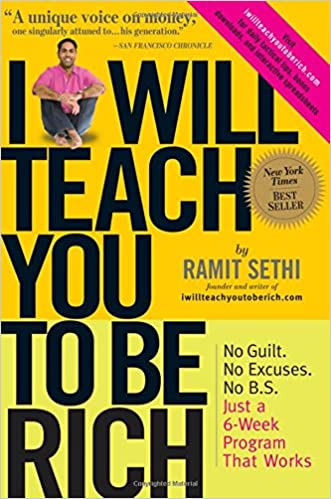
5. I Will Teach You to Be Rich (2009) Author:- Ramit Sethi Genre:-Financial education and Investment Description:-Ramit Sethi is an American personal finance advisor and entrepreneur. he is the best selling author of New York times in 2004. i Will teach you to be rich talks about how people blame others about their financial problems, smartly spending your earning and start investing from today as it will help you in future.
6. Your Money or Your Life (1992) Author:-Joseph R. Dominguez, Monique Tilford, and Vicki Robin Genre:- Financial education and Investment Description:- Author talks about the minimize spending ,excessive investing and save for Emergencies .
7. Think and Grow Rich (originally published:-1937) Author:- Napoleon Hill Genre:- Non-Fiction, Self-help, Financial education Description:-Oliver Napoleon Hill was an American author who wrote so many self-help books. Think and Grow rich is one of them and it’s one of the best self-help book of all times. Hill talks about the belief in yourself ,becoming a stubborn and never your change your decision once you decided and accompany those who are mastermind on your field.
8. The Millionaire Next Door ( originally published:-1996) Author:-Thomas J. Stanley, William D. Danko Genre:- Non-fiction Description:- Thomas J. Stanley was an American author and business theorist . He wrote The millionaire next door which was the New York times best sellers. The millionaire next door covered about the healthy spending and avoid silly mistakes that mostly people do to handle their financial expenses. It’s one of the most practical book that I had ever read till now
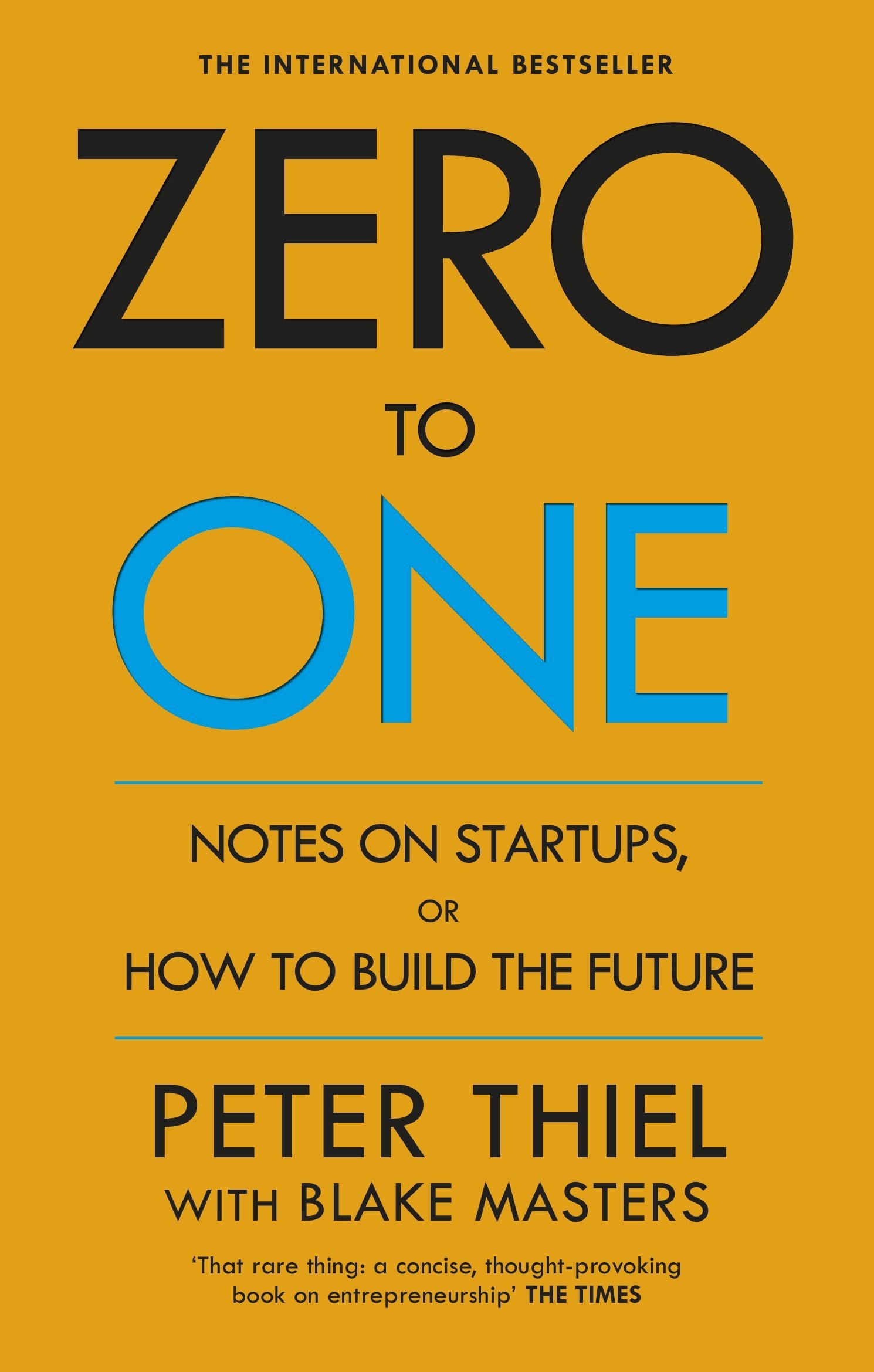
9. Zero to One (2014) Author:-Blake Masters and Peter Thiel Genre:- Business, Politics and Government Description:-Peter Theil is German-American billionaire entrepreneur and venture capitalized. he is the co-founder of PayPal ,Palantir technologies .he was the first outside investor in Facebook .he was ranked four on the Forbes Midas list 2004. peter write about how he thinks about his business and how an you shape the future of the world in the process.
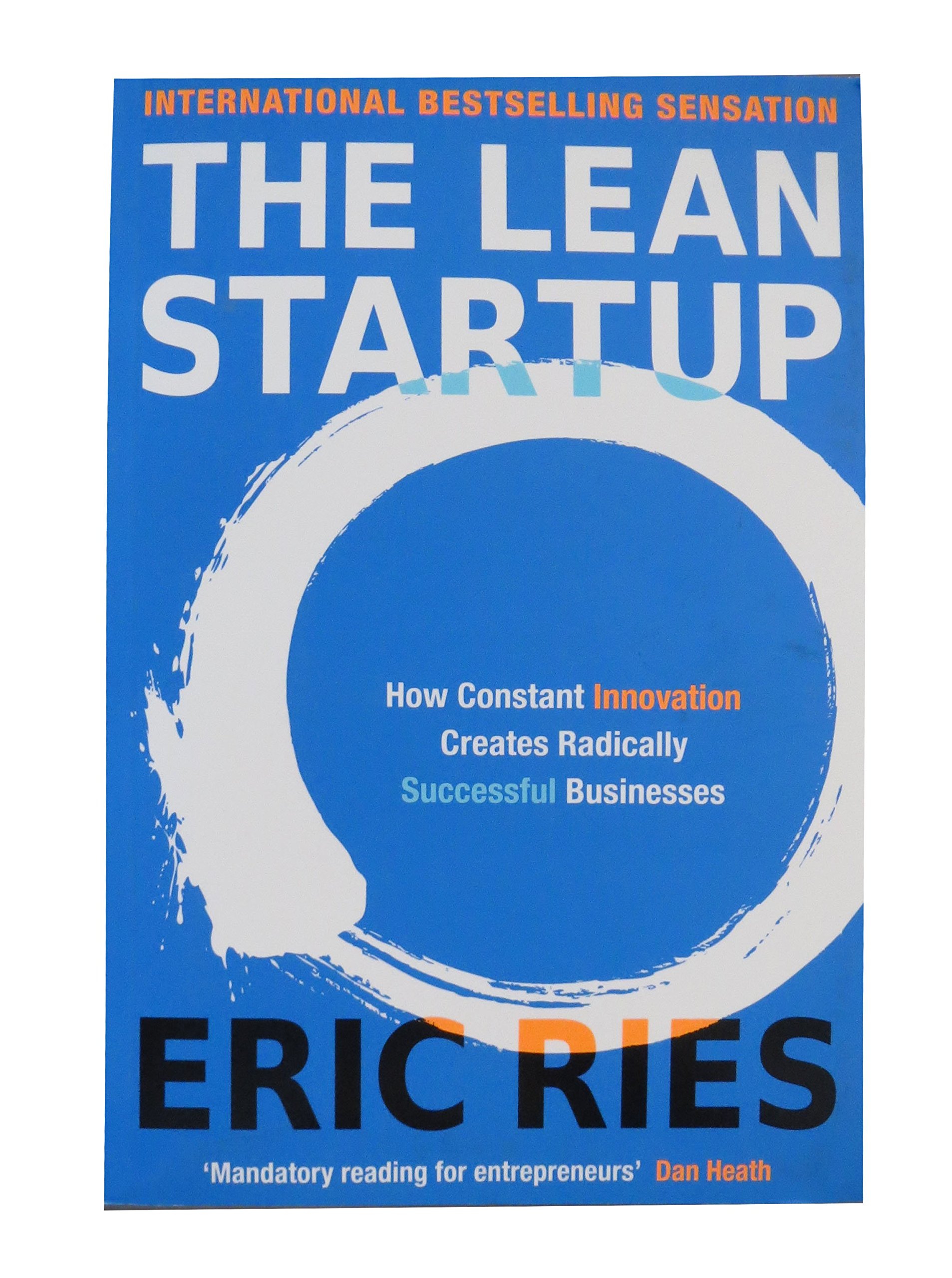
10. The Lean Startup(2011) Author:-Eric Ries Genre:-Self-help book Description:- Eric Ries is an American entrepreneur, blogger and author of The Lean Startup. the lean startup talk about the customer needs and quickly learn about it, changing the strategies according the customer needs and previous result. Eric Ries divide the book in three section:- 1. vision 2.steer 3.Accerlate
I hope you liked the article .Thank you for giving your precious time to read this article if you like the article pls tell us and comment your feedbacks . Have a Good day and Happy Reading.
Technical skills are the abilities and knowledge needed to perform specific tasks. They are practical, and often relate to mechanical, information technology, mathematical, or scientific tasks. Some examples include knowledge of programming languages, design programs, mechanical equipment, or tools.
Some of the very famous tech. Skills:
1. Project Management. Being able to effectively coordinate resources, people and budgets as a project manager is one of the best technical skills that you can have. 2. Analysis of Big Data and Business 3.Intelligence. 4. Information Security. 5. Designer. 6. Marketing Assistant. 7. Writer. And many more…
Create a dedicated Technical Skills section for the resume.
If they’re heavily emphasized in the job description, then your Technical Skills section should be at the top of your resume, just below your introduction, and above your professional experience. A bulleted list will make it easy to read.
These are some of the basic tech. Skills:
* Word Processing Skills. * Spreadsheets Skills. * Database Skills. * Electronic Presentation Skills. * Web Navigation Skills. * Web Site Design Skills. * E-Mail Management Skills. * Digital Cameras
How can you improve your technical skills? So, here are the steps to improves ones technical skill.
1. Enroll in Technical Classes or Workshops. 2. Get Technical Books. 3. Volunteer for Technical Projects. 4. Subscribe to Technical Sites and Magazines. 5. Develop Knowledge of a Second Language. 6. Practice What You Learned.
Before directly going into the SEO techniques I would like to make you understand about the concept of digital marketing easily with a simple example that we encounter in our daily routine. ” Most of us use Gmail almost everyday for various purposes. When ever we open our Gmail we observe different sections holding different mails in it especially when we open “Promotions” section in our mail box, we used to see different mails from various websites which are offering discounts on their products or courses.” These mails are the strategic implementations of the websites in order to increase their marketing on the internet to get profits. This type promotions in Gmail sections leave a foot print of ” DIGITAL MARKETING”.
DIGITAL MARKETING:
Digital marketing is a platform that is widely used for marketing with help internet connected devices. It uses latest digital technologies to reach people. Now a days digital marketing is crucial for the entrepreneurs to share their idea, promote their products and build their audience.
SEARCH ENGINE OPTIMIZATION(SEO):
When we search for a content through search engines like google, then that particular search engine shows a random websites for our search as an answer. This random gathering of information by search engines is possible with the help of search engine optimization which helps search engines to show the best available content for the given query.
SEO is an effective way to improve the rank of websites in search engines in order to increase the visibility of websites. SEO is a technique to optimize the website with the suitable key words. Let’s see some latest SEO hacks to improve the ranking of page which helps in increasing your websites market.
LATEST TRENDS OF SEO:
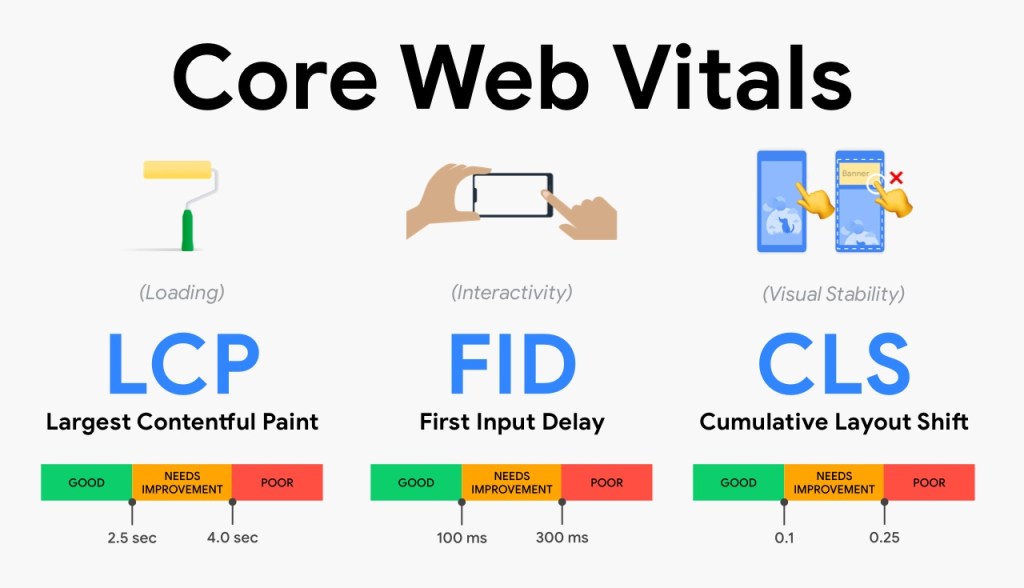
UNDERSTAND CORE WEB VITALS OF THE SITE: Google has recently announced that core web vitals will become the new ranking signals by combining previous UX related signals also. Core web vitals is a new term that haven’t heard in previous years but it plays a crucial role in 2021 because google has developed a new algorithm to measure the page experience based on the score off core web vitals.
To make you understand better, core web vitals are the measurement capabilities of the content in a website. These measurements are depended upon page speed, page responsiveness and page visual stability which are known as LCP(Largest contentful paint), FID(First input delay), CLS(Cumulative layout shift). These measurement speeds are shown in the following picture.
AI PLAYS A LARGE ROLE IN SEO: AI is changing the interaction methods of people with online content. Google has unveiled an algorithm a few years back which is called as “RankBrain”. This algorithm paly’s a crucial role in ranking the pages with the help of “SERP’s ” results. Experts believe that user experience signals are the primary for ranking the page, so by using this algorithm search engine like google can easily captivate the rate of time that has spent on the website by readers which gives the better feedback on the content quality of website.
USE “EAT” PRINCIPLE: EAT principle helps website optimizer to master a long term SEO success, despite of Google’s constantly changing algorithms. EAT stands for Expertise, Authority and Trustworthiness. These three principles are essential to measure the brand of websites on the web. In order to establish your brand’s authority, trustworthiness and reputation then you have to follow these rules:
Try to engage with customers in a better way and request them to provide reviews and feed back to your work.
Try to insert high quality links in you site.
Follow EAT principles on your website through testimonials, case studies and other forms of social proof.
Along with the above discussed principles we should also follow the below stated tips to improve the traffic to your website:
Create new content and try to update the old.
Give first priority to the user experience.
Improve featured snippets to make your content more prominent.
Improve mobile friendly content to improve search rankings.
Support long tail key words and optimize the images that you place in your content and don’t forget to keep effective back links on your site.
Finally, The content designers of websites should keep in mind that , Relevant & Optimized content wins every time in the ranking of page on search engines and also the core of SEO is about figuring out what works for the site or client and then changing it when it stops working. Always keep a close eye on your competitors and follow the best practices to thrive best in marketing.
Since its founding in 1949, Public Administration and Development (PAD) has been reviewing and assessing the practice of public administration at the local, regional, national and international levels where it is directed to managing development processes in low and medium income countries.
The role of public administration in bringing about development?
On the role of public administration, it will address such areas as sustained economic growth, the promotion of social development, facilitating infrastructure development and protecting the environment, promoting public- private partnerships, managing development programmes and maintaining a legal framework for
ROLE OF PUBLIC ADMINISTRATION IN DEVELOPMENT TO BE CONSIDERED AT RESUMED GENERAL ASSEMBLY SESSION 15-19 APRIL
19960412 Background Release The crucial role of public administration in development, particularly in developing countries and economies in transition, will be the subject of a one-week resumed session of the General Assembly, beginning on Monday, 15 April. The resumed session represents the first time the Assembly will meet specifically to consider that issue.
The aim of the resumed session of the General Assembly is to explore themes contained in two distinct categories: the role of public administration, and capacity-building for effective administration. Thirteen specific topics were identified within those categories.
On the role of public administration, it will address such areas as sustained economic growth, the promotion of social development, facilitating infrastructure development and protecting the environment, promoting public- private partnerships, managing development programmes and maintaining a legal framework for development.
With respect to capacity-building, the Assembly will discuss improving civil service systems, organizational strengthening, the enhancement of policy-development capacity, strengthening financial management for development, human resource development for the public sector and the development of administrative capacities for post-conflict and crisis conditions.
In deciding to hold the resumed session, the Assembly recognized the important role that governments and public administrations can play in promoting sustained economic growth and sustainable development (resolution 49/136). It also recognized the need for strengthened public administrative and financial management capacities in order to ensure a civil service that is responsive to the needs of the people.
As a stimulant to its discussion, the Assembly will have before it a report of the Secretary-General containing a series of recommendations on strengthening the role of the United Nations in public administration and development, including recommendations for national governments (document A/50/847-E/1996/7).
Recommendations in Secretary-General’s Report
The report of the Secretary-General contains recommendations on the role of policy-making for public administration and development, the focus of the United Nations programme on that subject, the coordination of relevant activities within the United Nations system and support of donors. It also includes recommendations for national governments and United Nations responses.
On the role of policy-making, the Secretary-General recommends that the issue of public administration and development be included as a regular item on the agenda of the General Assembly and the Economic and Social Council and that the Group of Experts on Public Administration and Finance be redesignated the Committee on Public Administration and Development, which would report to the Council. Likewise, the United Nations programme in public administration and finance should be renamed the United Nations programme in public administration and development.
The United Nations programme in public administration and development should enhance its role as the central depository for materials, reports and non-print media on public administration and development worldwide, the report recommends. Using the latest technology, it should become the clearing-house for all materials on the subject, to serve as a catalyst for a network of international, regional and national institutions and organizations involved in those issues. The programme’s focus should be on action-oriented, practical research on effective systems and procedures in public adminstration.
Tied to its research and clearing-house functions is the assistance the United Nations can provide to individual governments, at their request, in helping them improve their governmental machinery and public management systems for development. To that end, the United Nations programme should be strengthened in the areas of advisory services, needs assessment, diagnostics and substantive support to projects. It is recommended that the United Nations assist governments, when requested, in translating the recommendations of global conferences into detailed programmes for implementation.
The report recommends that the United Nations programme assist in all the phases of the restoration of public administration institutions in countries recovering from conflict and crises, and that it actively assist developing countries and countries with economies in transition.
On coordination of public administration and development activities within the United Nations system, the Secretary-General recommends that a consultative group on the matter will meet once a year, under the auspices of the Department for Development Support and Management Services. It will focus on closer collaboration in the planning and implementation of global
– 3 – Press Release GA/9056 12 April 1996
programmes of information exchange, research, preparation of guidelines, and organizations of seminars and workshops. It will also provide a forum for mobilizing international assistance.
With regard to donor issues, the report recommends that the donor community recognize the significance of public administration in development and provide adequate resources to improve such structures in developing countries and those with economies in transition. Particular consideration should be given to the loan of expertise to carry out practical research and advisory missions. To that end, the Secretary-General recommends the establishment of a trust fund for United Nations activities in public administration and development.
The Secretary-General highlights a number of recommendations for governments made by the Group of Experts on Public Administration and Finance, which held its twelfth meeting from 31 July to 11 August 1995. Following each recommendation is a projected United Nations response (document A/50/525- E/1995/122, annex).
The Group states that national governments should strengthen the policy, advisory and administrative capacity in critical areas, while the United Nations programme can organize professional exchanges, arrange professional training programmes and prepare case studies on policy matters for dissemination.
According to the Group, in the process of restructuring public administration, government institutions should be encouraged to develop strategic plans and monitor their performance, while the United Nations would continue to undertake comparative studies on restructuring and disseminate them on a regular basis.
Leaders should invest in people, upgrading the capacity of national training institutions to develop a core group of professional trainers, the report states. The United Nations would seek to create and sustain momentum for a global exchange of information on human resource development.
Governments are asked to establish clear goals, encourage operational flexibility, measure results impartially and develop appropriate incentives, while the United Nations would continue offering advisory services in areas including the management of change, performance management and measurement, and information technology.
Public administration services should be provided to reflect ever- changing needs of the citizens they serve, the Group states. The United Nations can assist in developing state-of-the-art technological communication networks.
– 4 – Press Release GA/9056 12 April 1996
Furthermore, governments should encourage financial management at the grass-roots level, the Group states. For its part, the United Nations would assist governments in creating and strengthening national capacities in fiscal policy analysis and economic management, and in promoting a proper environment for capital flows for investment, private sector development, transparency and accountability.
According to the Group, governments should seek objective evaluations of their privatization programmes to establish the appropriate place and timing of privatization in structural adjustment programmes; they should also pay greater attention to performance improvement in parastatals. For its part, the United Nations shall, at the request of the government, arrange for such evaluations, assisting governments in defining the role and scope of their public, private and combined sectors.
While governments should provide an encouraging environment for small and medium-sized enterprises, the report states, the United Nations would assist countries by operating an information clearing-house, developing case studies of successes and failures and providing technical support.
National governments should assume the responsibility for establishing environmental standards for all infrastructure policies, the Group states. The United Nations would assist governments in administrative capacity- building and infrastructure management. Codification of laws must be undertaken to facilitate access to legal guarantees, with the United Nations assisting governments to organize a legal framework of public administration and strengthen judicial supervision of public administration.
For countries recovering from crisis and conflict, the development of both immediate and transitional or long-term strategies is recommended. The United Nations would provide special assistance to countries in post-conflict situations and to collapsed States, to help restore effective public administration.
Governments should promote the use of aid as a stimulant for development and economic growth in civil society, the Group states. The United Nations would provide technical assistance to strengthen institutional machinery capable of evaluating the consistency between development project outcomes and such macro-objectives as growth, employment and income distribution.
Related Meetings, Activities
A number of activities are also being carried out in connection with the resumed session. Among these, Cabinet ministers and other high-ranking officials from each of the major regions will hold an executive session to discuss their experiences in restructuring governments. An International Technical Forum was held on 11 and 12 April at Headquarters, the site of a
– 5 – Press Release GA/9056 12 April 1996
related Internet Exposition until 19 April. (For more information, see Note to Correspondents No. 5329, of 10 April.)
In the lead-up to the resumed session, regional meetings were held in Africa, Asia, Latin America and the Caribbean, and Central and Eastern Europe. The impetus for the session arose from the June 1994 Tangier Declaration of the Pan-African Conference of Ministers of the Civil Service, which called for the convening of a global conference on public administration and development.
Sir Richard confirmed the purchase in an interview.
E
Elon Musk has bought a ticket on one of rival billionaire Sir Richard Branson’s spaceship flights, according to a newspaper report.
As Sir Richard prepares to fly on Virgin Galactic’s first fully crewed flight to the edge of space on Sunday from New Mexico, The Sunday Times says Mr Musk – who owns rival exploration company SpaceX – has paid for a seat on a future Virgin voyage.
Mr Musk paid a 10,000-dollar (£7,000) deposit to reserve a seat. No date for his flight has been specified.
Sir Richard confirmed the purchase in an interview with The Sunday Times, saying he might reciprocate by booking a ticket on a SpaceX flight in the future.
“Elon’s a friend and maybe I’ll travel on one of his ships one day,” he said.
Amid what has been dubbed the billionaires’ space race, SpaceX has launched dozens of rockets, including manned flights, but Mr Musk himself has not yet flown on any. The company is due to launch its first fully private spaceflight in the autumn.
Sir Richard will become the first owner-astronaut to take part in a mission, beating Amazon founder Jeff Bezos who plans to reach space in his own rocket – through his Blue Origin company – in nine days’ time.
Tourists are expected to pay some 250,000 dollars (£180,000) for a spaceflight on Virgin Galactic, which includes four minutes of zero gravity.
A Sole Proprietorship also referred to as a Sole Trader, is an unincorporated business that has just one owner who pays Personal Income Tax on profits earned from the business
It is the easiest type of business to establish or take apart, due to less restrictions. As such, these types of businesses are very popular among Sole Owners of Businesses, Self-Contractors and Consultants.
Partnership
A Partnership is an arrangement between two or more people to oversee business operations and share its profits and liabilities. In a general partnership company, all members share both profits and liabilities.
There may be tax benefits to a partnership compared to a corporation. Usually, Professionals like doctors and lawyers form a limited liability Partnership
Multi National Corporation (MNC)
A Multi National Corporation (MNC) is usually a large corporation incorporated in one country which produces or sells goods or services in various countries. These corporations are large in size and all their worldwide activities are centrally controlled by the parent companies
Major Tasks performed by an MNC
i) Importing and exporting goods and services
ii) Making significant investments in a foreign country
iii) Buying and selling licenses in foreign markets
iv) Engaging in contract manufacturing that is permitting a local manufacturer in a foreign country to produce its products
v) Opening manufacturing facilities or assembly operations in foreign countries
Warren Edward Buffett was born on August 30, 1930, to his mother Leila and father Howard, a stockbroker-turned-Congressman. The second oldest, he had two sisters and displayed an amazing aptitude for both money and business at a very early age. Acquaintances recount his uncanny ability to calculate columns of numbers off the top of his head
While other children his age were playing hopscotch and jacks, Warren was making money. At only six years old, Buffett purchased six-packs of Coca-Cola from his grandfather’s grocery store for 25 cents and resold each of the bottles for a nickel, pocketing a 5-cent profit. Five years later, Buffett took his first step into the world of high finance.
Find your passion
At eleven years old, he purchased three shares of Cities Service Preference at $38 per share for both himself and his older sister Doris. Shortly after buying the stock, it fell to just over $27 per share. A frightened but resilient Warren held his shares until they rebounded to $40. He promptly sold them—a mistake he would soon come to regret. Cities Service shot up to $200.1 The experience taught him one of the basic lessons of investing: Patience is a virtue.
Warren buffet
Warren buffet rules for success
1. Find your passion
If anyone can find their passion, they can achieve success in whatever work they want.
2. Hire well
The three things in hiring to people you look for are integrity, intelligence and energy. And you should always look for first ‘integrity’ if you don’t have integrity you cannot have any of two other things in you
3. Don’t care what others think
Many people gonna tell you that why are you doing this and judge you but not caring what others think is key to success so follow your heart
4.Read, read, read
Read many books as you can because reading makes your mind clear and sharp.. Warren wuffet started reading when he was 7 years old
5. Save margin of safety
” Be greedy when everyone is fearful, and be fearful when everyone is greedy” Warren waffet once said this before investing in stock market try to save some margin of safety
6.Have a competitive advantage
In the world of competition you have to be competitive and take it as a advantage
7. Schedule for your personality
He don’t like to have things all packed for hour n hour. He also said in his one of the interview that ‘ I really get to do what I like to do, the way I wanted to do with the people we choose to around that are terrific. I’ve got everything I wanted and it’s fortunate’
8.Always be competitive
Somebody always after you but you have to ahead of them. You always wanna be in the move. When you got really great business but the danger would always there but you have to be comptitive in order to get what you want
9. Unconditional love
The best advice he received from his father that whatever you do in life and the people in your life give them unconditional love.
With the rise in the online world of work, digital marketing is emerging as a crucial field of marketing. In 2019, digital marketing surpassed traditional marketing for the first time. This is due to the fact that, consumers are increasingly getting involved with the online channels. Due to the pandemic, nearly all utilities and services are shifting towards the online mode. In such scenario, digital marketing is increasingly getting popular and necessary to sustain businesses. Digital marketing refers to the marketing that is done using internet or online based technologies like laptops, mobiles, or other digital devices. It is basically advertisements done through digital platforms such as search engines, websites, social media, email, and mobile apps. By implementing an a sound digital marketing strategy, marketers can collect valuable insights into target audience behaviours while opening the door to new methods of customer engagement. Additionally, companies can expect to see an increase in profits. Digital marketing revolves around 5Ds: digital devices, digital platforms, digital media, digital data, and digital technology. The first of the 5Ds mainly focuses on digital devices such as smartphones, tablets, desktop computers, TVs, and gaming devices. It mainly deals with the target audience’s interaction and engagement on websites and mobile applications. Digital platforms like Facebook, Twitter, LinkedIn, YouTube, Instagram etc. Are the preferred platforms to capture the attention of target audience. Digital media revolves around paid, owned, and earned communications channels utilized to build engagement with the target market through several ways such as advertising e-mails, messaging, search engines, and social networks. Digital data refers audience profiles and engagement patterns with businesses. Digital technology on the other hand focuses on building interactive experiences across a wide range of platforms, from your websites and mobile apps. To gain an upper hand in the sphere of digital marketing, it is important to understand and creatively utilize the 5Ds for the benefit of the company or business. There are many platforms that assist in digital marketing. Social media is a great way to promote products or resources organically to brand followers, and engage with consumers. A vast majority of individuals have more than single social media accounts. Platforms like Facebook, Instagram etc. Are very popular and helpful in reaching out to a large audience. Social media platforms allow marketers to reach their prospects in a variety of ways. Marketing teams can use these channels to distribute paid ads and sponsored content. Each platform is different so one can choose accordingly but most have capabilities that allow marketing teams to place ads based on location, job title, interests, age, etc. E mail marketing is also very useful. It allows organizations to stay connected with prospects and customers, sending them customized newsletters or offers based on past shopping history or brand engagements. Even consumers agree that email plays a role in their purchase decisions. Furthermore, transactional emails are more likely to be opened by subscribers. Digital marketing platforms span several functions in one solution – allowing marketing teams to get a more integrated / holistic view of their campaigns.
#1. Bootstrap:- This type of investment comes from self or family funds and investments. Their main objective is to earn profits and account for only 10% of overall startups in India.
#2. Investor Funded:- Investor funded startup companies run with investor funds. Their main objective is growth irrespective of profit or loss and account for nearly 90% of overall startup stories in India.
Essentials for Success of Startup
#1. Initiative:- A successful startup is one that helps in the ground level problem-solving rather than profit-making. It should help in giving a solution that is yet to be discovered.
#2. Socially Impactful:- It should have a social impact as well, catering to the larger masses of the society.
#3. Employment Creation:- A startup that have a potential to become successful is more committed towards economic growth employment growth as compared to making profits.
Starting a YouTube Channel: YouTubers like Prajakta Koli, Ashish Chanchlani, Bhuvan Bam all started their careers through YouTube. They utilized their talent to make their friends laugh as well as get internet followers. As their fan base increased, more businesses approached them about using their celebrity to sell their products.
Becoming Instagram Influencer: Instagram is a platform that is rapidly growing to become the greatest option for students to make money online. If you love keeping an online presence, you might use it to debate a certain topic. These might be make-up suggestions, workout advice, vacation advice, and so on. As your following grows, you’ll be prepared to arrange more partnerships with companies.
Online Tutoring: Many people search for answers to their homework questions on the internet. As a consequence, you may help these people by replying to their questions on the spot.
Sell Online Courses: If you are not able to make enough progress with online tutoring, selling online courses is the next best option for students who want to earn money online. Platforms nowadays allow aspiring instructors to join their platforms and sell their own lessons online. You may create a course on whatever talent you have and sell it, from dancing to art to cooking. As the popularity of your course increases, more will be the money you get.
Content Writing: If you are a student who is proud of your writing talents and can generate compelling works that elicit admiration from others, becoming a content writer is an excellent way to put your skills to use while also earning money online. There are several websites where you may find article writing work like Internshala, Freelancer, iWriter, UpWork, HireWriters, etc.
Online Blogger: Blogging is rapidly becoming one of the most popular ways for students to earn money online. As more students realize the value of blogging, they are writing down their opinions on a range of subjects and topics on popular blogging platforms such as Blogger, Tumblr, WordPress, Weebly, and others.
Graphic Designer: If you’re excellent at editing photographs online or utilizing Adobe tools like Photoshop, being a graphic designer is the greatest option for students to make money online. Graphic designers are in high demand right now, as everyone from businesses to individuals wants cool-looking digital art to use on their websites, social media accounts, brochures, and other materials.
Selling Photos Online: If you own a camera and enjoy going on picture walks to capture the natural wonders of the globe, you can put your photography abilities to work and earn money. Photography is one of the greatest methods for students to make money online.
Digital Marketing: Digital marketing is rapidly becoming a popular way to earn money online for students. As more businesses want to establish a digital presence, they are increasingly providing students opportunities to make money by assisting them with activities such as establishing and maintaining minor marketing campaigns for businesses, mostly on social media or through other websites.
Social Media Manager: A social media manager’s job description is quite the same as that of an Instagram influencer, and both contribute significantly to the company’s recognition. They are supposed to build large followings and distribute information about a company’s products or services. They must engage their followers in discussions about the benefits of using the product through likes and comments.
Virtual Assistant: A virtual assistant is someone who performs all of the functions of an assistant but does it through the internet. Another to earn money online is to work as an online or virtual assistant. As many firms choose there are many firms that choose to hire such an assistant who works remotely and for a lower salary. This may be an excellent choice for you if you have good organizational and communication abilities. Whether you are a student, a housewife, or a working person, this job will help you earn extra money. Each virtual assistant position is distinct from the others. Data input, social media administration, and research are some of the common qualities that may be expected. Some professions may need you to transcribe notes and make reminders.
Becoming Translator: Many international corporations now employ a low-paid translator. You can also seek these jobs if you are bilingual or studying a new language. Because this kind of employment not only pays well but also broadens your horizons. You might be hired to translate documents, subtitles, messages, emails, or papers for companies. It will expose you to a wide range of business options.
After it’s first launch , thousands of programmers and users got attracted towards LINUX . Today we can say that Linux is the first choice of millions of people all over the globe . It is different from other operating systems as it comes with a host of positive developments . This is because of what LINUX offers to users and programmers , such as scalability , security , consistency , user friendliness , freedom and non pirated enterprise software . Many of the advantages of Linux are an aftermath of its origins , deeply rooted in UNIX .
Linux is Free : Linux is a freely distributable operating system . The first thought that comes to mind is what does free means . When we say Linux is free that does not mean it is always free of cost . Here , free implies the freedom to work . You can download the Linux for free from Internet , without registration and without going into per user per year kind of licensing . You are free to use , free to customize , free to modify , free to distribute and also free to brand your modified variant . Modification is possible because its source code is freely available . This makes the Linux free . It has already been explained that no licensing is required for Linux . Again , this does not mean that there is no license . Like any other software Linux also has a license . Linux comes with GNU Public License (GPL) . The license states that anybody who may want to use and apply Linux can do so . Anybody has the right to change Linux and eventually redistribute a changed version , on the condition that he makes available the code after redistribution . In other words we can say that you are always free to grab a kernel image , for any of your functionality as long as your client can still have a copy of that code .
Linux is Hardware Independent : Linux is compatible with nearly all available hardware . As mentioned in the previous section , its source code is freely downloadable and that also comes with the GPL license , you are free to follow the documentation available and customize so as to work with your unsupported hardware . This makes the Linux hardware independent .
Linux is Secure : Linux has proven , beyond doubt , the sound security level it offers . This security aspect is the key feature of Linux and its security model is entirely based on UNIX , which we all know is very robust and of proven quality . In Linux , security is not only restricted to the security from internet threats but it is also very much secure from other system related breaches or malpractices . Linux offers security at all levels , such as User level , Application level , System level , Device level , Inner threats , External threats .
Linux is Scalable : When Linux was in the gestation process , its creators wanted to make an operating system that was extensively suitable for any application , any hardware , and any process . They wanted it to work with computers with high power and capacities like of super computers , mainframes , and with computer for personal use like PCs , laptops and even with computers of limited resources like Palmtop , PDAs , etc., so that Linux fits everywhere .
The Journalism and mass media is the graduates work nationwide and worldwide at newspapers and magazines and in advertising, branding, broadcast news, social media, marketing, media research, photojournalism, publication design, public relations, radio, and other areas.
The Journalism is the activity of gathering, assessing, creating, and presenting news and information. It is also the product of these activities. Journalism can be distinguished from other activities and products by certain identifiable characteristics and practices.
There are five types,
investigative,
news,
reviews,
columns,
feature-writing.
The Rules Of Journalism
#1: Ask questions.
The journalist’s greatest assets is their natural curiosity. Start with the famed five W’s (and one H), then ask some more. Asking “why?” is what gets you the good stuff.
#2: Dig for the story.
If you think you’ve got the whole story, dig around some more. The most fascinating parts of the story are often just under the surface.
#3: Master the language.
As a journalist, language is your main tool. Read as much as you can and as often as you can, research odd words and archaic sayings, look at what’s behind etymology. Learn the patterns behind language and how to use them.
#4: Spelling matters.
Double-check if you aren’t sure about spelling or style (especially in the case of names), and read through messages and articles thoroughly before sending either.
#5: Know thy publication.
Before you pitch, know a publication’s style, editorial staff and content. Publications are usually more than happy to provide back-issues. If you can’t find writer’s guidelines, send a short introductory email requesting them.
#6: Contacts are your career.
Contacts (and your reputation with said contacts) are your entire career. Editors, sources and interviewees are all vital parts of the journalistic process. Without them, you’d be screwed.
#7: Once it’s off the record, keep it that way.
Trusted sources will tell you all sorts of juicy, fascinating, scandalous and personal things in your career as a journalist, often off the record. Shut up about it.
#8: Three is a golden number.
Mind the rule of threes: Have at least three reliable, corroborating sources for every fact; three interviewees for every article; and read through a piece at least three times before you sit down to change a comma – that’s at least.
#9: Rejection is opportunity.
Getting a story rejected means you’ve just opened up a line of communication with a new editor – congratulations. Pitch again. Rejection also gives you a chance to sell the story elsewhere: Sometimes rejection just means it’s not right for them
#10: Editors are teachers.
You can learn a hell of a lot from the experience of your editors, and when given the chance you should. They braved the journalistic battlefield before you, so you can trust their edits and advice. Usually, they’re right.
#11: Mind the word count.
Yes, you can do that in the assigned word count, and the editor will either make you add or cut if you don’t. Here, they always know better. (Remember this piece of key-advice from The Elements of Style and repeat it as your daily editing mantra: Omit unnecessary words.)
#12: Deadlines are holy.
Deadlines exist for a reason: Never skip out on a deadline unless you are incapacitated or dead. If you have to, let your editor know beforehand and have a damn good reason. Then, don’t do it again. Compare deadlines to menstrual cycles: If you skip one, you might just be stressed. If you skip several, you’re in trouble.
#13: Know the law.
Journalism can take you to some strange places. Make sure you know the law and what side of it you’re standing on at all times.
#14: Always do your research.
Make sure that your research is flawless and that you can always match which source gave which fact. Cross-reference, find first-hand information and do your background research before requesting, planning or conducting an interview.
#15: Have it outlined.
Have the skeleton of your idea outlined and ready by the time you pitch the idea. That way you have all the information ready, and it makes your job – and theirs – easier. Your outline should include the article’s proposed headline, the article’s sub-headers and sections (you can write down facts as key-words here) and who you will interview.
#16: Keep and file everything.
Keep prior notes, interviews, sources, tapes, the lot: You never know when you’ll need it, and you probably will.
#17: Guard your vices.
Many great journalists have been crippled or completely destroyed by their vices – and it can be almost anything: Overworking, coffee, manic exercising, painkillers or heavier drugs. Whatever yours is, keep it in check or risk your job.
#18: Burnout is a rabid, fanged monkey.
Burnout is a myth, until you’re there. It’s a mental and physical size of your writing engine, and if you don’t find your way to unwind you’ll get there a lot quicker.
The Mass media refers to a diverse array of media technologies that reach a large audience via mass communication. … Broadcast media transmit information electronically via media such as films, radio, recorded music, or television.
The types of mass media include Newspapers, Radio, Television, Internet, Magazines and more,
…
What is Mass Media?
Journalism.
Social Media.
Films.
Television.
Radio.
Advertising.
Public Relations.
Books, Magazines, Newspapers and Journals.
RULES OF MASS MEDIA
The Privacy Act works to guarantee privacy to individuals and controls how personal information is used. Defamation in the written form (libel) or the spoken form (slander) is illegal in the United States.
Section 315 (Equal Time Rule) ensures that broadcast media cannot favor any one candidate over another by granting one more time than another. The Fairness Doctrine ensured that radio stations offered equal time to opposing viewpoints.
The Freedom of Information Act grants the public, including the news media, access to many government documents. The Digital Millennium Copyright Act, established in 1998, extended existing copyright laws to encompass and protect information online.
“Anterprerna” or the internal feelings of an individual is a precious asset for growth and development of an individual. An individual will only be able to follow his/her AnterPrerna if he/she possess a faith and belief on his/her decisions.
He/she can find his/her true Anterprerna by taking to internal self that is by self introspecting and finding out the weakness and strength to create a rational opportunity for growth. Anterprerna helps in boosting the confidence on the decision and acts fruitful in improving performance and output of an individual.
One should have a crystal clear vision in mind and should never let the flame low recalling,
“If others can do this, why can’t IandIf others can’t do it, I have to definitely do it” and everything will become possible.
Remember
Everything has a solution, the only need is a different approach
India’s transport sector is large and diverse; it caters to the needs of 1.1 billion people. In 2007, the sector contributed about 5.5 percent to the nation’s GDP, with road transportation contributing the lion’s share.
Good physical connectivity in the urban and rural areas is essential for economic growth. Since the early 1990s, India’s growing economy has witnessed a rise in demand for transport infrastructure and services.
However, the sector has not been able to keep pace with rising demand and is proving to be a drag on the economy. Major improvements in the sector are therefore required to support the country’s continued economic growth and to reduce poverty.
Roads. Roads are the dominant mode of transportation in India today. They carry almost 85 percent of the country’s passenger traffic and more than 60 percent of its freight. The density of India’s highway network — at 0.66 km of roads per square kilometer of land – is similar to that of the United States (0.65) and much greater than China’s (0.16) or Brazil’s (0.20). However, most roads in India are narrow and congested with poor surface quality, and 33 percent of India’s villages do not have access to all-weather roads.
Rural Roads-A Lifeline for Villages in India: Connecting Hinterland to Social Services and markets
Railways. Indian Railways is one of the largest railways under the single management. It carried some 19.8 million passengers and 2.4 million tonnes of freight a day in year 2009 and is one of the world’s largest employer. The railways play a leading role in carrying passengers and cargo across India’s vast territory. However, most of its major corridors have capacity constraint requiring capacity enhancement plans.
Ports. India has 13 major and 199 minor and intermediate ports along its more than 7500 km long coastline. India’s seaborne foreign trade being 95% by volume and 67% by value, the ports play a very significant role in improving foreign trade in a growing economy. These ports serve the country’s growing foreign trade in petroleum products, iron ore, and coal, as well as the increasing movement of containers. Indian ports handled cargo of 850 million tonnes and about 9.0 million TEU container traffic in year 2010. Over the last decade, the average annual growth rate of port cargo volume has been about 10%.. The future potential for port sector, particularly container ports is huge considering that the container traffic is projected to grow to 40 million TEU by 2025. Inland water transportation also remains largely undeveloped despite India’s 14,000 kilometers of navigable rivers and canals.
Aviation. India has 128 airports, including 15 international airports. Indian airports handled 142 million passengers in 2010-11 and 1.6 million tonnes of cargo in year 2009-10. The CAGR for the domestic passenger and freight growth over the last decade has been 14.2% and 7.8% respectively. The dramatic increase in air traffic for both passengers and cargo in recent years has placed a heavy strain on the country’s major airports. Passenger traffic is projected to grow more than 15% annually over 2011-13 and it is estimated that the aviation industry, currently 9th largest in the World, will require 30 billion USD investment in the next 15 years to keep pace with the growing demand.
Urban Transport. India is experiencing rapid urbanization with the present urbanization levels at 30% translating to a population of roughly 340 million living in urban areas. The number of million plus cities is presently at 42 and the urban economy accountd for roughly 60% of the GDP. Motorisation rates in India are in double digits as in most developing economies. Only about 20 cities out of 87 cities with a population in excess of 500,000 and state capitals have any kind of organized transport and only 3-4 cities could lay claim to a mass rapid transit system. The share of public transport in cities with population sizes over 4 million has declined from 69% to 38% between 1994 to 2007. Accident and fatality rates are one of the highest in the world affecting primarily the poor and vulnerable without their own means of transport.
Transport infrastructure in India is better developed in the southern and southwestern parts of the country.
The major challenges facing the sector are:
• India’s roads are congested and of poor quality. Lane capacity is low – majority of national highways are two lanes or less. A quarter of all India’s highways are congested. Many roads are of poor quality and road maintenance remains under-funded. This leads to the deterioration of roads and high transport costs for users.
• Rural areas have poor access. Roads are significant for the development of the rural areas – home to almost 70 percent of India’s population. Although the rural road network is extensive, some 33 percent of India’s villages do not have access to all-weather roads and remain cut off during the monsoon season. The problem is more acute in India’s northern and northeastern states which are poorly linked to the country’s major economic centers.
• The railways are facing severe capacity constraints. All the country’s high-density rail corridors face severe capacity constraints. Also, freight transportation costs by rail are much higher than in most countries as freight tariffs in India have been kept high to subsidize passenger traffic.
• Urban centers are severely congested. In Mumbai, Delhi and other metropolitan centers, roads are often severely congested during the rush hours. The dramatic growth in vehicle ownership during the past decade – has reduced rush hour speeds especially in the central areas of major cities.
• Ports are congested and inefficient. The average annual growth of cargo volume in the ports in the last decade was close to 10%, However, capacity utilization in some of the major ports remain as low as 58-60% Both bulk and containerized traffic is expected to grow at a much faster pace in future and by some estimate the container traffic is projected to grow to about 4.5 times of the current volume by 2025. India’s ports need to significantly ramp up their capacity and efficiency to meet this surging demand.
• Airport infrastructure is strained. . Air traffic has been growing rapidly leading to severe strain on infrastructure at major airports, especially in the Delhi and Mumbai airports which account for more than 40 percent of nation’s air traffic.
Every student wants to join a dream college or university.
After schooling, we desire to join a top college or university for the security of our feature
Is a college the same thing as a university? What does “liberal arts” mean? Why are some colleges called public and others private? Here are the basics of the types of colleges.
Let me know about NIT AGARTALA
Institute is committed to developing highly competent young Engineers, Scientists, and Management Professionals to cater to the ever-increasing techno-managerial needs of national and international standards fulfilling professional ethics and societal commitment.
MISSIONS
• To produce techno-managerial human resources in line with global needs, offering a state-of-the-art facility, research, and engineering and allied disciplines.
• To enhance the effectiveness of technical education with innovative systems and devising a mechanism to facilitate the application of research findings to solve real problems of industries/academics.
• To nurture and sustain an academic ambience conducive to the development of intellectually capable and committed professionals so that effective growth is obtained for the region’s economic development and the nation as a whole.
• To establish as the corridor of higher education for the South East Asian countries.
EDUCATION SYSTEM
Presently the Institute offers eight UG courses and PG courses in several fields along with Post Doctoral Fellowships. This Institute is autonomous under NIT being act passed by the parliament.
The Institute recently introduced a new curriculum in IITs where more elective subjects are being offered to make the system flexible. Previously, the Institute used to follow the mark based system of evaluation, but have been switching over to a credit-based system to keep track of the global evaluation methods. Industrial training, Undertaking projects are parts of the education system and students are also encouraged to take various activities for social development through NSS and NCC.
Initiatives
The Institute recently has been converted from State Engineering College to National Institute of Technology. The total seats have been increased from 250 to 420 for the academic session 2007-2008. Recently three Under Graduate courses has been introduced in Electrical & Electronics Engineering, Transportation Engineering and Production Engineering. The Civil Engineering Department will start a PG programme in Structural Engineering to fulfil the requirement of the State. The nonresidential campus is to be made residential with the reopening of two boys hostels and one girl’s hostel for the students admitted for the session 2007-2008. A master plan is under preparation for 335 acres of land where a new campus will be built with modern facilities for the overall requirement of the Institute. The Institute is getting a 33 VK dedicated power supply through Tripura State Electricity Corporation Limited for uninterrupted power supply in the campus. The R. D. Department of Govt. of Tripura took total renovation work of the existing buildings after conversion to NIT. The Institute has also obtained a grant of 12 crore rupees from DoNER for the development of infrastructures like the extension of the Library Building, an extension of the Academic Building, the Centralized Computer Centre, a new water treatment plant and boys and girls common room. The campus is now totally connected through Wi-Fi with WiMAX wireless backbone and all e-journal facilities are available in the digital library of NIT Agartala.




























 Eduindex
You must be logged in to post a comment.