Benefits of coffee.

Coffee is a brewed drink prepared from roasted coffee beans, the seeds of berries from certain Coffea species. Once ripe, coffee berries are picked, processed, and dried. Dried coffee seeds are roasted to varying degrees, depending on the desired flavor.

Not only can your daily cup of coffee help you feel more energized, burn fat and improve physical performance, it may also lower your risk of several conditions, such as type 2 diabetes, cancer and Alzheimer’s and Parkinson’s disease. In fact, coffee may even boost longevity.

  1. Two cups of coffee can cut post-workout muscle pain by up to 48%. From the Journal of Pain, March 2007
  2. Increase your fiber intake
    A cup of brewed coffee represents a contribution of up to 1.8 grams of fiber of the recommended intake of 20-38 grams. From the Journal of Agricultural and Food Chemistry .
  3. Protection against cirrhosis of the liver
    Of course, you could just cut down on the alcohol intake. From the Archives of Internal Medicine )
  4. . Another more recent study also showed coffee’s liver protecting benefits. Yet another study showed that both coffee and decaffeinated coffee lowered the liver enzyme levels of coffee drinkers. This study was published in the Hepatology Journal.
  5. Lowered risk of Type 2 Diabetes
    Those who consumed 6 or more cups per day had a 22% lower risk of diabetes. From the Archives of Internal Medicine . A recent review of research conducted by Harvard’s Dr. Frank Hu showed that the risk of type II diabetes decreases by 9% for each daily cup of coffee consumed. Decaf coffee decreased the risk by 6% per cup.
  6. Lowered risk of Alzheimer’s disease
    There is considerable evidence that caffeine may protect against Alzheimer’s disease. From the European Journal of Neurology . A recent study also isolated the compounds in roasted coffee that may be responsible for preventing the build-up of the brain plaque believed to cause the disease. 
  7. Reduces suicide risk and Depression
    A 10-year study of 86,000 female nurses shows a reduced risk of suicide in the coffee drinkers. From the Archives of Internal Medicine. Another study conducted by the Harvard School of Public Health found that women who drink 4 or more cups of coffee were 20% less likely to suffer from depression.

These are some of the benefits of the intake of caffeine.

N-E Region has emerged as a role model of development & Corona Management

Union Minister of State (Independent Charge) Development of North Eastern Region (DoNER), MoS PMO, Personnel, Public Grievances & Pensions, Atomic Energy and Space, DrJitendra Singh today launched a Booklet and its e-version on one year achievements of the Ministry of Department of Development of North Eastern Region, MDoNER here. Secretary Ministry of DoNER and other senior officers of the Department were present on the occasion. Secretary NEC and other senior officers attended the launch through a Video Conference from Shillong.

In his address Dr. Jitendra Singh said that North Eastern Region has emerged as a role model in more than one way. After emerging as a successful model for development in the last six years, the region has also become a role model in Corona management and again by reverting back to normal working conditions, it has presented a model for the entire country to emulate the same. Dr Singh said that this has become possible due to priority and patronage, the North Eastern Region received by Prime Minister Narendra Modi Government in the last six years.         

Dr. Jitendra Singh congratulated the team MDoNER for achieving 100% expenditure during 2019-20 andsaid that there has been a significant development in terms of Road, Rail and Air connectivity, helping facilitate the movement of goods and persons not only across the region but also across the country. So far, the region has received more than 400 tonnes of Air Cargo supply, apart from parcel facilities. He said that Bamboo will get a special impetus in post COVID era and the region will witness young entrepreneurs making a mark in different fields.

The Minister stated that last one year has seen significant development in Infrastructure, Energy and other Sectors in the North Eastern Region.Under Govt. Policy of earmarking at least 10% of GBS for development of NER, Rs. 53,374 Cr were provided to NE States at RE stage by 55 non-exempt departments. Railways allocated of Rs.4745 Cr in addition to GBS. The allocation under 10% GBS has been rising sharply reflecting the focus of Hon’ble PM on North East.

Some of the major projects which have been approved, started or completed in the last one year in the NER and significant achievements of the Ministry of DoNER are mentioned below:

  1. Approved at a cost of Rs. 9265 Cr. Indradhanush Gas Grid Project would be a 1656 km long North East Gas Pipeline Grid covering all eight States. This would provide clean energy to NER and boost industrial growth without pollution. This would greatly help in preserving NE environment in its pristine form.
  1. The work on Greenfield Hollongi Airport for capital connectivity to Arunachal Pradesh,has started. The project with an estimated cost of Rs.955.67 Cr.is likely to be completed by December, 2022.
  1. Railways has completed Belonia-Sabroom (39.12 Km) Railway-line for providing easy access to Southern Tripura and Chattogram Port in Bangladesh.Doubling of Hawaipur-Lumding,25.05 Km long Section of New Jalpaiguri-Lumding Project has also been completed.

Sanction of major new works include (i)Doubling of New Bongaigaon to Aghri section via Rangia (142 km) at a cost of Rs.2042.51 Cr.; (ii) Bridges on Brahmaputra at Saraighatand TezpurSilghat at estimated cost of Rs.888 Cr & Rs.3512 Cr respectively; (iii) electrification of entire 2352 km long BG railway network of NER at an estimated cost of Rs.2293 Cr.

  1. In the roads sector,35 National HighwaysProjects having a lenth of 536 Km, with an estimated cost of Rs.7707.17 Cr have been awarded.  3 projects (66 km length) have been completed in Arunachal Pradesh.
  1. Bulk cargo and container movement from Kolkata and Haldia Ports to Guwahati Terminal via Indo-Bangladesh Protocol (IBP) Route and NW2 (Brahmaputra) has started. Operationalisation of this waterway would lead to and great savings in logistics cost. IBP route is being further developed in Bangladesh portion at estimated cost of Rs.305.84 Cr.
  1. KrishiUdaan Scheme launched in Union Budget 2020-21 has been operationalised and Transport of agricultural produce such as pineapple, ginger, kiwi, organic produce has commenced from Bagdogra, Guwahati and Agartala Airports.
  1. All impediments (legal, political and environmental) to Subansiri Hydro Power project in Arunachal Pradesh have been removed and the work on 2000 MW project(stalled since 2011) has started and is expected to be completed by 2023. 

Hon’ble Minister stated that the expenditure of Ministry during the last one year at Rs 2803 Cr has been highest over any one-year period. The expenditure of the Ministry in FY 2019-20 has been Rs 2670 Cr, 100% of the RE allocation has also been the highest for any financial year. The other significant achievements are:

  1. 215 Nos ongoing projects worth Rs.2800 Cr have been completed and 152 Nos of new projects worth Rs.2286 Cr have been sanctioned under various Schemes of MDoNER/NEC.
  1. Fighting COVID-19 Apart from release of Rs.7923.78 Cr by Ministry of Finance and Rs.235.59 Cr by Ministry of Health and Family Welfare, Rs. 25 croresof untied funds have been provided by MDoNER/NEC. MDoNER has also sanctioned projects worth Rs.152.18 Cr under NESIDSfor Strengthening Health Infrastructure in Mizoram, Meghalaya, Arunachal Pradesh and Manipur. Two quarantine facilities viz. CBTC Hostel Block, Burnihat, Guwahati, Assam and NEC House, New Delhi have been identified.
  1. NERLP and NERCORMP livelihood schemes of MDoNER, cover   6 States, 15 districts of NER has created livelihood for 4,12,644 households of the region. Under these schemes 36561 SHGs, 1506 SHG federations, 1599 Community Development Groups, 2899 Natural Resource Management Groups (NaRMG) and 286 NaMRG Associations have been created.
  1. For promotion of MSME & Micro Finance Sectors in the North Eastern Region, NEDFi has disbursed an amount of Rs.47.02 crore against a target of Rs 30 Cr as provided in MOU with Ministry during June 2019 to May 2020. It has also provided mentoring services through BFCs to total 539 entrepreneurs and facilitated credit link for 77 entrepreneurs.
  1. The major events conducted by the Ministry and its organisations like NEC, NEHHDC, CBTC etc included NEC Plenary in Guwahati chaired by Union Home Minister; Destination North- East at Varansi -to promote tourism andHnadlooms and Handicrafts of NER in UP and nearby areas of Bihar; North-East Handloom and Handicrafts exhibition at Aizwal; and Workshop cum Exhibition on Cane and Bamboo in J&K.

Union Minister congratulated the team MDoNER for achieving 100% expenditure during 2019-20.  He also appreciated the efforts of the Ministry for helping North Eastern States in developing Infrastructure for fighting COVID-19 and playing a coordinating role between NE States and various Central Ministries/Department, in various issues which required interventions by Central Ministries/Departments.He asked the Officers to maintain the tempo and keep up the good work.

Designer masks: the new fashion statement

If we have to live with a face mask in the foreseeable future, let it be a designer one. Luxury brands to corporate fashion, artisanal communities to even turban designers are redefining the face mask into a fashion accessory, albeit one that follows all the norms of WHO safety protocols.

The bizarre situation arising out of the COVID-19 pandemic has sparked an amazing amount of creativity among designers and artisans. Glamorous to the artistic, the range of masks flooding the market is exhilarating.

While the initial intention of designers and brands was to create masks for a more altruistic purpose — to rush supplies to frontline workers as a contribution to the fight against the pandemic, it is turning into another vertical of their business. For artisans, on the other hand, it is a means to survive the financial constraints imposed by the lockdown and tide over these uncertain times.

Globally, fashion brands such as Dior, Prada, Gucci and Louis Vuitton recalibrated their manufacturing units to make masks, protective gear and sanitizers. Their masks initiative has moved from public-spirited to a fashion offering. Indian designers and savvy artisans are fast catching up. Face masks are a canvas for self-expression and a means of survival at a time when most business has come to a halt. According to the book History of Surgical Face Masks by John L. Spooner, masks first made an appearance as protective gear for medical practitioners in the 19th century. They were adapted in China in 1910 to prevent spread of pneumonic plague.

Fashion in Asian countries such as China, Korea and Japan included designer face masks as a shield to deal with rising pollution. The rest of the world is waking up to the fact that your mask does not have to be boring or surgical if you aren’t a frontline healthcare worker or afflicted by COVID-19.

The Savile Row mask

huntsman

Established tailors on this iconic London street are handcrafting and retailing face masks, which is now an essential accessory in our fight against the coronavirus. Huntsman, a big name on Savile Row, handcrafts soft masks made using 100 percent Egyptian cotton. The double-layered masks are embroidered with their signature alphabet ‘H’ and are sold in a classic box pleat design with elasticated straps.

The luxury monogrammed masks

lv-mask

LVMH, owner of brands such as Louis Vuitton, Dior, Givenchy and Fendi, has employed 300 additional artisans to make non-surgical face masks. The LV masks feature the classic brown monogram pattern in tan suede with gold rivets reinforcement and costs up to $1800. Pretty much like LV, Fendi has put out a logo-monogrammed mask in deep tan/brown shade that has been designed and hand-stitched by artisans in their Paris atelier.

The signature pattern face masks

ampm-amhale-safari-edit-face-mask-1-286x258-1

Most designers have signature prints that they are known for. Priyanka Modi, creative Director of AMPM, an edgy fashion brand has dovetailed their prints with some colour “added keeping in mind the universal dreariness, to lift up the spirits of the people who end up wearing them”. The result is a collection of snug textured, patterned masks with contemporary aesthetics and angular lines. Functional to the tee, these masks can be bought online as well as at AMPM stores, and retail between Rs 4,000 to Rs 5,000.

The quilted ones

hemant-258x258-1

Leconet Hemant’s dreamy signature patterns and prints make way on to their 3-and-5 ply face masks. “We have used cotton poplin with polyester interlining, which feature prints and light quilting with fabric. Each mask undergoes UV-ray sterilisation before being packed in a fabric pouch made from the off cuts,” says designer and co-founder Hemant Sagar. The prices of the masks range from Rs 999 and Rs 1499 and they are being sold via the brand’s stores.

The Rajput-style masks

1

Rajputs are famous for their swag and their style, on display even in the most stressful of situations. Udaipur-based safa and turban designer Harendra Jodha, who studied the Rajput lifestyle at Chopasin School (they teach you how to live a life of leisure like a Rajput!) created a range of beautiful handloom cotton 3-ply masks to match the safas that the men wear, particularly at weddings or important ceremonies.


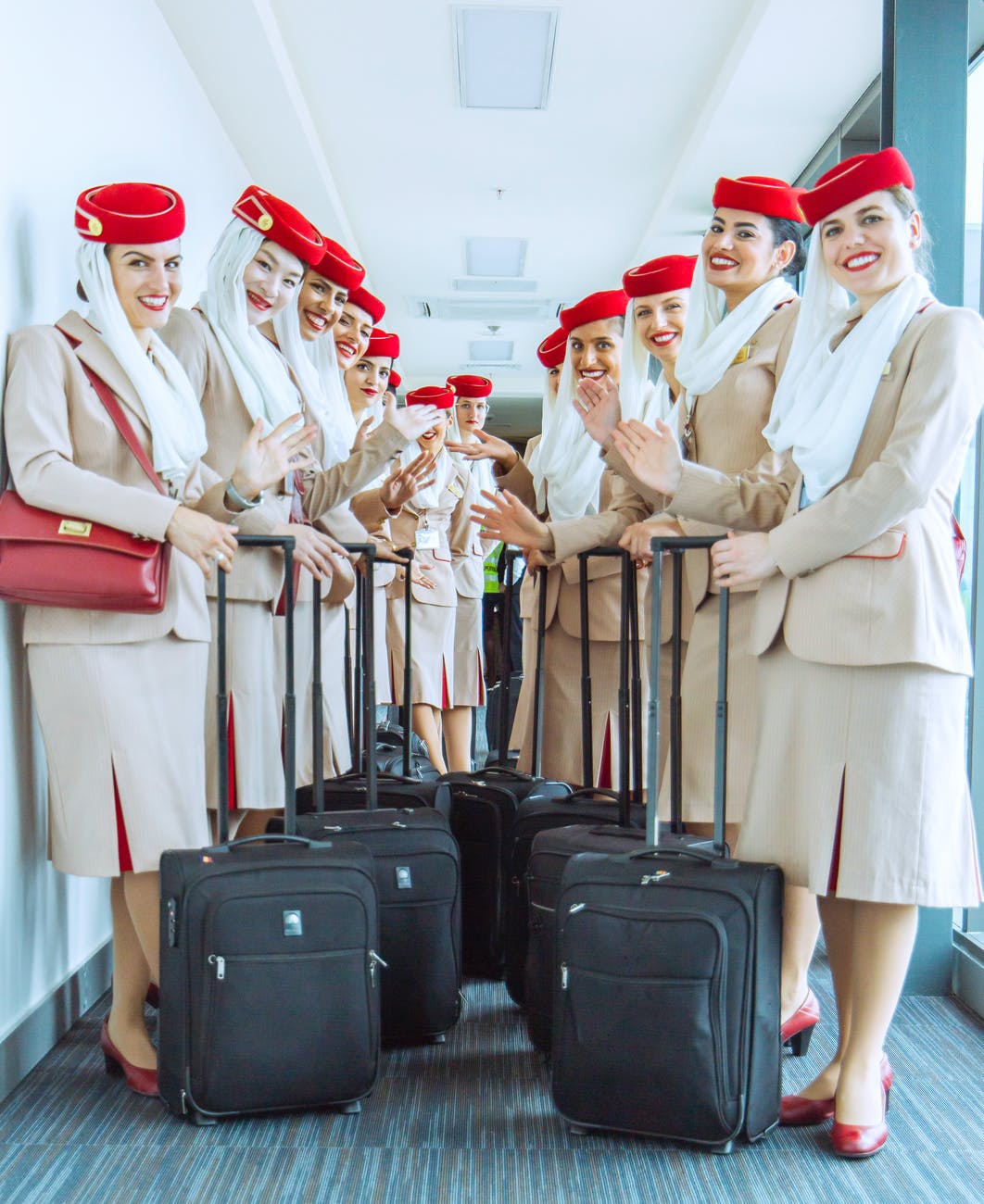
Checklist for domestic travel via flights

women in brown blazer and brown skirt set

  1. Plan, Plan & Plan

A lot has changed as per the new guidelines, so it’s best to plan ahead. As per the new rule, you have to reach the airport at least 2 hours in advance, as opposed to the earlier 40 minutes cut off. Also keep in mind, how you will be travelling to the airport as public transport will not be easily available.


  1. Be Vigilant About Your Hygiene & Safety

Now I know that this one isn’t easy. We’ve never had to live or travel in a time with a highly infectious virus. So the best thing to do is not let your guard down. Start from the basic level and ensure that you are packed well. In an ideal scenario, ensure that you do not have to buy anything from a shop or from the airport. Make sure you have a mask, sanitizer and gloves easily accessible in your handbag. Ensure that you take maximum protection while heading to the airport and leaving your destination airport. You can never be too careful.

  1. Pack Only One Hand Bag & One Carry On Bag . As per the new rules, only one hand bag and one cabin luggage is allowed. So make sure you pack light and pack efficiently. Only carry what you need. Also remember, to carry a handbag that is not so heavy that you have to leave it on the floor of the airport. Another important point to note is that metal & plastic are better breeding grounds for viruses. So ensure that you carry a bad that is made of fabric instead of metal.
  2. Rethink Your Airport Look

Well, remember when airport looks were all the rage? You’re probably going to have to rethink that look now since the new look is all about hazmat suits, masks, sanitizers and gloves. As part of the new guidelines, just before you board the flight you have to compulsorily mask up and suit up to prevent infection and the spread of it. Wear comfy clothes underneath your protective gear and ideally pick a hazmat suit that you can dispose off with ease once you reach your destination.

  1. Eat Well Before The Flight/Carry Food

As per the new guidelines no meals will be served onboard the flight, so do ensure that you either eat well before the flight or carry your own food that you can eat after the flight.

  1. Let Your Loved Ones Know When You Are Travelling

We are not asking you to take permission, but do inform your friends and family about your travels and ideally do keep a backup option for stay and help at the destination you will be visiting. Mark your emergency contacts clearly.

  1. Carry Enough Cash & Have Ready Finance Available

No, we are not asking you to carry a briefcase full of money like in those old Bollywood films, but do ensure that you have both some liquid cash available with you and some easily available money in the bank. In case you do have to be quarantined or in the unfortunate situation that you get infected, ensure you have enough money for treatment and for stay.


Should we use a smartphone?

Mobile is the essential thing nowadays, we all know that food, clothes, and shelter these are the basic requirement of the human cycle, however, in this cycle human added mobile phone as a basic need, because of the advancement of the technology, furthermore, majority people on earth have own smartphone from old age people to a small child have it.

in modern times, no one can live without a cellphone, people forget to eat and take care of their child, but never lost or forget their phone. According to the article which was published by Global System for Mobile Communications, in that post, they declared the ratio of cellphone user around the globe, and the ratio is 5.13 billion people have owned a mobile phone, and the ratio is increasing day by day. from around the globe, many companies like GSMA have an eye on the users and what they surf on the cellphone and how much time people spent on it in the day.

As we all know that without the internet, mobile is like empty and codless phone, which our grandparents use at their young age, we can find each and everything on the internet, whenever we stuck any were in education or on the place at the time mobile phone help us, by finding the solution, google has all answer of the question, which we have in our mind, just we have to ask to google and it displays on the screen, and the speed is like no one can beat it.

Capture

Here are some advantages of using a smartphone:

1) Communication: with the help of a cellphone one can connect themselves with others ever living far distance with the help of audio as well as video call.

2) Social media: in the age of social media, the whole world is like a small global village, people can share a post, communicate by messaging, and displaying the timeline, many time people make their friends online, chat with them and enjoy the company and never get bored in free time.

3) Daily News: on the mobile phone there are many news applications, where we are connected to the things happening around the world, we can find news regarding sports, politician, current affairs, daily stories, and we also get pop-up notification daily morning and a whole day, so we do not have to turn on the television and change the channels.

4) Photography: with the help of mobile phone all youngster becomes the photographer, additionally, mobile companies also focus and endorse the features of the camera with high resolution, which capture the important and long life memories, whenever people see in future they can recognize well.

5) Online services: nowadays each and every item available online on our phone, by playing games on can earn money, on can maintain their financial balance, banking also be done online, shopping, booking a ticket for holidays, and ordering food. and these all things can be done by just tapping on the screen.

6) Education: Parents and children can learn many things online from anywhere and every ware at any place and the choices of times is according to us. in the situation like COVID-19 we can see that all classes held online even student who studied in 6th grade they also have online classes on that way it will help us.

If we consider the downside of mobile phone:

1) when people use a mobile high rate then they may be addicted to the cell phone they never left this addiction and it will affect the time and health like insomnia.

2) If people use a smartphone till late night, they will not gonna have proper sleep and rest, so,it will harm full for their eyesight

3) sometimes people use a phone for the whole day, they will miss the outdoor fun with friends, or if they are in the home, they will miss the quality time with there family, and it will lead to the communication gap between family members.

4) whenever we use the smartphone touch screen, there may behave millions of micro germs, and when we use those hands while eating, it will spread in the whole body and our body might be infected.

Every people, know the famous personality steve jobs, the owner of the Application company. in the year 2011, the new york times published the interview of the MR.steve and he told that “he prohibited his kids from using the newly launched IPad and other product” and he also limited the technology in his house. he also told, ” he knows that he made monster in the form of Apple product”. Furthermore, Bill Gates also said in the public press “he never allows their child to use the smartphone until the child becomes over 14 years old.

So, by taking motivation from those two legends parents should restrict the usage of mobile phone at their home.

thanks for reading.


How is COVID-19 affecting our mental health?

The COVID-19 outbreak shocks the entire world. Its impact on us is so powerful that it not only affects our physical health but puts strain on our mental health as well. Our constant irritation, worry and fear are natural and predictable reactions to the uncertain pandemic that the entire world is in right now. 

In a pandemic like this, we have to stay home to protect our families and ourselves. But have you noticed it’s impact on our mental health? 

The virus has shown its impact on many people who were already struggling and going through mental health problems such as depression, stress, anxiety, obsessive compulsive disorder (OCD), insomnia, post-traumatic stress disorder (PTSD) and many others. This epidemic has also affected people who were mentally fit. It is very essential for us to stay calm in a situation like this. 

As we are staying home and looking at the same four walls in our house everyday, it is quite easy for our minds to fluctuate and think about things which are of less importance, which can increase the tension. To avoid this situation of over-thinking, one can engage themselves into doing something productive, this is the best time to bring out your inner chef or start a new hobby. 

It is important to be updated and aware of the happenings around the world but the constant repetition of one issue can also create tension in one’s mind. To avoid this, binge watch some series or re-watch some of your favourite movies or read that book you have been wanting to, but never had time. 

Here are a few precautions to reduce the stress, anxiety and other related issues, caused by this pandemic. 

WHO suggests, to reduce the amount of news we are in-taking about COVID-19 and to only take news from reliable sources. 

Forbes suggests, to create a routine for your daily activities. “With the closures of businesses and schools, creating a go-forward plan for you and your family will help keep your mind at ease. This could mean creating an at-home routine and schedule for remote work amid social distancing,” says Dr. Mimi Winsberg, co-founder and chief medical officer of Brightside.

BBC suggests, to have breaks from social media and mute things which are/can be triggering. And to wash your hands but not excessively. For people with OCD and anxiety, being told to constantly wash your hands can be difficult to hear. 

Talk  to someone who might help you in your problems or take help from an expert. We are all in this together. 

Stay in contact with your friends and family through social media and take help from them if you feel anxious or sad. 

Exercising is one of the ways to keep your body fit and it also helps in reducing stress, anger and frustration. Also, practicing deep breathing or meditation are also great ways to reduce stress and anxiety. Deep breathing helps you regulate your emotions by activating your parasympathetic nervous system (PSNS) which helps slow the heart rate and restore the feeling of calm, tells Dr Vincent. https://bit.ly/2YCGHmb  Here are some breathing exercises you can do, that can help you relax. 

During this time, being productive is a good idea but somewhere it can also put more pressure in one’s mind. Remember, being productive is a choice and not a necessity. You must do what makes you happy.


PEER PRESSURE

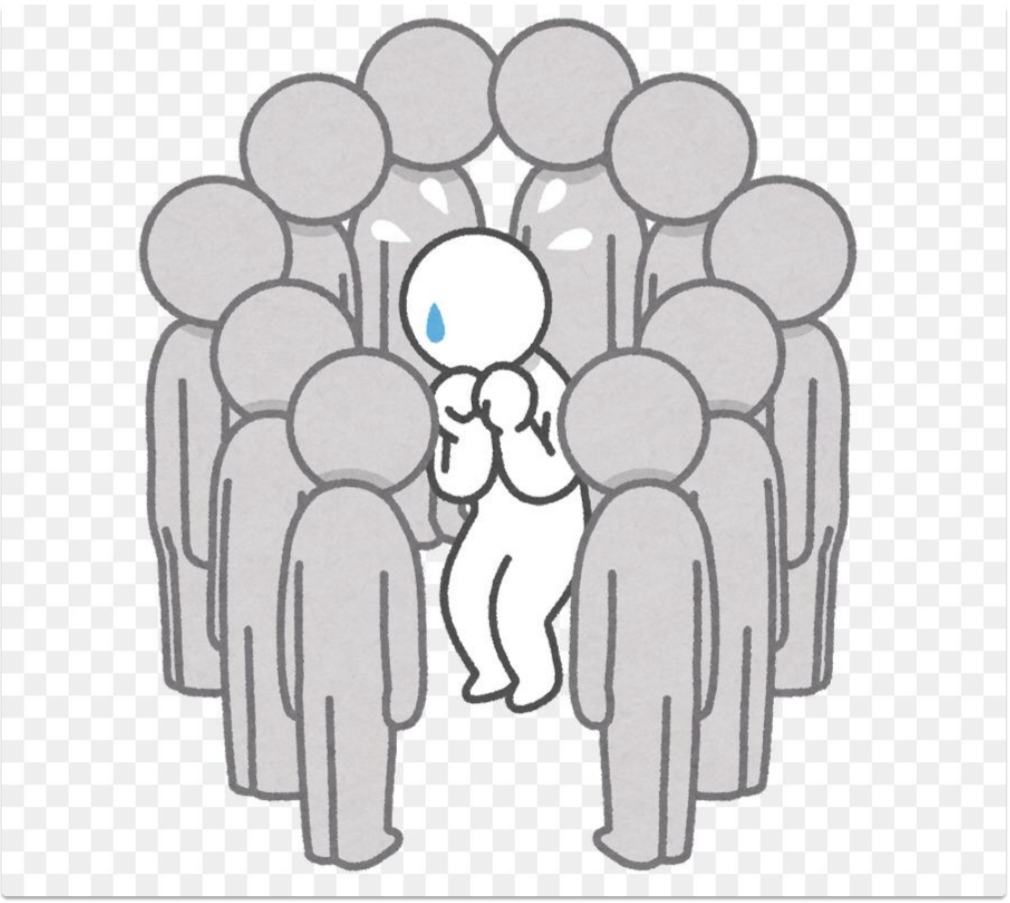
A term often read and heard about but very little pondered upon. The Cambridge dictionary defines peer pressure as ‘the strong influence of a group, especially of children, on members of that group to behave as everyone else does’. A simple definition but an impactful cycle. It plays an extremely important role in the social and emotional development of children as well as adolescents .So what exactly is a peer group? A peer group is made up of individuals who socialize together. It generally increases through childhood and reaches its intensity in the preteen and teen years. Maslow’s theory of hierarchy of needs defines social acceptance and acknowledgement as one of the primary needs for survival of human being in a society. This urge of social acceptance gives rise to a constant need for validation. As long as this urge is in alignment with one’s will and control, it creates a positive peer influence and the moment this urge takes over one’s ability to distinguish between the right and the wrong, it starts to create a psychological pressure. This psychological pressure exists in various forms amongst us and becomes a means to gauge what one ought to do.

Broadly classified as positive and negative, peer pressure can be spoken or unspoken and direct or indirect. While positive peer pressure leads to outcomes that are healthy, negative peer pressure leads to catastrophes. For example, if your friend constantly pushes you to eat healthy, its a positive peer influence. While a peer pressure to participate in a bike race without a driving license is a negative peer pressure. Positive peer pressure is beneficial and is also an important way to create and retain social bonds. It’s the negative peer pressure what needs attention today. You remember the last time you went for a movie with your friend despite detesting it? Or the latest college fashion wear that you had to pretend to like because it was the ‘new cool’? You might wonder what harm did it do and is it even that bad to switch priorities and likings in order to have a healthy peer group? Well, taking the above examples it actually isn’t but this is the initiation point of negative peer pressure. In most cases it starts off with incidents too minute to be reacted upon which is why the ‘initiation points’ goes completely unnoticed and neglected. What follows later leads to a devastating impinge like consumption of alcohol, drugs, cigarettes and one’s indulgence in unethical and illegal activities. The vicious cycle of peer pressure is sometimes attributed to ‘Social Stockholm Syndrome’. It is a psychological response where over the course of time, the victim starts to develop a sense of commonality with their victimizer. This sense of commonality later becomes toxic.

It isn’t always a cakewalk to shield yourself from negative peer pressure. But it isn’t a herculean task either. An individual’s environment at home greatly impacts one’s reaction when exposed to negative peer pressure. When children and adolescents have parents whom they can confide in, their psychological response towards this social infliction is more positive and less hampering in comparison to those who find it difficult to express themselves and are subjected to some or the other form of abuse at a very early age. As a parent one needs to gain their progeny’s confidence and trust. It requires small initiatives like a before bed talk every night and spending quality time with them at least on the weekends. Teens have to be taught to trust their instincts when in doubt and to say the magical word ‘NO’ when subjected to circumstances their morals don’t approve of instead of blindly following someone else’s path. Schools on the other hand, should hold more seminars on peer pressure to enable teens to identify the red flags which often come across as subtle signals. If prepared at a tender age to hold onto one’s own belief irrespective of the pressure around, negative peer pressure is one such social stigma that wouldn’t take much to eradicate.

Junk this food

One of the most doable memory of everyone’s school life is the joy of hearing the arrival of those hawkers and peddlers selling spic & spicy snacks and mouth watering sweets.

But it’s a thorny pricky fact too, tgat due to the consumption of all these flavor boosters or mood swingers, our lovely little Angels are sitting and playing in the lap of deadly diseases known to all as obesity and food poisoning.

brown woven basket on brown brick floor
Photo by Ajay Singh on Pexels.com


Throughout the developed world, with every passing second, with every single tik-tok of your clock, obesity is becoming a grave problem. Many greybeards are offering a suggestion to confort this issue i.e. debarring those unhealthy food (read junk) hawkers from entering the school premises. This way one can stop them to lure the Little education seekers towards theirnasty and unhygienic snacks.

This cumbersome suggestion needs to be executed in a well planned manner. Firstly, teachers and proffs are needed to make students aware about the fact that rather than helping in growth, that delicious looking all sort of mouth watering snack is harmful for their well being.

Just like every thing has two sides, one good and another dark and pitch black, similarly one can say that all this of shunning and restricting sort of stuff’s not good. Thinking as a child, by banning the presence of hawkers , you are basically denying the children of enjoyment (which they think is their birthright). Or, at worse the schools may resemble an Olympic size swimming pool filled with tears of those little Angels.

All and all, instead of a strick prohibition, a regular monitoring of street vendors can be done to ensure that the snacks they’re offering are not stale or made in unhygienic way. Many other diamond solid steps should be taken to ensure that the youth of your nation mustn’t fall in the hands of the demon of diseases like obesity and food poisoning.

DRDO develops Ultra Swachh for disinfection of PPEs and other materials

Defence Research and Development Organisation (DRDO) has developed a disinfection unit named Ultra Swachh to disinfect a wide range of materials, including Personal Protective Equipment (PPEs), electronics items, fabrics, etc.

Institute of Nuclear Medicine & Allied Sciences (INMAS), the Delhi based laboratory of DRDO has developed this product with industry partner M/s Gel Craft Healthcare Private Ltd, Ghaziabad.

The system uses an advanced oxidative process comprising of multiple barrier disruption approach using Ozonated Space Technology for disinfection. 

The system is double layered with specialised Ozone sealant technology assuring trapping of ozone for the necessary disinfection cycle. It also has catalytic converter to ensure environment friendly exhaust i.e. only oxygen and water. 

The system is in compliance with International Standards of Industrial, Occupational, Personal and Environmental Safety. The Ultra Swachh comes in two variants namely Ozonated Space and Trinetra Technology. Trinetra technology is the combination of Ozonated space and radical dispenser. Treatment is optimised with automation for quick disinfection cycle. 

The system operates on 15 Ampere, 220 Volts, 50 Hertz power supply. The system has been provided with various safety features such as emergency shutdown, door interlocks, dual door, delay cycle, and leak monitors, etc to ensure safe operations for longer duration. Dimensions of the Industrial Cabinet are 7’x4’x3.25’ to disinfect large quantity at a time. Cabinets of different sizes will be available for the industry. 

Ministry of Environment, Forest and Climate Change on Issues Related to Air Quality in Urban Areas

The 15th Finance Commission headed by Sh. N. K. Singh and including its Members and senior officials held a detailed meeting with the Ministry of Environment, Forest and Climate Change headed by the Union Minister for  Environment, Forest and Climate Change, Shri Prakash Javadekar, senior officers on issues relating to Air Quality(AQ) specially that in Urban Areas. It may be recalled that the XVFC Report 2020-2021 was the first time that any Commission has given attention to air quality (AQ) as a major focus and this FC had not only recommended grants for 2020-21 and also provided road map for its award period. The meeting started with the Minister applauding the Commission for this path breaking step.

The Commission is currently deliberating the recommendations to be made for the next five years from 2021-22 to 2025-26 and needs to formulate suitable provisions for continuing the grants for these cities/UAs for improving ambient air quality in a sustainable manner. In this regard it needed to understand the procedure and operational guidelines finalised in administering these grants and monitoring the outcomes for 2020-21, the meeting with the MoEF&CC was called for.

            The objective of the meeting focused was to was to discuss on the status of the implementation of the FC’s recommendations for 2020-21 for administering the grants to improve AQ in million-plus cities and also to seek inputs from the Ministry on what should be considered for the next five years from 2021 to 2026 and this was elaborated by the Chairman, Shri N. K. Singh to the Minister and the officials.

            The Commission was given the following information: 

  • Regarding reliable data on AQ measurement, it was explained that there is a network of around 984 stations covering a wide range of cities and towns, around 779 manual stations and 205 continuous monitoring stations in around 500 cities which were set up under the National  Control  of   Air   Pollution   (NACP)  to meet its  objectives. Though a network of AQI monitoring stations are in place, there is a need for strengthening and expanding these along with the geographical area to cover the air-shed areas in order to make it more robust and accurate. 
  • The Ministry has begun this work earlier as part of roll-out of NACP and various think-tanks like IITs, IIMs and NITs have been made local partners for different cities/towns. Ministry will also seek their expert guidance on what the Commission need to consider for the five years from 2021.
  • As the problem of AQ is mostly not a localized phenomenon and is influenced by many factors beyond the control of a particular region, the Central Pollution Control Board (CPCB) is now focusing on air-shed management approach.
  • Construction & Demolition Waste Management was a priority of the Government and that the Government would seek the support of the Commission for the same.

The Minister (MoEF&CC) Shri Prakash Javadekar, appreciated the inclusion of Air Quality(AQ) of Delhi in the XVFC’s Report of 2020-2021 and added that there would be a basic structural change in sources of AQ in the next few years and particularly in larger cities of the country due to the new regime to emission norms which would lead to a estimated reduction of 30 to 40 per cent in vehicular emission. 

He opined that strict implementation of pollution and emission laws with harsh punishment and penalties to the defaulters is the pre-requisite for ambient AQ. 

He informed that with the launching National AQ Index in 2015, we now have reliable data of AQ with respect to 42 million plus cities from 2017 onwards. 

The Minister also informed the Commission that his Ministry was coming up with the rules for implementation of Construction and Demolition Waste Control so as to control dust, a major source of pollution in cities.

The Minister emphasized that the grants by FC-XV should continue for the next five years to strengthen the network and coordination between SPCBs of various cities for enforcement of AQ improvement measures. Third party assessment could be done through institutes like IITs and IIMs. He also stated that the Ministry is planning to hold a conference with the SPCBs to ensure effective implementation of this programme, to which the Chairman XVFC has been invited as a participant.

He also briefed about various reforms are being taken up by the Ministry at a break-neck speed and stated that the time delays in approval of application/liences were drastically brought down from earlier 640 days  to 108 days now. Further, this period will be brought down to 50 days within next six months. As regards ease of doing business, the Ministry is coming up with an amendment to the notification of environment impact assessment. He also mentioned the various reforms Page 6 of 7 implemented in the coal washeries that brought down the pollution by several fold and many other steps have been initiated by the Ministry as part of ease of doing business at national and international level.

The Commission unilaterally appreciated the Ministry’s effort in building up capacity to monitor Air Quality.  The Commission also stressed on the need for controlling agricultural pollution.

It will be recalled that the 15th Finance Commission in its report for the Financial Year 2020-2021 had  recommended grants of Rs. 4,400 crore for the year 2020-21 to improve the ambient air quality in fifty million plus cities/Urban Agglomerations (UAs). For this, Ministry of Environment, Forest and Climate Challenge has been entrusted with the responsibility to facilitate the desired outcomes through these urban local bodies.

The Chairman while stressing on the need for consistent and reliable data on AQ, stated that Commission was concerned about the pollution of NCR and would address the same within the mandate of the Finance Commission.  He assured that MoEF&CC that the XVFC would continue it consultations with the Ministry on this critical issue of AQ in million plus cities to firm up its recommendations.

Foundation Day of Rajiv Gandhi University of Health Sciences

It gives me great joy to inaugurate the Twenty Fifth Foundation Day of this distinguished University.  I congratulate the entire medical and scientific community associated with this University

In these years,you are doing wonderful work in teaching as well as training on systems of medicine. 

25 years means this University is in the prime of its youth.  This is the age to think even bigger and do even better.  I am confident that the University will continue to scale new heights of excellence in the times to come.  I would also like to appreciate the efforts of the Karnataka Government in handling the Covid-19 situation.   Friends, in normal times, the celebrations would have surely been bigger.  Had it not been for the global pandemic, I would have loved to be with you all in Bengaluru to mark this special day. 

But, today the world is facing one of the biggest crisis since the two world wars.Like the world changed pre and post-World Wars, the same way the pre and post Covid world will be different. 

Friends, during such a time, the world is looking up to our doctors, nurses, medical staff and scientific community with hope and gratitude.  The world seeks both care and cure from you. 

Friends,at the root of India’s brave fight against Covid-19 is the hard-work of the medical community and our Corona warriors. In fact, doctors and medical workers are like soldiers, but without the soldiers’ uniform.  The virus may be an invisible enemy,but our Corona warriors, medical workers are invincible.  In the battle of Invisible versus Invincible,our medical workers are sure to win.  Friends, earlier, the debates on globalisation have focused on economic issues.  Now, the world must unite and focus on humanity centric aspects of development.

Advancements nations make in the health sector will matter more than ever before.Friends, during the last six years, we in India many initiativesin health-care and medical education. 

We are broadly working on four pillars:

The first is – Preventive Healthcare.  This includes the importance to Yoga, Ayurveda and general fitness.   More than forty thousand wellness centreshave been openedwhere a key focus is on controlling life-style related diseases.  The success of the Swacchh Bharat Mission is another key part of preventive healthcare. 

The second is- Affordable Healthcare.  Ayushman Bharat- the world’s largest healthcare scheme belongs to India.  In less than two years, One crore people have benefitted from this scheme.  Women and those staying in villages are among the major beneficiaries of this scheme.

 The third pillar is- Improvements on the supply side.  A nation like ours has to have proper medical infrastructure and medical education infrastructure.  Work is under-way to ensure a medical college or post-graduate medical institute in every district of the country. 

The country has seen rapid progress in setting up 22 more AIIMS.  Over the last five years, we have been able to add over Thirty thousand seats in MBBSand fifteen thousand seats in post-graduation.   This has been the largest increase in the five year term of any government since independence.  The Medical Council of India has been replaced by a new National Medical Commission through an Act of the Parliament.  This will go in a long way in improving the quality of medical education, bringing it at par  with the international standards. 

The fourth pillar is – Mission mode implementationA well-thought of idea on paper makes it only a good idea.  And, a good idea well implemented makes it a great one.  Hence, implementation is very crucial. 

Here, I would like to highlight the success of India’s National Nutrition Mission that is helping youngsters and their Mothers.  India is working twenty four by seven to eliminate TB by 2025.  This is five years ahead of the global target of 2030.  Mission Indradhanush has increased our rate of annual rise in vaccination coverage by four times.  Friends, The Central government recently approved the introduction of a new law for expanding education of more than 50 different allied and healthcare professionals.   This law, once passed, will address the shortage of  para-medical personnel in the country.   It will also help India in supplying skilled resources to other countries. 

Friends, There are three things on which I would urge maximum discussion and participation. 

One is – advances in tele-medicine.  Can we think of new models that make tele-medicine popular on a larger scale.

The other is related to ‘Make in India’ in the health sector.  The initial gains make me optimistic.  Our domestic manufacturers have started production of PPEs and have supplied about 1 crore PPEs to Covid warriors.   Similarly,   we have supplied 1.2 crore ‘Make in India’ N-95 masks to all States.

Third is- IT related tools for healthier societies.  I am sure you have the ArogyaSetu App on your Mobiles.12 crore health conscious people have downloaded it. This has been very helpful in the fight against Coronavirus. 

Friends, I am aware of an area that is of great concern to you all.  Due to a mob mentality, those working on the front-lines,those on duty be it doctors, nurses, Safai workers, others are subject to violence. I want to state it clearly – violence, abuse and rude behaviour is not acceptable.   Steps have been taken to protect you against any form of violence.   We have also provided an insurance cover of Rupees fifty lakhfor those on the front-line.

Friends,I am happy to see the fruitful journey of this University over last 25 years which has produced thousands of medical and para-medical personnel who are serving the poor and the needy in this challenging time.   I am sure that the University will continue to produce health personnel   of excellent quality and caliber that will make the State and the Country proud.  Thank you.  Thank you very much.  

25th Foundation Day of the Rajiv Gandhi University of Health Sciences

Prime Minister today addressed the 25th Foundation Day of the Rajiv Gandhi University of Health Sciences at Bengaluru via video conferencing.

Prime Minister appreciated the efforts of the Karnataka Government in handling the COVID-19 situation.

Shri Modi said the World is facing one of the biggest crisis since the two World Wars. Like the world changed pre and post-World Wars, the same way the pre and post Covid world will be different, he said.

Shri Modi said at the root of India’s brave fight against Covid-19 is the hard-work of the medical community and our Corona warriors. He likened the doctors and medical workers as soldiers but without the soldiers’ uniform.

Prime Minister said the virus may be invisible enemy but our corona warriors are invincible and in the battle against the invisible vs invincible our med workers are sure to win.

Prime Minister expressed concern at violent incidents, owing to mob mentality, against the front-line workers and said several steps have been taken by the Government to curb them. He said that the Government also provided an insurance cover of Rs. 50 Lakhs to those on the front-line.

Prime Minister called for a focus on human centric aspects of development instead of debates on economic issues in the era of globalisation.

He said, advancements nations make in the health sector will matter more than ever before and that the Government had taken many initiativesin health-care and medical education, in the last 6 years.

Prime Minister called for a four pillared strategy to improve the health care, its infrastructure and its access to one and all.

He said the first pillar would be Preventive Health Carewhere in the emphasis would be importance of Yoga, Ayurveda and General Fitness. He said more than 40,000 Wellness Centres were opened with a key focus on controlling life style related diseases. The success of Swachch Bharat mission is another key area of preventive health care.

The second pillar is – Affordable Healthcare. Prime Minister highlighted the success of Ayushman Bharat- the world’s largest healthcare scheme and how in less than two years, One crore people have benefitted from it, especially women and those living in rural areas. 

The third pillar is- Improvements on the supply side.  Prime Minister said that a nation like Indai has to have proper medical infrastructure and medical education infrastructure. 

He said, Work is under-way to ensure a medical college or post-graduate medical institute in every district of the country.  Prime Minister underlined the fact that the country has seen rapid progress in setting up 22 more AIIMS. 

He said over the last five years, we have been able to add over 30,000 seats in MBBSand 15,000 seats in post-graduation.   This has been the largest increase in the five year term of any government since independence. 

Prime Minister also spoke of the setting up of National Medical Commission to replace The Medical Council of India through an Act of the Parliament. 

The fourth pillar, he said would be  Mission mode implementation of all the schemes and that it is very crucial for the success of a good idea.

He cited how the implementation of National Nutrition Mission is helping youngsters and mothers and also how India is determined to eliminate Tuberculosis by 2025, which is 5 years ahead of the global target of 2030.

He also spoke of Mission Indradhanush where the annual rise in vaccination coverage has increased by four times.

Prime Minister said that the Central Government has recently approved the introduction of a new law for expanding education of more than 50 different allied and healthcare professionals, which will address the shortage of shortage of para-medical personnel in the country.  

He urged the gathering to discuss and ideate on three issues namely how to make advances in Tele-Medicine; how to make gains in health sector through ‘Make In India” and how to bring about more of IT related services into health care.

He was appreciative of how the initial gains in the area of Make in India where the domestic manufacturers started production of PPEs and N-95 Masks and already supplied over 1 Crore of PPEs and 1.5 Crore of Masks.

Prime Minister also appreciated how the ArogyaSetu App is helping in the fight against Corona virus.

Do bats spread Covid-19?

Some of the misinformed citizens are on a hunt to get rid of bats, owing to the fear of Covid-19 spread through this mammal. Reportedly, more than 150 bats were killed in Rajasthan alone despite the appeal of the International Union for Conservation of Nature (IUCN). This whole bat-hunt began when an ICMR report found CoVs positive in Rousertus and Pteropus: 2 Indian bat species. A local newspaper reported similar incidents happening Bangalore. Even the USA, Australia, and other countries are having hundreds of bats found at animal markets culled.

Now the question arises do bats spread Covid-19?

The answer is no. A report published in Medical News Today cited that out of 1400 bat species in the world, two have been tested positive for a close relative of SARS-2-Cov, which is the RATG 13 virus. But it is only similar to novel coronavirus (not the same) and it can neither transmit it to humans nor can cause Covid-19 to our species. The current hypothesis proposed by scientists across the globe is that Bats transmitted this close genetic relative to pangolins and then to humans as Pangolins are the world’s most trafficked mammals for global wildlife trade, Chinese medicines, and luxury food. Even in the past, the linker between humans and bats has been an animal that has been extensively traded or farmed. For example, in the 2013 Ebola virus outbreak, non-human primates like chimpanzee or deer have been intermediate hosts between humans and bats. Bats throughout history have been the origin of Ebola, Nipah virus, and rabies. 

For instance, in the case of Nipah virus, fruits bitten and thrown by bats carry their saliva, which if consumed by humans might transmit Nipah due to salivary transmission. Fortunately, both in the case of Nipah and Covid-19, negligible chances of transmission have been found through their excretory wastes.

So what to do if you cite a bat in or near your house?

Just call a professional rehabilitator or yourself lead them to the way out of your house. No need to kill them.

Why do bats carry so many viruses and why there’s a need to protect bats?

Bats have a strong immune system and they are the only flying mammal. Their strong immune system makes their lifespan as long as 20-30 years. This strong immunity of bats has now been a key research area for the development of the Covid-19 vaccine ( by the University of Saskatchewan, Canada).

Also, another need for protecting bats is that they maintain a biological ecosystem by:

1. Pollination of flowers and fruits: Especially in mangrove regions bats play a major role in the pollination of pollen grains. This year in India itself, Cyclone Amphan went just aside mangroves as these thick trees act as a shield against such natural calamities.

2. By helping in pest control in farmlands:

Bats eat up insects and pests. As per The Print, worth 800 million dollars and 22 billion dollars pest control annual expenses are saved by bats alone in Indonesian farms and USA corn farms respectively.

3. As per Wildlife Protection Act,1972 two of the bat species are protected in India due to the threat of extinction.

Conclusion: The major cause for such global outbreaks such as Covid-19 is mostly due to human activities such as wildlife trade and habitat destruction.

Pharmaceutical industry has an important role in Aatamnirbhar Bharat

The Commerce and Industry Minister Shri Piyush Goyal today interacted with the captains of the Pharmaceutical industry, and Office-bearers of the Pharma Associations, through the Video Conference. The meeting was attended by the Ministers of State Shri H.S.Puri and Shri Som Parkash, Secretaries of the Department of Commerce, and Pharmaceuticals, and Officers from Departments of Commerce, Pharmaceuticals and Health.

During his interaction, Shri Goyal lauded the pharma industry for making India proud, by rising to the occasion during the Covid crisis. He said that India has been recognized as the ‘Pharmacy of the World’, as over 120 countries got some essential medicines, during the last two months, including 40 of them getting them in the form of grant, free of cost. He said that during the crisis, the officials of DGFT, MEA, Health and DoP burnt midnight oil to ensure that the export consignments are delivered at the earliest. The whole world appreciated India’s gesture, and this has swelled India’s goodwill and reputation. He said that India had adequate production capacity and abundant stock of HCQ and PCM for its projected domestic requirements, and putting restrictions on their exports was to ensure that the medicines are made available to all the needy nations, and no unscrupulous element stocks them for unwarranted gains.

The Pharma industry received accolades from the Minister for their extra-ordinary performance, in ensuring that the Country did not face any type of shortage of medicines during this period.  Shri Goyal said that early announcement of the Lockdown helped the country in preventing and containing the scourge of pandemic, and also scaling up the health infrastructure and build capacity, besides generating awareness among the people about the precautions and preventive measures. He said that India has set an example, under the able guidance and leadership of the Prime Minister Shri Narendra Modi, in being pro-active in management of Covid-19, and also following it up with welfare and relief packages for mitigating its consequences.

Shri Goyal assured the industry that the Government will fully support the industry in its expansion, diversification and strengthening. He said that the industry has an important role to play in the Aatamnirbhar Bharat campaign. The country should become Aatmanirbhar in APIs as early as possible, as the government has taken a number of steps in this regard. It has already approved the scheme on Promotion of Bulk Drug Parks for financing Common Infrastructure Facilities in 3 Bulk Drug Parks. Also, Production Linked Incentive Scheme for promotion of domestic manufacturing of critical KSMs/Drug Intermediates and APIs in the country has been given a go ahead.

The Minister said that anti-dumping investigation process has been expedited. The Minister said that in case of ongoing bilateral FTAs, if any roadblock or unfair competition is being noticed, the Government may be informed and prompt remedial action will be taken. He said they should look at large untapped market in Eastern Europe and Russia. Calling upon a collaborative route in the R&D efforts, Shri Goyal said the Academicians, Universities, ICMR and private sector should join hands. Informing the gathering that the Government has decided to disinvest in certain Pharma PSUs, the Minister invited the Indian companies to use PSUs for plug and play model of manufacturing. The Minister assured the industry that all suggestions presented in the meeting will be quickly examined and wherever required, the inter-ministerial consultations will be completed at the earliest.

DST initiates COVID-19 India National Supermodel for monitoring infection

The Department of Science and Technology (DST) has initiated a COVID -19 Indian National Supermodel to help monitor the future transmission of infection, thus aiding decisions involving health system readiness and other mitigation measures.

While the Government is keeping a close watch on infectivity and mortality, it is imperative to bring in a robust forecasting model for predicting the spread and enhancing disease surveillance. Numerous mathematical models for Covid-19 forecasting and surveillance are being worked out by investigators funded by DST-SERB (Science and Engineering Research Board) and other agencies.

Inspired by India’s history of using mathematical models for disaster management planning of metrological events, DST has initiated this exercise to pool in expertise in the field and create one model for the entire country that will be subjected to rigorous tests required for evidence-based forecasting, routinely practiced in weather forecasting communities.

The model will entirely rely only on the data that is relevant to COVID-19, and also have an adaptive built-in component to learn from the newer trends in the data. It will aggregate successful evidence-based mathematical and statistical forecasting models and include the best predictive analytics for robust forecasting of infectious disease spread. The supermodel could be used by the policymakers in India and around the world to overcome difficulties in predicting the rate of spread of infection and how it would burden the healthcare sector, thereby curbing the epidemic.

As part of this initiative, Jawaharlal Nehru Centre for Advanced Scientific Research (JNCASR) and IISc, Bangalore will co-ordinate to connect and work with all COVID-19 modeling projects and programs in the country. This will help develop a set of benchmarks to assess various models and to finally deliver the COVID-19 India National Supermodel. The Coordination team will consult and work with the research groups active in modeling, various software developers, and reputed companies to ensure delivery of a suitable user interface and software.

A consultative committee will work closely with DST and SERB and coordinators (JNCASR and IISc Bangalore) and modellers of this initiative to provide critical inputs on technical aggregation, guidance, and final delivery of a robust Supermodel.

“Mathematical modeling and simulations for the spread of COVID-19 virus and its impact are not mere academic exercises but are critical needs for rational decision making, planning, and resource management. It is thus of vital importance that a robust National Model which is vetted by a large cross-section of scientific community working in the area is developed,” said Prof Ashutosh Sharma, Secretary, DST.