Depression : a myth or a serious problem ?

What is depression

Most of the time people feel sad or depressed. It’s normal reaction to loss or struggles in life. But when this sadness become intense – including feeling helpless, worthless , hopeless , lack of self esteem and lack of confidence – last for many days to weeks and keeps you from living your life happily, it may something more than sadness. You could have clinical depression – a treatable medical condition. 

Symptoms of depression 

Depression symptoms can vary from mild to severe and can conclude: 

1. You can’t sleep or sleep too much almost every day,

2.  You have almost no interest or pleasure in many activities nearly every day,

3.  You’ve lost or gained weight.

4.  You feel restless,

5.  You often think about suicide or death,

6. You feel tired or lack of energy,

7.  Loss pleasure in life,

8.  Have sad, anxious or empty feelings.

Physical signs of the depression

There are some physical sign of the condition they may include back pain, joint pain, digestive problems, sleep trouble and  breathing problems. At any one time it is estimated that more than 300 million people have depression – about 4% people of the world’s population when the figures were published by world health organization (WHO) in 2015 women are more likely to be depressed than man.

Treatment

The WHO estimates that Fewer than half of people with depression are receiving treatment. Many more will getting inadequate help, often focused on medication. 

The most common therapy is congnitive Behavioural therapy, which breaks down overwhelming promotion into Situations , thoughts, emotions, physical feelings And actions try to break a cycle of negative thoughts.

If you or you know someone who has symptoms of depression, talk to your doctor. he can evaluate you And offer you treatment or refer you to a mental health professional.

Conclusion

While there are more and more treatments for depression. The problem is rising not falling. 

According to a research , From 2005-15 , cases of Depressive illness increase by nearly a fifth. People born after 1945 are 10 times more likely To have depression this reflects both population growth and a proportional increase in the rate of depression. Among the most at- risk ages. the WHO said.

A key reason for the Continuing rise in depression cases Is that drug is that drug not necessarily “cure” the patient. And other therapies that can make the crucial difference are not in sufficient supply.

So we have conclude that we should openly talk about depression illness and it’s symptoms we should not take it lightly or as a myth. Mostly in Indian society when anyone is suffered by depression insted of helping the person, we considered that person as mentally disabled. We need to understand that depression is Simlar to cold and fever if anyone is needed is just the right treatment. 

High time we forget caste system

Caste discrimination is a highly politicised and sensitive issue in India. Despite constitutional safeguards and special legislation for the protection of the country’s 201 million ‘scheduled castes’ (the official term for Hindu, Sikh and Buddhist Dalits), violations of their fundamental human rights continue on a massive scale. Key issues include access to justice and rising violence against Dalits, multiple discrimination against Dalit women, slavery and child labour, discrimination in education, untouchability and access to basic services including humanitarian aid, social and economic rights and shrinking space for Dalit human rights defenders

Caste is both a historical truth of the Indian subcontinent, and a reality of modern-day India. Some of us are still unaware of the extent to which caste remains an ordering principle in our society today. Caste is present in a massive way in most of India and caste-based discrimination and violence takes place across the nation. In metropolitan cities too, caste has its ugly presence, even if not in obvious ways.

After India achieved independence, quotas on employment- known as ‘reservations’ were introduced into the Constitution, and discriminating against the lower castes was made illegal. By 1990, the quota rose to about 49%, and it applied to groups that were classified as “Other Backward Classes”, “Scheduled Castes,” and “Scheduled Tribes” (groups of historically disadvantaged indigenous Indians).

A major misunderstanding is that there are only four castes: Brahmin, Kshatriya, Vaishya and Shudra. These are the Varna’s, which are considered ‘super castes’. However, castes are often regional, and divided based on not just profession. Profession is a minor part of the division that is mainly hereditary, based on different traditions and social status, and degrees of untouchability. And the “untouchable” castes: the main victims of this system of oppression, are not even mentioned in the Vedas. The Dalits, or Scheduled Castes as the government recognises them, form a fifth Varna kept out of the system.  

In the caste system, the women were utterly neglected. They enjoyed a very conservative and traditional type of status. They were denied the privilege of higher education. They could not voice their opinion in public affairs.

The women belonging to the higher castes led a still more precarious life due to the practice of child marriage and prohibition of widow remarriage. The desire for male made women produces more and more children which affected their physical and mental condition. Sometimes the lower caste women were sexually harassed by the higher caste males but they could not protest against them due to the prevailing social pattern. In a nutshell, women enjoyed a very low status in the caste system.

Leaders in India must continue to challenge the mindset of those who seek to maintain the status quo. Of the Dalit children who stay in education, the majority are still forced to sit in the back of class and banned from touching mid-day meals. Similarly, a recent survey found that 65% of health workers still refuse to visit SC and ST settlements at all, denying basic care to some of India’s most vulnerable people. Violence against Dalits remains rife. As long as this kind of prejudice remains progress will continue to stall. Modi, himself a member of an Other Backwards Class but at risk of alienating his core support of Gujarati Patels, has been very reluctant to challenge prejudicial language during these recent anti-reservation protests. If the Indian government remains committed to tackling extreme poverty then they must find long term solutions to caste inequality than are currently in place.  

Fiscal Policy

Fiscal policy is the guiding force that helps the government decide how much money it should spend to support the economic activity, and how much revenue it must earn from the system, to keep the wheels of the economy running smoothly.


Fiscal policy in India:

Fiscal policy in India is the guiding force that helps the government decide how much money it should spend to support the economic activity, and how much revenue it must earn from the system, to keep the wheels of the economy running smoothly. In recent times, the importance of fiscal policy has been increasing to achieve economic growth swiftly, both in India and across the world. Attaining rapid economic growth is one of the key goals of fiscal policy formulated by the Government of India. Fiscal policy, along with monetary policy, plays a crucial role in managing a country’s economy.


What is meant by Fiscal Policy in India?

Example of Fiscal Policy in India:
Through the fiscal policy, the government of a country controls the flow of tax revenues and public expenditure to navigate the economy. If the government receives more revenue than it spends, it runs a surplus, while if it spends more than the tax and non-tax receipts, it runs a deficit. To meet additional expenditures, the government needs to borrow domestically or from overseas. Alternatively, the government may also choose to draw upon its foreign exchange reserves or print additional money.
For example, during an economic downturn, the government may decide to open up its coffers to spend more on building projects, welfare schemes, providing business incentives, etc. The aim is to help make more of productive money available to the people, free up some cash with the people so that they can spend it elsewhere, and encourage businesses to make investments. At the same time, the government may also decide to tax businesses and people a little less, thereby earning lesser revenue itself.
Main objectives of Fiscal Policy in India:
• Economic growth: Fiscal policy helps maintain the economy’s growth rate so that certain economic goals can be achieved.
• Price stability: It controls the price level of the country so that when the inflation is too high, prices can be regulated.
• Full employment: It aims to achieve full employment, or near full employment, as a tool to recover from low economic activity.

The objective of fiscal policy is to maintain the condition of full employment, economic stability and to stabilize the rate of growth.
Generally following are the objectives of a fiscal policy in a developing economy:

  1. Full Employment:
    The first and foremost objective of fiscal policy in a developing economy is to achieve and maintain full employment in an economy. Therefore, to reduce unemployment and under-employment, the state should spend sufficiently on social and economic overheads. These expenFull Employment:ditures would help to create more employment opportunities and increase the productive efficiency of the economy.
    In this way, public expenditure and public sector investment have a special role to play in a modern state. A properly planned investment will not only expand income, output and employment but will also step up effective demand through multiplier process and the economy will march automatically towards full employment. Besides public investment, private investment can also be encouraged through tax holidays, concessions, cheap loans, subsidies etc.
  2. Price Stability:
    In developing economies, inflation is a permanent phenomena where there is a tendency to the rise in prices due to expanding trend of public expenditure. As a result of rise in income, aggregate demand exceeds aggregate supply. Capital goods and consumer goods fail to keep pace with rising income.
    In short, fiscal policy should try to remove the bottlenecks and structural rigidities which cause imbalance in various sectors of the economy. Moreover, it should strengthen physical controls of essential commodities, granting of concessions, subsidies and protection in the economy. In short, fiscal measures as well as monetary measures go side by side to achieve the objectives of economic growth and stability.
  3. To Accelerate the Rate of Economic Growth:
    Primarily, fiscal policy in a developing economy, should aim at achieving an accelerated rate of economic growth. But a high rate of economic growth cannot be achieved and maintained without stability in the economy. Therefore, fiscal measures such as taxation, public borrowing and deficit financing etc. should be used properly so that production, consumption and distribution may not adversely affect. It should promote the economy as a whole which in turn helps to raise national income and per capita income.
  4. Optimum Allocation of Resources:
    Fiscal measures like taxation and public expenditure programmes, can greatly affect the allocation of resources in various occupations and sectors. As it is true, the national income and per capita income of underdeveloped countries is very low. In order to gear the economy, the government can push the growth of social infrastructure through fiscal measures. Public expenditure, subsidies and incentives can favorably influence the allocation of resources in the desired channels.
    Tax exemptions and tax concessions may help a lot in attracting resources towards the favoured industries. On the contrary, high taxation may draw away resources in a specific sector. Above all, direct curtailment of consumption and socially unproductive investment may be helpful in mobilization of resources and the further check of the inflationary trends in the economy.
  5. Equitable Distribution of Income and Wealth:
    To reduce inequalities and to do distributive justice, the government should invest in those productive channels which incur benefit to low income groups and are helpful in raising their productivity and technology. Therefore, redistributive expenditure should help economic development and economic development should help redistribution.
  6. Economic Stability:
    Fiscal measures, to a larger extent, promote economic stability in the face of short-run international cyclical fluctuations. These fluctuations cause variations in terms of trade, making the most favourable to the developed and unfavourable to the developing economies. So, for the purpose of bringing economic stability, fiscal methods should incorporate built-in-flexibility in the budgetary system so that income and expenditure of the government may automatically provide compensatory effect on the rise or fall of the nation’s income.
    What is the difference between fiscal policy and monetary policy?
    The government uses both monetary and fiscal policy to meet the county’s economic objectives. The central bank of a country mainly administers monetary policy. In India, the Monetary Policy is under the Reserve Bank of India or RBI. Monetary policy majorly deals with money, currency, and interest rates. On the other hand, under the fiscal policy, the government deals with taxation and spending by the Centre.
    Importance of Fiscal Policy in India:
    • In a country like India, fiscal policy plays a key role in elevating the rate of capital formation both in the public and private sectors.
    • Through taxation, the fiscal policy helps mobilise considerable amount of resources for financing its numerous projects.
    • Fiscal policy also helps in providing stimulus to elevate the savings rate.
    • The fiscal policy gives adequate incentives to the private sector to expand its activities.
    • Fiscal policy aims to minimise the imbalance in the dispersal of income and wealth.

India as the elected Non-Permanent member of the UNSC

India has been elected as a non-permanent member of the UN Security Council.

For this two-year term, India is the only endorsed candidate from the Asia Pacific States. The country has won 184 votes out of the 192 ballots cast in the entire elections.

The country’s term as the non-permanent member of the UNSC would commence from January 1, 2021. It of course, isn’t the first time when India has served in this position as the country is all set for its 8th term as the non-permanent member at the Security Council.

The previous eight years for India have been for the terms 1950-1951, 1967-1968, 1972-1973, 1977-1978, 1984-1985, 1991-1992 with the last term being in 2011-2012.

The countries such as Ireland, Norway and Mexico have also won the Security Council elections along with India for the non-permanent membership.

Ministry of External Affairs had launched a brochure during the election campaign which outlined India’s priorities. According to that, the country will be directed by five priorities under the predominant theme of New Orientation for a Reformed Multilateral System (NORMS). These priorities include would include:

Firstly, the new opportunities for progress. As a constructive contributor to the security of the global commons and undoubtedly a rule-abiding democracy, India will work positively with the partners with the aim to bring inclusive and innovative solutions which would foster development. The objective specifically revolves for greater engrossment of women and youth to shape a new paradigm. The idea behind it is to present a platform for a coherent, nimble, pragmatic and effective collaboration to ensure complete sustainability of peace in a generation of rapidly shifting global security landscape.

To an effective response to International terrorism, India had also planned to pursue strong and result-oriented action by the Council which is aimed at addressing the abuse of the Information and Communication Technology by terrorists. It is also aimed at disrupting their nexus with transnational organised criminal entities and their sponsors. Additionally, it will also be halting the flow of terror finance. Thus, strengthening operative and normative frameworks for greater coordination with other multilateral mediums.

Reforming the mentioned multilateral system will also commence. Thereby addressing the widespread concerns of the inadequacy and lack of existing multilateral establishments to deliver outcomes or meet the new challenges.

The reformation of the multilateralism is looked as a must for the post-COVID19 era. The first and the most vital step which is sought at the moment is the reform of the Security Council itself. It looked to amend so that it reflects contemporary realities in order to be more effective.

A comprehensive approach which will also be taken towards the International peace and security as India’s vision for the same is steered by the dialogue and cooperation, mutual respect, and ofcourse its commitment to international law.

However, streamlining the UN peacekeeping is an overdue task. Greater clarity, professionalism, direction must be ensured in the UN Peacekeeping Operations.

Thus, promoting the technology with a human governance stands as a driver of solutions. To this, India mentions to encourage partnerships which will harness the benefits of technological innovations. Ultimately reducing the human suffering, enhancing the ease of living and building resilient communities.

The country looks to pursue these priorities through the Five-S approach plan: Samman (Respect), Sahyog (Cooperation), Samvad (Dialogue), Samriddhi (Prosperity) and Shanti (Peace).

When the existence of supreme Hindu Lord Rama, was questioned in the courtroom. Good or Bad of Democracy? |You Decide

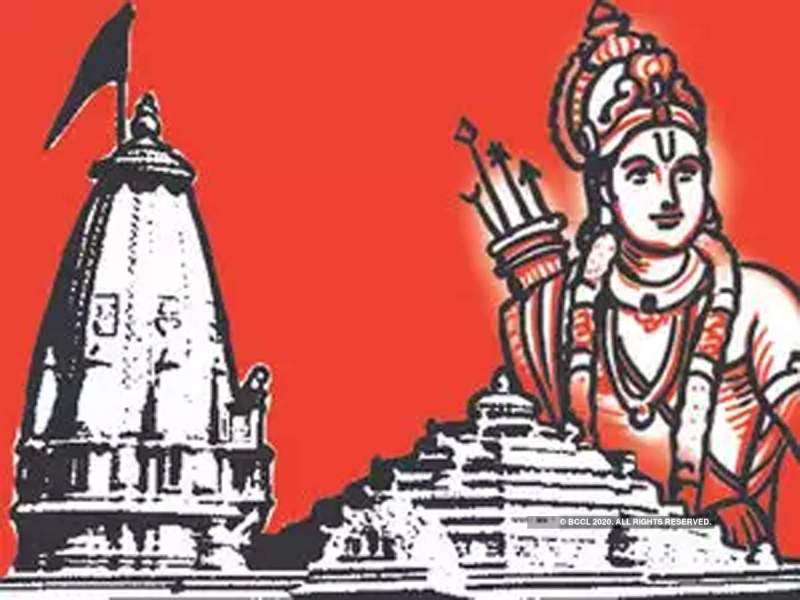
Representation of Ayodhaya’s Rama Temple

India being a Hindu majority, unlike many other countries never called itself a Hindu Rashtra (Nation). This is obviously so great of Indian constitution that has no religious identity of its own, this was done so that people of other faiths in India feel safe and secured under a non-religious constitution. This sets India different in many ways like we’ve seen and are well aware of atrocities being faced by many religious minorities in the neighbouring Islamic countries of India. Every year thousands of non-muslims from countries like Pakistan, Afghanistan, and Bangladesh are migrating to India for shelter and safety. Recently on 26th july 2020, 11 people of Sikh community from Afghanistan were granted visas and safely brought to the New Delhi. These people had faced the recent terrorism against Sikhs and Hindus of Afghanistan where many of them were slaughtered, abducted and raped by the talibani terror groups. These men, women and children feel lucky and like home India. The Sikh refugee who was priest to a Gurudwara (Sikh temple) who was abducted by the talibanis and later rescued by the Afghan Government in his recent interview on arrival said “India is home, India is Mother, there’s no other country like India”.

This was the sole reason that government of India had formed Citizen Amendment Act (CAA) to ensure that minorities in Islamic constitution of Pakistan, Afghanistan, and Bangladesh gets a safe house in India. The CAA grants Indian citizenship to all minorities i.e. Sikhs, Hindus, Christians, Zoroastrians, Parses, Jains, Buddhists and all other non-muslims facing inhumane atrocities in these three muslim majority nations.

In the same India that has room for all religions, a country that welcomes all whole heartedly and lends a helping hand. This country in Asian subcontinent is known for its good deeds of Humanity. India being Hindu majority never showed any form of biases in the case of Ram Janam Bhoomi (Birth Place of Lord Ram) case. Like its neighbours, India could’ve used its religious majority might to wind up the case decades earlier but unlike any other nation India had to wait for almost 500 years for reconstructing once demolished Ram Temple. It’s just like questioning the existence of Jerusalem and Jesus, Mecca and Madina.

Lord Ram who is believed to be the supreme avatar of Hindu God Vishnu was born in the capital of Ayodhaya in the solar dynasty that existed thousands of years before any other civilisation on the planet.

History of the Dispute

The land on which the Babri mosque was built in 1528 is the ‘RamJanmabhoomi’ (birthplace of the god-king Rama). But, Mir Baqi, one of Mughal king Babur’s generals, is said to have destroyed a pre-existing temple of Rama and built a mosque called Babri Masjid (Babur’s mosque) at the site.

The Babri Mosque was destroyed during a political rally which turned into a riot on 6 December 1992.

A subsequent land title case was lodged in Allahabad High Court, the verdict of which was pronounced on 30 September 2010. In the landmark hearing, the three judges of The Allahabad High Court ruled that the 2.77 acres (1.12 ha) of Ayodhya land be divided into 3 parts, with 1/3 going to the Ram Lamlash or Infant Rama represented by the Hindu Maha Sabha for the construction of the Ram temple, 1/3 going to the Islamic Sunni Waqf Board and the remaining 1/3 going to a Hindu religious denomination Nirmohi Akhara. While the three-judge bench was not unanimous that the disputed structure was constructed after demolition of a temple, it did agree that a temple or a temple structure predated the mosque at the same site.

The excavations by the Archaeological Survey of India were heavily used as evidence by the court that the predating structure was a massive Hindu religious building.

The disputed holy site of Ayodhya in northern India should be given to Hindus who want a temple built there, the country’s Supreme Court has ruled.

Supreme Court’s verdict

The case, which has been bitterly contested for decades by Hindus and Muslims, centres on the ownership of the land in Uttar Pradesh state. Muslims would get another plot of land to construct a mosque, the court said. Many Hindus believe the site is the birthplace of one of their most revered deity, The Lord Ram.

Court’s reason for verdict

In the unanimous verdict, the court said that a report by the Archaeological Survey of India (ASI) provided evidence that the remains of a building “that was not Islamic” was beneath the structure of the demolished Babri mosque.

The court said that, given all the evidence presented, it had determined that the disputed land should be given to Hindus for a temple to Lord Ram, while Muslims would be given land elsewhere to construct a mosque.

It then directed the federal government to set up a trust to manage and oversee the construction of the temple.

The 19 Important Laws and Rights which every Indian Citizen must be aware of

A Citizen of India has a vast and wide array of rights from right to protection of life, assets to the right to education etc. These rights aid a Citizen of India so that one can lead their life in a dignified manner. A Citizen of India has been provided these rights and laws in various different provisions of the Indian Constitution. I have explained some basic rights and laws which every Indian National must be aware of and have knowledge of it.

1. Motor Vehicle Act 1988, section -185, 202:- At the time of driving if your 100ml blood contains more than 30mg of alcohol then the police can arrest you without a warrant.

2. Criminal Procedure Code, Section 46:- No woman cannot be arrested before 6 A.M. and after 6 P.M.

Lady Police Arrested A Woman Royalty Free Cliparts, Vectors, And ...

3.  Indian Penal Code, 166 A:- A Police officer can’t refuse to lodge an FIR if he/she does so they could be jailed for up to 6 months to 1 year.

Section 166A in The Code Of Criminal Procedure | Police can not ...

4. Indian Sarais Act, 1887:- Even any 5-star hotel can’t prohibit you from drinking potable water and using its washrooms.

Is there any rule in India that we can enter into any hotel for ...

5.  Motor Vehicle Act, 1988:- As per Section 129 of the Indian Motor Vehicle Act, wearing the helmet is a must for two-wheeler riders. Section 128 of this Motor Vehicle Act limits the maximum two riders on the bikes. The law states and provides for that, if the traffic police officer snatches the key from the car or motorcycle, it is illegal and you shall have the full right to launch a Legal proceeding against the officer.

6.  Domestic Violence Act, 2005:- If a young boy and a girl want to live together in a “live-in relationship”, they can do so because it is not illegal. Even the newborn from this relationship is also a legal son or daughter and this newborn have the full right in the assets of his/her father.

7. Police Act, 1861:- A police officer is always on duty whether he/she wearing a uniform or not. If a person makes a complaint to the officer, he/she could not say that he can’t help the victim because he/ she is not on duty.

8. Maternity Benefit Act, 1961:- No company can fire a pregnant woman. It may be punishable by a maximum of 3 years of imprisonment. If the company (Government or private) has more than 10 employees then the pregnant women employee is eligible to get 84 days paid maternity leave.

9. Income Tax Act, 1961:-  In the case of tax violations, the tax collection officer has the power to arrest you but before arresting you, he/she will have to send a notice to you. Only Tax Commissioner decides how long you will stay in the custody.

10.  Hindu Marriage Act, Section -13: As per the Hindu Marriage Act, 1955 (any husband or wife) may apply for divorce in the court on the basis of Adultery (physical relationship outside of marriage), physical and mental abuse, impotency, to leave home without information, to change Hindu religion and adopt other religion, insanity, incurable disease and no information about husband or wife for seven-year.

11. Code of Criminal Procedure, 1973:- Only women police constable can arrest women.  Male constable doesn’t have the right to arrest women. Women have the right to deny going to police stations after the 6 P.M. and before the 6 A.M. In the case of a serious crime only after receipt of the written order from the magistrate, a male policeman can arrest a woman.

12. As per the Citizen Charter (Indian Oil Corporation website):- There are very few people who know that if their gas cylinder blasts during the cooking of food then the gas agency is liable to pay Rs. 50 lakh to the victim as compensation. To claim this compensation consumers need to lodge an FIR to the nearest police station and submit it to the concerned gas agency.

13. Foreign Contribution Regulation Act (FCRA), 2010:- It would surprise you to know that if you take a gift from any company on the occasion of a festival, it falls into the category of bribery. You can also be sentenced to jail for this crime.

14.  Automotive (Amendment) Bill, 2016,:- If you are fined for a crime (like riding without a helmet or any other reason) then you will not be fined for the same reason in the same day.

15. Maximum Retail Price Act, 2014:- Any Shop keeper can’t charge more than the printed price of any commodity but a consumer has the right to bargain for less than the printed price of a commodity.

16. Limitation Act, 1963:-  If your office does not pay you then you have the power to file an FIR against it within 3 years. But if you report after 3 years, you will not get anything for the due.

17.  Section 294 of the Indian Penal Code:- If you are found involved in “obscene activity” at a public place, you can be imprisoned for 3 months. But in the absence of an exact definition of obscene activity police have always misused this act.

18.  Hindu Adoption and Maintenance Act, 1956:- If somebody belongs to the Hindu religion and has a son or grandson then he can’t adopt a second child. There must be a gap of at least 21 years between you (the adopter) and your adopted son.

19.  Delhi Rent Control Act, 1958, Section 14:- If you are living in Delhi then your landlord does not have the right to forcefully vacate your house without giving prior notice to you.

WEBSITES REFERRED

  1. https://www.facebook.com/notes/meripadhai/19-laws-and-rights-must-be-known-to-every-indian/480097059230223/

2.https://www.jagranjosh.com/general-knowledge/19-laws-and-rights-must-be-known-to-every-indian-1486368049-1

3.https://legodesk.com/legopedia/drunk-driving/

4.https://www.123rf.com/photo_64116772_stock-vector-lady-police-arrested-a-woman.html

5.https://www.google.com/searchq=Indian+Penal+Code+166+A&rlz=1C1CHBD_enIN782IN782&sxsrf=ALeKk00PWxtPznaaUVIMZA9GwifqhJZgqA:1595844030365&source=lnms&tbm=isch&sa=X&ved=2ahUKEwje3a-klu3qAhVJxzgGHWACDKgQ_AUoBHoECA4QBg&biw=1366&bih=576#imgrc=_bLrmlGmEdtXVM

6.https://www.quora.com/Is-there-any-rule-in-India-that-we-can-enter-into-any-hotel-for-water

7.https://in.pinterest.com/pin/614037730417601943/

8)https://www.google.com/amp/s/www.indiatimes.com/amp/news/india/women-in-live-in-relationships-are-like-concubines-says-rajasthan-human-right-s-body-asking-for-ban-375078.html

9)https://www.vecteezy.com/vector-art/242672-police-officer-helping

10)https://www.slideshare.net/mobile/meghaiyer1988/the-maternity-benefits-act-1961

11)https://topcornerjob.com/how-to-respond-to-income-tax-notice-online/

12)https://www.legalsalah.com/blog/mutual-divorce-us-13b-hindu-marriage-act1955/

13)https://in.pinterest.com/pin/734509020455350757/

14)https://kashmirobserver.net/2019/11/30/4-killed-3-injured-in-gas-cylinder-explosion-in-ramban/

15)https://www.kindpng.com/imgv/bxTooo_memo-clip-art-hd-png-download/

Is internet the new crime scene?

Cyber Crime is an unlawful act where the computer is used as a tool or target or both. These days Cyber Crime is a fast-growing area of crime. As the technology is advancing man is becoming dependent on the internet for all his needs as it gives easy access to do shopping, gaming, online studying, social networking, online jobs etc. everything at one place. Apart from other countries, India is also not far where the rate of incidence of cybercrime is increasing day by day.

The bane of the internet, cybercrime refers to any illegal activities carried out using technology. Cybercriminals — who range from rogue individuals to organized crime groups to state-sponsored factions — use techniques like phishing, social engineering, and all kinds of malware to pursue their nefarious plans. Cybercriminals buy and sell malware online (generally on the dark web) while also trading in services that test how robust a virus is, business intelligence dashboards to track malware deployment, and tech support (that’s right — crooks can contact a criminal helpline to troubleshoot their illegal hacking server or other malfeasance!).

The professionalization and proliferation of cybercrime adds up to countless costs in damages every year, impacting individuals, businesses, and even governments. Experts estimate that cybercrime damages will reach $6 trillion annually by 2021, making it one of the most lucrative criminal enterprises.

Criminals are mostly exploiting the speed, convenience and anonymity of the internet, commit various criminal activities and pose the real threat to victims all over the world. These crimes can be phishing, Fraud due to credit card, debit card, bank robbery, illegal downloading, child pornography, distribution of viruses etc.

New technologies create new criminal opportunities but few new types of crime. What distinguishes cybercrime from traditional criminal activity? Obviously, one difference is the use of the digital computer, but technology alone is insufficient for any distinction that might exist between different realms of criminal activity. Criminals do not need a computer to commit fraud, traffic in child pornography and intellectual property, steal an identity, or violate someone’s privacy. All those activities existed before the “cyber” prefix became ubiquitous. Cybercrime, especially involving the Internet, represents an extension of existing criminal behaviour alongside some novel illegal activities.

Most cybercrime is an attack on information about individuals, corporations, or governments. Although the attacks do not take place on a physical body, they do take place on the personal or corporate virtual body, which is the set of informational attributes that define people and institutions on the Internet. In other words, in the digital age our virtual identities are essential elements of everyday life: we are a bundle of numbers and identifiers in multiple computer databases owned by governments and corporations. Cybercrime highlights the centrality of networked computers in our lives, as well as the fragility of such seemingly solid facts as individual identity.

Cyber Laws in India

Cyber Crimes, in India are registered under three main heads, The IT Act, The IPC (Indian Penal Code) and State Level Legislations (SLL).

Cases of Cyber Laws under IT Act:

Tampering with computer source documents – Sec. 65

Hacking with Computer systems, Data alteration – Sec. 66

Publishing obscene information – Sec. 67

Un-authorised access to protected systems – Sec. 70

Breach of Confidentiality and Privacy – Sec. 72

Publishing false digital signature certificates – Sec. 73

Cases of Cyber Laws under IPC and Special Laws:

Sending threatening messages by email – Sec 505 IPC

Sending defamatory messages by email – Sec 499 IPC

Forgery of Electronic records – Sec 463 IPC

Bogus websites, Cyber Frauds – Sec 420 IPC

Email Spoofing – Sec. 463 IPC

Web- Jacking –Sec. 383 IPC

Email abuse – Sec 500 IPC

Cyber Crime under special cells:

Online sale of Arms Act

Online sale of Drugs under Narcotic Drugs and Psychotropic Substances Act

Child Rights equally important

Children and childhood across the world, have broadly been construed in terms of a ‘golden age’ that is synonymous with innocence, freedom, joy, play and the like. It is the time when, spared the rigours of adult life, one hardly shoulders any kind of responsibility or obligations. But, then, it is also true that children are vulnerable, especially when very young. The fact that children are vulnerable, they need to be cared for and protected from ‘the harshness of the world outside’ and around.

This being so, the adult-child relation, parents, in particular, is said to provide ‘care and protection’ – serving thereby the ‘best interests of the child’ and meeting their day-to-day ‘needs of survival and development’. The adult is presumed to be the guardian and in that respect expected to take the responsibility of a child’s welfare and development. Whether or not, the premise underlying this is correct or not, the childhood ‘reality’ on the whole is questionable, demanding critical evaluation. Accordingly, idealistic notions and representations associated with children and childhood have been challenged, especially concerning poverty, disease, exploitation and abuse rife across the globe. Many also believe that childhood is that period during which children are subject to a set of rules and regulations unique to them, and one that does not apply to members of other social categories. It is indeed a period in a person’s life during which she/he is neither expected nor allowed to fully participate in various domains of social life. It is thus not a world of freedom and opportunity but one of confinement and limitation in which children are ‘wholly subservient and dependent’. This being so, childhood is nothing short of a world of isolation, sadness, exploitation, oppression, cruelty and abuse.

The UNCRC outlines the fundamental human rights that should be afforded to children in four broad classifications that suitably cover all civil, political, social, economic and cultural rights of every child:

Right to Survival:

• Right to be born

• Right to minimum standards of food, shelter and clothing

• Right to live with dignity

• Right to health care, to safe drinking water, nutritious food, a clean and safe environment, and information to help them stay healthy

Right to Protection:

• Right to be protected from all sorts of violence

• Right to be protected from neglect

• Right to be protected from physical and sexual abuse

• Right to be protected from dangerous drugs

Right to Participation:

• Right to freedom of opinion

• Right to freedom of expression

• Right to freedom of association

• Right to information

• Right to participate in any decision making that involves him/her directly or indirectly

Right to Development:

• Right to education

• Right to learn

• Right to relax and play

• Right to all forms of development – emotional, mental and physical

CRC and India

Adopted by the United Nations in 1989, the CRC is an international agreement legally binding on the parties signatory to it. It has incorporated in its various articles rights of children without any discrimination whatsoever. It was ratified by India on 11 December 1992. It has a preamble setting out different principles the CRC is built upon.

It is based on four basic principles:

1.  Non-discrimination (Article 2)

2.  Best Interest of the Child (Article 3)

3.  Right to Life Survival and Development (Article 6)

4.  Right to be Heard (Article 12)

Steps that can be taken to improve the lives of children.

·         Strengthen the reporting mechanism on violence against children by making it more accessible to children.

·         Develop a framework for the protection of children from online abuse and ensuring privacy, safety and confidentiality of data shared on digital platforms.

·         Enhance financial investment on child protection components

·         Sensitise parents, service providers and community for early identification and management of children facing abuse and violence; and sensitisation of children, parents and caregivers on gender issues.

·         Create awareness amongst children on safe usage of online platforms and protection from cyber abuse.

·         Strengthen the juvenile justice system in India and provide care, support and rehabilitation to survivors, particularly of sexual violence.

·         Ensure safe schools by integrating safe school principles in curricula, conduct awareness-raising workshops and develop capacities of teachers and other staffs

·         Emphasise on vocational training for children especially those involved in labour after they complete the age of 15 years.

Judiciary: Functions, Importance and an Essential Quality of Judiciary

The Judiciary is the third organ of the government. It has the responsibility to apply the laws to specific cases and settle all disputes. The real ‘meaning of law’ is what the judges decide during the course of giving their judgements in various cases. From the citizen’s point of view, Judiciary is the most important organ of the government because it acts as their protector against the possible excesses of legislative and executive organs. Role of Judiciary as the guardian-protector of the constitution and the fundamental rights of the people makes it more respectable than other two organs.
Functions of Judiciary and Its Importance:

  1. To Give Justice to the people:
    The first and foremost function of the judiciary is to give justice to the people, whenever they may approach it. It awards punishment to those who after trial are found guilty of violating the laws of the state or the rights of the people.

    The aggrieved citizens can go to the courts for seeking redress and compensation. They can do so either when they fear any harm to their rights or after they have suffered any loss. The judiciary fixes the quantity and quality of punishment to be given to the criminals. It decides all cases involving grant of compensations to the citizens.
  2. Interpretation and Application of Laws: One of the major functions of the judiciary is to interpret and apply laws to specific cases. In the course of deciding the disputes that come before it, the judges interpret and apply laws. Every law needs a proper interpretation for getting applied to every specific case. This function is performed by the judges. The law means what the judges interpret it to mean.
  3. Role in Law-making:

    The judiciary also plays a role in law-making. The decisions given by the courts really determine the meaning, nature and scope of the laws passed by the legislature. The interpretation of laws by the judiciary amounts to law-making as it is these interpretations which really define the laws.
    Moreover, ‘the judgements delivered by the higher courts, which are the Courts of Records, are binding upon lower courts. The latter can decide the cases before them on the basis of the decisions made by the higher courts. Judicial decisions constitute a source of law.
  4. Equity Legislation:
    Where a law is silent or ambiguous, or appears to be inconsistent with some other law of the land, the judges depend upon their sense of justice, fairness, impartiality, honesty and wisdom for deciding the cases. Such decisions always involve law-making. It is usually termed as equity legislation.
  5. Protection of Rights:
    The judiciary has the supreme responsibility to safeguard the rights of the people. A citizen has the right to seek the protection of the judiciary in case his rights are violated or threatened to be violated by the government or by private organisations or fellow citizens. In all such cases, it becomes the responsibility of the judiciary to protect his rights of the people.
  6. Guardian of the Constitution:
    The judiciary acts as the guardian of the Constitution. The Constitution is the supreme law of the land and it is the responsibility of the judiciary to interpret and protect it. For this purpose the judiciary can conduct judicial review over any law for determining as to whether or not it is in accordance with the letter and spirit of the constitution. In case any law is found ultra vires (unconstitutional), it is rejected by the judiciary and it becomes invalid for future. This power of the court is called the power of judicial review.
  7. Power to get its Decisions and Judgements enforced:
    The judiciary has the power not only to deliver judgements and decide disputes, but also to get these enforced. It can direct the executive to carry out its decisions. It can summon any person and directly know the truth from him.
    In case any person is held:
    (i) Guilty of not following any decision of the court, or
    (ii) Of acting against the direction of the court, or
    (iii) Misleading the court, or
    (iv) Of not appearing before the court in a case being heard by it, the Court has the power to punish the person for the contempt of court.
  8. Special Role in a Federation:
    In a federal system, the judiciary has to perform an additionally important role as the guardian of the constitution and the arbiter of disputes between the centre and states. It acts as an independent and impartial umpire between the central government and state governments as well as among the states. All legal centre-state disputes are settled by the judiciary.
  9. Running of the Judicial Administration :
    The judiciary is not a department of the government. It is independent of both the legislature and the executive. It is a separate and independent organ with its own organisation and officials. It has the power to decide the nature of judicial organisation in the state. It frames and enforces its own rules.
    These govern the recruitment and working of the magistrates and other persons working in the courts. It makes and enforces rules for the orderly and efficient conduct of judicial administration.
  10. Advisory Functions:
    Very often the courts are given the responsibility to give advisory opinions to the rulers on any legal matter. For example, the President of India the power to refer to the Supreme Court any question of law or fact which is of public importance.
  11. To Conduct Judicial Inquiries:
    Judges are very often called upon to head Enquiry Commissions constituted to enquire into some serious incidents resulting from the alleged errors or omissions on the part of government or some public servants. Commissions of enquiry headed by a single judge are also sometimes constituted for investigating important and complicated issues and problems.
  12. Miscellaneous Functions:
    Besides the above major functions, the judiciary also performs several other functions. Some such functions are the appointment of certain local officials of the court, choosing of clerical and other employees. Cases relating to grant of licenses, patents, and copy rights, the appointment of guardians and trustees, the admission of wills, to appoint trustees to look after the property of the minors, to settle the issues of successions of property and rights, issue of administrating the estates of deceased persons, the appointment of receivers, naturalization of aliens, marriage and divorce cases, election petitions and the like.
    Through all these functions, the Judiciary plays an important role in each state. It also plays a role in the evolution of Constitution through the exercise of its right to interpret and safeguard it against all legislative and executive excesses.

Importance of Independent Judiciary:
In the life of the citizens of a state, Judiciary is a source of confidence and fearlessness. The common man depends upon judiciary for getting justice. Without a security of rights and freedom guaranteed by the judiciary, they cannot really hope to carry out their jobs and enjoy their living. They are more dependent upon judiciary than the legislature and the executive. Without judicial protection, their lives can become miserable. From citizens point of view Judiciary is the most important organ of the government.
Garner highlights this view when he observes, “A society without legislature is conceivable, and indeed, legislative organs did not make their appearance in the state until modern times, but a civilised state without a judicial organ and machinery is hardly conceivable.”
Judiciary enjoys a big importance in the eyes of the people because it acts as:

(1) The dispenser of Justice.
(2) Protector of the rights of the people.
(3) Guardian protector of the Constitution of the State.
(4) Arbiter of center-state disputes.
(5) Safeguard against Legislative and executive excesses.
(6) Check against arbitrary exercise of powers by the power-holders.
(7) Guardian of Rule of Law and Justice.
An independent judiciary is always considered to be the most essential part of every democratic government worth its name. A government without judiciary is almost inconceivable. A government without independent judiciary is always held to be an authoritarian government.
Independence of Judiciary: An Essential Quality:
The chief quality which helps the judiciary to faithfully administer justice and to perform its functions efficiently is judicial independence. It is only when the judiciary works independently without any interference of the other two organs of the government that it can carry out its high responsibilities.
“The independence of judiciary,” writes Dr. P. Sharan, “is a corner stone of every democratic government and upon it is built the structure of civil liberty.” Judiciary can perform its functions only when it is free to administer justice according to law. Without being well-organised and independent it can never serve its purpose. Therefore, Judiciary must be organised in such a way as can enable the judges to give their judgements without any fear or favour.
Organisation of Judiciary must be based on the following features:
(1) Appointment of only highly qualified and experienced judges.
(2) The Judiciary must have prevented the executive and legislature from committing excesses.
(3) The ability of the judiciary to maintain and independently run the judicial administration.
(4) The Judiciary must be made the guardian protector of the Constitution,
(5) The Judiciary must ensure full, fair and less- expensive opportunities to the people for defending their rights and getting justice.
(6) The method of appointment of judges must be fair, systematic, effective and transparent.
(7) Method of removal of judges should be difficult and no single should have the power to remove the judges.
(8) Judges must be paid high salaries, necessary allowances, good service conditions, and appropriate retirement benefits.

By incorporating all these features in the judicial system, a well organised and independent judiciary can be secured.

The Next World War Would Not Be – A Conventional War

Unlike all the wars and disputes we’ve seen in the past the upcoming war (if any) would never be the same we can guess this with the on-going pandemic of SARS COV Virus, this is just a tip of an iceberg and there’s a lot hidden from us. Major countries in the world are packed with numerous bio weapons. So much is undergoing research and these are much more deadly than the well-known nuclear weapons. That is why it called as a “war of the future” it would be “a bio-warfare” and something of definite catastrophes for all living beings on earth.

Biological warfare also known as germ warfare is the use of biological toxins or infectious agents such as bacteria, viruses, insects, and fungi with the intent to kill or incapacitate humans, animals or plants as an act of war. Biological weapons often known as “bio-weapons”, “biological threat agents”, or “bio-agents” are living organisms or replicating entities that is, viruses which are not universally considered alive. Entomological (insect) warfare is a subtype of bio-warfare.

Biological warfare is distinct from nuclear warfare, chemical warfare and radiological warfare, which together with biological warfare make up CBRN, the military initialise for nuclear, biological, and chemical warfare using weapons of mass destruction (WMDs). None of these are considered conventional weapons, which are deployed primarily for their explosive, kinetic, or incendiary potential. Although this world has prepared these weapons but it isn’t yet ready to tackle its attack.

Biological weapons may be employed in various ways to gain a strategic or tactical advantage over the enemy, either by threats or by actual deployments. Like some chemical weapons, biological weapons may also be useful as area denial weapons. These agents may be lethal or non-lethal, and may be targeted against a single individual, a group of people, or even an entire population. They may be developed, acquired, stockpiled or deployed by nation states or by non-national groups. In the latter case, or if a nation-state uses it clandestinely, it may also be considered bio-terrorism.

More than 16 million people have been infected by the coronavirus COVID-19 world-wide with the death toll crossing 650,000, the virus which first emerged in China in December 2019 could be the start of World War 3 and the world would not even know. The analysis done by major Intelligences of the world indicates so.

The virus could have been made in China and this could be a part of its intentions to start a war against the world, if the war begins then it will be fought on the basis of biological weapons (germ-warfare). It will also use psychological warfare and attack economies of the world.

Even during the past century, more than 500 million people died of infectious diseases. Several tens of thousands of these deaths were due to the deliberate release of pathogens or toxins, mostly during attacks in the Second World War. Two international treaties outlawed biological weapons in 1925 and 1972, but they have largely failed to stop countries from conducting offensive weapons research and large-scale production of biological weapons. And as our knowledge of the biology of disease-causing agents—viruses, bacteria and toxins—increases, it is legitimate to fear that modified pathogens could constitute devastating agents for biological warfare.

India like every other nation need to dig more into these type of microorganisms and boost its virology science. Protection from these bioweapons could be only when we know them in advance. Knowing them into deep Nano science is the key to protective measures from them.

7 Online Business Anyone Can Start (No Scam No Investment)

Earning money has always been associated with and restricted to traditional ‘offline’ route. With the Internet taking over a large part of our lives, more people are looking to ways to earn money online to increase their financial inflows.

Photo by Andrea Piacquadio on Pexels.com

However, you should be careful of the platform that you opt for. While there are numerous ways to earn money online, some of these might be fake, thus taking you for a ride. Also, do not expect to earn a huge amount quickly when using online avenues.

1- TEESPRING

Teespring is a free platform that lets you create and sell over 50 kinds of products with no upfront cost or risk. We handle everything, from printing to shipping to customer service. Teespring is for everyone—from entrepreneurs looking to start their own online business, to Creators wanting to offer awesome merch to their fans, to charities looking for a hassle-free way to raise funds, and everyone in between.

Use Teespring tools like stores, promotion codes, buyer messaging, and more to maximize your sales! We can even list your products within the most powerful global marketplaces like Amazon, eBay, and more through Teespring’s Boosted Network.

How do I make money using Teespring?

You choose the selling price and profit for all of your products. When a product sells you get to keep the profit. For example, the base cost of a t-shirt is $10 and your selling price is $24; when you sell a shirt you will earn $14. Once the orders are processed your profit will be available for withdrawal in the Payouts section of your Teespring account. Don’t forget the more you sell the more profit you can earn per product per month.

2- Merch by Amazon

Basically, if you have 100 t-shirts in your account, you could expect to make about … This is a conservative estimate, about $150 a month. If you have 1,000 t-shirts in your account, you can expect to make maybe $1,500 a month. If you have 8,000 t-shirts in your account, you could expect to make about $12,000 a month.

Merch by Amazon is a very cool startup type program by Amazon. It is a pod program where you can sell tshirts, sweatshirts and hoodies in USA. Anyone can participate as long as you have payoneer. For Indians, there is a 15% tax on earnings. (No wonder taxation is theft as we have to pay tax on those earnings in India as well. But then IRS are a bunch of thieves)

3- REDBUBBLE

The designers earn royalties from the sale of their creations. They receive a percentage of the profit and the rest of the funds account for the fee paid to Redbubble and the manufacture of the merchandise. The site then handles the inventory and shipping transactions on your behalf.

The designers earn royalties from the sale of their creations. They receive a percentage of the profit and the rest of the funds account for the fee paid to Redbubble and the manufacture of the merchandise. The site then handles the inventory and shipping transactions on your behalf

4- UDEMY

One of the best features of selling classes on Udemy is the fact that it can become an excellent source of passive income. Once you create and post a course, it can earn you money for a long time without additional work. It just might take more work to market your course to potential students.

For example if a student purchases your course using an Instructor Coupon code, either from promotions to your own audience (e.g., your email list or YouTube subscribers) you can make 97% revenue share. Alternatively if the course is sold via an Affiliate, the split is 50% affiliate, 25% Instructor and 25% Udemy.

5- AFFILIATED MARKETING

Affiliate marketing is one of the oldest marketing practice which gains affiliates a commission in the case of sale based on the affiliate’s recommendation. It is one of the cheapest and easiest ways of marketing as you don’t need to create and sell a product. Just one thing you need to do is to enable a linked connection between buyer and seller and take your commission when the sale is made.

As you see, affiliate marketing is a passive income source. It is highly competitive it is true but still it may be so easy to make money online with affiliate marketing. To be successful, you need to learn what works and what doesn’t while promoting your products.

There are many affiliate marketing works. So, you need to be patient. You can feed your website with qualified content to get high ranking positions and raise awareness, attend affiliate marketing events, seminars or webinars and join a discussion forum or online communities to meet new people. All make a great contribution to develop you. Naturally after these contributions you will be more passionate to make money from affiliate programs. If you are patient enough you will make money with affiliate programs. 

6- YOUTUBE AFFILIATED MARKETING

You can make money on YouTube by doing affiliate marketing, which is including links to products you review and use in your videos that will track a purchase. If someone makes a purchase using your affiliate link, you receive a small commission for the sale.

Another thing about affiliate marketing is the payout percentages as well as how these people track your viewers who are clicking on these links. Every time someone clicks on one of your special tracking affiliate links, a little cookie is put onto that person’s computer to track what they purchase. The best part about the cookies is that if you link to a specific product, they don’t have to purchase that product. Anything they purchase on that website, you get commissions for. So they could click over with your affiliate link and that cookie and decide not to purchase that, but purchase a whole bunch of other things, and you get paid commission off it.

7- EBATES REFERRALS

You can still make money without a blog! In fact, you can make some major coin with the Rakuten Referral Program simply by inviting friends and family, using your social media networks to the fullest – including Pinterest – and even promoting in neighborhood groups and forums.

Have friends and family share your link. If you are saving for something special, and they feel like they can be a part of it, they will likely glady share the opportunity with their followers.

Of course, using the strategies above won’t hurt either. Pay special attention to numbers 3 through 5 and remember – have fun with it, but own it!

India-Australia Relations

A virtual bilateral summit was held virtually for the first time between the Prime Ministers of India and Australia.

A few of the major outcomes of the Summit was the Elevation of the bilateral Strategic Partnership to Comprehensive Strategic Partnership. The Elevation of the “2+2” engagement to the level of Foreign and Defence Ministers, where strategic discussions will be taking place every two years. India previously has had such mechanisms with USA and Japan.

Memorandum of Understanding (MOU) was established for cooperation in the field of mining and processing of Critical and Strategic minerals. Along with it, the Mutual Logistics Support Agreement was also signed. A Joint declaration on the shared vision for Maritime Cooperation in the Indo- Pacific region was also emphasized upon.

India- Australia Relations is not a ‘today affair’ as the two countries began their alliances during the cold war period back since when Australia was United States’ closest ally, also remembered to when India opted for non-alignment. The end of the Cold War and the launch major economic reforms in 1991 provided the first positive move towards development of closer ties between these two nations.

However, this could not last long as India’s nuclear status outside the nuclear Non-Proliferation Treaty (NPT) resulted in Australia taking a particularly strong stance against India’s 1998 nuclear tests.

 With the changing global scenario in 21st century, Australia looked at India as an important partner in promoting regional security and stability. This led to up progression of their bilateral relationship to a ‘Strategic Partnership’, as well as a Joint Declaration on Security Cooperation in 2009.

Talking of the Economic and commercial relations, the Bilateral goods and services trade between these two nations was about $30.3 billion in 2018-19, and the level of two-way investment was $30.7 billion in 2018.

Australia announced implementation of “An India Economic Strategy to 2035” in 2018. A vision document to shape India- Australia bilateral ties. India is also preparing an Australia Economic Strategy Paper (AES) on these similar outlines.

The two countries have also decided to re-engage meetings on a Comprehensive Economic Cooperation Agreement (CECA). These discussions first started in 2011, and the last time it happened was in 2015.

In the Defence and security cooperation field, there was a Civil Nuclear Cooperation Agreement signed between the two in 2014 which had also enabled India to secure uranium from Australia.

Both of the countries also contracted Mutual Legal Assistance Treaty (MLAT), Extradition Treaty and the Social Security Agreement.

Maritime Security cooperation is seen in the form of joint exercises like AUSINDEX 2019, AUSTRAHIND, Exercise Pitch Black and Kakadu biennial exercise (Hosted by the Australian Navy).

Some concerns that remain in India-Australia relations is the Comprehensive Economic Cooperation Agreement (CECA) which is still unsettled after nine rounds of negotiations. India had also earlier opted out from Regional Comprehensive Economic Partnership (RCEP). Among other things, India and Australia could not reach to agreement on the market access over agriculture and dairy products.

Furthermore, an Australia-India Strategic Research Fund commenced in 2006 for scientists to collaborate on leading-edge research. Agreement on Cyber and Cyber-Enabled Critical Technology was also signed of late to promote cooperation in the extents of digital economy, cyber security, critical and emerging technologies.

The economy of Australia has been quite heavily dependent on China, as China is one of Australia’s largest trading partners and accounts for 26 % of its world trade. Chinese aggressions and assertive foreign policies are common apprehensions between the two nations and certainly has brought both the democracies closer.

Both the countries have also shown similar interests in the vision of an open, free inclusive and rules-based Indo-Pacific region. Australia’s Pacific Step Up and India’s Forum for India-Pacific Islands Cooperation (FIPIC) give reaffirmation of their cooperation in the South Pacific region.

Both also have co-operated in various multilateral fora including QUAD security dialogue, G-20, Indian Ocean Rim Association (IORA), East Asia Summits, ASEAN Regional Forum etc.

The People to People Relations have found a different edge for these countries as the Indian diaspora, estimated at nearly 7 lakhs is the fastest growing in Australia and has become a constructive factor in the bilateral relations. Including that, almost 1 lakh Indian students are enrolled for studying in Australia and the under New Colombo Plan of Australian government, Australian undergraduates have studied and completed numerous internships in India.

Australia Government has also affirmed to help in establishing a world class Sports University in India.

Is death sentence a solution?

All punishments are based on the same proposition i.e. there must be a penalty for wrongdoing. There are two main reasons for inflicting the punishment. One is the belief that it is both right and just that a person who has done wrong should suffer for it; the other is the belief that inflicting punishment on wrongdoers discourages others from doing wrong. The capital punishment also rests on the same proposition as other punishments. The capital punishment debate is the most generally relevant, keeping in mind the situation that has been brought about by today. Capital punishment is an integral part of the Indian criminal justice system. The increasing strength of the human rights movement in India, the existence of capital punishment is questioned as immoral. However this is an odd argument as keeping one person alive at the cost of the lives of numerous members or potential victims in the society is unbelievable and in fact, that is morally wrong.

MEANING OF CAPITAL PUNISHMENT Capital punishment, also called the death penalty, execution of an offender sentenced to death after conviction by a court of law for a criminal offence. Capital punishment should be distinguished from extrajudicial executions carried out without due process of law. The term death penalty is sometimes used interchangeably with capital punishment, though the imposition of the penalty is not always followed by execution (even when it is upheld on appeal), because of the possibility of commutation to life imprisonment. The term “Capital Punishment” stands for the most severe form of punishment. It is the punishment which is to be awarded for the most heinous, grievous and detestable crimes against humanity. While the definition and extent of such crimes vary from country to country, state to state, age to age, the implication of capital punishment has always been the death sentence. By common usage in jurisprudence, criminology and penology, the capital sentence means a sentence of death.

POLITICAL COMMITMENTS REGARDING CAPITAL PUNISHMENT GLOBALLY

Ø  Several resolutions of the UN General Assembly (UNGA) have called for a moratorium on the use of the death penalty. In 2007, the UNGA called on states to “progressively restrict the use of the death penalty, reduce the number of offences for which it may be imposed” and “establish a moratorium on executions to abolish the death penalty.” In 2008, the GA reaffirmed this resolution, which was reinforced in subsequent resolutions in 2010, 2012, and 2014. Many of these resolutions noted that “a moratorium on the use of the death penalty contributes to respect for human dignity and to the enhancement and progressive development of human rights.” In 2014, 117 States had voted in favour of the most recent resolution. India has not voted in favour of these resolutions.

Ø  In a 2013 resolution, the UN Human Rights Council acknowledged “the negative impact of a parent’s death sentence and his or her execution on his or her children,” and urged “States to provide those children with the protection and assistance they may require,” Human Rights Council resolution, 2014 noted that “States with different legal systems, traditions, cultures and religious backgrounds have abolished the death penalty or are applying a moratorium on its use” and deplored the fact that “the use of the death penalty leads to violations of the human rights of those facing the death penalty and of other affected persons.” The Human Rights Council urged states to ratify the Second Optional Protocol to the International Covenant on Civil and Political Rights.

Ø  The law of extradition has been another tool for countries pushing for the abolition of the death penalty. Several abolitionist countries either require assurances that retentions-extraditing countries not impose the death penalty, or have included such a clause in bilateral extradition treaties.

CAPITAL PUNISHMENT: THE CURRENT STATUS Supreme Court on Validity of Capital Punishment in India Article 21 of the Indian Constitution ensures the Fundamental Right to life and liberty for all persons. It adds no person shall be deprived of his life or personal liberty except according to procedure established by law. This has been legally construed to mean if there is a procedure, which is fair and valid, then the state by framing a law can deprive a person of his life. While the central government has consistently maintained it would keep the death penalty in the statute books to act as a deterrent, and for those who are a threat to society, the Supreme Court to has upheld the constitutional validity of capital punishment in “rarest of rare” cases. In Jagmohan Singh vs State of Uttar Pradesh (1973), then in Rajendra Prasad vs State of Uttar Pradesh (1979), and finally in Bachan Singh vs State of Punjab (1980), the Supreme Court affirmed the constitutional validity of the death penalty. It said that if capital punishment is provided in the law and the procedure is a fair, just and reasonable one, the death sentence can be awarded to a convict. This will, however, only be in the “rarest of rare” cases, and the courts should render “special reasons” while sending a person to the gallows.

JUDICIAL REVIEW OF EXERCISE OF MERCY POWERS

The Supreme Court in Shatrughan Chauhan case has recorded that the Home Ministry considers the following factors while deciding mercy petitions:

a)      Personality of the accused (such as age, sex or mental deficiency) or circumstances of the case (such as provocation or similar justification);

b)      Cases in which the appellate court expressed doubt as to the reliability of evidence but has nevertheless decided on conviction;

c)       Cases where it is alleged that fresh evidence is obtainable mainly to see whether a fresh enquiry is justified;

d)      Where the High Court on appeal reversed acquittal or an appeal enhanced the sentence;

e)      Is there any difference of opinion in the Bench of High Court Judges necessitating reference to a larger Bench;

f)       Consideration of evidence in fixation of responsibility in gang murder case;

g)      Long delays in investigation and trial etc.

I cannot comment on if the death sentence is right or not. But I do believe that India gives enough chances for an accused to prove his innocence. Our judicial system does not take decisions on convicting or acquitting an accused hurriedly. So I feel awarding death sentence in rarest of rare cases isn’t too unfair.

Prisoners’ Rights; are we neglecting them?

In India, the debates around prison reforms and rights of prisoners have been very limited. Through our three-part series we seek to initiate a debate towards prisoners’ civil and political rights. This series will cover prisoners’ right to vote, to write and to strike with the understanding that these rights, if granted, will expand the ever so shrinking spaces for an incarcerated person to express and reach out to the world outside highlighting conditions of the prison and their experiences, including those of torture. Prisons in the modern democracy have been envisioned as reformative care-giving institutions. However, the reality of prisons is that there is overcrowding; inhuman living conditions; a dearth of basic needs such as access to food, medical treatment and cleanliness; absence of accountability and transparency of administration, targeting and surveillance, torture and even death; least of opportunities of skill building or recreation. Why is this so? For one, society’s understanding of the treatment of prisoners is being highly influenced by the fear related to crime control and increasing targeting and etherisation of persons from certain socio-political affiliations. Being tough on crime through severest punishments is the new standard for good governance. Prisoners form a section of the society which is shunned, secluded and seldom talked about. Making matters worse is the fact that no document declares mandatory rights of prisoners, leaving it up to the changing governments and changing moods of the society.

The Constitution of India empowers us with one of the basic fundamental rights – Right to life and Personal Liberty mentioned in Article 21 which implicitly states the right to life with dignity. Certain articles mentioned in our Constitution like Article 14, 20, 21, 22 deals with prisoner rights in India. Article 14 talks of equality of law whereas Article 20 prohibits self- incrimination and double jeopardy. Article 21 is vast in its own terms which state the right to life with personal liberty. Under its ambit, certain rights find its place like right to food, bail, speedy trial and free legal aid services. Article 21 provides prisoners with right against custodial violence and right to health in order to maintain basic human dignity. There have been certain legislations regarding prisoner rights in India. They have several other rights like right against inhuman treatment inside the jail, right to consult a lawyer and right against solitary confinement.  Right to interview and meet with friends and family is one the important prisoner rights.

According to the 2016 policy, the latest one, published by Government of India regarding prison management in the form of Model Prison Manual 2016, a “Perspective” chapter from the manual states:

“India shares the universally held view that a sentence of imprisonment would be justifiable only if it ultimately leads to the protection of society against crime. Such a goal could be achieved only if incarceration motivates and prepares the offender for a law-abiding and self-supporting life after his release. It further accepts that, as imprisonment deprives the offender of his liberty and self-determination, the prison system should not be allowed to aggravate the suffering already inherent in the process of incarceration.”

This perspective is a result of various judgments pronounced by the Supreme Court of India in the last several decades, in which the prison administration has been reprimanded regarding the inhuman living conditions in prisons and animal-like treatment of prisoners. The United Nation’s Standard Minimum Rules for Treatment of Prisoners also call for the dignified treatment of prisoners leading to their reintegration to into society and no further infliction of pain other than the imprisonment itself.

Following are the rights of prisoners which are implicitly provided under the Article 21 of the Constitution of India:-

  • Right of inmates of protective homes
  • Right to free legal aid
  • Right to speedy trial
  • Right against cruel and unusual punishment
  • Right to fair trial
  • Right against custodial violence and death in police lock-ups or encounters
  • Right to live with human dignity

Apart from these rights of prisoners Constitution of India also provides following rights to the prisoners:-

  • Right to meet friends and consult lawyer
  • Rights against solitary confinement, handcuffing & bar fetters and protection from torture
  • Right to reasonable wages in prison

Prisoner’s Rights under the Prisons Act, 1894

Prisons Act, of 1894 is the first legislation regarding prison regulation in India. This Act mainly focus on reformation of prisoners in connection with the rights of prisoners. Following Sections of the Prisons Act, 1894 are related with the reformation of prisoners:-

  • Accommodation and sanitary conditions for prisoners
  • Provision for the shelter and safe custody of the excess number of prisoners who cannot be safely kept in any prison
  • Provisions relating to the examination of prisoners by qualified Medical Officer
  • Provisions relating to separation of prisoners, containing female and male prisoners, civil and criminal prisoners and convicted and under trial prisoners
  • Provisions relating to treatment of under trials, civil prisoners, parole and temporary release of prisoners.

 In the year of 2016 the Parliament has been passed the Prisons (Amendment) Bill, 2016 to amend the Prisons Act, 1894 with a view to provide protection and welfare of the prisoners.

Conclusion

It can be said that the prisoners are also entitled to all his fundamental rights while they are behind the prisons. Indian Constitution does not expressly provides for the prisoners’ rights but Articles 14, 19 and 21 implicitly guaranteed the prisoners’ rights and the provisions of the Prisons Act, 1894 contains the provisions for the welfare and protection of prisoners. The Court has ruled that it can intervene with prison administration when constitutional rights or statutory prescriptions are transgressed to the injury of the prisoner. Supreme Court in many cases held that prisoner is a human being, a natural person and also a legal person. Being a prisoner he does not cease to be a human being, natural person or legal person. Conviction for a crime does not reduce the person into a non-person, whose rights are subject to the whim of the prison administration and therefore, the imposition of any major punishment within the prison system is conditional upon the absence of procedural safeguards.

Child Trafficking


Trafficking of children is a form of human trafficking and is defined as the “recruitment, transportation, transfer, harboring, and/or receipt” of a child for the purpose of exploitation. The first major international instrument dealing with the trafficking of children is part of the 2000 United Nations Palermo protocols, titled the Protocol to Prevent, Suppress and Punish Trafficking in Persons, especially Women and Children. Article 3(a) of this document defines child trafficking as the “recruitment, transportation, transfer, harboring and/or receipt” of a child for the purpose of exploitation. The definition for child trafficking given here applies only to cases of trafficking that are transnational and/or involve organized criminal groups; in spite of this, child trafficking is now typically recognized well outside these parameters. The International Labour Organization expands upon this definition by asserting that movement and exploitation are key aspects of child trafficking. The definition of “child” used here is that listed in the 1989 U.N. Convention on the Rights of the Child which states, “a child means every human being below the age of 18 years, unless, under the law applicable to the child, majority is attained earlier.” The distinction outlined in this definition is important, because some countries have chosen to set the “age of majority” lower than 18, thus influencing exactly what legally constitutes child trafficking. Though statistics regarding the magnitude of child trafficking are difficult to obtain, the International Labour Organization estimates that 1.2 million children are trafficked each year. The trafficking of children has been internationally recognized as a serious crime that exists in every region of the world and which often has human rights implications. Yet, it is only within the past decade that the prevalence and ramifications of this practice have risen to international prominence, due to a dramatic increase in research and public action. A variety of potential solutions have accordingly been suggested and implemented, which can be categorized as four types of action: broad protection, prevention, law enforcement, and victim assistance.


OBJECTIVE OF CHILD TRAFFICKING IS OFTEN FORCED LABOUR


Children are trafficked for various reasons like children are trafficked for sexual exploitation, begging, child labour, etc.The objective of child trafficking is often forced child labour. Child labour refers specifically to children under a stipulated minimum age, usually 14 at the lowest, being required to work. UNICEF estimates that, in 2011, 150 million children aged 5–14 in developing countries were involved in child labour. Within this number, the International Labour Organization reports that 60% of child workers work in agriculture. The ILO also estimates that 115 million children are engaged in hazardous work, such as the sex or drug trade. Overall, child labor can take many forms, including domestic servitude, work in agriculture, service, and manufacturing industries. Also, according to several researchers, most children are forced into cheap and controllable labor, and work in homes, farms, factories, restaurants, and much more. Trafficked children may be sexually exploited, used in the armed forces and drug trades, and in child begging. In terms of global trends, the ILO estimates that in 2004–2008, there was a 3% reduction in the incidence of child labor; this stands in contrast to a previous ILO report which found that in 2000–2004, there was a 10% reduction in child labor. The ILO contends that, globally, child labour is slowly declining, except in sub-Saharan Africa, where the number of child workers has remained relatively constant: 1 in 4 children aged 5–17 work in this region. Another major global trend concerns the number of child laborers in the 15-17 age group: in the past five years, a 20% increase in the number of these child workers has been reported. A surprised example has occurred in the United States as McCabe (2008) indicates that in the 1990s, huge companies such as Gap and Nike were using industries “sweatshops” that use trafficked children to make their desired products.


CHILD LABOUR


Child labour refers to any work or activity that deprives children of their childhood. In effect, these are activities that are detrimental to the physical and mental health of children and that hinder their proper development. The International Labour Organization (ILO) defines child labor as work that is mentally, physically, socially or morally dangerous and harmful to children; and interferes with their schooling by: depriving them of the opportunity to attend school; obliging them to leave school prematurely; or requiring them to attempt to combine school attendance with excessively long and heavy work.
Child labour includes:
• Child labour before the minimum legal age : The basic minimum legal age at which children are authorized to work is 15 years (14 in developing countries). For light work (only a few hours from time to time) the limit is fixed at 13 to 15 years (12-14 in developing countries). Finally, for hazardous work, the limit is pushed up to 18 years (16 years under certain conditions in developing countries).
• The worst forms of child labour :This encompasses all forms of slavery or similar practices such as forced labour, trafficking, debt bondage, serfdom. It also includes illicit activities and/or activities likely to endanger the safety, health, and morals of children, such as prostitution, pornography, forced or compulsory recruitment for armed conflict, drug trafficking, etc.
• Hazardous work : This encompasses domestic tasks carried out over long hours in an unhealthy environment, in dangerous places requiring the use of dangerous tools or materials, or forcing the child to carry objects that are too heavy.
Certain activities are not considered labour or exploitation. Activities which simply involve helping parents to complete everyday family chores, to which children can dedicate a few hours a week and which permit them to earn some pocket money, are not considered child exploitation because they do not hinder their well being.


Child labour in India:
The use of child labour is very prevalence in India and the cause is deep rooted with poverty. UNICEF India has estimated 28 million children aged five to fourteen involved in work (UNICEF,2011) Child labour is not a new phenomenon in India where children has always worked. During the industrial revolution child labour increased, due to the shift of labour movements to colonial countries. Children can be found in every sector of the informal economy (Molanka,2008).The incidence of working children in India are engaged in hazardous occupations such as factories manufacturing diamonds, fireworks, silk and carpets, glass and bricks. There are several factors that force children to work such as inadequate economic growth, poverty, unemployment over population and lack of education and health care.
On school attendance in India a large number of children between ten to fourteen years of age are not enrolled in school because of household economic condition. Attendance in school or dropout differs for male and female while boys are more likely to provide financial income for the family, girls are more involved in household chores (Kakoli & Sayeed ,2013).High illiteracy and dropout rates are high in India due to inadequacy of the educational system. Even through many poor families don’t see education as a benefit to society, they consider that work develops skills that can be used to earn income (Ahmed, 2012).


NEGATIVE EFFECTS OF CHILD LABOUR


The difficulty of tasks and harsh working are the following:
• Working conditions create a number of problems such as premature ageing, malnutrition, depression, drug dependency etc.
• From disadvantaged backgrounds, minority groups, or abducted from their families, these children have no protection. Their employers do whatever necessary to make them completely invisible and are thus able to exercise an absolute control over them. These children work in degrading conditions, undermining all the principles and fundamental rights based in human nature.
• Additionally, a child who works will not be able to have a normal education and will be doomed to become an illiterate adult, having no possibility to grow in his or her professional and social life.
• In certain cases, child labour also endangers a child’s dignity and morals, especially when sexual exploitation is involved, such as prostitution and child pornography.
• Furthermore, a child who works will be more exposed to malnutrition. These children are often victims of physical, mental, and sexual violence.

INTERNATIONAL INSTRUMENTS CONCERNING THE TRAFFICKING OF CHILDREN
Some international instruments have specific provisions concerning the trafficking of children. The Convention on the Rights of the Child (1989), and the Optional Protocol on the Sale of Children, Child Prostitution, and Child Pornography (2000), prohibit trafficking in children for any purpose, including for exploitive and forced labour. Article 39 of the CRC requires States to “take all appropriate measures to promote physical and psychological recovery and social reintegration of a child victim of: any form of neglect, exploitation, or abuse.” The CRC also requires States to recognize the right of every child to education (Article 28) and “to facilities for the treatment of illness and rehabilitation of health” (Article 24). The Optional Protocol to the Convention on the Sale of Children specifies particular forms of protection and assistance to be made available to child victims.
Additionally, the ILO’s Worst Forms of Child Labour Convention (Convention No. 182 of 1999) prohibits perpetrators from using children under 18 years of age for all forms of slavery or practices similar to slavery, trafficking, debt bondage, serfdom, forced or compulsory labour, and prostitution. Article 7(2)(b) and (c) requires States to take effective and timely measures to provide for the rehabilitation and social integration of former victims of the worst forms of child labour, including trafficking, as well as to ensure their access to free basic education, and, wherever possible and appropriate, vocational training.


NATIONAL CONCERN FOR PREVENTION OF CHILD TRAFFICKING


Constitutional Provision
The Indian Constitution specifically bans the traffic in persons. Article 23, in the Fundamental Rights section of the constitution, prohibits “traffic in human beings and other similar forms of forced labor”. Though there is no concrete definition of trafficking, it could be said that trafficking necessarily involves movement /transportation, of a person by means of coercion or deceit, and consequent exploitation leading to commercialization. The abusers, including the traffickers, the recruiters, the transporters, the sellers, the buyers, the end-users etc., exploit the vulnerability of the trafficked person.
Anti Child Trafficking Laws
The 1949 Convention against trafficking gave rise to the first Indian law against trafficking-
The Suppression of Immoral Traffic Women & Girls Act 1956. Other legislation relations to child trafficking are:

1. Children (Pledging of Labor) Act, 1933

2. Immoral Trafficking (Prevention) Act 1956

3. Child Labor (Prohibition And Regulation) Act, 1986

4. Section 366,360B,372,373,370 of Indian Penal Code.

The judiciary has interpreted the aforesaid laws, in following landmark cases. It was categorically stated in Public at Large Vs. The State of Maharashtra and Ors by H’onble High Court of Bombay that the traffic in children is not confined only to what larger scale than innocent Members of this House may be aware – in what is known as White Slave traffic, namely, the buying and selling of young women including minor girl for export or import, from one set of countries to another; and their permanent enslavement or servitude to an owner or proprietor of the establishments of commercialized. In addition to this it was held by H’onble Supreme Court that a proper cell be created by Women and Child Welfare Department of the State of Maharashtra in order to rehabilitated victim of trafficking in society. On the same thought of line, it was observed in the Prerana Vs. State of Maharashtra & Ors that children who are being likely to be grossly abused, tortured or sold for the purpose of sexual abuse or illegal acts they will have to be produced before the Child Welfare Committee. Furthermore, the H’onble High Court of Bombay gave directions to state for Rehabilitation these victims of trafficking. In Vishal Jeet vs. Union of India H’onble Supreme Court issued directions to the state Government for setting up rehabilitate homes for children found begging in streets and also the minor girls pushed into ‘flesh trade’ to protective homes.

LEGAL FRAMEWORK AND POLICIES TO CONTROL CHILD LABOUR IN INDIA


The India government has established various proactive policies towards elimination of child labour. India has not yet ratified ILO Conventions 138 and 182 on banning child labour and eliminating the worst forms of exploitation. However the government of India implemented a child labour law in 1986(The Child Labour Prohibition and Regulation Act) the legislation sets a minimum age for employment of children at fourteen years and forbid child labour in dangerous sectors. The Government prohibits forced and bonded child labour but is not able to enforce this prohibition. The Child Labour Prohibition and Regulation Act does not forbid child labour but consider about regulating it.But indeed the law does not eliminate all forms of child labour specially when the vast majority of children under the age of fourteen are working in family farms or doing households (Venkatarangaiya Foundation;2005).


India has a number of child labour projects which have been implemented to help children from hazardous occupations and provide them an education. Including the National Child Labour Policy (NCLP) started in 1987. The aim of NCLP is to help children in hazardous activities and provide non-formal education, vocational training, supplementary nutrition etc. The ILO IPEC (International Programme on the Elimination of Child Labour) is also another progarmme which eliminate child labour, the programme sponsors 175 projects in India(Padmanabhan,2010 )
Furthermore, several NGOs like Care India, Child Rights and You, Global March against Child Labour, etc. have taken up the task to get the children back to school and also volunteers along with villagers. The MV Foundation is non-governmental organisation (NGO) whose mission is to tackle child labour through promoting elementary education, even approaching parents to send their children to school. In spite of various laws regarding child labour and much efforts done by the non-governmental organizations, nonetheless children continue to work on a massive scale in most parts of the country. This is a problem because most child labour laws in India do not cover all types of work such as agriculture, wholesale trade, restaurants and domestic works. Usually these children are the most vulnerable child labourers (Venkatarangaiya Foundation;2005).
Despite these efforts, child labour legislation to protect children has been unsuccessful, this is because of the majority of Indian population lives in rural areas with lack of infrastructure and is difficult to enforcement of laws and policies in rural areas. Many of the policies and legislative tools in India are rooted deeply in defection, allowing for illegal behaviours to take advantage of flaws. Many people believe that the cause of these behaviours is something technical, it will be shown that there is a relative heavy percentage of human omitting factor involved, often arising from the mentioned attitudes.