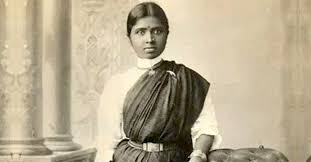
Death anniversary of Dr Muthulakshmi Reddy

Here's The Inspiring Story of India's First Woman Legislator ...

Today 22nd july, the death anniversary of Dr Muthulakshmi reddy. A surgeon, an educator, a social reformer and much more, Dr Muthulakshmi Reddy was a multitalented human and a campaigner of women’s rights. Google Doodle honoured Dr Muthulakshmi, India’s first woman legislator and one of the first women doctors in India on her 133rd birth anniversary.

EARLY LIFE

Dr Muthulakshmi was born on July 30, 1886. She was the daughter of a Devadasi Chandrammal who was married to Narayanaswamy, the principal of Maharaja’s College in Pudukkottai. She was born in an age where the phrase ‘women must be seen and not heard’, was often bandied about and used as an excuse to subvert the true potential of women. Muthulakshmi was intimate with Devadasi culture and norms. Right from a young age, her keen mind and quick ability to grasp things made her a roaring success at school. Upon reaching maturity, she continued her education through home-schooling.

STRUGGLE TOWARDS HER DETERMINATION

Later, she defied her parent’s decision to get her married, choosing education instead. But being a woman, her dream to pursue education invited the silent outrage of the conservative society. Because of the strong social pressures, the Maharaja college refused to admit her despite the excellent academic record. It was only when Martanda Bhairava Thondaman, the forward-thinking Raja of Pudukkottai stepped in and ordered them to take-in Muthulakshmi, that the college grudgingly accepted her application. Thus, breaking all the stereotypes of that time, Muthulakshmi became the first woman ever to get admission to Maharajah College which was a men’s college in Pudukottai. But it was just a beginning. After completing her under-graduation, she sought admission to the Madras Medical College. She was also the first and only woman candidate in the Medical College in 1907. It was during her college years that Muthulakshmi formed a deep friendship with Sarojini Naidu and Annie Besant, two individuals whose personal philosophies would go on to influence many of her future endeavours. She became the first woman House Surgeon in the Government Maternity and Ophthalmic Hospital, Madras.
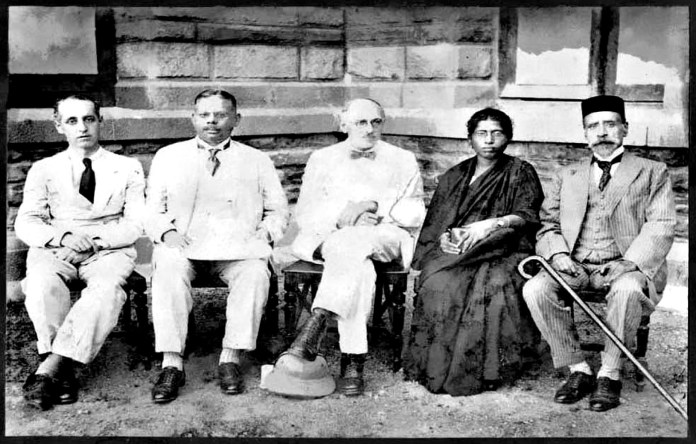
Later, she went to London to pursue Higher Education. Muthulakshmi came back to India upon a request from the Women’s Indian Association – an organisation she helped establish in 1918, to enter the Madras Legislative Council in 1927. She was elected to the post of Vice-President, making her the first Indian woman member of a Legislative Council. This event also marked her entry into politics and legislation after which, she made efforts to improve the lives of all women everywhere. In her capacity as a legislator, Muthulakshmi helped raise the minimum age for marriage for girls. Concerned about human trafficking, she pushed the Council to pass the crucial Immoral Traffic Control Act.

She was aware that even after the devadasi system was abolished, the deeply-ingrained prejudices against women still existed. In 1930, three devadasi girls knocked at her door seeking shelter and that’s when she realized that she needed to create a haven for countless young girls like them so she built Avvai Home. Today, Avvai Home has grown to include an educational complex that houses a primary school, a secondary school, a higher secondary school as well as a teacher’s training Institution. The home was primarily started for devadasis but now, its doors are open to all women who need assistance.
Having witnessed her sister’s untimely death due to cancer, she decided to open up a specialized cancer hospital. She dreamed of a place where anyone suffering from cancer would receive treatment, irrespective of social and economic status. In 1954, after overcoming several hurdles, Muthulakshmi’s dream came to life with the Cancer Institute. It was the second specialised cancer centre in India and the first in South India at the time. Today, Adyar Cancer Institute has 450 hospital beds, a full-fledged research division, a preventive Oncology department, and the Dr Muthulakshmi College of Oncologic Sciences. A countless number of cancer patients have been treated here and the numbers continue to grow.

Cancer Institute(WIA) Foundation, Inc. 100% Affliated with Cancer ...


For her countless contributions to society, she was awarded the Padma Bhushan in 1956. Muthulakshmi passed away in 1968 at the age of 81.

“Constantly breaking barriers throughout her life, Reddy was a trailblazer, who devoted herself to public health and the battle against gender inequality, transforming the lives of countless people, especially young girls”, Google said in its description on the occasion of her birth anniversary.

The Tamil Nadu government announced ‘Hospital Day’ celebrations to be held every year on July 30, the birth anniversary of one of the country’s prominent successful woman doctors in the early 20th century and the State’s first woman.


Though she is no longer with us, her legacy still lives on in every strong woman who fights for education and equality. Let us salute the woman whose vision and values have inspired and changed many lives for good!


Abortion – The Debate on the Sole Choice of the Mother

Abortion is the term used to identify the act of intentionally interrupting pregnancy and not allowing the embryo or foetus to continue its normal process. The definition clearly recognizes only women reproductive parts giving a clear message that it only affects the women. But the question is whether it is actually true and justified from a general point of view. 

Up to some extent, we find the world comfortable with the debate being a sole decision of the mother because there is no proper legislation regarding it yet. Our Legislation gives special Right to Women in order to encourage them to be at par to men in day to day life but no where does it mention that Men should compromise for the same. What is fair should remain fair according to law. If it is a “women’s choice” whether or not she wants to become a mother then it is also a man’s choice whether or not he wants to become a father.

When a father doesn’t have an opportunity to express his opinion it only disapproves that he as a human, can have feelings. It is totally unjust that he doesn’t have a preference in the birth of his own child. In the support of my argument, there are provisions that I feel can be enforced. Like, if both parents choose to have an abortion then the child is aborted where both of them have an equal share in costs of the procedure. But if the mother chooses to have an abortion and the father wants to keep the child then she shall not be required to fund any part of procedure or any costs that may arise from it. Similarly, if the mother chooses to keep the child but the father wanted the abortion, then the father shall have zero legal or financial obligations from the day forward. In each case, the father shall likewise be recognized, and his choice duly recorded as a matter of legal record.

Another point to give light to is, when we claim that it is only about the mother’s choice, we tend to deny the whole of father’s responsibility in the scenario. Perpetually like that men need to stay out of the discussion about abortion because it is a woman’s body is not only untrue, it is catastrophic for generations to come. It is a sort of hindrance to the society we need for its utmost development. What we need is a generation of young men who honour ladies by helping them protect the precious gift of their sexuality as it was intended to be. We need a generation of young men who will not treat women like objects but honour them with dignity and respect. A generation who will not run away when they get a woman pregnant or pressure a woman to end their life. We need a generation of men who will love their unborn child and go to utmost lengths to encourage the mother to have their baby. They must be willing to help raise the child or place the child for adoption. In addition to that, we also need a generation of women who will encourage men to take responsibility and show the sacrificial love and empathy that ought to mark men, not push them out of the conversation of abortion.

Though abortion uniquely affects women, it is not only about women. It is also about the child in her womb, and the child’s father. Because in the end, it is her body but it is THEIR baby.

RIGHTS OF MIGRANT WORKERS

INTRODUCTION

Capital and labour were main factors of production in the production procedures of industrial revolution. Subsequently, producers or owners and workers were appeared in the private economy. So far as welfare of the society is concerned, it was essential to maintain labour standards for workers and provide them welfare amenities as per labour standards. Therefore, the ‘International Labour Organization’ was established in 1919, under the ‘treaty of Versailles’. After the second war period, the ‘United Nations General Assembly’ adopted the ‘Universal Declaration of Human Rights’. The most important fundamental international instrument informing much social, economic and political polices of many developed and developing countries in the world is the ‘Universal Declaration of Human Rights’, December 10, 1948. However, the human rights have been incorporated in the constitutions of many countries in the world. According to ‘International Labour Organization’s’ doctrines and rights at work, essential rights are important for working class in the in the world economy. India is evolving and is a developing country. India embraced new economic policy in 1991, which is known as liberalization, Privatization and Globalizations (LPG). In the period of globalization, it is needed to discuss relevant aspects of labour standards and labour rights, aspects of decent work in respect of migrant workers in the emerging countries like India.

WHO IS A MIGRANT?

A migrant is “any person who lives temporarily or permanently in a country where he or she was not born”[1] Migrants leave one place for another in search of a respectable living or better education, to escape persecution, or to be near to family or friends.

 Migration is an antique and natural human reaction to starvation, deprivation, maltreatment, war, or natural disaster. Today, most governments regulate their boundaries and govern who enters or leaves the country. Migrants are classified based on their intent and the manner in which they enter a country. Tourists, business travellers, students, temporary workers, asylum seekers, refugees, permanent residents, and undocumented migrants all are part of the universal migrant population.

Some human rights bodies and experts distinguish between international migrants and internal migrants, also known as internally moved persons, and between migrants who were forced to move and migrants who voluntarily moved to improve their situation. Therefore, generally, there are four types of mobile persons to which international law may refer: people who have moved voluntarily within one State for the purpose of enlightening their situation, people who were compelled to move internally within one State, people who moved voluntarily across a border for the purpose of improving their situation, and people who were compelled to move across a border. This guide defines migrants as those who cross borders either because they were compelled to or because they chose to do so voluntarily.

The International Convention on the Protection of the Rights of Migrant Workers and Members of their Families (ICRMW) defines migrant worker under Article 1 as “a person who is to be engaged, is engaged or has been engaged in a remunerated activity in a State of which he or she is not a national.”[2]

RIGHTS OF A MIGRANT

In accordance with international human rights standards, which are based upon the inherent pride of every person, migrants enjoy the fundamental rights afforded to all persons irrespective of their legal status in a State.

Right to Life

All migrants have a right to life, and States have a duty to safeguard that no migrant is arbitrarily underprivileged of this right. States should prosecute right to life violations, including extrajudicial killings that take place during a migrant’s journey from the country of origin to the country of destination and vice versa. States also have a duty to alleviate loss of life during land and sea border crossings.

Equality and Non-Discrimination

International human rights law promises freedom from discrimination in the enjoyment of human rights for all people, including migrants. Article 2(2) of the International Covenant on Economic, Social and Cultural Rights states, “The States Parties to the present Covenant undertake to guarantee that the rights articulated in the present Covenant will be practiced without discernment of any kind as to race, colour, sex, language, religion, political or other opinion, national or social origin, property, birth or other status.”[3]

Protection against Arbitrary Arrest and Detention

Individuals, including migrants, should not be subjected to arbitrary arrest or detention under international human rights law. A State must not subjectively arrest and detain an individual, and the State must show that other less intrusive measures besides detention have been considered and found to be insufficient to prove detention is not arbitrary. The prolonged detention of a migrant is not justified simply by the need to wait for an entry permit or until the end of removal proceedings when reporting duties or other requirements would be less intrusive measures to ensure that the migrant’s condition complies with domestic law. 

Protection against Torture or Inhuman Treatment

The prohibition of torture is a ‘jus cogens’ or dictatorial standard of international law, which means that States have an obligation to enforce the prohibition of torment even if that State has not ratified a relevant treaty. Additionally, Article 2(2) of the Convention against Torture states that a State may never cite exceptional circumstances, including war or a public emergency, to justify torture.

Family Rights

International human rights norms require States to consider migrants’ family life and their family members in decisions regarding their admission, detention, or exclusion. For example, the ICRMW obligates States parties to “pay attention to the problems that may be posed for members of his or her family, in particular for spouses and minor children” when a migrant worker is detained and to “take appropriate measures to ensure the protection of the unity of the families of migrant workers.”

Protection against Labour Exploitation

Migrants are protected against labour exploitation under ILO conventions, the ICRMW, and other major human rights treaties. Article 11 of the ICRMW openly forbids forced labour, slavery, and servitude. Article 8 of the International Covenant on Civil and Political Rights states that no one shall be held in slavery or servitude. States have an obligation to take actions to prevent all forms of forced or compulsory labour by migrant workers, which includes eliminating the use of illegal imprisonment and withholding travel documents as a means to force migrants into compulsory labour.[4]

Right to Social Security 

Article 27 of the ICRMW outlines the right to social security and notes that all migrant workers and their families, regardless of their status, have the right to obtain the same treatment as nationals “insofar as they fulfil the requirements provided for by the applicable legislation of that State and the applicable bilateral and multilateral treaties.” If migrants are not qualified for a particular benefit, States have an obligation to determine whether it is possible to reimburse individuals who have made contributions with respect to that benefit.

Right to Primary Education

States have an obligation to provide free and compulsory primary education at public institutions for all children. Article 30 of the ICRMW expands on this obligation, noting that States may not refuse or limit a child’s access to public pre-school educational institutions or schools based on a parent’s or child’s irregular situation.

Freedom of Movement

Migrants have the right to freedom of movement within the territory of the State in which they are located, the right to leave a State, and the right to return home to their own State. Restrictions to the right to leave a State or to freedom of movement in a State of residence must be provided by law and necessary to achieve a legitimate aim, and if a migrant wishes to return to her own State, another State cannot arbitrarily prevent her from doing so.

CASE LAW

Good v. Botswana[5]

The African Commission on Human and Peoples’ Rights held that the inability to challenge an order of removal in the judicial system is a violation of the right to fair trial and right of non-nationals to be expelled according to the law. The complainant is a national of Australia who was working in Botswana when the President ordered him removed from the country after he wrote and published an article critical of the government. National legislation prohibited the domestic courts from hearing an appeal of an executive order of removal. The African Commission found violations of articles 7(1) and 12(4) of the African Charter on Human and Peoples’ Rights, which guarantees the right to have one’s cause heard by a competent tribunal and the right of non-nationals to only be expelled in accordance with the law. Moreover, because the deportation orders, which were carried out the same day as the court’s ruling that it could not hear the complainant’s case, did not take into account the complainant’s family and the mutual support they derive from one another, the removal of the complainant violated his right to family life under Article 18.

REFERENCES

[1]United Nations Educational, Scientific and Cultural Organization, “Migrant”, http://www.unesco.org/

[2]Adopted on 18 December 1990, entered into force on 01 July 2003

[3]Adopted on 16 December 1966, came into force on 3 January 1976, 993 UNTS 3, art. 2(2)

[4]ILO Forced Labour Convention (No. 29), art. 11; General Comment No. 2

[5] Communication No. 313/05, 47th Ordinary Session, Judgment of 26 May 2010.

HOME UNDER JUVENILE JUSTICE ACT

Addressing the lack of safe shelters for children in conflict with the law, the court urged every state to evaluate the condition of their Child Care Institutions as well as to provide education, healthcare, and proper nutrition to its residents. The court reiterated that government registration in accordance with the provisions of the Juvenile Justice Act was compulsory for child care institutions run by individuals or NGOs to avoid incidents of trafficking or child sexual abuse.

Shelter Homes

While a large number of urban marginalized children are in need of day care services, there are many others who require residential care for a temporary period for one or more reasons. These include children without parental care, run away children, migrant children, and child substance abusers etc. The Juvenile Justice (Care and Protection of Children) Act 2000 empowers State Governments to recognize reputed and competent voluntary organizations, to cater to the needs of such children. The State Government shall provide financial assistance to set up and administer
Shelter Homes for such children. At least one such Shelter Home in the State is to be notified and designated by the States/UTs as a Home for the care, detoxification and counselling of children affected by substance abuse. These Shelter Homes shall offer day and night shelter facilities to the children in need of support services for a temporary period, while efforts are made to rehabilitate them. In order to facilitate and expedite the setting up of Shelter Homes in every district or group of districts, the scheme shall provide financial support to the State Governments and Union Territories.

Children’s Homes

A large number of children in need of care and protection who enter the juvenile justice system through the Child Welfare Committees (CWCs) are in need of residential care and protection during the pendency of any inquiry and subsequently for their long-term care, treatment, education, training, development and rehabilitation. The Juvenile Justice (Care and Protection of Children) Act 2000 empowers the State Government either by itself or in collaboration with voluntary organizations to set up Children’s Homes in every district or group of districts for the reception and residential care of such children. These homes shall serve as a home away from home and provide comprehensive child care facilities to children for ensuring their all-round development. They shall work towards enhancing the capabilities and skills of children and work with their families with the view of facilitating their reintegration and rehabilitation into mainstream society.
Children in conflict with law who enter the juvenile justice system through the Juvenile Justice Boards (JJBs) are in need of adequate residential care and protection during the pendency of any inquiry regarding them under the Juvenile Justice (Care and Protection of Children) Act 2000. The Act empowers the State Governments to establish and maintain either by itself or under an agreement with voluntary organizations, observation homes in every district or group of districts for their temporary reception. In order to facilitate and expedite setting up of Observation Homes in every district or group of districts, the scheme shall provide financial support to the State Governments and Union Territory Administrations.

Observation homes

The State Government shall establish and maintain in every district or a group of districts, either by itself, or through voluntary or non-governmental organisations, observation homes, which shall be registered under section 41 of this Act, for temporary reception, care and rehabilitation of any child alleged to be in conflict with law, during the pendency of any inquiry under this Act Where the State Government is of the opinion that any registered institution other than a home established or maintained under sub-section (1), is fit for the temporary reception of such child alleged to be in conflict with law during the pendency of any inquiry under this Act, it may register such institution as an observation home for the purposes of this Act. The State Government may, by rules made under this Act, provide for the management and monitoring of observation homes, including the standards and various types of services to be provided by them for rehabilitation and social integration of a child alleged to be in conflict with law and the circumstances under which, and the manner in which, the registration of an observation home may be granted or withdrawn. Every child alleged to be in conflict with law who is not placed under the charge of parent or guardian and is sent to an observation home shall be segregated according to the child’s age and gender, after giving due consideration to physical and mental status of the child and degree of the offence committed.


Special Homes

Children in conflict with the law committed by the Juvenile Justice Boards (JJBs) for long term rehabilitation and protection require institutional services. The State Governments are empowered to establish and maintain either by itself or under an agreement with voluntary organisations, special homes in every district or group of districts for the reception and rehabilitation of juveniles in conflict with law.
In order to facilitate and expedite setting up of Special Homes in every district or group of districts, the scheme shall provide financial support to the State Governments and Union Territory Administrations.

Place of Safety

As per section 16, of the Juvenile Justice (Care and Protection of Children) Act, 2000, the Juvenile Justice Board is empowered to place a juvenile above the age of 16 years in a Place of Safety, if the Board is of the opinion that the seriousness of the offence and/or the said juvenile’s behaviour, makes it unsuitable for them to be placed in a Special Home. A ‘Place of Safety’ is any place or institution, (not being a police lockup or jail), established separately or attached to an observation home or a special home, the person in-charge of which is willing to receive and take care of the juvenile in conflict with law placed there, by order of the Board, for a period and purpose as defined in the order.
The Act also states that the State Government may arrange to place a juvenile referred to it by the Board, in a ‘Place of Safety’, which has been declared fit by the State Government for such purpose, and may order such juvenile to be kept under protective custody, at such place and on such conditions, as it deems proper. The State Government may, by rules, prescribe the types of places that can be designated as ‘Place of Safety’ and the facilities and services that may be provided therein.

CONCEPT OF POST DECISIONAL HEARING

INTRODUCTION

Principles of natural justice have been developed by democratic government for protection of rights of individuals and regulation of power against the arbitrary and ruthless use of power. One such principle of natural justice is ‘Audi Alteram Partem’ which has fundamental rule that no one should be censured unheard. Right to be heard is an essential element of principles of natural justice. Audi Alteram Partem is a rule which ensures that fair decision is made out of statutory authority of courts. This concept strengthens up the implementation of post decisional hearing.

Post-decision hearing is held where pre-decision hearing would not be viable. It is done after provisional decision is reached.

AUDI-ALTERAM PARTEM (RULE OF FAIR HEARING)

It means ‘hear the other side’ or ‘no man should be condemned unheard’ or ‘both the sides must be heard before passing any order’.

The duty to hear is imparted in all those actions which cause detriment to a person. No order involving adverse civil consequences can be passed against any person without giving him any opportunity to be heard against the passing of such order. A statue which impliedly provides or is silent, in both hearing, is implied but when it expressly excludes the hearing the court may have to exclude it to development which have expanded the scope of the rule of fair hearing are:

  1. An activist interpretation of Article 21 of the constitution whereby the words personal liberty as well as procedure established by law acquired new dimensions incorporating the duty to hear in respect to various administrative actions which cause infraction of personal liberty.
  2. Abandonment the courts of the policy of requiring hearing only in cases of quasi-judicial actions and extending such a requirement to administrative actions also.

The Audi alteram partem principle is the fundamental idea of the natural justice system. This is ‘sine qua non’ in any civilized society and means that no one is to be prosecuted without being listened. The person must get an incentive to defend himself.

RIGHT TO HEARING

 Constitutionally the rules of natural justice are must if administrative actions are not to violate certain fundamental rights. The violation of natural justice results in arbitrariness, therefore, violation of natural justice is violation of equality clause of Article 14. The court has held absolute discretion without any guidance for its exercise and without having to follow the principles of natural justice to be a reasonable restriction under Article 19(2) to (6). The right to be heard is also an aspect of ‘procedure established by law’ under Article 21 means procedural fairness.

POST DECISIONAL HEARING

Meaning:

The principle of post-decision hearing was created to ensure a balance between administrative effectiveness and individual justice. After a preliminary decision was made by the authorities, an individual would be heard during a post-decision hearing. In such cases, a standard pre-decisional hearing is unfeasible to the authorities and decisions would be taken on first-instance grounds before the person expresses his or her opinions, because it would be deemed necessary for the authorities to have post-decision hearing in accordance with the principle of Natural Justice.

Development and Proposal of idea:

The idea of post decisional hearing has been developed to maintain a balance between administrative efficiency and the fairness to the individual. The harmonizing tools were developed by Supreme Court in Maneka Gandhi vs. Union of India[1].

The post decisional hearing will give satisfaction to the affected individual that was at least given same opportunity of hearing even at a belated stage. The judicial opinion, however is not uniform about the stage. The judicial opinion however is not uniform about the stage at which the rules of natural justice are applicable.

In the case of Maneka Gandhi vs. Union of India,

Maneka Gandhi’s passport was impounded. She challenged the order of the R.P.O. on the ground that the principle of natural justice have not been followed. No hearing was allowed to her as they contended that if the hearing was done to her then the very purpose of impounding would have been frustrated. Hence, no hearing was held for the petitioner. The court evolved this because it said that you cannot have straight jacket formula. It is important but most important part is that justice has to be given to the affected party so that principles of natural justice are followed in every situation. You can pass the orders after pre decisional hearing but this order is interim but after post decisional hearing the order will become final in nature and thus the order of the passport authorities was considered as interim order. And becomes final after post decisional hearing.

Justice P.N. Bhagwati propounded three important principles:

  1. For an administrative function principles of natural justice have to be applied.
  2. Reasoned decisions.
  3. Concept of post decisional hearing.

ANOTHER CASE LAWS:

In the case, Baldev Singh v. State of H.P.[2]  in both these cases stress was being laid on Post Decisional hearing on the other hand there were series of decisions which laid down because Post Decisional Hearing is doing a mere lip service. I t is not serving the purpose of Audi Alteram Partem. Because once a decision of Post Decisional Hearing to the affected party is a formality as the authorities are rigid in bringing change in their decision as arrogance, egoism comes into picture. It is a mere formality done in the papers so there is no need to follow the same.

In the case, K.L. Shephard v. Union of India[3]the concept of Post Decisional Hearing was rejected. In this case there were three banks Hindustan Commercial Bank, Bank of Cochin and Lakshmi Commercial Bank by virtue of banking regulation Act, a scheme of amalgamation was introduced where these banks were amalgamated with 3 Nationalized Banks.

Once this amalgamation took place the services of Employees of these 3 Banks were not taken into account i.e. they lost their jobs. Accordingly the employees approached the court stating that the employees were not given any opportunity to present their case and their right to be heard has been violated. The court ruled that Post-Decisional hearing does not serve any purpose and it is a mere formality.

CONCLUSION

The implementation of this theory does not come with a strait jacketed formula, but rather is based on the facts of the case and its condition. In case pre-decision hearing cannot be implemented, post-decision hearing can come to the aid.


[1] 1978 SC 597

[2] Criminal Appeal No. 218 of 2013

[3] 1987 (4) SCC 431

The New Consumer Protection Act,2019 in India is an upper hand and an added advantage for the consumers in manifold ways

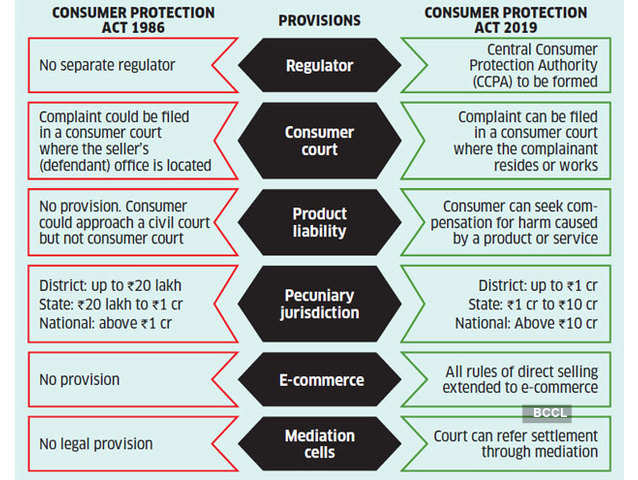
The Consumers can now cheer as the Consumer Protection Act, 2019 has recently replaced the three decade old Consumer Protection Act, 1986. The Consumer Protection Act, 2019 which came into effect on Monday (July 20) has replaced the earlier Consumer Protection Act, 1986.

The new Act as per the Experts say that “it gives more power to the consumers”. It seeks to revamp the process of administration and settlement of consumer disputes, with strict penalties, including jail term for adulteration and misleading ads by firms.

On July 20, 2020 certain provisions of the Consumer Protection Act, 2019 came into force as notified by the Central Government. Following the the key features of the relevant provisions:-

Key features of the Consumer Protection Act, 2019 which came into effect on July 20, 2020:-

1) Consumers can now institute a complaint from where they reside or work for gain.

2) The original pecuniary jurisdiction of the District Commissions has increased upto ₹1 crore from ₹20 lakh earlier.

3) The Pecuniary jurisdiction of State Commissions has been increased from ₹1 crore to Rs. 10 crore.

4) The National Commission can hear cases above ₹10 crore when compared to above ₹1 crore earlier.

5) While the provisions relating to e-commerce are not yet notified, a section relating to electronic service provider (covering software services, electronic payments) is notified.

6) The opposite party needs to deposit 50% of the amount ordered by the District Commission before filing an appeal before the State Commission. Earlier, the ceiling was a maximum of ₹25,000, which has been removed.

7) The limitation period for filing of appeals to the State Commission has been increased from 30 days to 45 days.

8) The Parties can be allowed to settle the disputes through mediation.

Following are the Sections which came into force:

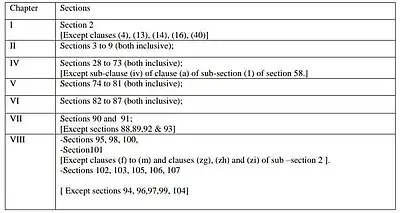
Consumer Protection Act 2019- Sections to come into force from July 20,2020

Above mentioned provisions pertain to the Consumer Protection Councils, Consumer Disputes Redressal Forum, Mediation, Product Liability, punishment for manufacturing, selling, distributing etc spurious good or products which contain adulterant.

As per the rules, the e-commerce players will have to display the total ‘price’ of goods and services offered for sale along with break-up of other charges. Only a few certain miscellaneous provisions with regards and respect to the powers of the Central and State Government to make the rules and regulations have also been enforced.

On misleading advertisements there is provision for jail term and fine for manufacturers. There is no provision for jail for celebrities but they could be banned for endorsing products if it is found to be misleading.

For the first time there will be an exclusive law dealing with Product Liability. A manufacturer or product service provider or product seller will now be responsible to compensate for an injury or damage caused by the defective product or deficiency in services.

The Act has also defined an “e-commerce” as the buying or selling of goods or services including the digital products over digital or electronic networks. The existing definition of e-commerce has been adopted from India’s FDI Guidelines on e-commerce.

The definition of ‘e-commerce Entity’ as provided under the FDI Guidelines includes inventory and market place models.

There is also a provision for class action law suit for ensuring that rights of consumers are not infringed upon. The authority will have power to impose a penalty on a manufacturer or an endorser of up to 10 lakh rupees and imprisonment for up to two years for a false or misleading advertisement.

WEBSITES REFERRED

1)https://consumeraffairs.nic.in/acts-and-rules/consumer-protection

2)https://www.barandbench.com/news/law-policy/provisions-under-consumer-protection-act-2019-to-come-into-force-on-july-20-2020-centre-notifies

3)https://www.google.com/amp/s/www.thehindu.com/news/national/tamil-nadu/new-consumer-protection-act-gives-more-power-to-consumers-experts-say/article32135908.ece/amp/

4)https://www.google.com/amp/s/www.livemint.com/news/india/consumer-protection-act-rules-for-e-retailers-to-be-effective-by-this-weekend/amp-11595291549084.html

5)https://www.google.com/amp/s/zeenews.india.com/economy/new-consumer-protection-act-2019-comes-into-force-today-know-how-it-will-benefit-you-2297012.html/amp

6)https://www.google.com/amp/s/m.economictimes.com/wealth/spend/heres-how-consumers-will-benefit-under-the-new-consumer-protection-act/amp_articleshow/70711304.cms

7)https://www.google.com/search?q=consumer+protection+act%2C2019&tbm=isch&ved=2ahUKEwjOhv7-sN7qAhVIH3IKHTOCBfMQ2-cCegQIABAC&oq=Consumer&gs_lcp=ChJtb2JpbGUtZ3dzLXdpei1pbWcQARgAMgQIIxAnMgUIABCxAzIFCAAQsQMyBQgAELEDMgUIABCxAzoHCCMQ6gIQJzoCCAA6BwgAELEDEEM6BAgAEENQ0xRYzipg1jBoAnAAeACAAZABiAGHCJIBAzAuOJgBAKABAbABBcABAQ&sclient=mobile-gws-wiz-img&ei=e-QWX47dJsi-yAOzhJaYDw&bih=682&biw=393&prmd=ivn#imgrc=eILduqMFjleJaM

8)https://www.vecteezy.com/free-vector/consumer

9)https://www.google.com/amp/s/www.livelaw.in/amp/news-updates/most-provisions-of-consumer-protection-act-to-come-into-force-160003

Human Rights Violations

“We can disagree and still love each other unless your disagreement is rooted in my oppression and denial of my humanity and right to exist.”

James Baldwin

What are Human Rights?

We learn social and moral cues from our environment. No one teaches us norms, things that come “naturally” to us. However, the basic freedom that everyone needs can’t be left up to the general public. They need to be written down and strictly monitored. 

Human Rights are basic rights each person deserves and gets, to live, express, study freely, and more.

Towards the end of World War II, the UN and other organizations created the Universal Declaration of Human Rights as the Universal Constitution. 

There are 30 Rights given to each individual and they are entitled to them regardless of their sex, age, orientation, colour, or any other differential characteristic.

Why is Human Rights important?

Every person is unique and so is every culture, religion, and nationality. These differences and the human urge to control and dominate makes it hard to maintain human rights for everyone. So a list was of articles were made to ensure:

  • Everyone is treated with respect and given equal opportunities
  • Protects those vulnerable from exploitation
  • Give citizens the opportunity and support to stand against societal corruption and inequality
  • Encourage freedom of speech and expression
  • Provide an opportunity for education
  • Allows everyone to practice their religion or any other practice
  • Allow people to love, marry, and start a family with whomever.
  • Encourages equal work opportunities
  • Protects the environment
  • To protect the world from having another war.

Who governs the Human Rights? How to Protect Human Rights?

The UN has set up a lot of committees that govern Human Rights. 

  • Office of the UN High Commissioner for Human Rights (OHCHR)
    • The OHCHR is most responsible for promoting and protecting human rights.
    • The High Commissioner of Human Rights regularly comments on Human Rights situations in the world and has the authority to investigate situations and issue reports on them.
  • Human Rights Council
    • Established in 2006, is the key independent UN intergovernmental body responsible for human rights.
  • Human Rights Treaty Bodies
    • Is the committee of independent experts that monitor implementation of the core International Human Rights Treaties.
  • Special Procedures
    • Experts working voluntarily, who examine, monitor and publicly report and advice on Human Rights
  • UNDG-HRM
    • UN Development Group’s Human Rights Mainstreaming Mechanism pushes the mainstreaming efforts within the UN.

Enforcing International Human Rights:

  • The International Bill of Human Rights
    • The first legal document protecting universal rights
  • Democracy
    • Democracy is the ultimate means of achieving the 3 pillars of the UN Charter, international peace and security, economic and social progress, and development. 
  • Security Council
    • Main duties involve dealing with grave human rights violations. 
  • Third Committee of the General Assembly
    • Examines a range of issues including human rights questions.
  • Other Bodies
    • Secretary-General, General Assembly, Economic and Social Council, Member States, The United Nations Permanent Forum on Indigenous Issues are a few other committees that work to maintain the UDHR’s promise of providing each individual all the Human Rights.

Retribution for Violations:    

Violating Human Rights not only weakens a country’s strength, but also affects an individual socially, emotionally, and economically. Human Rights are set in place to protest people, breaking them causes deep psychological trauma for years to come. African-Americans freed from slavery centuries ago, still are restricted and living lives fighting systematic racism each day.

In 1996, the International Criminal Court (ICC) was created to prosecute any human rights violator. “The ICC is authorized to try crimes against humanity, genocide, war crimes, slavery, mass rape, torture, and racism.”

The ICC can prosecute any individual, group, or government out of power and sentence them to prison (in their state) or death.

Why hasn’t Human Rights bettered the World?

Countries that are Violating Human Rights:

Almost every country is violating at least 3 human rights. Below is a list of violations from a few countries.

Australia

  • Denying basic rights to Asylum seekers and Refugees
  • Exploiting Indigenous people
  • Unreliable cyber surveillance
  • Lacking support and rights for Disabled citizens
  • Forced labor in the form of the recent Modern Slavery Bill

Brazil

  • Horrifying Prison Conditions
  • Prisoners face torture, assault, and unfair punishments
  • High rates of Juvenile Detainees
  • Reporters being made political prisoners
  • Denying basic rights to Asylum seekers and Refugees

Cuba

  • Illegal detaining
  • Denied freedom of speech and expression
  • An increasing number of political prisoners
  • Horrifying prison conditions
  • Exploiting workers

Democratic Republic of Congo

  • Denied freedom of speech and expression
  • Frequent attacks on civilians
  • Corrupted justice system
  • Women being denied basic rights
  • LGBTQ people denied basic rights
  • Disabled people being denied rights

El Salvador

  • Police Brutality
  • Horrifying Prison Conditions
  • Degrading prisoners and abusing them
  • Increasing gang violence
  • Women being denied basic rights and reproductive rights
  • Attacks on media

France

  • Flawed Asylum and Immigration Laws
  • Denying basic rights to Asylum seekers and Refugees
  • Flawed Child Protection services
  • Increased Sexual Assault and Rapes

Germany

  • Flawed Asylum and Immigration Laws
  • Denying basic rights to Asylum seekers and Refugees
  • Xenophobic culture
  • Illegal detaining
  • Corrupted Criminal Justice System

Haiti

  • Corrupted Criminal Justice System
  • Illiteracy
  • Women being denied basic rights
  • LGBTQ people denied basic rights
  • Disabled people being denied rights
  • Child Labor
  • Illegal detaining
  • Exploiting workers

India

  • Increased violence against Dalits, Tribals, Muslims and other marginalized communities
  • Denied freedom of expression
  • Police brutality
  • Women being denied basic rights
  • LGBTQ people denied basic rights
  • Disabled people being denied rights
  • Targeting political oppositions
  • Denied freedom of speech
  • High rates of Human trafficking
  • Corrupted Criminal Justice System
  • Child Labor
  • Illiteracy
  • Forced Prostitution and Begging
  • Increased Violence against women, LGBTQ and marginalized communities
  • Honour Killings
  • Denying Inter-Caste Marriages
  • Female Foeticide
  • Conservative Abortion Laws
  • Exploiting workers
  • Racist courts, hospitals, educational institutions, work places
  • Corruption
  • Poverty
  • Alarming rise in Sexual Assault and Rapes
  • Broken Healthcare System
  • Pollution
  • inconsistent access to food
  • Inconsistent access to sanitation
  • Regionalism, Casteism
  • Increasing addiction amongst the youth
  • domestic violence
  • Double Burden of Malnutrition

Japan

  • High rates of Death Penalty
  • Denied freedom of speech
  • Women being denied basic rights
  • LGBTQ people denied basic rights
  • Disabled people being denied rights

Kenya

  • Government controlled Media
  • Open threats to oppositions
  • Lack of accountability for rape and sexual violence
  • Women being denied basic rights
  • LGBTQ people denied basic rights

Libya

  • Armed Conflicts and War Crimes
  • Illegal Detaining
  • High rates of Death Penalty
  • Denied freedom of speech
  • Denied freedom to practice one’s religion 

Maldives

  • Targeting political oppositions
  • Denied freedom of expression
  • Women being denied basic rights
  • LGBTQ people denied basic rights
  • High rates of Human trafficking

Nepal

  • Changing Criminal Codes
  • Exploiting migrant workers
  • Women being denied basic rights
  • Disabled people being denied rights
  • LGBTQ people denied basic rights

Oman

  • Denied freedom of expression
  • Women being denied basic rights
  • Disabled people being denied rights
  • LGBTQ people denied basic rights
  • Exploiting migrant workers

Peru

  • Police brutality
  • Denied freedom of expression
  • Women being denied basic rights
  • Disabled people being denied rights
  • LGBTQ people denied basic rights

Qatar

  • Women being denied basic rights
  • Exploiting migrant workers
  • LGBTQ people denied basic rights
  • Refugees being treated horribly

Russia

  • Opposing citizens are openly tortured to death
  • Denied freedom of speech
  • Denied freedom of web use
  • LGBTQ people denied basic rights
  • A high number of domestic violence cases

South Korea

  • Denied freedom of expression
  • Exploiting workers
  • Women being denied basic rights
  • LGBTQ people being denied basic rights

Tunisia

  • Inoperative Constitution and parliament
  • Denying freedom of expression
  • Women are denied basic rights
  • LGBTQ people are denied basic rights

United States of America

  • Unfair and Harsh Criminal Sentencing of marginalized communities
  • Police Brutality often leading to deaths
  • Increasing Hate Crimes
  • No Health Insurance
  • Many are denied education/employment-based on discriminatory grounds

Venezuela

  • Prosecuting political opponents and those who speak against the government
  • Dictator as the Country Head
  • Preventing peaceful protests
  • Humanitarian Crisis

Zimbabwe

  • Media is controlled by the government
  • Non-heterosexual relationships are a criminal offense
  • Right to health has been violated multiple times

What happens when a Country Violates Human Rights?

Enforcing Human Rights on an international level is difficult and often problematic. Many countries might be unwilling to cooperate. The Human Rights Council was set up in 2006 to promote and protect human rights and is the main committee that overlooks the workings. The UN has a screening process in place to filter out any breach ton human rights violations.

When the UN receives a complaint, it launches an investigation. The International Criminal Court carries out the criminal proceedings of human rights abuse. 

Why isn’t the UN and the ICC able to control Human Right Violations?

The UN has the right to intervene and fix any violations of Human Rights. The problem arises when the country in question refuses to let the UN intervene. The UN cannot carry out an investigation when the country denies consent. A debate may be held on the country’s human rights abuses. If neither the investigation, not the debate allows the UN to intervene, all the UN can do is pass a resolution condemning the country’s human rights abuse.

Unlike the UN, this court is authorized to extend legal opinions without consent from the offending country. 

The ICC may hold the authority to prosecute the North Korean Dictator. Where it lacks is the manpower force. Without support from the North Korean Police, the ICC cannot arrest the dictator. 

While International Law and Human Rights seem strong on paper, they continue to prove weak and unorganized in practice. Without complete support from a state, none of the rulings of the ICC nor the presence of the UN are of any use.

The International Criminal Court works independently from the UN and hols the authority to prosecute individuals or groups for crimes violating human rights. If the UN violates Human Rights, then the ICC, which operates separately from the UN and holds the right to call out the UN on their wrongdoings. However, without the support of manpower, the pronouncement has no merit.

Breaking news Vikas Dubey killed in encounter.Doctors in Kanpur Hallet hospital confirmed death.

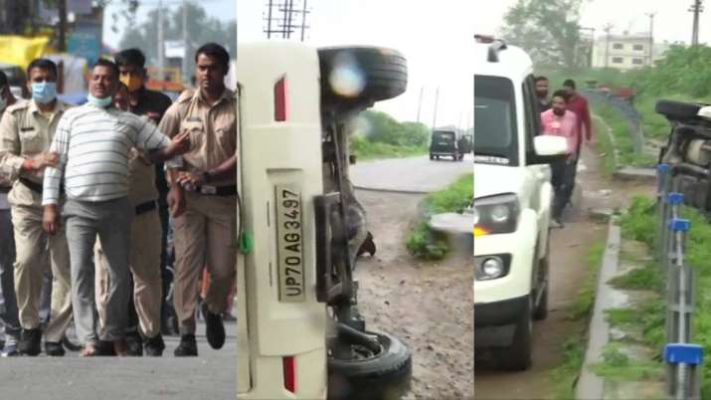
Vikas Dubey, dreaded gangster, wanted in killing of 8 policemen, has been killed in an encounter.

Vikas Dubey, dreaded gangster and prime accused in the killing of 8 police personnel in the Kanpur encounter case, has been killed in an encounter after UP STF’s car carrying the criminal overturned when it was returning from Madhya Pradesh’s Ujjain to Kanpur today amid heavy rainfall.

The incident was reported after Uttar Pradesh police entered the state limits with gangster Vikas Dubey. Doctors in the hospital where Vikas Dubey was rushed after he got injured have pronounced him dead. Meanwhile, information on the injured police personnel and other details are still awaited.

He was brought to Kanpur’s Hallet hospital with bullet wounds. Doctors pronounced him dead.
Police say Vikas Dubey tried to escape after the UP STF car carrying him overturned.
Vikas Dubey attempted to flee by snatching pistol of the injured policemen after car overturned.
Police said that they tried to stop him and surrender, But he fired at the policemen. Vikas was injured in retaliatory firing by police. He was later taken to the hospital, SP Kanpur West said.

Government concerned over return of large number of Indian students from US due F1 visa issues.

The US order of July 7 stating that F1 visas will not be renewed for students if they are attending only online- lectures in the US is a concerning mater for India since the highest number of foreign students in the US are from India. The US government has announced those F-1 and M-1 (non-academic and vocational students) visa holders attending only online classes will not be allowed to remain in the US.

US Noted India's Concerns Regarding F-1 Visa Issue: Centre

India on Thursday said it has reported its concerns to the US govt about the new rule on F1 visa and urged to keep in mind the role education have played in the developing relationship between the two countries.

The concerns were expressed during the virtual foreign office consultations between Foreign Secretary Harsh Vardhan Shringla and US political affairs secretary David Hale on Tuesday. Ministry of External Affairs’ spokesperson Anurag Srivastava said that the US government has looked into the concern regarding the new rule.

During virtual meeting, Srivastava said that India is concerned about the possibility of the return of a large number of Indian students studying in the US due to new rules in visa.

The Immigration and Customs Enforcement (ICE), an agency of the US Department of Homeland Security (DHS) on Monday said that the foreign students pursuing courses in the US must return to their country if their institutes are conducting only online course due to covid-19 pandemic.

ICSE, ISC exam result 2020 to be announced tomorrow at 3 PM. All you need to know

ICSE, ISC Exam 2020 Result to be Declared Tomorrow at 3 PM | All You Need to Know

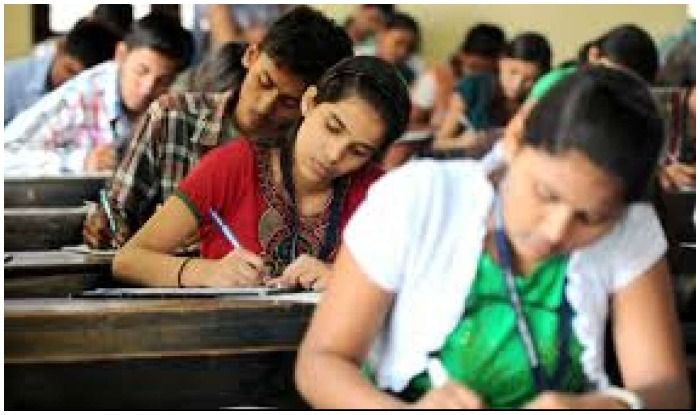
ICSE, ISC Exam 2020 Result: The Council for the Indian School Certificate Examination (CISCE) on Thursday said that ICSE (class 10) and ICS (class 12) exams results will be declared tomorrow at 3 PM, on the official website ‘cisce.org’ and ‘results.cisce.org. All students who have appeared for the exams are advised to keep an eye on the website and check their results.

To check the results once they are out, follow this steps:

step 1-Visit the official website at https://www.cisce.org/

step 2-Go on the ‘Careers’ portal on the homepage.

Step 3: Now, click on the relevent exam link.

Step 4: Enter all the details asked including your roll number, click submit

Step 5: You result will now appear on the screen.

Step 6: Download and take a print-out for a future reference.

Icse result 2020, icse board result 2020, isc result 2020, isc board result 2020

To get results on SMS, students can send their Unique id to 09248082883 in this format: ‘ICSE/ISC (Unique ID)’.

Earlier in the day, the CISCE board reduced 25 per cent syllabus from this year’s curriculum in view of the coronavirus pandemic.

According to the latest notification issued by the ICSE Board, the decision to reduce the syllabi will be applicable for Class 9 to Class 12 students and has been taken to reduce the burden amid limited teaching via online classes. The CISCE stated that the reduced syllabus aims to cope with the loss of instructional hours due to the difficulties faced in the academia in the lockdown situation.

India’s Pro-Choice Struggle

“No woman can call herself free until she can choose consciously whether she will or will not be a mother.”

Margaret Sanger

What is ABORTION?

Abortion refers to the termination of pregnancy by the removal or expulsion of an embryo or fetus. It is also referred to as termination of pregnancy.

What is PRO-CHOICE?

Pro-Choice refers to the argument that the mother has the choice to decide to either carry-out the pregnancy or terminate the fetus. A woman alone has the right to her body and no one holds the authority to decide on her behalf. The choice is about who gets to make the decision, WOMEN do.

What is PRO-LIFE?

Pro-Life is the argument that a fetus, no matter how small, is entitled to basic Human Right to life. From the moment a pregnancy is conceived, a fetus is considered a human.

What is PRO-ABORTION?

Pro-Abortion refers to the possibility for a woman to get an abortion, just to delay parenthood or because she doesn’t want a baby. Pro-abortion is vital for a mother and child’s health. Pro-Abortion is different than Pro-Choice, in the sense that Pro-Life is for when a woman who contemplates whether or not to terminate the pregnancy, but Pro-Abortion is for women who know for sure they want to terminate the pregnancy.

India’s Abortion Laws History:

Until 1971, Abortion was a criminal offence under Section 312 of the Indian Penal Code, 1860. The IPC didn’t (still doesn’t) include the word abortion, and instead referring to it as “intentionally causing miscarriage.” This had to be as a result of centuries of patriarchy. Except for in cases where abortions were carried out to save the mother’s life, it was a crime. Women have been denied basic rights including freedom of speech, education, and freedom to choose anything for themselves. Denying women reproductive rights is one more pillar of patriarchy.

In 1960, 15 countries legalized abortion, and as a result, debates around the abortion laws started in India. In 1964, the Ministry of Health and Family Welfare (MoHFW) and the Government of India set up a committee led by Shantilal Shah to make a better decision. The committee carried out an extensive review of the socio-cultural, legal, and medical aspects of abortion and found that 6.5 million abortions took place each year, most unsafe and unsanitary.

In 1971, the Medical Termination of Pregnancy (MTP) Act legalized the termination of pregnancy (still not using the word abortion) with several conditions up to 20 weeks (from the first day of the last menstrual period). The conditions are:

  • “When continuation of pregnancy is a risk to the life of a pregnant woman or could cause grave injury to her physical or mental health;
  • When there is substantial risk that the child, if born or dead would be seriously handicapped due to physical or mental abnormalities;
  • When pregnancy is caused due to rape (presumed to cause grave injury to the mental health of the woman);
  • When pregnancy is caused due to failure of contraceptives used by a married woman or her husband (presumed to constitute grave injury to mental health of the woman).”

The MTP Act specifies who can terminate a pregnancy, till when a pregnancy can be terminated, where a pregnancy can be terminated. 

The MTP Act also specifies who is legally allowed to terminated a pregnancy, a practitioner who, “has a recognized medical qualification under the Indian Medical Council Act, whose name is entered in the State Medical Register, and who has experience or training in gynaecology and obstetrics.”

India’s Abortion Laws:

Abortion in India is only legal when performed on various grounds until 20 weeks of pregnancy. In exceptional cases (rape, incest, medical emergency), any Indian court may allow the termination after 20 weeks.

While India’s abortion laws seem liberal, they are far from it. India’s abortion laws, although legal, are neither pro-choice, pro-life nor pro-abortion. 

The MTP Act doesn’t allow women to terminate their pregnancy to delay parenthood or because they don’t want to be a mother. Unless a woman’s life is at substantial risk or if her pregnancy is causing her physical, emotional, and psychological distress, she isn’t allowed to abort.

Instances Where the Indian Abortion Laws have been Problematic

  • Savita Sachin vs Union of India
    • Indian court rejected the request to terminate a 27-week pregnancy on the base that there was no physical harm to the mother
    • The fetus, however, had several physical anomalies.
  • Alakh Alok Srivastava vs Union of India
    • A 10-year-old rape victim was denied permission to abort her 32-week pregnancy
    • The court felt responsible for the fetus’s life.
  • May 2017
    • Patna High Court denied an abortion for a 26-week pregnant, HIV-positive rape victim because the court felt responsible to keep the child alive.

Why do Women decide to ABORT?

There are multiple reasons why women might want to abort. A few reasons include:

  • When the parent(s) is financially unprepared
  • Unplanned/Accidental
  • Bad/Abusive Partner
  • Conception by Rape, Incest, or any other sexual assault 
  • Teen/Early Pregnancy
  • Health Issues
  • Dependent and/or Unprepared
  • Addiction
  • No longer want kids
  • Delaying Parenthood
  • Unwilling to be a parent
  • Not ready to have a kid
  • Pregnancy interfering with Education, Work, Promotion.
  • Any other unique reason a woman wants to terminate her pregnancy.

Why is this discussion important?

Each year millions of women, terminate their pregnancies. 56% of whom have unsafe abortions, resulting in death and other serious physical, reproductive, and psychological problems. 

Most of India’s rural population is unaware of the legality of abortions and even more, have to travel 20-30kms to get an abortion. Those who know, are unaware of the legalities and terms attached.

Furthermore, a woman is the one carrying a child and has many medical implications during pregnancy and after childbirth. Apart from the physical strain on the body, many women go through postpartum depression. She holds the sole right to choose to either carry or terminate her pregnancy. Unfortunately, many countries, including India do not give that right to women.

Until a woman has the right to make that decision herself, women will never be truly free from this Patriarchal prison.

Further, a fetus is considered human by many pro-life activists. What they fail to understand is a fetus comes into this world and becomes a child. If an unwilling mother births a child and neglects them, then a child is traumatized for years to come. Millions of children are orphans and in the foster system. A mother’s responsibility doesn’t end at childbirth. It carries on for the rest of the child’s life. If a person unwilling to take on that kind of responsibility, it is better to terminate that pregnancy than to birth a kid who’d have to suffer later in life.

The world population is also another factor in support of Pro-Choice and Pro-Abortion. Willing Partners (who don’t want kids) can adopt kids and provide them a loving and safe environment. 

How does Pro-Choice vs Pro-Life affect others?

Abortion was introduced first by the Roman Law, performed only on the biological father’s consideration. For centuries, women who had an abortion without consent from their partners were exiled or sentenced to death.

Many Asian and Middle-Eastern countries still permit abortion only after consent from the biological father. A mother who aborts without consent can be sued by the father, but a father who gets the mother to abort the fetus without the mother’s consent cannot take any legal action. The double standard that exists even in the 21st Century is outrageous. 

Abortion is a serious and important decision. While it is the woman who carries the child, the partner has a right to the baby as well. Both partners need to discuss because abortion affects men as well.

Fathers do not hold any rights over their unborn child. It is a hard fact that most times when a mother doesn’t want to carry out a pregnancy, the father might want. A child, however, still, in this day and age is more a mother’s responsibility. The father provides and the mother cares for the child and house. Despite the ongoing patriarchy, many women are standing strong with full-blown careers and don’t want to settle down with a kid. 

Men with kids have a career advantage, they are paid more and are considered trustworthy. Women with children are considered a liability and are affected by the Motherhood Penalty

While it is true that men too are humans and form an attachment with their unborn children, the repercussions of childbirth are more severe on women than men. 

Armin Bortt said, “A woman can legally deprive a man of his right to become a parent or force him to become one against his will.” While Armin Brott is right, he forgets that this works both ways. A man too legally deprives a woman of her right to become a parent or forces her to become one against her will. Parenthood should include two consenting parents who want a child. 

FUTURE OF ILO

INTRODUCTION

The International Labour Organization (ILO) is a United Nations agency responsible for dealing with employment-related matters crosswise the world, including employment standards and problems of exploitation. The ILO records grievances against organisations that intrude upon established rules but does not sanction or disincentives organisations or governments. As we know, today and in future human resource will be in needed for carrying out activities for economic and social integration of the world. The ILO is a specified agency of the United Nations (UN) dedicated to improve labour conditions and living ideals throughout the world. ILO’s multilateral structure is exclusively placed to meet demands for the democratisation of labour and their work.

KNOWING ABOUT ILO

International Labour Organization (ILO) came into existence on April 11, 1919. The ILO’s first constitution was developed by the Commission on International Labour Legislation of the Peace Conference in 1919 and produced as a part of the Treaty of Versailles (that terminated the First World War, to reveal the belief that universal and eternal peace can be accomplished only if it is built on social justice), as an allied agency of the League of Nations. The ILO became the first associated exceptional agency of the United Nations in 1946 to deal with the economic and social difficulties confronted by the world in the early 20th century. In acknowledgement of its activities, the ILO was awarded the Nobel Prize for Peace in 1969. The ILO has 187 member states and has its headquarters in Geneva, Switzerland. It was formed to promote social advancement and to overcome social and economic clashes of interests with the help of discussion and cooperation. In contrast to the revolutionary movements of that time, it brought together governments, employers and workers at an international level to search for common rules, policies and behaviours from which all could benefit. The ILO was built on the belief that peace and justice go conjointly. Not in the sense that war is all the time a result of injustice, but rather that social justice is a crucial foundation for peace.  It sets international labour ideals, advances rights at work and promotes courteous employment chances, the enhancement of social protection and the firming up of dialogue on work-related matters. Decent work is recognized as a global aim, fostering inclusive development with equality, with a coherent combination of social and economic priorities, to lead to opportunities for both women and men to achieve decent and successful work under conditions of democracy, prosperity, protection and dignity.

The Constitution laid the framework for the Organization, defined its goals and objectives as well as its comprehensive structure and also established certain “methods and principles for controlling workplace conditions that all industrial communities should strive to implement to the degree that their particular circumstances allow which are of “limited, urgent and special importance.” The elements of the ILO incorporate the turn of events and advancement of principles for national enactment to ensure and improve working conditions and standard of life. The ILO likewise gives specialized help with social strategy and organization and in workforce preparing; encourages agreeable associations and country ventures; incorporates work measurements and behaviours research on the social issues of global rivalry, joblessness and underemployment, work and modern relations, and innovative change (including robotisation); and assists with ensuring the privileges of universal vagrants and composed work.

FUTURE OF ILO

In its primary 10 years span the ILO was mainly concerned with legislative and research attempts, with describing and endorsing proper minutest standards of labour legislation for approval by member states, and with placing for alliance among workers, employers, government delegates, and ILO specialized staff. During the global economic depression of the 1930s the ILO pursued ways to fight widespread unemployment. With the post-war breakup of the European colonial empires and the extension of ILO association to include under-developed and developing countries, the ILO focused itself to new issues, including the social problems created by the liberalization of international trade, the problematic situation of child labour, and the relationship between working situations and the environment. The ILO has international public servants and technical-assistance specialists working in states throughout the world.

As the most established association in the UN framework, moving toward its 100th commemoration in 2019, the ILO faces extraordinary challenges and strains. Before the fiscal slump or economic depression, the worldwide economy has examined the bar of an administrative system which was formulated in 1919. The association’s architect just confer it with offsetting social advancement with the limitations of an interconnected open economy, yet speculated for the most part on instruments of influence to guarantee this would occur.

International labour standards are legal processes drawn up by constituents of the ILO (governments, employers, and workers) which encompass fundamental principles and labour rights. These are either agreements that are legally binding international treaties and can be ratified only by the member states, or guidelines and offer non-binding guidance. In certain cases, a convention sets out the underlying principle to be implemented by ratifying nations, while a related guideline reinforces the convention by offering a more detailed plan of action on how it should be enforced. Recommendations may also be independent, meaning they are not related to any convention. Conventions and recommendations are created by the representatives of governments, employers and workers and are taken up at the ILO’s yearly International Labour Conference. If a standard is adopted, it is mandatory for the member state to send it to its expert authority (normally parliament) for consideration under the ILO Constitution. This means consideration for ratification, in the case of conventions. When ratified, a convention is normally applied in that country after one year from the date of ratification. Ratifying countries are obliged to apply the convention in their national law and practice and to report at regular intervals on its implementation. Unless the nation breaks the convention they ratified, proceedings for redress and prosecution may be launched (ILO, 2009).

CONCLUSION

ILO go hand in hand with peace and social justice. This organization will always be important to deal with mankind and societal issues. For over 100 years, the ILO has been the only international organisation with the constitutional order to bring labour, capital and the state together to endorse decent work.

The ILO was questionably the most successful in the organisation’s olden times, starting with a convention approving the lengthy sought-after 48-hour working week and a further 66 international labour standards settled before the flare-up of the Second World War. Whether the standards and employment rights related to working age, maternity protection, occupational safety, reimbursement in the event of an accident, illness insurance, holiday pay, old age insurance, the advantageous effects for workers’ health and happiness was irrefutable. Health and wealth go in accord.

REFERENCES

https://www.britannica.com/topic/International-Labour-Organization

https://theconversation.com/the-international-labour-organization

https://www.ilo.org/

FACTS WHICH NEED NOT BE PROVED

INTRODUCTION

Section 56 to 58 deal with facts which need not be proved because either facts (a) are indisputable as they are too well known to require proof (“judicial notice”) or (b) are undisputed and their proof is dispensed with because they are admitted by both the parties. There are some facts which are not so notorious and well known that they require no proof. If it becomes relevant in a case to know as to, who is the president of India or the Chief Minister of UP, a party need not adduce any evidence to that effect.  Again if it is a question at issue as to what is the distance between Banaras and Allahabad, a party need not prove it. The court may take a judicial notice of these facts if they are relevant to the issue. Sections 56 and 57 deal with judicially noticeable facts. Section 58 postulates that things admitted need not to be proved. A Dispute is difference of opinion between the parties on questions of fact or of law. In the system of an adversarial proceeding that is prevalent in India as a British legacy, “facts in issue” are the facts” asserted and denied” by the parties and the Court has to adjudicate on those issues. If there is no dispute between the parties as to certain matters,   the court might dispense with proof of those facts and, in legal parlance, those facts are said to be “common ground”. And the court may dispense with proof of facts admitted by both the parties to a case because there is no dispute as to the existence of those facts.

FACTS JUDICIALLY NOTICEABLE (Sections 56 & 57)

Certain facts are so scandalous in themselves, or are stated in so authentic manner in well- known and accessible publications, that they require no proof. The Court, if it does not know them, can inform itself upon them without formally taking evidence. These facts are said to be judicially noticed. ”Judicial Notice” is a manoeuvre by which the court “notices” or takes cognizance of certain facts which are broadly known to exist. Those facts are so well known to be true that their formal proof is considered redundant and unnecessary. Section 56 states that a fact judicially noticeable need not be proved, whereas Section 57 enumerates in clauses (1) to (13), the facts which have to be judicially noticed and which need not to be proved.

Principle/Object:

In the cases of the facts dealt by these Sections, the judge’s belief in their existence is induced by the general knowledge acquired, otherwise than in particular proceedings before the Court and independently of the action of the parties therein. The judicial notice is taken for the common affairs of the life which are of general knowledge. The rationale of “judicial notice” is not that the Court knows them as do many others; but it is the intrinsic indisputability of the facts because of their notoriety. Two reasons have been put forward for the doctrine of judicial notice; (a) Firstly, it expedites the hearing of cases if well-known facts are judicially noticed; (b) secondly, it tends to produce uniformity of decisions on matters of fact. The wisdom of administration with proof of matters within the collective knowledge of everyone has never been questioned.

FACTS ADMITTED NEED NOT BE PROVED (Section 58)

Another set of facts which need not be proved are facts which have been admitted. There are two methods of holding trial, one is the inquisitorial system in which the judge also acts as an investigator of facts; and the other is the adversary system in which the judge sits like a silent umpire; he can either advice any party nor ask for the production of any evidence. He gives his judgement on the basis of the contentions argued before him, i.e., according to the issues between parties. Facts which have been admitted on both sides are not in issue and therefore, no proof need to be offered of them. A court in general has to try the questions on which parties are at issue, and not those on which they have agreed. Admissions which have been deliberately made for the purpose of suit, whether in pleading or by the agreement, which acts as an estoppel to the admission of any evidence contradicting them.

Principle/ Object:

What is admitted need not be proved, is the simple principle lying under this section. The object of this is to save time and expense at a trial. One of the principal effects of admission is to shorten the litigation just as the effect of res judicata is to give finality of litigation.

In Union of India v. Ibrahim Uddin[1]

The Supreme Court observed, “Admission is the best piece of substantive evidence that an opposite party can rely upon, though not conclusive, is the decisive of the matter, unless successfully proved withdrawn or proved erroneous. Admission may in certain circumstances, operate as an estoppel. The question which is needed to be considered is what weight is to be attached to an admission and for that purpose it is necessary to find out as to whether it is clear, unambiguous and a relevant piece of evidence and further it is prove in accordance with the provisions of evidence act. It would be appropriate to offer an opportunity to the person under cross examination to tender his explanation and clear the point on the question of admission.”[2]

In, Raman Pillai v. Kumaran Parameswarn[3]

The facts in question were admitted in written statement. In a suit for title, admissions were made by the predecessor in interest of the plaintiffs in their written statement in earlier judicial proceedings to the effect that the right in the suit property were lost by adverse possession and limitation and the predecessors of the respondents had perfected the title. Certified copy of written statement was held to statement in question was not a public document.

CONCLUSION

Taking into account the Indian Evidence Act provisions and the aforementioned judicial rulings, it can be determined that the facts are not legally recognizable by the courts, such as laws existing and applicable in India; articles of war; state seals; the facts relating to legislative, executive and judicial processes in India, or to any other sovereign or state recognised by the Indian Government; the rule of law etc. need not be proved by the parties to the suit.


[1] (2012) 8 SCC 148

[2] indiankanoon.org

[3] AIR 2002 Ker 133

Juvenile Justice Board


In pursuance of Section-4 of the Juvenile Justice (Care and Protection of
Children) Act, 2015 read with rule-3 of the Juvenile Justice (Care & Protection of Children) Model Rules, 2016, the State Government constitutes Juvenile Justice Boards in the districts time to time, for exercising the powers & to discharge duties, conferred on such Boards in relation to Children in Conflict with Law under this Act and Rule.

As per section-8 of the Juvenile Justice (Care & Protection of Children) Act, the Board shall, notwithstanding anything contained in any other law for the time being in force but save as otherwise expressly provided in this Act, have power to deal exclusively with all proceedings under this Act, relating to children in conflict with law. The powers conferred on the Board by or under this Act may also be exercised by the High Court and the Children’s Court, when the proceedings comes before them in appeal, revision or otherwise.
As per Sub-section 3 of Section-8 of the Juvenile Justice (Care &
Protection of Children) Act, the Board shall perform the following functions, namely:-


a. ensuring the informed participation of the child and the parent or guardian, in every step of the process;
b. ensuring that the child’s rights are protected throughout the process of apprehending the child, inquiry, aftercare and rehabilitation;
c. ensuring availability of legal aid for the child through the legal services institutions;
d. directing the Probation Officer, or in case a Probation Officer is not available to the Child Welfare Officer or a social worker, to undertake a social investigation into the case and submit a social investigation report within a period of fifteen days from the date of first production before the Board to ascertain the circumstances in which the alleged offence was committed;
e. adjudicate and dispose of cases of children in conflict with law in accordance with the process of inquiry specified in section 14;
f. transferring to the Committee, matters concerning the child alleged to be in conflict with law, stated to be in need of care and protection at any stage, thereby recognising that a child in conflict with law can also be a child in need of care simultaneously and there is a need for the Committee and the Board to be both involved;
g. disposing of the matter and passing a final order that includes an individual care plan for the child’s rehabilitation, including follow up by the Probation Officer or the District Child Protection Unit or a member of a non-governmental organisation, as may be required;
h. conducting inquiry for declaring fit persons regarding care of children in conflict with law;
i. conducting at least one inspection visit every month of residential facilities for children in conflict with law and recommend action for improvement in quality of services to the District Child Protection Unit and the State Government;
j. order the police for registration of first information report for offences committed against any child in conflict with law, under this Act or any other law for the time being in force, on a complaint made in this regard;
k. order the police for registration of first information report for offences committed against any child in need of care and protection, under this Act or any other law for the time being in force, on a written complaint by a Committee in this regard;
l. conducting regular inspection of jails meant for adults to check if any child is lodged in such jails and take immediate measures for transfer of such a child to the observation home; and
m. any other function as may be prescribed.

Ineffective working of Juvenile Justice Board:

There are many instances which might contribute to the concluding of the fact that the juvenile justice board is currently crumpling with insufficient funds,distorted infrastructure and lacking facilities to carry out its functions that it ought to carry out with full diligence. One of such instance is that the escape of 34 juveniles from Chennai’s Kellys juvenile home in 2016. Those who have been brought back confessed that they did such an act to escape from the torture in the home. There are several haunting truths inside juvenile homes that prove that the juvenile justice board is incapable of controlling even the basic functions that has been endowed to them. The current vocational training programmes that are being provided to the juveniles are of cooking, tailoring and hair cut. As per today’s times, such vocational training programmes stand outdated and cannot comply with the new existing market and practices that are followed and thus the juveniles don’t take interest in learning out of the courses. Even when the training/learning of computer science was introduced, most of the inmates created a ruckus by breaking. Several studies have been made that reflected the haunting episodes which are uncontrolled and not monitored by the juvenile justice board. There are number of complaints and cases where a juvenile is beaten up by the police authorities as soon as he is brought in an observation home and later by the senior inmates. They are forced to accept their involvement in criminal cases.

Many observers have documented the tendency of police to arrest and detain children in inhuman condition without good reason. In an incident, a 14-yearold juvenile from Jamnagar was sodomised allegedly by the four boys at the observation home on Gondal Road, Rajkot. They allegedly also beat four inmates with polymer pipes and two of the accused forced others to perform oral sex. They also filmed the victims naked. The peon who was on duty when the incident took place at the observation home, did not made any attempt to stop this incident or to report this incident. It has been found that in many cases the perpetrators are staff members including caretakers, security guards, etc in the observation homes. As per the report of Careshare India, it was even called as ‘pillai jail’ because of the overburdening of inmates. Scare hygiene, insufficient nutrition, lack of space, lack of drainage systems, water shortage-all this makes the children prone to contagious diseases and low hygiene levels in the homes.

All these indicate the lack of effective working of the juvenile justice board. There are several reasons for such incongruous nature of boards such as overcrowding, lack of community support etc. There are several problems that a juvenile justice board has to encounter with which they are not looking into. In such condition, empowering them with the discretion of deciding the fate of many juveniles is a threat to justice.

Measures should be been taken by the board instead of depriving the juveniles of rehabilitative scope. Instead of imposing the threat of punishments, law could have made arrangements that would help the juveniles reintegrate into the society.

What is Considered Rape?

“Silence does not mean yes. No can be thought and felt but never said. It can be screamed silently on the inside. It can be in the wordless stone of a clenched fist, fingernails digging into palm. Her lips sealed. Her eyes closed. His body just taking, never asking, never taught to question silence”

Amy Reed

I came across a post on Feminist’s Instagram.

This post struck a nerve that no other post ever did. Mainly because whoever this person (thedarkchocolatedandy) is, didn’t insult anyone, nor did they try to persuade anyone to believe them. All they did was point out how humans are different than animals and also that women aren’t a piece of meat.

I decided to make a post on what crosses the line from being intimate to being considered rape. I am not sure how comfortable I am with men and most women not knowing or understanding what rape is and who the assailant is, and also that no reason is justifiable for rape, however, I wanted to make it clear and give no one who reads this an opportunity to claim they were unaware.

Take this post as a guide to know what is rape.

What is Consent?

The general definition of consent is to allow or permit for something to happen.

Consent in terms of sex or intimacy refers to agreeing to have sexual intercourse with someone and letting them know about it. It also includes finding out where the other person stands.

Consent is restricted and comes with thick boundaries. A person may consent to sexting, but not actually having sex, or vice versa.

Consent could also be restricted to just being physical and not actually having sex.

Take for instance the Netflix Original, “GUILTY”. A beautiful movie loudly stating that consent doesn’t give permission for anything and everything. Tanu (Akansha Ranjan), accuses VJ (Gurfateh Singh Pirzada) of raping her. Throughout the movie everyone had numerous reasons to tag her a fibster, they refused to believe her, they ridiculed her, said she was asking for it. The biggest reason was that she was very into VJ and that she threw herself on him quite a lot. In the end it was revealed that she wanted to have sex with VJ. She was consenting to the sex. What she wasn’t consenting to is being watched by VJ’s friends and being recorded. She didn’t consent to being sexually assaulted while the two bystanders ridiculed her and lead VJ on.

This movie is an eye-opener and covers many reasons rape culture still persists in our society.

When do you NOT have Consent?

  • When a person is sleeping or unconscious
  • When a person is drugged or intoxicated
  • When you are threatening them
  • You use a position of authority or trust
  • Consent is withdrawn
  • When you ignore their NO, cries and physically being pushed away
  • When you have consent for only one form of sexual act and not the other
  • When they are pressured

Verbal Consents:

  • Yes
  • I am sure
  • I want to
  • Don’t stop
  • Go on
  • I still want to
  • I want you to
  • I’m ready
  • Yes please
  • I am comfortable
  • I want to continue

Verbal Disagreements:

  • No
  • Stop
  • I don’t want to
  • I am not sure
  • I don’t think so
  • Please don’t
  • Please stop
  • This makes me uncomfortable
  • I want to stop
  • I don’t want to continue
  • This feels wrong
  • Maybe we should wait
  • Diverting the topic
  • I want to, BUT
  • Saying Yes fearfully

Non-Verbal Disagreement:

  • Pushing Away
  • Pulling Away
  • Crying
  • Avoiding Eye Contact
  • Silence
  • Shaking their head no
  • Standing/Lying motionlessly
  • Looking Scared
  • Not removing their own clothes

What is Rape?

Sexual Assault refers to any form of sexual contact or behaviours without explicit consent by the victim. Attempted Rape, Unwanted touching, forcing a victim to perform sexual favours, oral or penetrating penis or any other object.

The Medical definition of Rape is, “Forced sexual intercourse, and/or forced sexual assault between two or more people is considered rape. Rape may be heterosexual or homosexual. Rape involves insertion of penis or any inanimate object into a person’s vagina, anus, mouth. Rape also includes any other sexual acts.” Force here doesn’t just refer to physical force; blackmail, psychological manipulation to coerce someone into being sexually active is also considered rape.

Sexual intercourse between an adult and a minor is legally considered statutory rape. The adult is found guilty even if the minor was consenting.

Intimacy with a minor wife is considered rape in India.

Marriage is not a licence for either partner to force an unwilling partner to have sex. Marital/Spousal Rape is now recognized and is a criminal offence.

Date Rape, sexual assault followed by the victim being drugged or psychologically manipulated.

Intoxicated Rape is when the victim is drunk and unconscious, not in the state to make a sober choice.

Consent taken by threatening the victim or victims loved ones is also considered rape.

Gang Rape occurs when a group of people rape a person.

Rapes in prisons and jails by other inmates or prison officials is also an offence, often overlooked and unreported.

Serial Rape is the rape committed continuously over a relatively long time period.

Payback/Punishment Rape is when a person rapes another out of spite.

War Rapes are rapes committed by soldiers during war as a way to force prostitution and slavery to insult an entire country.

Deceptive Rape is the rape that occurs when the rapist rapes a victim by gaining consent by misleading them.

Corrective Rape is a hate crime where homosexuals, trans and queer individuals are raped hoping to “correct” them. To force them to “turn” heterosexual.

Custodial Rape is the rape occurred in custody of police, hospitals, old age homes, orphanages or any other employee of the state.

Prostitution Rapes are rapes where rapists force prostitutes to have sex without paying them for their services, to inflicting pain and torture (cigarette burns, slapping, choking).

Exchange Rape is the rape where sexual favours are exchanged for money, rent, food, drugs or any other resource.

Punitive Rape is when rape is used to punish or discipline someone. Usually by an abusive teacher, parent, Religious leader, or a peer.

Incest Rape is when a victim is raped by family member.

Consenting Rape is when a consenting partner withdraws consent, but the rapist doesn’t stop and continues to get sexually intimate. Consenting rape is also when the victim consents, but isn’t completely “into it.”

Rape Culture

Rape Culture refers to the sociological concept of normalizing rape, and blaming victims for dressing or acting provocatively. A few illustrations of Rape Culture include:

  • Blaming the victim
    • She dressed provocatively
    • She shouldn’t have been out so late
    • She is already sexually active, who says she didn’t want it?
  • Boys will be boys
  • Tolerating sexual harassment
  • Assuming only immoral women get raped
  • Making degrading jokes about women
  • Associating “manhood” as dominant and sexually aggressive
  • Associating “womanhood” as submissive and sexually passive
  • Offensive memes
  • Not believing people who speak out
  • “You haven’t been raped yet, so chill”
  • Slut-shaming and congratulating men on “scoring”
  • Calling young women gold diggers when they marry old and older woman, cougars
  • Objectifying Women
  • Associating Rape to Victims character and not the rapists

Rape Culture is the direct consequence of toxic masculinity. The heavily patriarchal world teaches and forces boys and men to be strong and exert “masculinity” in the form of dominance, arrogance and sexual and physical aggression.

The only solution is to fight patriarchy.

Support for Those in Distress

The National Commission for Women, provides a set of helpline numbers, legal aid, and counselling contacts.