News for determining guilt or innocence, while lives hang in the balance. Often inspired by the latest headlines, the plots highlight legal, ethical or personal dilemmas to which people can relate.
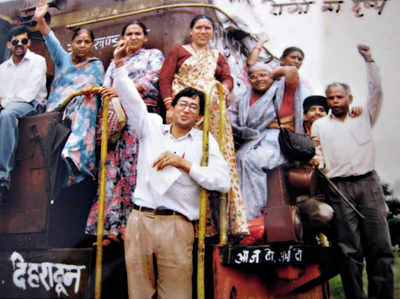
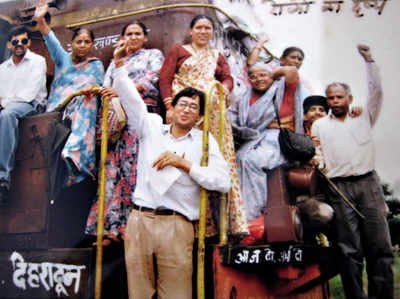
Uttarakhand became a state on November 9, 2000. The establishment of Uttarakhand was achieved after a lot of hard work and sacrifice. The voice for Uttarakhand to become a state was first raised in a special session of the Indian National Congress in Srinagar, May 5-6, 1938. In 1994, after a series of events, demand gradually increased for another state eventually which took the form of a mass movement, leading to the formation of India’s 27th state by 2000.
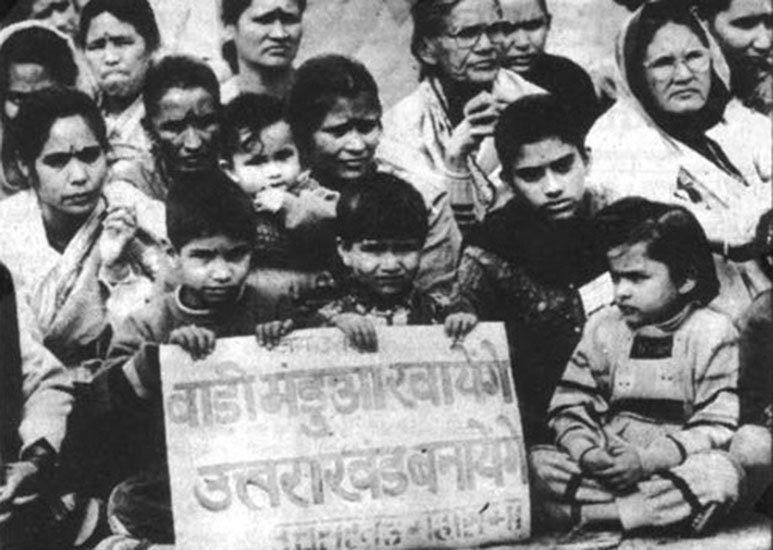
In March 1994, Uttar Pradesh Chief Minister Mulayam Singh Yadav recommended the Mandal Commission to secure 27% of government positions and places in schools and universities for socially and economically weaker classes,which was later on carried on. The Hill region OBC population was very small at 2.5% and reserving OBC seats meant that all government seats would go to the plains of Uttar Pradesh. This led to intensified protests against the nation.
In 1994, the students throughout the region participated in separate state and group movements for reservations. The Uttarakhand movement was further intensified locally by the anti-Uttarakhand statement by then-Chief Minister of Uttar Pradesh, Mulayam Singh Yadav. Uttarakhand leaders continued to support their call for another state until their death. State officials went on strike for three months, and the Uttarakhand movement was exacerbated by the blockade and confrontation with police. Uttarakhand activists in Mussoorie and Khatima were shot dead by police. On October 2, 1994, in Delhi, the capital of the country, a large-scale demonstration and protest was held in support of the state under the support of Samyukta Morcha. Uttarakhand activists marched to Delhi to participate in the struggle. Activists who participated in peaceful demonstrations near Ranpur Tiraha Junction in Muzaffarnagar were tortured and shot dead openly without warning. Police officers were also charged with obscene behavior and rape with female activists. Satya Pokhriyal was a leader who led all people out of misery and other Andolankari helped others and showed courage. Several people were killed and many were injured. These incidents has fueled the Uttarakhand movement. The next day, October 3, the destruction of gunfights across the region and protests over multiple deaths broke up.
Credit- Himalaya Buzz
On October 7, 1994, a female activists died after police brutally attacked her in Dehradun while she protested against the shooting at Rampur Tiraha and many activists attacked the police station in return. A curfew was imposed in Dehradun on October 15, and one activists was also killed on the same day. On October 27, 1994, then Indian Minister of Home Affairs Rajesh Pilot met with state activists. Meanwhile, a brutal police attack in Srinagar’s Sriyantra Tapu killed several activists while they were protesting.
On August 15, 1996, then Prime Minister H.D. Deve Gowda announced at the Red Fort of Delhi the forming of a new state Uttarakhand.
In 1998, the BJP-led coalition government at the centre sent the “Uttarakhand Bill” through the President of India to the Uttar Pradesh state government . The Uttar Pradesh State Assembly passed , the Uttarakhand bill with 26 amendments and sent back to the central government. On July 27, 2000, the central government submitted the 2000 Uttar Pradesh Reorganization Bill to the Parliament of India. Lok Sabha passed the bill on August 1, 2000, and Rajya Sabha passed the bill on August 10, 2000. The Uttar Pradesh Reorganization Act was approved by then President of India, K.R. Narayana on August 28, 2000 and on November 9, 2000, the new state of Uttaranchal was established as the 27th state of India, now known as Uttarakhand.
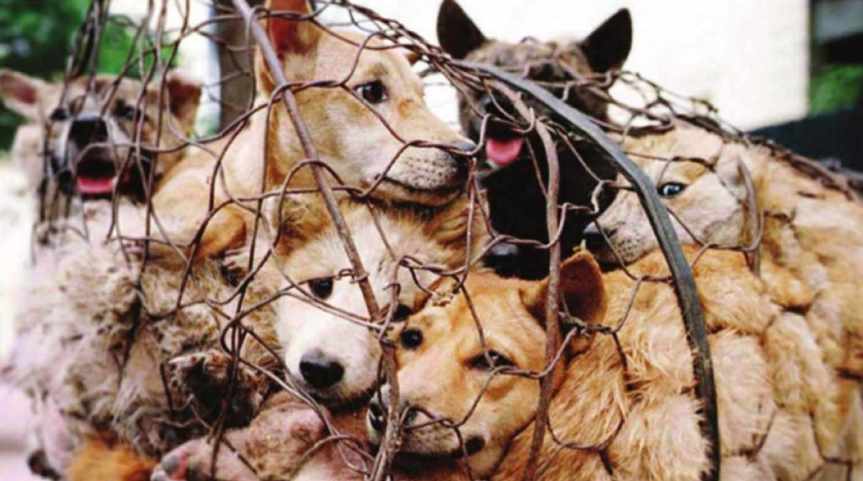
Animal Cruelty : Simply put, animal cruelty harms animals, whether intentional or negligent. While certain activities such as animal cruelty are generally perceived as cruel, the specific actions that make up animal cruelty vary from person to person and from places to places or different countries. Many argue that docking a piglet’s tail without anesthesia is cruel, while others say it is common in meat production to prevent injuries later in the pig’s life. Animal cruelty defination is different in different areas due to countries laws. Animal abuse is an pervasive problem which often is difficult to detect. No species or community is spared from experiencing animal cruelty and neglect. Understanding what animal cruelty means and what it doesn’t mean is one of the first steps to prevent it from happening again. Animals, whether it’s the food, cosmetics, entertainment, or pet industry, don’t deserve to suffer.
Is Animal Cruelty Illegal: The legality of animal cruelty depends largely on where the activity takes place . For example, cruelty to farms and laboratory animals that is illegal in some countries may not be considered banned animal cruelty in some countries, due to differences in national law. In the United States, the best-known legislation to prevent animal cruelty excludes both livestock and laboratory animals from registration.
Animal cruelty in India: Recently, cases of animal cruelty are increasing in India. The same began to discuss animal rights and the extent of legal protection that current law provides to animals. The problem is that most of these crimes are either unreported or face disappointing legal responses, as some of the 1960 Animal Cruelty Prevention Act and the Indian Criminal Code are obsolete. SS Rithika an social activist in context to animal writes about common scenarios of animal cruelty and current laws, procedures, and court decisions dealing with animal cruelty in India. Rithika is also pushing for amendments to these laws to curb the rise in atrocities against animals.
Law related to animal cruelty in India: The Animal Cruelty Prevention Act of 1960 was amended in 1982. Under India’s newly amended 2011 Animal Welfare Act, animal abuse is a criminal offense with a fine of at least 10,000 rupees, a fine of up to 25,000 rupees for the first violation, or upto two years of imprisonment. For the second and subsequent violations, a fine of 50,000 rupees or more and imprisonment of 1 year or more upto 3 years or less. This amendment is currently awaiting approval by the Government of India. The 1962 law is the law currently in force. The maximum fine under the 1962 Act is 50 rupees (less than $ 1). Many organizations, including local SPCA, PF, A, Fosterdopt, etc., are actively involved in reporting cases of atrocities to police and assisting the general public in bringing perpetrators to justice. For this reason, there are many changes in the subcontinent. Under IPC sections 428 and 429, causing mischief by killing or amputating an animal worth more than 10 rupees is a recognizable crime punishable by two years’ imprisonment, a fine, or both.
Some of the campaign toward animal cruelty:#NoMore50 , #RespectForAnimals , #FarmedAnimals etc.
It is not a new thing for any economy to go through phases of economic problems and in certain cases falling short of actually putting those problems under control. These economic problems include inflation, unemployment, deflation and so on. No matter if it is a developing country or a developed one, both are equally subject to fall prey to such problems. While the economy goes through this period of uncertainty many people think that it is feasible to print more money to tackle the economic issues such as inflation, etc. But this is not a very feasible option in the reality.
The monetary decisions of any country is taken by the government of the respective country i.e., the government decides which denominations are printed and the design of bank notes and other security measures. It is the responsibility of the head bank of the country to follow the protocols while printing the money. There is always a limit that is set with respect to the printing of money. No country can singlehandedly print money in an unlimited manner whatsoever maybe the reason as more money leads to more economic issues.
Reasons why printing more money leads to more problems:
Whenever there is an increase in the supply of a certain good or commodity in the market with respect to its demand, the price of the commodity falls. This is also true in case of money. When there an uncalculated, increased production or printing of money, the money output gets divided within the entire population accordingly. Now each member of the society owns a greater amount of money. This leads to a fall in the value of money since everyone now has more money irrespective of the actual amount that they are supposed to have/ own. As the value of money falls, there is a rapid increase in the prices of the goods and commodities present in the market resulting in inflation i.e., an increase in the overall level of prices in the economy. For example, in January 1921, a daily newspaper in Germany cost 0.30 marks. Less than two years later, in November 1922, the same newspaper cost 70,000,000 marks. All other prices in the economy rose by similar amounts. This inflation was a result of a three times rise in the quantity of money present in the economy which further led to fall in the value of money. This example clearly shows inflation not only depends on the production of goods and services but also depends on the value and quantity of money present in an economy. Inflation further gives rise to another economic problem i.e., unemployment. As the prices of the goods and commodities rise, people, especially the firms in certain cases fall short of adequate resources to continue with the production activities. This further leads to the decision of reducing the number of workers working at the firm or leads to the termination of the working periods of workers in the firm. When this occurs at an widespread and increased basis, it leads to unemployment on a mass scale and causes widespread economic disruption and gives rise to a state of unrest in the society.
To conclude the answer of the question asked, “does printing more money solve all the economic issues?” The answer is “NO”. Rather it leads to further disruption in the economy and gives rise to unprecedented social unrest. Thus the government puts a limit on the production of Money in each year and makes its decision after analyzing the every single data so that there is no place of such economic disruption in near future due to hasty and uncalculated decisions.
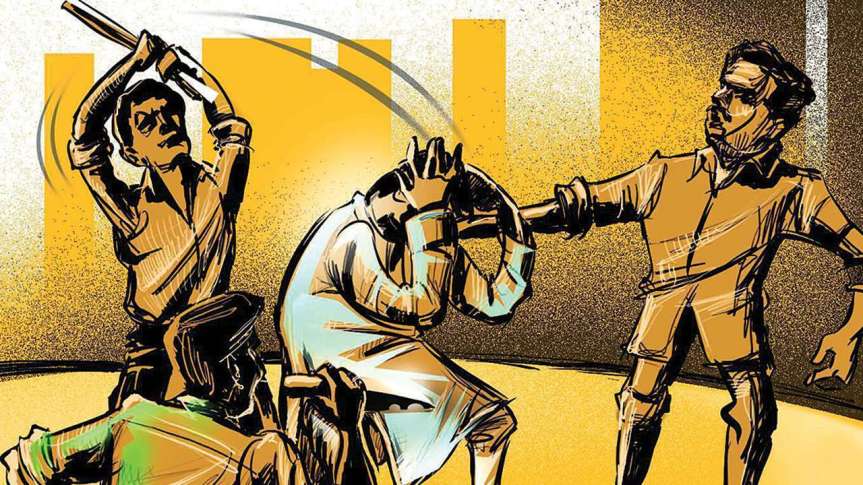
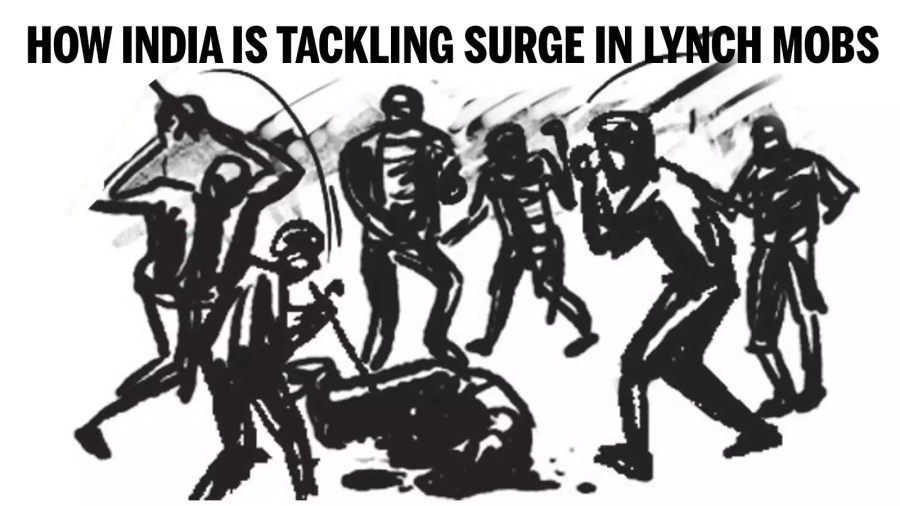
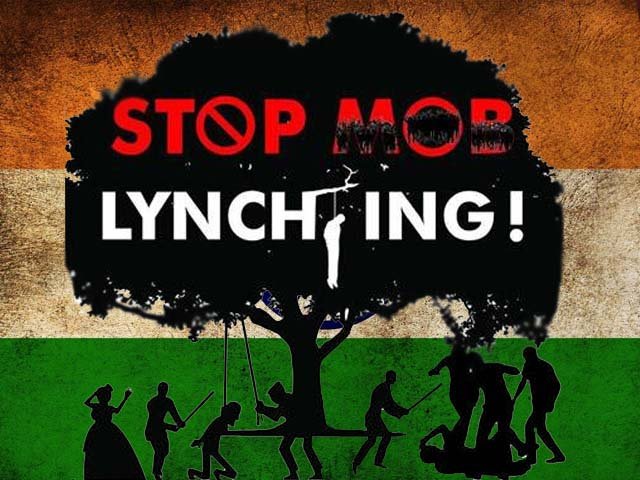
Mob Violence or Lynching is one of the major challenges to State authority. Though it can be done by group of people in rage, typically it involves vigilante group, i.e. self-appointed doer of justice, who keep watch over people and punish them in their own way (Vigilantism). In both forms, it goes against the rule of law and notion of a civilized society due to the destructive expression of emotions in it for immediate gratification.
About Mob Violence/lynching
Mob Violence or Mob Lynching is defined as targeted homicidal aggression, including killing, against a person/s by a group of people or mob to Punish for a crime actually committed or mere suspicion based on allegations or misinformation.
Fundamentally, it is seen in two ways as-
Defence of society, i.e. protest against anarchy, due to failure of law enforcement agencies in curbing the issues of cow theft, kidnapping, crimes etc. or
Offence against society, i.e. return of anarchy, as it goes against the fundamental principle of law, i.e. what the law provides must be taken by lawful means. Self-appointed people holds no right to undertake law enforcement
Ethically, it goes against the moral principles like fairness and reasonableness. If it is not controlled, it may give rise to social hatred with increased tendency of mass criminal outburst, ultimately leading to a state of anarchy.
Reasons behind Lynching
Religious Beliefs or Principles: Being a multi-religious society, the religious beliefs or principles play an important role with imposition of one’s beliefs on others.
Socio-cultural Influences: This includes the historical socio-cultural norms or moral principles which govern a person’s behaviour or attitude towards an action. E.g. From 2000-2012, nearly 2,097 lynching due to witchcraft were reported from 12 states of India.
Feelings of Fear or Hate: Often, the rumours of being kidnappers or actual action of person/s give rise to lynching. E.g. the killing of Sadhus in Palghar on rumour.
Lack of trust in the efficacy of laws: Either due to dissatisfaction from implementation of laws or judicial delays, mob justice is seen by non-state actors as a discharge of public duty.
Solution to Lynching
In Tehseen Poonawalla vs UOI (2018), Supreme Court issued preventive, remedial and punitive guidelines to deal with mob violence and lynching . Calling it a “horrendous act of mobocracy”, the Supreme Court also asked Parliament to establish lynching as a separate offence with punishment. Presently, it is mainly dealt under various sections of IPC with a handful of states taking legal initiatives.
Societal Approach: Regulation of social behavior is the first step to stop mob violence and protect rights conferred to the citizens.
Governmental Approach: Apart from bringing laws and guiding society on social behaviour, the government should apply emotional intelligence to handle conflicts with equal condemnation of social and political violence to avoid revenge tendencies.
People-centric Approach: As the people make society and government, people must seek true freedom through a life based on reason (objectivity or rational will), self-control and virtues of empathy, compassion, and humanity.
Bail, in law, means procurement of release from prison of a person awaiting trial or an appeal by the deposit of security to ensure his submission at the required time to legal authority. The monetary value of the security, known also as the bail, or, more accurately, the bail bond, is set by the court having jurisdiction over the prisoner. The security may be cash, the papers giving title to property, or the bond of private persons of means or of a professional bondsman or bonding company. Failure of the person released on bail to surrender himself/herself at the appointed time results in forfeiture of the security. Courts have greater discretion to grant or deny bail in the case of persons under criminal arrest.
KINDS OF BAIL
1. Bail for Bailable Offence
According to Criminal Procedure Code, if the offence alleged is bailable, then the accused is entitled for bail as a matter of rights either before the police or when presented before the Magistrate Court. In bailable offences bail is a right and not a favour. In such offences there is no question of any discretion in granting bail.
2. Bail for Non-bailable Offence
Criminal Procedure Code empowers two authorities to consider the question of bail, namely (1) a court and (2) an officer-in-charge of the police station who has arrested or detained without warrant a person accused or suspected of the commission of a non bailable offence.
Before exercising his power, a station officer should satisfy himself that release on bail of such accused would not prejudice the prosecution or affect investigation in any manner. In case of an offence punishable with death or imprisonment for life, station police officer cannot release a person on bail, if there appears reasonable grounds for believing that he has been guilty of such offence. If it appears to the Court that that there are not reasonable grounds for believing that the accused has committed a non-bailable offence, but that there are sufficient grounds for further inquiry into his guilt, then the accused (pending enquiry) can be released on bail.
3. Anticipatory Bail
Anticipatory Bail granted to a person in anticipation and apprehending arrest. It may be granted under a few circumstances:
1. A special case is made out that would suggest that there are ample grounds to assume that the applicant may be detained for unreasonable grounds.
2. The allegations were made with a false intent or to cause the claimant to be injured/humiliated and arrested.
3. The arguments against the claimant are ambiguous or generic.
4. The name of the accused is not mentioned in the FIR.
5. The applicant satisfies the Court that he is from a respectable family, has deep roots in society, and is not likely to abscond from or avoid the Court’s proceedings or to hinder the investigation in any way.
4. Mandatory Bail or Statutory Bail
Under Section 167, magistrate can either allow for police custody or judicial custody for a period of 15 days. However, the accused can also be sent to judicial custody for a period of 90 days or 60 days.
Section 167(2) further provides that if at the end of the period (60 or 90 days) of judicial custody, if the investigation is not completed by the police, the court shall release the person “if he fulfill bail conditions”.
Thus, a magistrate according to law or a statute (section 167 of CRPC) cannot authorise a person’s judicial remand beyond the 60-or 90-day limit.
Recently, in a significant order, Supreme Court has recognised sex work as a “profession” and observed that its practitioners are entitled to dignity and equal protection under the law. The court invoked its special powers under Article 142 of the Constitution.
Highlights of the Supreme Court Judgment
Sex workers are entitled to equal protection of the law and criminal law must apply equally in all cases, on the basis of ‘age’ and ‘consent’.
When it is clear that the sex worker is an adult and is participating with consent, the police must refrain from interfering or taking any criminal action.
Sex workers should not be “arrested or penalised or harassed or victimised” whenever there is a raid on any brothel, “since voluntary sex work is not illegal and only running the brothel is unlawful”.
A child of a sex worker should not be separated from the mother merely on the ground that she is in the sex trade.
Further, if a minor is found living in a brothel or with sex workers, it should not be presumed that the child was trafficked.
In case the sex worker claims that he/she is her son/daughter, tests can be done to determine if the claim is correct and if so, the minor should not be forcibly separated.
The media should take “utmost care not to reveal the identities of sex workers, during arrest, raid and rescue operations, whether as victims or accused and not to publish or telecast any photos that would result in disclosure of such identities.
Challenges Faced by Sex Workers
Discrimination and Stigmatisation:
The rights of sex workers are non-existent, and those doing such work face discrimination due to their criminalised status.
These individuals are looked down upon and have no place in society, and most times are treated harshly by their landlords and even the law.
Abuse and Exploitation:
Most times, sex workers are exposed to a slew of abuses that range from physical to mental attacks.
They would face harassment from clients, their own family members, the community, and even from people who are supposed to uphold the law.
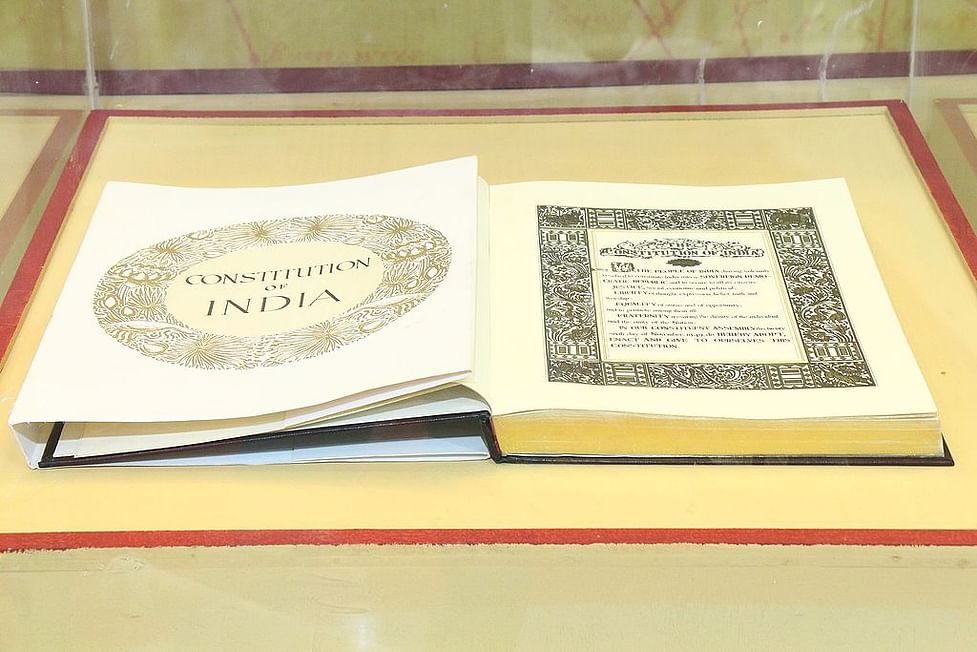
Indian constitution is one of the largest constitutions in the world. Even though it is a compilation of borrowed ideas from several parts of the world, it upholds the values and vision of the great freedom fighters who shed their blood for our nation. The constitution has played a significant role in holding together this huge diverse nation for a period of 75 years. On examining each and every aspect of the constitution the vision shared by the visionaries become more evident.
Doctrines of the constitution are general guidelines laid for enabling proper interpretation of the constitution. It is acts as a guide for the law makers as well as implementers.
The doctrines are:
Doctrine of eclipse
The Doctrine of Eclipse states that any law which is inconsistent with fundamental rights is not invalid. It is not totally dead but overshadowed by the fundamental right. The inconsistency (conflict) can be removed by constitutional amendment. This doctrine emanates directly from Article 13(1) of the Constitution that is a part of the fundamental rights, which states, “all laws in force in the territory of India immediately before the commencement of this Constitution in so far as they are inconsistent with the provisions of this Part, i.e. Part III, shall, to the extent of such inconsistency, be void.” The doctrine of eclipse envisages fundamental rights as prospective in nature. It states that a pre-constitutional law inconsistent with the fundamental rights is not nullity or void ab initio but only remains unenforceable, i.e., remains in a dormant state. They exist for all past transactions, i.e., for rights and liabilities that were acquired before the Constitution came into being.
Doctrine of severability
This doctrine of severability is also known as the doctrine of separability. The word “to the extent of the inconsistency or contravention” makes it clear that when some of the provision of a statue when some of the provisions of a statute becomes unconstitutional on account of inconsistency with fundamental rights, only to the repugnant provision of the law in question shall be treated by the courts as void, and not the whole statute. The doctrine of severability means that when some particular provision of a statute offends or is against a constitutional limitation, but that provision is severable from the rest of the statute, only that offending provision will be declared void by the Court and not the entire statute.
Doctrine of judicial review
The doctrine of Judicial review is basically the power of the judiciary to decide on the constitutional validity of the acts of the other wings of the government (the executive and the legislative). The objective is to regulate any such acts which may contravene the constitution. For instance, if any act of the law-making bodies is such that it negates the provisions given in the constitution, it is important that it should be made null and void. In order to do so an organ is required to have the force or power to articulate such acts as void.
Doctrine of pith and substance
To disintegrate the doctrine to its molecular meanings, Pith denotes true nature or essence of something and Substance means the most important or essential part of something. The definition of this doctrine states, within their respective spheres the state and the union legislatures are made supreme, they should not encroach upon the sphere demarcated for the other. Doctrine of Pith and Substance is applied when legislation made by of the legislatures is challenged or trespassed by other legislatures. This doctrine says that when there is a question of determining whether a particular law relates to a particular subject the court looks to the substance of the matter. If the substance of the matter lies within one of the 3 lists, then the incidental encroachment by law on another lists, does not make it invalid because they are said to be intra vires.
Doctrine of harmonious construction
According to the Doctrine of Harmonious Construction, a Statute should be read as a whole and one provision of the Act should be construed with reference to other provisions in the same Act so as to make a consistent enactment of the whole statute. Such an interpretation is beneficial in avoiding any inconsistency or repugnancy either within a section or between a section and other parts of the statute.
Traditionally, the Senate filibuster was reserved for only the most controversial issues, but its use has escalated in recent years, often slowing business in the chamber to a halt. Some lawmakers acknowledge that the filibuster, which has effectively set a 60-vote supermajority requirement for passing legislation in the Senate, could doom many of the proposals they have championed, including meaningful reforms on issues ranging from health care to climate change to gun control. Behind this dysfunction, the filibuster also has a troubling legacy: it has often been used to block civil rights legislation intended to combat racial discrimination.
As advocates push for pro-democracy legislation, calls for eliminating the filibuster have grown louder. In his remarks at the funeral of civil rights hero and congressman John Lewis in July 2020, former President Barack Obama called the filibuster a “Jim Crow relic,” arguing that the procedure should be eliminated if it is used to block voting reforms. Others note that certain types of legislation are already exempt from the filibuster’s supermajority requirement and argue that a similar exemption should be made for voting rights.The stakes were raised in March 2021, when the For the People Act — a comprehensive democracy reform bill — was passed by the House of Representatives and introduced in the Senate, where the filibuster may determine its fate. Whether through elimination or reform, the filibuster cannot be allowed to impede the expansion of Ameican democracy or the rights of all eligible voters.
What is the filibuster?
The filibuster is a 19th-century procedural rule in the Senate that allows any one senator to block or delay action on a bill or other matter by extending debate. While a final vote in the Senate requires a simple majority of 51 votes, a supermajority, or 60 votes, is needed to start or end debate on legislation so it can proceed to a final vote. Therefore, even if a party has a slim majority in the Senate, it still needs a supermajority to even move forward with legislation a tall task for a hyper-partisan Washington. The House of Representatives does not use the filibuster. Instead, a simple majority can end debate.
How can the filibuster rule be changed?
Senators have carved out exceptions to the filibuster rule before.One option to do so is called “going nuclear” — when senators override an existing rule, such as the number of votes needed to end debate. This is usually done by lowering the threshold needed to end a filibuster to 50 votes.In 2017, then-Senate Majority Leader Mitch McConnell, R-Ky., eliminated the filibuster for Supreme Court nominees, clearing the way for then-President Donald Trump’s first nominee to be confirmed.
Why a call for change now?
In the last 50 years, the filibuster has been used more and more to kill major legislation. And with Biden’s agenda stalled, Democrats are calling for a carve out to pass voting rights legislation. In the last year, at least 19 states passed 34 laws restricting access to voting, according to the Brennan Center for Justice. If the threshold to end debate on a bill is lowered to 50 votes, for instance, Democrats could end debate on their voting reform bill and eventually move to a final vote, with Vice President Kamala Harris serving as a tie-breaking vote in the 50-50 Senate to pass the legislation. Incidentally, Harris, as president of the Senate, would play a key role in any potential rules change. She would be expected to occupy the chair and preside over any rule change action.
What’s the difference between “talking” and “silent” filibusters?
Filibusters traditionally involved long speeches in which a senator attempted to block a vote from proceeding by refusing to yield the floor. To stage such a “talking” filibuster, a senator would hold the floor by standing and talking for as long as they could, sometimes overnight. This was popularized in the 1939 film Mr. Smith Goes to Washington. The longest filibuster ever recorded, by South Carolina Sen. Strom Thurmond in opposition to the Civil Rights Act of 1957, lasted for more than 24 hours. But since the early 1970s, senators have been able to use a “silent” filibuster. Anytime a group of 41 or more senators simply threatens a filibuster, the Senate majority leader can refuse to call a vote.
How has the filibuster changed over time?
The use of the filibuster, once reserved for only the most controversial issues, has increased dramatically in recent years alongside growing polarization in Washington. There have been more than 2,000 filibusters since 1917; about half have been in just the last 12 years. Critics argue that this increased use has slowed business in the Senate to a halt, often entangling the chamber in procedural maneuvering instead of substantive debate and, ultimately, lawmaking.
On October 17, 1949, Article 370 was added to the Indian constitution, as a ‘temporary provision’, which exempted Jammu & Kashmir, permitting it to draft its own Constitution and restricting the Indian Parliament’s legislative powers in the state. It was introduced into the draft constitution by N Gopalaswami Ayyangar as Article 306 A.
Under Article 370: The Constituent Assembly of Jammu & Kashmir was empowered to recommend which articles of the Indian Constitution should apply to the state,The J&K Constituent Assembly was dissolved after it drafted the state’s constitution. The article allowed the state a certain amount of autonomy – its own constitution, a separate flag and freedom to make laws. Foreign affairs, defence and communications remained the preserve of the central government.As a result, Jammu and Kashmir could make its own rules relating to permanent residency, ownership of property and fundamental rights. It could also bar Indians from outside the state from purchasing property or settling there.
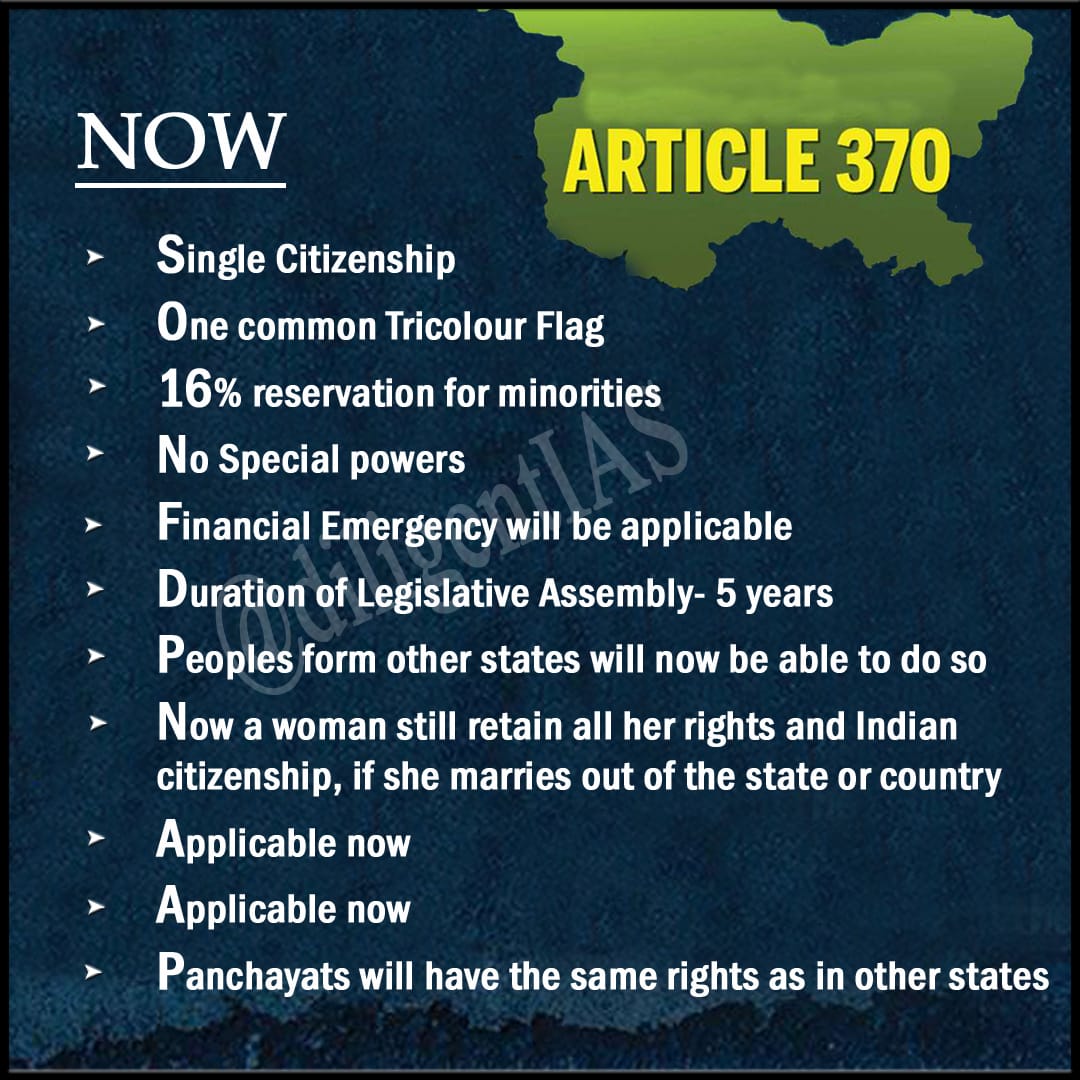
On 5th August 2019, President of India in the exercise of the powers conferred by Clause (1) of Article 370 of the Constitution had issued the Constitution (Application to Jammu and Kashmir) Order, 2019. Through this, Government of India has made modifications in Article 370 itself (not revoked it).With this, the Government of India has dramatically altered the relationship between the state of Jammu and Kashmir and the Indian Union. Order, 2019 has replaced Presidential Order of 1954.Subsequently, the Jammu and Kashmir Reorganisation Bill, 2019, passed by Parliament divides the state of Jammu and Kashmir into two new Union Territories (UTs): Jammu & Kashmir, and Ladakh.This is the first time that a state has been converted into a UT.Of the six Lok Sabha seats currently with the state of Jammu and Kashmir, five will remain with the union territory of Jammu and Kashmir, while one will be allotted to Ladakh.The UT of Jammu and Kashmir will have an Assembly, like in Delhi and Puducherry.Instead of 29, India will now have 28 states. Kashmir will no longer have a Governor, rather a Lieutenant .The special status provided to J&K under Article 370 will be abolished. Jammu & Kashmir will no longer have the separate constitution, flag or anthem. The citizens of Jammu and Kashmir will not have dual citizenship. As the new union territory of Jammu and Kashmir will be subject to the Indian Constitution, its citizens will now have the Fundamental Rights enshrined in the Indian constitution. Article 360, which can be used to declare a Financial Emergency, will now also be applicable. All laws passed by Parliament will be applicable in Jammu and Kashmir, including the Right to Information Act and the Right to Education Act. The Indian Penal Code will replace the Ranbir Penal Code of Jammu and Kashmir. Article 35A, which originates from the provisions of Article 370 stands null and void. Since Presidential Order has extended all provisions of the Constitution to Jammu and Kashmir, including the chapter on Fundamental Rights, the discriminatory provisions under Article 35A will now be unconstitutional.
The Need for Changes in abolishing A370 was dire. Article 370 was added in the Indian constitution to provide autonomy to J&K.However, it failed to address the well-being of Kashmiris who have now endured two generations of insurgency and violence. It contributed to the gap between Kashmir and the rest of the nation. In the newly-formed Union Territory of J&K, the central government is trying to formulate new rules that will give domicile rights to residents over land and in government jobs. This has been a response to the perception that the unemployment rate in J&K is higher than the national average.Domicile rights have also been a long-standing demand of the Dogras of Jammu and the Buddhists of Ladakh. While most of those interviewed by this author chose to remain silent on the issue of domicile rights, a few expressed their fears that such a move will further limit the employment opportunities for the local youth and also lead to a demographic disruption in the Valley.
Possible Consequences include rise in militancy as Article 370 was seen by Kashmiris as a marker of their separate identity and autonomy. Widespread protests and violence as a reaction to the dilution of Article 370 are bound to take place .Terror elements in Pakistan would find Kashmir to be the most fertile ground for breeding terrorism. The unrest can affect the democratic progress that has been made so far. Opposition political parties could launch a legal challenge but Kashmir is an emotive issue with many Indians, and most parties would be wary of opposing the move lest they be branded anti-India. All in all, Kashmir and the people there are reaching towards normalcy after 2 years of removing article 370, but for how long will peace prevail? India is hoping for a long one.
Anarchism is a process whereby authority and domination is being replaced with non-hierarchical, horizontal structures, with voluntary associations between human beings. It is a form of social organisation with a set of key principles, such as self-organisation, voluntary association, freedom, autonomy, solidarity, direct democracy, egalitarianism and mutual aid. Based on these principles and values, anarchism rejects both a capitalist economy and a nation state that is governed by means of a representative democracy. It is a utopian project that aspires to combine the best parts of liberalism with the best parts of communism. At its heart is a mix of the liberal emphasis on individual freedom and the communist emphasis on an equal society. Let’s unpack this a bit. The etymology of the term traces back to the Greek word “anarkhia”, which means “without rulers” or “without authority”. It stands for the absence of domination, hierarchy and power over others.
Whenever public protests ignite into violent behaviour, the mainstream media are often quick to refer to “anarchy” and to “anarchists”. Those who are referred to as anarchists are protesters who burn tyres or engage in battles with the police. In this narrative, anarchists are lawless hooligans and anarchy is about chaos and pointless violence. The political philosophy of anarchisms emerged in the mid-19th century – as part of the thought of Enlightenment. Key anarchist thinkers include Pierre-Joseph Proudhon, William Godwin, Peter Kropotkin, Mikhail Bakunin, Emma Goldman, and Max Stirner. Proudhon is credited as the first self-proclaimed anarchist and is often seen as the founder of classic anarchist thinking. In particular, he developed the concept of spontaneous order in society, where organisations can emerge without central or top-down coordination.
The most common definitions of anarchism stress two points; first, anarchists are opposed to any form of coercive authority; following from this, anarchists are opposed to state power and seek to destroy it. But even this basic definition ignores the important distinction between anarchists who emphasize collective action rather than individualism, or who avoid any strategies focused on the state (even its destruction. The last stand of traditional anarchism, which reached its high point in Spain during the 1930s, suffered a devastating defeat at the hands of Franco’s fascists and the criminal policies of the Stalinized Communist Party. A once vibrant international anarchist movement was in ruins by the end of the Second World War. In the United States, political repression and Red Squad terror decimated the anarchist ranks more than a decade earlier. Small, isolated groups of anarchists survived, but never again reached the influence once attained during the Spanish Civil War.
After World War II, anarchist groups and federations reemerged in almost all countries where they had formerly flourished—the notable exceptions being Spain and the Soviet Union—but these organizations wielded little influence compared to that of the broader movement inspired by earlier ideas. This development is not surprising, since anarchists never stressed the need for organizational continuity, and the cluster of social and moral ideas that are identifiable as anarchism always spread beyond any clearly definable movement.
Anarchist ideas emerged in a wider frame of reference beginning with the American Civil Rights Movement of the 1950s, which aimed to resist injustice through the tactic of civil disobedience. In the 1960s and ’70s a new radicalism took root among students and the left in general in the United States, Europe, and Japan, embracing a general criticism of “elitist” power structures and the materialist values of modern industrial societies—both capitalist and communist. For these radicals, who rejected the traditional parties of the left as strongly as they did the existing political structure, the appeal of anarchism was strong. The general anarchist outlook—with its emphasis on spontaneity, theoretical flexibility, simplicity of life, and the importance of love and anger as complementary and necessary components in both social and individual action—attracted those who opposed impersonal political institutions and the calculations of older parties. The anarchist rejection of the state, and the insistence on decentralism and local autonomy, found strong echoes among those who advocated participatory democracy. The anarchist insistence on direct action was reflected in calls for extra parliamentary action and violent confrontation by some student groups in France, the United States, and Japan. Anarchists also took up issues related to feminism and developed a rich body of work, known as anarcha-feminism, that applied anarchist principles to the analysis of women’s oppression, arguing that the state is inherently patriarchal and that women’s experience as nurturers and caregivers reflects the anarchist ideals of mutuality and the rejection of hierarchy and authority.
The most prevalent current in anarchist thinking during the last two decades of the 20th century (at least in the United States) was an eclectic, countercultural mixture of theories reflecting a wide range of artistic, literary, political, and philosophical influences, including Dada, Surrealism, and Situationism; the writers of the Beat movement; the Frankfurt School of Marxist-oriented social and political philosophers—especially Herbert Marcuse—and post-structuralist and postmodern philosophy and literary theory, in particular the work of the French philosopher and historian Michel Foucault.
Contemporary anarchism has some important differences, but also a great deal of continuity, with historical anarchism. Where it focuses on building an alternative in the “interstices” of capitalism, it accommodates to, rather than challenges, capitalism; and where it fetishizes street tactics, it generates more press than tangible success in either building the struggle or in challenging the state.But struggle teaches, and those anarchists most engaged in struggle and most concerned with finding the most effective means of winning a better world are looking for alternative ideas to make sense of the crises around us. Marxists and these anarchists should stand shoulder-to-shoulder in every aspect of struggle, whether fighting evictions, the far right, or budget cuts. And serious revolutionaries must consider what tactics will strengthen the movement and its chances of victory. Foolish acts of vandalism by unaccountable individuals only serve to disrupt and weaken the movement, and the best anarchists recognize this.
Judiciary is one of the most powerful organs of Indian democracy. It has got the power to uphold the provisions laid down by the constitutions. In order to facilitate this, there are several provisions and one such provision is writs.
A Writ means a command of the Court to another person or authority by which such person/authority has to act or abstain from acting in a certain way. Thus, writs are a very essential part of the judicial power of the Courts.
In India, the supreme court and high courts can issue several writs according to the provisions of article 32 and article 226 accordingly. Further, the parliament can empower any other court to issue these writs. So far, no such provisions have been made.
The writs are borrowed from English law where they are known as ‘prerogative writs. They are so called in England as they were issued in the exercise of the prerogative of the king who has and is still, described as the ‘fountain of justice’.
Some Writs mentioned in the constitution are:
Habeas corpus
It is a Latin term which literally means ‘to have the body of’. It is an order issued by the court to a person who has detained another person, to produce the body of latter before it. The court then examines the legality and cause of the detention. It would set the detained person free, if the detention is found to be illegal. Thus, this writ is a bulwark of individual liberty against arbitrary detention.
Mandamus
It literally means ‘we command’. It is a command issued by the court to a public official asking him to perform his official duties that he has failed or refused to perform. It can also be issued against any public body, a corporation, an inferior court, a tribunal or government for the same purpose.
Prohibition
Literally, it means ‘to forbid’. It is issued by a higher court to a lower court or tribunal to prevent the latter from exceeding its jurisdiction or usurping a jurisdiction that it does not possess. Thus, unlike mandamus that directs activity, the prohibition directs inactivity. The writ of prohibition can be issued only against judicial and quasi-judicial authorities. It is not available against administrative authorities, legislative bodies and private individuals or bodies.
Certiorari
In the literal sense, it means ‘to be certified’ or ‘to be informed’. It is issued by a higher court to a lower court or tribunal either to transfer a case pending with the latter to itself or to squash the order of the latter in a case. It is issued on the grounds of excess of jurisdiction or lack of jurisdiction or error of law. Thus, unlike prohibition, which is only preventive, certiorari is both preventive as well as curative. It is not available against administrative authorities, legislative bodies and private individuals or bodies
Quo warranto
In literal sense it means ‘by what authority or warrant’. It is issued by the court to enquire into the legality of claim of a person to a public office by a person. Unlike the other four writs, this can be sought by any interested person and not necessarily by the aggrieved person.
“The elections are the greatest symbol of participation and political reform”
-Mohammad Khatami (former president of Iran)
An election is a process by which the citizens of a democratic nation, irrespective of their caste and creed, decide who should take decisions on behalf of them. These have been the common mechanism for the functioning of representative democracies since the seventeenth century. The elections could be either direct elections or indirect elections. In direct elections, people could directly take part in the election process, whereas in indirect elections one individual is entitled to vote on behalf of a representative group. India being the largest democracy in the world considers elections as the “festivals of democracy” in which we celebrate the powers of common man.
In India elections held once in five years normally. Representatives are elected on the basis of universal adult franchise. As per the conditions laid down by the makers of Indian constitution any citizen who has attained the age of 18 could cast their vote irrespective of their religion, economic and social status. Similarly, Indian constitution also enables any citizen to contest in elections without any discrimination. In order to monitor the equal participation in elections the constitution has also setup an independent body named “election commission”. Thus, elections in India are an inclusive process where common man is pivotal point.
Indian democracy is the one in which all voters are considered equal thus, the contestants in elections are forced to treat each and every voter of his constituency with same importance at least at the time of elections. The truth is that, it is only during elections that the politicians will listen to the demands of common man. The elections instill a special power in the common man, who constitute a major portion of the society. Even the richest contestant is at the mercy of common man at times of election. It provides each and every individual an opportunity to shape the future of their nation regardless of their socio- economic conditions. Elections are the easiest way in which a citizen can express their discontent towards an existing government. Apart from this electoral system also lay down certain provisions by which common man could contest in elections and thereby contribute towards nation building directly. But many citizens are still unaware of this immense power.
The voting percentages of elections make it evident that people are still reluctant towards casting their vote. Despite of providing holidays and several other measures to encourage people to vote, many people are not ready to play their role in nation building. Low literacy rates, apathy, unprincipled politics, lack of concrete effort on the part of the political parties in motivating the voters and local conditions in some part of the country can also be sited as the reason for lower public participation in elections. The corrupt, divisive, dishonest and exploitative practices might have decreased the confidence of people in this process. Increase in the use of money power, reliance on money power during elections, inciting communal and caste prejudice in the voters and the misuse of official machinery have shaken the foundations of the electoral process. The only remedy in these circumstances lies in bringing about systematic changes in the polity and elections.
As John f Kennedy rightly quoted, “The ignorance of one voter in a democracy impairs the security of all”. It is necessary to make the voters aware of their rights and duties. The voters should be encouraged to cast their votes in an informed manner. The political system should take efforts to educate voters and bring back the trust in democratic system. The children should be taught about the need and worth of elections from a younger age. Above all, people should develop a feeling of obligation towards voting and should keep in mind that voting is their duty towards their nation.
By making proper use of the right to vote a common man could contribute immensely towards building their nation. On the whole as Roald Dahl said “Somewhere inside all of us is the power to change the world”. Elections are one the easiest way for a common man to contribute towards this change.
Policy Implementation is the soul of Administration and Public Policy, one of the problem with Policy making in India is extreme fragmentation in the structure that fragmentation fails to acknowledge the action taken in one area have implications on another and may work at Cross purpose with policies of other sector. Implementation is not automatic that is more structured and scheduled. Implementation works as make or break the deal of Public Policy.
Effective implementation requires a chain of command, and the capacity to coordinate and control; often there are shortfalls in this exercise, more so in a developing country like India. Problem in the implementation of Policy are common in all countries, be they developed or developing. Even with relatively good administrative structure, Public Policy does not have it’s intended impact due to conceptual and political problem. Implementation deficit may be due to insufficiency of the requisite resources – of time, money or manpower. Let’s discuss the implementation problem under the headings:
1) Conceptualization Issue of Policy Implementation
Conceptual Problem become the most crucial step in Policy Implementation that holds the high capacity to hinder the implementation. Understanding the nature of contextual problems, acknowledgement to those kind of policies and procedures which can address the inside problems. These conceptual problem majorly related to Policy design and anaylsis conflicts.
• Policy Design Conflict
Hogwood and Gunn stressed if at the stage of Policy design, attention is given to potential problems of implementation; successful outcome will increased. In order to avoid major shortcomings in implementation take care of few preposition that prescribed by Hogwood and Gunn and Policy makers must ensure that:
A) Adequate time and sufficient resources are made available to the programme
B) No constraints in terms of overall resources, and even at each stage in the implementation process.
C) Policy must based on valid theory of cause and effect.
D) Single implementation agency that need not depend upon other agencies for success.
E) Good communication among co – ordination, various elements involved in the programme
The problem of Policy design in Poli design include ambiguous and ill – defined objective and inappropriate measure to achieve the stated goals. Lack of adequate political will, sufficient social support are other reason. For example, National Water Policy (NWP) adopted by Water Resource Council in 1987 was a wanted step in the direction of evolving national consensus. But, because of poor design remained unimplemented. NWP lacks the blue print
• Policy Analysis Conflict
Implementation of Public Policy has also been hampered by conceptual weaknesses of Policy anaylsis. For instance, National health Policy (1983) was adopted without considering alternative Policy option. This inability to set priorities and evolve appropriate strategies for reduction in health problems by the state department
• Policy Statement Conflict
Policy statement announced by the government contain ambiguous and contradictory terms, posing problems in implementation. The implementers at the field level often face a variety of issues because the policy statement lack clarity. Consequently, implementers use their own discretion while implementing them or they refer the statement back to the higher paths of Administration for clarification.
2)Political Pressure
Political Pressure in implementation always been evident and complex. This kind of pressure cannot let bureaucracy to work efficiently.
• Centralisation of Policy Process
Tassel between Central and state government relation has affected the policy implementation process adversely. Environment protection is heavily centralized. Although the central government has been enthusiastic in adopting innovative population, health, education and environmental policies and programmes as a result, health or environment quality has hardly improved in terms of availability of safe water, clean air, and provision of healthy living conditions.
• Unionisation of Bureaucracy
Another important of failure of Policy implementation is due to the Unionisation of civil services, at the lower level in particular. This has destroyed not only the work culture and discipline, but it also demoralized considerably the supervisory levels into withdrawal and promoting them to take least resistance. Higher and middle levels of bureaucracy are not so powerful and marginalized to give any relief to citizen in cases of corruption. Further, political interference by the political executive has compounded the marginalisation of higher bureaucracy thereby undermining it’s capacity to implement Public policies effectively.
• Politics of InterestGroup
Many times, it is observed that the policies are not implemented because of to satisfy the interest groups. For example, several industries have little concern about environmental consequences of sitting decisions; industrialist influence the environmental Policy implementation process either directly or through business lobbies and representative of the business interests concerned. Pressure by industrial association during consideration of Environmental Protection Act in parliament resulted in a weakening of government and also forced the government to delay enforcement of enacted legislation. They are links with elites of ruling parties. It’s is, common for exertion of political influence in the environmental Policy process.
3)Bureaucratic Incompentency
Christopher Hood uses the term ‘Perfect administration’ in comparison to comparison to ‘Use of Perfect Competition’. He defines ‘ Perfect administration’ as a condition in which external elements of resources availability and political acceptability combine with administration to produce Perfect policy implementation.
• Lack of Adequate Institutional Capacity
The institutional structure and administrative capabilities for implementation of environmental laws and policies, for example, by no means Adequate in terms of political, social, and economic problem. Institutional structure includes the whole system of rules and regulations by which administrative tasks and responsibilities are clearly defined and juxtaposed with the capabilities of the administrators concerned. Let’s understand by example, when 30 industrial units, including few MNCs in West Bengal failed to comply with environment laws, the supreme Court had to play the role of the executive. In 1995 two judge bench of supreme Court expressed ” these multinational concerns have huge resources yet they are not bothered about protecting the environment”.
• Lack of Personnel and Financial Resources
Many policies will diffuse because of insufficient staff and lack of financial resources. Policies in developing nation have not been implemented in full scale owing to lack of trained staff. Well structured policies fail to attain the proper goals without competent Personnel. Implementation implies allocating personnel resources to the appropriate tasks and activities tasks and activities, motivating them to do well rewarding them for action. Regardless of their status, specialized knowledge, experience and qualifications, the programme personnel need to work as a cohesive team for the purpose of achieving policy results.
• Working under heavy pressure of Time
Pressure of time often creates the implementation gap. While fixing the time frame, the policy formulators do not take into consideration the prevailing conditions. The implementation agencies under pressure are unable to fulfill the targets allocated under the said Policy.
• No Administrative Will and Motivation
Without the conscious cooperation of implementers, nothing can be done. It is responsiblity of government to ensure the working conditions for implementers so that they will not lost their interest. Social policies have remained unimplemented largely for lack of administrative will and motivation. In current environment, officials are not likely to feel enthusiastic about implementing policies. Even when officials willing to implement environment laws, government undermined by manoeuvre of industrial bigwigs. Many of them fall to the dominance of economic interests and monetary temptations end up in formal enforcement of the regulation.
• Cooperation and Coordination
Poor coordination and missing links among the administrative agencies have stood in the way of adequate and appropriate Policy actions. For example, at the administrative level, different department are concerned with implementing policies related to poverty alleviation programme. Gap in Policy implementation are found in population and family planning programme.
• Lack of people’s participation
Public involvement in Policy Implementation such as education, population control, health, pollution control and forest conservation etc have tremendous pressure on administrative staff to cultivate results. By demonstration, protest and Public has tried to offset the power base of interest groups and lobbies that influence Policy Implementation in their favour.
The strength and endurance of the people’s movement for implementing and enforcing regulations have not been a link to that vests interest.
Conditions for proper implementation
W. William inakes an attempt to identify ways in which Policy failure can be prevented. He exhorst policy makers to pay more attention to implementation capacity like must underline few questions:
I) How capable are Policy makers in developing meaningful guidelines for and assistance to implementers?
II) How capable are implementers to do their work efficiently?
III) How well implementer articulated the Public Policy?
Mazmanian and Sabatier formulate a sufficient conditions of effective implementation;
I) The enabling legislation mandates Policy objective that are clear and consistent or at least provides substantive criteria for resolving goal conflicts.
II) The leaders of the implementing agency possess substantial managerial and Political skills. They are committed to statutory goals.
III) The programme is actively supported by organized constituency groups and key through out the implementation process, with the courts being neutral and supportive.
IV) The relative priority of statutory objective is not undermined overtime by emergence of conflicts of Public policies or by changes in relevant socio – economic conditions that weaken the statute’ s casual theory or political support.
Conclusion
Policy Implementation requires a wide variety of actions, including issuing Policy directives that are clear and consistent; creating organisational structure and assigning personnel with the information and authority necessary to administer the policies; coordinating personnel, resources and expenditure to ensure benefits for target groups and evaluating actions of personnel regarding implementation. Therefore, serious efforts are required for Policy Implementation at the level of Policy making itself, because it’s starts from beginning right from the policy making stage.
There’s tremendous gap between Public opinion and Public Policy – Noam Chomsky
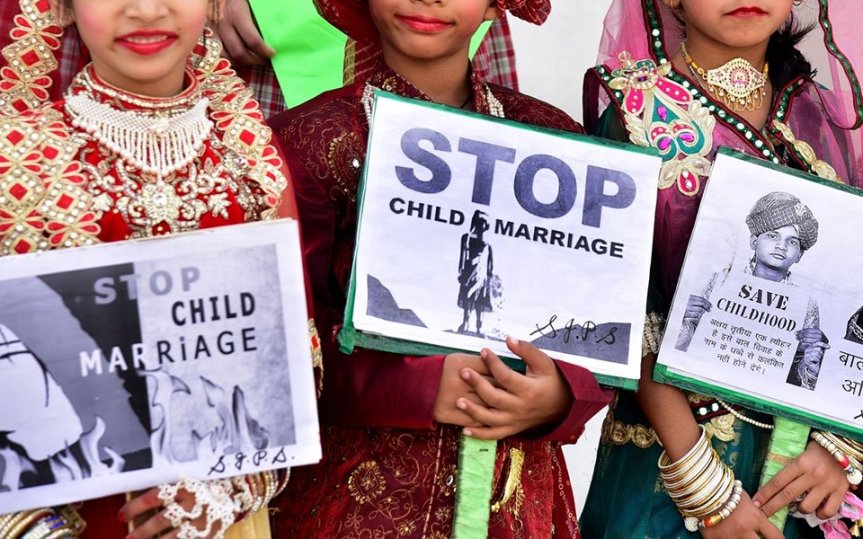
Our country India has always been known to the world for its diverse cultural enrichments. But, the legacies from our past beliefs also bore with it some evil practices to the society that we are still dealing with. And one of those practices is the child marriage. The seeds of the problem are still buried so deep in the society and the mind of its people, that it stands alone as a huge socio-cultural challenge till today.
Historic Background
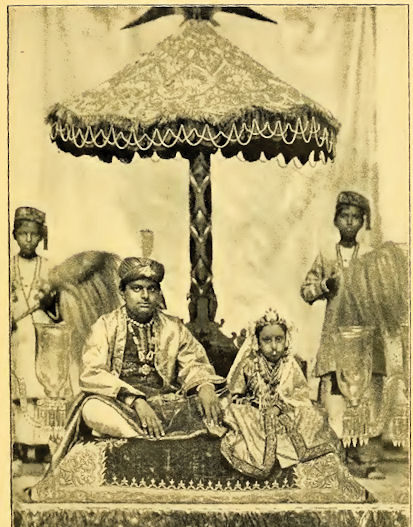
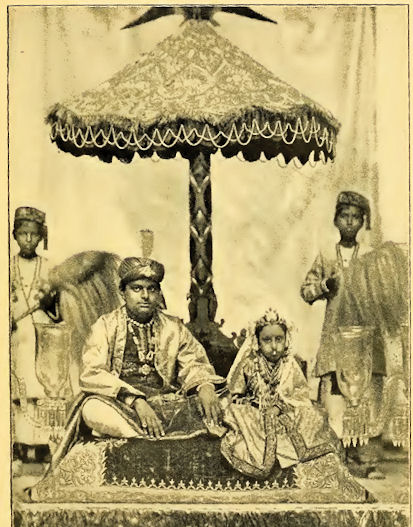
The Vedic history of India dated back to from 200 BC to 700 AD, scribes the marriage as a freedom of choosing desired partner for both men and women. But, with the formation of Government and political modification due to multiple invasions in Medieval India, the women lost their rights to education and choosing their partner and rather were subjected to obey rules and the code of behaviour. Though, age at which the girl was to be married differed and it was rare for girls younger than 12 to be married in antiquity however it became increasingly common for girls as young as six or eight to be married as young brides or “Valika Vadhu”. The parents decided on the marriages of their children at a very early age although the daughter stayed with her parents until she attained the age of puberty. Reaching to which she was bid off to her in-laws through ‘Gehna’ ceremony, in Rajasthan. While in Bengal, this practice was known as ‘Koulinya Pratha’ where a girl child was often married off to an old ‘Kulin Brahmin’ which later on led her to be ‘Sati’ after his husband’s death.
Laws against Child Marriage
The Child Marriage problem in India was first addressed during the British Era. The Child Marriage Restraint act was established in 1929 and come to force in 1930, which defined the minimum ages of marriage for men and women as 18 and 14 years respectively. However, after India’s independence, the minimum age of marriage for women was increased to 15 years. In 1978, the ages of both men and women were revised again to 21 and 18 years. In 2006, the Prohibition of Child Marriage Act came in force, though it was Inapplicable to the Muslim community. Recently in December 2021, Union Cabinet approved to raise the minimum age of marriage for women to 21 years.
The plea is getting stronger.
The Situation in Current Times and the Consequences
Though there are active laws against Child Marriage, but this practice is still ghostly being performed in various parts of India. According to a survey by UNICEF in 1998, the Child Marriage rate in India is 47%, while by UN reports it to be 30% in 2005. Jharkhand has been found to hold the highest rate while Kerala possess the lowest rate in India. Rural Child Marriage cases were found 3 times higher than Urban ares in India in 2009. The consequences of the evil practice, leave many young women shattered for their entire life. Child Marriages have reported a large number of non-consensual marital rapes, physical abuse and domestic violence, low rates of women literary, deaths during childbirth and post natal problems of both underage mothers and newborns.
Our Take: Fighting for a Social Cause
In this modern Era, India is emerging fast as an United country, with largely powered new age youths. And the present generation can give a tremendous change from the society. The situation is already getting better with more to children and giving equal opportunity to both in order to eradicate the practice completely citizens showing their responsibility male and female children. Bachao,Beti Padhao” movement The Government’s “Beti has stirred up the thoughts of young Indian people With many small initiatives, in every state, for a better future. the idea of going along with everyone with equal opportunities are being accepted by Indian parents for marrying their sons and daughters age. The priorities are being given to qualify for a good education and career build up at a matured before getting married.
The youths’ take is most important.
Conclusion
The citizens are the pillars of society and the future lies on the hand responsibility to work together to effort gets counted when we should try our best to improve of every citizen. It is our make our society even better and free from any evil practices. Every work together for a larger cause. more for a better India. The progress so far is appreciable and we
This branch of philosophy deals with beauty , art and taste of things. It examines what happens in our minds when we are involved in aesthetic objects like art, music, poetry or while exploring Nature. Aesthetics consider why we like some specific thing over other. Aesthetic judgements may be linked to emotions and mood. When we say an object or art piece is beautiful , it triggers an aesthetic pleasure in ourselves . Beauty is a positive aesthetic value in contrast to ugliness, which is negative.
Epistemology
It deals with questions on nature and scope of knowledge. It focuses on sources of people’s consciousness, cognition ( structure and forms) and the relationship between mind and reality. It examines questions such as ‘ what we mean when we say we know something?’ ; the ability to differentiate between what one knows and what one believes.
Ethics
Ethics is the study of morals and the concept of right and wrong conduct. It deals with questions such as – What is morality ; does morality exists? It has 3 types :
Meta ethics ~ deals with foundations and nature of moral values.
Normative ethics ~ deals with systems of morality and questions on how one ought to act morally.
Applied ethics~ deals with what a person is obliged to do in specific situations.
Logic
It is the act of being rational by application of reason. The reasoning process can be done well or badly. Logic allows human beings to distinguish good reasoning from bad. In logic , we study rules and techniques that enables us to do correct ( whether good /bad ) reasoning. A logic must formulate precise standards for evaluating reasoning by developing proper set of arguments.
Metaphysics
Metaphysics deals with existence. It concerns with the fundamental nature of reality.
Theme 1~ The study of first causes — It studies that which does not change and from which the world has come into play. Some identify it with God.
Theme 2~ The study of being— Study of the fundamental categories of being or which exists. This field is also called Ontology.
It is further divided into disciplines such as cosmology, rational psychology and theology. Specific issues like immortality , free will are discussed.
Philosophy of mind
The branch of philosophy that deals with nature of mind and its relation with body . The aspects of mind such as thought, mental properties , consciousness are studied. It addresses issues like the hard problem of consciousness. It tries to explain how a supposedly non materialistic mind can influence material body and vica-versa. Rene Descartes was the first person to clearly identify mind with consciousness and self-awareness and to distinguish it from the brain , where intelligence lies.
Axiology
It is the study of origin of values or study of worth. Through axiology, one can determine what is valuable and why something can be said to be valuable.
Philosophy of language
It investigates nature of language , meaning, language use and language cognition. It explains how the meaning of complex sentences is derived from the meaning of their parts.
Political philosophy
Political philosophers seek to establish basic principles that will justify the formation of state, show individuals their rights and tell the fair distribution of society’s resources among its members . This usually involves analysing ideas like freedom , justice , authority and democracy and then applying them to institutions in a methodological way.
Philosophy of Science
It studies assumptions , foundation and implications of science. Questions addressed are: What is science; does science lead to certainty and truth; nature of statements and conclusions or how does science explain , predict and harness technology. It deals with the reliability of scientific theories and the ultimate purpose of science .












 Eduindex
You must be logged in to post a comment.