Learning is the process of acquiring new understanding, knowledge, behaviors, skills, values, attitudes, and preferences. The ability to learn is possessed by humans, animals, and some machines; there is also evidence for some kind of learning in certain plants.
The Picaresque novel is a famous technique in earlier periods. These techniques were used to record the Kings’ and other person’s victories in and out of the battlefields even during his adventures. This form of literature helped in recording the real historical heroes and events from various perspectives. Many authors adapted these techniques and succeeded in making new epic fictions, mythologies, and other real events and incidents.
The Picaresque Novel originated in Spain. The term ‘Picaresque’ is derived from the Spanish ‘picaro’ meaning an anti-hero or rogue. A Picaresque novel is generally an autobiography account of the hero’s fortunes, sufferings and wanderings. It is a combination of episodic tales arranged as journeys. They episodes generally depict low life in a rambling manner and come to an abrupt ending.
The first prose fiction in the nature of the picaresque was John Lyly’s ‘Euphues’ published in 1578 detailing the loves and adventures of a young Athenian called Euphues. Six years later, Thomas Nash published his ‘Unfortunate Traveller’, a more perfect picaresque romance dealing with the travels and adventure of a page called Jacky Wilton. Defoe’s ‘Moll Flanders’ published in 1722 had an affinity with the picaresque mode of writing. But Smollett’s ‘The Adventure of Ferdinand Count Fathom’ is a more perfect form of the picaresque. However, it was Fielding’s ‘Tom Jones’ which established the respectability of the picaresque novel. Fielding’s novel describes through 18 book’s the adventures and several love affairs of The Young anti-hero Tom Jones. Elements of the picaresque can be found in Dickens’s Nicholas Nickleby and in Joyce Cary’s “The horse’s mouth.”
The object of the picaresque novel is to take a central figure through a succession of scenes and adventures, introduce a great number of characters around him and thus build-up picture of society. In the eighteenth century and before travel was the only way to get acquainted with social life. That is why heroes in the Picaresque novels are travelling heroes. The hero in a picaresque novel is always in the Whirlpool of adventures and he has to be present in several human situations. The picaresque hero often transcends the level of the rogue into a tragic figure with human attributes as in the case of Fielding’s Tom Jones.
Another feature of the picaresque novel is the dynamic movement of the hero. He should run through a succession of scenes as Tom does during his journey to London. The novelist constructs the picture of society through the narration of the hero’s wanderings. Smollett sends his hero Roderick Random not only to London but also to France and for a ship journey. The picaresque novel may go deeper into a contemplation of the more intricate relationship between good and evil. They also reveal the strange truth that generous impulses exist even in those whom society considers as rougues. Tom Jones is a generous and manly youth in spite of the rouguish elements in his character.
Until now this technique is used by various authors for various books in the name of Mythologies, fiction, and other Genres.
Ethos of Vedanta are based on supreme truth & supreme soul. If you do good to someone , you will get good . If you are good , the whole world is good to you . Management ethics is the ethical treatment of employees, stockholders, owners and the public by a company. A company, while needing to make a profit, should have good ethics. Employees should be treated well, whether they are employed here or overseas. By being respectful of the environment in the community a compound ethics, and good, honest records also show respect to stockholders and owners. Most of us would agree that it is ethics in practice that makes sense; just having it carefully drafted and redrafted in books may not serve the purpose. Of course all of us want businesses to be fair, clean and beneficial to the society. For that to happen, organizations need to abide by ethics or rule of law, engage themselves in fair practices and competition; all of which will benefit the consumer, the society and organization.
When ethics are used in management , organization grow at a different level .
In these days of globalization, Vedanta-based values will surely have to make a sympathetic assessment of values of those brought up according to Islamic or Christian faith. However desirable it may be to universalize the teachings culled from the Vedanta philosophy, ultimately one will have to find in that same school the lessons of co-existence with alien cultures and roots.
Ethics are about making choices that may not always feel good or seem like they benefit you but are the ‘right’ choices to make. They are the choices that are examples of ‘model citizen’ and are the examples of ‘golden rules’ like; don’t hurt, don’t steal, don’t be dishonest, don’t lie. But if we take Ethics as a subjective philosophy then what will happen to these golden rules. Especially at the time of facing any ethical dilemma how one should decide-what is ethical and what’s unethical? Organization provides rules, regulations, code of conduct, protocols which provide guidelines to work, it shows how to walk, but it does not show the correct path to walk on. Ethical dilemmas faced by managers are often more real to life and highly complex with no clear guidelines, whether in law or often in religion. Ethics gives us a message to always look forward , which gives a message to look at a long go . Ethics teaches a management the most important thing that is forward looking approach . With this forward looking approach , it teaches to be always true to the organization .
Some of the principles of Indian ethos are :
Know who you are & what is your purpose of existence , this concept is used in management because a management’s main motive is to know what who they have to manage & what they have to deal through
Holistic approach : We should behave with others in the manner which we expect from them . Effectiveness & efficiency of an organization increases when the employees are highly motivated.
Service motive : A person should have service motive & at the same time should have a smiling face while providing that service . An organizations main motive is to provide service to other , & they should not be profit oriented .
Self sacrifice : One should have self sacrifice attitude , means sacrificing self ego , & should always be helpful to others
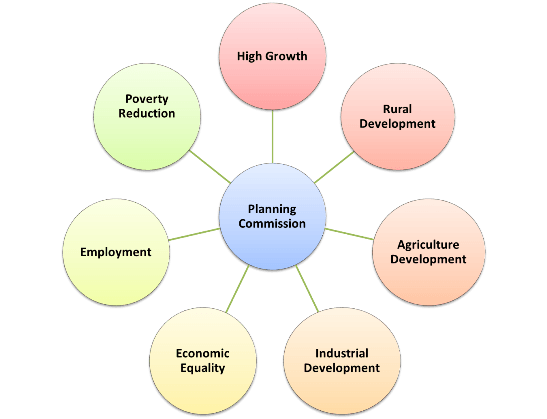
From 1947 to 2017, the Indian economy was premised on the concept of planning. This was carried through the Five-Year Plans, developed, executed, and monitored by the Planning Commission (1951-2014) and the NITI Aayog (2015-2017). With the prime minister as the ex-officio chairman, the commission has a nominated deputy chairman, who holds the rank of a cabinet minister. The first year plan was Harrod – Domar model of development economics. FYP had a target of 2.1% PA growth in national income. Top priority was given to the development of agricultural sector. The idea was agricultural development would lead to higher rate of economic growth.
FIRST PLAN (1951-1956)
Based on Harrod-Domar model. There were arrival of large number of refugees, severe food shortage and mounting inflation confronted the country at the onset of the first five year plan. High priority was given to agriculture, price stability, power and transport. It was a successful plan primarily because of good harvest in the last two years of the plan. Objectives of normal life of refugee, food self-sufficiency and control of prices were more or less achieved. The target growth rate was 2.1 and actual growth rate achieved was 3.7.
SECOND PLAN (1956-61)
Second plan was prepared by Prof. P.C. Mahalanobis. It has s also called Mahalanobis plan. Second plan was conceived in an atmosphere of economic stability. The plan was focused on rapid industrialization by setting up of heavy and basic industries. Importance was given to the public sector. The industrial policy was based on establishment of a socialistic pattern of society as the goal of economic policy. The target growth rate was 4.5 and the actual growth rate achieved was 4.3.
THIRD PLAN (1961-1966)
When this plan was started it was felt that Indian economy has entered a “takeoff stage”. Therefore it’s aim was to make India a self-reliant and self- generating economy. Based on the experience of first two plans, agriculture was given top priority to support the the exports and industry. The plan was thorough failure in reaching the targets due to Chinese aggression (1962), Indo-Park (1965), severe drought (1965-66), food shortage, inflation and adverse balance of payments, Devaluation of the rupee happened in 1966. The target growth rate was 5.6 and the actual growth rate achieved was 2.8.
ANNUAL PLANS (1966-69)
Failure of Third plan and that of the Devaluation of rupee along with inflationary recession led to postponement of fourth FYP. Three annual plans were introduced instead. During the Annual plan a whole new agricultural strategy called the High Yielding Variety Program also known as Green Revolution was implemented.
FOURTH PLAN (1969-74)
The main objective of the fourth plan was “growth with stability” and “progressive achievement of self- reliance. First two years of the plan saw record production. The plan was to improve the standard of living of the weaker sections of the society through employment programmes. The target growth rate was 5.7 and the actual growth rate achieved was 3.3.
FIFTH PLAN (1974-79)
The fifth plan was prepared and launched by D.P. Dhar in the backdrop of economic crisis arising out of run-away fuelled by hike in oil prices and failure of the Government takeover of the wholesome trade in wheat. The two main objectives of this plan is ‘removal of poverty’ (Garibihatao) and ‘attainment of self-reliance’. But due to high inflation, cost calculations for the plan proved to be completely wrong. The target growth rate was 4.4 and the actual growth rate achieved was 4.8.
ANNUAL PLANS (1978-80) AND HINDU RATE OF GROWTH
There were two annual plans 1978-79 and 1978-80. The objectives of first plan were removal of unemployment and provision of basic necessities of drinking water, primary education and health care. Second plan was focused on the rural sector with importance accorded to agriculture.
The phrase Hindu rate of growth, economist Raj Krishna who used it to describe India’s unsatisfactory growth trend in 1950-80 was stuck at 3.5 to 4 per cent per year. The word ‘Hindu’ was used to refer the inactive growth rate of Indian economy.
SIXTH PLAN (1980-85)
The plan was focused in national income and modernization of technology. Sixth plan was considered as success as most of the target were realised even though during the last year (1984-1985) many parts faced severe famine conditions and agricultural output was less than the record output of previous year. The target growth rate was 5.2 and the actual growth rate achieved was 5.7.
SEVENTH PLAN (1985-90)
The plan aimed at accelerating food grain production, increasing employment opportunities and raising productivity with focus on food, work and productivity. The plan was successful. The target growth rate was 5 per cent and the achieved growth rate was 6.
ANNUAL PLAN (1990-92)
The eight plan was postponed by two years because of political uncertainty at the centre. The focus of the plans was to increase employment opportunities and social transformation.
EIGHTH PLAN (1992-97)
There was issues during the launch of plan were Worsening Balance of Payment position, rising debt burden, widening budget deficits, recession in industry and inflation. The plan undertook drastic policy measures to combat the bad economic situation and to undertake an annual average growth of 5.6 percent under Prime Minister of Shri P V Narasimha Rao. The annual growth rate was 6.5 per cent and the achieved growth rate was 34 percent.
NINTH PLAN (1997-2002)
The plan prepared under United Front Government focused on “Growth with Social Justice and Equality”. The plan aimed to demand predominantly on the private sector, India as well as foreign (FDI). It assigned priority to agriculture and rural development with a view to generate productive employment and eradicate poverty. The target growth rate was 6.5 and the actual growth rate achieved was 5.4.
TENTH PLAN (2002-2007)
Other than the economical growth, tenth plan had set “monitorable targets” in reduction in gender gaps in literacy and wage rate, reduction in infant and maternal mortality rates, improvement in literacy, access to potable drinking water cleaning of major polluted rivers. The target growth rate was 8.0 and the actual growth rate achieved was 7.6.
ELEVENTH PLAN (2007-2012)
Eleventh Plan was aimed “Towards Faster and More Inclusive Growth”. The vision of Eleventh Plan included several inter related components like rapid growth reducing poverty and creating employment opportunities. Access to essential services in health and education, specially for poor, extension of employment opportunities using National Rural Employment Guarantee Programme, environmental sustainability and reduction of gender inequality. Its growth rate was 8.1 per cent but it achieved only 7.9 per cent.
TWELFTHFIVE YEAR PLAN (2012-2017)
The Twelfth Plan commenced at a time when the global economy was going through a second financial crisis. This crisis affected all countries including India. Growth rate slowed down to 6.2 per cent. Therefore the plan emphasizes that the first priority must to bring economy back to rapid growth in all fields. The aim was bring back economic growth faster, more inclusive and with sustainable growth. The target growth rate was 8.0
With the Planning Commission dissolved, no more formal plans are made for the economy, but Five-Year Defence Plans continue to be made. The latest would have been 2017–2022. However, there is no Thirteenth Five-Year Plan.
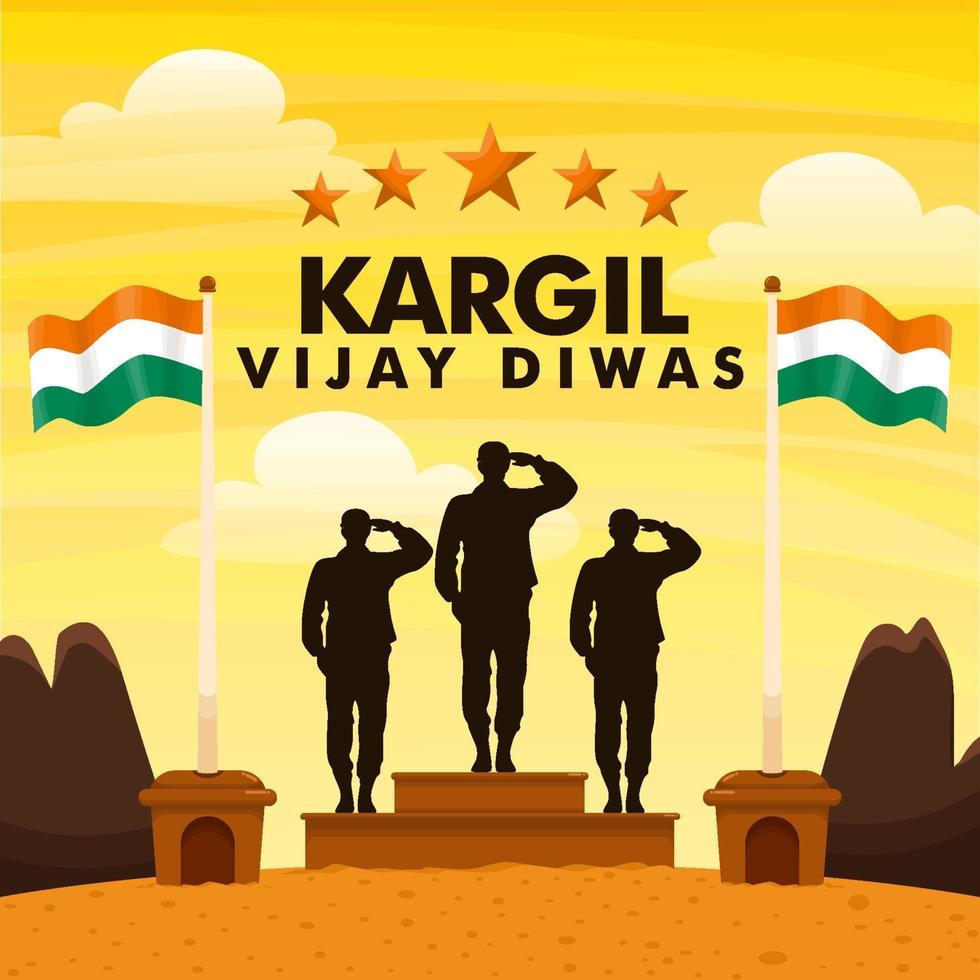
Kargil Vijay Diwas is celebrated every year on July 26th to remember the sacrifice of the Indian soldiers during the Kargil war of 1999 with Pakistan. The brave-hearted men of the Indian army had aided the Indian air force in defeating Pakistan on this very day 22 years ago.
Kargil War
The war was fought between India and Pakistan from May to July 1999 in the district of Kargil which is in Kashmir, along the Line of Control (LOC). It is also known as “Operation Vijay”. India launched “Operation Vijay” to clear the Pakistani infiltration in the Kargil sector. A huge part of this war was the Indian Air Force’s role in acting along with the Indian Army ground troops. Indian Air Force’s role was to flush out the regular and irregular troops of the Pakistan Army. This operation of flushing out the Pakistani troops was given the codename “Operation Safed Sagar” which means “White Sea”.
Cause of the War
This war was caused because the Pakistani troops infiltrated the Indian side of the Line of Control acting as Kashmiri militants. The Line of Control is the de facto border between India and Pakistan in Kashmir. In the starting stages of the war, Pakistan blamed Kashmiri militants for all the fighting but later they messed up and left some documents because of casualties which showed clear involvement of the Pakistani paramilitary forces. Adding to that, later a statement by the then Prime Minister of Pakistan, Nawaz Sharif, and the Chief of Army Staff, General Pervez Musharraf, confirmed the involvement of the Pakistani paramilitary which was being led by General Ashraf Rashid. With the help of Operation Vijay and Operation Safed Sagar, the Indian Army recaptured most of the area. Adding to that, Pakistan was facing international diplomatic opposition so they had to withdraw their forces as well.
This War is the most recent example of high-altitude warfare in mountainous terrain which for obvious reasons posed logistical challenges.
World’s Opinion
Pakistan was greatly criticized for instigating war. They claimed they did not start the war and that it was the Kashmiri militants but a lot of evidence contradicted their claim and nobody believed them, for one, the war was at heights where only trained soldiers could fight, and not some simple freedom fighters.
Pakistan’s Prime Minister, Nawaz Sharif had flown to the United Stated to ask the US President Bill Clinton for support, who showed his clear disapproval and asked him to withdraw his soldiers from the Indian territory.
The G8 nations at that time, Canada, France, Germany, Italy, Japan, Russia, United Kingdom, and the United States supported India. Even the European Union opposed Pakistan’s violation of the LoC. China who is known as a long-time ally of Pakistan also suggested retreating and settling the issue peacefully. Even ASEAN supported India.
Gallantry Awards
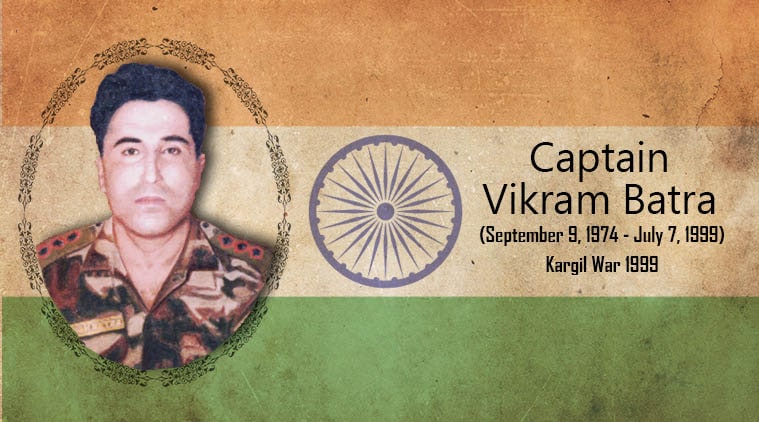
Four Param Vir Chakras were awarded to – Grenadier Yogendra Singh Yadav, Lieutenant Manoj Kumar Pandey, Captain Vikram Batra, and Rifleman Sanjay Kumar. And eleven Maha Vir Chakras were awarded.
Facts
The war was fought at a height of 8,780 feet.
The soldiers had to fight at a temperature of minus 10 degrees Celsius.
Operation Safed Sagar was the first time the Air Force conducted an operation at the height of 32,000 above sea level.
The pilots and engineers of the Air Force were given just one week to train.
As many as 527 Indian soldiers laid their lives and the Indian Army built a memorial wall with all the names of the soldiers who lost their lives.
Conclusion
The victory of the success of Operation Vijay meant a lot to India and all the Indians. Till now, every year Indians remember July 26th as the day of victory and remember the sacrifice their fellow Indians paid for the safety of all.
Are you staring at your plate right now with suspicious eyes? If so, then relax and take off that crease from your forehead. If you are worried about lead being present in your dishes, then we are here for you. Here all your doubts about how to test dinnerware for lead will be addressed and you don’t have to worry.
Safety is the first thing anyone wants while buying any product. You wouldn’t have thought about searching for lead in your dinnerware. Did you? Dinnerware is the most regularly used item in our homes, but to find that unsafe for us is disappointing. And also you shouldn’t be even asking this question. Think about it, you bought a nice dinner set from a respectable company, but here you are getting suspicious? Don’t worry any further. We will clear all your suspicions. Come on, let’s have a look at how to test your dinnerware for lead?
Why is Lead unsafe?
Lead is a harmful toxin that if ingested, may cause serious damage to the body systems. Children and pregnant women stay at a higher risk of health issues from the toxic effects of lead. You may have heard of lead poisoning too. It is very real and lethal.
Lead does not leave your body after entering. It accumulates there and due to this, even small amounts are harmful to health. You need to remove lead from your dinnerware so that you can eat your food safely.
Why is Lead Used in Dinnerware?
Lead is used in dinnerware for glazes and bright colors. It is basically used to beautify the dishes. The glazes that make the dishes shine like glass, the bright red color designs, these all are lead. It seems nice but it’s lethal. Lead also provides strength to the dishes and prevents them from moisture.
How Does Lead Enter Our Body?
There are many ways in which lead can enter our bodies. Let us point them out for you.
If hot food is served on plates with glaze, the heat tends to extract the traces of chemicals from the surface and enter the food.
If you heat your food in the microwave, it can get lead into it. So don’t heat too many times.
Serving too much acidic food on a plate can also cause lead to enter the food. Acids tend to fast forward the process.
What Type of Dishes Contain Lead?
Dishes come in many varieties, so it can be hard to figure out the safest one. But we have something for you that can help. Now try to avoid the following things when looking for dishes:
Antique dishes that may be passed down in your family from generations.
Heavily designed dishes, especially with bright colors like red, yellow, or orange.
Used dinnerware found in thrift stores or second-hand dishes you bought at a lower price.
Terra cotta dishes which are heavily glazed
Handmade dishes or pots.
Any dish with corroded glaze, or old dishes with worn-out designs.
Dishes with designs made above the glazed surface.
How to Test For Lead in Dishes?
You didn’t think you can check for the lead with plain sight, did you? No, you can’t. But there are some ways to test dishes for lead. One of them is to avoid the above mentioned types of dishes. Another useful way is by testing the dinnerware by home kit for testing lead in dinnerware.
Home Kit for testing lead in dinnerware is mainly useful for high content lead testing. It does not detect if there are only small amounts of lead in the dishes.
Another way is to send the dishes to a laboratory. But this may be a bit of absurd advice considering everyone doesn’t have access to labs and it is a bit expensive as well.
Method to Test For Lead With Home Kit
Buy the chemically tested swabs, which are not very expensive.
Clean your dish with the swab.
If your dish contains lead, the lead detector on the swab with turn bright red indicating the presence of lead in your dish.
Or use a small chipped section of the glaze from the dish.
Peel a small part of the glaze and test it with the swab for more accuracy.
This method doesn’t tell you the exact amount of lead present in the dish. It is not much use but is fine for testing at home.
Method For Testing Lead in Laboratories
Laboratories use X-ray systems to test for lead in dishes.
This method tells the accurate amount of lead present in the dish by using some electron reactions (which you don’t need to know about).
There are many ways to test for lead in laboratories. But some of them might damage the dish in the process. So this method is not feasible.
How to Reduce Exposure to Lead From Dishes?
The following points might be of some help:
Stop using antique dishes
Don’t heat food in contaminated dishes
Don’t use highly glazed dishes for regular use
Stop storing food in contaminated dishes for a long time
Don’t wash the dishes containing lead in the dishwasher
Don’t serve acidic food on dishes containing lead. It speeds up the process.
Safest Lead Free Dinnerware
Choosing lead-free dinnerware for your safety is not that hard as it sounds. Just keep some points in mind next time while shopping for dishes.
Choose the dishes with minimum designs
Dishes with less glaze will be safe
Plain white plates or dishes is definitely a winner
Try to find less bright colored dishes
We recommend more glass dishes. With them, you can be sure they are lead-free.
If you are an appreciator for old, vintage dishes, you may want to restrict to the plain white ones.
Melamine is considered to be the safest as it is more plastic than a glazed surface.
Now you are just a step away from buying lead-free dinnerware. Step out, go to that store, keep these few points in mind and find the perfect dinner set for you. And we hope now you know how to test for lead in dinnerware.
Planning on throwing a big dinner party? Or just having some guests over for the night? Either way, we know what you are looking for. Are you looking for something innovative to do to impress your friends? We got you.
A big party means you need to take out your stock of dinner sets you have hidden in that cabinet. Yes, you read it right. Go on, take them out and think about how to decorate the dining table for the night. Maybe we can help you there. We will show you how to mix and match dinnerware for your party. But what else are you thinking? Flowers? Accessories for the table? Fancy table mats? Or candles maybe? That is nice but what about your precious dinnerware waiting to be showcased. Come on, let’s see what you need to do.
Why Mix and Match?
If you want to throw a big party., you will need a good amount of the same dinner sets. About 20 to 30 plates of the same design with the spoons and bowls too will be needed. No one is that stupid to buy these many dishes of the same design. So what you want is to mix and match your dinner sets to make your table look presentable and great.
How to Mix and Match Dinnerware?
It depends on how you want your table to look. Do you want a bright cheery mood? Or do you prefer a more classic look? Whatever you want, we are here to help you.
Either you decide to order takeout or cook your best dish, it’s always nice to make your table presentable. It sets the right mood for the dinner party. Let us find out how you can make the table a feast for your eyes.
Start with deciding a color scheme – The most important thing to keep in mind while setting the table is to devise a color scheme. The base color for the dinner sets. We recommend it to be a plain color. You can take it as bright red large plates with plain white side plates and add some golden metal spoons and forks. Or you can go with a dull color like brown or maybe royal blue with a contrast of silver would be nice.
Consider the mood of the gathering – You want to set the mood right forthe party. Decide whether you want a formal gathering or a fun friends’ night out. For a formal dinner, you might want to seem classy then put some flowers and candles on the table.
Include different items – Your table will look good if it has some different fun items. They may be stemmed glasses for drinks or big fancy soup bowls. Adding napkins going with the color scheme might be a good addition. Set different sizes of spoons for starters and meals.
Metals shine bright – Metals make a good addition to the table. They add a bit of sparkle to the setting. There are no restrictions if you want to add some silver, gold, or bronze spoons and forks. They add to the charm of your dining table.
Add shapes and textures – Setting your table with different shapes of dishes would be nice and fun. Add two different shapes of glasses for drinks and water. Be bold and imaginative when adding patterns to the set. If a color doesn’t suit your mood then maybe go for more textured plates and dishes. Consider a floral pattern of plates with plain side plates which go with golden spoons.
A sense of nature – Bring in some natural materials and add one bright color like blue with classic white plates. Spice it up by giving it a traditional and classy look. Add some flowers too in the vase.
Consistency is the key – You need to be consistent. Whatever you selected at the starting, keep it up till the end. Whatever color or pattern you want make it consistent for every seat. Whether it is the color scheme, the flowers, table mats, or the water glasses, try to keep all the items consistent throughout the table. Even if your table is mismatched but is consistent, it will definitely look perfect.
Crisp and colorful – You want it to be a cheerful picnic dinner then you can go with solid colors lining your table. Mix it with a contrasting color to make it look colorful and complete. Maybe add some small pattern with the side plates or the glasses.
Some Other Things to Keep in Mind
There are some other different things to keep in mind while setting your table for the big night. We told you all about what to do, now let’s come to what not to do. Some tips for you not to do are mentioned below:
Do not exaggerate the number of items on the table. Keep them less but enough for using easily.
Do not go too bold with the color scheme. You don’t want a simple dinner party to look like a royal dinner, do you?
Try to add patterns but not many. Stick to only one or two patterns.
You can set each seat with different settings but try to keep the color scheme the same throughout the table to ensure consistency.
If you plan on keeping flowers and candles on the table, keep them at a distance from each other. Keep only two vases and three candles for a small table. For a much longer table, keep four vases with five or six candles only.
Keep your focus on decorating the table with your dinnerware and not just the other accessories. Bear in mind to keep the dinner sets the main attraction of the table.
Go ahead enjoy your party now. We told you everything you need to know to host an amazing dinner. Hope you got your answer on how to mix and match dinnerware. Set your table with your creativity and sense of design and woo your guests with beauty on the table. Don’t forget to invite us!
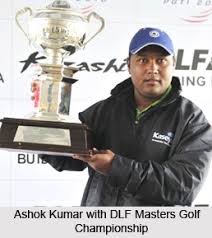
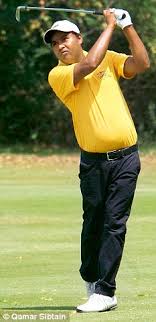
Rags- to- Riches story of Ashok kumar, who is a Professional Golfer of India.
Ashok Kumar, one of the country’s leading golfers who rose from the ranks of a caddie, remembers his very humble beginnings very distinctly. “The reason I am here in this swanky restaurant of the Oberoi, sipping coffee with you is because of golf. It has brought me name, fame and money and all that I could possibly ask for in life. Without golf, I am a zero ,” said the 27-year-old golfer with rare candour in a chat with Kalyan Ashok, a sports journalist working with Sportstar, one of India’s leading sports weeklies.
India’s No.3 golfer may not exactly be rolling in luxury at the moment, but he definitely leads a comfortable life-a far cry from the days when he used to sleep in a stable. “It’s destiny that brought me to this stage in life and I can’t sav that I deserve it, but it’s God’s gift to me through golf, sald Ashok. Not the one to forget his past, Ashok Kumar keeps reminding himself how he came up in life.
His story is stranger than fiction. Ashok was born into a poor family in Bihar that struggled to make both ends meet. (He has four brothers and two sisters.) In 1988, his parents sent him away with his elder brother to Delhi and he worked as an errand boy at the Jaipur Polo Club.
“I used to work in the day assisting my brother and sleep in the stable at night. The club also had the Air Force golf course and I wandered on to it one day and watched the players and caddies. I thought of becoming a caddie, but I was too young then. I did not get the job, but the club hired me a few years later,” recalls Ashok. It was then that he took to golf. He started practising in the club when no one was around. However, he was caught playing one day and was suspended from his job, as caddies were not allowed to practise golf.
“I was back to square one. Then I went away to help a lorry owner who was transporting sand. I remember the days when I had to pay five rupees to hire a blanket during winter and sleep in Connaught Place,” Ashok said wistfully.
Six months later, when things cooled down, he moved back to the Air Force golt course and became a caddie to Amit Luthra, who was India’s top golfer and an Asian Games gold medallist. “Luthra saab spoke to the club authorities and got me in,” Ashok said with gratitude writ large on his face.
Ashok learnt a lot from Luthra and one day he challenged his mentor to a play-of “I don’t know what got into my head and I told him that I will beat him, to which Luthraji said that if I did that he would waive a month’s caddie fee. We played on the road, but I lost,” Ashok smiled.
Luthra, however, was very impressed with the young man’s talent and got him enrolled at the Delhi Golf Club, which allowed caddies to play. Seizing this opportunity with both hands, Ashok went on to improve his game by leaps and bounds and in 1995, DGC selected him to play in the All India Junior tournament in Kolkata.
Image Source – google.
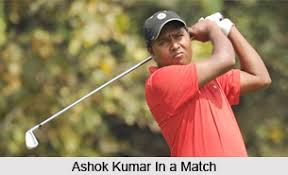
“I didn’t know where Kolkata was. I thought it was outside the country! I travelled in an unreserved compartment, spending most of the time sitting in the bathroom or just outside as there was no place elsewhere.” In Kolkata, he finished third and in the next two years he became the Junior Champion of the country. In 2000, he moved to the amateur ranks and two years later he became a pro, finishing his first season as India’s No.5 golf player. Riding a wave of success, Ashok held the No.1 spot in 2006 and 2008 and currently (2010) he is ranked No.3.
The moment he cherishes the most as a player is not the time when he won his first major title but when he finished 18th in the Hero Honda-DLF Tournament in 2002. It fetched him a cheque of Rs. 1 lakh. “I never looked back after that,”Ashok remarked.
In the early part of 2010, Ashok’s golfing career got a boost when the Bangalore- based business and software company, Kaseya India, run by golf enthusiast, Mr. Girish Krishnamurthy, decided to sponsor him. “I am a simple guy and with Kaseya around to take care of other things, I can concentrate better on my game now,” Ashok says with determination as well as gratitude. It is his ardent wish that all golf links in the country should support caddies, as he feels that many of them have a lot of inherent talent simply waiting to be tapped.
Ashok has modelled his game on his golfing idol, Tiger Woods. Incidentally, he had met Tiger when he was a caddie to Arjun Atwal in Bangkok a decade ago. “He hugged me when he was introduced by Atwal as a top amateur from India. I asked him for his advice, to which the legendary golfer simply said-‘don’t think of beating others, they should think of beating you,” Ashok’s eyes sparkled when he recalled his meeting with Tiger.
He faithfully follows that advice from the maestro and hopes to play with him one day. “For the moment, I eat, drink and sleep golf. There’s no distraction in my life. I relax with some music and watch CDs of Tiger Woods,” Ashok concluded.
However, humans are born with 6 sense but none are born with civic sense. Callousness and irresponsibility seem to be the order of the day. Its high time that we inculcate strong civic sense in your young generation.
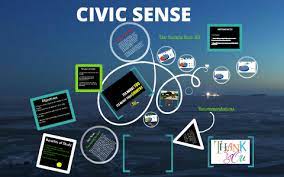
CIVIC simply means social ethics. It reflects personality and responsibility of an individual and shows who the real person is. It is consideration by the people for the unspoken norms of society. Its not only about keeping roads or streets clean. Its more than that. It is abiding with the laws, respecting fellow human being and also maintaining a sort of decorum in the public.
But unfortunately, these days we lack basic civic sense. Modern lifestyle has given birth to different and uncivilized individuals who lack the basic moral behavior. The society is no longer etched with the goodness of people instead people are driven with their own selfishness and individual needs.
WHY CIVIC SENSE IS IMPORTANT?
If basic civic sense is absent in the society it leads to a lot of problems and to avoid these problems civic sense is necessary. It is important because people with high civic sense does not resort to unethical tactics and shortcuts. Civic sense leads to a more cleaner and fresh environment and also results in a high hygienic society. Civic sense leads you to be more social, mature and unbiased when it comes to situations in public.
LACK OF CIVIC SENSE LEADS TO?
Why is there a sense of detachment from the society? Why a person is always self centered? What are the factors that causes Separatism, vandalism, intolerance and racism? Why are people less tolerant now a days? The answer to all these questions are simple and its due to LACK OF CIVIC SENSE.
INCULCATE CIVIC SENSE:
Its high time that we inculcate civic sense. We can do so by inculcating young minds about the importance of civil sense at a very young age. Civic education should be made mandatory in school. One can also spread awareness about civic sense through rallies, educational programs, medias etc. Strict laws must be enforced. Penalties and stricter punishment’s should be considered if violated.
All these adds up to the society. If all these are followed properly and if people get to know the importance of civic sense then society will be a better place to live.
Some people appear to be born with a natural talent for creativity. If you believe you are not one of the fortunate few who drew from an apparently limitless creative wellspring, this does not imply you are destined to a life of the ordinary and expected.
Creativity is not a lightning bolt that hits infrequently and cannot be predicted; rather, it is more like a muscle. To enhance your talents, you must continually practise, engage, and improve on your creativity.
Something to keep in mind is that creation is not a silent process. Sitting back and waiting for creativity to come to you is a sure way to lose enthusiasm and become disheartened. Alternatively, concentrate on finding methods to improve your own creativity. Look for activities that excite you and assist you in focusing your attention and brain power on the work at hand.
Irrespective of your life goals, creativity is a valuable ability to have. While starting new hobbies such as learning to play an instrument, and particularly if you are interested in a job that requires creative thinking, creative thinking can come in useful.
Here are some ways to boost your creativity:
Continue to keep learning
A creative mind is an inquisitive mind, therefore continue to master new skills and indulge your inquisitive nature to learn more about the world and everything around it. After you’ve honed your creative abilities, it’s critical to constantly push yourself and learn new things to motivate you and help you improve. Whether you just make an attempt to read more in your own time or research into taking more formal classes, continuous learning is essential for increasing your creativity.
Take a breather
While creativity is a talent that you can teach yourself to be better at it is also vital not to put a lot of strain on yourself. Take a break if you’ve been sitting at your desk for hours, frantically seeking new ideas and answers and coming up empty-handed. Have a change of pace, clear your thoughts, and clear your head off the work at hand: when you return to it with newer perspectives, you could discover the inspiration you’ve been looking for sitting there in front of you all along!
Discover the settings that allow you to be most creative
Certain people are morning people and find that they are most creative and productive in the early hours of the morning, before most people have even gotten out of bed. Many thrive on the solitude of the night, whilst some may feel that the normal 9 – 5 is ideal for creative thought. The trick is to figure out what work settings fit the best for you – not just the hours you work, but also factors like location, lighting, music, and the tools/equipment you use.
Do something you enjoy doing
When you genuinely enjoy your profession, you will automatically be more motivated and passionate about solving problems and new ideas. It will be quite difficult to approach work that you continually putting off with a positive, creative mindset. Find an activity that allows you to be creative that you like, such as playing an instrument, drawing, or participating in a sport that totally immerses you in the moment.
Get some physical exercise
Exercising can be a fantastic method to cleanse your thoughts when you’ve been feeling stressed or under strain. Several researchers have demonstrated that exercise (even as little as 30 minutes of aerobic activity) helps us become more creative and improves brain function. Therefore, the next time you’re stuck in a creativity slump, throw on your running shoes, get your heart rate going up, and see if you can get your creative juices flowing more easily.
Introduction:- There are many situations in which law, as well as justice, require that a person be required to conform to an obligation, although he has neither broken any contract nor committed any tort. Chapter V of the Indian Contract Act deals with the situations under the heading “Of certain relations resembling those created by Contract”. The chapter avoids the word “Quasi-contract” and given the clear statutory authorization, the courts in India are not hindered in allowing relief under the different sections of the Act by the theoretical considerations concerning quasi-contracts.
Conditions of quasi- contract:-
(1) A legal agreement created by the courts between two parties who did not a previous obligation to each other.
(2) A normal contract requires two parties to consent to mutually agreeable terms under a quasi-contract neither party is originally intended to create an agreement. Instead, an agreement is imposed by a judge to rectify an occurrence of unjust enrichment.
(3) Courts create quasi-contracts to protect the unjust enrichment of the parties in dispute over payments of goods and services.
Salient Features of quasi-contractual rights:-
(a) Firstly, it does not arise from any agreement of the parties concerned but is imposed by the law, and
(b) Secondly, it is a right that is available not against the entire world but a particular person or persons only.
Kinds of quasi-contractual Obligations:- Section 68 to 72 provide for 5 kinds of quasi-contractual obligations are as follows:
(1)Supply of necessaries
S.68. Claim for necessaries suppliedto a person incapable ofcontracting, oron his account.
Persons incapable of contracting includes:
• a minor
• person of unsound mind
• person disqualified by law to which they are subjected
Illustration:-A supplies B, a lunatic, with necessaries suitable to his condition in life. A is entitled to be reimbursed from B‘s property.
(2) Payment by interested person
S.69. Reimbursement of person payingmoney due to another, in payment of which he is interested.
Essential requirements of section 69:
• payer must be interested in making payment
• but should not be bound to pay
• defendant should be under legal compulsion to pay
• payment should be by one to another
(3) Liability to pay for non-gratuitous acts
S.70.Obligation of person enjoying the benefit of non-gratuitous act.
Essentials:
• a person should lawfully do something for another person or deliver something to him;
• in doing the said thing or delivered the said thing he must not intend to act gratuitously;
• the other person for whom something is done or to whom something is delivered must enjoy the benefit thereof.
(4) Finder of goods
S.71.Responsibility of finder of goods.
• Entitled to retain the goods until he receives the lawful charges or consequences for retaining the goods and taking care of them.
• However, he cannot sue for such compensation unless a specified reward has been advertised by the owner.
• Entitled to possess the goods until the true owner was found.
(5) Mistake or coercion
S.72.Liability of person to whom money is paid, or thing delivered by mistake or under coercion- A person to whom money has been paid, or anything delivered, by mistake or under coercion, must repay or return it.
Illustration:A and B jointly owe 100 rupees to C. A alone pays the amount to C, and B, not knowing this fact, pats 100 rupees over again to C. C is bound to repay the amount to B.
European debt crisis is a debt crisis that has affected European Union (EU). Many European zone members could not repay government debt that had severe impact on their economies. These states could not prevent macroeconomic imbalances that caused exceeding debt crisis.
Since, European zone stopped foreign investment in the countries, it was difficult for the member states economies to survive due to excessive dependent on foreign countries. Debt-to-equity ratio had also increased which caused intensive borrowing and spending. France and Germany were involved spent more than the limit.
Member states of the Eurozone adopted similar monetary policies and currencies. However, the fiscal policies of each country were different, which encouraged country like Greece to borrow and spend more.
International trade imbalances led to economic problems. The Great Recession of 2008-2012 worsened the fiscal policies that were adopted to control government expenses. Private debt burdened the existing debt. European Central Bank chose that interest rates in Germany were high, whereas interest rate was lower in Southern eurozone. Germany would lend to Southern states. This gave rise to wages and prices and exports had become less competitive. They had to boost their spending capacity to protect people who were unemployed and needed support. They borrowed more and spent more than what they borrowed.
European governance did not structure the policies that were initiated to control growing debts. Fiscal policies were not implemented properly by the government. In Greece, the governments could not handle the situation due to lack of support from the citizens.
Due to rising unemployment, consumers had to reduce their spending. Unemployment increased because of austerity measures like budget cuts, lower spending. These measures did not work in the favor of protecting the nation from expanding debts.
Foreign investments reduced with ascending debts. Investing in a country that is stuck with a pile of debt was not profitable. Lower investments did not encourage job opportunities and growth of the economy High unemployment, lower wages, shutting down of businesses was the result of the debt crisis. Lack of permanent jobs encouraged people to move to other countries. Adopted policies had reverse effect on the economies. Higher exports and lower imports created even higher debts.
Greece has the highest debts compared to other states. Greek debt crisis originated from heavy spending and borrowing that escalated its overall debt. Improper structure of taxation caused loss of taxes. The debt piled up and Greece was not in a position to pay back all its debt.
This crisis arrived in late 2009 because of Greek governments disclosure that it has higher budget deficits. Greece was helped by European countries by support them with measures to control the deficits like European Financial Stability Facility (EFSF). Greece has repaid 41.6 billion euros as of 2019.
European Debt crisis had profound impact on countries despite stringent measures were taken to stabilize economies. While European nations were gradually recovering from this crisis, coronavirus has concerned these nations again. Effect of Covid-19 is affecting economies and imperative measures are being taken to prevent forthcoming crisis.
You probably know the meanings of the words’ workaholic’ and ‘alcoholic’.
What do you think a ‘foodaholic’ is? Walter Hudson was one.
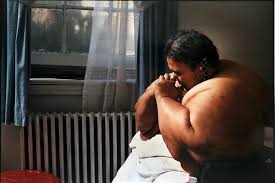
How much do you weigh? Walter Hudson weighed more, much more. This is his obituary.
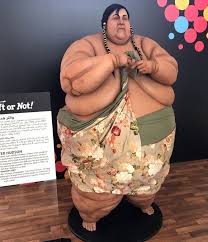
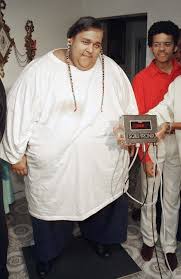
WALTER HUDSON, who has died at Hempstead, New York, age 46, was once listed in The Guinness Book of World Records as the heaviest man on earth. About 183 cm tall and 274 around, with cherubic features set off by pigtails braided in the Cherokee style, he long devoted himself to the pleasures of the table. Four years ago, Hudson-then tipping the industrial scales at his top weight of 543 kg gained worldwide notoriety (as “Whopping Walter”) when he became stuck in his bedroom door. He was wedged there for some four hours. It took eight firemen to free him.
Walter Hudson was born at Brooklyn in 1945 and, as he recalled, “began gorging at the age of six.” At 15 he was so obese his legs collapsed underneath him and he was confined to bed. Indeed, except for the time when his family moved to Hempstead in 1970 and he was transported by motor-car (his then 266kg broke the seat,) he remained inside. “I’m just a foodaholic,” he once confessed, “I have no excuse.”
Hudson’s eating habits were fuelled by food brought in by members of his family. He would generally start his day with a breakfast of two pounds of bacon, 32 sausages, a dozen eggs, a loaf of bread, jam and coffee.
For lunch, Hudson favoured four enormous bowls of rice, four double cheese- burgers, eight boxes of fried potatoes, six pies, and six large bottles of coca-cola. For dinner he would eat six roasted corns, half-a-dozen yams, and another six or seven baked potatoes, ending with a whole apple pie. Between these main meals, he would eat a chicken or two, followed by noodles, string beans, six large bottles of soda, not to mention colossal sandwiches, and copious amounts of ice-cream.
“All I cared about,” he recalled, “was food, FOOD!” When not eating and sleeping he would watch television, listen to tapes and read the Bible-he had a particular penchant for the psalms and was apt to recite Psalm 121. “I will lift up mine eyes unto the hills…”
Hudson, though, was advised against sitting up for longer than five minutes because of the risk of being smothered by flab. The only exercise he engaged in 8. was when he attended to his ablutions; it took him an hour to negotiate the six yards to the bathroom from his bedroom. Then in 1987, he found himself wedged in the door-way. “The day I got stuck in that door,” he recalled, “that when the Lord got me the help I needed.” The help to which he referred was offered by Dick Gregory, a comedian who masterminded the Slim Safe Diet Scheme.
“We think what might have happened,” said Gregory about his new client, “is that in 27 years of lying around he might, because of the reading of his Bible, have taken on the same characteristics as Buddhist monks – slowed down the biological processes. But we don’t know.” Gregory placed Hudson on a1,200 calorie-a-day diet of raw fruit and orange juice. For exercise he was advised to lie in bed waving his arms about like a conductor.
Hudson soon lost some four inches off his knees, and within three months had shed 178 kg. It began to look as if he might fulfil such ambitions as visiting his mother’s grave, riding on the New York subway, driving into the country-and even flying to a clinic in the Bahamas, from which he envisaged emerging as a sylph of 13 stones. 12. But it was not to be. At the time of his death, of an apparent heart attack, Hudson reportedly weighed 508 kg. Rescue workers had to cut a large hole in the wall of his bedroom to remove the body. He was unmarried.
SO HOW CAN OVERWEIGHT AND OBESITY BE REDUCED? It is not good for human body in this pandemic era……………….
Overweight and obesity, as well as their related noncommunicable diseases, are largely preventable. Supportive environments and communities are fundamental in shaping people’s choices, by making the choice of healthier foods and regular physical activity the easiest choice (the choice that is the most accessible, available and affordable), and therefore preventing overweight and obesity.At the individual level, people can:limit energy intake from total fats and sugars;increase consumption of fruit and vegetables, as well as legumes, whole grains and nuts; andengage in regular physical activity (60 minutes a day for children and 150 minutes spread through the week for adults).
The novel owes its existence to man’s interest in other men and the great panorama of human passion and action. Both the drama and the novel are compounded of the same material but in drama and the literary element is bound up with the elements of stage settings and interpretations through acting. So, Marion Crawford terms the novel as “Pocket theatre”. The novel may be defined as long narrative prose detailing the actions of fictitious people. Meredith calls it a ‘summing of actual life’. The novel combines narration and description, history and philosophy, poetry and fantasy, social criticism, and a particular view of life.
Elements of the Novel:
The novel has various elements.
In the first place, it should have a plot. The novel deals with elements and actions and how these are presented is the plot.
Secondly, the men and women who are involved in these elements and actions appear as characters in the novel.
The third element is the dialogue the mean of interaction among the characters.
The fourth element is the scene and the time of action because the characters must interact, do or suffer at some place or time.
The fifth element is the style in which the narration is done.
The Sixth Element is the view of life presented by the novelist.
The Plot:
The plot in a novel is the organization of incidents. The theme should have substantial value and human interest. It is primarily concerned with the things which make life strenuous, intense, and morally significant.
There are two types of plots – organic and episodic. In the first, the characters and events are well interwoven that no character or incident can be removed from the novel without causing damages to the whole. The plot and Jane Austen novels are examples. The second type of plot is loosely formed and characters and incidents have no essential bearing on each other. The picaresque novels of Fielding and even some of the novels of Dickens have episodic plots. How the various elements in the plot or organized to achieve a definite artistic purpose is called the structure. Unity in structure and plot is to be observed.
The Characterization:
Characterization is the act of presenting the characters alive and real to our imagination. The men and women in the novel must move through it like living beings they should remain in the readers’ memory after the novel is laid aside. There are two types of characterization – the direct or the analytic and the indirect or dramatic. In the analytical method, the novelist portrays his Characters from outside, dissects their passion, thoughts, and feelings, and even passes judgment upon them.
The Dialogue:
Dialogue is well managed, gives vividness, and actually to the plot and the characters. Dialogue reveals the passion and the emotion of the character and advises the movement of the plot. Dialogue should Constitute an organic element in the story. It should be natural, appropriate, and dramatic. It should be in keeping with the personality of the speaker.
The Time and Place of Action:
Time and place of action in a novel refer to the whole setting of the story, both social and material. They are novels of sea life, military life, industrial life of district life, and life of different classes of people. There are novels with a regional background; there are novels written in the historical background. whatever may be the setting, the novelist should master its details and then present a lively picture of it.
The novel is concerned with life and so the novelist’s view of life may be revealed in the novel. A novelist may make creative observations on human life. By the selection and organization of the material, and by the presentation of character and development of the plot, the novelist can show us what he thinks of life. However, the novelist should not indulge in propaganda or preaching. His philosophy is a part of the structure of the novel and should reveal itself through the interpretation of life, thought, character, and temper of the work as a whole.
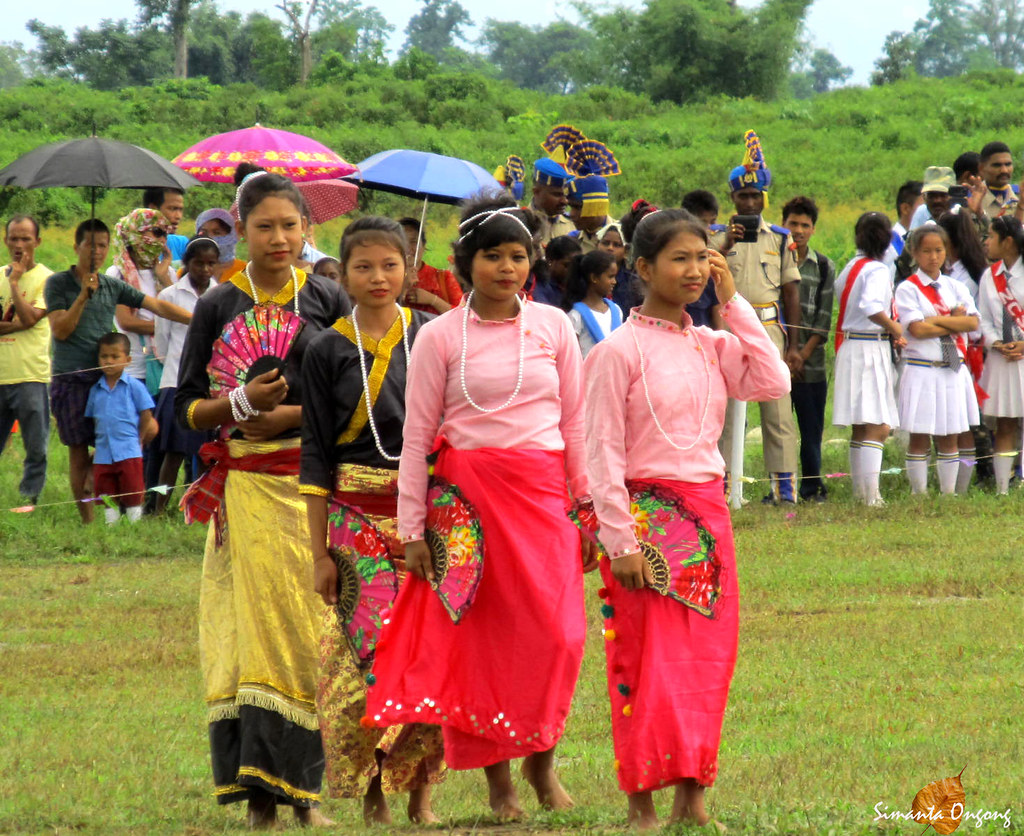
• Tribal Areas:- The tribal Areas in the States of Assam, Meghalaya, Tripura,Manipur are separately dealt with in Article 244(2), and provisions for their administration are to be found in the Sixth Schedule of the Indian Constitution.
• Sixth Schedule:- The 6th Schedule is related to the administration of the Tribal Areas in Assam, Meghalaya, Tripura, Manipur are specified in the table appended to the 6thSchedule( paragraph 20) of the Constitution, which has undergone several amendments originally. It consisted of two parts A and B. But since the creation of the State Nagaland, the table (as amended in 1972, 1984, 1988, 2003) includes 10 areas in four parts. These special provisions are provided under Article 244(2) and Article 275(1) of the Constitution.
Part I – (1) The North Cachar Hills District. (2) Karbi Anglong District. (3) Bodoland Territory Areas District.
Part II (I) – (1) Khasi Hills District. (2) Jaintia Hills District. (3) Garo Hills Districts (in Meghalaya)
Part II (A)- Tripura Tribal Areas District.
Part III – (1) The Chakma District. (2) The Mara District. (3) The Lai District
• Administration under Sixth Schedule:-
(1) Executive and Legislative powers- Under the provisions of the 6th Schedule of the Constitution of India, Autonomous District Councils can make laws, rules, and regulations in the areas like land management, water resources, forest management, agricultural, cultivation, formation of village councils, public health, sanitation, village, and town level planning, the appointment of traditional chiefs and headman, inheritance of property, marriage, and divorce, social customs, money-lending, mining and minerals.
• Judicial powers:- Autonomous District Councils have the powers to form courts to hear cases where both the parties are members of Scheduled Tribes and the maximum sentence, is less than 5years in prison. It has the power to settle certain types of civil and criminal cases also. Thus the councils under the 6th Schedule have been given more power than the local government under the 73rd and 74th Amendments of the Constitution 1992.
• Role of the Governor:- The Governor is empowered to determine areas under the administration of the councils. He has the authority to form a new Autonomous District. He can also increase or decrease the areas of any autonomous district, or district council. The act of Parliament or the State Legislature so not apply to Autonomous Districts and Autonomous Regions or apply by specified modifications and exceptions. He is also empowered to unite two or more districts or its part to carve out one autonomous district from it. The Governor can also define the boundaries or alter the name of any autonomous district.
• District Councils and Regional Councils:- Each District Council and Regional Council consists of not more than 30 members of which 4 are nominated by the Governor and the rest via elections. All of them remain in the power for a term of 5years. District Council and Regional Council under the 6th Schedule have the real power for making laws on various legislative subjects.
• Taxation Revenue:-
(1) The Regional Council and Autonomous District Councils have the powers to assess and collect revenue concerning such lands by the principles for the time being followed by the government of the State.
(2) They also have the power to levy/collect all taxes on lands, buildings, and tolls on a person resident within the area.
(3) It also has the power to levy/ collect all or any of the following taxes:
(i) Profession, trades, callings, employments.
(ii) Animals, vehicles, boats
(iii) Entry of goods into a market, and tolls on passengers, goods carried in ferries.
(iv) Maintenance of schools, dispensaries, or roads.








 Eduindex
You must be logged in to post a comment.