Journalism and mass media

INTRODUCTION:-

Journalism and mass communication graduates work nationwide and worldwide at newspapers and magazines and in advertising, branding, broadcast news, social media, marketing, media research, photojournalism, publication design, public relations, radio, and other areas

Journalism:-

Journalism is the activity of gathering, assessing, creating, and presenting news and information. It is also the product of these activities.Journalism can be distinguished from other activities and products by certain identifiable characteristics and practices. These elements not only separate journalism from other forms of communication, they are what make it indispensable to democratic societies. History reveals that the more democratic a society, the more news and information it tends to have.

JOURNALISM ESSENTIALS

  1. What is journalism?
  2. What makes journalism different than other forms of communication?
  3. What is the purpose of journalism?
  4. The elements of journalism
  5. What does a journalist do?
  6. The journalist as a ‘committed observer’
  7. The theory of the interlocking public
  8. Bias and objectivity
  9. The lost meaning of ‘objectivity’
  10. Understanding bias

1.What is journalism?

Journalism is the activity of gathering, assessing, creating, and presenting news and information. … Journalism can be distinguished from other activities and products by certain identifiable characteristics and practices.

2. What makes journalism different than other forms of communication?

The vast majority of this communication, however, is not news and especially not journalism. Almost 70 percent of email traffic is spam, according to web security company Symantec. In 2012, there were an average of 175 million tweets each day. But almost all – 99% — consisted of “pointless babble,” according to researchers at Carnegie Mellon University.

3. What is the purpose of journalism?

“The purpose of journalism,” write Bill Kovach and Tom Rosenstiel in The Elements of Journalism, “is not defined by technology, nor by journalists or the techniques they employ.” Rather, “the principles and purpose of journalism are defined by something more basic: the function news plays in the lives of people.”

4. The elements of journalism?

In their book The Elements of Journalism, Bill Kovach and Tom Rosenstiel identify the essential principles and practices of journalism. Here are 10 elements common to good journalism, drawn from the book.

5. What does a journalist do?

Asking who is a journalist is the wrong question, because journalism can be produced by anyone.At the same time, merely engaging in journalistic-like activity – snapping a cell-phone picture at the scene of a fire or creating a blog site for news and comment – does not by itself produce a journalistic product. Though it can and sometimes does, there is a distinction between the act of journalism and the end result.

6. The journalist as a ‘committed observer’

Gil Thelen, the former publisher and president of The Tampa Tribune, believes the journalist has a very specific role in society. He calls it the “committed observer.” What he means by that, Thelen explains, is that the journalist is not removed from community, though at times may stand apart from others so as to view things from a different perspective.

7. The theory of the interlocking public

The splintering of mass media audiences and the migration of information consumers to tens of thousands of niche web sites is further evidence that everyone is interested, and expert, in something. The diversity and magnitude of the public, in fact, is its strength. A mix of publics is usually much wiser than a public comprised of just the elite or one segment of special interest.

8. Bias and objectivity

Journalism attempts to be fair and accurate. It does this through objective methods and managing bias. The guides in this section help you understand and navigate those processes.

9. The lost meaning of ‘objectivity’

One of the great confusions about journalism, write Bill Kovach and Tom Rosenstiel in The Elements of Journalism, is the concept of objectivity. When the concept originally evolved, it was not meant to imply that journalists were free of bias. Quite the contrary. The term began to appear as part of journalism after the turn of the 20th century, particularly in the 1920s, out of a growing recognition that journalists were full of bias, often unconsciously. Objectivity called for journalists to develop a consistent method of testing information – a transparent approach to evidence – precisely so that personal and cultural biases would not undermine the accuracy of their work.

10. Understanding bias

For a time, “bias” was the term of choice to describe anything people hated about journalism, whether the power and influence of corporate news organizations to the choices reporters made in writing individual stories. In 2001, in fact, a book about media unfairness entitled “Bias” was number one on the New York Times bestseller list. In recent years the public seems to have adopted a more nuanced view of bias.  Perhaps this is because many critics have found their voice online – where studies confirm that half the blogs contain just the author’s opinion – or that one-sidedness has become a successful business model, as Fox News Channel and MSNBC have demonstrated.

What Is Mass Media?

INTRODUCTION:-

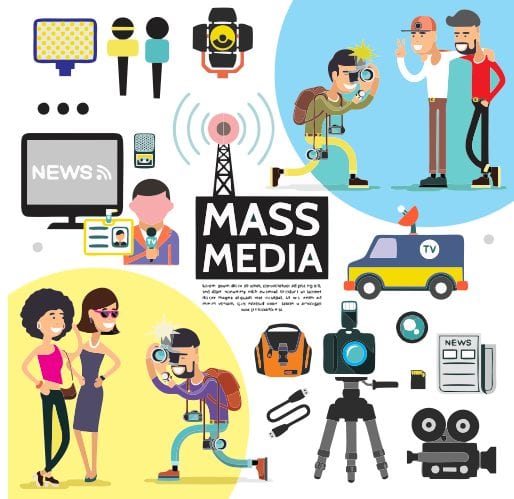
Mass media is communication that is to a large group, or groups, of people in a short time (Mass Media, 2013, p. … This can be written, spoken or broadcast communication. Some of the most popular forms of mass media are newspapers, magazines, radio, advertisements, social media, television, Internet, and films/movies.

Mass Media:-

Think about this for a second: whenever you want to hear your favorite song, watch your favorite show, or see the latest current events, where do you go? You more than likely turn on your television, radio, or computer. The source that the majority of the general public uses to get their news and information from is considered mass media.Mass media means technology that is intended to reach a mass audience. It is the primary means of communication used to reach the vast majority of the general public. The most common platforms for mass media are newspapers, magazines, radio, television, and the Internet. The general public typically relies on the mass media to provide information regarding political issues, social issues, entertainment, and news in pop culture.

There are 6 main types of Mass Media:

  1. Traditional Media
  2. Print Media
  3. Electronic/Broadcasting Media
  4. Outdoor Media or Out of Home Media (OOH)
  5. Transit Media
  6. Digital Media/New Media/Internet

1. Traditional Media:-
People have developed different ways of communication depending upon their local language and culture. Traditional media is one of the oldest types of mass media to transfer traditions and culture over generations. The tools of communication have been developed from beliefs, customs, rituals, and practices of society. Traditional media imparts indigenous ways of communication for ages. Further, this type of mass media varied as per each culture and society as every culture has their own mediums to communicate to their mass audience. Thus, the traditional media can be folk songs, dances, folktales and folklore as well as paintings, sculptures, stupas, statues and fairs, festivals, rural or community radio and announcement mediums like nagada, etc.

Forms of Traditional Media

  • Folk Dances
  • Folk Songs and Music
  • Theatre, Drama, and Folktales
  • Painting, Sculptures, Inscriptions, Statues, and Stupas
  • Motifs and Symbols
  • Announcements made by beating drums or ‘nagada’
  • Shadow Puppetry and String Puppetry
  • Storytelling
  • Nautanki
  • Fairs and Festivals
  • Rural Radio

2. Print Media

In simple words, Print Media is all about the printed form of information and news. Before the invention of the printing press, printed materials had to be hand-written that made mass distribution almost impossible. Print media is one of the basic types of mass media tools making it very popular and convenient to reach a wider audience. Newspapers are considered as the oldest forms of mass media after the traditional mass media as for a long period of time, the general public relied on newspapers to know the latest happenings in their local areas as well as from around the world. Thus, print media originally refers to newspapers and then expanded towards magazines, tabloids, promotional brochures, journals, books, novels and comics.

Forms of Print Media

  • Newspapers (broadsheet and tabloid)
  • Periodicals, Newsletters, and Magazines (general or specific interest)
  • Brochures, Leaflets and Pamphlets
  • Journals
  • Books, Novels and Comics

3. Electronic/Broadcasting Media

Broadcasting is simply a distribution of audio and video content to a dispersed audience using the electronic broadcasting medium. Originally the term ‘broadcasting’ referred to the sowing of seeds on farms by scattering them over the large field. Broadcast media allows ease of news dissemination to even an illiterate person because it appeals to both the auditory and visual senses making it one of the most lucrative types of mass media. Centuries later after the newspapers were used as the original mass media, the advent of radio and television happened. Radio was the primary medium of news for the general public during wars as well as for sports and entertainment. When television was invented, it became the most effective type of mass media as it was primarily used for news dissemination and then for TV shows, live events and other entertainment purposes.

Forms of Broadcasting Media

  • Television
  • Radio (AM, FM, Pirate Radio, Terrestrial Radio, and Satellite)
  • Traditional Telephone
  • Film/Movie/Motion Picture
  • Video Games
  • Audio Recording and Reproduction

4. Outdoor Media or Out of Home Media (OOH)

This is also known as OOH or Out-of-Home Media and is focussed on transmitting information and news when the public is outside their home. Outdoor media gives importance to display advertising and attracting individuals towards new products, some social cause or any development or change in the society. These are prominent in brand promotion seen on buildings, streets, electric polls, roadside, vehicles, screens, kiosks, etc. This is one of the most prominent types of mass media used for commercial as well as public welfare advertising and mainly includes billboards, banners, posters, brochure distribution, ComPark Advertising, Wallscape, amongst others!

Forms of Outdoor Media

  • Billboards or Bulletins
  • Inflatable Billboards
  • Mobile Billboards
  • Banner
  • Lamppost Banners
  • Posters
  • Signs and Placards
  • Blimps, Skywriting
  • Brochure distribution
  • ComPark Advertising
  • Wallscape

5. Transit Media

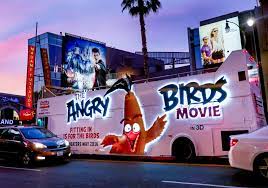
Transit Media revolves around the concept of advertising and information dissemination when consumers are “on the go” in public places or in transit. These include display advertising on vehicles and transportation. With the aim “driving home a message” transit media is significantly used for massive brand promotion to millions of people who travel the country’s streets and highways every day.Some people might think that this type of mass media is outdated or ineffective, yet it is widely visible on the sides of buses, in subway cars, at transit stations where passengers enter or disembark from public transportation.

Forms of Transit Media

  • Bus Advertising
  • Railway Advertising
  • Taxi Advertising
  • Transit Shelter Advertising

6. Digital Media/New Media/Internet

Since the invention of the World Wide Web by English scientist Tim Berners-Lee in 1989, the Internet has drastically taken over all the types of mass media because of faster dissemination speed and higher digital technology. New Media is an interactive two-way communication with users being the active producers of content and information. The Internet is considered as a highly interactive mass medium and can be simply defined as the “network of networks”. It has quickly transformed as the centre of the mass media as it has marvellously integrated all the prominent types of mass media. Now, you can see news websites, broadcasted TV shows as well as listen to online radio using the internet and this is also called as the convergence of mass media!New Media is normally a re-conceptualization of the existing media. This is a rapidly growing mass media with the ease of accessibility with a computer and an Internet connection (broadband or WiFi). From Story Writing and Graphic Designing to Multimedia and Animation, pursuing a career in this field can be highly advantageous.

Forms of Digital Media

  • Websites
  • Emails
  • Social Media and Social Networking Sites (SNS)
  • Webcast and Podcast
  • Blogging and Vlogging
  • IPTV (Internet Protocol Television)
  • E-forums and E-books
  • E-commerce and M-commerce
  • Digital Videos
  • Computer Animation
  • Digital Video Games
  • Human-Computer Interface
  • Virtual World & Virtual Reality
Reference Link:-

https://www.americanpressinstitute.org/journalism-essentials/what-is-journalism/

https://leverageedu.com/blog/types-of-mass-media/

GRATITUDE- A LIFE CHANGING HABIT

Gratitude is  the characteristic of being joyful and is the willingness to express gratitude for and reciprocate kindness. According to Harvard medical school “People express thanks for the wonderful things in their lives As a consequence of which gratitude allows people to connect to something bigger than themselves whether it’s other people, nature, or a greater force.” 

It serves as a reminder that you have enough and that you are sufficient. 

Gratitude is a life changing habit because it has plethora of scientifically validated advantages. People who consistently practice gratitude in their daily lives by setting aside time to notice and reflect on the things for which they are grateful about get endless advantages as follows:-

  • Enhances mental well-being

Gratitude has a significant positive effect on psychological well-being. It boosts our self-esteem, stimulates positive thoughts, and elevates our optimism. In an older research from 2003 it has been found out that gratitude was connected to enhanced mood. Recently, According to a study published in 2020, expressing thankfulness on a regular basis might help alleviate anxiety and depressive symptoms.

  • Immune system booster

Gratitude has been demonstrated to aid in the development of a positive attitude. Over the years various researches have been conducted which shows improved immune system and lower stress levels as a result of practicing gratitude. According to a 2004 assessment of data, stress reduces the immune response to possible physiological threats, but mental well-being can assist your body fight sickness which can be done by being thankful. 

  • It multiplies happiness and makes you a happier person 

Many researchers have found out that Gratefulness and happiness are inextricably linked. Practicing to be grateful might be a simple and effective strategy to increase your happiness. Gratitude, whether expressed or received, makes both people happier and allows them to see things in a more positive light which helps in lowering our focus on negative emotions and accepting everything about our situation if its bad and good.

  • It also helps in building better relations 

Gratitude is essential in the formation of new connections as well as the strengthening of old ones. According to a 2010 study, spouses who expressed appreciation to one another reported higher relationship satisfaction and pleasure the next day. Thus, it can be said that Gratitude might make couples feel more happy with one other in love relationships and help them in building a strong relationship with each other.

  • Boosts optimism

It also makes a person optimistic who thinks that good things will happen. It can be concluded by seeing the result of 2018 study which states that gratitude practice might help you create an optimistic perspective if you’re not typically optimistic. A study was also conducted in 2003 on participants in which Participants felt more hopeful and positive about their current lives and the future after just 10 weeks of frequent gratitude practice.

So, I want to conclude that Gratitude is essential for bringing about change in one’s life. It relieves tension, makes you humble, and improves the quality of your relationships. It takes away your bad energy and replaces it with positivity. I believe that everyone should master the art of thankfulness in order to witness a positive shift in their lives. It can be done by making a gratitude journal of your own, meditation and Paying attention to the small pleasures in life which will offer you a lot of delight andshall almost certainly have a beneficial long-term impact on your mental health and well-being, if practiced daily. 

Introduction about different Schools, Colleges, Universities

Introduction about different Schools:-

INTRODUCTION:-

ust as teachers may teach a broad spectrum of subject matter from math, science, English, to foreign languages, technology and the arts, they also teach across a wide age range and in many different classroom settings around the country.

The specific type of school in which a teacher teaches can have a huge impact on many aspects of their teaching career. From public schools — including magnet schools, charter schools, urban schools, rural schools and high needs schools — to private schools including military schools and boarding schools, every classroom setting is different and each has it’s own unique benefits and challenges. Deciding where you are best able to make a difference can be difficult.

Learn more about each type of schools to help you decide where you can fit in best:

  • Public Schools
  • Charter Schools
  • Magnet Schools
  • Private Schools
  • High Needs Schools
  • Urban Schools
  • Rural Schools

1. Public Schools:-

 A public school is government funded and all students attend free of cost.Because of funding from several sources, private schools may teach above and beyond the standard curriculum, may cater to a specific kind of students (gifted, special needs, specific religion/language) or have an alternative curriculum like art, drama, technology etc. Public schools have to adhere to the curriculum charted out by the district, and cannot deny admission to any child within the residential school zone.Public schools are often thought of as shoddy, less disciplined and low-grade curriculum.

2. Charter Schools:-

A charter school is a public school that operates as a school of choice. Charter schools commit to obtaining specific educational objectives in return for a charter to operate a school. Charter schools are exempt from significant state or local regulations related to operation and management but otherwise adhere to regulations of public schools — for example, charter schools cannot charge tuition or be affiliated with a religious institution.In other words, charter schools are publicly accountable — they rely on families choosing to enroll their children, and they must have a written performance contract with the authorized public chartering agency. Charter schools are also autonomous — they have more flexibility in the operations and management of the school than traditional public schools.

3. What Is A Magnet School:-

Unlike charter schools or private schools, a magnet school is part of the local public school system. At regular public schools, students are generally zoned into their schools based on the location of their home – students go to the school that is nearest where they live. However, this may not always be true since boundaries can seem arbitrary and in some smaller towns schools are not zoned at all. But, magnet schools exist outside of zoned school boundaries. Whereas private schools are completely separate from local public school districts, and charter schools are public schools with private oversight, magnet schools remain part of the public school system and operate under the same administration and school board.

4. Private Schools:-

Many of the private primary and secondary schools in the United States were founded by religious institutions in order to incorporate religious beliefs and teachings into their students’ education, integrating it with a traditional academic curriculum. Some of the first religious schools were founded by the Catholic Church, and these parochial schools are still prevalent amongst private schools. Since then, however, many other religious denominations have started schools to provide religious education, and families often choose to enroll their children in schools whose policies reflect their own values. Nowadays, Protestant, Jewish, Muslim, Orthodox Christian and other religiously based schools are quite common. In addition, some private schools, boarding schools and military academies, offer their own unique approaches to education.

5. High Needs Schools:-

The No Child Left Behind Act of 2001 External link  defines a high-needs school as “within the top quartile of elementary and secondary schools statewide, as ranked by the number of unfilled, available teacher positions; or is located in an area where at least 30 percent of students come from families with incomes below the poverty line; or an area with a high percentage of out-of-field-teachers, high teacher turnover rate, or a high percentage of teachers who are not certified or licensed.” Essentially, high needs schools require teachers because they cannot fill job vacancies or retain teachers, or they have teachers who are not qualified or who teach in subjects outside their field. High-needs schools also serve communities of higher poverty rates, where classrooms are influenced by the difficulties of their students’ lives. Most high-needs schools are located in rural or urban areas.

6. Urban Schools:-

When thinking of high need schools, the first thing that comes to mind for many people is the image of an inner city school, crowded and poorly funded. The truth is, while this is a stereotype and many urban schools perform exceptionally well, there are still urban schools across the country that are in high need of teachers and resources.At the most technical level, urban schools are classified as city schools by the National Center for Education Statistics External link  (NCES). The NCES categorizes all schools into four locales by their size, population density and location in relation to a city. This is an “urban-centric” classification system. The four locale categories used by the NCES’ urban centric classification system External link  are city, suburb, town and rural. Urban schools are then broken down into three subcategories based on the Census Bureau External link ’s definitions of urbanicity:

7. Rural Schools:-

Ultimately, the technical definition of a rural school corresponds to our general understanding of rural areas; they are characterized by geographic isolation and small population size. All schools are categorized into four locales by their size, population density and location. The National Center for Education Statistics External link  (NCES) defines these locales by the school’s proximity to a city an “urban-centric” classification system. The four locale categories used by the NCES’ urban centric classification system External link  are city, suburb, town and rural. Rural schools are then broken down into three subcategories based on the Census Bureau External link ’s definitions of urbanicity. Rural schools are also all classified as high need schools.

Introduction about different Colleges:-

INTRODUCTION:-

college (Latin: collegium) is an educational institution or a constituent part of one. A college may be a degree-awarding tertiary educational institution, a part of a collegiate or federal university, an institution offering vocational education, or a secondary school.

In most of the world, a college may be a high school or secondary school, a college of further education, a training institution that awards trade qualifications, a higher-education provider that does not have university status (often without its own degree-awarding powers), or a constituent part of a university. In the United States, a college offers undergraduate programs; it may be independent or the undergraduate program of a university, it is generally also used as a synonym for a universitywhile in some instances a college may also be a residential college. A college in francophone countries [fr]—France (see secondary education in France), Belgium, and Switzerland—provides secondary education. However, the Collège de France is a prestigious advanced research institute in Paris.

Learn more about each type of colleges to help you decide where you can fit in best:

  • Community and Junior Colleges
  • Historically Black Colleges and Universities 
  • Liberal Arts Colleges
  • Women’s Colleges
  • Tribal Colleges
  • Technical Institutes and Professional Schools

1. Community and Junior Colleges:-

These colleges offer the first two years of a liberal arts education, as well as career or vocational training. Successful completion of a community or junior college curriculum earns graduates an associates degree. Many students continue on to a four-year institution after completing a community or junior college program.

2. Historically Black Colleges and Universities:-

These colleges originated when African-American students were legally denied access to most other institutions of higher education. Now, these colleges celebrate African-American culture and empowerment, and give black students the chance to experience an educational community in which they are finally part of the majority. A common abbreviation for this type of college is HBCU.

3. Liberal Arts Colleges:-

These colleges focus on the education of undergraduate students (students who are earning a bachelors degree). Classes are generally taught by professors who see teaching as their primary responsibility. Because most liberal arts colleges are smaller than universities, classes tend to be smaller and more personal attention  is available. Instead of preparing for a specific career path, students who attend liberal arts colleges are exposed to a broad sampling of classes. In addition, they select at least one area of in-depth study that is their college “major.” Many employers look for graduates of liberal arts programs.

4. Women’s Colleges:-

These colleges offer women the opportunity to enjoy a learning community where they are in the majority. Additionally, these colleges have a much larger population of female faculty and administrators. Women’s colleges graduate a high number of science majors, as well as students who continue on to graduate school or professional studies.

5. Tribal Colleges:-

Like HBCUs or Women’s colleges, these colleges focus on the needs and education of a group that has been traditionally underrepresented in higher education. In this case, these colleges focus on the education and empowerment of Native American students while celebrating a specific tribe’s unique culture and accomplishments.

6. Technical Institutes and Professional Schools:-

These colleges or institutes enroll students who have made a choice as to what career path they are taking. The curriculum at these colleges focuses solely on preparing students for these specific careers. Most of the career options offered at these colleges are in music, fine arts, engineering, or technical sciences.

Introduction about different Universities:-

INTRODUCTION:-

The original Latin word universitas refers in general to “a number of persons associated into one body, a society, company, community, guild, corporation, etc”. At the time of the emergence of urban town life and medieval guilds, specialized “associations of students and teachers with collective legal rights usually guaranteed by charters issued by princes, prelates, or the towns in which they were located” came to be denominated by this general term. Like other guilds, they were self-regulating and determined the qualifications of their members.

In modern usage the word has come to mean “An institution of higher education offering tuition in mainly non-vocational subjects and typically having the power to confer degrees,” with the earlier emphasis on its corporate organization considered as applying historically to Medieval universities.The original Latin word referred to degree-awarding institutions of learning in Western and Central Europe, where this form of legal organisation was prevalent and from where the institution spread around the world.

Learn more about each type of Universities to help you decide where you can fit in best:

  • Central universities, or Union universities
  • State Universities
  • Private Universities
  • Deemed university

1. Central universities, or Union universities:-

in India are established by an Act of Parliament and are under the purview of the Department of Higher Education in the Ministry of Education.In general, universities in India are recognised by the University Grants Commission (UGC), which draws its power from the University Grants Commission Act, 1956.In addition, 15 Professional Councils are established, controlling different aspects of accreditation and coordination.Central universities, in addition, are covered by the Central Universities Act, 2009, which regulates their purpose, powers, governance etc., and established 12 new universities.As of 1 June 2020, The list of central universities published by the UGC includes 54 central universities.

Other types of universities controlled by the UGC include:

  • State universities are run by the state government of each of the states and territories of India, and are usually established by a local legislative assembly act.
  • Deemed university, or “Deemed-to-be-University”, is a status of autonomy granted by the Department of Higher Education on the advice of the UGC, under Section 3 of UGC Act, 1956.
  • Private universities are approved by the UGC. They can grant degrees but they are not allowed to have off-campus affiliated colleges.

Apart from the above universities, other institutions are granted the permission to autonomously award degrees. These institutes do not affiliate colleges and are not officially called “universities” but “autonomous organisations” or “autonomous institutes”. They fall under the administrative control of the Department of Higher Education.These organisations include the Indian Institutes of Technology, the National Institutes of Technology, the Indian Institutes of Science Education and Research, the Indian Institutes of Engineering Science and Technology, the Indian Institutes of Management, the National Law Schools, the All India Institute of Medical Sciences, and other autonomous institutes.

2. State Universities:-

State universities are run by the state government of each of the states and territories of India, and are usually established by a local parliament act. As of 26 August 2011, the UGC lists 281 state universities, around 170 of which are receiving Central/UGC assistance. The oldest establishment date listed by the UGC is 1857, shared by the University of Mumbai, the University of Madras and the University of Calcutta.

In India, state universities are run and funded by the state government of each of the states of India.Following the adoption of the Constitution of India in 1950, education became a state responsibility. Following a constitutional change in 1976, it became a joint responsibility of the states and the central government.As of 17 March 2021, the UGC lists 426 state universities.

3. Private Universities:-

Private universities are approved by the UGC. They can grant degrees but they are not allowed to have off-campus affiliated colleges. The UGC list from 1 September 2011 lists 94 private universities.

Private universities and private colleges are usually not operated by governments, although many receive tax breaks, public student loans, and grants. Depending on their location, private universities may be subject to government regulation. This is in contrast to public universities and national universities. Many private universities are nonprofit organizations.

4. Deemed university:-

Deemed university, or deemed-to-be-university, is an accreditation granted to higher educational institutions in India, conferring the status of a university. It is granted by the Department of Higher Education.To quote the Ministry of Human Resource Development (MHRD), “An Institution of Higher Education, other than universities, working at a very high standard in specific area of study, can be declared by the Central Government on the advice of the University Grants Commission (UGC), as an Institution ‘Deemed-to-be-university’. Institutions that are ‘deemed-to-be-university’ enjoy the academic status and privileges of a university.”

Deemed university, or “Deemed-to-be-University”, is a status of autonomy granted by the Department of Higher Education on the advice of the UGC, under Section 3 of UGC Act, 1956. The UGC list from 23 June 2008 lists 130 deemed universities. According to this list, the first institute to be granted deemed university status was Indian Institute of Science which was granted this status on 12 May 1958. Note that in many cases, the same listing by the UGC covers several institutes. For example, the listing for Homi Bhabha National Institute covers the Institute of Mathematical Sciences, the Indira Gandhi Centre for Atomic Research and other institutes. The list below includes only the major institute granted the status, and such additional institutes are not listed separately.

Reference Link:-

https://teach.com/careers/become-a-teacher/where-can-i-teach/types-of-schools/rural/

https://www.cappex.com/articles/match-and-fit/the-different-types-of-colleges

https://sites.google.com/site/universitiesindiaonline/types-of-universities-in-india

PROBLEM OF GARBAGE IN INDIA

Urban India generates 62 million tonnes of waste (MSW) annually, and it has been predicted that this will reach 165 million tonnes in 2030. 43 million tonnes of municipal solid waste is collected annually, out of which 31 million is dumped in landfill sites and just 11.9 million is treated.

Burying garbage also causes both air and water pollution, and simply transporting it to the sites consumes an increasing amount of valuable fossil fuels, which produces more pollution and other problems. Buried in a landfill, the typical plastic trash bag takes 1,000 years to degrade, giving off toxins as it does.

The reason why most landfill sites are over-flowing is because the current waste disposal system is flawed. Nearly 20% of methane gas emissions in India is caused by landfills. The trash dumped in the landfills are prone to catching fire due to the heat generated by the decomposition of waste.

The amount of rubbish produced by an average household has increased dramatically over the last few decades. This trend is mainly due to consumption and abundance of plastic. … Now they buy packed food from supermarkets which creates a myriad of plastics waste through its packaging.

India faces major environmental challenges associated with waste generation and inadequate waste collection, transport, treatment and disposal. Current systems in India cannot cope with the volumes of waste generated by an increasing urban population, and this impacts on the environment and public health.

Steps we can take to ensure the environment clean —

• Donate Clothes.

• Reduce Food Waste.

• Meal Plan.

• Eat Healthy.

• Save Leftovers for Next Day.

• Buy Things in Bulk with Less Packaging.

• Avoid Food Wrapped In Plastic.

• Bring Your Own Bag.

• Avoid plastic and one time usable plastic

Energy from waste can be used to produce heat or electricity, which might then replace the energy produced using coal or other fuels. Energy recovery of waste can thus help reduce greenhouse gas emissions. Recycling can help even more to lower greenhouse gas emissions and other emissions

Proper waste management helps improve the quality of water and air, as well as reduce the emission of greenhouse gases. … So, when they collect the waste, they are usually salvaged for redistribution, recycling and reuse. By booking a skip bin, you can reduce pollution and lower the demand for producing new materials.

IMPACT OF COVID-19 ON EDUCATION IN INDIA

India is the one of best and largest place for education systems in the world.

India is the country with over 1,000 universities and 50,000 colleges and institutions. The impact of covid 19 is observed in every sector around the world. The education sectors of India as well as world are badly affected by this.

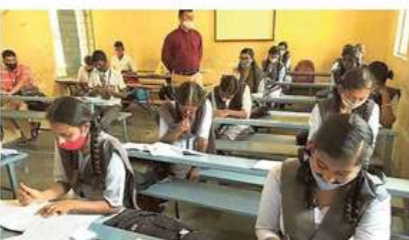
Due to this pandemic, around 32 crore learners stopped to move schools/ colleges, all educational institutions are halted in India. COVID-19 made all the institutions to grow and opt for platforms , techniques, that are not used before. All the classes suspended and all the examinations, entrance tests are postponed.

This pandemic completely destroyed all the schedules of every student. COVID-19 Impact on education is also leads a great damage on country economy at present and in future.

COVID-19 has created many opportunities and challenges for educational institutions to strengthen their technological knowledge and infrastructure.

The lockdown made the entire education online, the teachers are teaching and assigning works through online by using some apps like zoom, Google meet, teams, YouTube, Facebook, skype .,etc.

India is not fully equipped to make education reach every corner of the country through online process. The students those who are not having access to internet will suffer a lot due to the present choice of digital platforms.

Universities and the government of India are relentlessly trying to come up with a solution to this problem.

WINDOWS XP

Windows XP is still going strong

Windows XP is a line of proprietary operating system which was developed by Microsoft and is meant to be used for general purpose computers , such as home computers and business desktops , notebook computers and various types of media centres . Windows XP succeeds Windows 2000 and Windows ME , and is the first consumer – oriented operating system produced by Microsoft to be built on the Windows NT kernel and architecture . The most popular operating systems versions are Windows XP Home Edition , which is primarily meant for home users , and Windows XP Professional , which boasts additional features , such as support for Windows Server domains and dual processors , and is meant for professionals and other experts . Windows XP Media Centre Edition has additional multimedia features . Windows XP has an edge over the earlier versions of Microsoft Windows because of enhanced efficiency and better stability .

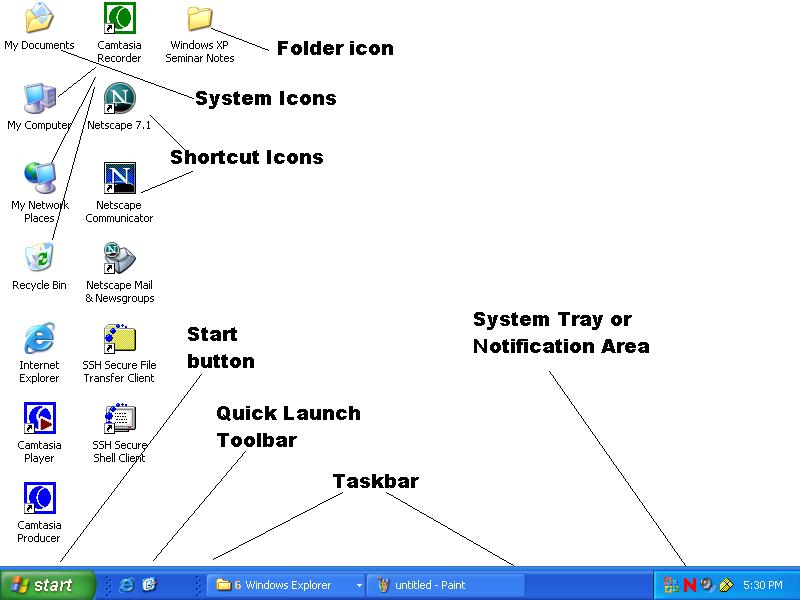
Windows XP helps you access and manage your files on the pc using a Graphical _User Interface GUI . All Programs and files stored on the PC are represented as pictures that are called icons . These icons are stored on the desktop .

Components of Windows XP

Windows XP

The Windows XP user interface consists of various components and concepts that help make Windows XP user friendly and intuitive . Some of the important components are :-

  1. Desktop
  2. Start Menu
  3. Taskbar
  4. Icons
  5. Recycle Bin
  6. Windows
  7. Applications
  8. Folders
  9. Files
  10. Control Panels

NIPUN BHARAT

National Initiative for Proficiency in Reading with
Understanding and Numeracy (NIPUN Bharat).

• Under Department of School Education and
Literacy, Ministry of Education

• Important step for implementation of the
National Education Policy (NEP) 2020.

• Vision: To create an enabling environment to
ensure universal acquisition of foundational
literacy and numeracy.
 To ensure that every child achieves the
desired learning competencies in reading,
writing and numeracy by the end of Grade 3.
 To be achieved by 2026-27.
• Under the aegis of the centrally sponsored scheme
of Samagra Shiksha.

• A five-tier implementation mechanism.
 At the National- State- District- Block- School
level in all States and UTs.

• It may emphasise goal setting and accountability
for State governments.
 Guidelines for teacher training, assessment and
the creation of printed resources etc.

• NEP 2020: achieve universal foundational literacy
and numeracy in primary school by 2025.
 Target postponed due to academic disruptions
caused by Covid19.

Wireless Energy Transfer-Tesla’s Dream

WPT- Wireless Power Transmission
Wireless Power Transfer holds the promise of freeing us from the tyranny of power cords. This technology is being incorporated into all kinds of devices and systems.

Wireless Power Transfer holds the promise of freeing us from the tyranny of power cords. This technology is being incorporated into all kinds of devices and systems. Let’s take a look!
The Wired Way
The majority of today’s residences and commercial buildings are powered by alternating current (AC) from the power grid. Electrical stations generate AC electricity that is delivered to homes and businesses via high-voltage transmission lines and step-down transformers.
Electricity enters at the breaker box, and then electrical wiring delivers current to the AC equipment and devices that we use every day—lights, kitchen appliances, chargers, and so forth.
All components are standardized and in agreement with the electrical code. Any device rated for standard current and voltage will work in any of the millions of outlets throughout the country. While standards differ between countries and continents, within a given electrical system, any appropriately rated device will work.
Here a cord, there a cord. . . . Most of our electrical devices have AC power cords.


Wireless Power Technology
Wireless Power Transfer (WPT) makes it possible to supply power through an air gap, without the need for current-carrying wires. WPT can provide power from an AC source to compatible batteries or devices without physical connectors or wires. WPT can recharge mobile phones and tablets, drones, cars, even transportation equipment. It may even be possible to wirelessly transmit power gathered by solar-panel arrays in space.
WPT has been an exciting development in consumer electronics, replacing wired chargers. The 2017 Consumer Electronics Show will have many devices offering WPT.
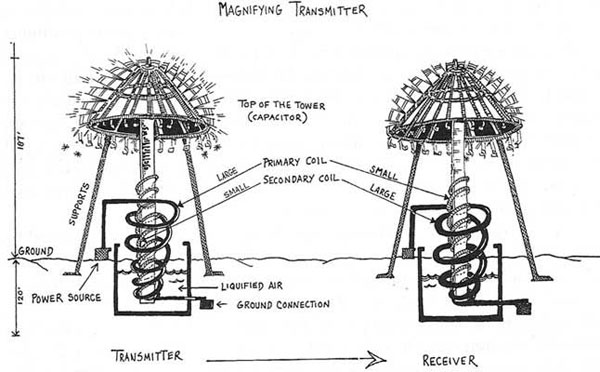
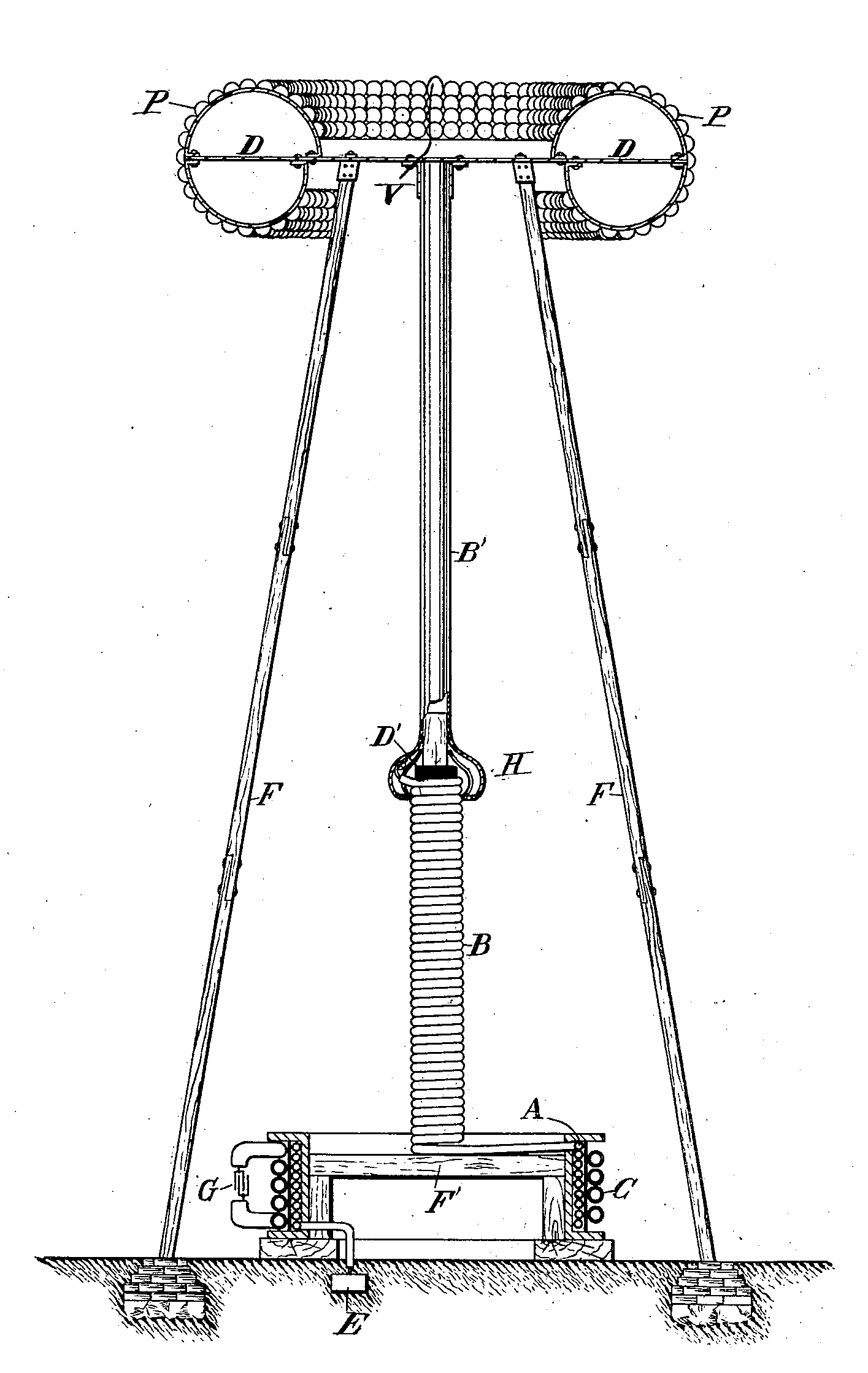
The concept of transferring power without wires, however, has been around since the late 1890s. Nikola Tesla was able to light electric bulbs wirelessly at his Colorado Springs Lab using electrodynamic induction (aka resonant inductive coupling).
 

An image from Tesla’s patent for an “apparatus for transmitting electrical energy,” 1907.
 
Three light bulbs placed 60 feet (18m) from the power source were lit, and the demonstration was documented. Tesla had big plans and hoped that his Long Island-based Wardenclyffe Tower would transmit electrical energy wirelessly across the Atlantic Ocean. That never happened owing to various difficulties, including funding and timing.
WPT uses fields created by charged particles to carry energy between transmitters and receivers over an air gap. The air gap is bridged by converting the energy into a form that can travel through the air. The energy is converted to an oscillating field, transmitted over the air, and then converted into usable electrical current by a receiver. Depending on the power and distance, energy can be effectively transferred via an electric field, a magnetic field, or electromagnetic (EM) waves such as radio waves, microwaves, or even light.

 
Qi Charging, an Open Standard for Wireless Charging
While some of the companies promising WPT are still working to deliver products, Qi (pronounced “chee”) charging is standardized, and devices are currently available. The Wireless Power Consortium (WPC), established in 2008, developed the Qi standard for battery charging. The standard supports both inductive and resonant charging technologies.
Inductive charging has the energy passing between a transmitter and receiver coil at close range. Inductive systems require the coils to be in close proximity and in alignment with each other; usually the devices are in direct contact with the charging pad. Resonant charging does not require careful alignment, and chargers can detect and charge a device at distances up to 45mm; thus, resonant chargers can be embedded in furniture or mounted in shelving.
 

The Qi logo displayed on the Qimini wireless charging plate. Image courtesy of Tektos.
 
The presence of a Qi logo means the device is registered and certified by the Wireless Power Consortium.
When first introduced, Qi charging was low power, about 5W. The first smartphones using Qi charging were introduced in 2011. In 2015, Qi was expanded to include 15W, which allows for quick charging.
Only devices listed in the Qi Registration Database are guaranteed to provide Qi compatibility. There are currently over 700 products listed. It is important to recognize that products with the Qi logo have been tested and certified; the magnetic fields they use will not cause problems for sensitive devices such as mobile phones or electronic passports. Registered devices are guaranteed to work with all registered chargers.  
For more information on Qi wireless charging, check out this article, and for an introduction to and technical evaluation of Qi-compatible transmitter/receiver WPT evaluation boards, click here and here.
 
The Physics of WPT
WPT for consumer devices is an emerging technology, but the underlying principles and components are not new. Maxwell’s Equations still rule wherever electricity and magnetism are involved, and transmitters send energy to receivers just as in other forms of wireless communication. WPT is different, though, in that the primary goal is transferring the energy itself, rather than information encoded in the energy.


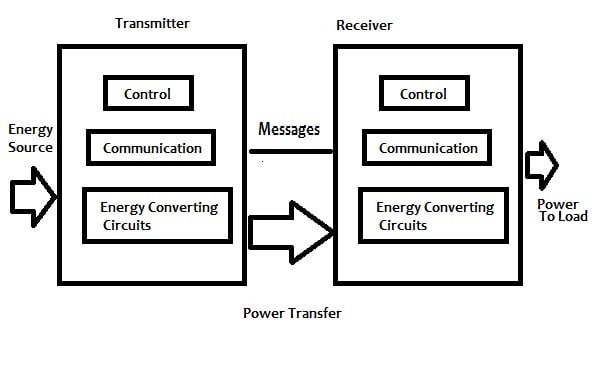
WPT transmitter/receiver block diagram.
The electromagnetic fields involved in WPT can be quite strong, and human safety has to be taken into account. Exposure to electromagnetic radiation can be a concern, and there is also the possibility that the fields generated by WPT transmitters could interfere with wearable or implanted medical devices.
The transmitters and receivers are embedded within WPT devices, as are the batteries to be charged. The actual conversion circuitry will depend on the technology used. In addition to the actual transfer of energy, the WPT system must allow the transmitter and receiver to communicate. This ensures that a receiver can notify the charging device when a battery is fully charged. Communication also allows a transmitter to detect and identify a receiver, to adjust the amount of power transmitted to the load, and to monitor conditions such as battery temperature.
The concept of near-field vs. far-field radiation is relevant to WPT. Transmission techniques, the amount of power that can be transferred, and proximity requirements are influenced by whether the system is utilizing near-field or far-field radiation.
Locations for which the distance from the antenna is much less than one wavelength are in the near field. The energy in the near field is nonradiative, and the oscillating magnetic and electric fields are independent of each other. Capacitive (electric) and inductive (magnetic) coupling can be used to transfer power to a receiver located in the transmitter’s near field.
Locations for which the distance from the antenna is greater than approximately two wavelengths are in the far field. (A transition region exists between the near field and far field.) Energy in the far field is in the form of typical electromagnetic radiation. Far-field power transfer is also referred to as power beaming. Examples of far-field transfer are systems that use high-power lasers or microwave radiation to transfer energy over long distances.
 
Where WPT Works
All WPT technologies are currently under active research, much of it focused on maximizing power transfer efficiency (PDF) and investigating techniques for magnetic resonant coupling (PDF). In addition to the idea of walking into a room equipped for WPT and having your devices charge automatically, much more ambitious projects are in place.
Across the globe, electric buses are becoming the norm; London’s iconic double-decker buses are planning for wireless charging, as are bus systems in South KoreaUtah, and Germany.
Using WiTricity, invented by MIT scientists, electric cars can be charged wirelessly, and those cars can wirelessly charge your mobiles! (Using Qi charging, of course!) This wireless technology is convenient, to be sure, but it may also charge cars faster than plug-in charging can.
 

Graphic of a wireless parking charge setup built into a parking space. Image courtesy of Toyota.
 
An experimental system for wirelessly powering drones has already been demonstrated. And as mentioned above, ongoing research and development is focused on the prospect of supplying some of Earth’s energy needs using WPT in conjunction with space-based solar panels.
WPT works everywhere!
 
Conclusion
While Tesla’s dream of having power delivered wirelessly for everyone’s use is still far from feasible, many devices and systems are using some form of wireless power transfer right now. From toothbrushes to mobile phones, from cars to public transportation, there are many applications for wireless power transfer.

Lockdown:- Boon or a bane


We all are well aware of massive widespread of Covid 19 infection. Keeping that in mind, experts suggested for a complete lockdown again. Also, American Government’s head Health Advisor Dr.Antony Fauci suggested for complete lockdown and rejuvenate health services during that period. Now, Supreme Court also propounded the idea to Central Government, considering the vulnerable conditions of weaker sections of the society. Labours, daily wage workers, sections below poverty line should be given adequate facilities first.

Lockdown is an efficient way to control this pandemic, but our experience from last year’s lockdown was horrible, that’s why government is hesitating to impose complete lockdown again. As we all know that last year many poor people faced problems like lack of food and money, many labours and daily wage workers were migrating from cities to their hometown and many poors died of starvation or lack of access to health services. Our nation’s economy also faced huge fall of GDP. Our country were unstable because of lockdown. Many labours were stucked in cities that increased the number of corona positive patients. After first unlock, these workers rushed to their villages that resulted in huge blast of corona in rural areas that made situation more vulnerable. Many states have imposed lockdown in various ways but of no use. People are not taking it seriously like before. It would be better if state government impose short term lockdown after checking out the condition of the natives.

Supreme court has decided to provide proper facilities to poors before imposing lockdown. If central government take initiative to do so from now, there will be less problems and we’ll overcome this pandemic together. 

What is Race ? “The concept of Racial Superiority is a Myth”.

J.B.S Haldane in his book ” What is Race ” published by UNESCO ,wrote
” Race is a group which shares in common a certain set of innate physical characters and a geographical origin within a certain area .”

A race lives in a definite geographical origin and has some definite innate characteristics.

The term race is a controversial concept for it is understood differently by different people .
Race can mean all of humanity , nationality or even group which is mixed in nearly all respects but socially designated as different.

In the past race was considered as a biological concept but Social scientists recognise that there is no such thing as a race based purely on objective biological differences .
Hence , races are regarded as social concepts.


Definitions

” A race is a larger , biological human grouping with a number of distinctive , inherited czar sctri which vary within a certain range .”
A.W .Green

” A race is a large group of people distinguished by inherited physical differences “
J. Biesanz and M. Biesanz

“A race is a biologically inherited group possessing a distinctive combination of physical trails that tends to breed true from generation to generation ”
Hoebel

” A race is short is a group of related inter marrying individual , that is a population which differs from other population in the relative common ness of cert hereditary traits “
L.C . Dunn

“A race is a broad association of persons of similar biological heritage ,who are untied in settlement by common cultural traditions and who in time of conflict seek to claim rights to a better social position on the basis of an inherited quality “
In this definition , race has been biologically interpreted .
Sutherland and Woodword

“A race is a large division of characteristics presumed to be biologically inherited and remaining relatively constant through numerous generations .”
Paul A.F . Walter .


View by UNESCO

UNESCO arranged a conference of all the prominent Sociologists , anthropologists and psychologists in order to determine a single conception of race .

The judgements given during the conference :-

• Fundamentally , the entire human species has on origin and all men are homo sapiens .

• National groups , religious groups , geographical groups , cultural groups , linguistics groups etc. , are all entirely unconnected with and unrelated to race . These groups do not give indication of any race .

• Distinctions can be made between races on the basis of differences in physical characteristics but not on the basis of cultural characteristics .

• The differences found to exist between the physical characteristics of men are due both to hereditary and to the environment . Differences in heredity arise due to the process known as mutation and in breeding .

• Some races make claims of purity but this is not true . Today pure races cannot be found anywhere in the world . The process of mixing of races originated long back .

• Human races can be classified but these classifications are based solely on physical traits . They have no relation of any kind of mental or intellectual superiority or inferiority .

• The inner capacity for the development of mind and culture is found equally in every race . Hence distinctions between races cannot be based on cultural differences or levels of intelligence . Intelligent people are to be found in all races .

• It is possible that in one nation the degree of racial differences may be greater while in another nation it may be of greater or lesser degree .

• Evidence in support of the fact that the race has no important effect in the social and cultural differences between various human groups has been found in historical
and sociological studies . By no stretch of imagination can one conceive of any relation between changes in racial forms and social changes .

• That from a biological viewpoint , mixing of races is deleterious , is an essential incorrect and invalid belief .

Therefore , Race is a group of intermarrying people who are born of common ancestors , possess similar physical traits and a ‘, we feeling ‘ . Inbreeding renders permanent the physical characteristics of the race and due to them one race can be distinguished from another . One major cause of inbreeding is geographical isolation . Besides geographical isolation a race originates due also to mutation , migration , selection and adaptation.

Determinants of Race

How is race determined ?

In the past , race was regarded as a biological concept and so race was determined by physical characteristics .

These physical traits are two types –
• Indefinite Physical traits
• Definite physical traits.


Indefinite Physical traits
These traits which are amenable to any measurement are called indefinite physical traits , such as the colour of the skin . Hence they can be described .
These traits included :-

• Colour of Skin :- Usually , on the basis of colour of the skin people differentiate between the white , yellow , brown and black races . But it is difficult to distinguish between the microscopic differences in the colour of the skin since the colour of the skin alters with the effect of the climate . Hence , anthropologists do not lay much emphasis on the colour of the skin in trying to discover the race .
The following distinctions can be made by the colour of the skins :-
Leucoderma as Caucasian
Xanthoderma is Monogolian
Melanoderm as Negro .

As the skin is subject to change and subtle variation it is difficult to determine race on the basis of colour .

• Texture and the colour of hair :-
The texture and colour of hair is another indefinite physical trait of race . There are the three following distinctions of hair on the basis of texture
* Leiotrichous ( soft straight hair ) as of the Mongols and Chinese .
* Cymotrichous ( smooth curly hair ) as of the inhabitants of India , Western Europe , Australia and North East Africa
* Ulotrichy ( thick curly hair ) as of Negroes .

• Structure and the colour of eyes
There are three distinctions of the colour of eyes – white ,grey , brown , black and blue . The structure of the orifice of the eye is usually horizontal but at some places diagonal eyes are found as in Southern Europe and North Africa.


Definite Physical Traits
Definite physical traits are those which can be measured .
It includes the following :-

• Stature :- Different races are distinguished on the basis of differences in stature .
Topinard has classified height in the following manner
i ) Tall stature ( 170 cm ) or above
ii) Above Average stature ( 165cm )
iii) Short Stature ( 160 cm) .

The average height of the Pategonian people is the greatest and of the African bushmen the shortest .

• Structure of Head :-
Heads can be classified on three classes according to the ratio of length and width
i) Dolichocephalic
ii) Meson- cephalic
iii) Brachy – cephalic

The structure of the head can be known by its length to its breath .
In India the Brachy cephalic is found in Bengal , Meson-cephalic is found in Bihar and Dolichocephalic in Uttar Pradesh.

In the past much importance was attached to the structure of the head in the determination of race but since Boas proved that changes in environment changes the structure of the head ,it has lost much of its effect as a determinant of race .

Structure of Nose :- Nasal index is used to determine the structure of the nose .
The nasal index can classify the structure of Nose into three classes
i) Leptorrhine ( thin ) mostly found in Punjab .
ii) Mesorrhine ( medium ) mostly found in Uttar Pradesh.
iii) Platyrrhine ( short wide ) mostly found in Madras , Madhya Pradesh and Chota Nagpur areas of India .

• Perimeter of Chest :- Differences in the chest measurement between people of different races is to be found .

It is impossible to find all the traits of one race in the people of any country . Hence , all races of the world have been intermixed and no race is pure anywhere.

Hence , the concept of Pure Race is a Myth.
All existing Sociological and biological evidences point conclude that there is no such things as a ” pure race”
Different population groups have been inbreeding for years and categories of race are only the creation of observers, not of nature .

Human groups have exchanged their genes through mating to such an extent that any attempt to identify ‘ pure races’ is bound to be fruitless “


The concept of Racial Superiority.


The concept of Racial Superiority is a psychological myth .
This phenomenon is often interpreted as “racism “.
Modern societies consist of people who belong to different racial and ethnic groups . Some of these racial groups are able to live together in harmony and mutual respect but others are in a state of constant antagonism and conflict . The dominant race tries to impose its will on the weaker ones .
This domination of one race over another leads to suppression and exploitation .

Some examples of racism ,
The domination of the western world by European powers during the late 20th century .
The partial extermination and subsequent segregation of native American
The oppression of Black Americans first as slaves and then as exploited minorities.

Racism or racialism is set of beliefs , ideologies and social processes that discrimination , exploitation or violent oppression is known as racism “
– Collins Dictionary of Sociology

Racism is a phenomenon in which a group that is seen as inferior or different is exploited and oppressed by a dominant group .”
– Blauner


The root of racism is said to be the extreme ethnocentric attitudes which are found to be at the root of racism .
According to most people their own norms , religion , attitudes , values and cultural practices are right and proper , while those other groups are peculiar , idiotic and sometimes immortal .

The ethnocentric attitudes that are functional for one group may prove to be highly dysfunctional for another group .
Under certain conditions , ethnocentric attitudes can take an extreme and aggressive form and can be used to justify the oppression treatment of other racial or ethnic groups.
This leads to racism .

Ideology of Racism

“Racism is an ideology based on the belief that an observable , supposedly inherited trait ,such as skin colour ,is a mark of inferiority that justifies the discriminatory treatment of people with that trait “

The ideology of racism supports the existing inequalities by the social process of the “self fulfilling prophecy ”

American sociologist W.I Thomas explained this idea in the form of a simple statement which is popularly known as “, Thomas Theorem ”
“If men define situation as real ,they are real in consequences ”

Merton explained further using an example ,
” If people wrongly believe that a bank will go bankrupt , they will rush to withdraw their money ”
The self fulfilling prophecy is a false definition of a situation but the definition leads to behaviour that makes prediction come true .

Self fulfilling prophecy also causes cases of race relations . The racist ideology of the dominant group defines the minority as inferior and hence considered unfit for higher status jobs , higher education etc.

Root of Racism :-

Simpson and Yinger highlighted four roots of Racism in their classic text

• The doctrine of biologically superior and inferior races
• Members of different races have different personalities
• That ethical standards differ from one race to another .


J.L.Gillin criticized the theory of Racism and brought forward the objection that Racism is confused with culture and nationality .
Modern scientific tests have proved that no race can be consid inferior in any respect and that the conception of racism is completely wrong and unscientific.

TIME DILATION-That makes you age faster

Dark energy explained by relativistic time dilation? – Astronomy Now

Time Dilation

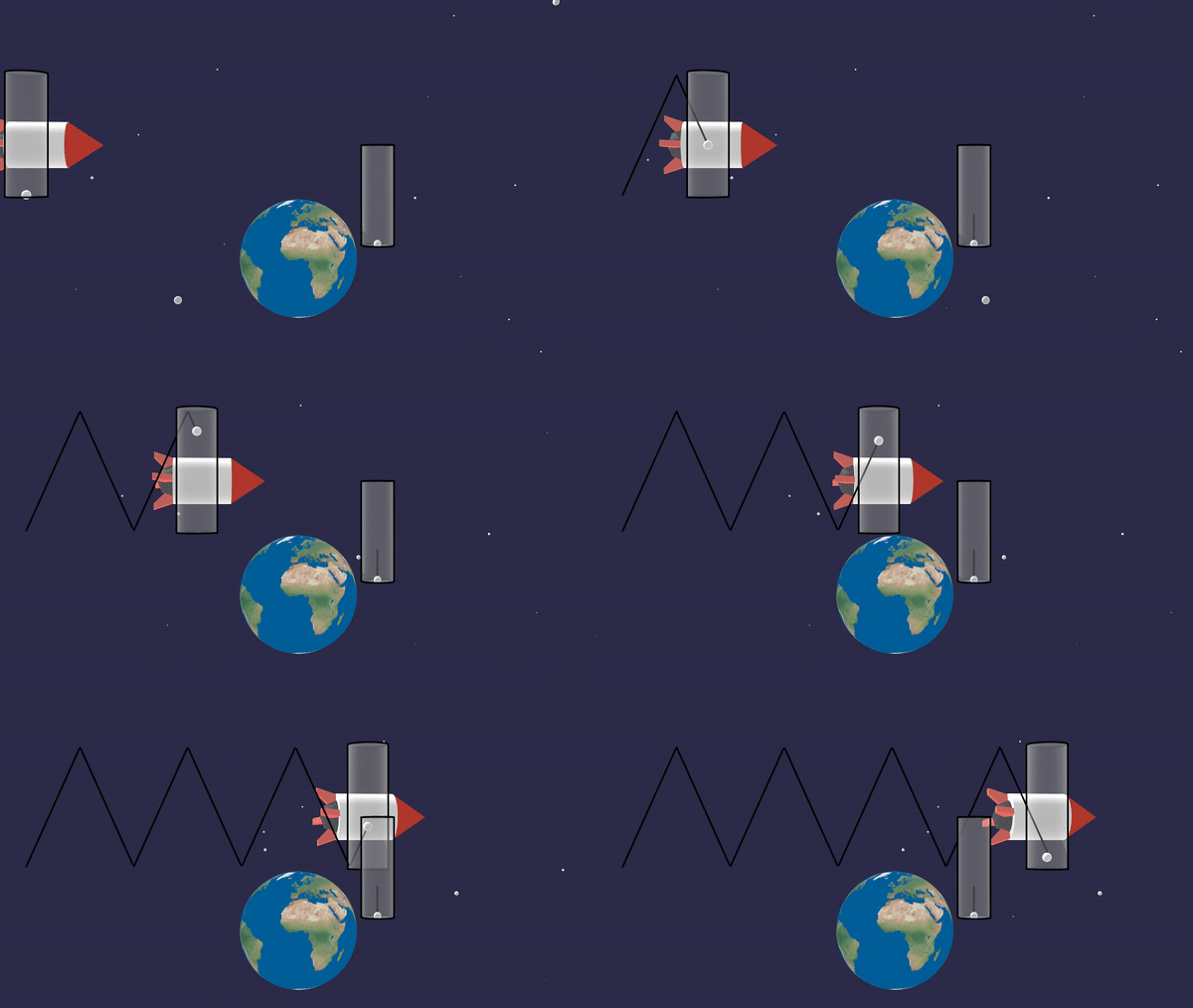
It turns out that as an object moves with relativistic speeds a “strange” thing seems to happen to its time as observed by “us” the stationary observer (observer in an inertial reference frame). What we see happen is that the “clock” in motion slows down according to our clock, therefore we read two different times. Which time is correct??? well they both are because time is not absolute but is relative, it depends on the reference frame. Let’s look at the following classic example. There is a set of twins, one an astronaut, the other works for mission control of NASA. The astronaut leaves on a deep space trip traveling at 95% the speed of light. Upon returning the astronauts clock has measured ten years, so yhe astronaut has aged 10 years. However, when the astronaut reunites with his earth bound twin, the astronauthe sees that the twin has aged 32 years! This is explained due to the fact that the astronaut’s twin is traveling at relativistic speeds and therefore his “clock” is slowed down.

Let’s see how we can calculate the time “difference”. The equation for calculating time dilation is as follows:

t = t0/(1-v2/c2)1/2

where: t = time observed in the other reference frame

t0 = time in observers own frame of reference (rest time)

v = the speed of the moving object

c = the speed of light in a vacuum

so in our problem we will let v = .95c, t0 = 10 years and we will solve for t which is the time that the earth bound brother measures.

t = 10/(1- (.95c)2/c2)1/2

t = 10/(1- .952)1/2

t = 10/ .312

t = 32 years
(the time the earth bound brother measures)

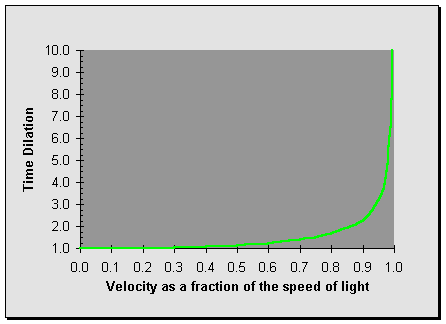
Now let’s have a closer look at the equation and determine just what impact the speed of the object has on time dilation. We can see that is the velocity is small compared to the speed of light the quantity v2/c2 approaches 0 and the equation simplifies t0: t = t0/1 which is simply t. So at relatively slow speeds (our everyday speeds) time dilation is not a factor and Newton’s Laws are still applicable. Now let’s look at high speeds (close to the speed of light), from the equation that as velocity increases the quantity v2/c2 approaches 1 (but will never quit reach it), causing the quantity(1-v2/c2)1/2 t0 become smaller and smaller….therefore causing the time measured by the other observer t0 become greater thus making our time appear slower (refer back to the example). I know its so confusing!!! read it again, think about it, then study the graph below. As one can see in the graph time dilation starts t0 “show up” between .4c and .5c. Also notice that the closer one gets to the speed of light the greater impact speed has on time dilation (notice how steep the curve gets towards the end)..

Keynesian Economics

Keynesian Economics is a macroeconomic theory that came into existence after the fall of Classical Economics. It was given by John Maynard Keynes in order to understand the Great Depression of the 1930s. His theory focussed on aggregate demand and aggregate supply. This theory was the refutation to the classical economics.
Keynes theory of employment was based on the principle of effective demand. According to this, the level of employment in a capitalist economy depends on the effective demand. Unemployment is the result of deficiency of effective demand.
Keynes used the term aggregate demand price and aggregate supply price to explain effective demand.
Aggregate demand price refers to the amount of money which entrepreneurs expect to get by selling the output. It is basically the expected revenue from the sale of outputs at a certain level of employment.
Aggregate supply price on the other hand refers to the proceeds necessary for the sale of output at a particular level of employment. Basically each level of employment is related to a particular aggregate supply price.
The determination of effective demand is done by using aggregate demand price and aggregate supply price. The level of employment is determined when aggregate demand price is equal to the aggregate supply price. This level of employment is also the point of effective demand and here entrepreneurs earn normal profits.

Keynes also criticized the idea of excessive saving, unless it was for a specific purpose such as retirement or education. He saw it as dangerous for the economy because the more money sitting stagnant, the less money in the economy stimulating growth. Instead, he focussed more on investment and highlighted it’s role in determining the level of employment in the economy. According to him, aggregate demand function depends on the consumption function and investment function. A fall in any of these two functions result in unemployment. Thus it is the aggregate demand function which is the effective element in the principle of effective demand.
Keynesian economics focuses on demand-side solutions to recessionary periods. The intervention of government in economic processes is an important part of it. Keynesian theorists argue that economies do not stabilize themselves very quickly and require active intervention that boosts short-term demand in the economy.

https://www.investopedia.com/terms/k/keynesianeconomics.asp

Keynes also reformulated the Quantity Theory of Money. He criticised the classical idea of money being neutral. According to him money is the link between the present and the future. The Keynesian theory emphasises that the price level is in fact a consequence of aggregate demand or expenditure relative to aggregate supply rather than of quantity of money.


https://www.yourarticlelibrary.com/economics/money/keynesian-monetary-theory-money-income-and-prices-with-diagrams/37961


The multiplier effect was developed by Keynes’s student Richar Kahn. According to Keynes’s theory of fiscal stimulus, an injection of government spending eventually leads to added business activity and even more spending. This theory proposes that spending boosts aggregate output and generates more income. The magnitude of the Keynesian multiplier is directly related to the marginal propensity to consume. Keynes and his followers believed individuals should save less and spend more, raising their marginal propensity to consume

Restoration of Provisions of SC / ST Act

The weak sections of society are often repressed and exploited by society. To control such behavior and actions the government proposes some laws and bills to safeguard the rights of such weaker sections. But these laws are sometimes misused for the satisfaction of personal desires, and such actions need to be regulated.


An amendment bill was passed in March 2018 to restore the provisions of Scheduled castes and Scheduled Tribes (Prevention of Atrocities) Act 1989. According to the National Crime Records Bureau, under the initial provision, the conviction rate remained as low as just 15.4% in 2016. The amendment bill included three new clauses to the existing Act – for the registration of a First Information Report ( FIR ), against any person, a preliminary enquiry shall not be required; no approval would be required for the arrest of the accused under the Act; under this Act, Section 438 of the Code of Criminal Procedure, dealing with anticipatory bail shall not apply, allowing the accused to apply for anticipatory bail; the decision to arrest or not rests in the hands of the investing officer which cannot be taken away. The Supreme Court also issued guidelines to safeguard people against arbitrary arrest by making the arrest possible only after the written permission of the appointing authority for the public servants and Senior Superintendent of Police in the case of private-sector employees. The verdict for the restoration of the SC / ST Bill faced a widespread protest from the Dalits as according to them it dilutes the original nature of the provision. the Supreme Court took this decision considering the interests of the Scheduled Tribes / Scheduled Castes and as well as the arbitrary arrests taking place under the provision. The decision was made in regards –


• It was observed by the Supreme Court that the Scheduled Castes and Scheduled Tribes (Prevention of Atrocities) Act, 1989 was used negatively as a way to blackmail and harass the innocent common citizens as well as the public servants in many cases.
• It was also observed that the Act was misused in many cases just to fulfill personal agendas by registering false complaints.
• The main purpose of the Act which was to break the caste-based boundaries was diluting and rather becoming strong because of the false complaints filed for the satisfaction of personal interests.
• The arbitrary arrest of the accused is tried to be put in control by making arrest possible on the written permission of the appointing authority in case of a public servant and written permission of the Superintendent of Police (SP) in case of a public servant.

The restoration was made keeping in mind the interests and safeguard of the marginalized without hampering the safeguard of the general public. Without going for a preliminary enquiry for a First Information Report (FIR) it ensured safeguard for the marginalized and by controlling the arbitrary arrests of the accused by making the arrest possible only after the written permission of the appointing authority and Superintendent of Police under this Act it safeguarded the general public.

Indian art during Maurya period

The Mauryan contribution to art and architecture was significant. Ashoka is known to
have built 84,000 stupas to commemorate various events of Buddha’s life. According to
Megasthenes, Pataliputra’s grandeur matched that of the cities of Persia.
Ashokan edicts were inscribed on stone pillars that were made of single columns of polished
sandstone and had capitals on their top. The best preserved of all Ashokan edicts stands
at Lauriya Nandangarh (Bihar). This thirty-two feet tall column has an almost fifty ton
seated lion capital placed on its top, an engineering feat worth admiring. The bull capital
from Rampura is also another fine example of Mauryan sculpture. The most famous capital
is the one at Sarnath, which shows four lions and the Dharmachakra. You must be familiar
with this as this has been adopted as the national emblem of the Republic of India.
Besides pillars, few Mauryan figures have also come to light. The most well known of
these is the Yakshi from Didarganj. The beauty of these figures lies in the exactness of their
workmanship and in the fact that they. appear to be made from one single stone. Like the
pillars, these figures are polished with a unique surface gloss (now called Mauryan polish).
You will be amazed to know that despite all these centuries this gloss has not lost its shine.
Besides the language that has been used in nearly all the inscriptions and Prakrit which
appears to have become the lingua franca of the country and in the Brahmi script the
earliest known Indian script.

Another noteworthy aspect of Mauryan architecture is the rock cut caves. The Lomash
Rishi (with its impressive entrance) and the Sudama caves are examples of such architecture.
These caves cut from solid rock were provided by Ashoka for non-Buddhist monks.
These caves marked the beginning of the rock cut architecture which was patronised by
later rulers too. His rock edicts were inscribed in the local language and the local script

Ambedkar and Buddhism

In his article entitled “What Way Emancipation” Ambedkar declared that “I solemnly assure you that I will not die a Hindu”, at Yeola, District of Nasik, Maharastra, on 13th October 1935 in front of ten thousand people, where
he went for a depressed class conference. Ambedkar as the president of the conference reminded his audience of their failure to secure elementary rights or equal status in Hindu society through any of the movements. According to him, the concept of sympathy is absent in the Hindu religion. The Hindus have no sense of brotherhood among themselves. The Untouchables are treated worse than foreigners. The Caste Hindus have no sympathy towards the untouchables. They are not brother to each other. They are two opposite castes. Society is based on class or varna, the association of an individual to a group is considered paramount. Even the family is not treated as a unit of society. According to Hindus, though all men are created by God, they are not created equal. They believe that God created different classes of men from different parts of his divine body. There is a section in “Purusha Sukta” of the Rig Veda which says that the Brahaman varna was born from the mouth of God, Kshatriya varna from his arms, the Vaishya from his thighs, and the Shudra from his feet. This they classify as Hindu social order but the views of Ambedkar on free social order
contradict the above sayings. He believed that an individual is an end in himself and the objective of the society is to support the growth of the individual, to develop his personality. The relationship between members of society is based on the principles of liberty, equality, and fraternity. According to him, Hindu social order is based on the principles of graded inequality, fixed occupations for each class, and its continuance by heredity, the fixation of people within their respective classes. According to him, the Varna-vyavastha had developed into a social order of exploitation and oppression. Society must be based on reason, and not on atrocious traditions of the caste system. He found education, inter-caste marriage, and inter-dine as methods that may eliminate caste and patriarchy.

On 14th October 1956, Dr. Ambedkar renounced Hinduism and embraced Buddhism. On 15th October 1956, he delivered his speech in Marathi relating to embraced Buddhism. He said there are so many problems after conversion to Buddhism. He hoped that he will get political rights. According to Dr. Ambedkar, religion is for man and not man for religion and that is why he choose to convert himself to a buddisht as this religion respect and gives a scope of development to people and their thoughts.