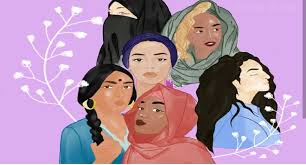
PROBLEMS FACED BY LGBT COMMUNITY

The expression “LGBT” represents lesbian, gay, bisexual and trans gender. A lesbian is lady drawn to another ladies. Gay is a man drawn to another man. Bisexual individuals are drawn to more than one gender. A transgender individual is somebody whose sex personality varies from the one they were appointed upon entering the world. Individuals in the LGBT people group are battling for equivalent rights and acknowledgment. Trans individuals, particularly, face a ton of trouble in discovering acknowledgment. Individuals in the LGBT people group are peered downward on constantly. While lesbians, gay and bisexual individuals are reluctant to inform their families about their sexuality.

They are not acknowledged in the public eye. Others ridicule them. “LGBT” terms are regularly used to affront somebody. “Gay” is frequently utilized as a revile/curse term which isn’t right. Somebody’s identity shouldn’t be utilized as reviling/cursing word.

Consistently, an enormous number of LGBT individuals face gigantic issues identified with brutality, joblessness, separation, destitution and absence of medical care. Biased individuals have issues with the manner in which individuals from the LGBT people group lead their lives. These individuals, I accept, are being juvenile. There are a few group who claims themselves as LGBT ally however the extremely next second they crack lame and sexiest jokes on them.
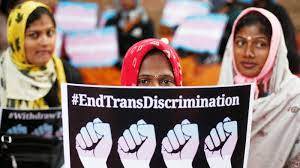
However, there are individuals who genuinely support LGBT people group. Be that as it may, of individuals have ill-conceived notion about them. They accept that LGBT individuals shouldn’t be permitted in home. I believe If school make their understudies mindful about the LGBT people group, we would not deal with such issues.

RESOURCES:

1.https://www.youthkiawaaz.com/2018/01/dont-ever-be-afraid-to-show-off-your-true-colours/

2.https://www.livemint.com/Sundayapp/sAYrieZdZKEybKzhP8FDbP/Being-LGBT-in-India-Some-home-truths.html
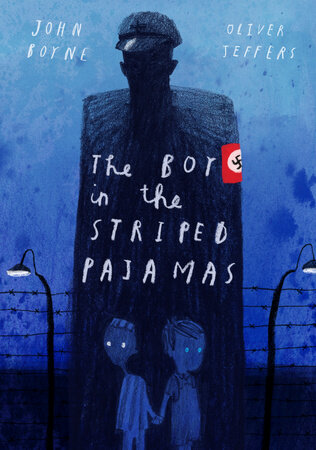
Book review for ‘the Boy in the stripped Pyjamas’: A heartbreak but not a very real story

The holocaust is for sure a topic that as discussed as infamous it can be. It is as much a tragic story as a fact that can make any person grip in fear of what a human is capable of becoming.

Bruno is a 9-years old boy in Berlin during the Second World War and his father a member of the Nazi party, soon promoted to office the Auschwitz camp at the personal orders of the Fuhrer.

Sad and missing his friends, Bruno spots a pale boy in pyjamas with a lot of people on the other side of the fence. Bruno meets this boy, Shmuel whom he quickly befriends. Shmuel informs Bruno that he lived on this side of the fence with his grandfather, brother and father. And to the merry of both boys, they share the same birthday and age.

Shmuel grows pale and lean everyday and Bruno starts to sneak him food. They talk and share their lives while Bruno does not really understand what is going on the other side of the fence.

One day, Shmuel informs Bruno that his father is missing and everyone in his family is desperate to find him. That evening, Bruno removes his clothes, pulls up the stripped pyjamas Shmuel offers him and crosses the fence to search for Shmuel’s father.

Both the kids are spotted by guards who ask them to participate in the march. The march ends in a closed room which Bruno assumes is the place to sleep and sit together. He holds Shmuel’s hands and whispers to him that they shall be friends for life.

Bruno is missing and only his clothes are found near the camp fence. His father, deducing what must have happened is broken and offers himself to the now invading Allied armies.

This fictional story that forms the plot of the book, “The boy in the stripped Pyjamas” by Irish author John Boyne. The book quite metaphorically illustrates the fact that the adults were really not concerned with what is happening under their noses while the kids were just been broken, separated by fences and lines drawn between races.

The Boy in the Striped Pajamas (Deluxe Illustrated Edition) by John Boyne:  9780399559310 | PenguinRandomHouse.com: Books

However, and quite correctly, the historians have argued that this book has several historical inconsistencies that might make a reader believe that concentrations camps were way more lax than they really were. No one, let alone a kid was left off work to let him have the time to meet, talk to and enjoy another human being’s company.

Auschwitz: Concentration Camp, Facts, Location - HISTORY
An actual picture from the Auschwitz Camp

At the end, the author expresses his belief in humanity by stating,

Of course, all of this happened a long time ago and nothing like that could ever happen again. Not in this day and age.

Happy reading!

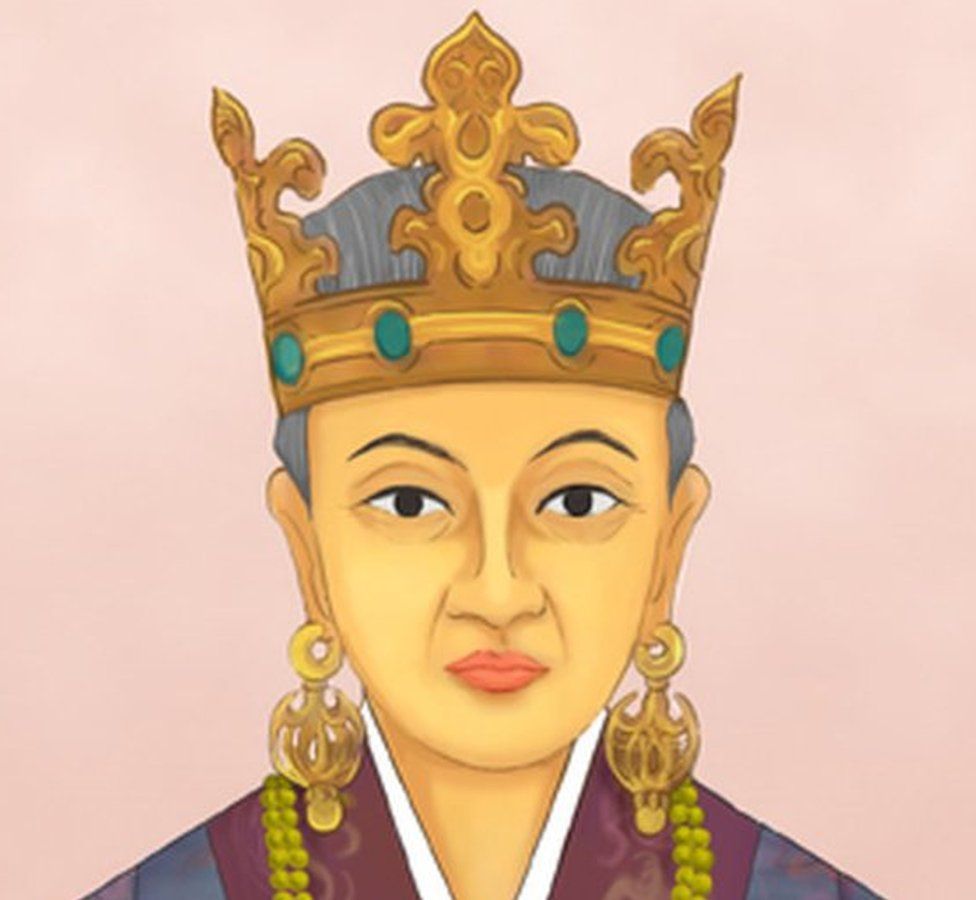
Indian princess who married a Korean King – Heo hwang ok

The Indian princess who became a South Korean queen - BBC News

Ayodhya, which is best known as the birthplace of the Hindu god Ram. Also, however, holds special significance for some South Koreans – many believe they can trace their ancestry to the city. This belief comes from several historical Korean stories, which tell the story of an Indian princess – Suriratna – who married a South Korean king and started a dynasty.

Legends say, Princess Suriratna, also known as Heo Hwang-ok, went to Korea in 48 AD, some 2000 years ago, and started the Karak dynasty by marrying a local king. Some Chinese-language texts claim that the then King of Ayodhya had a dream where God ordered him to send his 16-year-old daughter to South Korea to marry King Kim Suro.

Queen Hwang-ok was the princess of the “Ayuta” kingdom, according to Samguk Yusa (Memorabilia of the Three Kingdoms), a popular South Korean book of fables and historical stories. The royal pair was successful. They had a total of 12 sons and lived to be over 150 years old. While children in Korea generally adopt their father’s surname, the queen was disappointed that her offspring would not be able to bear her surname. As a result, King Suro allowed two of their sons to keep her name (Heo), which is still used today.” According to historians, the couple’s descendants number more than six million, or nearly 10% of the South Korean population.

People from the Karak dynasty have also preserved the rocks that are said to have been used by the princess during her sea voyage to Korea to keep her boat stable.

An anthropologist named Kim Byung-mo Ayuta appeared to confirm the widely held belief that Ayuta was actually Ayodhya, as the two names are phonetically similar.

An agreement was signed to develop Ayodhya and Gimhae as sister cities in 2000.

Then in 2001, more than 100 historians and government representatives, including the North Korea ambassador to India, unveiled Queen Hwang-ok’s memorial on the west bank of the River Saryu in Ayodhya.

In 2016, a Korean team presented the Uttar Pradesh Government with a proposal to expand the memorial. On the eve of Diwali, South Korean first lady Kim Jung-sook lay the foundation stone for the enlargement and beautification of the current memorial on November 6, 2018. She paid her respects at the Queen Heo Memorial, attended a ground-breaking ceremony for the memorial’s upgrade and beautification, and joined the current Chief Minister of Uttar Pradesh, Yogi Adityanath, at an elaborate Diwali celebration in Ayodhya that included cultural shows and the lighting of 300,000+ lights on the banks of the Saryu River.

As per reports, every year, hundreds of South Koreans visit Ayodhya for paying homage to their legendary queen Heo Hwang-ok.

Death anniversary of World poet

India marks the 80th death anniversary of the great Bengali polymath Rabindranath Tagore on 22nd day of Bengali month Srabon, known as Baishe Srabon, solemnly marking the day when the poet and playwright passed away.

Rabindranath Tagore, the first non-European person to win a noble prize in literature, was known for reshaping the structural framework of Bengali literature and music, along with other Indian art forms with the adrent of modernism in the late 19th and 20th century.

Motivational Literature

Introduction:

The motivational genre is concentrated on motivating the readers to achieve their goals. It focuses on problems and helps to solve the puzzle. It also helps to improve the character and the personality of the readers.

Motivation:

The term motivation is derived from the Latin word, ‘Movere’ meaning ‘To Move’. Motivation can be referred to as a combination of motive and action. Motivation is an action word that influences every aspect of our daily lives. Motivation is fundamental in the level of success and individual attains.

Characteristic of motivational literature:

In Literature, “Motivation” is defined as a reason behind a character-specific action or behavior. This type of behavior is characterized by the characters on consent and willingness to do something. Characters have some motivation for every action, as do people in real life. Therefore, The implicit or explicit reference to a motivation of a character makes the piece of literature seems closer to life and reality.

Indian motivational literature:

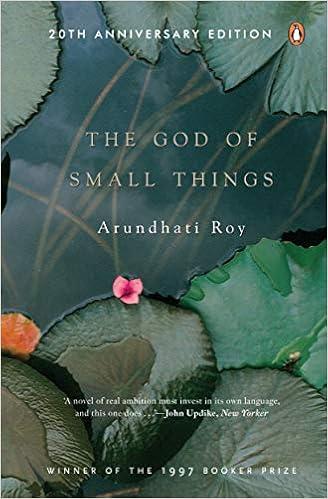
The God of Small Things by Arundhati Roy

Arundhati Roy is one of the prominent writers in India. Her famous works are “The God of Small Things” and “The mystery of utmost happiness”. The God of Small Things is an inspirational encounter with two twin sisters who go through a series of unfortunate events in life. This work is a big booster of inspiration that helps us to boost up our self moral self-esteem and inspiration to embark upon a new beginning full stop the book will make you realize that need for change on the futility to become rigid in life.

If you are happy in a dream, does that count?

African literature:

I know why the caged bird sings by Maya Angelou

I know why the caged bird sings is a 1969 autobiography describing the early years of American writer and poet Maya Angelou. It shows how the strength of character and the love of literature can help overcome racism and trauma. This autobiography touches on themes such as race, sexuality, love, and identity. Struggles to separate sexuality and love in two separate category due to the lack of love from her family and on account of being sexually abused.

Hoping for the best, prepared for the worst, and unsurprised by anything in between.

Austrian literature:

Man’s search for meaning by Viktor E Frankl

Viktor E Frankl is an Austrian doctor, a writer, and a Holocaust from the Nazi concentration camp. This book is about how he lived inside the camp and how he managed to survive. And to stand for the title he talks about logotherapy that is a person needs a reason to survive. This book is full of meaning and hope.

Those who have a “why” to live, can bear with almost any “how”.

Lebanese literature:

The Prophet by Kahlil Gibran

The Prophet is a short book with enormous wisdom within the pages. The Prophet provides timeless spiritual wisdom on a range of subjects including giving, eating and drinking, clothes, buying and selling, crime and punishment, laws, teaching, time, pleasure, religion, death, beauty, and friendship. It is not a religious book but it is spiritual. In this book every word is like a poem, it has its rhythm and rhyme schemes.

“Your children are not your children you may give them your love but not your thoughts for they have their own thoughts.”

The Ode

Two must-read books by Paulo Coelho part 2

THE ENGLISH NOVEL

FAMOUS NOVELS:

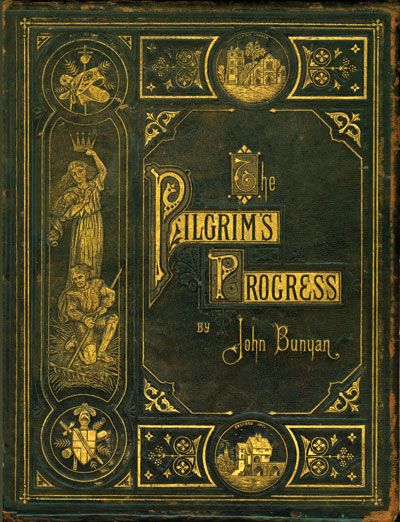
The novel proper in English literature began in the 18th century. But the rudiments of the novel could be seen even in Chaucer’s conception of the gallery of characters in The Canterbury Tales. Several Elizabethan writers wrote prose fiction which laid the foundations of the English novel. Among them the most important were John Lyly who wrote ‘Euphues’ and Nash, the author of ‘The unfortunate Traveller’. The first work was a didactic prose fiction in the picarseque tradition and the second was a realistic story of action. In 1678 John Bunyan’s ‘The Pilgrim’s Progress’ was published. In many respects this ranks as a novel. Then came Defoe’s ‘Robinson Crusoe’ and Swift’s ‘Gulliver’s Travels’. Several critics thinking that Robinson Crusoe was the first great novel in English literature thought it was up your fantasy. Swift’s work is considered to be the first great satiric expression.

HOW IT EVOLVED:

It was in the 18th century that the novel acquired its modern form. Samuel Richardson, the author of ‘Pamela’ is regarded as the originator of this form. His great novel was told in the form of letters. Richardson was concerned with moral themes in all his novels he was an adept in expressing human feelings and motives through character. Henry Fielding parodied Richardson’s Pamela in his novel ‘Joseph Andrews’. His ‘Tom Jones’ is a great novel in the picarseque tradition. He anticipated Dickens in his social criticism and satire. Two other important points in the field of the novel were Smollet who wrote ‘Roderick Random’, ‘Peregrine Pickle’ and three other novels and Sterne, the author of ‘Tristram Shandy’. Among the later novelist of the eighteenth century Goldsmith deserves mention as the author of ‘The vicar of wakefield’ the earlist domestic novel in English. The first great women novelists first Fanny Burney who published her ‘Evelina’ in 1778.

VARIOUS DEVELOPMENT:

The 19th century saw the development of the novel in various directions. The novel discarded the sensationalism of the 18th century Gothic writers like Horace Walpole and Picarseque tradition of Fielding and smollet. It entered a new era of artistic refinement, thematic liberalism and stylistic innovations. Jane austen’s domestic novels reached unprecedented artistic perfection. Her novels such as ‘Pride and Prejudice’ and ‘Emma’ dealt with a respectable country society and the presented a miniature world dominated by graceful social conventions and manners. Scott inaugurated the historical novel in which picarseque details were combined with romantic feelings for the past. Some of his famous novels are Waverley, Ivanhoe, The Talisman and Kenilworth. The tradition of the historical novel was carried on by a few others including Charles Reade, the author of ‘The Cloister’ and the ‘Hearth’. The two women novelist Charlotte Bronte and Emily Bronte were a striking contrast to Jane Austen. In the novels Jane Eyre and wuthering Heights respectively they made use of the elements of horror and soul-suffering to heighten a human story of violent passion.

CHARLES DICKENS’S CONTRIBUTION:

The most outstanding name in the Victorian novel is Charles Dickens. He developed more complex plots than his predecessors and introduced greater human interest, pathos and humour. Some of his novels contain autobiographical elements. He was supreme in depicting the life of London and he used in novel as a platform for social reform. His most famous novels are there with David Copperfield, Great Exceptions, Nicholas Nickleby and A Tale of two cities. Thackeray excelled in the novel of ideas. Vanity Fair is his masterpiece. He moralizers and his weapons for social criticism and reforms are irony and satire.

OTHER NOVELISTS:

George Eliot novels contains philosophical observations on religion, politics and morals. Her famous novels are Adam Bede, Middlemarch and Silas Marner. Another novelist who stands out as a satirist and was George Meredith. His novel such as ‘The Egoist’ and ‘The ordeal of Richard Feveral’ anticipate the psycho-analytical method that become so popular with the 20th century novelists. Pain and tragedy found their most artistic expression in the novels of Thomas Hardy. He took his characters from the peasantry of his native Wessex and portrayed the innermost soul of his characters with great insight, affection and even humour. some of his important novels are ‘Tess of the D’Urbervilles’, ‘The Return of the Native’ and ‘The Mayor of Casterbridge’.

STREAM OF CONSCIOUSNESS:

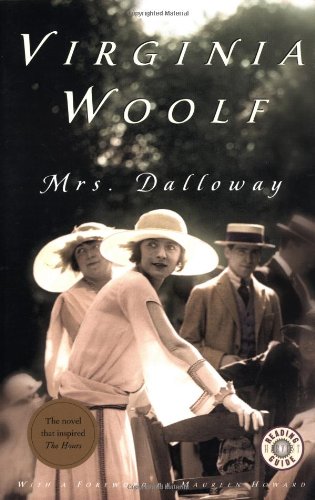
Stream of consciousness novel found its exponents in Virginia woolf and James Joyce. Novels like Virginia Woolf’s ‘Mrs dalloway’, ‘To the Lighthouse’ and James Joyce ‘ulysses’ inaugurated the trend of exploring the subconscious recesses of the human mind. Novelist such as D.H. Lawrence and Aldous Huxley introduced several innovations in theme and style. The most significant novels of D.H. Lawrence are ‘Sons and Lovers’, ‘Woman in Love’ and those of Huxley are ‘Brave New World’ and ‘Crome yellow’.

During the last fifty years the scope of the novel has widened to include almost every subject. It has become the most popular medium through which an author can reach the public. There have been as a host of good novelist during the last fifty years – E.M. Forster, Somerset Maugham, Charles Morgan, Graham Greene, Kingsly Amis, Iris Murdoch and William Golding.

The English novel is no more a drawing room entertainment address to the ladies as novelist George Moore once said.

The ode

Introduction:

The Ode may be defined as a ‘rhymed lyric often in the form of an address, generally dignified or exalted in the subject, feeling and style’. It is also defined as any ‘strain of enthusiastic or exalted lyrical verse directed to fixed purpose and dealing progressively with a dignified theme’. An ode is noted for its logical evolution of thoughts and it has a certain amount of complexity and elaboration, unlike a simple lyric.

An ode usually begins with an address to somebody or something. Sometimes the opening line or lines may contain an apostrophe as in the case of Shelley’s ‘Ode to the west wind’ or Tennyson’s ‘To Virgil’s. An ode may be written on an important public event or the death of a distinguished person. Marvell’s ‘Ode upon Cromwell’s Return from Ireland’ belongs to the first category and Tennyson’s ‘Ode on the Death of Duke of Wellington’ belongs to the second category.

Origin of Ode:

The ode is of Greek origin. There were two traditions of odes in Greece. The first type of the Dorian mode was so called from the district and dialect in which it arose. It is also called the Pindaric ode because Pindar, the ancient Greek poet, was its greatest exponent. The second type of ode is the lesbian old so-called because it flourished at first on the island of lesbos. It is also called the horatian ode because the great Latin poet Horace was its best practitioner. Thomas Gray’s odes ‘The progress of Poesy” and “The Bard” belong to the Dorian or Pindaric school. Marvell’s ‘Ode upon Cromwell’s Return from Ireland’ is the best example of a Horatian ode in English.

A pindaric or Dorian ade consists of three parts:

The strophe, the anti-strophe, and the epode. they correspond to the three stages of the recital of an ode during a dance. The Horatian ode consists of several short stanzas similar in length and arrangement.

In the early stages, the English ode was influenced by the two Greek models. But gradually the English ode begins to pursue a course of its own. There are two types of odes in English, the regular and the regular.

Regular odes:

The regular odes have a series of exactly similar stanzas as in the odes of Keats. Other examples of regular verbs are Collin’s ‘ode to evening’ and Shelley’s ‘ode to the west wind’.

Irregular odes:

Irregular odes have tons of different lengths and arrangements. There are sudden changes in versification, meter, and mood. Wordsworth’s Ode on Intimations of Immortality from recollections of early childhood and Coleridge’s ‘Dejection: An Ode’ are good examples of irregular odes.

Some famous odes:

  • Ode To A Nightingale John Keats. My heart aches, and a drowsy numbness pains.
  • Ode On A Grecian Urn John Keats.
  • Ode To Autumn John Keats.
  • Ode To The West Wind Percy Bysshe Shelley.
  • Ode To Wine Pablo Neruda.
  • Ode To Sadness Pablo Neruda.
  • Ode On Solitude Alexander Pope.
  • Ode To The Book Pablo Neruda.

Conclusion:

In English Ben Jonson, Milton and Gray wrote Pindaric Odes. Marvell road Horatian odes. Other important poets who wrote odes were Spenser, Collins, Keats, Shelley, and Tennyson. Perhaps the ode is the most popular lyrics form except the Sonnet.

The Lyric

The Science Fiction

The god of small things: A Book Review

Buy God of Small Things: Booker Prize Winner 1997- English Book Online at  Low Prices in India | God of Small Things: Booker Prize Winner 1997-  English Reviews & Ratings - Amazon.in

A broken marriage can mean a lot of things to a family. Marriages can be broken by a lot of things including laws defined by societies about whom to love, whom to marry and whom not to.

The god of small things is a caricature of human pain and life built on the layers of political leanings, the realities of Indian conservative societies, casteism and of course on how other people exploit it just to feel away and free from their own realities.

A multi-generational family lives in a small village in the state of Kerala – a communist stronghold. A woman from the family falls in love with an Irish priest, despite the opposition of her father, but failing to get any near him, is left bitter and becomes the antagonist of the narrative. Two twins witness a rape and murder wherein this lady, their aunt, the one who once loved an Irish priest is almost implicated for lying about the criminal and she tricks the poor children into blaming their servant. All this happens in the backdrop of a violent and turbid communist politics of which the servant who dies due to police beating turns out to be a member of. The aunt hates the communists because they once forced her to weave the red flag while forcible stopping her car on the road. To save herself of any implications, the lady gets rid of the children – blaming them of the death of the raped girl and the servant, breaks down their family – the mother dying at 31 and the father never really bothered. The twins grow broken, traumatized and never really heard or cared for. And the climax of the story just leaves one crying when the two twins finally meet at 31 – the age their mother died. The girl twin no longer speaks and the boy is just a lost one. They, for the first time realize the meaning of love and warmth and that it is them alone who share it with each other.

This review will and any review will, as a matter of fact, fail to capture the perfection Roy has achieved in this book. The 1997 Booker’s Prize winner is a masterpiece of storytelling and narrative. And it is a wonderful critique on politics, religion and casteism.

Happy reading!

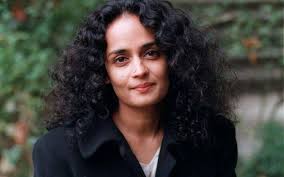
arundhati roy
Arundhati Roy, who might be in news due to her remarks in the present day has penned a beauty.

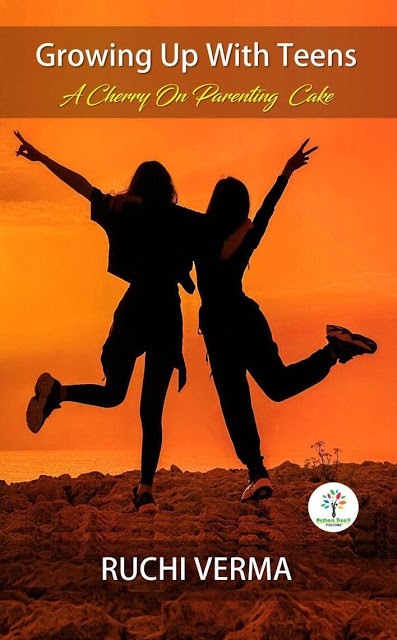
Book Review: ‘Growing up with Teens’ by Ruchi Verma

Title: Growing Up with Teens

Author: Ruchi Verma

Publisher: Authors Tree Publishing

Genre: Non-fiction, Parenting

Pages: 92

‘Growing up with Teens’ by Ruchi Verma, is a psychological approach that revolves around the lives of Teens. I loved to explore this genre. It intrigues me a lot, how parents establish connections with their offspring, how they involve in the process of long-term behavioural management. So, to explore the reality I read this book.

This book was all about the vision of teen parenting. It is not an easy task to raise a teenager, but with the right approach, every parent puts forward to make this journey easier. As communication should not be a barrier in your relationships with your offspring, and these methods will definitely help you to begin better conversations with your teenage kids.

Ruchi Verma states ‘Each day as a parent we too are growing up and understanding the other side of the story.’ This book comprises of 12 chapters. Every section deals with new challenges that emerge in the road of family life. There are so many questions that arise with this set of age, in regards to emotional, physical and social changes. And the perspective, author shared here, is really a nice construct if you can agree to put it into practice this book is really helpful to parents.

Ruchi Verma offers a whole section on communication that I liked the most about this novel. The author acknowledges many important points, for example─ why communication is important? How your teens want to communicate? Do and don’ts of communications.

‘Don’t assume or read their mind. If you don’t understand certain behaviour change or less communication or even, they are not doing things according to the rules made by you’.

‘Listening means letting them finish their story and their thoughts. Just make sure when they talk, look in their eyes, and show interest in their versions. Your opinion on that same topic might differ but remember to give them equal opportunity to put forward their opinions so that they don’t feel neglected.

As a reader, I have mixed feelings about this novel. On the positive side, Ruchi Verma shared some absolute gems of tips and advice based on her personal and professional experiences. She comes up with the idea of talk about adolescence, depression, anxiety. Adding to this, she explored myths and taboos of sex education in India. ‘We carry a hush-hush talking attitude for years. It’s high time to change and break this taboo. Teaching your child this aspect is as important as giving them any other education’.

Not only had she incorporated discussion on daughter’s puberty but also added her son’s too. I have found it to be immensely practical and loved reading it. 

The author has rightly convinced me to go on reading the book because every page gave me a new idea about the way she handles the teen’s mind swings. On the other side, I found the information bit repetitive. I so wish it were organized a bit differently.

Reading this book has enhanced the way we look at the behaviour of teens, and the way we feel their life is easy, but they also go through various emotional traumas. ‘It is important to teach both boys and girls that they are equal in the society, and one should respect the other gender’s emotions and consent always.

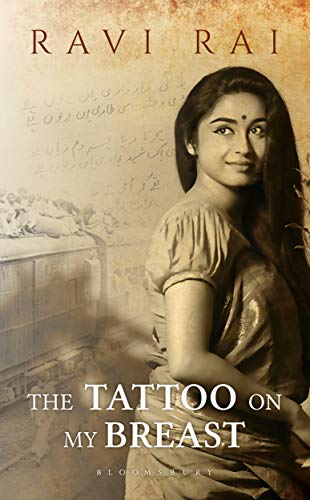
Book Review: The Tattoo on My Breast by Ravi Rai

‘The Tattoo on My Breast’ is the debut novel by acclaimed television director and writer Ravi Rai. The story is a mixture of an epic tale of love, passion, emotion, drama and romance set in the times of partition through the eyes of our protagonist women.

The story is set in the 1940’s era, around the time of the Quit India movement and Independence. A Spanish aid worker named Abella Alejandro had come with the International Red Cross to Nepal after the 2015 earthquake and there she learns about Sadhana’s story, the childish granddaughter of a rich Sindhi grain merchant who was getting married to Prakash, when Rehman, the meek, poor boy living next to Sadhana’s house and was Sadhana’s childhood friend realizes his love for her.

On the other hand, Jinnah and Nehru have started displaying their influence on the young and the restless of the yet undivided India, where the several Gurdwara’s Sikh flags are replaced with the green flag of Islam and Prakash becomes a fatality in one such crossfire.

Barely 15 days into her marriage and Sadhana is a widow. And Rehman is back in her life. But little does she know that her radical Hindu father has fixed her marriage to Sunil, a Sindhi millionaire running his looms in Dhakka, which is soon to become East Pakistan.

Sadhana and Rehman plan an escape, but destiny plays a cruel role with the breakout of riots and Rehman is once again late in claiming his love. The Radcliffe line has been drawn and has divided India. The lovers had parted painfully.

Sadhana, now a nurse, is attending to the injured when she meets Sunil, the man she was slated to marry. His brother, Anil is a doctor at the hospital and has fallen in love with the young nurse. But Sadhana’s heart only beats for Rehman. In this hour of difficulty, Sadhana’s grandfather plans a sinister conspiracy and poisons Sadhana’s mind against Rehman; causing her to marry Anil.

And just when connubial happiness begins to set in and Sadhana gets pregnant, Rehman returns for her causing her heart to beat for him once again. What will Dr. Anil, who till now was unaware of their undying love, do when he comes to know of Rehman’s presence? Will Sadhana follow her heart or will she bind herself in chains that have always distanced her from her true love? Will Rehman accept a pregnant Sadhana as his soulmate or leave her at the crossroads once again? To known these answers read the beautifully written book by Ravi Rai ‘The Tattoo on My Breast’ which is easily available on Amazon.in offline and online as well.

I feel the story is well researched and beautifully executed. The plot and some of the imagery make it evident that the writer used to write dramatic shows, which explains the dramatic plot and graphic visualisation. The book gives readers a deep look at the hardship and inequality of suffering around the turbulent times in Indian history. Despite the backdrop, the story is predominantly a love story, and this book is a great gift to romantic book readers. Personally, I feel it describes the sorrow of separation and make you realise the importance of your loved ones in your life.

Must read!!!

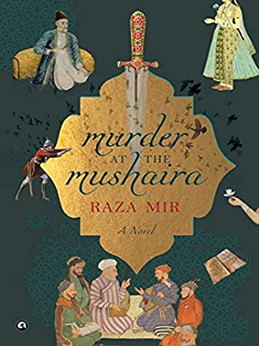
Book Review: ‘Murder at the Mushaira’ by Raza Mir

About the author

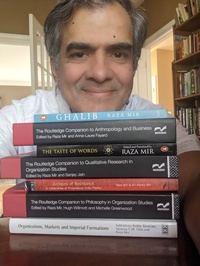
Raza Mir’s ‘Murder at the Mushaira’ is not his first book and the author is almost an expert in writing novels and various other books like Ghalib: A Thousand Desires, The Taste of Words: An Introduction to Urdu. But ‘Murder at the Mushaira’ is most certainly his ‘magnum opus. Each and every page of this novel is worth reading and re-reading. There is no denying or any dilemma in mind because we can see the years of effort and intense research that must have gone into this exquisite work of art by Raza Mir. The fact jumps out at the reader as one is compelled to halt, ponder, smile and sigh at the careful selection of words that create a vivid, elaborate and exuberant imagery of the then Shahjahanabad, amid the rising tensions, chaos and tumult of the 1857 Sepoy Mutiny.

So, the story of this historical fiction by Raza Mir, set against the backdrop of the revolt of 1857.. India stands on the brink of war. Everywhere in its cities, towns, and villages, rebels and revolutionaries are massing to overthrow the ruthless and corrupt British East India Company which has taken over the country and laid it to waste. In Delhi, the capital, even as the plot to get rid of the hated foreigners gathers intensity, the busy social life of the city hums along. Nautch girls entertain clients, nawabs host mushairas or poetry soirees in which the finest poets of the realm congregate to recite their latest verse and intrigue, the wealthy roister in magnificent havelis, and the drinking dens of the city continue to pack in customers.

One morning, Kallu, a retainer at a Delhi haveli, cleaning up after a grand mushaira, discovers a poet stabbed to death with a polished agate dagger. The poet was the nobleman. Gruesome as it is, the murder appears to be a fairly run of the mill crime until anxious officials of the East India Company make it a matter of the highest priority.

Instructions are issued for the murderer to be found and arrested immediately. But who is the killer? The dead man had many enemies, and the investigating officer Kirorimal Chainsukh soon discovers there are dozens of suspects, an equal number of motives, and waves of secrets and lies that threaten to overwhelm him. As the pressure on him to solve the crime increases, Chainsukh turns to Mirza Ghalib, poet laureate and amateur detective, for help.

Ghalib’s tools are his formidable intelligence, intimate knowledge of the machinations of Delhi high society, ferocious curiosity, and reliance on the new science of forensics that his friend the scientist Master Ramachandra has introduced him to. As Ghalib begins to collect evidence and dig into the case, he uncovers an ever-widening list of suspects, and a sinister conspiracy that involves many of Delhi’s most important men and women. By the time you think you have caught up to puzzle, it’s already fades away. The narrative of conspiracy entwines with myriads of secret and lies, entertaining and believable tale.  

Murder at the Mushaira is at once a brilliantly constructed murder mystery and the finest historical novel by an Indian author in recent times. One can judge the novel by its cover, a real pristine beauty so dramatic and mysterious at the same time. I genuinely suggest you to pick this phenomenal novel read it because it would be an intoxicating experience for you. I loved this book to eternity and beyond. Must Recommend!!!

Metamorphosis – Book Review

Buy Metamorphosis Book Online at Low Prices in India | Metamorphosis  Reviews & Ratings - Amazon.in

Gregor Samsa is a salesman who wakes up to find himself transformed into a monstrous vermin. Lying on his bed, he worries about himself and while he has time, contemplates upon the consequences of his metamorphosis. He wonders about his life, his family and the way in which his life and career has turned out to be. He thinks about he is struck with his job only because of his father’s debt and that no relationship in his life ever came from heart.

His family is horrified when they learn of this transformation when the office clerk pushes his way into Gregor’s room. The family, no longer financially stable decide to get jobs and when they do, they start neglecting Gregor more and more only to end up using his room as a store room and giving away a room in their house on rent. Gregor’s sister is the only one willing to give him food in all this while. One day, when Gregor’s sister accidentally breaks a bottle of medicine, his father hurls an apple on him, which gets struck in a sensitive spot on his back and he lies in his room in agony. And one day, he scares the tenants who threaten legal action over the unhygienic conditions of the house.

Grete, Gregor’s sister realises that Gregor is but a liability and asks her parents to get rid of “it”. Hearing the conversation, Gregor goes into his room and dies before sunsrise. The family rejoices his death by taking a day off and ride on a ferry down the countryside. Gregor’s mother exclaims that Grete has grown beautiful despite all problems and they must find her a good husband.

Kafka’s metamorphosis is considered to be a classic in literature. It is a story of a changing society and how necessities cause a metamorphosis in households and in society in general.

When are you reading this tale of humanity?

Something the kitten taught me

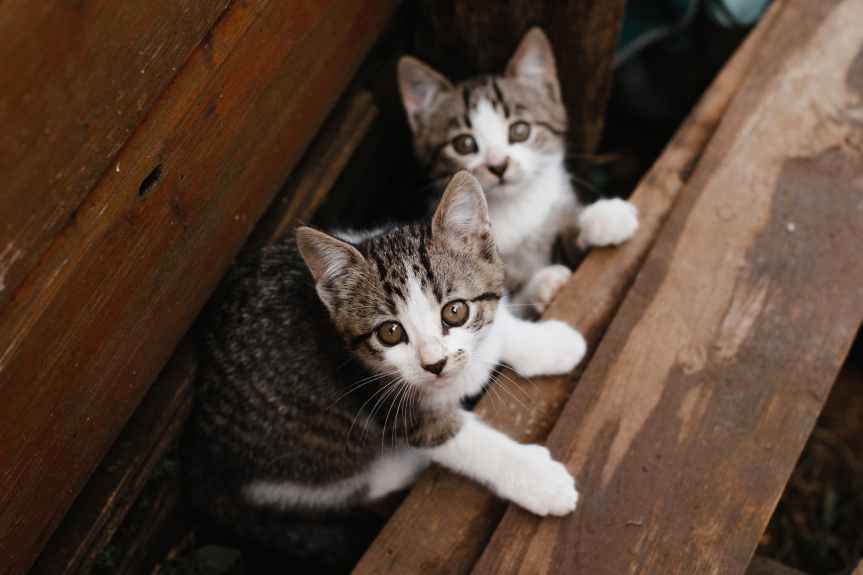
Photo by Pixabay on Pexels.com

My brother is extremely extremely extremely (I don’t even know if it is grammatically correct or allowed, but you kinda get the picture now, I guess). We currently have 3 kittens and 3 fully grown up cats and a dog as well (well the dog was my doing). So, every day the kittens demand to be let free from their room of confinement and so we take them to the roof of the house (there are too many stray dogs and so the roads aren’t safe).

This one fine evening, when we had taken the kittens for a stroll in the rooftop, and they were playing(this is what they do whole day), one of them pushed the female kitten (only one of them is a female) off the roof. Ours is a two story house and the kitten was 2 months old. She fell on concrete floor and appeared pretty dead from the rooftop. My mother rushed down giving me strict instructions to take care of the remaining ones and I watched the other two like a hawk, should they try anything. Amidst all of this chaos, the mother cat was content with even one of her kittens with no knowledge of her third one what-so-ever. Later, I decided to gather the remaining 2 (+the mother) and head down. upon enquiry, I came to know the kitten was fine (bless her) and had suffered minor injuries(well her both hind legs had developed sort of a mild fracture). The bones weren’t fully developed and so they would easily heal. And heal she did. Within two days she was back on all fours having some difficulty climbing but doing her best to keep up with her siblings. Though what was interesting was the mother realizing her child was in distress and would probably stay weak developed some sort of special liking to her.( Even to this day, she is partial)

So, anyways, after a week of recovering from her fracture, the kitten was back in form, playing and jumping and meowing. Me and my family members thought that falling rom the roof nd all the kitten would probably be afraid of heights. But man did she prove us wrong. Keeping her away from the boundary became a task. Me and my mother would stay on two corners of the roof just to chase her away each time she came too near to the boundary for our liking. The other two kittens were afraid though and stayed away. The one who made the fall was later on capable of making it all the way down from the roof, this time without injuring her foot or any other body part and now this is the first thing she does every-time she is taken to the roof-top. It is now a task for their mother to have the other two kittens do the same. After all ,she is damn adamant on taking them out of the boundary.

So now every time I see the kitten, I think that just maybe surviving the fall she had somehow realized that it was the worst that could happen to her, should she fall, and that she was capable of making it out alive, just as she did the first time and so she tried each of the countless times we tried to contain her till the day she made it and all we could do was watch.

Examination Should Be Abolished

“Change of focus distress the mind”.

“An excess of everything is bad”.

In India, it is increasingly felt that education system is highly examination oriented. Exams and tests are held at regular intervals. Success in the exams is at index of once intelligence. Exams do cause a lot of stress rather it can be said that a student’s academic future simply depends on the marks scored by him. His admission in reputed college depends solely upon his performance in examination.

As a result, students finds studies stressful, monotonous and exasperating. Unachievable targets set by the parents and perceptors, unbearable peer pressure, cut throat competitions makes one question the usefulness of the examination system. In my sense, it is all futile. We cannot deny the fact that it is resulting into spate of suicides, absenteeism and even the percentage of dropouts has increased.

Exams should be cancelled and replaced by less stressful and more fruitful forms of assessments for several reasons including:

1)     They do not define one’s skills and capabilities: Thomas Edison once said: “Tomorrow is my exam but I don’t care, a single paper can’t decide my future” and we all know what Edison achieved is his life, other successful people followed such a path and if they cared much about exams, they surely would not have achieved what they did.

2)     They do not differentiate between students: Exams do not depend on someone’s preparation only, they are also dependent on their physical and mental health, and their social situation; you most luckily would not get a second chance if you developed a diarrhea during exam, such a factor would decide whether you’re among best or worst students no matter how intelligent you are, and how much you prepared for the exam. So you see how unfair the whole system is!

3)     Cheating: The broken educational system values more grades than learning and that what obliged students to try any means –sometimes illegal ones- to pass to the next level, history is full of people who try every trick to cheat at exam time, modern technology also has made it much easier for students to pass their tests with less efforts and students’ last issue nowadays is knowledge.

4)     Stress: Exams take a toll on a student’s body and mind through the forms of stress and anxiety and you might end up in a mental institution. Because of exams, a medical student was caught eating pages from one of their recommended texts since he failed to absorb information from taking his lectures too literally.

It is also felt that examinations don’t prepare students for life. They simply enable the students to become reasonably well informed, fact churning individuals. There should be a system of consistent evaluation throughout the year and, the examinee should not be tested only for facts and information acquired by him but should be tested for life skills. So, the examination system should be abolished instead of examinations being conducted at the end of the academic session.

Place Of A Women In Society

It is rightly said woman is the backbone of society. From times immemorial, woman have been considered inferior to man in a patriarch society. Man has always treated woman not as an equal partner in life but as a mere slave. Biological superiority of man over woman has made him callous towards her. She has always being confined to the four walls of the house. Man has just treated her as an object of gratifying his sexual lust and physical desires.

Women have been denied most of the rights that give dignity of human beings. She has suffered a lot because of the whims and prejudices that man harbours towards her. But at the same time she has been called the better half of the man but unfortunately these are just sugar coated words. He abuses her physically, sexually, morally, economically and socially. There is no doubt that she has certainly been the victim of discrimination on the basis of sex. However, the scenario is changing very fast. The Constitution of India protects women’s rights by granting her equal status.

Woman have played a vital role in Indian struggle for freedom. Today, women are becoming more and more vigilant about their rights. They have discarded the Pardah system and have crossed the boundaries by exposing them in outer world. They are jostling with men in every walk of life braving their worth.

Education, political awareness and the impact of western culture have made her more vigil and aware about her rights. The concept of superiority of man is tottering. Today, woman have proved to be better doctors, administrators, pilots, academicians then many of the male counter parts. But despite this she is at the lower rung of the ladder in society. Though she is gaining economic independence but lately she is also exposed to sexual exploitation in offices and working places. Ironically, man still regards her as an unusual commodity.