
Draupadi by Mahasweta Devi

Photo by Jairo David Arboleda on Pexels.com

Mahasweta Devi is a Bengali writer and activist who is known for her strikingly social and poignant stories. She wrote several works ranging from novels and plays to essays and short stories. Her most notable works include Hajar Churashir Maa, Rudali, Aranyer Adhikar etc. She has received highest literary merits in India like Jnanpith Award and Padma Vibhushan. As an activist, she has also worked towards the empowerment and rights of tribal people from West Bengal, Bihar, Madhya Pradesh, and Chhattisgarh.

Draupadi is a thought-provoking short story that deals with the underlying caste system and tribal subjugation in India. Originally written in Bengali, it follows a raw narrative that depicts the struggles of the subaltern in a vastly power-imbalanced society. Draupadi narrates the story of Dopdi Mejhen, a woman belonging to the Santal tribe in West Bengal. Dopdi and her husband Dulna are wanted by the Indian Special Forces as they were the chief instigators in the murder of Surja Sahu, an upper caste man who selfishly drew all source of water to his own wells and tube-wells even during the drought. Their bravery in questioning the authority of the upper caste is seen as a threat and battalions of officers are deployed to capture this ‘untouchable’ couple. Senanayak, the appointed head of the task force, uses the power of knowledge, tactics and violence to capture them. He is pragmatic with his ideology that ‘In order to destroy the enemy, become one.’ He is ruthless and tries everything in his power to achieve this, even going as far as to bait Dopdi with her own husband’s corpse. After her capture, his command allows multiple officers to rape her to extract information. Capturing and torturing them for information becomes a pleasurable game to Senanayak. Where the fugitives struggle for their lives, he takes joy in decoding their language and ‘countering’ them.

Draupadi in this narrative is an implicit reversal of the mythical character Draupadi from the Mahabharatha Mythology. Where the young princess is married off to five princes and leads the life as a fugitive who finally gets back their kingdom, this Dopdi does not grow up in the luxury. She has always been considered an outcast by her country for her identity and she is always on the run. Despite being nearly raped to death, she fearlessly walks out naked and confronts Senanayak, demanding him to ‘Counter’ her.

The people in power always reinforce their power by asserting dominance and by manipulating the internalised stigma against the people born in lower castes. Mahasweta Devi narrates this story of oppression without overtly emotionalising it and yet, it affects the readers in such a way that it provokes these emotions within us. To bring out maximum impact, she portrays reality as it is in all of its rawness which makes us question the power play prevalent in the society. The gradual shift of power in the end can be seen as her way of hinting at a hopeful future.


Two must-read books of Paulo Coelho

Book: The Alchemist

Book Plot:

A Sheppard boy who wandered most of the places in Andalusia with his flock of sheep. Once he was sleeping in an abandoned church, he dreamed of going to the pyramid. He already had that dream once before. So in a place Tarifa he accidentally met a gypsy lady and she told that there in Egypt he will find his treasure. The followed story is about the adventure taken by the Sheppard boy to reach his Destiny.

About the Book:

  • Through this book, the author motivates us to listen to our hearts while we pursue our dreams. a philosophical fiction and Paulo Coelho gave him at best.
  • The Sheppard boy’s name is Santiago. But, the author never mentions his name except in the first line of the story. We must learn that trick from Paulo Coelho.
  • Paulo Coelho always concentrates on his story. No puns, no scribbles, no long narrations, no heroic entries, and especially no circumlocution. Just a plot and beautiful words to make it a novel. That’s why he is one of my favorite authors.

Quotes:

It is not what enters men’s evil mouths that’s evil… It is what comes out of their mouth that is.

There is only one thing that makes a dream impossible to achieve: the fear of failure.

There is only one thing that makes a dream impossible to achieve: the fear of failure.

when you want something, all the universe conspires in helping you to achieve it.

Tell your heart that the fear of suffering is worse than the suffering itself

Book: The Archer

Book Plot:

Tetsuya, a man once famous for his prodigious gift with a bow and arrow but retired from public life. The boy who comes searching for him wants him to teach the way of the bow, and the archer illustrates the way of the bow and the tenets of life.

Quotes:

What is a master? I would say that he is not someone who teaches something, but someone who inspires the student to do his best to discover the knowledge he already has in his soul.

The bow is life: the source of all energy. The arrow will leave one day. The target is a long way off. But the bow will stay with you, and you must know how to look after it.

Elegance is not the most comfortable of postures, but it is the best posture if the shot is to be perfect.

Why you must read these books:

  • Paulo Coelho is an inspirational person who never disappoints us through his books, he suffered a lot and searched the way out of his hell through philosophy, religion, and faith.
  • I don’t know why Paulo Coelho’s books come under the genre of fiction? For real, it is a self-motivational book. His words are simple his books are the only books that I read in a single sitting.
  • If you are a person who fears failure, rejection, and humiliation… You must read these books. After reading these books you will do something you love to do or you will at least think about what do you love to do.

Book Review: 1984 by George Orwell

Book Plot:

Winston Smith is a low-ranking member of the party. In his country Oceania, everything was controlled by the head of the party who is known as “Big Brother”. There will be cameras fixed everywhere like public places, apartments and even in our own houses including our bedrooms. We will be watching 24×7. The party controlled and monitored every people of the country, they decided everything of what must people talk, write even they controlled people from thinking about something which will be lead the party down. (Thoughtcrime) they say that and punish the people in secret ways. Sometimes people suddenly vaporize from society due to the crimes they commit. These all things made Winston depressed and he wanted to rebel against the party with his lover Julia. They both wanted to rebel against the current party that is ruling the country Oceania. How did they start their plan? With whom did they join to abolish the party? Who helped them? Who was against their ideas? And did they uprooted the party? Are questions will occupy our minds until the end of the book.

About the book:

This book is completely a dystopian novel by George Orwell who is famous for his dystopian and unique novels. Through this book, Orwell beautifully illustrated how it must be to be in the future.

This book was written in 1948 itself. And also adapted as a movie. If you don’t have time to read this full novel you can watch it virtually.
If you think “this plot reminds me of your school history subject” I say No… it’s beyond history. Orwell made a timeless satirical attack on the social and political structures of the world.
People in a higher position will create rules and make us obey them. If we don’t, They will give us what we need most and convince us to obey them. Or They will give pain or fear and persuade us to obey them.
Even though it’s a classic novel. The words are not that difficult. so, if you hate classic books due to their language. You can try this one. You don’t find it hard to follow it.
Why you must read this book?
George Orwell is a genius. Who is loot us from our reality? And left us alone in the place which is created by him. That is none other than his works. So, if you want to escape reality and get yourself into some unbearable works. You must try this one.
If you are a classic lover you can read it and would eventually start to love Orwell’s works.
If you are a literature student. This book and George Orwell’s “Animal Farm” book will help you with major paper and their background studies.

Quotes from this book:

Who controls the past controls the future.Who controls the present controls the past.

If you want to keep a secret, you must also hide it from yourself.

If you loved someone, you loved him, and when you had nothing else to give, you still gave him love.

Power is in tearing human minds to pieces and putting them together again in new shapes of your choosing.

Nelson Mandela International Day

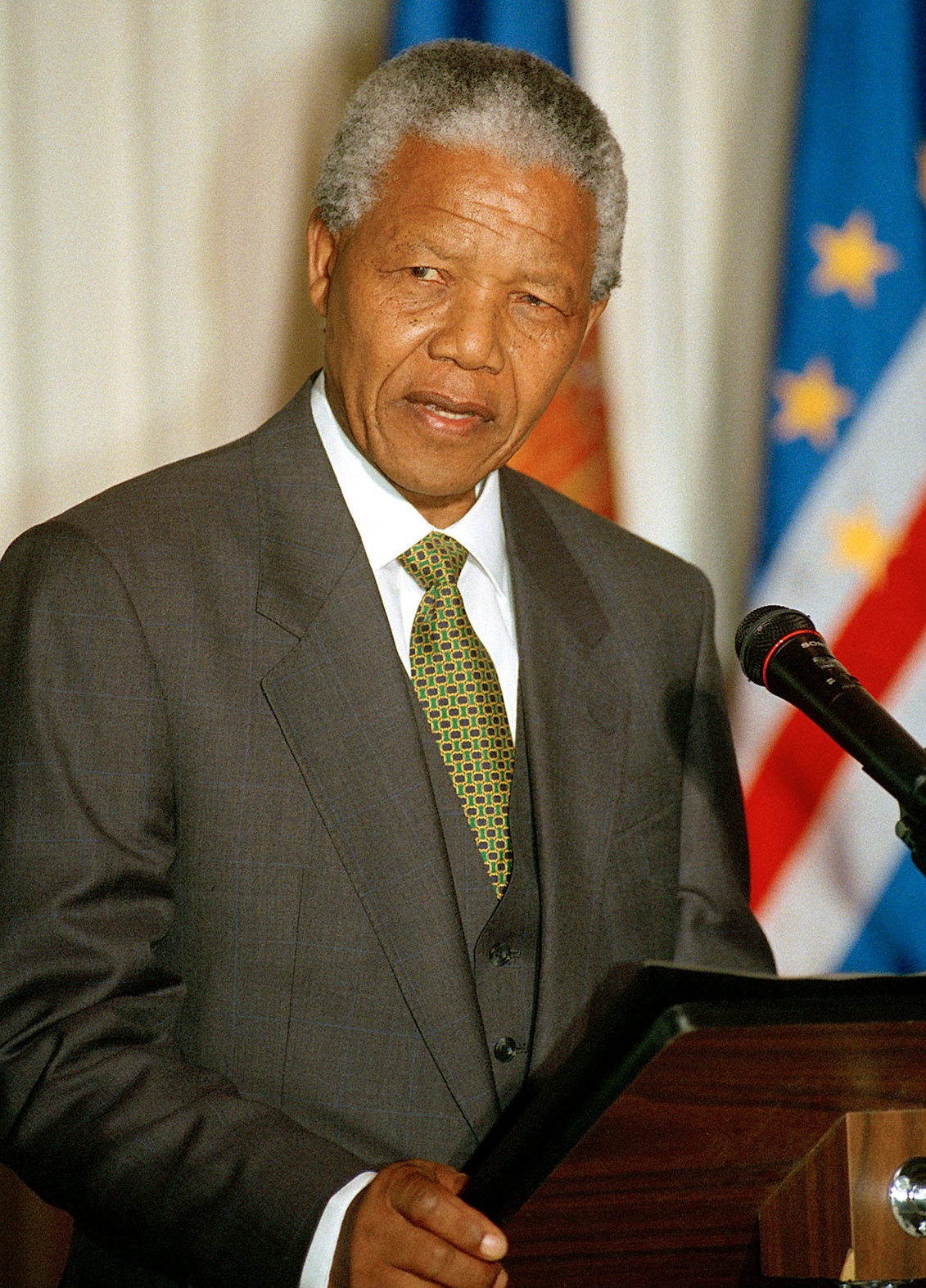
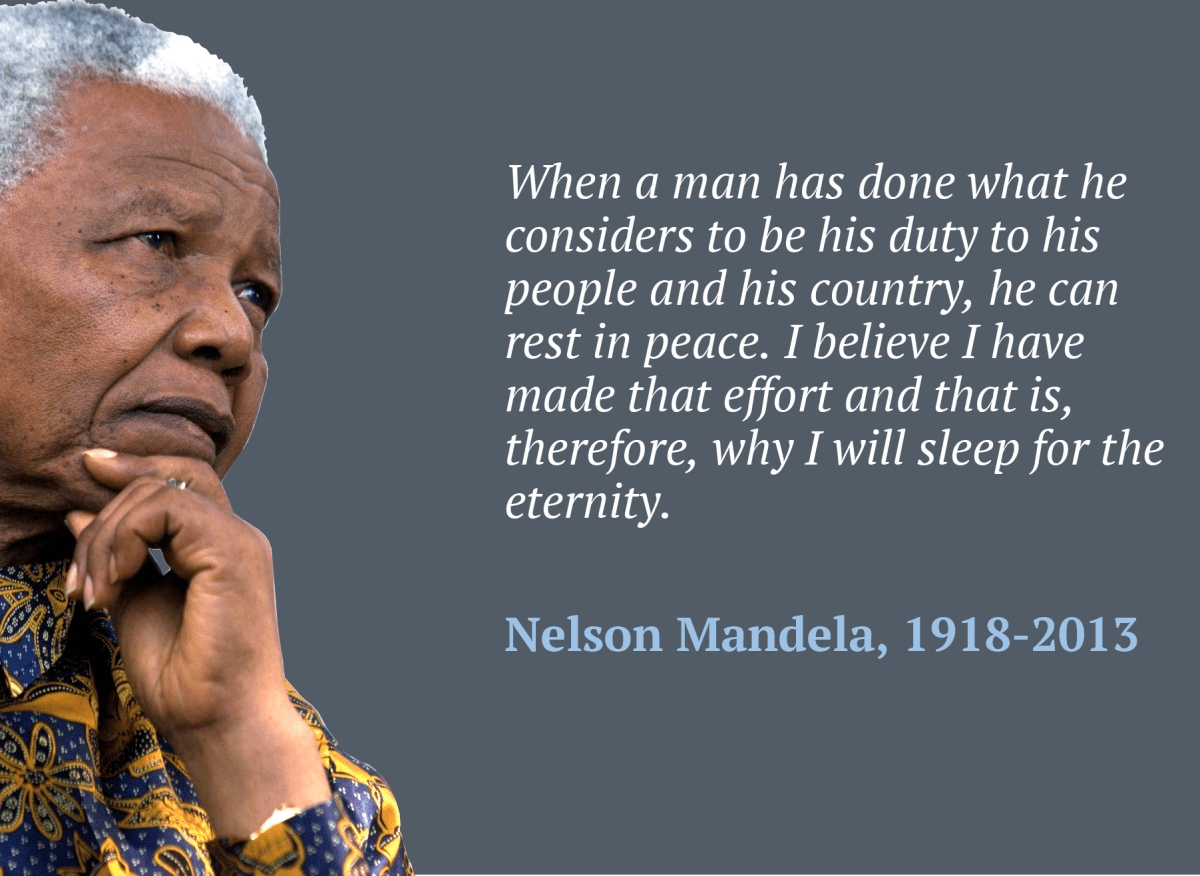
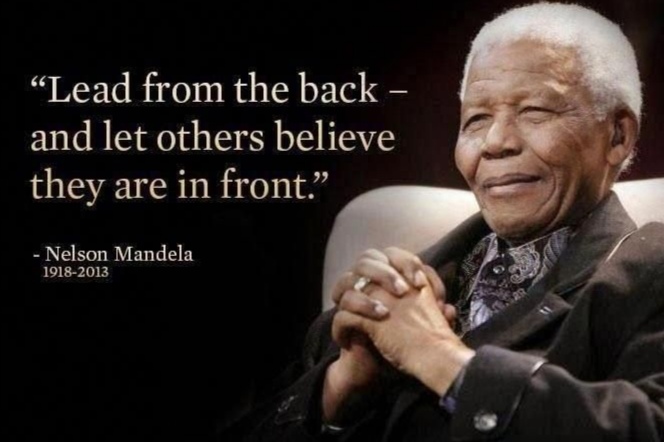
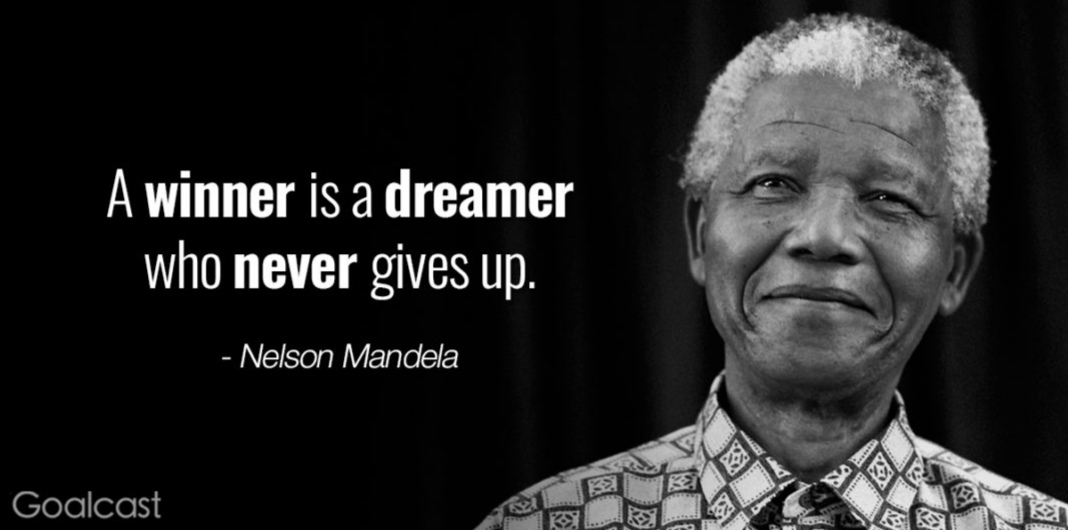
Nelson Mandela was a South African anti apartheid Revolutionary Statesman.

He served as president of South Africa from 1994 to 1999.

Nelson Mandela was first black head of state and the first elected in a fully representative democratic election.

Nelson Mandela is known as Gandhi of South Africa.

Nelson Mandela was born on 18 July 1918.

We died on 5th December 2013.

Nelson Mandela International Day is celebrated on 18 July every year.

Today is 103rd birth anniversary of Nelson Mandela.

Nelson Mandela opposes the racist system of Apartheid in South Africa and dedicated his life to establishing social equality for all.

Nelson Mandela was awarded the prestigious Nobel Peace Prize in 1993.

He involved in anti colonial and African Nationalist politics, joining the AMC in 1943 and co-founding its youth league in 1944.

In 1962, He was arrested, imprisoned and subsequently sentenced to life imprisonment for conspiring to overthrow the state following the Rivonia trial.

He served 27 years in prison.

  • Nelson Mandela was also known as Madiba.
  • Nelson Mandela was birth name Rolihlahla Mandela.
  • Nelson name was given by his Primary school teacher.
  • In 1931, he begin his College degree at University College of Fort hare.
    • Nelson Mandela was expelled for participating in a protest against the universities policies.
  • Nelson Mandela received his law degree from University of South Africa in 1989.
  • The king of his village threatened him and his cousin with arrange marriages but they both ran away.
  • Nelson Mandela along with his fellow AMC member established South Africa’s first black law practice in 1952.
  • Nelson Mandela was banned from leaving the country
    • In order to leave the country he used the name David Motsamayi to get out of country in secret.
  • In prison, he was mentor to to other prisoner and taught them about nonviolent resistance.
  • Nelson Mandela believed that sports has the power to change the world, it has the power to inspire,. It has the power to unite people in a way that letter else does. It speaks to youth in a language they understand. Sport can create hope where one there was only dispair. It is more powerful than government in Breaking Down racial barriers.
  • He was released from prison in 1990 by president Frederick William De klerk.
  • Nelson Mandela was 76 year old when he was elected as president of South Africa.

Theme of national Mandela International Day 2021

  • The theme of this year is One Hand Can Feed Another.
  • Last year’s theme was Take Action, Inspire change.
  • The theme highlighted the importance of Government and citizen working together to build a peaceful equitable and sustainable world for all.

Book Review-The diary of a young girl Anne Frank

Anne Frank (born June 12, 1929, Frankfurt am Main, Germany—died February/March 1945, Bergen-Belsen concentration camp, near Hannover), Jewish girl whose diary of her family’s two years in hiding during the German occupation of the Netherlands became a war classic.

Photo by Ava Sol on Pexels.com

Anne’s father, Otto Frank (1889–1980), a German businessman, moved his wife and two daughters to Amsterdam early in Adolf Hitler’s Nazi government. After German forces conquered the Netherlands in 1941, Anne was forced to switch from a public to a Jewish school. She was given a red-and-white plaid diary for her 13th birthday on June 12, 1942. She started writing in the book that day.

“I hope I will be able to confide in you about anything, as I have never been able to confide in anybody before, and I hope you will be a wonderful source of comfort and support.”

The Franks went into hiding in the backdoor office and warehouse of Otto Frank’s food-products firm on July 6, 1942, when Anne’s sister, Margot, was facing deportation (allegedly to a forced-labor camp).

The Frank family and four other Jews—Hermann and Auguste van Pels and their son, Peter, and Fritz Pfeffer—were confined to the “hidden annex” with the help of a few non-Jewish friends, including Miep Gies, who brought in food and other supplies. During this period, Anne kept a diary, documenting day-to-day life in hiding, from little irritations to the terror of being discovered.

She talked about usual adolescent concerns as well as her future ambitions, which included becoming a journalist or writer. On August 1, 1944, Anne wrote her final diary entry. The annex was discovered three days later by the Gestapo, who were acting on a tip from Dutch informers.

On September 3, 1944, the Frank family was taken to Westerbork, a transit camp in the Netherlands, and then to Auschwitz, a concentration camp in German-occupied Poland, on the last train to leave Westerbork for Auschwitz. The following month, Anne and Margot were moved to Bergen-Belsen.

Anne’s mother died in early January, only days before Auschwitz was liberated on January 18, 1945. The Dutch government determined that Anne and Margot perished in a typhus outbreak in March 1945, just weeks before Bergen-Belsen was liberated, however experts disclosed new evidence in 2015, including examination of archival data and first-hand reports, showing that the sisters might have perished in February 1945.

When Soviet troops seized Auschwitz on January 27, 1945, they discovered Otto Frank sick there.

The papers left behind by the Gestapo were eventually given to Otto Frank by friends who examined the hiding site after the family was apprehended. He discovered Anne’s diary among them, which was later published as Anne Frank: The Diary of a Young Girl (originally in Dutch, 1947).

It follows her emotional evolution in the face of adversity and is precocious in style and insight. “I still think, despite everything, that humans are truly wonderful at heart,” she wrote. The Holocaust Diary, which has been translated into over 65 languages, is the most widely read Holocaust diary, and Anne Frank is undoubtedly the most well-known Holocaust victim.

The Diary was also adapted into a play, which premiered on Broadway in October 1955 and won the Tony Award for Best Play as well as the Pulitzer Prize for Best Drama in 1956. In 1959, George Stevens directed a film adaptation of the book.

The play was controversial: screenwriter Meyer Levin criticised Otto Frank and his chosen screenwriters, Frances Goodrich and Albert Hackett, for sanitising and de-Judaizing the storey in an early version of the play (later realised as a 35-minute radio play) and accused them of sanitising and de-Judaizing the storey.

The drama was revived (with additions) on Broadway in 1997–98 after being played in high schools all around the world.

Photo by Pixabay on Pexels.com

The revised English translation of the Diary, published in 1995, includes material that was cut out of the first version, making it nearly one-third longer than the first. The Frank family’s hideaway on Amsterdam’s Prinsengracht canal has since become a museum that is consistently among the city’s most popular tourist attractions.

ANNE FRANK’S QUOTES

“How wonderful it is that nobody need wait a single moment before starting to improve the world.”

“I know what I want, I have a goal, an opinion, I have a religion and love. Let me be myself and then I am satisfied. I know that I’m a woman, a woman with inward strength and plenty of courage.”

“Everyone has inside of him a piece of good news. The good news is that you don’t know how great you can be! How much you can love! What you can accomplish! And what your potential is!”

“What is done cannot be undone, but one can prevent it happening again.”

“I don’t think of all the misery but of the beauty that still remains.”

General knowledge

General knowledge is very important in everyone’s life. The person without the knowledge is like the bird without the wings. It is very important to know what is happening across the world. So, it is very important to attain the general knowledge. To grab general knowlede, an individual must follow some of the techniques like reading books, articles, magazines, newspapers etc.

The newspaper consists of all the important things like the business purposes, sports, entertainment, some interesting puzzles, Hindi habits, food recipes, Current affairs etc.

Reading newspaper is an important thing because whenever an individual comes across a motivational thing, he or she will be motivated and focuses on the particular aspect. The individual will get to know the current affairs. The person will get a good grip on the general knowledge. solving puzzles improves the skills of the person. Reading about the healthy habits in the newspaper makes the individual to go for good and healthier meals.

Reading newspaper is very important because gives the chance to know what is happening around us. Early in the morning or evening whatever the time maybe, sparing at least 10 to 15 minutes of time on newspaper is a very good habit that an individual can develop.

The newspaper consists of all the important things like the business purposes, sports, entertainment, some interesting puzzles, Hindi habits, food recipes, Current affairs etc.

In one of the other way the individual develops good habits and focuses more on what they are trying to do.

Individual Differences :

Intelligence :

High scores on tests of general knowledge tend to also score highly on intelligence tests. IQ has been found to robustly predict general knowledge scores even after accounting for difference in age, and five factor model personality tarits. However, many general knowledge tests are designed to create a normal distribution of answers, creating a bell shaped curve.

General knowledge is also moderately associated with verbal ability, though only weakly or not at all with numerical and spatial ability. As with crystallized intelligence, general knowledge has been found to increase with age.

Long term semantic memory :

General knowledge is stored as semantic memory. Most semantic memory is preserved through old age, though there are deficts in retrieval of certain specific words correlated with aging. In addition, stress or various emotional levels can negatively affect semantic nemory retrieval.

Personality :

People high in general knowledge tend to highly open to new experiences and in typical intellectual engagement. The relationship between openness to experieñce and general knowledge remains robust even when IQ is taken into account. People high in openness may be more motivated to engage in intellectual pursuits that increase their knowledge. Relationships between general knowledge and other five factor model traits tend to be weak and inconsistent. Though one study found that extraversion and neutroticism were negatively correlated with general knowledge, others found that they were unrelated.

Predictor of achievement :

A number of studies have assesses whether performance on a general knowledge test can predict achievement in particular areas, namely in academics, proofreading and creativity.

Academic achievement :

General knowledge has been found to predict exam results in a study of Britush schoolchildren. The study examined congnitive ability and personality predictors of exam performance and found that general knowledge was positively correlated with GCSE english, mathematics, and overall exam results. General knowledge test scores presicted exam results, even after controlling for IQ, five factor model personality traits, and learning styles.

Proofreading :

General knowledge has been found to robustly predict proofreading skills in univeristy students. A study found that proofreading had a larger correlation with general knowledge than with general intelligence, verbal reasoning, or openness to experience. In a multiple regression analysis using general knowledge, general intelligence, verbal reasoning, five factor personality traits, amd learning styles as predictors, only general knowledge was a significant predictor.

Creativity

General knowledge has been found to have weak associations with measures of creativity. In a study examining contributions of personality and intelligence to creativity, general knowledge was positively correlated with tests of divergent thinking, but was unrelated to a bigraphical measure of creative achievemnet, self- rated creativity, or a composite measure of creativity. The realtionship between general knowledge and divergent thinking became non- significant when controlling for fluid intelleigence.

Game shows and Quizzes :

Many game shows use general knowledge questions for entertainment purpose. Game shows such as who wants to be a Millionarie? and fiteen to one centre their questions on general knowledge, while other shows focus questions more on specific subjects. Some show ask questions both on specific subjects and on general knowledge .

“A Clergyman” by Max Beerbohm: Critical appreciation

This essay is written by Max Beerbohm, in the year 1918. The essay is influenced or derived from James Boswell’s record of Johnson’s life probably from the biography “Life of Samuel Johnson”,  which he published in 1971. In this famous biography of Samuel Johnson, Boswell presents him, mostly as an intellectual person, who engages in many table-talks. One such episode is being highlighted in this essay by Beerbohm in which Johnson and Boswell engages in an intellectual meeting “at Streatham, in the well-appointed house of Mr. Thrale” on April 7th, 1778. Henry Thrale, was a British politician who sat in the House of Commons from 1765 to 1780. He was also a close friend of Samuel Johnson. This meeting was also joined by Sir John Pringle, (“father of military medicine”) and they were discussing about the sermons and the peculiarities of some sermon writers.

               Max Beerbohm, uses this incident to paint the imagined past that he recreates in this essay. He introduces the passive yet the main focus, the Clergyman into this actual incident so as to give his imaginary character a sense of reality. He verbally caricatures this passive character who “cuts in” their conversation as a “man with a high, thin voice, and without power to impress anyone with a sense of his importance, a man so null in effect that even the retentive mind of Boswell did not retain his very name, would assuredly not be a self-confident man. He sat forgotten, overlooked; so that his self-assertion startled everyone just as on Boswell’s page it startles us”. Beerbohm gives the details of this meeting as if he were among the intellectuals who actually participated in the meeting. The Clergyman, as Beerbohm presents him is a young man who is “unregarded, shy” and with a nice persons’ thin voice. His shyness and thin voice enhance his passiveness. On the contrary Johnson is presented as the centre of this intellectual meeting, and this eager clergyman waits for him to notice him. He musters up all his courage to ask a question to Johnson, but he dismisses him with his disdainful remark.

 “A CLERGYMAN, whose name I do not recollect: Were not Dodd’s sermons addressed to the passions? JOHNSON: They were nothing, Sir, be they addressed to what they may.’”

              The clergyman is portrayed as a nonentity or an unwelcomed intrusion in the so-called intellectual gathering and Max Beerbohm gives us a number of possibilities as of why he remained largely unnoticed. The essayist opines that it could be because of his thin voice , or could be because he was not properly dressed, or could be because the others in the gathering outshined him. He also presents the possibility that the Johnson, as he was a deaf “old lion” by then, was never aware that he was actually, permanently damaging the clergyman with his “force of paw and claws” which were not the less lethal. The social courage that had been sapped in him, was destroyed, by this experience.

It could be interpreted that Johnson could have dismissed the clergyman’s question because he mentioned William Dodd, whom “Johnson had befriended in adversity”. William Dodd, was an English Anglican clergyman and a man of letters, he was also a controversial topic, for he was caught and punished for forgery. It was said that he had received the assistance of Samuel Johnson. Thus, when the Clergyman mentioned this person, Johnson was caught off-guard and that is why he might have shunned him with his disdainful remark.

The writer also draws parallels between two ages; one, that of Johnson’s, in which sermons were given ore importance and the other, probably the Victorian age, in which novels replaced the sermons. He says that after some time in the future the intellectuals will start discussing about the novels, not the sermons. He comments that by following the trends of the age, people are being capricious and as the Clergyman is being neglected now, people will neglect the sermons for the novels. This, he presents through the conversation between a Pundit and his disciples on many novel writers and their significance. With this conversation he also draws parallels to the characters of the passive clergyman and the “poor nameless wretch” and Johnson to the Pundit.

              He concludes the essay, suggesting that hopefully theses nameless and passive people might get the attention they required. It seems impossible. “But we must remember that things are not always what they seem”. On a philosophical note, “Every man illustrious in his day, however much he may be gratified by his fame, looks with an eager eye to posterity for a continuance of past favors, and would even live the remainder of his life in obscurity if by so doing he could ensure that future generations would preserve a correct attitude towards him forever”. He wishes that the clergyman hadn’t been there at that meeting so that he would not have been nipped in the bud and so, would have saved his face for posterity. Thus, the writer does not fully convey his opinions for the neglect of the clergyman. He just gives his opinions as possibilities. At the end, he suggests that for delicate people like the clergyman, such experiencing might have a long-term effect and the damaged caused could not be reversed. “He sank into a rapid decline”. He also hopes that this person might have died “forgiving Dr. Johnson”.

PATRIOTISM

“The greatest patriotism is to tell your country when it is behaving dishonorably, foolishly, viciously.” ― Julian Barnes, Flaubert’s Parrot

Patriotism means love of one’s motherland. The attachment to one’s motherland is as innate as one’s affection for one’s parents. Man’s first loyalty is to himself, then to his family and then to his own country. India is a land of many cultures, traditions, and languages. But Indians stand as one whenever there is a threat to the integrity of India. They stood up unitedly at the time of the Chinese aggression. Recently it has been proved during the Kargil war in Kashmir. Thus, patriotism brings out the qualities of unity, service and sacrifice. Patriotism encourages the noble quality of self- sacrifice for the cause of one’s country.

Gitanjali 35

Where the mind is without fear and the head is held high;
   Where knowledge is free;
   Where the world has not been broken up into fragments by narrow domestic walls;
   Where words come out from the depth of truth;
   Where tireless striving stretches its arms towards perfection;
   Where the clear stream of reason has not lost its way into the dreary desert sand of dead habit;
   Where the mind is led forward by thee into ever-widening thought and action
   Into that heaven of freedom, my Father, let my country awake…………BY RABINDRANATH TAGORE

Patriotism, however, sometimes develops a false national pride. The people of a particular geographical area have intolerance for the people of other areas. They even nurse evil feelings and enmity and go to war. This is not real patriotism. We know the horrors of war due to aggressive patriotism.

We have to shed mutual bickering, shed the difference of being high or low and develop the sense of equality and banish untouchability. We have to restore the conditions of Swaraj prevalent prior to British rule. We have to live like the children of the same father.- Sardar Vallabhbhai Patel

Patriotism is a noble virtue when love of one’s country does not lead to the hatred against other nations. One’s love of one’s country should expand itself into a love for all world. Narrow patriotism reeds passions and prejudices and so it is despicable. It brings hatred and wars. True patriotism must seek peace and prosperity of e world. It must be free from narrowness and meanness. It is Possible to combine patriotism with love for the people of the world. Thus, patriotism may least to international brotherhood.

Men, money and material cannot by themselves bring victory or freedom. We must have the motive-power that will inspire us to brave deeds and heroic exploits. -Netaji Subhash Chandra Bose

Not everything turns out beautiful

Not everything is supposed to become something beautiful and long lasting. Sometimes people come into your life to show you what is right and what is wrong, to show you who you can be, to teach you to love yourself, to make you feel better for a little while.
Not everyone is going to stay forever and we still have to keep on going.

We may feel we weren’t bad, it may just be our destiny or the bad timing we had.

WHY  GEOFFRRY CHAUCER IS CALLED AS THE FATHER OF ENGLISH LITERATURE?

Geoffrey Chaucer is the first person to write well known poems and stories in the language of the common people of his time.

HIS LIFE: (c. 1340-c. 1400)

From the records of his time it is found, his name is mentioned with some references and remarks. These references and remarks in his poems are sum of what we know about his life. His birthdate is unclear. But from some documents it is accepted as 1340. He was born in London. He entered the household of the wife of the Duke of Clarence and saw military service and caught there. He is often mentioned as the person of royal pensions and bounties and was confirmed in his offices and pensions. In 1386 he was sent to Italy on one of his diplomatic missions. He was the first poet to be buried in poet’s corner in Westminster Abbey.

HIS POEMS:

The poems of Chaucer poems cannot be confirmed with certainty, but from interval evidence they can as a rule approximately dated.His poems are divided into French, the Italian and the English stages.

The poems of French stage are modelled upon French originals. The style is clumsy and immature. The longest poem is The Romaunt of the Rose, a lengthy allegorical poem written in octosyllabic couplets and based upon Le Romaunt de la rose of Guillaume de Lorris and Jean de Meung. This poem is only a fragment of 8000 lines. The Italian stage shows advancement than the first. Handling of the meters, the technical ability is greater. The Hous of fame, a poem in octosyllabic couplets, is one of the dream allegory type. The Legend of Good Women is the first known attempt in English to use the heroic couplet, which is handled with great skill and freedom. The English group contains work of the greatest individual. The Canterbury Tales is one of his achievements. Chaucer draws together twenty nine pilgrims including himself. The journey of the pilgrim is to tell two tales in the outward journey, and two on the return. Chaucer’s own Tale of Melibeus and The Parson’s Tale are composed in powerful and versatile species of the heroic couplet.
The first thing that strikes the eye is the unique position that Chaucer’s work occupies in the literature of the age. He was the man of the world, mixing freely with all types of mankind and he used his opportunities to observe the little peculiarities of human nature. Chaucer’s best descriptions of men, manners, and places are the first rank in their beauty, impressiveness and humour.

The bisy larke, messages of day,

Salueth in her song the morwe gay,

And firy phoebus riseth up so brighte

That all the orient laugheth with the lighte.

-The knight’s Tale

The prologue contains generous material to illustrate Chaucer’s power in describing his fellow men. In the literature of his time, the humour of Chaucer is healthy and delightful. As a story teller his narrative posses a curious stealthy speed. In poetical technique, English literature owes much to Chaucer. Chaucer is no great lyrical poet but in some of his, he shows a skill that is as good as the very best apparent in the contemporary poems. He stands alone, and for nearly two thousand years none dare claim equality with him.

This experimentation by many critics, authors, literariness etc, left a lasting mark upon English poetry is a contribution of Chaucer’s that is also cause for considering him the father of English poetry. He also one of the persons to contribute new words to English language.

‘ROAD ACCIDENT’

Road accidents are the order of the day in India. There is nothing unusual about innocent people losing their lives due to a combination of several factors. First and foremost is their own indifference and ignorance of traffic rules; combined with other factors like callous drivers or the absolute insensitivity shown by the transport authorities. There is no need to go for the statistical details about the exact number of deaths or serious injuries caused due to road accidents in a particular year. Such statistics do not reflect the truth under normal circumstances. The picture given below shows a man whose car has been turned over because of a collision with a truck and the man is presumably bleeding to death.

The policeman seems to have been able to nab the driver who looks more dazed than guilty, perhaps because of the impact of alcohol which is usually the driving force for drivers across India. An ambulance is in place and two men seem to be moving towards the victim with a stretcher. This is very assuring but the nature of the tragedy leaves us with considerable anxiety about the chances of the victim’s survival. Above all, the picture does not forget to show the common men who usually do not forget to play the role of either mute spectators or aggressive agitators under these circumstances. The spot is not as crowded as city areas are expected to be. Perhaps that also explains the presence of trees, clouds, and birds in the area rather than multistoried buildings and advertisement boards.

Car crash on major highway during rainfall at night. Ambulance in foreground and police car in background.

There are some serious questions that come to my mind when I look at this picture. If we contemplate the picture at a deeper level, we are bound to be confronted by certain very disturbing questions. Why are accidents so common in India? Can nothing be done to combat the menace of rash driving? Why can’t we have a more proactive approach from the police department so that a strict vigil on the roads discourages maniacs from indulging in the killing game of rash driving? The picture shows the policeman nabbing the driver and the medical team on the spot to help the wounded.
Both these incidents are utopian in the Indian context because most drivers in such cases flee the spot and reappear in the scene after a gap of about four or five months, when people have completely forgotten about this incident. Such people also take care to bribe certain dishonest policemen to stay out of legal hassles. The police are often unable to take these people to task. Moreover such is the state of medical care in our country that more often, accident victims die before they can reach the hospital and get proper medical care. Police investigation into these accident cases is such that the common man shies away from helping accident victims for fear of police harassment.

Auto accident involving two cars on a city street

There is no gainsaying the fact that this scenario needs to change. If we do not rush to the aid of an accident victim, it raises serious questions about our identity as civilised human beings. The concerned authorities and the common man should co-operate to improve the scenario with stricter traffic laws and efficient mobile health care units. But we need political will for such a thing to happen. Suppose this person is being taken to the hospital but his ambulance gets stuck in a traffic jam caused by a VIP’s transport facilities and the man dies, whom do you hold responsible? Can we depend on such individuals to make our roads and healthcare facilities better?

Scenario of Road accident in India:

India had most deaths in road accidents in 2019: Report
A total of 151,113 people were killed in 480,652 road accidents across India in 2019, an average of 414 a day or 17 an hour, according to a report by the transport A total of 151,113 people were killed in 480,652 road accidents across India in 2019, an average of 414 a day or 17 an hour, according to a report by the transport research wing of the ministry of road transport and highways.

India continued to have the most road fatalities in the world, followed by China, a distant second at 63,093 deaths in 2,12,846 road accidents in 2019, the report revealed. The United States of America (USA) reported the most road accidents at 2,211,439, and witnessed 37,461 deaths in 2019.

According to the report, speeding was the leading cause of deaths, while, in terms of vehicles, two-wheelers were involved in most road fatalities.

Across states, most road accidents were reported in Tamil Nadu (57,228), followed by Madhya Pradesh (50,669), Uttar Pradesh (42,572), Kerala (41,111) and Karnataka (40,658) accidents.

Maharashtra ranked sixth with 32,295 accidents, but saw the second-highest number of fatalities (12,788), after 22,655 in Uttar Pradesh.

Among cities, Delhi retained its first rank with 1,463 deaths, followed by Jaipur (1,283), Chennai (1,252) and Bengaluru (768).

Mumbai ranked ninth with 447 people being killed in road accidents in 2019.

Investing lesson of Peter Lynch


Peter Lynch is one of the most successful and top value investor of all time. He was a legendary fund manager who gave 29% returns to their investors for 13 years in a row. He wrote books on value investing , where he shared his investment lessons which he learned and used during his journey as an investor. He is one of the greatest value investor of all time. He is a firm believer that an average investor can also pick winning stocks as Wall Street professional with right research, patience , steady discipline and common sense.


Some of his investment principles are –

1. Invest in what you already know – “The worst thing you can do is invest in companies you know nothing about. Unfortunately buying stocks on ignorance is still a popular American pastime.” -Peter Lynch
People can perform well by investing in what they already know. For instance if a doctor wants to invest in banking sector (about which he know nothing) , he will not have that great return as compared to if he will invest in pharmaceutical companies ( as he already knew about drugs, healthcare sector and their companies)
“Invest in what you know. It leaves out the role of serious fundamental stock research. People buy a stock and they know nothing about it. That’s gambling and it’s not good.” -Peter Lynch
So, it’s better to choose the company whose products/services are either used by you or you are familier of the products/services of that company in some way or other. These knowledge will lead you to invest in better stocks .
2. Invest in companies not in stocks – “Look for small companies that are already profitable and have proven that their concept can be replicated. • Be suspicious of companies with growth rates of 50 to 100 percent a year”-Peter Lynch

Behind every stock there is a company. If companies will perform well, the stocks automatically will perform well. So, it’s important to know about the company, it’s business model. Choose a company whose fundamentals are strong. A company whose business model is so easy to understand that anyone can understand and run that company.

“Go for a business that any idiot can run – because sooner or later any idiot probably is going to be running it” -Peter Lynch

Know a companies management, it’s fundamentals and then ask yourself , “are you able to understand the mission and vision of the company? “ or “If you’ll be given the responsibility to run this company, will you be able to run the company? “
If the answers to the above questions are a YES then it’ll be great to invest in that company.
So always remember that you have to invest in a company and not in a single stock.


“Behind every stock is a company. Find out what it’s doing.” -Peter Lynch

“Never invest in a company without understanding its finances. The biggest losses in stocks come from companies with poor balance sheets.”

3. Don’t take unnecessary risks. Take calculated risks – You don’t have to take risks which you can’t bear. Only take calculated risks.
Let’s say, you have $10 dollar, maybe if you will lost this, you won’t regret. But what if you lost $100 or $1000! Always buy stocks of the amount if you lose won’t regret. You are not required to put all your money in market and risk all that money. Instead put only that amount which if you lose won’t make you regret of investing.
Also, invest only the amount you will not need ever back in your life
4. Peter Lynch said that the most important thing that keep in mind while investing is : know why you own it.

“ You have to know what you own ,and why are you own it .” -Petrr Lynch

It sounds simple but it is not . He said when I asked most people they just don’t know why they own a stock . 80% of investors have no answer to this question .

They maybe hear some tip from anywhere and put their money at risk and when they lose it they blame institutions .
First you have to know the reason . Why you should invest in this company ,research about that company . Check their balance sheets . Without proper research you are not investing you are just gambling . Read and know as much as you can about the company. And remember to buy the company and not just a stock.

“If you’re prepared to invest in a company, then you ought to be able to explain why in simple language that a fifth grader could understand, and quickly enough so the fifth grader won’t get bored.” – Peter Lynch

5. Invest for long time- Lynch used to hold stocks for long period of time. He used to sell the stocks when the fundamentals of any company gets changed. This is his advice for all investors out there to not go behind short term profits but invest for a long period of time.
He even conducted many studies to understand the power of compounding.

“People who succeed in the stock market also accept periodic losses, setbacks, and unexpected occurrences. Calamitous drops do not scare them out of the game.”


Some more investment lessons by Peter Lynch :

• “Never invest in any idea you can’t illustrate with a crayon .”

• “The trick is not to learn to trust your gut feelings, but rather to discipline yourself to ignore them. Stand by your stocks as long as the fundamental story of the company hasn’t changed”

• “Whenever you invest in any company, you’re looking for its market cap to rise. This can’t happen unless buyers are paying higher prices for the shares, making your investment more valuable.”


• “There’s no shame in losing money on a stock. Everybody does it. What is shameful is to hold on to a stock, or worse, to buy more of it when the fundamentals are deteriorating.”

• “Never invest in any company before you’ve done the homework on the company’s earnings prospects, financial condition, competitive position, etc”

• “Big companies have small moves, small companies have big moves.”

• “Good management, a strong balance sheet, and a sensible plan of action will overcome many obstacles, but when you’ve got weak management, a weak balance sheet, and a misguided plan of action, the greatest industry in the world won’t bail you out.”

• “In the long run, a portfolio of well chosen stocks and/or equity mutual funds will always outperform a portfolio of bonds or a money-market account. In the long run, a portfolio of poorly chosen stocks won’t outperform the money left under the mattress.”


This is how he succeed in the world of investment. You can learn from him and help yourself to reach the level you want in investment.


Thank you.

Mother Earth – Our home planet

Earth is the only planet where life can exist.

Earth is also called Blue planet.

If we destroy the earth, we destroy the chance of life.

Earth is our mother as we born here,we grow here,we eat ,play and our whole life cycle take place on earth.
Earth  provide everything that we use today whether it is directly or indirectly.

Life existed on earth is as it is suitable for having an atmosphere, suitable temperature and water is present in its liquid form on Earth due to the position of Earth on solar system.

Earth is the third planet from the Sun at a distance of about 93 million miles (150 million km).

We called Mother earth because Earth provide everything to us like a mother. Our existence become possible only due to earth.
Everything that we needed to survive and thrive is only due to our mother earth it provide us  food, shelter, home , water, air, medicine , suitable temperature and everything that we need for our existence.
But we affect our mother Earth in various ways only for the sake of our greed.

Due to our greedy behaviour natural environment of Earth get changes.

Earth provides enough to satisfy Every man’s needs but not Every man’s greed

Mahatma Gandhi

Earth day is celebrated on 22 April.

Thus ,there is a need to  save our mother Earth.

The optimal temperature of earth rises ,the glaciers are melting  and every type of pollution like air pollution water pollution ,soil pollution ,noise pollution every thing are going on its peak and that’s why why every living organism get affected by this.


Due to this anthropogenic action every single living organism get affected even when they don’t take part in this  destructive action.

Anthropogenic action is referred to as the action which is done by humans.

Impact of anthropogenic activities on  earth
First of all the major impact is  due to overpopulation –
● Due to overpopulation the overconsumption of resources are at its peak .
Even after the implementation of various sustainable act but it doesn’t make any major changes on environment.
● To fulfill the requirements of population we need more food supplies that’s why there is increase in uses of fertilizers and various chemicals to increase the food production.
■ And it will leads to lack of nutrients in grains ,soil infertility or or it may leads to desertification.
● To fulfill the requirements of people there is need to increase the land area so it has been observed that it leads to deforestation.
● Anthropogenic activities are responsible for an intensive emission of greenhouse gases to the atmosphere, leads to an increase of 35% of carbon dioxide (CO2, greenhouse gases) emissions between 1990 and 2010.
● Emission of large amount of carbon dioxide and other greenhouse gases leads to rise in temperature of Earth, increase pollution and it causes various type of disease also.
● For affordable price and easy to use the production of plastic also increases.


These all are the the main factors that affect the ecosystems too.

Measures taken to save mother earth:-

  • Reduce, reuse and recycle
  • Choose sustainable development
  • Volunteer for clean up our environment
  • Choose long lasting light bulbs
  • Try to use renewable resource more than non-renewable resources
  • Save water
  • Plant more trees
  • Use public transport system
  • Try to avoid plastic use
  • Try to minimise pollution at individual level
  • Use reusable shopping bags
  • Educate others about anthropogenic activities or the impact of anthropogenic actions on our environment and what can we do to prevent its bad effects

Save earth, save home

Jane Austen-A great novelist

If you have read any novel of Jane Austen, when you hear name her name what comes in your mind is her critical comments on society not harsh but smooth, and her art of characterization. How strong she depicts female characters and male characters soft. It comes to mind that she is a kind of feminist.
Jane Austen, an English novelist. She is one of the great novelists of the 19th century. She is known for her six major novels that interpret, critique, and comment upon British society at the end of the 18th century. Her writings, the way she uses biting irony, along with her realism, humor, and social commentary made her one of the great masters of English novels. Her novels are about the typical life of normal people and families.
Jane Austen died at the age of 41 on 18 July 1817. Even after two centuries of her death, her novels are still considered as best. Austen was not so much famous during her lifetime. At that time female writers were not acceptable so like many female writers she started publishing anonymously. When they were published her works were considered as fashionable but received only a few reviews. By the middle of the 19th century, her novels were admired by various members of the literary elite. They viewed their appreciation of her works as a mark of cultivation. In early 1838 her novels were being recommended on school reading lists.
After reading her novels one can find out that in her novels she depicts characters who seem familiar to her and most of the character’s chief interest was matrimony. She, in her novels, presents criticism of rural society around her and it seems that she confines herself to the middle-class society.
Mainly the themes of the novels of Jane Austen are love and marriage. In her novel “Pride and Prejudice” the opening line says “It is a truth universally acknowledged, that a single man in possession of a good fortune, must be in want of a wife” this is one of the best opening lines of English literature which shows Jane Austen’s satirical comment on society. In her novels, a young woman falls in love with a rich and desirable man. And after all the difficulties faced by the female protagonists, everything ends very well.
The most interesting and praiseworthy thing in the novels of Jane Austen is her art of characterization. She creates living characters, minutely portrayed and well described. In her novels, males are soft than female characters. The female characters especially protagonists of novels are so bold and perfect. The way she used to present female characters, females from the 21st century can learn a lot. This shows how she imagines at that time about the freedom and rights of females. Hence, we can say that she feminized an English novel. Her most memorable characters like Darcy Elizabeth, Emma and John Thrope, etc.
Name of her famous novels
1811 – Sense and Sensibility
1813 – Pride and Prejudice
1814 – Mansfield Park
1815 – Emma
1818 – Northanger Abbey (posthumous)
1818 – Persuasion (posthumous)

‘INDEPENDENCE DAY’ Celebration

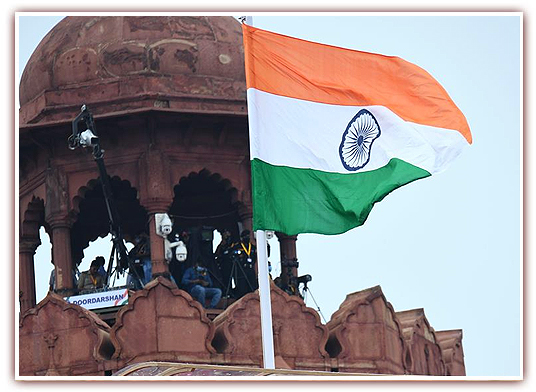
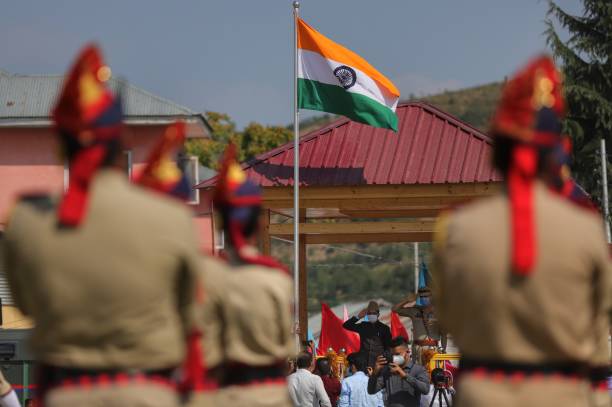
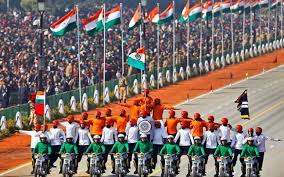
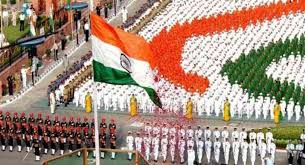
Mother India breathed the fragrance of freedom on 15 August, 1947. In the picture, we can see the hoisting of the national flag presumably by a senior and respected member of some community. This is a common sight in India where patriotic feelings are expressed at this time of the year. It is but natural that we should all feel strongly for our country, and what better time to express these feelings than on Independence Day!

However, the happy look on the faces of these people cannot hide the ugly truths that stare us in the face even after more than sixty years of independence. It is good that we celebrate our freedom with great enthusiasm as depicted in the picture. But mere smiles, celebrations and flag hoisting ceremonies are of no use unless we imbibe the spirit of Indianness in us. The spirit exhibited on this day should become a part of our very being.

CRPF and Jammu and Kashmir Police personnel takes part in the parade on India’s 74th Independence day in Baramulla, Jammu and Kashmir, India on 15 August 2020. (Photo by Nasir Kachroo/NurPhoto via Getty Images)

Generally we sing the national anthem with a lot of enthusiasm and then forget all about the relevance of the day as soon as the function is over. We throw sweet packets here and there and litter our surroundings. Moreover, in a country where more than fifty per cent of the population has a hand-to-mouth existence, the wastage of food is no less than sacrilege. If we do not respect the dignity of our people and surroundings, all the respect showered on the national anthem and the national song become meaningless

We must raise our voices in unison against the hypocritical phenomenon of paying lip-service to the concept of patriotism but stooping to grossly lackadaisical behaviour when it comes to performing our roles as Indians. Spitting or relieving ourselves in public places, not obeying the law while availing of transport facilities, disrespecting public property, joining mobs to create nuisance, calling strikes and bringing life to a halt on working days, remaining spectators to the corruption around us are all different patterns of behaviour that lower the prestige of our nation.

When we hoist the national flag, it is important that we feel clear in our conscience. One may argue that a small number of people setting the right example would not make much of a difference. This would indeed be a myopic interpretation of reality. The truth is that you may be a drop in the ocean, but the ocean is incomplete little gesture of respecting your country At least without in the true sense of the term would make a reasonable difference to the jawans on the border who risk their lives day and night to ensure that we can smile, secure in our knowledge of security when we look at the national flag fluttering high in the air.

History:

India was ruled by the Britishers for many years. The East India Company ruled India for about 100 years. It was in 1757 when the East India Company won the battle of Plassey. It was after the win went the Company started exerting power over India. Our nation had its rebellion against the foreign rule for the first time in 1957. The entire country united against British power. It was an unfortunate event as India was defeated back then but after that time. Indian rule was then passed to the British who ruled our country till India got its independence. Our nation faced a long campaign to gain independence. Britain then began to weaken after two world wars and India was finally free. India’s freedom struggle has always been an inspiration to the work as it was the most non-violent campaign in the world.

National Flag of India

Facts:

India has been independent for 73 years.

India is named after the river Indus.
India has had 14 Prime Ministers out of which one has been a female Prime Minister.
India has had 13 full-time Presidents out of which only one has been a woman.
The Indian National Flag was designed by Pingali Venkayya who was one of the freedom fighters and also an agricultural from Andhra Pradesh.
India’s national anthem was adopted three years of post-independence.
Mahatma Gandhi wasn’t able to celebrate the first Independence Day in Delhi.