MACHINE LEARNING – THE MIRACLE

In the real world, we are learning new things every day and improving our decision-making skills on the basis of successful decisions in the past. Isn’t this human learning? If we now use computers to fully automate this process, what will it be? This will be machine learning.

Everyday applications

We use it a dozen times a day without even realizing it. Every time you perform a Google search, your machine learning software will figure out how to categorize the pages you want to visit. Also learn that if you read emails from your inbox, the smart spam filter can save you from browsing a lot of spam.

THE TECHNICAL UNDERSTANDING

Recently, Tom Mitchell described machine learning as a computer program. It is said that the program learns from experience E related to task T and performance metric P because its performance in T is improved by the P metric. Experience E Let us give an example of an online chess game, in which each game is a task T, and the process of the game is the experience E. Each game has a final result, which is a performance indicator P. This performance indicator is to win. Probability of a game against a new opponent. Now that the computer has the patience to play tens of thousands of games alone, it can further improve your chances of winning consecutively. Machine learning technology: a brief overview We all know how computers work, we all know How the computer works, we have simplified many operations. Now we are trying to get computers to examine all the macro and micro levels of human thought processes that lead to multiple decision-making skills. By developing truly intelligent machines, we can do almost anything you and I can do. This work consists of complex algorithms and functions of artificial intelligence applications running in expert systems. With every action you take, the computer will learn self-learning and self-esteem through progressive, keen, and precise decision-making skills. The computer learns to remember a past experience and process them according to the archived tasks and the resulting performance level. Development of actions/results in a specific context or situation.

FUTURE ASPECTS AND THE SCOPE OF IMPROVEMENT

Machine learning is not limited to Google search or Amazon prediction. It is widely used in medical diagnosis, where tiny patterns are revealed to predict disease. Machine learning can have a positive impact on treatment and subsequent procedure decisions. Financial transactions, data mining, fraud detection, speech recognition, spam prevention, and language translation are some other areas where machine learning is used. The company uses the technology to predict the relevance of products based on the collected data. Let us see what machine learning can bring to the future. A fully functional self-driving car is expected to be available at the end of 2018. Natural language processing has developed a subset of machine learning so that students can improve search results and translations based on the search context. It will also help digital assistants like Siri interact with Humans On Cyber ​​Security Front, a machine learning model that can analyze the structure of inbound or outbound traffic to detect and stop suspicious before continuing damage occurs. activity. Decisions and code changes can be made without explicit programming, which makes machine learning an inevitable trend now and in the future.
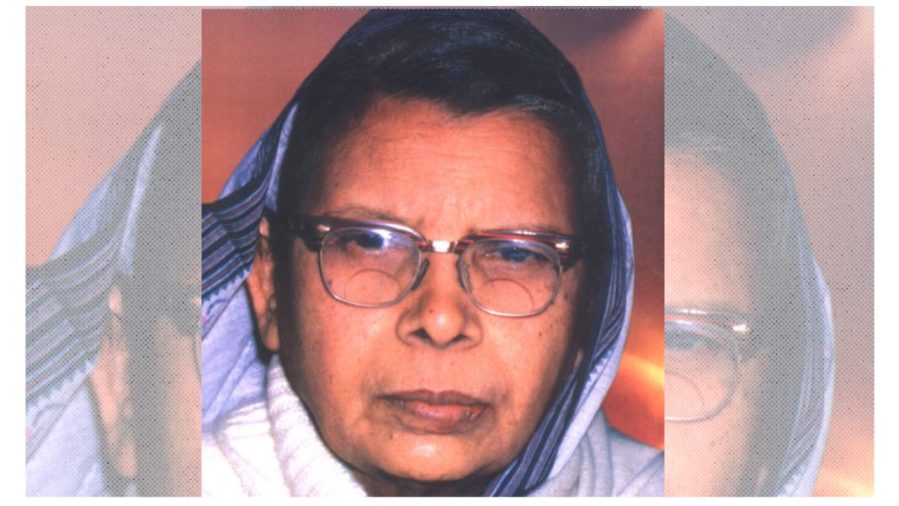
Mahadevi Varma


In the 1920s, a time when few Indian girls could dream of finishing school and being anything other than housewives and mothers, one-woman name Mahadevi Varma discovered a love of writing and went on to become one of the key figures in a new era of Hindi poetry.

Mahadevi Varma best known as an outstanding Hindi poet, was a freedom fighter, woman’s activist and educationist from India. She is widely regarded as the “modern Meera”. She was a major poet of the Chhayavaad generation, a period of romanticism in Modern Hindi poetry ranging from 1914- 1938. With passage of time, her limited but outstanding prose has been recognised as unique in Hindi Literature. She was a prominent poet in Hindi Kavi sammelans (Gatherings of poets).


She was the Principal, and then the Vice Chancellor of Prayag Mahila Vidyapeeth, a woman’s residential college in Allahabad. She was awarded India’s highest literary award, for lifetime achievement, the Sahitya Akademi Fellowship in 1979, followed by the Jnanpith Award in 1982. She was the recipient of the Padma Vibhushan, India’s second-highest civilian award, in 1988.


Mahadevi Varma was deeply affected by Buddhism and also contributed to the Indian freedom movement. She even tried to become a Buddhist bhikshuni. Mahadevi was appointed as the first headmistress of Allahabad (Prayag) Mahila Vidyapeeth, which was started with a view to imparting cultural and literary education to girls through Hindi medium.

Later, she became the chancellor of the institute. Mahadevi is considered to be one of the four major poets of the Chhayavaadi school of the Hindi literature, others being Suryakant Tripathi ‘Nirala’, Jaishankar Prasad and Sumitranandan Pant. She was also a noted painter. She drew a number of illustrations for her poetic works like Hindi and Yama.


Many of her books are included in the syllabus for school children by CBSE. A few of these are; Neelkanth, which is about her experience with a peacock; Gaura, a story about a beautiful cow; Mere Bachpan Ke Din and Gillu, about her childhood memories; and also her poem Madhur Madhur Mere Deepak Jal. Mahadevi Varma studied the compositions of devout poets like Meera, Sur and Tulsi from childhood. This is the reason that these poets became his source of inspiration. Following are the major compositions of Mahadevi Varma – ‘Neehar’, ‘Neerja’, ‘Sandhyagit’, ‘Deepshikha’, ‘Yama’, ‘Movies of the past’, ‘Lines of Smriti’, ‘Links of series’ etc.
Mahadevi Verma received several awards for her poems which had a language that was original and lyrical, at the same time having profound meaning. She was able to paint a picture that was both colourful as well as had depths of philosophy in it.

Sigmund Freud: II

Please ensure to read the Part I of my section on Freud.

3 Psychic Zones, Id, Ego, Super Ego. [Butter paper effect – Conscious Subconscious and Id (entirely unconscious),Ego, Super Ego (slightly conscious]) Reservoir – primes source of psychic energy, place where Libido exists, exists or function according to the pleasure principle, wants to fulfil its needs, characterised by great amount of vitality and energy, very amorphous zone, “Obscure inaudible past of our personality .. in accordance with the pleasure principle”. Needs and instincts to fulfil these needs, no morality/values/good/evil, nothing, source of aggression/desires/ deep rooted impulses, lawless, no social cues reckon by Id, function to gratify instincts without any implication of ones action, and if not kept under control and could be taken to any level, self destructive, satisfy for pleasure for the self, to gratify its instincts. Ego, a regulating agency; individual protective in certain way, a rational, governing agent of the psychic. All those needs may be released, in specific ways, the ego will control the id such that we don’t indulge in destructive ways, the untrained id is kept aside by ego governed by reality Principe; regulated by the Outer World. Super go – values like morality, notions of right and wrong, moral senses, reckons moral restriction and plays an important role in the drives and thrusting them back to the unconscious, and so you can’t be overly aggressive – a parental influence of mind and that good things would be rewarding and bad be punished, morality principles. Passes by phase of erotic development; phased passed erogenous zones, the oral the anal and the genital – not only just pleasure, but processes, eating – oral, elimination with anal and reproduction with genital. Pleasure and need quiet new with infant and children – Freud said it. Your gratification if frustrated, your development can be arrested, stuck/fixated unbalanced a phase, and fixation can manifest itself very significantly in your personality – Castration – Castration anxiety. 

Dreams – recurring but sometimes what we commonly see – flying/falling(edge of a cliff)/drowning/running – being chased/ dead people coming back and taking to them that feels real – Freud talks about this entire world of dreams. 

JOKES and their IMPACT

Hellooo guys!!,today’s topic is the joke ,don’t think I am pranking you guys, literally I am going to write about “JOKE”

SO starting todays article with a “joke” as the title says.

 Whoever said nothing is impossible is a liar. I’ve been doing nothing for years.><

THE THOUGHT CLUB

What do you guys think when you hear this word “JOKE”

JOKE IS DIRECTED TOWARDS A PERSON,SUBJECT,OBJECT,SITUATION.

A joke is a display of humour in which words are used within a specific and well-defined narrative structure to make people laugh and is usually not meant to be taken seriously.

-Wikipedia

A JOKE CAN BE HUMOUR,PUN ,OR A TEASE

JOKES CAN BE SARCASTIC,SAVAGE,PUN,SENTIMENTAL.EVEN LIFE LESSONS CAN BE LEARNT THROUGH THEM.

Jokes present a funny situation ,but they also make us think about it, interesting isn’t it.

JOKES WHICH ARE MADE ON THE SPOT ARE EVEN MORE FUNNIER AS THEY RELATE TO THE SITUATION PRESENT THERE.

The punchlines are what jokes are mainly made up of the whole joe surround that particular line, whether it will be funny or not it depends on them.

We make jokes when we want to get out of awkward situation, or when teasing someone, or to criticize some one.

we make jokes so there can be a relaxed atmosphere, it binds people closer, jokes that bring a smile on your face, they can make your sad day a happy day.

Photo by ELEVATE on Pexels.com

Reading or listening to jokes can make one stress free, they bring out the joy that is hiding .Jokes make our mood lighter.

Jokes that we read mostly portrays our real life situation which makes them more funnier as we also realize that the the routine which is depicted there is very true and connects to many people.

There are many benefits of jokes,

Jokes make us laugh and in turn it triggers the endorphins which brings calmness to our nerves ,releases pain and makes us stress free.

But sometime jokes can hurt the others feeling too. We should not joke on somebody thoughtlessly cause its fun to you, we should consider the other person’s situation, and take their state of mind ,and relevance to the situation, their emotional status and your personal rapport with them into account so that the other person is not feeling uncomfortable and is actually willing to accept the jokes.

Making jokes without considering their privacy, and thoughtlessly intruding into their personal life cannot be considered as joke but an insult. You cannot make a joke out of every situation, there should be a certain time, environment and mood to be considered.

Jokes can not only sweeten the relationship between people often they can sour, and sever the bonds.

Jokes made without crossing the borders that is what we should aim for so that the other people can think they can confide their serious problems and ask for their solution optimistically as you would be a person who knows when to joke and when you shouldn’t.

And today’s joke of the day is I wrote an serious article on joke><. Thankyou^^

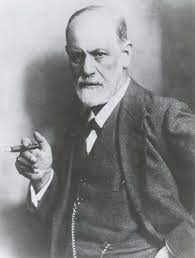
Sigmund Freud: I

Father of Psychoanalysis.

Civilisation, and the study of humanities associates lots of things with him, someone people keep talking about, amused by his theories, pass a lot of judgement, he’s a “crazy” man himself – belief. Freud can be or has been debunked now, his theories insightful, but not necessarily useful. The most influential western thinkers – timeline of publications 20th Century(?) – The clinical days when Lacan and Freud worked are important, both were medics. Human Nature/Sexuality/Dream/Children/Conflict/Desires – Freud Works his insights was controversial. Psychoanalytic’s a framework based on originated in Clinical Observation Freud made in his work. Freud often associated as an originator of these theoretical idea, he’s not the only Psychoanalysts [Jung and Freud didn’t see eye to eye on occasions & Lacan revisited Freud – reconceptualising aspects of theory.]. 

Psychoanalysis —  Method of treating mental disorder and mental illness; a treatment approach – treats mental disorder. The therapeutic aspects that help distressed people, to use psychoanalytic tool to try and make them feel better.Its a theory of human psyche – attempts to explain how human mind works. Psychoanalytic to interpret culture,  mass media and more, the understanding of psychoanalysis that people have offered is broad not just therapeutic but more. The potential the theory has to applicate in the cultural understanding of Psychoanalysis. 

Freud came along and created ripples amongst people which made them squeamish – actions controlled by areas of human mind where we have limited or no control which control our actions; human mind as ice berg, what we see is just the tip, the wight, the bulk, density is what we aren’t aware of. Freud about the unconscious and human actions — people found in uncomfortable because people believed human beings as rational and cognisant to their choice, and thus man was different from other animals, but Freud, that most rational of people are controlled by their unconscious. [Infantile Sexuality]  We are obligated to assume the effects of the unconscious – way of affecting our behaviour/actions/what we say and conduct our selves making us assume the condition of our unconscious — you don’t know that when your behaviour/actions being impacted. Freudian Slip – Humour and the unconscious.

Expend the considerable amount pf energy – the material from the unconscious will appear in the conscious mind, no certainty — the preconscious and unconscious, the union; that domain that it may not change or if it does, great difficulty is followed. This is a premise that the idea that most of the individual mental process is unconscious; Carl Jung and Alfred Adler, did not agree with this premise, that all human behaviour is motivated by Sexuality – Libido; & all human behaviour is greatly motivated by this. There are social taboos created and attached with these sexual practices, and thus many of our desires are Repressed not allowed to take any form in conscious awareness. 

How to use the phone as a webcam for your PC

In these pandemic situation there no offline meetings and interviews. Video conference is daily habited in these time , we are using lot of application for video conference like Google meet, zoom meet, Microsoft teams , Skype and  jio meet

Most of people facing problems while hosting and interviews times ,our laptops and PC doesn’t have good quality of video

Then , is there any way to optimise for good quality of video . yes there is a way for that problem

In these day every one have mobile phones , by those mobile phone we can as a webcam

Are you thinking I am joking , then just follow my instruction you will be find my word are no joke..

I have research many application but ,I  recommended an application Droidcam  that can be download by our favourite  app stores

Now  you connect your PC or a Laptop over the same Wi-Fi network or with the help of a USB cable. If you downloaded the DroidCam app on your phone from the app store, then download the DroidCam Client on your Windows laptop or PC

There are two ways :

  • Using wi-fi
  • Using cable
  • using Browser

Using Wi-Fi

Open  the DroidCam app on your phone and click on the ‘Wireless’ option.

Then next screen should display the ‘WiFi IP’ and ‘DroidCam Port’ . If your ‘WiFi IP’ appears 0.0.0.0, then you are not connected to the Wi-Fi.

Open the DroidCam Client on your PC or laptop and enter the ‘WiFi IP’ and ‘DroidCam Port’ as displayed on your mobile phone. Click on the ‘Start’ button.

Now start the video conferencing app and check the webcam  by clicking on the ‘Webcam’ or ‘Video’ settings.

Using cable

Connect your mobile phone   to your PC  or Laptop with  USB cable.

We have remember to note is that you need iTunes downloaded on your  PC to connect using USB cable. If you do not have iTunes, you can download it . Once you login to iTunes, it will automatically detect your mobile Phone.

Start the DroidCam Client, select the ‘USB’ option and tap on ‘Start’.

using Browser

 DroidCam mobile phone application also connect to the camera using a web browser.

Then you  have to  connect your phone to a Wi-Fi and open DroidCam application.

Lunch  Chrome on your Laptop or PC and enter the ‘Browser IP Cam Access’ data then ‘http://192.168……./video’ and click on  enter.

If you have wish to specify the resolution of the video in the URL by using the path including ‘force’. example – http://192.168…./video.force?1280×720.

The application  DroidCam Wireless Webcam we used was the free ver . You canl also find the paid ver of this app, called the DroidCamX Wireless Webcam Pro in  the Google Play Store. The paid version application supports HD video streaming with out ads

there is one more application I recommends i.e Xsplit connect

Role of family in the social construction of gender

Gender in contrast to sex is a social construct. It is an established set of characteristics of society according to which people are categorized into males or females. Gender roles vary from society to society. There are many agencies present in society that facilitate the social construction of gender. Family is one such agency.

In this article, I will try to show the various processes through which gender identity is established in children by their families. 

As a child grows the gender identity is established through four processes namely:

  1. Reinforcement or moulding-Parents at home treat their children differently depending on their sex. Boys are normally given more freedom than girls while girls are treated more protectively. Any ‘effeminate’ behaviour on the part of the boy is highly discouraged and if such tendencies continue they are regarded as ‘psychological disturbances.’As a result of this training, children learn their sex roles effectively and quickly. 
  2. Opportunities-Opportunities go a long way in determining gender roles. While boys are encouraged to take up technical jobs girls are discouraged . Girls are encouraged to go along the ‘the feminine way’ and boys are expected to develop themselves along ‘the masculine way’.Boys are given cars, building blocks etc to play with while girls are given kitchen set, dolls to play with. The boys are expected to help their fathers and girls are expected to help their mothers.
  3. Role modelling-It is a major mechanism of gender socialisation. By the age of three, nearly all children know whether they are male or female and by the age of four, they have very definite ideas of what masculinity and femininity must involve. A male child usually identifies with his father and a female child with her mother. The boys considering their father as a role model emulates them and the same is the case with girls who look up to their mothers. Role modelling is more effective when the child has a strong and warm relationship with the role model.
  4.  Explicit verbal instruction-Certain instructions also determine gender identity.” Boys don’t cry like girls”,” Pink is the colour of girls”,” You are a girl you should know how to cook” etc are some very common instructions. Hearing the same everywhere and on daily basis influences the mind of an individual and determines the gender identity.

Hence, families give the earliest reinforcement for acting appropriately according to one’s gender, and the environment continues to teach what is acceptable for men and women.

Influence of Social Class in ‘Pride and Prejudice’

Social Class refers to a hierarchy in a society wherein people are grouped on the basis of their wealth status. Jane Austen’s Pride and Prejudice (1813) is acknowledged for its keen commentary on these aspects of the society. The influence of social class and the greed to climb up this social hierarchy is much of novel’s criticism.  

Austen’s works usually focus on the preoccupations of the middle class and the upper class, and are rarely focused on the Aristocrats (people with title) or the working class. But even within that, there are several other differentiations as Regency England so working for money something of low standards. They acquired wealth through property, marriage, and inheritance. For instance, although the Bingley family are economically farer than most, on the basis of class, they are considered equal or maybe even lower than that of the Bennets as they are said to have made their money through trade or business.

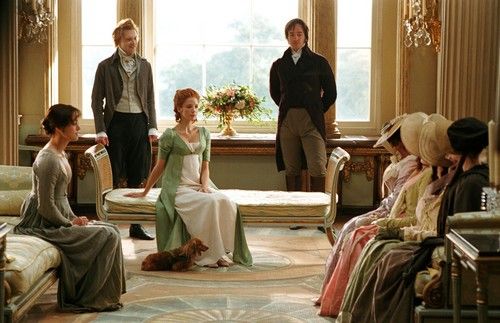
A still from Pride and Prejudice (2005)

The novel also portrays characters who react differently to class. Characters like Bingley sisters and Mr. Collins fawn over the rich and try to please them. Especially Mr. Collins who depends on largely on Lady Catherine De Borough to gain social acceptance. He does all their biddings and constantly attempts to flatter them in order to ensure his good associations with them. Lady Catherine on the other hand, is very proud of her richness and sees everyone as beneath her. The novel satirises these characters who move only in relation to class, and are portrays the conceited idea that social distinction is an important factor in judging someone’s character. Lady Catherine is so used to people doing her biddings and obeying her orders that she is taken off-guard when Elizabeth stands up for herself. She objects to Lizzy marrying Darcy due to her fear that it would indirectly affect her own social class through association. Elizabeth in return, replies that she’d marry whomever she wishes to for her own happiness.

“In marrying your nephew, I should not consider myself as quitting that sphere. He is a gentleman; I am a gentleman’s daughter; so far we are equal.”

Jane Austen (Chapter 56)

Characters such as Mr. Bingley and the Gardeners seem much more as they do not discriminate on the basis of class even if they are financially well-to-do. Darcy can be seen as an example of Austen’s ideal high-class gentleman. Despite seeming selfish and arrogant initially, he later proves that he is capable of change. His innocence also becomes evident when Lizzy talks to the residents of Pemberly. The social status of the Bennet family is threatened to a large extant when Lydia runs away with Mr. Wickham. They are saved from ‘social degradation’ only when Darcy covers up the issue with money.  

Pride and Prejudice shows that class might determine a character’s social situation, but it doesn’t signify anything about their behavior. The marriage between Elizabeth and Darcy shows that even though class restrictions are rigid, it does not determine one’s character and that love can overcome all material obstacles like class. It proves that class is ultimately an arbitrary and meaningless distinction between people.  

Reference Links:

Read This If You Worry A Lot

The day that I decided to quit my last job and the day that I handed in my notice were almost 90 days apart. In those three months, I worried — a lot. I decided to pursue my desire to become a full-time writer. But shit was getting scary.

Things like “what if I can’t pay my bills?” and “what if I fail?” went through my head. I freaked out, but as it turned out, the solution to my excessive worries was easier than I expected.

Many of us worry about all kinds of things: Work, relationships, money, health. Some concerns are real, but many are unnecessary.

No matter what kind of worry you have, the response in your body is always the same: It increases your cortisol levels.

And an increased cortisol level is something you definitely do not want. Cortisol compromises your immune system. As a result, you will become more susceptible to disease.

Researchers have also found a relationship between cortisol and diabetes, osteoporosis, and heart disease. Also, stress and fear can cause depression, bipolar disorder, panic disorder, and burn-out.

Let’s face it: If you don’t stop worrying, you will die. That’s not me talking. That’s your body talking.

In the past year and a half, I’ve studied worry, stress, fear and anxiety almost every day. I even wrote a book about how you can live a stress-free life. My findings? Don’t try to relieve stress and worry, but eradicate it. Address it — head on.

“Fear defeats more people than any other one thing in the world.”  — Ralph Waldo Emerson

Relief Doesn’t Work

This is what most people do when they experience stress and worry:

  • Take it out on your partner of family
  • Drink alcohol, take drugs, or both
  • Binge-watch Netflix
  • Play video games
  • Go on a holiday
  • Party all night
  • Have sex

Be honest, how long do these things make you forget about your worries? 10 minutes, half hour, a day? It doesn’t last. As soon as you get back to the reality of your life — worry and stress smack you in the face.

Distracting yourself from your life doesn’t work — and yet, many of us keep doing it. I’ve read many books and scientific papers on this behavior. Some say it’s because we have too much free time, some say it’s because of culture, some say it’s because how we are wired.

To be frank, it’s not important to understand the why. We just have to look at the facts: People worry too much, and that can destroy your life. It’s more important to focus your attention on addressing worry.

“Never let the future disturb you. You will meet it, if you have to, with the same weapons of reason which today arm you against the present.” ― Marcus Aurelius

Turn Worry Into Constructive Process

Worry is often about the future. It goes something like this: What if…

“She doesn’t like me anymore?”
“I lose my job?”
“I can’t pay my bills?”
“I fail this exam?”
“I don’t get this promotion?”
“My business doesn’t take off.”

And then we make up consequences. It goes something like this: I have to…

“Be single.”
“Find a new job.”
“Borrow money from my parents.”
“Quit school because I failed.”
“Stay at this job another year.”
“Be ashamed because everyone thinks I’m a failure.”

Then we think: “I can’t handle that.” And finally, we think: “The world is going to end.”

If your thought process is the way described above, worry controls you.

The good news is there is a simple solution: Self-monitoring, which turns worry into a constructive process. In a 2002 study, done by Szabo & Lovibond, students were asked to record their worries.

The results of that study demonstrated that you can turn worrying into a constructive process by focusing on finding a solution to your concerns.

“You have to learn the rules of the game. And then you have to play better than anyone else.” — Albert Einstein

How I Use Self-monitoring To Address Worry

I’m a pragmatic person. I do think that things like meditation and mindfulness help with worry — but not for me. It’s too intangible. Instead, I prefer to take a practical approach like self-monitoring. Here’s how I do it.

  1. Use a note-taking app and create a new note.
    I call my note “Things that I worry about.”
  2. List everything you worry about — and keep adding things to the list.
    Everything that you worry about goes on this list, no matter how small.
  3. Think of a solution for all your perceived problems.
    For example, if your financial situation makes you anxious, you need to create a plan to earn more or spend less.
  4. Then, start executing. 
    Do one thing every day that brings you closer to solving your perceived problem.
  5. Finally, don’t worry about things you have zero control over — those things you have to accept. 
    If you know more about how you can do this; read Meditations by Marcus Aurelius.

This process focuses on action. It forces you to learn the skills you need to overcome your perceived problems. Because problems don’t disappear out of themselves.

Nowadays, I don’t worry anymore because I trust my ability to handle everything that life throws at me.

Because knowledge, skills and character are the only things that no one can take from you—every minute you spend on learning something is well spent.

No matter what happens, trust in your ability to address it. So start now.

The Restoration Period: Verse (Part 2)

Please ensure to read the part 1 of the Restoration Literature.

  1. Restoration Tragedy  – Heroic Tragedy – combination of Epic and tragedy; Tragedy – a tragic flaw but Heroic Tragedy, not because of tragic flaw but by Failure, hero failing by his failure may be in a duel/battle, in Restoration Tragedy – hero’s failure isn’t something inherent from the beginning of the play, but when he tries something –an act, he fails – Nicholas Rowe, John Dryden, Thomas Otway.
  2. Epic – a lengthy poem – often poets never able to completely write it, due to its extreme length – a stylised life off a person, dictated in a formal manner, not a person existing alone but connected to society – it begins in media rest – not a liner progression of events but could begin anywhere. Alexander Pope wrote a Mock Epic, written using the style of the Epic, making fun of it.
  1. Restoration Comedy – Comedies in Elizabethan Period – love and its tribulations – romances written in the Elizabethan Period is congratulatory praises the Monarch – Elizabeth mainly. With restoration, comedy comes back, but a different set; a class bound comedy – to deal with the upper classes, Shakespearean plays enacted by Shakespearean Company, which in Jacobean period the company was renamed under Jing James – ‘Kings Men’ – which catered to the needs on general people and not aristocracy, but was later seen to align to the needs of Aristocracy, therefore the comedies written during Restoration was class bound, and lot of upper class people were represented in that way. Metropolis – London, urbanised metropolitan – filled with stereotypes – innocent with faulty characters; ‘predatory widows’ looking for men with money, as well as men looking for women with good estates – money. Restoration Comedy emphasis on love triangle and rivalries, among parallel plots. Restoration Comedy – marriages are regarded as a boring restrictive system, ‘looking for estates’ as well as a boring restrictive system. Both narratives existed the latter was unique, where women had a voice of their own and men objecting towards the institution of marriage. Adultery/Carnality/Folly and Vices/ Proviso Scene – ‘Way of the World’ by William Congreve  – a prenup – a marriage bargaining scene. William Congreve, George Etherege, William Wycherley, George Fraquhar, John Vanburgh – Big five of Restoration Comedy – portraying the upper class yet critiquing – subverting them.  London – the urban side is a setting for all of them and there would be a juxtaposition between the urban and rural side of London.Attacks on Immorality – genre of drama is declining, Theatre Licensing Act of 1737, granting license to any play or refuse on any grounds – the initial half of 18th Century; revival of this particular form of writing – 1770’s Restoration Comedies – Oliver goldsmith – 1773, ‘She stoops to Conquer’ and Sheridan in 1775 and 1777 ‘Rivals’ ways in which the RC is revived in the 1770’s. And Oscar Wilde in ‘the Importance of Being Ernest’.

The Restoration Period: Prose (Part 1)

Restoration Period is during 1660 and the monarch and its influence in England. This period marked the return of Charles II as King (1660–85) following the period of Oliver Cromwell’s Commonwealth

  1. history writing – a significant contribution made during the Restoration Period, documenting the religious and political history of England. The English Prose written to popularise Science – in Renaissance – emergence of new cosmos and science able to release from the clutches of religion, and during the Restoration Period – The Royal Society of London – for the improvement of Natural Knowledge – a learned society thinking about rationality, factual interpretation, empirical reasoning, clearly the opposite of the Medieval Period, where we don’t question authority – a significant thread carried forward in the Restoration is the spirit of Science and Technology. The Royal Society of London – a scientific advisor to the British Government, a principal advisor as well. Thomas Sprat – history piece, on The History Royal Society of London.  Gilbert Burnet.
  2. Diary writingPepys and Evelyn diaries- social documents –  presenting grant details, gossip and rumours of 17th Century intellectuals, discussing events like  – coronation of Charles II, Fire of London (1666) Plague of England (1665), wars fought.  Evelyn’s work Fumifugium – smokiness of London, how it was becoming increasingly populated , Sylva – reforestation, and pollution, how river Thames was becoming increasingly populated.
  3. Travel Writing – sponsored by The Royal Society of London to make a systematic documentation and collection of natural knowledge, funding foreign travels – only condition is to report the travels. Samuel Smith, Benjamin Walford, William Dampier – traveler belonging to the Restoration Period, connection is restoration science and travellers as they work hand in hand, beyond providing data  but also their direct interaction with a new land would impact – direct experience of the new land and not just the marvels of travel documentation. Richard Haklyut and Thomas Roe (India is a very rich country and they sell Jewels on the streets of India).
  4. Biographies – secular as well as religious people as well – Izeak WaltonLives’, John Dryden the History of particular mens life. Hagiography – biography of a christian Saint – the pious life of a saints life.

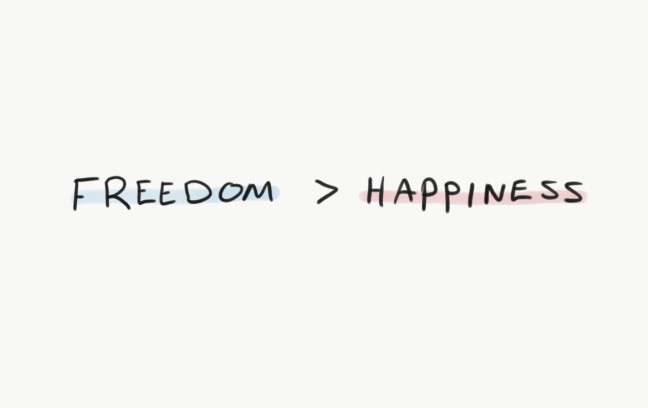
The Pursuit Of Happiness Will Not Make You Happy

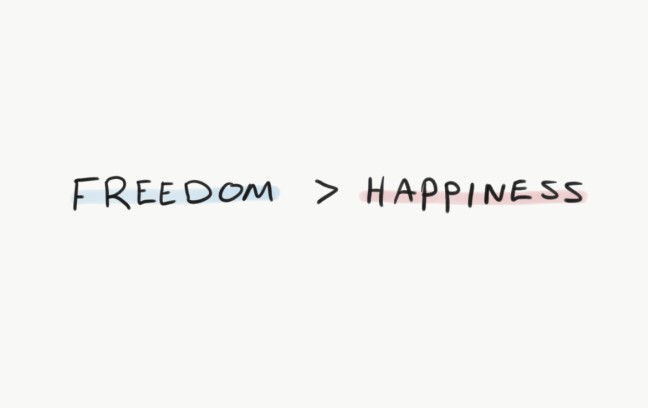
A few years ago, I gave up my excessive pursuit of happiness. I used to think that the purpose of life was happiness. But that philosophy didn’t work for me. I realized that happiness is always a byproduct. 

When you spend time with people you love, you feel happy. When you invest four years in getting a degree, you feel happy and accomplished when you graduate. You feel happy when you come up with a useful idea at work. You feel happy when you finish a hard workout. You feel happy when you listen to good music. 

You see? Happiness is the byproduct of an action. It can be as simple as having a conversation with someone or listening to a song. 

But happiness doesn’t last. 

It’s a feeling that comes and goes. Some people disagree with that and say you can always be happy. I think you can be happy the majority of time—not all the time. Why? Because even the best life has bad times.

When You Try Too Hard

If you’re unhappy or frustrated, it doesn’t mean you should do everything to become happy again. 

When you try too hard to be happy, you become impatient. You’re more likely to chase pleasure. And that can lead you to a negative cycle that only raises your bar of pleasure. You will need more pleasure to satisfy your desires. 

In the book Positive Emotion, there’s a chapter called ‘Paradoxical Effects of Pursuing Positive Emotion’ that talks about this principle. In that chapter, written by two UC Berkley professors, Brett Q. Ford and Iris B. Mauss, I read the following:

“Those pursuing happiness may set high standards for their levels of happiness. When their happiness falls short of their standards—which is likely when the standards are high—the resulting disappointment and frustration impedes the experience of happiness.”

Increasing your standards of happiness is a dangerous game. Instead of trying too hard to be happy, seek the truth. 

If you’re unhappy, a different job or city is not the answer. You can travel to every country in the world, but if you don’t have inner peace, your problems will follow you wherever you go. 

Daily life is the same for every individual. We all have to wake up, eat, wash, go to the toilet. We will all experience death, loss, and grief. We all get rejected. We all get injured and ill. And your level of happiness will not change anything about being human. 

Sometimes we forget that. We think that everything will be better if we only feel happy. That’s not the case.

Build A Life Around Things You Value

You will never be truly happy when you live a shitty life of your own making; if you live below your potential, give up on life, and don’t reach for something better, you will be miserable. 

By contrast, if you’ve built a life you’re in control of and have goals you’re working towards, you will be mostly happy. 

One of my close friends has 3 kids. He works as a network engineer and many people count on him at a telecom provider. If he doesn’t solve certain network issues, thousands of people will be affected. 

But despite his responsibilities, his boss gives him a lot of freedom. Why? Because my friend made arrangements with him. 

A lot of people assume you have to work for yourself to be free. That’s not true. If you’re employed, your company or organization wants you to do your job. 

If you’re happy and free, you do a better job. That’s why it’s important to have an open discussion at your workplace about the way you work and live. My friend drops off his kids at school and comes home for lunch. He has enough freedom to enjoy his life. That wasn’t always the case. 

Just two years ago he complained a lot about his work situation. But now his life has more balance because he made a few clear decisions. He didn’t even switch jobs. He simply committed to freedom. That means no more spending time with negative co-workers. Instead, he’s doing his best and prioritizing family and health. He no longer “hangs out” with everybody he knows. 

He works, spends time with his family, and goes to the gym. That’s his decision. Sure, he can’t pick up his kids from school when they are done, but he has peace with that. He’s still around a lot in the morning and for lunch. You can’t have everything. But as long as you have freedom, you will be happy.

After Rain Comes …

Look, no matter how free you are, no one is immune to being unhappy at times. But regardless of how bad life is at times, unhappy moments always pass. 

Time moves in one direction. And even the worst times are not here to stay. If you’re unhappy, you don’t have to fight it. Accept it. And go through it. Know that everything will pass. That’s also true for good times. Everything we do or experience is temporarily. 

In The Netherlands, we have this saying, “After rain comes sunshine.” We use it to remind ourselves and others that good times are on the horizon.

That’s the nature of life. Sometimes it’s good, sometimes it’s bad. Once we accept that, we become free from trying too hard to change how our life is during a specific moment. 

Some things, we have to endure. But it doesn’t mean that you can’t change your life. Since all life situations are temporary, you get a new chance every hour and day. You can commit to making your life better by taking action. No matter what your circumstances are, you can build a life that gives you inner joy.

Start now.

Aspects of Wealth in ‘Pride and Prejudice’

Jane Austen’s Pride and Prejudice (Published in 1813) is considered to be a classic in literature. It has often been glossed over as a romantic novel and though it is concerned with human relationships, especially of romantic ones, Austen focuses a great deal on wealth and class. Her infamous opening quote in itself is a testament to the fact that she consciously criticized the influence of money in a society.

“It is a truth universally acknowledged, that a single man in possession of a good fortune, must be in want of a wife.”

Jane Austen (Chapter 1)

Pride and Prejudice is set in Regency England, which was a time of great political unrest and economy volatility. This was mainly due to the shift of the economy from an agrarian one to that of an industrial one. Until then, people were only mainly concerned about food and other primary needs. But the industrialization paved for more materials in the market like clothes, utensils, etc. So more the commodities, the more people wanted money to spend on such items. Thus, the need for money increased, and in the Regency England, being a gentleman was considered more important than merely being rich. And the concept of a gentleman relied highly on inheritance and people wanted to be rich without working for it.

Austen has taken care to include details of each character’s money and their economy backgrounds. The richer characters include people like Bingley who receives €500 per annum and is clearly rich enough to host balls take care of his sisters’ needs. Georgiana Darcy is said to inherit €30,000 pounds and will remain well-to-do even if she is denied legal inheritance of property. Mr. Darcy on the other hand, is a modern equivalent of a multi-millionaire who gets up to €10,000 per year and would get more from his investments. The middle-class characters include Mr. Bennet who receives approx. €2000 per year and would even be considered an upper-middle class. Mr. Wickham inherits €1000 from Darcy’s father and even more from Darcy for leaving the clergy. Although he spends it all and goes into debt, Darcy pays him again to marry Lydia. The Bennet girls on the other hand, would receive only a maximum of €40 per year until the death of their father, after which, their land would legally go to their cousin. Thus, the Bennet sisters had to marry for survival and not just to uphold class. When Elizabeth rejects both Darcy and Mr. Collins, she’s taking a huge risk by choosing happiness over financial security.

Fitzwilliam Darcy€10,000 per year + more
Georgiana Darcy€30,000 inheritance
Charles Bingley€5000 per year
Rich Characters

Mr. Bennet€2000 per year
George Wickham€1000 inheritance
The Bennet Girls€40 per year
Middle Class Characters

Austen also criticises material obsessions through characters like Mr. Wickham and Mrs. Bennet who obsesses despite not being rich, through Caroline Bingley who is pretentious and through characters like Catherine de Borough who exploit their wealth for status.

One of the criticisms against the novel is also that it unconsciously puts out the idea that you need to be rich and have money to be happy. Elizabeth who marries Darcy is happy, Jane who marries Bingley is happy, Charlotte who marries Mr. Collins is not too happy and Lydia is unhappy as she is doomed to pay off Wickham’s debts for the rest of her life. Nevertheless, the Pride and Prejudice’s detailed treatment of money adds to the novel’s realism.   

Reference Links:

My year reading a book from every country in the world | Ann Morgan |

Something which kept me quite on to the edge was the reading journey taken up by Ann Morgan. It was quite wonderful of her to take up such a wonderful opportunity. As someone who loved to read I felt myself more closer to her perspective. I was able to identify myself with her and the way she spoke and carried herself, the more I noticed, the more I realized her idea of the world. 

The fact that we can understand a person by looking at their book shelf was a quite a point, Because we are what we read upon. What we encounter and read enhance us. They make us who we are. The socialization and books make us realize our potential. A good book is worth a good friend because it moulds you into a better version of yourself.

Reading about various things under the sun and not just sticking to one genre is very important for a reader. He/she must be ready to break the barriers and go beyond their comfort zone because it is only when we explore, we learn about the unknown and hidden and the voiceless. These are very important, because what the world need is a good reader because a good reader knows the world better than anyone else. The person will be objective and not subjective. A good reader knows the bias and learns to be impartial and be more open to the world. They know the  difference between empathy and sympathy. 

What Ann Morgan stresses again is that fact that if we need something so badly, then the whole world will be with us. Just like how Paulo Coelho said in Alchemist that if we really want something then the whole world will conspire. She brings in and stress some long forgotten words and values. 

I hope that more people realize the value of reading in their lives and learn to be better people and change the nation and break away from the stereotypes.

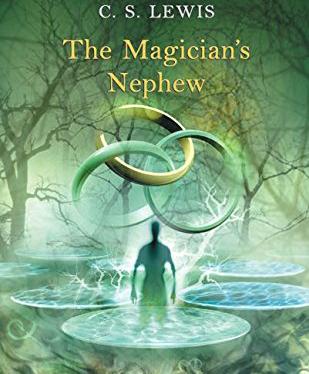
BOOK REVIEW: The Magician’s Nephew

Author: C.S. Lewis

The Magician’s Nephew is the first book in The Chronicles of Narnia series. There are total seven books in the series. Three of them have been adapted into theatrical films. The Magician’s Nephew serves as the prequel to the movie ‘The lion, the witch and the wardrobe’.
The Chronicles of Narnia series is set up in a fictional world known as Narnia where talking beasts walk, and magic exists. The series follow stories of various people who are associated with Narnia. Each book is has it’s own timeline and is connected with other without loosing essence of it’s own.

Being a prequel of the film, this book deals with a lot of stuff that wasn’t completely explained in the film. It explains the origins of Narnia and the wardrobe and also deals with the backstories of characters which were in the film like white witch and professor. Reading this book prior watching the film make the experience better.

“This is a very important story”, explains the author at the beginning, “because it shows how all the comings and goings between our own world and the land of Narnia first began”.

https://www.goodreads.com/community_answer/93466/comments?reverse=true

The story revolves around a boy named Digory. He befriends a girl named Polly and both agree to go on some sort of adventure for fun but things don’t go so well when they encounter Digory’s uncle Andrew. He tricks the girl into using one of his experimental rings which send her to unknown dimension. Digory goes after her in a quest to save her and find a way back home.
The story then follows their journey through different worlds. The book has a total of 15 chapters. Chapter 3 and 4 in particular are very interesting. They represent the feeling of unfamiliarity very well. The sense of adventure when you try something new yet the feeling of uneasiness which comes out of fear are very well portrayed.
The writing style of the author is very casual and conversational yet very cunning and ominous. It is very descriptive and makes you imagine the stuff in the novel real quick. The world building in this novel as well as the series on the whole is phenomenal. There is a lot of referencing in this book as well and lot of foreshadowing too. The book is written in such a way, it feels like distant past and gives nostalgic vibes. The narration changes from third person to first person many times throughout the series. The later chapters deal with the creation of Narnia, the origins of Jadis, the white witch, who serves as the main antagonist in the sequel. The end of this story marks the beginning of all others and it serves a perfect intro for the rest of the series.

Talking about the lessons it teaches, the first one would be learning to contain your curiosity. Throughout the story, most of the problems occur because the characters are curious to find out what’ll happen if you do a certain thing or so. Values of friendship, loyalty and commitment are also presented well. Overall, this book is a must read.

https://youtu.be/nVBMw372IxU