Stop Giving Toxic People Your Time

BE CAREFULL!

Do you ever get upset about the nasty behavior of your co-workers, friends, or even family? Well, if you let others upset you, it’s not their fault.

“It’s not me, it’s him!” is what most of us say. We’re always quick to blame others for how we feel.

We say that others make us feel that way. But that’s false. You decide how you feel about the things that happen in your life.

Events can’t harm us. Our perception of an event harms us. That’s one of the most important ideas of Stoic philosophy.

In other words, you decide what meaning you give to the things that happen in your life. If your friend tells lies about you behind your back, and you get upset, that’s because you decided to get upset.

After all, you don’t control others. That’s why who you spend your time with is a matter of life and death.

The great Stoic philosopher, Epictetus, said this in his Manual For Living:

“Avoid fraternizing with people who don’t share your values. Prolonged association with those with false ideas can only tarnish your thinking.”

It’s something I truly live by. I’ve seen others destroy people’s lives too often to take this idea carelessly.

And I bet that you’ve had your share of, for lack of a better term, “toxic” people in your life.

There Are Two Kinds Of People

  • People with values
  • People without values

I think that less than 1% of the population has values. Values entail nothing more than answers to questions like:

  • How do you treat people?
  • How do you treat yourself?
  • What’s right and what’s wrong?

Here’s an easy way to detect people without values: When you see that someone becomes an entirely different person in a heartbeat — that’s when you know someone has no values.

For example, at our company, we recently hired a toxic intern. The intern turned out to be a different person from the person we thought we hired.

Of course, that’s our mistake. Even though we talked extensively about values during the interview process, we didn’t detect any warning signals.

And everything was fine during the first week. But as soon as the intern found a partner in one of our other interns, things started to change.

All of a sudden, with this new-found support, the intern started gossiping, trying to manipulate others, and causing mayhem. Fortunately, we identified it quickly and communicated that we have a zero-tolerance policy for toxic behavior.

It’s not an unusual thing in organizations. People often hide their true colors. I should say, they hide the fact that they don’t have colors.

When you lack values, you automatically gravitate towards natural human behavior. And that’s very dark. I recently read 12 Rules For Life by Dr. Jordan Peterson, a clinical psychologist, and a professor at the University of Toronto.

His fundamental proposition is that people are malevolent and that life is suffering. To prove that statement, Peterson shares compelling examples of human history with us.

He’s right. People have always lied, killed, and deceived their way through life.

But There’s An Alternative

Look, you can easily go down the rabbit hole of nasty behavior. Just spend enough time with bad people — eventually, you will become one of them.

You can also fill your days with gossiping, lying, and manipulating others. And you’ll probably also feel good when you do it. A sense of power, no matter how it’s achieved, gives people satisfaction. That’s how our minds work.

So when you recognize someone who doesn’t have principles, shows nasty behavior, and has multiple personalities — step away.

Instead, surround yourself with people who want the best for you.

Not with people who are jealous, can’t see your success, and thrive off negativity. I think this is important to realize for anyone who wants to live a good life.

A few years ago, when I started to live a conscious life, I had to say goodbye to people who only wanted to live a life of pleasure.

And I’ve also seen other friends that started to change their life for the better but were dragged back into the bottomless pit of darkness by others.

But as you and I both know, life is also full of warm and caring people. It’s not all bad.

Be Stingy With Your Time

“You’re the average of the five people you spend your time with.” It has become such a cliché. But I don’t think that we truly understand the impact that other people can have on us.

Like Epictetus said, others can tarnish your thinking. Is that worth it?

Look at it this way. Would you give $1000 to the people in your life if they asked for it? If the answer is no, stop giving the people who don’t share the same values as you, your time.

I’ve narrowed down the list of people I spend 90% of my time with to my direct family and my two best friends. Other than that, I spend my time working and exercising. That’s what I mostly do. And I’ve never enjoyed my life this much.

So if you have a job you love, and a few people in your life who you love, you don’t even have more time to spend.

Nothing else gives more satisfaction than having a meaningful career and a strong family.

“But what if my family is toxic?”

Inspire them to change for the better. I don’t give up on my family. Even if it takes 10 years, I will still try to help them.

Create Your Values, And Stick To Them

To live a virtuous life, you need principles. Without principles (or values), we have no character. And without character, we’re nothing.

“Who cares!”

Well, you should care. You’re the one who looks in the mirror every day. Are you happy with what you see?

That’s the only measure I have for my life. I must like the person I see in the mirror. If I don’t like that guy, I’ll change. That’s what I’ve always done. And that’s what I still do every day.

Improve Yourself

What’s the alternative? Like Peterson concludes in his 12 Rules For Life, there’s no other viable option for life.

There’s only one path to happiness: Forward motion.

You need the promise of what could be. You need a path to a better life. None of us is perfect.

It doesn’t matter if we ever reach our desired destination or not. What matters is that we keep improving.

Dig Deeper

If you want to hear more thoughts on why you should surround yourself with good people, listen to my podcast episode about it.
If You Feel Like You Need A Break, Take One

HAVE A BREAK!

You recharge your phone when it runs out of juice. You refill your gas tank when you’re running on empty. But sometimes, you forget to take a break and recharge your most precious possession: Your body (and the brain that’s inside of it).

Whether you love what you do, are in between jobs, or have a job you hate: You’re working. Living is also a job. A pretty tough one, actually. Just the act of getting up in the morning can be a daunting task. And I’m not even talking about all the responsibilities we have.

So why do you make your life even more challenging by not taking a vacation to recharge? I’m not talking about your weekends that are packed with activities, or holidays where you do more work than relax.

No, that type of “free time” only costs energy. I’m talking about resting with a very specific reason: To recharge your battery so you can get back to living a productive life.

A break reduces stress and improves productivity.

Scientific research shows that a vacation decreases perceived job stress and burnout. Now, that’s a pretty solid benefit of taking a few days off. But there’s more.

As you may know, I’m always interested in productivity. In the case of resting or a vacation, my question is:

Will I get more things done when I get back?

The answer is yes, but there’s one major thing to keep in mind. But let’s back up a bit: What does it mean to get more done? Getting things done has nothing to do with time—if you work more hours, you don’t necessarily get more done.

In fact, research shows that working more hours general means less productivity.

Why? Well, we often waste time if we have a lot of it. It’s simple: If I say to you, you have a year to write an article. What would you do? Put it off until tomorrow, right?

But what if I tell you that you only have 2 hours? You’ll probably get started right away. So in a way, having more days off, and fewer days to work, forces you to be more effective with your time.

Research shows that a vacation in itself won’t make you more productive, but when you have more days off, you have a strong desire to get more things done in less time.

And that’s a win-win situation for everybody: You, your business, or your job. You take off a few days, recharge, spend time with your family or friends, and when you come back, you’re more productive.

Sounds great. But wait, there’s a caveat.

When your vacation is stressful, the positive benefits go away. So keep the stress at a minimum on your holiday. Otherwise, you’ve wasted a perfect opportunity to relax and boost your overall productivity.

I recently felt I needed a break for several reasons. I had a few injuries that didn’t seem to go away and had less energy. I could have powered through, but instead, I decided to go on a vacation with my family. For a week, I did absolutely no work. And when I came back, I was full of energy.

Here are a few tips that might help you to take a break that fully recharges you.

1. Do What You Want

There are no rules for taking vacations and everybody relaxes in a different way. If you like to plan your holiday, just do it. If you want to go with the flow, then do that.

Want to wake up early? Do it. Don’t like waking up early? Sleep in. Even if you go on a vacation with your partner, friends, or family, you don’t have to be together 24/7. You can also sometimes do things that you enjoy.

The key is to not have expectations on your vacation. Let go of everything. I also don’t like to post vacation pictures on social media. Otherwise, I’m constantly thinking about taking a cool picture so I can impress others.

You’ll probably even do things you wouldn’t do just to take a picture. “I really need to rent a jet ski so I can take a picture with it.” No, you don’t.

Who cares? Focus on enjoying the moments you experience. Whatever those moments may be.

2. Read

Bill Gates is famous for his voracious reading habit. He is also known for his ‘Think Week’ where does nothing else but read and think.

You don’t have to be Bill Gates to think about your life and career. We all have our daily, weekly, and monthly routines. Usually, routines and habits work very well. However, you can also get stuck inside a loop.

That’s why I recommend you to step back from your daily life and career. If you do that, two things can happen: When you step away, you miss your daily life and can’t wait to pick up where you left off.

Or, the opposite will happen. You don’t want to go back. See that as a sign that you need to make a change. Either way, a break always serves a purpose. It doesn’t only help you to recharge, it will also make you think.

That’s why I like to read for hours on my vacation.

3. Get Bored

One of my favorite strategies for finding new ideas is to get bored out of my mind. It sounds easier than it is because of distractions.

In the past, I would do everything to NOT get bored: Watch TV, go out, browse Facebook, etc. But did you know that you can use boredom to your advantage?

Instead of giving into distractions, just give into the boredom and see it leads your mind to. In fact, one of my favorite artists of all time, Andy Warhol, embraced boredom. You can tell by the boring films he made or the references he made in The Philosophy Of Andy Warhol about getting bored.

Whenever I hit a creative wall, I just do nothing. Literally, nothing. Try it sometime. It’s a great strategy; maybe you come up with the next best thing in your industry.

It’s never a good time to take a break.

  • “I just need to finish this project.”
  • “My boss will never accept it.”
  • “People will think I’m lazy.”
  • “I don’t have time.”
  • “My family needs me.”

Yeah, yeah, I’ve been there too. But what would you rather: Continue to work without resting and burn out? Or take some rest before you’re tired?

So before you use all those valid reasons to not take a break, think about what all the people in your life have to do if you’re not here anymore. Yes, you’re important. So take care of yourself. Take a break and come back with more energy.

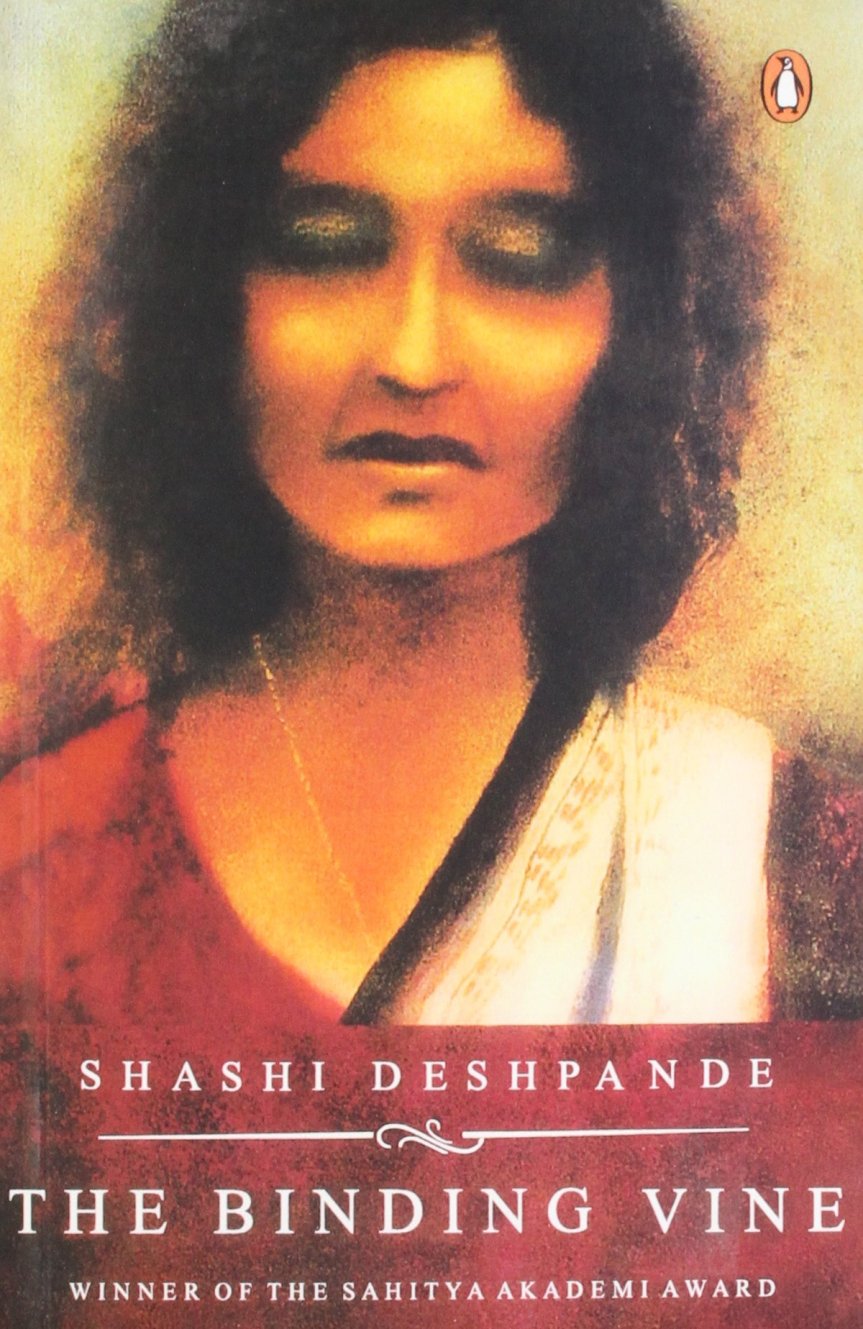
Gender in Shashi Deshpande’s ‘The Binding Vine’

Sashi Deshpande is a Sahitya Academy winning Indian novelist best known for her works The Dark Hold No Terrors and That Long Silence. Her novels generally centre around educated middle-class urban Indian female protagonists who struggle against the oppression of an overtly patriarchal society. She is critically acclaimed for her sensitive and realistic portrayal of women who are fettered to their roles as daughters, wives and mothers. They are conscious of the social inequality and question the deliberate efforts made by men to maintain this. In The Binding Vine, Deshpande introduces women from various backgrounds who collectively question the subordinate status ordained to them by society. This essay seeks to analyse the lead female characters from the novel with reference to feminist theories by Simone De Beauvoir and Virginia Woolf.

“…thus she is called ‘the sex’, by which is meant that she appears essentially to the male as a sexual being.”

Simone De Beauvoir

“What were the use of my creation, if I were entirely contained here?” This quote from Wuthering heights by Emily Bronte in the beginning of the novel runs as a common theme throughout The Binding Vine. The novel uses stream of consciousness method as it follows the life of Urmi, a middle-class college lecturer who encounters several women in her life. With her as the anchor, Deshpande reveals the sufferings of women from different sections of the society. The novel begins by describing Urmi’s personal grief upon losing her infant child. She becomes detached from the world and struggles to get back to her normal life. She is financially independent and is confident in asserting her freedom and agency. She chooses her own husband by marrying Kishore who works in Merchant Navy and is barely ever home. He asserts himself sexually and does not provide the emotional support that she desperately craves. Urmi’s character reinforces Beauvoir’s point that “…thus she is called ‘the sex’, by which is meant that she appears essentially to the male as a sexual being.” Despite being socially and financially independent, Urmi is still scene as a sexual object by her husband.

Urmi later gets acquainted with Shakuntai and her daughter Kalpana. Shakuntai had moved to Bombay in search of her husband who has deserted her for another woman. Coming from the lower strata of the society, she is uneducated, financially unstable and struggles by toiling hard to look after her three children. Her daughter Kalpana is a strong woman who is forced to marry her uncle Prabhakar. Having been molested by Prabhakar since a young age, Kalpana turns down the offer. This enrages him and he brutally rapes her. Though Kalpana is critically injured, Shakuntai hesitates to file a case against Prabhakar and even goes as far to blame her daughter for her current condition. This is due to the internalised patriarchal ideology that the assaulter is entitled to do so as a man while the victim is responsible for ‘encouraging’ the crime. Furthermore, she herself is under constant threat of being held responsible for the downfall of her family as the society always blames women for disrupting its ‘honour’. Just like Beauvoir, Deshpande focuses on the unrealistic standards set by the society on women that expects them to be the perfect loyal caretaker who submissively accepts the will imposed on them by men. Women are always considered as the inessential and the other while the men are the subject and the absolute. Beauvoir further explains this internalisation by saying that “Thus, woman may fail to lay claim to the status of subject because she lacks definite resources, because she feels the necessary bond that ties her to man regardless of reciprocity, and because she is often very well pleased with her role as the Other.” Shakuntai blaming her own daughter for being a rape victim simply emphasises the fact that women themselves unconsciously perpetuate their role as the inessential subordinate. 

Another significant character explored in the book is that of Mira, Urmi’s late mother-in-law. Kishore’s step-mother Akka hands Urmi a trunk consisting of Mira’s diaries and poems. Urmi learns how Kishore’s father saw Mira at a wedding and fell in love. “Since then he had “single-minded pursuit of an object; marrying Mira””. She is married off to him against her wishes and falls victim to a life of marital rape. Mira is forced to suppress her aspirations to be a writer, her only channel of outlet being the scribbles of words on her diary. Her writings clearly describe her revulsion and fear for the sexual acts with her husband and it is evident that she’s slowly spiralling into depression. Writing serves as her sole tether to her life on earth. After marriage, she is renamed ‘Nirmala’ by her in-laws which stands testimony to the society’s attempt to estrange women from her individuality after marriage.

"Niramala, they call, I stand statue-still.

Do you build the new without razing the old?

A tablet of rice, a pencil of gold

Can they make me a Nirmla? I am Mira."

Mira’s mental health improves as she joyously awaits the birth of her child, but she dies soon after childbirth. Kishore’s father marries Akka solely for the purpose of looking after the baby. This further reinforces the male perspective pointed out by Beauvoir that “woman has not been socially emancipated through man’s need – sexual desire and the desire for offspring – which makes the male dependent for satisfaction upon the female.”

In spite of being a skilled writer, Mira is shunned away from the literary world. Her husband and her family never encouraged her passion and she was forced to lead a domestic life. Her frustration on being stifled of her skills are evident in her works. This is further reinforced when she narrates her encounter with Venu, a renowned poet. Upon reading a few of her poems, he says “Why do you need to write poetry? It is enough for a young woman like you to give birth to children. That is your poetry; leave the other poetry to us men” . Where Venu is celebrated as a great poet of Indian literature, Mira’s voice is silenced and confined to four walls. She never had the luxury of having a room of her own that Woolf confirms is a necessity for a writer. She was forced to write late at night in secret while the men were asleep. Mira represents the generation of women writers who, despite being talented, were blatantly excluded from the literary world by men. Through Mira, Deshpande resonates the concerns raised by both Virginia Woolf and Adrienne Rich on the struggles of being a female writer in a patriarchal society.

The Binding Vine also features characters such as Urmi’s friend Vanna and Shakuntai’s sister Sulu, who perform their role as the archetypal role of ‘women as angels’. They try hard to maintain the societal pressure of being what Beauvoir explains as “‘truly feminine’ – that is, frivolous, infantile, irresponsible, the submissive woman.”

Despite the numerous struggles of women portrayed in the novel, Sashi Deshpande hints at positivity towards the end of the novel. Urmi convinces Shakuntai to disclose the identity of Kalpana’s assaulter resulting in a gathering of a mass of protestors who fight hard for her Justice. Urmi resolves to translate Mira’s poems to English and to publish them. She also encourages Vanna to stand up for herself and moves on from her personal grief to fight alongside women for a collective cause. Like Beauvoir and Woolf, Deshpande urges women to stand together like ‘binding vines’ against the oppression of patriarchy. The novel celebrates women’s solidarity as friends, companions and sharers of life.     

Reference Links:

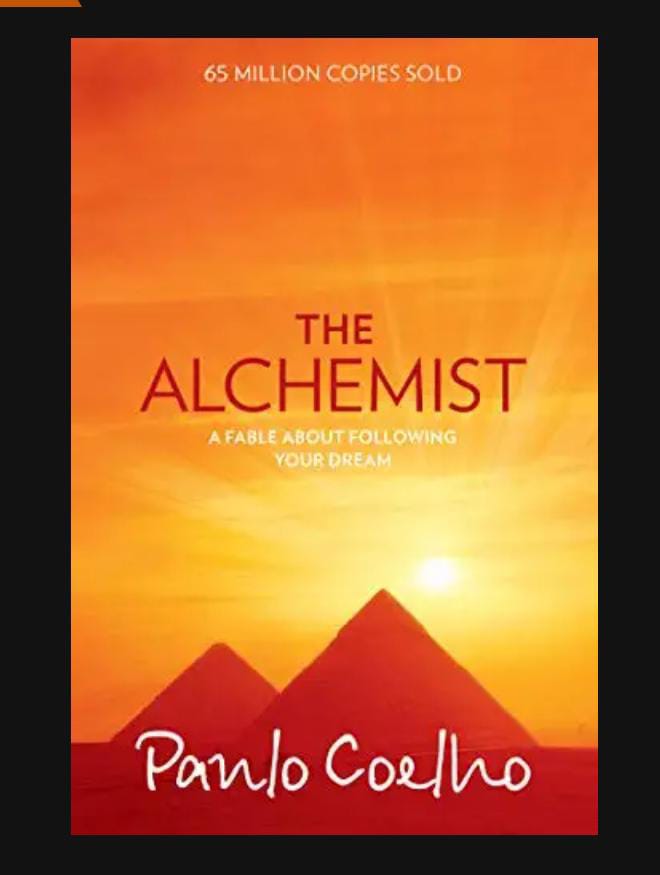
Book Review Sample :- ” The Alchemist ” by Paul Coehlo.


Book information :-

English Title :- The Alchemist
Original Title :- O Alquimista
Author :- Paul Coehlo, Brazilian author.
Genre :- Quest , Adventure , fantasy.
Language:- Portuguese
English translation by :- Margaret Jull Costa
Publisher ( English Translation ) :- Harper Torch , 1993.
Pages:- 208 pages ( 1st English translation )


Book Cover :-
The cover has a very enchanting and beautifully designed which attracts reader on the first basis.


When you want something all the universe conspires in helping you to achieve it “


About author :-

Paul Coehlo is a Brazilian lyricist and novelist .He belongs to a middle-class family in Rio de Janeiro, Brazil.


He is best known for his novel The Alchemist, which holds the Guinness World Record for most translated book by an author, and selling more than 65 millions copies in more than 150 countries as one of the best-selling books in history.

Paul Coehlo is considered as the world’s most popular spiritual writer. His books including -, The Alchemist, The Devils and Miss Prym , The fifth mountain, Manual of Warrior of light , Veronica Decides to Die , , covers various serious topic such as love , magic , dreams , spirit , suicide , real meaning of life etc.

He wrote The Alchemist only in 2 weeks . He explained that he was able to write at this pace because ” the story was already written within his soul “.
He described the book as a film that takes place in the mind of the reader , an allegorical novel about a young shepherd’s journey of finding his dreams .

Summary :-

The Alchemist is about the journey of a boy Santiago of Andalusia who is a shepherd . His parents have continually struggled for basic necessities of life and have smothered their own ambition accordingly . Santiago on the other hand can read and wants to travel .
One day Santiago retires for the night in an abandoned church with his flock of sheep. An enormous sycamore tree has grown in the place where the sacristy used to be. This is where Santiago falls asleep and dreams a recurring dream of a child who tells him that he will find a hidden treasure if he travels to the Egyptian pyramids.


Santiago visits the village of Tarifa. There he meets an old woman who interprets dreams, which she says are the language of God.
The old woman tells Santiago that this dream is prophetic , in what she calls “the language of the world,” and that Santiago needs to travel to the pyramids, where he will find a treasure that will make him rich. Santiago is uncertain, however, since he enjoys the life of a shepherd.

Santiago meets a mysterious old man who introduces himself as Melchizedek, or the King of Salem. He tells Santiago about good and bad omens .
Santiago started traveling after selling his flock and purchasing a ticket to Tangier in Northern Africa . He was unfortunately robbed which made him look for a way to make enough money to return home. He finds work in the shop of a crystal merchant.


After eleven months of working in the shop,he meets an Englishman who wants to learn the secret of alchemy, or turning any metal into gold, from a famous alchemist who lives at an oasis on the way to the pyramid.


While traveling, Santiago begins listening to the desert and discovering ” The Soul of the World “. The caravan eventually reaches the oasis, and there Santiago meets an Arab girl named Fatima and falls in love with her instantly but had to leave eventually with a promise to return again , in search of his treasure


Santiago wanders from the oasis into the desert and, seeing two hawks fighting in the sky, has a vision of an army entering the oasis and gets into trouble because of the tribal wear .

He meets an Alchemist who offers to cross the desert with Santiago.
Soon the two men enter into an area of intense tribal warfare. Warriors hold the two men captive, but eventually allow them to continue their journey

. The alchemist tells Santiago that he needs to return to the oasis, and that the rest of the trip is Santiago’s to make alone so that he can claim his treasure whom he referred as “Personal Legend”.

Santiago arrives at the Egyptian pyramids and begins to dig. He finds nothing buried in the ground. Thieves beat Santiago and rob him of his money. After he tells them of his dream, though, one of the thieves recounts his own dream about a buried treasure in the sacristy of an abandoned church.

Returning to Andalusia, Santiago goes back to the church where he dreamed of the treasure near the pyramids. He digs where he slept, beneath a sycamore tree, and there he finds his treasure Santiago’s treasure.


Analysis of the book :-

The Alchemist is a fable about following your dreams .

“My heart is afraid that it will have to suffer , the boy said ‘

“Tell your heart that the fear of suffering is worse than suffering itself and that no heart has ever suffered when it goes in search of its dream , because every second the search is a seconds encounter with God and with eternity .”

The Alchemist is a diversified allegorical story about a shepherd who cross boundaries just to follow his recurring dream which was entitled as “the language of the heart “ by the gypsy woman and a man whose encounter made him ” follow his omens “

Paul Coehlo in his interview stated that “omens are individual languages in which God talks to you . They are this strange ,but very individual language that guides you towards your own destiny . They are not logical ,but talk to your heart directly .”


The writing style in the book is simple yet contains powerful emotions, interesting and deep characters, plots twists and inspiring wisdom.


Santiago journey is a spiritual quest ,where he travels through the desert ,speaks to the wind and ‘Soul of the world’ which is connected by everyone’s heart desires or as the Alchemist said ” Personal Legend “

The novel is figurative and metaphorical in style . The omens , Personal Legend , Soul of the world , the talk with the wind , holds symbolic meaning which may seem as fantasies fantasized by us somewhere some day .

The story not only aids one to follow his dream but connects it with the Soul of the world ,the universe where everyone is bonded with an invisible wire and makes us one .

The story is like living in a magical realism , getting enchanted by the omens , talking with winds being a part of the universe that we all are but tend to forget and finally following our dream despite the hurdles because following our heart desire means encountering eternity .

when you really want something, the whole universe conspires in helping you to achieve it”

The book explains the major purpose of people living , that’s finding one’s treasure i.e Personal Legend and traveling to find it because following the personal legend is like connecting to something deeper of the universe ,to the threat that connects universe and our hearts , something that makes us follow our heart and reach our dreams which fear paralyse for us .

The fear of suffering is the mammoth hurdle one faces while taking the first step towards their dream .
The Alchemist , mystically addresses the fear of suffering as worse than fear itself .

Paul Coehlo in his interview said ” the only way that you can learn the language of the soul is by making mistakes . I made my mistakes but then I started to connect with the signs that guide me “

Making mistakes is the key to finding one’s Personal Legend . But fear of taking risks only lets one suffer with regret of not trying to reach out for their dreams .

The world is conspiring for us ” , it symbolizes the determination one has for his dreams. Without hope and determination one can never know about the universe doing it all to make the dream come true .


Conclusion :-


Santiago struggles with what he is told versus what is real , between reality and the spiritual. He moves from hopeless to hopeful .


The book , with the magical realism genre leaves the reader with many questions.
The questions are left to the reader’s imagination .

But Paul Coehlo said “there are some questions in life that we don’t know . We can’t have answers for everything . But we try to find good questions and not good answers “

Santiago represents the transforming power of our dreams, whether real or imagined and the importance of listening to our hearts.


The book is for one’s who want not only to escape reality but also to understand reality . The Alchemist can offer the best of both worlds.
Each person has a destiny that exists independently of others. Only through devotion to the dream is the ‘soul of the world’ revealed to us, the knowledge that destroys fear of suffering and gives power.
The Alchemist tells us that dreams have a price but, as Coelho has said in interviews, not living your dreams also has a price.


The book shares the Magic with the world , and affects so many lives.
The Alchemist is an unforgettable story about the wisdom of listening to our heart and following our dreams .

Dreams are made to be followed
Life is meant to be loved
Some books are meant to be read ,
Loved and passed on
The Alchemist is one of those books “

Interview With An Inkpot!

“Writing permits me to be more than I am. Writing permits me to experience life as any number of strange creations.”

  • Alice Walker

Today’s article is an interview with Inky- The Inkpot. Yes! The same Inkpots that were used in ancient times for Fountain Pens! We thought of listening to all it had to say and yes, the interview with it was damn interesting!

The questions were as follows:

Our First Question For You Is, That What Do You Think Of The Writing Medium Used In This Era?

I feel extremely left out. By using me, people enjoyed writing all the more. Yes! Refilling the ink was necessary and may seem a hard task today, but writing with a fountain pen containing a cute feather perched on its top made the process, all the more merrier. The writing medium used in this era is mainly the laptop, if I am not wrong. This medium is easier, actually extremely easier as compared to me but that, I am afraid, doesn’t make writing a fun task anymore, is what I think!

Indeed! Since Length Of Write Ups Has Increased Nowadays, We Refrain From Using You Because That Would Make Writing A Tedious Task. Could You Suggest A Way Of Making Writing A Fun Task Through The Present Medium, That Is The Laptop?

Yes! I totally understand that writing has now intensified its nature. Earlier, write ups were a priceless art form, but today almost every individual is interested in getting into this area of creativity. Maybe that’s the reason, write ups have become meticulous and elaborate today and laptops make work easier. Well, in order to make work on the laptop interesting, I would suggest that you frame your write ups in a way that not only people but also you visualize them. Try to imagine the story yourself while framing it. This will automatically make your task interesting.

That Was Such An Important Point! What According To You Is The Worth Of Writing?

Writing is a precious art form and almost every person can write, if he has the will to. Writing has had its worth since the ancient times, when kings used me along with the fountain pen for sure, in order to state certain important messages and send them over to other kingdoms. Even today, write ups are used to send impactful messages across the globe. It is a great art form for introverts who fear to express their thoughts in public 😉

Indeed! I Am Eager To Use You At Least Once While Writing. Are You Available Now?

I am so glad to hear this, but I regret to say that I have entered the antique section and am no longer easily accessible. It is because of our decreasing demand today! Well, you can always visit museums in order to meet my relatives! However, I have seen certain people who are creatively shaping their pens by applying a feather at the top. Perhaps, you could try that but inkpots (we) won’t be of any use to you now!

Okay! I Will Definitely Try Doing That. What Do You Have To Say About Emails?

That makes me even more dejected. Letters were not only an effective medium of communication but also helped in enhancing cordial relations during the ancient period. Emails, no matter how formal they are, cannot ensure the happiness that letters provided when they popped into the nearest post! In short, all I have to say is that though the digital medium has made writing easier and convenient for man, it doesn’t meet the ‘buoyancy’ factor today. However, writing was, is, and shall always remain an important art form.

True! Lastly! Do You Wish To Address The Future Writers?

Indeed! Writing is an amazing art that requires utmost love and interest from your side. Don’t hesitate to get your words out in the world. Writing also, gives you an option to remain anonymous. So, if you are afraid to speak out, then write it down and get it published. Let the world know what you think. However, if you are interested in story writing then be that. Introduce the world to your creativity. Burying your head into your hands and adopting a demure approach won’t help!

Thank You So Much, Mr. Inkpot.

yoga

It was identified from ancient sources that yoga was found and originated from India. Its presence was found in the ancient books of India and was even mentioned in various religious books.

Humans have been performing yoga since ancient time. The evidence of which has been found by researchers.  

It is one of the ancient practices, which is been practice till now. Yoga is a word which is derived from Sanskrit root (‘Yuj’). And the meaning of this word is union of body (शरीर) and soul (आत्मा). The brief explanation to this definition is:

Yoga is the basically the functionality of our body which results in the union of our body with our soul.

Yoga is basically doing postures in a comfortable position yet a little challenging position to yourselves while berating slowly inhaling and exhaling Thorley and properly even breathes.

Yoga has been in practice not only by mans but women too. Many people do and practice yoga on regular basis to get them to various benefits of yoga which and many. There are various benefits one can get by performing yoga on regular basis.

Some of the benefits of yoga of yoga are: –

  • It connects our body to soul.

Yoga is just a form of meditation where you do not worry about the past neither future you live in the moment and that also with your inner piece (silence and concentration). Yoga does not bide you to or forces you it wants you to enjoy the moment which is now and be happy.

  • It helps in the functionality of various organs.

It has been known that yoga improves the organs functionality and now it has been scientifically, oxygen is essential for us humans and when we do yoga, we breathe slowly that helps in reaching the oxygen to all the organs of body and helps there functionality even better.

Yoga
Vibe


  • It may help live longer (longevity).

When our organs work well, they do their respective roles for our body to function and with yoga we breathes and does some mobility which may help increase the life span.

  • It helps in the proper blood flow throughout our body.

While performing yoga we breathe slowly which results in pumping up of heath in a good or proper way, which helps in proper blood flow through out our body to each organ.

  • It helps reduce stress, anxiety, and prevention from various mental problems.

While performing yoga you do not worry about future not past you focus on the present (you are performing yoga) you will feel like it is happiest to be you (at a moment) which helps you reduce you stress and helps in various mantle health problems.

  • It may help loose some amount of weight and toning up of body.

There are various types of yoga some are to relaxes your health some your building up your body while getting the benefits of yoga which will help you toning up of your body and might loosen your weight.

Do not wait any more go try yoga and you will fell in love with it.

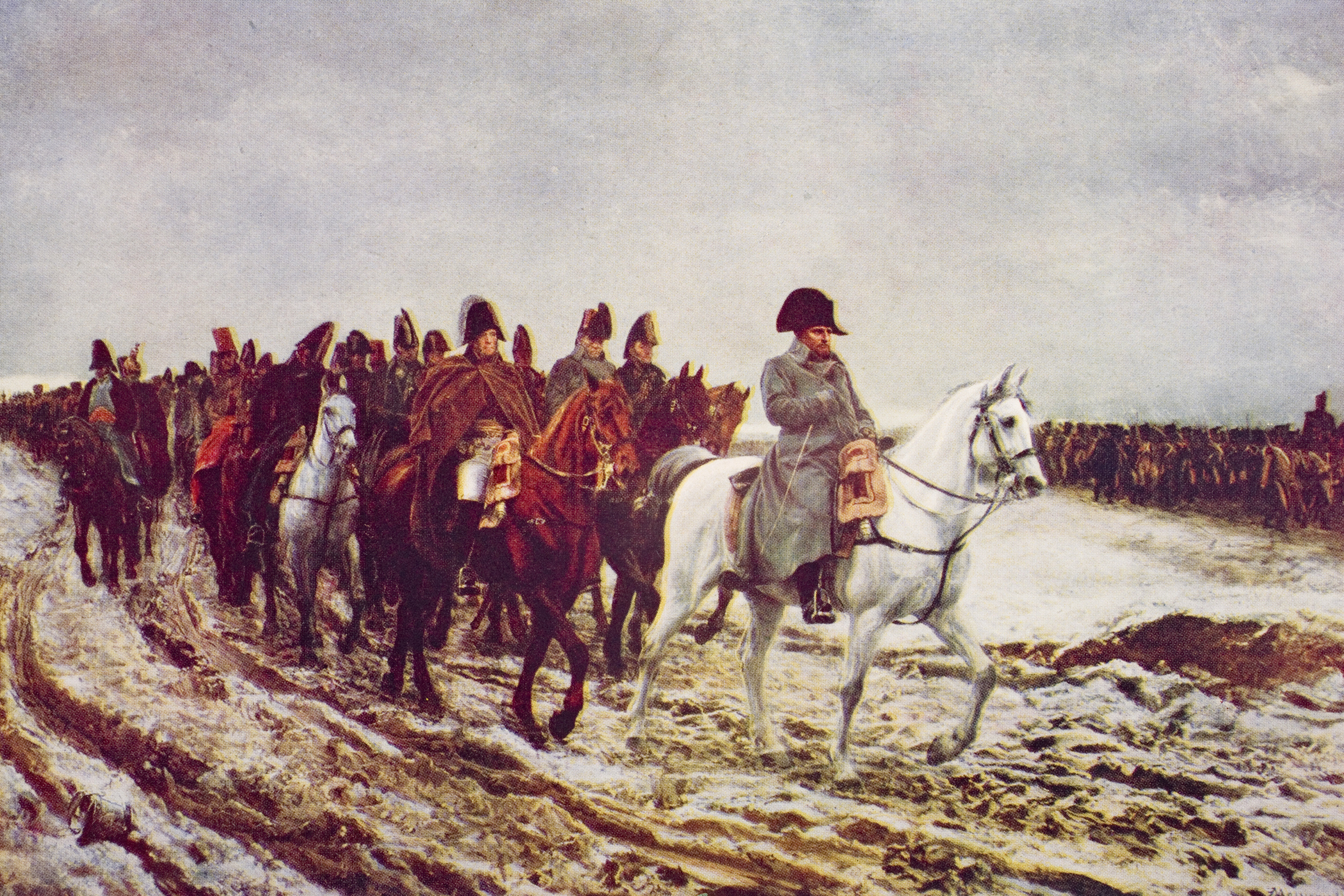
Russia invated by Napoleon and Grand Army

On 24 June, French Emperor Napoleon Bonaparte, crossed the Neman River, invading Russia from present-day Poland. Eventually this resulted in disaster for the French.

To intimidate Alexander, Napoleon massed his forces in Poland in the spring of 1812, but still the czar resisted. On June 24, Napoleon ordered his Grande Armée, the largest European military force ever assembled to that date, into Russia.


Which all started when Russian army refused to engage with Napoleon’s Grande Armée of all most 500,000 European troops. Though the Grande Armée did not have enough supplies or the distribution networks required for such a long march. However french strategists assumed the Grande Armée would be supplied by wagons, or would be able to gather supplies as they went. Furthermore, Grande Armée also failed to prepare for Russia’s harsh winter. Its troops were not dressed or trained for the kind of weather they faced.


Besides the invasion lasted six months, and the Grande Armée lost more than 300,000 men during the process. On the other side Russia lost more than 200,000 too. This single battle resulted in more than 70,000 casualties in one day. The invasion of Russia effectively halted Napoleon’s march across Europe, and resulted in his first exile, to the Mediterranean island of Elba.

Caged Bird by Maya Angelou

This poem was published in 1983 in Maya Angelou’s poetry collection “Shaker, why don’t you sing?”. This was her 4th volume of poetry which was published by Random House. It contains 28 poems and they are dedicated to her son guy Johnson and her grandson Colin Ashanti Murphy Johnson. Maya Angelou has depicted the plight of the Black American especially Black Women through this poem.

In this poem, Maya Angelou tries to make a comparison between a free bird and the caged bird. The birds are used as an extended metaphor, the African Americans are compared to the caged birds and the unoppressed people compared to the free birds. The African Americans had to suffer immensely and the caged bird’s captivity depicts the same, whereas the free bird and its freedom to be able to do anything that it likes and its will to claim the sky and everything in its reach depicts the privilege and the entitlement that the un-oppressed felt

The free bird can fly anywhere, explore the sky and they are not subjected to any limitation but the caged bird is kept behind the cage, it cannot fly anywhere and it feels helpless and angered, in the same way, Maya Angelou tries to explain that the oppressed people were not given opportunities and they were treated badly.

The caged bird sings of freedom and that is why that song can be heard even on the distant hills. To the bird which is free, freedom is something which they do not think about whereas for the caged bird freedom is a privilege.

The oppressors feel that they own everything and that they can achieve more and more just like the free bird names the sky his own but the oppressed were not allowed to do anything, they were treated as slaves.

“A free bird leaps

on the back of the wind   

and floats downstream   

till the current ends

and dips his wing

in the orange sun rays

and dares to claim the sky.

But a bird that stalks

down his narrow cage

can seldom see through

his bars of rage

his wings are clipped and   

his feet are tied

so he opens his throat to sing.

The caged bird sings   

with a fearful trill   

of things unknown   

but longed for still   

and his tune is heard   

on the distant hill   

for the caged bird   

sings of freedom.

The free bird thinks of another breeze

and the trade winds soft through the sighing trees

and the fat worms waiting on a dawn bright lawn

and he names the sky his own

But a caged bird stands on the grave of dreams   

his shadow shouts on a nightmare scream   

his wings are clipped and his feet are tied   

so he opens his throat to sing.

The caged bird sings   

with a fearful trill   

of things unknown   

but longed for still   

and his tune is heard   

on the distant hill   

for the caged bird   

sings of freedom.”

Raymond Willams 

Raymond Willams 

Raymond Williams, the overlooked Marxist but an impactful figure to the study of Literature and Linguistics. When we are introduced to Karl Marx, we often times overlook how Friedrich Engles, plays a jarringly critical roles and how he has enabled Marx with the support and opportunity he needed to move with what Marx believed and simultaneously wrote about. Similarly, Williams became this figure– unless you’ve touched subjects directly under his expertise– he’s the one we’ve turned a blind eye towards. 

Keywords, by Raymond Williams, a treatise and not a dictionary where he presented us the historical transformation 109 words which have underwent as a part of socio-political, ethno-cultural and economical transcendence and haven being privileged enough to read one of his impactful works, it’s just baffling to see how less of a influence he has outside of his field. It’s not extrapolating information that is thrown at you just for the heck of it, but rather an insistence to know who and what Raymond Williams’ stands for. He has redefined/ restructured what Antonio Gramsci has called Hegemony, and even went on further with his works in tearing down era’s through his works and critiquing the existence and work of aristocrats and ownerships in his works The English Novel from Dickens to Lawrence and in Culture and Society: Coleridge to Orwell with his highlights on class struggle; from his comments overarching and inclusive of architecture, fashion, food, and even leisure, he has lured literary critics. 

Williams was one of the pioneers to question about the greatness of culture, the association of High Culture to the Bourgeoise and propagated skeptically the notion of something with no inherent value to be associated and put into pedestal, a notion he worked to deconstruct by questioning the elites and it’s control over the means of production as well as its hegemonic power over what is to be named as culture, and more.

This British man, also was very actively engaging in discussion of what Language is, and how it is a reflection of society, that has been nothing short of a lopsided tale serving a particular class; he question the use of language in reality, and how it has shaped the area of Literature, and constricted it, almost white-washed it. He persists upon altering generic views towards literature, to understand categories like arts, humanity, creativity, science and more. He also spoke about the politics of Speech Writing and how narrowed or culture centric it has to be in order to act as a tool of aid to the speaker to give him impetus, this all significantly spotlights William’s need to bring Language to the forefront of the existence and continuation of human society, not as a crutch, but more like a base for the super-structure to stand tall on; not a closed, rigid system, but something that could be reimagined and conceptualised to constantly regenerates, this is Raymond Williams’ basic as a Marxist Cultural Critic. 

Stop Spending So Much Time In Your Head

YOU CAN’T GIVE UP!

I know something about you without knowing you. I bet you spend A LOT of time in your head.

You know, thinking, worrying, stressing, freaking out — call it whatever you want. I call it a preoccupied mind. And with what?

99% of your thoughts are useless. William James put it best:

“A great many people think they are thinking when they are merely rearranging their prejudices.”

All my life I’ve been obsessed with practical things. Practical philosophy, practical knowledge, practical books, practical work, and practical advice.

That idea comes from Pragmatism, a philosophical tradition that started in the 19th century in America. Charles Sanders Peirce, who was a Harvard professor, is considered as the “father of Pragmatism.”

But it was William James, a trained physician turned philosopher, who really defined the philosophy.

About thoughts, worry, and stress, William James says:

“The greatest weapon against stress is our ability to choose one thought over another.”

Pragmatism believes that a mind is a tool. Your mind should work for you, not against you. People who don’t master their mind, don’t believe it’s possible.

They say: “I can’t help but thinking these things.”

Well, you can with enough practice. It’s a skill.

In other words: You have the ability to decide what you think. Or, you can choose NOT to think.

And that is one of the most important and most practical things you can learn in life. Before I learned that skill, I would spend hours and hours inside my head.

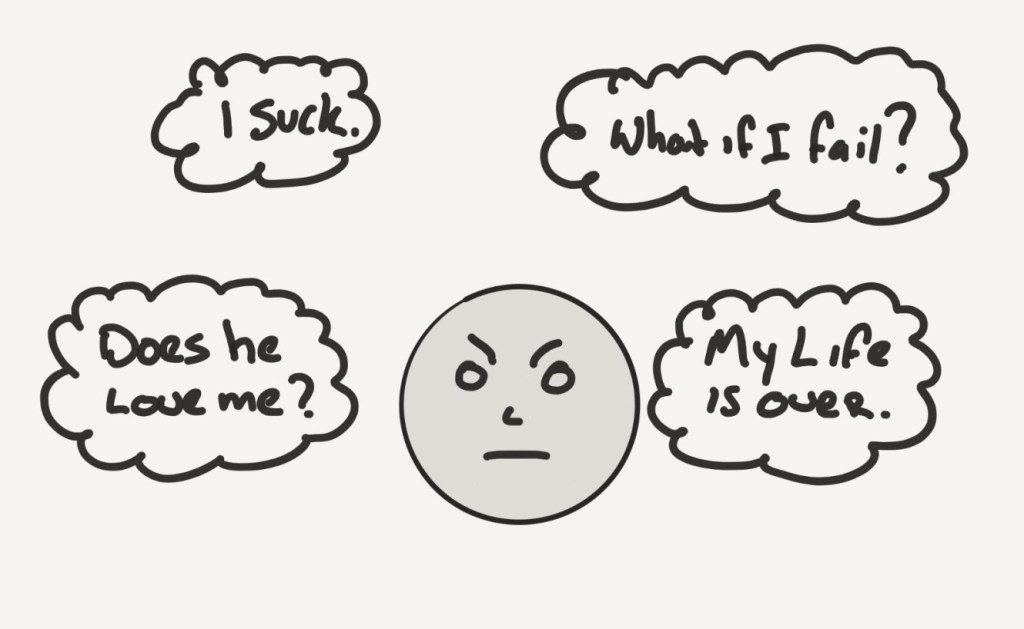
Just think about how much you think.

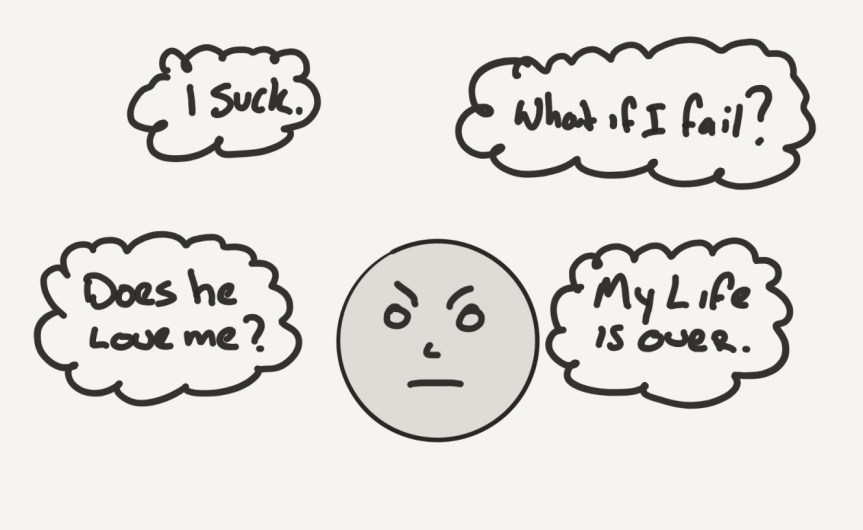
  • “I wonder what my boss thinks?”
  • “What happens if I screw up and lose my job?”
  • “Does she love me?”
  • “I think he doesn’t care about me.”
  • “I just keep failing.”
  • “Why does my life suck?”
  • “Why is my life awesome, and other people’s lives are not?”
  • “What if I get cancer?”
  • “I don’t care about my job. Is there something wrong with me?”
  • “I can’t finish anything. What’s wrong with me?”

And the list goes on. That is all REAL shit. That’s stuff people tell me when I ask them what they worry about.

Do you know what those thoughts do to you? Guilt, anger, suffering.

I just have one question for you: What’s the practical use of your thoughts?

Yes? I’m waiting. Still no answer? Exactly.

Thoughts have no use. 99% of them that is.

Which thoughts are useful?

  1. Thinking about how you can solve problems. A problem is just an unanswered question. Put your brain to use and think about how you can solve problems. There are a lot of those on this earth.
  2. Understanding knowledge. That means this: Try to internalize knowledge and think about how you can use that knowledge to improve your life, career, work, relationships, etc.

That’s it. You can ignore every other thought.

If you’re constantly thinking, it’s because you haven’t’ trained your mind yet. You HAVE to get out of your head.

If not, you go mental. Everyone will. No exception.

Also, you’re probably thinking so much that you’re missing out on life. Did you notice the sunshine this morning when you woke up? Or the raindrops? Did you notice the smell of your coffee? Did you feel the texture of your cereals?

If your answer is no, you definitely need to get out of your head. Stop thinking and start feeling.

Now, you might think: “How do I train myself to stop thinking useless thoughts?”

Awareness.

That’s where it starts. Every time you start drifting off, become aware of it. Just observe your brain. Step outside yourself and just observe the crazy shit you’re thinking about.

Don’t judge. Don’t think you’re stupid. If you do that, you’re thinking again.

No, what you want to do is say this to yourself: “Ah that’s a cute thought. Now, let’s get back to reality.”

“If you can change your mind, you can change your life.”
― William James

Are you back to reality? Do you feel your eyes reading the letters on your screen? Do you feel your phone in your hand? Are you thinking about how you’re going to apply this information to your life?

Great. You’re USING your mind, and it’s not the other way around. Now, keep using that brain of yours.

Because I’ll tell you this: It’s the most powerful tool on earth.

Thanks for reading!

These Six Questions Will Improve Your Decisions

BUT WE CAN KNOW!

To improve your decisions, you want to look at your process for making a decision. Most people assume that good decision making is a matter of picking a course of action that leads to the desired outcome.

That’s a misconception. Decision making refers to your cognitive process. It’s about how you end up with your decision, not what the decision leads to. 

Good decision making can lead to bad outcomes. The opposite is also true. Bad decision making doesn’t mean you always get bad results. For every decision, there are external factors that influence your outcomes.

So how can we improve our decisions? By focusing on the process, not the outcome. The best method for improving your decision making process is to ask yourself critical questions. It’s not enough to ask obvious questions like, “What are my alternatives? What has worked for others? What are the consequences?”

While it’s good to ask yourself those questions, it will not change your decision making process. Those questions only look at what you already know. 

I found a list of six thought-provoking questions in Annie Duke’s book, Thinking In Bets. Notice what the theme is.

  • Why might my belief not be true? 
  • What other evidence might be out there bearing on my belief? 
  • Are there similar areas I can look toward to gauge whether similar beliefs to mine are true? 
  • What sources of information could I have missed or minimized on the way to reaching my belief? 
  • What are the reasons someone else could have a different belief, what’s their support, and why might they be right instead of me? 
  • What other perspectives are there as to why things turned out the way they did?

Think About What You Can’t Know

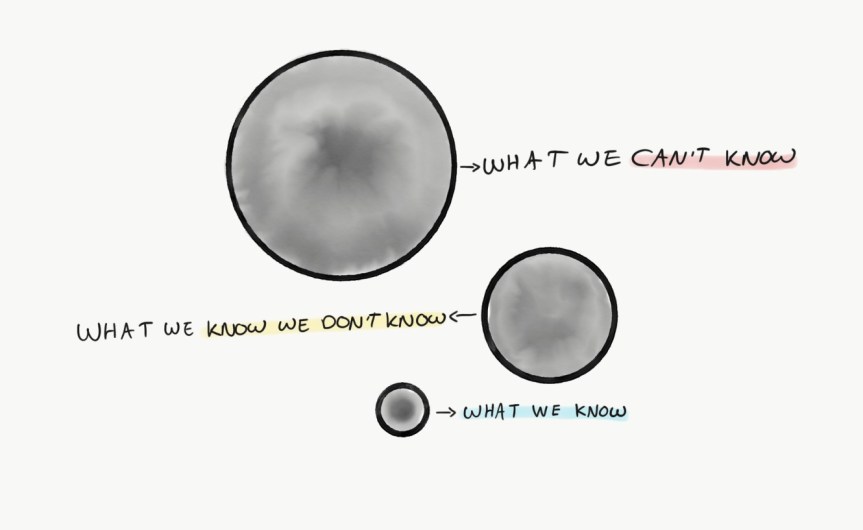
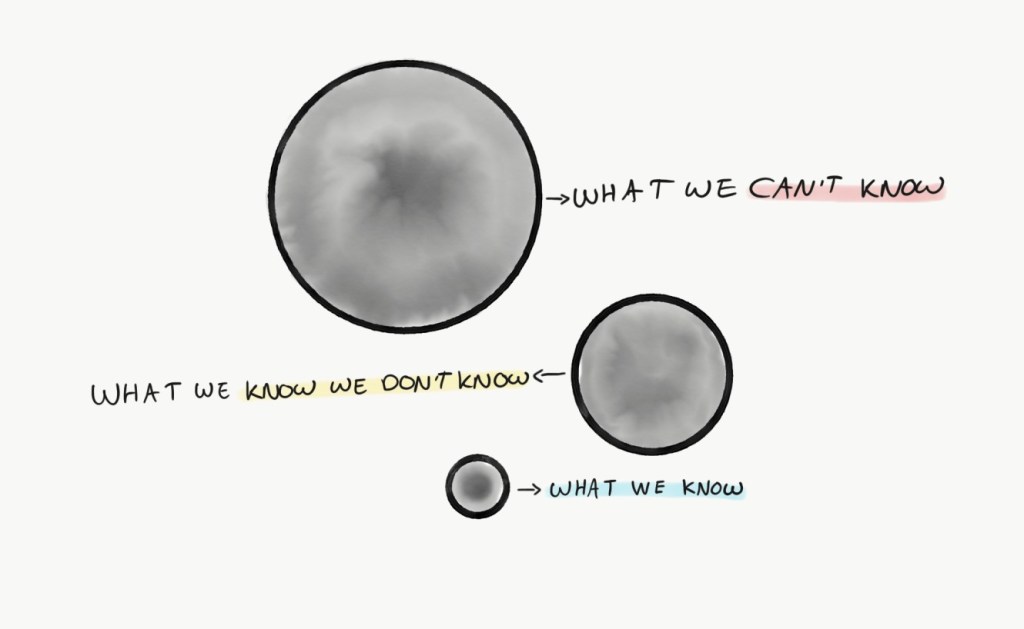
The reason I like these questions from Annie Duke is because they force you to think about what you can’t know. In my experience, that’s what drastically improves your decisions. 

We all know the feeling of talking to an experienced person who shares some insights with us, and we go, “Aha! I didn’t realize that.” That’s what you want. Duke writes the following in Thinking In Bets:

”Just by asking ourselves these questions, we are taking a big step toward calibration. But there is only so much we can do to answer these questions on our own. We only get exposed to the information we have been exposed to, only live the experiences we have experienced, only think of the hypotheses that we can conceive of.”

This is the reason I often turn to my friends, mentors, communities, books, courses, and podcasts for insights that come outside of myself. I want to learn about things I can’t know.

It’s impossible to know and see everything. We haven’t had the experiences of other people. Most of us keep making the same decisions because we never get an outside point of view. We don’t make an effort to improve our decisions.

Open To Beliefs—Not Gullible 

To improve your decisions, ask yourself questions that challenge your existing beliefs. I highly recommend saving those six questions in your note-taking app. I’ve done it and when I face a decision, I often go through these questions and my other notes on decision making.

As you become open to other beliefs and perspectives, keep in mind that other people also don’t have all the answers. Adopt the mindset of a skeptic. Be open to other beliefs, but don’t believe everything instantly. 

Keep looking for evidence and other perspectives. When you have collected enough information, make your decisions. Sometimes people assume you have to listen to everything “experts” have to say. This will only make us gullible. If there’s one thing that harms our decisions, it’s that.

We should always make our own decisions after going through a process. We should avoid making rash decisions based on the opinions of others.

Common Decision Making Pitfalls

Here’s what you should watch for when you’re making decisions (no matter how big or small):

  • Analysis paralysis—This is very common. At some point you get stuck in the process and you can’t make a decision. You go over the process over and over again. This is a big risk. You can NEVER have 100% of the information you need. It also helps that your decisions are not about the outcomes. Don’t let your fear of making the “right” decision paralyze you. There’s no right or wrong outcome. Just outcomes. Deal with it later.
  • Extinction by instinct—The opposite of the above. It’s the belief that instincts are a useful tool in decision making. This leads to rash decisions.
  • Information overload—This is when you ask too many people for their opinion or insights. Stick to trustworthy sources and keep them at a minimum. More information is not better. Reliable information is.

I’m not a fan of complicated theoretical decision-making frameworks to improve your decisions. Those types of formal frameworks might work for large institutions, but for you and me, it’s just not useful. Who makes time to read an 800-page textbook on statistical decision theory? And if you do study it, you probably can’t remember all of that theory. Instead, work with what you have.

When you face a problem, simply look at your options, collect some information, think about what you can’t know (the six questions at the top), evaluate everything, and pull the trigger. Done. Then, move on to the next one.

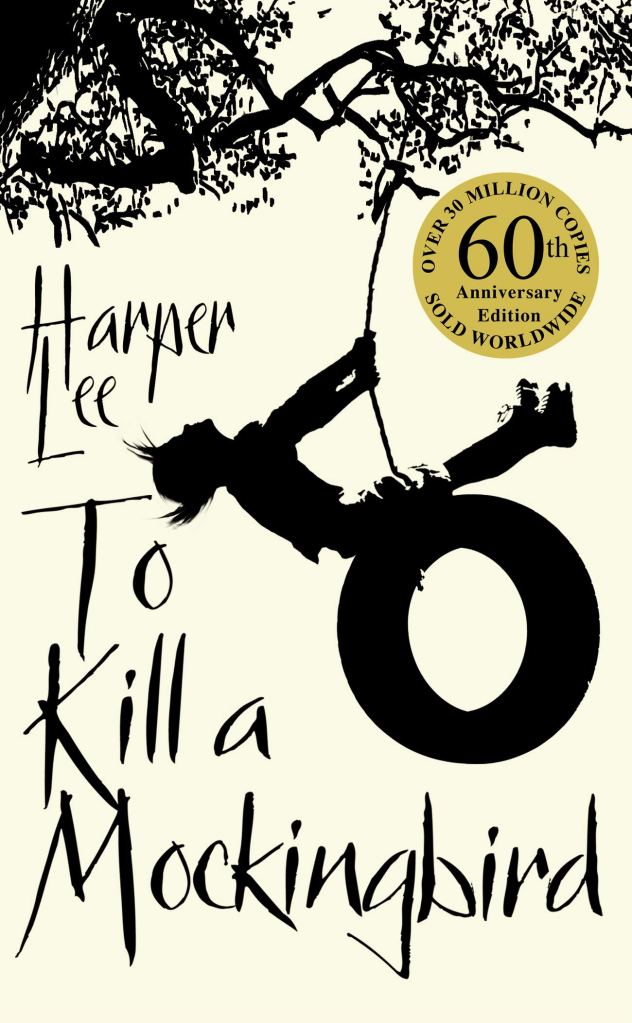
Race and class in Harper Lee’s ‘To Kill a Mockingbird’

‘To Kill a Mockingbird’ is a Southern gothic bestseller written by Harper Lee. The novel is narrated by Scout Finch, a six-year-old white girl who learns about life, people and the injustices prevalent in her society. Through her, Lee cleverly portrays issues such as gender, race and class discrimination in the fictional setting of Maycomb county, Alabama. Readers have speculated that the character of Scout was based on Lee’s own childhood experiences, wherein she combines the nostalgic elements with the political situation that she witnessed around her in America. Scout’s innocence and her defiance against the social hierarchies in Maycomb cuts a deeper meaning into the futility of these societal constructs.

Race is one of the issues that is evidently portrayed in the novel. Scout’s father Atticus Finch is a lawyer who defends the less privileged. He strives hard to stand by his moral compass and wishes to set an example for his children through his actions. One of the major events in the novel takes place when Atticus chooses to defend Tom Robinson, a black man accused of raping a white woman. The racist residents of Maycomb, as well as his family members are horrified and attempt hard to dissuade him. So much so, that even Scout and her brother Jem are subjected to verbal abuse by other children for his actions. During the trial, Atticus provides clear evidence to prove Tom’s innocence. Despite the impressive evidences, the extremely racist jury sentences him to jail where he later attempts to escape, but is shot and killed. We see that even the law is corrupted when it comes to rendering justice to innocent African Americans. Tom Robinson’s trial scene is monumental in proving the racial discrimination in America.

Calpurnia, the Finch family’s black maid plays a significant role in Scout’s life. Unlike most southern black characters, she is well- educated and is highly respected within the Finch family. Having lost her mother at a young age, Scout regards Calpurnia as a mother-like figure. One of the important moments in the novel is when Calpurnia takes Jem and Scout to the Black Church. Here, the children witness a different side of characteristics in Calpurnia as she interacts with the rest of her community. W. E. B. Du Bois refers to this as “double consciousness”; a phenomenon wherein a person exhibits two different personalities with the blacks and the whites. This can be seen as a defence mechanism to gain acceptance in a white supremist society due to their own internalised racism. Furthermore, despite being a novel that is concerned with issues like racism, it only portrays a subjective version of it. The black community are not given a voice of their own against this prejudice, which marginalises them within the text. If they are given a voice, it is usually to show gratitude to the good white people instead of raising their anger and frustration against the racial injustices in Maycomb.  

Social class prejudice is an important element highlighted in ‘To Kill a Mockingbird’. This can be understood clearly when Jem imagines ‘folks’ as being divided into four different kinds. “Our kind of folks don’t like the Cunninghams, the Cunninghams don’t like the Ewells, and the Ewells hate and despise the coloured folks.” (Lee, 249) Through Jem, Lee clearly explains the class hierarchical structure of Maycomb. It is a prejudice engrained in Maycomb which even dictates the relationship between children at school. But the novel also explains that the class system can eventually be dismantled. Initially, when Scout treats Walter Cunningham Jr differently, Calpurnia teaches her otherwise and makes her realise that a person’s financial background has nothing to do with their personality. When Cunningham Sr. arrives with a mob to lynch Tom Robinson, Scout’s innocence humbles him, saving Tom’s life briefly. Scout thus is able to achieve a small proportion of justice by disregarding the class system. Her reply “I think there’s just one kind of folks. Folks.” (Lee, 250) is an innocent yet powerful statement against the prevailing class structure in the society.

“You never really understand a person until you consider things from their point of view…”

Harper Lee

Aside from race and class, the novel also deals with other important issues like gender, disability, and sexuality. As Scout belongs to a middle-class white family, the primary concern that she personally deals with is sexism. She is portrayed as a tomboy, who is forced to confirm to the conventional idea of a girl. Over the years, readers have come up with multiple theories from the book pertaining to current social issues which proves that even after sixty years, it is still contemporary. Atticus’s advice that “You never really understand a person until you consider things from his point of view . . .” is a principle that could serve as a solution for all types of prejudices. And as mentioned by John Green, the “combination of nostalgia and criticism makes Mockingbird both endearing and enduring.” To Kill a Mockingbird is revolutionary in the fact that it brilliantly portrays multiple serious themes through the eyes of an innocent child.

Reference Links:

Smart Ways Of Writing With Keyla- The Laptop!

Laptop Cartoon - ClipArt Best

“If people cannot write well, they cannot think well, and if they cannot think well, others will do their thinking for them.”

  • George Orwell

Today’s article features Keyla – The Laptop who shall be explaining The Smart Ways Of Writing. Good Morning Folks! This is Keyla. I am currently a renowned medium for the writing process. I understand that most of the ancient mediums of writing are depressed due to their extinction because of me. I apologize for that, from the core of my heart. However, it’s not our fault if people find writing on us, an easier task! It totally is based on the perspective of people who have regarded us deeply. I also admit that the digital medium involving me, doesn’t make writing a merrier process. Yes! That’s true. But, as I stated, the human perspective is something that gets into the way!

Anyway, since humans are glued to the digital medium and their love for me won’t diminish (is what I think, until some other medium doesn’t turn up ;)), I am here to explain the smart ways of writing easily without burdening yourself! So, I will be explaining that in a step by step approach!

Love The Writing Process!

A simple way is to love the process and admire the lengthy write ups! Writing long stories shouldn’t make you feel sleepy. If that is so, then you must avoid writing, because only a sound person, ecstatic regarding the process, can compose a good story.

Jot Down Those Ideas!

Every time you feel an idea pass through your mind, the sensible thing to do is to jot it down promptly before you lose sight of it! These ideas can prove helpful in composing good content!

Write In A Speech Format!

When you write, ensure that your content is interactive and not merely descriptive. Innovative content is much more interesting, than descriptions with facts! In short, address the readers and make them feel one with your content! Let them feel as if they are enjoying this conversation with you!

Write, When You Feel Like It!

Mood factor plays an important role in the writing process, so write only when you have the proper mood and stable state of mind to make the task interesting!

Write In Bits!

If you have a large amount of content to write, then you are free to work on it, in bits. Don’t try to write it in a single day, as it may stress you out and then disrupt the writing mood! However, if you are a huge writing fan and just can’t wait to read your completed story, and feel that you are well enough to write in a single day, then you are free to do so! The only thing that matters is that your mood remains intact.

Gobble Down Certain Interesting Words Or Facts Mentioned In Other Books!

There is an exception to this rule! You must read a lot here! Only when you read, can you write after all! Try reading all sorts of novels that would contain some interesting ideas which could be highlighted in your book! Don’t worry! Copyright issues aren’t prevalent here! 😉 That is what makes writing an interesting task. The more you read other works, the more you learn. You do not get blamed for copying. Instead, you get admired for learning whenever you read!

Write Frequently!

In order to not feel burdened for writing huge content later, make sure to practice writing frequently. After all, practice makes perfect, doesn’t it.

Imagine Your Content And The Story It Poses!

Try imagining all that you write. This makes it extremely easier to frame your content because you yourself feel lost in the process. So, an important thing to do is, not only make the readers, but also make yourself one with the process!

Thus, Lastly, I would conclude stating that the smartest way of writing is creating your own imaginative world and getting lost in that, visualizing yourself as a part of the story and getting one into that. So, write with love and utmost devotion. Have the power to get into that world you just created through your content!

Yellow Scribe is here to help you with that. Consult them and make your publishing dream come true! Let people be introduced to your creativity!

Thank You For Your Time, Keyla!

Elements of perfect Headline

The headline is the type of text indicates the nature of the article. the headline purpose is to quickly draw attention of a reader towards the story. It is written by a copy editor, but can also be written by the writer of the article, the page layout designer, or could be by other editors.


Headline is also known as soul of the content or hook of content.
In other word we can say that headline line workout as compass.

Things to keep in mind while writing headline are as follows:


1. Understand the target audience:
While writing a headline we have keep in mind whom we are writing for. we have to know exactly who we are talking to and trying to attract our reader with the help of our headline, so our headline should be effective. We should start headline writing process by keeping in mind who our audience is example for political news we should use diplomatic headline.


2. Show the Benefit of Reading:
While writing headline, we should think about the reader, we should try to put ourselves into their shoes, and should begin writing headlines that could directly connect them with their wants and needs. Should Use our knowledge about the reader to write a headline that gives them a reason to read. Show them how they could benefit by this:
• Solves their problem
• Answers their question
• Makes their life easier
• Leads them to a positive outcome


3. Use the Simple but impressive Language:
The language we choose should naturally impacts the worthiness of your headline. while using words that are bland, uninspiring, or unknown by most, your target readers may go to be turned off.
Instead stick with language that is simple, but powerful. For example, address the reader as “you”, and use the words like “try” or “should”.


4. Headline must Appropriate to the Story:
A humorous headline may work with a soft news, but it most definitely wouldn’t be appropriate for an article about someone being murdered or hard news. The tone of the headline must match the tone of the story.
Example: a man brutally killed his wife for money.


5. Use of the Active Voice
Use the subject-verb-object formula for news writing. That’s also the best model for headlines. Start with subject, write in the active voice, and your headline will convey more information using fewer words. Active voice tells who did what. Where as passive voice tells what happen which hides who.


6. Use of Present Tense
It makes the reader fells more connected towards the story. Even if the news story is written in the past tense, headlines must almost always use the present tense. So that reader could get attracted towards the article.
Example – Liverpool wins first premier league title
Neymar injury hit PSG hopes


7. Must know where to Capitalize
Always capitalize the first word of the headline as should all the proper nouns in the headline. Don’t capitalize every word in headline unless that is the style of your particular publication.
Example: Blackpink’s Lisa showing love to fans


8. Be Direct
Headlines aren’t the place to be obscure; a direct, straightforward headline gets your attention towards it more effectively than something overly creative.
Example- Maggie – 30% off today only


9. Avoid names
It is always better to avoid names while writing headline. But if in case it’s a popular well know name then name should be use because that particular name could attract the readers to read whole news.
Example – if the news is about famous celebrity like Justin Bieber, Drake, BTS. people want to read about them, then it’s worth to use their name.


10. Using of articles in headline
Avoid using of a, an, the in the headline. So that reader could get more connected with the article through headline.
Example- Man releases rabid dog on street (A man released a rabid dog on a street)
These were the few things we have to keep in mind while writing headline. A good headline catches reader attention first, then actual content on it. But then condition is headline should connect to content not any irrelevant information.

youtube

YouTube

YouTube the way of leaning

What Are the Main Functions of YouTube?

  • Users can search for and watch videos.
  • Create a personal YouTube channel.
  • Upload videos to your channel.
  • Like/Comment/share other YouTube videos.
  • Users can subscribe/follow other YouTube channels and users.
  • Create playlists to organize videos and group videos together.

What is the main purpose of YouTube?

YouTube provides a simple way for people to store videos online and share them with others. YouTube videos cover any topic anyone cares to upload a video about. These videos are easy to share via other forms of social media, email and websites and can also be embedded in other websites

What are the benefits of being a YouTuber?

Benefits of Having a YouTube Channel

Give the Audience More Content. One really good reason to add video and a YouTube channel to your site is to give the audience more content. …

Extra Source of Traffic. …

Closer Personal Connection. …

Another Source Of Revenue. …

Modernizing. …

Creative Outlet. …

Get Outside Your Comfort Zone.

Teens Like YouTube because?

YouTube is a free to use service and a can be a great space for teens to discover things they like. For many young people, YouTube is used to watch music videos, comedy shows, how to guides, recipes, hacks and more. Teens also use the video-sharing service to follow their favourite vloggers (video blogger), subscribe to other YouTubers and celebrities they are interested in.

By YouTube what the people wish to like ?

The way the their mind sets and Intrest videos

there are different kind of people

Wish to learn new things

spend time on their mind sets

giving live news and events

Advantages and Disadvantages

1.       In education YouTube help in term of provide the video of teaching and learning for the students to get the knowledge from the professors in another part of the world.

2.       The students are able to access to the sources of learning anytime anywhere they want without any payment.

3.       Provide the chance for all the learner to study with the high professional teacher especially for those who have no chance to go university.

4.       There are many skill people who upload their video and we can learn from their skill.

5.       YouTube is the very wide classroom for teaching and learning which we can save our time and budget.

6.        It is a biggest source of study which easy to understand by the video such as video on how to make up, video on how to cook, video on how …etc.