Updated Guidelines here: Recommencement of Domestic air travel w.e.f. 25.05.2020 in India


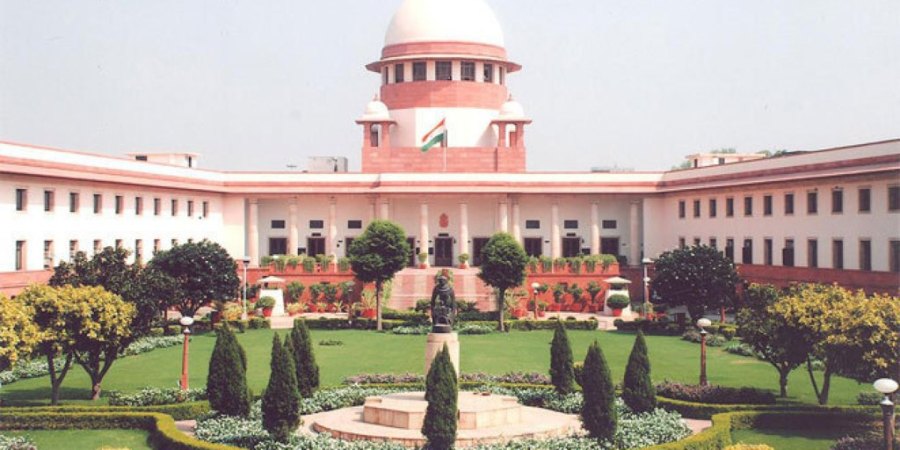
The Ministry of Civil Aviation vide Order of even Number dated 21.05.2020 has issued general instructions and detailed guidelines and also Specific Operating Guidelines (SOP) for stakeholders, in connection with the recommencement of domestic air travel from 25th May, 2020.

As per Para. 1(j)(v) of Annexure-II to Order dated 21.05.2020, the passengers have to give a declaration to the effect that they have not tested COVID-19 positive in last two months.

Also it has decided that with regards to the evolving COVID-19 situation in various places where new cases that have been cured which are to be found in large numbers, a need has been felt to update this provision to avoid
hardships in the matter of air travel to the persons cured/recovered from COVID-19.

The Ministry of Civil Aviation has accordingly decided to update the above provision with a clause which is as follows
:- “I/we have not tested COVID-19 positive in the last three weeks (COVID-19 recovered persons fulfilling this condition will be allowed to travel upon showing a COVID-19 recovered/discharged certificate from any institution dealing with COVID-19 subjects).

WEBSITES REFERRED:

  1. https://www.civilaviation.gov.in/sites/default/files/MoCA_OM_dated_29_06_2020.pdf
  2. https://www.123rf.com/photo_68627236_stock-vector-airplane-and-iconic-building-over-india-country-map-with-flag-colors-over-blue-background-vector-ill.html

SPITTING IN INDIA: A PUBLIC NUISANCE

 INTRODUCTION

As you are aware that Smoking/spitting tobacco is also a major public health hazard which contributes to the spreading of communicable diseases like Tuberculosis, Swine Flu, Avian Flu and Pireumonia disease. As India combats the novel coronavirus and ensures the safety of every citizen, the government is making stringent laws to help control the spread of COVID-19 pandemic.

On that note and in view of this there are new laws that can come into force as a bane to many Pan Masala lovers. The national directive on lockdown conditions issued by the Home Ministry on Wednesday, April 15 states that the violators will be punished. It states that “Spitting in public spaces shall be punishable with a fine. There should be a strict ban on the sale of liquor, gutka, tobacco etc.” 

RELEVANT PROVISIONS APPLICABLE

Following are the sections under the Indian Penal Code, 1860:-

  1. Section 268 : Public nuisance:- a person is guilty of a public nuisance who does any act or is guilty of an illegal omission which causes any common injury, danger or annoyance to the public or to the people in general who dwell or occupy property in the vicinity, or which must necessarily cause injury, obstruction, danger, or annoyance to persons who may have occasion to use any public right.
  1. Section 269:- Negligent act likely to spread infection of disease danger­ous to life:—Whoever unlawfully or negligently does any act which is, and which he knows or has reason to believe to be, likely to spread the infection of any disease dangerous to life, shall be punished with imprisonment of either description for a term which may extend to six months, or with fine, or with both.
  1. Section 278 :- Making atmosphere noxious to health:—Whoever voluntarily vitiates the atmosphere in any place so as to make it noxious to the health of persons in general dwelling or carrying on business in the neighbourhood or passing along a public way, shall be punished with fine which may extend to five hundred rupees.

WHAT’S IN IT?

The Union Ministry has made public spitting an offence under the Disaster Management Act. With a daily rise of novel coronavirus, the patients around the country and the State Governments are ensuring strict laws. On that note, Himachal Pradesh police have issued a law for people who spit in public will now be charged with attempt to murder.

The reason for this measure that not only Himachal Pradesh but various states around the country are banning spitting because of its scientific reasons. Medical professionals state that droplets expelled in the air by infected patients via coughing or sneezing are the common means of transmission of the virus. As such, spitting is more dangerous as it can carry the pathogen to a longer distance than even coughing or sneezing could. 

CONCLUSION

Other states in India have their own take when it comes to public spitting. In states like Uttar Pradesh, pan masala products are banned to discourage spitting. Other states including Bihar, Telangana, Haryana, and Assam, have banned smokeless tobacco products and public spitting. Furthermore, the Brihanmumbai Municipal Corporation imposed ₹1000 fine on anyone caught spitting in public. So everyone, do be careful and refrain from spitting in public.  

BOOKS REFERRED

  1.  Pillai’s, P S A Criminal Law Lexis Nexis 13th edition 2017 p. 537

WEBSITES REFERRED

  1. https://curlytales.com/you-can-now-be-charged-with-attempt-to-murder-if-you-spit-in-public-places/#:~:text=The%20national%20directive%20on%20lockdown,%2C%20gutka%2C%20tobacco%20etc.%E2%80%9D
  2. http://pbhealth.gov.in/6e.pdf
  3. https://www.ijlmh.com/wp-content/uploads/2019/04/Law-Relating-to-Public-Nuisance-in-India.pdf
  4. https://indiankanoon.org/doc/734195/#:~:text=%E2%80%94Whoever%20unlawfully%20or%20negligently%20does,with%20fine%2C%20or%20with%20both
  5. https://indiankanoon.org/doc/209076/
  6. https://indiankanoon.org/doc/1368265/#:~:text=278.,extend%20to%20five%20hundred%20rupees.
  7. https://www.dreamstime.com/no-spitting-sign-white-background-illustration-no-spitting-sign-illustration-isolated-white-warning-sign-red-circle-image137114866

N.E.O.N

N is ‘N’OBLE

E is ‘E’NERGY

O is ‘O’BEDIENT

N is ‘N’IFTY

  • “N” OBLE, Law is a ‘Noble’ Profession as its purpose is to conserve and preserve the moral sanctity that binds the society and it protects and upholds the law, this is depicted in Article 14 as per the Constitution of India, the State shall not deny to any person equality before law or the equal protection of the laws within the territory of India.
  • “E” NERGY, we are full of ‘Energy’ and ‘zeal’ due to Lawyers providing legal aid to all as “Justice delayed is Justice denied”.
  • “O” BEDIENT, as Lawyers  we appear in Hon’ble Court in person at certain place, time and aid the person who seeks justice when the  summons, notice, order, or proclamation proceeding issued from any public servant who is  legally competent to the same as stated  under Section 174 of Indian Penal Code.
  • “N” IFTY meaning Skilful. An Advocate is effective and good in proffering legal assistance, apart from being an avid Listener and an effective communicator.

Books Referred:-

  1. Universal Law Publications :- The Constitution of India by P.M. Bakshi,  15th edition
  2. “Professional Bare Act”:- Indian Penal Code

Websites Referred:-

  1. https://www.lexico.com/en/definition/nifty
  2. https://www.legistify.com/indianpenalcode/details/ipc-section-174-non-attendance-in-obedience-to-an-order-from-public-servant/
  3. https://pib.gov.in/newsite/mbErel.aspx?relid=118011
  4. https://www.hiclipart.com/free-transparent-background-png-clipart-pvuct

TRUTH AND HONESTY: TWO SIDES OF THE SAME COIN

As the saying goes by “Honesty is the best policy”. The power of truth can be known from the fact that nobody, not even the greatest liar in the world, has the courage to say that he is telling a lie or that truth is not good. A man who tells a lie is like a criminal who has committed murder and is pleading not guilty even though all the facts, circumstances and evidences point towards the criminal. And the thing which a criminal pleads guilty for a crime which the hardened criminal is pleading not guilty yet it is that criminal who has committed the murder, one must always be truthful and honest no matter how henious the crime is and also avoid lying and being dishonest.

And when the truth is known, that person is terribly upset and highly afraid. An ordinary criminal may be afraid of fine, imprisonment or other punishment. But if the liar i.e the criminal happens to be a well-known popular figure, that person may be afraid of losing his popularity or reputation. In this respect, truth also becomes an acid test for our inner strength or bravery.

Many people may not be afraid of losing their life with a bullet but there must be few who have the courage to face the bullet of truth. A truly brave person sticks to the truth in all the circumstances. But many succumb to pressure or fear of torture or death like a criminal might. Joan of Arc, a young girl of eighteen, who refused to bow before the church and the government and embraced death by being burnt but she stuck to what she believed to be the truth.

WEBSITES REFERRED

  1. https://www.shareyouressays.com/english-essays/342-words-short-essay-on-the-value-of-truth/3031
  2. https://www.123rf.com/clipart-vector/honesty.html?sti=lj06uh9mvspsnqs4rk|
  3. https://www.dreamstime.com/stock-images-truth-not-lies-board-shows-honesty-image25845894

Electricity (Amendment) Bill 2020: A Gist and Overview

INTRODUCTION

Recently, the Central government has introduced the Electricity (Amendment) Bill 2020 to amend various provisions in the Electricity Act 2003.

The Electricity Act, 2003 (the “Electricity Act”) was enacted to consolidate the electricity laws in India. While the Electricity Act facilitated significant private investments, market development, and adoption of transparent tariff mechanism etc., the power sector has been facing various developmental hurdles for some time.

Consequently, to address various issues which have been highlighted by the industry and to further reform the power sector, the Ministry of Power (“MoP”), Government of India, released the draft Electricity (Amendment) Bill, 2020 (the “Amendment Bill”) on April 17, 2020, to amend the Electricity Act. 

The MoP has requested the stakeholders to provide their comments and suggestions on the Amendment Bill within 21 (twenty-one) days from the date of release of the Amendment Bill (i.e. by or before 8 May 2020).

The electricity amendment seeks to end the malaise in the production, distribution and transmission. Further, it seeks to revive investments and promote growth in line with the vision of a $5 trillion economy in the near future

KEY OBJECTIVES:

Following are the key objectives of the Electricity (Amendment) Bill 2020:

  1. Ensure consumer centricity
  2. Promote Ease of Doing Business
  3. Enhance the sustainability of the power sector
  4. Promote green power

THE DIMENSIONS 

There are two dimensions, these are as follows:

  1. Static Dimension: The Electricity Act, 2003 and Privatisation of Discoms and;
  2. Current Dimension: UDAY Scheme, T&D Losses, Need for a new amendment and Important features.

WHY IS THE NEW AMENDMENT REQUIRED

  1. Some of the provisions of the Act have become dated and archaic and needs an update. 
  2. Policy modifications are needed to address some recurring issues and to promote further commercial incentive for private players to enter the market in the generation, distribution and transmission of electricity.
  3. Measures need to be augmented to ease the financial crunch of the Discoms.
  4. It is necessary to promote a legal and administrative ecosystem which harbours special attention to renewable energy.

ISSUES INVOLVED

  1. Cost reflective tariff has been a concern for states like Telangana which provide free electricity to the farming sector.
  2. Formation of ECEA has also been criticized as a move towards centralization of power.
  3. Recognition of franchisees and sublicensees might open the sector to private players.

IMPORTANT FEATURES OF THE DRAFT

  1. The bill enables state as well as central power regulators to specify transmission charges under open access (earlier both functions were with the central commission).
  2. The draft law provides for the introduction of power distribution sub-licensee or franchisee, which would not require a separate licence from the state commission.
  3. The Electricity Act would be applicable to the entire country, including the Union Territories of Jammu and Kashmir and Ladakh.

KEY AMENDMENTS  

  1. National Selection Committee:  Instead of the separate Selection Committee (for appointment of Chairperson and Members of State Electricity Regulatory Commissions-SERCs), there is a proposal to set up a National Selection Committee.
  2. Introduction of Direct Benefit Transfer: Direct Benefit Transfer will be beneficial for both the State Governments and as well as Distribution Companies. It will be beneficial for the State Government because it will ensure that the subsidy reaches the people who are actually entitled and the State Government gets clear accounts of the amount given as subsidy.
  3. National Renewable Energy Policy: India is a signatory to the Paris Climate Agreement. It is therefore proposed to have a separate policy for the development and promotion of generation of electricity from renewable sources of energy. The policy prescribes a minimum percentage of the purchase of electricity from renewable sources of production. It seeks to give special attention to hydropower.
  4. Sustainability: To address this problem, the Amendment has prescribed a period of 60 days to adopt the determined tariffs. Failing such a timeline of 60 days, the tariff would be deemed to be accepted.
  5. Cost Reflective Tariff: To address this problem, the Amendment has prescribed a period of 60 days to adopt the determined tariffs. Failing such a timeline of 60 days, the tariff would be deemed to be accepted.
  6. Payment Security:  It is proposed to empower Load Dispatch Centres to oversee the establishment of adequate payment security mechanisms before dispatch of electricity, as per contracts.
  7. Ease of Doing Business:
  1. Establishment of Electricity Contract Enforcement Authority (ECEA): The Authority will enforce performance of contracts related to purchase or sale or transmission of power between a generating company, distribution licensee or transmission licensee.
  2. Central Electricity Regulatory Commission (CERC) and State Electricity Regulatory Commissions (SERCs) do not have powers to execute their orders as a decree of a civil court.
  3. Cross Subsidy: The Bill provides for the SERCs to reduce cross-subsidies as per the provisions of the Tariff Policy.

8. Open Access: Under the Electricity Act, open access can be granted to a consumer on the payment of surcharge and wheeling charges as determined by the relevant State Commission. However, such charges do not include charges for intra-state transmission and interstate transmission of power. In view of this, the Amendment Bill proposes to add such transmission charges, wherever applicable, to the existing charges (i.e. surcharge and wheeling charges). 

Further, it is proposed under the Amendment Bill that open access surcharge and cross-subsidies will be “progressively reduced” by the State Commission in the manner provided in the tariff policy – Section 42 of the Electricity Act envisaged reduction in cross-subsidy as per discretion of the relevant State Commission, however, the Amendment Bill seek to take away the discretion of the State Commission for determination of cross-subsidy and post amendment the State Commission will be bound to follow the mandate of the Central Government.

Miscellanous:

  1. Strengthening of the Appellate Tribunal (APTEL): It is proposed to increase the strength of APTEL to at least seven to facilitate quick disposal of cases.
  2. Penalties: In order to ensure compliance of the provisions of the Electricity Act and orders of the Commission, section 142 and section 146 of the Electricity Act are proposed to be amended to provide for higher penalties.
  3. Cross Border Trade in Electricity: Provisions have been added to facilitate and develop trade in electricity with other countries. and Lastly 
  4. The Distribution sub-licensees: To improve quality of supply, an option is proposed to be provided to Discoms to authorize another person as a sub-license to supply electricity in any particular part of its area, with the permission of the State Electricity Regulatory Commission.

WEBSITES REFERRED:

  1. https://powermin.nic.in/sites/default/files/webform/notices/Draft_Electricity_Amendment_Bill_2020_for_comments.pdf
  2. https://www.drishtiias.com/daily-updates/daily-news-analysis/electricity-amendment-bill-2020
  3. https://induslaw.com/app/webroot/publications/pdf/alerts-2020/InfoAlert-Highlights-of-the-Electricity-Amendment-Bill-2020-April-2020.pdf
  4. https://www.manifestias.com/2020/05/15/electricity-amendment-bill-2020/#:~:text=The%20Union%20power%20ministry%20has,power%20generation%20companies%20(gencos)
  5. https://www.indiathinkers.com/2020/04/electricity-act-amendment-bill-2020.html

EUTHANASIA LAW IN INDIA

WHAT IS EUTHANASIA?

The word Euthanasia originiates from the Greek words: Eu (good) and Thanatos (death) and it means “Good Death”, “Gentle and Easy Death.” It is also known as Mercy killing. It was first used in a medical context by Francis Bacon in the 17th century, to refer to an easy, painless, happy death, during which it was a “physician’s responsibility to alleviate the ‘physical sufferings’ of the body”.

According to the World Medical Association Euthanasia means:

Deliberate and intentional action with a clear intention to end another person’s life under the following conditions: The subject is a competent informed person with incurable illness. Who voluntarily asked for ending his life. The person who is acting knows about the state of this person and about his wish to die and is doing this action with an intention to end life of this person. The action is done with compassion and without any personal profit.

TYPES OF EUTHANASIA

Following are the types of euthanasia:-

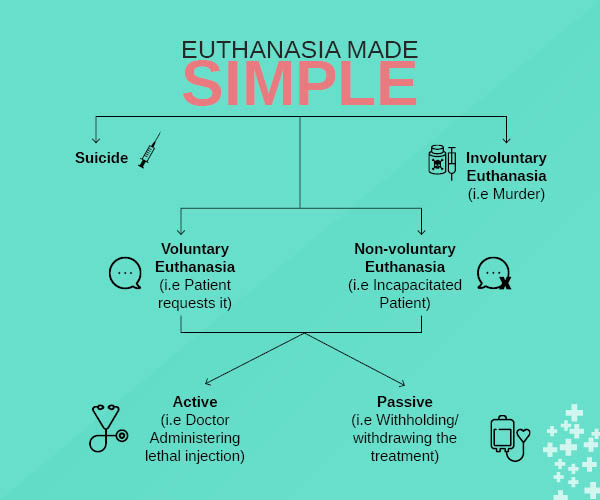
  1. Passive or Negative euthanasia means the withdrawal of necessary medical treatment with the deliberate intention to hasten the death of a terminally-ill patient is a must. In order for the death to be voluntary, the medicines which aids in saving lives will be discontinued so that death is brought about voluntarily. A common practice of this is a patient signing a ‘Do Not Resuscitate’ (DNR) document. It implies discontinuing or not using extraordinary life sustaining measures to prolong life. Others include act of omission such as failure to resuscitate a terminally ill or incapacitated patient (e.g. a severely defective new-born infant).

2. Active or Direct euthanasia means when one induces death by giving or providing medication or treatment leading to death.

3. Voluntary Euthanasia, sometimes called “assisted suicide”, is used in cases where the sufferer has made it clear that s/he wishes to die and has requested help to bring this about. When the euthanasia is practiced with the expressed desire and consent of the person concerned

4. Involuntary Euthanasia is one which is conducted without the consent and where an individual makes a decision for another person who is incapable of doing so. E.g. prolonged comma, old age, etc. It occurs when no consent or wish to die is expressed by the sufferer. When the euthanasia is practiced against the will of the person and also involuntary Euthanasia is one where patients can express a wish to die but don’t (this equates to murder).

5. Non- Voluntary Euthanasia is one where patients cannot express a wish to die. Patients who are in comas, infants, profound mentally retarded, severely brain damaged, cases of extreme senile dementia, those who cannot communicate for other reasons.

LEGAL VALIDITY IN INDIA

Passive euthanasia is legal in India. As per the 2018 ruling, The Supreme Court has held that the right to die with dignity is a fundamental right.

WHAT IS THE LEGAL POSITION AND TRENDS OF EUTHANASIA IN DIFFERENT COUNTRIES?

The Laws around the world vary greatly with regard to euthanasia, and are constantly subject to change as cultural values shift and better palliative care, or treatments become available. It is legal in some nations, while in others it may be criminalized. In some countries there is a divisive public controversy over the moral, ethical, and legal issues of euthanasia. Those who are against euthanasia may argue for the sanctity of life, while proponents of euthanasia rights emphasize alleviating suffering, and preserving bodily integrity, self-determination, and personal autonomy. Countries which have legitimized euthanasia are The Netherlands,Belgium, Oregon and Washington in the USA. In Switzerland only assisted suicide is legal. In India as mentioned above only passive euthanasia is legal.

LANDMARK CASE IN INDIA

Aruna Ramchandra Shanbaug vs Union Of India

FACTS OF THE CASE

Aruna Shanbaug, a nurse who was assaulted by a ward boy, and went into a vegetative state in 1973. • She remained blind, deaf, paralyzed and in a vegetative state till her death in 2015. A Writ Petition was filed by Pinki Virani claiming that her right to life guaranteed by the constitution had been violated. The petition was rejected by the court after medical examination. However, later in Aruna Ramchandra Shanbaug vs Union Of India, the Supreme Court in March 2011 held that passive euthanasia could be given a nod in case of exceptional circumstances and under strict monitoring of the apex court.

On 7 March 2011 the Supreme Court of India legalized passive euthanasia by means of the withdrawal of life support to patients in a permanent vegetative state. The decision was made as part of the verdict in a case involving Aruna Shanbaug, who had been in a Persistent Vegetative State (PVS) for 42 years until her death in 2015.

The Supreme Court of India specified two irreversible conditions to permit Passive Euthanasia:

  1. The Brain-Dead for whom the ventilator can be switched off.
  2. Those in a Persistent Vegetative State (PVS) for whom the feed can be tapered out and pain-managing palliatives be added, according to laid-down international specifications.

GUIDELINES LAID DOWN BY APEX COURT:

The following guidelines were laid down: A decision has to be taken to discontinue life support either by the parents or the spouse or other close relatives, or in the absence of any of them, such a decision can be taken even by a person or a body of persons acting as a next friend. It can also be taken by the doctors attending the patient. However, the decision should be taken bona fide in the best interest of the patient.

Even if a decision is taken by the near relatives or doctors or next friend to withdraw life support, such a decision requires approval from the High Court concerned. When such an application is filled the Chief Justice of the High Court should forthwith constitute a Bench of at least two Judges who should decide to grant approval or not.

A committee of three reputed doctors to be nominated by the Bench, who will give report regarding the condition of the patient. Before giving the verdict a notice regarding the report should be given to the close relatives and the State. After hearing the parties, the High Court can give its verdict.

WHAT ARE THE ARGUMENTS FOR AND AGAINST EUTHANASIA? 

Benefits of Legalizing Euthanasia (Arguments For)

  1. Provides relief to extreme pain.
  2. Relieves physical, mental and psychological pain for the patient and the family.
  3. Provides more facilities and funds for other patients needing medical treatment and attention.
  4. Euthanasia provides a way of relief when a person’s quality of life is low.
  5. It is another case of freedom of choice – the right to commit suicide.
  6. People should not be forced to stay alive.
  7. Speedy termination of physical and emotional suffering.
  8. Organs can be put to good use.
  9. Relieve mental suffering for the patient and his relatives.

Consequences of legalizing Euthanasia (Arguments Against)

  1. The ‘living will’ could be misused
  2. Religious beliefs could pose as a conflict in few scenarios
  3. The person might not be well informed of the possible treatment options
  4. Guidelines of the content of ‘living will’ has to be standardized
  5. Euthanasia demeans and devalues the sanctity of human life.
  6. Euthanasia can become a means of health care cost containment.
  7. Euthanasia will become non-voluntary.
  8. Euthanasia would not only be for people who are terminally ill.
  9. It amounts to murder and it is only God who can take away human life.
  10. It destroys life, which has potential that could be yet unknown to the patient, doctor or the family members.
  11. It discourages scientists who are looking for a cure for incurable ailments.
  12. An irreversible damage

WEBSITES REFERRED:

  1. https://www.slideshare.net/digitaltejas/euthanasia-types-arguments-for-and-against
  2. https://www.slideshare.net/altacitglobal/euthanasia-law-in-india
  3. http://racolblegal.com/euthanasia-an-act-of-mercy-killing/
  4. https://www.latestlaws.com/articles/euthanasia-the-contemporary-art-of-dying-by-aman-kumar-and-richa-hudilwala/
  5. https://byjus.com/free-ias-prep/euthanasia-or-mercy-killing/
  6. https://www.123rf.com/photo_109776197_stock-vector-red-flat-line-banner-trends.html
  7. https://www.slideserve.com/nami/euthanasia-mercy-killing
  8. http://racolblegal.com/the-dharma-jurispudence-of-the-supreme-court/

Pen, paper and Digital

Preferably pen and paper!
Writing my heart out always remain special. It has a special impact.
We cannot miss out on digital writing as it has its own perks …
(For eg. It can be organised, shared really fast. Plus customisation can be made.) Because in digital you never get the statisfaction of crushing and throwing out in the air when writing went not as expected. I feel the same. Writing by hand has a special impact. It releases some happy hormones in my brain (or maybe I’m a little cuckoo), but we don’t always have a pen and paper by our side so yeah.

But when it comes to formulating the story I use my book. Scratching away each sentences make me feel like God, who is changing the fate of the characters in it . That depends upon the energy bar. If I am highly energized and enthusiastic, I prefer using pen and paper mode, so as to put everything in my writing piece. Mostly I prepare the drafts on my laptop. Then I go through them and make the edits. If I don’t find something fitting in, I write it on paper and analyze what changes could be done.

Love

I watched as my sister knelt down beside me
Tears running down her face calm face
I watched as she gently raised me up to her chest and the loud scream coming out from her mouth
People ran past us to hide for their dear lives
Then she detached me from chest and place my head on her lap
Gently rub my face with her hand and tears continue to flows down like a waterfall
My lifeless body on her lap and keep saying words but she seems not to care
And suddenly she start singing calling out my name softly
I could remember the song, our parents sings the song a lot to us
“Oh Dil-ara!! You are bold, you are beautiful,oh my Dil-ara! If the stars were your dream,I will give you my whole sky,oh my little princess”
Just then,her breath caught in her throat and the tears continue to stream down
People keep running to hide
But my sister is here with my lifeless body
A body that knows no wounds nor pain
Seeing with me, I believe that her love is so boundless towards me.

20 Tips for Mastering the Art of Public Speaking

When my class was asked to describe our greatest fear- some said spiders while some said ghosts. But when the fingers were pointed at me and the entire class was staring at me for an answer, I froze. That is exactly when I knew my greatest fear was public speaking. The best way one can get over their fear is by practising it hence I made it my goal to be an ace at it. Today I’m a teacher and I speak in front of my students with ease and charisma.

The Wolf of Wall Street': A howling disappointment

Here are some of the tips that helped me through my process of practising public speaking:

1. Know your audience.

If you are speaking in front of an audience, there is usually a reason. Know who you are speaking to and what they want or need to take away. If it’s friends and family, entertain them. If it’s a corporate event, teach and inspire them. Knowing the demographic of the audience is imperative.

2. Rehearse, rehearse, rehearse.

Nothing becomes muscle memory unless you practice relentlessly. If you have a big speech coming up, make time every day to practice. Prepare your goals and the content well ahead of time. This can be done while driving, exercising, in the car, on a plane…anywhere.

3. Practice with your friends and family.

Once I know the content, I like to add a little bit of distraction to test how well prepared I really am. Turn on the TV or rehearse while pushing your child in the swing. Anything that adds a little more challenge. While taking a shower or even while dinner with your parents.

4. Maintain your own style.

Different events will often require a different approach or style. Sometimes reading a prepared speech is fine. But know it backward are forward so you’re not staring down at the pages the whole time. Some use notes. Others prefer to be 100 percent scripted and memorized. If that’s your style, memorize the content so well that you can go off script if needed — and so you don’t sound like you’re reciting a poem. Use the proper approach for the appropriate event.

5. Know the environment.

Know the venue where you will be speaking. Get there well ahead of time. Walk the room. Walk the stage. Get a feel for the vibe of the environment so you are more comfortable when its “go time.”

6. Test all equipment.

Nothing sucks more that last-minute technical difficulties. Avoid adding even more stress by testing any and all equipment and audio visual functions ahead of time. And have backups.

7. Practice in front of a mirror.

Practicing in front of a mirror is a good way to learn the proper amount of body motion, hand usage and facial expressions.

8. Take every opportunity to speak.

The only way to get better at anything is to do it all the time. Rehearsing is good, but nothing compares to actually getting up in front of an audience and doing it for real.

9. Practice body language and movement.

Remember, communication is much more about tone and body language than the words we say. The words of course matter, but emphasis comes with movement and body language.

10. Slow down.

We have some great sayings in the SEAL teams: “slow is smooth, and smooth is fast, ” and “don’t run to your death.” Nothing shows nerves more than racing through your presentation. If you want to impact the audience in a meaningful way, make sure they actually hear what you are saying. Slow it down.

11. Make eye contact, but avoid heavy body movements.

This one is very important, and it doesn’t matter how big the audience is. Make eye contact with as many people as possible. It makes the audience members feel like you are speaking directly to them. And don’t just stick to people in the first couple rows. Look at the people in the back too.

12. Know your material.

If your goal is to become a thought leader or actually teach the audience something, only a truly authentic understanding of the material will get you there.

13. Take long pauses.

Similar to slowing things down, make a point to take long pauses. And make them longer than you even think is appropriate. It can have a great impact on emphasizing key points and emotionally connecting to the audience.

14. Practice tone and voice modulation.

Don’t just eek your way through a speech using the same tone and volume. Tone and projection add a layer of entertainment and help keep the audience fully engaged from start to finish. These too must be practiced religiously.

15. Use humor and emotion.

It doesn’t matter what you are talking about. There is always a place for emotion or humor, or both. I find self-deprecating humor to work the best. And if you are starting to get emotional, so what? Use it. The audience may not remember everything you said, but they will remember how you made them feel. 

16. Mentally prepare.

Find time during the hour before your speech for some solitude. Get your mind right. Clear your head. If it’s five minutes before, just relax. The time for making sure you know the material perfectly has passed.

17. Exercise before you go on.

It’s almost impossible to feel stress and anxiety after a good workout. If you have the time, exercise. The closer to your speech, the better. It’s also a good time to practice. I like to rehearse while running or swimming.

18. Project confidence.

The more you project confidence, the more confident you are likely to feel. Get out there and own the room. Even if you are terrified. Fake it. Look people in the eye and command their attention.

19. Don’t go over the allotted time.

When in doubt, go under the allotted time. Less is sometimes more. But never, ever, go over. It’s poor speaking etiquette and shows you are not prepared. It’s also disrespectful of the agenda for the event. Again, just practice.

20. Ask for feedback.

Most of us don’t like to ask for feedback, especially when we know the response may include some constructive criticism.

However feedbacks if taken positively can do wonders for your speech improvisation especially from a third-party point of view.

Why Are We Clapping? - A History of Applause

Speaking is a great way to connect with people and a skill we all should master.

It’s a must for leaders and managers. It’s a must for sales. It’s basically a requirement for all entrepreneurs and business leaders.

So go on and practice this skill which will be your life saver!

Invites for the Frontline COVID Warriors: A special feature of the I-Day 2020 celebrations in India this year

Ministry of Home Affairs | MyGov.in

INTRODUCTION

The Ministry of Home Affairs (MHA) has issued the guidelines for the Independence Day celebrations that will take place amid the cloud of novel coronavirus pandemic. Due to this unfortunate and extraordinary situation the Independence Day celebrations on the 15th August will be subdued and low key.

THE LETTER

Joint Secretary Anuj Sharma has written a letter to all States and Union Territories sharing with them how the celebrations should be carried out in these testing times. In the letter preventive measures like social distancing, wearing of masks that are absolutely imperative have been mentioned in order to make sure that the celebrations are carried out without any collateral damage.

“In view of the spread of Covid-19 pandemic, while organizing various programmes or activities for the Independence Day celebrations, it is imperative to follow certain preventive measures such as maintaining social distancing, wearing of masks, proper sanitization, avoiding large congregations, protecting vulnerable persons, etc.; and follow all guidelines related to Covid-19 issued by the Ministry of Home Affairs and Ministry of Health a Family Welfare,” the letter read. Hence one can assume and infer that all the functions organised countrywide will be deprived of large gatherings.

Happy 74th Independence Day Wishes India | 15th August 2020

CELEBRATIONS AT THE LAL QILA

The Ceremony at Red Fort consisting of the presentation of a Guard of Honour by the Armed Forces and the Delhi Police to the Prime Minister (Pradhan Mantri), unfurling of the National Flag accompanied by playing of the National Anthem and firing of 21-gun salute, speech by the Prime Minister, singing of the National Anthem immediately after PM’s speech, and release of tricoloured balloons at the end. This will be followed by “At Home” reception at Rashtrapati Bhawan. As regards holding of “At Home” reception at Raj Bhawan /Raj Niwas by the Governor/Lt. Governor on the Independence Day, the matter is left to the discretion of Governors/Lt. Governors.

CELEBRATIONS AT THE STATE LEVEL

A ceremony in the morning (after 9.00 AM) in the State/Union Territory Capitals consisting of unfurling of the National Flag by the Chief Minister; playing of the National Anthem; presentation of Guard of Honour by the Police including Para-Military Forces, Home Guards, NCC, Scouts, etc; speech by the Chief Minister; and singing of the National Anthem.

In view of Covid-19 pandemic, large congregation in the ceremony be avoided. It is imperative that social distancing norms, wearing masks, etc., are followed. It would also be appropriate that Covid-19 warriors like doctors, health workers, sanitation workers, etc., are invited in the ceremony as a recognition of their noble service in fight against Covid-19 Pandemic. Some persons cured from Covid-19 infection may also be invited.

CELEBRATIONS AT THE DISTRICTS, SUB DIVISIONAL BLOCS AND PANCHAYAT HEADQUARTERS

The Districts, Sub Divisional blocs, Panchayat headquarters will have to follow similar protocols as the states. In view of the COVID-19 pandemic, preventive measures such as maintaining social distancing, wearing of masks, proper sanitization, avoiding large congregations, protecting vulnerable groups, etc., and other measures as prescribed and recommended by the Ministry of Health a Family Welfare, are to be followed. It would be appropriate that frontline warriors and workers like the doctors, health workers, sanitation workers, etc., are invited in the ceremony as recognition for their noble service in fight against the COVID-19 Pandemic. Some persons who have been cured from the infection may also be invited.

Performance of Police/Military bands may be recorded at places of historic importance associated with the Independence movement; and recorded versions thereof may be displayed through large screens/digital media, during public functions and on social media.

Other functions of the day may include activities like planting of trees; inter-school/inter-college debates on digital platforms; online quiz contests/patriotic essay writing and poetry competitions; launching of any important scheme, singing patriotic songs/delivering patriotic talks by selected boys/girls on the social media; illumination of Government Buildings/State Bhawans, etc; thematic webinars; online campaign by NSS and NYKS centered around patriotic themes; or any other activity deemed appropriate by the State Government/Union Territory Administration befitting the occasion. Other innovative ways of celebrating Independence Day may be considered like propagating patriotic or national integration messages/songs through digital and social media platforms, sound shows/lighting of important public buildings, waving of National Flags by people at rooftops/balconies, etc.

“It would be appropriate that the theme of “Aatmanirbhar Bharat” is suitably spread and publicized amongst the masses through various activities/messages in the functions and on social media during Independence Day celebrations,” the letter signed off with.

WEBSITES REFERRED

  1. https://www.mha.gov.in/sites/default/files/IndependenceDay_24072020.pdf

2. https://www.indiatvnews.com/news/india/independence-day-celebrations-guidelines-covid-19-coronavirus-new-guidelines-mha-636649

3. https://www.ndtv.com/india-news/74th-independence-day-covid-warriors-to-be-invited-on-independence-day-government-to-states-2268156#:~:text=Prime%20Minister%20Narendra%20Modi%20will,Independence%20Day%20on%20August%2015

4. https://secure.mygov.in/group/ministry-home-affairs/

5. https://www.jaborejob.com/happy-74th-independence-day-wishes-india-15th-august-2020/

Zombies – A Myth or a Reality?

Have you watched the popular series – “The Walking Dead”? If you have watched it, you will definitely know what exactly I am talking about. If you do not know, I will just give a brief about it. It is a series about how survivors of zombie apocalypse are trying to escape and combat the threats from the zombies and how with time, human beings formed their own communities and groups and the rise of conflict between those communities. So basically this is a series about zombie apocalypse and how they are being termed as ‘walkers’ on earth.

So what exactly are these zombies? Do they exist for real or are they just a figment of imagination? From ages, zombies are being described as flesh eating corpse with a ravenous appetite, terrorizing on the grounds like a strong robot, looking to infest on flesh. Such creatures are almost dead and oozes every signs of inhumanity.

Are these new or have they always infested the earth? Well, history says that the stories of zombies first originated in Haiti culture, where the West African slaves were brought to work on Haiti’s sugar cane plantations. But they were treated so brutally, that their life or afterlife represents the zombie culture. Other says that the Ancient Greek Civilization was the first to experience this. In fact, many skeletons which were pinned down to ground using stones were unearthed, which kind of verifies their existence.

Who is prepared for a 'zombie apocalypse'? - BBC News
Zombie Apocalyse

But there do exists some true facts about the zombies and voodoo. Voodoo is practised as a religion in some cultures like Haiti where some people believe that zombies are people who are revived by a voodoo practitioner, Bokor. It is a concoction of herbs, bones, animal parts and especially ‘tetrodotoxin’ which is a deadly neurotoxin found in marine species, which if injected in high quantities can lead to paralysis and coma. It manifest zombie like qualities among the human beings. Thinking that infected person to be dead, they usually revive and thus rose the term ‘zombie’.

But is there even a bit of truth? Medical reports suggests so. One instance was that a person named Clairvius Narcisse, who was admitted to hospital due to acute respiratory problems in 1962, but later slipped into coma and being declared as dead, was buried later. 18 years later, a man goes to Angelina Narcisse and claims to be her brother. Upon verification by doctors, that he was buried alive, he was sent off to work in the sugar plantation.

Zombies might not exist as there have been no mention of these in Old Testament or New Testament but there have been mentions of resurrections of saints and sinners in Bible. So there is a very little evidence as to whether such zombies exists or if there is even a zombie apocalypse. Not only on religious books, since the eighteenth century, there have been various literatures of spirits and ghosts. Various movies were also made such as Night of the Living Dead and World War Z, just to name a few.

It is ultimately all about perception. Disasters have always caused such huge destruction and there is always this survival of the fittest psychology which goes among us. So it might be true that zombies do not exist, but then again who are we to judge history?

Performance Management lessons from LAGAAN

Released in the year of 2001, this sports-based iconic movie was based on a small number of people in a village in the Victorian India where they challenged the British for a game of cricket so as to avoid paying of taxes. The movie is an iconic one because it depicts how the protagonist, Amir Khan as Bhuvan took the responsibility to rescue his fellow villagers and how he taught them to play cricket. And the best part of the movie is that, how in spite of all the major and minor obstacles, Amir Khan won the game against the British and managed to secure an opportunity to not pay taxes for the coming three years.

That being said, this movie is quite extensively used by the B-Schools to teach about the various performance management lessons that can be derived from this movie. So after watching this movie again and following an extensive analysis, I have noticed certain instances which can provide exemplary examples of performance management. Below depicted are some of the instances:

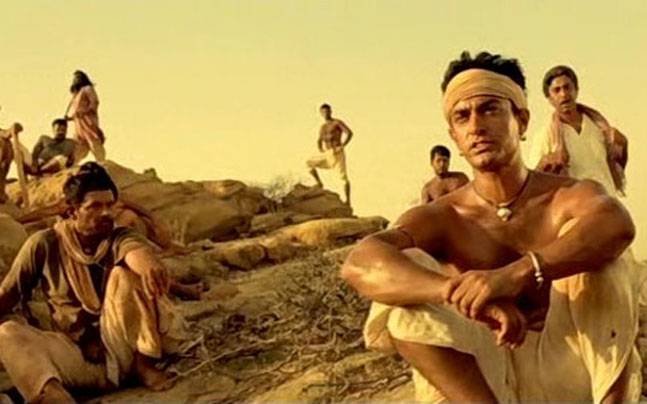
World Water Day: From Lagaan to Well Done Abba, films that ...
  1. At the time when the villagers were unable to pay back the taxes, Bhuvan took the responsibility of all the villagers and acted as a leader to carve out a way of glory for them.
  2. After challenging the British over a game of cricket, Bhuvan took it upon himself to learn the game and then to teach all the fellow members.
  3. During the selection of the cricket team members, Bhuvan believed in instilling diversity and inclusion policy. Kachra was selected in the team because of a deformity in his hand which made him a good bowler, in spite of all the caste based differences. Bhura was selected because he was an expert in running to catch his hens which was identified as a major parameter to catch the ball. Even the drummer who could not speak, was selected because he spent most of his lifetime playing the drums and hence had a good upper body strength. So from these instance, Bhuvan was recognized to identify the differences in the team which can be a source of competitive advantage.
  4. At the onset of the game, Bhuvan and his team did not have the necessary resources. But he was more concerned about the performance of his team than about the scarcity of resources. He gave directions to build the necessity from the scratch and that too by the local folks. Being a leader, Bhuvan turned out to be innovative.
  5. Bhuvan did not just made the team, but he did a good job in allocating roles and responsibilities to each of the team members based on their strengths.
  6. One of the note-worthy point is that Bhuvan set some measurable goals and he supervised and improved the performance of his team members. His mantra was pure hard work but with empathy and compassion, which shows a good sign of performance management.
  7. At the end of the movie, even when Kachra facing the last ball, Bhuvan did not give up. He ran for that single run but then it was turned out to be ‘no-ball’. So as a leader of a team, Bhuvan showed immense amount of trust in his team members and a ‘never give up’ attitude.

Lagaan is definitely a movie to watch if one is trying to understand what it is that a leader truly believes in and does. So next time when you watch this movie, you can watch out for these instances of performance management.

Source: Movie ‘LAGAAN’

Steps to finding the Right Career for You

While it will likely change over time, focusing on a certain career path can help inform your decisions about your professional growth as you gain skills and experience. It’s important to reflect on your interests, skills and career goals as you make certain life choices such as which school to apply for, which entry-level job is right for you, whether to get a post-graduate degree or specialized certification and more.

In this article, I will focus on how to identify your key skills and interests, match those qualities to a potential job field and start a career.

1- WRITE DOWN CAREER GOALS

Before selecting a career, start with self-reflection by asking and answering certain questions. Active reflection helps narrows your choices into something more specific.

Consider asking yourself:

  • What do I want from my career?
  • What are my core values?
  • What activities do I most enjoy, professionally or in my free time?
  • What are my interests?
  • What are my strengths and aptitudes? Soft skills? Hard skills?
  • Do I want to specialize in certain technical skills or take on management roles?

Once you answer questions like these (and any others that are important to you), you can better research potential careers paths. It’s also important to revisit your career goals as you grow personally and professionally to ensure your goals remain achievable and aligned with your interests.

2- Set one short term & one long term goal

Once you have narrowed down your options, consider establishing milestones for your career. Research where other people in your field are at five or ten years into their career, and make note of the job titles they have. Decide what title or advancements you want to have at these future points. Then research what you can do to reach those goals. You may need to undergo training programs, take on specific responsibilities or hold prerequisite positions.

By establishing career goals five or ten years in the future, you can plan based on what progress you should expect every year. Schedule time regularly to reflect on your career and goals.

3- Identify your Personality Type

A personality type is a set of personality traits that can be grouped together. There are multiple methods for discovering your personality type, many of which focus on your responses to different situations. Different personality types may naturally gravitate toward different interests and develop different strengths, including careers.

Different tests list common career choices for each personality type. If you take a variety of tests and one or two careers appear across multiple tests, that specific career is likely worth researching.

4- Did you enjoy your previous job/internship?

Your job satisfaction in previous roles can also help guide your career choices. Identify trends in your previous positions, such as focusing on a specific technical skill. Also, review your job history to identify positions that you felt fulfilled in.

5- Educate yourself with the Job requirements – skills, knowledge, interests,etc

Many jobs have specific education requirements for applicants and new hires, such as obtaining a high school diploma, completing a bachelor’s degree program or having a master’s degree. Some positions also require applicants to have their degrees in a specific field related to the position.

Review the education requirements for jobs you are interested in, and apply for jobs that accept your current level of education or research additionally degrees or certifications you may need.

6- Work on gaining expertise in the skills you already possess

Make a list of your current skills, certifications and areas of expertise. Also ask for feedback about your technical, interpersonal and people management skills from coworkers and colleagues. This evaluation can help you find careers that match what you are best at.

7- If you can choose your interest as your career,what will it be?

Depending on your personality, you may have interests that lend themselves to different careers. Examine your hobbies, past volunteer experiences and interests to identify activities or fields you enjoy. While this information is outside of a professional context, creating a list of activities you like can help you focus a career search. For example, you may enjoy a career in cybersecurity if you enjoy logic puzzles, or you may enjoy a traveling sales role if you like meeting new people.

Use this knowledge to apply for short-term positions or volunteer opportunities to explore new career options. This first-hand experience allows you to test your suitability for a career. If you are currently in school or have a job, consider taking a course or certification program that is required for a field that interests you. This experience can help you determine if the career’s skills and content are something you enjoy.

8- Consider your salary needs

Depending on your lifestyle, you may require a certain salary. Find average salaries by job title, company and location on salaries. This can be a good starting point for determining how much money you may have when first starting out, as well as your earning potential after you’ve gained a certain amount of time and experience. While salary certainly does not equal an engaging, satisfying job, it is an important factor to consider when mapping out your career path.

Most frightening moments

MOMENT 1:

The doctor said I had three more hours.
I think I was stabbed, I don’t remember much. Nevertheless, I was at my home. I was going to take a bath. Something didn’t add up. I then woke up
I still felt the pain. Fear gripped me.
I was frightened that this might come to pass

MOMENT 2:

Dogs were crying, Cricket was on peak
Ticking of clock, Subtle BREATHING
Silence EVERYWHERE, Not in my heart, it was beating, STILL postures, Pointed look of eyes, Somewhere in the air
LIFE was LOST.

MOMENT 3:

I had never been more frightened than when I noticed I was walking alone and felt someone followed me. I hurriedly climbed the stairs with bags full of weekly groceries and went straight into the kitchen. No one are at home back home and I was expecting my father and mother in some time from their evening walk and as usual would expect the soup and salad immediately, followed with regular dinner. I suddenly felt silence all over and heard noise from my lift but ignored it. The fear wasn’t subsiding, I entered my room to safe guard myself . To my horror, It was my parents who are in the lift.

MOMENT 4:

I have never been more frightened than when, I remember was a kid playing at home, my mumma was taking afternoon nap and suddenly when I opened window I saw a big cat which was about to attack me.
That dreadful and cruel look of cat is still in my mind and always reminds me of that incidence whenever I see a cat.
“Ailurophobia is now part of my life”

MOMENT 5:

I had never been so frightened than the day I was standing alone among the gushing crowd of people! I felt as if I’m alone as I missed my 3 years old younger brother in the exhibition!

I still remember my promise to my aunt, “Don’t worry aunt, I will take care of him to the fullest! The exhibition might be crowded but my eyes will be fixed on him… Please send him with me!”

But now I feel like I can’t move to search for him. The feel of ‘he is gone forever’ never leaves my anxious heart! Nobody is here for me among the hundreds around me! My God! Am I still alive?

TRANS FAT: METABOLIC POISON

Quotes about Trans fat (29 quotes)

Fats are mostly just a chain of carbons, usually about 12-16 carbons long. Normally each carbon had a single bond to the carbon before and after it and to two hydrogens (four bonds total).

Saturated fats have this design on every single carbon. It’s called saturated, because it is saturated with the maximum possible hydrogens attached to it.

Unsaturated fats are missing some of the hydrogens and have a second bond between the carbons missing those hydrogens. Since double bonds don’t allow the bound atoms to rotate these fats can either line up with the rest of the chain or it creates a permanent Kink in the chain. The kinked ones are called cis and the straight are called trans. Trans only happen in large quantities when we manipulate them, and not much in nature. It’s specifically partially hydrogenated oils that result in trans fats in any notable quantity, as fully hydrogenated oils results in saturated fats only.

As far as how they effect human health, they generally behave in a similar way as saturated fats, except for the extent. This is because they are straight like saturated fats and enzymes that work with saturated fats also latch onto trans fats, but can’t get past the double bond resulting in them taking much longer to break down.

There are list all, the things trans fats do in the body, but in general terms they are negatively effect blood pressure, raise LDL cholesterol (the bad kind), and seems to increase the risk for heart disease and diabetes.

It must also be noted that amount is an important factor as a tiny amount, such as what you encounter from natural foods, doesn’t have too much of an effect. It’s only the higher levels of trans fats of partially hydrogenated oils that seems to be too much for the body to take care of.

According to experts, trans fats should be avoided completely. The World Health Organization even advocated a ban on trans fats in food, as they would pose an enormous health hazard. The following products contain many trans fats:

  • Baked goods such as croissants
  • Cookies
  • Chips, flips, popcorn
  • Fast food
  • Ready meals like French fries and pizza

The list of ingredients of finished products provides information: The descriptions ” vegetable fat, partially hardened” or “unsaturated fatty acids, contains hardened fats ” stand for trans fats. In order to avoid this, you should also take care when shopping to avoid declared vegetable fat as hardened, partially hardened or hydrogenated. When frying and deep frying, you should use clarified butter, extra virgin olive oil, peanut oil or refined oils from corn, sunflowers, peanuts, soybeans and rapeseed. 

Now the question, government should ban the use the ban the use of the Trans-Fats in food items.

This is not only the government, but I think it is us, who should the first corrective step in this matter. We must ourselves understand the bad of Transfats on our health try to improve the awareness of common man on the subject to avoid Transfats contain food.

Trans Fat Free Vector Art - (5 Free Downloads)

Above is the Trans-Fats Free logo provides a boost to the ‘ Eat Right India’ movement of FSSAI.

The Eat Right India Movement is inspired by the vision of PM Narendra Modi for a ‘NEW INDIA’ by 2022 which is healthier with proper Nutrition and social security. Considering that the food plays an important role in insuring good health, FSSAI pledged to eliminate the Trans Fats from food supplements through its ‘Eat Right India’ movement.

pib] “Eat Right India” Movement – Civilsdaily

So now the question of banning Transfats will be a difficult step intially, but our government is definitely working on the subject, by bringing awareness in general that this type of fats are silent killer and should not be used. Lots has to be done before banning Transfats.

Below are some ways to avoid eating foods that contain trans fats:

  1. Eat more whole foods like fruits, vegetables, whole grains, beans, lean meats, fish, nuts, and lean poultry. Shop the perimeter of the grocery store and avoid inner aisles where you’re more likely to find processed foods that may contain trans fats.
  2. Cut back on consumption of processed foods. Eat these foods less often and in smaller portions.
  3. Not all processed foods contain trans fats. When you do eat processed foods, avoid processed foods known to contain trans fats such as chips, cookies, donuts, icing, cakes, biscuits, microwave popcorn, crackers, fried fast foods and frozen pizzas.
  4. Read food labels and avoid foods with partially hydrogenated oil listed as an ingredient.
  5. Avoid stick margarine and vegetable shortening. Swap this for olive oil, grape seed oil, canola oil, soybean oil, corn oil, or sunflower oil when baking or preparing meals at home.
  6. Whether dining in or out, avoid fried foods. Choose foods that are baked, steamed, broiled, or grilled.
3 Ways to Avoid Trans Fats - wikiHow