Assam Floods: Causes and Solutions

Brahmaputra is one of the largest river of the world. it flows through china, India and Bangladesh and then merges with the Ganges, and then flows into the Bay of Bengal. The Brahmaputra is among the world’s top five rivers in terms of discharge as well as the sediment it brings. The river is known to cause havoc in the state of Assam during the monsoon season. The destruction caused by the flood is humongous as it affects the lifestyle of the people in a large way. The government has made some efforts but those efforts have not been successful in finding the solutions to the floods.

Almost every year the river causes flood in the state, making many people homeless and taking lives of many. This year almost 75 people have died due to the flood and a staggering 3 million people have been affected due to it till now. The flood also causes a lot of damage to the flora and fauna of the state. Nearly 95% of the area of Kaziranga National park is under water during these floods which causes the death of many animals in the National Park. It has been found that more rhinoceros have lost their lives due to the floods than poaching. The one horned Rhinoceros have been listed as vulnerable species in the IUCN red list , found only in Assam now. Also, many other animals like Elephant, Hog Deer and wild bear also die every year due to this flood.

There are both man-made and natural reasons behind these floods. The earthquake which cause the landslides are one of the many reason behind these floods as they send in a lot of waste and debris in the river which causes the riverbed to rise above the normal point. The soil erosion and the bank erosion are also an important reason in causing this flood as it has been estimated that nearly 10000 hectares of land is lost to bank erosion every year. The width of Brahmaputra is also increasing every year by substantial figure and has nearly doubled in the past century. Building of dams and encroachment of forest land has also caused the increase in the chances of flood every year.

The government has made embankments to control the floods, but many argue that making embankment causes more problems than solving them. the embankments cause water logging and more floods in the areas where the embankments have not been made because it makes the level of the river to rise. This can be seen from that no. of deaths and damage has not changed despite extensive embankments. Building embankments is only a temporary solution to the problem.

Some solutions have been suggested by the experts to deal with this situation of flood in the Assam. firstly, the government needs to improve the drainage system in the state, so that the problem of water logging can be solved. The government needs to make better safety alarm system which can alarm the people regarding the floods before hand. Also, the infrastructure which can withstand flood needs to built. Houses need to built above the flood level in the state. China which also suffers from lot of floods can also be looked upto as an example as it has been building “sponge cities”, in which instead of hard concrete, more permeable and green spaces are being used to soak up the rainfall. The same solution can be reached out in assam.

The Government need to find some innovative solutions to these floods because it is very disappointing that people are still dying from floods and the state has to deal with so much damage every year due to these floods, when we are living in 21st century. With the help of proper technology, we can create cities which can withstand floods. The media also needs to highlight the situation, so that proper attention can be brought out to this problem which can force the state to take this problem more seriously. It is hard to find a permanent solution to this problem. But, the government can at least try to find some solutions which can reduce the damages caused due to these floods to the minimum.

Juvenile Justice Act, 2015: Unconstitutionality of the Amendment

The unconstitutional amendment of Juvenile Justice Act, 2015 begins its contradictions from the initial provisions itself. The section 2(12) of the main Act states that a juvenile means a person who has not completed the age of 18 years and on the other side this amended version contradicts its own law as it states that children from 16-18 years of age can be tried as adult criminals. It also reflects how arbitrary it is on testified along with the tests under Art. 14.

The test of Intelligible differentia, another test under Art. 14, is found unreasonable too due to the logic and the reasons behind the Act. Firstly, it replaces the word juvenile with child in conflict with law which was supposedly more humane. But this very child in conflict with law is meant to be tried for adult offences and this inhumane idea is conceived by the Government. Furthermore, the terms child alleged to be in conflict with law and child found to be in conflict with the law are not defined clearly and are used interchangeably in the Act. It stands as a great flaw due to the general understanding of the evident difference between alleged to be and found to be.

In the second test, the nexus between the classification and the object is absent as the authorities have acted without following the procedure to unequal treatment. The object or the purpose of the Juvenile Justice Act is to provide care, protection and child friendly approach but the approach suddenly disappears towards the child between the ages of 16-18 years. The objective of Juvenile Justice Act is not being fulfilled as Juveniles are being treated as adult criminals and sent to the prison where they would be influenced to be more hardened criminals since the purpose of the Act is to protect the juvenile from committing further crimes and evidently not fulfilled with the amendment. Instead the government through this specific provision is giving a hand in converting the juveniles into hardened criminals unlikely of the main idea which stands to reform the juveniles so that they could be accepted into the society.

There is also a violation of fundamental right under Art. 21 as the rights of opportunity to be heard and right of fair trial are infringed. The right of the juvenile to be tried infront of the Children’s Court gets him infront of the Session court with the other hardened criminals and consequently, the degree of punishment is harsher.

Section 15 of the Act seeks to repeal and replace the existing Juvenile Justice Act, 2002 with a draconian and unconstitutional amendment which instead of providing care and protection to the children deems them as an adult in cases where the alleged commission of crime by them is heinous in nature. It seeks to punish the child in conflict with the law for the failure of the society at large in providing the child with adequate care and protection. Juveniles in conflict with the law are more capable of change given the fact that their brains are still learning. Honest efforts made towards rehabilitation — including visits by a mental health professional three-four times a month — will have a significant positive impact on them. Unfortunately, there is no psychiatric screening in Indian prisons. No mental health professional would meet the juvenile convicted in any case and would lead to its worser development, totally against the objective of the Act. Every child develops in different background factors and considering to bring most of them into a similar set would be unethical since their mental faculty would not be equal.

The provision does not necessarily decide on the child in respect to his psychological or social factors but only governs on his mental faculty while committing the crime. It is totally undermined by the government that the mental faculty actually develops through these factors. More often than not the children who are put into rehabilitation centres come through as a changed human being. Under the existing law of a child in conflict with law between the age of 16-18 years who were found to have committed an offence by Juvenile Justice Board, there was an arrangement of rehabilitation supposition that could be passed by the Board. This rehabilitation disposition includes admonition community service, imposition of fine, probation group counselling and an extreme measure of deprivation of liberty by way of placement of the child in the special home for three years. The same facilities however could take a drastic turn in for cases when they are handed over the sessions court.

There are many further circumstances under the Indian law a person under the age is not allowed to vote, is considered minor for entering into a contract, a girl of age less than eighteen years cannot give consent for sexual relationships, a child of age less than eighteen years cannot marry. Yet by the amended Act that child can be tried as an adult after a preliminary assessment, the child shall be presumed to have the knowledge and understanding of the alleged crime that he has committed. Such a scenario would be travesty of justice. The idea behind treating a certain age group as children is to protect the most vulnerable section of the society where the government would have analysed in such matters that they are not mature enough to deal with these things. It is unjust and against the well-established principle lex iniusta non est lex that states that unjust law is not a law.

 Section 15 of Juvenile Justice Act, 2015 is hence against natural conscience, unjustified and unconstitutional to which we hope, no child falls as prey.

FINITE SECULARISM?

INTRODUCTION

The word ‘secular’ is derived from the Latin word ‘saeculum’ which means a generation or an age or span of a century. The term arose from the European context of politics and derived from the attempt to prohibit the State and its property from the control of Church. A religious element was embedded in the meaning of word secular. In the Europe and other regions, secularism was closely related to the theory of progress. Over time the meaning of secularism has evolved and now the term secular means being ‘separate’ from religion, or having no religious bias. For many years the word ‘secular’ or ‘secularism’ was nowhere to be found in India (even though all the religions co-existed in harmony since ancient times). The foundation of Indian morality has been core unity, forbearance and even inter-weaving of religion. It is a definite fact that large population of Indians is associated to diverse religion lived in compassion. Slogans like – “Hindu Muslim Sikh Isaai, aapas mein hai bhai bhai(Hindus Muslims Sikhs and Christians all are brothers) are resonated down on the streets of India and binds us to moments of fraternity. This slogan expresses the essence of ‘secularism’. In year 1976 (after independence) the word ‘secular’ was added in the Preamble of the Constitution by 42nd Amendment Act. When the hon’ble Supreme Court declared the preamble as the basic structure of the Constitution of India, the word ‘secularism’ acquired a whole new status. Hence the Indian constitution stands for a secular state (there is no official religion of our country).

What is Secularism?                                                         

Secularism is a normative doctrine which seeks to realise a secular society. It is free from inter-religious and intra religious domination. It promotes freedom to practice their religion and equality between religions as well as within religions. As secularism is opposed to all forms of institutionalized religious domination, it challenges not merely interreligious but also intra-religious domination. The idea of secularism possesses a normative doctrine which seeks to realise a secular society, i.e., one devoid of either inter-religious or intra-religious domination. Put positively, it promotes freedom within religions, and equality between, as well as within, religions.[1]

CONTEMPORARY SECULARISM

Secularism is something which is argued since past and persist. Due to its direct relation with religion it is prevalent, pervasive and persuasive in community and human life. Society and culture of country evolves creating new issues and

Current Situation in India

The idea of Secularism assumes an essential job in India. Secularism here binds every one of the nexus following religion. Indian secularism remarks the connotation of godly and devout sentiment in life of human. It expects and hopes that no other religion has the confining or constraining framework of reflective knowledge; it allows all religions to discharge their scope under their true words.

The Constitution of India explicitly recognized Hindus, Muslims, Christians, Sikhs, and Parsis as different societies each with individual and free culture, pious activities and special laws. Treating the acknowledged religious societies as equals meant that they would enjoy more or less the same level of religious liberty. While religious practices and activities of religious societies were subject to few limits, it was said that the religious liberty of each of these societies would be equally conserved and defended.

India is known for its multiculturality as for its language and religion. The Indian subcontinent is the birthplace of four major world religions—Hinduism, Buddhism, Sikhism, and Jainism. According to reported 2011 census data, 79.80% of the population of India is Hindu, 14.23% Muslim, 2.30% Christian, 1.72% Sikh, 0.70% Buddhist, and 0.37% Jain.[2] Hereby, Hindus (inclusive of Sikhs, Jains and Buddhists) establish the majority and Muslims create a minority.

IS SECULARISM LIMITED TO HINDU-MUSLIM!?

Hindu- Muslim fights has taken place during historic period in India and are still continuing (Communal riots due to Aurangzeb’s religious policy in 17th Century and now the riots and protests against Citizenship Ammendment Act). Some major ones such as Bombay riots of 1993 and Gujarat riots of 2002 has led to death of 1500+ people across the country. 

Extensive issue between both the religions has always been Babri Masjid in Ayodhya, in 1992 which was claimed by Hindus that the mosque was erected over the birthplace of the archaic god Rama. Tens of Thousands people were evicted from their homes and there was tremendous annihilation of lives and casualties in the country due to this before the Supreme Court passed a neutral and satisfactory judgement in November 2019 in the case: M. Siddiq (D) Thr Lrs v. Mahant Suresh Das & Ors.

Today, considerable controversy on secularism is Anti CAA protests and riots in several states of the country. This Act seeks to grant Indian Citizenship to persons affiliated to Hindu, Sikh, Buddhist, Jain, Parsi and Christian communities on the ground of religious minorities persecution in states of Pakistan, Afghanistan and Bangladesh. As these countries have Muslim majority, they weren’t given citizenship under the Act. The enactment of such law of government was criticised by many and led to bisection of society on the basis of religion. Also the protests have led to the deaths of quite a few rioters, casualty to protesters and police personnel, harm and loss to public and private property, the confinement of hundreds of people, and termination of local internet and phone connectivity in specified areas. The Central Government in a preliminary affidavit point by-point replied to the criticism against the Citizenship Amendment Act (CAA) and pronounced India is constitutionally secular, and also notified the Supreme Court that the CAA does not infringe any fundamental right and provisions of the constitution and therefore, the query of infringement of constitutional morality does not have to originate.

Both of these religions has been and are engaged in a vicious cycle of gaining advantage or predominance over the other. In other words, both Hindus and Muslims have developed animosity and hostility against each other which is leading to antagonistic behaviour of people. Therefore, in order to maintain better circumstances in the religion based society of ours, further steps are taken such as proscription of practices of both the religions (untouchability, triple talaq, beef ban, proselytization etc.) which is a hefty secular normative attack on both the religions.

Indian secularism has two distinct and conflicting aspects, one is complete detachment between government and religion and the other that strongly appeal government to treat each religion without discrimination. Rajeev Bhargava has explained what secularism in the Indian setting calls for is the maintenance of a “principled distance” between state and religion. This does not mean that the state cannot intervene in religion and its affairs, but that any intervention should be within the limitations prescribed by the Constitution. Sometimes this might even call for differential treatment across religions, which would be valid so long as such differentiation, as Mr. Bhargava explains, can be justified on the grounds that it “promotes freedom, equality, or any other value integral to secularism.” But Indian state i.e. government has total intervention into the matters of religion through communal politics. In other words, vote bank politics is followed by the government and the political parties in the race to form the government. Even this has led to inundation of discrete political bodies for Hindu and Muslim community, be it Bhartiya Janta Party, Aam Aadmi Party, Indian National Congress etc. whoever is instigating the idea of ‘hindutva’ and so on.

CONCLUSION

Indian secularism is the by-product of a whole civilization, as a senior literary figure, Nayantara Sahgal, remarked recently: “We are unique in the world that we are enriched by so many cultures, religions. Now they want to squash us into one culture. So it is a dangerous time. We do not want to lose our richness. We do not want to lose anything . . . all that Islam has brought us, what Christianity has brought us, what Sikhism has brought us. Why should we lose all this? We are not all Hindus but we are all Hindustani.” As mentioned above it is important for us to understand that we all are Indians and not just only a Hindu, Muslim or Christian. A sense of brotherhood is important to ensure development and growth of our country. Otherwise if religious violence continues then for sure our country will be doomed.


[1]https://indianexpress.com/article/cities/mumbai/nayantara-sahgal-we-should-not-lose-our-hindustaniyat-5560427/


[1] https://www.thehindu.com/opinion/lead/the-secular-condition/article22347527.ece


The Third Gender: The Everyday Struggle as “Other”

Before the case of National Legal Services Authority v. Union of India affirmed the term ‘The third gender’, India had different expressions for people who tick on the ‘other’ checkboxes. The gender is defined as people who do not conform to the organic sex’s identification or conduct. After this ostracised gender went through derogatory behaviours and name calling, our society has finally changed a lot to accept their existence. But the acceptance is still bound by “what they are” and “how they are”. This estimated one million community has never got a ‘first class’ lifestyle. The disparities are not restricted to the societal stigma on their existence but also every day discrimination and denial of human rights.

The Constitution of India guarantees rights and protections to all humans in general. The only distinction in this regard are the reasonable restrictions except which no discrimination on the grounds of sex, religion, caste or creed is not tolerated. Even after the constitutionally guaranteed political and other benefits, the third gender community still finds itself in the same position. The issue that these laws are not implemented, that the gender finds itself more often than not without a job in the respectable positions is an unavoidable truth in which inequality is an everyday affair.

This particular issue took the light when Air India was brought to the court for refusing an airhostess job claiming she was a transgender and that the post was only reserved for women. The denial is an act which is banned by law. The question on how the gender forms a reasonable nexus with the description of job calibre is arbitrary and undoubtedly, is an infringement of equality under Article 14. The denial also violates Article 15 for infringing the prohibited discrimination on the basis of sex. Article 21 fnds as the personal dignity of the gender stands into question. The struggle as ‘other’ is not merely the name calling but also the opportunities since that lies as the only one through which the gender would be respected and could also afford to grow in their lives. Most of this gender related issues are not only connected to the societal issue but also because of their lifestyle due to the lack of resources and opportunities limiting them to only begging, which more often than not, is a bad business with no security.

When the Constitution sought to remove the untouchability issues, along with the guaranteed rights under Article 17, there were also reservations and job opportunities that the issue has almost been demolished and seen in only backward areas.

But a major issue that crosses between the blinking of an eye is the fact that the reservations bring lifelong recognition under the same society. The passing of Transgender Protection Act, 2019 starts on the wrong foot. The various instances where the Act does not take in the consideration of trans-activists puts the first question on the upliftment.

The most serious flaw that remains is the process of trans-people changing their documents to reflect the identity. The new law sets up a two-step process. Firstly, it requires the person to apply for a “transgender certificate” from the District Magistrate of the particular location. This specific part can be done on the basis of the person’s self-declared identity. Only for this step does the certificate holder gets eligible to apply for a “change in gender certificate,” which is to change the legally declared gender to a male or female. However, this second step requires the person to provide different documents such as surgery proof, issued by a hospital official, which is again sent to the District Magistrate for a second evaluation. It also requires the officials to be “satisfied with the correctness of such certificate.”

One important factor to notice here is that it sets an extraordinary amount of power with one government officer who might have the only power to abuse the position or arbitrarily “qualify” to the gender as required to be recognized as who they are. It also pressurizes people into medical procedures they might not want or might be comfortable with. Such a forceful act is in itself a fundamental rights violation made by the government officials.

Repetitively the Indian courts have long held that trans people deserve the government’s recognition on their own terms and with actions which are assimilated from their demands, without mandatory intervention or discrimination but the same has been dismissed.

Improvement in the status of the transgender community needs to be a collective effort in order to empower the discussed community in the workplace and to reduce the social stigmas which could also end up improving their economic position. Although the Act only puts an onus and does not place legal requirements on the people concerned, in view of the changing the dynamic status. However, preparing such an Indian workspace for an inclusive approach towards transgender individuals is going to be a continuing uphill task and accommodating such societal change of this magnitude is definitely going to be a slow process in India.

FIRING THE BLAME BULLET

The popular game PUBG has weapon attachments that reduces weapon recoil. It makes life easier for the players. Recoil is the backward movement of a gun when a bullet is discharged. It is helpful to know which attachments help players to shoot better and more effectively without hurting themselves in the process due to the tremendous force at which the shots are fired.

In real life when we point the gun at someone, how badly are we affected?

Well fortunately for us, in India, there exists some tight Gun laws except for the water guns’ kids play with during Holi and Gangsters. Hence here I talk about the abstract gun which fires the Bullets of Blame on others. Pointing finger at anybody who is in sight, was my favorite thing to do in any situation.

The blaming gun can also point upwards or inwards. When it points upwards, we blame the Creator for being unintelligent or uncaring or even non-existent. When it points inwards, we beat ourselves down with self-recrimination, “I am good-for-nothing,” ending up unnecessarily with inferiority complex.

How many of you, like me; are blamers? How many of you, when something goes wrong, the first thing you want to know is whose fault it is? Well Hello there, I’m the former winner of the Miss Blamer Pageant and the magnitude to which I blamed others with respect to everything that went wrong in my life was comical.

I’m in my house. I have on white slacks and a pink sweater. I’m drinking a full cup of coffee in my kitchen. I drop it on the tiled floor. It goes into a million pieces and splashes up all over me. And a millisecond after it hit the floor, right out of my mouth comes this: “DAMN YOU CHINA!” For purposefully making these cups so shiny and slippery. Now my entire kitchen is infected by the tiny pieces of ceramic (China clay). The kitchen has to be quarantined until I clean it up…or somebody else cleans it up, never mind.

Now as I have aged, I realized- I’d rather it be my fault than no one’s fault. BUT WHY? Cause it gives me some semblance of control. Blame is simply the discharging of discomfort and pain. It has an inverse relation with accountability. What is the difference? Well accountability by definition is a vulnerable process wherein I confide to you, “Hey my feelings were really hurt by the things you said/did.” Blaming is simply a way to express anger.

People who blame a lot seldom have the tenacity and grit to actually hold people accountable because we spend all of our energy raging for 15 seconds and figuring out whose fault something is. Blaming’s very corrosive in relationships and it’s one of the reasons we miss our opportunities for empathy. Because when something happens and we hear the story, we’re not really listening, we’re in the place where I was – making the connections as quickly as we can about whose fault it was.

SO, DO I START BLAMING MYSELF FOR EVERYTHING?!

In the spiritual path, self-blame is the most dangerous thing. Firstly, stop blaming yourself and others. We don’t have to point the gun at others or our own heads. Let us drop the gun and never pick it up, ever again.

Secondly, we need to come out of the Destiny’s Illusion. Never focus on what you can’t do, focus on what you can do. If we keep on focusing on what we can do- Then even if you believe in destiny, it will be a good one for you. Blaming your destiny will close doors to all the wonderful opportunities waiting for you.

A child runs a race with his full speed & energy and yet comes last in it. Losing the race was not his fault but taking part in the wrong race is definitely a mistake worth correcting. To simplify- Making a mistake is not your fault but doing it without your interest in it, is a mistake that can be rectified.

To solve the problem, we need; not a blaming bullet, but a helping hatchet. Not a blaming finger but a helping hand. Making mistake is in our nature. Acceptance of mistake shows our culture and correcting the mistake is progress. I do accept that spilling that damn coffee was my fault, however damn you CHINA for making the cup which broke and spread on the entire floor leaving my kitchen dangerous to walk on freely. * Gun drop * I meant MIC DROP…..phew!

Unconscious Bias

Have you ever been in a situation where you were blamed even for doing nothing? I am sure most of you have been in that situation. I have been there too. I was working in a multinational organization, about four years back. In the beginning I was a good performer and I delivered on all my deliverable, and that too following the SMART strategy, barring a few. There were times when I could not deliver but I always tried my best, depending on the situation. Now one day, my manager got promoted and she was replaced by another another lady from our team. And then things began to go south. Problems crept up, she began to find faults in everything I do, and she always had this intention to reprimand me in the team meetings.

Things just got worsened one day. A priority 2 issue came up at about 9 PM at night, just at the moment when we were about to leave. I informed her, despite all the differences but to my utter surprise, she remarked, “It is your fault. You are responsible for this. Don’t expect anything from me and I expect this to be solved latest by tomorrow morning.” I knew something like this would happen but I never imagined the utter intensity of the remark. Moreover, when I analysed the situation, I found out that I was never responsible for the issue in the first place. One of my team mate, in fact a senior team member missed to pay attention to the issue a month back, due to which the client had to send it as a priority 2 issue. That was it. The next morning, when my manager came, I explained everything to her, but she was clouded in her own judgement to even listen to me and understand.

That was simply the case of unconscious bias. Because of past incidents and events, her judgement was clouded to let her think straight and logically. Unconscious bias was the main reason which affected her thinking and making the rightful decision. But what she failed to understand is that this little judgement of her can have profound effect on the hiring, motivation and retention decisions. In our day to day interaction, we might not be even aware of when such kind of bias creeps into our decisions and plays havoc in our mind. As per recent news, such unconscious bias can create a turnover impact of INR 22000 per associate. Surprising, isn’t it?

Unconscious Bias

Now when we talk about unconscious bias, there are multiple instances and multiple effects of such bias and each of it has its own term. A few of them are:

  1. Affinity Bias – When we come across a person who is similar to us, we tend to give positive response to him. It seems like we tend to identify ourselves with that person.
  2. Halo Bias – Because of some praiseworthy and commendable actions of the past, we tend to see that person in the positive light and admire all of his actions even though he might not have quite lived up to expectations in the present.
  3. Perception Bias – It is the tendency to form stereotypes and assumptions about certain groups which makes it difficult to form an objective opinion about individual members of that group.
  4. Horn Bias – Because of a negative incident in the past, all the present judgement gets clouded by that feeling.
  5. Confirmation Bias – Tendency to seek out evidence that confirms our initial perceptions and ignoring contradictory information.

These are some of the biases which creeps into our decisions without even our knowledge. Managers should always be neutral which looking at the present situation and not to base the eventuality of the decision based on some past incident. One way to do this is to critically evaluate all the options, put forward by everyone and also to engage a third-party to challenge those options. In this way, our decisions will not be clouded and will be a blessing for everyone.

Referring to the situation which I faced, it was Horn Bias and it could have been easily avoided if she had taken the high road to listen and to communicate with me. But nevertheless, there is always a scope for one to learn in one’s life.

Source: https://builtin.com/diversity-inclusion/unconscious-bias-examples

Economic cost of COVID-19

On 12 January 2020, the World Health Organization (WHO) confirmed that a novel coronavirus was the cause of a respiratory illness in a cluster of people in Wuhan City, Hubei Province, China, which was reported to the WHO on 31 December 2019.
The case fatality ratio for COVID-19 has been much lower than SARS of 2003, but the transmission has been significantly greater, with a significant total death toll.
Indian prime minister Narendra Modi has announced lockdown in the country to fight against the deadly virus. Indian economy is witnessing a huge loss because of COVID 19.

Economic impact

The economic impact of the 2019–20 coronavirus pandemic in India has been hugely disruptive. World Bank and credit rating agencies have downgraded India’s growth for fiscal year 2021 with the lowest figures India has seen in three decades the since economic liberalization in the 1990s. The Indian economy is expected to lose over ₹32,000 crore (US$4.5 billion) every day during the 21-day-lockdown which was declared following the coronavirus outbreak. Up to 53% of businesses in the country will be affected Supply chains have been put under stress with the lockdown restrictions in place; initially there was a lack of clarity in streamlining what is an “essential” and what isn’t. Those in informal sectors and daily wage groups are the most at risk. A large number of farmers around the country who grow perishables are also facing uncertainty. Various businesses such as hotels and airlines are cutting salaries and laying off employees. The live events industry has seen an estimated loss of ₹3,000 crore (US$420 million).
In India, with a share of almost 90 per cent of people working in the informal economy, about 400 million workers or 40 crores in the informal economy are at risk of falling deeper into poverty during the crisis, according to ILO.

Let us have a look on the different sectors :

Unemployment Rate (of IT & other sectors)


While India does not have official high frequency labour market data, the unemployment rate put together by the Centre For Monitoring Indian Economy, or CMIE, shows a spike in the last week of March and the first week of April. The unemployment rate during the last week of March rose to 23.8 percent and stayed around those levels in the first week of April. The lockdown in India has left tens of millions of migrant workers . The coronavirus pandemic would have a debilitating impact on India’s tourism sector with the industry estimating an overall loss of Rs 5 lakh crore and job cuts for 4-5 crore people.
Of the total losses, the organised sector in the industry — branded hotels, tour operators, travel agencies which are the mainstay of the sector – may be hit the hardest with an estimated loss of around Rs 1.58 lakh crore, according to Confederation of Indian Industry estimates.

The industry body has said that branded hotel groups are set to lose as much as Rs 1.10 lakh crore, online travel agencies Rs 4,312 crore, tour operators (inbound and domestic) Rs 25,000 crore, adventure tour operators Rs nearly 19,000 crore and cruise tourism Rs 419 crore.
Consumer durables, automotive, auto components, white goods, capital goods, IT, startups and MSMEs sectors will be among the worst affected. The IT sector, which employs around 4 million engineers, is likely to witness around 5% job losses according to professionals.

About 1.5 crore people face job losses in India’s export sector following the cancellation of over half of the orders and a gloomy forecast for global trade due to the Covid-19 pandemic.

Electricity Consumption


With factories closed and power demand coming mostly from households, peak demand has plunged. The average demand during peak evening hours, i.e. 7 pm, contracted by 26.6 percent for April 1-10 2020 over last year, according to daily reports published by the Power System Operation Corporation Limited. Likewise, maximum demand during the day has seen a drop of 24.5 percent.

Consumption of Petroleum Products


With fewer vehicles plying on roads, consumption of petrol fell by 16.4 percent in March 2020 over a year ago, according to data from the Petroleum Planning and Analysis Cell. Diesel, consumed in factories and for plying commercial vehicles, saw a sharper hit as consumption fell by 24.2 percent year-on-year in March 2020. Analysts believe that fuel demand may fall by 2.3% in FY21.

PMI Barely In Expansion Zone
The two Purchasing Managers’ Indices complied by IHS Markit India showed slightly diverging trends. The Services Business Activity Index fell to 49.3 in March, down from February’s 85-month high of 57.5. The Manufacturing Activity Index saw a more modest fall to 51.8 in March, from 54.5 in February. This is because non-government services were the first to be hit even before a complete lockdown was announced. The Composite PMI stood at 50.6 in March compared to 57.6 in February 2020. A level above 50 denotes expansion, while a level below it suggests contraction.

Cargo At Major Ports


Cargo handled by Indian ports fell the most in five months, dragged down by a drop in liquid cargo and container volumes. Ports across the country handled 618.7 lakh tonnes of cargo in March, a decline of 5 percent over the year-ago period, according to data compiled by BloombergQuint.

Farm Arrivals


Farm Arrivals of agricultural commodities at key markets have fallen to a fraction of levels seen before a 21-day nationwide lockdown was imposed, data analysed by BloombergQuint showed. This, because of supply chain disruptions despite food items being classified as essential commodities. Data collated by BloombergQuint from Agmarknet, a government portal on agricultural marketing, showed a 15-76 percent decline in arrivals in the week of April 1-6 compared to the week of March 1-6. Overall, the total arrivals of major cereals, fruits and vegetables recorded across market centres fell to 3.09 lakh tonnes in the first week of April. This was 55.6 percent lower than arrivals seen a month ago. The drop in arrivals of agricultural commodities signals a disrupted supply chain ahead of the crucial harvesting season.

Manufacturing

Major companies in India such as Larsen and Toubro, Bharat Forge, UltraTech Cement, Grasim Industries, the fashion and retail wing of Aditya Birla Group, Tata Motors and Thermax have temporarily suspended or significantly reduced operations in a number of manufacturing facilities and factories across the country. Nearly all twowheeler and four-wheeler companies have put a stop to production till further notice. Many companies have decided to remain closed such as Cummins which has temporarily shut its offices across Maharashtra. Hindustan Unilever, ITC and Dabur India have shut manufacturing facilities expect for factories producing essentials.

E-commerce

In the third week of March, Amazon announced that it would stop sale of non-essential items in India so that it can focus on essential needs. Amazon has followed the same strategy in Italy and France. On 25 March, Walmart-owned Flipkart temporarily suspended some of its services on its e-commerce platform and will only be selling and distributing essentials. BigBasket and Grofers also run restricted services, facing disruptions in services due to the lockdown. Delhi Police began issuing delivery agents curfew passes to make it easier for them to keep the supply chain open. E-commerce companies also look for legal clarity related to what are “essentials. By this, they’re facing economic loss.

Stock markets

On 23 March 2020, stock markets in India post worst losses in history. SENSEX fell 4000 points (13.15%) and NSE NIFTY fell 1150 points (12.98%). However, on 25 March, one day after a complete 21 day lockdown was announced by the Prime Minister, SENSEX posted its biggest gains in 11 years, adding a value of ₹4.7 lakh crore(US$66 billion) crore for investors. On 8 April, following positive indication from the Wall Street that the pandemic may have reached its peak in the US, the stock markets in India rose steeply once again.

Tea


Due to logistical problems following the lockdown tea estates were unable to harvest the first flush. The impact of this on the second flush is not known. The entire Darjeeling tea based tea industry will see significant fall in revenue. Tea exports could drop up to 8% as a result.

Night lights


Night lights and economic activity are connected. In Delhi, night light radiance fell 37.2% compared to 1-31 March 2019. This was the biggest fall for any metro in India. Bangalore fell 32% while Mumbai dropped by 29%.

Chemical Industry


Some chemical plants have been shut down in China. So there will be restrictions on shipments/logistics. It was found that 20% of the production has been impacted due to the disruption in raw material supply. China is a major supplier of Indigo that is required for denim. Business in India is likely to get affected so people securing their supplies. However, it is an opportunity. US and EU will try and diversify their markets. Some of the business can be diverted to India which can also be taken as an advantage.

Auto Industry:
Its impact on Indian companies will vary and depend upon the extent of the business with China. China’s business no doubt is affected. However, current levels of the inventory seem to be sufficient for the Indian industry. If the shutdown in China continues then it is expected to result in an 8-10% contraction of Indian auto manufacturing in 2020.
Pharmaceuticals Industry:
Despite being one of the top formulations of drug exporters in the world, the pharma industry of India relies heavily on import as of bulk drugs. Due to the coronavirus outbreak, it will also be impacted. Textiles Industry:
Due to coronavirus outbreak, several garments/textile factories in world have halted operations that in turn affecting the exports of fabric, yarn and other raw materials from India.


Solar Power Sector:
Indian developers may face some shortfall of raw materials needed in solar panels/cells and limited stocks from China.

The real estate body Naredco has estimated that the sector would incur losses of Rs 1 lakh crore on account of COVID-19 and the subsequent lockdown and sought a $200-billion package from the government to kickstart the economy.

Estimate of economic losses

The Indian economy is expected to lose over ₹32,000 crore (US$4.5 billion) every day during the 21 day lockdown, according to Acuité Ratings, a RBI approved credit rating agency. Barclays said the cost of the 21 day shutdown as well as the previous two shorter ones will be total to around ₹8.5 lakh crore (US$120 billion).


On 27 March, Moody’s Investors Servicedowngraded its estimate of India’s GDP growth for 2020 from 5.3% to 2.5%. Fitch Ratings revised its estimate for India’s growth to 2%. India Ratings & Research also downgraded the FY21 estimate to 3.6%. On 12 April 2020, a World Bank report focusing on
South Asia said that India’s economy is expected to grow 1.5% to 2.8% for FY21. This will be the lowest growth for India in 30 years. The World Bank report said that the pandemic has “magnified pre-existing risks to India’s economic outlook”.


Confederation of Indian Industry (CII) has sought an economic fiscal stimulus package of 1% of India’s GDP amounting
to ₹2 lakh crore(US$28 billion). The fiscal package and fiscal policies approach is being compared to what has happened in other countries such as Germany, Brazil and Japan. Jefferies Group said that the government can spend ₹1.3 lakh crore(US$18 billion) to fight the impact of coronavirus. Bloomberg’s economists say at least ₹2.15 lakh crore (US$30 billion) needs to be spent. It is estimated that the loss to the tourism industry will be ₹15,000 crore (US$2.1 billion) for March and April alone. CII, ASSOCHAM and FAITH estimate that a huge chunk of the workforce involved with tourism in the country faces unemployment.

The government has to take some measurements to save the economy.

Positive impact of lockdown:

Although it’s becoming difficult to be in lockdown for several months due to coronavirus, we also know it’s for our better so let’s focus at its beneficial influence in our life in a number of different ways.

Personally to me that is the biggest chance we can get to improve for ourselves. To look into our shortcomings or weaknesses that we are lacking. To create us more qualified for our mission our future so that any moment we come out after lockdown everyone would see our entirely different constructive and inspiring transform. And that encourages me personally in a really massive way.

We will get much more chance to spend with our families, since most of us, because of our busy schedules, couldn’t even look at them. We also get the time to play sports, perform arts and crafts, prepare food and more, and so on. It’s a huge opportunity to mitigate tension and boost wellbeing while we’re with our loved ones 

It’s a wonderful opportunity to focus on our hobbies and learn about all sorts of different activities from our parents, which include with mom, we could learn to cook all kinds of new recipes, from dad, we could learn so much about his company, and so much time to sit down with our grandpa and grandma, which we are unable to do.

Digitalization has the greatest part in this lockdown for all of us. So we can’t appreciate for the  technologies to make our quarantine smoother. Modern users who used to consider it challenging to utilize this technologies are already being increasingly accessible to this technology, although existing users have started to use it more appropriately so efficiently.

Individuals are more interested in taking new lessons, watching webinars, pursuing online internships, etc. because of this beneficial opportunity. Schools, universities, private coaching are expected to offer continuous study hours without disrupting their instructional schedules.

It is also a massive support for financial institutions to provide resources and also to raise identification among their clients. Companies are embracing technologies during covid19 to increase knowledge and intern a daily interaction with their on-board consumers.

Government as a whole and its various departments at central and state level have increased the scope of technology through video conferences. In fact, we are all being addressed and updated by the government through this technology. 

Such technology also allows us sensitive of the amount of cases that have taken place in our world, as well as rendering useful apps like Arogya Setu by showing us the virus from our surroundings.This lockout has also had a significant effect on improving the emissions in our country. After the curfew, there has been a substantial drop in the air quality index throughout the region. 

After 30 years, the Himalayan Rane has been seen by people in Punjab more than 100 miles away due to the reduction of air pollution caused by the lockdown. eg; The famous Silk Board Junction known for the worst traffic jam is empty.

eg:south america”s most popular city Sao Paulo too is witnessing calm streets and clearer skies.

There has been a major decrease of air quality of Bangkok as a consequence of the closing of schools a month earlier owing to an rise in air pollution. Infection in India to Taj Mahal now appears so bright in healthy air that air pollution is that.The consistency of the water in the river Yamuna is so good that chemical waste and pollution are prevented in the flow.After years, though, the Swans are now heading to Venice because of this lockdown. Intact species can be seen roaming openly in various parts of the world while people are restricted by coronavirus lockdown.

These quarantine is also helping us greatly in maintaining our health:

Generally, because of our everyday schedule, we might get much less time to relax due to long distance travel, but instead, because of this lockdown, we ‘re not just having enough time to sleep, but infact more than enough  to complete our proper nap, as well as at night, we ‘re also able to go back to bed early because we’re not moving out to work because of the lockdown, which is a huge benefit in enhancing our safety.Now that we don’t drive too often so we can concentrate on our eating at home by getting home-cooked and balanced meals.We ‘re also finding more motivation to continue working out at home from exercise, therapy, fun Zumba and so on for our families to stay well together.

We may also make a major contribution to cleaning our house by ourselves, and often we do end up with items that we haven’t used for a long time, and other garbage that we can quickly throw away, which allows us to have a cleaner living space. Sweeping, mopping, dusting and sweeping are also opportunities to keep us healthy and consume our excess calories.

So thats why instead of stressing much on coronavirus cases or when will this lockdown endow should start investing time on things that really matters in our life and for our self growth because we don’t always get such opportunity to work on ourselves.

Surrogacy

What is Surrogacy

Surrogacy refers to a contract in which a woman carries a pregnancy “for” another couple. Number of infertile couples from all over the World approach India where commercial surrogacy is legal. Although this arrangement appears to be beneficial for all parties concerned, there are certain delicate issues which need to be addressed through carefully framed laws in order to protect the rights of the surrogate mother and the intended parents.

The ever-rising prevalence of infertility world over has led to advancement of assisted reproductive techniques (ART). Herein, surrogacy comes as an alternative when the infertile woman or couple is not able to reproduce. Surrogacy is an arrangement where a surrogate mother bears and delivers a child for another couple or person. In gestational surrogacy, an embryo, which is fertilized by in vitro fertilization, is implanted into the uterus of the surrogate mother who carries and delivers the baby. In traditional surrogacy, the surrogate mother is impregnated with the sperms of the intended father artificially, thus making her both genetic and gestational mother. Surrogacy may be commercial or altruistic, depending upon whether the surrogate receives financial reward for her pregnancy.

Commercial surrogacy is legal in India, Ukraine, and California while it is illegal in England, many states of United States, and in Australia, which recognize only altruistic surrogacy. In contrast, countries like Germany, Sweden, Norway, and Italy do not recognize any surrogacy agreements. India has become a favourite destination of fertility tourism. Each year, couples from abroad are attracted to India by so-called surrogacy agencies because cost of the whole procedure in India is as less as one third of what it is in United States and United Kingdom (10-20 lakhs).

Is Surrogacy Profitable for All

At a glance, surrogacy seems like an attractive alternative as a poor surrogate mother gets very much needed money, an infertile couple gets their long-desired biologically related baby and the country earns foreign currency, but the real picture reveals the bitter truth. Due to lack of proper legislation, both surrogate mothers and intended parents are somehow exploited and the profit is earned by middlemen and commercial agencies. There is no transparency in the whole system, and the chance of getting involved in legal problems is there due to unpredictable regulations governing surrogacy in India.

Although in 2005, ICMR issued guidelines for accreditation, supervision, and regulation of ART clinics in India, these guidelines are repeatedly violated. Frustration of cross border childless couples is easily understandable who not only have to cope up with language barrier, but sometimes have to fight a long legal battle to get their child. Even if everything goes well, they have to stay in India for 2-3 months for completion of formalities after the birth of baby. The cross border surrogacy leads to problems in citizenship, nationality, motherhood, parentage, and rights of a child. There are occasions where children are denied nationality of the country of intended parents and this results in either a long legal battle like in case of the German couple with twin surrogate children or the Israeli gay couple who had to undergo DNA testing to establish parentage or have a bleak future in orphanage for the child. There are incidences where the child given to couple after surrogacy is not genetically related to them and in turn, is disowned by the intended parent and has to spend his life in an orphanage.

If we look upon the problem of surrogate mothers, things are even worse and unethical. The poor, illiterate women of rural background are often persuaded in such deals by their spouse or middlemen for earning easy money. These women have no right on decision regarding their own body and life. In India, there is no provision of psychological screening or legal counseling, which is mandatory in USA. After recruitment by commercial agencies, these women are shifted into hostels for the whole duration of pregnancy on the pretext of taking antenatal care. The real motive is to guard them and to avoid any social stigma of being outcast by their community. These women spend the whole tenure of pregnancy worrying about their household and children. They are allowed to go out only for antenatal visits and are allowed to meet their family only on Sundays. The worst part is that in case of unfavorable outcome of pregnancy, they are unlikely to be paid, and there is no provision of insurance or post-pregnancy medical and psychiatric support for them. Rich career women who do not want to take the trouble of carrying their own pregnancy are resorting to hiring surrogate mothers. There are a number of moral and ethical issues regarding surrogacy, which has become more of a commercial racket, and there is an urgent need for framing and implementation of laws for the parents and the surrogate mother.

Two Types of Surrogacy

A traditional surrogate is a woman who donates her own egg and then carries the pregnancy. The surrogate’s egg is fertilized through artificial insemination with the sperm of the father or a sperm donor. Traditional surrogates are genetically related to the baby because their own eggs are donated.

A gestational surrogate is not biologically related to the child she carries. Gestational carriers become pregnant through the process of in-vitro fertilization, where an embryo created from the gametes (sex cells) of the intended parents are implanted in the uterus for the gestational period of 40 weeks.

Altruistic Surrogacy

In the approach of altruistic surrogacy (where no payment for a baby is made; only those to cover pregnancy costs), it is evident that willing surrogates would be acting in the Post-Conventional Level, at Stage Six. An altruistic surrogate performs the miraculous task of carrying a baby, then delivering and handing it over to the intended parents. To accomplish such a difficult venture requires compassion, a sense of self-worth and self-sacrifice. This is evident in the case of parents Luke and Amanda, whose surrogate mother Lisa displayed an awe-inspiring act of kindness through carrying their baby. This act illustrates Lisa’s characteristics of Stage 6 – despite the controversy the pregnancy may have caused, she was able to act upon her own morals to surrender a baby to deserving parents.

Conclusion

It seems ironical that people are engaging in the practice of surrogacy when nearly 12 million Indian children are orphans. Adoption of a child in India is a complicated and a lengthy procedure for those childless couples who want to give a home to these children. Even 60 years of Independence have not given a comprehensive adoption law applicable to all its citizens, irrespective of the religion or the country they live in as Non-Resident Indians (NRIs), Persons of Indian Origin (PIOs) or Overseas Citizens of India (OCIs). As a result, they resort to the options of IVF or surrogacy. The Guardian and Wards Act, 1890 permits Guardianship and not adoption. The Hindu Adoption and Maintenance Act, 1956 does not permit non-Hindus to adopt a Hindu child, and requirements of immigration after adoption have further hurdles.

There is a strong need to modify and make the adoption procedure simple for all. This will bring down the rates of surrogacy. Altruistic and not commercial surrogacy should be promoted. Laws should be framed and implemented to cover the grey areas and to protect the rights of women and children.

The good and The bad

We often judge or categorise people on the basis of there caste, colour, creed, gender and nowadays even on the basis of their region. Since the ancient times people have categorised the society into multiple categories and worked according to it, it’s 2020 and people are still not able to identify who are the good and the bad people. Let me be specific with this thing, I am talking about religion or caste, for instance: These days half of the society is against Muslims, because of some facts that I cannot mention, but why can’t they understand that a coin has two faces, and war always takes place between two people so this means that you cannot blame only one group, you can also be wrong, at least look at yourself before blaming someone else. Let me tell you some unknown facts in which Muslims have also set an example of humanity.

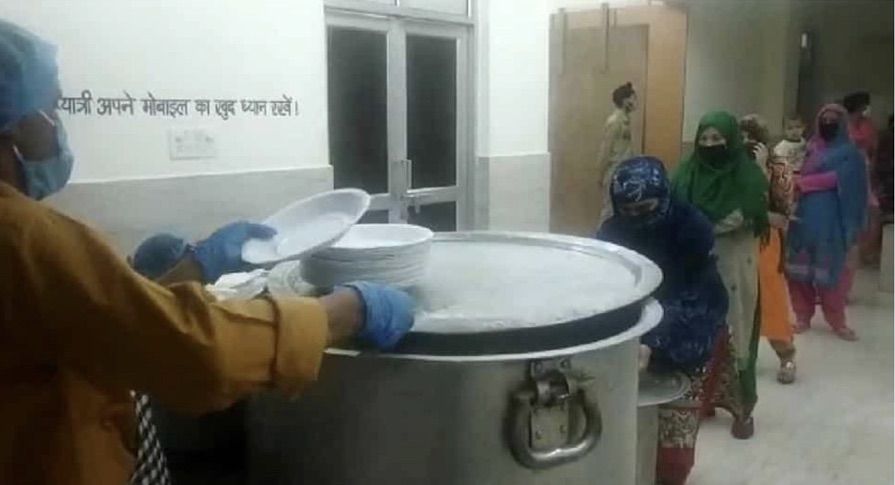
In Mumbai “Food- ek choti si asha” is a community led by Nikhat Mohamedy, who took an initiative to help the needy people in this pandemic and several others from different religion joined hands and came forward to help each other. Today the kitchen is serving 15,000 meals per day.

“This is about recognising the fact that we are all children of Adam and Eve, and feeding those brothers and sisters who are hungry and deprived is fundamental to expressing our humanity”, says Mohamedy.

Facebook.com

Another example of this is when Vaishno Devi Shrine Board served recipes to Muslims housed in quarantine centres on the occasion of Eid, March 25th. The Shrine Board said that they have been providing Sehri and Iftari meals to the Muslims after changing their schedule to meet the requirement of food for those fasting early morning and in the evening.

Hindustan times

Instances like these help me to understand that we should never judge people specially on the basis of religion or caste, we should always look upon them either as a good person or a bad person. If the world is good with you, be good to the world, if it is bad just turn your back, learn a lesson and focus on yourself, just don’t be like them. It is 2020 stop judging people, stop discriminating them, stop calling them with unwanted names, God has created people but it us who have separated ourselves into various divisions and factors. Just treat everyone equally and respect everyone. Smile and greet them be it a sweeper or a rich man. Play your part and leave the rest upon them. Change your sight of looking at the world, world will change itself automatically.

Global Diplomacy: The United Nations.

  • The name “United Nations” appears true only in books but in reality it seems like a contest for nations to prove their dominance and power individually. The diplomacy comes off to be biased. The World today is owned by corporate and the UN follows through. The actual role of united nations should be to rise above the competition and work as ONE UNITED PLANET towards climate change, global pandemic, poverty and financial slavery.

Though it is non-arguable that UN has helped bring forward issues like Women Empowerment, Poverty, Health, Education, etc. on a global platform. The real question is, are these issues solved or they have been piled upon by newer issues day by day.

But on a positive note, the UN has made progress in its peace making strategies and providing financial and healthcare aids to the countries in need. If not for this organisation then there would have not been a diplomatic relationship between nations and war would be the ultimate solution to all inter-nation problems.

Just because a medicine has side-effects does not mean it cannot be used for treating the illness in hand. Similarly, it is easy for anybody to make war but only the united front can make peace and prosperity!

  • The UN came from the minds of some of the renowned politicians of the western countries. When the super power nations felt their security and peace was under threat they collaborated with like-minded ones against the equally powerful nations. Powerful only in military and vengeance and the greed to conquer. According to human psychology (basic), a man desires power more than water for thirst.

From all the glorifications I read about this organisation, UN rose from the ashes of the war like a phoenix bird. Very beautiful and powerful bird- a phoenix-their tears have healing powers. One can say that United Nations came into existence to act as the panacea to diseases like violence, death and fading humanity.

But is the origin really important to determine its worth in the present scenario is something to ponder upon. Today UN works for a cause which it was originally built upon; irrespective of its results, – promotion of peace with its symbol the white dove soaring high, its wings flapping, freeing itself from the shackles of slavery of power, money, greed and hate.

Born in times of desperate times it can be regarded as an invention by man in the time of dire need. As we all know – “NECESSITY IS THE MOTHER OF ALL INVENTIONS!”

  • The UN Security Council consists of 5 permanent members and 10 temporary members all with a right to vote however only the permanent five have the right to veto. The word itself suggests that the council was made to resolve the security concerns of nations and to make peace among them.

 Today, the Council responds to three types of situations:

  • (1) chemical, biological, radiological and nuclear weapons proliferation; (2) international conflict; and (3) intra-state conflict. More recently, the Council has also developed a (4) cross-cutting and (5) quasi-legislative agenda.

The above decisions and powers in the hands of the council sounds safe however it is not the situation in reality. There has to be an expansion of the members instead of giving all the authority in the hands of the few. This will help in avoidance of partiality or constant disagreement that has been happening since the council has been formed. Though it has never successfully managed to make any notable reforms , it is one of our best option to resolve the security threats and war like situations in many countries and their estranged borders.

  • Human rights are the rights we are all entitled to irrespective of the place of birth or the time of birth. The core of United Nations is built upon the protection and service towards human rights and its associated freedoms. However due to international politics and superpower nations greed to stay on top of others and world domination has endangered the human rights of developing and under developed nations. Human rights have become a selective freedom provided to only those who can afford it without any restrictions. In my country citizens think that they are not worthy of having human rights as they think only the rich and developed nations are fortunate enough to have human rights that too the basic one’s. In recent events of racism ad discrimination on the basis of colour and financial status, what is the united nations enforcing laws to stop the fights  to avail basic human rights. People have to come on streets and protest later developing into riots in order to practise their rights and enjoy the freedom of being born as a human on this planet.
  • The united nations in the past has failed in crisis management because of the disagreement between it’s member nations and security councils. Due to the interference of the security council the  situation was aggravated rather than being put out or quite down. Rather than focusing on the crisis at hand it focuses on the political relations of that country with the members of the united nations and then it takes the necessary actions that too not quick or decisive but slow and of poor quality. However by putting the past back the united nations can improve on its crisis management skills by being in constant touch with the country and states local administration and education people on a personal and more localised manner rather than representing it as a political agenda or foreign policy which puts the civilians in a mind-set of confusion and feeling of unsafe and non trustable environment.
  • Today a question arises on the future of the United Nations and will it still prevail in the modern world where people are becoming rather too aware and will want a more secular council, one which works one which provides solutions, one which is actually true to its purpose of being formed.
  • During the 2020 Global Pandemic the true face of UN is being put to test and how it acts now to maintain peace among nations will say a lot about its existence in the future or will it be left to be just pages in history textbooks.

Just wishing for once if we had leaders who cared about the upliftment of the entire nation and not just the name of their political agenda and parties. The world needs educated and selfless leaders and hopefully in the future with my generation in the front we will represent a better council than these old ways and barbaric wars.

Are Parents able to do Work From Home?

Consider a 35 year old woman staying with her husband, 37 and her two children – aged 3 and 6 in Bangalore. She works as Project Manager in a top multinational corporation. Her husband is also working as a Project Manager, though of another firm. One of their child, aged 3, is starting with his kindergarten and demands for the utmost attention of his parents. And the other, aged 6, is starting her primary school. She has seen her parents working for most of the times and hence she is bit aware of managing herself.

Things were just going on as expected, until on 24th March, our Prime Minister called for a nation-wide lockdown. And then things just changed.

Should Work-from-Home Parents Hire Help with Child Care? | FlexJobs

Let me now give you a tour of how this woman spends her day. She wakes up to her alarm at 5:30 in the morning. Starting her day with 15 minutes meditation and yoga, she completely immerse herself in doing the household chores. Since the lockdown she has cancelled the maid, cook and nanny services. After her domestic work, she gets ready for the morning meeting with her team members and thus kick starts her 9 to 5 or rather whole day of work. But then wait, she has two children who also needs to get ready for their school. After attending a couple of meetings, she gets up, prepares her children, set up the desktops and login to their school webinar sessions. This continues till the work-chain is intervened by the lunch time. During the lunch hours, she needs to feed her younger one and at the same time, caters to the needs of her elder one. After that, they both go off to sleep and she resumes her work. Some days this workflow gets interrupted by unprecedented events such as poor internet connection, household emergencies and so on and so forth. Apparently as she described, the best time for her to work is about 2 hours in the afternoon and about 2-3 hours at night, when her children go to their beds.

Now this is just one instance. Apparently, this is what most parents are facing while they are working from home. Since the lockdown, they are not just a mom and an employee. Being a maid, a nanny, a mom, a cook, an advisor, a nurse, a repair-woman and a mediator, her life is not just only about being an employee. She is trying to manage everything, trying to subdue all the resistance and challenging all the obstacles on her path. While for others, Work From Home might be a boon or a blessing in disguise but for the parents, especially for a mother, it is a challenge, an everyday obstacle or rather, a bane. Managing her husband, her children, the household as well as her work has never been easy. For her, especially now, there is no distinct boundary between home and work. But the hardest fact of all is that, she was not prepared for this life-changing instrument.

Working from home and juggling family? Tips for WFH parents, from ...

It is of utmost importance that the employers should take this scenario into consideration and by partnering up with Human Resource Team, they should implement policies which can elevate the motivation level of mothers. A few suggestions from my end would be to give them few extra hours each day, especially during the afternoon to attend to her children. To allow them to complete their work by 6 in the evening, so that they can spend the night-time with their children. Parents should be allowed to attend the business meetings with their children and they should not be embarrassed if something comes up in between work which needs their utmost attention. Parents are having a very hard time, juggling in between work and home and employers should be empathetic while dealing with their situations.

Employers should be all big ears while listening to the issues of the parents. They should have high emotional intelligence and should be empathetic enough to not judge them, but to provide them with empathetic solutions. If a parent says that today she will not be able to work for the entire team because her child is facing some issues, the employer should give her the benefit of doubt, trust her and cooperate with her. It is very important for the employer to keep an open mind and be receptive to the problems. They should understand it takes a lot of courage, especially for the female employees to express their problem, fearing that she will be seen as weak and might be displaced. At this moment, the employer should not despise her, but to communicate with her and provide her with the necessary arrangements.

One things is very important which should always be kept in mind – Parents, especially mothers, can sacrifice for their children and hence the employers must give the required amount of importance to them. Especially the importance that the hard-working parents deserve.

Source: https://hbr.org/2020/03/a-guide-for-working-from-home-parents

Paternity Benefit Bill: The Gender We Talk About, The Benefit We Don’t

Amidst all the expectations around the male gender since his birth, there is secretly an expectation which every spouse hopes for. Time has developed since the only job of the male co-partner remained until the “sperm fertilised the egg”. The couples grow in love as they call themselves ‘pregnant’ and not just the technical one. The change in the ideologies was very well understood by the law presenters of the country. The idea to give chances to the father to be able to be completely devote to the upbringing of his junior. The benefits to be able to not lose work, not to miss deadlines but to be able to absorb the presence of a new member in the family.

‘Paternity Benefit Bill’ made rounds in the corner of the Parliament in 2017 with a view to benefit the fathers to oblige to their parental duties. It stated to give all workers, including men in the unorganised and private sector, to be benefitted with a paternity leave of fifteen days which could be extended up to three months.

The bill introduced stated for the employees to receive payment at the same rate as the average daily wage or even so, on a minimum rate of wage as revised. The same could be availed from an organisation if he had already served not less than eighty days in the last twelve months immediately preceding the delivery date of the child. However, the clauses require fathers with only less than two surviving children to opt for the same.

The gender benefits do not end here as the bill further stated to introduce proper guidelines in order to provide benefits to every man. A crucial affair that the bill brought was the Parental Scheme Benefit Fund. Under this, the government would create a fund specifically for purposes of paternity benefits where employers irrespective of genders would contribute. It was to meet the costs which would be induced through the availing of the particular benefit and the loss of work. Not to forget to mention on how the bill boldly announces that on death of the man during the following tenure, the nominee has rights of receiving payments till the end of it.

The beauty of the bill is not restricted to the birth fathers. The Bill allows the adoptive father of a child below three months of age or the legal husband of a mother in the cause, to be given the same benefits.

The objective of the bill is to ensure to the mother gets constant support in the process. It is not only through looking after the child together but when the father gets time with the child, the mother gets a chance to resume her work. Usually during the commissioning period, the mother develops a distant connection with her work until her child grows to handle himself. Such an act of love unfortunately also throws the woman out of the race of the market. Her positions degrade after she resumes and the restoration is more often than not, impossible. The option of choosing between the newborn and the profession is unjust and the bill certainly helps the attain the goal.

Through the bill, the perception of gender roles gets on hold. It creates an aura of gender equality at home. The shifts of looking after the child when divided among the two parents can lead to none of them having major deviations from their works to only allow the emotions of seeing their child grow into a form of their own reflection.  

Despite the benefits kept in front, a lot of issues persisted to not allow the bill to go further. The Maternity Benefit Act shifts the entire financial burden on the employers and through an introduction of system which would allow funds, the work place might discourage the driving force of the other objectives of women employment. Furthermore, the Paternity Bill necessitates to be extended to all sectors whereas the Maternity Act has only limited applications. It creates inequality, not only with the Maternity Benefit Act but also with the fact that the objective of the Paternity Bill is not merely paternal benefits but also equal opportunities to both the genders.

However, this creation of inequality is amendable.There can be similar benefits to both the parents and if it requires anything urgently, it is the mindset to evolve that both of it can co-exist.

Juvenile Justice

In order to achieve the objectives of the United Nations Convention on the Rights of the Child as ratified by India on 11 December 1992, the Juvenile Justice Act has been promulgated. The procedural guarantees applicable to children in conflict with the law are specified in this law. The current law addresses the problems of the existing law, such as delays in adoption processes, the high number of pending cases, the accountability of institutions, and so on.
The law also addresses the growing number of crimes committed by children aged 16 to 18 in recent years and by children in conflict with the law. Since January 15, 2016, the Juvenile Justice (Care and Protection of Children) Act, 2015 has come into force. It repeals the Juvenile Justice (Care and Protection of Children) Act, 2000.


Who is a juvenile as recognised by law?


In the Indian context, a juvenile or child is any person who is below the age of 18 years. However, the Indian Penal Code specifies that a child cannot be charged for any crime until he has attained seven years of age.


The Historical Evolution of Juvenile Justice Act in India


The United Nations Minimum Rules for Administration of Juvenile Justice of 1985 ratified by the United Nations Member States in Beijing in 1985, also known as the Beijing Rules, set out the rules, general principles and rules governing investigation and prosecution, adjudication, delivery, noninstitutional treatment and institutional treatment. Two essential concepts are explained in these principles. They are-

  1. Diversion– If children are treated in the criminal justice system, stigmatizing criminality increases the authority of the child, whose authority has been established from Rule 11 of the Criminal Code. Therefore, these principles aim at minimizing the contact of minors with the criminal justice system. To divert the child from the system, the second part of the rule legitimizes police officers, prosecutors and other authorities. This is why juvenile court judges do not wear the black coat and other judicial officials also try not to be as formal and put the child or minor at ease.
  2. Detention– A deliberate sentence imposed on minors but imposed for the shortest possible period and called “detention as a last resort”.

Juvenile Justice Act, 1986


Following the adoption of the United Nations Minimum Rules for Administration of Juvenile Justice of 1985, the term “minor” used in international law was coined for the first time. With the adoption of the Juvenile Justice Act of 1986, this change in terminology had a considerable effect on domestic law.


Before 1979, while Lakshadweep, Arunachal Pradesh, Tripura, Chandigarh and Sikkim had the Children’s Act but they did not apply it. In the case of Assam and Himachal Pradesh, although the laws have been enforced, no institution has been created to deal with the same thing and Nagaland does not even have a separate law for children. The Children’s Acts have been applied in 236 of the 334 districts in the case of other Indian states. In the mid-1980s, out of 444 districts, the number of children’s laws was increased to four hundred and forty-two.


As from October 2, 1987, the Juvenile Justice Act 1986 was applied by notification in all areas where it was extended. The need is for uniform laws over time for juvenile justice throughout the country and for the need to implement uniform laws that are fulfilled by the Juvenile Justice Act of 1986. In addition, there are States with no law in the area of justice of the sixteen, as well as uniformity at the national level. The Juvenile Justice Act, 1987 is nothing more than a full copy of the Children’s Act, 1960 which makes only minor and valueless changes here and there.


Juvenile Justice Act of 2000


The Indian legislator made a sincere effort in adopting the 2000 Act to inculcate the principles set out in the UN Conventions, such as the CRC, the Beijing Rules and the 1990 Rules. minors were promulgated to deal with offences committed by minors in a manner supposed to be different from the law applicable to adults according to the Supreme Court of India. The rehabilitation of the minor is the main concern of the Juvenile Justice Act, 2000 and not the adversarial procedure to which the courts are generally accustomed. A complete change in the mentality of those with the power to do so is necessary for its implementation, without which it will be almost impossible to achieve its goals.

Juvenile Justice Act of 2015


The increase in the number of crimes (including rapes) committed by juveniles (aged 16 to 18) was the main reason to introduce the new legislation. More retributive than reforming, the new law raised several questions. The new law is considered retributive because it contains provisions for teenagers who commit a heinous crime (punishable by 7 years or more) must be tried as adults but in the juvenile court. The child found guilty of the heinous crime is sent to a safe place until the age of 21, after which he is transferred to prison. The children’s court ensures it. This means that the benefit of a child is not granted to the minor when found guilty of committing a heinous crime.
Many protesters criticized the new law on minors for being unconstitutional. The Court noted that in Rule 4 of the United Nations Standard Minimum Rules for the Administration of Juvenile Justice, in the case of Pratap Singh v. the State of Jharkhand, one had to give all its importance to the moral and psychological elements even when responsible for a crime.
Many activists have raised another problem, namely that the 2015 law violates the spirit of article 21 (A), which states that a person can not be sentenced to a harsher sentence than that which would have been applied to him or her. by the law of the country. Under the new law, if a sentenced minor reaches the age of 21 but has not completed his entire sentence, he can be sent to prison if deemed appropriate. This new law undermines the spirit of Article 20(1).

What is the Institutional Care provided for the juveniles?

Rule 3 of the Juvenile Justice (Care and Protection of Children) Rules of 2007 states that “the institutionalization of a juvenile must be a measure of last resort after a reasonable inquiry and this also for the minimum possible duration.”


Observation Homes


Section 8 of the Juvenile Justice Act of 2000provides that the state government may establish and operate observation houses in each district or group of districts. A minor is temporarily received in these homes. For the duration of any investigation into them under the Juvenile Justice (Care and Protection of Children) Act 2000, minors are detained in observation houses. Minors are kept for a few weeks in the observation houses for the social study of minors.


Special Homes


Section 9 of the Juvenile Justice Act of 2000, states the state government may establish and maintain special homes in each district or group of districts. When the offence committed by a minor is proven and condemned by the competent authority, it is placed in the special home established by the state governments. In the special home, minors are treated for a long time or until their age ceases. Children’s Home
Section 34 of the Juvenile Justice Act of 2000 states “The state government may establish and maintain children’s homes in each district or group of districts.” The children’s home is a home where children in need of care and protection are placed on the order of a competent authority.


Shelter Homes


According to Section 37 of the Juvenile Justice Act of 2000, Shelters Homes as for children in need of urgent support. Shelter homes provide children with space where they can play and engage in creative activities. Children are engaged in music, dance, theatre, yoga and meditation, computers, indoor and outdoor games, etc, to spend their time productively. These creative activities are designed to encourage meaningful participation and interaction among peer groups.


What is the Non-Institutional Care provided for the juveniles?

Section 40 in The Juvenile Justice (Care and Protection of Children) Act, 2000 talks about the process of rehabilitation and social reintegration. The rehabilitation and social reintegration of a child must begin during his stay in a children’s home or special home monitoring organization.


Foster Care


Foster care is one of the non-institutional measures used for the temporary placement of children in accordance with Section 42 of the Juvenile Justice Act of 2000. Homeless, abandoned, neglected and deprived children benefit from a foster family. He replaces parents with others to provide care outside their own home. The child is placed in foster care when natural parents are faced with problems such as sentencing, life-threatening illnesses and being abroad.
The actual parents pay the corresponding price.


Adoption


Restoring family care for children deprived of their real family life Adoption is another non-institutional measure. Section 2(2) of the Juvenile Justice Act of 2015 defines adoption as the process by which the adopted child is permanently separated from his biological parents and becomes the legal child of his adoptive parents with all rights, privileges and responsibilities that are attached to a biological child.


Sponsorship


Another type of non-institutional measure called the Sponsorship Program provides additional assistance to families, children’s homes and special homes to meet the medical, nutritional, educational and other needs of children. Sponsorship is given to improve their quality of life. There are many types of sponsorship programs for children, such as individual-to-individual sponsorship, group sponsorship or community sponsorship.


After-care Organisations


The juveniles are taken care of in the organization of the aftercare, which is a transition home, after leaving the special homes and the children’s home. Minors in conflict with the law and children in need of care and protection, both categories are placed in aftercare organizations. Monitoring organizations allow minors to lead an honest and industrious life. Follow-up agencies are committed to the primary goal of enabling children and youth to adapt to society. In child care agencies, children and adolescents are motivated to stay in the wider society of their lives in institutional homes.

The increasing rates of juvenile crime in India in very concerning issue and need to be focused upon. Although government has laid various legislation and rules to stop the incidents of juvenile crimes but the present laws on juveniles is not creating a deterrent effect on the juveniles and thus the results are not fruitful and legislative intent is not accomplishing.

Hunger

Source: Google

According to Jayanta Mahapatra “hunger” is the expression of solitude. The poet in his poem “hunger” explores his memories about his life. And defines his loneliness and need for a company and spiritual intimacy. The material love he was deprived of kept searching for that.
Humans are born with hunger. The desire is endless. Once you get the thing you want, you need something else. The need is endless.
In the poem ‘ Hunger’, the poet defines two types of hunger, one is sexual hunger or hunger for spiritual intimacy and another is about real hunger, the hunger for food.
The poem is like a short story that unfolds the slice of life. The poet found himself before a fisherman who is willing to compromise his daughter to get relief from the hunger of food. The insensitivity in the word of the father was probably to sanctify his guilt. According to the poet, even prostitutes have their command over their body but the girl doesn’t. A fifteen years old girl l, fully grown in flesh and beauty finds herself with some strangers who are coming to accomplish their hunger for sex.
There is a certain realization that comes about the real meaning of hunger. This is not coming from certain displeasure, but dismal of property. The girl meets the inevitability without any fight. This is a complete surrender to life and hunger.
There are several cases in India where the parents for the sake of money and with the desire to be rich throw their child to the darkness. Even there are many cases where the girl died due to being beaten up brutally because of refusing to be involved in sex work. Sometimes even hunger compelled to kill the parental emotion and throw the girls to be killed each day.
Supreme Court panels to ensure better work conditions for prostitutes recommended that the police can’t take criminal action against the adult sex workers “participating with consent”. The panel recommended deleting the offense of soliciting under section 8 of the Immoral Traffic Prevention Act. Soliciting or seducing for the prostitution works is the punishable offense which will end up with 6 months jail and fine of 500.
The report says the majority of India’s estimated 1.2 million prostitutes are forced into the trade by crushing property.
The panel suggested putting the sex workers into a correctional home rather than to jail while they are found plying in a public place. The decision was taken to stop the victimization of traffic.
When the girl in the poem opens her wormy legs to allow the person to enter her, the person sees the real hunger. The nonchalant surrender leads his libido to confront her real hunger slithering between two legs. The myth of inevitability reflects the picture of society. The compulsion of father and the misery of the daughter is stitched together in the never-ending poverty and helplessness.
The poem refers to the society’s image where we find how the girl was being treated not as a human but as commodities. In-room two hunger meets their need. Both are caught in the same net of situations where an indifferent god is accepting the worm-eaten offering.