A Dallas lady started off an American Carriers departure from Texas to Orlando in the wake of going ballistic on video had the option to get back to the solid side of the air terminal after various endeavors to go through a Transportation Security Organization designated spot, police records uncover.
Tiffany Gomas, a 38-year-old promoting leader, was accused of intruding after the viral implosion before departure from Dallas-Post Worth Worldwide Air terminal July 2.
She deliberately got off the plane and left the terminal, however at that point supposedly attempted on numerous occasions to help back through air terminal security.
In spite of the fact that her ticket had been repudiated, evidently it was as yet dynamic in the TSA framework, as per a police report.
During the last few years, the world saw a crisis that shook every aspect of human life. A crisis that comes once in many decades. Almost every country experienced a complete lockdown at some point in time. Many countries with previously thought-to-be world-class health-care systems have also been tried, pushed to the limit, and in some respects found wanting. The pandemic took all countries by surprise and the discussion on appropriate national and global strategies is very diverse. The COVID-19 epidemic has demonstrated what is at risk, upending the lives of families worldwide. Millions of people have died, and a generation of kids has experienced a learning catastrophe.
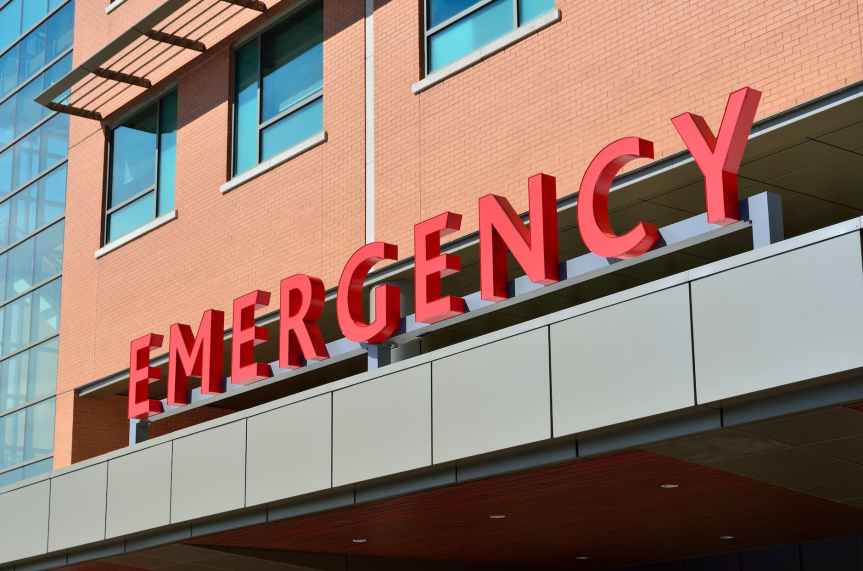
The two years of the pandemic highlighted the current inadequacies of our healthcare delivery system and the need for urgent improvisation. The two years have seen us go through harrowing times—patients died for want of hospital beds and oxygen; the ventilator supply ran dry; high infections led to a severe manpower crunch at hospitals; there were not enough vaccines available then. Our healthcare system had crumbled under pressure, and our frontline workers, both in public and private hospitals, had burned themselves out. And now with cases rising, there is fear of a return to the past among healthcare workers.
Although the pandemic has eased, the virus is still alive and mutating and more pandemics are expected to follow. In the wake of this scenario, it is important for the world community to better equip ourselves to tackle such situations in the future. It is the moment that we realise the importance and need to strengthen healthcare infrastructure globally. It is time to work on making a pandemic-proof healthcare system for the future. Below are the areas that need to be focused on:
· Curative services – there is a need for the expansion of telemedicine from triage, diagnosis, and follow-up services covering all conditions (acute to chronic). Making institutions adapt and become centres of knowledge dissemination- telemedicine and all possibilities of e- and m-health and provide knowledge to people at home, on what symptoms to look out for, where to test, how to self-care, etc for not only Covid-19 but for other conditions too.
· Improve primary health care – Better primary health care will help us protect against future pandemics. Improving primary health care includes recruiting, training, and prioritising healthcare workers, and establishing effective surveillance and response systems, building confidence in health services through community outreach.
· Improve logistics and supply – There are a lot of logistics that are needed in a healthcare system. Some examples include masks, gloves, PPEs, disinfectants, etc. Apart from there’s also the supply of syringes and the cold chain storage that’s been necessary to make sure that the vaccines are stored at the proper temperature and don’t go to waste. Increased investments in this type of infrastructure will assist to guarantee that communities obtain the immunizations they require while also protecting them from future outbreaks.
· Promotive and preventive healthcare services – The pandemic has demonstrated that having an underlying condition like diabetes, hypertension or obesity predisposes one to complications, long hospital stays, and mortality. Because of all these reasons, COVID-19 has been categorised as a syndemic rather than a pandemic. It is necessary to provide preventive and promotive health services like boosting one’s immune system through diet, exercise, and supplements, in different formats, online, face-to-face, or through home visits.
· Mental health services – Mental health issues during the pandemic are threatening to become the next pandemic. Stress and mental health issues related to lockdowns affect everyone but tend to affect the weaker segments of society more severely. It is necessary to create awareness about mental health and make mental health services available, accessible, and affordable to all.
It is true that we need to build pandemic-proof health infrastructure. But does Covid-19 expose our health sector only or show us the reality of other aspects also? Working only on health will not be sufficient. We also need to improve our social, educational and political infrastructure. The world saw a huge dropout of students because of online classes during pandemic. Some of the major reasons given for dropping are fairly obvious: technology problems, lack of support, poorly designed courses, and technologically inexperienced educators. This demands due consideration and commitment. The epidemic has impacted numerous nations’ governmental and political systems, resulting in declarations of emergency, suspensions of legislative activity, isolation or death of multiple lawmakers, and postponing of elections owing to worries of viral transmission.Furthermore, in certain areas, the epidemic has posed various problems to democracy, causing it to be weakened and harmed. Hence, building a pandemic-proof political infrastructure will not only ensure an efficient response to tackle the crisis but also provide basic institutional support to the nation and to the world as a whole.
This is a unique moment where we have an opportunity to learn from this pandemic and prevent others in the future. The legacy of COVID-19 mustn’t be one of disruption and disparity, but instead a moment of monumental change.
General science is a field of study that encompasses a wide range of scientific disciplines, including biology, chemistry, physics, and earth sciences. It is the foundation upon which many scientific discoveries and advancements are made. In this article, we will explore some of the key concepts and branches of general science.
Biology: Biology is the study of living organisms and their interactions with each other and the environment. It covers a wide range of topics, from the structure and function of cells to the behavior and ecology of entire ecosystems. Biology plays a crucial role in many areas of our lives, including medicine, agriculture, and environmental management.
Chemistry: Chemistry is the study of matter and its properties. It covers topics such as the structure of atoms and molecules, chemical reactions, and the properties of different elements and compounds. Chemistry is a key discipline in many fields, including materials science, medicine, and engineering.
Physics: Physics is the study of matter and energy and their interactions with each other. It covers topics such as mechanics, thermodynamics, electromagnetism, and quantum mechanics. Physics is essential to many areas of modern technology, including telecommunications, electronics, and aerospace.
Earth Sciences: Earth sciences cover a wide range of topics related to the planet we live on, including geology, meteorology, and oceanography. These fields of study help us understand the physical processes that shape the earth’s surface and climate. They are also important in managing natural resources, predicting and mitigating natural disasters, and understanding the impact of human activity on the environment.
Scientific Method: The scientific method is a systematic approach to scientific inquiry. It involves observing phenomena, formulating hypotheses, testing those hypotheses through experiments, and drawing conclusions based on the results. The scientific method is a key tool for scientists in all fields, allowing them to gather reliable data and draw meaningful conclusions.
Scientific Discoveries: Science has led to many important discoveries throughout history. Some of the most notable include the discovery of penicillin, the development of the theory of evolution, and the discovery of the structure of DNA. These discoveries have had far-reaching impacts on our understanding of the world and have led to many important advancements in medicine, agriculture, and technology.
Science Education: Science education is crucial in developing scientific literacy and promoting scientific thinking. It helps individuals understand the natural world and the scientific principles that govern it. Science education is also essential in preparing individuals for careers in science, technology, engineering, and mathematics (STEM) fields.
Conclusion: In conclusion, general science is a vast field that encompasses many different scientific disciplines. It is the foundation upon which many scientific advancements are made, and it plays a crucial role in our lives. Through the scientific method, scientists are able to make important discoveries and advancements that help us understand the world around us. Science education is also critical in developing scientific literacy and promoting scientific thinking, which is essential in preparing individuals for careers in STEM fields.
Five billion people globally are exposed to harmful trans fat, increasing their heart disease and death risk, according to a new report by the World Health Organization (WHO).
At this point, 43 countries have put best-practice regulations against trans fat in food, covering 2.8 billion people worldwide, showed the Countdown to 2023 – WHO report on global trans fat elimination, released January 23, 2023.
However, despite significant progress, this still exposes five billion people to the devasting health effects of trans fat, making the 2023 target unattainable.
The World Health Organization is calling for the total elimination of trans fat – responsible for over 500,000 premature deaths each year.
In its annual status report, Countdown to 2023 WHO Report on global trans fat elimination 2022, WHO says governments need to do more to ban industrially-produced fats, which clog arteries and are commonly found in cooking oils, spreads, packaged foods, and baked goods.
On February 1st, a comet named C/2022 E3 (ZTF) with a bright green color will come close to Earth for the first time in 50,000 years. It will pass by at a distance of 26 million miles (42 million kilometers) from Earth, providing a unique night sky view that hasn’t been seen since the time that modern humans roamed the Earth alongside one of the many extinct human species, the Neanderthals.
In the Northern Hemisphere, the green comet should be visible just before dawn in late January, according to NASA. Amateur astronomers have already begun photographing the green comet to show what you could see.
Comet ZTF will pass about 26 million miles from Earth — the closest it will get — on February 2. That’s nearly 109 times the average distance of the moon, but the comet is burning so bright that it could still be visible in the night sky.
China’s population fell last year for the first time in six decades, a historic turn that is expected to mark the start of a long period of decline in its citizen numbers with profound implications for its economy and the world.
The country’s National Bureau of Statistics reported a drop of roughly 850,000 people.
China’s birth rate has been declining for years, prompting a slew of policies to try to slow the trend.
But seven years after scrapping the one-child policy, it has entered what one official described as an “era of negative population growth”.
The trade between India and China has touched an all-time high of USD 135.98 billion in 2022 while New Delhi’s trade deficit with Beijing crossed for the first time a USD 100 billion mark despite frosty bilateral relations, according to data released by the Chinese customs on Friday.
The total India-China trade for 2022 has climbed to 135.98 billion, overtaking the USD 125 billion mark a year earlier by registering an 8.4 per cent increase, according to the annual Chinese customs data.
India has emerged as a saviour for the sagging global steel demand with China’s enormous construction sector still in a funk and the US and Europe probably heading into recessions.
India is experiencing a building boom and is on track to surpass China as the world’s most populated nation by the end of the year. In an effort to compete with China as a manufacturing hub, Prime Minister Narendra Modi is attempting to revamp the roadways, rail systems, and ports.
According to the World Steel Association, this will result in a 6.7% increase in steel demand, reaching over 120 million tonnes in 2023, the greatest growth rate among large nations. This year, India experienced similar growth and surpassed the US to overtake China as the world’s second-largest user of steel.
The biggest producer in the country, JSW Steel Ltd., stated that “the nation-building phase of any economy demands a lot of steel and commodities.” According to him, India is currently moving through that phase, which might increase its steel demand to more than 200 million tonnes by 2030.
Vostro accounts are accounts a bank holds on behalf of another, often foreign bank, and this forms a key part of correspondent banking.’
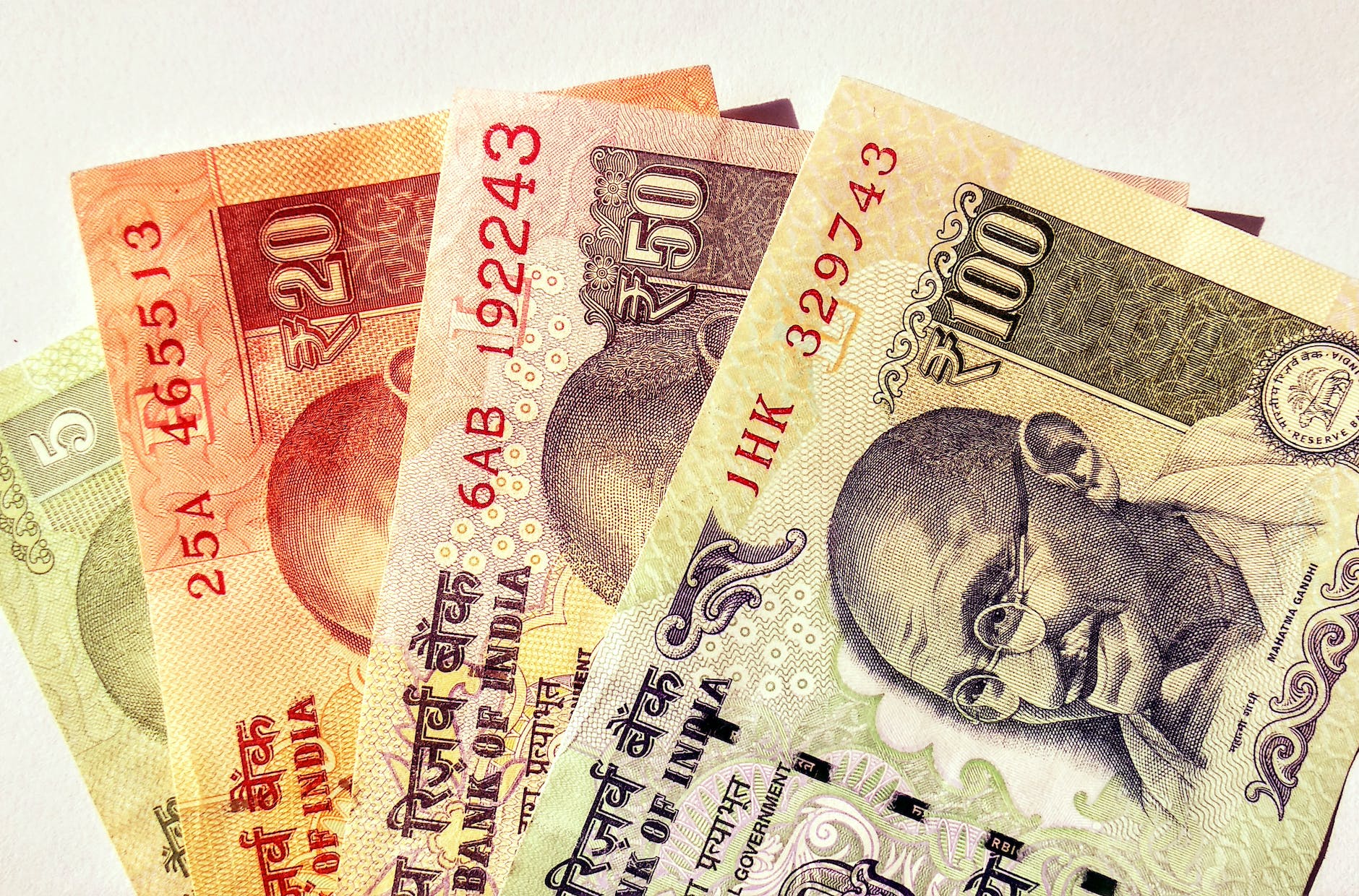
In July 2022, the Reserve Bank of India introduced a new mechanism for international trade settlements in rupees, aiming to promote exports and facilitate imports.
Rupee Vostro Accounts keep a foreign entity’s holdings in the Indian bank, in Indian rupees. When an Indian importer wants to make a payment to a foreign trader in rupees, the amount will be credited to this Vostro account, and when an Indian exporter needs to be paid for supplying goods or services, this Vostro account will be deducted, and the amount will be credited to the exporter’s account.
“The banks are acting in a fiduciary relationship and they share a principal-agent relationship. The correspondent foreign bank is a financial intermediary in the transactions that they are involved in. The foreign bank acts as an agent that provides services such as executing wire transfers, performing foreign exchange, enabling deposits, enabling withdrawals, expediting international trade on behalf of the domestic bank. It is most used in settlement of foreign exchanges or foreign trade. No interest will be paid on the vostro account maintained, as per the directives that have been issued by the RBI in India. An overdraft facility can only be availed if it is specifically sanctioned,” explained tax experts at Clear.
“In order to promote growth of global trade with emphasis on exports from India and to support the increasing interest of global trading community in INR, it has been decided to put in place an additional arrangement for invoicing, payment, and settlement of exports / imports in INR,” the RBI had said in a statement.
The world faces a recession in 2023 higher borrowing costs aimed at tackling inflation cause a number of economies to contract, according to the Centre for Economics and Business Research.
The global economy surpassed $100 trillion for the first time in 2022 but will stall in 2023 as policy makers continue their fight against soaring prices, the British consultancy said in its annual World Economic League Table.
The report added that, “The battle against inflation is not won yet. We expect central bankers to stick to their guns in 2023 despite the economic costs. The cost of bringing inflation down to more comfortable levels is a poorer growth outlook for a number of years to come.”
The findings are more pessimistic than the latest forecast from the International Monetary Fund. That institution warned in October that more than a third of the world economy will contract and there is a 25% chance of global GDP growing by less than 2% in 2023, which it defines as a global recession.
“The consequences of economic warfare between China and the West would be several times more severe than what we have seen following Russia’s attack on Ukraine. There would almost certainly be quite a sharp world recession and a resurgence of inflation,” CEBR said.
According to an online survey done by Taste Atlas, Indian cuisine was termed as the fifth best cuisine in the world. In the global list of best cuisines in the world for the year 2022, Italy was ranked first followed by Greece and Spain on second and third spot respectively. India ranked fifth on the ranking which is based on votes by the audience for ingredients, dishes and beverages while Japanese cuisine earned the fourth spot.
Overall, India got 4.54 points as per the TasteAtlas Awards 2022 results and the best-rated foods in India were Garam Masala, Ghee, Malai, Butter Garlic Naan, and Keema among other more than 400 items.
There are a total of 465 Indian food items on the list, including dishes, stews, drinks, snacks, flatbreads and desserts.
The website also came out with a list of 464 restaurants selling Indian cuisine. The list includes: Shree Thaker Bhojanalay (Mumbai), Karavalli (Bangalore), Bukhara (New Delhi), Dum Pukht (New Delhi), Comorin (Gurugram).
India’s rupee trade settlement mechanism, which was set up by the Reserve Bank of India in July 2022, is attracting interest from more countries apart from Russia.
The mechanism is a means of using rupees instead of dollars and other big currencies for international transactions in order to promote growth of global trade with emphasis on exports from India and to support the increasing interest of global trading community in the rupee.
Dollar-strapped Sri Lanka and sanctions-hit Russia will be the first countries to use the Indian rupee trade settlement mechanism.
Sri Lanka has agreed to use Indian rupee (INR) for international trade. It comes days after the Government of India said it is looking at ways to bring countries that are particularly short of dollars into the ambit of Indian rupee trade settlement mechanism. Central Bank of Sri Lanka (CBSL) said it is waiting for RBI’s (Reserve Bank of India) approval to designate Indian rupee as foreign currency of Sri Lanka.
Tajikistan, Cuba, Luxembourg and Sudan have begun talking to India about using the mechanism, reported Reuters, quoting two sources and an official document. It has already been used by Russia following the imposition of sanctions on Moscow over the Ukraine war.
Russia has for the first time emerged as top oil supplier to India replacing Iraq as refiners last month snapped up oil from Moscow fearing a price cap from Dec. 5 could hit supplies and choke payment avenues, data obtained from trade sources showed.
India’s oil imports from Russia rose for the fifth straight month, totaling 908,000 barrels per day (bpd) in November, up 4% from October, the data showed.
The Group of Seven nations, Australia, and the 27 European Union countries have imposed a price cap of $60 a barrel on Russian seaborne oil from Dec. 5 as the West tries to limit Moscow’s ability to finance its war in Ukraine.
India, which rarely used to buy Russian oil because of costly logistics, has emerged as Russia’s second biggest oil client after China as refiners snap up discounted crude shunned by Western nations since the February invasion of Ukraine.
Higher purchases of Russian oil dragged down Indian imports from the Middle East and member nations of Organization of Petroleum Exporting Countries (OPEC) declined to the lowest ever in November, the data showed.
World Cup organizers have rejected a request from Ukrainian President Volodymyr Zelensky to deliver a message ahead of the tournament’s final. Zelensky had asked to share a plea for world peace ahead of Sunday’s World Cup final but was turned down by FIFA, soccer’s governing body, CNN reported.
FIFA has gone to significant lengths to try and remove elements of politics from the 2022 World Cup, despite the very tournament being a political issue itself due to the nature of where it is being held.
Addressing to the situation, the FIFA authority quoted “We are defending values, we are defending human rights and rights of everyone at the World Cup. Those fans and the billions watching on TV, they have their own problems. They just want to watch 90 or 120 minutes without having to think about anything, but just enjoying a little moment of pleasure and joy. We have to give them a moment when they can forget about their problems and enjoy football.”
The test-firing of the missile from the APJ Abdul Kalam Island off Odisha coast came amid India’s lingering border row with China.
The Agni-V project is aimed at boosting India’s nuclear deterrence against China which is known to have missiles like Dongfeng-41 having ranges between 12,000-15,000 km.
Agni-V can bring almost the entire Asia including the northernmost part of China as well as some regions in Europe under its striking range.
While the test was carried out days after the clashes, it had been planned earlier. India had announced its intention to test a long-range missile and issued a NOTAM or Notice to Airmen well before the incident in Arunachal’s Tawang.
Notably, Agni-5 is the most advanced missile in the Agni series with a strike range of over 5000 kms. Apart from Intercontinental Ballistic Missiles (ICBMs) Agni-5, the Indian armoury of the Agni series includes Agni-1 with a 700 km range, Agni-2 with a 2,000 km range, Agni-3 and Agni-4 with a 2500 km to more than 3500km range.




 Eduindex
You must be logged in to post a comment.