What is Considered Rape?

“Silence does not mean yes. No can be thought and felt but never said. It can be screamed silently on the inside. It can be in the wordless stone of a clenched fist, fingernails digging into palm. Her lips sealed. Her eyes closed. His body just taking, never asking, never taught to question silence”

Amy Reed

I came across a post on Feminist’s Instagram.
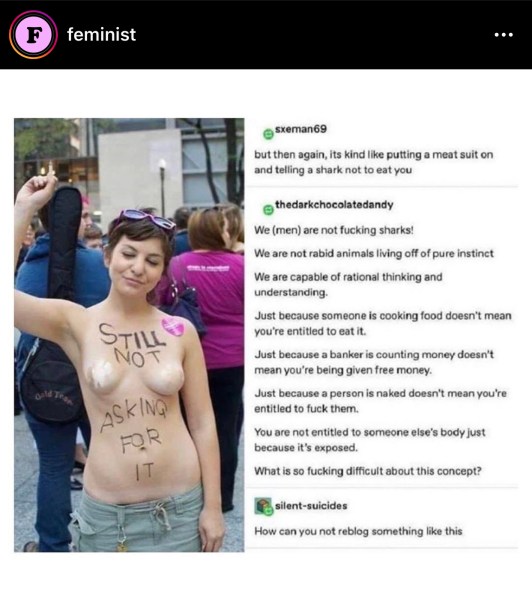
This post struck a nerve that no other post ever did. Mainly because whoever this person (thedarkchocolatedandy) is, didn’t insult anyone, nor did they try to persuade anyone to believe them. All they did was point out how humans are different than animals and also that women aren’t a piece of meat.

I decided to make a post on what crosses the line from being intimate to being considered rape. I am not sure how comfortable I am with men and most women not knowing or understanding what rape is and who the assailant is, and also that no reason is justifiable for rape, however, I wanted to make it clear and give no one who reads this an opportunity to claim they were unaware.

Take this post as a guide to know what is rape.

What is Consent?

The general definition of consent is to allow or permit for something to happen.

Consent in terms of sex or intimacy refers to agreeing to have sexual intercourse with someone and letting them know about it. It also includes finding out where the other person stands.

Consent is restricted and comes with thick boundaries. A person may consent to sexting, but not actually having sex, or vice versa.

Consent could also be restricted to just being physical and not actually having sex.

Take for instance the Netflix Original, “GUILTY”. A beautiful movie loudly stating that consent doesn’t give permission for anything and everything. Tanu (Akansha Ranjan), accuses VJ (Gurfateh Singh Pirzada) of raping her. Throughout the movie everyone had numerous reasons to tag her a fibster, they refused to believe her, they ridiculed her, said she was asking for it. The biggest reason was that she was very into VJ and that she threw herself on him quite a lot. In the end it was revealed that she wanted to have sex with VJ. She was consenting to the sex. What she wasn’t consenting to is being watched by VJ’s friends and being recorded. She didn’t consent to being sexually assaulted while the two bystanders ridiculed her and lead VJ on.

This movie is an eye-opener and covers many reasons rape culture still persists in our society.

When do you NOT have Consent?

  • When a person is sleeping or unconscious
  • When a person is drugged or intoxicated
  • When you are threatening them
  • You use a position of authority or trust
  • Consent is withdrawn
  • When you ignore their NO, cries and physically being pushed away
  • When you have consent for only one form of sexual act and not the other
  • When they are pressured

Verbal Consents:

  • Yes
  • I am sure
  • I want to
  • Don’t stop
  • Go on
  • I still want to
  • I want you to
  • I’m ready
  • Yes please
  • I am comfortable
  • I want to continue

Verbal Disagreements:

  • No
  • Stop
  • I don’t want to
  • I am not sure
  • I don’t think so
  • Please don’t
  • Please stop
  • This makes me uncomfortable
  • I want to stop
  • I don’t want to continue
  • This feels wrong
  • Maybe we should wait
  • Diverting the topic
  • I want to, BUT
  • Saying Yes fearfully

Non-Verbal Disagreement:

  • Pushing Away
  • Pulling Away
  • Crying
  • Avoiding Eye Contact
  • Silence
  • Shaking their head no
  • Standing/Lying motionlessly
  • Looking Scared
  • Not removing their own clothes

What is Rape?

Sexual Assault refers to any form of sexual contact or behaviours without explicit consent by the victim. Attempted Rape, Unwanted touching, forcing a victim to perform sexual favours, oral or penetrating penis or any other object.

The Medical definition of Rape is, “Forced sexual intercourse, and/or forced sexual assault between two or more people is considered rape. Rape may be heterosexual or homosexual. Rape involves insertion of penis or any inanimate object into a person’s vagina, anus, mouth. Rape also includes any other sexual acts.” Force here doesn’t just refer to physical force; blackmail, psychological manipulation to coerce someone into being sexually active is also considered rape.

Sexual intercourse between an adult and a minor is legally considered statutory rape. The adult is found guilty even if the minor was consenting.

Intimacy with a minor wife is considered rape in India.

Marriage is not a licence for either partner to force an unwilling partner to have sex. Marital/Spousal Rape is now recognized and is a criminal offence.

Date Rape, sexual assault followed by the victim being drugged or psychologically manipulated.

Intoxicated Rape is when the victim is drunk and unconscious, not in the state to make a sober choice.

Consent taken by threatening the victim or victims loved ones is also considered rape.

Gang Rape occurs when a group of people rape a person.

Rapes in prisons and jails by other inmates or prison officials is also an offence, often overlooked and unreported.

Serial Rape is the rape committed continuously over a relatively long time period.

Payback/Punishment Rape is when a person rapes another out of spite.

War Rapes are rapes committed by soldiers during war as a way to force prostitution and slavery to insult an entire country.

Deceptive Rape is the rape that occurs when the rapist rapes a victim by gaining consent by misleading them.

Corrective Rape is a hate crime where homosexuals, trans and queer individuals are raped hoping to “correct” them. To force them to “turn” heterosexual.

Custodial Rape is the rape occurred in custody of police, hospitals, old age homes, orphanages or any other employee of the state.

Prostitution Rapes are rapes where rapists force prostitutes to have sex without paying them for their services, to inflicting pain and torture (cigarette burns, slapping, choking).

Exchange Rape is the rape where sexual favours are exchanged for money, rent, food, drugs or any other resource.

Punitive Rape is when rape is used to punish or discipline someone. Usually by an abusive teacher, parent, Religious leader, or a peer.

Incest Rape is when a victim is raped by family member.

Consenting Rape is when a consenting partner withdraws consent, but the rapist doesn’t stop and continues to get sexually intimate. Consenting rape is also when the victim consents, but isn’t completely “into it.”

Rape Culture

Rape Culture refers to the sociological concept of normalizing rape, and blaming victims for dressing or acting provocatively. A few illustrations of Rape Culture include:

  • Blaming the victim
    • She dressed provocatively
    • She shouldn’t have been out so late
    • She is already sexually active, who says she didn’t want it?
  • Boys will be boys
  • Tolerating sexual harassment
  • Assuming only immoral women get raped
  • Making degrading jokes about women
  • Associating “manhood” as dominant and sexually aggressive
  • Associating “womanhood” as submissive and sexually passive
  • Offensive memes
  • Not believing people who speak out
  • “You haven’t been raped yet, so chill”
  • Slut-shaming and congratulating men on “scoring”
  • Calling young women gold diggers when they marry old and older woman, cougars
  • Objectifying Women
  • Associating Rape to Victims character and not the rapists

Rape Culture is the direct consequence of toxic masculinity. The heavily patriarchal world teaches and forces boys and men to be strong and exert “masculinity” in the form of dominance, arrogance and sexual and physical aggression.

The only solution is to fight patriarchy.

Support for Those in Distress

The National Commission for Women, provides a set of helpline numbers, legal aid, and counselling contacts.

IS ASTROLOGY A MYTH OR FACT?

Astrology and Free Horoscopes | Jessica Adams Astrologer

Astrology is the study of the movements of the planets, sun, moon, and stars in the belief that these movements can have an influence on people’s lives. Astrology originated in Babylon far back in antiquity, with the Babylonians developing their own form of horoscopes around 2,400 years ago. Then around 2,100 years ago, astrology spread to the eastern Mediterranean, becoming popular in Egypt, which at the time was under the control of a dynasty of Greek kings.

Astrology is a very vast science. It is practiced in almost all the religions of world and each religion have different principles and methods for predicting future and revealing destiny. Many cultures have attached importance to astronomical events, and the Indians, Chinese, and Maya developed elaborate systems for predicting terrestrial events from celestial observations. In the West, astrology most often consists of a system of horoscopes  purporting to explain aspects of a person’s personality and predict future events in their life based on the positions of the sun, moon, and other celestial objects at the time of their birth. The majority of professional astrologers rely on such systems.

They made the calendar, predicted the tides, estimated the harvest season, followed the stars in the sea, and so forth. It helped, so it became the science of the day.

Things moved in the sky, but they always came back. Always. And they came in patterns. Just like how humans are born and dead. The cycle – the cycle of life. Maybe, just maybe, the celestial alignment breathes the very same cycle of life? A few thought so anyways.

With a gripping delusion, they projected everything up high, to the sky; the joy, the suffering, the pain, the flood, the death, the birth, the entire human existence. And right there in the night, under the gazing stars and the moon, astrology was born. An ancient pattern matching scheme – a manual one. And, astrology thrived.

They started manually collecting the celestial alignment at birth data of all the kings, queens, royals, servants, saints, widows and witches. And, then they manually labelled it, and looked for patterns. They checked if all royals had some celestial alignment in common, and the same went for the poor and the misfortunate. Criss-cross. Cross-criss. Thus began the humongous scheme of pattern matching.Through years and years of data collection, pattern matching and model learning, they tuned their model and churned out the model that best fits their data.A chart was stuck to you upon birth. A lifeline that tells your destiny, your personality, your likes and your dislikes. The one that indicates everything; your everything, even your sex life.To be honest, it’s an ingenious idea, and great efforts too. Mind the time, this is thousands of years ago, when they didn’t even have a WiFi.

As years roll on, the scientific community rejects astrology as it has no explanatory power for describing the universe, and considers it a pseudoscience. Scientific testing of astrology has been conducted, and no evidence has been found to support any of the premises or purported effects outlined in astrological traditions. There is no proposed mechanism of action by which the positions and motions of stars and planets could affect people and events on Earth that does not contradict well understood, basic aspects of biology and physics. Those who continue to have faith in astrology have been characterised as doing so. In spite of the fact that there is no verified scientific basis for their beliefs, and indeed that there is strong evidence to the contrary.

Confirmation bias is a form of cognitive bias, a psychological factor that contributes to belief in astrology. Astrology believers tend to selectively remember predictions that turn out to be true, and do not remember those that turn out false. Another, separate, form of confirmation bias also plays a role, where believers often fail to distinguish between messages that demonstrate special ability and those that do not. Thus there are two distinct forms of confirmation bias that are under study with respect to astrological believe.

Across several centuries of testing, the predictions of astrology have never been more accurate than that expected by chance alone. One approach used in testing astrology quantitatively is through blind experiment.

Universal Declaration of Human Rights (UDHR)

“The rights of every man are diminished when the rights of one man are threatened.”

John F. Kennedy

One week after World War II began, Herbert George Wells, wrote to the Times of London, with “What are we fighting for?” The science fiction writer answered his own questions with, “The Rights of Man.” On the February 5th publication of the Daily Herald in 1940, Wells published his own “Declaration of Rights.” This article was well received and was later turned into a book.

The United Nations (UN) was founded in 1945. The two main resolutions were; to prevent another world war and to attempt to make the world a better place for all the citizens of the world. The idea of the United Nations was suggested by the League of Nations, established in 1919 (post World War I). In 1878, Congress of Berlin was formed the same way the League of Nations was formed. Yet it wasn’t successful in avoiding World War I. UN was formed in hopes to rectify the shortcomings of the Congress of Berlin and the League of Nations.

On 10th December 1948, unanimously the General Assembly of the United Nations passed the Universal Declaration of Human Rights (UDHR). The 30 articles and sub-clauses of the UDHR promotes and the UN and Human Rights Commission (HRC), oversee that “everyone is entitled to all of the rights and freedoms set forth in this Declarations, without distinction of any kind such as race, colour, sex, language, religion, political or other opinion, national or social origin, property, birth or other status.”

The UDHR comprises the basic human rights every person deserves, like the civil and political right to life, free speech, privacy, seeking asylum, freedom from torture, right to education and so much more.

Below I list every Article of the UDHR and an explanation.

“Article 1: 

All human beings are born free and equal in dignity and rights. They are endowed with reason and conscience and should act towards one another in a spirit of brotherhood.”

Every person born into this world has equal worth and rights. Everyone should be kind and respectful of others.

“Article 2: 

Everyone is entitled to all the rights and freedoms set forth in this Declaration, without distinction of any kind, such as race, colour, sex, language, religion, political or other opinion, national or social origin, property, birth or other status. Furthermore, no distinction shall be made on the basis of the political, jurisdictional or international status of the country or territory to which a person belongs, whether it be independent, trust, non-self-governing or under any other limitation of sovereignty.”

No matter a person’s, race, colour, sex, or any other difference, everyone is entitled to all the rights listed in this Declaration.

“Article 3: 

Everyone has the right to life, liberty and security of person.”

Everyone has a right to live, freely and securely.

“Article 4: 

No one shall be held in slavery or servitude; slavery and the slave trade shall be prohibited in all their forms.”

No one can be enslaved or punished for being alive.

“Article 5: 

No one shall be subjected to torture or to cruel, inhuman or degrading treatment or punishment.”

No one deserves or should be tortured or subjected to cruelty, inhumanity, or degrading behavior.

“Article 6: 

Everyone has the right to recognition everywhere as a person before the law.”

Everyone in this world has the right to be recognized everywhere as a person.

“Article 7: 

All are equal before the law and are entitled without any discrimination to equal protection of the law. All are entitled to equal protection….”

Everyone is equal before the law and is entitled to impartiality. And if anyone faces discrimination, they deserve equal protection.

“Article 8: 

Everyone has the right to an effective remedy by the competent national tribunals for acts violating the fundamental rights granted him by the constitution or by law.”

Everyone has the right to legal support if and when needed/

“Article 9: 

No one shall be subjected to arbitrary arrest, detention or exile.”

No one, unless proven guilty, can be arrested or exiled.

“Article 10: 

Everyone is entitled in full equality to a fair and public hearing by an independent and impartial tribunal, in the determination of his rights and obligations and of any criminal charge against him.”

Everyone accused of a crime has a right to a fair and equal public trial. Subjective judgment is a violation of Human Rights.

“Article 11: 

(1) Everyone charged with a penal offence has the right to be presumed innocent until proved guilty according to law in a….”

Everyone accused of a crime has the right to be considered innocent until proven guilty.

“Article 12: 

No one shall be subjected to arbitrary interference with his privacy, family, home or correspondence, nor to attacks upon his honour and reputation. Everyone has the right to the protection of the law against such interference or attacks.”

No one has the right to enter another persons’ house, mail, or intrude without a good reason. We have a right to be protected if that happens.

“Article 13: 

(1) Everyone has the right to freedom of movement and residence within the borders of each state.

 (2) Everyone has the right to leave any country, including his own, and to return to his country.”

Everyone has the right to move around one’s home country and travel abroad with proper documents.

“Article 14: 

(1) Everyone has the right to seek and to enjoy in other countries asylum from persecution.

 (2) This right may not be invoked in the case of…..”

If a person is at risk of harm in one’s own country, one has the right to seek asylum in other nations.

“Article 15: 

(1) Everyone has the right to a nationality.

 (2) No one shall be arbitrarily deprived of his nationality nor denied the right to change his nationality.”

Everyone has a right to be a citizen of a country, and no one or government can deny that without a justifiable reason.

“Article 16: 

(1) Men and women of full age, without any limitation due to race, nationality or religion, have the right to marry and to found a family. They are entitled to equal rights as to marriage, during….”

Every one of the legal age has the right to marry and start a family without any limitation of any race, nationality, religion, or any other reason.

“Article 17: 

(1) Everyone has the right to own property alone as well as in association with others.

 (2) No one shall be arbitrarily deprived of his property.”

Everyone has the right to own a property, and anyone deprived of this right is a violation of Human Rights.

“Article 18: 

Everyone has the right to freedom of thought, conscience and religion; this right includes freedom to change his religion or belief, and freedom, either alone or in community with others and in public or private, to manifest his religion or belief in teaching, practice, worship and observance.”

Everyone has a right to their thoughts, beliefs, and religion. Anyone wishing to change their religion is entitled to do so.

“Article 19: 

Everyone has the right to freedom of opinion and expression; this right includes freedom to hold opinions without interference and to seek, receive and impart information and ideas through any media and regardless of frontiers.”

Everyone has the right to express their thoughts and opinions freely with anyone.

“Article 20: 

(1) Everyone has the right to freedom of peaceful assembly and association.

 (2) No one may be compelled to belong to an association.”

Everyone has the right to form groups and organize peaceful protests. Anyone denying a person or group of protesting peacefully is violating Human Rights.

“Article 21: 

(1) Everyone has the right to take part in the government of his country, directly or through freely chosen representatives……”

Everyone has the right to freely choose their political representative. Either by democracy or any other method. Any government or leader denying that right is violating Human Rights.

“Article 22: 

Everyone, as a member of society, has the right to social security and is entitled to realization, through national effort and international…..”

“The society we live in should help every person develop to their best ability through access to work, involvement in cultural activity, and the right to social welfare. Every person in society should have the freedom to develop their personality with the support of the resources available in that country.”

“Article 23: 

(1) Everyone has the right to work, to free choice of employment, to just and favourable conditions……”

Everyone has the right to work and freely choose any occupation. Unless the person is underqualified, no one can be denied the position.

“Article 24: 

Everyone has the right to rest and leisure, including reasonable limitation of working hours and periodic holidays with pay.”

Everyone has the right to work reasonable hours. Everyone holds the right to enjoy leisure time each week. Any overtime spent working needs to be compensated with additional holiday/vacation pay.

“Article 25: 

(1) Everyone has the right to a standard of living adequate for the health and well-being of himself and of his family, including food…..”

Everyone has the right to adequate food, clothing, housing, and healthcare. Everyone who is unable to work, or work adequately is entitled to benefits. Every disabled person is entitled to services and benefits to make life easier.

“Article 26: 

(1) Everyone has the right to education. Education shall be free, at least in the elementary and fundamental stages. Elementary education shall be compulsory. Technical and professional education shall be made…….”

Everyone has the right to educations and elementary and primary education should be free for all. Education every child receives should include these rights and fundamental freedoms. Every parent has the right to choose the right kind of education for their children.

“Article 27: 

(1) Everyone has the right freely to participate in the cultural life of the community, to enjoy the arts and to share in…..”

Everyone has the right to freely participate in the cultural activities of the community and also hold the right to reserve the copyright of one’s work.

“Article 28: 

Everyone is entitled to a social and international order in which the rights and freedoms set forth in this Declaration can be fully realized.”

Everyone has the right to live peacefully at the local, national, and international order that this Declaration provides.

“Article 29: 

(1) Everyone has duties to the community in which alone the free and full development of his personality is possible……”

“We have duties to the community we live in that should allow us to develop as fully as possible. The law should guarantee human rights and should allow everyone to enjoy the same mutual respect.”

“Article 30: 

Nothing in this Declaration may be interpreted as implying for any State, group or person any right to engage in any activity or to perform any act aimed at the destruction of any of the rights and freedoms set forth herein.”

No person, group, or government holds the right to deny or destroy the rights and freedoms allocated by this Declaration.

Many countries, governments, and influenced groups are violating these basic Human Rights. A few examples of this are listed below:

  • Landlords forcibly evicting tenants who are unable to pay rent amidst the COVID-19 pandemic.
  • The Indian government detaining peaceful protestors during the anti-NRC and anti-CAA protests in 2019-20.
  • Police Brutality in the form of custodial rapes, custodial torture, no-knock searches, wrongful imprisonment, denial of medical attention, excessive force, and more.
  • Dictator rulers are violating human rights.
  • Victims being denied justice.
  • Systematic- Racism and Discrimination against African-American citizens in America.
  • Chinese Political unjust towards Uighur Muslims.
  • Civil War zones in Syria, Yemen, and other countries.
  • Malnourished people being denied access to food and necessities,
  • Political prisoners” who spoke out against their government.

This is list can go on, so many people are being denied basic human rights.

To MARS, Or Not To MARS ?

Strap yourself in, we are going on a trip in our favorite rocket ship, steering through the clouds like little Einsteins. Climb aboard and get ready to explore, the Red Planet- Mars. From hostile deserts, to lonely islands and the highest mountains, wherever there is space to expand into, humans do so.

Hence it is hardly surprising that we are all ready to set foot into Mars and create the first permanent colony outside of Earth maybe even terraform another planet and turn it into a second blue home.

If you don’t know who is Elon Musk, then you better start googling his name and get to know him. Not only is he the billionaire founder of Tesla Motors, this a.k.a. Iron man superhero Tony Stark has ambitious plans to send humans to Mars by 2025.

If this is a trip then like any other, there is a need for a checklist with list of items to be taken to Mars and items we can conveniently leave back on Earth. Let’s get started fellow Martians.

A MARS COLONY CHECKLIST :

  • PORTABLE OXYGEN GENERATOR- You need to breathe. In case of emergency, a standby kit to generate oxygen is required. But considering humans, we might need a mask too because air is our favourite natural element to pollute.
  • PORTABLE SOLAR POWER KIT- Low battery and no charger sounds as scary as the trip itself. Whatever electronics you are bringing, as long as there is no electricity, forget about your entertainment. You don’t want to die of boredom.
  • PORTABLE WATER FILTER- We know there is frozen water on the planet. But we dont know if ita drinkable. All the ice deserves a drink, so bring a filter and soda-making machine if excess luggage permits (check with your airline)
  • PLANT SEEDS- Once you run out of your snacks you should look into farming. Be prepared, bring some seeds and check some tutorials on gardening (preferably in space).
  • LONELINESS- Self isolation might be needed to avoid radioactive exposure, well looks like the year 2020 is indeed a good practice for it. Also aren’t we all lonely from inside (No? just me? Okay…. *crawls back into my hole*)
  • NUCLEAR REACTORS- For creating a safe atmosphere and not the nuclear weapons that Nations own for “defense purposes” Let those weapons stay on Earth along with the people who threaten to use them because there isn’t much spice in their lives.
  • MULTIMILLION DOLLAR SPACESHIP – So large that it could fit the 150 Million homeless around the world, people who have been disappointed by the Politicians and their promises.
  • A HIGH TOLERENCE – A tolerance level higher than what we have to everything on social media and to the lifestyle of new generations.
  • MAA KE HAAT KA KHANA – A nice Tupperware tiffin box with food made by your Moms because, The M.O.M on Mars doesn’t cook or do ALL your work. (M.O.M –Mars Orbiter Mission also called Mangalyaan)

Lastly a desire to get away from it all. Elon Musk is not crazy, but a visionary, a modern adventurer who dares to dream. NASA is behind him by committing to send the first batch of astronauts on his mission. More than 200,000 people have signed up for the one-way ticket to Mars including Leonardo DiCaprio. Musk hopes to send 1 million people to the Red Planet and a ticket is estimated to cost around USD200,000 for each passenger (Hefty I know, but you get to travel with Leo as your travel buddy, hopefully this space- SHIP doesn’t sink).

Well as scary and uncertain as everything sounds it all comes down to one very important factor, Does Mars have Wi-Fi?

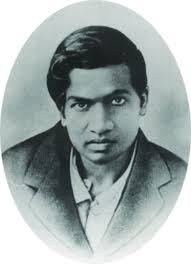
SRINIVASA RAMANUJAN: A man with an infinite sense of numbers

Srinivasa ramanujan (1887-1920) was born on 22nd Dec 1887, Thursday Kumbakonam city, Erode District at Tamilnadu. Mother’s name was Komlattamal and father’s name was Srinivas Iyengar. He learnt bhajan, Ramayana and mahabharata stories from his parents. Srinivasa Ramanujan was an Indian mathematician who lived during the British Rule in India. He made great contributions in such areas as number theory, continued fractions, and infinite series, despite not having any formal education in math.

 Ramanujan’s primary education was started on 1st Oct 1892 and day was Vijayadhashami. One day in maths class, teacher taught if you distribute 8 bananas into 8 children, each will get 1 banana. It means if you divide any number by same number then result comes out be 1.

Ramanujan :- What if we divide 0 from 0.

Teacher :- Obviously 1.

Ramanujan :- It’s not 1 sir, it’s undefined actually. If there is no banana and nobody then how it is possible to distribution of banana.

Teacher was baffled.

During school time, he had solved college level Mathematics. His estimated IQ was 185. Srinivasa was in such poverty that he often sustained on minimal foods and did not even have enough money to obtain paper for his studies. As a result, he used slates for his mathematics and cleaned them with his elbow, leading to bruises and marks. A child prodigy by age 11, he had exhausted the mathematical knowledge of two college students who were lodgers at his home. He was later lent a book written by S. L. Loney on advanced trigonometry. He mastered this by the age of 13 while discovering sophisticated theorems on his own. By 14, he received merit certificates and academic awards that continued throughout his school career, and he assisted the school in the logistics of assigning its 1,200 students (each with differing needs) to its approximately 35 teachers.

At the age of 15, Srinivasa Ramanujan obtained a copy of Synopsis on Elementary Results in Pure and Applied Mathematics, which contained 5,000 theorems, but had either brief proofs or did not have any. C Ramanujan then took to solving each of the theorems, eventually succeeding. Ramanujan had obtained a scholarship for the University of Madras, but he ended up losing it because he neglected his studies in other subjects in favor of mathematics.

On 14 July 1909, Ramanujan married Janaki ammal (1899 – 1994). After the marriage, Ramanujan developed a hydrocele testis. The condition could be treated with a routine surgical operation that would release the blocked fluid in the scrotal sac, but his family could not afford the operation. In January 1910, a doctor volunteered to do the surgery at no cost. After his successful surgery, Ramanujan searched for a job. He stayed at a friend’s house while he went from door to door around Madras looking for a clerical position. To make money, he tutored students at Presidency College who were preparing for their F.A. exam. In 1913, he sent a letter of 11 pages with 120 theorems to Cambridge University Professor G.H.Hardy. He invited him to England. Overcoming his religious objections, Ramanujan traveled to England in 1914, where Hardy tutored him and collaborated with him in some research.

some of his integration work

With the help of Hardy within 1 year he published 9 research papers. Just because of his research papers he got degree of B.A. and he was elected as Fellow of Royal Society. He was the youngest Indian to receive this honor.

Ramanujan’s knowledge of mathematics (most of which he had worked out for himself) was startling. Although he was almost completely unaware of modern developments in mathematics, his mastery of continued fractions was unequaled by any living mathematician. He worked out the Riemann series, the elliptic integrals, hyper geometric series, the functional equations of the zeta function, and his own theory of divergent series. On the other hand, he knew nothing of doubly periodic functions, the classical theory of quadratic forms, or Cauchy’s theorem, and he had only the most nebulous idea of what constitutes a mathematical proof. Though brilliant, many of his theorems on the theory of prime numbers were wrong.

In England Ramanujan made further advances, especially in the partition of numbers (the number of ways that a positive integer can be expressed as the sum of positive integers,for instance, (4 can be expressed as 4, 3 + 1, 2 + 2, 2 + 1 + 1, and 1 + 1 + 1 + 1). His papers were published in English and European journals, and in 1918 he was elected to the Royal Society of London. In 1917 Ramanujan had contracted tuberculosis, but his condition improved sufficiently for him to return to India in 1919. 

Once a interesting incident took place. Ramanujan was ill and admitted at hospital. Prof. Hardy came to visited him. Then midst conversation Hardy said, i came from the cab and number of that cab was 1729.

“It is a very interesting number, it is the smallest number expressible as the sum of two cubes in two different ways.”
He found a special property, and even tested that it was the smallest number with such a property, all in a few seconds.

1729 = (10)3 + (9)3 = (12)3 + (1)3.

After that this kind of numbers were known as Ramanujan Numbers. 1729 is smallest Ramanujan number.

After contracting tuberculosis, eventhough the mathematician recovered enough in 1919 to return to India, but died the following year, without much recognition. However, the mathematics community recognized him as a genius without peer.The genius mathematician left as his legacy three notebooks and a huge bundle of pages, which contained unpublished result which were being verified by mathematicians many years after his death.

Remembering Ramanujan and his contributions on his birth ...

Bio-terrorism

Bio-terrorism is the intentional arrival of infections, microscopic organisms, poisons or other hurtful operators to cause ailment or passing in individuals, creatures, or plants. These operators are normally found in nature, yet could be transformed or modified to build their capacity to cause sickness, make them impervious to current medications, or to expand their capacity to be spread into the earth. Natural specialists can be spread through the air, water, or in food. Organic specialists are appealing to fear mongers since they are very hard to distinguish and don’t make ailment for a few hours a few days. Some bio-terrorism specialists, similar to the smallpox infection, can be spread from individual to individual and a few, similar to Bacillus anthracite

Bioterrorism might be supported in light of the fact that organic operators are generally simple and cheap to acquire, can be effectively scattered, and can cause broad dread and frenzy past the real physical harm. Military pioneers, be that as it may, have discovered that, as a military resource, bioterrorism has some significant confinements; it is hard to utilize a bioweapon such that solitary influences the foe and not agreeable powers. A natural weapon is valuable to fear mongers chiefly as a technique for making mass frenzy and disturbance to a state or a nation. In any case, technologists, for example, Bill Joy have cautioned of the potential force which hereditary designing may put in the possession of future bio-psychological militants.

The utilization of specialists that don’t make hurt people, yet upset the economy, have additionally been talked about. One such pathogen is the foot-and-mouth malady (FMD) infection, which is fit for causing across the board financial harm and open worry (as saw in the 2001 and 2007 FMD episodes in the UK), while having basically no ability to taint people.

Use of bio-terrorism in history was when World War I started, endeavors to use anthrax were aimed at creature populaces. This for the most part end up being insufficient. Soon after the beginning of World War I, Germany propelled an organic damage crusade in the United States, Russia, Romania, and France. Around then, Anton Dilger lived in Germany, yet in 1915 he was sent to the United States conveying societies of glanders, a destructive malady of horse and mules. Dilger set up a research facility in his home in Chevy Chase, Maryland. He utilized stevedores working the harbors in Baltimore to contaminate ponies with glanders while they were holding back to be dispatched to Britain. Dilger was under doubt similar to a German specialist, yet was never captured. Dilger in the long run fled to Madrid, Spain, where he kicked the bucket during the Influenza Pandemic of 1918. In 1916, the Russians captured a German operator with comparable goals. Germany and its partners tainted French rangers ponies and huge numbers of Russia’s donkeys and ponies on the Eastern Front. These activities prevented cannons and troop developments, just as gracefully escorts.

Tom Inglesy, the CEO and executive of the Center for Health Security at the Johns Hopkins Bloomberg School of Public Health and a universally perceived master on general well being readiness, pandemic and rising irresistible infection said in 2017 that the absence of an internationally standardized approval process that could be utilized to manage nations in directing general well being tests for reviving an illness that has just been killed builds the hazard that the ailment could be utilized in bio-terrorism.

United Nations and the use of forces

Article 1

Aim of Untied Nations charter is to maintain international peace and security and to that end to take effective collective measures for the prevention and removal of threats to the peace and for the suppression of acts of aggression or other breaches of the peace and to bring about by peaceful means.

Purpose of the United Nations are:-

1. To maintain international peace and security, and to that end: to take effective collective measures for the prevention and removal of threats to the peace, and for the suppression of acts of aggression or other breaches of the peace, and to bring about by peaceful means, and in conformity with the principles of justice and international law, adjustment or settlement of international disputes or situations which might lead to a breach of the peace;

2. To develop friendly relations among nations based on respect for the principle of equal rights and self-determination of peoples, and to take other appropriate measures to strengthen universal peace;

3. To achieve international cooperation in solving international problems of an economic, social, cultural, or humanitarian character, and in promoting and encouraging respect for human rights and for fundamental freedoms for all without distinction as to race, sex, language, or religion,

4. To be a center for harmonizing the actions of nations in the attainment of these common ends.

5. To develop friendly relations among nation based on respect for the principle of equal rights and self determination of people’s.

Article 2

The Organization and its Members, in pursuit of the Purposes stated in Article 1, shall act in accordance with the following Principles.

1. The Organization is based on the principle of the sovereign equality of all its Members.

2. All Members, in order to ensure to all of them the rights and benefits resulting from membership, shall fulfil in good faith the obligations assumed by them in accordance with the present Charter.

3. All Members shall settle their international disputes by peaceful means in such a manner that international peace and security, and justice, are not endangered.

4. All Members shall refrain in their international relations from the threat or use of force against the territorial integrity or political independence of any state, or in any other manner inconsistent with the Purposes of the United Nations.

5. All Members shall give the United Nations every assistance in any action it takes in accordance with the present Charter, and shall refrain from giving assistance to any state against which the United Nations is taking preventive or enforcement action.

6. The Organization shall ensure that states which are not Members of the United Nations act in accordance with these Principles so far as may be necessary for the maintenance of international peace and security.

7. Nothing contained in the present Charter shall authorize the United Nations to intervene in matters which are essentially within the domestic jurisdiction of any state or shall require the Members to submit such matters to settlement under the present Charter; but this principle shall not prejudice the application of enforcement measures under Chapter VII.

The charter of the United Nations establishes a fundamental distinction between legal and illegal resort to force. By this it has in a way revived in international law the old distinction between just and unjust war.

The preamble of the charter of the United Nations starts with the determination of the people’s of the United Nations to save succeeding generations from the scourge of war and their willingness to practice tolerance and live together in peace with one another as good neighbors and not use armed force except in the common interest.

The prohibition of the threat or use of force in international relations against the territorial integrity or political independence of any state.

The use of force is necessary if it’s not possible to maintain peace by talks like things going on in Syria Iraq. But it’s not possible world or human being alwasys devide in two sides one is favour and one in against as positive negative or heads and tails this is impossible to fix everything and take stance at one side.

US Supreme Court Rules Against Absolute Immunity For President

In a most recently decided high profile case titled Donald J Trump v. Cyrus R Vance, District Attorney Of The County Of New York, Et Al. 591 US ­­­_ (2020) on Writ Of Certiorari To The United States Court Of Appeal For The Second Circuit that was decided on July 9, 2020, the US Supreme Court has laid down the high moral principle that a sitting President cannot evade criminal investigation. The instant case involves the first state criminal subpoena directed to a President which the President claims to be unenforceable. With a majority of 7-2, the US Supreme Court has ruled against complete Presidential immunity by allowing a New York prosecutor access to the President’s financial records. However, the Congress has been prevented from similar access to the documents, for the time being.  

                             Be it noted, this latest, landmark and extremely laudable judgment was authored by Chief Justice John Roberts and was also joined by Associate Justices Ruth Bader Ginsburg, Stephen G Breyer, Sonia Sotomayor, Elena Kagan, Neil M Gorsuch and Brett M Kavanuagh. As opposed to this, we saw how the other Associate Justices Clarence Thomas and Samuel Alito both dissented! It was held explicitly that the subpoena issued for retrieving President’s financial records for turning over to a grand jury can be enforced.  

                                           To start with, the ball is set rolling in the opening para of this judgment wherein it is observed that, “In our judicial system, “the public has a right to every man’s evidence”. [This maxim traces at least as far back as Lord Chancellor Hardwicke in a 1742 parliamentary debate. See 12 Parliamentary History of England 693 (1812)]. Presidents have uniformly testified or produced documents in criminal proceedings when called upon by federal courts. This case involves – so far as we and the parties can tell – the first state criminal subpoena directed to a President. The President contends that the subpoena is unenforceable. We granted certiorari to decide whether Article II and the Supremacy Clause categorically preclude, or require a heightened standard for, the issuance of a state criminal subpoena to a sitting President.’’  

                                     Truth be told, it is then pointed out that, “In the summer of 2018, the New York County District Attorney’s Office opened an investigation into what it opaquely describes as “business transactions involving multiple individuals whose conduct may have violated state law.’’ Brief for Respondent Vance 2. A year later, the office – acting on behalf of a grand jury – served a subpoena duces tecum (essentially a request to produce evidence) on Mazars USA, LLP, the personal accounting firm of President Donald J Trump. The subpoena directed Mazars to produce financial records relating to the President and business organizations affiliated with him, including “[t]ax returns and related schedules,’’ from “2011 to the present’’. App. To Pet. For Cert. 119a. (The grand jury subpoena essentially copied a subpoena issued to Mazars in April 2019 by the Committee on Oversight and Reform of the U.S. House of Representatives, which is at issue in Trump v. Mazars USA, LLP, post, p._. The principal difference is that the instant subpoena expressly requests tax returns.’’  

                                            To be sure, it is then stated that, “The President, acting in his personal capacity, sued Mazars in Federal District Court to enjoin enforcement of the subpoena. He argued that, under Article II and the Supremacy Clause, a sitting President enjoys absolute immunity from state criminal process. He asked the court to issue a “declaratory judgment that the subpoena is invalid and unenforceable while the President is in office’’ and to permanently enjoin the district attorney from “taking any action to enforce the subpoena.’’ Amended complaint in No. 1:19-cv-8694 (SDNY, Sept. 25, 2019), p. 19. Mazars, concluding that the dispute was between the President and the district attorney, took no position on the legal issues raised by the President.’’

                                As it turned out, it is then brought out that, “The District Court abstained from exercising jurisdiction and dismissed the case based on Younger v. Harris, 401 U.S. 37 (1971) which generally precludes federal courts from intervening in ongoing state criminal prosecutions. 395F. Supp. 3d 283, 290 (SDNY, 2019). In an alternative holding, the court ruled that the President was not entitled to injunctive relief. Ibid.’’

                                    Needless to say, it is then noted that, “Here we are confronted for the first time with a subpoena issued to the President by a local grand jury operating under the supervision of a state court. While the subpoena was directed to the President’s accounting firm, the parties agree that the papers at issue belong to the President and that Mazars is merely the custodian. Thus, for purposes of immunity, it is functionally a subpoena issued to the President.’’

                                          To put things in perspective, it is then observed that, “In the President’s view, that distinction makes all the difference. He argues that the Supremacy Clause gives a sitting President absolute immunity from state criminal subpoenas because compliance with those subpoenas would categorically impair a President’s performance of his Article II functions. The Solicitor General, arguing on behalf of the United States, agree with much of the President’s reasoning but does not commit to his bottom line. Instead, the Solicitor General urges us to resolve this case by holding that a state grand jury subpoena for a sitting President’s personal records must, at the very least, “satisfy a heightened standard of need,’’ which the Solicitor General contends was not met here.’’  

                                     Most significantly, this noteworthy judgment minces no words to point out that, “Two hundred years ago, a great jurist of our Court established that no citizen, not even the President is categorically above the common duty to produce evidence when called upon in a criminal proceeding. We reaffirm that principle today and hold that the President is neither absolutely immune from state criminal subpoenas seeking his private papers nor entitled to a heightened standard of need. The “guard [] furnished to this high officer” lies where it always has – in “the conduct of a court” applying established legal and constitutional principles to individual subpoenas in a manner that preserves both the independence of the Executive and the integrity of the criminal justice system.” It also made clear that, “In our judicial system, the public has a right to every man’s evidence. Since the earliest days of the Republic, every man has included the President of the United States.”  

                                     Going ahead, it is then observed that, “The arguments presented here and in the Court of Appeals were limited to absolute immunity and heightened need. The Courts of Appeals, however, has directed that the case be returned to the District Court, where the President may raise further arguments as appropriate. 941 F.3d. at 646, n. 19. The daylight between our opinion and JUSTICE THOMAS’s “dissent” is not as great as that label might suggest. Post, at 12. We agree that Presidents are neither absolutely immune from state criminal subpoenas nor insulated by a heightened need standard.”

                                              Finally, it is then held that, “We affirm the judgment of the Court of Appeals and remand the case for further proceedings consistent with this opinion.”

                                                    In conclusion, the bottom-line of this commendable, convincing and courageous judgment is: Even the President is not above the Law! Manhattan District Attorney Cyrus Vance too was of the view that, “This is a tremendous victory for our nation’s system of justice and its founding principle that no one – not even a President – is above the law.”

                                     On a similar note, Claire Finkelstein who is Director of the Center for Ethics and Rule of Law at the University of Pennsylvania too said that, “The court found that the President is not above the law. He is not immune to ordinary criminal process.” The Chief Justice John Roberts who wrote this noteworthy judgment for the court rightly minced no words to make it absolutely clear that, “The President is neither absolutely immune from state criminal subpoenas seeking his private papers nor entitled to a heightened standard of need.” ACLU national legal director David Cole too said that, “The Supreme Court today confirmed that the President is not above the law. The court ruled that President Trump must follow the law, like the rest of us. And that includes responding to subpoenas for his tax records.”  

                                                  Having said this, it must be clarified here that there is no immediate danger for President Donald Trump since the Prosecutor Cyrus Vance will have to return to the lower courts to follow up the subpoena to Deutsche Bank and Mazars, Trump’s bank and accountant respectively. But certainly it is a major setback to President Trump which is an undeniable fact. Vance is seeking 10 years of tax returns for Trump and his businesses as part of the probe into possible state tax fraud.

                                            No doubt, the President’s Attorneys said that they were “pleased”. But Donald Trump himself appeared quite indignant and said bluntly that, “The Supreme Court sends case back to Lower Court, arguments to continue. This is all a political prosecution. I won the Mueller Witch Hunt and others, and now I have to keep fighting in a politically corrupt New York. Not fair to this Presidency or Administration!” But he has no choice but to comply with what the top court of US has held so elegantly, effectively and eloquently! Before parting, it must be mentioned that US President Donald Trump is the only modern American President to have not publicly released tax returns or divest from major business interests while in office!

Sanjeev Sirohi, Advocate,

s/o Col BPS Sirohi,

A 82, Defence Enclave,

Sardhana Road, Kankerkhera,

Meerut – 250001, Uttar Pradesh

INFERTILITY HURTS!

6 Things to Know Before Starting Infertility Treatments
source: www.chicagohealthonline.com

Infertility means not being able to get pregnant after one year of trying (or six months if a woman is 35 or older). Women who can get pregnant but are unable to stay pregnant may also be infertile.

Pregnancy is the result of a process that has many steps. To get pregnant:

  • A woman’s body must release an egg from one of her ovaries (ovulation).
  • The egg must go through a fallopian tube toward the uterus(womb).
  • A man’s sperm must join with (fertilize) the egg along the way.
  • The fertilized egg must attach to the inside of the uterus (implantation).

Infertility can happen if there are problems with any of these steps.

Is infertility a women problem?

No, infertility is not always a woman’s problem. Both women and men can have problems that cause infertility. About one-third of infertility cases are caused by women’s problems. Another one third of fertility problems are due to the man. The other cases are caused by a mixture of male and female problems or by unknown problems.

Most cases of female infertility are caused by problems with ovulation. Without ovulation, there are no eggs to be fertilized. Some signs that a woman is not ovulating normally include irregular or absent menstrual periods.

Ovulation problems are often caused by polycystic ovarian syndrome (PCOS). PCOS is a hormone imbalance problem which can interfere with normal ovulation. PCOS is the most common cause of female infertility. Primary ovarian insufficiency (POI) is another cause of ovulation problems. POI occurs when a woman’s ovaries stop working normally before she is 40. POI is not the same as early menopause.

Less common causes of fertility problems in women include:

  • Blocked fallopian tubes due to pelvic inflammatory disease, endometriosis, or surgery for ectopic pregnancy
  • Physical problems with the uterus
  • Uterine fibroids, which are non-cancerous clumps of tissue and muscle on the walls of the uterus.

Many things can change a woman’s ability to have a baby. These include:

  • Age
  • Smoking
  • Excess alcohol use
  • Stress
  • Poor diet
  • Athletic training
  • Being overweight or underweight
  • Sexually transmitted infections (STIs)
  • Health problems that cause hormonal changes, such as polycystic ovarian syndrome and primary ovarian insufficiency.

Infertility in men is most often caused by:

  • A problem called varicocele. This happens when the veins on a man’s testicle(s) are too large. This heats the testicles. The heat can affect the number or shape of the sperm.
  • Other factors that cause a man to make too few sperm or none at all.
  • Movement of the sperm. This may be caused by the shape of the sperm. Sometimes injuries or other damage to the reproductive system block the sperm.

Sometimes a man is born with the problems that affect his sperm. Other times problems start later in life due to illness or injury. For example, cystic fibrosis often causes infertility in men.

A man’s sperm can be changed by his overall health and lifestyle. Some things that may reduce the health or number of sperm include:

  • Heavy alcohol use
  • Drugs
  • Smoking cigarettes
  • Age
  • Environmental toxins, including pesticides and lead
  • Health problems such as mumps, serious conditions like kidney disease, or hormone problems
  • Medicines
  • Radiation treatment and chemotherapy for cancer

Infertility can be treated with medicine, surgery, artificial insemination, or assisted reproductive technology. Many times these treatments are combined. In most cases infertility is treated with drugs or surgery.

Doctors recommend specific treatments for infertility based on:

  • Test results
  • How long the couple has been trying to get pregnant
  • The age of both the man and woman
  • The overall health of the partners
  • Preference of the partners

Doctors often treat infertility in men in the following ways:

  • Sexual problems: Doctors can help men deal with impotence or premature ejaculation. Behavioral therapy and/or medicines can be used in these cases.
  • Too few sperm: Sometimes surgery can correct the cause of the problem. In other cases, doctors surgically remove sperm directly from the male reproductive tract. Antibiotics can also be used to clear up infections affecting sperm count.
  • Sperm movement: Sometimes semen has no sperm because of a block in the man’s system. In some cases, surgery can correct the problem.

In women, some physical problems can also be corrected with surgery.

A number of fertility medicines are used to treat women with ovulation problems. It is important to talk with your doctor about the pros and cons of these medicines. You should understand the possible dangers, benefits, and side effects.

Intrauterine insemination (IUI) is an infertility treatment that is often called artificial insemination. In this procedure, the woman is injected with specially prepared sperm. Sometimes the woman is also treated with medicines that stimulate ovulation before IUI.

IUI is often used to treat:

  • Mild male factor infertility
  • Women who have problems with their cervical mucus
  • Couples with unexplained infertility

Intrauterine insemination (IUI) is an infertility treatment that is often called artificial insemination. In this procedure, the woman is injected with specially prepared sperm. Sometimes the woman is also treated with medicines that stimulate ovulation before IUI.

IUI is often used to treat:

  • Mild male factor infertility
  • Women who have problems with their cervical mucus
  • Couples with unexplained infertility

Intrauterine insemination (IUI) is an infertility treatment that is often called artificial insemination. In this procedure, the woman is injected with specially prepared sperm. Sometimes the woman is also treated with medicines that stimulate ovulation before IUI.

IUI is often used to treat:

  • Mild male factor infertility
  • Women who have problems with their cervical mucus
  • Couples with unexplained infertility

Intrauterine insemination (IUI) is an infertility treatment that is often called artificial insemination. In this procedure, the woman is injected with specially prepared sperm. Sometimes the woman is also treated with medicines that stimulate ovulation before IUI.

IUI is often used to treat:

  • Mild male factor infertility
  • Women who have problems with their cervical mucus
  • Couples with unexplained infertility

Assisted reproductive technology (ART) is a group of different methods used to help infertile couples. ART works by removing eggs from a woman’s body. The eggs are then mixed with sperm to make embryos. The embryos are then put back in the woman’s body.

Common methods of ART include:

  • In vitro fertilization (IVF) means fertilization outside of the body. IVF is the most effective ART. It is often used when a woman’s fallopian tubes are blocked or when a man produces too few sperm. Doctors treat the woman with a drug that causes the ovaries to produce multiple eggs. Once mature, the eggs are removed from the woman. They are put in a dish in the lab along with the man’s sperm for fertilization. After 3 to 5 days, healthy embryos are implanted in the woman’s uterus.
  • Zygote intrafallopian transfer (ZIFT) or Tubal Embryo Transfer is similar to IVF. Fertilization occurs in the laboratory. Then the very young embryo is transferred to the fallopian tube instead of the uterus.
  • Gamete intrafallopian transfer (GIFT) involves transferring eggs and sperm into the woman’s fallopian tube. So fertilization occurs in the woman’s body. Few practices offer GIFT as an option.
  • Intracytoplasmic sperm injection (ICSI) is often used for couples in which there are serious problems with the sperm. Sometimes it is also used for older couples or for those with failed IVF attempts. In ICSI, a single sperm is injected into a mature egg. Then the embryo is transferred to the uterus or fallopian tube

Assisted reproductive technology procedures sometimes involve the use of donor eggs (eggs from another woman), donor sperm, or previously frozen embryos.

Donor eggs are sometimes used for women who cannot produce eggs. Also, donor eggs or donor sperm are sometimes used when the woman or man has a genetic disease that can be passed on to the baby.

An infertile woman or couple may also use donor embryos. These are embryos that were either created by couples in infertility treatment or were created from donor sperm and donor eggs. The donated embryo is transferred to the uterus. The child will not be genetically related to either parent.

Surrogacy

Women with no eggs or unhealthy eggs might also want to consider surrogacy. A surrogate is a woman who agrees to become pregnant using the man’s sperm and her own egg. The child will be genetically related to the surrogate and the male partner.

Gestational Carrier

Women with ovaries but no uterus may be able to use a gestational carrier. This may also be an option for women who shouldn’t become pregnant because of a serious health problem. In this case, a woman uses her own egg. It is fertilized by her partner’s sperm and the embryo is placed inside the carrier’s uterus.

Just because something isn’t happening for you right now doesn’t mean that will never happen. Even miracles take little time.

FIRING THE BLAME BULLET

The popular game PUBG has weapon attachments that reduces weapon recoil. It makes life easier for the players. Recoil is the backward movement of a gun when a bullet is discharged. It is helpful to know which attachments help players to shoot better and more effectively without hurting themselves in the process due to the tremendous force at which the shots are fired.

In real life when we point the gun at someone, how badly are we affected?

Well fortunately for us, in India, there exists some tight Gun laws except for the water guns’ kids play with during Holi and Gangsters. Hence here I talk about the abstract gun which fires the Bullets of Blame on others. Pointing finger at anybody who is in sight, was my favorite thing to do in any situation.

The blaming gun can also point upwards or inwards. When it points upwards, we blame the Creator for being unintelligent or uncaring or even non-existent. When it points inwards, we beat ourselves down with self-recrimination, “I am good-for-nothing,” ending up unnecessarily with inferiority complex.

How many of you, like me; are blamers? How many of you, when something goes wrong, the first thing you want to know is whose fault it is? Well Hello there, I’m the former winner of the Miss Blamer Pageant and the magnitude to which I blamed others with respect to everything that went wrong in my life was comical.

I’m in my house. I have on white slacks and a pink sweater. I’m drinking a full cup of coffee in my kitchen. I drop it on the tiled floor. It goes into a million pieces and splashes up all over me. And a millisecond after it hit the floor, right out of my mouth comes this: “DAMN YOU CHINA!” For purposefully making these cups so shiny and slippery. Now my entire kitchen is infected by the tiny pieces of ceramic (China clay). The kitchen has to be quarantined until I clean it up…or somebody else cleans it up, never mind.

Now as I have aged, I realized- I’d rather it be my fault than no one’s fault. BUT WHY? Cause it gives me some semblance of control. Blame is simply the discharging of discomfort and pain. It has an inverse relation with accountability. What is the difference? Well accountability by definition is a vulnerable process wherein I confide to you, “Hey my feelings were really hurt by the things you said/did.” Blaming is simply a way to express anger.

People who blame a lot seldom have the tenacity and grit to actually hold people accountable because we spend all of our energy raging for 15 seconds and figuring out whose fault something is. Blaming’s very corrosive in relationships and it’s one of the reasons we miss our opportunities for empathy. Because when something happens and we hear the story, we’re not really listening, we’re in the place where I was – making the connections as quickly as we can about whose fault it was.

SO, DO I START BLAMING MYSELF FOR EVERYTHING?!

In the spiritual path, self-blame is the most dangerous thing. Firstly, stop blaming yourself and others. We don’t have to point the gun at others or our own heads. Let us drop the gun and never pick it up, ever again.

Secondly, we need to come out of the Destiny’s Illusion. Never focus on what you can’t do, focus on what you can do. If we keep on focusing on what we can do- Then even if you believe in destiny, it will be a good one for you. Blaming your destiny will close doors to all the wonderful opportunities waiting for you.

A child runs a race with his full speed & energy and yet comes last in it. Losing the race was not his fault but taking part in the wrong race is definitely a mistake worth correcting. To simplify- Making a mistake is not your fault but doing it without your interest in it, is a mistake that can be rectified.

To solve the problem, we need; not a blaming bullet, but a helping hatchet. Not a blaming finger but a helping hand. Making mistake is in our nature. Acceptance of mistake shows our culture and correcting the mistake is progress. I do accept that spilling that damn coffee was my fault, however damn you CHINA for making the cup which broke and spread on the entire floor leaving my kitchen dangerous to walk on freely. * Gun drop * I meant MIC DROP…..phew!

Global Diplomacy: The United Nations.

  • The name “United Nations” appears true only in books but in reality it seems like a contest for nations to prove their dominance and power individually. The diplomacy comes off to be biased. The World today is owned by corporate and the UN follows through. The actual role of united nations should be to rise above the competition and work as ONE UNITED PLANET towards climate change, global pandemic, poverty and financial slavery.

Though it is non-arguable that UN has helped bring forward issues like Women Empowerment, Poverty, Health, Education, etc. on a global platform. The real question is, are these issues solved or they have been piled upon by newer issues day by day.

But on a positive note, the UN has made progress in its peace making strategies and providing financial and healthcare aids to the countries in need. If not for this organisation then there would have not been a diplomatic relationship between nations and war would be the ultimate solution to all inter-nation problems.

Just because a medicine has side-effects does not mean it cannot be used for treating the illness in hand. Similarly, it is easy for anybody to make war but only the united front can make peace and prosperity!

  • The UN came from the minds of some of the renowned politicians of the western countries. When the super power nations felt their security and peace was under threat they collaborated with like-minded ones against the equally powerful nations. Powerful only in military and vengeance and the greed to conquer. According to human psychology (basic), a man desires power more than water for thirst.

From all the glorifications I read about this organisation, UN rose from the ashes of the war like a phoenix bird. Very beautiful and powerful bird- a phoenix-their tears have healing powers. One can say that United Nations came into existence to act as the panacea to diseases like violence, death and fading humanity.

But is the origin really important to determine its worth in the present scenario is something to ponder upon. Today UN works for a cause which it was originally built upon; irrespective of its results, – promotion of peace with its symbol the white dove soaring high, its wings flapping, freeing itself from the shackles of slavery of power, money, greed and hate.

Born in times of desperate times it can be regarded as an invention by man in the time of dire need. As we all know – “NECESSITY IS THE MOTHER OF ALL INVENTIONS!”

  • The UN Security Council consists of 5 permanent members and 10 temporary members all with a right to vote however only the permanent five have the right to veto. The word itself suggests that the council was made to resolve the security concerns of nations and to make peace among them.

 Today, the Council responds to three types of situations:

  • (1) chemical, biological, radiological and nuclear weapons proliferation; (2) international conflict; and (3) intra-state conflict. More recently, the Council has also developed a (4) cross-cutting and (5) quasi-legislative agenda.

The above decisions and powers in the hands of the council sounds safe however it is not the situation in reality. There has to be an expansion of the members instead of giving all the authority in the hands of the few. This will help in avoidance of partiality or constant disagreement that has been happening since the council has been formed. Though it has never successfully managed to make any notable reforms , it is one of our best option to resolve the security threats and war like situations in many countries and their estranged borders.

  • Human rights are the rights we are all entitled to irrespective of the place of birth or the time of birth. The core of United Nations is built upon the protection and service towards human rights and its associated freedoms. However due to international politics and superpower nations greed to stay on top of others and world domination has endangered the human rights of developing and under developed nations. Human rights have become a selective freedom provided to only those who can afford it without any restrictions. In my country citizens think that they are not worthy of having human rights as they think only the rich and developed nations are fortunate enough to have human rights that too the basic one’s. In recent events of racism ad discrimination on the basis of colour and financial status, what is the united nations enforcing laws to stop the fights  to avail basic human rights. People have to come on streets and protest later developing into riots in order to practise their rights and enjoy the freedom of being born as a human on this planet.
  • The united nations in the past has failed in crisis management because of the disagreement between it’s member nations and security councils. Due to the interference of the security council the  situation was aggravated rather than being put out or quite down. Rather than focusing on the crisis at hand it focuses on the political relations of that country with the members of the united nations and then it takes the necessary actions that too not quick or decisive but slow and of poor quality. However by putting the past back the united nations can improve on its crisis management skills by being in constant touch with the country and states local administration and education people on a personal and more localised manner rather than representing it as a political agenda or foreign policy which puts the civilians in a mind-set of confusion and feeling of unsafe and non trustable environment.
  • Today a question arises on the future of the United Nations and will it still prevail in the modern world where people are becoming rather too aware and will want a more secular council, one which works one which provides solutions, one which is actually true to its purpose of being formed.
  • During the 2020 Global Pandemic the true face of UN is being put to test and how it acts now to maintain peace among nations will say a lot about its existence in the future or will it be left to be just pages in history textbooks.

Just wishing for once if we had leaders who cared about the upliftment of the entire nation and not just the name of their political agenda and parties. The world needs educated and selfless leaders and hopefully in the future with my generation in the front we will represent a better council than these old ways and barbaric wars.

Does Pandemics Reset Humanity?

Outbreak of novel corona virus toward the year’s end 2019 have halted the entire world on the wheels, the infection is in discriminatory to such an extent that it did not separate any nation whether created like China, Europeans, Canada and creating like India. It Would never look whether you are rich, a clergyman, a spouse of a president , a poor a matured or a kid. its pace is spreading to such an extent that inside two or multi month it became pandemic started from a city in china.

A virus, which is catastrophic too, has arrive at all over the world however something important called to be HUMANITY is absent and escaped the reach of masses. a contamination of a virus could enter , go starting with one individual then onto the next however Humanity which can be spread , learn develop , rehearsed is elusive and battling for worldwide effort. like the notorious COVID-19. we have seen mayhem everywhere throughout the world , the major on are talked about however list are perpetual in the decade.

To settle on reset humankind, we should comprehend the significance of the term pandemic uninvolved of different terms episode, plague. A flare-up is spreading a malady in a specific region, plague is spreading for huge scope in a nation and pandemic is a worldwide scale occasion of spreading the sickness. for example Covid 19 began as flare-up in Wuhan area, China and turned as pestilence when complete China is affected, at last WHO declared it as Pandemic when rest of the world like Spain, USA, India, Korea are affected and nonstop spreading.

Out of enduring have risen the most grounded souls; the most monstrous characters are burned with scars As statement expressed, pandemic like covid 19 brought sufferings financially( workforce deficiencies, low gracefully) socially( self separation) assemble quality towards greater condition cordial. With pandemics diminishing carbon dioxide outflows into air because of low transportation and gracefully, expanded force slices because of increment request on the way towards sustainable power source, expanded disengagement towards developing of greens at homes is only resetting needs of people.

These difference in needs are not constrained to condition just, yet in addition monetarily, low interest prompts builds quality and diminishing costs, political objective of social prosperity with most noteworthy need, Individually, expanded communication with family, diminished relocation and upgraded asset usage, broadly, expanded social reconnaissance for containing the pandemics, low loan fees for money related help, universally, common exchange on social circle than financial circle.

Does pandemics reset humanity and priorities in the end always

With serious outcomes, danger of national security, loss of jobs, day pay misfortune for normal .laborers, increment clinical expenses on isolation, increase everyday costs by social removing are on one hand, where worldwide reaction of protectionism by restricting air travel from specific nations, lock down of vacationer puts because of pandemic impacts the nations severely.  After the Spanish influenza in 1918, with huge loss of populace, the recharged intrigue has given to wellbeing segment with expanded innovative work for immunizations, observing for tainted. Be that as it may, it doesn’t halted the expanded industrialization with helpless sanitation urban bunches. Be that as it may, in contemporary world, the nations like India, endemic with pandemic like intestinal sickness which is significant reason for high number of passing’s, government has started different plans like Mission Indradhanush for immunization, swachh bharat for sanitation has demonstrated outcome by decreasing the quantity of cases and force of spread. Despite the fact that the changed needs like intestinal sickness free India ought to go with increment wellbeing spending plans, framework, specialist persistent proportion where India must core interest.

As Hegel said in his persuasive strategy, each proposal have absolute opposite and join produce blend, Pandemics like Covid 19 resets the needs, resetting mankind required long haul endeavors from political and individual on equivalent balance. Worldwide settlements, for example, International Treaty on Climate, Refugees, Epidemics ought to be followed in letter and soul, innovative work ought to keep the worldwide norms, customary qualities, for example, Korean welcome of welcome, Indian Namaste ought to be advanced.

The Fates of Chinese Uighur Muslims

Uighur (Uyghur) Muslims are among the oldest Turkic-speaking people mostly residing in the northwestern part of China, in Xinjiang. The main Uighur populated cities are Kashgar, Silk Road, and Urumqi, the capital of Xinjiang.

When China re-established control after crushing the short-lived state of East Turkestan, a large population of Han Chinese (the majority ethnic Chinese) migrated to Xinjiang. This move caused a lot of economic disparities and ethnic tensions grew as the Uyghurs were mistreated and discriminated against.

A 2009 protest in Urumqi turned violent, killing 200 and injuring about 800 people. Violence increased soon after including knife-attacks, suicide-bombers, and bomb blasts. Most of these attacks were pinned to Uighur Muslims and they were tied to overseas Muslim terrorist groups.

China identifies itself as a “socialist state under the people’s democratic dictatorship led by the working class and based on the alliance of workers and peasants.” The current political leadership has been termed a “consultative democracy,” “people’s democratic dictatorship” and “socialism with Chinese characteristics” by its leaders.

In recent years, with the disclosure of the mistreatment of Uighur Muslims, China has been criticized for a lot more trouble. The UN and other Human Rights activists have been trying to help protect the oppressed.

Uighur Muslims have been subjected to many constraints. Those who’ve fled the country have many stories of torture to speak. Those who’ve returned have been separated and punished.

A New York Times article wrote about Abdurahman Tohti, who left Xinjiang and immigrated to Turkey in 2013. “When his wife and two young children returned to China for a visit a few years ago, they disappeared. He heard that his wife was sent to prison, like many Uighurs who have traveled abroad and returned to China. His parents were detained too. The fate of his children, though, was a mystery. He spotted his 4-year-old son, years later, in a video on Chinese social media that had apparently been recorded by a teacher. The boy seemed to be at a state-run boarding school and was speaking Chinese, a language his family did not use. Mr. Tohti, 30, said he was excited to see the child, and relieved he was safe — but also gripped by desperation. “What I fear the most,” he said, “is that the Chinese government is teaching him to hate his parents and Uighur culture.””

Many countries including but not limited to Saudi Arabia, Russia, North Korea, Venezuela, UAE, Qatar, Oman, Pakistan have written to the UN in support of the way China is handling the terrorizing groups, the Uyghurs. The letter these countries signed and sent included, “Faced with the grave challenge of terrorism and extremism, China has undertaken a series of counter-terrorism and deradicalization measures in Xinjiang, including setting up vocational education and training centers.” They attested to not finding any Human Rights violations in the “training centers” and added that since the people have been institutionalized, there hasn’t been even a single terror attack. Going as further as saying that the people “now enjoyed a stronger sense of happiness, fulfillment, and security.”

The Uighur activists have stated otherwise for decades, maintaining that the discrimination has persisted long before the “terror” attacks started. They have stood by their innocence in their involvement in the attacks and have also denied all ties to overseas terror organizations.

Below, is the timeline of a few (not all) key protests, attacks, and other decisions made with respect to the Uighur Muslims.

These are incidents that have been publicized internationally. It is quite possible that much more has been kept under wraps.

2003 

  • 21st December – Uighur “terrorists” demand freedom of expression and internet access
    • A Muslim separatist group branded as “terrorists” by China has said it was willing to disband if the communist state offered freedom of expression and internet access to Uighur Muslim minorities.

2009

  • July – Urumqi Han Chinese vs Uighurs Riots kill 200 and injure 1700
    • Several hundred were arrested and students were shot at by the police
    • More than 260 vehicles and 200 shops and houses were attacked and damaged.
    • “False” news of claiming 6 boys raping two innocent girls made the rounds prior to the riots and as a response internet and messaging services were shut off.

2010

  • June – Gheyret Niyaz, an Uighur journalist sentenced for 15 years
    • Gheyret Niyaz was sentenced for 15 years for speaking to a foreign-journalists during the 2009 Urumqi riots.
  • 30th July – 3 Uighurs jailed for website work
    • Uyghur American Association (UAA) said that 3 men were sentenced to 10, 5, and 3 years respectively.
    • Officials have not confirmed the charges despite already sentencing them.
    • Their main offense is to found and manage an Uyghur-language website.

2011

  • 18th July – – A knife and bomb attacks in Hotan
    • Suspected to be Uighur terroritsts
  • 30th – 31st July – A series of knife and bomb attacks in Kashgar
  • 15th September – China sentences 4 to death over Xinjiang attacks
    • The four Uighur men were found guilty of murder, arson, and running a terrorist organization.
    • Accused to incidents in Kashgar and Hotan in July.

2012

  • 2nd August – China jails 20 Uighurs for terrorism and separatism
    • Charges against the accused include making explosive devices, promoting religious extremism and plotting “holy war”

2013

  • October – 3 Uighur men sentenced over a fatal car crash in Tiananmen Square, Beijing
  • December – 16 people killed in a riot in a village. Another 8 were killed later near Yarkland county.

2014

  • 27th January – 12 dead in Xinjiang violence caused by “terrorists”
    • Xinhua news agency described the incident as “organised, premeditated terrorist attacks”. But the report gave no reason why the hair salon and the market were targeted.
  • February – Chinese authorities have shot dead eight people trying to attack police officers in Xinjiang,
  • 1st March – mass knife attack at the Kunming train station.
  • 30th April – knife and bomb attach at Urumqi’s central train station
  • 22nd May – suicide-attack on an open-air market in Urumqi’s predominantly Han-populated Shayibake district killed 31 people and 94 injured.
    • Officials blame Uighur Muslims
    • Claim these “terrorists are swollen with arrogance.”
  • 27th May – Chinese Police arrest Xinjiang “terror gang”
  • 21st June – Police kill 13 assailants of the Xinjiang attackers
    • Linking them to the October 2013 attacks, where 3 men were already sentenced.
  • 30th June – China jails 113 Uighurs for terrorism
  • 2nd July – China bans Uighurs Muslims from fasting for Ramadan.
    • Not the first time.
  • 5th July – Chinese Uighurs defy Ramadan fasting bans
  • 11th July – Muslim students forced to eat during Ramadan
  • 31st July – Imam of China’s largest mosque killed in Xinjiang
    • Jume Tahir, 74, was reportedly stabbed after he led the early morning prayers at the Id Kah mosque.
    • Reason of the death remains unclear
    • A hasty burial was performed the same afternoon
    • Police sealed off roads and cut internet and text messaging links.
  • 3rd August – China claims Xinjiang “gangs” killed 37
    • 59 of the 215 attackers were killed by security forces.
  • 12th October – Kashgar attack killed 22.
  • 18th November – Shache attack in which 15 were killed, including 11 attackers.
  • 11th December – Xinjiang Officials hold debated to ban veils for Muslim women.
  • 8th December – 6 people linked to the May 2014 market attack sentenced to death

2015

  • 27th May – Chinese authorities claim having busted 181 terror groups in a yearlong operation.
  • 14th July – 3 “Xinjiang Terrorists” shot dead by police
    • A woman was also injured
    • Police found “terrorist” suspects shouting Anti-China slogans
    • Police also detained 28-year old Uighur woman, and 3 children.
  • China police checkpoint attack kills 18 in Xinjiang
    • China refused to comment
    • Hospitals informed that many police officers here hurt
    • Local radio reported that the attackers used knives and bombs while speeding through the checkpoint.

2016

  • 7th June – police ordered residents to provide DNA samples and other biological data to apply for travel documents
  • 19th October – Notice was issued, warning citizens
    • Those who failed to turn in their passports risk being barred from leaving the country.
  • 20th October – China confiscates passports of Xinjiang People
    • Apparently aimed to combat terrorism.
    • Hand in their travel documents to the police for “safekeeping”
    • All residents must not apply for permission to leave the country before they can retrieve their passports

2017

  • 15th February – Eight assailants dead in a knife attack after killing 5 and injuring 10.
  • 1st April – no beards, no veils
    • Only older men are allowed to have beards
    • Women are not allowed veils as part of the “project: Beauty”

2018

  • 10th August – China mosque demolition issue in Ningxia
    • Hundreds of Muslims in north-western China are engaged in a standoff with authorities to prevent their mosque from being demolished.
    • On 3rd August a notice was posted outside the mosque that it would be forcibly demolished
    • Reason: it had not been granted the necessary planning and construction permits.
    • Many asked why the construction hadn’t been halted during the 2 years of construction
  • 31st August – UN alarmed by reports of China’s mass detention.
    • UN criticized the “broad definition of terrorism and vague references to extremism and unclear definition of separatism in Chinese legislation”
    • The UN committee called on Beijing to:
      • End the practice of detention without lawful charge, trial and conviction;
      • Immediately release individuals currently detained under these circumstances;
      • Provide the number of people held as well as the grounds for their detention;
      • Conduct “impartial investigations into all allegations of racial, ethnic and ethno-religious profiling”.
  • 10th October – China Uighurs: Xinjiang legalises ‘re-education’ camps

2019

  • February – Uighurs kids and youth ask china to show them that their parents are still live in the detention camps
  • 2nd May – Chinese police monitor Xinjiang Citizens using an app
  • 24th October – Jailed Uighur academic Ilham Tohti wins Sakharov Prize
    • The Sakharov Prize for free speech is awarded by the EU Parliament annually in memory of Soviet physicist and dissident Andrei Sakharov.
  • 28th November – Uighur activists claim China is running hundreds of more camps than it claims
  • 23rd December – Hong Kong protesters rally in support of Uighurs
  • 23rd December – TESCO finds a Christmas card with a cry for help message from the Uighur makers in China
  • 28th December – In China’s Crackdown on Muslims, Children have not been Spared.
    • Children of parents who have either been killed or detained are taken away from relatives and placed in state-run boarding schools.
    • These schools are designed to “assimilate and indoctrinate children at an early age, away from the influence of their families.”
    • These schools are tightly guarded and are off-limits
    • Media and official documents cover this up by claiming “education is a key component of President Xi Jinping’s campaign to wipe out extremists’ violence in Xinjiang.”
    • Many Xinjiang activists have described these schools as “incubators of a new generation of Uighurs who are secular and more loyal to both the party and the nation.

2020

  • 15th January – Leaked reports reveal China’s human rights violations against Uighurs
  • 27th February – UN demands unfettered access to China’s Uighur region
  • 3rd March – Uighurs forced to work in Chinese factories for meagre pay
  • 29th June – reports surfaced that China forced birth control on Uighurs to supress population.
    • Chinese scholar, Adrian Zenz’s report prompted multiple international called for the United Nations to investigate
    • Mr. Zenz’s report was based on a combination of official regional data, policy documents, and interviews with ethnic minority women in Xinjiang. It alleges that Uighur women and other ethnic minorities are being threatened with internment in the camps for refusing to abort pregnancies that exceed birth quotas.
    • Women with fewer than 2 children were forced to get fitted with an IUD
    • China denies allegations and calls them baseless.
    • Uighur growth rates fall 84% since 2015.
  • 13th August – China denies detaining 1 million Uighurs
    • Uighurs enjoyed full rights but “those deceived by religious extremism… shall be assisted by resettlement and re-education”, officials said.

Marital Rape:Culture or Consent?

Patriarchy, often perceived as a “culture” by the Indian society, strives to be protected at all costs, even if that means to strip off the “vulnerable”, of their basic human rights. All concepts that threaten this so-called culture, are categorised as “western concepts”, and are further refused to be acknowledged. Living in denial and refusing to acknowledge the problems, does not mean that they don’t prevail in the Indian Society. In fact, this means that a significant chunk of the society is not ready for the particular problem, but, that does not in any way, give them the right to disregard other people’s safety and security, just because their’s is intact.
One such controversial concept is ‘Marital rape’, often perceived as an oxymoron. Although, ‘rape’ has been clearly defined by most of the criminal codes of almost every country recognised by the United Nations, yet the understanding is rather subjective varying on the culture and relationship of the accused and the victim.  As Estelle B. Freedman points out in Redefining Rape,”At its core, rape a legal term that encompasses a malleable and culturally determined perception of the act…The meaning of rape is thus fluid”. One such factor is ‘marriage’, which supposedly rules out the possibility of forceful sexual conduct upon a wife, since a wedlock provides  immunity to the husband, sociologically as well as on legal grounds in 10 nations of the world.
Well, one of the most difficult challenge faced by people opposing marital rape, is the lack of acknowledgment of this sin. The surprising fact is that this is probably the only crime , where the victim does not recognise her violation of the rights, because control of a woman’s body is foundational to patriarchy. As British jurist, Lord Mathew Hale, states that,”The husband cannot be guilty of rape committed by himself upon his lawful wife, for by their mutual consent and contract the wife hath given up herself in this kind unto her husband, which she cannot retract.” This orthodox thinking is deep rooted in our society and is a shame to our so-called judicial progress, because if we see the section 375 of the Indian Penal Code,1872, although it defines rape, yet there is an exception in the statute which states, that, ’Sexual intercourse by a man with his own wife, the wife not being under fifteen years of age, is not rape.’

Arguments generally used to justify the non existence of this crime in the IPC, are that there are other sections like domestic violence and cruelty that protect the wives from the oppression and dominance.“there are other provisions that safeguards the rights of a wife, like domestic violence which covers cruelty, so why do we need another law? So greedy, these ‘feminists’ have become!”. This shows us the biggest problem in not recognising marital rape as a form of rape ,that is, the society is ready to accept the husband as an offender of  domestic violence, since the ‘anger issues’ are just unstoppable and ‘he is a man’, but are not ready to accuse the husband of rape of his own wife.Such beliefs are imbedded in notions such as the idea that a woman’s sexuality is a commodity that can be owned by her father or husband, the belief that what happens between husband and wife in the bedroom is a private matter, that a man is entitled to sexual relations with his wife, and that a wife should consensually engage in sex with her husband, thus making rape “unnecessary.” 

The ways in which marital rape is condoned varies cross-culturally. In India, Supreme court ruled in February 2015, that marital rape is not a crime.A government minister then told the parliament, that it could not be criminalised in India, since “marriages are sacrosanct”.(BBC News,2015). Like, in United States of America, although it is a criminal offence, yet a significant amount of attitudinal surveys show that Americans regard the rape of a wife far less than a similar assault by an acquaintance or a stranger. “Marital rape is a western concept, it is not possible in the Indian Society”, as stated by Maneka Gandhi, minister of women and child development, Ironical? It’s a crying shame, that people still have to be convinced, that there is ‘no difference’ between rape and marital rape. A wedlock, does not take away the bodily rights of a woman, she is still an individual and her rights must be protected. This mindset cannot be changed solely by judicial activism, but by educating men and women, and making them sensitive towards each others sentiments.

One of the ignored reason of the exclusion of this crime, is the anthropological aspect of research. As Gabriella Torres points out in her book, ’Marital Rape: Consent, Marriage, and Social Change in Global Context’, that first and foremost, this issue is not been given the level of public importance that it deserves. The  arguments for keeping the exemption have included, first,  keeping the marital relationship private,  second,  protecting husbands from vindictive wives, third, because it is nearly impossible to prove, and fourthly because a charge of rape would discourage reconciliation between husband and wife.

The reason for the less public attention given by the people to this inhuman and heinous act is that, the society is so blinded with culture and customs, that now the customs are not according to the behaviour of the people, but the behaviour is according to the culture and customs. This is where anthropologists come into power, since the society has nicely, adapted the crime to the custom, it’s important to understand what the culture or customary practice originally stated.There can be two possible scenarios, that is, one, culture does not state to violate any right, then society’s mindset can be changed with the right information regarding their culture  and second possible scenario is, if the culture succumbs to the violent and dominant ideology and even after reading the accounts of the victim, the dominance of the culture has a possibility, then it is high time we make a choice between ‘Culture or Consent’.

Paper Bag Day

What a newly discovered thing I have come across, Paper Bag day which is celebrated on the 12th of June, but did we really knew about this? We people only celebrate Valentine’s Day because that is the only day in the whole year which is very important to us. I am not saying that start celebrating paper bag day but at least give some importance to these things also. Stop using plastic bags, use jute bags or cloth bags, whats the harm in it.

History of Paper Bag

For many years jute bags were used, they were the primary method of moving goods across the British Empire but on the other hand paper bags were more portable and cost-effective and soon it became the leading material for portable bags along the trade route. American inventor, Fracis Wolle invented the first paper bag machine in 1852 and “The Mother of the Grocery Bag”Margaret E. Knight designed the square, the flat bottomed and the machine that can fold in into a bag and paste them.

Advantages of using Paper Bags

1.Paper bag day is celebrated inorder to save the climate from harmful things, it is celebrated to create an awareness in the society so that we can switch to paper bags from plastic bags.

2. Paper bags are biodegradable, reusable and recyclable.

3. As for stray animals plastic bags are more harmful and suffocating, paper bags pose lesser chances of suffocation.

4. Paper bags are inexpensive and can be composted at home and they are also easy to handle.

5. It helps to conserve natural resources.

So from today stop using plastic bags, use paper or cloth bags to save your Mother Earth and to save yourself from more natural calamities. We are already facing so many things, so why not take an initiative from today and make things better.