Thunderbolt 5 might provide up to 80 Gbps of bandwidth, according to an Intel leak.

An Intel manager tweeted and then removed an image exposing some details about the Thunderbolt 5 in development, including the fact that Intel is attempting to quadruple the current Thunderbolt bandwidth limitations to 80 Gbps.

Gregory Bryant, the Intel Client Computing Group’s EVP and GM, published a tweet early Sunday that sparked discussion over Thunderbolt’s future as a communications standard. During a visit to Intel’s Israel Research and Development Center, the manager provided four photographs, but one of them was surreptitiously deleted.

Despite the fact that Thunderbolt isn’t mentioned on the poster, Bryan claims in his tweet that the lab tour was about Thunderbolt. The billboard looks to be promoting Thunderbolt 5, given the near closeness of Intel’s Thunderbolt and USB standards, which allows the Thunderbolt 3 specification to be incorporated in the USB 4 standard.

According to the poster, the connection is “designed to complement the existing USB-C ecosystem,” indicating that Intel would continue to use the USB Type-C connection.

On the poster, the use of “new PAM-3 modulation technology” is highlighted in a unique fashion.

When using NRZ coding, the data line transmits one bit at a time using an electrical signal that alternates between two states. Pulse-Amplitude Modulation 4 (PAM-4) is an option that specifies how two bits can be broadcast at the same time, with the number 4 referring to the number of possible bit pairs.

In PAM-3, a data line can be in one of three states: 0, +1, or -1. The system is informed of a three-bit group via a transmission pair, which is roughly 50% more efficient than NRZ.

Thunderbolt 5 should potentially provide consumers much of the same advantages as Thunderbolt 3, including increased power, video, Thunderbolt networking, and fast bandwidth. Thunderbolt 5’s enhanced bandwidth from 40 to 80 Gbit/s enables quicker file transfers and greater data interchange between connected devices with fewer restrictions.

What Is Fast Fashion?

Clothes shopping used to be an occasional event—something that happened a few times a year when the seasons changed or when we outgrew what we had. But about 20 years ago, something changed. Clothes became cheaper, trend cycles sped up, and shopping became a hobby. Enter fast fashion and the global chains that now dominate our high streets and online shopping. But what is fast fashion? And how does it impact people, the planet, and animals?

It was all too good to be true. All these stores selling cool, trendy clothing you could buy with your loose change, wear a handful of times, and then throw away. Suddenly everyone could afford to dress like their favourite celebrity or wear the latest trends fresh from the catwalk.

Then in 2013, the world had a reality check when the Rana Plaza clothing manufacturing complex in Bangladesh collapsed, killing over 1,000 workers. That’s when consumers really started questioning fast fashion and wondering at the true cost of those affordable t-shirts. If you’re reading this article, you might already be aware of fast fashion’s dark side, but it’s worth exploring how the industry got to this point—and how we can help to change it.

What is fast fashion?

Fast fashion can be defined as cheap, trendy clothing that samples ideas from the catwalk or celebrity culture and turns them into garments in high street stores at breakneck speed to meet consumer demand. The idea is to get the newest styles on the market as fast as possible, so shoppers can snap them up while they are still at the height of their popularity and then, sadly, discard them after a few wears. It plays into the idea that outfit repeating is a fashion faux pas and that if you want to stay relevant, you have to sport the latest looks as they happen. It forms a key part of the toxic system of overproduction and consumption that has made fashion one of the world’s largest polluters. Before we can go about changing it, let’s take a look at the history.

How did fast fashion happen?

To understand how fast fashion came to be, we need to rewind a bit. Before the 1800s, fashion was slow. You had to source your own materials like wool or leather, prepare them, weave them, and then make the clothes.The Industrial Revolution introduced new technology—like the sewing machine. Clothes became easier, quicker, and cheaper to make. Dressmaking shops emerged to cater to the middle classes.

Many of these dressmaking shops used teams of garment workers or home workers. Around this time, sweatshops emerged, along with some familiar safety issues. The first significant garment factory disaster was when a fire broke out in New York’s Triangle Shirtwaist Factory in 1911. It claimed the lives of 146 garment workers, many of whom were young female immigrants. By the 1960s and 70s, young people were creating new trends, and clothing became a form of personal expression, but there was still a distinction between high fashion and high street.

In the late 1990s and 2000s, low-cost fashion reached its zenith. Online shopping took off, and fast-fashion retailers like H&M, Zara, and Topshop took over the high street. These brands took the looks and design elements from the top fashion houses and reproduced them quickly and cheaply. With everyone now able to shop for on-trend clothes whenever they wanted, it’s easy to understand how the phenomenon caught on.

How to spot a fast fashion brand

Some key factors are common to fast fashion brands:

  • Thousands of styles, which touch on all the latest trends.
  • Extremely short turnaround time between when a trend or garment is seen on the catwalk or in celebrity media and when it hits the shelves.
  • Offshore manufacturing where labour is the cheapest, with the use of workers on low wages without adequate rights or safety and complex supply chains with poor visibility beyond the first tier.
  • A limited quantity of a particular garment—this is an idea pioneered by Zara. With new stock arriving in store every few days, shoppers know if they don’t buy something they like, they’ll probably miss their chance.
  • Cheap, low quality materials like polyester, causing clothes to degrade after just a few wears and get thrown away.

What’s the impact of fast fashion?

On the planet: Fast fashion’s impact on the planet is immense. The pressure to reduce costs and speed up production time means that environmental corners are more likely to be cut. Fast fashion’s negative impact includes its use of cheap, toxic textile dyes—making the fashion industry the second largest polluter of clean water globally after agriculture. That’s why Greenpeace has been pressuring brands to remove dangerous chemicals from their supply chains through its detoxing fashion campaigns through the years.

Cheap textiles also increase fast fashion’s impact. Polyester is one of the most popular fabrics. It is derived from fossil fuels, contributes to global warming, and can shed microfibers that add to the increasing levels of plastic in our oceans when washed. But even ‘natural fabrics’ can be a problem at the scale fast fashion demands. Conventional cotton requires enormous quantities of water and pesticides in developing countries. This results in drought risks and creates extreme stress on water basins and competition for resources between companies and local communities.

The constant speed and demand mean increased stress on other environmental areas such as land clearing, biodiversity, and soil quality. The processing of leather also impacts the environment, with 300kg of cehmicals added to every 900kg of animal hides tanned. The speed at which garments are produced also means that more and more clothes are disposed of by consumers, creating massive textile waste. In Australia alone, more than 500 million kilos of unwanted clothing ends up in landfill every year.

On workers: As well as the environmental cost of fast fashion, there’s a human cost. Fast fashion impacts garments workers who work in dangerous environments, for low wages, and without fundamental human rights. Further down the supply chain, the farmers may work with toxic chemicals and brutal practices that can have devastating impacts on their physical and mental health, a plight highlighted by the documentary The True Cost.

On animals: Animals are also impacted by fast fashion. In the wild, the toxic dyes and microfibres released in waterways are ingested by land and marine life alike through the food chain to devastating effect. And when animal products such as leather, fur, and even wool are used in fashion directly, animal welfare is put at risk. As an example, numerous scandals reveal that real fur, including cat and dog fur, is often being passed off as a faux fur to unknowing shoppers. The truth is that there is so much real fur being produced under terrible conditions in fur farms that it’s become cheaper to produce and buy than faux fur!

On consumers: Finally, fast fashion can impact consumers themselves, encouraging a ‘throw-away’ culture because of both the built-in obsolescence of the products and the speed at which trends emerge. Fast fashion makes us believe we need to shop more and more to stay on top of trends, creating a constant sense of need and ultimate dissatisfaction. The trend has also been criticized on intellectual property grounds, with some designers alleging that retailers have illegally mass-produced their designs.

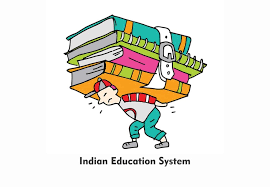
Indian Education System

Education plays an important role in the development of an individual and making him a knowledgeable citizen. It is the education that makes an individual self-reliant, helps to suppress the social evils and contribute towards the development of the society and nation as a whole. Education helps in unravelling the mystery of nature. It enables us to understand and improve the working of our society. It creates conditions for a better life. Education brings out the capabilities to fight injustice happening in society. Every individual has the right to education. 

Indian Education is one of the largest and complex education systems in the world along with China. India is committed to providing basic education to its citizens, the framework of which is defined in the National Policy of Education. Elementary education is now compulsory in India. At the time of Independence, only 14% of India’s population was literate. Now after so many decades since Independence, the number of literates has increased by fivefold.

History of Education System

The history of Indian education system comes from the times of Ramayana and Mahabharata. The historic Indian education system is also called the Gurukula system. There were gurus then who are now known as teachers and shishyas who are called students now. The gurus and the shishyas lived together under one roof in Gurukula until the completion of their education. The shishyas were expected to help the guru in all the daily chores as part of their learning. The children belonging to higher strata of the society were taught all the subjects from Sanskrit to Holy Scriptures and mathematics to metaphysics by the gurus. The Gurukulas during those times focused on the practical aspects of life. The students were taught in the open classroom in the surrounding area of nature. This early system of education in India continued for many years until the modern education system came into the picture in the nineteenth century.

In the early 19th century, during the British period, the modern education system was brought into our country by Lord Thomas Babington Macaulay. The basic strength of this modernized education system was the examinations and a well-defined curriculum, which gave importance to subjects like science and mathematics and subjects like philosophy, metaphysics were given a back seat. The brick and mortar classrooms replaced the open classrooms in the Gurukulas. The essence of the guru shishya bond was taken over by a more formal relationship between the teacher and the student. To understand the progress of any student, examinations were conducted at frequent intervals. The focus of the education system shifted from learning to memorizing of the concepts to score good marks in the examinations.

Problems of Indian Education System

Over a period of time, it has been observed that there are many loopholes in the system of education in India. Instead of understanding the concepts, students started cramming and memorizing the lessons. Knowledge is given a backseat and scoring in high rankings takes importance. The modern parents have tuned their mindsets accordingly and their goal is to ensure that their children score good marks instead of acquiring knowledge right from the primary level. 

Private schools and colleges have been rapidly increasing in the country but the results produced by them are far beyond satisfactory. It has also been observed that the quality of teachers deteriorated with the passing of time. Our examination system is responsible for the wide skill gap. India is producing lakhs of engineers and professionals every year but only a fraction of this number is actually getting employed. This is because the Indian examination system focuses more on scoring good percentages rather than the actual continuous comprehensive evaluation. 

Research and development, which should be the cornerstone of our system, are given the least importance. The private schools and colleges focus on the admission of more students and are least interested in the quality of their education. This is the major reason why the faculties and the teachers lack skills and specialization. This is quite evident from the fact that a single professor is assigned to teach multiple subjects. 

How Can We Improve the Indian Education System?

First and most importantly we should improve the grading system. Rote learning should be discouraged completely. Teachers and faculties should focus more on the analytical skills of the students and grade them accordingly. There should be more focus on comprehensive evaluation instead of scoring only good marks. Workshops must be organized for teachers on a regular basis to keep them updated about the latest developments in the sector of education. At the same time, the curriculum should be reframed according to the present needs of education in India. 

The payroll structure of the teachers and the faculties especially in the government institutions should be improved. This step will help in motivating the teachers to develop their skills and they will take a keen interest in grooming or shaping up a student’s life and career. The government and other entities who are associated with the education sector, need to understand the importance of quality of education. Education should be a holistic process that must focus on the overall development of the physical, emotional, social and cognitive skills of a child. It needs to be a slow and cyclic process and must take place gradually to help the child develop into an autonomous, independent and knowledgeable individual.

Conclusion

An educated individual is an individual who should be able to contribute towards the betterment of the economic and social development of the society as well as the country. The true goal of education must exceed awarding the degrees and certificates to the students. Education is not a tool to earn livelihood but it is a way to liberate the mind and soul of an individual. 

Role Of Todays Youth In Building A Self Reliant India

“Self-reliance is the key to a vigorous life.”

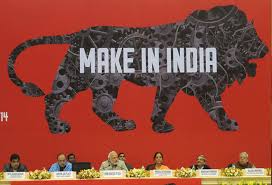
Self-reliant India is the vision of the Prime Minister of India Narendra Modi of making India a self-reliant nation. The first mention of this came in the form of the ‘Self-Reliant India Mission’ during the announcement of the coronavirus pandemic related economic package on 12 May 2020. This self-reliant policy does not aim to be protectionist on nature and as the Finance Minister clarified, ” Self-reliant India does not mean cutting off from rest of the world”. The largest fund in the country worth Rs. 21,000 crore was setup by the IIT Alumni Council with the aim of supporting the mission towards self-reliance.

Everybody knows, that the youth are the future of any country. But India can take lead over many other nations because about 65 percent of the country’s population is below 35 years and 50 percent is below 25 years. With huge, educated young population, India is very uniquely poised to realise the demographic potential amd reap the advantage of this vast powerhouse of human resource talent. The need of the hour is to upgrade the skill or upskill the youth to meet the emloyment needs of technology driven 21st century and accelerate the pace of self-reliance.

The uncertainity created by the pandemic is being seen by many as an opportunity to upgrade knowledge and acquire new skills that will cater to the post-corona virus job scenario. The skills required for tomorrow’s jobs will be completely different from the skill-sets youth possess today.

So, its high time now, we have to make India self-reliant and youth plays the most important role in this mission.

International Workers Day

“Without labour nothing prospers.”

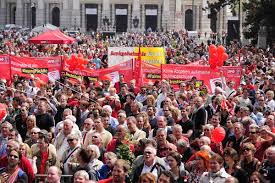
Labour Day or International Workers Day is celebrated annually on 1 May to celebrate the working class and labourers across the world. Socialist and labour unions celebrate this day by organising programmes to improve wages and working conditions of the workforce. In more than 80 countries Labour Day is a national holiday.

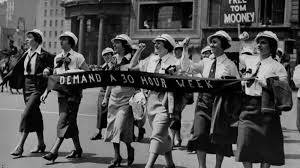
Before a formal Labour Day came into place, deaths, injuries and dangerous working conditions were very common among the working class globally. During the rise of industrialisation, the U.S. exploited the working class during the nineteenth century and made them work upto 15 hours a day under rigorous conditions. The rising death of the workforce in industries forced the working class to raise their voices for their safety. After efforts made by the workers and socialists, eight hours was declared as the legal time for the workers in the late nineteenth century by the American Federation of Labour.

The origin of Labour Day goes back to an incident in Chicago on May 4, 1886 known as the Haymarket Affair. On this day workers assembled as part of a peaceful rally in a strike demanding an eight hour work day. An unknown person threw a dynamite bomb at the police as they acted to disperse the meeting, and the bomb blast and ensuing gunfire resulted in the deaths of seven police officers and atleast four civilians; dozens of others were wounded. The Chicago protests led to many countries and at last they got the proper labour rights.

So, they had a long repression from the society. So, now the time has come to live respectfully and safe. Without labour no country can prosper. They are the ones who make a way towards country’s development. Their hardwork, dedication cherishes the path of development of country. So, respect them and provide safe working conditions to them. The below mentioned lives are aptly quoted;” A worker is a creator and a great asset to every nation”.

New Forms of Punishment

Section 53 prescribes five types of punishments to be meted out to a person convicted of a crime under the Code, depending on the nature and gravity of the offence,viz .:

(i) Death; (ii) Imprisonment for life; (iii) Imprisonment, rigorous with hard labour, or simple; (iv) Forfeiture of property; and (v) Fine.

It is suggested to add five new forms of punishment to the existing ones in section 53, IPC with a view to deter particular types of criminals. Such punishments will have more psychological, social and moral impact on the criminals and will go a long way in curbing crimes. The proposed punishments are: (i) Externment, (ii) Compensation to victims of crime, (iii) Public Censure, (iv) Community service, and (v) Disqualification from holding public office.

(i) Externment: Externment or banishment is a form of punishment in which an accused is sent out of the place of his residence to another place for a specified period of time as mentioned in the order issued by the court. This is done to deprive the accused of the company of his family members, friends and associates so that he or she may not indulge in criminal activities. Externment is resorted to primarily in case of anti-social, hardened and habitual criminals.

(ii) Compensation to victims of crime: Unfortunately, the victims of crime in our country do not attract the attention of law makers. Of late, Civil Procedure Code, 1973 in section 357 has empowered the court to award compensation to the victims of crime in very limited cases at the time of passing the judgment. No doubt, the higher judiciary has on times provided compensation to the victims of crime of custodial violence, sexual assault, rape, illegal detention by invoking Article 21 of Constitution, but such instance will not serve the plight of helpless victims.

(iii) Public Censure: Public Censure or social censure is one of the methods of punishment prescribed in some of the countries, such as Russia, Columbia etc., in respect of certain offences of anti-social nature, such as white-collar crimes, tax crimes, food adulteration, etc. In ancient India, public censure was considered suitable punishment for certain class of criminals.

(iv) Community Service: Community service or corrective labour is a form of punishment in which the convict is not deprived of his liberty. Corrective labour is the standard penalty given in those cases where it is considered that the accused need not to be isolated from the society. The period ranges between one month to one year in such cases. This system is used in Soviet Russia with good results. An important feature of this type of punishment is that the accused is not deprived of his liberty and he may go home after the day’s work.

(v) Disqualification from holding public office and contest elections: Disqualification to hold public office and contest election of legislature and local bodies as a form of punishment will have the adequate and desired deterrent sanction, if sincerely implemented. Representation of the People Act, 1951 disqualifies a person convicted for a period of two years or more to contest election for a period of six years. But the provisions are very limited in scope and are being abused with impunity.

Theories of Punishment in Indian Penal Code,1860

Introduction

Punishment is the sanction imposed on an accused for the infringement of the established rules and norms of the society.

Objective

The object of punishment is to protect society from mischievous and undesirable elements by deterring potential offenders, by preventing the actual offenders from committing further offences and by reforming and turning them into law abiding citizens.

Types of Theories

  1. Deterrent Theory
  2. Preventive Theory
  3. Retributive Theory
  4. Reformative Theory
  5. Multi Approach Theory

a) Deterrent Theory: According to this theory, the object of punishment is not only to prevent the wrong-doer from doing a wrong second time, but also to make him an example to others who have criminal tendencies. Salmond considers deterrent aspects of criminal justice to be most important for control of crime. Deterrent punishment is likely to harden the criminal instead of creating in his mind a fear of law. Hardened criminals are not afraid of imprisonment.

b) Preventive Theory: According to Paton:’The theory concentrates on the prisoner and seeks to prevent him from offending again in the future. The death penalty and exile serve the same purpose of disabling the offender’. Critics point out that preventive punishment has the undesirable effect of hardening first offenders, or juvenile offenders, when imprisonment is the punishment, by putting them in association of hardened criminals.

c) Retributive Theory: In primitive society punishment was mainly retributive. The person wronged was allowed to have revenge against the wrong-doer. The principle of ‘an eye for an eye’, ‘a tooth for tooth’, was the basis of criminal administration. According to Justice Holmes: ‘It is commonly known that the early forms of legal procedure were grounded in vengeance’. The advocates of this theory plead that the criminal deserves to suffer.

d) Reformative Theory: According to this theory, the object of punishment is reformation of criminals. The object of the punishment should be to reform the offender. The criminal must be educated and taught some art and craft or industry during his term of imprisonment, so that he may be able to lead a good life and become a responsible and respectable citizen after release from jail.

e) Multi Approach Theory: In fact, a perfect system of criminal justice could never be based on any single theory of justice. Every theory has its own merits and every effort should be made to extract the good points of each and integrate it so that best of all could be achieved. Punishment should be proportionate to the nature and gravity of the crime. The object of any concession given to an offender should be to convince him that normal and free life is better than life in jail.

SCIENCE AND TECHNOLOGY

Science and Technology have now become crucial parts of our life and our life has many luxuries and we are able to utilize them because of science and technology. It has helped us to do all these in short time because of the advancement in science and technology. Every day new technologies get introduced in the field of science and technology which makes human life easier and comfortable. And now it is difficult to imagine our loves without science and technology. Because of this we are now living in modern civilization and our evolution has occurred. This development in the field of Science and Technology is present in every aspect of our life and has great contributions in it.

There have been many new inventions in the field of Science and Technology which has changed the overall perspective of humans towards life and helps in modernizing the human civilization. Hence, people get the chance to enjoy the lives more comfortably and make it more pleasurable. In other days, humans now have a simple life because of science and technology. It has now expanded its wings into the fields of medical, education, manufacturing and many other areas.

WHAT IS SCIENCE ?

Science is the consists of systematic study of the behavior and structure of physical and natural world through observation, experiment and technology with the application of scientific knowledge for practical purposes. And Like everything, Science also has a journey and it has long lasting impact on the humans. Science has large contributions in the evolution of human.

WHAT IS TECHNOLOGY ?

“Technology” is the application of this scientific knowledge for practical purposes. Thee mobile, laptop etc. have now become the essential parts of our life and make use of connectivity or communication or smart technology for doing our activities. From the machines used in industries to the robots created, all fall under technological invention. So, in simpler words we can say that technology has made our lives comfortable.

Science and Technology: India

Ever since British rule, India was famous for many things and after gaining independence, science and technology, played a great role in shaping the present and future of India. Now, it has emerged as an essential source of creative and scientific developments all over the worlds. All these advancements have led to the improvement of Indian economy and assisted development in various fields including Space Technology, Mathematics, Space Technology and many more. Some of the prominent examples of these developments are railway system, smart phones etc. Such advancements only helped in launching Chadrayaan 2 and helped India earn critical acclaim from all over the world.

In conclusion, we must admit that science and technology have led human civilization to achieve perfection in living. However, we must utilize everything in wise perspectives and to limited extents. Misuse of science and technology can produce harmful consequences. Therefore, we must monitor the use and be wise in our actions.

Advancement in science and technology has changed the modern culture and the way we live our daily life.

Indian athletes at Tokyo 2020.

In 1920, India sent a team to the Olympic Games at Antwerp, Belgium. And after that, India never stopped and has commenced participating in every summer game since then.

India’s surge in sports and athletes from 1964-2020. If we see earlier, in 1964 India had 52 males athletes and 1 female athlete in 8 games. And now there are 68 males and 52 female athletes in 18 games.

We’ve seen a rise in each of its past three editions at the Summer Olympics and all signs make a fact that the finest athletes of our country are continuing the movement at Tokyo 2020.

It is quite impressive that more than 100 athletes from India have qualified for the Olympic Games comprising one men’s hockey team, one women’s hockey team, and two relays.

This time India is participating in 18 games so Let’s see some information about our Indian athletes at Tokyo 2020.

1. Archery

If we talk about archery, there are no changes in the team, but this time the men’s trio will also compete as a team.

Men’s recurve.
1 Tarundeep Rai
2 Atanu Das
3 Pravin Jadhav

Women’s recurve.
In the women’s team, there’s only one lady, Deepika Kumari who will compete in Tokyo 2020.

2. Badminton

Looking ahead in badminton, the women singles silver medalist of Rio 2016 PV Sindhu is ready and she will exemplify again in Tokyo 2020.

Men’s singles.

1 B Sai Praneeth 

Men’s doubles.

1 Satwik sairaj rankireddy and Chirag Shetty.

The update is that this time there will be no mixed doubles and women’s doubles pair in the Indian badminton team.

3. Equestrian

After 20 long years, Fouad Mirza is the first Indian equestrian ever to qualify for the summer games.

He locked his allotment in the evening after crowning the group in the individual event category at the Southeast Asia Oceania qualifiers in November 2019. We hope the best from India’s first equestrian.

4. Golf

1 Anirban Lahiri

2 Udayan Mane

Representing women’s events.

1 Aditi Ashok

This time at Tokyo summer games 2020, India’s participation in golf will feature Anirban Lahiri and Udayan Mane from the men. The good news is from men’s Udayan Mane who cut a replacement, will be making his Olympic debut, and while in women’s event, Aditi Ashok will represent.

5. Fencing

Coming to fencing, Chennai’s Bhavani Devi became the first Indian fencer to qualify for the Summer Olympics. The sabre fencer reserved her opening for Tokyo 2020 through the (AOR) adjusted official ranking method at the sabre world cup Budapest, Hungary, it was an Olympic qualifying event.

6. Gymnastics

This time Deepa Karmakar

Is not participating but, our second Indian woman gymnast Pranati Nayak is qualified for the Olympics. The artistic gymnast made the slash in may month via the Asian quota.

7. Hockey

Seeing India’s craze and energy will be continuing in the 20th Olympic games as it will feature the men’s hockey team while the women’s team will be making their third appearance and second in progression.

From the men’s team, Manpreet Singh and the women’s team Rani Rampal qualified their teams in November 2019 and each of them will carry the squad at the summer Olympics 2020.

8. Judo

When it’s about judo, India eyes on the only judo participant at summer 2020 Shushila Devi Likmabam, in women’s extra lightweight (48kg) category, she cut the highest-ranked Asian judoka outside the top 18 on the (OGQ) Olympic game quota rankings list.

9. Rowing

Coming to rowing, in the Doubles sculls event at the Asian qualifiers at Tokyo, Japan in may the Indian rowers Arjun Jat and Arvind Singh made themselves qualified for the summer Olympics.

10. Sailing

Talking about sailing, India never had more than two sailors at a single Olympics before. But now, for the first time, team India will be competing in more than one sailing event at the games, Nethra Kumanan became the first Indian woman sailor to qualify for the Olympics at the mussanah open championship in April 2021. And not only that, but three other Indian sailors also made the Tokyo 2020 cut in Oman.

Laser radial category:

1.Nethra Kumanan

Laser standard category:

1.Vishnu Saravanan

49er category:

1.KC Ganapathy 

2.Varun Thakkar

11. Swimming

Let’s have a look at how our three Indian swimmers will compete at the Tokyo Olympics. 

Men’s 200m freestyle, 100m butterfly, 200m butterfly.

1.Sajan Prakash

Men’s 100m backstrokes.

1.Srihari Natraj

Women’s 100m backstrokes.

1.Maana Patel

Talking about Sajan Prakash, he became the first Indian swimmer to qualify directly for the summer Olympics, just after achieving an elusive ‘A’ cut.

Srihari Natraj also managed to achieve the tricky ‘A’ cut in the 100m backstrokes a day later. While Maana Patel qualified via the universality quota, which secures their seat in Tokyo Olympics 2020.

12. Weightlifting

This time, Mirabai Chanu will be India’s only representative in weightlifting at the Summer Olympics 2020. 

Ranking no.2 in the world, former world champion Mirabai Chanu is among the idols for a medal in the women’s 49kg division. 

13. Tennis

Women’s doubles:
1.Sania Mirza
2. Ankita Raina

Men’s singles:
1.Sumit Nagal

Talking about our men’s singles player Sumit Nagal, he will be making his Olympic debut this year. And whereas Sania Mirza qualified for Tokyo Olympics via her protected ranking and chose Ankita Raina as a partner for women’s doubles.

14. Wrestling

Women’s freestyle category.

1.Seema Bisla 50kg

2.Vinesh Phogat 53kg

3.Anshu Malik 57kg

4.Sonam Malik 62kg

Men’s freestyle category.

1.Ravi Kumar Dahiya 57kg

2.Bajrang Punia 65kg

3.Deepak Punia 86kg

Competing at Tokyo 2020, all the seven wrestlers secured a quota place for our country in their respective categories, the wrestling association of India (WAI) has confirmed their seats in the summer Olympics with Sonam malik winning the quota in the 62kg category, the bad news is Rio 2016 bronze medalist Sakshi Malik will not be wrestling at Tokyo 2020.

15. Table tennis

Players.

1.Sharath Kamal

2. Sathiyan Gnanasekaran

3. Sutirtha Mukherjee

4. Manika Batra

These players qualified for the Olympics at the Asian qualifiers at Doha, Qatar in March 2021. Talking about Sharath kamal, who will be making his 4th impression at summer games. While Sathiyan G and women’s singles player sutirtha mukherjee fastened their seats to Tokyo 2020. Manika Batra and Sharath Kamal booked their place on the basis-based ones.

And also they will compete together in the mixed doubles after their Olympic piers at the Asian qualifiers.

16. Boxing

Men’s category.

1.Vikas Krishan 69kg

2. Ashish Kumar 75kg

3. Manish Kaushik 63kg

4. Amit Panghal 52kg

5. Satish Kumar 91kg

Women’s category.

1.Lovlina Borgohain 69kg

2. Pooja Rani 75kg

3. Simranjit Kaur 60kg

4. MC Mary Kom 51kg

Qualifying at Asia Oceania boxing Olympic qualifiers held in Amman, Jordan. All the nine Indian boxers smacked all the nine tickets to the summer Olympics.

17. Shooting

Categories.
Women’s air rifle 10m
1.Anjum Moudgill
2. Apurvi Chandela

Men’s air rifle 10m
1.Divyansh Singh Panwar
2. Deepak Kumar

Women’s 3rd position rifle 50m
1.Tejaswini Sawant

Men’s 3rd position rifle 50m
1.Sanjeev Rajput
2. Aishwarya Pratap Singh Tomar

Women’s air pistol 10m.
1.Manu Bhaker
2. Yashaswini Singh Deswal

Men’s air pistol 10m
1.Saurabh Chaudhary
2. Abhishek Verma

Women’s pistol 25m
1.Rahi Sarnobat
2. Chinki Yadav (replaced by elaveneil valerian)

Men’s skeet.
1.Angad Singh Bajwa
2. Mairaj Ahmed Khan

The 15 outstanding shooters of the Indian team have achieved Olympic capability so far, making it the country’s biggest faction at any game.

The following athletes secured their place by their participation at the showpiece event was decided by the national rifle association of India (NRAI).

18. Athletics

Athletics has never been India’s strong suit at the Olympics, but rising players like javelin throwers Neeraj Chopra and Shivpal Singh, the 4×400m mixed relay, and race walking have put up confidence this time at the Olympics.

4×400m mixed relay will make its first debut at the Summer Olympics, we will see an Indian team that has Asian games gold medalist Muhammad Anas, after finishing third at the world athletics championship in 2019.

The first Indian athlete to qualify for the summer Olympics KT Irfan gave us the first hope in 2019. While our ace sprinter Dutee Chand is set for her second Olympic appearance.

Categories.

Men’s 20km race walking. 1.KT Irfan

2. Sandeep Kumar

3. Rahul Rohilla

Men’s 50km race walking.

1.Gurpreet Singh

Women’s 20km race walking.

1.Bhawna Jat

2. Priyanka Goswami

Men’s 3000m steeplechase.

1.Avinash Sable

Men’s long jump.

1.Murali Sreeshankar

Men’s 400m hurdles.

1.MP Jabir

Men’s javelin throw.

1.Neeraj Chopra

2. Shivpal Singh

Women’s javelin throw.

1.Annu Rani

Men’s shot put.

1.Tajinderpal Singh Toor

Women’s 100m and 200m.

1.Dutee Chand

Women’s discuss throw.

1.Kamalpreet Kaur

2. Seema Punia

4×400m Mixed Relay

Mens 4×400m Relay

Thank you so much for reading this blog!!!

For more content like this please visit, @eduindexnews


AIRSTRIKE THAT DESTROYED TALIBAN HIDEOUTS IN AFGANISTAN:

AFGHAN-TALIBAN:

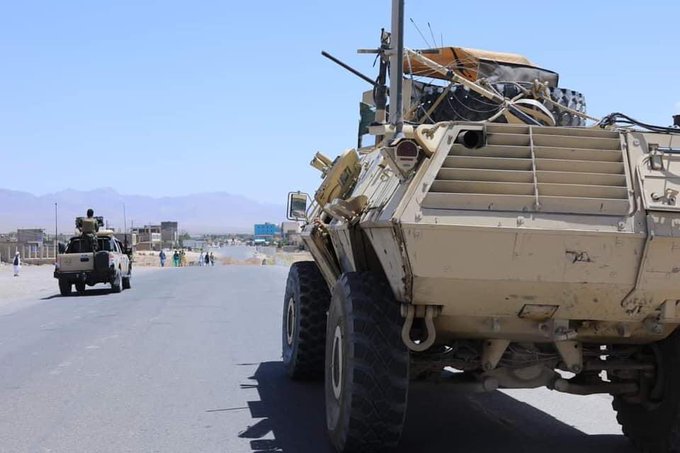
Afghan security forces have increasingly relied on airstrikes to push the militants back from cities, putting the lives of civilians at risk.

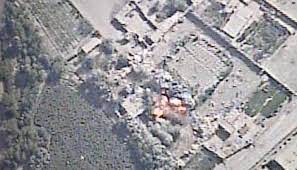
A hideout used by Taliban insurgents is seen being destroyed in an airstrike by defense forces. A video regarding the same was released by the Afghanistan government on Twitter.

 In the attack that happened in Zherai district of Kandhar province, total of 20 terrorists were killed. At least 250 such insurgents have been killed while nearly 100 were wounded in battles at several major cities over the past 24 hours, Afghan army said.

As per reports three terrorist vehicles, six motorcycles, two bunkers and a significant amount of their weapons and ammunition were also destroyed.

Ministry of defense, Afghanistan in twitter quoted ” 254 taliban terrorists were killed and 97 wounded as a result of ANDSF operations in Ghazni, Kandahar, Herat, Farah, Jowzjan, Balkh, Samangan, Helmand, Takhar, Kunduz, Baghlan, Kabul & Kapisa provinces during the last 24 hours. Also, 13 IEDs were discovered & defused by ANA “.

Over the past few weeks, Afghanistan has witnessed a surge in violence as Taliban has intensified their against their attack forces and civilians.

AFGHAN VIEWS:

Afghanistan government has repeatedly dismissed the Taliban’s steady territorial progress over the summer as “lacking strategic value”.

In this regard, the Chairman of the Joint Chiefs of Staff, General Mark Miley, made a remarkable comment that the Taliban now control about half of the 419 districts centres in Afghanistan.

He added that as the Taliban seize more territory, the Afghan security forces are consolidating their positions to protect key population center’s, including Kabul.

FRIENDSHIP – THE PRICELESS BOND

“Good friends are hard to find, harder to leave, and impossible to forget.”

Friends and friendship cannot be defined in words. It is the soulful attachment between individuals. Friends are persons who are very close to one’s heart. They are the only souls who expect nothing and don’t do something for a sake. There are no responsibilities, commitments, ego, and rules between friends. Endless gossips, sharing and caring, silly fights, memories, and trust, loyalty, love without expectation is what is present between true friends. There are no formalities and awkwardness in friendship. It is a pure bond that can never be forgotten but will be cherished forever. The relationship that brings joy and tears at the same time is friendship next to motherhood. In fact, it is as divine as motherhood. This special thing about this companionship is that there is no privacy or secrets between friends. One can never keep a secret between friends how hard they try as friends can always find that. It is such a transparent and lucid bond where the person can share every little thing without hesitation even if it is not worthy of sharing. 

Friendship is being there for each other anytime. The understanding in this relationship cannot be compared with other relationships. We don’t need to explain something to make them understand. They can automatically understand it from our eyes and behaviour. Even if we are not close to each other, it is a soul-to-soul link that remains forever and keeps us connected. No distance could weaken the strength of friendship. There is no need for daily calls or meets to sustain a true friendship. It indeed doesn’t vanish at any cost. No matter how long we didn’t meet them or we meet them after so long, the bond doesn’t even change a bit. We will always feel the same warmth and comfort that we share with each other. We may be far apart in distance but never in heart. 

Friends are God’s gift to us. They give the sweet memories that we rejoice throughout our lives. We must feel blessed and lucky to have a true friend. We always have their unconditional support in everything whether it is right or wrong. They guide us when we choose the wrong path but will never leave us alone. They are the only creatures who will be ready to listen to our 2 AM tantrums. Even if our family fails to support us, friends never leave us unattended. They are lifetime companions who are born to love as well as torture us. From showing unlimited love and care to making the worst mockery out of us, friends always have our back. They will be with us even if the universe is against us. God thought that he couldn’t be with everyone all the time. So, he sent our friends to be with us forever. Also, as we couldn’t choose our family, God gave all of us the opportunity to find and make our own close circle. We made use of the best opportunity in our lives to choose our friends and made them our family.

“There are friends, there is family, and there are friends that become family.”

HAPPY FRIENDSHIP DAY!!!

Sindhu wins historic bronze; Beats He Bing Jiao to at Tokyo Olympics

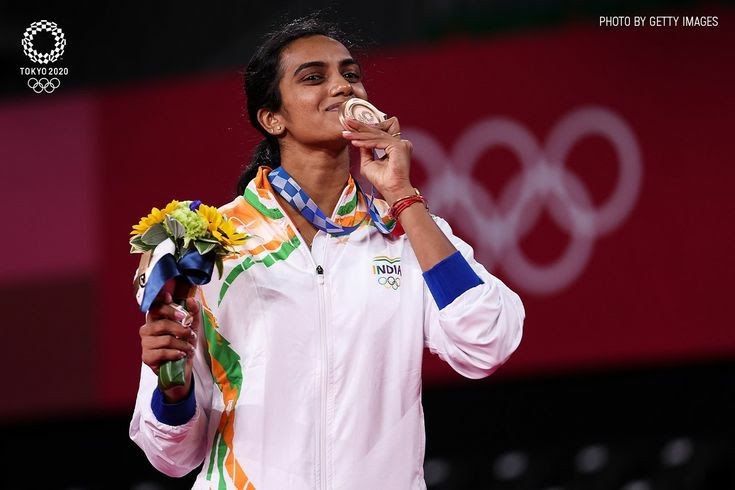
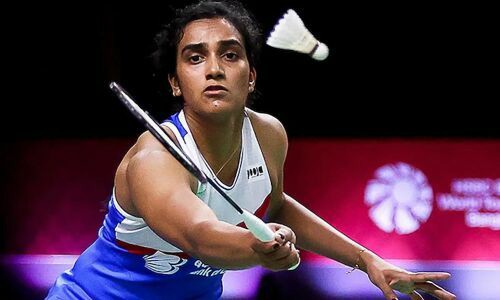
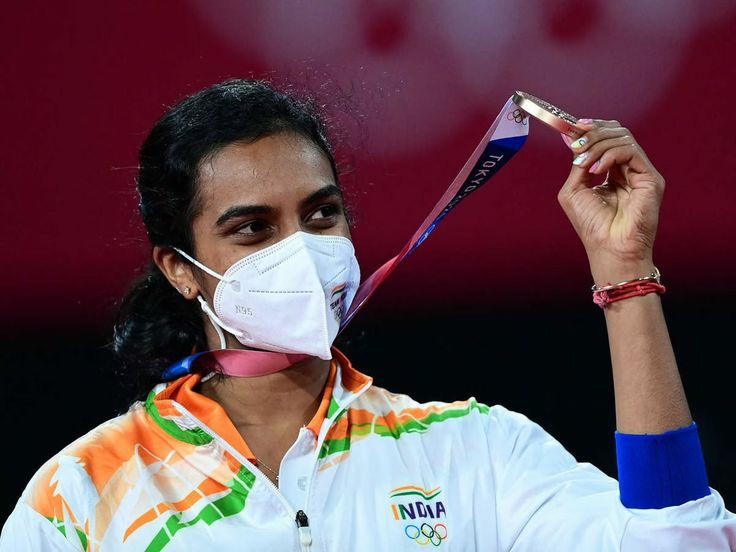
PV Sindhu created history on Sunday as she defeated He Bing Jiao of China to become the first Indian woman to win two individual Olympic medals. Sindhu defeated He Bing Jiao 21-13 and 21-15 in the bronze medal match. Sindhu was clinical throughout the contest and didn’t give her opponent any chance in the match. Sindhu had suffered a heart-breaking loss to world no.1 Tai Tzu Ying in the semi-final on Saturday. Sindhu lost the semi-final 18-21, 12-21.

Saturday was a day of heartbreaks as India’s biggest medal hope PV Sindhu crashed out of the Gold medal race with a loss against her Chinese Taipei opposition. Kamalpreet Kaur in Discuss was the big story from Saturday. Participating in her maiden Olympics, she qualified for the Discuss final in the second position. Archer Atanu Das was knocked out and so were Amit Panghal and Pooja Rani in boxing. Another good news was the fact that the Rani Rampal-led women’s hockey team beat South Africa in a must-win match.

pv sindhu India’s pride,one of our most outstanding Olympian: pm Narendra Modi

Prime Minister Narendra Modi on Sunday hailed ace badminton player PV Sindhu as India’s pride after she won bronze in the Tokyo Olympics. He tweeted, “We are all elated by the stellar performance by PV Sindhu. Congratulations to her on winning the Bronze at @Tokyo2020. She is India’s pride and one of our most outstanding Olympians.”

Reaction over social media

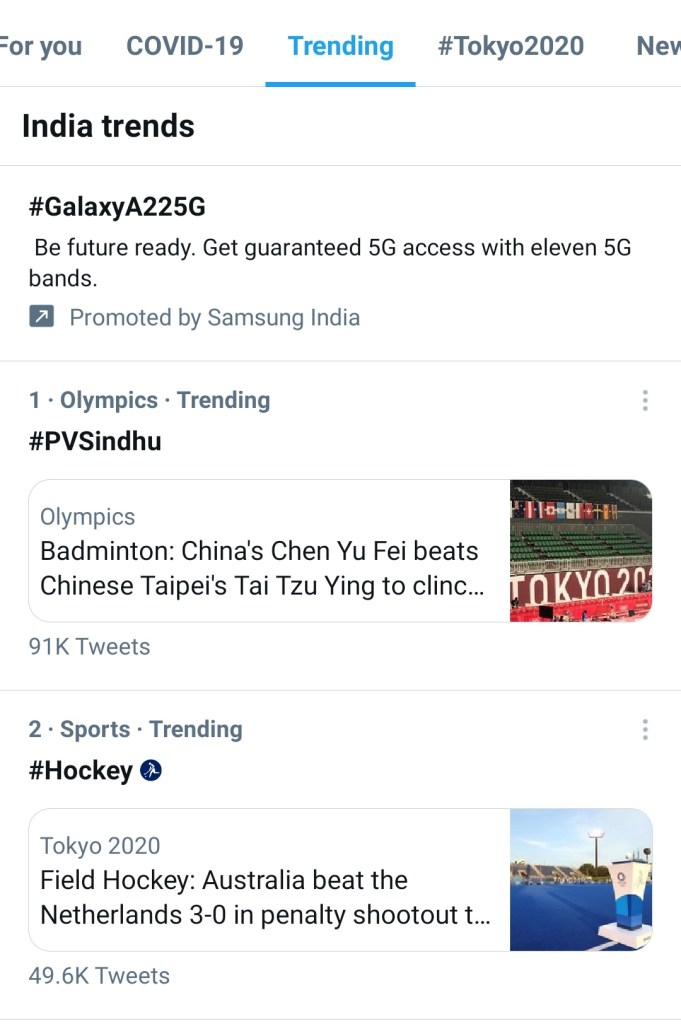
Within an hour of Sindhu’s historical victory, her name trends over the various social media plateform. #pvsindu lies at the top of twitter trend in india.

In California, Argo AI may now provide public rides in its self-driving vehicles.

Argo AI, the Ford and VW-backed autonomous vehicle technology firm, has received a permit in California that will allow it to provide free rides in its self-driving vehicles on public highways.

According to the accepted application, the California Public Utilities Commission gave the so-called Drivered AV pilot permit earlier this month. It was published on its website on Friday, a little over a week after Argo and Ford revealed plans to debut at least 1,000 self-driving cars on Lyft’s ride-hailing network in a variety of locations over the next five years, beginning with Miami and Austin.

The authorization, which is part of the state’s Autonomous Vehicle Passenger Service pilot, adds Argo to a small but increasing group of businesses looking to go beyond standard AV testing — a hint that the industry, or at least some companies, are getting ready to go commercial. Since 2019, Argo has been testing its self-driving technology in Ford cars in Palo Alto. In California, the company’s test fleet consists of around a dozen self-driving test vehicles. In addition to Miami, Austin, Washington, D.C., Pittsburgh, and Detroit, it has autonomous test cars.

Aurora, AutoX, Cruise, Deeproute, Pony.ai, Voyage, Zoox, and Waymo have all been granted licences to participate in the CPUC’s Drivered Autonomous Vehicle Passenger Service Pilot program, which necessitates the presence of a human safety operator behind the wheel. This permission does not allow companies to charge for rides.

Cruise is the only business that has obtained driverless authorization from the CPUC, allowing it to transport people in its test cars without the presence of a human safety operator.

Obtaining a Drivered authorization from the CPUC is only the first step on the road to commercialization in California. Before charging for rides in robotaxis without a human safety operator behind the wheel, the state needs firms to clear several regulatory barriers from the CPUC and the California Department of Motor Vehicles, each with its tiered system of licences.

The DMV is in charge of regulating and issuing licenses for autonomous vehicle testing on public roads. The DMW issues three types of permits, the first of which allows businesses to test autonomous vehicles on public roads with a safety driver. This basic testing authorization is held by more than 60 businesses.

The next permission allows for driverless testing, followed by a commercial deployment permit. Permits for driverless testing, in which no person is behind the wheel, have become the new benchmark and a need for firms looking to start a commercial robotaxi or delivery service in the state. The DMV has issued autonomous permits to AutoX, Baidu, Cruise, Nuro, Pony.ai, Waymo, WeRide, and Zoox.

Nuro is the only person who has gotten deployment permission from the DMV. Nuro may now deploy on a commercial basis thanks to this permission. Nuro’s trucks can only carry freight and not passengers, allowing the firm to avoid the CPUC approval procedure.

Meanwhile, in May 2018, the CPUC approved two pilot projects for autonomous vehicle passenger transportation. The Drivered Autonomous Vehicle Passenger Service Pilot program, which Argo just obtained, permits firms to run a ride-hailing service utilizing autonomous vehicles as long as they adhere to certain guidelines. Companies are not permitted to charge for rides, and a human safety driver must be present at all times. Additionally, specific data must be provided quarterly.

The second CPUC pilot will allow Cruise to launch an autonomous passenger service in June 2021.

It’s worth noting that getting to the holy grail of commercial robotaxis necessitates obtaining all of these permissions from the DMV and CPUC.

Digital Banking

Digital Banking has completely changed the way we bank in today’s times. With Digital Banking, you can transact with higher speed, ease and convenience.

What is Digital Banking? 

In simple terms, Digital Banking means availability of all banking activities online. Here, you have the luxury to freely access and perform all traditional banking activities 24*7 without having to personally go to a bank branch to get your work done. Some of the major online banking activities include-

(1) Money Deposits, Withdrawals, and Transfer
(2) Checking/Savings Account Management
(3) Applying for Financial Products
(4) Loan Management
(5) Bill Payment
(6) Account Services

Many banks also offer other integrated services like investing in Mutual Funds and other investment options online. Thus, making Digital Banking a widely used concept.

Digital Banking in India

Digital Technology has drastically changed the way banks interact with us. Similarly, it has completely changed the way we transact and interact with the bank. This is especially true in the case of a booming technological and financial economy like India, where more and more people are being connected to Digital Banking Platforms with each passing day. 

With Digital Banking you can perform every transaction, from start to end in a seamless, secure manner. You can withdraw money, deposit money, apply for loans, invest in Mutual Funds- all at a click of a button.

With the introduction of mobile banking you can perform transactions on the go. Mobile banking is a convenient and easy way to finish your transactions. For example, you can do over 125 transactions through HDFC Bank’s mobile banking app. 

The latest addition to mobile banking feature is the Mobile Banking LITE app.The HDFC Mobile Banking app can work without an internet connection, italso doesn’t take up too much space and is quick to install over slow connections. It’s a safe and secure way of making transactions on the go.

Digital Banking services are offered by all major retail banks in the country today and have, in fact, become an integral part of their services. So, one can now bank from the ease of one’s home, with the convenience of smartphone screens.

(1) Indian Financial System Code (IFSC)
The Indian Financial System Code (IFSC) is an 11-character code in alphanumeric format to uniquely identify all bank branches within the NEFT, RTGS, and the Immediate Payment Service (IMPS) network within India. This code is printed on every cheque leaf in your personal or company chequebook. To transfer funds to an account electronically, the receiver must share his IFSC code as it identifies the receiver bank and branch.Magnetic Ink Character Recognition (MICR)
Magnetic Ink Character Recognition (MICR) is a technology used to verify the legitimacy or originality of paper documents, especially cheques. A special ink sensitive to magnetic fields is used in the printing of certain characters. Every bank branch has a unique MICR code, which helps the RBI speed up the cheque clearing process, with MICR readers.

(2)Magnetic Ink Character Recognition (MICR)
Magnetic Ink Character Recognition (MICR) is a technology used to verify the legitimacy or originality of paper documents, especially cheques. A special ink sensitive to magnetic fields is used in the printing of certain characters. Every bank branch has a unique MICR code, which helps the RBI speed up the cheque clearing process, with MICR readers.

(3) Electronic Clearing Service (ECS)
Electronic Clearing Service (ECS) is another method of transferring funds from one bank account to another. It is most often used to pay regular bills (telephone, mobile, credit card, electricity, etc, to make EMI payments (Personal, Car, Home Loan), and SIP investments. This is done by invoking the auto debit facility. ECS is also used by entities for payment of salaries, pensions, distribution of dividend interest etc.

(4) Immediate Payment Service (IMPS)
Since NEFT may not be available for use on weekends and bank holidays, you could try using IMPS or Immediate Payment Service. The service is available 24X7. The minimum transfer value is Rs 1 and the maximum value is Rs 2 lakh.
But to use this service, you will need to register via your bank and provide the mobile number and MMID of the beneficiary as IMPS transfer can also be done through mobile phones. Mobile Money Identifier (MMID) is a seven-digit unique number issued by the bank.

(5) National Electronic Funds Transfer (NEFT)
The National Electronic Funds Transfer (NEFT) system allows individuals, companies, and other entities to transfer funds electronically from one bank to another within India. Normally, funds from the remitting bank will be sent to the RBI within three hours of the transaction. However, the time taken to credit the beneficiary bank’s branch account depends on how long it takes the bank to process the transaction. It should be noted that NEFT operates only during business hours on weekdays. NEFT transactions cannot be done on Sundays, bank holidays, and second and fourth Saturdays of the month. The minimum transfer value is Rs 1 and there is no upper limit.

(6)Real Time Gross Settlement (RTGS)
Another method for transferring money electronically, from bank to bank, within the Indian banking system is Real Time Gross Settlement (RTGS) scheme, where the minimum amount for each transaction is Rs 2 lakh and there is no upper limit. The beneficiary account receives the money immediately.
The RTGS system is primarily meant for large value transactions.With effect from 00:30 hours on December 14, 2020, RTGS facility is available round the clock on all days i.e. 24 hrs. India one of the few countries to operate the system 24×7. This comes within a year of the Reserve Bank of India (RBI) operationalising NEFT 24×7. NEFT is the popular mode for small-value transactions. RTGS, which started on March 26, 2004 with a soft launch involving four banks, presently handles 6.35 lakh transactions daily for a value of Rs 4.17 lakh crore across 237 participant banks. The average ticket size for RTGS in November 2020 was Rs 57.96 lakh, making it a truly large-value payment system. RTGS uses ISO 20022 format which is the best-in-class messaging standard for financial transactions. The feature of positive confirmation for credit to beneficiary accounts is also available in RTGS.
Earlier, the RBI had decided not to levy charges on transactions through NEFT and RTGS in order to promote digital transactions, and had asked banks to pass on the benefits to customers. The RBI used to levy minimum charges on banks for transactions routed through RTGS and NEFT. Banks, in turn, levied charges on their customers. RTGS is meant for large-value instantaneous fund transfers, while NEFT is used for fund transfers of up to Rs 2 lakh.
It should be noted that NEFT, RTGS and IMPS impose transaction fees in slab rates.

(7) Society for Worldwide Interbank Financial Telecommunication (SWIFT)
SWIFT is an acronym for Society for Worldwide Interbank Financial Telecommunication. It is an internationally recognised identification code forbanks worldwide, and is usually used for international wire transfers. Only those banks that are SWIFT-enabled can take part in this system. In EU nations SWIFT is also known as BIC or Bank Identification Code. When dealing with international transfers also be aware of IBAN or International Bank Account Number. IBAN (International Bank Account Number) appears in bank statements and the bank’s online systems. IBAN and BIC (Bank Identification Code ) contain your bank account number and sort code written in an internationally recognised format. All these numbers can make your wire transfers happen quickly and securely.

Rights of Pawnee and Pawnor

The bailment of goods as a security for payment of a debt or performance of promise is called ‘pledge’. The person with whom the goods are pledged is known as ‘Pawnee’ or Pledgee’. The person pledging the goods is known as ‘Pawnor’.

The rights of the pledgee or pawnee are mentioned in Section 173 to 176 of the Indian Contract Act,1872.

Rights of Pawnee

  1. Right to retain the goods pledged (Section 173 and 174): According to Sec. 173, the right of a pawnee to retain the goods pledged shall not be only for payment of the debt or the performance of the promise, but he can also exercise this right for interest on the debt and all necessary expenses incurred by him in respect of the possession or for the preservation of the goods pledged. According to Section 174, a pawnee can retain the goods pledged only as a security for that debt or promise for which they are pledged, but there is a presumption that if there are subsequent advances, they are also the part of the original debt and the pawnee may retain the goods and to recover subsequent advamces also. This is merely a presumption which could be rebutted by contract to the contrary. The pawnee is bound to redeliver the goods after he gets what is due to him.
  2. Right to recover extraordinary expenses incurred by pawnee (Section 175) : According to section 175, the pawnee is entitled to receive extraordinary expenses incurred by him for the preservation of the goods pledged from the pawnor.
  3. Right of suit to recover debt etc., and sale of the pledged goods (Section 176) : Section 176 confers right on the pawnee, including right of selling the pledged goods if the pawnor makes a default in payment of debt or performance of promise at the stipulated time. This section confers following rights on pawnee on the pawnor’s default in fulfilling promise:-. a) he may bring a suit against the pawnor upon the debt or promise and retain the goods pledged as collateral security. b) he may sell the good pledged on giving reasonable notice of the sale to the pawnor.

Right of Pawnor

Right of Pawnor to Redeem (Section 177): The pawnor has right to redeem the goods pledged, i.e., take back the goods from pawnee on payment of the agreed debt or performance of the promise in accordance with the agreement. He can exercise the right to redeem before the pawnee has made an actual sale of the goods.

Legal Heir’s Right to Redeem: In case of death of a pawnor, the pledge made by him can be redeemed by his legal heirs on meeting the liabilities concerning the pledge.