Bull Market

What is a Bull Market?

A bull market is the condition of a financial market in which prices are rising or are expected to rise. The term “bull market” is most often used to refer to the stock market but can be applied to anything that is traded, such as bonds, real estate, currencies, and commodities.

Because prices of securities rise and fall essentially continuously during trading, the term “bull market” is typically reserved for extended periods in which a large portion of security prices are rising. Bull markets tend to last for months or even years.

Understanding Bull Markets

Bull markets are characterized by optimism, investor confidence, and expectations that strong results should continue for an extended period of time. It is difficult to predict consistently when the trends in the market might change. Part of the difficulty is that psychological effects and speculation may sometimes play a large role in the markets.

There is no specific and universal metric used to identify a bull market. Nonetheless, perhaps the most common definition of a bull market is a situation in which stock prices rise by 20%, usually after a drop of 20% and before a second 20% decline. Since bull markets are difficult to predict, analysts can typically only recognize this phenomenon after it has happened. A notable bull market in recent history was the period between 2003 and 2007. During this time, the S&P 500 increased by a significant margin after a previous decline; as the 2008 financial crisis took effect, major declines occurred again after the bull market run.

Characteristics of a Bull Market

Bull markets generally take place when the economy is strengthening or when it is already strong. They tend to happen in line with strong Gross Domestic Product (GDP),and a drop in unemployment and will often coincide with a rise in corporate profits. Investor confidence will also tend to climb throughout a bull market period. The overall demand for stocks will be positive, along with the overall tone of the market. In addition, there will be a general increase in the amount of IPO activity during bull markets.

Notably, some of the factors above are more easily quantifiable than others. While corporate profits and unemployment are quantifiable, it can be more difficult to gauge the general tone of market commentary, for instance. Supply and demand for securities will seesaw: supply will be weak while demand will be strong. Investors will be eager to buy securities, while few will be willing to sell. In a bull market, investors are more willing to take part in the (stock) market in order to gain profits.

Bull vs. Bear Markets

The opposite of a bull market is a bear market, which is characterized by falling prices and typically shrouded in pessimism. The commonly held belief about the origin of these terms suggests that the use of “bull” and “bear” to describe markets comes from the way the animals attack their opponents. A bull thrusts its horns up into the air, while a bear swipes its paws downward. These actions are metaphors for the movement of a market. If the trend is up, it’s a bull market. If the trend is down, it’s a bear market.

Bull and bear markets often coincide with the economic cycle, which consists of four phases: expansion, peak, contraction, and trough. he onset of a bull market is often a leading indicator of economic expansion. Because public sentiment about future economic conditions drives stock prices, the market frequently rises even before broader economic measures, such as gross domestic product (GDP) growth, begin to tick up. Likewise, bear markets usually set in before economic contraction takes hold. A look back at a typical U.S. recession reveals a falling stock market several months ahead of GDP decline.

How to Take Advantage of a Bull Market

Investors who want to benefit from a bull market should buy early in order to take advantage of rising prices and sell them when they’ve reached their peak. Although it is hard to determine when the bottom and peak will take place, most losses will be minimal and are usually temporary. Below, we’ll explore several prominent strategies investors utilize during bull market periods. However, because it is difficult to assess the state of the market as it exists currently, these strategies involve at least some degree of risk as well.

Buy and Hold

One of the most basic strategies in investing is the process of buying a particular security and holding onto it, potentially to sell it at a later date. This strategy necessarily involves confidence on the part of the investor: why hold onto a security unless you expect its price to rise? For this reason, the optimism that comes along with bull markets helps to fuel the buy and hold approach.

Increased Buy and Hold

Increased buy and hold is a variation on the straightforward buy and hold strategy, and it involves additional risk. The premise behind the increased buy and hold approach is that an investor will continue to add to his or her holdings in a particular security so long as it continues to increase in price. One common method for increasing holdings suggests that an investor will buy an additional fixed quantity of shares for every increase in stock price of a pre-set amount.

Retracement Additions

A retracement is a brief period in which the general trend in a security’s price is reversed. Even during a bull market, it’s unlikely that stock prices will only ascend. Rather, there are likely to be shorter periods of time in which small dips occur as well, even as the general trend continues upward. Some investors watch for retracements within a bull market and move to buy during these periods. The thinking behind this strategy is that, presuming that the bull market continues, the price of the security in question will quickly move back up, retroactively providing the investor with a discounted purchase price.

Full Swing Trading

Perhaps the most aggressive way of attempting to capitalize on a bull market is the process known as full swing trading. Investors utilizing this strategy will take very active roles, using short-selling and other techniques to attempt to squeeze out maximum gains as shifts occur within the context of a larger bull market.
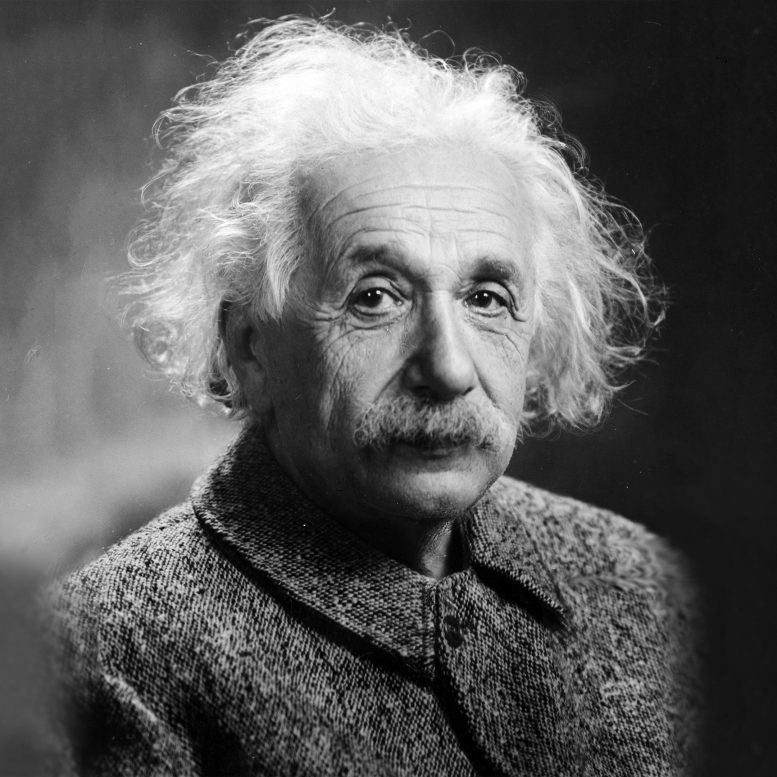
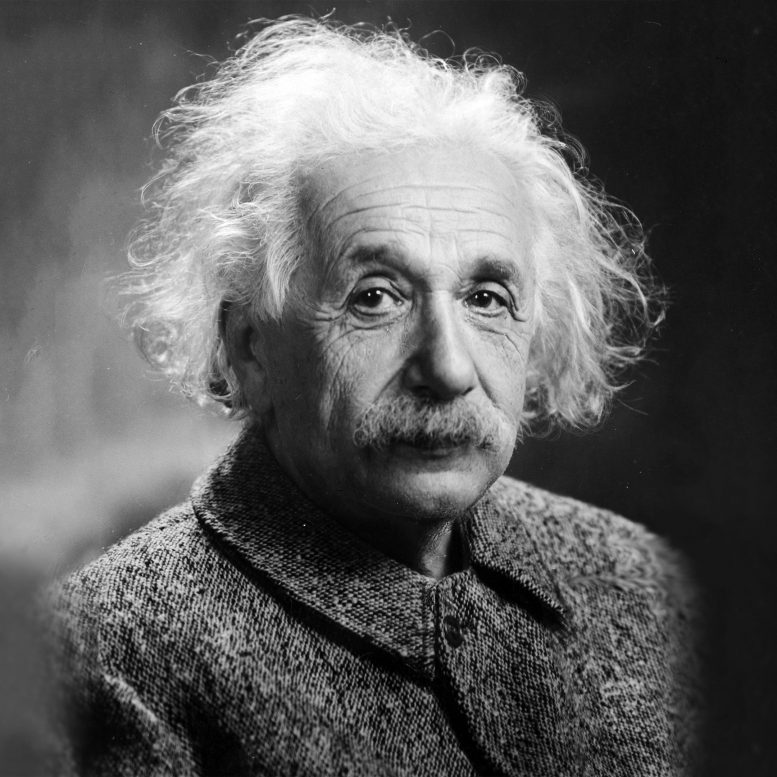
Recently Discovered Letter Written by Albert Einstein Discusses Link Between Physics and Biology – Seven Decades Before Evidence Emerges

Albert Einstein Portrait

Previously Unknown Letter Reveals Einstein’s Thinking on Bees, Birds and Physics

The 1949 letter by the physicist and Nobel laureate discusses bees, birds, and whether new physics principles could come from studying animal senses.

It’s a position still being realized within physics to this day, with a growing body of research and understanding of how animals such as birds and bees find their way around.

Now a study led by RMIT University in Melbourne, Australia, discusses how recent discoveries in migratory birds back up Einstein’s thinking 72 years ago.

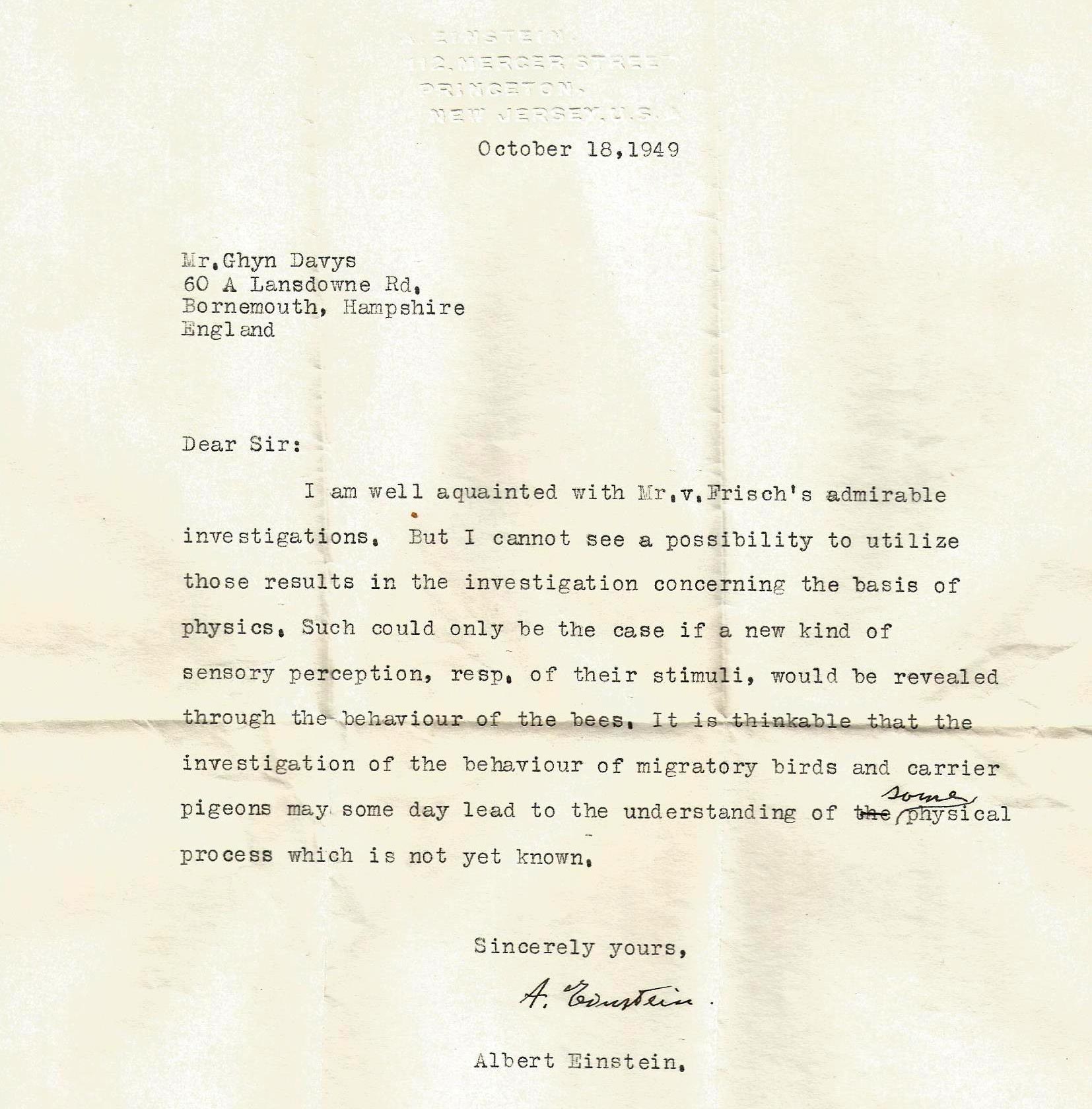
The previously unpublished letter was shared with researchers by Judith Davys — Einstein had addressed it to her late husband, radar researcher Glyn Davys.

RMIT’s Associate Professor Adrian Dyer has published significant studies into bees and is the lead author of the new paper on Einstein’s letter, published in the Journal of Comparative Physiology A.

Letter by Albert Einstein, validated by The Hebrew University of Jerusalem, where Einstein bequeathed his notes, letters and records. Credit: Dyer et al. 2021, J Comp Physiol A / The Hebrew University of Jerusalem

Dyer said the letter shows how Einstein envisaged new discoveries could come from studying animals.

“Seven decades after Einstein proposed new physics might come from animal sensory perception, we’re seeing discoveries that push our understanding about navigation and the fundamental principles of physics,” he said.

The letter also proves Einstein met with Nobel laureate Karl von Frisch, who was a leading bee and animal sensory researcher.

In April 1949, von Frisch presented his research on how honeybees navigate more effectively using the polarization patterns of light scattered from the sky.

The day after Einstein attended von Frisch’s lecture, the two researchers shared a private meeting.

Although this meeting wasn’t formally documented, the recently discovered letter from Einstein provides insight into what they might have talked about.

“It is thinkable that the investigation of the behavior of migratory birds and carrier pigeons may someday lead to the understanding of some physical process which is not yet known,” Einstein wrote.

Professor Andrew Greentree, a theoretical physicist at RMIT, said Einstein also suggested that for bees to extend our knowledge of physics, new types of behavior would need to be observed.

“Remarkably, it is clear through his writing that Einstein envisaged new discoveries could come from studying animals’ behaviors,” Greentree said.

More than 70 years since Einstein sent his letter, research is revealing the secrets of how migratory birds navigate while flying thousands of kilometers to arrive at a precise destination.

In 2008, research on thrushes fitted with radio transmitters showed, for the first time, that these birds use a form of magnetic compass as their primary orientation guide during flight.

One theory for the origin of magnetic sense in birds is the use of quantum randomness and entanglement. Both of these physics concepts were first proposed by Einstein.

Reference: “Einstein, von Frisch and the honeybee: a historical letter comes to light” by Adrian G. Dyer, Andrew D. Greentree, Jair E. Garcia, Elinya L. Dyer, Scarlett R. Howard and Friedrich G. Barth, 10 May 2021, Journal of Comparative Physiology A.
DOI: 10.1007/s00359-021-01490-6

The letter to Glyn Davys shows the openness of Einstein’s mind to novel possibilities observed in nature and the evidence that he took an interest in von Frish and his bee research.

Filigree- the metal work

Hello guys!!

I am going to tell you guys about my sweet memory regarding this topic,before we jump right into the topic.

I remember going to an exhibition with my mother.The exhibition used to take place monthly twice.

While we are shopping through the baazar I saw a person making something with some metals and tools and it piqued my curiosity so I asked my mother what was it .

My mother said it is filigree, the art of making jewellery.I was so impressed by their work and asked them if I can watch them more closely.They gave permission and were happy cause I was showing interest in their craft.

They delicately and precisely made jewellery with their hands ,they twisted ,and turned the metals but the result was beautiful in whatever way they turn.

Filigree is also called as filigrann or filgrene.This form of metal work can be traced back to 17th to 19th century of itialian and French and Portugal Metal works.

The word can be broken into two word filum and granum ,which means a thread and grain or bead respectively.

Filigree is mainly done on two metals those are gold and silver.The customers love the works crafted through this art which are often described to be classy,unique.

This work needs a lot of concentration and finesse while making these metal works intricately.
This works still remains popular in India and some other parts of Asia .

Jewellery ,watches,spoons,beads and what not everything that is made through this metal work is just wonderful.

Filigree is a metal art because every piece created by this technique is a chef’s kiss or to say a craftsman kiss.

I love this craft cause every piece has its own delicate nature that it depicts and also the finite accuracy in each twist and turn of the metal reminds me the hardwork,the time they sacrifice for our satisfaction.

Thankyou^^

Pros and cons of learning online

Online mode of learning was always there in the market but it has been acquired by almost every institution, college, and school during the pandemic. Login…join a lecture…logout, presently this is what a student’s life sounds like.

So, is the online learning mode efficient enough? 

Well, be it online or offline it always depends upon the pupil. As everyone has a different pace of learning and acquiring things. The online mode may be suitable for someone or maybe not. But in this pandemic, the only option left to us is to learn online. 

So, it brings us to the next question. 

What are the pros and cons of online learning?

There are many pros as there are cons. So, let’s go through them very quickly.

Pro: Flexibility increased

One of the biggest advantages of online learning is the increase in flexibility. You can study at your own pace, you can choose where you want to study, and how you want to study. But this doesn’t mean that the workload is decreased, it will be the same. 

Con: No labs/experiments

Courses like engineering, applied sciences, MBBS need to be understood by experiments and lab practices, which is a major missing when it comes to the online mode of learning.

Pro: More Affordable

Transportation, books, eating at the cafeteria can cost thousands of bugs per semester. Which can be saved while learning online. You just need to pay the annual fee.

Con: Lack of social interaction

One of the biggest disadvantages of learning online is the lack of social interaction. Especially applicable for young undergraduates who should be interacting with people and making friends. 

Pro: Ease of access

In the online mode of learning, all you need is a computer/smartphone with internet access. All the study materials, assignments, and lectures are available either via email or a particular platform like Microsoft Teams, Google Meets, etc.

At the rate by which technology is developing, online learning may become the only option. Well, this you never know. Until the pandemic is over, one should practice discipline in regards to the timetable to learn in a better way. 

The Human nature

There is no perfect person in the world, but the most holy and supreme person has his shortcomings, but I believe that everyone is born innocent, because of course you can’t make mistakes in your childhood. But I think people are not really good or bad or both.

  • Not all people are good people. No matter how hard you try, everyone has their own shortcomings. I also feel bad about people.
  • The mistakes they make will anger God; therefore human beings are both. People are bad because someone has to do some naughty or bad things in their lives. No one can be so good, because I believe that if you think you are a good person, you should not do anything at all. Lock yourself in the room. people are bad mainly because of temptation. We have all done some non-model things, sometimes without even realizing it.At some point we are all bad people, but most people are not bad, just like everyone goes to jail, so we keep our balance. So we have good and bad. We have holy days and bad days.
  • We are not perfect people. When we start to think for ourselves and know what is happening, we will do this to ourselves. Our environment, except when we were young, they told us what to do, and now we can control our lives. Our daily decisions make us who we are today.
  • Sometimes we can be good, sometimes we can be bad. He mentioned in his sermon that God loves everyone, no matter what. Whether you are good or bad, as long as you are willing to give, God will always find in his heart to forgive your sins.

The World of Nepotism

Welcome to the anti-meritocratic world, this world. What are you going to do about it? Will you stand back and watch while cronyism, nepotism, the old school tie, the private club, the right university, the right accent, the right background, the right secret society, the right religion, the right family, destroy merit so that their chosen ones can prosper at your expense. It’s time to smash the conspiracy. Break up all the mechanisms that allow privileged groups within society to rig the system in their favour and penalise anyone who doesn’t belong to their insidious cliques.

Michael Faust, The Meritocracy Party

Well , Its a very complicated questions . In the world, where one’s knowledge didn’t get recognition .

What would you do , when you get acknowledged not on the basis of your knowledge but on the basis of your relation with the owner ?

What would you do , if you don’t get promoted because you are not his /her relative ?

Do you ignore the fact that you are not the one , whom your boss approves?

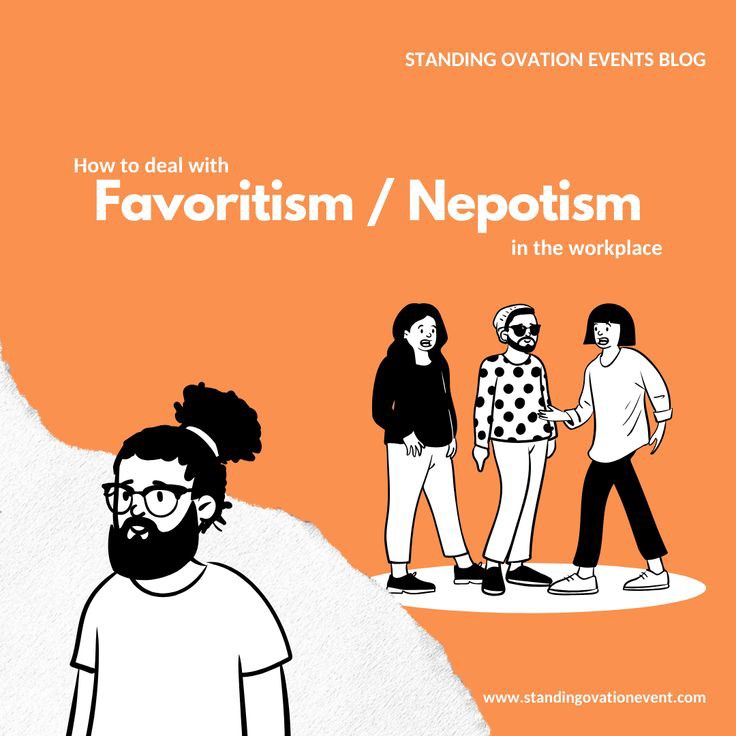
Well , if you think it’s favouritism than you are absolutely correct . You may also come accross the word NEPOTISM and if you don’t than start reading the passage . (I did as well )

This 8 letter word is destroying everyone in today’s world. And who is responsible for creating such a hypocrite. We the people have to repose this curse and make sure to control it with our coming generations, else it will destroy the whole world. And there’ll be no humanity left in this world” –

Ikramul Hannah.

Introduction

Nepotism is a the practice among those with power or influence of favouring relatives or friends, especially by giving them jobs.

Nepotism is generally defined as “the bestowal of patronage by public officers in appointing others to positions because of blood or marital relationship”.

Nepotism is found in almost all the fields but it is practiced most in business, politics, sports and entertainment sectors. It has been in practice since time immemorial, but some special cases have made it to the limelight in the past few decades.

Nepotism in India :

India has it’s fair share in the field of NEPOTISM . Well , have you ever expected that . I say , YES . Because being one of the largest country , people might become more thirsty for power . “When constantly reaching out for more, you forget what you have” Christine Szymanski.

Nepotism can be characterized as ‘the demonstration of utilizing force or impact to get out of line preferences for individuals from one’s family’.

You must be conflicted , why does nepotism exist even today ? We are living in 21st century , than why we have such orthodox thinking ? Who says no one can define what is going on in one’s mind ( well I say , isn’t is obvious ) .

From the politics to the Entertainment , from the owner to the customer, from the Bollywood to the Judiciary ; Nepotism is everywhere .

Like in OJO -MOJO , After the submission of writing competition , OJO’s class teacher asked him who wrote better . Is it MOJO or OLLY , what do you think whom he would choose . MOJO thinks OJO will choose OLLY because he likes her . But when the result announced MOJO was astounded because OJO choose MOJO’s writing . So , what do you think is it nepotism or not . Think and you will know the answer .

Bias has become the first qualification to join a party, and extreme bias the virtue to become a leader.

Link

Globalization

Introduction

Globalization is the process of interaction and integration among people, companies, and governments worldwide. It is used to describe the growing interdependence of world’s economies, cultures, and populations, brought about by cross-border trade in goods and services, technology, flow of investment, people, and information. Countries have built economic partnerships to facilitate these movements over many centuries and years. Globalization has accelerated since the 18th century due to advances in transportation and communication technology. The term gained popularity after the Cold War in the early 1990s, precisely after the fall of the Soviet Union, as these cooperative arrangements shaped the modern daily life.

Importance

This increase in global interactions has caused a growth in international trade and the exchange of ideas, beliefs, and culture. The wide-ranging effects of globalization are complex and politically charged. Economically, globalization involves goods, services, data, technology, and the economic resources of capital. Advances in transportation, like the steam locomotion, steamship, jet engine, and container ships, and developments in telecommunication infrastructure, like the telegraph, Internet, and mobile phones, have been major factors in globalization and have generated further interdependence of economic and cultural activities around the globe. Globalizing processes affect and are affected by business and work organization, economics, socio-cultural resources, and the natural environment. Academic literature commonly divides globalization into three major areas: economic globalization, cultural globalization, and political globalization

Negative Effects

Despite its benefits, the economic growth driven by globalization has not been done without awakening criticism. The consequences of globalization are far from homogeneous: income inequalities, disproportional wealth and trades that benefit parties differently. In the end, one of the criticisms is that some actors (countries, companies, individuals) benefit more from the phenomena of globalization, while others are sometimes perceived as the losers of globalization. 

https://youmatter.world/en/definition/definitions-globalization-definition-benefits-effects-examples/

Travel the World!!

Figuring out how to travel the world is no easy feat, especially when you’re trying to do it on a budget or planning world travel with a family.

There are many factors to keep in mind when evaluating your trip, including what to do before leaving and your budget. To help you get started, we’ve put together a guide on how to travel the world, including everything from how to start looking into your trip to how to save money once you’re abroad.
Get prepared

If you want to travel the world, there are some planning measures you want to take first to ensure you have durable luggage and the proper documents — a passport and possibly visas — and figuring out how much time off you’ll need.

Book travel far in advance

After all that preparation, you’re ready to book your trip around the world, which will likely be a round-the-world plane ticket, a journey by sea, or a combination of flights and ground transportation.

Avoid hidden travel and communication fees

Once you’ve started your trip, there are tips and tricks to help you travel each destination across the world on a budget. City-pass offerings vary by location, but many will give you free or discounted admission to top attractions in a city, as well as fast-track options to cut lines
Choose Restaurants Wisely

While eating food from around the world is often one of the best parts of traveling, dining out for every meal can become expensive. To save some money: stay away from restaurants located near tourist attractions, which generally have higher prices and lower quality.

Ask about free amenities on flights and at hotels

Some airlines and hotels have free perks available to guests who know to ask for them. On flights, for example, travelers can request everything from ukuleles on some Hawaiian Airlines flights to hot chocolate on Southwest Airlines. Some hotels also offer free amenities that range from night lights, chargers and curling irons

reference-https://www.thetravelmagazine.net/articles

Laws in India children need to know

Out of tons of subjects and important topics missing from our Indian curriculum, laws are one of the most important.

Here are some laws each and every child needs to be aware of, regardless of all variable factors:

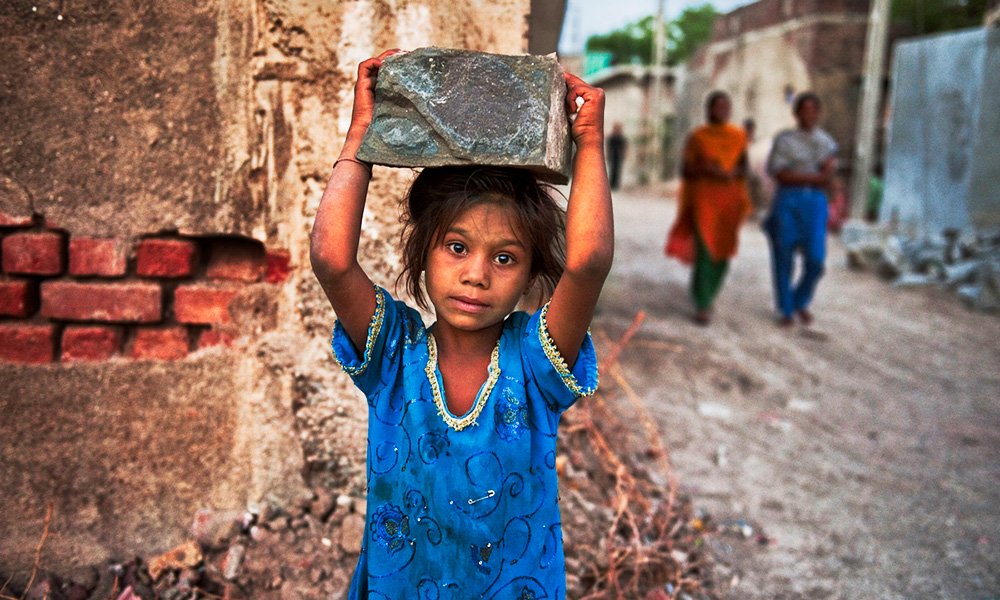
I LAWS AGAINST CHILD LABOUR

Image source: Google | Image by: Nikita Roy 

Children below 14 years of age – can work in family enterprise or entertainment industry as artists with certain conditions

Children between 14-18 years of age- cannot work in any factory, mine or any other hazardous setting, without exception

Children cannot be made to overwork or even work night shifts.

These laws are made clear in article 24 of the Indian constitution and acts that were passed in its pursuance.

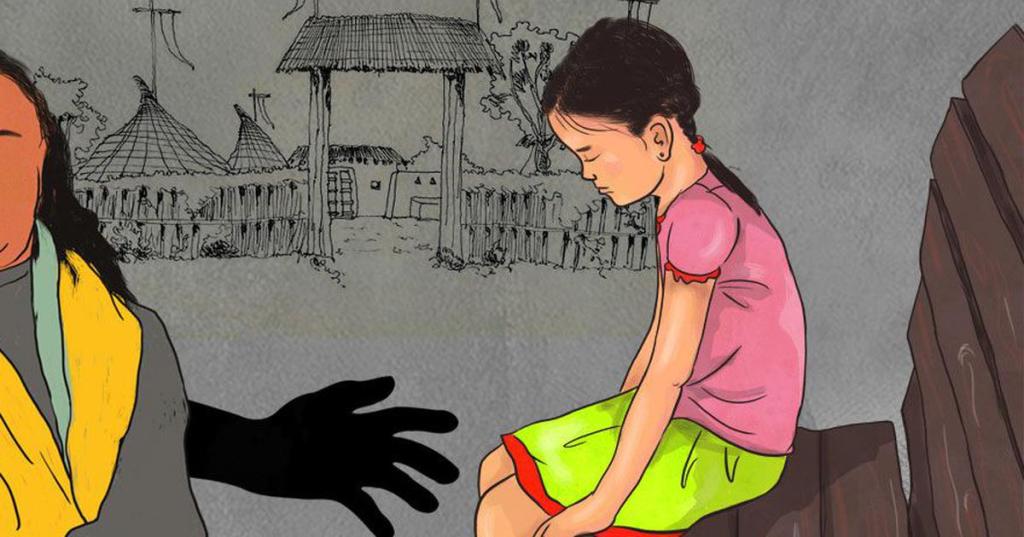
II LAW AGAINST SEXUAL OFFENCES

Image source: Google | Image by: Manisha Yadav scroll.in

The Protection of Children from Sexual Offences(POCSO), amendment Bill 2019 protects children below 18 against:

  • Sexual assault against children
  • Child pornography
  • Harassment
  • Drugs being administered to them to bring about early sexual maturity

POCSO aims at making offences against children gender-neutral.

III ENSURING FREE AND COMPULSORY EDUCATION

Image source: Google | Image by: Aprajita Jha

The Right of Children to Free and Compulsory Education Act or Right to Education Act (RTE), 2009, Article 21A of the Indian constitution, ensures free and compulsory education to everyone between 6 to 14 years of age. 25% of seats in all private institutions are reimbursed by the state to which kids are admitted based on economic status or caste-based reservations.

The Right to education of a specially enabled child (under 18 years of age) has separate legislation that is laid down under the Persons with Disability Act.

IV PROHIBITION OF CHILD MARRIAGE

Image source: Google | Image by: OBJECTIVE IAS

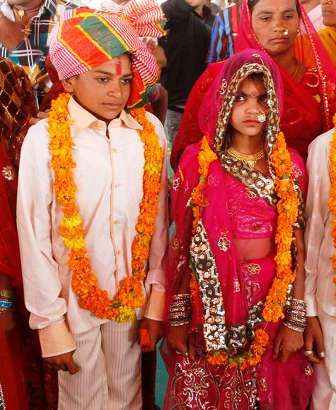
Any marriage in which either the boy is under 21 or the girl is under 18, is child marriage.

Prohibition of Child Marriage Act, 2006 serves the following purpose:

  • Prevents child marriages
  • Protects the children involved
  • Prosecutes the offenders

Child marriages, under the above-mentioned act, are cognizable and non-bailable offences. This law also prescribes punishment for performing, conducting and abetting child marriage. Permitting or promoting these marriages by the parents of a child is punishable.

POCSO penalizes penetrative sexual assault on a child by anyone related to the child through marriage

Section 375IPC penalizes sexual acts with a girl below 18 years of age, with or without her consent.

V LAWS AGAINST TRAFFICKING

Image source: Google | Image by: Jessica Gooding

The Trafficking of Persons (Prevention, Protection and Rehabilitation) Bill of 2018 addresses this crime affecting mostly children and women.

This bill addresses:

  • Aggravated trafficking for forced labour
  • Begging
  • Trafficking by administering chemical substances or hormones for the purpose of early sexual maturity
  • Trafficking for marrying, under the ploy of marriage or after marriage.
  • Promotion or facilitation of such crimes

So these were some of the children specific laws other basic laws such as the right to equality, right to life, right against discrimination etc. should also be taught to children.

Here are some of the basic ways we can spread awareness:

  1. Including basic laws and fundamental rights in school textbooks.
  2. Making young parents aware of the laws.
  3. Workshops, seminars, etc. in educational institutions.
  4. Including them in cartoon shows and podcasts for children.

To all the parents reading this, ensure your child is safe and comfortable and make them aware of all the laws to ensure their well-being.

To all the children reading this,

If you’re being hurt in any manner, verbal abuse, beatings, bad touch, not being provided with essentials or absolutely anything that is making you feel uncomfortable, REPORT.

Here are some of the few actions you can take:

Image source: Google | Image by: Sage Day

Tell a trusted adult, your parents, grandparents, school counsellors or teachers. You can also tell a friends’ parent, or any other adult you trust.

Don’t have an adult you trust, don’t worry as there is support available, you can always call childline number 1098.

As a child being harassed, you might be threatened to stay mum, but it’s important you raise your voice.

If you think any of your friends or someone you know is being abused or suffering in any manner, you should tell your parents or teachers.

Child-friendly mechanisms are used in all stages of your case and you don’t ever need to hesitate to report when something unfair is happening to you. You don’t deserve that ordeal.

References:

  1. https://byjus.com/free-ias-prep/right-against-exploitation-articles-23-24/
  2. https://www.firstpost.com/india/child-labour-act-govt-allows-under-14-children-to-work-in-non-hazardous-family-enterprises-2242120.html
  3. https://www.business-standard.com/about/what-is-pocso
  4. http://righttoeducation.in/know-your-rte/about
  5. https://timesofindia.indiatimes.com/blogs/legally-speaking/legal-status-of-child-marriages-in-india/
  6. https://www.thehindu.com/opinion/op-ed/preventing-trafficking/article23325538.ece

Leonardo da Vinci -The Man Behind Mona Lisa

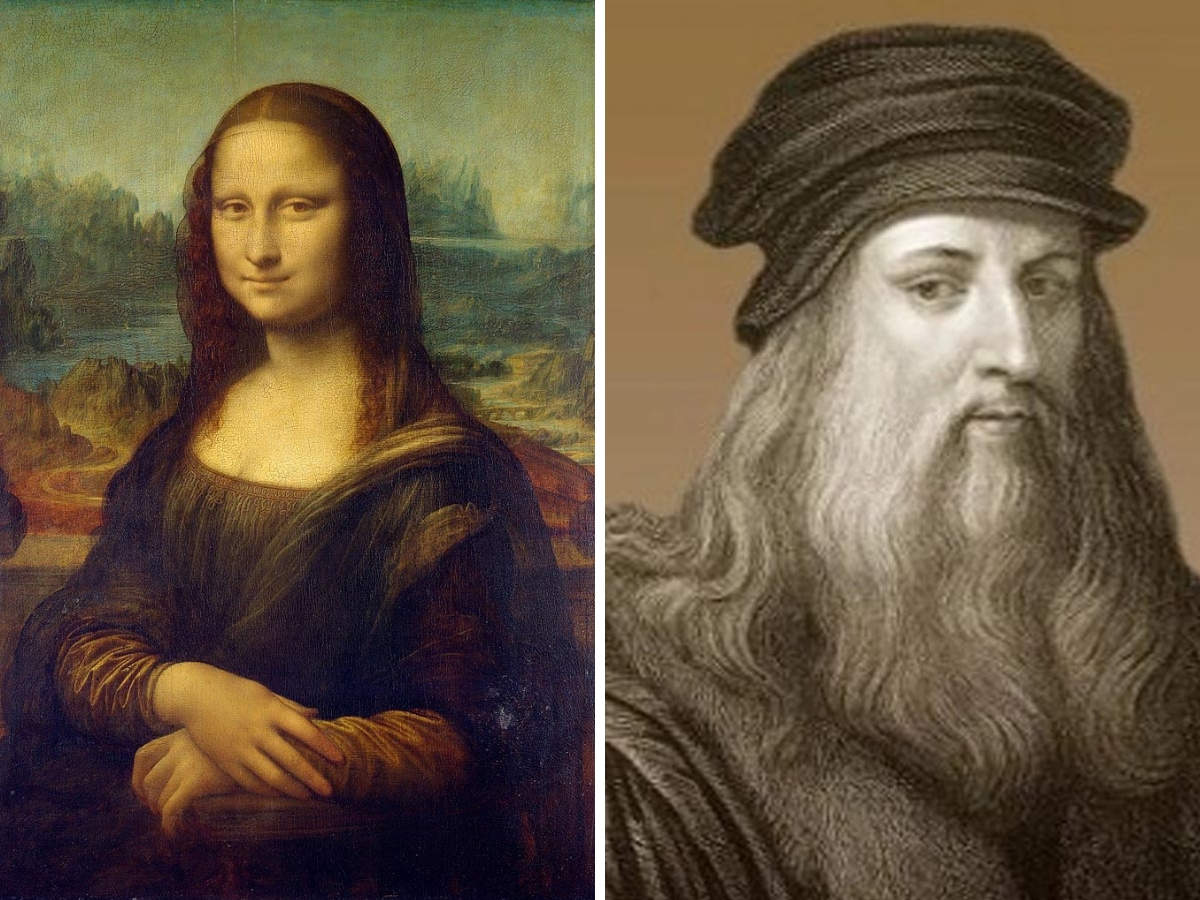
Leonardo da Vinci: Leonardo Da Vinci may have had a condition that  prevented him from finishing Mona Lisa - The Economic Times

Leonardo da Vinci (1452-1519) was a painter, architect, inventor, and student of all things scientific. His natural genius crossed so many disciplines that he epitomized the term “Renaissance man.” Today he remains best known for his art, including two paintings that remain among the world’s most famous and admired, Mona Lisa and The Last Supper. Art, da Vinci believed, was indisputably connected with science and nature. Largely self-educated, he filled dozens of secret notebooks with inventions, observations and theories about pursuits from aeronautics to anatomy. But the rest of the world was just beginning to share knowledge in books made with moveable type, and the concepts expressed in his notebooks were often difficult to interpret. As a result, though he was lauded in his time as a great artist, his contemporaries often did not fully appreciate his genius—the combination of intellect and imagination that allowed him to create, at least on paper, such inventions as the bicycle, the helicopter and an airplane based on the physiology and flying capability of a bat.

Leonardo da Vinci: Early Life and Training

Leonardo da Vinci (1452-1519) was born in Anchiano, Tuscany (now Italy), close to the town of Vinci that provided the surname we associate with him today. In his own time he was known just as Leonardo or as “Il Florentine,” since he lived near Florence—and was famed as an artist, inventor and thinker.

Did you know? Leonardo da Vinci’s father, an attorney and notary, and his peasant mother were never married to one another, and Leonardo was the only child they had together. With other partners, they had a total of 17 other children, da Vinci’s half-siblings.

Da Vinci’s parents weren’t married, and his mother, Caterina, a peasant, wed another man while da Vinci was very young and began a new family. Beginning around age 5, he lived on the estate in Vinci that belonged to the family of his father, Ser Peiro, an attorney and notary. Da Vinci’s uncle, who had a particular appreciation for nature that da Vinci grew to share, also helped raise him.

Leonardo da Vinci: Early Career

Da Vinci received no formal education beyond basic reading, writing and math, but his father appreciated his artistic talent and apprenticed him at around age 15 to the noted sculptor and painter Andrea del Verrocchio, of Florence. For about a decade, da Vinci refined his painting and sculpting techniques and trained in mechanical arts. When he was 20, in 1472, the painters’ guild of Florence offered da Vinci membership, but he remained with Verrocchio until he became an independent master in 1478. Around 1482, he began to paint his first commissioned work, The Adoration of the Magi, for Florence’s San Donato, a Scopeto monastery.

However, da Vinci never completed that piece, because shortly thereafter he relocated to Milan to work for the ruling Sforza clan, serving as an engineer, painter, architect, designer of court festivals and, most notably, a sculptor. The family asked da Vinci to create a magnificent 16-foot-tall equestrian statue, in bronze, to honor dynasty founder Francesco Sforza. Da Vinci worked on the project on and off for 12 years, and in 1493 a clay model was ready to display. Imminent war, however, meant repurposing the bronze earmarked for the sculpture into cannons, and the clay model was destroyed in the conflict after the ruling Sforza duke fell from power in 1499.

Leonardo da Vinci: ‘The Last Supper’ and ‘Mona Lisa’

Although relatively few of da Vinci’s paintings and sculptures survive—in part because his total output was quite small—two of his extant works are among the world’s most well-known and admired paintings.

The first is da Vinci’s “The Last Supper,” painted during his time in Milan, from about 1495 to 1498. A tempera and oil mural on plaster, “The Last Supper” was created for the refectory of the city’s Monastery of Santa Maria delle Grazie. Also known as “The Cenacle,” this work measures about 15 by 29 feet and is the artist’s only surviving fresco. It depicts the Passover dinner during which Jesus Christ addresses the Apostles and says, “One of you shall betray me.” One of the painting’s stellar features is each Apostle’s distinct emotive expression and body language. Its composition, in which Jesus is centered among yet isolated from the Apostles, has influenced generations of painters.

When Milan was invaded by the French in 1499 and the Sforza family fled, da Vinci escaped as well, possibly first to Venice and then to Florence. There, he painted a series of portraits that included “La Gioconda,” a 21-by-31-inch work that’s best known today as “Mona Lisa.” Painted between approximately 1503 and 1506, the woman depicted—especially because of her mysterious slight smile—has been the subject of speculation for centuries. In the past she was often thought to be Mona Lisa Gherardini, a courtesan, but current scholarship indicates that she was Lisa del Giocondo, wife of Florentine merchant Francisco del Giocondo. Today, the portrait—the only da Vinci portrait from this period that survives—is housed at the Louvre Museum in Paris, France, where it attracts millions of visitors each year.

Around 1506, da Vinci returned to Milan, along with a group of his students and disciples, including young aristocrat Francesco Melzi, who would be Leonardo’s closest companion until the artist’s death. Ironically, the victor over the Duke Ludovico Sforza, Gian Giacomo Trivulzio, commissioned da Vinci to sculpt his grand equestrian-statue tomb. It, too, was never completed (this time because Trivulzio scaled back his plan). Da Vinci spent seven years in Milan, followed by three more in Rome after Milan once again became inhospitable because of political strife.

Leonardo da Vinci: Philosophy of Interconnectedness

Da Vinci’s interests ranged far beyond fine art. He studied nature, mechanics, anatomy, physics, architecture, weaponry and more, often creating accurate, workable designs for machines like the bicycle, helicopter, submarine and military tank that would not come to fruition for centuries. He was, wrote Sigmund Freud, “like a man who awoke too early in the darkness, while the others were all still asleep.”

Several themes could be said to unite da Vinci’s eclectic interests. Most notably, he believed that sight was mankind’s most important sense and that “saper vedere”(“knowing how to see”) was crucial to living all aspects of life fully. He saw science and art as complementary rather than distinct disciplines, and thought that ideas formulated in one realm could—and should—inform the other.

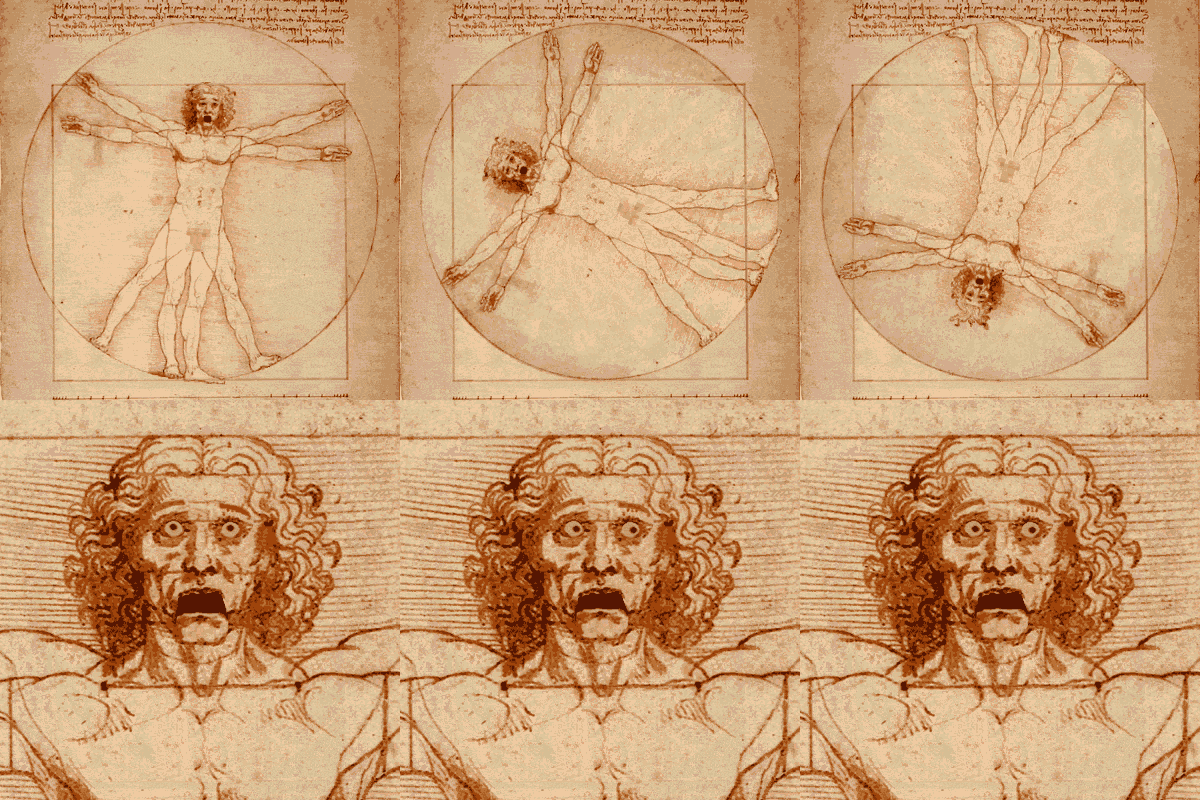
Probably because of his abundance of diverse interests, da Vinci failed to complete a significant number of his paintings and projects. He spent a great deal of time immersing himself in nature, testing scientific laws, dissecting bodies (human and animal) and thinking and writing about his observations. At some point in the early 1490s, da Vinci began filling notebooks related to four broad themes—painting, architecture, mechanics and human anatomy—creating thousands of pages of neatly drawn illustrations and densely penned commentary, some of which (thanks to left-handed “mirror script”) was indecipherable to others.

The notebooks—often referred to as da Vinci’s manuscripts and “codices”—are housed today in museum collections after having been scattered after his death. The Codex Atlanticus, for instance, includes a plan for a 65-foot mechanical bat, essentially a flying machine based on the physiology of the bat and on the principles of aeronautics and physics. Other notebooks contained da Vinci’s anatomical studies of the human skeleton, muscles, brain, and digestive and reproductive systems, which brought new understanding of the human body to a wider audience. However, because they weren’t published in the 1500s, da Vinci’s notebooks had little influence on scientific advancement in the Renaissance period.

Leonardo da Vinci: Later Years

Da Vinci left Italy for good in 1516, when French ruler Francis I generously offered him the title of “Premier Painter and Engineer and Architect to the King,” which afforded him the opportunity to paint and draw at his leisure while living in a country manor house, the Château of Cloux, near Amboise in France. Although accompanied by Melzi, to whom he would leave his estate, the bitter tone in drafts of some of his correspondence from this period indicate that da Vinci’s final years may not have been very happy ones. (Melzi would go on to marry and have a son, whose heirs, upon his death, sold da Vinci’s estate.)

Da Vinci died at Cloux (now Clos-Lucé) in 1519 at age 67. He was buried nearby in the palace church of Saint-Florentin. The French Revolution nearly obliterated the church, and its remains were completely demolished in the early 1800s, making it impossible to identify da Vinci’s exact gravesite.

Can we ever be able to travel with speed of light?

From more than a century humankind is asking about could we ever be able to travel with speed of light, Is travel with speed of light is possible?. As space enthusiasts, could space ships shown in movies star trek and star wars be possible, can we make warp drives?

Let us first discuss about speed of light. It is a cosmic speed limit. Speed of light is fastest speed of which any two poles in space can communicate with each other. It is a speed at which light travels. In one second a beam of light can make 8 rotations. The standard speed of light if we convert to km/hr than speed of light is 1,079,252,848.8 km/hr(1.07 billion km/hr). Or we can say 299,792,458 meter/sec. So again question arises can this speed be achievable. If we can make to travel with speed of light then to reach to our nearest star Proxima Centauri it will take 4.2 earth years. So if we travel 5 times speed of light then to reach proxima centauri it will take nearly 1 year.

In 1994 a Mexican physicist Miguel Alcubierre published a theory, in which he showed how a warp drive is possible with Albert Einstein’s Theory of General Relativity. He said that in order to make a warp drive it will require a huge amount of negative energy. Negative energy equivalent t mass of Jupiter.

Alcubierre said that if the lift hand side of Einstein’s equation is for curvature of space-time, right hand side is newton’s gravitational constant with T is stress energy factor, then there requires a negative energy in right side to bend fabric of space-time. Alcubierre determined that the ship needed to stay inside a flat space-time bubble, which is such that it can move with any arbitrary speed.

But, Alcubierre’s theory is as real as fiction. As we know that negative energy is not possible and does not exists. Anti matter exists and is different from negative energy. Anti matter is a regular matter with opposite charge but with it has positive mass.

In 2021 paper by physicist Erik Lentz of Gottingen University showed that space time warp bubble solution is possible by positive energies and theoretically move at any arbitrary speed.

Again we have question that is warp drives be possible? The answer is Yes.

In recent papers published by Advanced propulsion laboratory at Applied Physics authors Alexey Bobrick and Gianni Martire showed that how warp drives are possible without negative energy. They showed that we can travel with some fraction of speed of light, but to travel faster than speed of light you would need a superluminal matter. In other words, you would need a matter that travels faster than speed of light. Accelerating anything with mass to speed of light requires an infinite amount of energy. This would be true for any warp engine design, but is impossible.

Gianni and Bobrick showed that there are four types of warp drives, of which Alcubierre showed class 3 type. They showed that Class 1 type of warp drive is physically possible with positive energy and real matter and they don’t travel with speed of light. These classification is based on speed inside the bubble(Vin) and speed outside the bubble(Vout).

These can be achieved by time dilation. Gianni and Bobrick proposed two ways of time dilation, either you go really fast with 90% of speed of light or you put yourself into a strong gravitational field. The stronger the gravitational speed the slower the time passes for passengers. If we make a ship of super dense material, perhaps close to mass of a neutron star then gravitational field will be strong enough for time dilation. They designed a shape, if the ship has diameter of 620 meter with mass of 10% as of sun then time for the passengers inside the ship will be 1/10. The passengers will travel to Proxima Centauri in 9 Earth years but for passengers inside ship will feel as of 10 months.

But to move such a massive ship we need a powerful engine. If we convert its 13% mass to energy than we can get enough energy. The one way is fusion as it converts 1% of mass to energy. The one Bobrick and Gianni proposed that if we take advantage of Gravitational Accretion Energy. This is disklike flow of dust, gas and plasma orbiting around a massive astronomical object. The friction and loss of angular momentum creates huge amount of energy that potentially be harnessed. Accretion disk can convert 10% of any given mass into energy which is highly sufficient.

Now the question is no longer “If” humanity will achieve warp travel, now the question is “When”.

Credit: Arvin Ash: https://youtu.be/PA66ah9b0U4 Reference Papers: Bobrick and Martire: https://arxiv.org/pdf/2102.06824.pdf Website: https://appliedphysics.org/ Lentz: https://arxiv.org/pdf/2006.07125.pdf

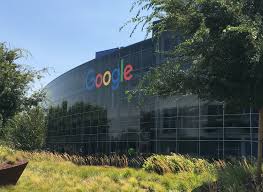
Getting a Job in Google.

Year after year, Google has been ranked as one of the top companies to work for, so it’s no surprise that the tech giant receives roughly three million applications per year. With an acceptance rate of 0.2%, you’d have a better chance of getting into Harvard.

It is difficult to get a job at Google because of their quality standards and the high number of applications they receive per year. For example, INC reported that Google receives 2 million job applications per year, which means it’s more competitive to get into than Harvard University.

Google is an employer of choice for the world’s top talent, typically receiving hundreds of resumes for every opening, which allows them to be extremely selective in their hiring.The hardest part is getting an interview. If you attend a university, go through campus recruiting.

According to the Pascale, The lowest paid Google employees are Entry Levels at $51,000.Google says there is no degree or prior experience required. In fact, 61% of learners enrolled do not hold a four-year degree. This certificate could be a perfect launchpad to a career in IT.

So if you have a keen interest in working at Google California or at any other branches of Google work hard my friend. More than studies work on yourselves, on your IQ level the interviewees are not going to ask you a question from your syllabus.

FEMINISM- a necessity or a drama (PART-1)

The word FEMINISM comes from the word FEMININE which means “being a woman”. How is it that out of over a million words in the English language this particular word has created an uproar in the recent times with each woman becoming a “Feminist” proclaiming about her rights under this word and is criticized by others who think this is all a show of gaining attention , popularity and superiority. Read this blog completely to understand what actually caused to the popularity of the word , its implication in Indian terms and how has it helped women.

Feminism

FEMINISM refers to social , political and economic equality to women with respect to the males. Since God has given a woman the power to create life and nurture it , she automatically has a greater emotional quotient and her motherly attributes of being considerate, polite, loving , emotional is taken to be her weakness. Further since she has the organs to produce a human being , she is termed as “delicate” or in real words “WEAK”. WEAK is the term which has led the males believe that they are stronger and more capable and this has led to them ruling a woman since ages. The irony of the situation is that it is not just the males but also few women who thinks the entire woman race to be a subordinate to men and is born just to be a frustration box for the males.

So feminism in simpler words can be termed as a movement which was started to get women equal rights in education, property and employment matters and travelled as far as to the emotional treatment a woman has to suffer. It defines that a woman should be judged on the basis of her mental strength, her capabilities, her behavior rather than being judged for just being a WOMAN. It stands for women standing up to the male dominating world to fight for their self respect .

History of Feminism

The first instance of feminism which was the earliest reported one darts all the way back to 3rd century BCE in Rome where Roman women filled the Capitoline Hill and blocked every entrance to the Forum when consul Marcus Porcius Cato resisted attempts to repeal laws limiting women’s use of expensive goods. Cato’s words “If they are victorious now, what will they not attempt? As soon as they begin to be your equals, they will have become your superiors” proves that he somewhere believed women to be capable of exceeding men and it was this fear of letting that race which was suppressed since ages to be set free without any illogical restrictions bounding them which will make them realise their worth and will subsequently be no longer a personal robotic toy for men.

There was a time when the entire world was suppressing women. Women in each part of the world were denied the rights which would ensure her success instead she was just being treated as a caged animal. Until 19th century Europe did not give the women the right to inherit their father’s property which generally goes to the first child . In the absence of mail heir the property would go to a male relative however distant or evil he maybe. Jane Austen’s novel PRIDE AND PREJUDICE is the best example to this point where the Bennet family which consisted of all females had no right to their ancestral property .

While there were many other rules for women such as they had to step out covering their head as a mark of respect for the “SUPERIOR MALES”, had no right to vote or hold an elective office, cannot participate in any sort of buisness and went as far as to a man getting right to sell of his wife in many parts of the world. These actions proved that women were treated to be a non living enity with no feelings whatsoever.

After several protests, letters addressing women concerns being published, criticism the cause faced by the chauvinists , the woman were granted their rightful rights in many places in the world but the battle is till to be won. Many countries specially the ones in Asia still are treated as the object of male plight and fury.

With different culture the take and views on feminism chnages, let us see what brought about the changes for Indian women though the Feminism here was partly inspired by the west but its meanings and implications are different for the Indian women.

Feminism in India

Women in India are oppressed not only by the males but more by the fellow females. It is like a sort of inheritance being passed from one generation to the other where a girl is told by all the females in her family be it grandmother, mother or aunts that she should always keep all the males in her family above her and sort of idolise them and they are led to believe that if something wrong happens with them then it is the result of their own actions. This is the reason that many women silently suffer all kinds of domestic violence till their last breaths because this was what they had been taught since their birth.

Feminism in India can be divided into broadly three phases.

  • The first phase was witnessed in mid 19th century when several reforms in education and customs involving women were introduced. Sati, a practice which involved a woman setting herself on the fire by sitting on her husband’s pyre incase he expires before her, was abolished by Raja Ram Mohan Roy in the British Rule. This till date is considered as a biggest step in encouraging a woman where she was told she is much more than being a wife and her life does not ends with her husbands. Rani Lakshmi Bai the woman who fought Britishers with her infant son tied on her back after her husband’s death to save her kingdom from their clutches still continues to be an inspiration for many.
  • The second phase was witnessed from 1915 till India gained its independence and it started with Mahatma Gandhi incorporating women into his non cooperation movement , a first open political gathering where females were included. After this movement there were various Independent female groups created to fight for the Independence which managed to be off radar and continue their contribution in secrecy as Britishers had no hope that Indian women can step out of their domestic roles.
  • The third phase was witnessed after independence where women were included in the formation of the world’s largest democracy, has the power to vote and hold an elective office ,get educated and be independent. This phase continues till date and has witnessed many changes along the way. From it becoming normal for girls to get educated and work, to the extension of minimum age of marriage for a girl till 18 years by the Constitution of India to prenatal sex determination and Female Infanticide being considered as a criminal offence with severe punishment it may seem that India has come a long way and the women here are treated with equality and respect which they deserve but sadly this is not the case. Though the upper surface appears to be cleared there are still many horrible trenches inside.

Present Condition of Women in India

Feminism and plight of women in India cannot be sumarised under a single term. The heterogenity of Indian cultures bring with it multiple patriarchies and multiple feminist movements but the basic plight remains the same.

India is a highly patriarchal society where even today in 2021 people claim to be modern and “allowing their women” to have privileges same as that of men but the small privileges of getting educated , working comes at a price. Price of still not be able to take stand when she is wronged , the reason being a woman is pointed every time she becomes a victim while in some case she may act to be a victim hence committing a grievance sin but this minority is turned into making independent decision taking woman being regarded as “too bold” or “unfit” for the society by the chauvinist groups.

****Since even the basic points regarding the topic are indefinitely extended and talked about, it is difficult to make all the basic points in one blog and there will be a continuation to this blog soon.

I would conclude this blog here by stating that feminism is not the superiority of females over the males rather it is about them being treated equally both physically and mentally without any prejudice about them being a woman. It takes a lot to be a woman and to every woman out there be proud of what you are!

India – |||

Colonial data recorded by the census officials are more like violence, where Indians are continuously finding troubles and combusting into violence and the British officials tirelessly working on to keep peace. But in return, the census is mostly replete of the references to shared sacred spaces, mixed congregation, common goods and a general laxity and catholicity of religion. (The Historian and Indian Census , p. 63)

For instance, in the reading of ‘The Shepard’ by Ashfaq Ahmad set back the story during the 1930s and 1940s , where  towards the end it describes about the communal riots as the independence for the country drew nearer. People during those time were not acceptable of the other religious identities especially when it comes to Hindus and Muslims. Instead of accepting people belonging to the other religious identity, they only tried to show off their identities over one another, which ended up creating communal violence.

So, in conclusion, the categorization of Hindu, Muslim and Sikh were all an outcome of Census, in which the British officials made religion as a fundamental category to be mapped. The Census which was conceptualized and institutionalized in India, became clear while studying the census of Punjab between 1858 and 1921. (The Historian and Indian Census , p. 45)

Hinduism was seen as a native religion of India and Islam as a foreign religion. This made the British officials to see them to be fundamentally opposite to each other and later conducted the census marking the religion as a fundamental category further leading it into the communal riots which we can see in the short story of ‘The Shepard’ in the nineteenth century.

Therefore, it was the religious identity that played a pivotal part in creating the political identities as a result of the census.So, in a way religious identity are interconnected with political character taking outline of our chief Narendra Modi starting late we can see how the religious identity expectscritical part in impacting the political character influencing the Hindu majority share portion of resident to transform into the political figure.

INDONESIA- THE WORLD’S LARGEST ISLAND COUNTRY

Let’s do a travel by my article

Officially Indonesia is a country in Southeast Asia and Oceania between the Indian and Pacific oceans.It is the world’s largest island country and the 14th-largest country by land area, at 1,904,569 square kilometres  which consists of over seventeen thousand islands, including Sumatra, Java, Sulawesi, and parts of Borneo and New Guinea.Indonesia is the world’s fourth-most populous country and the most populous Muslim-majority country. Jakarta is the capital of Indonesia and it is the world’s second-most populous urban area. 

HOW IS THE CLIMATE OF INDONESIA?

Basically Indonesia’s climate  is almost entirely tropical.The coastal plains’ climate is  average 28 °C, the inland and mountain areas are 26 °C, and the higher mountain regions, 23 °C. Temperature depends on the season, and through the change of seasons there is little change in the length of daylight hours.The main changeable thing is not Indonesia’s climate or air pressure, but rainfall. The area’s correlative humidity ranges between 70% and 90%. Although air temperature changes little from season to season or from one region to the next, cooler temperatures prevail at higher elevations. In general, temperatures drop approximately 1°C/90-meter increase in elevation.

Indonesia is a  naturally tropical country, that’s why there are two seasons those are mainly Rainy and Dry, and it  does not have spring, summer, autumn, or winter. In most of the country (including Java and Bali) the dry season is from April to October, while the wet season is from November to March.

PLACES TO VISIT –

There are many places to visit and each and every one is very beautiful. Indonesia is one of the world’s most beautiful places to visit and the most visited holiday destination. Let’s find out by my article what makes Indonesia so interesting !! 

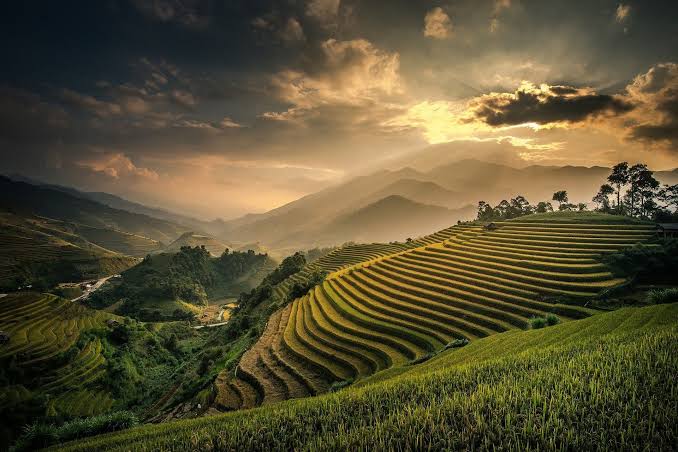
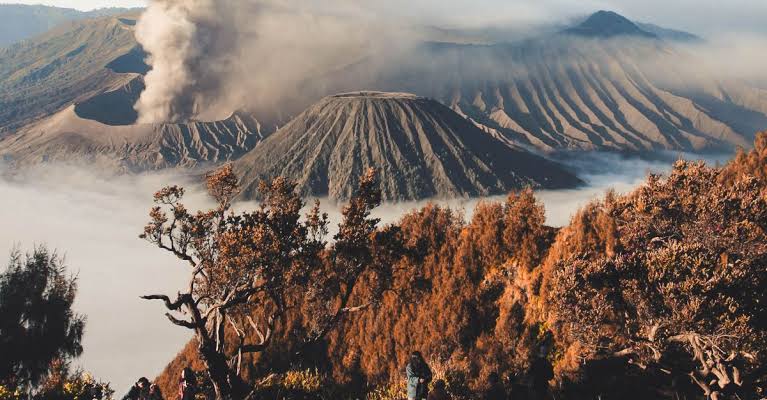
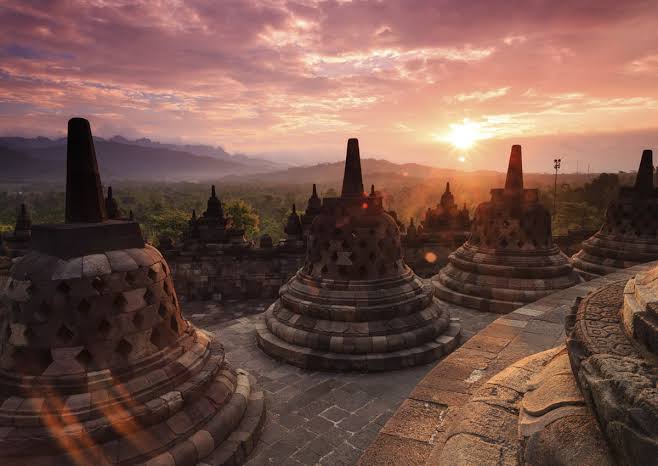
Gili Islands is for the best nightlife,Raja Ampat Islands for explore rare species of corals,Maluk Beach for witness the changing colors of sun rays,Kelimutu Lake for dramatic volcanic peaks,Lake Toba for largest caldera,Bunaken Marine Park for exotic range of fish species,Komodo National Park  for giant monitor lizards,Mount Bromo for the active volcano,Mount Rinjani which is the second highest volcano of indonesia,Ijen for mining activities,Dieng Plateau which is an abode of god,Torajaland which relishes the culture,Borobudur Temple which is the world’s biggest buddhist sanctuary,Ubud for hike through rainforests & rice paddy fields,Tanjung Puting National Park for trekking in tropical jungle,Derawan Islands for  relaxing & unwinding,Belitung for dutch colonial architecture,Nusa Dua for white sand beaches,Seminyak is the most happening place,Jakarta which is melting pot of cultures,Lombok is a stunning marine life,North Sulawesi is the best diving sites,Nusa Penida is offbeat yet spectacular,Bali which is cliche yet the best,Yogyakarta is a quaint little pretty place,Bandung is a different kind of calm,Bangka Islands is simply blissful and the Wae Rebo village is for iconic culture.

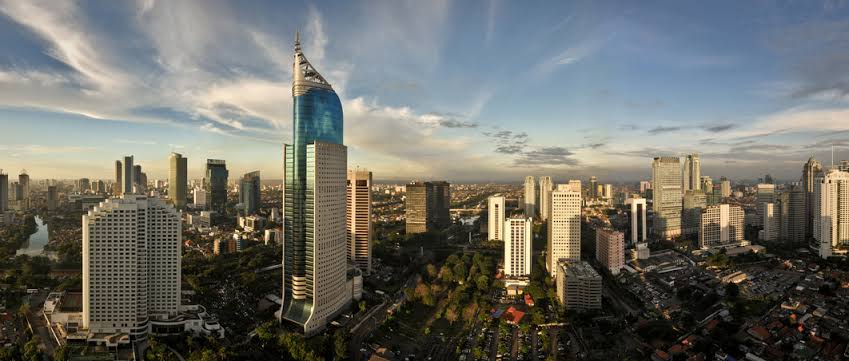
Indonesia city

LET’S TALK ABOUT 10 BEST PLACES IN INDONESIA-

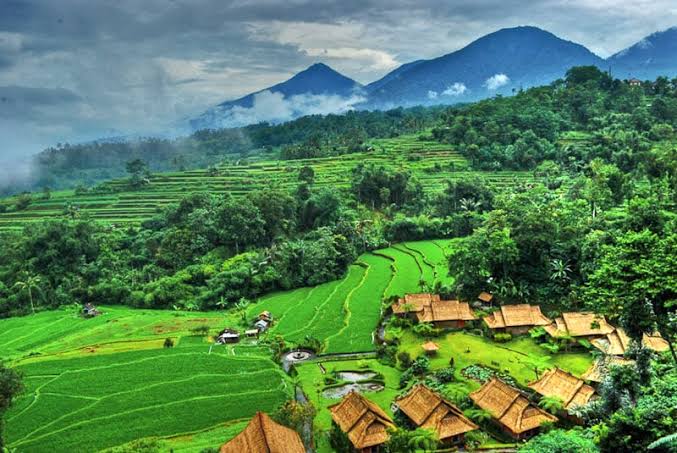
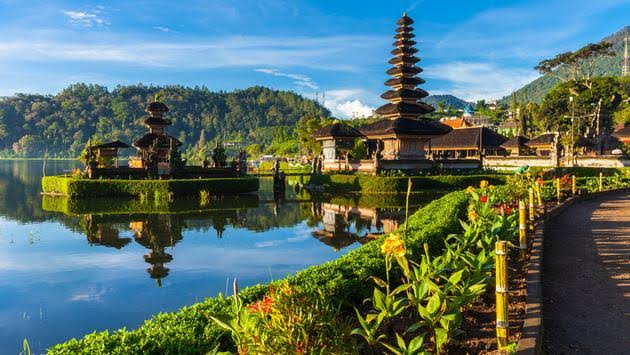
  • Bali- Bali is the most desirable place in Indonesia. We can say it is a dream destination.  Bali is a fair of beautiful beaches, volcanic hills, lush rice paddies, and thousands upon thousands of Indonesian temples.It has the nickname “Island of God”.
Bali
  • Yogyakarta- It is located on the Island of Java. Yogyakarta is regarded as an important centre for classical Javanese fine arts and culture such as ballet, batik textiles, drama, literature, music, poetry, silversmithing, visual arts, and wayang puppetry.
Yogyakarta
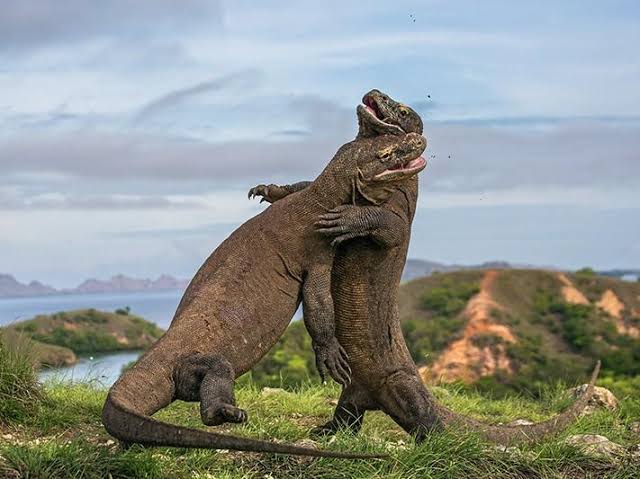
  • Komodo National Park-  It is a national park which is located within the Lesser Sunda Islands in the border region between the provinces of East Nusa Tenggara and West Nusa Tenggara. It is founded to protect the world’s largest lizard. Now it protects other species, including marine species. In 1991 UNESCO declared it a World Heritage Site.
Komodo National Park
  • Lombok- It is an Island which is located in West Nusa Tenggara province.Lombok is surrounded by a number of smaller islands locally called Gili. Other interesting things are surfing hotspots, uncrowded beaches, and magical waterfalls tucked within steamy jungles, of which Tiu Kelep Waterfall tops the list without question.There’s also a fantastic nightlife scene.
  • Bromo Tengger Semeru National Park-  Bromo Tengger Semeru National Park, known locally as Taman Nasional Bromo Tengger Semeru (TNBTS) is a national park located in East Java. It is an ethereal yet barren wonderland of volcanic calderas seemingly continuously surrounded by smoke and clouds.
Bromo Tengger Semeru National Park
  • Bukit Lawang- It is a small tourist village on the bank of Bahorok River in North Sumatra province.Bukit Lawang is known for the largest animal sanctuary of Sumatran orangutan and also the main access point to the Gunung Leuser National Park from the east side.
Bukit Lawang
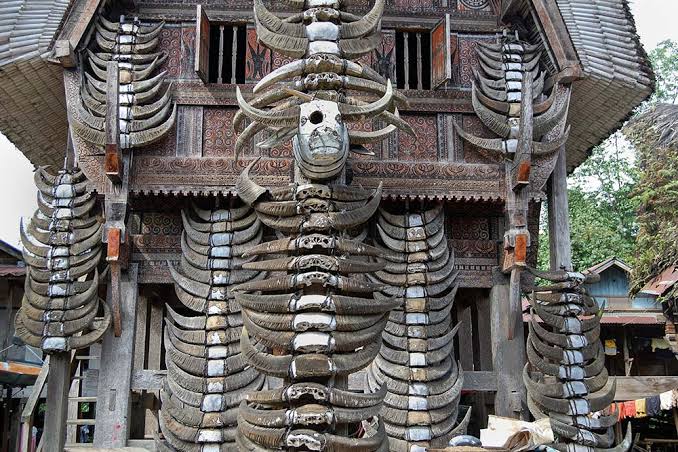
  • Torajaland- Nickname is ‘the Land of the Heavenly Kings,’it is famous for their massive peaked-roof houses known as tongkonan and spectacular but gruesome funeral rites. After a person’s death, the body is often kept for several years until the actual funeral ceremony. The deceased is then finally buried in a small cave or in a hollow tree. The biggest funerals are usually held in the dry-season months of July and August, but there are funerals year-round.
Torajaland
  • Flores Island- it is one of the Lesser Sunda Islands,The lakes are truly a sight to behold in every color you can think of – from browns and greens to aqua blue; colors caused by the minerals reacting to the gas of the region’s volcanoes. The Kelimutu three-colored lake is a must-see from the top of the volcano at sunrise.
Flores Island
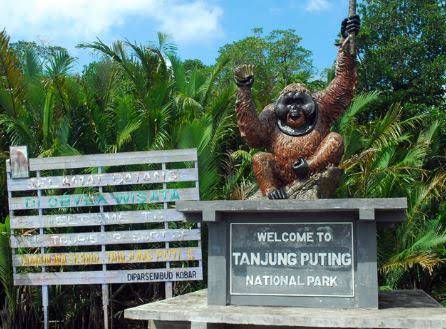
  • Tanjung Puting National Park- Located in the jungles of Borneo.The third-largest island in the world that’s part of Indonesia.
Tanjung Puting National Park
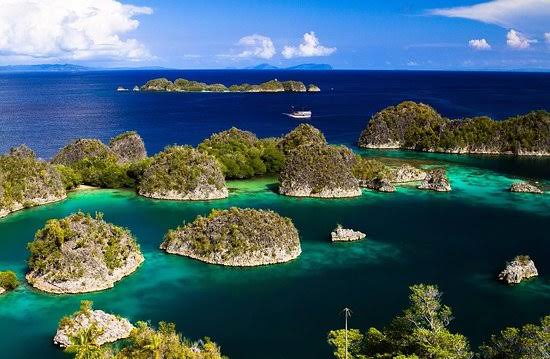
  • Raja Ampat Islands- Raja Ampat is one of the most sensational diving destinations in Indonesia. Raja Ampat, which means ‘Four Kings’. It consists of four major jungles.Clad islands surrounded by turquoise lagoons and pearly,white palm,fringed beaches like Waigeo,Salawati, Misool, and Batanta and along with thousands of smaller islands.
Raja Ampat Islands