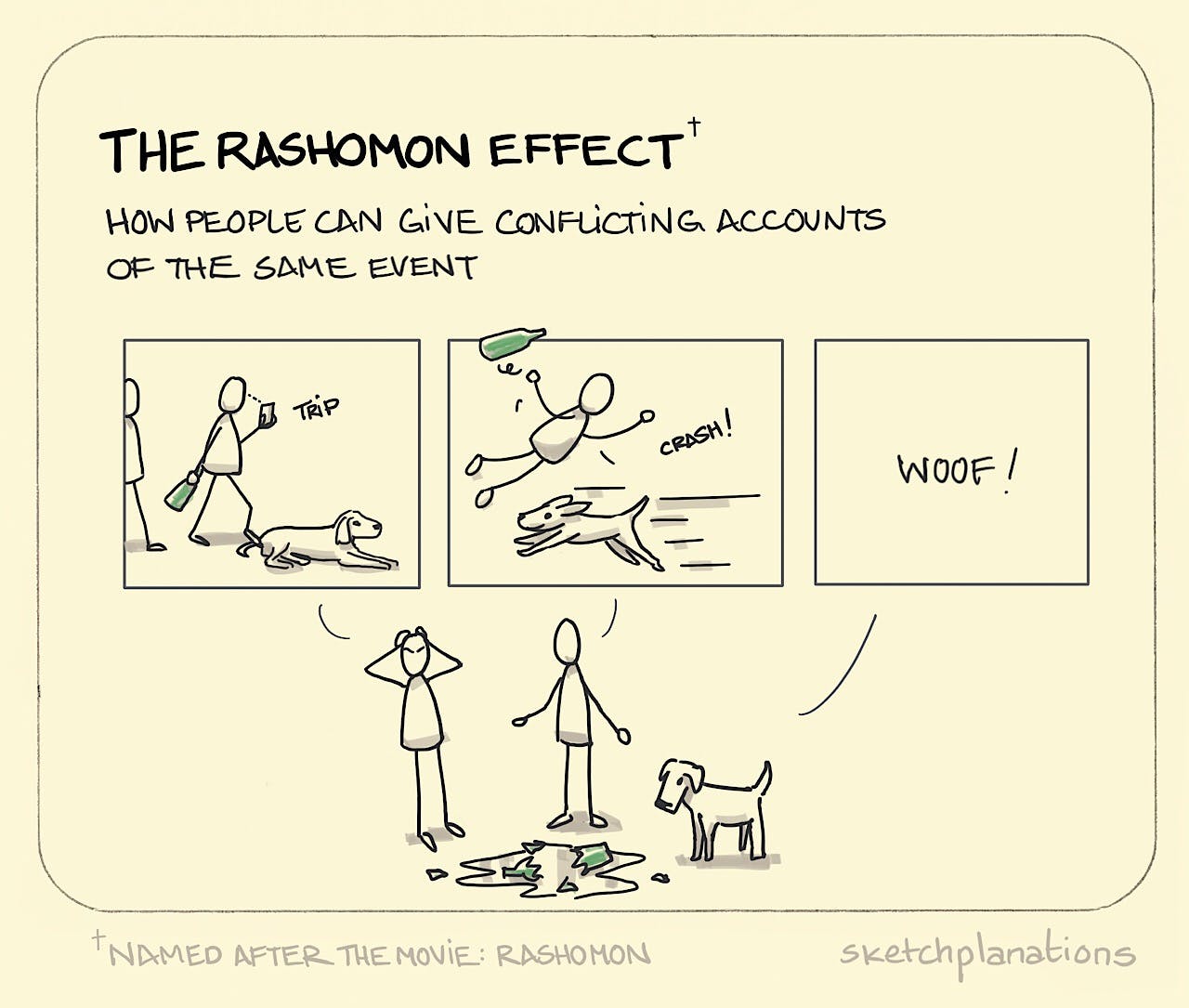
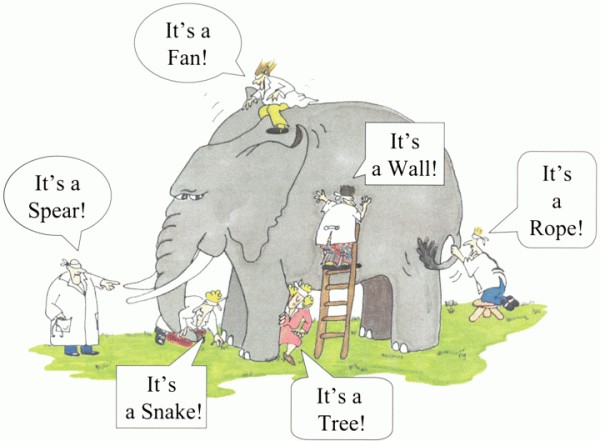
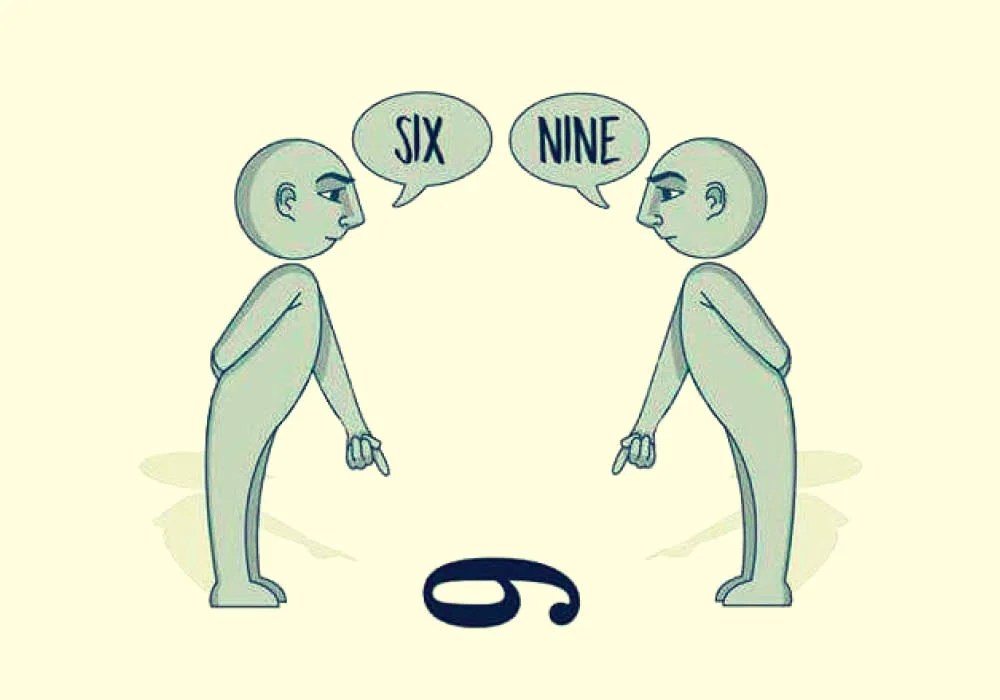
Ever heard multiple sides to a story from eye witnesses and had a tough time deciding which one is true or which to believe? Such a conundrum is brought about by subjective views, observer bias, perspective and memory of the observer. All these parameters can be summed into a single word known as The Rashomon. The Rashomon effect refers to an instance when the same event is described in significantly different (often contradictory) ways by different people who were involved.
This phenomenon first came to be observed in a book called “in a grove “by Japanese author, Reyonosuke Akutagawa written in the early 1920’s. This was later adapted and made into a movie, by Japanese filmmaker Akira Kurosawa, who directed the 1950 film Rashomon, giving the effect its name. The plot revolves around which four different people provide contradictory accounts of a samurai’s murder, despite all having witnessed the crime. Each witness tale is varied from another, yet so very plausible, that a definite conclusion cannot be drawn, embroiling all of them.
The film explored the issues of the unreliability when depending on witness testimony explores a situation using a similar literary device, wherein the story is told through the viewpoints of different characters who supply conflicting stories. Whether the people’s competing explanations are different because of the fallacy of memory or because of self-serving interests varies. This film became revolutionary with how one understands the human mind, justice and the truth. It since then has become a cultural metaphor and is synonymous with happenings of everyday events as it’s not a sci-fi or an abnormal event, but a very natural course of nature that seems very striking .
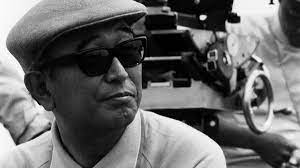
Akira Kurosawa
Conditions and characteristics.
Not every story will have The Rashomon effect. It mostly occurs when there is no gripping and final evidence but a lot of eyewitnesses and when there is a pressure to achieve closure and coercion to find the truth. In both the movie and the book, no side of a person’s view is given more emphasis and all are shown in an equal scale, each testimony bearing its own truth and plausibility. The script and story writing does tell the audience how to feel or what to believe. The audience had to decide that for themselves making it engaging and deceiving at the same time. Such a premise has conflict as a driving. Conflict in a story drives a plot forward, reveals character, and engages an audience. The Rashomon Effect is based on contradicting reports of the same event and search for the truth through these reports can be a driving force of conflict for a story. The use of an unreliable narrator is another feature, opposed to the presentation from a more objective point of view. This allowed audiences to see the characters as they were and value neutral. To top it off, an ambiguous ending after such a mind boggling series of events, looks like the right justice to this type of storytelling. Our realization that none of the witnesses are reliable leaves us with more questions than answers. While most films at the time had a clear ending, the ending of Rashomon has no clear resolution. This unconventional decision left audiences baffled. It can be frustrating to some as it subverts from its unorthodox counterparts but , it is not ambiguous for the sake of mystery or confusion, but rather to reiterate themes and larger concepts like the intricacy of the human brain.
Conclusion
Research studies have found that when people form a memory, a visual experience is often influenced by external cues, internal prejudice and past experiences. While a few are completely individualistic, most are universal. An example of this is egocentrism, i.e., having a positive view on their actions but disregard to the other person . it is a subconscious act , most of the times, and these psychological phenomenon means that the rashomon effect can pop up anywhere.
The Rashomon effect finally boils down to the minutiae and can range from studies of anthropology and biology to the general public analyzing a historic world event. In conclusion this broke a psychobiological barrier of having the right answer to every crisis and rather shifted the focus to versions of the same event that can tell us about the time, place and people involved, how to go about different mind-sets, backgrounds and biases. It emphasized on the fact that sometimes, the objective truth cannot always be obtained and that it is normal to have an obscure, vague ending, which should be embraced and valued in certain circumstances.
Satyajit Ray was India’s first internationally recognized film-maker and, several years after his death, still remains the most well-known Indian director on the world stage. Ray has written that he became captivated by the cinema as a young college student, and he was self-taught, his film education consisting largely of repeated viewings of film classics by de Sica, Fellini, John Ford, Orson Welles, and other eminent directors.
Satyajit Ray
Early Life and Family Background
Satyajit Ray was born into an illustrious family in Kolkata (then Calcutta) on 2nd May,1921. His grandfather, Upendra Kishore Ray-Chaudhary, was a publisher, illustrator, musician, the creator of children’s literature in Bengali and a leader of the Brahmo Samaj, a religious and social movement in nineteenth century Bengal. His father, Sukumar Ray, was a noted satirist and India’s first writer of nonsensical rhymes, akin to the nonsense verse of Edward Lear. Having studied at Ballygunge Government High School, Calcutta and completed his BA in economics at Presidency College, Satyajit Ray went on to develop an interest in fine arts. Later in life, Satyajit Ray made a documentary of his father’s life. His film, Goopy Gyne Bagha Byne, was based on a story published by his grandfather in 1914, but even other films, such as Hirok Rajah Deshe, “The Kingdom of Diamonds”, clearly drew upon his interest in children’s poetry and nonsensical rhymes.
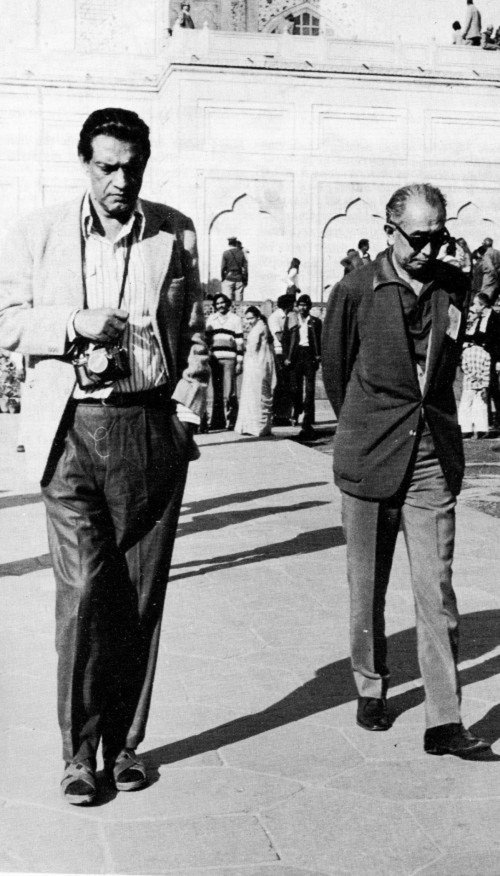
Satyajit Ray with Akira Kurosawa
The Crisis of Indian Cinema Before Ray
From the 1920s to the early 1950s, several directors working within Hollywood—as well as filmmakers in former Soviet Union, France, Italy, Germany, and Japan—considered cinema not as a mere tool of entertainment but as a medium for creative expression. Filmmakers such as Charlie Chaplin, Sergei Eisenstein, Jean Renoir, Roberto Rossellini, Vittorio De Sica, Akira Kurosawa, and others deployed artistically innovative filmic devices to convey profound statements about the complexities of life. Some of the aesthetically satisfying films produced during this period were hailed as cinematic masterpieces. Films in India, however, prioritised cliched elements such as sentimental slush, ersatz emotion, theatricality, romantic tales, spectacle-like songs, and happy endings in these decades. Instead of making serious attempts at formal experimentation, Indian directors continued catering to the lowest common denominator audience.
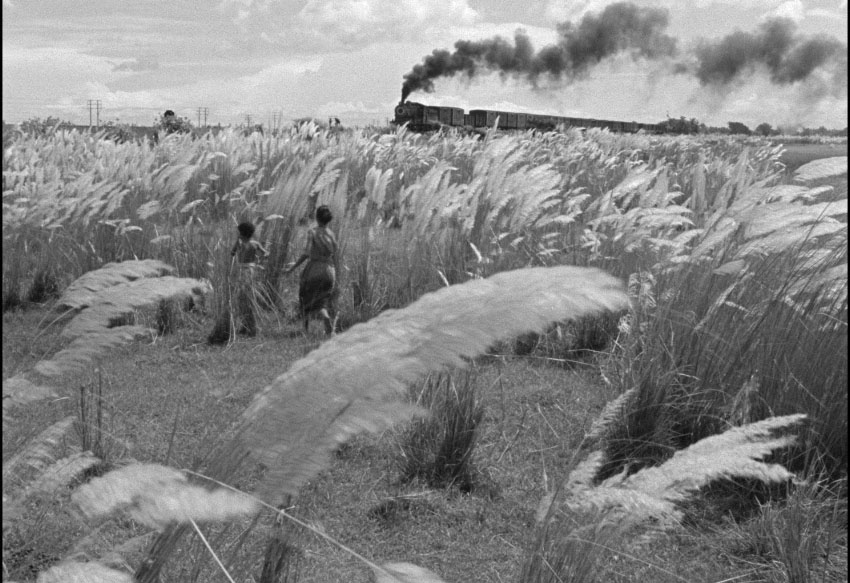
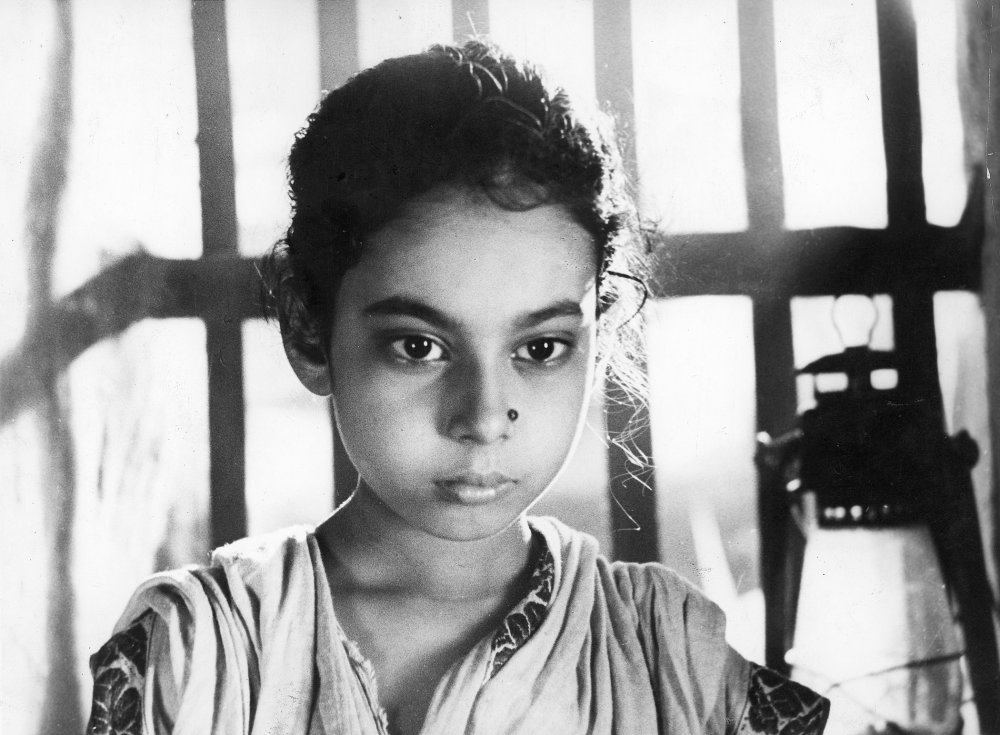
Iconic scene from Pather Panchali (1955)Pather Panchali (1955)
Breakthrough of Satyajit Ray
A young Ray had grown up on Hollywood movies, so when his ad agency sent him to London for higher training, he spent more and more of his time in the company of films and started “losing interest in advertising in the process,” he once said in an interview. During this trip, he saw Vittorio De Sica’s “Ladri di biciclette” (Bicycle Thieves),in 1948, a neo-realist Italian masterpiece of post-War despair and was entranced by its beguiling simplicity and humanism. Back in Calcutta, he heard that Jean Renoir was in town and walked straight into the hotel where the great French filmmaker was staying to confide in his own dreams of making a movie someday. Renoir, who was location-scouting for The River in Calcutta at the time, encouraged the aspirant. And so began the journey of the song of the little road.
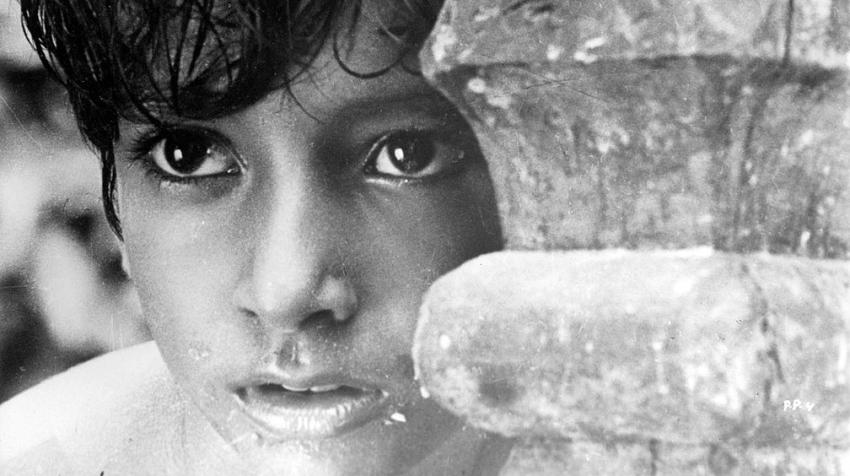
Subir Banerjee as Apu in Pather Panchali (1955)
Ray’s landmark debut, Pather Panchali ( which was adapted from eponymous 1928Bengali novel “Pather Panchali” by eminentBengali novelist Bibhutibhusan Bandopadhay) was on a shoe-string budget in 1955 with a mostly non-professional cast. All the while, he clung on to his job for a safety net even as he shot what would become the first of the classic Apu Trilogy on weekends. The film was apparently being made by a group of neophytes, who had to stop filming more than once, owing to the depletion of their shoestring budget.
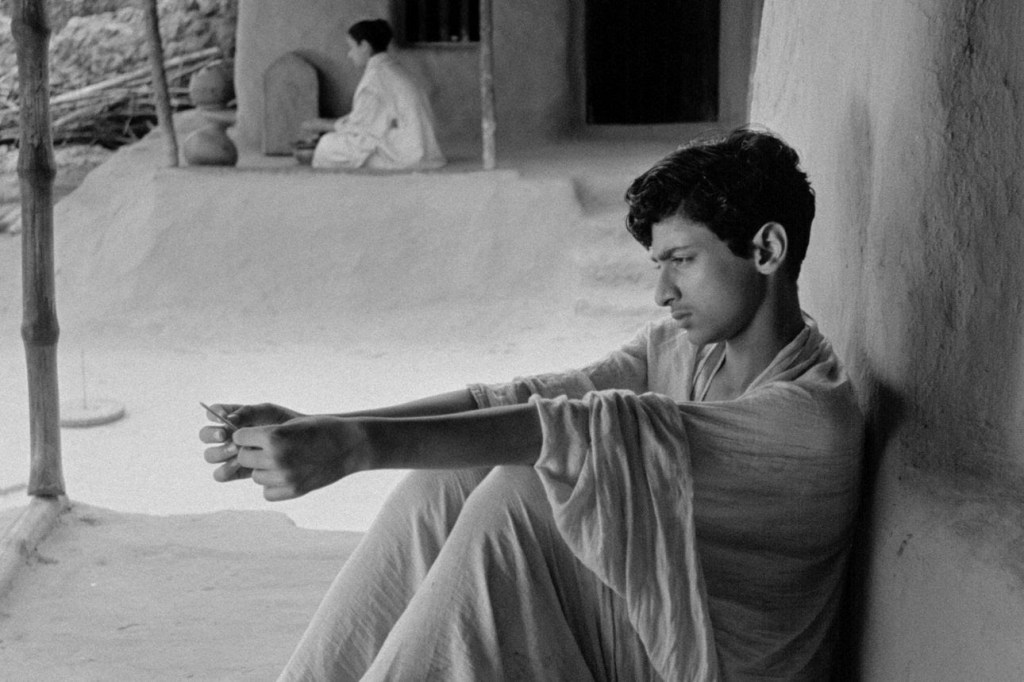
Smaran Ghoshal as Apu in Aporajito (1956)
Notable Films of Satyajit Ray
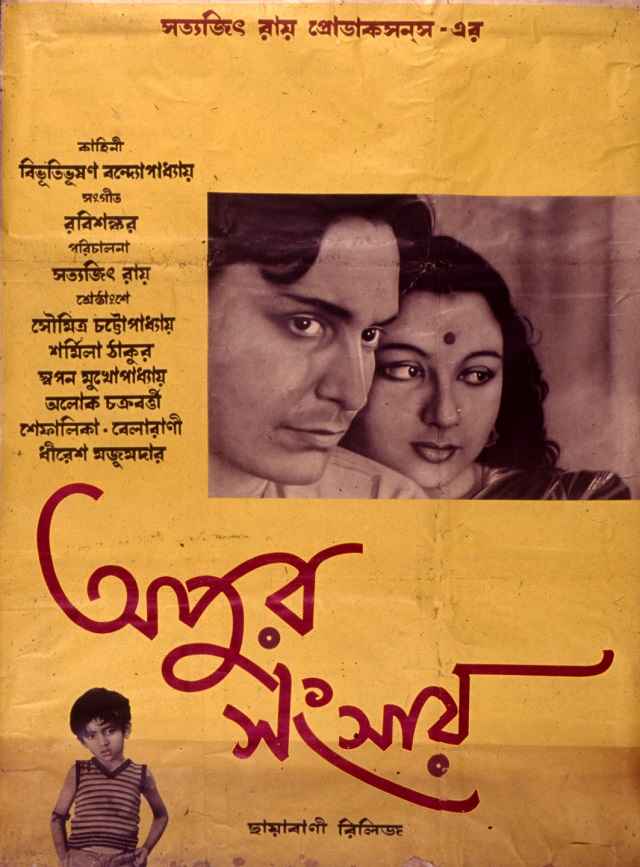
Ray directed 36 films, comprising 29 feature films, five documentaries, and two short films.Pather Panchaliwas completed in 1955 and turned out to be both a commercial and a tremendous critical success, first in Bengal and then in the West following a major award at the 1956 Cannes InternationalFilm Festival. sured Ray the financial backing he needed to make the other two films of the trilogy: Aparajito (1956; The Unvanquished) and Apur Sansar (1959; The World of Apu).Pather Panchaliand its sequels tell the story of Apu, the poor son of a Brahman priest, as he grows from childhood to manhood in a setting that shifts from a small village to the city of Calcutta.
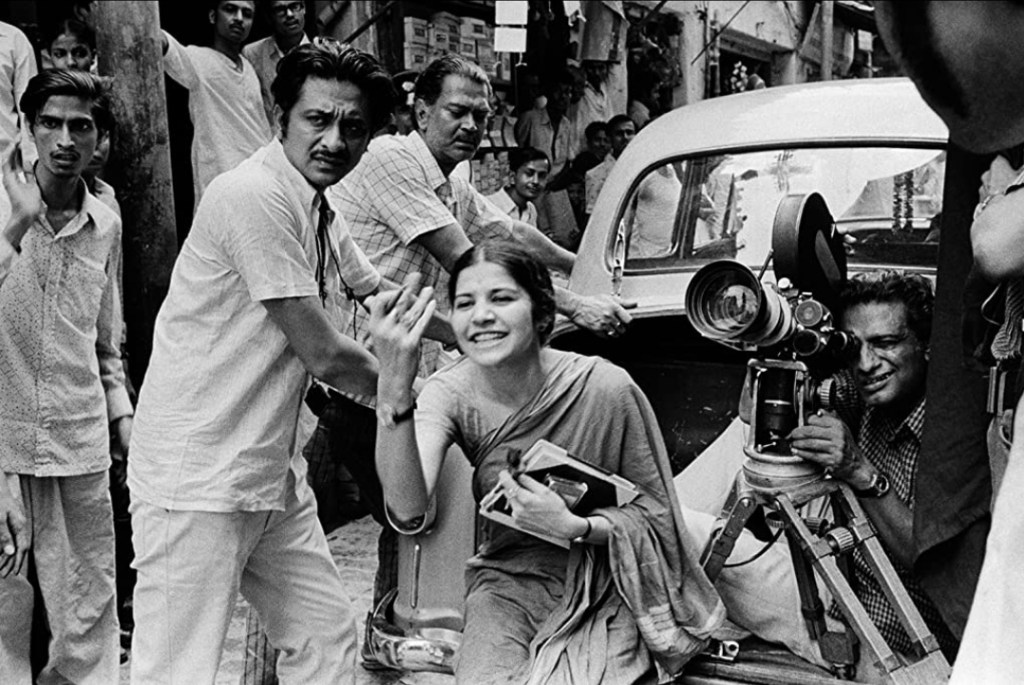
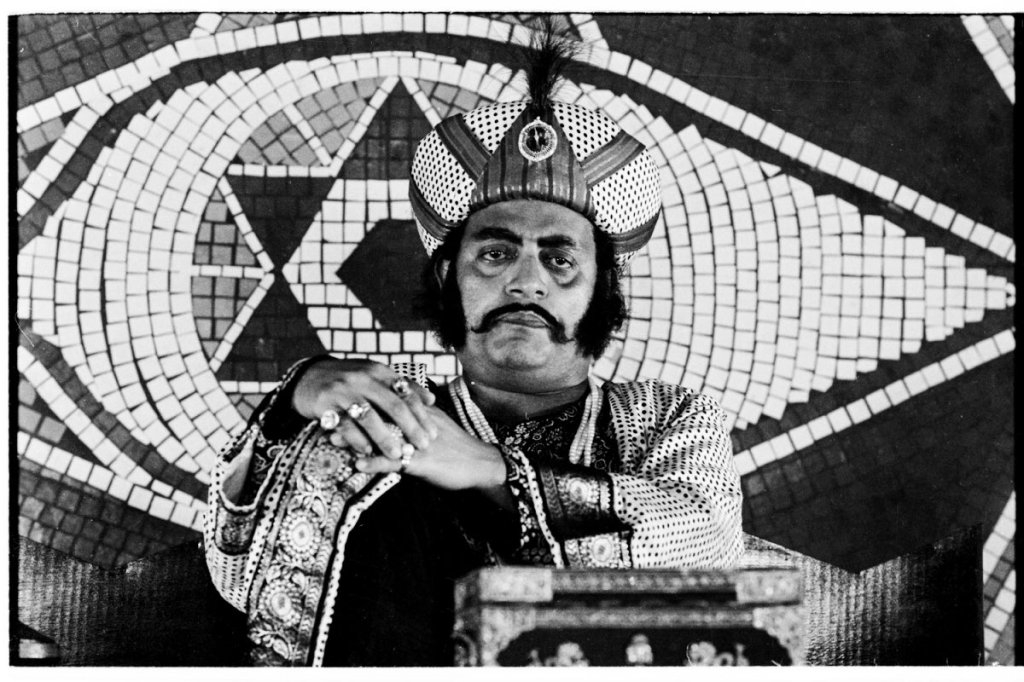
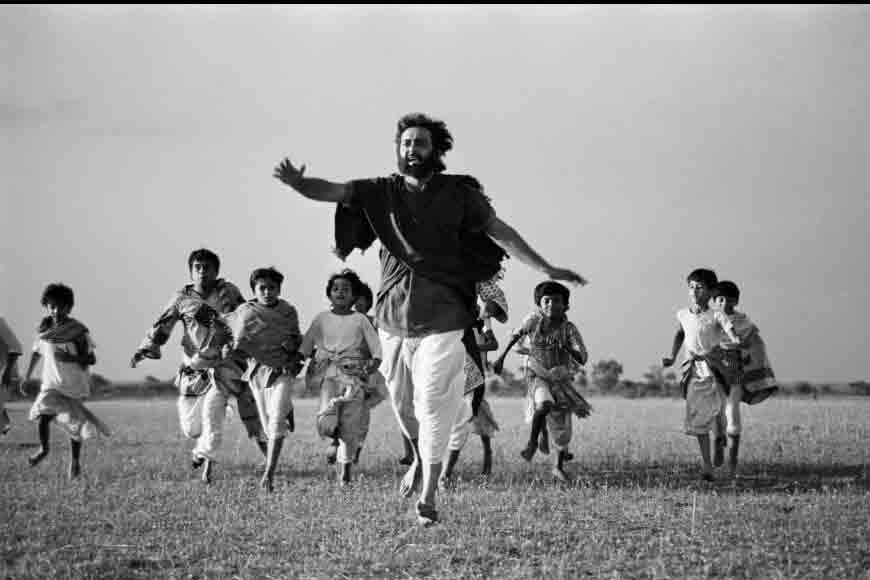
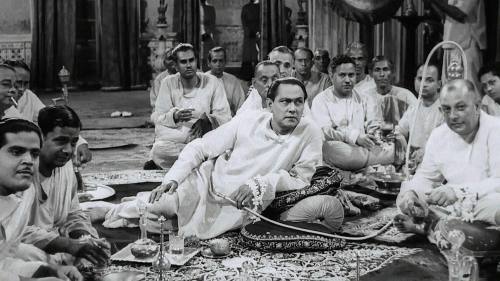
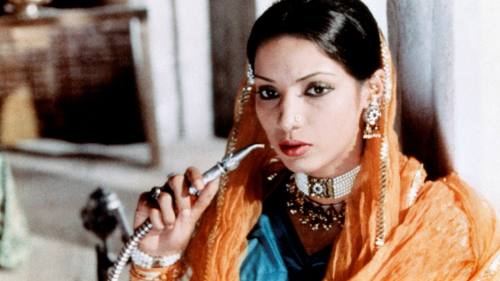
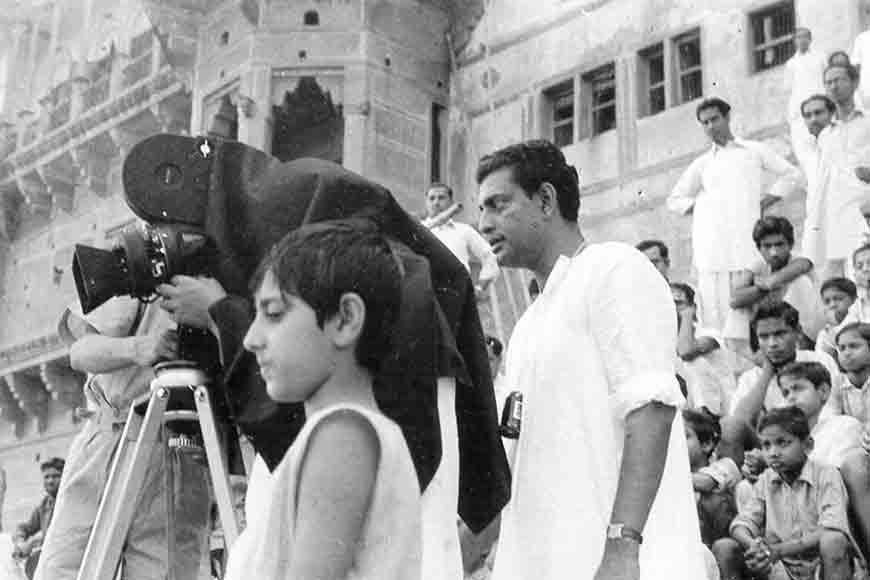
Chandana Banerjee in Teen Kanya (1961)During the Shooting of Jana Aranya (1975)Utpal Dutta in HirokRajar Deshe(1980)Soumitra Chatterjee in Hirok Rajar Deshe (1980)Chhabi Biswas (in middle) in Jalsaghar (1958)Shabana Azmi in Shatranj ke Khilari (1977)Satyajit Ray during the shooting of Sonar Kella(1974)
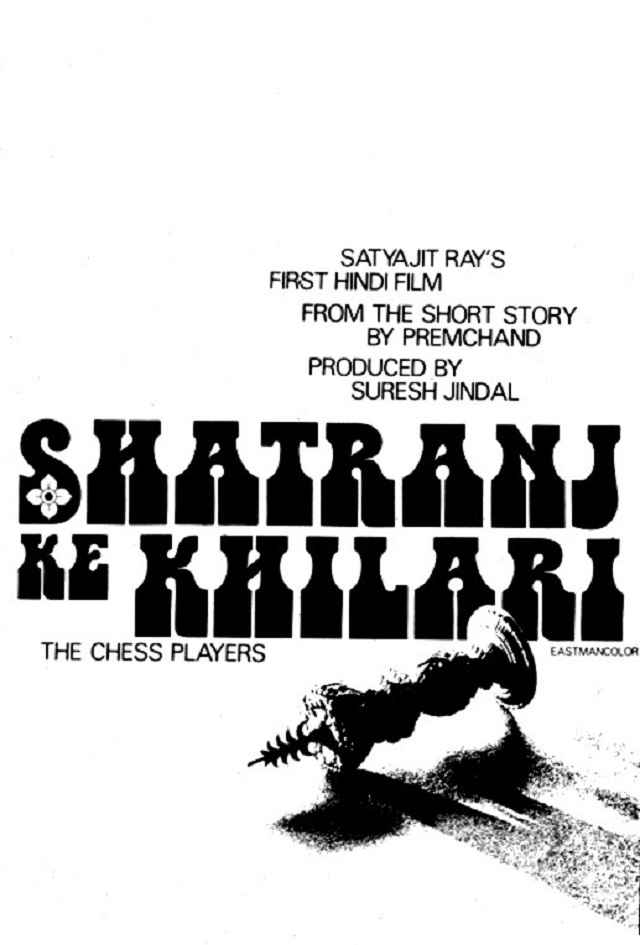
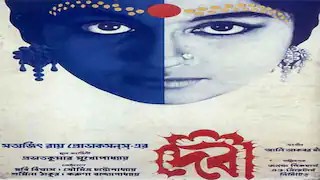
Ray’s major films about Hindu orthodoxy and feudal values (and their potential clash with modern Western-inspired reforms) include Jalsaghar (1958; The Music Room), an impassioned evocation of a man’s obsession with music; Devi (1960; The Goddess), in which the obsession is with a girl’s divine incarnation; Sadgati (1981; Deliverance), a powerful indictment of caste; and Kanchenjungha (1962), Ray’s first original screenplay and first colour film, a subtle exploration of arranged marriage among wealthy, westernized Bengalis.Shatranj ke Khilari (1977; The Chess Players), Ray’s first film made in the Hindi Language , with a comparatively large budget, is an even subtler probing of the impact of the West on India. Although humour is evident in almost all of Ray’s films, it is particularly marked in the comedy Parash Pathar (1957; The Philosopher’s Stone) and in the musical Goopy Gyne Bagha Byne (1969; The Adventures of Goopy and Bagha), based on a story by his grandfather.
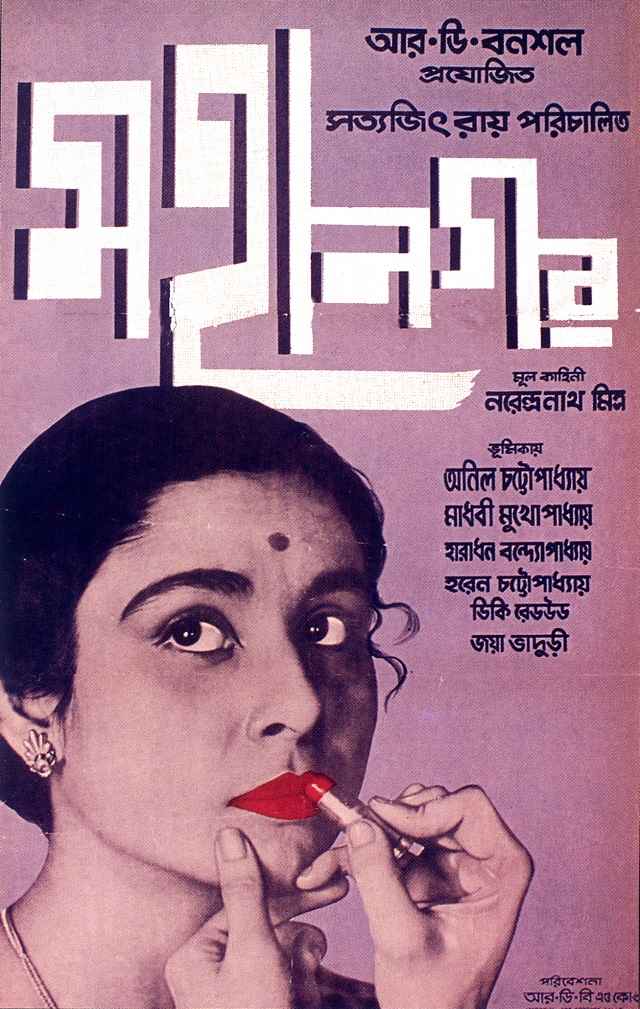
His other notable films were Ahsani Sanket (1973; Distant Thunder), Aranyer Din Ratri (1970; Days and Nights in the Forest) , Mahanagar (1963; The Big City) and a trilogy of films made in the 1970s—Pratidwandi (1970; The Adversary), Seemabaddha (1971; Company Limited), and Jana Aranya (1975; The Middleman), Ganashatru (1989; An Enemy of the People), Shakha Prashakha (1990; Branches of the Tree), and the Agantuk (1991; The Stranger).
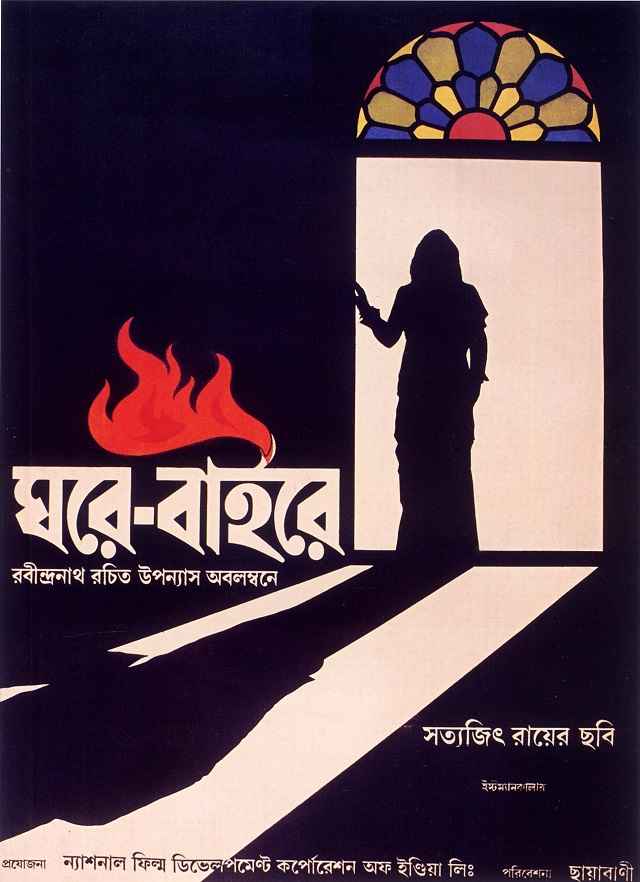
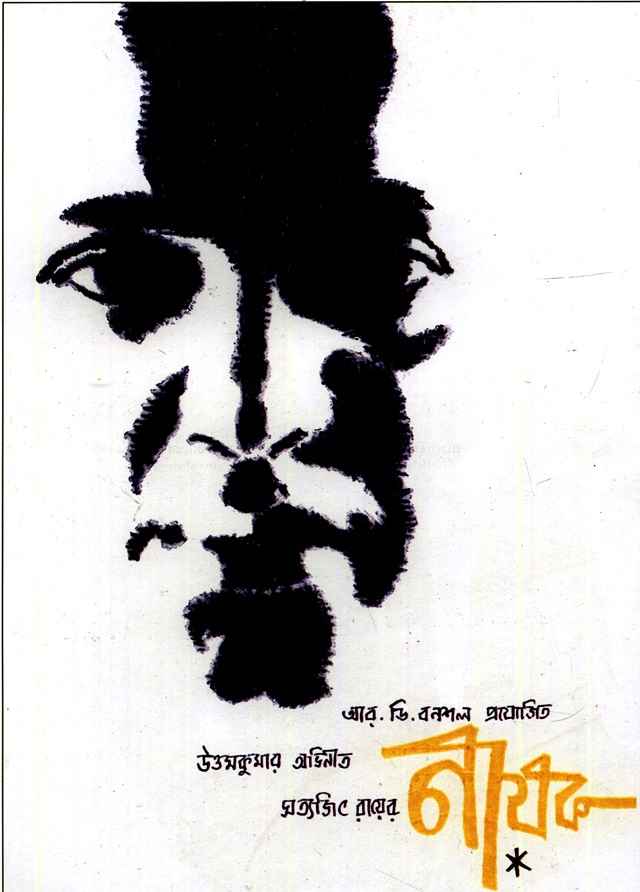
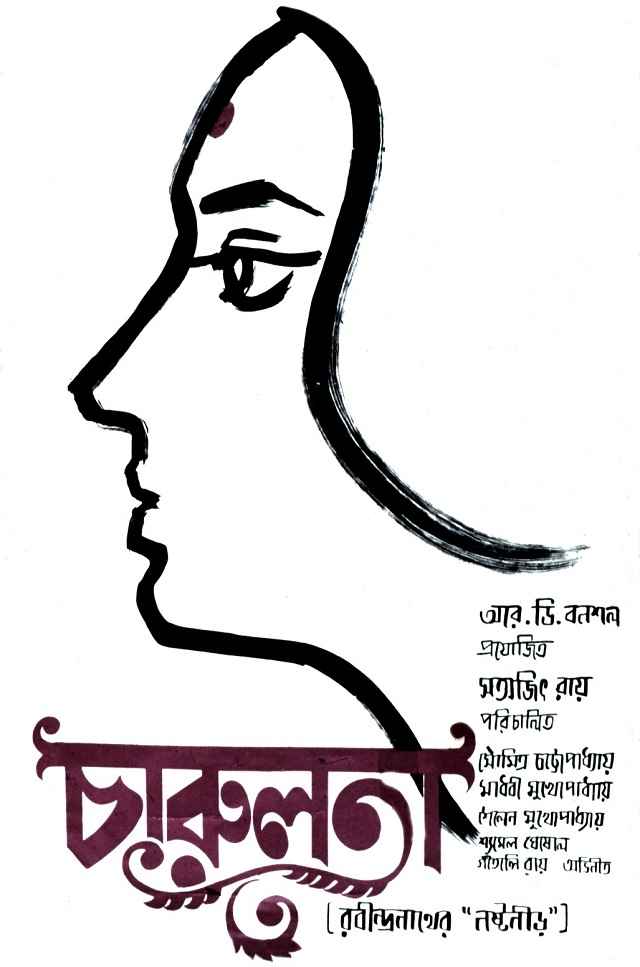
Poster of Shatranj ke Khilari (1977)Poster of Devi(1960)Poster of Ghore-BairePoster of Mahanagar(1963)Poster of Apur Sansar (1959)Poster of Nayak Poster of Charulata
Work As A Novelist
Ray created two popular fictional characters in Bengali children’s literature—Feluda, a sleuth, and Professor Shanku, a scientist. The Feluda stories are narrated by Topesh Ranjan Mitra aka Topse, his teenage cousin, something of a Watson to Feluda’s Holmes. The science fictions of Shonku are presented as a diary discovered after the scientist had mysteriously disappeared. Ray also wrote a collection of nonsensical verses named Today Bandha Ghorar Dim, which includes a translation of Lewis Carroll’s “Jabberwocky”. He wrote a collection of humorous stories of Mulla Nasiruddin in Bengali. Ray wrote an autobiography about his childhood years, Jakhan Chhoto Chhilam (1982), translated to English as Childhood Days: A Memoir by his wife Bijoya Ray. In 1994, Ray published his memoir, My Year’s with Apu, about his experiences of making The Apu Trilogy.
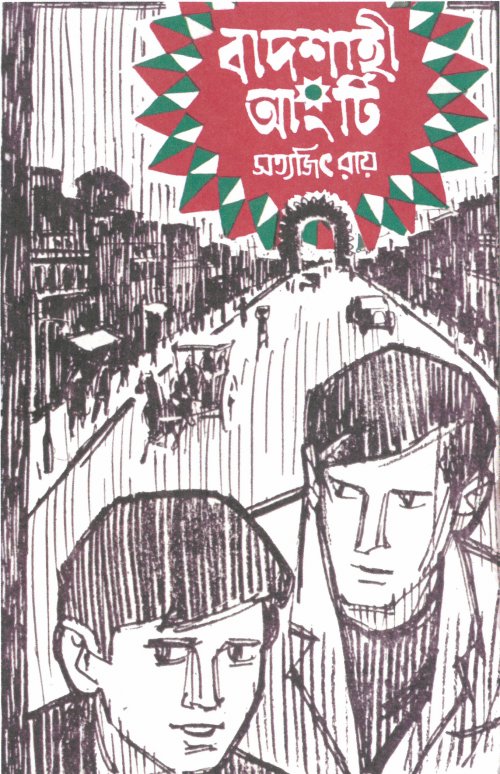
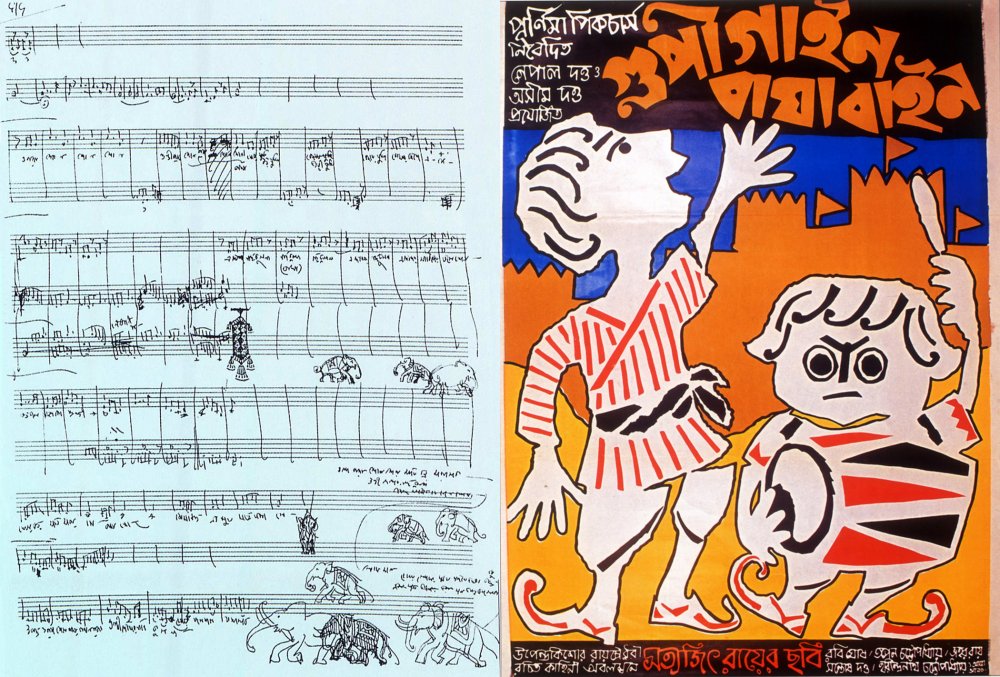
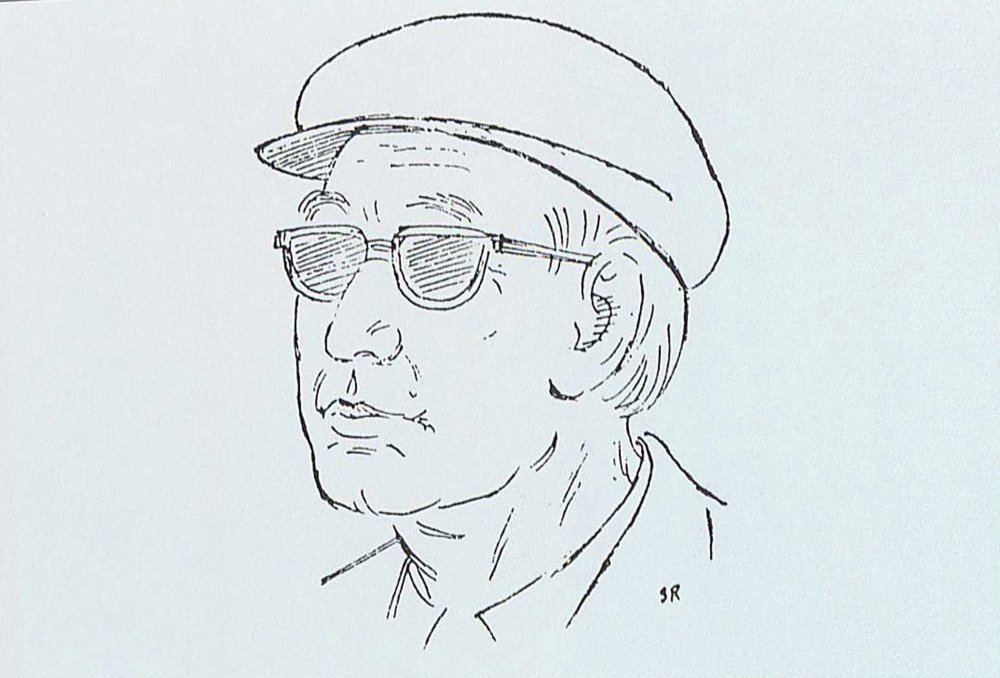
Book Cover illustrated by Satyajit Ray, himself for his first detective novel “Badshahi Angti”.The musical score and Poster for Goopy Gyne Bagha Byne(1969), done by Satyajit Ray, himself Portrait of Akira Kurosawa, illustrated by Satyajit Ray
Critical Analysis of Satyajit Ray
Instead of acting like a propagandist, Ray wanted to make people aware of the persistence of certain social problems. Devi and Ganasatru show people’s blind religious beliefs, Sakha Prasakhadiscloses the involvement of the top officials with bribery and corruption, Shatranj ke Khilari indicates the indolence and lack of political consciousness of the wealthy people, Aranyer Din Ratrireveals the insensitivity and boasting of the urban young men, and Mahapurushmockingly exposes the failure of the urban elite to embrace rational thoughts. Given the necessity of making people conscious of the same problems in present-day society, these films are still relevant today. Ray’s films also made a departure from tradition by frequently including strong women characters. Sarbajaya in Pather Panchali and Aparajito, Manisha in Kanchenjungha, Arati in Mahanagar, Charu in Charulata, Karuna in Kapurush, Aditi in Nayak, Aparna and Jaya in Aranyer Din Ratri, Sudarshana in Seemabadhdha, and Ananga in Asani Sanketappear as bolder, more confident, and more resilient than the male characters. In an interview, Ray states that the inclusion of unwavering women characters reflects his own attitudes towards and personal experience with women.
Awards Received by Satyajit Ray
Ray received many awards, including 36National Film Award by the Government of India, and awards at international film festival. In 11th Moscow InternationalFilm Festival 1979, he was awarded with the Honorable Prize for the contribution to cinema. At the Berlin International Film Festival, he was one of only four filmmakers to win the Silver Bear for Best Director more than once and holds the record for the most Golden Bear nominations, with seven. At the Venice Film Festival, where he had previously won a Golden Lion for Aparajito (1956), he was awarded the Golden Lion Honorary Award in 1982. That same year, he received an honorary “Hommage à Satyajit Ray” award at the 1982 Cannes International Film Festival. Ray is the second film personality after Charlie Chaplin to have been awarded an honorarydoctorate by Oxford University.
He was awarded the Dadasaheb Phalke Award in 1985, and the Legion of Honour by the President of France in 1987. The Government of India awarded him the Padma Bhusan in 1965 and the highest civilian honour, Bharat Ratna, shortly before his death. The Academy of Motion Picture Arts and Sciences awarded Ray an Honorary Award in 1992 for Lifetime Achievement. In 1992, he was posthumously awarded the Akira Kurosawa Award for Lifetime Achievement in Directing at the San Francisco International Film Festival.
Conclusion
Whenever we talk about radical filmmaking in the realm of Bengali cinema, Satyajit Ray’s maiden feature (made in the face of tremendous odds) is mentioned. From Pather Panchali to his last film Agantuk, Ray never compromised on high standards, thereby making a huge impression. Having a greater familiarity with the oeuvre of Ray would enable people to understand the impressive qualities and importance of socially-meaningful cinema. We are surely in need of films that would make us perceive the beauty of a dewdrop on a blade of grass, strengthen our sense of humanism, and raise our social consciousness—hence, the everlasting relevance of the cinema of Satyajit Ray.
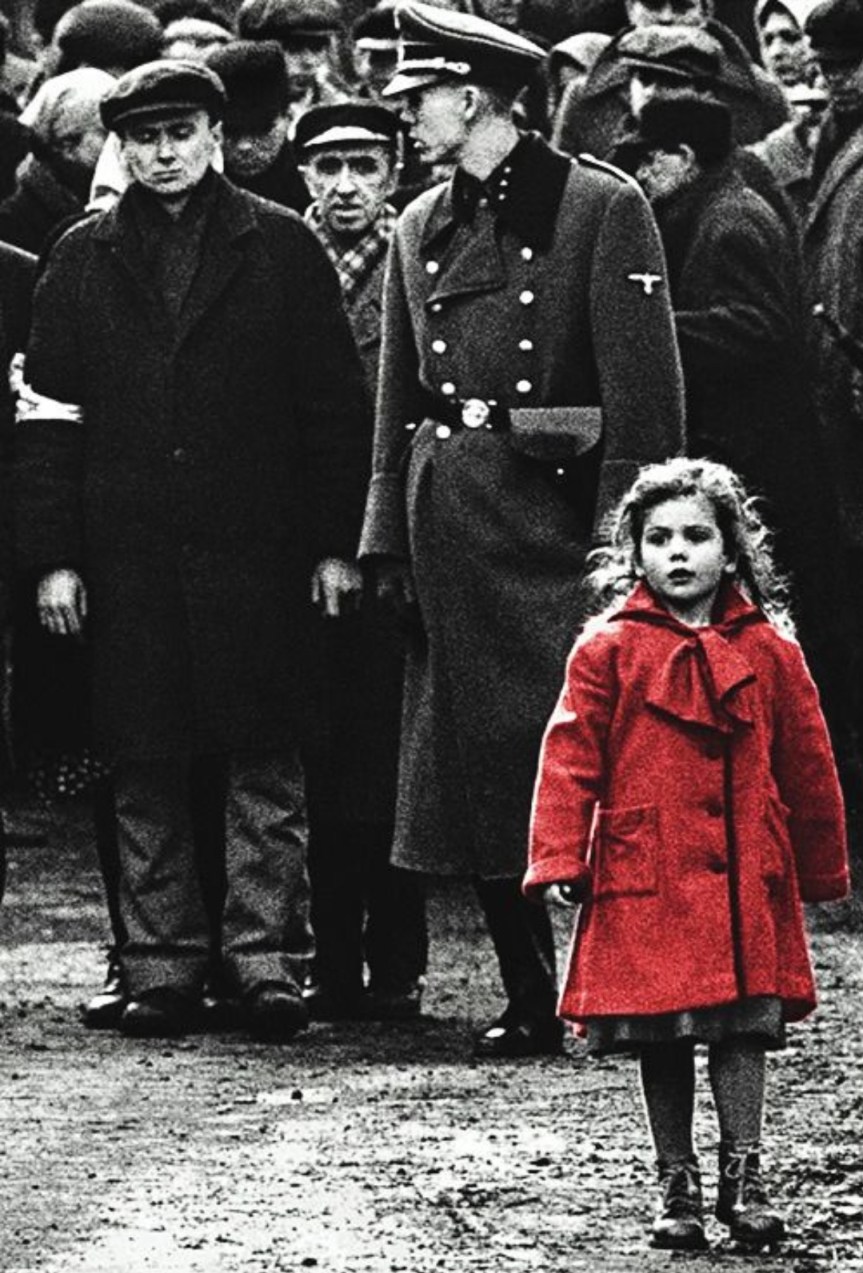
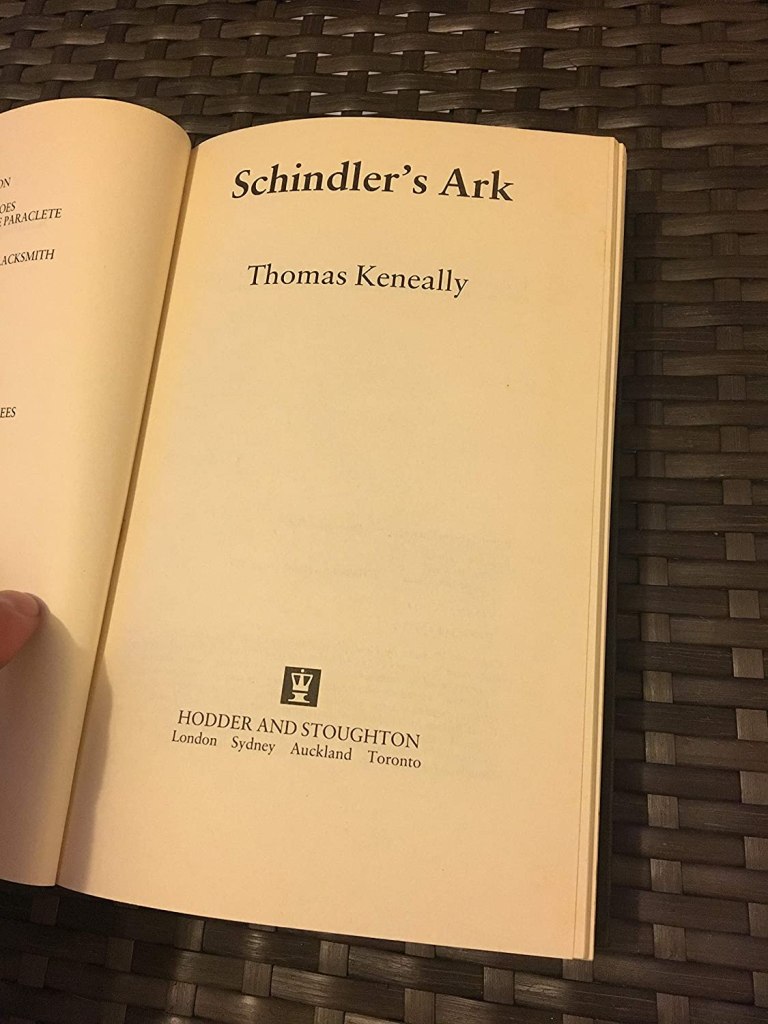
Australian author Thomas Keneally‘s novel first “Schindler’s Ark” (later republished as Schindler’s List) brought the story of Oskar Schindler’s rescue of Jewish people during the Nazi Holocaust, to international attention in 1982, when it won the Booker Prize. It was made by Steven Spielberg into the Oscar-winning film Schindler’s Listin 1993, the year Schindler and his wife were named Righteous Among the Nations.
Schindler’s Ark later republished as Schindler’s List
About The Author
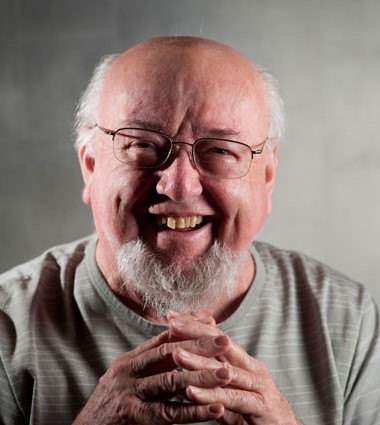
Thomas Michael Keneally, (born 7 October 1935) is an Australian novelist, playwright, essayist and actor. Keneally’s first story was published in The Bulletin magazine in 1962 under the pseudonym Bernard Coyle. By February 2014, he had written over 50 books, including 30 novels. He is particularly famed for his Schindler’s Ark (1982) (later republished as Schindler’s List), the first novel by an Australian to win the Booker Prize and is the basis of the film Schindler’s List. He had already been shortlisted for the Booker three times prior to that: 1972 for The Chant of Jimmie Blacksmith, 1975 for Gossip from the Forest, and 1979 for Confederates. Many of his novels are reworkings of historical material, although modern in their psychology and style.
Thomas Keneally
Storyline of The Novel
The story of the novel is based on true events, on account of the Nazi Holocaust during World War II. Oskar Schindler, (born April 28, 1908, Svitavy [Zwittau], Moravia, Austria-Hungary [now in the Czech Republic]—died October 9, 1974, Hildesheim, West Germany), German industrialist who, aided by his wife and staff, sheltered approximately 1,100 Jews from the Nazis by employing them in his factories, which supplied the German army during World War II.
Poster of Steven Spielberg‘s movie Schindler’s List (1993)
In the shadow of Auschwitz, a flamboyant German industrialist grew into a living legend to the Jews of Kraków. He was a womaniser, a heavy-drinker and a bon viveur, but to them he became a saviour. This is the extraordinary story of Oskar Schindler, who risked his life to protect Jews in Nazi-occupied Poland and who was transformed by the war into a man with a mission, a compassionate angel of mercy.
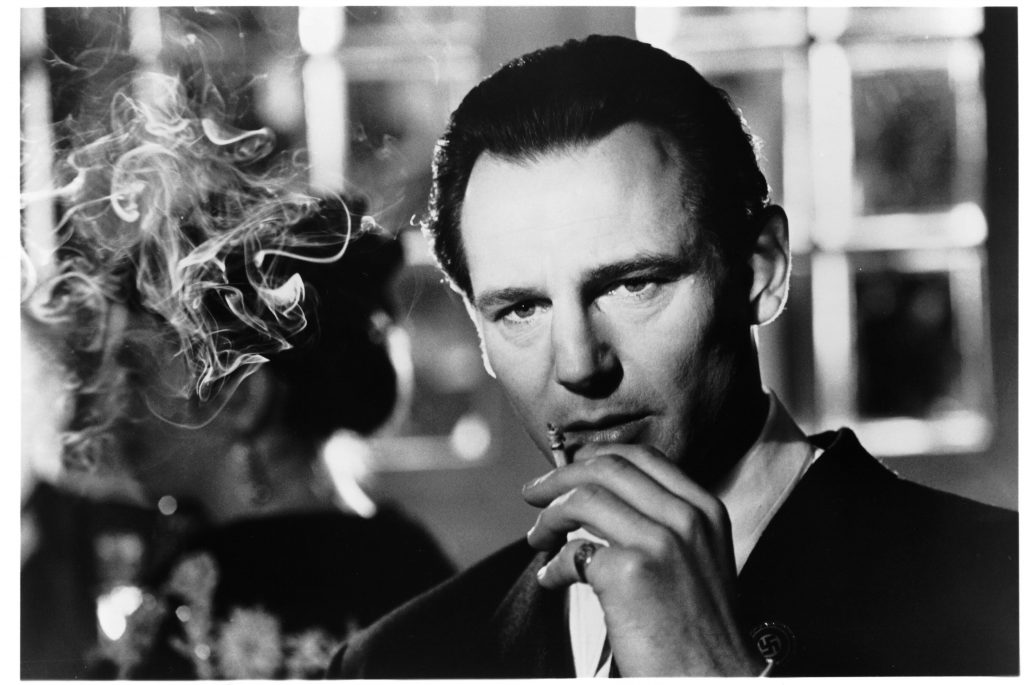
Liam Neeson as Oskar Schindler in Schindler’s List (1993)
Analysis of The Storyline
The novel introduced a vast and diverse cast of characters. However, the focus of the narrative was between Oskar Schindler and Amon Goeth. In the story, there was a dichotomy between what is essentially good and what is evil, that was personified by these two primary characters. Goeth represented everything evil. The war churned out a selfish and heartless sadist who found delight in inflicting pain on the Jews. Ironically, he lusted after his Jewish maid. Schindler, on the other hand, was portrayed as the Good German. He didn’t believe everything that the Nazi regime was saying against the Jews. He was, however, a man of contradictions. Despite being depicted as the epitome of goodness, he lived a self-indulgent lifestyle, which included proclivity towards the bottle and women. His infidelities have been a constant source of pain for his wife, Emilie. He also uses his connections to gain the upper hand in negotiations; it would also be a seminal part of his campaign to save the Jews.
Ralph Fiennes as Amon Goeth in Schindler’s List (1993)
Criticism of The Storyline
The amount of research poured to recreate the story of Oskar Schindler was astounding. And the starting point to this is as interesting as the novel itself. As noted in the Author’s Note, a chance encounter in 1980 led to the novel. Schindler’s motivation for protecting his workers was rarely ever clear, especially at the start. Questions still hound his true intentions. He, after all, brazenly took advantage of the cheap labour the Jews offered at the start of his enterprise. Is Schindler an anti-hero? The answer can be found in Keneally’s extensive research. Through interviews with surviving Schindlerjuden and different Second World War archives, he managed to identify the point in which Schindler decided to protect the Jews. While horseback riding on the hills surrounding Kraków, he witnessed an SS Aktion unfold on the Jewish ghetto below. The Jews were forcefully taken out of their houses. Those who resisted were shot dead, even in the presence of children. Witnessing the atrocious acts firsthand turned Schindler’s stomach. It was then that he resolved to save as many Jews as he can.
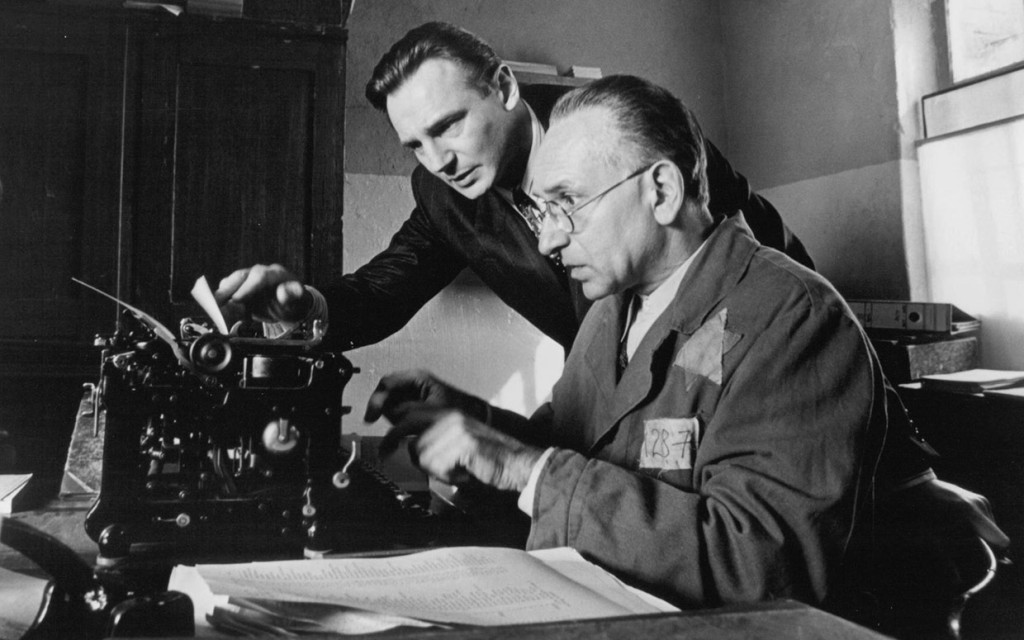
Scene from Schindler’s List (1993)
Overall, what didn’t work was the manner in which Keneally related the story of Oskar Schindler. As the story moved forward, it became clearer that Keneally was unsure of how to deliver the story. His resolve to remain loyal to Oskar’s story was commendable. He endeavored to do just that but it never fully came across. The result was an amalgamation of fiction and historical textbook. The strange mix muddled the story and the result was a perplexing work of historical fiction. It is without a doubt that one of the darkest phases of contemporary human history is the Second World War. Nobody expected that the meteoric ascent of Der Führer, Adolf Hitler, in the German political ladder would lead to a devastation of global scale. As the Axis forces march towards and beyond their boundaries, they would leave death and destruction in their wake, stretching from Europe, to the Pacific, and to the Far East. The consequences of the war would resonate well beyond its time. With genocides, concentration camps, and slave labour commonplace, the war was a reflection of the human conditions. Its peak, the Holocaust, exhibited the extent of the darkest shades of the human spirit. It was a grim portrait.
Indeed, the Second World War brought out the worst in humanity. However, in times of darkness, there are those among us who rise to the occasion. One of them is Oskar Schindler whose story was related by Thomas Keneally in his nonfiction novel, Schindler’s List (1982).
Conclusion
While Keneally‘s dramatization of this great man’s exploits is lacking in novelistic shape or depth, the brutality and heroism are satisfyingly, meticulously presented–as plain, impressive, historical record; and if admirers of Keneally’s more imaginative work may be disappointed, others will find this a worthy volume to place beside one of the several Wallenberg biographies.
You all know that right.. Friends are inseparable part of human life! We all need friends to share our happiness and dark times. A friend around us motivates to be cheerful and easy going.
I have a bunch of friends. But very few among them I rely on. There are people that come into your life and slowly they become the part of your family. Often, when I’m not able to share anything with my family, I go to my best friend🙂 She makes everything easy with her I find the answer to my every problem.
I remember the first time I met her at a park near my home. Her eyes were sunken and gobbled with heavy drops of tears. I never thought my first meeting with her whom I admire will be like this. I saw her sobbing, sobbing and she just went on sobbing! I sat next to her, patted her & consoled her. But she was not ready to stop. Her hands and fingers were shivering. When I actually wonder the Ouch experience, the first meet with her, I am always taken aback! From that point, I understood the only thing in life all she needed from a friend was companionship and support.
I have met a lot of temporary people in life. Some friendships are short-lived and some last forever. I believe for a friendship to last there must be a mutual understanding, trust, loyalty and 0 jealousy.
The most crazy thing about my best friend is that she never fails to abuse me. Honestly, now I am afraid to let her down in any circumstance! Now I know that whatever happens I have to pick her call and listen to her rants and everything. There is no option to skip her call! Not that she is insane but I do stuffs which makes her abuse so badly that no other option stays my side rather than surrendering myself to her. I am the person in our friendship that often takes mini breaks from everything. This shooks her head & resulting the release of unparliamentary languange. HAHAAAA! We are best friends because we know where exactly our mind goes. The best thing about her is that she catches me up when I fall down.
Ship picks, she pats, she abuses, she hugs, she holds and we walk. What more do you need in life? When your friend refuses to leave you anyday! I feel blessed that I have her back with God’s grace. From her, I believed families are not only blood relations but my best friend is no less than my family
An IP address abbreviation of Internet Protocol address, it is an address that is provided by the Internet Service Provider to the user, it is just like a postal address code that is pin code to find the location or place where to send the message. An IP address is a unique group of number what are separated by the period (.), it varies from 0 to 255, and every device has a separate and unique IP address that is assigned by the specific Internet Service Provider (ISP) to identify which particular device is communicating with them and accessing the internet from there.
If you want to access internet from you device which may be your Android, I phone, Computer the service provider assigned them a particular, unique address that is help them to communicate send, receive information from the right person without any misunderstanding, mistake the message is pass to the authentic person to whom it has to send. This problem is solved by the IP address, in olden days; we have postal address to send the message/letter to the person, the message that has to be sent with the help of the address which may be his house number, city, town, postal code. The sender will write the address on the top of the letter envelope so that it will be delivery to the right person. If the person connected his device to internet provide by the hotel, the hotel‘s Internet Service Provider will assign an IP address to the device.
Types of IP addresses
There are different types of IP based on different categories, types.
Consumer IP addresses
A Consumer IP addresses is the individual IP addresses of a customer who connects his/her device to a public or private network. A consumer connects his device through internet from his Internet Service Provider, or from the Wi-Fi. In these days the Consumer has many electronic gadgets which he connects to his router that transfer the data from the Internet Service Provider.
Private IP addresses
A Private IP addresses are a secure one that is connected Private Network and every devices that is connected to this Private Network is assigned a unique IP address that is assigned by the Internet Service Provider. All Mobile devices, Computer, and Internet of Things that are connected to this private network are assigned a unique string number to the devices.
Public IP addresses
A Public IP addresses is the main address that is related to your network, as stated above that the IP address are assigned by the Internet Service Provider, the Public IP address is also assigned by the Internet Service Provider, The Internet Service Provider has a large amount of IP addresses that are stored and assigned to the customer. The public IP address is the address that devices that are outside the network use to identify the network.
The Public IP addresses are further classified into two types they are:
Dynamic
Static
Dynamic IP addresses
The Dynamic IP address are the IP address that changes very frequently, so the Internet Service Providers purchase a very huge amount of IP addresses , they assign it mechanically to the customer . This frequently changing the IP address helps the customer not to make the security actions. The frequently changing IP address won’t let the hacks to track or pool your data.
Static IP addresses
The Static IP addresses is the contradictory to the Dynamic IP address, it remain fixed. The IP address remains fixed when it is assigned by the Internet Service Provider. The mostly many person and business man don’t choose static because it is risk of getting easily track, but most business which are trying host her own website server choose Static IP address so it will easier for the customer to find them.
The IP address can be protect by 2 ways that are using proxy and the other one is use of Virtual Private Network. A proxy server acts as a intermediary between the internet server and your internet service providers, when you visit any website it will show the proxy IP address not yours.
Where to find IP address is Device?
The IP address set up in every device that is connected to the Internet, but the steps or direction is different in different devices. Some of device direction is given below:
In this Digital age, the market has became more global than ever it has been, the use of internet has been at peak, than it has never before, the small business that were in the street has started to open a wide market through the use of Internet, the local shop has reached to other parts of the world through the use of internet, websites, social media etc., many big multinational company has been facilitating the tools and facilities for the small business owner to come on the much bigger platform than ever before through the internet. Global integration through this medium that remove the barrier of trade, investment, communication, factor flows, bringing the economics together for the development.
There is a global change in the world, in this pandemic, changes in economies, business, technology, communication, politics and many more. This changes make the require the business to adapt to this changes as quick as possible or else they will get outdated, obsolete and might even wind up the business. There are many uncertainties in the business, so the entrepreneur must adapt to this changes, think about the future of the business. There are many other factors that are forcing the business to make changes, like limited resources, limited market, huge competition, highly skilled labor to change from traditional way to alternative way for getting the business more successful and to get in global market. Advantages of going international: It can able to take advantage of market opportunities in abroad countries through internet, trade. It also defends and grips the position of the business from the competitive position in varying technology, and also from domestic rivalry or government policies. It also enhances their return from the higher revenue and also lowers their cost of production. It also reduces it imports and try to increase their exports It breaks the barriers of places, geographical locations through internet. It also amplifies their relations with the International Diplomats. It also takes benefits from the international technology, labor and many opportunities. To get more access to the global markets and get the resources at low price without compromising its quality. The Domestic business is a business that buys or sells the goods and services within the national boundaries. It gets its resource within the country boundaries doesn’t have any option to search for the better option and even for the markets, it has limited its boundaries in terms of place, markets, resources unlike International business where goods and services are traded across the boundaries of the country, it can be either the countries or between the multinational companies from the different countries. The Domestic business has some limitation that it operates only within the boundaries, limited to narrow markets, no new customer, no customer visibility and reach, scare resources with high price, not good quality, but whereas International business all this limitations are eradicated with the help of technologies which remove the barrier of place, market, time, and new customer with high quality product with reasonable price, and the owner get the raw material with good quality and with reasonable price. In domestic business, the business get a constant threat of competition, rival companies as they don’t have new markets and large reach for their products, it becomes difficult for the domestic business to survive in the market. Many domestic businesses are going in the way of globalization, market integration with the use of technologies and becoming the international business and removing all the hindrance of the small business problems, competition.
This branch of philosophy deals with beauty , art and taste of things. It examines what happens in our minds when we are involved in aesthetic objects like art, music, poetry or while exploring Nature. Aesthetics consider why we like some specific thing over other. Aesthetic judgements may be linked to emotions and mood. When we say an object or art piece is beautiful , it triggers an aesthetic pleasure in ourselves . Beauty is a positive aesthetic value in contrast to ugliness, which is negative.
Epistemology
It deals with questions on nature and scope of knowledge. It focuses on sources of people’s consciousness, cognition ( structure and forms) and the relationship between mind and reality. It examines questions such as ‘ what we mean when we say we know something?’ ; the ability to differentiate between what one knows and what one believes.
Ethics
Ethics is the study of morals and the concept of right and wrong conduct. It deals with questions such as – What is morality ; does morality exists? It has 3 types :
Meta ethics ~ deals with foundations and nature of moral values.
Normative ethics ~ deals with systems of morality and questions on how one ought to act morally.
Applied ethics~ deals with what a person is obliged to do in specific situations.
Logic
It is the act of being rational by application of reason. The reasoning process can be done well or badly. Logic allows human beings to distinguish good reasoning from bad. In logic , we study rules and techniques that enables us to do correct ( whether good /bad ) reasoning. A logic must formulate precise standards for evaluating reasoning by developing proper set of arguments.
Metaphysics
Metaphysics deals with existence. It concerns with the fundamental nature of reality.
Theme 1~ The study of first causes — It studies that which does not change and from which the world has come into play. Some identify it with God.
Theme 2~ The study of being— Study of the fundamental categories of being or which exists. This field is also called Ontology.
It is further divided into disciplines such as cosmology, rational psychology and theology. Specific issues like immortality , free will are discussed.
Philosophy of mind
The branch of philosophy that deals with nature of mind and its relation with body . The aspects of mind such as thought, mental properties , consciousness are studied. It addresses issues like the hard problem of consciousness. It tries to explain how a supposedly non materialistic mind can influence material body and vica-versa. Rene Descartes was the first person to clearly identify mind with consciousness and self-awareness and to distinguish it from the brain , where intelligence lies.
Axiology
It is the study of origin of values or study of worth. Through axiology, one can determine what is valuable and why something can be said to be valuable.
Philosophy of language
It investigates nature of language , meaning, language use and language cognition. It explains how the meaning of complex sentences is derived from the meaning of their parts.
Political philosophy
Political philosophers seek to establish basic principles that will justify the formation of state, show individuals their rights and tell the fair distribution of society’s resources among its members . This usually involves analysing ideas like freedom , justice , authority and democracy and then applying them to institutions in a methodological way.
Philosophy of Science
It studies assumptions , foundation and implications of science. Questions addressed are: What is science; does science lead to certainty and truth; nature of statements and conclusions or how does science explain , predict and harness technology. It deals with the reliability of scientific theories and the ultimate purpose of science .
Astronomy is a subject that produces a spark in everyone. Who doesn’t like gazing at the stars with awe or secretly trying to make a wish when looking at the falling stars or more precisely ‘meteors’ . As it is famously said-
You are not a human being looking at the Universe but the universe looking itself in human form .
Some say, time travel is impossible but often we don’t realise that when gazing at the night sky , you are literally looking millions of years into the past. This thought can make anyone’s heart dance and excite them to explore such a gigantic cosmos.
Astronomy takes your imagination to the next level. We are connected to this field since the arrival of human on this planet. From ancient times , farmers used sky to decide the sowing seasons of crops, astrologers for predicting fortune and astronomers for making calendars and navigation routes for ships. Our ancestors knew the significance of Sun and thus worshipped it. The ancient Mayan Civilisation and Egyptians constructed the pyramids in such a way that their location coincided with that of the positions of the Constellations above.
Certainly this suggests that Astronomy is in our blood . Renowned astronomer Carl Sagan quoted “ The Cosmos is within us. We are made up of star stuff. We are a way for the Universe to know itself.” By studying Astronomy , you understand there are no limitations to what we can achieve, you surrender yourself and your ego before this humongous Cosmos, you feel free and connected to the Nature. If one is interested in going to the depths of this field , one can follow these tips:
1) Be curious- Curiosity kills fear more than courage will ever do.
2) Be patient- Good things take time.
3) Seek knowledge and wisdom- Your soul is most happy when you are in a learning state.
4) Be truthful- A scientist must always be truthful to herself/himself and to the world. Truth is the ultimate thing that a being chases.
5) Be fearless- Know in your mind that you are as old as this Universe and there is nothing to be afraid of because we all are essentially same at the root level.
Always be hopeful because somewhere in this vast universe something incredible is waiting to be known.
It is a healthy activity to reflect on the time gone by, objectively, before making plans for the year ahead. However, most of us are moving towards one of the two extremes:
Self-ridicule or lamenting the stuff we didn’t do or did wrong.
Self-congratulation of patting oneself on the back for all the great stuff we did, while ignoring the mistakes.
Reviewing The Year: Achievement And Effort
While reflecting on the past, we normally look at our achievements and appreciate what we have been successful at. Despite our best efforts, we sometimes do not get success due to other factors like luck, timing etc. The right approach is to learn from the experiences and to appreciate one’s effort. Example: Going for various interviews that didn’t go well wasted a lot of our time, energy, effort and resources, but we still have to appreciate our effort and what all we learned from the rejections.
Reviewing The Year: Self-Change
If we learned and changed during the past year/decade, we are on the path towards growth, even though it may not be visible or tangible as of now. Personal growth means your experiments are paying results. The troubling thing would be to remain completely unchanged, as stagnancy is a cause for concern.
Reviewing The Year: The Boss-Like Evaluation
It’s a great idea to have an objective assessment for one’s achievements and efforts, reviewing them like a supportive boss would do while providing an appraisal. To maintain an ideal balance, give yourself constructive feedback (25 per cent) and appreciate the hard work and achieved goals (75 per cent).
“Follow effective action with quiet reflection. From the quiet reflection will come even more effective action.” – Peter Drucker
Reviewing The Year: Understand What Worked
Sometimes the reason for your success is the failure you endured. The good night’s sleep that helped you shine the next day for the interview, is an important aspect of success. Most of the time it is our self-care and other unidentified reasons that become a cause for our eventual success, and one needs to think holistically while reflecting to find the hidden reasons.
“It is better to know how to learn than to know.” – Dr Seuss
False Beliefs About Self-Education
Despite having easy access to information, few people take full advantage of the opportunity we have for self-directed learning. We still believe that to learn something, we need to be formally educated on it, when in fact we’re able to educate ourselves.
Self-Education In The 21st Century
Self-education is the core skill for the 21st century. Our ability to respond to changes in the landscape of work and technology will be dictated by how skilled self-educators we are, how well we can take full advantage of the information available to us to grow our skillset.
Learning In The Real World
For 12 years, you’ve been trained to apply information that’s pre-packaged for you. But if you want to do anything independently (entrepreneurship, creative work, etc.) then you have to be able to figure things out without being handed the knowledge beforehand.
The Sandbox Method for Self-Education
This is an ongoing process of self-development and learning, that recognizes that we don’t need to memorize facts, formulas, instead, we need to develop an intuitive understanding of our skills, expose ourselves to different information about the skill, and constantly push ourselves to improve.
Steps of the Sandbox Method
Build an area where you can freely play around with the skill you’re trying to learn – Your Sandbox. It should be: low-cost or free, low stakes and public.
Research: Resources exist, you just have to figure out what’s worth reading, watching, or listening to (books, blogs, MOOCs etc).
Implement and practise purposefully.
Get feedback.
What Practicing the Sandbox Method Means
Honestly assessing your limits to figure out where you need to improve.
Setting a goal just beyond your current ability to motivate yourself to stretch beyond your comfort zone.
Practising with intense focus.
Get feedback, in whatever way you can, and incorporate that feedback into your practice.
When learning, there are times in which you are focused and times in which you allow your mind to wander. Both modes are valuable to allow your brain to learn something. Take regular breaks, meditate, think about other things, and give yourself plenty of time in both modes.
Chunking
This is the idea of breaking what you want to learn into concepts. The goal is to learn each concept in a way that they each become like a well-known puzzle piece. To master a concept, you not only need to know it but also to know how it fits into the bigger picture.
Beware of Illusions of Competence
There are many ways in which we can make ourselves feel like we have “learned” a concept. Instead of highlighting or underlining, rather take brief notes that summarize key concepts.
Recall
Take a couple of minutes to summarize or recall the material you are trying to learn. It goes a long way to taking something from short-term memory to long-term learning.
Bite-Sized Testing
To avoid breakthrough illusions of competence, you should test yourself as you’re encountering new material. The recall is a simple example of this mini-testing.
Over-Learning
Do not spend too much time in one sitting going over the same material over and over again. The law of diminishing returns certainly applies. Spread it out over many sessions and many different modes of learning.
Interleaving
Once you have a basic understanding of what you are trying to learn, practice jumping back and forth between problems that require different techniques. This will solidify your understanding of the concepts by learning how to choose to apply them in various situations. Knowing when to apply a particular concept is as important as knowing how.
Process over Product
When facing procrastination, think of the process over the product. Instead of thinking that you have to get X done, rather think to spend an hour on X. It is then not overwhelming and doesn’t require a long breakdown of tasks.
Metaphors and Analogies
They are often talked about as helpful study techniques. Try to make a deliberate effort to teach what you learn to someone else and, in doing so, you will likely be forced to explain concepts with relatable metaphors and analogies.
Study Groups / Teamwork
This has proven to be most beneficial to maintain continued progress and hold each other accountable. Finding the right group is key.
Beauty is the subject of a magnificent exhibition of around 150 objects assembled in the British Museum—Defining Beauty: the Body in Ancient Greek Art. One quoted epigram from Socrates sums up the central idea of this show—”It is a disgrace to grow old through sheer carelessness before seeing what manner of man you may become by developing your bodily strength and beauty to their highest limit.” But as Ian Jenkins, a Senior Curator at the museum, argued in a talk at the preview, this exhibition is really about “the quarrel between art and philosophy”.
The definition of beauty has changed a lot with time. The feminine beauty ideal, which also includes female body shape, varies from culture to culture. The feminine beauty ideal traits include but are not limited to: female body shape, eyelid shape, skin tones, height, clothing style, modified facial features, hairstyle and body weight. From a very young age, women are raised to live up to unrealistic beauty standards put upon them by society. They are expected to be hairless all over their body, have to be slim with no tummy but big butt, smell like daisies and roses all the time, not have regular bodily fluids and gases, and be an all-around perfect Barbie. It is hard to live up to something so unobtainable especially starting at an age as low as three. Having a normalized yet extraordinary societal implication drilled into you as soon as you are out of the womb is and can be mentally and physically draining. Social media, magazines, newspapers, and even televisions tend to push high and barely achievable standards. You must look a certain way for society to at least acknowledge your “beauty” even when you have tried to mold yourself to please them. Even then there is always criticism behind it all. Women have to be slim but not too slim, thick but not too thick to where you have a tummy. Women can wear makeup but not too much because it would look like we are trying too hard. We can show skin but not too much because we would get shamed. It is considered weird or impolite for a woman to even have bodily gases. What can we do but try to love ourselves as is?
All these beauty standards are not modern things. These are going on from the past and today I am going to show you how women used to make their body beautiful by using the following “so called” beauty stuffs or hacks which were actually killing their body.
1) ORGAN CRUSHING CORSETS
The ideal of what a woman’s body should look like has changed dramatically over time and varies by culture. One of the most well-known historical attempts at changing a woman’s body shape, corseting of the waist to make an hourglass figure left lasting effects on the skeleton, deforming the ribs and misaligning the spine. Corset-wearing was common in the 18th and 19th centuries across Europe and across different socioeconomic classes. Women wore corsets to shape their bodies away from nature and toward a more ‘civilized’ ideal form. A woman would wear her corset for almost her entire life. Very young children were placed in corsets, as advertisements from Paris at the time mention sizing “pour enfants & fillettes.” Even in pregnancy, special corsets were made to fit a woman’s growing belly and, later, her need to nurse her baby. Side gussets or special snaps over the breasts, were used to accommodate their changing form while still allowing them to follow the fashion of the time. While scholars still debate the extent to which patriarchal control over women’s bodies and women’s own clothing choices affected corseting practices, it is clear that long-term use of these garments caused changes in women’s skeletons. By looking at the variation in corsets and their physical effects on the spine, and correlating those observations with age-at-death.
CorsetsThe corsets crushing the organs inside
2) EATING TAPEWORMS TO LOSE WEIGHT
Individuals seeking to lose weight are constantly confronted with a variety of diets, supplements, and weight-loss regimens to choose from. Whether in magazines, on television or on the Internet, the consumer can be bombarded with any number of advertisements that claim to offer them the opportunity to lose weight with their products. However, individuals need to be cautious and well-informed when considering what products to use, as certain weight-loss marketing claims are not only misleading but also potentially detrimental to your health. The use of tapeworms for weight-loss purposes illustrates this risk. Sometimes the affected individual may notice a segment of the tapeworm in their feces. More serious complications can also occur in some individuals. Tapeworms rarely can cause obstruction of the intestines, requiring surgery in order to resolve the blockage. Infection with the pork tapeworm (Taenia solium) can sometimes result in a disease called cysticercosis, which occurs when the eggs of the pork tapeworm are ingested by humans. The larvae can then penetrate the intestinal wall and disseminate into the bloodstream to other parts of the body, leading to the formation of cysts throughout the body. These cysts can sometimes spread to the brain (neurocysticercosis), leading to headaches, confusion, seizures, and rarely, death.
Advertise on Tapeworm Tablets for Weight loss
3) HOBBLE SKIRTS
A hobble skirt was a skirt with a narrow enough hem to significantly impede the wearer’s stride. It was called a “hobble skirt” because it seemed to hobble any woman as she walked. Hobble skirts were a short-lived fashion trend that peaked between 1908 and 1914. Hobble skirts were directly responsible for several deaths. In 1910, a hobble-skirt-wearing woman was killed by a loose horse at a racetrack outside Paris. A year later, eighteen-year-old Ida Goyette stumbled on an Erie Canal bridge while wearing a hobble skirt, fell over the railing, and drowned.
The Hobble Skirt
4) THE STIFF HIGH COLLAR
Not only women but men were also the prey for this so-called fashion trends. The detachable collar sound innocuous enough, but in reality it was a deadly hidden killer. Known as the “Vatermorder” (father killer), this collar was designed to keep the necks of men straight and, er, erect (you can guess what parallels they were attempting to draw there). This meant that they were essentially corsets for the throat. The stiff, high collar could easily cut off blood circulation and air supply, leading to death by asphyxiation at the slightest pressure or swelling, and there were even reports of the torture collars literally cutting through the neck of the wearer.
Father Killer Collar
5) FOOT BINDING
There’s nothing worse that a woman galumphing around the place with her normal-sized feet, is there? Well, something just had to be done. Foot binding was practiced by the Chinese for more than a thousand years, and is thought to have claimed the lives of more than a million women during that time. First, a girl of around four years old was treated to a nice foot spa of vinegar and botanicals. He toenails were then removed, her feet broken and bent in on themselves and wrapped in tight bandages. The broken and bound feet were highly susceptible to infection, and bits often dropped off due to lack of blood supply. If a girl’s feet were still considered too big, shards of broken tile were sometime inserted into the bindings to encourage the toes to fall off through infection. Death by septic shock was common, as was gangrene and broken bones from “falling off” bound feet.
Learning and memory benefit from active involvement. When you add speaking to it, the content becomes more defined in long-term memory and more memorable.
Take notes by hand
Most of us can type very fast, but research shows writing your notes by hand will allow you to learn more. Taking notes by hand enhances both comprehension and retention.
Chunk your study sessions
Studying over some time is more effective than waiting until the last minute. The distributed practise works because each time you try to remember something, the memory becomes harder to forget.
Self-testing is highly effective
Regularly testing yourself will speed up learning. When you test yourself and answer incorrectly, you are more likely to recall the right answer after you look it up. You will also remember that you didn’t remember.
Change the way you practice
Repeating anything over and over might not be the best way to master that task. If you practice a slightly different version, you will learn more and faster. For example, if you want to master a new presentation:
Rehearse the basic skill.
Wait at least six hours to allow your memory to consolidate.
Practice again, but speak a little faster.
Practice next by speaking slower.
Break your presentation into smaller steps. Master each chunk, then put it back together.
Change the conditions. It will prepare you better for the unexpected.
Exercise regularly
According to research, regular exercise can improve memory recall. Exercise also increases a protein (BDNF – brain-derived neurotrophic factor) that supports the function, growth, and survival of brain cells.
Sleep more, learn more
When you sleep, most of the consolidation process occurs. In contrast, sleep deprivation can affect your ability to commit new data to memory and consolidate any short-term memories.
Concepts in parallel
Interleaving – studying related concepts or skills in parallel – improves your brain’s ability to differentiate between concepts or skills. It helps you to learn and gain an understanding at a deeper level. Instead of focusing on one subject during a learning session, learn several subjects or skills in succession.
Teach someone else
Research shows that those who teach, speed up their learning and remember more. Even just preparing to teach means that you will seek out key points and organize information into a coherent structure.
Build on what you know
When you have to learn something new, try to associate it with something you are already familiar with. Then you only have to learn where it differs. You’ll also be able to apply greater context, which will help with memory storage and retrieval.
An essay is generally a short piece of writing outlining the writer’s perspective or story. It is often considered synonymous with a story or a paper or an article. Today the word essay is applied to several kinds of literary compositions in prose. An essay may contain reflections, quotations, or a few pages of concentrated wisdom. It may contain thin or diluted thought, profound or light observations, or even didactic musings or personal gossip. An essay can be as short as 500 words, it can also be 5000 words or more. However, most essays fall somewhere around 1000 to 3000 words; this word range provides the writer enough space to thoroughly develop an argument and work to convince the reader of the author’s perspective regarding a particular issue.
Orgin of The Essay
The word ‘Essay’ means an attempt or assay – an attempt to dwell on some subject or part of a subject. This is an apt name for this writing form because the essay’s ultimate purpose is to attempt to convince the audience of something. Since an essay does not necessarily deal with every aspect of a subject, it is usually short. Thus, the essay may be defined as a ‘composition of moderate length on any particular subject or branch of a subject’. It is limited in range though sometimes elaborate in style. The essay comes in many shapes and sizes; it can focus on a personal experience or a purely academic exploration of a topic. Essays are classified as a subjective writing form because while they include expository elements, they can rely on personal narratives to support the writer’s viewpoint. The essay genre includes a diverse array of academic writings ranging from literary criticism to meditations on the natural world.
History of Essay
Michel de Montaigne first coined the term essayer to describe Plutarch’s Oeuvres Morales, which is now widely considered to be a collection of essays. Under the new term, Montaigne wrote the first official collection of essays, Essais, in 1580. Montaigne’s goal was to pen his ideas in prose. In 1597, a collection of Francis Bacon’s work appeared as the first essay collection written in English. The term essayist was first used by English playwright Ben Jonson in 1609.
Definitions of The Essay
There are several definitions of the essay available. Dr.Johnson defined it as a loose sally of the mind, an irregular, undigested piece, not a regular and orderly composition’. The essay is characterized by comparative brevity and comparative want of exhaustiveness.
According to W.H. Hudson, an essay is essentially personal. It belongs to the literature of self-expression. This is most true of modern essays. In the essays of E.V. Lucas, G.K. Chesterton, A.G. Gardiner, etc. we find the personal elements dominant. We read them not to acquire facts or information but to acquire contact with the personality of the writer. Hugh Walker remarks that no subject may not be dealt with in an essay. The essay is easily distinguished by its manner and style rather than by its matter. The important elements in the essay of Charles Lamb, Hilaire Belloc, or A.G. Gardiner are the style and manner and the theme is secondary.
Sainte beuve, himself a delightful essayist, thought that a good essay should be characterized by conciseness and thoroughness. the essay is brief not because the writer knows little about the subject but because he is a master of the subject that he can present his ideas concisely and adequately. Thus brevity in an essay does not mean superficiality. considering the various aspects of the essay, it can be defined as a composition of moderate length, usually in prose, which deals in an easy cursory manner with the chosen subject and with the relation of that subject to the writer.
Principles of Essay
One of the elementary principles of essay writing is selections and distribution of emphasis. In spite of its fragmentariness, as an essay should impress as complete within itself. Another trait of the essay is its freedom and informality. The essay provides the freedom of conversation. Bacon called his essays ‘brief notes set down rather significantly than anxiously’. The essay is relatively unmethodical though modern essays have undergone some transformation in this respect.
The essay is subjective and personal. The central fact of the essay is the play of the writer’s mind and character upon the subject matter. In the study of the essay, one has to consider the writer’s personality and standpoint, and outlook on life. we have to follow the evolution of thought, presentation, exposition, and illustration. Finally, we have to assess the value of what he says and the beauty of how he says it.
Studying time is more efficient if it is spread out over many sessions throughout the semester, with a little extra right before the exam. Cover each piece of info five times from when you first learned it until your exam. It will enable you to retain the information with minimal effort.
2. What and How to Study
Testing yourself, so you have to retrieve the information from memory, works much better than repeatedly reviewing the information, or creating a concept map (mind map). After the first time learning the material, spend the subsequent studying to recalling the information, solving a problem or explaining the idea without glancing at the source.
3. What Kinds of Practice to Do
For a particular exam, use the following:
Mock tests and exams that are identical in style and form.
Redo problems from assignments, textbook questions or quizzes.
Generate your questions or writing prompts based on the material.
4. Make Sure You Understand
Passing and failing rest on whether you understood some important ideas. Your top priority should be to understand the core concepts. Identify the core concepts and make sure you can explain them without looking at the material.
5. Overcome Anxiety
Anxiety makes it difficult to remember things. To help overcome this, make some of your studying sessions like a mock exam, using the same seating posture, materials, and the same time constraints.












 Eduindex
You must be logged in to post a comment.