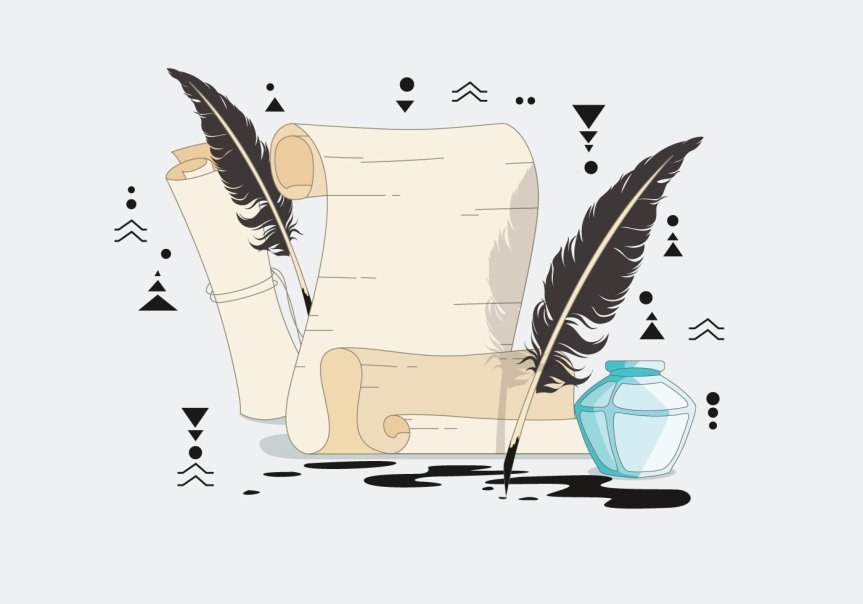
Interview With An Inkpot!

“Writing permits me to be more than I am. Writing permits me to experience life as any number of strange creations.”

  • Alice Walker

Today’s article is an interview with Inky- The Inkpot. Yes! The same Inkpots that were used in ancient times for Fountain Pens! We thought of listening to all it had to say and yes, the interview with it was damn interesting!

The questions were as follows:

Our First Question For You Is, That What Do You Think Of The Writing Medium Used In This Era?

I feel extremely left out. By using me, people enjoyed writing all the more. Yes! Refilling the ink was necessary and may seem a hard task today, but writing with a fountain pen containing a cute feather perched on its top made the process, all the more merrier. The writing medium used in this era is mainly the laptop, if I am not wrong. This medium is easier, actually extremely easier as compared to me but that, I am afraid, doesn’t make writing a fun task anymore, is what I think!

Indeed! Since Length Of Write Ups Has Increased Nowadays, We Refrain From Using You Because That Would Make Writing A Tedious Task. Could You Suggest A Way Of Making Writing A Fun Task Through The Present Medium, That Is The Laptop?

Yes! I totally understand that writing has now intensified its nature. Earlier, write ups were a priceless art form, but today almost every individual is interested in getting into this area of creativity. Maybe that’s the reason, write ups have become meticulous and elaborate today and laptops make work easier. Well, in order to make work on the laptop interesting, I would suggest that you frame your write ups in a way that not only people but also you visualize them. Try to imagine the story yourself while framing it. This will automatically make your task interesting.

That Was Such An Important Point! What According To You Is The Worth Of Writing?

Writing is a precious art form and almost every person can write, if he has the will to. Writing has had its worth since the ancient times, when kings used me along with the fountain pen for sure, in order to state certain important messages and send them over to other kingdoms. Even today, write ups are used to send impactful messages across the globe. It is a great art form for introverts who fear to express their thoughts in public 😉

Indeed! I Am Eager To Use You At Least Once While Writing. Are You Available Now?

I am so glad to hear this, but I regret to say that I have entered the antique section and am no longer easily accessible. It is because of our decreasing demand today! Well, you can always visit museums in order to meet my relatives! However, I have seen certain people who are creatively shaping their pens by applying a feather at the top. Perhaps, you could try that but inkpots (we) won’t be of any use to you now!

Okay! I Will Definitely Try Doing That. What Do You Have To Say About Emails?

That makes me even more dejected. Letters were not only an effective medium of communication but also helped in enhancing cordial relations during the ancient period. Emails, no matter how formal they are, cannot ensure the happiness that letters provided when they popped into the nearest post! In short, all I have to say is that though the digital medium has made writing easier and convenient for man, it doesn’t meet the ‘buoyancy’ factor today. However, writing was, is, and shall always remain an important art form.

True! Lastly! Do You Wish To Address The Future Writers?

Indeed! Writing is an amazing art that requires utmost love and interest from your side. Don’t hesitate to get your words out in the world. Writing also, gives you an option to remain anonymous. So, if you are afraid to speak out, then write it down and get it published. Let the world know what you think. However, if you are interested in story writing then be that. Introduce the world to your creativity. Burying your head into your hands and adopting a demure approach won’t help!

Thank You So Much, Mr. Inkpot.

Covid massacre [ INDIA ]

Did you know INDIA was the first country in the world to beat coronavirus, in jan 2021?

At our peak in May, we had 400,000 cases per day and 4000 death per day. An experts say these figures are a gross underestimate. As we know many death hasn’t be registered in Government data.. Because in village, people were not aware about this. They think people die only with high fever, cough, etc.

Even now rest of the world reopens, We are still suffering. Our people are needlessly Dying. In hospital, there is neither oxygen cylinder nor necessary medicine. Our government has blood on its hand.

There in Feb 2021, Scientists began warning government about the new variants and the rise in cases. And of course, Government ignored.

In march, government refuse to cancel Kumbh Mela,And because of this there has been a significant increase in corona cases.

In April, Many parties leaders attended super spreader rallies in west bengal. So we can say that ” People vote matters, but people life doesn’t. “

Due to this Whole Scenario, Many people were dying everywhere,, Hundreds of death bodies were floating in the Ganga river. Death bodies found in the river of people who cannot afford funeral expenses.

In other hand, we produced more than 60 million vaccine doses for other counties. But we did not make enough vaccine for ourselves.

But nowadays the government is buying vaccines in large quantities from outside countries and is also producing it itself. And they Started large vaccine drive in India. India administered a record 82.7 lakh doses of Covid vaccine on 21 june 2021. i hope everything will be fine soon.

Peace Out.

The effect of climate change on Indian monsoon

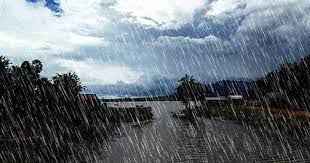
Agriculture is the most popular occupation in India. The Indian farmers wait year long for monsoon to come and nurture their crops with some precipitation. The monsoon rainfall is highly beneficial for crops like rice, maize and pulses. However, the monsoon season in India has changed dramatically since the last decade. The 21st century monsoon is quite different from that of the 20th century. This new monsoon is characterized by volatile and erratic rainfall patterns.

North East gets less monsoon rainfall - Pratidin Time

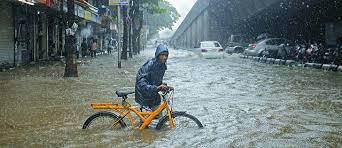
The monsoon rainfall has become quite unpredictable. The rainfall is too heavy in some parts of the country which often leads to floods, landslides and water-logging. And the cause of such erratic rainfall pattern is climate change. The earth’s surface is getting heated up day by day as the amount of green house gases in the atmosphere is increasing.

The greenhouse gases like methane, carbon dioxide and nitrous oxide traps earth’s heat and do not let it escape the earth’s atmosphere. These greenhouse gases are emitted from industries. After the industrial revolution, the concentration of greenhouse gases in the earth’s atmosphere has increased leading to the heating up of the earth’s surface. Greenhouse gases are also produced due to burning of fossil fuels like coal, petroleum and natural gas. They are also increased by human activities like deforestation.

The more the earth’s atmosphere gets heated up, the more intense the rainfall becomes. Too heavy rainfall is not good for some crops like cereals. Also waterlogging can effect plant growth as it deprives the plants of oxygen and nitrogen.

The western countries are mostly responsible for the emission of greenhouse gases as the primary occupation in those developed countries is industrialization. And the developing countries like India are bearing the brunt of rapid industrialization as their primary occupation is agriculture. If crops are not grown, then it will have a serious effect on the country’s economy. Poor farmers would suffer whose livelihood depends on harvesting and selling crops. The farmers would have no income and their families would starve. It is high time that the government takes this case into consideration and cuts down the emission of greenhouse gases.

Ladakh – The link between India and Central Asia

Ladakh, situated in northernmost India bordered by the Tibet autonomous region to it’s east, the Indian state of Himachal Pradesh to it’s south, both Indian Jammu & Kashmir and Gilgit-Baltistan(PoK) to it’s west and the southwest corner of the Chinese Xinjiang autonomous region across the majestic karakoram pass in the far north, has always been a land of intrigue. The name ‘Ladakh’ means the land of high passes is full of great mountain passes like the Karakoram, Khardungla etc.

The largest town and capital of Ladakh is Leh, followed by Kargil. The Leh district contains the Indus, Shyok and Nubra river valleys while the Kargil district has the Suri, Dras and Zanskar river valleys. Being administrated as a union territory recently, it is the largest and second least populous union territory of India.

Since past, Ladakh has been important due it’s strategic location at the crossroads of important trade routes. Most notably the renowned Silk Road, which was and still is a network of trade routes connecting the East and West, and was key to the economic, cultural, political and religious interactions between these regions from the 2nd century BC to the 18th century. It primarily refers to the land but also sea routes connecting East Asia & Southeast Asia with South Asia, Persia(Iran), the Arabian Peninsula, East Adrian and Southern Europe.

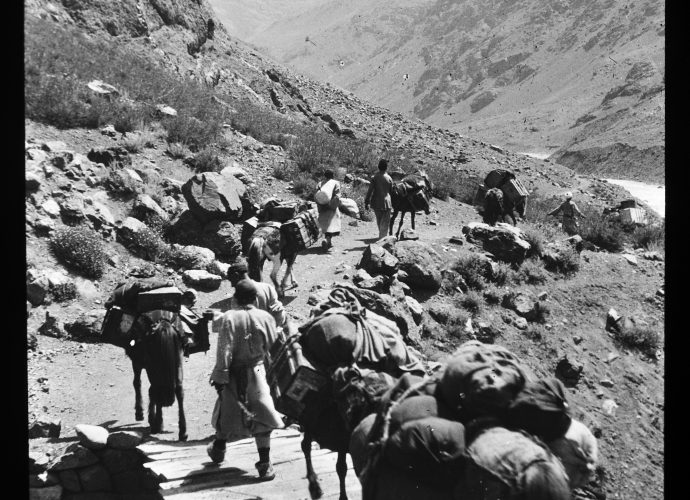
Due to its contiguity with Xinjiang and Tibet and its close proximity to Central Asia, and enjoying a central position in the network of overland caravan routes that were linked to the Silk Route, Ladakh acted as an important gateway in the Indo-Central Asian exchange of men, materials and ideas through the ages. The great mountain barriers of the Hindu Kush, Karakoram, Kun Lun mountains and western Himalayas where not successful in stopping the trade from thriving.

The Central Asian Museum in Leh celebrates this rich cultural & trade history with Central Asia having many artifacts, photographs and art installations depicting trade through Ladakh. Notable exports to Central Asia were the famous Pashmina Shawls, Tea, Indigo, Coral, Salt etc. Imports from Central Asia were Bukharan and Kokandi gold coins(from the area which is now the country of Uzbekistan), Silk Cloth, Russian currency etc.

The trade and the caravan traders even helped in the urbanisation of Ladakh and giving it’s unique identity.

PIZZA MELTS


What do you get when a grilled cheese and a pepperoni pizza have a baby? A PIZZA MELT! (Sorry for yelling, I’m excited.) I used to eat these as an after-school snack when I was growing up because they’re super easy and who doesn’t want pizza? But now, decades later, I took this pizza-inspired sandwich to the next level by adding an herby-Parmesan butter to the bread which creates an extra crispy finish. It’s to die for and way better than the pizza melts of my teen years. You’ve got to try it!

A stack of pizza melts cut in half on a plate against a blue background.


WHAT KIND OF BREAD TO USE FOR PIZZA MELTS
You definitely want to use some sort of sturdy bread for your pizza melt. If you try to use a soft white sandwich bread it just won’t hold up to the moisture in the pizza sauce. I used a sourdough loaf, which gave my pizza melts even more flavor. Something like a rosemary olive oil bread or some homemade focaccia would also be amazing. Just make sure the bread is strong!


WHAT ELSE CAN YOU PUT ON A PIZZA MELT?
A pizza melt, even in its most basic form (pizza sauce, cheese, pepperoni), is awesome, but if you happen to have some leftover ingredients on hand and you want to throw them on there, go for it! Here are a few ideas:

Diced bell pepper
Olives
Red onion
Bacon bits
Ham
Spinach
Mushrooms
Feta cheese
Banana peppers
Sun dried tomatoes
I would caution against using any ingredient that is very wet, like fresh tomatoes or canned artichoke hearts, since this can make the bread soggy.

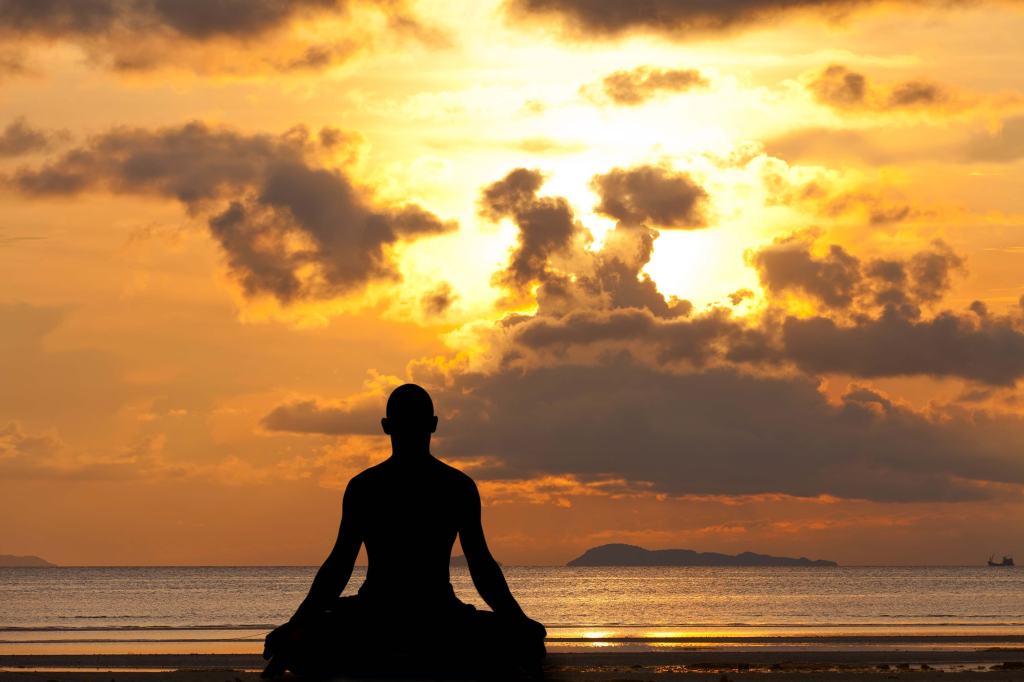
yoga

It was identified from ancient sources that yoga was found and originated from India. Its presence was found in the ancient books of India and was even mentioned in various religious books.

Humans have been performing yoga since ancient time. The evidence of which has been found by researchers.  

It is one of the ancient practices, which is been practice till now. Yoga is a word which is derived from Sanskrit root (‘Yuj’). And the meaning of this word is union of body (शरीर) and soul (आत्मा). The brief explanation to this definition is:

Yoga is the basically the functionality of our body which results in the union of our body with our soul.

Yoga is basically doing postures in a comfortable position yet a little challenging position to yourselves while berating slowly inhaling and exhaling Thorley and properly even breathes.

Yoga has been in practice not only by mans but women too. Many people do and practice yoga on regular basis to get them to various benefits of yoga which and many. There are various benefits one can get by performing yoga on regular basis.

Some of the benefits of yoga of yoga are: –

  • It connects our body to soul.

Yoga is just a form of meditation where you do not worry about the past neither future you live in the moment and that also with your inner piece (silence and concentration). Yoga does not bide you to or forces you it wants you to enjoy the moment which is now and be happy.

  • It helps in the functionality of various organs.

It has been known that yoga improves the organs functionality and now it has been scientifically, oxygen is essential for us humans and when we do yoga, we breathe slowly that helps in reaching the oxygen to all the organs of body and helps there functionality even better.

Yoga
Vibe


  • It may help live longer (longevity).

When our organs work well, they do their respective roles for our body to function and with yoga we breathes and does some mobility which may help increase the life span.

  • It helps in the proper blood flow throughout our body.

While performing yoga we breathe slowly which results in pumping up of heath in a good or proper way, which helps in proper blood flow through out our body to each organ.

  • It helps reduce stress, anxiety, and prevention from various mental problems.

While performing yoga you do not worry about future not past you focus on the present (you are performing yoga) you will feel like it is happiest to be you (at a moment) which helps you reduce you stress and helps in various mantle health problems.

  • It may help loose some amount of weight and toning up of body.

There are various types of yoga some are to relaxes your health some your building up your body while getting the benefits of yoga which will help you toning up of your body and might loosen your weight.

Do not wait any more go try yoga and you will fell in love with it.

Introduction to medicaps university

Photo by Monstera on Pexels.com

Medicaps university is one of the most prominent institution located in Indore, Madhya Pradesh. It was evolved in july 2000. And since then it has been providing quality education in every field.

It has been ranked high in top engineering colleges of Madhya Pradesh. It is an autonomous college. Apart from it had a large campus having gymnasium , canteen , computer lab , a bank , hostel , transport facility , auditorium and temple.

Anyone seeking for good college can join this. It also offers great placements. This year in 2021 also companies like tata consultancy services came in campus. The highest placement was 14 lakh in computer science branch. Good campus placement is there in the college.

The courses which is offered by university are in engineering field : btech in all major branches and also in fire technology ,mtech in all major branches.

It also offers courses in management and commerce like BBA,MBA,Bcom. Also specialisation courses like bba in digital marketing is available.

In field of computer also there are courses available like BCA,MCA.

In science stream courses like Bsc, Msc and Bpharmacy are available.

There are specific blocks for each and every disciple. Also largest centeral library is present in university. You can sit and read any book of your choice and also issue 6 books on your card. The fees structure of university is quite affordable. Students need to wear Icard in the campus and university blazers during winter. The dress code for girls is salwar suit and for boys shirt and pant. No jeans and tshirts are allowed in university.

The result is declared in cgpa basis. And you need to earn credits for clearing semesters. The minimum credits are different for different branch.

If you want to know more about university you can visit their website https://www.medicaps.ac.in/

https://www.google.com/url?sa=t&source=web&rct=j&url=https://collegedunia.com/university/56455-medicaps-university-indore/courses-fees&ved=2ahUKEwjsopmkwLrxAhUTXnwKHY_pCH0QFjAQegQIIBAC&usg=AOvVaw0E4zTt4Bqpe6CFXIVBkGua

calorie

The calorie was first introduced by Nicolas Clément, as a unit of heat energy, in lectures during the years 1819–1824. This was the “large” calorie, viz. modern kilocalorie.[3][6] The term entered French and English dictionaries between 1841 and 1867. It comes from Latin calor ‘heat’.

The “small” calorie (modern calorie) was introduced by Pierre Antoine Favre (Chemist) and Johann T. Silbermann (Physicist) in 1852. In 1879, Marcellin Berthelot distinguished between gram-calorie (modern calorie) and kilogram-calorie (modern kilocalorie).[6] Berthelot also introduced the convention of capitalizing the kilogram-calorie, as Calorie.

The use of the kilogram-calorie (kcal) for nutrition was introduced to the American public by Wilbur Olin Atwater, a professor at Wesleyan University, in 1887.[3]

The modern calorie (cal) was first recognized as a unit of the cm-g-s system (cgs) in 1896,[6] alongside the already-existing cgs unit of energy, the erg (first suggested by Clausius in 1864, under the name ergon, and officially adopted in 1882).

Already in 1928 there were serious complaints about the possible confusion arising from the two main definitions of the calorie and whether the notion of using the capital letter to distinguish them was sound.[7] Use of the calorie was officially deprecated by the ninth General Conference on Weights and Measures, in 1948.[8]

The alternate spelling calory is archai

SUBSTANCE ABUSE

Substance abuse or addiction refers to the habitual use or dependency on dangerous substances such as liquor/alcoholic beverages, tobacco, bidis/cigarettes, and medications (for purposes other than prescribed medical treatment). As the variety of addictive substances grows, more and more people, particularly those in their twenties, get addicted. There are numerous elements that contribute to young people and adults falling into the trap of substance misuse. Peer pressure, an unfavourable familial environment, and stress are among these variables.

Substance abuse is a medical and psychological condition that requires treatment. Parents must be considerate to their children, especially during the transition from infancy to adolescence and maturity, when significant physical changes occur. Adolescents are naturally inquisitive; they are constantly discovering new worlds, ideas, behaviours, and relationships. Some people get exposed to medicines as a result of the practise. They are likely to be trapped unless their environment, relatives, schools, and friends teach them about the negative impacts of drug use. The most prevalent and dangerous addictive behaviours are drinking and smoking.

Drinking or consuming liquor/alcohol is a severe social concern. The simplest hobby is to drink and temporarily forget about troubles and tensions. Its addiction has major ramifications. Even with meagre incomes, drunkards purchase liquor while putting the necessities of their families at risk. If they cannot afford the more expensive standard variety, they opt for the less expensive variant. They drink even deadly drinks at times. They lose their wits after drinking. It can result in death or severe disability. Most of the time, after drinking, they abuse their wives and children, resulting in domestic violence.

Smoking is a behaviour that is far more detrimental to one’s health than drinking. It not only harms the smokers, but also the people around them who are affected by the smoke in the air. If we respect the rights of others, we should refrain from smoking in public venues such as buses, trains, marketplaces, and offices. Smoking is a major source of pollution and contributes to the development of dangerous diseases such as cancer, heart disease, and breathing problems, among others. Tobacco use, particularly smoking, is the leading cause of death worldwide, according to the World Health Organization. Smoking in public places has been prohibited by the Union Cabinet. It has prohibited the selling of tobacco products near schools and universities. Manufacturers of these products are required to provide a warning to consumers about the negative consequences of their products in the form of a caption on the product itself.

PREVENTION– Drug and alcohol abuse prevention might begin at home. Parents can communicate to their children about the dangers of drug and alcohol abuse. Talking to children when they are young, in particular, can lay a solid foundation for drug awareness. This allows parents to favourably impact their children while also teaching them about boundaries. When it comes to teaching boundaries, parents assist their children understand when to say no to something that could injure them while also controlling the dynamic of an inappropriate request. Prevention discussions also foster stronger ties and guidance between children and parents. Parents can build consistency in communication as well as long-term advice for their children. Preventative talks can help an adolescent build trust with their parent and make good judgments about their habits, friends, interests, and influences. There are governmental agencies, community leaders, and school personnel that attempt to teach children about living a drug-free life. Much of this is to prevent teen drug abuse before they reach adulthood or go into the real world. As a result of these educational tools, teen drug abuse has significantly decreased from previous decades.

MANAGE REFUGEE INFLUX

ISSUES

According to data collected by the United Nations High Commission for Refugees (UNHCR), India has close
to 2 lakh refugees living within its territory with the number constantly rising. However, unofficial reports
place the figure at above 4.5 lakh.Currently, the only law specifically governing refugees in India is through
judicial decisions regulating specific situations. There are also ad hoc administrative advisories by the
Ministry of Home Affairs, regulating specific situations concerning refugees, such as the Advisory on preventing and combating human
trafficking in India, dated 1 May 2012

In the absence of specific legislation pertaining to refugees, the general law applicable to foreigners, the
Foreigners Act, 1946, applies to refugees as well. The status of refugees is determined by UNHCR,
but it has limited reach and resources.These ad hoc, case-specific measures lead to a two-fold problem.

First, India’s national security interest
are hamere by the absence of a content legal structure to ensure that all non-citizens resident in India are properly documented and have a legitimate reason for their presence in India. Second, the lack of a law
providing certain basic rights to refugees violates India’s obligations under customary international law,which it is subject to, notwithstanding
its non-ratification of the 1951 Refugee Convention.

SOLUTION

The foremost requirement in the Indian legal framework is a definition of the term ‘refugee’. This is essential for
any legislation making any provision for refugees, since the term is not easily defined. Second, the single most important principle relating to refugees in international law needs to be recognised in Indian law – that of non-refoulement, or non-return to country of origin. The Foreigners Act penalises those who enter the country
without valid identity documents, or may prohibit entry of such persons
into India. This implies that refugee-seekers are liable to be returned to the country they are fleeing from. A legal
solution needs to be worked out to prevent this.

As a consequence of accepting refugee-seekers at the border, a structured system must be put in
place for refugee status-determination.Moreover, a procedure with such
critical security implications should be controlled and carried out entirely by the government. As a result of this procedure, once a person is admitted into the country as a refugee, he needs to be issued a permit, either in
form of a long-term visa or a refugee permit. This will serve as an identity document, and assist the government in maintaining records.

IMPLEMENTATION AND IMPACT

The following amendments are required in the Foreigners Act, 1946,to implement the above:
1.The term ‘refugee’ needs to be defined as a person who, owing to well-founded fear of persecution based on race, religion, nationality,
membership of a particular social group or political opinion, is outside his country of nationality, or if having no nationality, is outside his country of habitual residence and i unable or, owing to such fear, unwilling to avail
himself of that country’s protection.
2. Exceptions must be carved out for refugees, codifying the principle of non-refoulement, wherever the Act prohibits or imposes penalties for being present in India without valid
documents.
3. A new section should be inserted in the Act, requiring status determination of refugees at the border, along with providing an identification document;
provision for rules outlining criteria for status determination as well as
officials responsible for the same.

CONCLUSION

These changes in the Foreigners Act will be the first key steps towards legal
recognition of refugees in India.

Is there really a new variant of COVID-19 out there?

From the past couple of days, reports have been surfacing that a new variant of corona virus i.e. a delta variant can be found in a few patients. So how is this variant different and what we need to do to be cautious?

Just when we thought we were going back to normal now, Indian scientists detected a new delta plus variant in 22 samples from all over the country. First found in Jammu and Kashmir, this variant is now also seen in patients of Maharashtra, Madhya Pradesh and Kerala. 6 of those 22 sample are from Maharashtra and the remaining are divided between Kerala and Madhya Pradesh. 2 patients of this variant were reported in Ujjain district of Madhya Pradesh and death on one of them, a woman was reported on wednesday.

We are still not very clear about how and in what ways is this variant different from the others and does the vaccine we are provided with is effective on this virus. But yes this variant is yet not classifed as ‘variant of concern’ but we need to be concerned and take all the necessary precautions.

According to Dr. Mike Ryan who is the executive director of WHO, delta variant has a possibility “to be more fatal because it’s more efficient in the way it transmits between humans”. This variant is likely to affect the vulnerable people i.e. people with less immunity according to World Health Organization officials.

So, it is not over yet. Even if we are fully vaccinated let’s not be reckless and wear a mask and maintaing social distancing whenever we are out. Things will get better.

Ecommerce in India!

So let’s have a look that what does ecommerce mean~ E-commerce is the activity of electronically buying or selling of products on online services or over the Internet.

And if we talk about “Ecommerce in India” then, India has an Internet user base of about 696.77million as of May 2020, about 40% of the population. In 2017, the largest e-commerce companies in India were Flipkart, Snapdeal and Amazon. In 2018, Amazon beat Flipkart and was recorded the biggest ecommerce in India in terms of revenue. And it’s rapidly growing up day by day.

In India, cash on delivery is the most preferred payment method, accumulating 75% of the e-retail activities. Demand for international consumer products (including long-tail items) is growing faster than in-country supply from authorised distributors and e-commerce offerings. Long tail business strategy allows companies to realize significant profits by selling low volumes of hard-to-find items to many customers, instead of only selling large volumes of a reduced number of popular items. The term was first coined in 2004 by Chris Anderson.

In 2017, the largest e-commerce companies in India were Flipkart, Snapdeal and Amazon. In 2018, Amazon beat Flipkart and was recorded the biggest ecommerce in India in terms of revenue.

And some of the ecommerce sites are:

1. Amazon.in

2. Flipkart

3. Snapdeal

4. ebay India

5. IndiaMART

6. Shopclue

And so on…

But one should properly check the product and should take a clear look in the mind that this product is the only one which I want to purchase and they’ve can go on but inspection of the product must be the first priority of the customer.

Why Do So Many Students in India End Their Lives Over Exams?

Prerna, 14, took her own life after she failed two subjects in her Class VIII half-yearly exams. She is one of thousands of Indian students who take their own lives in India every year..

According to a 2014 report from the Indian government, exam-related pressure was the largest cause of suicide in India’s youth. On this podcast you’ll hear from people who work with suicide support groups, doctors, as well as the last words of several students from their suicide notes.

India’s student suicide crisis is no new development. India has consistently reported high suicide rates. A large number of suicides were reported in the 15-29 age group.

Twenty-two students took their own lives in a week in Telangana in April 2019, because they had failed their school’s intermediate exams.

What kind of psychological pressure leads students in school, like 14-year-old Prerna, to take their own lives?

But failure to live up to expectations isn’t the only cause for student suicides. A 17-year-old from Ghaziabad took her own life after she cracked the IIT-JEE entrance examination in 2016.

In her five-page suicide note, she wrote about how she never wanted to study science or be an engineer.

Seventeen-year-old Kriti Tripathi wrote the suicide note before jumping to her death from a five-storey building in Kota on 28 April 2016.

She had scored 144 marks in the JEE Mains 2016 results declared a day before, on 27 April. But she writes….she never wanted to be an engineer. The pressure to succeed eventually leads to everything else in a student’s life being side-lined, like extra-curricular activities and other things that could lead to a more well-rounded, healthy sense of self.

reference-the quint site

On Warren Hastings and His Reforms

The  East India company, in 1765, acquired the diwani rights of three provinces by signing an agreement with the Emperor. These provinces were Bengal, Bihar and Orissa. These provinces were wealthy provinces. Warren Hastings was appointed as the governor general of Bengal. The dual system of government was a failure and Hastings was asked to consolidate the Company’s rule in Bengal. He was also given the task of judicial reformation. 

Warren Hastings and Judicial Reforms

Warren Hastings was an English statesman and the the first Governor of the

Presidency of Fort William (Bengal). He was the head of the  Supreme Council of

Bengal and also the first de facto Governor-General of Bengal. He exercised this position from 1772 to 1785. Hastings is seen as an important reformer who, during his tenure, brought many reforms. He first came to the country in 1772. 

One of his observations was that the though the Company enjoyed the right of Diwani(Since 1765) of the wealthy provinces(Bengal,Bihar and Orissa), it had hit the rock bottom to become financially bankrupt. He also noticed that the Dual Government had failed to succeed. Influenced by these observations, he wanted to correct the administrative system. He is praised and known for laying the foundation of the English administration in India. The Council replaced certain measures introduced by Warren Hastings. This was established by the Regulating Act. Two years post this incident, he was in a position to assert himself and introduce his plans freely. 

 After the acquisition, the concept of Mofussils was beginning to be used. The concept of Mofussils was used to denote the territories surrounding the Presidency towns. There was already a properly established and well established judicial establishment in the Presidential towns like Calcutta, Bombay, and Madras under the appearance of Mayor’s court and court of Governor-in-council. It was clear that a similar set up was urgently needed in these areas called Mofussils(Areas adjoining Presidential towns).These reforms were seen as beneficial. For this reason, it is widely opined that  “Hastings attempted to establish a just judiciary administration in India.” 

During this time, a Supreme Court was also established at the town of Calcutta. This was established after the enactment of the Regulating Act of 1774 by the British Parliament. The jurisdiction of this court and relations with the Sadar Nizamat Adalat and the Sadar Diwani Adalat, however, remained unclear and undefined. The laws followed by this court also remained unclear. As an expected result, this had an adverse impact on the judicial administration in Bengal. These impacts were clearly visible for a period of time. 

 The reforms were to be aimed at correcting the defective system. This was to be advantageous to the Company and save the ryots from oppression in the hands of Zamindaars and other tyrants. Hastings proceeded to reform the administration of justice.  His reforms can be seen as a division of four stages. 

 Hastings understood the relationship between revenue and the administration of justice. The administration of revenue in  these was seen as an important activity and function for the rulers. This was because of the fact that the activity generated a lot money and was a significant contributor to total revenue. As it was necessary to have lands and private property and these could be made prosperous only when there was proper maintenance of peace. Social order was a significant factor for prosperity as it affected the occupational work of people and the quality of the work. Peaceful society was a must to prevent unnecessary distractions affecting economical activities of the people. As the society was mostly agrarian, the need for order became even more important. It was obvious that life security and security of property was essential to bring order in the society. Ensuring peace would act as a boost for economical activities which in turn would generate sufficient revenue. This will enable the people to pay taxes properly. All these scenarios and requirements demanded an effective judicial system which was exactly what the society then lacked. 

Warren Hastings also understood that there was the lack of central authority that exercised power, dispensed justice, and controlled other authorities. The Mughal empire was dissolved at this point of time and the Nawabs were also significantly weakened in the concerned areas. The then existing judicial system was also improper and broken down. This made the system inefficient and ineffective. The appointed candidates were inefficient and lacked in required skills. They started to abuse their power and there was no system in place to check the corrupt activities of the officials. Another prevalent scenario that necessitated judicial reformation was the corruption prevalent in the centres of justice. 

According to the reforms, many courts were introduced. The other type of courts that were introduced was the Mofussil court or district court. These courts were also called as Mofussil Diwani Adalats. Each district got one of these courts. The jurisdiction of these courts extended over the the civil and revenue case. This court also dealt with cases relating to marriages,contracts, property inheritance, disputed accounts, private properties, inheritance, partnership and rent related issues. The pecuniary limit of these courts were capped at five hundred rupees. Composition of this court included Governor as the President and minimum two members of the council who were assisted by Diwan Treasury and Chief Kanungo. The judgements given in this court was the final one in cases of value upto five hundred rupees. This court was presided over by the Collector of the district. The collector worked with the native judicial officers called Kazis and Pundits. The collector or the judge of these courts required the assistance of native law officers as the collector was not versed with the personal laws of the Hindus and the Muslims based on which certain cases were to be handled. The native law officers helped the collector with their knowledge of the personal laws of native communities. 

The other type of courts were known as Mofussil Nizamat Adalat. The other name for these courts was Fauzdari Adalats. Every district got a Fauzdari Adalat. These courts, unlike other courts discussed above, dealt with  criminal cases alone. This court did not have the jurisdiction to try cases that were about capital punishment and issues related to forfeiture of property. These cases were required to be submitted to Sadar Diwani Adalat for judgements. One unique thing to these courts were that these courts were presided over by Muslim law officers alone. The Moulvi was involved involved in the process of expounding the law. Fatwa was given by the Kazi and the Mufti. These officers gave the judgements accordingly. The officers of law and the collectors of the district were allocated with important roles. These officers and the collectors were required to supervise the courts. The supervision job included the checking of witnesses involved in the case and hearing of all witnesses. The other function of this role was to try cases properly and regularly, and to impart justice impartially. 

The other type of courts was called Sadar or Provincial courts. This case acted as the central and apex court for civil cases in the area of the province. This case was empowered with both the appellate and orginal jurisdiction. It exercised this jurisdiction by hearing appeals from Mofussil Diwani Adalat. This court also tried cases that were related to or involved disputes of rupees five hundred. This court had the practice of charging up to five percent as a commission. This commission was charged on the amount involved in the dispute. This commission was charged on each petition or appeal. This court was presided over by the governor and the council. This court was located in the town of Calcutta. The first sitting of this court was held on 17th March of 1773. The next type of court was called as Sadar Nizamat Adalat. Sadar Nizamat Adalat was also the central and apex court for criminal cases within the provincial area. It is similar to Sadar Diwani Adalat in certain ways. This court had the jurisdiction and was empowered to decide issues related to capital punishment and forfeiture of property. In capital punishment cases, this court had the task of preparing death warrant. This warrant had to be signed by the Nawab (the head of the Nizamat). 

 Governor in Council acted as the supervisor and had the functions to supervise the functions of the court. This was similar to Mofussil Nizamat Adalat. The location of the court was moved Murshidabad (the residence of the Nawab). This location shift was due to the fact that his signature was required for all capital punishment cases. The office of Naib Nazim was developed later. Mohammed Reza Khan was appointed to assist instead of the Nawab. 

Several provisions were introduced, as a part of the judicial plan, to promote fair and impartial justice in the area. Open observation was made possible by conducting the judicial process and trials in the open court. This was done to gain the trust of people and ensure transparency. Adalats at district and village level were asked to maintain a register of all the cases. These records had to be sent to the Sadar Adalats. This was a move towards curbing power abuse and checked the activities of the court regularly. As a part of the reforms, already existing and rough civil procedures for civil cases was used. 

According to this procedure, the defendant had to reply after the filing of petition by the petitioner. After the hearing of the defendant, the Adalat and heard the concerned parties and examined the evidence presented. After completing all the these procedures, the court passed the decree. A time period rule was introduced, according to which a case had to be filed within 12 years of the dispute. All the cases exceeding this time limit were considered time barred. Another important feature was the introduction of arbitration for providing assistance to the civil court. When it came to laws and procedures related to crimes, the attention was given to laws and procedures to curb the activities like dacoity and remove mutilation as a method of punishment. 

 Warren Hastings did not believe in mutilation as an effective punishment and the convicted would become a dependent person and increase the burden on the society. However, mutilation as a punishment was not removed the codes of law and was its usage was refrained in practice. This was done lest resistance by the Muslim law officers who were not open to change and adhered to the texts. 

Making certain corrections to the earlier reforms,  collectors were asked to resign and other appropriate people were being searched. The new plan came into effect in January, 1774. The suitable personnel were found in Amils or Diwans. Amils were appointed in each district. Amil was given the role of revenue collector and he had the role of judge of Mofussil Diwani Adalat. The Presidencies of Bengal, Bihar, and Orissa were divided into six and headquarters were set up at Calcutta, Murshidabad, Dinajpur, Dacca, and Patna. Each division had several districts under the authority of the headquarters. Provincial councils were set up in each headquarters. Five Covenanted servants were appointed for each council. The function of the provincial councils were supervision of revenue collection. Amils were given the duty of tax and revenue collection. These courts were allotted the function of hearing appeals from Mofussil Diwani Adalat. The appeals of pecuniary value above thousand rupees would go to Sadar Diwani Adalat. These courts became an amalgamation of Mofussil Diwani Adalat and Sadar Diwani Adalat. Now cases of all value and appeals could be heard in the Provincial Council. This became a court of first instance. It was empowered with original jurisdiction. The court heard the cases from the division or headquarters. These cases could be heard directly at these courts. 

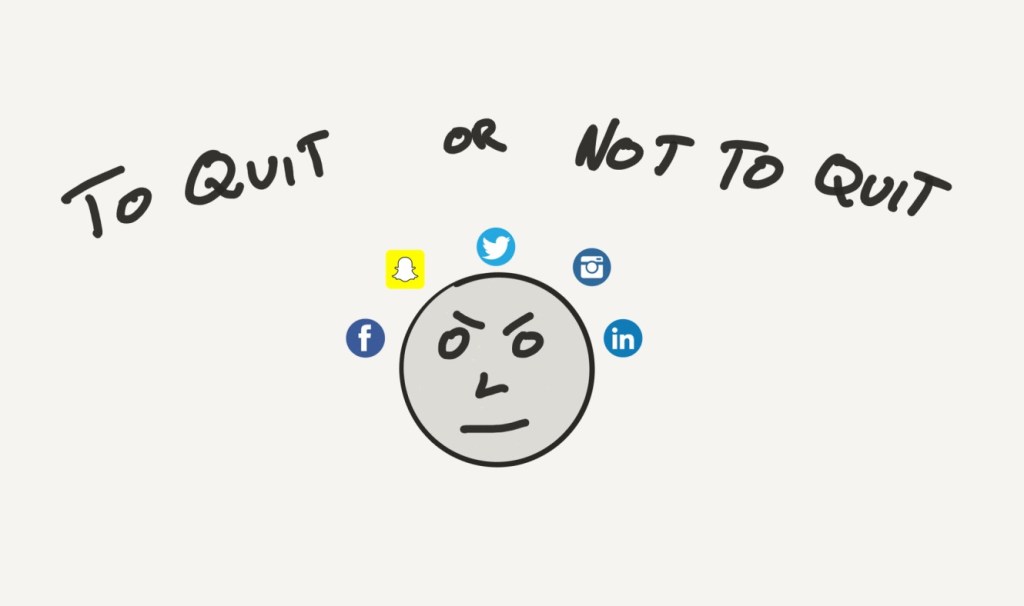
If Social Media Makes You Feel Bad, Quit Using It

YOU ARE YOUR BOSS!

Just admit it, you’ve thought about it before. Social media is great and all. But you and I both know that it also sucks.

Does this scenario sound familiar?

  • It’s late at night, you’re in bed, you dread waking up early tomorrow because you have to go to work, so you grab your smartphone, you open up Instagram (or whatever app you’re addicted to).
  • And you start browsing, you go from one picture to the next, you watch some videos, you start feeling bad about your life, because all the other people have fun, and you have to go to work in the morning.

Alright, we’re at a very bad place right now in that scenario. Because now the existentialism creeps in slowly. And finally, you think:

“My life is shitty compared to these other people. They look amazing, have money, travel the world, and they are important too. Who am I? I’m nothing. What have I done? Nothing! FML.”

And what do you do besides feeling like shit? Nothing. You just go on with your life and repeat that whole process the next day. And some days you counter the posts from other people by ‘crafting’ your own cool posts.

Just admit it, this whole thing is not cool. Of course, I’m exaggerating, and social media is not the source of all our problems. Don’t expect that your life will be awesome when you get rid of social media. I don’t believe in fairy tales.

But you get my point. Social media has a negative impact on many of us. Some people love it. If that’s you, there’s no need to read this article. But if you ever thought about quitting social media, keep reading.

Actually, just stop reading, and go on and delete the apps that make you unhappy.

Just follow the example of Louis C.K. When asked about why he quit Twitter in an interview, he said:

“It didn’t make me feel good. It made me feel bad instead. So I stopped doing it.”

That makes it very simple. If something makes you feel bad, stop using it.

It’s the opposite of the scientific approach to quitting social media that Cal Newport took. He makes some good points about why social media is bad for you.

But to me, that’s way too rational. And we’re not rational beings. We’re emotional. That’s why I like the approach of Louis C.K.

Here’s why I got rid of my social media.

I only used it for self-promotion. And I don’t like that. I don’t think that’s fair to people who follow you. So I got rid of my Instagram, Facebook, and Snapchat. I only have Twitter and LinkedIn (for now). But if I don’t use them, I’ll get rid of them too.

This article is not about convincing you to do the same. Or about getting rid of all your social media profiles. All I’m saying is this: If you ever thought about quitting social media, just do it already.

You’re limiting yourself by not pulling the trigger. Now, you might say: “It’s just social media. Who cares?”

But you’re not getting off that easily. If you want to live a happy and stress-free life, you have to be decisive. When things linger in your head, it’s all dead weight. And you don’t want that.

What’s it going to be? Do you use social media or not? Does it make you happy? Does it improve your life or business?

I know what you’re thinking. “What if I ever need it?”

You don’t need anything for business or your career.

People who have stakes in social media will never tell you to stop using it. Why? Because their career depends on it.

But what did you think people did before social media? It’s all a matter of perspective. Many successful entrepreneurs I know have never used social media.

Is that why they’re doing well? There’s no way to tell. One thing is sure: You can do well in life with and without social media.

It’s up to you to decide. And it comes down to self-awareness. It’s also about simplifying life. Because it’s already complicated enough. Get rid of shit that doesn’t contribute anything to your life.

So what’s your perspective? Have you ever thought about quitting social media? Why did you never pull the trigger? Let me know in the comments.