Ancestral Worship in South-east Asia

What is Ancestral Worship?

‘Ancestral worship’ is the custom of worshiping or reverence of the deceased ancestors. The whole custom is based on the belief that the deceased ancestor is still a part of the family, and whose spirit is believed to have powers to affect the lives of the living descendants in every walks of life.

It is believed that the deceased ancestor’s spirits have supernatural potential, which affects the lives of the descendants according to how ‘they are honored, and are hence, venerated as a deity or spiritual figure.

The rituals and practices of the ancestral worship vary, however, the belief remains common, that the spirits of the deceased ancestors have a hold on the lives of their descendants; rewarding or punishing them according to whether offerings are provided or not.

The roots of the ancestral worship are said to have grown in the primitive culture but its traces can still be found in various religious communities. While it is often associated with Confucianism, this custom of ancestral worship prevails across boundaries of religious traditions.
The custom of ancestral worship not just bases on spiritual belief or religious belief, but is also practiced to cultivate social values of filial piety which means to show love, respect, support and to take care of one’s parents, loyalty towards one’s family, and upholding the family lineage.
South-east Asia is one of the oldest practitioners of ancestral worship. Different offerings are provided to the deceased ancestors like- special food, clothing, and paper money on the ancestor’s altar by commemorating them on special days such as death anniversaries or funerals.

The deceased descendants are commemorated and the offerings are presented by the families as a gesture of commemoration and veneration. It is believed, descendants who fail to present any offerings are punished and the ones to do without any fail are rewarded by the spirits of the deceased ancestors. The practice of ancestral worship is evident in parts of Southeast Asia like India, Vietnam, Thailand.

Vietnam

Vietnam includes various religious communities including Taoism, Buddhism, Cao Dai, Confucianism, and Hoa Hao. Even after having this diverse religious belief, almost every Vietnamese household believes and practices ancestral worship.

The practice of ancestral worship is carried out by the family members of the deceased ancestor. Children are not only obliged to respect their parents and grandparents in life, but also after they die. Vietnamese families place the ancestral altar in prominent places of the house, with the picture or a wooden tablet with the name of the deceased ancestor carved on it, with a burning incense stick. The incense stick is believed to make the spirit feel welcoming to return to their home. Two candles are burned on both sides of the altar. The candle on the left representing the ‘sun’ and the candle on the left representing the ‘moon’. Red is believed to be the colour of happiness and thus, a red and gold coloured cloth is also used.

Regular offerings are made to the altars and afterward consumed by the living members of the family. These rituals of veneration must be followed upon the death of a family member. Failing to practice these rituals after the death of a family member is believed to unable the spirits to find their way back home, forcing them to wander. The wandering and homeless spirits are believed to bring bad luck to their families.

Special rites are performed on special days or special occasions like the ancestor’s death anniversaries or Lunar New Year, to communicate with the dead ancestors. On these days, every home tray consists of five different types of fruit which are placed on the ancestral altar. The fruits are of a different colour. The fruits may include pomelo, banana, pear, persimmon, and tangerine or oranges. These different colors represent the desire for “Phu” (prosperity), “quy” (notability), “tho” (longevity), “chang” (health), and “ninh” (peace). To drive the evil spirits away the altar is decorated with peach blossoms in warm pink.

A prominent place is occupied by the ancestral altar in every Vietnamese family, showing respect for the past and future both.

Thailand

Offerings are made to house spirits in Thailand. A house spirit (phi ruan) is made an offering with the construction of a house. When a family member dies, after the funeral a procession is carried out, leading the spirit of the deceased member back home, ensuring the spirit does not wander. Also, there are rituals for calming down the spirits that are thought to have caused an illness to any living member of the family. When an argument takes place among the family members or any disputes on the inheritance of property, the spirits become anxious and troublesome.

Singapore

Instead of wooden tablets having the names of the deceased ancestor carved on them, a piece of red paper is used in Singapore, on which the name of the deceased ancestor is written. This red paper inscribed with the name of the deceased ancestor is called ‘kong-ma-pai’. Kong-ma-pai is placed with the idols of family Gods on the household altar. Regularly, the offering is made and incense stick is burned.

The commonality of Ancestral Worship in India and Southeast Asia

Like most of the parts of Southeast Asia, India also believes in and practices ancestral worship. ‘Pitri-Paksha’ is an annual ancestral worship ritual followed and practiced by the Hindus in India.
A period of 15 days is devoted to the commemoration of the ancestors of a family. Food is donated to the hungry; be it any human being, animal, or bird. It is believed that feeding them will result in the feeding of their deceased ancestors.

These 15 days of pitri-paksha are devoted to the forefathers as a remembrance of the ancestors’ contributions for the betterment of the descendants as an act of paying respect and thanking them for their contributions and efforts.

No matter what degree of difference prevails in the practice of the rites and rituals of ancestral worship among the parts of Southeast Asia and India, the believes remain common. Every country, every society, every religion, every community, believes that even the deceased ancestor matters to the family and affects the lives of their living descendants. It is believed that the deceased ancestor does not cease to be a part or member of the family.

On one hand, people worship and pay respect even to the deceased ancestors of the family, considering them to be still a part of the family, and on the other hand, families or some members of the family do not count the living elders as a part of the family. They are often left out, disrespected, and abused.

Ancestral worship is not just about spiritual belief, but also about the belief and respect for the elders of the family. The elderly are the foundation stones of a family, supporting on which the family stands.

Early practices, rituals, and rites are also moral educators. Like the custom of ancestral worship is a way of remembering and paying a tribute to the ancestors for all they did for us. It is the efforts of our forefathers for what we are today……for what we are able to achieve.
Virtual Classroom?

When the lock down was announced our whole educational system came to an abrupt stop. Now we had to depend on online apps and webinars to learn.

Until the lock down period was announced most of us were not even aware of the existence of such apps. By the time lock down was announced the fame for an app like Zoom, had won over the millions of people across the world. It was one of the popular apps used around the world to conduct meetings. It accommodated more than about 100 participants. 

First times in online classes are always a headache because half of the people forget to turn on the audio and camera. Not only us but teachers also have hard time in finding different functions.  Online classes are always an advantage in situations where classroom learning cannot take place but in many strong opinions it can never take over the idea classroom learning. 

To the other side of online classes, it opens us to a world of disparities between the elite and the middle class and the poor. An online class eliminates the human connection that a face-to-face, in-house teaching environment provides. An online instructor cannot gauge the mood, involvement and engagement level of her students the way she can in a traditional lecture-based classroom.

There are a lot of problems with online learning. Most of the students will face difficulty in connecting with the teacher. Without a proper connection at home for internet, students will find difficulty in attending the classes. Proper 4G connection is need for the smooth conduct of meeting in Zoom. This creates a digital divide between the students. Not all students can afford a phone or not all will have a proper connection. This creates a differentiate between the haves and have nots.  

Such a simple issue as this can really draw us attention over the issue of network and internet connections, but what most of us forget is in some states of India, internet connections have been cut off which makes it very hard for students in that are to attend class. 

Zoom classes does not allow you to enhance your learning capacity. It doesn’t provide for any kind of learning other than the academics. Sometimes the app would crash and there would be a lag. 

Most of the times when classes go on, the system gets lagged and create network problems due to which students wont be able to focus. Students are forced to sit in front of their phones for hours listening to lectures which can have a lot of effect on their eyes as well as their thinking capacity.

Sometimes classes are taken without giving any breaks in between, this can cut off the span of concentration of a student. One person can normally concentrate to max to max half an hour without any other thoughts barging in, with proper breaks in between it becomes easier to learn.

Taking all these facts into consideration we can come to the conclusion that online learning may not always be an alternative for classroom education. Being in touch with human beings and socializing with people is what develops a persons character.

Most of us learn from school, from what we see and hear we develop into better versions of ourselves. Being outside in the sun, playing in the mud, reading a book to bed etc adds up to the character of a child. In all places learning by experience matters.

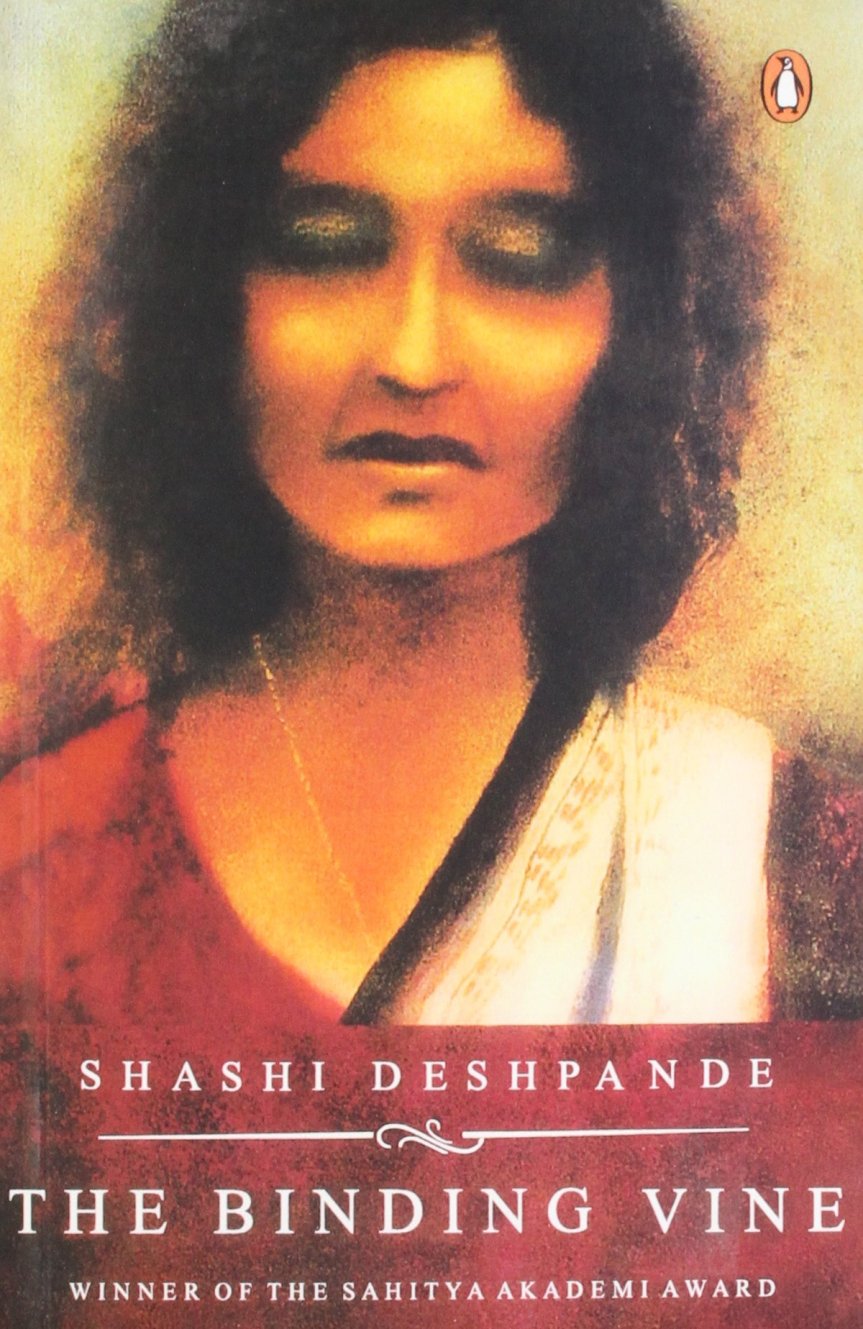
Gender in Shashi Deshpande’s ‘The Binding Vine’

Sashi Deshpande is a Sahitya Academy winning Indian novelist best known for her works The Dark Hold No Terrors and That Long Silence. Her novels generally centre around educated middle-class urban Indian female protagonists who struggle against the oppression of an overtly patriarchal society. She is critically acclaimed for her sensitive and realistic portrayal of women who are fettered to their roles as daughters, wives and mothers. They are conscious of the social inequality and question the deliberate efforts made by men to maintain this. In The Binding Vine, Deshpande introduces women from various backgrounds who collectively question the subordinate status ordained to them by society. This essay seeks to analyse the lead female characters from the novel with reference to feminist theories by Simone De Beauvoir and Virginia Woolf.

“…thus she is called ‘the sex’, by which is meant that she appears essentially to the male as a sexual being.”

Simone De Beauvoir

“What were the use of my creation, if I were entirely contained here?” This quote from Wuthering heights by Emily Bronte in the beginning of the novel runs as a common theme throughout The Binding Vine. The novel uses stream of consciousness method as it follows the life of Urmi, a middle-class college lecturer who encounters several women in her life. With her as the anchor, Deshpande reveals the sufferings of women from different sections of the society. The novel begins by describing Urmi’s personal grief upon losing her infant child. She becomes detached from the world and struggles to get back to her normal life. She is financially independent and is confident in asserting her freedom and agency. She chooses her own husband by marrying Kishore who works in Merchant Navy and is barely ever home. He asserts himself sexually and does not provide the emotional support that she desperately craves. Urmi’s character reinforces Beauvoir’s point that “…thus she is called ‘the sex’, by which is meant that she appears essentially to the male as a sexual being.” Despite being socially and financially independent, Urmi is still scene as a sexual object by her husband.

Urmi later gets acquainted with Shakuntai and her daughter Kalpana. Shakuntai had moved to Bombay in search of her husband who has deserted her for another woman. Coming from the lower strata of the society, she is uneducated, financially unstable and struggles by toiling hard to look after her three children. Her daughter Kalpana is a strong woman who is forced to marry her uncle Prabhakar. Having been molested by Prabhakar since a young age, Kalpana turns down the offer. This enrages him and he brutally rapes her. Though Kalpana is critically injured, Shakuntai hesitates to file a case against Prabhakar and even goes as far to blame her daughter for her current condition. This is due to the internalised patriarchal ideology that the assaulter is entitled to do so as a man while the victim is responsible for ‘encouraging’ the crime. Furthermore, she herself is under constant threat of being held responsible for the downfall of her family as the society always blames women for disrupting its ‘honour’. Just like Beauvoir, Deshpande focuses on the unrealistic standards set by the society on women that expects them to be the perfect loyal caretaker who submissively accepts the will imposed on them by men. Women are always considered as the inessential and the other while the men are the subject and the absolute. Beauvoir further explains this internalisation by saying that “Thus, woman may fail to lay claim to the status of subject because she lacks definite resources, because she feels the necessary bond that ties her to man regardless of reciprocity, and because she is often very well pleased with her role as the Other.” Shakuntai blaming her own daughter for being a rape victim simply emphasises the fact that women themselves unconsciously perpetuate their role as the inessential subordinate. 

Another significant character explored in the book is that of Mira, Urmi’s late mother-in-law. Kishore’s step-mother Akka hands Urmi a trunk consisting of Mira’s diaries and poems. Urmi learns how Kishore’s father saw Mira at a wedding and fell in love. “Since then he had “single-minded pursuit of an object; marrying Mira””. She is married off to him against her wishes and falls victim to a life of marital rape. Mira is forced to suppress her aspirations to be a writer, her only channel of outlet being the scribbles of words on her diary. Her writings clearly describe her revulsion and fear for the sexual acts with her husband and it is evident that she’s slowly spiralling into depression. Writing serves as her sole tether to her life on earth. After marriage, she is renamed ‘Nirmala’ by her in-laws which stands testimony to the society’s attempt to estrange women from her individuality after marriage.

"Niramala, they call, I stand statue-still.

Do you build the new without razing the old?

A tablet of rice, a pencil of gold

Can they make me a Nirmla? I am Mira."

Mira’s mental health improves as she joyously awaits the birth of her child, but she dies soon after childbirth. Kishore’s father marries Akka solely for the purpose of looking after the baby. This further reinforces the male perspective pointed out by Beauvoir that “woman has not been socially emancipated through man’s need – sexual desire and the desire for offspring – which makes the male dependent for satisfaction upon the female.”

In spite of being a skilled writer, Mira is shunned away from the literary world. Her husband and her family never encouraged her passion and she was forced to lead a domestic life. Her frustration on being stifled of her skills are evident in her works. This is further reinforced when she narrates her encounter with Venu, a renowned poet. Upon reading a few of her poems, he says “Why do you need to write poetry? It is enough for a young woman like you to give birth to children. That is your poetry; leave the other poetry to us men” . Where Venu is celebrated as a great poet of Indian literature, Mira’s voice is silenced and confined to four walls. She never had the luxury of having a room of her own that Woolf confirms is a necessity for a writer. She was forced to write late at night in secret while the men were asleep. Mira represents the generation of women writers who, despite being talented, were blatantly excluded from the literary world by men. Through Mira, Deshpande resonates the concerns raised by both Virginia Woolf and Adrienne Rich on the struggles of being a female writer in a patriarchal society.

The Binding Vine also features characters such as Urmi’s friend Vanna and Shakuntai’s sister Sulu, who perform their role as the archetypal role of ‘women as angels’. They try hard to maintain the societal pressure of being what Beauvoir explains as “‘truly feminine’ – that is, frivolous, infantile, irresponsible, the submissive woman.”

Despite the numerous struggles of women portrayed in the novel, Sashi Deshpande hints at positivity towards the end of the novel. Urmi convinces Shakuntai to disclose the identity of Kalpana’s assaulter resulting in a gathering of a mass of protestors who fight hard for her Justice. Urmi resolves to translate Mira’s poems to English and to publish them. She also encourages Vanna to stand up for herself and moves on from her personal grief to fight alongside women for a collective cause. Like Beauvoir and Woolf, Deshpande urges women to stand together like ‘binding vines’ against the oppression of patriarchy. The novel celebrates women’s solidarity as friends, companions and sharers of life.     

Reference Links:

4 Major learning LESSONS from the book atomic habits

1. Focus on an identity-based approach.

Many people begin new habits by focusing on what they want to achieve. For example, if you go to the gym then your obvious focus will be on getting fit, but when you don’t see results in a week or two, you quit.

You quit because you focused on the wrong thing while the right approach is to build identity-based habits where you are on whom you wish to become.

Continuing the example, now if you go to the gym your focus should be on becoming the type of person who never misses a workout session or who always goes to the gym because that is now your identity and now you don’t care about results and thus you will not quit.

2.Implementation Intention

After developing a new habit for 6-7 days we normally try to procrastinate on the 8th we think we lack motivation but what we lack is clarity. We don’t focus on implementing certain behavior at a particular time and location and thus we procrastinate doing that. So the best approach to this is to use implementation intention, here it is: I will [BEHAVIOUR] at [TIME] in [LOCATION].

3.Environment plays an inevitable role.

We normally perform most of our behaviors or habits because of our environment. Our environment sends the cues for undertaking or performing an action. Let’s try to understand it by an example. If you buy a dozen apples to eat an apple every evening, you will eat them on the first day but when you keep them in the refrigerator, the next or on the 3rd day you will probably forget about them because the environment is not sending any cues of eating apples.

But, if the apples are on your dining table then you will eat them every evening because they are in front of you, the environment is sending you the cues to eat them.

Thus, create an environment where it will send cues of performing certain habits.

4. The dopamine-driven feedback loop.

We, humans, are designed in such a way that we perform only those things from which we get pleasure or which seem attractive to do. Because by doing those things the dopamine is released.

But dopamine is also released not only when you experience pleasure, but also when you anticipate it. For example, you get pleasure more by anticipating that you are going to eat your favorite dish tonight than eating.

Atomic Habit is a fantastic book to read. Every person who is trying to become the best version of himself must read this once.

Jobs that are like to be on hike in the near future

Finding a Job, was always been a matter of worry for many people and this pandemic had made the situation go from bad to worst .Many companies had suffered alot in this period as a result of which many people got fired and get add up to the number of unemployed people and finding a new job become more difficult than it was before , But we can not just loose hope as with something bad their happens something good too, as you must have noticed that the online business got their place in the market and many new business had also been setup that means many new job opportunities are open in the market.

So , here are the list of 7 Jobs that are likely to be on demand in the near future.

1. Data Analyst

Expected growth rate:- 25% (2020 to 2030)

If you are good in dealing with data than this is for you, Data analyst job involve working with data’s for the purpose of extracting some important information that are useful for the companies .A Data Analyst deliver value to the company by taking information about specific topics and interpret , analyse , present , and find the useful information as per the requirement of their client. In today scenario , this job is highly in demand .

Average salary :- $60k

Skilled Required

  1. SQL
  2. Microsoft Excel
  3. R or Python statistical Programming
  4. Machine learning

2.Data base Developer

Expected Growth Rate:- 10%(2019 to 2029)

Database can be consider as the storage where we store data. The Database Developer Job involve analysing the need of the company and producing the effective database system to meet those need. The work of Data Base Developer involve trouble shooting any potential problem and creating , submitting tested reports and information about data’s that are useful for the company.

Average salary :- Rs 500k

Skilled Required

  • Debugging
  • SQL
  • Data Modelling
  • Data Conversion
  • Encrypting
  • Metadata Management
  • Data Science

3.Software Developer

Expected Growth Rate:- 22%(2017 to 2029)

A Software Developer implement software solution by building program , they create software that enables user to perform specific task on the computer device , they also develop upgrades for the existing software. In general terms , It is a role which involve development , design , and implementation of the new or existing software .

Average salary :- Rs 500k

Skilled Required

  • Knowledge of the programming language
  • computer network
  • scripting
  • cloud computing skill
  • Data structure and Algorithms

4.Website Developer

Expected Growth Rate:- 13%(2016 to 2026)

A Website Developer is an IT professional who does coding to build up websites .They primarily focus on the features and design of the web pages , they were also responsible for maintaining the performance of the websites . So in and all the work of website developer is basically, about the development of the web pages and in this career option you can be your own boss by freelancing your work .

Average salary :- $ 60k

Skilled Required

  • HTML/CSS
  • CSS Preposseuor
  • Front end framework
  • Java script
  • Content management system
  • Testing/ Debugging

5. Mobile App Developer

Expected Growth Rate:- 11.5%(2020 to 2027)

I guess this job is well known by many of you and will have an idea about how much will this be in demand in the future. A Mobile App developer usually works on the development of the android apps and also their work involve developing on new features in the existing application as per the requirement of the technological advancement .

Average salary :- $90k

Skilled Required

  • Java script
  • Understanding of XML
  • Android SDK
  • APIS
  • Database
  • Material Design

6. Graphic Designer

Expected Growth Rate:- 4.2%(2018 to 2026)

Are you the one who is full of creativity than this job role is for you. A Graphic Designer is the one who work on designing professional logos, posters , advertisement campaign using certain softwares . As the world is going digital the requirement of this job role will be on hike and in this job role also you can freelance your work and add an extra penny in your account.

Average salary :- $50k

Skilled Required

  • IT skill
  • Adobe photoshop
  • Adobe illustrator
  • Digital (UI.UX Sketch)
  • Portfolio Management
  • Designing the print

7. Digital Marketing

Expected Growth Rate:- 17.4%(2019 to 2027)

You must have heard about Digital marketing as this is into market on a higher rate these days . Digital Marketing also called as online marketing is the promotion of brand to connect with the potential customers using the internet and other form of digital communication . It is the new form of marketing (Modern marketing) in which all the work of marketing is performed on the digital platform . This career has a great scope of hike as this is something that becomes the basics of marketing in the upcoming time.

Average salary :- $22k

Skilled Required

  • SEO and SEM
  • Email marketing
  • Social media marketing
  • Content marketing
  • Data/ Analyst
  • Google adwords and PPC
  • Conversion rate optimization

So , if you have any of the skill mention above and have an interest in any of the field, than you should be prepared as these are expected to be highly in demand in future.

Digital Technology

Digital technologies are electronic tools, systems, devices and resources that generate, store or process data.In recent years digital technology has revolutionized almost every aspect of people’s lives. Examples of digital technology include social media, online games, multimedia, and mobile phones.Digital technology is used in different areas of life such as in business, education, media, healthcare, transportation, communication, and many more.

The increased use of digital media is changing people’s everyday lives and the way they connect and collaborate in the broader societal context, at work and in civil society. Much of the impact of this heightened use is beneficial to both individuals and society. It is enabling new and extraordinary levels of communication, social interaction and community building across boundaries of time, place and social context. It is enabling individuals and speeding up the standardization of knowledge. 

But not all the impacts of increased use of digital media are positive. Research indicates that when humans excessively use digital media it can negatively influence their cognitive and behavioural development and even their mental and physical health. Hyperconnectivity, the increasing digital interconnection of people and things, has the potential to change patterns of social interaction, as face-to-face time may be substituted by online interaction. In addition, greater technology enablement of work (and the resulting fragmentation of jobs) threatens the security of jobs traditionally considered as skilled in the developed world.

Here we try to list out the most important advantages and disadvantages of digital technology.

Pros of Digital Technology

– Advantages of Digital Technology

1. Connectivity:

The world is now globalized with the invention of digital technology. It makes our friends and family closer than before. You can make communication by words, video, audio, and exchange of the media.

With the creation of websites, apps, and software socialization has boomed in recent decades. The most popular social media are Facebook, Twitter, and Instagram.

2. Communication speed and versatile working:

The data transfer rate or internet speed has rapidly increased since dial-up methods for internet connectivity. Broadband technology increases the speed of the internet even more. The transfer of large files which happens instantly, streaming video and audio in real-time and access data virtually from anywhere in the world becomes possible with high internet speeds.

Working in a closed room with international co-workers is impossible due to large geographical boundaries as internet speed increases with broadband services you can work from any part of the world in real-time. Many online and freelancing jobs done from many miles away without any hindrance.

3. Digital devices are portable:

Digital devices are becoming smaller and smaller day by day. The storage media can store a large amount of data in a tiny chip. With the invention of transistors, the size and weight of digital devices have greatly reduced.

4. The quality of stored information is preserved:

The quality is never reduced with the use of digital technology in contrast with analog technology. The stored information in the analog system may damage or even lost or duplicated but in the digital system the case is opposite.

5. Learning re-defined:

Beforehand the traditional classroom is taught by teachers only. Students are completely dependent on teachers for acquiring knowledge which can be destructible since teachers are not always exactly correct.

With the arrival of digital technology teachers and students, both are heavily influenced since they can jump into the internet where you can find the solution to almost every possible problem.

6. Entertainment:

You can pursue your hobbies and interests through the use of digital technology. You can play online games and admit in music courses from any part of the world with the man of your choice. Different types of  reality shows are found on the internet which we can access with digital devices.

7. Transportation:

Transportation medium such as airplanes, trains, and ships are using digital technology to accurately navigate routes in the sea and land. Not only that cars and buses are becoming fully automated in the near future.

The speedometer is digital nowadays which eases the use of vehicles. Road accident and plane crash are greatly reduced with the use of digital technology. The checking of the passport is past and reliable with a chip embedded in it.

The chip stores all the personal information which speeds up the process of checking through customs. Booking of planes and trains are done through online services.

Cons of Digital Technology

– Disadvantages of Digital Technology

1. Data security:

Data security is a great concern nowadays in the digitized world. Digital technology means that a huge amount of information(text, images, and videos) is collected and stored.

This stored information may be of individuals or organization which is vulnerable to theft. This data can go into the hands of criminals, terrorist, foreign enemies, etc. as all the electronic equipment are connected through the internet all around the world.

2. Social isolation:

The face to face communication is rare these days with the development of digital technology. People can communicate and socialize through the internet which is a part of digital technology.

This way of interacting sometimes creates ambiguity and disbelief among them. Studies have suggested that the lack of real-life contact causes depression and other forms of mental illness in many people.

3. Too much of work or work overload:

As working with the use of digital technology increases speed and performance there are drawbacks of using it too. Workers from all around the world have to manage and handle large numbers of emails which can be hectic.

A large amount of data needs to be recorded and analyzed on a daily basis which requires greater attention and dedication creating distress and isolation. Organizing the vast amount of data such minutes of a meeting, training videos, photographs, reports can be a huge headache.

4. Diminishing job opportunity:

Nowadays, it does not require you to be physically present in the office to do your work since you can work or perform tasks remotely with the use of the internet. The Internet allows workers from third world countries to do the same task in the minimum wage. This can reduce your job replacement opportunity.

There are certain types of work that are performed by automated machines but beforehand they were done by humans. Increasingly, more digital equipment is employed in a working area reducing the chance of getting a job.

5. Digital technology creates addiction towards it:

Online and offline computer games, messaging, social media platforms, chat rooms and other websites can become addictive. Internet users end up wasting too much money for no or low return.

Computer games are so addictive that they may destroy your capability and time to perform an even more important task in your daily life. Gamers and surfers spend so much time on a computer which results in addiction towards it.

6. Manipulation of digital media:

There are different ways to change, edit and manipulate digital media. Manipulation of digital media is more come than before which increases the possibility of fake reports and results inducing more confusion instead of reality.

Photoshop, after effect, are such tools which can manipulate the original data to something new creating confusion about the original ideas and thought of the writer or creator.

Photographs, audio, videos are easy to edit. The size and quality of the image, the true voice of the singer are manipulated to create something new which lacks originality and true nature of the product.

7. Plagiarism and Copyright:

The enforcement of copyright law is hard to implement as the information that is present in the internet world is vast and to track every data is becoming harder.

Everyone can copy and paste information from the internet which is worthless as you do not spend your time learning them. Plagiarism is also the practice of taking other’s work and ideas and passing them off as one’s own which is becoming common in the digital world.

# How to protect ourselves from the negatives of digital technology? 

A. Limit when and where you use social media.

B. Have ‘detox’ periods.

C. Approach social media mindfully; ask ‘why?’

D. Stop social media from replacing real life.

E. Use strong passwords to keep your identity and privacy safe.

F. Limit the number of people who have access to your accounts.

G. Turn off push notifications.

H. Start your day tech-free.

BASICS OF TURNING HOBBIES INTO CAREER

I have already enlightened you about why having hobbies are important. In case you have missed it out then do read it by clicking on the link below.

We all have hobbies. It might be writing, painting, Youtubing, dancing, and whatnot. We all love to follow our hobbies because they are interesting and make us happy. And any work done happily and enjoyably brings spectacular success. Even Maya Angelou says so.

“You can only become truly accomplished at something you love. Don’t make money your goal. Instead, pursue the things you love doing and then do them so well that people can’t take their eyes off of you.”
– Maya Angelou

Now many of you might think, is it possible to transform a hobby into a full-time career? Yes, you can definitely do so. All you need to do is prepare a rock-solid strategy and plan.
In the following lines, I will point out some of the areas which you need to consider why preparing your strategy.

MADE WITH CANVA

CLEAR YOUR MIND:

So, first things first. List down the hobbies/passions you love and then prioritize what you are most inclined to. Make sure to write things short and clear. Once you choose your hobby, ask yourself certain questions.
Like, why do you want to make this your career? What are your goals? Answering these questions will bring clarity to your mind. You would be more serious and driven towards your decision.

DO MARKET RESEARCH:

After you have decided on your path, do full market research. Read about your target market and its trend. The potential customer’s demands and the type of product and service you would provide. Collect data on all of these dominions. Write down your full research on paper and accordingly chalk out your plan. Make sure you consult your plan and strategy with wise counsel.

DO IN-FIELD PRACTICAL:

Once your plan’s blueprint is ready, take it out to the customer. The best way to know the quality of your plan is to do an in-field practical. Take up your plan to a potential customer and ask him about their view on your project. What product/ service they would want to get? Or what are their demand from this field? These analyses would help you get ample knowledge about your project, the opinion of the customers, and its scope in the market.

LEARN MARKETING BASICS:

After you have done the research and began the production, start learning about the ways to advertise your product. For reaching out to the customers and interacting with them, you need to know the marketing basics. Nowadays, Digital Marketing is heightening. Learn how you can connect with your customers online. The initial step in this would be to start your website and a social media handle. You can even run digital ads on Google Search, Facebook, or Instagram. These are some low-cost advertisement platforms, where you can create a wide customer base.

BE CONSISTENT:

Out of all these steps, the one thing that matters most is being consistent. You might not be able to attract a generous number of customers, or your product might not stand out in the market. Whatever the situation might be, you do not have to lose hope. Just be consistent in your work. Accept the defects and shortcomings and work upon them. But, never let your energy and enthusiasm fade even a little.

Dwayne Johnson, a Hollywood actor says,
“Success isn’t always about greatness. It’s about consistency. Consistent hard work leads to success. Greatness will come.”

Keep these basics in mind and follow these steps and one day you would definitely shine bright.

Book Review Sample :- ” The Alchemist ” by Paul Coehlo.


Book information :-

English Title :- The Alchemist
Original Title :- O Alquimista
Author :- Paul Coehlo, Brazilian author.
Genre :- Quest , Adventure , fantasy.
Language:- Portuguese
English translation by :- Margaret Jull Costa
Publisher ( English Translation ) :- Harper Torch , 1993.
Pages:- 208 pages ( 1st English translation )


Book Cover :-
The cover has a very enchanting and beautifully designed which attracts reader on the first basis.


When you want something all the universe conspires in helping you to achieve it “


About author :-

Paul Coehlo is a Brazilian lyricist and novelist .He belongs to a middle-class family in Rio de Janeiro, Brazil.


He is best known for his novel The Alchemist, which holds the Guinness World Record for most translated book by an author, and selling more than 65 millions copies in more than 150 countries as one of the best-selling books in history.

Paul Coehlo is considered as the world’s most popular spiritual writer. His books including -, The Alchemist, The Devils and Miss Prym , The fifth mountain, Manual of Warrior of light , Veronica Decides to Die , , covers various serious topic such as love , magic , dreams , spirit , suicide , real meaning of life etc.

He wrote The Alchemist only in 2 weeks . He explained that he was able to write at this pace because ” the story was already written within his soul “.
He described the book as a film that takes place in the mind of the reader , an allegorical novel about a young shepherd’s journey of finding his dreams .

Summary :-

The Alchemist is about the journey of a boy Santiago of Andalusia who is a shepherd . His parents have continually struggled for basic necessities of life and have smothered their own ambition accordingly . Santiago on the other hand can read and wants to travel .
One day Santiago retires for the night in an abandoned church with his flock of sheep. An enormous sycamore tree has grown in the place where the sacristy used to be. This is where Santiago falls asleep and dreams a recurring dream of a child who tells him that he will find a hidden treasure if he travels to the Egyptian pyramids.


Santiago visits the village of Tarifa. There he meets an old woman who interprets dreams, which she says are the language of God.
The old woman tells Santiago that this dream is prophetic , in what she calls “the language of the world,” and that Santiago needs to travel to the pyramids, where he will find a treasure that will make him rich. Santiago is uncertain, however, since he enjoys the life of a shepherd.

Santiago meets a mysterious old man who introduces himself as Melchizedek, or the King of Salem. He tells Santiago about good and bad omens .
Santiago started traveling after selling his flock and purchasing a ticket to Tangier in Northern Africa . He was unfortunately robbed which made him look for a way to make enough money to return home. He finds work in the shop of a crystal merchant.


After eleven months of working in the shop,he meets an Englishman who wants to learn the secret of alchemy, or turning any metal into gold, from a famous alchemist who lives at an oasis on the way to the pyramid.


While traveling, Santiago begins listening to the desert and discovering ” The Soul of the World “. The caravan eventually reaches the oasis, and there Santiago meets an Arab girl named Fatima and falls in love with her instantly but had to leave eventually with a promise to return again , in search of his treasure


Santiago wanders from the oasis into the desert and, seeing two hawks fighting in the sky, has a vision of an army entering the oasis and gets into trouble because of the tribal wear .

He meets an Alchemist who offers to cross the desert with Santiago.
Soon the two men enter into an area of intense tribal warfare. Warriors hold the two men captive, but eventually allow them to continue their journey

. The alchemist tells Santiago that he needs to return to the oasis, and that the rest of the trip is Santiago’s to make alone so that he can claim his treasure whom he referred as “Personal Legend”.

Santiago arrives at the Egyptian pyramids and begins to dig. He finds nothing buried in the ground. Thieves beat Santiago and rob him of his money. After he tells them of his dream, though, one of the thieves recounts his own dream about a buried treasure in the sacristy of an abandoned church.

Returning to Andalusia, Santiago goes back to the church where he dreamed of the treasure near the pyramids. He digs where he slept, beneath a sycamore tree, and there he finds his treasure Santiago’s treasure.


Analysis of the book :-

The Alchemist is a fable about following your dreams .

“My heart is afraid that it will have to suffer , the boy said ‘

“Tell your heart that the fear of suffering is worse than suffering itself and that no heart has ever suffered when it goes in search of its dream , because every second the search is a seconds encounter with God and with eternity .”

The Alchemist is a diversified allegorical story about a shepherd who cross boundaries just to follow his recurring dream which was entitled as “the language of the heart “ by the gypsy woman and a man whose encounter made him ” follow his omens “

Paul Coehlo in his interview stated that “omens are individual languages in which God talks to you . They are this strange ,but very individual language that guides you towards your own destiny . They are not logical ,but talk to your heart directly .”


The writing style in the book is simple yet contains powerful emotions, interesting and deep characters, plots twists and inspiring wisdom.


Santiago journey is a spiritual quest ,where he travels through the desert ,speaks to the wind and ‘Soul of the world’ which is connected by everyone’s heart desires or as the Alchemist said ” Personal Legend “

The novel is figurative and metaphorical in style . The omens , Personal Legend , Soul of the world , the talk with the wind , holds symbolic meaning which may seem as fantasies fantasized by us somewhere some day .

The story not only aids one to follow his dream but connects it with the Soul of the world ,the universe where everyone is bonded with an invisible wire and makes us one .

The story is like living in a magical realism , getting enchanted by the omens , talking with winds being a part of the universe that we all are but tend to forget and finally following our dream despite the hurdles because following our heart desire means encountering eternity .

when you really want something, the whole universe conspires in helping you to achieve it”

The book explains the major purpose of people living , that’s finding one’s treasure i.e Personal Legend and traveling to find it because following the personal legend is like connecting to something deeper of the universe ,to the threat that connects universe and our hearts , something that makes us follow our heart and reach our dreams which fear paralyse for us .

The fear of suffering is the mammoth hurdle one faces while taking the first step towards their dream .
The Alchemist , mystically addresses the fear of suffering as worse than fear itself .

Paul Coehlo in his interview said ” the only way that you can learn the language of the soul is by making mistakes . I made my mistakes but then I started to connect with the signs that guide me “

Making mistakes is the key to finding one’s Personal Legend . But fear of taking risks only lets one suffer with regret of not trying to reach out for their dreams .

The world is conspiring for us ” , it symbolizes the determination one has for his dreams. Without hope and determination one can never know about the universe doing it all to make the dream come true .


Conclusion :-


Santiago struggles with what he is told versus what is real , between reality and the spiritual. He moves from hopeless to hopeful .


The book , with the magical realism genre leaves the reader with many questions.
The questions are left to the reader’s imagination .

But Paul Coehlo said “there are some questions in life that we don’t know . We can’t have answers for everything . But we try to find good questions and not good answers “

Santiago represents the transforming power of our dreams, whether real or imagined and the importance of listening to our hearts.


The book is for one’s who want not only to escape reality but also to understand reality . The Alchemist can offer the best of both worlds.
Each person has a destiny that exists independently of others. Only through devotion to the dream is the ‘soul of the world’ revealed to us, the knowledge that destroys fear of suffering and gives power.
The Alchemist tells us that dreams have a price but, as Coelho has said in interviews, not living your dreams also has a price.


The book shares the Magic with the world , and affects so many lives.
The Alchemist is an unforgettable story about the wisdom of listening to our heart and following our dreams .

Dreams are made to be followed
Life is meant to be loved
Some books are meant to be read ,
Loved and passed on
The Alchemist is one of those books “

COVID’s 3RD WAVE AND VACCINATION DRIVE

With over 3 crore covid cases, India reached the 2nd position after United States in total number of cases. Out of these total cases, over 2.9 crore people have recovered reporting a total of 3.9 lakh deaths. India, now, is getting on track after a strong hit from Covid’s second wave. The cases that were ranging above 4 lakhs everyday has now been reduced to over 50k a day. The states have eased their lockdown restrictions while in many states night curfews are still into force. More or less, normal lives are getting restored in the country and people are again moving freely onto the roads.

With this, comes the another risk of Covid’s third wave. The third wave that is said to be more dangerous than the past two waves of covid is suspected to hit the country within 6 to 8 weeks due to the negligence of the people. The government has already started the preparations for it, whether it be setting up the Oxygen plants or issuing notices to the hospitals to increase the bed allotments for covid infected patients. The government has set it’s focus on another tool for eliminating covid-19 danger and i.e., the Vaccination programs across the country.

With over 24 crore people recieving the 1st shot and 5 crore people fully vaccinated, India’s vaccination drive is on. The government has taken the responsibility to vaccinate all and is moving forward in this step. India has now pick up the pace with vaccination. 24×7 vaccination centres had been setup across various cities and towns.
The highest jabs a day was recorded on 21st June when 84 lakh people got vaccinated followed by 53 lakh, a day after and 63.2 lakhs on 23rd of this month in the age group of 18 and above.

𝘽𝙞𝙝𝙖𝙧’𝙨 𝙛𝙞𝙧𝙨𝙩 𝙨𝙥𝙚𝙘𝙞𝙖𝙡 𝙘𝙖𝙡𝙡 𝙘𝙚𝙣𝙩𝙧𝙚 𝙡𝙖𝙪𝙣𝙘𝙝𝙚𝙙 𝙩𝙤 𝙗𝙧𝙞𝙣𝙜 𝙥𝙚𝙤𝙥𝙡𝙚 𝙘𝙡𝙤𝙨𝙚𝙧 𝙩𝙤 𝙩𝙝𝙚 𝙛𝙤𝙧𝙚𝙨𝙩.

The department of environment, forest and climate change (EFCC) on Monday launched a special call centre where one can complain against any mischiefs from people on violation of the forest and environmental rules and regulations and transfer the case to the officials incharge. Along with it, one can also seek information on Wildlife conservation, bio-diversity, ecological protection and agro forestry.

The number that had been issued to contact the call center is 0612-2226911. It will be functional for all working days from 9:30 a.m to 5 p.m. As per the response of the public, the government may extend its timing to 24×7 in coming weeks or months as per the officials.

We are sure that this will prove to be a good decision in bringing people close to the nature, moreover people will start developing a better understanding for the Animals, forest and also towards the conservation of Wildlife and forestry. This will only bring peace and harmony among the citizens. Let us all welcome such decisions and know our forest a little better.

CHALLENGES OF TEACHING AS A PROFESSION

We have often heard that teaching is the noblest of all jobs. Being able to carve out beautiful young minds brings its own kind of satisfaction. The impact of a teacher’s lesson extends far beyond the four walls of a classroom. They not only teach us how to face the exams at school but also how to excel at the challenges and tests life throws at us. Needless to say, teaching is the most thankless job of all.

Although teaching offers a great deal of contentment, it surely does not come easy. Being a teacher, a mentor requires a certain level of dedication and commitment that is hard to attain for most people. There was a time when anyone could be a teacher because the practice was standardized. There was a set curriculum to be followed and the teachers would stick to it. But now the time has changed. Educational institutions are looking for teachers who are experts in their fields. Someone who is capable of designing their own curriculum, someone who can challenge the students to flourish in all aspects. A job that was easier to find has now become one of the most challenging jobs out there.

There are a number of reasons for the job being so demanding and rewarding at the same time. With a growth in the field of research, new topics are coming to light every day. For becoming a teacher/professor, it is necessary for the candidate to have expertise in a particular field that can be gained only through carrying out thorough research in the said field. The research programs are long and intense and thus fail to attract people’s attention. Moreover, many institutions do not provide the teachers with the autonomy to carry out things their way. In addition to this, they are supposed to frame standardized tests which do not really challenge the intellectual capabilities of a student. The Indian education system and its emphasis on theoretical knowledge and its poor grading structure do no good either. The level of stress involved in planning a lecture is enormous. A teacher has to take into consideration the aptitude level of each and every student in the class while preparing a lesson. This could build up the pressure and lead to burnout. Some other challenges of being in this profession involve constant arguments with the management, lots of paperwork, lack of sufficient funding, having to handle too many students and tasks at the same time, etc.

It goes without saying that every great profession comes with certain challenges that might make it look unappealing but the sense of achievement one feels at the end of the day cannot be matched. One must choose to do something that challenges them and bring out their intellectual and creative side. So, if teaching is what you desire you have to get ready for the never ending research, having complex schedules, managing students from different backgrounds, keeping up with the recent rends in education and doing all this while staying focused and calm. However, we all can agree that being someone’s mentor, a confidant and a friend will bring a great amount of joy and delight into our own lives.

ISRO- A Overlook-Part 2

Continuing my blog “ISRO – A overlook- Part1”. We have seen the rise, struggles, successes and failures of ISRO in the previous blog. Now in this blog, let’s know something more and know how India’s Space Program humiliated NASA’s budget.

ASLV

The ASLV was a five stage solid fuel rocket that aimed to deliver payloads into Geostationary orbit. Unfortunately the first launch ended up being a massive failure. Throughout its lifetime, the ASLV completed 4 launches out of which 3 were failures. The first failure took place in 1987 when the first stage of the rocket failed to ignite after launch. After one year, ISRO tried an attempt again. But this time the launcher ended up disintegrating. The third launch of the ASLV took place in 1992, and similar to the SLV failure, the satellite was released in too low of an orbit and ended up deorbiting and fell back to the earth. The fourth and final launch of the ASLV took place in 1994 and this launch was actually a success.

PSLV

But given the checkered past of the ASLV, ISRO decided to discontinue the rocket and focus their effort on the PSLV (Polar Satellite Launch Vehicle). The PSLV was designed to deliver payloads into the Sun Synchronous orbit and this rocket is what really prove the capability of ISRO. Ironically, the first flight of the PSLV in 1994 would end up being a failure. However, PSLV would end up having a streak of 50 successful launches. The PSLV is used till this day and it has even put 342 foreign satellite from 36 different countries into various orbits. Until this year, PSLV held the record for deploying the most number of satellites into sun- synchronous orbit in a single launch. PSLV-C37 successfully carried and deployed 104 satellites in sun-synchronous orbits.

Apart from being an extremely reliable launch vehicle, the PSLV is also extremely cost efficient. Each launch is estimated to cost between $18 million and $28 million. We’ll estimate on the higher side and take it as $25 million per launch. The PSLV is capable of delivering 3800 kg into low earth orbit meaning that it costs $6579 per kg. To put into perspective, NASA’s upcoming SLS rocket is expected to be able to put 70 metric tons into orbit, but the price per launch is over $2 billion. This means that the cost per kg is $28,572 which is over four times the cost of PSLV. Now, PSLV isn’t as cost efficient as the Falcon 9 which costs only $2,193 per kg which is only about a third of the cost of PSLV. Nonetheless, the PSLV is way more effivient than options coming out from NASA today and the PSLV was designed way back in the 1980s and 1990s. Anyway, ISRO’s new rocket was the GSLV(Geosynchronous Satellite Launch Vehicle). This is actually an updated version of the ASLV and has a payload capacity of 5000 kg. The GSLV had 13 launches out of which 8 were successful and 2 were partial failures and 3 were complete failures.

Let’s discuss more on GSLV in the next part. Stay Safe!!

3 Indian Historical Monuments and Their Spine Chilling Back Stories

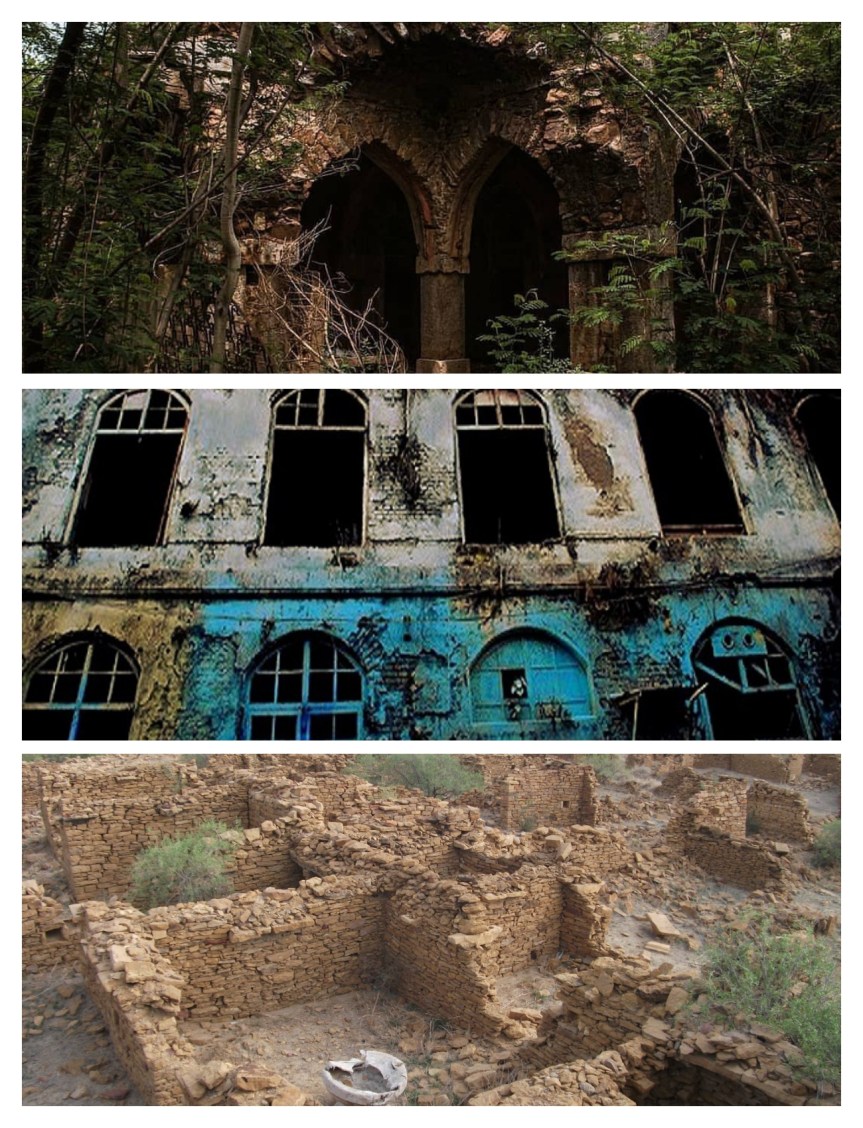
1. Malcha Mahal, Delhi – Delhi is home to many haunted places but i picked this because of its tragic back story. This mahal was inherited by Princess Wilayat but the property was seized by Britishers who ruled the country at that time which left the princess and her 2 kids homeless. After a 9 year long battle Princess Wilayat was given her place back in 1985 but it was all runied and infested. Depressed she committed suicide in 1993 consuming crushed diamonds, leaving her kids behind and since then those 2 people, the brother and the sister lived there all by themselves. It was said that anyone who went near that area was shot down by them. The brother died in 2017 due to some unknown cause and the sister died a few years before him, date and cause unknown. The mahal is still in ruins and not many people dare to go near it.

2. Mukesh Mills, Mumbai– As the name suggests, it was a mill back in the time, around the 1870s and had a good business. But something happened in the late 1980s and the business was shut down. An unexplained fire broke out at the place leaving the building coal black. This became a true attraction for bollywood directors and actors like Bipasha Basu, have unexplained events like someone possessing them, music heard when no one was around in the building, spotting of mysterious people etc. Many actors still fear shooting there.

3. Kuldhara, Rajasthan– Now maintained by the archeological survey of India, this village was abandoned by the villagers around 200 years ago. They say the Prime Minister, Salim Singh here was a really cruel person and would use unethical methods for collecting the tax. One day his eyes wandered and landed on the daughter of the village cheif. He declared his intentions to marry her. The Paliwal Brahmins were horrified by this proposal since there was no room for inter caste/religion marriages back then. Fed up with his torture all the villagers left the village. No one knows where they went and settled down but to this day, no one can live over night in the village. People who try to, witnessed unusal activites and some of them were even recorded. Some people spotted shadows moving around, weird noises coming or tap on their shoulder when no one was around. This place is still a tourist attraction and people from across the glove visit but no one dares to spend the night here.

PUBLIC DEBT

Public debt refers to the accumulation of annual budget deficits. It is basically the amount a country owes to lenders inside or outside of itself. Public debt is the sum of internal or external debt. The former refers to the public loans floated within the country while the later refers to public loans taken from other countries.

In India, public debt has increased tremendously over the years. This is mainly due to the fact that India is a developing economy the government requires massive investments in infrastructure and capital goods industries. For these purposes, they have to resort to borrowing. Development projects also involve a lot of raw materials. In the past few years the prices of petroleum products have increased significantly and so has it’s import bill in India. The exports however, have not increased in the same proportion. Consequently, the obligations of external debt has increased in India.
The total public debt of India in 2016-17 has been 50.3 per cent as a proportion of GDP. The external debt has to be paid in terms of foreign currency and it’s repayment creates serious problems.

A criteria of assessing the burden of public debt should not be the amount but how the funds are actually used. If public debt is wasted is becomes a problem rather than the debt which is used productively. It has been observed that in India a vast amount of external debt has been used for maintenance imports and has not really increased productive capacity. This shows that burden of external debt is quite heavy. Internal debt however, has been used more productively. A significant amount of it has been utilized for development of industries, railways, projects, services etc.
Just like the central government, the state government also faces problems of public debt. Over the years, the expenditures of state governments have increased more than the revenue they get. This is mainly because tax potential is not at its fullest. Large investments made in projects like electricity, irrigation etc. have not generated expected returns.
Since the burden of public debt is so heavy, economists have come up with different strategies to tackle it.
One way can be the reduction of interest rates. This is specifically for internal debt. Reducing the interest rate can bring down debt-GDP ratio. Interest rate can be reduced directly or indirectly by making debt less risky. A monetary policy which reduces risk and real interest rate can aid in doing so.
Selling a part of vast real estate can also help in raising resources. Government of India hold s a vast majority of real estate especially railways which hold a large amount of land along its rail tracks. Some economists have suggested the government to sell some part of this real estate to generate necessary funds.
Another way to curb public debt is to reduce public expenditure and increase revenues. Reducing public expenditure is not easy especially for India which is a developing economy. As far as rising revenues are concerned, suggestions have been made for increasing taxation. This is however, not feasible. A substitute for this can be building ways to reduce loopholes that allow tax avoidance.

The closet of your dreams

Who doesn’t love good clothes, shoes or accessories? The perfect fit makes us fall in love with ourselves and makes us feel and look confident. A lot of the time we scroll Pinterest and follow celebrities or influencers for their fashion inspiration. We adore what they wear and love their closet.

It makes us think about our dream closet. We might obviously have a few clothes we adore but there are some pieces of clothes we aren’t exactly fond of and we don’t even know why we bought them in the first place.

We all have a closet of our dreams. Some people’s closet is more filled with shoes and accessories while others include clothes. But, we all have this closet that we think we will own someday. Well, the good news is you can start owning the closet from today. But, there are a few things you need to keep in mind:

Buy what you will wear: We often go shop and buy these average-looking clothes that don’t match our aesthetic or our style. We buy them thinking we will wear them on a casual day. But we never end up wearing it or even if we wear it someday, we don’t feel so great about it. Well not anymore, the next time you purchase a piece make sure you fall in love with it and can picture yourself wearing it from time to time.

Empty the space: we need space for what we like in our closets. So, give in the clothes you don’t wear to thrift shops or donate them to the people who need them. This way your closet will have more space and the clothes you don’t wear will be out of your vision.

Spice it up: You can always let your creative side experiment with your current clothes. If a pair of boring jeans is sitting in your closet, don’t be afraid to convert them into ripped jeans or shorts. Same way with your t-shirts, you can always crop them, tie-dye them, or dye them a different colour or even add a sequence of your choice. This would be a fun way to spice up your old boring clothes.

Fashion has no rules: Our generation has a certain piece of clothing, shoes, accessories that are considered “trendy”. But just because everyone is wearing it doesn’t mean you have to wear it too. There are no rules when it comes to fashion. You can wear whatever you like and what you feel comfortable in. The trends keep coming and changing so don’t be afraid to try something new.

Don’t go over budget: yes, you heard me right. You don’t have to spend a lot of money to get the closet of your dreams. Wearing designer brands shows people you have money, it doesn’t show people that you have a great fashion sense. There is no harm in having a few statement designer pieces but you don’t only have to buy expensive stuff.

Organize: Now that you have the closet of your dreams. Make sure to always organize it nicely. You can always colour coordinate your outfits or arrange them according to the occasion. This will make your closet look great and organized.

Clothes of your choice: If you are someone who isn’t able to find good clothes in the stores near you because they only have fast fashion clothes. Don’t be afraid to order clothes online. You can try a bunch of online sites but make sure they have a return policy. So in case, you don’t like the clothes you can always return them. There are also a lot of influencers who have their clothing lines, you can also try ordering from those. You can always try thrifting but make sure the thrift stores are good. We know that LA has great thrift stores but we don’t know if stores near us have that quality.

Fashion is about wearing what you feel most comfortable and powerful in. It is a way to express ourselves so don’t think about what people have to say. Wear what you like and wear it with confidence.