

Health and Family Welfare Minister Dr. Harshvardhan has expressed concern over the rising cases of Covid-19 in the country. He said, the casual approach and laxity of the people towards Covid-19 has resulted in a sudden spike of fresh cases.
While chairing the 24th Group of Minister meeting on COVID-19 today, Dr Harsh Vardhan assured that all the facilities required to tackle rising cases are maintained well. He informed that over 15 thousand dedicated health care facilities are functional in the country and there are over 18 lakh beds for Covid patients.
On the vaccination front, the Minister said, India is inoculating at a faster rate so far and over nine crore 43 lakh doses of vaccines have been administered. He said, in last week, over 43 lakh doses were given to various priority groups in a single day which is the highest in the world. He said, six crore 45 lakh doses of vaccines have been exported to 84 countries by India so far.
J&K: Seven terrorists gunned down by security forces in two different encounters
In the Union Territory of Jammu and Kashmir, seven terrorists among terror outfit Ansar Gazwat-ul-Hind chief were gunned down by security forces in two different encounters in south Kashmir since last evening.
In the first encounter, five terrorists were killed in Shopian encounter that started yesterday afternoon, after a joint team of J&K Police and security forces launched a search operation on the basis of specific input about the presence of terrorists in the town.
Meanwhile, in another encounter , two terrorists among terror outfit Ansar Gazwat-ul-Hind Chief Imtiyaz Shah have been killed at Nowbugh Tral in Awantipora area of south Kashmir’s Pulwama district this morning.
Search operations at both the encounters sites are going on till last reports came in. Further details are awaited.
Govt is committed to enhancing the growth of Eastern parts of the country, asserts PM Modi
Prime Minister Narendra Modi has asserted that Government is committed to enhance the growth of the Eastern parts of the country that has been neglected for far too long.
Speaking at the book launch ceremony of Hindi Version of the ‘Odisha Itihaas’ written by Dr Harekrushna Mahtab in New Delhi today, Prime Minister Narendra Modi reiterated that the Centre has a focussed approach for growth in all areas which need immediate attention. Highlighting the special projects for the North Eastern states and Eastern Region, Mr. Modi said the government has initiated several key projects for development of Infrastructure and Industries in the region. He said the Centre is committed towards the Blue Revolution for the betterment of fishermen in the country living along the coastal lines. Mr. Modi said, Odisha has flourished with a wide network of national highways, coastal ways, oil and gas pipelines.
The Prime Minister stressed the need for much wider study of History. He said history should not only be a lesson of the past but should also mirror the future. Mr Modi said, the country is keeping this in focus while celebrating Azadi ka Amrut Mahotsav and enlivening the history of the freedom struggle. He lamented the fact that many important events and stories of the freedom struggle could not come before the country in proper form. The Prime Minister said in the Indian tradition, history is not limited to kings and palaces. He said, History evolved with people over thousands of years. Mr Modi said, it is foreign thought process that has turned the stories of dynasties and palaces into history.
Giving example of Ramayana and Mahabharata, the Prime Minister, most of the description in it is of the common people and in our lives, common person is the focus point.
The Prime Minister emphasized that with struggles like Paika Rebellion, Ganjam Revolt to Sambalpur Struggle, land of Odisha always gave new energy to the fire of revolt against the British rule. He said, Surendra Sai of Sambalpur Andolan is a source of inspiration for all of us. The Prime Minister remembered the immense contribution of leaders like Pandit Gopabandhu, Acharya Harihar and Dr. Harekrushna Mahtab. He paid tribute to the contribution of Ramadevi, Malti Devi, Kokila Devi and Rani Bhagyawati.
The Prime Minister also noted the contribution of the tribal community who always troubled the British with their patriotism and valour. He also remembered the great tribal leader of the Quit India Movement Laxman Nayak. The Prime Minister said that history of Odisha represents the historical strength of entire India. This strength, reflected in the history is connected with the present and future possibilities and work as a guide for us.
Mr Modi said, it is important that diverse and comprehensive history of Odisha should reach people of the country. He made a call for making the Azadi ka Amrut Mahotsav a truly People’s movement and expressed that this campaign will lead to the flow of similar energy as was witnessed during the independence struggle.
Dwelling upon the development of the state, the Prime Minister said that for business and industry, the first requirement is infrastructure. He informed that thousands of kilometres of national highways, coastal highways are being constructed in Odisha which will lead to connectivity of the parts of the state. Mr Modi said, hundreds of kilometre long rail lines have also been laid in the states in the last 6-7 years. He said, thousands of crores have been invested to realize the vast possibilities in oil sector and steel sector in the state. Similarly, efforts are on to improve the lives of the fishermen of Odisha through blue revolution.
The Prime Minister also talked about the efforts being undertaken in the skill sector. He said, for the benefit of the youth of the state, foundations have been laid for institutes like IIT Bhubaneshwar, IISER Berhampur, Indian Institute of Skills, IIT Sambalpur in the state.
Speaking about former Odisha Chief Minister and author of the book ‘Odisha Itihaas’, Dr Mahtab, the Prime Minister said that he was not only a notable figure in the Indian Independence Movement but was also a political personality who contributed a lot in the making of modern Odisha. He noted that during the Emergency, Dr Mahtab went to jail opposing the party under which he became Chief Minister. He said, Dr Mahtab went to prison for both independence and for saving the country’s democracy.
The book, available in Odia and English so far, has been translated into Hindi by Shankarlal Purohit.Union Minister Dharmendra Pradhan and Member of Parliament Lok Sabha, Bhartruhari Mahtab were present on the occasion.
Effective study tips for board exams.

It is that time of the year again as board exams for classes 10 and 12 are in the horizons and students as well as parents are working hard to prepare well for the examination. This year, the exams are scheduled to begin from the third week of February and students have already started feeling the anxiety and stress that inevitably accompanies one of the most important exams they will ever take, the result of which will in impact the evolution of their career and shape the course of their life.
Here are some practical tips to help the students prepare more effectively for the upcoming board exam and achieve desired results in the exam:
1. Learn to be stress-free:
It is true that performance in the board exams is a cause for enormous anxiety for students which often leads to stress and sometimes rash action on their part. The immediate and most important outcome of good grades in board exams is that it enables a student to pick up subjects of his or her choice. At this critical juncture, getting bogged down by skepticism and stress is a real threat.
2. Manage/plan your time:
Time management is an important life skill that plays a key role in preparing for exams and beyond. Planning of schedule and its implementation leads to a more effective utilization of available time.
With time management, we can spare time for both studies as well as physical activities. Therefore, the strategy for preparing for the exam should be a perfect blend of learning and revising the syllabus with sufficient time remaining to attempt sample papers successfully.
3. Take care of your health:
Health is a corollary of getting enough sleep, maintaining a predictable schedule, sufficient physical activity and eating right. Go to bed early and get up early. Kick start your day off with exercise and a healthy breakfast that will boost your energy and will help you stay active through the day. Mental health is as important as physical health and must not be ignored.
4. Set targets:
Setting practical targets would be immensely helpful for students as one can maintain momentum and achieve the goals. Therefore, by setting daily, weekly, and monthly study targets, one can equally focus on subjects he/she is weak at and understanding them while solving different level of questions. Enrolling for the best crash courses available would be a good way to gain sufficient practice on the subject.
5. Practice previous year’s question:
A good way to prepare for an exam is to know the exam pattern and the kind of questions that could appear in the exam. Attempting previous years questions helps in practicing and revising questions, understanding patterns of questioning that can be expected and introduces students to the time limits they will be exposed to on the day of their exam. Practice taking mock tests as much as possible to be conversant with the examination.
6. Choose your material and follow the pattern:
Examinations are an art in their own unique way, in that questions are set to certain parameters such as difficulty levels, time required to provide an answer etc. Try to begin with the 5 marks questions and set a time limit to complete that.
Questions based on Laboratory diagram are important and must be practiced beforehand. Diagrams carry a good percentage of marks so be very careful while drawing and labeling them.
7. Utilize gadgets productively:
Gadgets such as smartphones and computers are often condemned as distractions when one is preparing for an exam and for good reasons. However, that need not always be the case as the right usage of the same can be productivity booster and a handy source of information when necessary. From alarm clock to countdown timers, there are positive ways in which gadgets can impact exam preparations.
Apart from the points mentioned above, there are some basic hygiene that when maintained evokes a positive impression. Maintaining a legible handwriting, maintaining margins and keeping answer sheets neat and tidy is a practical advice. While they may not add marks, they do induce a positive vibe.
I hope these tips help you.
Thank you.
Political Parties Should Be Prohibited From Giving Election Promises Which Are Capable Of Adding Burden On The Public Exchequer
In a hugely significant development with far reaching consequences, the Madras High Court has just recently on March 31, 2021 in a brief, brilliant, bold and balanced judgment titled M Chandramohan (M/48/2020) vs The Secretary, Ministry of Parliamentary Affairs and 4 Others in W.P.(MD).No.18733 of 2020 and W.M.P.No.15646 of 2020 has sought to make it absolutely clear without mincing any words that political parties should be prohibited or prevented from giving election promises, which are capable of adding burden on the public exchequer. This was the crying need of the hour also as such tall poll promises are a huge burden on the public exchequer and most of them are practically impossible to implement and even if implemented, it does our economy in the longer run no good! We all see in different states how competitive rat race breaks out among different political parties just before elections making tall promises which if viewed practically are just not feasible to implement. Even political parties themselves making such tall promises know it fully well but they also do it just to garner votes as they fully know that once elected to power they cannot be bound by their poll promises and it is at their own sweet will that what poll promises they want to fulfill and what they don’t want to fulfill!
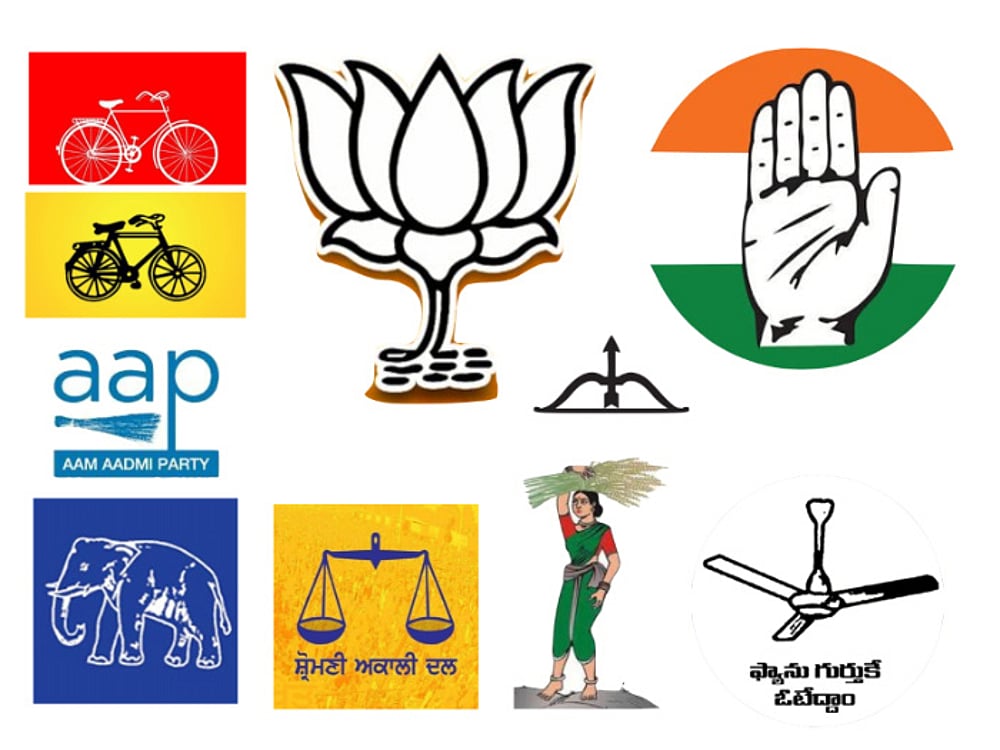
It has to be mentioned right at the outset that the prayer made in the petition states that, “Petition under Article 226 of Constitution of India praying for issuance of Writ of Mandamus directing the 1st and 2nd respondents to consider the Petitioner’s representation dated 13.07.2020 and further direct the respondents to convert Vasudevanallur Assembly Constituency in Tamil Nadu as General Constituency by enabling all the communities of the Society to be candidate in the upcoming election to uphold the spirit of the Constitution of India.”
Justice N Kirubakaran who has authored this notable judgment for himself and Justice B Pugalendhi of Madras High Court sets the ball rolling in the most brilliant manner in para 1 wherein he puts forth forthrightly that, “[“We will cook food for you in your residence” – Party “We will not only cook, but also feed you” – Opposite party] Time is not too far away to hear the aforesaid promises from competing political parties. It is raining freebies for Tamil Nadu Assembly elections. Each party tries to undo each other in terms of populist promises. If one party promises monthly assistance of Rs.1,000/- to women households heads, there is a counter freebies of Rs.1,500/-. It goes on. The result is people started having a mind set that they could make a living out of freebies. A trend has been created that whoever avails loan from banks, does not repay the loan, expecting waiver of loans during election. In this way, people themselves get corrupted by political parties. The way in which the political parties throw their promises, which are unreasonable and unworkable are really unwanted. Unfortunately, freebies are not connected with job creation, development, or agriculture. Voters are lured to cast votes in their favour by these magical promises. Once in 5 years, this tamasha is being continued for decades together. Promises have always remained as promises. Most of them except freebies are not implemented.”
While stating the true purpose of making tall promises, the Bench then reveals in para 2 that, “Every political party is bound to make promises to voters giving their social policies and plans for improving the standard of living of the people by providing clean governance, infrastructure, especially, providing basic amenities like, water, transportation and health, which are expected in every democracy. However, the election promises made by the political parties are aimed at clinching power.”
While elaborating further, it is then stated in para 3 that, “If the basic amenities are promised and provided, there cannot be any objection and in fact, it has to be welcomed and appreciated. In the name of social security all the basic needs of the people have been provided by giving colour televisions, laptops, mixers, fans and grinders etc. Moreover, in Tamil Nadu every family card holder is given free rice of 20 kilograms every month. That apart, during festival seasons, like, Pongal and Diwali, public money is drained by way of providing expenses for celebrations of festivals. In fact, the celebrations are being taken care by the Government by providing free dhoties, sarees and items necessary for cooking and making pongal and expenses for celebrations. These kinds of freebies and money given during festivals, though it would be justified that the Government is taking care of the peoples’ needs, in fact are making the people lazy and dampens the working culture of the people. In the process, the honest tax payer is made a mute spectator of these expenditure by the Government. Consequently, even for any normal work no force is available in Tamil Nadu and Tamil Nadu has to depend on the migrant workers from northeast and northern states, like, Manipur, Meghalaya, Assam, Bihar, Uttra Pradesh and West Bengal and Odisha. Most of the North Indian workers are doing agriculture work and working in hotels, industries, shops, saloons, etc. in Tamil Nadu.”
While continuing further in a similar vein, it is then envisaged in para 4 that, “It is not as if everyone in Tamil Nadu have become an entrepreneur or persons with resources and if we go into details, most of the persons including wealthy are expecting freebies. Engineering Graduates, M.Phil, M.B.A. Degreeholders are applying for sweeper posts and O.A. posts. Nobody wants to do manual job. It is reported in media that people who go for 100 days work, (MNREGA), which has been brought by the Government to give work for people, simply chit chatting under trees without doing the work. The way in which things are happening today, one would not be surprised to see that migrant workers would be owners of the properties in due course and the sons of the soil will become workers working under them and it may be the only achievement, probably, the political parties have attained through election promises by providing freebies for the past 20 years.”
On a practical note, it is then observed in para 5 that, “This Court is aware that the judgment of the Hon’ble Supreme Court of India in the case of of S.Subramaniam Balaji v. State of Tamil Nadu and Others reported in (2013) 9 SCC 659 held that promises in the election manifesto cannot be construed as “corrupt practice” and these measures relate to implementation of Directive Principles of State Policy. However, the Hon’ble Supreme Court directed the Election Commission to verify election manifestos of all political parties. If there is an external agency, which examines all manifestos to weed out the unreasonable and unexecutable ones. Definitely, that will go a long way to curtail the political parties from making promises of moon or star. Unless some mechanism is put into place, the political party would try to buy out the voters by hook or crook as their aim is only to ascend to power. Normally, the political parties are expected to make election promises providing basic amenities, like, education, health care facilities, transportation and generation of employment and not necessarily Government employment.”
Alarmingly, it is then laid bare in para 6 that, “Though political parties cry for rights, they never bother educating about the corresponding duties and it is also one of the dangerous trends to be addressed. All the political parties, are expected to behave reasonably or offer political promises, which are helpful for overall development of the society instead of having an adverse effect on the people.”
In context of Tamil Nadu, it is then stated in para 7 that, “The aforesaid observations became necessary in view of the state of affairs in Tamil Nadu. In that scenario only, the present Writ Petition has come up before this Court, seeking writ of mandamus directing the first and second respondent to consider the Petitioner’s representation dated 13.07.2020 and further direct the Respondents to convert “Vasudevanallur Assembly Constituency” in Tamil Nadu as general Constituency by enabling all the communities of the society to be candidate in the upcoming election to uphold the spirit of the Constitution of India.”
More to the point with regard to petitioner’s petition, it is then laid bare in para 8 that, “The Petitioner has stated that he filed this Public Interest Litigation to convert “Vasudevanallur Legislative Assembly constituency”, which is a reserved constituency, as a general constituency to enable all the sections of people to contest the election. Vasudevanallur Legislative Assembly constituency remains as reserved constituency, since 1976, for the past 44 years and because of that, the representation is restricted to the Scheduled Castes and Scheduled Tribes people only and other sections of people are deprived of their right to contest and get elected as Member of Legislative Assembly.”
Needless to say, the Bench then concedes in para 24 that, “.This Court is aware that the issue of freebies has been raised before the Hon’ble Apex Court in the case of S.Subramaniam Balaji v. State of Tamil Nadu and Others reported in (2013) 9 Supreme Court Cases 659, after the Public Interest Litigation filed by S. Subramaniam Balaji before the Madurai Bench of Madras High Court came to be dismissed. The Hon’ble Apex Court held that the promises in the election manifesto cannot be construed as “corrupt practice” as described under Section 123 of the Representation of the People Act, 1951. However, the Hon’ble Apex Court further opined that the reality cannot be ruled out that the distribution of freebies of any kind, undoubtedly influences all the people. Further, the Hon’ble Apex Court directed the Election Commission to frame guidelines with regard to the contents of the election manifesto in consultation with all the recognized political parties.”
It cannot be glossed over that it is then disclosed in para 25 that, “As per the direction of the Hon’ble Apex Court, the Election Commission called a meeting of all recognized political parties and discussed the issue of framing guidelines for election manifesto of political parties. Since majority of the political parties opposed the idea of framing any guidelines for manifestos, the Election Commission issued guidelines dated 19.02.2014 to be adhered by the political parties and candidates while releasing their election manifestos for election to Parliament or State legislatures. The said guidelines have been incorporated as Part VIII of the Model Code of Conduct and the same reads as follows:
“(i) The election manifesto shall not contain anything repugnant to the ideals and principles enshrined in the Constitution and further that it shall be consistent with the letter and spirit of other provisions of Model Code.
(ii) The Directive Principles of State Policy enshrined in the Constitution enjoin upon the State to frame various welfare measures for the citizens and therefore there can be no objection to the promise of such welfare in election manifesto. However, political parties should avoid making those promises which are likely to vitiate the purity of the election process or exert undue influence on the voters in exercising their franchise.
(iii) In the interest of transparency, level playing field and credibility of promises, it is expected that manifesto also reflect the rationale for the promises and broadly indicate the ways and means to meet the financial requirement for it. Trust of voters should be sought only on those promises which are possible to be fulfilled.””
Be it noted, it is then stated in para 29 that, “Once the Hon’ble Supreme Court opined that freebies vitiates the purity of election process and influence the voters, it should be deemed to be a corrupt practice. It is not as if offers of money or kind to influence the voters by candidates, alone can become corrupt practice and the political parties which in whole sale manner offer or lure by promising freebies to the people to vote for their respective party to power, cannot be construed as corrupt practice. Whether it is done by an individual or by a party, it is definitely a bribery or corrupt practice. Our democracy has stooped down to such a level that time has come to bring the political parties which offer freebies to influence the voters for picking up votes also, within the scope of Section 123 of the Representation of the People Act.”
Frankly speaking, it is then pointed out in para 30 that, “The election manifestos were not that much popular about 30 years ago and only for the past two decades they have became very popular among the masses, as the political parties compete with each other offering free gifts and freebies in various forms and kinds, promising them better development, social upliftment and comfortable life during their regime if they are voted to power. Whether the development is achieved or not, the freebies only achieved in creating/inculcating laziness among the people, shattering the work culture of the State. Consequently, no labour or sufficient labour is available and no work is done in the State, without the imported migrant labourers from other States. As observed by the Hon’ble Supreme Court, the Election Manifesto is the road map to the policies of the political parties to show as to how they intend to govern the State or Country and what are all the infrastructures to be developed and other incidental ideas. Indeed, it is a welcome one. However, unfortunately the political parties are at best concentrating only on freebies to get the voters by hook or crook in their craving for winning the elections. This has to be stopped as otherwise, there shall be no distinction between the enthusiastic work force and those who sit back and enjoy the freebies without doing anything.”
It is worth noting that it is then stated in para 31 that, “The object of the Representation of the People Act, 1951 is extracted as follows:
“An Act to provide for the conduct of elections to the Houses of Parliament and to the House or Houses of the Legislature of each State, the qualifications and disqualifications for membership of those Houses, the corrupt practices and other offences at or in connection with such elections and the decision of doubts and disputes arising out of or in connection with such elections.”
From the above it is clear that the Act is also to rule out corrupt practice and other offences in connection with the elections. Though many amendments have been brought and the last one is in the year 2009, only when the freebies are wiped out from the election manifesto by making them as “corrupt practices” by political parties under Section 123 of Representation of People Act 1952 , the election process can be free and fair and there can be a level playing field for all the political parties equally. Whenever the Court observes and indicates the necessity for bringing out a separate legislation or amendment in the existing Act, the Parliamentary or State Legislature has to take it very seriously and pursue the issue properly by bringing a new legislation or amendment, as suggested by the Court. However, even after eight years of judgment of the Hon’ble Apex Court in the case of S.Subramaniam Balaji v. State of Tamil Nadu and Others reported in (2013) 9 SCC 659, nothing has been done to bring a new legislation or amendment governing political parties and election manifestos and only the election commission alone came forward and issued guidelines to the political parties.”
More significantly, it is then disclosed in para 32 that, “In view of that, the above queries are raised. Mrs.Victoria Gouri, Learned Counsel takes notice on behalf of the First and Second Respondents. Mr.Niranjan Rajagopal, learned Counsel takes notice on behalf of the Third Respondent. Mr.Muthu Geetheiyan, learned Special Government Pleader for the Fourth Respondent, Mr.Chella Pandian, learned Additional Advocate General takes notice on behalf of the Fifth Respondent. The respondents shall answer to the following queries raised by 24.04.2021.
(1) Whether the Central Government has taken any steps to bring legislation covering the issue of political manifestos, especially freebies promised in the election manifestos and governing the political parties as per the Judgment of the Hon’ble Supreme Court in the case of S.Subramaniam Balaji v. State of Tamil Nadu and Others reported in (2013) 9 Supreme Court Cases 659?
(2) In how many elections the Election Commission has vetted the election manifestos of the political parties as per the dictum of the Hon’ble Supreme Court of India in the case of S. Subramaniam Balaji v. State of Tamil Nadu and Others reported in (2013) 9 Supreme Court Cases 659?
(3) If so, which are all the political parties which have submitted their election manifestos for vetting during elections, after 2014?
(4) What are the actions taken against those political parties, which have not followed the dictum of the Hon’ble Supreme Court to tender the manifestos for vetting before the Election Commission?
(5) In how many manifestos of the political parties, the Election Commission has made objections regarding the statements or promises made?
(6) Whether based on the objections such disputed or controversial promises have been deleted by political parties?
(7) If so which party’s manifestos have been objected and have been deleted?
(8) Why not political parties be liable to pay at least 10% of the money involved for implementation of election promises made by them while implementing the same after they come to power to infuse a sense of responsibility to the political parties?
(9) Why not the Respondents sensitize the political parties not to make any unreasonable and unfair promises, which, if implemented would drain the public exchequer unnecessarily /unreasonably?
(10) Why not the Respondents prohibit the political parties from giving social security schemes which are capable of shattering work culture and making people lazy?
(11) Whether the political parties give in the manifestos itself about the political promises and provision for resources available, in case if they come to power along with experts opinion?
(12) Why not the Respondents direct the political parties to make the political promise, especially, with regard to the freebies in accordance with the resources of the State?
(13) Why not the Respondents monitor and verify as to whether the election promises are complied with during the tenure of the political party, which is elected to form the Government?
(14) Why not the Respondents prohibit the political parties from making any promises, which cannot be implemented by the State Government, as they are beyond the powers of state Governments. i.e., waiver of loans given by the nationalized bank, etc.,?
(15) Whether the Respondents have got details about the political promises, which have been implemented by the political parties, when they came to power at least in the past 4 elections to Legislative Assemblies and Parliament elections?
(16) How much was spent by the respective Government, especially, Tamil Nadu to translate the election promises into reality by giving the details thereof (from 2001 election onwards)?
(17) Why not Election Commission of India de-recognize those election parties, who fail to implement their political promises based on which the voters are lured and the parties are elected to form the Government?
(18) When the political parties ascend the throne by promises which were believed by the voters and voted, and the promises are foundation of the Government, why not the respondents make election promises as enforceable?
(19) When will the Union Government bring an amendment of Section 123 of Representation of People’s Act 1952, to include “political parties” which could be charged for “corrupt practices”?
(20) Why not the constituency with next highest population of Scheduled Caste (SC) population be made as reserved constituency by rotation without decreasing the constituency meant for Scheduled Castes (SC) and Scheduled Tribes?”
Most significantly, what forms the bottom-line of this notable and extremely laudable judgment is then stated elegantly, eloquently and effectively in para 33 that, “Though this Court is aware that the political promises cannot be implemented as per the judgment of the Hon’ble Supreme Court of India, much water has flown under the bridge. Practically, people are floated with attractive promises and they are convinced by these promises to vote a particular party to form Government and many of the promises make big dent on the public exchequer. If money spent for freebies are utilized constructively by creating job opportunities, by building infrastructure, like, dams, lakes, providing better facilities and incentives to the agriculture, which has become an orphan in our country as most of the people have quit agriculture as cultivation does not provide a secured income, definitely, there will be social upliftment and progress of the State. The political parties should be prohibited or prevented from giving election promises, which are capable of adding burden on the public exchequer, especially, the State is facing financial crunch. Otherwise, for the sake of finance, the State has to increase the number of liquor shops.”
Finally and no less significantly, it is then held in the concluding para 34 that, “It is stated that every candidate has to shell out about Rs.20 crores in the election to an assembly constituency, as many of the people have become corrupt by selling their votes for one or a few thousands, Briyani and Quarter bottle. It is the stark reality. If that is so, how could the people expect good leaders?
Do people who sell their votes, have any moral right to question their leaders?
This Court could only recall the words of Joseph de Maistre, “In a democracy, people get the leaders they deserve”.”
To conclude, there is just no need to add more. If our country truly abide by what is held in this extremely straightforward judgment then it will do our nation a world of good in all senses! No country in world can stop India from progressing, prospering and becoming the most powerful country in the world if our political parties strictly abide by what is held in this most brilliant judgment by a two Judge Bench of the Madras High Court which is also one of the oldest High Courts of India and similarly people also adhere to what has been laid down in this notable judgment! No denying it!
Sanjeev Sirohi
World Health Day, 7 April 2021: Five Calls of World Health Organisation (WHO)
In school days, we have read “health is wealth”. This in general implies health is considered the most valuable and important for every individual. Good health means not only the absence of disease in the body but a complete physical, mental and social. To cater the needs of maintaining good health across the world the name of World Health Organisation (WHO) must be mentioned. WHO came into force on 7 April 1948 – a date which is celebrated every year as World Health Day. Presently, in WHO more than 7000 people from more than 150 countries are working in 150 country offices, in 6 regional offices with the headquarters in Geneva.
For World Health Day, 7 April 2021, the World Health Organisation (WHO) has issued five calls for urgent action to improve health for all people as COVID has an awful effect on the health of human beings. As per latest data (6 April 2021), across the world confirmed COVID-19 cases are 132,296,662 and 2,871,679 deaths took place. Anyway five calls are presented below with full explanation collected from www.who.int/news/item/06-04-2021-who-urges-countries-to-build-a-fairer-healthier-world-post-covid-19 so that readers can get a thorough idea and same can lead to research study.
“1) Accelerate equitable access to COVID-19 technologies between and within countries
Safe and effective vaccines have been developed and approved at record speed. The challenge now is to ensure that they are available to everyone who needs them. Key here will be additional support to COVAX, the vaccine pillar in the ACT-Accelerator, which hopes to have reached 100 countries and economies in the coming days.
But vaccines alone will not overcome COVID-19. Commodities such as medical oxygen and personal protective equipment (PPE), as well as reliable diagnostic tests and medicines are also vital. So are strong mechanisms to fairly distribute all these products within national borders. The ACT-Accelerator aims to establish testing and treatments for hundreds of millions of people in low and middle-income countries who would otherwise miss out. But it still requires USD22.1 billion to deliver these vital tools where they are so desperately needed.
2) Invest in primary health care
At least half of the world’s population still lacks access to essential health services; more than 800 million people spend at least 10% of their household income on health care, and out of pocket expenses drive almost 100 million people into poverty each year.
As countries move forward post-COVID-19, it will be vital to avoid cuts in public spending on health and other social sectors. Such cuts are likely to increase hardship among already disadvantaged groups, weaken health system performance, increase health risks, add to fiscal pressure in the future and undermine development gains.
Instead, governments should meet WHO’s recommended target of spending an additional 1% of GDP on primary health care (PHC). Evidence reveals that PHC-oriented health systems have consistently produced better health outcomes, enhanced equity, and improved efficiency. Scaling up PHC interventions across low- and middle-income countries could save 60 million lives and increases average life expectancy by 3.7 years by 2030.
Governments must also reduce the global shortfall of 18 million health workers needed to achieve universal health coverage (UHC) by 2030. This includes creating at least 10 million additional full-time jobs globally and strengthening gender equality efforts. Women deliver most of the world’s health and social care, representing up to 70% of all health and care workers, but they are denied equal opportunities to lead it. Key solutions include equal pay to reduce the gender pay gap and recognizing unpaid health care work by women.
3) Prioritize health and social protection
In many countries, the socio-economic impacts of COVID-19, through loss of jobs, increases in poverty, disruptions to education, and threats to nutrition, have exceeded the public health impact of the virus. Some countries have already put in place expanded social protection schemes to mitigate these negative impacts of wider social hardship and started a dialogue on how to continue providing support to the communities and people in the future. But many face challenges in finding the resources for concrete action. It will be vital to ensure that these precious investments have the biggest impact on those in greatest need, and that disadvantaged communities are engaged in planning and implementing programmes.
4) Build safe, healthy and inclusive neighbourhoods
City leaders have often been powerful champions for improving health – for example, by improving transport systems and water and sanitation facilities. But too often, the lack of basic social services for some communities traps them in a spiral of sickness and insecurity. Access to healthy housing, in safe neighbourhoods, with adequate educational and recreational amenities, is key to achieving health for all.
Meanwhile, 80 per cent of the world’s population living in extreme poverty are in rural areas. Today, 8 out of 10 people who lack basic drinking water services live in rural areas, as do 7 out of 10 people who lack basic sanitation services. It will be important to intensify efforts to reach rural communities with health and other basic social services (including water and sanitation). These communities also urgently need increased economic investment in sustainable livelihoods and better access to digital technologies.
5) Strengthen data and health information systems
Increasing the availability of timely, high-quality data that is disaggregated by sex, wealth, education, ethnicity, race, gender and place of residence is key to working out where inequities exist, and addressing them. Health inequality monitoring should be an integral part of all national health information systems.
A recent WHO global assessment shows that only 51% of countries have included data disaggregation in their published national health statistics reports. The health status of these diverse groups is often masked when national averages are used. Moreover, it is often those who are made vulnerable, poor or discriminated against, who are the most likely to be missing from the data entirely”.
I am concluding by quoting Dr Tedros Adhanom Ghebreyesus Director-General of WHO, “Now is the time to invest in health as a motor of development”. “We do not need to choose between improving public health, building sustainable societies, ensuring food security and adequate nutrition, tacking climate change and having thriving local economies. All these vital outcomes go hand in hand.”
Dr Shankar Chatterjee, Hyderbad Dt 7 April 2021
###################
7 Communication tips for College Freshers.

Having great communications and networking skills in college will go a long way in establishing your identity.
Here are some of the best tip from seniors on how to network better in your college as a fresher-
1. Build networking into your everyday routine
If the idea of networking is intimidating to your introvert-self, you’re not alone. But, with a little intention, you can start building your network during your everyday activities, like engaging with your professors and classmates.
Sometimes your professors and classmates can be some of your most valuable assets when it comes to job hunting. Not only can your professors offer valuable industry insight and advice, they’ve also taught some bright students in the past — what are they up to now? Sometimes those former students will email professors links to job openings: “Graduation is coming up… know any promising students who could take on this role?” By actually talking to your professors, it keeps your name in the back of their minds when this question arises.
2. Get involved on campus
There are a number of benefits to getting involved on campus. You’ll make friends, beef up your resume, and, yes, build your network.
There are a ton of ways to get involved on campus, including honor societies, professional clubs, social sororities and fraternities, jobs, student media, club spots — you name it. Not only will you be able to connect with a number of other students, you’ll also be able to connect with speakers, advisers, and mentors.
If your campus has an involvement or club fair, go! Or sign up for a campus email newsletter, peruse the bulletin boards in the study lounges or library, and talk to classmates and friends. As cheesy as it sounds, there’s something out there for everyone.
3. Pay a visit to your campus career center
Chances are, your campus has a career center full of free resource.
Find open internships or jobs posted by alumni, get tips on how to build your online presence, participate in a mock job interview, and learn about upcoming job fairs. Even if you aren’t actively looking for a job right now, it can’t hurt to stop by these job fairs. Shake hands with company representatives, pass your resume around, have conversations, learn what’s going on in your industry, and see where your potential future lies.
4. Develop your online presence
If the idea of talking to strangers makes you a little sweaty, don’t worry. You can also network from behind a screen — though not exclusively.
Start by building your online presence. If you haven’t already, create your LinkedIn profile. Depending on your industry, you might also want to make a website or start an online portfolio. Even if it’s a little sparse right now, you’re getting an awesome head start.
You can also leverage social media, as long as your profiles are cleaned up. Your school might even have an alumni group on Facebook, and these can be infinitely helpful. Alumni will often post job openings within their company, and if you’re a fit, you can reach out to the poster to learn more. You already have one thing in common (ahem, where you went to school), so start a conversation. Ask thoughtful questions about the company and the open position. They just might go to their manager on Monday morning and give you a glowing recommendation, putting you ahead of the pack.
5. Be open to new connections
Honestly, establishing a networking connection could happen anywhere. Maybe you’re at your bus stop and overhear a professor talking and politely join in. Or you’re in line at the local coffee shop and hear a fellow student chatting about the guest lecturer they’re excited about.
6. Don’t be afraid to make the first move
But really, don’t be afraid to make the first move when it comes to building your network. Confidence can go a long way! Our best small-talk tip? Be genuine. Don’t treat networking like a game of who can make the most connections or how many resumes you can pass around. Instead, genuinely take interest in who you’re talking to — who they are and what they do. Try to remember important information about them. If you have to, jot some notes down in your phone.
7. Maintain your networks
We can’t emphasize enough that networking is more than collecting business cards, passing out resumes, and gaining LinkedIn connections. It’s hard work, and you’ll want to invest some time in maintaining your networks. If you meet someone at a job fair, for example, shoot them an email afterward. Even if they don’t have your perfect job position open right now, let them know you appreciate the time they took to talk to you.
For brownie points, throw in something personal you learned during your conversation. This will show that you were genuinely listening, and they just might remember you when they’re hiring again.
I hope these networking tips help you.
Thank you.
9 skills to have on your resume.

There are endless skills that you can include on any resume, and you have to decide which ones will be the most effective. There are hard, industry-specific technical skills, as well as soft skills that every job demands.
Hard skills are technical abilities that are specific to a particular job and are often measurable. For software developers, their set of hard skills would include specific programming languages. Soft skills are interpersonal or creative abilities that can come naturally or be strengthened over time. Some examples of soft skills are adaptability, self-motivation, and the ability to work under pressure.
1. Problem Solving
No matter what the job is, eventually something will go wrong and employers want to know that you’re capable of coming up with a quick and effective solution. In fact, there are jobs that are essentially nothing but solving problems for the company, the clients, or both.
2. Critical Thinking
Being able to think rationally and thoughtfully is the basis of critical thinking. Employers want workers who can think through a problem or a project and determine the best steps needed. Critical thinkers come up with new and better ways to work, making it an invaluable skill to put on a resume.
3. Flexibility
Many organizations and industries covet employees who are dynamic and adaptable to every situation, or who have a natural ability to use a variety of methods and approaches in different circumstances to get the best end result.
4. Communication
Whether it’s written or verbal, being able to communicate with your boss, coworkers, and clients/customers in all situations is very valuable. The better you are at it, the better results you will generate.
5. Teamwork
Most jobs will sometimes require you to work with other people at some point, and employers want to know that you can succeed in a team environment. Some jobs will prize this skill more than others.
6. Organization
This is not just about having a neat desk, but organizing tasks and projects for your coworkers, management, and at the very least, yourself! If you want to show off your organization skills, having a tightly structured resume certainly helps.
7.Creativity
Thinking outside of the box and coming up with creative solutions can be a real asset in any role. Perhaps you’re good at thinking about something in a way that hasn’t been done before. Creativity can be shown on your resume through a problem you solved or through a creative skill like writing or design.
8.Responsibility
Part of being a good employee is taking responsibility for your duties and even owning up to mistakes. Most managers don’t want to have to check in on their employees to ensure every part of their job is getting done. Responsibility means doing what you need to do to complete your tasks.
9. Attention to Detail
On the job you need to ensure you follow all instructions in order to complete your work. This can be especially important when you work with others. Paying attention to detail will be needed at any role you have. Consider times when you caught or fixed a potential mistake due to your attention to detail.
Land Use and Land Value Theory of William Alonso
William Alonso (Location and Land Use: Toward a General Theory of Land Rent, 1964) attempted to apply accessibility requirements to the city centre for various types of land use (housing, commercial, and industry). According to his theory, each land use type has its own rent gradient or bid rent curve. The curve sets the maximum amount of rent any land use type will yield for a specific location. Households, commercial establishments, and industries compete for locations according to each individual bid rent curve and their requirements for access to the city centre.
All households will attempt to occupy as much land as possible while staying within their accessibility requirements. Since land is cheaper at the fringe of the city, households with less need for city centre accessibility will locate near the fringe; these will usually be wealthy households. Poor households require greater accessibility to the city centre and therefore will locate near the centre, competing with commercial and industrial establishments. This will tend to create a segregated land use system, because households will not pay commercial and industrial land prices for central locations In 1960 William Alonso completed his dissertation which extended the von Thünen model to urban land uses. His model gives land use, rent, intensity of land use, population and employment as a function of distance to the CBD of the city as a solution of an economic equilibrium for the market for space.

Bid rent curve
Land Value
Land value can be defined as the monetary cost of the land. It can be the cost of undeveloped land or a built property, but land value is primarily associated with a vacant plot. When discussing the importance of a built structure the term “property value” is more appropriate.
Factors Affecting Land Value
The land value is determined by the economic principle of highest and best use of land which produces the highest net return in any term, over a period. The property value is dependent on the structural attributes, land rates, land use and the location of the land. It is determined by the specific character of the land such as land use, location, accessibility, aesthetics, etc
1) Physical Attributes
These include quality of location, topography, climate, availability of water, sewer lines, etc. More and better facilities are attributed to a higher price of land. Topography further has a direct effect on the construction cost and thus the overall development cost. The facilities thus developed on an uneven land will have a much higher cost as compared to the flat plain.
2) Accessibility to Economic Activities
The more easily economic activity is accessible, the more is the value of the land. For example, most of the metropolitan cities have the maximum land values at the center, or at the central business district of the city. This is because of the nearness to the economic activities and workplace. This factor affecting land value is the sole most important factor which led to the development of various land price models in urban economics.
3) Neighborhood Amenities
The cost of land is also affected by the availability of the facilities such as shopping areas, medical facilities, school, parks& playgrounds, and other basic need of the humans. This helps in saving the time of people every day, the time saved adds up the cost of land. Also, the reduced travel and reduced trip distance will directly have the monetary benefits of the person residing in an area with many such facilities in proximity.
4) Present and Future Land Use
The value of the land is also determined by the land use permitted in the land premises. For example, if we compare the values of two lands of same prices and same location but the land use permitted in the lands are different, one is commercial and one is residential. In such case the value of the land with the land use which has more rate of return over a period of time will be valued more. People are willing to pay a higher amount for commercial land, in some cases industrial or institutional land use might attract even.
5) Demand and Supply Function
With the significant demographic changes in the cities with time, the need for land also increases with the same factor, with the increase in population there is an increase in economic and other activities. This directly increases the demand in the of the land components. The anticipation of high yields may also induce false scarcity of land; hence the location advantages of the properties at any time within the urban boundaries and hence causes economic values of land to be increased. For any site, there are specific points of transition in use, closely related to the infrastructure and services, where a jump in property value is likely to happen.
6) Location and Transport Linkages
The property located in the area of high level of infrastructure facilities or the one located in or adjacent to the area of intensive economic activities such as markets or industries have higher values. Transport linkages are also crucial since they govern the mobility and ease of movement to and from the area. Clearly defined hierarchy of roads, efficient public transportation and lack of congestion are some of the desired transportation attributes of any area.
Residential land values are also observed to be in direct proportion to the hierarchical order of the adjacent road. The valuation of land is done keeping in mind the factor mentioned above; however, the actual selling price of an area is ultimately determined by the paying capacity of the buyer. All the factors mentioned above-affecting land value might give a price which no one is willing to pay, and thus the actual amount paid becomes the price instead of the evaluated price.
Land Use
Land use involves the management and modification of natural environment or wilderness into built environment such as settlements and semi-natural habitats such as arable fields, pastures, and managed woods.
- Residential land use
- Commercial land use
- Industrial land use
- Agricultural land use
- Recreational land use
- Transport space
- Public land use or Open space
5 Side business you can start.

Side businesses are always great to have. They can be a source of passive income.
Some ideas are-
1. Sell your crafts online
If you have an artistic streak, you can use your talent to start a side hustle and earn some extra cash. They are many websites out there such as Etsy where you can list your crafts and other home-made items for others to buy.
Apps such as Instagram and Facebook are also great places to showcase your work. Many artists post pictures of their work on their Instagram or Facebook pages along with a link to their websites where customers can purchase the products. The rise in businesses born this way has led to a decrease in the number of brick and mortar stores worldwide.
2. Sell your stuff on e-bay or Amazon
A sure-fire way to make money online and have a lucrative side-business is to sell your items on websites such as e-bay, Amazon, or Olx. These items could include anything from household goods to furniture, books and even stamps. This is a great way to make use of things that you don’t really use or need. If you find that you have a knack for selling stuff online, you can do this professionally and earn a commission on every sale.
3. Drive for Uber or Ola
One of the best and most versatile ways to make money is to drive for Uber or Ola. Companies such as these have transformed the way we view transport in today’s sharing economy.
What makes these ride-share companies so great is that you get to decide when you want to work with just the click of a button. In metropolis cities such as Bangalore or Chennai, this is an easy and convenient way to make a side-income.
4. Start a blog
Starting a blog is not a quick money maker but it is a great way to create a platform for something you are passionate about while developing your skills.
What’s more? you can do it anywhere and from any part of the world. A blog is something you can create in your spare time and consistently working on it and posting great content can result in a high income eventually. You can even monetize your platform through sponsored posts, affiliate links or a shopping link to buy your products. Many people have created very lucrative businesses through their blogs.
5. Get a part-time job
If you want to trade in your time for money, you can get a part-time job. They are many options you can choose from to match your interests and skill-sets. A few ideas include babysitting, an administrative assistant or a barista.
If you are big on Instagram or Facebook, you can even take on a social media gig. The only downside to part-time jobs is that they often don’t pay as well as online businesses but they are still a great way to earn money while doing something you love.
These were some of the few side businesses that can done by anyone, even a student. There are also plenty of ideas available online.
Thank you.
Health tips for students that don’t suck

You are a student so you’re probably young and feel indestructible. But we all have to take care of ourselves if we want to stay healthy, especially if we want to do well in your studies. The good news is that staying healthy doesn’t mean giving up everything you enjoy. And if you stick to these basic health tips, you should be in great shape to excel in your studies.
1. You Are What You Eat
Eating well is vital for healthy living, but it’s not something that students are always good at. There’s a reason for all those cold beans and instant noodles. stereotypes, after all.
This is changing, though. Increasing awareness of diet means more students are eating healthily. Many are even trying vegetarianism and veganism, which are good for the environment as well! But the most important thing is making time to eat proper, healthy meals on a regular basis.
2. A Healthy Body
Maybe you’re a gym bunny already. Good for you. But if not, don’t be put off by people demanding that you “feel the burn.” Even a little bit of regular exercise can help keep you healthy.
Ideally, you should find time for around 150 minutes of moderate aerobic activity per week. You can even work it into your daily routine, if going to the gym doesn’t appeal to you.
3. A Healthy Mind
Anxiety and other mental health issues affect most people at some point. And students can be especially vulnerable, since balancing your studies, work, and social life is often stressful.
But there are simple ways you can help stay healthy, including:
- Being aware of your own mental health and stress levels.
- Knowing your stress triggers.
- Taking time out to relax now and then.
- Meditation and breathing techniques.
Most important, though, is not being afraid to seek help if you need it. Your college should have support systems in place if you are feeling overwhelmed.
Talking to friends or family when you’re feeling low is a great first step, too.
4. Sleeping Is Good
Sleep is just as important as diet and exercise for a healthy lifestyle. Ideally, you should get between seven and nine hours every night. If this isn’t currently the case, cutting back on caffeine after 3pm and avoiding illuminated screens (phones, tablets, etc.) before bed could help.
5. Sex, Drugs and Rock ‘n’ Roll (in Moderation)
While college life should, of course, include trying out new things and having fun, excessive partying will take its toll. Limiting yourself to going out at the weekends is a good start. If nothing else, it will mean you won’t have to deal with 9am lectures on next to no sleep.
6. Do Good
This one might sound strange, especially if your schedule is already hectic, but research shows that volunteering counteracts stress and makes you happier. It also lets you try new things and get valuable experience, so there’s plenty to gain from being selfless!
These were some of the basic health tips for students. Everything in moderation is the key to a healthy student life.
I hope these tips were helpful to you.
Thank you!
Justice N V Ramana appointed as 48th Chief Justice of India
President Ram Nath Kovind has appointed Justice N V Ramana as the 48th Chief Justice of India, accepting the recommendation made by the outgoing CJI SA Bobde. Justice Ramana will have a term till August 26th next year.
Before his elevation to the Supreme Court on February 17th, 2014, Justice Ramana was the Chief Justice of the Delhi High Court. He was born in an agricultural family in Andhra Pradesh.
PM Modi addresses BJP workers on Party’s foundation day today; Urges them to counter false narratives being built around farm laws, CAA and labour laws
Prime minister Narendra Modi said, false narratives are being built; be it about farm laws, CAA or labour laws. Addressing BJP’s 41st foundation day today, Mr Modi said, it is a conspiracy to create political instability. Prime minister highlighted that sometimes they say citizenship will be snatched, sometimes it’s farmers’ land, but they are all blatant lies.
He called upon BJP workers to go to people and make people aware. Mr Modi said, BJP not only represents national interest but is also a party of regional aspirations. Saying the party’s mantra has been ‘Vyakti Se Bada Dal Aur Dal Se Bada Desh’, Prime minister reiterated, this tradition continues to this day.
Mr Modi said the party fulfilled Shyama Prasad Mukherjee’s vision of one India by scrapping Article 370 and gave Kashmir the constitutional right. He criticised the opposition for their remark that if BJP wins polls, it’s called poll wining machine, but if others win, there is appreciation.
Mr Modi said, people who say BJP is a poll-winning machine, do not understand India’s Constitution and democracy’s maturity. He said the truth is that BJP is not poll winning machine, but a movement that connects with people.
Night curfew imposed in Delhi till April 30 in view of rising Covid cases
Delhi government has imposed night curfew in the national capital from 10 PM to 5 AM with immediate effect till 30th April. The decision was taken in the wake of increase in COVID 19 cases. There will be no restrictions on traffic movement during night curfew. People can get vaccinated but need to have an e-pass. Owners of ration, general, fruits, vegetables and medical stores will be allowed on e-pass. Print and electronic media personnel will also be allowed to move on e-pass.
Private doctors, nurses and paramedical staff will remain exempted from night curfew. Passengers going to airports, railway stations and bus stations will be exempted if a valid ticket is produced. Pregnant women and patients going for treatment have also been exempted.
Buses, metros, autos and taxis will be allowed to ferry only those people who are exempt from night curfew. There shall be no restriction on inter-state and intra-state movement and transportation of essential and non-essential goods. No separate permission or e-pass will be required for such movements.
IMA urges Centre to open up vaccination for everyone above 18 years of age
The Indian Medical Association (IMA) has urged the centre to open up vaccination for everyone above 18 years of age. In a letter written to the Prime Minister today, the IMA has also appealed that the government should make vaccination certificate mandatory for entry into public places and large gatherings.
Highlighting the gradual rise in number of new COVID cases, the Association termed it painful that in spite of extraordinary efforts of the Government the new cases in the apparent second wave is turning alarming.
IMA added that since vaccination against COVID stands as a single evidence-based resource to restrict the cases, the drive should be amplified multifold in order to pave way for herd immunity.
The Association said that the government should include private sector family clinics in the vaccination drive to widen it’s ambit and constitute district level vaccine task force in every district to monitor effective vaccination of every beneficiary.
 Eduindex
You must be logged in to post a comment.