Dr Harsh Vardhan interacts with social media users during Sunday Samvaad-3

Dr. Harsh Vardhan, Union Minister of Health and Family Welfare answered questions posed by his social media interactors on the third episode of Sunday Samvaad. Besides the present COVID crisis, these questions covered a multitude of queries concerning the medical infrastructure, the future of Public Health in India, India’s contribution to Climate Change Research and advancements in Meteorology.

The Union Health Minister dispelled fears regarding the phased opening of schools and advised on proper protocol to be followed while visiting salons and hair-spa. The Minister asked everyone to always raise awareness regarding COVID appropriate behaviors which he himself does by stopping his car and asking non-compliant people to wear their masks. He re-emphasized on the need for wearing masks even in places of worship.

He said “the Pandemic can only be fought when the Government and society work together in tandem.” The Health Minister also coined the slogan:

दोगजकीदूरीऔरथोड़ीसमझदारी,

पड़ेगीकोरोना  पे भारी।

He further cautioned that ICMR’s Sero survey report should not create a sense of complacency in peopleThe first sero survey of May 2020 revealed that the nationwide prevalence of novel coronavirus infection was only 0.73%. Even the soon to be released second sero survey indications are that we are far from having achieved any kind of herd immunity which necessitates that all of us should continue following COVID appropriate behaviour.

Regarding wide usage of investigational therapies such as Remdesivir & Plasma Therapies, the Union Health Minister stated that the Government has issued regular advisories regarding their rational usage. The private hospitals have also been advised against routine use of these investigational therapies. The doctors in the States/UTs are being made aware of this through webinars and during the tele-consultation session of AIIMS, New Delhi. 

On the emerging evidence that the disease not only impacts our lungs but other organ systems too, especially cardiovascular and renal, the Minister said that the Ministry of Health has already set up committees of experts to look into these facets of COVID-19. ICMR is also studying this subject. ICMR is also actively investigating and researching reports of reinfection and although the number of reinfection cases is negligible at this moment, the government is fully seized of the importance of the matter.

Dr Harsh Vardhan stated that States/UTs have been advised to lower the prices of COVID tests. In the early days of the pandemic, as the kits were imported, the price tended to be high. But now, supplies of testing kits have also stabilized and domestic production of these kits have also commenced. He added that the Ministry of Health has written to States and Union Territories to engage private laboratories at mutually agreeable lower rates. He added that he has spoken personally to several State health ministers regarding reduction of prices of testing in their respective states.

On a question related to ‘AtmaNirbhar Bharat Yojana’, Dr. Harsh Vardhan spoke of India’s two-pronged strategy of incentivizing production and creation of common infrastructure for high-quality medicines and medical devices to make the country self-reliant. He said that the government is ensuring that there is import substitution in this sector as well and that we are no longer dependent on imports; “Under these newly-launched schemes, the Government has proposed the development of three bulk drug parks and four medical device parks across India.” He continued “in times to come, we will not just be able to meet domestic requirements, but also be able to fulfil global demand for low-cost, quality medical devices.” He said that in the last few months since the outbreak of the pandemic, India had made rapid strides in the “manufacturing of ventilators, PPEs, testing kits and many medical devices.

On the disparity of setting up AIIMS in different regions and only one for the entire North East, Dr. Harsh Vardhan spoke of the Central Scheme Pradhan Mantri Swasthya Suraksha Yojana (PMSSY) aimed at correcting the regional imbalances in healthcare. Other than setting up new AIIMS, the scheme also aims to upgrade the existing medical infrastructure in the entire country in a phased manner. Under different phases of the Scheme, the Central Government will establish new medical colleges attached with existing district and referral hospitals in Dhubri, Nagaon, North Lakhimpur, Diphu, Kokrajhar Districts in Assam, Churachandrapur in Manipur West Garo Hills District in Meghalaya, Falkawan District in Mizoram, & Kohima and Mon in Nagaland.

Dr. Harsh Vardhan also stated that the Central Government has added 29,185 MBBS seats in the last five years. Establishment of New Medical Colleges, strengthening and upgrading existing Government Medical Colleges, relaxing the norms for setting up of new Medical Colleges, enhancing the maximum intake capacity at MBBS level from 150 to 250 and enhancing the age limit for appointment and extension of teachers, deans, principals, and directors of Medical Colleges will help to improve the doctor ratio in the country, he added.

Responding to a similar question on the strengthening of the public health system, he spoke of the Union Government’s commitment “to increasing the public healthcare spending as a percentage of GDP from the existing 1.15 % to 2.5 % by 2025”, which “will mean an actual increase of 345% over the current share in this short period of time.” He added that the 15th Finance Commission’s high-level group on health has concurred that healthcare spending must be raised substantially in the next five years in view of the present pandemic.


Ministry of Tourism celebrates World Tourism Day today in virtual mode

Ministry of Tourism celebrated World Tourism Day today through virtual platform. Union Minister of Petroleum & Natural Gas and Steel Shri Dharmendra Pradhan was the chief guest of the event, Union Minister of Tourism and Culture (I/C) Shri Prahlad Singh Patel also graced the occasion. Secretary, ministry of Tourism Shri Yogendra Tripathi, Director General, Tourism Ms. Meenakshi Sharma, joint Secretary, Tourism Shri Rakesh Kumar Verma , Addl DG(Tourism), Ms Rupinder Brar and other  officials of Tourism Ministry also participated in the virtual event.

This year United Nations World Tourism Organisation (UNWTO) has designated 2020 as the Year of Tourism and Rural Development. This Year is an opportunity to promote the potential of tourism to create jobs and opportunities. It can also advance inclusion and highlight the unique role tourism can play in preserving and promoting natural and cultural heritage and curbing urban migration.

During the event SAATHI Application was launched by the chief guest Shri Dharmendra Pradhan . SAATHI is an initiative of the Ministry of Tourism with Quality Council of India to assist the hospitality industry to continue to operate safely and thereby instill confidence among the Staff, employees and the guests about the safety of the hotel/unit . Shri Pradhan also launched a film ‘Pathik’, an initiative on Incredible India Tourist Facilitators Certification Programme (IITFC) and an ICPB MICE Promotional film.

The objective of the ICPB Mice Promotional film is to communicate a positive message for welcoming events to India when competing destinations are already actively marketing their products. The tone of joy and confidence in getting back to business, warm hospitality, safety protocols in place and assurance of a delightful experience is the core message of the film.

NCDC sanctions Rs 19444 crores in first instalment for MSP operations support to States during Kharif season 2020-21

National Cooperative Development Corporation (NCDC), the apex financing organization of Union Agriculture Ministry has sanctioned as first instalment, funds amounting to Rs 19444 crores to the states of Chhattisgarh, Haryana and Telangana for Kharif paddy procurement under Minimum Support Price (MSP) operations.

These amounts have been sanctioned to assist the States/ State Marketing Federations in undertaking paddy procurement operations in a timely manner through their respective cooperative organizations. Chhattisgarh gets the highest amount to the tune of Rs 9000 crores. Haryana has been sanctioned Rs 5444 crores and Telangana Rs 5500 crores.

This proactive step by NCDC during the COVID pandemic will give the much needed financial support to farmers of these three state who account for nearly 75% of production of paddy in the country. The timely step will help the state agencies start procurement operations immediately. It will provide the much needed support to farmers to sell their produce at the government notified minimum support price.

Managing Director, NCDC, Mr Sundeep Nayak said that in response to the clarion call given by Hon’ble Prime Minister, NCDC was ready to assist more States in carrying out MSP operations for giving fair value to farmers in the light of historic farm related legislations.

BEING A MAN IS NOT EASY

Women often complain that men don’t understand them or sympathise with them. Men are lazy, they say: they don’t help with housework and children. At the same time, men enjoy particular privileges and freedoms that many women are denied.

All of these things are undoubtedly true, particularly in Chinese society. Confucianism has left a legacy of male dominance in the workplace, for example, where managers are usually men. Women are supposed to stay at home with the kids and obey orders while the man goes out and earns money.

In the West there has been increasing pressure in the past few decades for men to make an effort to help women by contributing more time to housework and family life. Feminists claim that women are mistreated by men and that men need to change their attitudes and become less chauvinistic. Women want to work too, so men need to take their turn changing nappies, cooking and playing with kids.


So in Western countries many educated men have tried to transform themselves by forgetting about beer, football and friends and instead spending their evenings vacuuming carpets and bathing babies.

There is, however, one problem with this “gender revolution,” in my opinion. Most men are simply not very good at hanging around the house washing dishes while dealing with screaming children. At some point, something snaps in our brains and most of us lose our temper or flee.

Call it stereotyping if you like, but the truth is that men are just not as patient as women are around children. As the hours pass, our already low tolerance for infant misbehavior wears thin. That’s why there are very few men working in preschool and primary education.

Nature didn’t design us to coax and cuddle, but to provide food and protect the family from outside threats. So hanging around the house all day is stressful because it feels instinctively like we’re neglecting to do our job.

I’m not suggesting that men shouldn’t take their turn at caring for children. They should.

What I am claiming is that it’s just not beneficial for most men to try to do too much of it. The whole family will just end up frazzled. We have to admit defeat: most of us are just not very good at this house-husband thing because it drives us crazy in a pretty short time.

Probably, some readers think that I’m just making excuses. While this may be true to an extent, consider the following three factoids.Women live longer than men on average.

Women don’t have to deal with the effects of large amounts of testosterone (which tends to produce aggression and frustration) coursing through their bodies.In most countries, men pull their weight by working full-time and providing money for the family.While it is true that women often get the short end of the stick, neither is it always easy being a man.

WHY STEVE JOBS IS AN INSPIRATION

When we delve deep into the world of motivational speaking, one of our personal heroes is a man named Steve Jobs. He was a pioneer of technology and the founder of one of the biggest companies in the world, you might know it, Steve named his company Apple.

In this article I wanted to honour him by writing about some of his most inspiring and uplifting quotes of all time. Maybe it will make you want to book a motivational speaker for your next event, or perhaps it will leave you striving for greater things.


Those who have done some reading on Steve Jobs will know that his success didn’t necessarily come from his people skills, however, he was still an incredible leader. Everyone tells you that business is about networking and putting on a nice front, but Steve Jobs had the ability to think completely outside of the box and inspire those around him to achieve a common goal.

Even though at times his peers felt Steve was delusional, without his incredible vision Apple wouldn’t have created the products that quite a few of us take for granted. The life lesson? Steve Jobs continued to create new ideas which gave him the edge in business.

“DESIGN IS NOT JUST WHAT IT LOOKS LIKE AND FEELS LIKE. DESIGN IS HOW IT WORKS.”
Steve Jobs was well known for being in pursuit of perfection on a daily basis. His attitude towards creating products was very simple – impeccable products are the only products that should be in a consumer’s hands. This style of thinking can be applied to all aspects of business, simply put – don’t sell something you wouldn’t want yourself.
Steve Jobs could be considered as one of the most motivated and driven entrepreneurs of all time. Most people believe that it was his constant need for perfection that drove him to persevere through projects, but his biggest motivation was his desire to leave something behind that changed everything. He wanted to change the world and technology for the masses.

One of Steve Jobs most widely used quotes is something that almost sounds a little silly, but in the business world, we all grow accustomed to steady paychecks and that original motivation we once had disappears.

Once upon a time, Steve Jobs was exiled from his company, and could have retired a wealthy man, but he kept on inventing and eventually ended up back at Apple. He only got back into Apple due to his clever and daring business tactics. This life lesson suggests to never stop pursuing bigger and better things.

In closing, Steve Jobs was an inspirational man and he will be missed. For every day he was on this earth he somehow achieved an incredible amount of work, mainly due to his work ethic and desire to change the world. In our eyes, he was one of the greatest motivational speakers ever, and his humble lessons will echo on throughout time.

Bribery

As the world is evolving, we see how people are losing their morals too. Things like corruption and bribery have become so common that everyone turns a blind eye to it. Bribery refers to the exchanging of cash, materials or goods. This exchange is done to get some work done through illegal means or to fasten up the procedure. Although everyone opposes this concept, we all indulge in bribery of some kind.If you set out in the world to find someone who hasn’t ever given or accepted a bribe, you are highly unlikely to succeed. Bribery is around us and is prevalent in all the little and big things.

Bribery has a harmful impact on the growth of a country. It hinders the development of the economy and the country as a whole. We talk about equality amongst all and want equal opportunities for people but bribery stops this from happening.

However, it is a difficult task to complete as the government heavily depends on bribery for their income. The citizens are equally responsible as they are the ones offering bribes in one form or the other. When the citizens themselves stop bribing the officials, the government will have no choice but to not indulge in this crime.

Furthermore, we must teach children from an early age about honesty. We must make them aware of the consequences of giving it accepting the bribe. Thus, slowly and steadily we can eliminate this practice if all of us come together.

Somalia is the world’s most corrupt nation, according to Transparency International’s 2010 Corruption Perception Index.

The 2010 CPI shows that nearly three quarters of the 178 countries in the index score below five, on a scale from 0 (perceived to be highly corrupt) to 10 (perceived to have low levels of corruption), indicating a serious corruption problem.New Zealand, Denmark and Singapore are the least corrupt countries in the world, according to Transparency International’s 2010 Corruption Perception Index. Stiff penalties against bribing government officials or accepting bribes are strictly enforced.Corruption has risen in India since 2008. In 2008, India was at the 85th position, it was ranked at 84 in 2009. African nations like Rwanda (66), Ghana (62), Namibia (56)and Botswana (33), which were perennially dogged by corruption — are now better off than of India in terms of transparency.


 In the survey in 2017, Japan stood the lowest for corruption with only 0.2 per cent of the surveyed people saying that they had paid a bribe. This was in contrast to India where 69 per cent said that they had paid a bribe.
India fared badly even when compared to its neighbours on bribery rates according to the above TI survey. While in Pakistan four out of ten people said that they had paid a bribe, it was the lowest in Sri Lanka with only less than two people saying that they had paid a public official.
 The survey claims that in the Asia Pacific region police figured at the top (30 per cent) in corruption followed by ID card services, courts, government schools, utilities and health services.
The same survey found that 73 per cent of the poorest said that they had paid the bribe while this figure was low for the richest at 55 per cent.

 It is estimated that around one trillion US dollars is paid in bribes each year worldwide. 
Both Nigeria and Afghanistan have signed the UN Convention Against Corruption. Seventeen countries have not signed it. “Corruption is nature’s way of restoring our faith in democracy.” (Peter Ustinov) 
So far this year, the term “corruption scandal” has been used 279 times in the UK national press. Last year the figure for the same period was 140. 

According to the UN $2.6 trillion are “stolen” annually through corruption. In other words, this is a shade lesser than India’s total gross domestic product (GDP).
The United Nations Development Programme (UNDP) says that the funds lost to corruption are estimated at 10 times the amount of official development assistance. According to Transparency International, the anti-corruption watchdog, India ranked 78 out of 180 countries in corruption in its ‘2018 Corruption Perceptions Index.’
According to another study done by Transparency International (TI) in 2017, around seven in ten people in India are said to have paid bribes for accessing basic public services.

All of us must collectively fight against this practice and begin practicing it from home. Next time you get caught by the traffic police, do not bribe the official, instead, pay the whole fine. Likewise, set an example for your children so they do the same.


Once Shakespeare, Henry VIII said- “Corruption wins not more than honesty.”

Self first.

The negative stigma towards ‘selfishness’ has somewhat blurred the lines between selfishness and self-preservation. These blurred lines can cause feelings of guilt and pressure to always try to be selfless. 

What if before we make a decision that others may perceive to be ‘selfish’ we check in with ourselves. Ask yourself, what is my motive behind this decision? Am I doing this because I don’t care about others and their feelings, or am I in fact putting myself first because I need to look after my own mental health and physical well-being? 

You see, the difference between selfishness and self-preservation is your motive. If you truly care about others but also understand your need to put yourself first sometimes, your making a self-preserving decision. However, if you blatantly have no regard for others and you are perhaps making decisions based purely on what suits you best, then that could be considered as a selfish decision.

Society sees being selfish as not caring about other people. As if by caring for yourself you are hurting someone else, or costing them their happiness. 

You are branded egotistical – as if you value yourself over all others. How dare you put so much value you in your own desires?

But is that such a bad thing? Who’s going to do this, if not you?

There is a trend now towards ‘self-care’ which bucks against the idea of ‘being selfish’. It calls on us to put on our oxygen mask before we help anyone else with theirs.

This can become useful if it is seen as more than taking an hour on a Sunday evening to have a hot bath and indulge in a face mask.

Instead if we see self-care as a way of accepting when it is appropriate for you and others to put yourself at the top of your own priority list. 

We often sacrifice self-care because we’re too busy trying to save everyone else. But people have to learn their own lessons in life, however painful that is. Who are you to decide that you know what is right for them? Now that is selfish, as it’s based on your own desires for them, which may not truly be in their best interests.

The way we can really help is to focus on ourselves and stop trying to run others’ lives. While we think we’re caring by “rescuing” them from unpleasant experiences in their lives, we are denying them the opportunity to face their own challenges, and grow stronger or learn a lesson from doing so.

That doesn’t mean we should never help people, but there is a difference between providing support for somebody who asks and taking it upon ourselves to save somebody and make their life turn out in a way that we think it should.

We teach people how to treat us by our own actions and attitude toward ourselves. By putting signs out there that you are a rescuer and will sacrifice yourself to help others, you attract the sort of people who want to be rescued and for whom it has to be all about them—not a balanced relationship.

Then, you have made it a self-fulfilling prophecy, by effectively bringing about what you always complain that you attract: people who take advantage of your good nature.

Self-care is essential for us all, but looks different from person to person. We are all individuals with different preferences. Listen to your inner voice to find out what makes you content. Sometimes we can’t even hear our own inner voice because we are so busy anticipating the needs of those we care about, so you might have to listen carefully at first.

Myths about Birthmarks.

Birthmarks have significance both good and bad; as a result, they are inferred both as Angel kisses and Marks of the Devil. It seems like these marks have several interpretations influenced by cultural beliefs, color, size and location on our body like every other thing around us. Some of them being extremely weird and insidious.

Where a few believe them to be lucky omens; throughout history, birthmarks were feared by superstitious, paranoid and religious fanatics.

80% of the human beings are born with random markings on their body known to be Birthmarks. These are found in different shapes and sizes, in various parts of our body.

One of the more common birthmark myth is that birthmarks on babies during birth are a reflection of either their mothers’ food consumption or food craving when pregnant.

“If you eat many strawberries during your pregnancy, your baby may be born with a strawberry mark.” – infantile haemangioma birthmark myth

These are said to be reflected in the shape and colour of the birthmark. For example, an infantile haemangioma, which is a bright red lump made up of a group of blood vessels that grow together, is often said to be a reflection of the baby’s mother eating strawberries during pregnancy.

In Japan, it is a common practice for pregnant women to be forbidden to look at fire or to look into flames. It is said that doing this will cause a “burn mark” on her baby’s skin.
Also, if a pregnant mother is startled and touches her face, the baby’s blood vessels would also get startled and all gather at the exact same spot the mother has touched, causing a vascular birthmark to form.

This is a very popular belief worldwide, particularly that birthmarks are a sign of how a person died in his or her past life before being reincarnated.
The position, shape and colour of the birthmarks are often used to connect them with fatal wounds, like sharp marks indicating stab wounds, circular marks indicating bullet shots, and flame or burn-like marks indicating death by fire.

According to Chinese culture, if you have a birthmark on your right foot, it means you are adventurous, and if it’s on your left foot, you are extremely intelligent. If you have a birthmark on your tummy, it means that you are greedy!

In the 17th to 19th centuries, birthmarks were used as proof of royal blood
Anne Boleyn, the second wife of King Henry VIII, was considered a witch because of the strawberry mark on her neck

It is believed that location of the birthmark on a child can pinpoint its different character traits. A mark on the right hand denotes success and prosperity where one on the left indicates poverty and lack. One on the abdomen signifies hunger. A birthmark on the back says that the person is open-minded.

The Iranian lore says that if a pregnant woman touches her belly during a solar eclipse, consequently her baby will be born with a birthmark.

A lot more interpretations are covering almost all the body parts, yet no one knows if these analyses hold true. These superstitions are unproven, and there still are numerous individuals with similar marks on similar locations with different traits.

Development & Displacement

Development is the slogan of the day not only in developed countries but also for the developing countries of the world now. All governmental & state organizations are now rushing for introducing & installing industries, better roads, long fly-overs & many other civilized requisites.
But proper lands are required to execute & materialize these means & ways of development. These cannot be grown in the sky. So lands are acquired to start industries, erect stalls, or make high roads & flyovers.
On many occasions, this development is executed by acquiring fertile lands of the poor farmer or the lands where many houses & homelands had been built & human habitations are displaced from their age-old shelters & professions with penury and starvation staring at them.
Thoughtless destruction of forests in Kalahandi in Orrisa & plundering them for the sake of development displaced the local inhabitants, deprived them of their livelihood, and put them to starvation, hunger & ultimate migration. The construction of the Narmada dam to provide irrigation to dry areas of Gujrat, Madhya Pradesh & Maharashtra has rendered many thousands of the local people homeless without their consent and proper compensation.  

https://in.pinterest.com/

Displacement in the name of development may sometimes be needed. Displacement is worse and undesirable. The former is the narrow way to progress, but the latter is certainly a broad road to death. There must be a balance between development and its resulting displacement. It may be done by proper preplanning and proper rehabilitation of the displacement. The potential risks of displacement involve landlessness, joblessness, homelessness, marginalization, food insecurity, increased morbidity and mortality, loss of access to common property
   This is a social problem affecting multiple levels of human organization, from tribal and village communities to well-developed urban areas. The main potential risks of displacement, landlessness, joblessness, homelessness, marginalization, food insecurity, increased morbidity and mortality & loss of access to common property. 

Teachers During the Pandemic


Teachers during the pandemic

The outbreak of the novel coronavirus has significantly affected all sectors including the education sector, the agriculture sector, the industrial sector, and our economy in its entirety. This unforeseen virus has single-handedly disrupted the entire world, from every country’s economy to everyone’s professional as well as personal life. One of the sectors which have been deeply affected is the education sector. Schools have been working offline efficiently for a long time and expecting a fluid switch from offline classes to e-learning is not practical. Most of the schools and the students are not well-equipped with technology to conduct classes regularly, administer tests, organise co-curricular activities, et cetera. Teachers now have to work double the amount they did with the same, if not less, salary. 

Here are some problems that teachers are facing in our country:

• Technological Gap

On one hand, the previous generation is not familiar with technology and on the other, the present generation excels in this area. All their existing curriculum plans are no longer applicable for online learning, thus, they have had to opt for new timetables and plans which may or may not be favourable for them. Learning your way around new applications, especially at the risk of your job, is not an easy task. Upon that, teachers are also made to feel embarrassed because of their lack of knowledge in this area. 

• Unemployment or fall in salary

In these difficult times, teachers are facing financial problems. Due to classes no longer being conducted in many schools or shut down of local schools, teachers and other employees are losing their jobs. The sports department is not engaged in teaching or other activities due to the lockdown and social distancing protocols which do not allow sports. Many teachers have been cut and their work given to others, overburdening them while leaving the others unemployed. Some educational institutions are reducing the salaries of their employees, or simply making them work by not giving them their well-deserved pay. 

• Household chores

India, a country which follows a largely patriarchal system, has about 70 female teachers per a hundred men. Women in our country are expected to attend to all the household chores. Many teachers of this age also have kids, whom they need to handle during the classes as well. Thus, teachers, both male and female, are overburdened with work. Having classes 6 days a week and handling your house are not easy tasks, especially with the added stress of the pandemic and the uncertain future. 

• Bullying

Students are taking advantage of the anonymity that the internet provides. Disrupting classes, passing snide comments, making fun of the teacher, et cetera are very common these days. Students do it out of fun or boredom, what they do not realise is the deep mental effects bullying has on others. Teachers are already pressurised by the schools and the demand to quickly adapt to new teaching methods, they also have to go through this. 

Elementary class teachers are finding it difficult to engage students. Their screen time is increasing and as teaching takes up most of their day, their physical exercise has reduced. Social isolation and all these factors together are negatively affecting our teachers. Let’s take a vow to be kinder to them as they are surely doing their best! 

A pandemic to forget, but learnings to remember forever

Future generations deserve to be in the best position possible to deal with the next inevitable pandemic. This preparation includes regular reminders about what happened in 2020.

Government agencies such as the Centers for Disease Control and Prevention and the World Health Organization seemingly have the power to capture the public’s attention. Yet even well-intentioned agencies can become manipulated for other purposes. Among the reminders to keep alive is that these institutions must be guarded from corruption, and the prospect of defunding or reorganizing them cannot be taken lightly.

In 1924 Encyclopædia Britannica published a two-volume history of the 20th century thus far. More than 80 authors—professors and politicians, soldiers and scientists—contributed chapters to These Eventful Years: The Twentieth Century in the Making as Told by Many of Its Makers. But the book’s sprawling 1,300 pages never mention the catastrophic influenza pandemic that had killed between 50 million and 100 million people worldwide only five years earlier. And many history textbooks in subsequent decades just note the 1918–1919 flu pandemic as an aside when discussing World War I, if at all.

Photographs, too, could help to build a collective memory of COVID-19. Psychological research has consistently shown that humans’ visual memory is much stronger than our recollection of words or abstract ideas. Thus, widely distributed images can form the backbone of a collective memory, Roediger says.

History is filled with such iconic imagery: American troops raising the flag on Iwo Jima; the Twin Towers collapsing on 9/11; Colin Kaepernick kneeling during the national anthem. But “the cameras tend to stop at the door of the sick room or of the hospital,” Spinney notes. “We tend to not go into that space.” Few images show the dramatic symptoms, such as a blue face and bleeding from the ears, suffered by many who contracted the 1918 flu. Similarly, striking photographs that could reinforce collective memory are scarce in today’s news reports of hospitals running over capacity, shortages of personal protective equipment and high death tolls in nursing homes.

To conclude, people who have been forced to live a life that they did not want are in many ways forgotten today. While everyone deals with their own problems and every country tries to protect its own citizens, vulnerable groups such as refugees remain marginalised. No matter what the conditions are around the world, these people must always be supported and kept in mind in order for humanity to win.

we should demonstrate our value and contribution every day, helping to motivate and unify our staff and working with leadership to drive our organizations forward. We will need to fight harder and be more creative in order to sustain interest and engagement once there is less focus on coronavirus and a return to more normal subject matter.  It is essential we do not consign the handling of the coronavirus to the status of a mere case study.

At last, as tagline suggests, we all each and every human in the world would like to forget and get over this COVID-19 as the bygones. Just as we tell ourselves after a bad day to start afresh again. However, this hit is so deep and impactful that, generations will feel affected in one way or another manner.

Kangaroo Care: A Bonding Experience With Advantages

Parenthood is a huge responsibility. Parents strive to have a good bonding with their children. Do you know that bonding opportunities start right off with the birth of the child? And with other scientific advantages. This bonding experience is scientifically termed as Kangaroo Care. So what does it exactly involve? Let’s see

Introduction

Kangaroo mother care, also known as skin to skin contact, is a treatment used by the medical workers in the cases of preterm underweight babies. Though it also has an integral part in the newborn care routine, it is of special significance for taking care of the premature low weight baby. The skin to skin contact primarily reduces the chances of the baby contracting hypothermia, while under neonatal intensive care. Apart from that, it helps to regulate and stabilize the baby’s cardiovascular and respiratory parameters, lowers the chances of contracting infections from the surrounding and also have a steady weight gain. 

Deriving similarities with the specific marsupials, who carry their younger ones around in a pouch, this medical phenomenon thrived in the 1970s, when there was a shortage of neonatal care services and equipment for premature low weight babies. Also, there were trends of high infant mortality rates and large number of infection cases. Originally started for the full term babies, this technique soon gained prominence in premature care techniques.

Requirements and Objectives

The preterm babies who weigh less than 1500 grams and can breathe without any external support are the primary cases requiring KMC. Babies under monitoring or some other specialized medical care are not eligible to get KMC initially. For premature low weight babies, a weight increase rate of  15-20g/kg/day is considered to be ideal.

Under KMC, some parameters like temperature and heart rate are checked regularly. Also, monitoring for any symptoms of apnea, diarrhea, yellow skin, convulsions are done.

Kangaroo care has a primary objective, that is to establish bonding with parents and/or family members. The physiological and psychological connect provided by this technique is very effective. Ideally, the contact must be from immediately after the birth and cleaning of the baby, till the first feeding . The baby would be wearing only a diaper and hat, and are placed over the parents chest for direct skin to skin contact. Apart from warmth, this also provides various simulations, essential for baby’s growth, like the vestibular stimulation from parent’s breathing and chest movements, auditory stimulation for parent’s voice and so on. The baby needs to be held in the fetal position for optimum contact. Usually the mother is the one to provide Kangaroo Care, as she also happens to have to feed the baby. But the father can too provide it. In some cases, even the family members also do it. The babies tend to develop attachment with the caregivers. A ground point is that the process should be as long as possible, and should be least disruptive. Normally, it is recommended for healthy babies for upto 3 months and for premature babies upto 6 months.

Advantages

Kangaroo Care has been associated with higher levels of parental confidence. Parents, who have done KC are more likely to be sure of themselves while handling the baby. It also decreases the anxiety levels in both the parents and in the child. Infact, it is recommended that babies should be held close to the skin during any medical procedure after their birth, as holding the babies close to skin reduces their pain. Kangaroo Care also provides a chance to the fathers to establish a very good bonding with the baby. This helps the baby recognize the father’s voice and also stabilize various physiological parameters. These children tend to have better sleep trends and cry less. They also tend to have better cognitive growth and in general, a better rate of growth and development in the long run. Another advantage is the smooth feeding process. Skin to skin contact stimulates the breast feeding response in the babies and hence, it becomes easy and less stressful for the mother to feed the baby. Apart from that, it is observed that the mothers who have participated in KMC tend to produce larger quantities of milk for a longer period of time. For the medical institutions too, KMC is an advantageous opportunity. With lower requirements for neonatal care units and expensive equipment, it also provides ample opportunity to educate the first time parents about some basics. And then, there is the advantage of reduced hospital stay.

With all these advantages, Kangaroo Care is here to stay!

https://en.wikipedia.org/wiki/Kangaroo_care

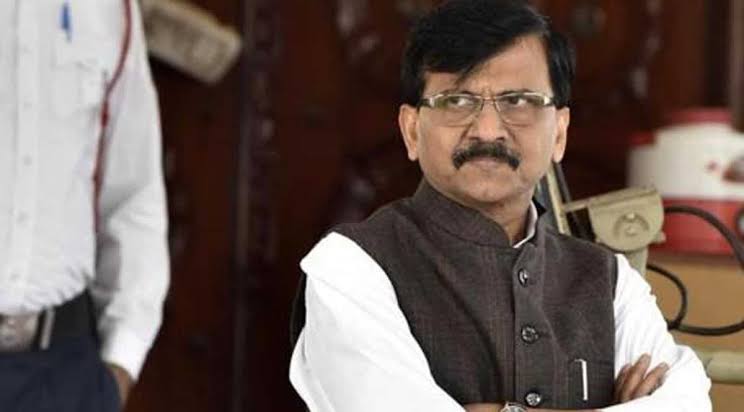
“Issues from Mumbai can be sent as parcel to Bihar” – Sanjay Raut

Sanjay Raut

A day after the Election Commission of India announced the schedule of Bihar elections to be held in three phases on October 28, November 3 and 7, Shiv Sena leader Sanjay Raut said if Bihar doesn’t have enough issues, Mumbai can parcel some. His jibe came in the backdrop of allegations that the death of Bollywood actor Sushant Singh Rajput, who hailed from Bihar, is being used as an election issue in Bihar.

“Elections in Bihar should be fought on the issues of development, law and order, and good governance, but if these issues have exhausted, then issues from Mumbai can be sent as parcel,” the Shiv Sena leader said.

The state police departments of Bihar and Maharashtra locked horns over the investigation into the death of Rajput who was found dead on June 14 at his Mumbai residence. Former Bihar DGP Gupteshwar Pandey accused Maharashtra Police of not co-operating with them. It is also being speculated that Pandey may join politics after he took a VRS.

The Shiv Sena may contest in the Bihar polls, Raut hinted. “Chief Minister Uddhav Thackeray will take a call on Shiv Sena contesting the Bihar elections in coming 2-3 days. The election in Bihar is held on caste and other things. Labour laws or farmers bills will not be an issue in Bihar elections,” Raut said on Friday.

The Shiv Sena leader has been made a party in the case pertaining to the demolition of Bollywood actor Kangana Ranaut’s office.
The MP has recently criticised the questioning of several Bollywood personalities by the Narcotics Control of Bureau in a drug case related to Sushant Singh Rajput’s death.

Beauty of Bhangarh Fort

Located at the border of the Sariska Tiger Reserve in the Alwar district of RajasthanBhangarh Fort is a 17th-century fort, famous all over India for being the ‘Most haunted site in India’. Because of the various ghostly encounters and incidents in the fort premises, communities have sprung up far distant from the fort, due to the fear of whatever lies inside. Even the Archaeological Survey of India or the ASI has blocked the locals and sightseers from entering the fort at nighttime. Several legends have attested to the paranormal happenings inside the fort.

The first myth claims that a king called Madho Singh built the Bhangarh fort after getting due approval from a hermit called Bala Nath who lived there; having accepted to a condition which stated that the umbra of the fort must never descend upon the house of the hermit. But as destiny would have it, one of the aspiring heirs of Madho Singh affixed to the walls vertically, thereby creating its looming obscuration to cover the dwelling of the hermit, cursed the fort after the huge construction and its shadow overpowered his home. The fort was doomed within no time. The alleged prophecy stood fulfilled, and the Bhangarh Fort became haunted.

Another myth tells of a black sorcerer or wicked saint who fell in love with a princess from the fort town and tried to use a love potion to win her heart. However, the princess detected suspicion and hindered the entire plot of the black magician by throwing the potion onto a boulder, which then rolled down toward the magician, physically crumpling him. Before taking his last breath, he cursed the fort, declaring it would end up in a quandary in which no one could endure—as it is today.

No one is permitted to enter the fort after sunset or before sunrise. The complete panorama is subsumed by a covering of gloom and a chilling emptiness once the last ray of daylight bids adieu until the next morning. There are several local stories about the paranormal activities in the fort. It depends on a person whether he should believe it or not. It is said that the apparitions wander in Bhangarh Fort at night and various unusual sounds are detected. Also, as it is said, anyone who enters the fort at nightfall would not be able to return in the morning. People perpetually sense as if their actions are being observed, and the air is filled with a dizzying burden. A board put up by the Archaeological Survey of India warns the visitors not to venture inside the premises of the fort during the dark hours.

On the bright side the fort is decently maintained, for the most section, Bhangarh’s remains today hold different noble constructions, including several temples, public chambers, and the royal palace. Upon entry, visitants will flounder into a variety of temples, including a Hanuman temple, a Ganesh temple, and a Someshwar temple. These constructions, embellished with elaborate carvings and statues, are reasons that Bhangarh is worth touring for not just the spooks.

Subhas Chandra Bose & INC

Subhas Chandra Bose was an Indian nationalist whose defiant patriotism made him a hero in India but whose attempt to abolish Britain ‘s rule with Nazi Germany and Imperial Japan during the Second World War left a disturbed legacy. The Honorary Netaji was first used in Germany at Bose in early 1942 by Indian Legion soldiers and by German and Indian officials at the Berlin Special Office for India.

In 1938 Bose said he believes that the INC “should have a double aim of winning political independence and creating a socialist regime on a large anti-imperialist front.” Bose became a national leader in 1938 and decided to consider the role of President of the Congress. He defended Swaraj without qualifications, including the use of force against the British. The outcome was a conflict with the President of Bose and Mohandas Gandhi who separated the NCP.

But Gandhi instructed Bose to make his own office. Bose tried to preserve unity. Bose and Nehru were separated by the rift. Bose appeared on a stretcher at the 1939 Congress. In the intra-congress struggle U MTHURAMALINGAM Thevar strongly supported BOSE was elected again as president over Pattabhi Sitaramayya as his preferred candidate. Thevar mobilised all the votes for Bose in South India. But Bose had to withdraw from the presidency of Congress because of the manoeuvres of the Gandhi-leading clique in the Congressional Working Committee.

In the Indian National Congress, on 22 June 1939, Bose formed a political party for the All India Forward Bloc to boost the political left, but its main strength was Bengal, its home state. The Forward Block was joined by U Muthuramalingam Thevar who from the beginning strongly supposedly supported Bose. Thevar organised a huge rally at his reception when Bose visited Madurai on 6 September.

When Subhas Chandra Bose was going to Madurai, he passed through the Madras and stayed for three days at the Gandhi peak at the invitation of Muthuramalinga Thevar to gain support to the Forward Bloc. He was quite impressed by his methodical and systematic approach and his steadfast disciplinary outlook on life despite his apparent dislike of British subjugation. In England, Lord Halifax, Lansbury, Clement Attlee, Arthurs Verde, Harold Laski, JB Haldane, Ivor Jennings, G D H Cole, Gilbert Murray and Sir Stafford Cripps, were shared with representatives from the British Labor Party and political thinkers.

He came to believe that, as Turkey’s Kemal Atatürk, for at least two decades, an independent Indian required socialist authoritarianism. Bose was denied a permission to visit Atatürk in Ankara for political reasons by the British authorities. Only the Labor Party and Liberal leaders agreed to meet him during Bose ‘s stay in England to arrange appointments with several politicians, though. Officials of the Conservative Party declined to meet him or show him kindness for being a politician from a colony. Even the dominion status of India was opposed by leading members of the conservative party in the 1930s. India became independent during Labor’s 1945–51 government, with Attlee as Prime Minister.

Bose called for a major civil disobedience movement to oppose Viceroy Lord Linlithgow’s decision on behalf of India without consulting the leadership of the congress. After Bose had failed to convince Gandhi that it would be necessary, in Calcutta Bose organised mass protests to remove the ‘Holwell Monument’ for the Calcutta Black Hole, which was then situated at the corner of Dalhousie Square. The British threw him into prison, but after a seven-day hunger strike he was released. The CID has been tracking Bose ‘s house in Calcutta.