Health Ministry organizes Seminar on World Patient Safety Day

On the occasion of second World ‘Patient safety Day’, a webinar was organized by the Ministry of Health and Family Welfare & National Health System Resource Centre, to give impetus to the endeavours directed towards improving the safety of patients as well as health care worker, since both are closely inter-linked.

The COVID-19 pandemic has unveiled huge challenges and risks, which front-line health workers face while caring for the patients. The theme for Patient safety this year is “Health Worker Safety: A Priority for Patient Safety” and the Slogan is “Safe health workers, Safe patients”

The Webinar was inaugurated by Sh. Rajesh Bhushan, Union Health Secretary MoHFW. In his address, the health secretary emphasised different steps, which the Government of India has taken for protection of hospital workers. Few of the such steps are ensuring availability of PPE and Masks, insurance coverage of Rs. 50.0 Lakhs, functional helpline, advisory on chemoprophylaxis, etc. The Health secretary also highlighted the importance of putting a transparent “Reporting and Learning System” in place.

Sh. Vikas Sheel, Joint Secretary (Policy) MoHFW provided an overview of different initiatives taken by the Ministry of Health & Family Welfare for promotion of the health quality and safety. Components of patient safety is deeply embedded in the National Quality Assurance Standards. Infection control is a major component, under the Kayakalp award scheme under the National Health Mission (NHM).

The webinar attracted a large audience with over 1200 participants including Mission Director (NHM) from the States, officials from the Ministry of Health and Family Welfare, Nodal Officers and other officials working in the field of Quality Assurance and patient safety at States and UTs. Representatives from academic institutions, development partners, NGOs, International Agencies, National Health Authority, NITI Aayog, also attended the webinar.

Eminent speakers included Dr. Akhil Sangal who spoke on “Trust in Healthcare”. Dr. R.D. Ravindran shared his experiences of “Reporting and learning from errors” at Arvind Eye care. Dr. Nikhil Prakash, International Quality and Safety Expert described the mechanisms and approaches of implementing patient safety initiatives at health facility. Dr. Sangeeta Sharma spoke on importance and approaches towards improving Medication Safety that is key to patient safety. Priorities in the paradigm of patient were elucidated by Dr. Subhrojyoti Bhowmick. Dr. Peter Lachman, CEO International Society for Quality in Healthcare (ISQua) correlated the patient safety measures with enhanced and desired outcomes. Ergonomics and human factors in patient safety during Covid were vividly explained by Dr. Tommaso Bellandi, International expert of Ergonomics and Health Safety.

“BRICS countries continue to cooperate in Telecom/ ICT activities on International Telecommunication Union (ITU) Forum”: Sanjay Dhotre

Shri Sanjay Dhotre, Minister of State for Communications, Electronics & Information Technology and Education, Government of India participated in the meeting on behalf of India during the sixth BRICS Communication Ministers Meeting held on 17th September 2020 in virtual format. The meeting was hosted by Mr. Maxim Parshin, Deputy Minister of Digital Development, Communications and Mass Media of Russia. Mr Fabio Salustino Mesquita De Faria, Minister of Communications, Federative Republic of Brazil, Mr Xiao Yaqing, Minister, Ministry of Industry and IT of People’s Republic of China and Ms. Stella Tembisa Ndabeni-Abrahams, Minister of Communications, Telecommunications and Postal Services of Republic of South Africa represented their countries.

In the meeting a broad consensus was built to continue cooperation among BRICS Countries on important areas such as, the role of Information and Communication Technologies in the fight against COVID-19, building trust and security in the use of ICTs, children online protection, granting the access and connectivity of people living in rural areas, as well as groups of persons with disabilities and the role of the digital economy in achieving Sustainable Development Goals.

Shri Sanjay Dhotre appreciated, the field force and the managers of telecom networks who worked as Covid-19 warriors. The Minister also highlighted various initiatives takem by Indian Government for Covid Management, such as, AarogyaSetu App, Covid Quarantine Alert System (CQAS), CovidSavdhan, ICT solutions to facilitate movement of migrant workers back to their homes, In-house development of affordable Video Conferencing Solutions to facilitate work from home and learn from home.

Shri Sanjay Dhotre also shared with the BRICS nations about the several steps taken by Government of India to boost the growth of telecom and ICT under “Digital India” – a flagship programme launched by Prime Minister Shri Narendra Modi, to transform India into a digitally inclusive and empowered society, where the benefits of digital connectivity are available to each and every citizen. He highlighted “Bharatnet” project to connect 250,000 Gram Panchayats involving local people through innovative PPP models, and other projects to connect Hilly regions of North East and remote islands of Andaman & Nicobar Islands. The Minister also touched upon initiatives of Indian Government on protection of personal data.

The BRICS Communications Ministers’ Meetings are held annually under the rotating Chairship of member countries, i.e. Brazil, Russia, India, China and South Africa. India will take over the Chairship of the next BRICS Communications Ministers’ Meeting to be hosted in 2021 by India.

Prime Minister to dedicate the historic Kosi Rail Mega Bridge to the Nation

The Prime Minister Shri NarendraModi shall dedicate to the nation the historic Kosi Rail Mega bridge to the Nation through video-conference at 12 Noon on the 18th of September 2020.

Shri Phagu Chauhan, Governor of Bihar, Shri Nitish Kumar, Chief Minister, Bihar, Central Ministers, Shri PiyushGoyal, Minister of Railways  and Commerce & Industry, Shri Ravi Shankar Prasad, Hon’ble Minister of Law and Justice, Communications, Electronics and information Technology, Shri Giriraj Singh, Hon’ble Minister of Animal Husbandry, Dairying and Fisheries, Shri NityanandRai, Hon’ble Minister of State for Home Affairsand   Shri SushilModi, Dy Chief Minister, Bihar are also slated to join this occasion.

Apart from Kosi Rail Mega Bridge, the Prime Minister shall also inaugurate other rail projects related to passenger facilities for the benefit of the Bihar State. These include a new railway bridge on the Kiul River, two new railway lines, 5 Electrification projects, one Electric Locomotive Shed at Barauni and 3rd Line Project between Barh-Bakhtiyarpur.

The dedication of the Kosi Rail Mahasetu is a watershed moment in the history of Bihar and the entire region connecting to the North East. In 1887, a meter gauge link was built in between Nirmali and Bhaptiahi (Saraigarh). During the heavy flood and severe Indo Nepal earthquake in 1934, the rail link was washed away and thereafter due to meandering nature of river Kosi no attempt was made to restore this Rail link for long period.

The Kosi Mega Bridge line project was sanctioned by Government of India during 2003-04. The Kosi Rail Mahasetu is 1.9 KM long and its construction cost is Rs. 516 Crore. This bridge is of strategic importance along the India-Nepal border. The project was completed during the COVID-Pandemic where the migrant labour also participated in its completion.

The dedication of this project will fulfil the 86 year old dream and the long wait of the people of the region.

Along with the dedication of the Mahasetu, the Prime Minister shall also be flagging off the Supaul- Raghopura DEMU train from the Supaul Station. Once the regular train service begins, this would prove to be highly beneficial to the Supaul, Arariya and Saharsa districts. It would also make it easy for long distance travel to Kolkata, Delhi and Mumbai for the people of the region.

The Prime Minister shall also be inaugurating two New Line projects at Hajipur-Ghoswar-Vaishali and Islampur-Nateshar. Shri Modi shall also be inaugurating the Karnauti-Bakhtiyarpur link bypass and 3rd line between Barh-Bakhiyarpur.

The Prime Minister shall also be inaugurating the Railway Electrification projects of Muzaffarpur – Sitamarhi, Katihar–New Jalpaiguri, Samastipur-Darbhanga-Jaynagar, Samastipur-Khagaria, Bhagalpur-Shivnarayanpur Sections.

Lok Sabha passes The Farmers’ Produce Trade and Commerce

Two bills aimed at transforming agriculture in the country and raising farmers’ income were passed by Lok Sabha today. The Farmers’ Produce Trade and Commerce (Promotion and Facilitation) Bill, 2020 and The Farmers (Empowerment and Protection) Agreement of Price Assurance and Farm Services Bill, 2020 were introduced in Lok Sabha on 14th September 2020 by Union Minister of Agriculture & Farmers’ Welfare, Rural Development & Panchayati Raj, Shri Narendra Singh Tomar, to replace ordinances promulgated on 5th June 2020.

Replying to the discussion on the Bills before they were passed by the Lok Sabha today, Shri Narendra Singh Tomar said that the Government under Prime Minister Shri Narendra Modi is fully committed to the welfare of Gaon-Garib-Kisan. He reassured emphatically that while farmers will now be freed from the restrictions of having to sell their produce at designated places only, the procurement at Minimum Support Price will continue and mandis established under State laws will also continue to operate. The Union Agriculture Minister said that these legislations will bring about revolutionary transformation and transparency in the agriculture sector, electronic trading will increase, there will be accelerated agricultural growth as private investment will be attracted in building supply chains and agricultural infrastructure, new employment opportunities will be created and rural economy will get a boost, which will in turn help to strengthen the national economy.

The Farmers’ Produce Trade and Commerce (Promotion and Facilitation) Bill, 2020 seeks to provide for the creation of an ecosystem where the farmers and traders enjoy the freedom of choice relating to sale and purchase of farmers’ produce which facilitates remunerative prices through competitive alternative trading channels to promote efficient, transparent and barrier-free inter-State and intra-State trade and commerce of farmers’ produce outside physical premises of markets or deemed markets notified under various State agricultural produce market legislations; to provide a facilitative framework for electronic trading and for matters connected therewith or incidental thereto.

Background

Farmers in India suffered from various restrictions in marketing their produce. There were restrictions for farmers in selling agri-produce outside the notified APMC market yards. The farmers were also restricted to sell the produce only to registered licensees of the State Governments. Further, barriers existed in free flow of agriculture produce between various States owing to the prevalence of various APMC legislations enacted by the State Governments.

Benefits

The new legislation will create an ecosystem where the farmers and traders will enjoy freedom of choice of sale and purchase of agri-produce. It will also promote barrier-free inter-state and intra-state trade and commerce outside the physical premises of markets notified under State Agricultural Produce Marketing legislations. This is a historic-step in unlocking the vastly regulated agriculture markets in the country.

It will open more choices for the farmer, reduce marketing costs for the farmers and help them in getting better prices. It will also help farmers of regions with surplus produce to get better prices and consumers of regions with shortages, lower prices. The Bill also proposes an electronic trading in transaction platform for ensuring a seamless trade electronically.

The farmers will not be charged any cess or levy for sale of their produce under this Act. Further there will be a separate dispute resolution mechanism for the farmers.

One India, One Agriculture Market

The Bill basically aims at creating additional trading opportunities outside the APMC market yards to help farmers get remunerative prices due to additional competition. This will supplement the existing MSP procurement system which is providing stable income to farmers.

It will certainly pave the way for creating One India, One Agriculture Market and will lay the foundation for ensuring golden harvests for our hard working farmers.

The Farmers (Empowerment and Protection) Agreement of Price Assurance and Farm Services Bill, 2020 seeks to provide for a national framework on farming agreements that protects and empowers farmers to engage with agri-business firms, processors, wholesalers, exporters or large retailers for farm services and sale of future farming produce at a mutually agreed remunerative price framework in a fair and transparent manner and for matters connected therewith or incidental thereto.

Background

Indian Agriculture is characterized by fragmentation due to small holding sizes and has certain weaknesses such as weather dependence, production uncertainties and market unpredictability. This makes agriculture risky and inefficient in respect of both input & output management.

Benefits

The new legislation will empower farmers for engaging with processors, wholesalers, aggregators, wholesalers, large retailers, exporters etc., on a level playing field without any fear of exploitation. It will transfer the risk of market unpredictability from the farmer to the sponsor and also enable the farmer to access modern technology and better inputs. It will reduce cost of marketing and improve income of farmers.

This legislation will act as a catalyst to attract private sector investment for building supply chains for supply of Indian farm produce to national and global markets, and in agricultural infrastructure. Farmers will get access to technology and advice for high value agriculture and get ready market for such produce.

Farmers will engage in direct marketing thereby eliminating intermediaries resulting in full realization of price. Farmers have been provided adequate protection. Sale, lease or mortgage of farmers’ land is totally prohibited and farmers’ land is also protected against any recovery. Effective dispute resolution mechanism has been provided for with clear time lines for redressal.

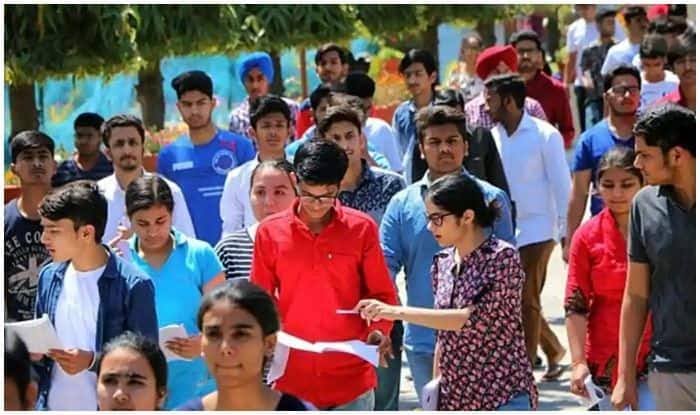
NEET JEE 2020: PLEA TO RE-EXAMS FOR STUDENTS WHO MISSED

Photo credit: INDIA.com

The plea has sought the apex court to direct the National Testing Agency (NTA) to issue a further date when the students, who missed the examinations, can appear.

Shashwat Anand, a lawyer, has asked the Supreme Court to take suo moto cognizance of the report of a student who could not give the examination as he was late by 10 minutes.

Santosh Kumar Yadav, a resident of Bihar’s Darbhanga, missed the NEET as he was 10 minutes late in reaching the examination centre in Kolkata’s Salt Lake area last Sunday.

It may be noted that for many students, 2020 was also the last year to attempt for the JEE Main or NEET 2020 examination. The plea seeks recourse for students who have been impacted. JEE Main 2020 was conducted from September 1 to September 6 and the result of the same has also been released. Meanwhile, NEET 2020 was conducted on September 13. Results are awaited for the undergraduate medical/ dental entrance examination

The plea urges the SC to direct NTA to conduct re-exams. It also seeks the various state governments to arrange for the transportation facilities for the students who would be appearing in these exams conducted by NTA this time. 

As per the plea, it has been asked, “ Issue a writ, order or direction, in the exercise of its inherent and plenary powers under Article 142 issuing/ laying down guidelines or directions for the students who miss out on exams like NEET, IIT, JEE etc owing to some of the other sufficient cause, to allow and facilitate the same to appear in such exams on further dates as may be notified by the respondents, inter alia, providing accommodations, food and water, transportation etc.”

Various states, ruled by the opposition parties, had earlier requested the central government to postpone the JEE Main and

NEET considering the grim Covid-19 situation in the country.

Several states of the country had also moved the top court seeking a reconsideration of its own order, which had allowed the holding of the twin examinations.

Citing the top court order, the central government had clearly stated it was in no mood to postpone the examinations. 

The pressure of being extraordinary and it’s affect.

3 idiot was not only an iconic movie on a very good content but it has many dialogue that hit or felt by everyone. And one of the most famous dialogue goes “Life is a race, agar tezz nhi bhago ge to koi kuchal ke aage chala jayega”. Let’s talk about that.

I want to be a very a good writer, singer, actor, or anything else. We use to say this when we were a kid, yeah! we were a kid. Because now it’s not like ” I want to be very good” it is like, I want to be the only good. And that perfectly explain,we are now grown up. There’s nothing bad in it, but, we lost that touch of goodness inside us.

No matter how good you do your work, there is someone who does better then you. Like there’s an axe for every tree. You can’t be the only one among the crowd. There will be someone better then you. And it is not like you Don’t know that, still you are not able to accept that. That’s the main problem. And you are a part of this society. What you think is what this society get build.

Becoming an extraordinary among ordinary. This is the final goal of every single one. But, you know what, you personally never dreamed of this. It is what society gives you. It is what only society praise. This is what happens when you live in a society which sucks.

Being an excellent version in your field is not wrong, but, asking every one to be that is. We all know that every human has a same ear, eyes , brain, and other body parts. Still, there are some who are born or living there live without them. Same way it is not right to ask two brain to perform in the same manner because they can’t.

Just like asking elephant to swim because a fish can. We live in a society which runs behind those things which is already done and try to improvise it every time. Like a sheep in a crowd and still hate to call themself a sheep.

If only a person get appreciated for there work without comparing from others. Then this society will improve. When there is a comparison in self rather then doing it with others. Then only this society is going to improvise. Actually this society want to be perfect society. And there can’t be any perfection if you can’t accept the flaws. Because flaws are part of you. They exist in you.

So, tell me what do you think about this in the comment section bellow.

See yaa..

Kangana Ranaut: The centre of Controversy as she quotes actress Urmila as ‘Soft porn Star’

Actress Urmila Matondkar finally responds to Kangana Ranaut’s comments against her. Kangana on Wednesday had quoted Urmila is a ‘soft porn actor’ who is ‘not known for her acting’. Urmila said that she is willing to change her name if anybody can prove that she spoke about Kangana’s intentions of wanting a BJP ticket in any interview.

The actors’ spat began when Urmila in an interview asked Kangana to introspect about the drug culture in her home state of Himachal Pradesh before levelling allegations against Maharashtra and Mumbai’s film industry. Kangana had previously said that 99% of the film industry has been exposed to drugs.

Urmila Matondkar has asked Kangana Ranaut to share the names of all the Bollywood stars with links to drug abuse. “It just goes to show where we stand, and that is precisely what I have been trying to say, that if you have a viewpoint, by all means you have a right to express it. But it just that the way you express it and how you express it does matter.” The Rangeela actor has also questioned the timing of her numerous interviews and why she has “problems with everybody in the industry.”

Previously, Urmila had also criticised Kangana’s comments on veteran actor and Samajwadi Party MP Jaya Bachchan. She had written in a tweet, “Which girl from a civilised cultured house would use this kind of language? Like ‘kya ukhaad loge’, ‘kiska baap ka kya hai’, speaking about Jaya ji the way she did.”

Kangana Ranaut and Kunal Kamra locked horns on Twitter on Wednesday after the comedian took a dig at her and compared her with Indian yogi Sadhguru. Earlier in the day, Kangana had called show business “absolutely intoxicating” and that the “make believe world of lights and camera is designed to make one live and believe in an alternate reality, a little bubble of their own, it takes a very strong spiritual core to recognise this delusion”.

Kunal retweeted it and wrote: “Wisdom via showman Jagga Jasoos AKA @SadhguruJV.” The actress then retweeted Kamra’s tweet and wrote: “These fools are desperate to credit my struggles, intellect, spiritual depth, guts, success and achievements to some powerful man, how it hurts their fragile egos and cotton balls to admit that I am my own person, leading my life on my own terms. DEAL WITH IT.”

Kangana had launched a personal attack on Urmila on Wednesday, in an interview to Times Now. She had called her a ‘soft porn actor’, a comment which was massively criticised by several prominent Bollywood personalities. Urmila said that she was ‘deeply touched’ by the kind of response that ‘the people of this country’ gave her. “They are aghast and completely in shock as to what has happened,” Urmila said about the response she received, adding that she is waiting for the National Commission for Women to take a stand.

Responding to the online criticism, Ranaut took to Twitter on Thursday and wrote: “Liberal brigade once virtually lynched a renowned writer in to silence for saying people like Sunny Leone should not be our role models, Sunny is accepted by the industry and entire India as an artist, suddenly fake feminists equating being a porn star to something derogatory.

Kangana is somehow centre of all the controversy and talks in whatsoever issues started with #justiceForSSR movement. However, she did behaved exactly same to Urmila what Sanjay Raut has done in the way. 

Padmavathy Bandopadhyay: The Embodiment of Passion, Success and ‘Firsts’

Celebrating achievements and positive changes is a necessity. And celebrating individuals who make these possible, is even more important. Because we never know, whose story will inspire whom, and will lead onto a new story. India, with its developing and evolving social structure, has many such stories. Especially of women, who tread their way into different spheres that were once thought to be off limits for them. One such story is of Padmavathy Bandopadhyay, first female Air Marshal of Indian Air Force (IAF), and second female officer of Indian Armed Force to have been promoted to the three star rank.

Starting of the journey

Born on 4th November 1944, her birth name was Padmavathy Swaminathan. She was born to Mr. V. Swaminathan and Mrs. Alamelu, at Tirupati, Andhra Pradesh. With her mother being in hospital most of the time, these experiences drove Padma to take up medicine, so that she could help those who needed medical expertise.

She did her pre-medical studies from Kirori Mal College, Delhi and stood first in the course. Then she went ahead and cleared the entrance test for the first batch of then established Armed Forces Medical College, Pune. But, due to her family’s reluctance to send her away for such a long period to study medicine, she, unfortunately, could not join the first batch. But she didn’t bow down to this challenge and after convincing her parents, she finally joined the second batch of AFMC in 1963.  With an extraordinary overall record, she graduated in 1968, having opted for Indian Air Force and doing her internship in Air Force Hospital, Bangalore.

Flying to the success

She was inducted into IAF in1968. Sadly, some complications regarding her eyesight cut her dream short to become a pilot. But she took that in stride and went ahead to pursue specialization in aviation medicine. With the completion of her specialization in 1975, she became the first female officer to become an aviation medicine specialist.

She married Flt Lt. S. N. Bandopadhyay, whom she met at Air Force Hospital. They became the first husband-wife team to be awarded the  Vishisht Seva Medal (VSM) by the President in the same defence ceremony, due to their contribution to the 1971 Indo-Pakistani War. They were posted together in the Halwara air base,  Punjab.

During her posting in Defence Institute of Physiology & Allied Science (DIPAS) as a Wing Commander , she did commendable research work about high altitude. With her expertise, she contributed in the development of a new acclimatization schedule for Indian Soldiers at high altitudes and also directed the preventive measures to complications like High Altitude Pulmonary Oedema and High Altitude Cerebral Oedema.

She also happens to be the first woman Armed Force Officer to complete the Defence Service Staff College course, with her completing it in 1978. With her promotion to Group Captain rank, she was handed over the responsibility for the post of Deputy Principal Medical Officer of Westren Air Command, IAF. She went down into history when she became the first Lady Air Commodore of IAF, on 26th June, 2000. Along with this rank, she got the honour to command the prestigious IAF Medical Unit – Air Force Central Medical Establishment. For her impeccable performance in all the posts held by her and utmost dedication towards her duty, she was awarded with the prestigious Ati Vishisht Seva Medal (AVSM) on 26th January, 2002.

She was then promoted to the rank of Air Vice Marshal, and with that became the first lady to hold this post, not only in IAF, but across all the Air Forces in the world. Following this achievement, she took over the post of Additional Director General Armed Forces Medical Services. She handled this post with great success, which led to her promotion to the highest rank in the medical branch, Air Marshal, which happens to be a three star rank and the second highest active post in IAF. This momentous occurrence took place on 1st October, 2004. With that, she became the first Lady Air MArshal in the whole world, and also attained the honour of being the first Lady Director General Medical Services of the forces.

Apart from achievements in the Armed forces, she also holds the illustrious achievements of being the member of Indian Society of Aerospace Medicines (again being the first woman to do so!), International Medical Society and New York Academy of Sciences. She also took part in a research expenditure in the North Pole, and dedicated four months (November 1989 and February 1990) to this, being the first Indian woman to do so. She was also awarded the Indira Priyadarshini Award for all her glorious accomplishments, and was the first lady in uniform to get this honour. She also happens to be the first lady who is the Honorary Surgeon of the President of India.

She served the Indian Air Force until 2005 and was awarded the Param Vishist Seva Medal in January 2006. In 2020, she was awarded the Padma Shree for her contribution to the medical field.

With an exhaustive list of ‘firsts’ and achievements, Air Marshal Padma Bandopadhyay is truly an ultimate inspiration, who has excelled in everything she has ever set her mind to, against all the odds. Her memoir is titled as The Lady in Blue.

Website References:

http://www.anusandhan.net/women/suc_padma.htm

https://en.wikipedia.org/wiki/Padma_Bandopadhyay#cite_note-7

Know who is Meena Gurung, who started ‘Street Library’ for youth.

Meena Gurung of Nirjuli, a small town in Arunachal Pradesh has started a ‘street library’ for readers. Not only this, she has also arranged for the readers to sit and read there. Meena Gurung is professionally a teacher in a government school. She says that “this street library has been started for only 10 days and is getting very positive response from the readers”. Apart from this, Meena has also expressed happiness that books have not been stolen from here for ten days without any locks. They also do not worry that books can be stolen from this library. She said that “Even if these books get stolen, I will be happy because whoever steals he or she will only use it for reading”.

Where did the inspiration came from?
Meena got inspiration from her street library from Mizoram’s ‘Mini Way Side Library’. A friend of her, Dewang Hosai graduated from English Hons, got the idea to start a street library with this friend.
Women and teenagers are the most people reading books from this library of Meena. Gurung has realized that teenagers like to sit in an open space and read books, so they will now lend these books to take home. She wants to cultivate a passion for studies in teenagers through her efforts. Meena dreams that a similar library should be opened in every small and big city of Arunachal Pradesh. In view of their efforts, many people have given books kept in their house to keep here so that more and more people can read them.
Financial assistance was also received.

Some people of the village also helped Meena financially so that she could buy good books to keep in this library. Meena says, “I hope that in view of my efforts, people from other states will also start a similar street library”.
Meena said that she is keen to work for the welfare of women and widows. Apart from this, she also wants to raise her voice against child marriage.

Bal Gangadhar Tilak

Bal Gangadhar Tilak was a nationalist Indian, an instructor, an activist for freedom, born as Keshav Gangadhar Tilak. He was a third of the triumvirate of Lal Bal Pal. Tilak was the Indian Movement’s first chief. He was also appointed the father of Indian unrest by the British colonial authorities and granted the title of Lokmanya, which means that it is ‘accepted by the people.’ “The New India Builder” Mahatma Gandhi called him.

Tilak was one of Swaraj’s first and greatest backers and a true Indian radical. He is famous in Marathi for his quotes: Swaraj, “I will have my birthright!” He has formed a close partnership with a number of Indian National Congressmen, Bipin, Chandra Pal, Lala Lajpat, Rai, V. O. Chidambaram, Aurobindo Ghose and Muhammad Ali Jinnah.

Keshav Gangadhar Tilak was born in Ratnagiri, the headquarters of Ratnagiri district in present-day Maharashtra, on 23 July 1856 to the Indian Marathi Hindu Chitpavan Brahmin family. Chikhali was his ancient village. His dad, Gangadhar Tilak, was a Sanskrit teacher who died at the time of Tilak’s seventeen years of age. At sixteen years old, a few months before his father’s death, Tilak was married in 1871 to Tapibai. He graduated from Deccan College of Pune in 1877 with a first-class Bachelor of Arts in Mathematics. Leaving his M.A. Instead, he graduated halfway through the study of LL.B in 1879 and from Government Law College in his LL.B. Tilak began to teach math at a private Pune school after graduation. Later he withdrew and became a journalist due to theological disagreements with the new school colleagues. Tilak was interested in public relations actively. The true spirit is that the nation is made your family, not just you. It’s to serve mankind and the next step is to service God. “He says:” Religion and practical life are no different.

In 1890, Tilak joined the Congress of the Indians. He was against his moderate position and in particular the fight for autonomy. At the time, he was one of the most outstanding leftists. Indeed, in the Indian National Congress the Swadeshi movement of 1905-1907 divided into the Moderates and Radicals.

At the end of 1896 there was a bubonic plague from Bombay to Pune, hitting epidemic levels by January 1897. British troops were brought to deal with emergencies and drastic action was taken, including forcing entry into private homes, inspection of the residents, removal of personal belongings, removal and damage of hospitals and segregated camps and the avoidance of the entry or departure of patients from the area. The outbreak was managed by the end of May. Their acts of tyranny and corruption were widely perceived. Tilak took up this question by publishing in his Kesari article inflammatory, invoking the Hindu scripture, the Bhagavad Gita, to suggest that someone couldn’t be convicted, without a thought for reward, of having killed an oppressor. On 22 June 1897, the brothers Chapekar and its other members were shot and killed by Commissioner Rand and another British officer, Lt. Ayerst. Subsequently. Tilak “almost definitely hid the identity of the perpetrators” according to Barbara and Thomas R. Metcalf. Tilak was convicted of murder incitement and sentenced to eighteen months in prison.

Tilak sponsored the Swadeshi and the boycott movement in the aftermath of the Bengal Group, a tactic that Lord Curzon described to undermine the nationalist movement. The move was to boycott foreign goods and to boycott socially all Indians who were using foreign commodities. The Swadeshi movement included the use of native products. After foreign products had been boycotted, the output of such goods in India itself had to fill the void. Tilak said both sides of the same coin are Swadeshi and boycott.

In 1916-18, Tilak and G. S. Khaparde along with Annie Besant helped create the All India Home Rule League. He gave up and concentrated on the Home Rule League, which pursued self-governance, after years of attempting to reunite moderate and radicals. In order to aid the farmers and the locals, Tilak travelled from village to village to join the self-rule movement. The Russian Revolution impressed Tilak and shared his appreciation for Vladimir Lenin. In April 1916 the League had 1,400 members and by 1917 it had risen to around 32,000. In Maharashtra, the provinces of Central and Karnataka, and Berar, Tilak began his Home Rule League.

Chocolate and its Evolution

Chocolate is a sweet brown food preparation of roasted and ground cacao
seeds that is made in the form of liquid, paste or in a block or used as a flavoring ingredient in other foods .The word ‘Chocolate’ is the Aztec word, ‘Xocolatl’, which means ‘Bitter Water’.Theobroma cacao is the scientific name of the tropical tree that bears the fruit whose name means the ‘food of he gods’.

The Brief history behind chocoloate

Before the 16th century chocolate existed in mesoamerica. The first
people to use chocolate were probably known as Olmec of what is today southeast Mexico. They lived in the area around 1000 BC where the cacao trees grew
wild. It is not yet known if the Olmecs actually used chocolate.However the Maya who inhabited the same general area a thousand years later did use chocolate. The Mayans used the cacao beans as currency. Even after
counterfeits were made by carving clay, the beans were still used as currency in parts of Latin America until the 19th century. The Mayans also used chocolate in religious rituals. They were also
used in marriage ceremonies and baptism. They even had a cacao god. But the Mayans prepared chocolate strictly for drinking. Only the rich
could afford this luxury. Emperors were often buried with jars of chocolate at their side.After the Aztecs overthrew the Mayas they kept the chocolate tradition
alive. The Aztecs dominated the region and continued using cacao as currency. Soon after the Spanish conquest of the Aztecs, chocolate was imported to Europe.

How did chocolate become so popular?

The Spanish initially did not like the bitter taste of chocolate but imported it back
to Europe. It was therefore initially used as medicine to cure abdominal pain . By the 1590s chocolate was mixed with honey, vanilla, and sugar, giving it a much
sweeter taste. Initially chocolate was considered sinful by some members of the church as some
drank it to divert themselves from a long service. This changed as the elite and
noblemen supported its consumption. However chocolate always remained a drink.
After the introduction of industrialization, entrepreneurs began experimenting
with different machinery to facilitate the process of separating cacao butter from
cacao seeds. Soon cacao powder was produced and chocolate now became more mass
produced. However it was still a product for the upper class.

Who first invented chocolate

The creation of the first modern chocolate was by Joseph Fry who
discovered in 1847 that he could make a mold able chocolate paste by
adding melted cacao butter into Dutch cacao.It was by 1868 a little company called Cadbury was marketing boxes
of chocolate candies in England. Milk chocolate hit the market a few
years later pioneered by another name – Nestle. By the 19th century chocolate became a mass produced.

Types of chocolates

Chocolate Liquor : Its referred to as unsweetened chocolate and is the
base of all types of chocolate. This thick dark brown paste is created from
cacao nibs, the inside of the cacao beans. Despite the name it doesn’t
contain alcohol.
● White chocolate : It is made by combining sugar, cacao butter, milk,
vanilla, and an emulsifier (lecithin).
● Milk chocolate : It is made by combining chocolate liquor, sugar and milk.
Sometimes emulsifiers are added for smoothness.
● Dark chocolate : It is referred to as black or semisweet and made of
chocolate liquor and sugar.
● Bittersweet chocolate : It is often referred to as extra dark chocolate.
● Ruby chocolate : This chocolate has a hot-pink hue as it derives colour
from a specific type of cacao. It gives a taste of fruitiness and sour taste.

How to prepare for college?

Change is the only constant in life. When we leave our teenage years behind, we go through some drastic life changes. For attending college, we may leave our homes, part with our friends, graduate from the school we grew up in and settle in a new, unfamiliar place. Adapting to these big changes is not easy, initially, we feel home-sick, may get into bad habits, have trouble making new friends, or even studying. Here are some things you can do to make your college life easier:

• Learning basic skills

At homes, we are used to being pampered and don’t have to do much around the house. From cooking to laundry, most of us teenagers rely on our parents, guardians or housemaids. This proves a tough challenge in college life. We have some time on our hands due to the global pandemic and we should utilise it to learn basic life skills. Learning how to cook and clean will help us greatly not only during our college years but after that as well. 

• Handling finance

Money, the most wanted paper in the world, but it’s never a part of our school’s curriculum. Until the age of 18, I never managed any sort of finance, be it my uber rides or school canteen bills. Immediately after, we are expected to operate ATMs, save money, have our own bank account and handle it while managing our studied and maintaining our social life. As learning about finance is one of the most important life skills, we should not wait till college. Familiarising with fiscal concepts such as expenditures and savings, utilising student benefits, et cetera is of extreme importance. 

• Being analytical 

In school, the approach for teaching students is different from college. College is more about learning through analysis, there is no one book we have to read or a well-defined course we have to follow. While referring to multiple sources, we have to practice an analytical approach when we answer. In college assignments, we may be asked to give our opinion on a topic or observe and write about a relevant movie or book. For this, we need to broaden our minds and get ready to learn. 

• Learning to deal with hassles

Hassles are minor incidents that occur without any warning and cause stress. Traffic while going to work or a power cut in the middle of a hot summer day are some hassles we may have to deal with. Thinking of proper solutions to handle these daily stress-causing issues is also a skill which we acquire only after facing them or learning through someone else’s experience. In our college life, we do not have a cushion to fall back on, therefore, the responsibility of handling every problem we face falls solely on us. Adding to our already difficult and new college life, daily hassles need to be conquered by preparing for them beforehand to have a less stressful day. 

Transitioning from school to college can be really tough. Make sure to do everything you can to prepare yourself for an amazing college life. After this pandemic ends, live your life to the fullest!

HUMANS OVER GENDER.

Today, homosexuality and queer identities may happen to be acceptable to wider Indian youths than ever before, but in the confines of family, home, and school, recognition of their sexuality and liberty to openly display their gender preferences prevail to be a constant conflict for LGBT (lesbian, gay, bisexual, transgender) people. On September 6, 2018, India’s Supreme Court ruled that consensual homosexual acts would no longer constitute a crime. The historic move changed Section 377 of the Indian Penal Code which was a legacy from British colonial control. The difference was welcome by Indian and global LGBTQ+ populations being progressed towards consent and equal rights, but nearly two years following the passing of this order, what is the status of LGBTQ+ titles in India?

Several people encounter harassment and bullying, and to avoid shame and brutality they oftentimes skip classes or drop out of school entirely. Most teachers are not qualified or allowed to acknowledge to anti-LGBT bullying, so in several circumstances, they don’t. In some situations, they also join in harassment. The ‘LGBT’ stands for lesbian, gay, bisexual, and transgender. A lesbian is a woman interested in another woman. Gay is applied to indicating men who are interested in other men. Bisexual means that a person is interested in more than one gender. A transgender person is someone whose gender status differs from that one person was indicated at birth. Being different arises with its difficulties and the LGBTQ community perceives this extremely well. As people do not realize their way of life, it becomes quite tough for them to presume their lifestyles.

Modern research noticed that one of the main factors that occur in the branding of LGBT people is a familial attitude towards homosexuality. This research continues to reason that most LGBT people are allowed in the family simply if they accept to act like heterosexuals. In a culture-bound on a rigorous set of civil and social norms that decree the terms and conditions of education, profession, and wedlock, the loss of parents’ support can prove to be a huge setback to the mental and physical well-being of LGBT people. Separation and stress to conform usually drive to despair, thoughts of suicide, and psychosomatic diseases. Several of them prefer to migrate to a different city to stay aside from the extensive demand to marry and start a family.

Families that accept their identities set multiple limitations in the method they prefer to try different outfits and communicate with their partners. In the loss of parents’ support, online crowds and social media have allowed easy options to build an alliance outside of the family. It’s time for people in India to argue on the matter of homosexuality. Civic knowledge and sex education for all should hold the bottom line to resolve the sexuality regulation and to build empathy and respect for India’s homosexuals. If India wants to be acknowledged globally as an democratic country, then it should finally improve or the prejudicial law so that the neglected homosexual community can be liberated at least.

Happy Birthday PM Modi😊

Narendra Modi Birthday LIVE: Vedpathis are conducting special hawan in  Varanasi today

Prime Minister Narendra Modi was wished by President Ram Nath Kovind, Union Ministers and leaders from across the spectrum on his birthday. PM MODI Turned 70 today. The BJP has organised a “Seva Saptah” from September 14 to 20 coinciding with the Prime Minister’s birthday. The party is undertaking social initiatives across the nation during this week-long event.

Congress leader Rahul Gandhi and Delhi Chief Minister Arvind Kejriwal have also wished Prime Minister Narendra Modi on his birthday. “Wishing Prime Minister Narendra Modi ji a happy birthday,” the Congress leader tweeted.

Mr Kejriwal prayed for his long and healthy life. “Narendra Modi wishing you a very happy birthday sir. I pray for your long and healthy life,” he said.

Here are the Highlights on PM Modi’s birthday:

# Actor Aamir Khan wishes PM Modi on his birthday.

“Hon PM @narendramodi ji namaskar Wishing you many happy returns of the day. May good health and happiness always be with you. With Respect & Regards Aamir,” tweeted Mr Khan.

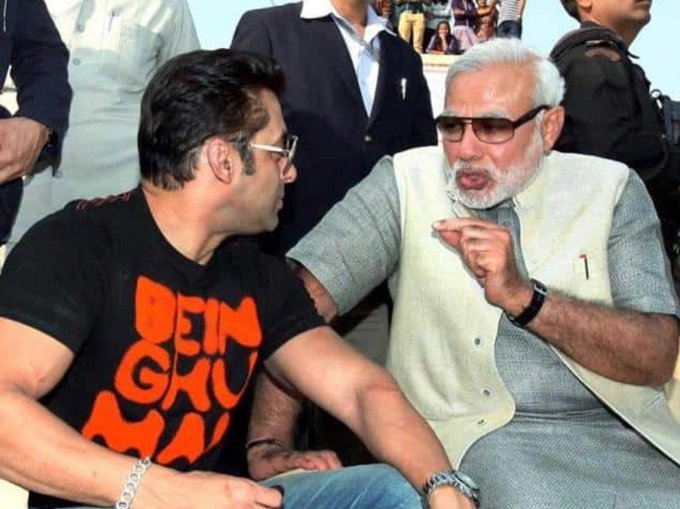
# Salman Khan marked the day by posting a picture of himself with the Prime Minister and wished him on the occasion.

“Wishing the honourable prime minister Mr Narendra Modi, a very happy birthday n many more to come @narendramodi,” the superstar wrote along with the picture

Image

Bollywood actor Jackie Shroff wished PM Modi on his birthday by posting a picture with him.

Sharad Pawar, Ajit Pawar extend birthday greetings to PM Modi
NCP leaders, including party president Sharad Pawar and Deputy Chief Minister Ajit Pawar, on Thursday extended birthday greetings to Prime Minister Narendra Modi.

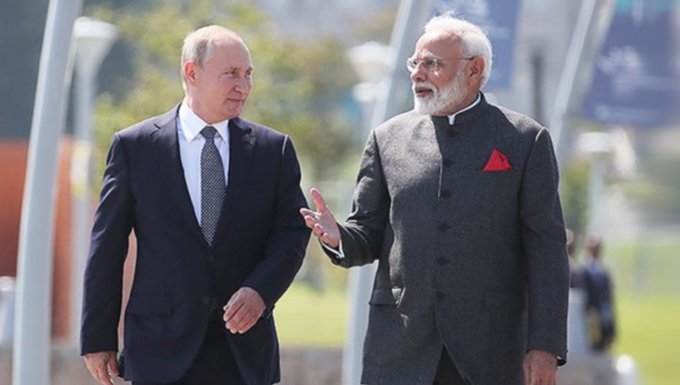
“Wish you good health”: Russian President on PM Modi’s birthday
Russian President Vladimir Putin has wished good health for PM Modi on his birthday

Image

10 Must Eat Foods For A Healthy Diet

Many people believe that the crux of a healthy diet is the exclusion of unhealthy foods. However, a good diet should also incorporate an increased intake of nutritious, health-boosting foods. Here are 10 of the best foods for healthy eaters to stock up on.

1 Nuts

Nuts are also a great source of protein and are packed with fibre antioxidants, fatty acids and vitamins and minerals. Nuts are also packed with calories – so enjoy in moderation. However, you should be aware that those calories come mainly from high levels of monounsaturated fats – which are extremely good for you. Eating foods rich in these fats can help lower bad cholesterol and cut your risk of heart disease and a stroke. We’re not just talking peanuts here – look for Brazil nuts, cashews, walnuts, pecans and pistachios.

2 Oily Fish

Oily fish – such as salmon, mackerel, sardines and trout – are renowned for their health benefits. Again this is when eaten in moderation. The ideal amount is between two and four portions a week. Not only are they a great source of vitamins and minerals – including immune-boosting vitamins A and D – but they are rich in omega-3 fatty acids. These super healthy unsaturated fatty acids have many health benefits, and have been linked to a lowered risk of heart disease, brain damage, stroke, dementia and prostate cancer. Research also suggests omega-3 fatty acids can benefit eye health by halting the progress of age-related macular degeneration.

3 Beetroot

Beetroot is one of the most recent vegetables to be hailed as a ‘superfood’. Studies have suggested that drinking beetroot juice can improve stamina when exercising, lower cholesterol and blood pressure, boost heart health and liver function, reduce the risk of dementia and fight against cancer. This versatile vegetable is also a good source of many vitamins and minerals, including vitamin C, which is important for tissue growth and repair. It also provides folate, which is great for pregnant women as it helps to reduce the risk of birth defects in unborn babies, as well as helping to prevent anaemia.

4 Onions

Well, we’re not just talking onions here – the wider food family includes garlic, leeks and chives. All can do wonders for our health. Studies have suggested that both onions and garlic can help reduce cholesterol, while findings published in the Journal of Nutrition showed that onions could help lower blood pressure. Onions and garlic also have antiviral and antibacterial properties, so can help to fight against bacteria and illness in the body. Another study by researchers at the Kings College London and the University of East Anglia found that eating foods from the onion family could help prevent hip osteoarthritis.

5 Dark Leafy Greens

We’ve all been told to ‘eat our greens’ as children. And it seems our parents were right. Dark, leafy greens such as spinach, watercress and kale are bursting with nutrients including iron, calcium, potassium and vitamin C, and packed with health-boosting phytonutrients. Some of the reputed health benefits of eating your greens include a lower blood pressure, improved eye health and a reduced risk of cognitive decline.

6 Quinoa

Quinoa is a recent discovery for many, but has become widely available and is must on any healthy eater’s shopping list. Mostly treated as a grain (although it is actually a seed) it can be used in the place of pasta, wheat or oats for an extremely nutritious meal. Quinoa, like most grains, is high in fibre, making it great for the digestive system. However, perhaps its best attribute is that it is one of the few plant sources of high quality protein containing all eight essential amino acids. On top of this, it is a great source of nutrients including magnesium, manganese, iron, calcium, potassium and several B vitamins.

7 Berries

Acai berry, blueberry, goji berry, blackberry… there almost seems to be too many berries to choose from. Luckily, you generally can’t go wrong with any commercially available berry. These super healthy fruits are extremely high in antioxidants. Many different berries have individual health benefits, including the ability to help prevent dementia (blackcurrants and boysenberries), fight off colon cancer (blueberries), improve vision (bilberries) and ward off urinary tract infections (cranberries).  

8 Oats

Oats are a key part of a healthy diet as they provide slow release energy, meaning that they will keep you feeling fuller for longer. Grains are notoriously good for your health and the closer they are to their natural state when eaten the better their benefits. This means that whole oats are a particularly good choice. Oats contain many minerals, including zinc, iron and calcium and are a good source of B vitamins, which are great for the nervous system. They also have many other health benefits. These include helping to reduce the risk of heart disease and diabetes, lower cholesterol, reduce blood pressure and benefit the digestive system.  

9 Beans

Many people’s diets rely on the humble bean, either in its dry, canned or baked form – and the great news is that beans are good for our health too. Studies have found that beans are a great source of antioxidants, protein and nutrients (such as iron, manganese and B vitamins). Beans are also high in soluble fibre, which can help to reduce cholesterol, stabilize blood sugar and improve the digestive system.  

10 Tomatoes

Basic salad ingredients, such as the tomato, are often overlooked for their health-giving properties. But scientists have recently revealed that eating a diet rich in tomatoes may help to reduce the risk of conditions such as prostate and lung cancer. Some other benefits attributed to eating the tomato include a strengthened immune system, better heart health and the prevention of blood clots.