AYURVEDA :THE ANCIENT INDIAN ART

In olden days man lived very close to nature and whenever he got in disposed he cured himself by the resources and materials provided by nature, which is nothing but the herbs. The vast field of Ayurvedic science is gaining more importance and popularity across the globe because of its amazing therapeutic values. Ayurveda is a 5,000-year-old system of medicine with historical roots of natural healing in the Indian subcontinent. Ayurveda is a science of life (Ayur = life, Veda = science or knowledge). Globalized and modernized practices derived from Ayurveda traditions are a type of alternative medicine. Approximately 90% of ayurvedic preparations are plant-based.

Ayurvedic medicines prepared from the herbs are said to have no side effects. Herbs play a major role in Ayurvedic system. Herbs possess infinite potencies or Saktis and work wonders. A small herb dissolves stones in the bladder, kidneys and gall-bladder in a minute or the twinkling of an eye.

 Ayurveda is a perfect science of life and consists of a body of most remarkable knowledge on the internal mechanism of human health and longevity, on medicinal herbs and therapeutic roots, on the efficacious treatment of human ills by eradicating from the human system the very sources of their causation. The Ayurvedic science which works based on the herbs promises wonders to mankind when taken in a wise and prudent manner.

An Ayurvedic herb is a plant source which is used in the preparation of ayurvedic medicines. The plant on the whole with its leaves, flowers, fruits, seeds, roots, roots bark, and resin has medicinal values apart from its flavour and fragrance. It acts as a perfect mechanism in bringing a balanced harmony between the mind and spirit. When compared to other synthetic drugs ayurvedic herbal medicines do not cause any side effects. It works effectively fighting against various infections and diseases and thereby gaining quick recovery.

Right from very olden days it is believed that Ayurvedic herbs are supposed to give a solution for all kinds of diseases which was even considered impossible by other field of medical science. The sages in olden days were mainly involved in experimenting the different kinds of herbs and then the preparation of ayurvedic medicine from them. Study of each herb indepth, along with its effects of the doshas is to be considered for designing the Ayurvedic herb formulas. Each herb with its own characteristic features is thus used for specific diseases and its treatment.

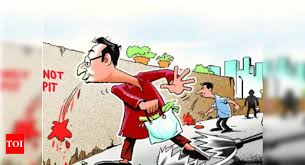
Spitting in India: A public nuisance

Smoking/spitting tobacco is also a major public health hazard which contributes to the spreading of communicable diseases like Tuberculosis, Swine Flu, Avian Flu and Pireumonia disease. There are new laws that can come into force as a bane to many Pan Masala lovers. The national directive on lockdown conditions issued by the Home Ministry on Wednesday, April 15 states that the violators will be punished. It states that “Spitting in public spaces shall be punishable with a fine. There should be a strict ban on the sale of liquor, gutka, tobacco etc.”

RELEVANT PROVISIONS APPLICABLE

Following are the sections under the Indian Penal Code, 1860:-

  1. Section 268 : Public nuisance:- a person is guilty of a public nuisance who does any act or is guilty of an illegal omission which causes any common injury, danger or annoyance to the public or to the people in general who dwell or occupy property in the vicinity, or which must necessarily cause injury, obstruction, danger, or annoyance to persons who may have occasion to use any public right.
  2. Section 269:- Negligent act likely to spread infection of disease danger­ous to life:—Whoever unlawfully or negligently does any act which is, and which he knows or has reason to believe to be, likely to spread the infection of any disease dangerous to life, shall be punished with imprisonment of either description for a term which may extend to six months, or with fine, or with both.
  3. Section 278 :- Making atmosphere noxious to health:—Whoever voluntarily vitiates the atmosphere in any place so as to make it noxious to the health of persons in general dwelling or carrying on business in the neighbourhood or passing along a public way, shall be punished with fine which may extend to five hundred rupees.

WHAT’S IN IT?

With a daily rise of novel coronavirus, the patients around the country and the State Governments are ensuring strict laws. On that note, Himachal Pradesh police have issued a law for people who spit in public will now be charged with attempt to murder. The Union Ministry has made public spitting an offence under the Disaster Management Act.

Medical professionals state that droplets expelled in the air by infected patients via coughing or sneezing are the common means of transmission of the virus. As such, spitting is more dangerous as it can carry the pathogen to a longer distance than even coughing or sneezing could. The reason for this measure that not only Himachal Pradesh but various states around the country are banning spitting because of its scientific reasons.

CONCLUSION:

The Brihanmumbai Municipal Corporation imposed ₹1000 fine on anyone caught spitting in public. So everyone, do be careful and refrain from spitting in public.  Other states including Bihar, Telangana, Haryana, and Assam, have banned smokeless tobacco products and public spitting. In states like Uttar Pradesh, pan masala products are banned to discourage spitting.

REFERENCES:

  1. https://indiankanoon.org/
  2. https://www.ijlmh.com/
  3. http://pbhealth.gov.in/

Environmental Law Principles adopted by India


The Indian courts have successfully adopted specific environmental law principles from international environmental law jurisprudence and have combined a liberal view towards ensuring social justice and the protection of human rights. These principles have been incorporated in the Indian environmental jurisprudence and play a key role in decisions of judges even when not explicitly mentioned in the concerned statute. The principles of Indian environmental law are resident in the judicial interpretation of laws and the Constitution, and encompass several internationally recognized principles, thereby providing some semblance of consistency between domestic and global environmental standards.


1. Precautionary Principle:


A new principle for guiding human activities, to prevent harm to the environment and to human health, has been emerging during the past 10 years. It is called the “principle of  precautionary action” or the “precautionary principle” in short. This principle is controversial and its definition varies in terms of viewpoint. Environmentalists and consumer advocacy organizations that demand bans and restrictions on industrial practices or products would want policy-makers to take no action unless they would do no harm. States and advocates of economic development argue that the lack of full certainty is not a justification for preventing an action that might be harmful.


In India, for the first time in Vellore Citizens Welfare Forum v. Union of India , the Supreme Court explicitly recognized the precautionary principle. as a principle of Indian environmental law. In S. Jagannath v Union of India (Shrimp Culture Case), the Supreme Court Bench headed by Justice Kuldip Singh required the authority to deal with the situation created by the shrimp industry and issued remedial directions consistent with the precautionary and polluter pays principles. In A.P. Pollution Control Board v Prof M.V. Nayudu, the Court drew out the development of the precautionary principle in clear terms.


In the Narmada Bachao Andolan v Union of India, the Court explained that:

When there is a state of uncertainty due to the lack of data or material about the extent of damage or pollution likely to be caused, then, in order to maintain the ecology balance, the burden of proof that the said balance will be maintained must necessarily be on the industry or the unit which is likely to cause pollution.. Refusing to apply the “precautionary principle” used in cases dealing with inherently polluting activities such as heavy industries, the Court accepted the contention of the respondents that the project would have a positive impact by arresting the ecological degradation presently taking place in the drought-prone areas of Gujarat and Rajasthan, leading to sustainable agriculture and spread of green cover. The generation of hydropower would avoid the air pollution that would otherwise take place by thermal generation.


The movement towards adopting the precautionary principle has definitely widened the scope of corporate accountability, but the interpretation taken by the court mitigates the relevance and incorporation of this principle in Indian Jurisprudence.


2. The .Polluter Pays. Principle:


The Supreme Court with the introduction of the principle of absolute liability in M.C Mehta v Union of India calculates environmental damages not on the basis of a claim put forward by either party, but through an examination of the situation by the Court, keeping in mind factors such as the deterrent nature of the award. . This rule has been endorsed in Indian Council for Enviro-Legal action v Union of India and Vellore Citizens welfare Forum v Union of India. However, the Supreme Court held recently that the power under Article 32 to award damages, or even exemplary damages to compensate environmental harm, would not extend to the levy of a pollution fine.


3. Sustainable Development and Inter-generational Equity:


In Narmada Bachao Andolan v. Union of India43 it was observed that: Sustainable

development means what type or extent of development can take place, which can be sustained by nature/ecology with or without mitigation.. Earlier in the Vellore Citizens Welfare forum v Union of India , the traditional concept that development and ecology were opposed to each other was rejected and sustainable development was adopted. In the Taj Trapezium case this principle was accepted and again it was said that development of industry is essential for the economy of the country but at the same time the environment and ecosystem has to be protected.


In State of Himachal Pradesh v. Ganesh Wood Products, the Supreme Court invalidated forest-based industry, recognizing the principle of inter-generational equity as being central to the conservation of forest resources and sustainable development. In the CRZNotification case 46 the courts carried forward the concern for sustainable development by expressing its concern at the adverse ecological effects, which will have to be borne by future generations.

4. Public Trust Doctrine:


The  Public  Trust  Doctrine,  evolved in M.C. Mehta  v.  Kamal Nath,  states  that  certain common  properties  such  as  rivers,  forests,  seashores  and  the  air  were  held  by  Government  in  Trusteeship  for  the  free  and  unimpeded  use  of  the  general public. Granting lease to a motel located at the bank of the River Beas  would interfere with the natural flow of the water and that the State Government had  breached  the  public  trust  doctrine. The Supreme Court enunciated Professor

Joseph Saxs doctrine of public trust in this case to further justify and perhaps extract state initiative to conserve natural resources, held that the state, as a trustee of all natural resources, was under a legal duty to protect them; and that the resources were meant for public use and could not be transferred to private ownership. This doctrine was further reiterated in M.I Builders Pvt Ltd v Radhey Shyam Sahu.

Are we ready to debate On Caste-Based Reservation ?

On March 29, 2016, Haryana Assembly unanimously passed a Bill to provide reservation to Jats and five other communities in government jobs and educational institutions. The decision comes just ahead of the April 3 deadline set by the community which had launched a violent agitation in February. The issue of Jat reservation, however, is far from settled as a day after the Haryana Assembly passed the Bill, a petition has been filed before the Punjab and Haryana high court challenging its constitutionality. In the past, courts have struck down Jat demand for inclusion in the other backward classes (OBC) in Haryana.

Competitive demand for OBC status

A series of violent agitations in recent months in different parts of India by various communities to secure quotas in government jobs and educational institutions has rekindled the debate on social justice and ways to push inclusive growth among backward classes. The Jats, an economically and politically influential agrarian caste predominantly spread in Haryana, Western Uttar Pradesh, and Rajasthan, are not alone to demand inclusion in the Other Backward Classes (OBC) category. They are competing with Patels in Gujarat and Kapus in Uttar Pradesh to grab their share in backward caste pie. Like Jats, both Patels and Kapus wield significant political influence and are relatively well-off in their states. In fact, Patels are the most dominant trading community in Gujarat. But, the growing competition for inclusion as backward caste among India’s financially better-off communities highlights that the caste-based reservation policy may have outlived its utility to secure social justice.

Constitution envisaged quotas as a temporary measure

Our founding fathers envisaged reservations for SC and ST as a temporary solution to provide social justice to marginalized sections of populations. The policy was originally intended to last just a decade, but the successive governments not only kept extending it, but also expanded the definition of backward classes and their criterion for political reasons. Theoretically, at least half of the Indian population is in reservation pool, which has contributed to the ongoing fierce race to be recognized as more socially backward. From a few hundred the number of castes entitled to the benefits of reservation has gone up to more than thousand since independence. No caste group has ever been delisted from the backward category. Our policymakers have not been able to create and implement a quantifiable method to assess the advancement of several communities.

Quotas are for social empowerment, not just economic advancement

Nevertheless, the strongest case or reason for continuation of caste-based reservation comes from equality of opportunity for marginalized and underprivileged sections of the Indian society. The system creates a level-playing field for disadvantageous groups which faced most cruel forms of discrimination at the hands of upper castes. More than economic advancement, the idea behind caste-based reservation is social empowerment and advancement. But, those opposed to reservation argue that allocation of quotas in itself is a form of discrimination for the present generation in reverse form. Two wrongs do not make a right.

Reservation pie is getting smaller

They also point to the fact that as communities compete for share in the reservation pie, the pie itself is becoming increasingly smaller. The Supreme Court has set a 50% cap on quotas, exceeding this is illegal. A lack of defined benchmarking of backwardness puts poor classes at disadvantageous position against upwardly mobile classes within a caste. In other words, the system is perpetuating a new form of inequality within castes. The policymakers recognize this and are busy creating sub-categories such as the Most Backward Classes (MBCs) to accommodate their demand.

The supporters of reservation also point to the seeming success of the policy in broadening hiring base in the government sector and access to educational institutions. Now, more people from disadvantaged castes and groups are entering the elite government administrative posts and educational institutions, which is a social revolution in a country where a person’s birth status determined his tradecraft and economic status within the society. But, those opposed to reservation argue that instead of eradication of caste system, the policy has perpetuated the notion of caste as a separate identity which continues to undermine the efforts of more than six decades of nation-building. On top of it, the system has proved detrimental to meritocracy while becoming a tool to meet narrow political ends.

Case for reservation for economically weaker sections

A growing tribe of sociologists, therefore, question the monopoly of caste as a benchmark identifier to target communities for achieving social and economic advancement. They support a comprehensive targeted action plan which takes into account multiple and diverse factors that create exclusion and poverty such as caste, economic conditions, gender, education, religion. In fact, the relative success of MNREGA in job creation and boosting rural income has opened the scope for adopting a new approach in achieving more inclusive economic growth for communities across India’s social spectrum.

The results of economic welfare programs such as MNREGA would be more quantifiable compared to caste-based reservation, which, in turn, will help the government to take corrective steps. These schemes will make economic deprivation as the main factor to target communities for affirmative action and let government focus on more radical reforms aimed at job creation, GDP growth and skill enhancement. With an expanding private sector and more people looking for growth opportunities outside the government sector, a refreshed approach to affirmative action policy would help end discrimination, both social and economic.

Proud to be an Indian – Mera Bharat Mahan

Since its independence from the British on August 15, 1947, India has come a long way in terms of economic, cultural and political developments. Although we still have a long journey ahead, it is remarkable how a country with over 1.3 billion people, the second most populous country and the largest democracy in the world, has become one of the fastest growing economies. The land on we stand today has given birth to world renowned leaders such as Mahatma Gandhi, Swami Vivekananda, Maulana Abdul Kalam Azad, Lal Bahadur Shastri and Netaji Subhash Chandra Bose to name a few.     

Every country has its moments of pride and periods of downfall. Indian leaders have been known for their willpower, commitment and foresight. Mahatma Gandhi, our founding father, fought for the independence of our nation, and on August 15, 2018, we ought to pay our respects to him for bestowing upon us a land that is rich in culture. It is impossible not to be dazzled by India; nowhere on Earth can one find a potpourri and creative burst of cultures, religions, races and languages. In fact, India has 22 official languages and 447 living languages. India has given a lot to the world – the number zero, the decimal system, algebra, trigonometry, calculus, Sanskrit (the mother of all languages), Ayurveda, chess, and many more. Albert Einstein once said, “We owe a lot to the Indians, who taught us how to count, without which no scientific discovery could have been made.” Even foreigners applaud the greatness of our nation. So, it is time to put our differences and national problems aside and focus on growth and development. 

After making significant contributions to the world, we became complacent. After gaining independence, we took a back seat instead of continuing our pursuit for success. It is time to face our challenges head on and tackle problems like poverty, climate changes, corruption, scams and other discriminations. From November 2017, the World Bank started reporting poverty rates for all countries using two new international poverty lines: a “lower middle-income” line set at $3.20 per day and an “upper middle-income” line set at $5.50 per day. These are in addition to the earlier poverty line of $1.90 per day. India falls in the lower middle-income category. Using the $3.20 per day poverty line, the percentage of the population living in poverty in India (2011) was 60%. This means that 763 million people in India were living below this poverty line in 2011.The government has come up with various programmes and initiatives such as the Rural Landless Employment Guarantee Programme, National Rural Employment Programmes, and Jawahar Rojgar Yojna to reduce illiteracy and high population growth rate, and increase work opportunities.    

Although the government comes up with initiatives, many programmes have not reached the peak of success because of rampant corruption that is present in the government sector. For programmes to be successful, funds need to be channeled in the right direction and the progress of such initiatives should be monitored. Currently, there is no organisation or group of individuals that is overseeing these programmes to ensure that the benefits are reaching the masses. Countries around the world have progressed greatly because they have left their narrow mindsets behind. For India to progress, we should eradicate gender discrimination. Gone are the days when women would sit at home and take care of household matters. Today, women and men are on equal footing. Just like the developed countries in the world, we should eradicate laws that discriminate women. In 1901, the ratio was 972 women for every 1,000 men in India. In 2011, the ratio dropped to 933 women for every 1,000 men.   

There are a number of programmes and initiatives undertaken by non-governmental organisations and government bodies to enhance the education level of females in the country. We also need government bodies to keep a lookout for any forms of discrimination. Rape and violence on women should be dealt with seriously too. Despite all the shortcomings of our nation, there are a number of feats that our society has achieved, for which we should be proud of. The leading achievement of India is its strong and abiding democracy. Many countries, after gaining independence, slipped into authoritarian rule. India is one of the few countries to uphold democracy and democratic values in every aspect of life. In India, anyone can become a prime minister or a president, regardless of his/her religion. In fact, despite being a Hindu majority country, India has given opportunities to people of other faiths, and Sikhs, Muslims and Christians have served in some of the highest positions in the government over the years. India has also coped with many adversities such as the wars against Pakistan and China, starvation, and natural disasters. Over the past 20 years, India has shifted its status from a food importer to a food exporter.  

India, a country that was once plagued with droughts, now produces fresh water for its people. Instead of sending bright students abroad for further studies, India retains the bright talent and promotes high quality education in some of the best universities in the country, including the IIMs and IITs. In fact, India has one of the largest bases of professionals in the world in the areas of Science, IT and Medicine. These are some of the things that we should be proud of as an Indian. Every country has its shortcomings; so does India. Just because there are some negative aspects to the Indian society does not mean that we ignore and forget the positive aspects of life here. There is a saying that “Grass is always greener on the other side.” From afar, developed countries such as the US, the UK, Germany and Japan may seem the ideal countries to live in, devoid of any problem that India faces. But can these countries provide a rich culture, a caring community and a vibrant society that India has been showering upon its citizens for centuries ? The answer is ‘no’.   

So, instead of harping on the shortcomings, let us celebrate India’s achievements this Independence Day. Let us come together, forget our differences and stand together as Indians and salute our nation for all the blessings it has bestowed upon us – Mera Bharat Mahan.


Machine learning: How to learn

Let’s assume that computers can learn something new without explicitly programmed or without any human interference. Isn’t this sound interesting? So, let’s talk about how this could be possible. This is where the concept of machine learning comes into the frame.

It is the application of Artificial Intelligence(AI) which gives computers the ability to learn itself by data stored, observations made, and examples. The computer gets the idea of how to react by using this data. Machine learning aims to make computers more self-dependent so that they can learn themselves.

Now what you have to learn to make your computer smart enough to learn itself.so, the top 10 languages for machine learning are

  • Python
  • c++
  • Java
  • Java Script
  • C#
  • R
  • Julia
  • Go
  • TypeScript
  • Scala

ML is a growing area of AI and there are a lot of languages which support the ML libraries and frameworks, but still, python is one of the most chosen and learned language for ML followed by C++, Java, and others.

This is all about which language you should use or prefer to learn for this purpose. Now if you are a beginner then one of the most important questions is how to learn this concept? You don’t have to pay a large sum of money for this, it’s is not mandatory that you have to have a good and prior knowledge of any above-mentioned programming language. You can simply learn them anytime so if you are a fresher and an enthusiast of learning ML, let’s begin.

First of all, don’t confuse this with data science, AI, predictive analysis, etc. although many concepts may overlap they are not the same.

And trust me guys the self-starter way of learning this is doing this. The companies don’t care about the proofs all they want to know how you can turn their data into gold. So instead of spending a lot of time in textbooks and theory and ultimately get frustrated and start considering this a very hard to learn the topic. Start switching between theory and practical, make projects, do experiments. You will surely have more fun and have something good for presenting on your portfolio.

In a nutshell, the self-starter way is better, practical, and faster.

The four steps to learn machine learning are:

  • Prerequisites -Build a foundation of statistics, programming, and a bit of math.
  • Sponge mode-Immerse yourself in the essential theory behind ML.
  • Targeted Practice-Use ML packages to practice the 9 essential topics.
  • ML projects-Dive deeper into interesting domains with larger projects.

You should definitely forge these aspects to start your learning journey but here it is just a brief way of how to learn and from where so I have not encompassed these topics as a whole here but once you start exploring you would surely get to know about them.

Now being a beginner it’s very easy to distract from your goals and you might think to drop the idea to learn in this lockdown so the tip which I would like to share is to nip the idea of giving up in the bud and be keen as mustard to explore this.

Please learn to walk before you run. Try to get focused on the core concepts first so don’t get fascinated by the advanced concepts. The advanced topics will get much easier to learn once you master the core ones.

Seek different perspectives. The way a statistician explains an algorithm will be different from the way a computer scientist explains it. Seek different explanations of the same topic.

And the most important try to alternate between practice and theory. And Don’t believe the hype. Machine learning is not what the movies portray as artificial intelligence. It’s a powerful tool, but you should approach problems with rationality and an open mind. ML should just be one tool in your arsenal!

Here is a rundown of some resources from where you can learn ML:

  • CS50’s Introduction to Artificial Intelligence with Python.
  • Python programming tutorials by Socratica.
  • Google’s machine learning crash course. 
  • ML and Big Data Analytics course. 
  • Machine learning course from Stanford.
  • Elements of AI. 
  • Machine learning with Python

So, all the best for your learning journey guys. Hope you guys enjoyed it!

Independence Day 2020: Govt Schemes generating employment for youth

Narendra Modi government has laid emphasis in the skilling of youth and employment generation. The Scheme like Start-up India, Skill India, Digital India, Make in India and Khelo India were brought in the past five years by the government with a view to empower the youth, as empowered youth leads to empowered nation. Talking exclusively to AIR News, Skill Development Minister Dr Mahendra Nath Pandey said, under the skill India mission government is provident employment as well as opportunity of self employment to the youth of the country.
 
AIR Correspondent reports that even during the freedom struggle, the nation’s Youth had played a big role, under the leadership of Mahatma Gandhi. Nation is celebrating the 78th anniversary of the Quit India Movement, which was an important milestone in the Indian freedom struggle.

Serum Institute enters into partnership to accelerate manufacture, delivery of Covid19 vaccines for India

Serum Institute of India has entered into a new landmark partnership with Gavi and the Bill & Melinda Gates Foundation to accelerate the production of up to 100 million doses of COVID-19 vaccines for India and other low and middle income countries. In a statement, World largest vaccine manufacturer Serum Institute of India said, it is important to make sure that the most remote and poorest countries of the world have access to affordable cure and preventive measures to contain the Covid-19 pandemic.
 
It said, through this association, the company will ramp up the efforts to save the lives of millions of people from this dreadful disease. AIR correspondent reports that in the new arrangement, Serum Institute of India will get the funding from the Gates foundation through international vaccine alliance GAVI. The funding will provide support to vaccine maker for potential vaccines candidate from AstraZeneca and Novavax.
 
Company has set an affordable ceiling price of 3 dollar per dose. Earlier, Serum Institute of India had bagged a contract with British drugmaker AstraZeneca to supply one billion doses of Oxford University’s potential COVID-19 vaccine. Recently, American Company Novavax has entered a supply and license agreement with the Serum Institute of India for the development and commercialisation of its COVID-19 vaccine candidate.

Health Secretary holds high level virtual meeting with state administration on COVID-19 mortality

A high level virtual meeting was chaired by Health Secretary Rajesh Bhushan to engage with the district and State administration reporting higher COVID 19 mortality. The meeting was held to analyse factors driving high COVID-19 mortality in these districts and devise ways and means to reduce the mortality. These include 16 districts in Gujarat, Karnataka, Tamil Nadu and Telengana.
 
Apart from the higher case mortality, these districts account for 17 per cent of India’s active cases, high daily new cases, low tests per million, and high confirmation percentage. The districts were advised to ensure that the advisories, guidelines and clinical treatment protocols issued by the Health Ministry are adopted and effectively implemented to reduce the mortality among COVID-19 patients.

Today is 78th anniversary of Quit India movement

Today is the 78th anniversary of Quit India movement. On this day in 1942, father of the nation Mahatma Gandhi gave the clarion call of Do or Die to all Indians to drive away Britishers from the country.

The movement had begun from Gawalia Tank in Mumbai. The day is observed as August Kranti Day every year.

India to host ICC Men’s T20 World Cup in 2021; Women’s T-20 postponed till 2022

International Cricket Council has confirmed that the ICC Men’s T20 World Cup 2020 that was postponed due to Covid-19 will be held in Australia in 2022. India will host the ICC Men’s T20 World Cup 2021 as planned. Cricket’s governing body has also decided to postpone the ICC Women’s Cricket World Cup 2021 in New Zealand till February – March 2022 because of the impact the Covid-19 pandemic has had on cricket globally.
 
The format of the ICC Men’s T20 World Cup 2021 will remain as it was for 2020 and all teams that qualified for that event will now participate in India in 2021. A new qualification process will be run for the ICC Men’s T20 World Cup 2022. The format of the postponed ICC Women’s Cricket World Cup will remain as it was for 2021. Five teams have already qualified for the event and that will stand for 2022.
 
The original global qualification event to determine the final three teams to contest the ICC Women’s Cricket World Cup was scheduled to be held in Sri Lanka in July 2020, but this was postponed due to COVID-19. The qualification event will now be held in 2021.
 
After ICC’s decision to postpone the T20 World Cup, BCCI decided to use the vacant window to announce the dates for the Indian Premier League. The IPL will be held in the UAE from September 19 to November 10. India will be touring Australia after the completion of the IPL.

Gujarat Govt announces New Industrial Policy in line with Atmanirbhar Bharat Abhiyan

Gujarat Government has announced the new industrial policy. Chief Minister Vijay Rupani announced the new Policy at a press conference in Gandhinagar yesterday. He said that the new Industrial policy is divided in 15 thrust areas in core sectors and sunrise sectors. He said that in Core sectors- the thrust areas will be Electrical machinery & equipment, Industrial Machinery & equipment, Auto & Auto Components, Ceramics, Technical Textiles, Agro & Food Processing, Pharmaceuticals & Medical devices, Gems & Jewelry and Chemicals.
 
While Sunrise Sectors will have thrust areas like Industry 4.0 manufacturing, Electric Vehicle and its components, Waste management projects, Green Energy including Solar & Wind Equipment and Eco-friendly compostable material for substitutes to traditional plastics. Thrust on 100 percent export oriented units will be given irrespective of sector. AIR Ahmedabad correspondent reports that the new Industrial Policy 2020 is in line with the Atmanirbhar Bharat Abhiyan of the center. The new policy will replace the old policy which expired on 31st December 2019.

PM Narendra Modi to inaugurate Rashtriya Swachhata Kendra today

Prime Minister Narendra Modi will inaugurate Rashtriya Swachhata Kendra, an interactive experience centre on the Swachh Bharat Mission today. A tribute to Mahatma Gandhi, the Rashtriya Swachhata Kendra was first announced by the Prime Minister on 10th April 2017, on the occasion of the centenary celebrations of Gandhiji’s Champaran Satyagraha.
 
AIR Correspondent reports that the visitors will experience a unique 360 degree audio visual immersive show, which will narrate India’s Swachhata Story – a journey into the largest behaviour change campaign in the history of the world. The Swachh Bharat Mission has transformed rural sanitation in the country and has changed the behaviour of over 55 crore people from open defecation to using a toilet. The installations at Rashtriya Swachhata Kendra will introduce future generations to the successful journey of world’s largest behavioural change campaign, the Swachh Bharat Mission.
 
A balanced mix of digital and outdoor installations in the Kendra will impart information, awareness and education on Swachhata and related aspects. Prime Minister will also interact with 36 school students from Delhi, representing the 36 States and Union Territories, adhering to social distancing protocols. 

Centre asks States, UTs to conduct Corona test of all grocery shop workers, street vendors to control pandemic

Health Ministry has asked states and UTs to take up coronavirus testing of grocery shop workers, vegetable and other vendors. It stated that if undetected, grocery workers can potentially spread the infection to a large number of people. In a letter to states and UTs, Secretary, Health Ministry, Rajesh Bhushan also stressed the need for operationalising ambulance transport system with oxygen facility and quick response mechanism. He underlined that refusal rate of ambulances must be monitored at a daily basis and brought down to zero.
 
With the COVID-19 pandemic now spreading to newer areas in the country, Mr Bhushan said there are likely to be scattered cases, cluster of cases or large outbreaks in districts. He said the primary aim is to control outbreaks especially in new locations and to save lives at all cost. He said the aim should be to further reduce mortality and ensure that it does not cross the 1 per cent mark.
 
The Secretary pointed out that early detection of cases through aggressive testing, prompt isolation or admission in a healthcare facility and ensuring proper clinical management are major components of mortality reduction. He stressed on enhanced surveillance for influenza like illness, and severe acute respiratory illness as their symptoms are mostly the same as COVID.
 
Once a positive case is identified, a prompt contact-tracing should be undertaken and at least 80 per cent of the contacts must be identified and quarantined within 72 hours. He said there can be potential hotspots for spread of infection like industrial clusters with closed work environment, people coming from high prevalence areas, other high density areas such as slums, prisons, and old age homes.
 
He also asked states and UTs to undertake weekly death audits to assess the determinants of death such as age differentials, comorbidities, late reporting to hospital and clinical protocols that were followed. This will help identify challenges to be addressed and will facilitate effective case reporting and ensure timely and required medical interventions. In the letter, Bhushan also said that a regular house-to-house search must be done periodically to identify those who are at high-risk that is the elderly, people with comorbidities and pregnant women among others.

Atleast 18 people killed in plane crash at Kozhikode airport in Kerala

At least 18 people, including two pilots died when an Air India Express aircraft from Dubai crashed after overshooting the runway in Kozhikode last night. 162 people have been injured. 15 of them are in serious condition. Rescue operations at the site have been completed and all injured persons have been admitted to hospitals in Malappuram and Kozhikode. There were 191 people including 10 infants, 2 pilots and 5 cabin crew onboard the aircraft.
 
DGCA said, the Dubai-Kozhikode Air India Express flight fell 35 feet from the hilltop runway after landing at Karipur Airport and broke down in two pieces. While the two pilots are among the dead, four-cabin crew members on board the aircraft are safe. It is believed that heavy rains in Kerala could be one of the reasons behind the mishap. Civil Aviation Minister Hardeep Singh Puri said, two investigation teams of professionals from Air India, Airports Authority of India and Aircraft Accident Investigation Bureau have been rushed to Kozhikode.
 
President Ram Nath Kovind spoke to Kerala Governor Arif Mohammed Khan and inquired about the situation. Expressed deep distress, he said his thoughts & prayers are with affected passengers, crew members & their families. Vice President Venkaiah Naidu has expressed deep anguish at the loss of  lives in the tragic air mishap at Kozhikode airport. In a tweet, Mr Naidu extended condolences to the families who lost their dear ones in the crash and hoped for the speedy recovery of the injured.
 
Prime Minister Narendra Modi spoke to Kerala Chief Minister Pinarayi Vijayan and inquired about the situation. Expressing pain over the accident, Mr Modi said, his thoughts are with those who lost their loved ones. Prime Minister also wished speedy recovery to those injured. Home Minister Amit Shah said he is distressed to learn about the tragic accident. In a tweet, he said, NDRF was instructed to reach the site and assist in rescue operations.
 
External Affairs Minister S Jaishankar, MoS External Affairs V Muraleedharan and BJP MP KJ Alphons also expressed deep distress over the accident. Union Health Minister Dr Harsh Vardhan spoke to Kerala Health Minister KK Shailaja regarding rescue and medical support for those injured in the air crash. Dr Harsh Vardhan assured her of maximum support from the centre for those who are being treated at various city hospitals.

External Affairs Ministry has issued helpline numbers. These are 1800 118 797; 91 11 23012113; 91 11 23014104; 91 11 23017905. Indian Consulate in Dubai’s helpline number is 97142079444. Helpline issued by Mallapuram district administration are 8330052468 and 04832719493.