Aishwarya Rai Bachchan and daughter Aaradhya tested positive for COVID-19

After Amitabh Bachchan and Abhishek Bachchan, both Aishwarya Rai Bachchan and her daughter Aaradhya Bachchan tested positive for COVID-19 on Sunday. According to Assistant Commissioner, Vishwas Mote, the reports came out today at 2:30 pm.

As per BMC, when the test reports of Aishwarya and Aaradhya came negative in rapid antigen tests at the hospital on Saturday, their samples were taken for RT-PCR test and the result came otherwise within hours.

On the other hand, Jaya Bachchan, daughter Shweta Bachchan Nanda and Agastya Nanda have tested negative for the virus.

Meanwhile, all four bungalows of the Bachchan family named, Janak, Jalsa, Pratiksha and Vatsa have been sealed and declared as a containment zone.

Sanitary Napkins – Problems Of Usage In India

“Menstrual blood is the only source of blood that is not traumatically induced. Yet in modern society, this is the most hidden blood, the one so rarely spoken of and almost never seen, except privately by women.”

– Judy Grahn

Throughout our society there is a common lack of knowledge about menstruation. There are also a lack of resources needed for proper hygiene during times of menstruation. These factors lead to a lack of understanding about what the menstruation process actually is. Fear is developed over the topic of menstruation because of the various misconceptions that surround it. Advertisements and commercials are greatly impacted by the high levels of fear and stigma attached to the menstruation. This causes them to lack anything relevant to real life experiences and often encourage secrecy around menstruating. Ways this is conveyed include, emphasizing no leakage and using liquids that aren’t red to display blood. With all these social media influences, there is a consistent level of menstruation taboo because people are being exposed and primed to think that menstruation should be kept secret and they are often led to believe the opposite of what real life women experience during menstruation. The taboo around menstruation continues due to the absense of education, realistic promotion and resources.

Research indicates that these menstrual taboos have negative effects on women, specifically their likelihood to self-objectify. One article looked into the menstrual knowledge and taboo advertisements and their effects on self-objectification. The researchers found that the lower level of menstrual knowledge a woman had the more likely they were to self objectify. They also found that women with negative attitudes toward menstruation were more likely to self objectify than those with positive attitudes.

Menstrual hygiene still continues to be amongst the most challenging developmental issues that women face today, especially in the developing countries like India, the mindsets, customs and institutional biases prevent women from getting the menstrual health care they need.

Let us have a look on the problems of using sanitary napkins in general :

Physical aspect

  1. The pads are scented which can cause infections in vagina.
  2. The skin around the vagina is thin with numerous blood vessels and chemicals can directly enter the bloodstream from the
  3. Prolonged contact with SAPs has been also linked with skin reactions such as rashes.
  4. Synthetic and plastic restricts air flow and traps heat and dampness, causing yeast and bacteria growth in the vaginal area.

The environmental aspect

According to Solid Waste Management(SWM) rules, sanitary pads waste comes under the category of Domestic Hazardous Waste.

As the use of sanitary pads increases, so does the amount of sanitary waste generated. The primary concern, for now, is how these pads are disposed of and their impact on the environment.

According to a joint report by Water Aid India and the Menstrual Hygiene Alliance of India, depending on the materials used in the manufacture of the sanitary pads, it could take up to 800 years to decompose a single sanitary napkin.

Right now there is no separate way prescribed to dispose of them. So, out it goes with all the household garbage. This causes serious health issues for the waste pickers when they segregate the waste; exposing them to infection-causing microbes, leading to diseases like Hepatitis, E.coli infection, Salmonella infection, Typhoid, etc. Recently, the Red Dot Campaign was launched in Pune which encouraged women to throw sanitary pads in a ‘red dot marked’ packet, so that they could be easily identified and segregated.

The used pads are then finally moved to landfills on the outskirts of the city, where they stay for hundreds of years. SAPs are petroleum-based materials that do not degrade easily. Let’s just say, a pad used by a woman will not be decomposed in her lifetime or her kids or their kids. Now, imagine the extent of plastic pollution we are creating/have created, especially when one pad is said to be equivalent to 4 plastic bags. Every sanitary napkin carries two grams of non-biodegradable plastic. Multiply that with an average of 8-10 pads per menstruating women every month and let that sink in.

According to the National Family Health Survey (NFHS) 2015-16 report, around 48% rural women use sanitary napkin while in urban areas the percentage is around 77%. Recent data provided by Menstrual Health Alliance India states that menstrual waste collected across the country, primarily consisting of sanitary napkins which is disposed of as routine waste along with other household garbage, is 45%.

According to the Municipal Solid Waste (Management and Handling) Rules, 2,000 soiled napkins and blood-soaked cotton are disposed of after segregation into biodegradable and non-biodegradable components. However, the Bio-Medical Waste (Management and Handling) Rules, 1998, says that items contaminated with blood and body fluids, including cotton, dressings, soiled plaster casts, lines and bedding, are bio-medical waste and should be incinerated, autoclaved or microwaved to destroy pathogens. The longer used pads are kept in the open and kept in contact with air, the more they are prone towards becoming pathogenic.

Now, throwing light on the problems of using sanitary napkins specifically in India :

Genital hygiene

The study found an urgent need for intensive health education on genital hygiene. According to the Census of India 2011, more than 41% of the households do not have bathrooms and of those that do, 16% of the rooms did not have a roof.

Because of the poor conditions of the bathroom or lack of proper toilet facilities, women in rural areas do not have the privacy to wash their genitals.

Poor genital hygiene has been found to be an important factor for the development of dysplasia and cervical cancer, and the use of pads made from reused cloth increases that risk, studies have shown.

Poverty reasons

Many people below the poverty line cannot afford the sanitary napkins. Homeless people, mendicants are deprived of the facility of using sanitary napkins. Though many government schemes are introduced to give free supply of sanitary pads in rural areas. Still there are people who use piece of cloth, rags, ash, or husk.

Lack of Sanitary Napkins and Adequate Facilities

In a city, availing a sanitary napkin for a woman aware of menstrual hygiene is a normalised process. Not only are sanitary napkins available in pharmacies and grocery stores in cities, they are commercialised via advertisements so that they are treated as any other product. In rural areas, sanitary napkins are found with difficulty. Most girls rely on home-grown or other readily available material, the latter often being unhygienic and unsanitary. Only 2 to 3 per cent women in rural India are estimated to use sanitary napkins. The lack of demand results in storekeepers not stocking up on sanitary pads. This results in women resorting to unhygienic practices during their menstrual cycle, such as filling up old socks with sand and tying them around waists to absorb menstrual blood, or taking up old pieces of cloth and using them to absorb blood. Such methods increase chances of infection and hinder the day-to-day task of a woman on her period.

Superstitions & Lack of Awareness

Lack of awareness makes for a major problem in India’s menstrual hygiene scenario. Indian Council for Medical Research’s 2011-12 report stated that only 38 per cent menstruating girls in India spoke to their mothers about menstruation. Many mothers were themselves

unaware what menstruation was, how it was to be explained to a teenager and what practices could be considered as menstrual hygiene management. Schools were not very helpful either as schools in rural areas refrained from discussing menstrual hygiene. A 2015 survey by the Ministry of Education found that in 63% schools in villages, teachers never discussed menstruation and how to deal with it in a hygienic manner.

There are also many superstitions regarding menstruation which stops woman from using sanitary napkins.

Lack of penetration & poor quality

India has one of the lowest levels of penetration of sanitary pad usage in the world. At 20%, India lags behind Thailand, Indonesia and China, all of which have over 50% usage. Social norms, cultural taboos and superstitions associated with menstruation have meant that Indian women continue to rely on unhygienic practices.

The quality of napkins used in a government scheme which was to promote menstrual hygiene was poor in Odisha, Rajasthan and Kerala. This means that they had a low absorption rate or inadequate dimensions that increased the likelihood of leakage. Sanitary napkins reportedly ran out of stock in Arunachal Pradesh, Bihar, Jammu and Kashmir, and Maharashtra. However, a satisfactory uptake of sanitary napkins was noted in Bihar, Jharkhand, Odisha, Jammu and Kashmir, Andhra Pradesh, Maharashtra and Gujarat, according to the 10th common review mission (CRM), an annual progress report published by the National Health Mission (NHM) in 2016.

The uptake of sanitary napkins under the scheme was low in Himachal Pradesh and Odisha due to mediocre quality. Delhi was reported to have faced an irregular supply of sanitary napkins, as per the ninth CRM report in 2015. Moreover, no sanitary napkins were distributed in Chhattisgarh in that particular period, revealed a 2015 Comptroller Auditor General (CAG).

From a ban on advertisements on sanitary napkins in 1990, to a full-fledged feature film, PadMan, on a low-cost sanitary napkin entrepreneur in 2018, India has indeed come a long way. It was eight years back in 2010, when the Ministry of Health and Family Welfare launched the Freeday Pad Scheme, a pilot project to provide sanitary napkins at subsidised rates for rural girls. The scheme was launched in 152 districts across 20 states and sanitary napkins were sold to adolescent girls at the rate of Rs. 6 per pack of six napkins by Accredited Social Health Activists (ASHAs). The estimated cost for the entire scheme was Rs 70 crore.

A year later, the Union government launched the SABLA scheme across 2015 districts in the country. The scheme aimed at improving health conditions for adolescent girls with menstrual hygiene as an important component. Two years later, under the then ongoing Nirmal Bharat Abhiyan, focus on menstrual hygiene was added as a key component of the sanitation mission. In 2014, the Union government launched the Rashtriya Kishor Swashthya Karyakram, aimed at improving the health and hygiene of an estimated 243 million adolescents. Menstrual hygiene was also included as an integral part of the programme.

Under the ongoing Swachh Bharat Abhiyan, menstrual hygiene has been given high importance. The Swachh Bharat (Gramin) guidelines explicitly state that funds allocated for information, education and communication (IEC) maybe spent on bettering awareness on menstrual hygiene in villages. Adequate knowledge of menstrual hygiene and development of local sanitary napkin manufacturing units is encouraged by Swachh Bharat Mission (rural) and self-help groups are to help in propagating such efforts.

Many Government schemes are introducing, which each passing day people are becoming more conscious about the menstrual hygiene. We can now see a ray of hope.

Lockdown:Still a Horror Show For Minor Girls

 While living within four walls in our house due to lockdown,everyone is having hard time adapting to the new normal of 2020. Everything has changed since the spread of a pandemic. India is  managing to revive the economy by following Online trend. Schools and Colleges have shifted to Online platform to complete work from home and attending online meetings, we have seen a huge change in our lifestyle due to lockdown. We have seen people indulging in their hobbies as well as people struggling to reach their home.

While world is glorifying the technological achievements as well as trying to mitigate the crisis, ironically women are still struggling to be recognized as human beings. Even in the situation of pandemic, the phase of increasing acceptability of human rights, the crime of rape is an accute and persistent problem in India.

Despite the national and international focus on women’s rights, women are still victimized largely in the Indian society. Cases of Rape and sexual violence/assault cases are still being reported in the time of lockdown. This article will be focusing on cases that have been reported recently.

The Odisha Tribal girl case

A 13 year old girl in odisha’s biramitrapur was reportedly gang-raped over 4 months at the local police station. The inspector in charge of the station was allegedly one of the perpetrators, and also forced her to terminate a pregnancy.

This is the second such case in Odisha over the span of 2 months. In may, A tribal woman was raped inside a police canteen in malkangiri district. She later died from her injuries.

Both cases are shocking reminders of the crimes against people belonging to Tribal communities and lower castes in our country.

In 2018, The NCRB recorded over 42,700 crimes against members of scheduled castes or Tribes. Women and children are the most vulnerable to these crimes.

Jayapriya Case

A 7 year old girl was brutally raped and killed by three unidentified men in Tamilnadu. The minor’s body was found in a shrub at the Anbal Village in the pudukottai district.

As per the prima facie evidence, she was last accompained by a neighbour who said that he was taking her to a nearby temple. Investigation is still going on. Neighbour is arrested on suspicion as he did not correctly answer in the police questions. Further investigation is under way.

The social media started trending #justiceforjayapriya to adress the concern of child rape and to seek justice.

Father-daughter Case

In the last three months, may cases have been reported of fathers raping their daughters across India. A 14-year-old girl was allegedly raped by her father in Tamil Nadu last week. A cab driver, the accused hails from Nagapattinam district, and was arrested by the area’s all-women police force . He raped and impregnated his minor daughter repeatedly until the mother discovered the horror and took action.

He has two daughters and according to the police, the entire family shares one room to sleep. A Times Now report said the survivor complained of stomach ache and vomiting to her mother and that’s when she was taken to the hospital for check up. She was discovered pregnant and later the mother found out that her father had been reportedly raping the girl for three months.

The accused has been arrested under the POCSO Act and is in judicial custody. As per reports the girl will be admitted to one of the government homes and after that she will be sent to the child welfare committee (CWC) for counselling.

EFFECTS OF SEXUAL VIOLENCE/ASSAULT ON  SURVIVORS

The sexual violence leaves a multipled effect especially when it leads to pregnancy or when the violence is passed from one generation to the other. Only few survivors or victim actually report the offence and seek medical and legal support making  it difficult to determine the prevalence of child sexual assaults. It requires an empowered victim, a supporting  reporting environment and a responsive legal system to report such offences.

The most heinous of all crimes against women is rape. Rape is not merely an offence, but it creates a scar in the marrows of the mind of the victim. In fact, an act of rape is an attack on her individuality and creates a permanent dent causing irreparable loss to her life. In spite of the legislative measures adopted for protection of women, the intensity of rape offences has not been reduced in any country. Numerous factors are considered to be responsible for this deplorable prevailing scenario, such as, poverty, widespread illiteracy, lack of awareness, extensive economic dependence and unbridled cultural male domination, etc.        

LEGAL SYSTEM AND PEOPLE

Many are hoping for a thorough reform of India’s judicial system, police procedures, social norms, and laws relating to violence against women. These hopes suggest that government intervention and the creation of new institutions is necessary to protect women. The truth is that India’s laws and stated policies are actually adequate to safeguarding the rights of its citizens. The gap lies in their implementation.

If the protests do not lead to any legal changes in the short run, we should not consider them to have failed. The social norms that are being created right now as a result of this national and international dialogue will be the true legacy of the victim and her supporters. The protests are two steps forward for women, to hope for change in the environment, to seek acceptance in the society.

India announced that more than 50 helplines have been started across India to help women facing domestic violence during the ongoing lockdown. The helplines are run by police, women welfare departments and NGOs working for the rights of women, the official said. The domestic abuse national helpline number is 181 while women police helpline numbers are 1091 and 1291.

NEED FOR SOCIAL TRANSFORMATION

Humans by nature are not violent. They are social animals. It is the society that shapes their attitudes and beliefs that give rise to their aspirations. Centuries of patriarchy have conditioned men to believe in their superiority and to look down upon women as inferior beings. The cosmetic industry, media, entertainment even sports thrive on the objectification of women. We have songs comparing women to ‘Tandoori Murgi’, ‘coca-cola’ or ‘gud Ki dali’ beckoning men to consume them. The caste system is another slur on our culture and needs to be abolished. Lower caste women are raped with impunity by men belonging to higher castes. Pornography is the leading industry. Presenting women as saleable commodities, consumer culture is encouraged. Since women are reduced to mere bodies so they can be violated and ravished sans any guilt.

CONCLUSION

Laws alone cannot provide a solution for this problem. In the last decade, reporting has increased, FIR registration has been made mandatory in rape cases. We have gender-sensitive protocols for medical examination and recording of statement of the victim. Law provides for speedy investigations and fast track of trials in rape cases. What we need is better policing, making public spaces safer for women, ensuring round the clock surveillance of isolated areas and deployment of police at all strategic points. It is not harsher punishments that will deter. It is the fear of being caught and not being spared. A system that ensures that no accused can manipulate or manage to wriggle out of the clutches of law. A system that deals with rape cases expeditiously from arrest till the execution of sentence and no one is spared. The message should go out loud and clear that ‘no one is above the law’.  We need to prevent rapes from happening. Prevention and not punishment is the solution and that requires concerted efforts on part of all the stakeholders.

Every Individual must respect the value of social binding,social morals and social responsibility to secure social justice.

sources:

1.timesnews

2.thehindu

3.shethepeople

CHARGE UNDER TRANSFER OF PROPERTY ACT, 1882

INTRODUCTION

Concept of Charge is defined under Section 100 of Transfer of Property Act, 1882 and Companies Act 2013[1] covers its registration.

AS DEFINED IN TPA, 1882:

Section 100 of the TPA, 1882 defines charge as,

“Where immovable property of one person is by an act of parties or operation of law made security for the payment of money to another, and the transaction does not amount to a mortgage, the latter person is said to have a charge on the property; and all the provisions hereinbefore contained which apply to a simple mortgage shall, so far as may be, apply to such charge.

Nothing in this section applies to the charge of a trustee on the trust-property for expenses properly incurred in the execution of his trust, and, save as otherwise expressly provided by any law for the time being in force, no charge shall be enforced against any property in the hands of a person to whom such property has been transferred for consideration and without notice of the charge.”

It says that:

Where immovable property of one person is, by act of parties or operation of law, makes security for the payment of money to other person, and that transaction does not values as mortgage then the latter person is said to have a charge on the property, and all the provisions which apply to simple mortgage are also applied to charge.


This is an exception to charge, provisions of this section does not apply to trustee who has paid or incurred all the expenses properly in execution of his trust for the trust property. Acc. to section 32 of Trust Act: Every trustee may re-imburse himself, or pay or discharge out of the trust property, all expenses properly incurred in or about the execution of the trust, or the realization, preservation or benefit of the trust property, or the protection or support of the beneficiary. If he pays such expenses out of his own pocket, he has a first charge upon the trust property for such expenses and interest thereon; but such charge shall be enforced only by prohibiting any disposition of the trust property without previous payment of such expenses and interest.[2] This means a trustee may repay himself for such expenses only out of the trust income and can prohibit transfer of trust property if payment of his expenses has not been done.

Hereby, exception 2 says that no charge shall be enforced on a transferee i.e. the person to whom property has been sold or transferred for the exchange of consideration and without the notice of charge. Therefore, he has taken the ownership of the property in good faith without any knowledge of such charge being associated to the property.

MEANING:

Charge means, where immovable property of one person is, by act of parties or operation of law, made security for the payment of money to another, and the transaction does not amount to mortgage, the latter person is said to have charge on the property, and all the provision hereinbefore contained which apply to simple mortgage shall, so far as may be, apply to such charge.

If charge is attached to the property charged?

The charge for maintenance, present and future, is recurring charge and is not extinguished by a decree for sale. A recurring charge is not identical with mortgage. The auction purchaser will not get the property free from the charge. The charge will continue as long as the decree holder has right to recover future maintenance. Such person can bring the property to sale whenever maintenance becomes due to her notwithstanding the fact that the property is in the hands of an auction purchaser, who purchased it in sale held previously in satisfaction of the decree for arrears of maintenance.

The words “which apply to apply to a simple mortgage shall, so far as may be, apply to such charge” in this section were substituted by section 53 of Transfer of Property (amendment) Act, 1929, for the words “as to a mortgagor shall, so far as may be, apply to the persons having such charge.” Evidently, the effect of the amendment was that all the provisions of TP Act which apply to simple mortgages were made applicable to the charges.

Case Law:

Haryana Financial Corporation v. Gurcharan Singh[3]

“An ordinary charge created under the Transfer of Property Act is compulsorily registerable. The first portion of Section 100 of the TP Act lays down that where immoveable property of one person is by act of parties or operation of law made security for the payment of money to another, and the transaction does not amount to a mortgage, the latter person is said to have a charge on the property; and all the provisions hereinbefore contained which apply to a simple mortgage shall, so far as may be, apply to such charge. The words “which apply to a simple mortgage shall, so far as may be, apply to such charge” in this Section were substituted by Section 53 of the Transfer of Property (Amendment) Act, 1929, for the words “as to a mortgagor shall, so far as may be, apply to the owner of such property, and the provisions of Sections 81 and 82 shall, so far as may be, apply to the persons having such charge.” Evidently, the effect of the amendment was that all the provisions of the TP Act which apply to simple mortgages were made applicable to charges.”[4]

EXCEPTIONS TO CHARGE

  • Charge of a trustee

It is a charge created on immovable property which is also a trust property in trustee’s favour i.e. responsible for the maintenance. This charge doesn’t extinguish by the sale of the property as it would lead to destroying the trust. A trustee can be reimbursed from the expenses out of the income of the trust, therefore he can stop the transfer of the trust property.

  • Transferee who had no notice about the charge

Transfer of property in hands of a person who was unknowledgeable about the charge on property i.e. no notice was given to him by the transferor therefore, charge cannot be enforced upon the transferee. A charge is ad rem and can be enforced upon transferor who got the consideration if he has taken transfer with the notice of charge.

ESSENTIALS OF CHARGE

  1. IMMOVABLE PROPERTY
  1. The charge must be created against an immovable property which can be a current or future property belonging to the borrower.
  2. A charge cannot be created if the immovable property is not owned by the person from whom the payment is due.
  • DOES NOT AMOUNT TO MORTGAGE

A charge is not a mortgage as there is no transfer of property and interest. Right in ad rem i.e. right to payment out of a specified property is generated. It has been mentioned in section 100 that a charge doesn’t amount to mortgage, although all the provisions which apply to a simple mortgage shall also be applicable to charge.

Case Law:

MatlubHasan v Mt Kalawati[5]

It was held that:


“If an instrument is expressly stated to be a mortgage and gives the power of realization of the mortgage money by the sale of the mortgaged premises, it should be held to be a mortgage. The fact that the necessary formalities of due execution were wanting would not convert the mortgage into a charge. If, on the other hand, the instrument is not on the face of it a mortgage, but simply creates a lien, or directs the realization of money from a particular property, without reference to sale, it creates a charge.”

KINDS OF CHARGE

  1. CREATED BY ACT OF PARTIES

An agreement which gives immovable property as security for satisfaction of a debt without transferring any interest in property constitute a charge by act of parties. No particular form of word is needed for creation of a charge. It is sufficient if having regard to all the circumstances of the transaction, the document shows an intention to make the land security for the payment of money mentioned therein. Further, the Act nowhere prescribes any particular mode of creating orally. Where however, it is created by an instrument, such instrument must be registered unless amount involved is less than Rs. 100 [Section 17 (1) (b) of Registration Act].

  • ARISING BY OPERATION OF LAW

A charge by operation of law is one which arises irrespective of agreement of the parties. Such charges are known as equitable liens in English law.

  1. Vendors charge for unpaid purchase money

This is provided by Section 54 (4) (b): “where the ownership of the property has passed to the buyer before payment of the whole of the purchase-money, to a charge upon the property in the hands of the buyer before payment of whole of the purchase money, the seller is entitled to charge upon the property in hands of the buyer, any transferee without consideration or any transferee with notice of the non-payment, for the amount of the purchase-money, or any part thereof remaining unpaid, and for interest on such amount or part 1[from the date on which possession has been delivered.”

  1. Vendees charge for purchase money paid in advance

Under Section 55 (6) (b), the vendee is entitled “to a charge on the property, as against the sellers and all persons claiming under him to extent of seller’s interest in the property, for the amount of ant purchase money properly paid by the buyer in anticipation of delivery and for interest on such amount.”

Other instances of charge arising by the operation of law are mortgagee’s lien under Section 73 on surplus sale proceeds, a revenue sale, the right of maintenance under Section 39 and the right of a holder of a detective title who makes improvement on property under Section 51.

CASE LAWS

Pujjuru Suryanarayana vs. Union Bank of India, Rep. by It’s…

The objection raised in the execution petition was rejected by the learned Judge relying upon the provisions of Sub-rule (2) of Rule 15 of Order XXXIV CPC. Questioning the said order, the present civil revision petition is filed by the first judgment-debtor as mentioned above.

CPC has no application to a mortgage decree and that the reliance placed by the lower Court on the judgment of this Court in Rama Mandiram v. Raghavamma, (1984(1) ALT 8) is not sustainable. The reference to ‘charge’ in Sub-rule (2) of Rule 15 is preferable to the ‘charge’ created under Section 100, Transfer of Property Act, as mentioned in Sub-rule (1) of Rule 15. The learned Judge, in the said decision, dealt with the question whether there is any necessity of obtaining any separate final decree to enforce a decree of a charge created under Section 100 of the Transfer of Property Act.

The provision clearly indicates, that till the passing of final decree and even till the confirmation of the sale made in pursuance of the final decree, the defendant is entitled to redeem the mortgage.[6]

Debendra Chandra Roy v. Behari Lal Mukherji and Anr.

The lower Appellate Court held, and we think rightly, that the Court of first instance was wrong in holding that any charge on the property described in the document could be held to be created by the document. Section 100 of the Transfer of Property Act expressly states that where immoveable property of one person is by act of parties or by operation of law made security for the payment of money to another and the transaction does not amount to a mortgage, the latter person is said to have a charge on the property; and, in this case, there can be no doubt that the document, if valid, amounted to a mortgage. In these circumstances, it is impossible to hold that any charge by it was created on the property.[7]

CONCLUSION

Hence, every mortgage is a charge but not every charge is a mortgage. A charge is an interest created over an immovable property for securing payment of the amount which is due to the party. The property is not transferred to the lender and only interest is created. It is neither a lien nor a mortgage but some properties of both are present in a charge.


[1] Section 77, Companies Act, 2013

[2] Section 32 in The Indian Trusts Act, 1882

[3] 2014(1) AWC 212 (SC)

[4]https://indiankanoon.org/doc/183708144/

[5] 147 IC 302, AIR 1933 All 934

[6] 1991 (2) ALT 361

[7]15 IndCas 666

Child Labour in India

Child labour is a crime where children are forced to work fro a very early age. It is like expecting kids to perform responsibilities like working. The average age for a child to be appropriate to work is considered fifteen years and more. Children falling below this age limit won’t be allowed to indulge in any type of work forcefully. Why is that so? Because child labour takes away the kids opportunity of having a normal childhood, a proper education, and physical and mental well-being. In some countries, it is illegal but still, it’s far away from being completely eradicated.

Causes of Child Labour

Child labour happened due to a number of reasons. Firstly, it happens in countries that have a lot of poverty and unemployment. When the families won’t have enough earning, they put the children of the family to work so they can have enough money to survive. Similarly, if the adults of the family are unemployed, the younger ones have to work in their place.

Moreover, when people do not have access to the education they will ultimately put their children to work. The uneducated only care about a short-term result which is why they put children to work so they can survive their present.Furthermore, the money-saving attitude of various industries is a major cause of child labour. They hire children because they pay them lesser for the same work as an adult. They can easily manipulate them. They only see their profit and this is why they engage children in factories.

Child Labour Laws in India

To eradicate child labour, a need for legislation and statutes were felt to prohibit the malpractice of child labour. Today, there are sufficient statutes condemning and prohibiting child labour such as:

The Factories Act of 1948: The Act prohibits the employment of children below the age of 14 years in any factory. The law also placed rules on who, when and how long can pre-adults aged 15-18 years be employed in any factory.

The Mines Act of 1952: The Act prohibits the employment of children below 18 years of age in a mine. Mining being one of the most dangerous occupations, which in the past has led to many major accidents taking life of children is completely banned for them.

The Child Labour (Prohibition and Regulation)Act of 1986: The Act prohibits the employment of children below the age of 14 yeas in hazardous occupations identified in a list by the law. The list was expanded in 2006, and again in 2008.

The Juvenile Justice (Care and Protection) of Children Act of 2000: This law made it a crime, punishable with a prison term, for anyone to procure or employ a child in any hazardous employment.

The Right of Children to Free and Compulsory Education Act of 2009: The law mandates free and compulsory education to all children aged 6 to 14 years.

Constitutional Provisions Regarding Child Labour

Several articles of Indian Constitutional provide protection and provisions for child labour.

Article 15(3) – The State is empowered to make the special provisions relating to child which will not be violative of right to equality.

Article 21(Right to Education) – No person shall be deprived of his life or personal liberty, except according to procedure established by law. The Supreme Court held that ‘life’ includes free from exploitation and to live a dignified life.

Article 21A (Right to Education) – The State shall provide free and compulsory education to all children of the age of 6 to 14 years in such manner as the State, by law, may determine.

Article 24 (Prohibition of Employment of Children’s in Factories) – No child below the age fourteen years shall be employed in work in any factory or mine or engaged in any other hazardous employment.

Article 39(e) – The State shall, in particular, direct its policy towards securing the health and strength of the tender age of children are not abused and that citizens are not forced+ by economic necessity to enter avocations unsuited to their age or strength.

Article 45 – The State shall endavour to provide early childhood care and education for all children until they complete the age of six years.

Article 51A – It shall be the duty of every citizen of India, who is a parent or guardian to provide opportunities for education to his child or ward as the case may be, between the age of six and fourteen years.

In short, the government and people must come together. Employment opportunities must be given to people in abundance so they can earn their livelihood instead of putting their kids to work. The children are the future of our country; we cannot expect them to maintain the economic conditions of their families instead of having a normal childhood.

India’s Kashmir Conflict

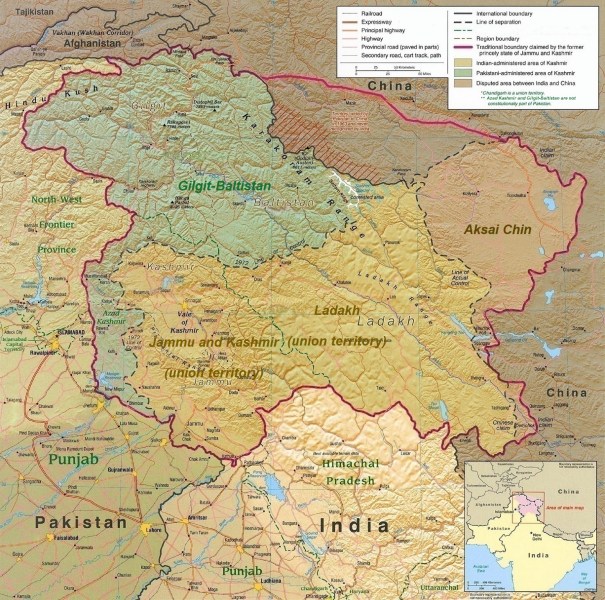
The Conflicted Map Of J&K with Ladakh

With over seven decades crossed since 1947 followed a continuous stretch of never-ending bloodsheds in the Kashmir valley or for the reason of it.  Just in past 27 years, around 41,000 lives have been lost due to this Indo-Pak dispute. The Indian army had lost many of its brave soldiers who sacrificed themselves for the safety and security of people in the valley and rest of India. With more than 950,000 soldiers deployed in Kashmir, making it world’s most strongly guarded place, shows the threat level in the valley. The current Kashmir when compared to the Maharaja Hari Singh’s Kashmir is divided into 3 major parts. Two pieces of territory are illegally occupied by the Pakistan (30%) and China (15%). The regions under Pakistan are Gilgilt, Baltistan and the Pakistan occupied Kashmir (POK) and the region under China is Aksai-Chin which is vastly inhabited by humanity.

The Indian controlled Kashmir (55%) owns 60 per cent of the population of Kashmir in total. The Jammu and Kashmir initially under the Sikh Empire of Maharaja Ranjit Singh, saw a shift in powers with arrival of east India company and british. The empire then switched into the Dogra Empire which was overtaken by Maharaja Gulab Singh and this continued until the independence of India in the year 1947. It was this time, when the britishers before leaving Indian territory kept an opportunity for all the 565 princely states of Indian peninsula to either join an Islamic state named Pakistan or a democratic republic of India. This stretched the long run tensions between the communities of muslims (in favour of an Islamic state) and the rest of people into a massacre of centuries. A bloodshed that no one in the world saw before, it is estimated that up to one million people were killed during the violence in 1947, and around 50,000 women were abducted. Some 12 million people were displaced from their homes in the divided province of Punjab alone, and up to 20 million in the subcontinent as a whole. Few princely states opt to merge with Islamic state of Pakistan and majority of them joined the republic of India. Kashmir on the other side chose to remain an independent state under Maharaja Hari Singh. He decided to stay independent because he expected that the State’s Muslims would be unhappy with accession to India, and the Hindus and Sikhs would become vulnerable if he joined Pakistan. On 11 August 1947, the Maharaja dismissed his prime minister Ram Chandra Kak, who had advocated independence. Observers and scholars interpret this action as a tilt towards accession to India. Pakistanis decided to pre-empt this possibility by wresting Kashmir by force if necessary. Pakistan made various efforts to persuade the Maharaja of Kashmir to join Pakistan. In July 1947, Mohammad Ali Jinnah is believed to have written to the Maharaja promising “every sort of favourable treatment,” followed by the lobbying of the State’s Prime Minister by leaders of Jinnah’s Muslim League party. Faced with the Maharaja’s indecision on accession, the Muslim League agents clandestinely worked in Poonch (west territory of Kashmir) to encourage the local Muslims to an armed revolt, exploiting an internal unrest regarding economic grievances. The authorities in Pakistani Punjab waged a ‘private war’ by obstructing supplies of fuel and essential commodities to the State. Later in September, Muslim League officials in the Northwest Frontier Province, including the Chief Minister Abdul Qayyum Khan, assisted and possibly organized a large-scale invasion of Kashmir by Pathan tribesmen. Several sources indicate that the plans were finalised on 12 September by the Prime Minister Liaquat Ali Khan, based on proposals prepared by Colonel Akbar Khan and Sardar Shaukat Hayat Khan. One plan called for organising an armed insurgency in the western districts of the state and the other for organising a Pushtoon tribal invasion. Both were set in motion.

With Pakistan’s tribesmen invasion, the Kashmir was set on fire, loot, and atrocities to Kashmiris by the Pathan’s were so grieve that it could be hardly penned down. The pathan’s did whatever they could to terrorize Kashmiri’s, they abducted, raped and murdered thousands of girls and women of all ages. This was being done to scare Kashmir and its ruler for their indecision for accession into Islamic state of Pakistan. The Pakistan’s muslim league and its military knew this for sure, that newly formed independent nation of Jammu & Kashmir is heavily outnumbered with its line of defence and weapons. The Maharaja made an urgent plea to Delhi for military assistance. Upon the Governor General Lord Mountbatten’s insistence, India required the Maharaja to accede before it could send troops. Accordingly, the Maharaja signed an instrument of accession on 26 October 1947, which was accepted by the Governor General the next day.

While the Government of India accepted the accession, it added the proviso that it would be submitted to a “reference to the people” after the state is cleared of the invaders, since “only the people, not the Maharaja, could decide where Kashmiris wanted to live.”; it was a provisional accession. The largest political party, National Conference, headed by Sheikh Abdullah, endorsed the accession. In the words of the National Conference leader Syed Mir Qasim, India had the “legal” as well as “moral” justification to send in the army through the Maharaja’s accession and the people’s support of it. The Indian troops, which were airlifted in the early hours of 27 October, secured the Srinagar airport. The visiting journalist at Srinagar city witnessed an incredible sight where volunteers of National Conference (Local political party of Kashmir) was patrolling the city from tribal Pakistani invaders and Minority Hindus, Sikhs were moving freely among Kashmiri Muslims. This was a true example of community harmony in Kashmir.

After securing Sri Nagar, the Indian army troops were set to retrieve other portions of Kashmir, captured by the Pakistani tribesmen and military. Yet, in the meantime the then prime minister of India, Mr J. L. Nehru made an announcement over all India radio, that India would seek United Nation’s (UN) mediation into this matter. This was greatly opposed by the then home minister of India, Sardar Vallabhbhai Patel. Later, with intervention of United Nations group under Sir Owen Dixon (UN mediator) who came up with a plan of seizing the military conflict by mapping a stamp on territories already under control. This led regions already secured by the two countries under their jurisdictions and UN formed a Line of Control between the western and Eastern parts of Kashmir. To this day, India claims the entire region of Kashmir as per the legal instrument of accession signed by the Maharaja of Kashmir, making the whole of Kashmir an integral part of Republic Of India.

Later in the year of 1962, another war broke but this time it was between India and China. The war zone was the regions of Ladakh province to the east of Kashmir. After this Indo-China war of ’62, China captured another part of Maharaja Hari singh territory, the Aksai-Chin. India to this date demands both of its territories and had raised its voice into United Nations Security Council from time to time in the recent past. Whatever is good for Kashmir and safe for Kashmiri dreams should be implemented, to make sure that no more innocent lives are lost, no more brave soldiers are sacrificed for the love of their motherland.

Cruelty to animals

July 3rd 2020 is a very significant day in the history of animal welfare in the country. The north east state of Nagaland has banned the sale of dog meat. The state government announced a complete ban on the sale of dog meat in the state. Though this historical decision has been welcomed by the animal welfare groups but regulating the ban won’t be an easy task for the government. Because the dog meat is a part of the food habit practiced by the Nagas (mostly) since the time of their forefathers. It should be noticed here that the hilly state enjoys a special status given by the constitution of India under article 371 (a). This provision exempts the state of all the animal protection and welfare laws ruled in the whole country. It gives it a special status to practice its own customary law. Yet this decision is a shining hope in the fight of ending the cruelty to animals in the country.

Don’t forget ‘vinayaki’


Brutality towards animals has become a part of practice in our society. Sometimes the tradition, compulsion, and even the essential requirement is given as the reason. How can we forget the case of Vinayaki.

The pregnant elephant helplessly standing in the velliar river of kerala awaiting for her death. The widely shared photo had shaken the consciousness of millions. Vinayaki had eaten a pineapple filled with firecracker which exploded in her mouth and severely injured her. While no one intentionally fed her that fruit but filling the fruit with explosive is a local practice by farmers in order to protect their crops from wild animals. In excruciating pain, she died with her unborn calf.

Animal welfare laws


The cruelty to voiceless is being done by humans since ages. Various national and international organisations are working for the welfare of animal reforms. In India the Prevention of Cruelty to Animals act came in 1960 which criminalizes cruelty to animals. Many other subsequent laws also came in order to restrict the use of performing animal, animal slaughtering and experimentation. In year 2014 India became the first country in Asia to ban all testing of cosmetics on animals and the import of cosmetics tested on them.


The laws which we should keep in mind:

  • It is a criminal offence to beat or confine animal in cages with inadequate space.
  • Feeding poisonous food to stray animals is a crime and if one gets caught doing so he can be charged under section 11 of the Prevention of Cruelty to Animals Act 1960.
  • Maiming, injuring or killing the animals in cruel manner is also illegal, and doing so can land anyone in jail for five long years.

Sadly, despite such strict laws cruelty towards the innocent animals is still being done and only in rare cases the culprits get punished. It’s high time that we rectify the wrongs that have been done to the voiceless and give them their due. We should remember what Mahatama Gandhi had said once that, ‘‘the greatness of a nation and its progress can be judged by the way its animals are treated.’’

Direct-to-Home (DTH)


Direct-to-Home(DTH) is none other than Direct Broadcast Satellite Television which is a type of communication satellite that usually broadcasts satellite television signals for home receptions using dish antennas and satellite ground station transmitting the signal. The DTH service provides satellite television programming directly to the subscriber\’s home anywhere in the country. Since it employs wireless technology, the subsequent programmes are transmitted to the subscriber\’s television set directly to the subscriber\’s television set directly from the satellite. This service do not involve the usage of cables or any other wiring infrastructure.
A DTH service provider has a base, a Ku-Band transponders from the satellite. The encoder converts the audio-video and data signal into a digital format and the multiplexer mixes these signals. At the user\’s end there has to be a small dish antenna and a set top box to decode and view numerous channels. On the user\’s end the receiving dish can be as small as 45 centimeters in diameter. DTH is an encrypted transmission that travels to a customer directly through a satellite. DTH transmission is decoded at the user\’s end using a set-top box. 

Direct-to-home services offer an unparallel pictures and sound quality that cannot be compared with any other television transmission technologies. It has been easier to get access to high quality full HD quality television programme with surround sound at the comfort of our homes due to DTH services. Not only this much it a very commendable feature that the services allows its viewers to only pay for the channels and services they want to access or use. Thus the viewer can select from the list of dynamic packages as per their preferences. Another important feature is that it provides Advanced Viewing Control Feature such as Electronic Programmes Guide allows the viewers to check current and future programmes of all channels. The presence of a parental lock, pre-booked pay-per-view feature makes it an extraordinary and comfortable services available at home. 

Legal status of abortion in India

“Abortion is part of being a mother and of caring for children because part of caring for children is knowing when it’s not a good idea to bring them into the world.” – Katha Pollitt

Abortion is the expulsion of a fetus from the uterus before it reaches the stage of viability. It can be either spontaneous (miscarriage) or can be brought intentionally which is often called an induced abortion.

In India, The Medical termination of pregnancy Act was passed almost five decades ago. But, Abortion is still considered a taboo and debatable topic for many. According to National study of the incidence of abortion and unattended pregnancies, Almost 15.6 million abortion was performed in 2015.

Life began from the womb of the mother and abortion is the destruction of life. Many people also raise questions on social, moral and legal aspects of abortion and according to them, women have a moral duty to give birth to a child and protect the fetus also. From this view, the obvious question arises whether the women have the right to abortion or not?
Human rights are those rights which are available to all the human beings irrespective of caste, colour, creed, religion and nationality etc. Right to life is the most important human right. Article 6(1) of the International Covenant on Political and Civil rights prohibits the arbitrary deprivation of human rights.

Abortion as a human right

Many controversies are related to this right and right to abortion is one of them. Every mother has a right to abortion but this right has to balance with the right of the unborn child. Earlier, abortion was opposed by society and considered as a murder of the embryo. In recent years, formal policies and laws are indicating the intent of government for promoting the reproductive rights and every woman has a complete right over her body.

When is abortion legal in India?

Well, the answer to the much-pondered question – “ls abortion legal in India” is – Yes!

Abortion in India is legal under some circumstances and illegal in others. The abortion laws in India say that if the person getting an abortion is an adult, then you need no parental or spousal approval for it.

There is no legal age for abortion in India, however, the prescribed legal abortion weeks in India are up to 12 weeks. In the first 12 weeks of pregnancy, abortion is legal in India, if signed by a single medical practitioner.

So till the first 12 weeks and not beyond 20 weeks of the pregnancy, you can proceed with the procedure, along with the signs of two registered medical practitioners.

In India, abortions are legal in certain situations, as abortion laws in India for unmarried girls, rape victims, and married women varies. With the rising crime rate in foeticides and infanticides, the abortion laws in India made it illegal to detect the sex of the foetus, thereby decreasing the rate of abortion. 

Under the Medical Termination of Pregnancy (MTP) Act, 1971 in India, which is the law relating to abortion defines it as an untimely termination of the foetus. There is a specified legal time for abortion in India and when you don’t follow it, it’s a punishable offense.

When you terminate the pregnancy after the prescribed legal period for an abortion in India, it’s called foeticide. And when you terminate before that, it’s termed an abortion.

In late January 2020, the Union Cabinet amended the 1971 Medical Termination of Pregnancy (MTP) Act allowing women to seek abortions as part of reproductive rights and gender justice. The amendment also places India in the top league of countries serving women who wish to make individual choices from their perspectives and predicaments.

The amendment has raised the upper limit of MTP from 20 to 24 weeks for women including rape survivors, victims of incest, differently abled women and minors. Failure of contraception is also acknowledged and MTP is now available to “any woman or her partner” replacing the old provision for “only married woman or her husband.” The new law is forward looking, empathetic and looks at a very sensitive issue with a human face.

India’s move comes at a time when the landmark Roe v. Wade in the Supreme Court of the United States (US) is under scrutiny. That 1973 judgment protects a pregnant woman’s liberty to decide whether or not to have an abortion without needless government restrictions. A historic piece of legislation, it served as a beacon of hope for women around the world. Roe v. Wade is now shaking at its roots as a conservative US Supreme Court wants doctors performing abortions to get admitting privileges from a nearby hospital.

In the Leading Case: Roe v. Wade: Jane Roe challenged the constitutionality of Texas Criminal Abortion laws in the Supreme Court of The United States. The petitioner pleaded that these laws were vague, unconstitutional and encroaching her right to privacy. On the other hand, The The state of Texas argued that fetus is a Person within the meaning of the Due process clause of the fourteenth Amendment of the United States Constitution.

The Court held that the State cannot restrict the women’s right to abortion during the first trimester which try to balance the State’s interest with the individual’s interest. The State can regulate the procedure during the second trimester in a reasonable way related to maternal health and in third trimester, the State can restrict abortion in a way as it thinks fit.

When is abortion illegal in India?

As IPC also governs Indian abortion laws, so Sections 312 to 316 of the Indian Penal Code 1860 lays down situations. These state as to when abortion is illegal and punishable under the law. The law states that causing a miscarriage of a pregnant woman is a crime under the Code.

Also, any person who voluntarily causes a woman with miscarriage will face punishment imprisoning up to 3 years and fine. Especially, if such miscarriage is not caused in good faith for the purpose of saving the life of the woman.

Under the law, abortion in India is illegal in two conditions:

  • When a woman is with child, it means the situation when the gestation has begun
  • When a woman is quick with child, it means that the child’s motion is felt by the mother

If child abortion in India happens with the woman who is quick with the child, then such a person will be punished with imprisonment of up to 7 years along with fine.

Even if a woman herself causes her miscarriage, then she would able to be liable under the law. A woman who causes herself to miscarry also comes under this provision.

However, abortion in India is permissible under Section 312 on ‘therapeutic grounds’. This means in order to protect the life of the mother, if abortion is necessary, then it’s not an offence.

Conclusion


An evil practice can be curbed not by cutting the stems growing on the trunk above the ground, but by eliminating the roots standing beneath. Social awakening, equality, vigorous campaigning against female foeticide, honest and full enforcement of dowry prohibition, sexual harassment laws are the steps towards uprooting the practice of female foeticide

The objective behind legislating the termination of pregnancy is to provide quality abortion care to all women by increasing accessibility and affordability to safe abortion. There is also a need to bring awareness regarding abortion and contraceptive methods among the youth especially. This requires political will, adequate facilities, infrastructure and training.

The law has to take care of the liberty of the mother as well as the unborn. As a hospitable community, we should seek ways of providing support for lonely and frightened mothers, and for lonely and abandoned babies. We need to offer women with unplanned pregnancies as much love and support as they require and to assist them in finding compassionate alternatives to abortion.

PUBG CAUSING HEALTH ISSUES

DETAILS

 Pubg ( playerunkown’s battlegrounds) a online multiplayer battle game published by PUBG corporation, a subsidiary of  south korean video game company korean Bluehole. In the game upto 100 players parachute on a  island and scavenge for weapons and equipment to kill others and avoid getting killed themselves. The available safe area of game map decreases over time leading to face tight areas to face encounters. The last player or team standing win the round.

Being one of the  most played  games in Asia, the most popular app  bringing $ 5 million dollars a day.

  • PUBG addiction is a very real thing ,especially in Asia.we hear many people are losing their lives due to this and even many countries are choosing to ban this game.

INDIA POSITION
  There are 120 million PUBG users in India. One of the top three download in india.Thing came up that a 10 standard student of Telengana comit suicide when parents told to study instead of playing PUBG.
Again 16 years old student after playing PUBG for constantly 6 hours in Madhya pradesh succumbed to a major cardiac arrest and lost life.
TIK TOK apps got ban as it may contain pronographic content. This made PUBG lovers to worry about nation-wise PUBG ban. Nepal and Iraq banned PUBG.
HOW IT BECAME FAMOUS?
  
PUBG mobile is free of cost  and can be accessible to most without any relevant skill. Even it allows you to play with your friends and have video chat in real . Thus human connection made it more addictive. It is addictive to both children and adult. You an find in public transport or school or college anywhere the users are stuck in completing a level .

POSITIVE SIDE 
 It improves alertness and cooperation. The player have to coordinate and interpret of brain  with movement of fingertips  and hands for searching foe and save ownself. 
In order to suceed in the game and reach another level, the  player require better visual-spatial capacity and eye hand coordination. It increase your thinking ability to high level.
NEGATIVE  SIDE
 .As per we know it is a shooting game ,so it is violent in nature. Excessive violence can led to aggressive thoughts, behaviour and emotions affecting mental health of player.
. It makes you addicted to you. You want to complete one by one level thus waiting for it. 
. It can make you less socially active.
. It may bring laziness. It will harm physical health as sitting and playing for long hours lead to headaches.
. Lack of interaction may led to stress and anxiety issues.
. Affects your sleeping schedule .
.Engaged too much on this led to lack of time for other work.
. It is found mostly school and college students during this lockdown timing getting more addicted, it may  harm their studies. 
  So, Government and parents should take strict measures regarding video games not only PUBG. I am not saying to stop play pubg but to  know its good and bad sides.
 

Global warming

Global warming  is a term almost everyone is familiar with. But, its meaning is still not clear to most of us. So, Global warming refers to the gradual rise in the overall temperature of the atmosphere of the Earth. There are various activities taking place which have been increasing the temperature gradually. Global warming is melting our ice glaciers rapidly. This is extremely harmful to the earth as well as humans. It is quite challenging to control global warming; however, it is not unmanageable. The first step in solving any problem is identifying the cause of the problem. Therefore, we need to first understand the causes of global warming that will help us proceed further in solving it. In this essay on Global Warming, we will see the causes and solutions of Global Warming.

Causes of Global Warming

Global warming has become a grave problem which needs undivided attention. It is not happening because of a single cause but several causes. These causes are both natural as well as manmade. The natural causes include the release of greenhouses gases which are not able to escape from earth, causing the temperature to increase. Further, volcanic eruptions are also responsible for global warming. That is to say, these eruptions release tons of carbon dioxide which contributes to global warming. Similarly, methane is also one big issue responsible for global warming.

After that, the excessive use of automobiles and fossil fuels results in increased levels of carbon dioxide. In addition, activities like mining and cattle rearing are very harmful to the environment. One of the most common issues that are taking place rapidly is deforestation.

So, when one of the biggest sources of absorption of carbon dioxide will only disappear, there will be nothing left to regulate the gas. Thus, it will result in global warming. Steps must be taken immediately to stop global warming and make the earth better again

Global Warming Solutions

As stated earlier, it might be challenging but it is not entirely impossible. Global warming can be stopped when combined efforts are put in. For that, individuals and governments, both have to take steps towards achieving it. We must begin with the reduction of greenhouse gas. Furthermore, they need to monitor the consumption of gasoline. Switch to a hybrid car and reduce the release of carbon dioxide. Moreover, citizens can choose public transport or carpool together. Subsequently, recycling must also be encouraged For instance, when you go shopping, carry your own cloth bag. Another step you can take is to limit the use of electricity which will prevent the release of carbon dioxide. On the government’s part, they must regulate industrial waste and ban them from emitting harmful gases in the air. Deforestation must be stopped immediately and planting of trees must be encouraged.

In short, all of us must realize the fact that our earth is not well. It needs to treatment and we can help it heal. The present generation must take up the responsibility of stopping global warming in order to prevent the suffering of future generations. Therefore, every little step, no matter how small carries a lot of weight and is quite significant in stopping global warming.

Ragging – A punishable offence

Ragging is a disturbing reality in the higher education system of our country. Despite the fact that over the years ragging has claimed hundreds of innocent lives and has ruined careers of thousands of bright students, the practice is still perceived by many as a way of ‘familiarization’ and an ‘initiation into the real world’ for young college-going students.

Meaning and definition of ragging
The Supreme Court defined ragging in the Vishwa Jagriti matter (1999) as, “Any disorderly conduct whether by words spoken or written or by an act which has the effect of teasing, treating or handling with rudeness any other student, indulging in rowdy or undisciplined activities which causes or is likely to cause annoyance, hardship or psychological harm or to raise fear or apprehension thereof in a fresher or a junior student or asking the students to do any act or per form something which such student will not in the ordinary course and which has the effect of causing or generating a sense of shame or embarrassment so as to adversely affect the physique or psyche of a fresher or a junior student.” ( Raghavan Committee Report, 2007)
Other organisations/bodies working in this field have also attempted to define ragging, the variety of definitions being reflective of differences in perspective and interpretation. In 2007, the Committee of Consultants to Raghavan Committee considered ragging “neither a means of familiarization nor an introduction with freshers, but a form of psychopathic behaviour and a reflection of deviant personalities. Further, ragging reproduces the entrenched power configurations prevalent in civil society.”
According to the UGC Regulation on Curbing the Menace of Ragging in Higher Institutions, 2009, ragging constitutes one or more of any of the following acts:


• Any conduct by any student or students whether by words spoken or written or by an act which has the effect of teasing, treating or handling with rudeness a fresher or any other student.
• Indulging in rowdy or undisciplined activities by any student or students which causes or is likely to cause annoyance, hardship, physical or psychological harm or to raise fear or apprehension thereof in any fresher or any other student.
• Asking any student to do any act which such student will not in the ordinary course do and which has the effect of causing or generating a sense of shame, or torment or embarrassment so as to adversely affect the physique or psyche of such fresher or any other student.
• Any act by a senior student that prevents, disrupts or disturbs the regular academic activity of any other student or a fresher.
• Exploiting the services of a fresher or any other student for completing the academic tasks assigned to an individual or a group of students.
• Any act of financial extortion or forceful expenditure burden put on a fresher or any other student by students
• Any act of physical abuse including all variants of it: sexual abuse, homosexual assaults, stripping, forcing obscene and lewd acts, gestures, causing bodily harm or any other danger to health or person;
• Any act or abuse by spoken words, emails, post, public insults which would also include deriving perverted pleasure, vicarious or sadistic thrill from actively or passively participating in the discomfiture to fresher or any other student.
• Any act of physical or mental abuse (including bullying and exclusion) targeted at another student (fresher or otherwise) on the ground of colour, race, religion, caste, ethnicity, gender (including transgender), sexual orientation, appearance, nationality, regional origins, linguistic identity, place of birth, place of residence or economic background.
Government steps against ragging

The anti-ragging campaign got an impetus in 1999 when the Hon’ble Supreme Court, in response to a PIL filed by the Vishwa Jagriti Mission, asked the University Grants Commission (UGC) to issue guidelines to universities to curb ragging. The UGC formed a four member committee under Prof K.P.S. Unny, Registrar of Jawaharlal Nehru University, New Delhi, to examine and submit a report on ragging. In their recommendations, the Unny Committee put forward a Prohibition, Prevention and Punishment proposal i.e. prohibition by law, prevention by guidelines and punishment if the prohibition and punishment do not work. They recommended that central and state governments should enact laws against ragging. They suggested punishments ranging from cancellation of admission to a monetary fine of up to Rs. 25,000 and rigorous imprisonment of up to three years. The Committee also recommended various measures to be undertaken for sensitisation against ragging and highlighted the need for incentivizing wardens and students for their good conduct and anti-ragging activities. It was also suggested that institutions failing to curb ragging should be disaffiliated.


In 2006, the issue of ragging was once again brought to the forefront when the Supreme Court expressed its disappointment in the implementation of its previous guidelines and constituted another committee under Dr. R K Raghavan, Director CBI, to suggest means and methods to prevent ragging; to suggest possible action that can be taken against persons indulging in ragging; and to suggest possible action against institutions that fail to curb ragging. The committee made several important observations. It noted that ragging has many aspects, including psychological, social, political, economic and cultural, and that it adversely impacts the standards of higher education. It considered ragging as our failure to inculcate human values from the schooling stage. The Committee made some strong recommendations to curb ragging.

UGC Regulation on Curbing the Menace of Ragging in Higher Educational Institutions, 2009
In order to address the issue of increase in ragging cases in campuses, the University Grants Commission (UGC) has brought out the UGC Regulations on Curbing the Menace of Ragging in Higher Educational Institutions, 2009. These regulations are to be followed mandatorily by all Higher Educational Institutions. UGC has established an Anti-Ragging toll free “helpline” 1800-180-5522 in 12 languages for helping victims of ragging. The UGC has developed an Anti-Ragging Website – http://www.antiragging.in. The Portal contains the record of registered complaints received and the status of the action taken thereon.

Punishments accorded


According to the UGC Regulation on Curbing the Menace of Ragging in Higher Educational Institutions, 2009, depending on the nature and gravity of the guilt established by the Anti-Ragging Squad, those found guilty may be awarded one or more of the following punishments, namely;
• Suspension from attending classes and academic privileges.
• Withholding/ withdrawing scholarship/ fellowship and other benefits.
• Debarring from appearing in any test/ examination or other evaluation process.
• Withholding results.
• Debarring from representing the institution in any regional, national or international meet, tournament, youth festival, etc.
• Suspension/ expulsion from the hostel.
• Cancellation of admission.
• Rustication from the institution for period ranging from one to four semesters.
• Expulsion from the institution and consequent debarring from admission to any other institution for a specified period

D. Punishments under Indian Penal Code against acts of Ragging
• Every single incident of ragging or abetting in ragging puts an obligation on the institution to get the FIR registered. There are provisions in the IPC, which can be used by a student to register an FIR in the nearest Police Station. These provisions are:
• 294 – Obscene acts and songs
323 – punishment for voluntarily causing hurt
324 – voluntarily causing hurt by dangerous weapon or means
325 – punishment for voluntarily causing grievous hurt
326 – voluntarily causing grievous hurt by dangerous weapon
339 – Wrongful Restraint
340 – Wrongful Confinement
341 – Punishment for Wrongful Restraint
342 – Punishment for Wrongful Confinement
506 – Punishment for culpable homicide not amounting to murder

Publishing ragging is banned : The institutions are required to publish that the ragging is totally banned in the institution and anyone found doing/abetting ragging would be suitably punished.
Brochures/Application Form/Enrollment Form :The college brochures are required to mention these guidelines in full. The prospectus would include all directions of Supreme Court/Central and State Government as applicable. The application/enrollment form for admission will have an undertaking in English and Hindi and preferably one in regional language to be signed by parent/guardian. The school-leaving certificate should reflect the behavioral pattern of the student.
Affidavit of Student : A student during the admission process has to file an affidavit along with his parents/guardian’s signature, stating that he will not be ragging other students directly or indirectly.
Anti-Ragging Committee : Every institution shall constitute a committee to be known as the Anti-Ragging Committee. To be nominated and headed by the Head of the institution, and consisting of representatives of civil and police administration, local media, Non-Government Organizations involved in youth activities, representatives of faculty members, representatives of parents, representatives of students belonging to the freshers category as well as senior students, non-teaching staff; and shall have a diverse mix of membership in terms of levels as well as gender.


Contact detail of Anti Ragging Helpline/Anti Ragging Committee/Anti Ragging Squad : Every fresh student admitted to the institution shall be given a printed leaflet detailing to whom he/she has to turn to for help and guidance for various purposes including addresses and telephone numbers, so as to enable the student to contact the concerned person at any time. Identity of informants of ragging incidents is fully protected.
Anti ragging squad : Anti ragging committee would also monitor and oversee the performance of the Anti-Ragging Squad. It shall be the duty of the Anti-Ragging Squad to make surprise raids on hostels, and other places vulnerable to incidents of, and having the potential of, ragging.

Ragging is a problem of the students and by the students; and therefore, the solution to it also lies with the students. With ragging becoming rampant in colleges, it is about time that the the student community awakens its conscience to this inhuman practice before more and more innocent students become victims of it and before more and more educational institutes are degraded by it.

Career in Photography?

What kind of photography should I master? That is probably the most difficult decision you will ever have to make when you start pursuing a career in photography. When you think about all the different lessons to be taken, and all the different ways to create an image, the photography field is really dynamic and diverse. There is something for everyone in the pictures, and the types of photo activities are just as exciting


Here are 4 types of photography you can follow as a professional photographer:

1 – Wedding Photography

The first type of photography work involves weddings and events. Most people make their whole life and only pay for professional photos once, but almost everyone hires someone who takes pictures of their wedding.
As a career, being a wedding photographer involves an exciting combination of portraiture and event photography at various event settings and parties. Wedding photography is really great, with the feature of getting the best shot of the first try and not getting the second chance in some cases. Wedding photographers should quickly stand up, roam during the reception and event, and there are large retail outlets and customer services in their works. They should also be adaptable, ready to shoot outside on a sunny day and indoors in invisible dances and dances. Couples will expect guidance from the photographer by posing shots and settings, so the photographer should be confident and communicate well with the bride and groom.


The great wedding photographers are the ones who love their work. Many photographers start shooting weddings because, as they say, “that’s where the money is.” But what happens in the end will lead to a disappointing business model if the photographer’s heart isn’t in their work.

2 – Event Photography

In the same way, taking pictures of an event is a powerful and fast way to make a buck with your camera. Whether your beat are corporate events or rock and crazy concerts, photo editors work in a variety of settings. Some organizations use their event photos for publicity purposes, while others use group photos as souvenirs or retention.

3 – Portrait Photography

Portraiture is one of the most common types of photographer we consider when considering career options. The kinds of photography that can be included in the portraits amazing. Retail Customers seek out portrait photography for every phase of life: moternity and newborns, school photos, top photos, and regular family photos. Corporate portraits are also much needed as staff update their website titles and information materials. In addition, aspiring and operational models often require updated portfolios that have a current shoot catalog for sales to agencies and services.
Portrait Photography is a great place to start as a photographer. Building a good portfolio of quality shorts can lead to more business. It can often lead to more work in families and marriages as word of mouth marketing does its magic. It can also lead to product and brand photography gigs.

4 – Product Photography

Clear than working in advertising, photographing the product is a great thing. Think of all the products you have purchased: everything needs to be photographed. Online and printed catalog images used, as well as labels and inserts. Many product images are supported by the studio, with careful control of backgrounds, shadows, and lighting. Renting a Studio can be very expensive so consider building a photo studio at home on a budget.
Product photography covers a lot of ground. Food photography is a specialized niche, and restaurant need to advertise their meals and create their menus.

Conclusion

It’s almost impossible to compile a list of all of the different types of photography that you can earn money from. For your photography career, it can be difficult choosing which path to take. Many photographers try out many paths in their career until they find the one that suits them best. The most successful photographers work in a niche, something that they specialize in that few others do. The possibilities are endless, and finding your niche is half the fun. So, which kinds of photography would you like to master?

Factors of Work Stress and its Management : A Practical Case Study

Abstract
This research studies work stress, and how it is related to performance and productivity in an organization. At first,
definitions and types of stress are defined, along with its sources and effect on individual. Then, a demonstration of the
subsequent consequences of individual stress on an organization is discussed, hence showing the importance of stress
management in an organization.
Stress management policies and procedures are then explained and specified for each significant type of a stressor. This
is done using a practical case study of an organization, where it shows how this firm deals with each kind of different
stressors.
Keywords: stress, productivity, time management, conflict management, workplace diversity.

  1. Introduction
    Stress is a dynamic condition in which an individual is confronted with an opportunity, constraint, or demand related to
    what he or she desires and for which the outcome is perceived to be both uncertain and important.
    Organizations are mainly concerned with work stress. Nevertheless, organizations provide training to their employees
    how to manage other personal stresses, since it affects work performance. In addition, organizations always follow up
    with economical, environmental and political stresses, since they all directly affect organizational work and increase
    their internal stress.
  2. Types of Stress
    a) Challenge Stressors (Beneficial stressors): Stress associated with workload, pressure to complete tasks, and
    time urgency. They enhance motivation, energy, alertness, and positive attitude.
    b) Hindrance Stressors (Negative stressors): Stress that keeps you from reaching your goals, and leave a
    feeling of depression, anxiety, or pressure, such as red tape, role ambiguity, role conflict, role overload, job
    insecurity, etc, and they cause greater harm than challenge stressors
  3. Sources of Stress
    a) Environmental factors
    b) Organizational factors
    c) Personal factors

3.1 Environmental Factors
a) Economic uncertainties of the business cycle: many organizations are downsizing, so workers are
afraid of losing their job
b) Political uncertainties of political systems
c) Technological uncertainties of technical innovations, where many technologies are replacing
human forces, and others require high technical education in order to use, which forces
employees to always keep learning and following up with these technologies.

3.2 Organizational Factors
1) Long working Hours
2) Work-Life Balance
3) Manager’s inability to find solutions for stress
4) Security Hassles
5) Retirement Plans
6) Safety Fears
7) Job stability and fear of downsizing.
8) Stress to produce
9) Stress to abide by rules
10) Stress to live up to expectations
11) Task demands related to the job
12) Role demands of functioning in an organization
13) Interpersonal demands created by other employees, stress to interact with co-workers, supervisors, and to do
this without causing hardship to ourselves or others
14) Workplace Diversity
3.3 Personal Factors
1) Family and personal relationships
2) Economic problems from exceeding earning capacity
3) Personality problems arising from basic disposition

  1. Consequences of Stress
    Stressors are additive. High levels of stress can lead to the following symptoms:
    a) Physiological: Blood pressure, headaches, stroke
    b) Psychological: Dissatisfaction, tension, anxiety, irritability, boredom, and procrastination. These effects are
    greater when roles are unclear in the presence of conflicting demands
    c) Behavioral: Changes in job behaviors, increased smoking or drinking, different eating habits, rapid speech,
    fidgeting, sleep disorders
  2. Cost of Stress on Organization
    a) Lowered productivity
    b) Excessive absenteeism
    c) Increased insurance costs
    d) Increased turn over
  3. Case Study: An Organization Implementation of Stress Management
    The following is a demonstration of several kinds of stressors and the solutions that the organization’s management
    implements for them:
    6.1 Long working hours:
    1) Management teaches and trains its employees on the following:
    a) Good time-management techniques, never to delay work for the last minute, etc.
    b) Change employees’ attitudes and encourage positive self-talk: how to think of stressful situations
    as a challenge to your creative thinking, Always say: “I am capable of doing it, it’s good for me to
    enhance my capabilities and learn new tough skills, etc.”

2) Managers give positive reinforcement: they tell their employees when they do a good job, and
complement them on it.

3) The Organization applies recognition and rewards programs

6.2 Work-Life balance
1) Applying Flex-time, especially for females who have children and house responsibilities, where they do not
have to be restricted to come and leave at a specific time, as long as the total sum of working hours still the
same.
2) Establishing nurseries in the organization for day care for employees’ children
3) Applying Labor Law that states to offer paid vacations of minimum 21 days for employees ( this varies
according to each country)

6.3 Technology
1) The Organization employs a specialized IT professional who is only responsible for assisting all employees
on their IT related issues
2) The organization provides specialized training courses on any topic required for work advancement
6.4 Manager’s inability to find solutions for stress
1) The organization encourages communication and always asks for feedback, where the HR manager is always
directly accessible to any employee to listen to.
2) The organization always try to follow up with all corporate and business news, in addition to new studies
published regarding work stress, how to spot it and solve it

6.5 Security Fears
The Organization has done great efforts in making employees and people feel safe by applying laws for security
checks, checking identities of visitors to the firm and not allowing unauthorized people to enter


6.6 Retirement Plans
Applying Social Security system and pension funds, which is a great insurance and relief for employees in order not
to worry about their retirement any more.

6.7 Job stability and fear of downsizing
The Economic Crisis is very complex. Unfortunately, layoffs and downsizing are forced on many organizations, and
there is nothing that management can do internally to stop this issue.

6.8 Task demands related to the job and Role demands of functioning in an organization
1) The organization applies the technique of “Improved personnel selection and job placement” which states
that it is not only enough to assign a task to a person only according to his technical skills, but also his
personality, tolerance of a specific type of stress, should be taken into consideration.
2) The organization also tries its best to set realistic goals and priorities. This is related to goal-setting
motivation theory that states that goals must be difficult, but specific and attainable, and not impossible.
3) The organization implies the “Redesigning of jobs” concept as follows:
a) Taking responsibility: it encourages employees to take responsibility for their own job and for their
contribution to the success of the company as a whole. This encourages a feeling of control over their
life and let them know how important their efforts are to the overall plan.

6.9 Interpersonal demands created by other employees, stress to interact with co-workers and supervisors
The organization tries to apply the most recent and proper Conflict management techniques as follows:
1) Setting ground rules of what is acceptable and what is not, and documenting them formally in the firm’s
policies.
2) Encouraging civilized communication.
3) Applying conflict management that focuses on issues not on personalities
4) Applying conflict management that also focuses on present not on past conflicts.
5) Applying compromising techniques that are a win-win scenario for both parties involved.
6) Applying forcing techniques when necessary after using all previous techniques.
7) Applying penalty rules for breaking any of the ground rules.

6.10 Workplace Diversity
The firm hires all kinds of experiences from all ages, genders, and from all levels of educations.
The following are some major points in managing workplace diversity:
1) Female participation:
a) The organization encourages a lot female participation, not just in entry and mid levels, but also in
executive levels.
b) It hires a large number of females.
c) It forces male co-workers to cooperate, and respect them, and even to abide to their instructions when
they are in higher positions.
2) Experience, age and education diversity:
a) Older employees, executives and managers do not treat younger employees with superiority, instead,
they treat them as their sons, teaching them and advising them.
b) Younger employees should respect older and higher executives and managers and abide to their
instructions and learn from them.

Conclusion
People are the core base of any organization, so, caring and concerning about their individual issues is a pillar for
success, and that is what stress management fulfils, where it is a declaration that an individual’s health is the overall
health of the organization.
This is also an indication that separation among employees’ different life aspects is no longer an option, hence
organizations are becoming responsible and involved in these other life aspects, all in an attempt to reduce levels of
stress as possible, which means improving work productivity as much as possible.

Reference:
Stephen Robbins, Timothy Judge, 2011. “Organizational Behavior”, 14th edition, Pearson

Stop! Farmer Suicides in India

  • By Tushar Soni

Farmers are an important part of our country. After all, India is an agricultural country. We rely heavily on our farmers. Unfortunately, however, the case is that farmer suicide is a common problem in our country. Every year we see more cases of suicide for a number of reasons. The Indian government needs to take steps to protect this issue. We need to save our farmers from this misery because they are the ones who feed us. Even citizens should be aware of this and not pay too little to lose it.


Reasons for Farmer Suicides in India
There are many reasons why farmer suicide is happening in our country. All of these reasons come together to make this troubling issue common. The first reason is drought. When crops do not get enough rain they do not yield much produce. This, in turn, results in huge losses for farmers as their money simply passes and they go into debt. Areas with severe drought have a high incidence of suicide among farmers.
Similarly, floods are as dangerous as drought. Farmers’ crops are emerging and do not get the product from those crops. In addition, the high debt that farmers have to pay off is another major factor.
As they take out heavy loans to grow crops and fail to do so, they commit suicide as they have no money to repay their debt. In addition, family pressure is very high on farmers. They fail to make a reunion and as a result commit suicide because of this failure.
In addition, large sums of money are a major cause of suicide among farmers. These days, people love to make money and make money. These large firms make a lot of money from plants and sell them using marketing strategies.


How Can You Prevent Farmer Suicides in India?
The government must take steps to address this issue first. It should set up special agricultural areas that specifically allow agricultural activities. In addition there must be specific programs that educate farmers on modern farming techniques. It will help increase crop production.
In addition, irrigation facilities need to be improved. In addition, there must be real crop insurance policies that cover the loss of these farmers so that they do not get into debt.
In addition, the government must also ensure that they learn new skills that will help them earn more money in the family. In this way, they will not only rely on their plants but also have a backup with them.
Most importantly, a climate risk management plan must be introduced. In this way farmers can be told in advance the bad weather to come. This will help them become more aware of themselves and reduce their losses significantly.

People do not choose to go to the farmers market but instead shop at supermarkets or grocery stores with their food. This causes losses to these farmers and moreover these capitalist structures buy the farmer’s produce at low prices and then lose out.