NONI: INDIAN MULBERRY


Botanic name of Noni is Morinda Citrifolia. It is also called Indian Mulberry. It is an Ayurveda plant, found near the seas where temperature is below 25 degree Celsius. The noni tree is an evergreen shrub, up to 20 ft (6 m) tall, that grows in tropical areas of the South Pacific, including Australia, Malaysia, the West Indies, India, Vietnam, etc. Its branches and trunk are coarse, tough wood, and the leaves are glossy, oval, and dark green. Year-round, the tree yields a small fruit, which is cream-colored and about the size of a small potato. The noni fruit is noted for its bitter taste, unpleasant smell, and reportedly strong healing properties. It is very good for health. Noni has been in use from the bygone era. Noni is a great natural detoxifier. Today about 40 University are researching on Noni fruit and till now 164 nutrients have been found in it.
Noni has more than 150 nutrients. Compared to pineapple, Noni has 40 times more enzymes. It boost the immunity system. It is beneficial for health.
Noni is a rich source of vitamins B1, B2, B3, B5, B6, B12, C, E folate, beta, carotene and minerals such as calcium, potassium, magnesium, iron and phosphorus. Noni has Anti- oxidant, Anti-bacterial, Anti- inflammatory and Anti-wrinkle properties. It is a powerful food for cells and maintains the cell count. People of all ages can drink it. Noni juice is a strengthening drink that keeps the stress away, stimulates serotonin and endofrin, effects mood and emotions.

USES OF NONI 
1.Noni contains fibers.
2.It is beneficial in reducing pressure on the intestine. It has vitamins and minerals which protects our intestine.
3.It prevents increase of tumor, due to which it helps in fighting with the cancer.
4.People suffering from Asthma should take Noni juice everyday in the morning and evening.
5.Noni juice works like an insulin and helps to regulate sugar levels.
6.Noni juice helps in making body disease free.
7.Intake of noni juice is beneficial in skin disease like eczema.Various parts of noni plant have been used to treat skin problems such as acne, water retention, inflammation and others. Noni contains anthraquinone which has anti-wrinkle properties, and thus, can slow down the aging process of skin. Noni juice has goodness of antioxidants which helps to fight against free radicals and thereby, prevents cell damage.
8.Noni reduces the effect of wine.
9.Noni regulates blood cholesterol levels.
10.Noni juice has shown positive effects in protecting heart health by improving the blood flow in the arteries. It also helps in regulating blood pressure which definitely helps in maintaining heart health.
11.Noni is effective in stress, pain in urine, leucorrhoea and periods.
12.Noni helps to increase memory power.
13.Noni is beneficial for every problem related to hair like baldness,dryness of hair and also good for growth of hair.
14.Useful for arthritis and joint pain.
15.Improves the nervous system.
16.As an effective anti-oxidant keeps the poisonous elements and pollution away.
17.Noni juice boost the Immunity System.
18.It helps to detoxify the body. 

New Education Policy of India 2020

 The New Education Policy (NEP) of India was launched in 2020 with the aim of revamping the education system in the country and bringing about significant changes in the way education is imparted. The NEP is the first education policy in India to be launched in the 21st century, and it replaces the earlier National Policy on Education, which was launched in 1986 and revised in 1992.

The NEP is based on the principles of access, equity, quality, affordability, and accountability, and it aims to provide a holistic and multidisciplinary education to students from all backgrounds. The policy is designed to promote lifelong learning and to equip students with the skills and knowledge they need to succeed in a rapidly changing world.
One of the major goals of the NEP is to provide universal access to education from preschool to secondary school. The policy aims to increase enrollment rates and reduce dropout rates by providing free and compulsory education to all children between the ages of 3 and 18 years. It also emphasizes the importance of early childhood education and aims to provide high-quality preschool education to all children.
The NEP also seeks to bring about a significant shift in the curriculum and pedagogy of schools and colleges. It emphasizes the importance of multidisciplinary learning and encourages the integration of vocational and academic education. The policy aims to reduce the emphasis on rote learning and memorization and promote critical thinking, creativity, and problem-solving skills.
Another significant feature of the NEP is its focus on the use of technology in education. The policy aims to promote the use of technology to enhance learning outcomes and make education more accessible and affordable. It also emphasizes the importance of digital literacy and aims to provide students with the skills they need to use technology effectively.
The NEP also seeks to promote the internationalization of education and encourage greater collaboration between Indian and foreign educational institutions. The policy aims to attract foreign students to study in India and encourage Indian students to study abroad.
The NEP also addresses the issue of teacher training and professional development. It emphasizes the importance of continuous learning and aims to provide teachers with the skills and knowledge they need to deliver high-quality education. The policy also encourages the use of technology in teacher training and aims to provide teachers with access to high-quality online resources.
The NEP also addresses the issue of funding for education. The policy aims to increase public investment in education and encourage private investment in the sector. It also proposes the establishment of a National Research Foundation to fund research and innovation in education.
The NEP has received mixed reactions from stakeholders in the education sector. While some have praised the policy for its focus on access, equity, and quality, others have criticized it for being too ambitious and lacking in detail. Some critics have also raised concerns about the implementation of the policy, particularly in terms of funding and teacher training.
In conclusion, the New Education Policy of India is a comprehensive and ambitious policy that seeks to bring about significant changes in the education system of the country. The policy has the potential to transform the education sector and provide students with the skills and knowledge they need to succeed in a rapidly changing world. However, its success will depend on the effective implementation of the policy and the commitment of all stakeholders to work towards its goals.

Education Policy of USA

 The education policy of the United States is a complex and multifaceted issue, as education is primarily a responsibility of the individual states. However, there are some overarching policies and initiatives at the federal level that impact education in the country.

One of the key federal policies is the No Child Left Behind Act (NCLB), which was signed into law in 2002. This law aimed to improve student achievement by requiring states to implement annual standardized testing to measure student progress in reading and math, and by holding schools accountable for their students’ performance.
In 2015, the NCLB was replaced by the Every Student Succeeds Act (ESSA), which continued the focus on accountability and standardized testing, but gave states more flexibility in implementing their own policies to improve education.
The federal government also provides funding for education through programs like Title I, which provides financial assistance to schools with a high percentage of students from low-income families, and special education funding for students with disabilities.
Another key policy issue in education is school choice, which refers to the ability of parents to choose where their children go to school, including private and charter schools. While some argue that school choice promotes competition and improves education, others are concerned about the impact it may have on public schools and access to education for disadvantaged students.
Overall, the education policy of the United States is a complex and often contentious issue, with ongoing debates about the best approaches to improving student achievement and access to education.

Book Review: Flesh & Blood So Cheap


Flesh & Blood So Cheap cover

I liked this book. People who are interested in national disasters and US history as well as immigration will most probably be interested in reading this book.

Readers can gain knowledge of what it was like to work in New York City in the early 1900s. One of the things that was especially interesting was that there were no safety laws at work. Also, there was a big contrast between the rich and the poor. Some people may not like this book because it is very depressing, but it is an important event in history to remember.

This book was very well written. It has black and white photos along with descriptions of the photos. These photos give us a better idea of what people’s lives were like. This book is suitable for 9-20 year olds.

I give this book 5 stars.

Shri Dharmendra Pradhan launches Comic Book Developed by NCERT and UNESCO “Let’s Move Forward”

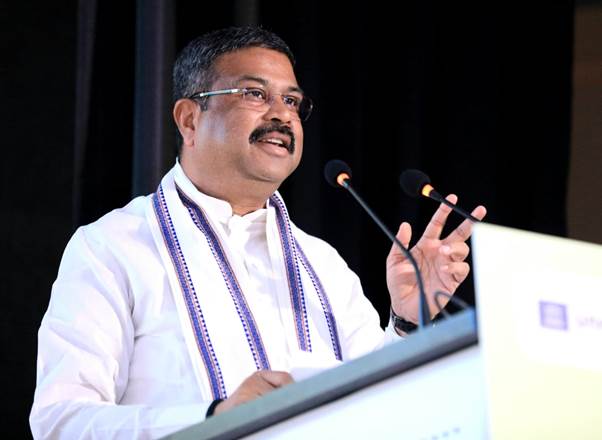
  Union Education and Skill Development & Entrepreneurship Minister Shri Dharmendra Pradhan, launched a novel comic book titled “Let’s Move Forward.” The launch event was held on August 29, 2023, at Kaushal Bhawan, New Delhi. Secretary, School Education Education and Literacy, Shri Sanjay Kumar; Secretary, Ministry of Skill Development & Entrepreneurship, Shri Atul Kumar Tiwari; Director, NCERT, Dr. Dinesh Prasad Saklani; officials of the Ministry of Education and UNESCO and students were also present at the event.

Speaking on the occasion, Shri Dharmendra Pradhan highlighted that this book will motivate students to prioritize holistic well-being while entertaining them through storytelling, with key focus on good health and wellness. He also stressed on the importance of stories in conveying important messages such as mental health and hoped that more such comic books will be developed in future. Good stories are extremely important for developing societal harmony and well-being, he stated.

He also mentioned the importance of the partnership with UNESCO at the time of India’s G20 Presidency and the subject of FLN which can be spread with the help of comic books. He urged UNESCO to spread Indian stories so that it benefits not only the youth of India but that of the entire world. ‘Explore’, ‘Experiment’ and ‘Experience’ are going to be of great significance, he mentioned. With the Amrit Kaal, a wave has to be created to spread the Indian knowledge in the entire world as a guiding light, he said.

This comic book is a collaborative effort between the National Council of Educational Research and Training (NCERT) and UNESCO New Delhi. It signifies a significant stride towards augmenting the goals of the School Health and Wellness Programme (SHWP). The SHWP, initiated under the Ayushman Bharat campaign in April ,2018 by Prime Minister Narendra Modi, is an initiative undertaken by the Ministry of Education and the Ministry of Health and Family Welfare. Its primary objective is to impart health education, prevent diseases, and enhance access to health services through wellness centres within educational institutions.

The “Let’s Move Forward” comic book is designed to cater to the diverse requirements of adolescents and encapsulates crucial information pertaining to the 11 thematic components of the School Health and Wellness Programme. These encompass a comprehensive range of subjects, including emotional well-being, interpersonal relationships, gender equality, nutrition and health, substance abuse prevention, healthy lifestyles, reproductive health, internet safety, and more.

The comic book imparts life skills essential for fostering responsible and health-conscious behaviour among adolescents. This innovative approach serves to not only disseminate health-related knowledge but also facilitate the acquisition of life skills necessary for comprehensive personal development. It is accessible in multiple languages, including Hindi, English, Assamese, Bengali, Gujarati, Kannada, Malayalam, Marathi, Odiya, Tamil, and Telugu, to ensure inclusivity across linguistic diversity.

The “Let’s Move Forward” comic book will be distributed across various educational and health institutions nationwide. Its distribution will encompass State School Education Departments, SCERTs, Colleges of Teacher Education (CTEs), Institutes of Advanced Study in Education (IASEs), District Institutes of Education and Training (DIETs), Block Institutes of Teacher Education (BITEs), and state health departments. Additionally, the comic books will be disseminated to the 29,000 schools affiliated with the CBSE, thereby expanding its outreach. An electronic version of the comic book will also be accessible on the Ministry of Education (MoE), NCERT, UNESCO, and DIKSHA websites.

***

Children receive all missed/due doses of Measles Containing Vaccine

 There have been some media reports alleging that an estimated 11 lakhs children in India missed their 1st measles vaccine dose in 2022, according to a report published by the World Health Organization and US Centres for Disease Control and Prevention (CDC). 

These reports are not based on facts and do not reflect the true picture. These reports are based on the estimated number reported under WHO UNICEF Estimates National Immunization Coverage (WUENIC) 2022 report which covers the time-period from 1st of January 2022 to 31st of December 2022. 

However, as per the HMIS of Union Ministry of Health & Family Welfare, a total of 2,63,63,270 children out of the eligible 2,63,84,580 children received their 1st dose of Measles Containing Vaccine (MCV) in the FY 2022-23 (April 2022 to March 2023) and only 21,310 children missed their 1st dose of Measles Containing Vaccine (MCV) in 2022-23. 

Besides this, several initiatives have been undertaken by the Government of India in coordination with the States to ensure that all children, either unvaccinated or partially vaccinated receive all missed/due doses of Measles Containing Vaccine (MCV):

  • The catch-up vaccination age for the administration of Measles Containing Vaccine (MCV) has been increased from 2 years to 5 years in the periodic immunization intensification activities. 
  • Intensified Mission Indradhanush, (IMI) 3.0 and 4.0 were carried out in 2021 and 2022 to vaccinate all unvaccinated/partially vaccinated children with missed/due doses of vaccines. Besides this, IMI 5.0 was carried out in 2023 with a special focus to increase the coverage of MR vaccine in children up to the age of 5 years. 
  • MR campaign was carried out in Delhi and West Bengal wherein all children in the age group of 9 months to 15 years (9months to 5 years in Delhi) were vaccinated with campaign dose of MR vaccine. The coverage of both the States reached >95%.
  • Several States have carried out Supplementary Immunization activities and outbreak response immunization wherein a total of 30 million children have been vaccinated with an additional dose of MR vaccine.
  • A Special Advisory on Outbreak Response Immunization was shared in November 2022 which clearly stated that One dose of MRCV has to be administered to all children aged 6 months to < 9 months in areas where the measles cases in < 9 months are above 10% of the total measles cases to not miss any child.
  • The Non measles Non rubella (NMNR) discard rate is >5.8%, the highest achieved so far for the country for the current financial year, indicating a robust surveillance mechanism in place. 

India’s unstinted commitment to ensure that every single child of the country is vaccinated with vaccines under Universal Immunization Programme has been recognized globally. India’s exemplary leadership and inspiration in the Regional Measles and Rubella Programme has been highly appreciated and recognized by the Measles and Rubella Partnership comprising of multiagency planning committee including the American Red Cross, BMGF, GAVI, US CDC, UNICEF and WHO. The Measles and Rubella Partnership Champion Award is scheduled to be conferred on the Ministry of Health and Family Welfare, Government of India in March 2024, at Washington DC.

****


Global Fisheries Conference India 2023

 Union Fisheries Minister Shri. ParshottamRupala will inaugurate the Global Fisheries Conference India 2023 in Ahmedabadon Tuesday. Many dignitaries including Chief Minister of Gujarat  Shri. Bhupendrabhai Patel, Ministers of State Dr L Murugan and Dr Sanjeev K Balyan, State Fisheries Ministers, Union Fisheries Secretary will also be present there.

Ahmedabad is set to host the Global Fisheries Conference India 2023, a two-day mega event bringing together a diverse array of dignitaries and stakeholders including state fisheries ministers, ambassadors of different nations, global fisheries scientists, policy makers, fisheries communities and investment bankers on November 21 and 22 on the occasion of World Fisheries Day.  The conference is organised by the Department of Fisheries, Ministry of Fisheries, Animal Husbandry and Dairying, Government of India. It will serve as a platform to forge partnerships with national and international stakeholders and chalk out a roadmap for sustainable growth of India’s fisheries sector. Under the theme ‘Celebrating Fisheries and Aquaculture Wealth’, the conference aims to bring together key stakeholders on one platform for fruitful discussions, market insights and networking.

International Collaboration

The Central Government intends to capitalise on this global event as a strategic platform to harness international collaboration aiming to boost export, enhance the socio-economic well-being of fishers and aquafarmers, and promote start-up and entrepreneurial initiatives across the value chain in the sector.  

International Round Table led by Union Minister

Major highlights of the conferenceincludeInternational Round Table Meet led by Union Fisheries Minister Shri. ParshottamRupala. This high-level dialogue, attended by ambassadors of different nations and representatives of various international agencies, will focus on international collaborative efforts to sustain the sector amid a range of critical challenges, including climate crisis. 

High-level delegations from more than10 countries have confirmed their participation and will attend the Conferencephysically. France will be represented by Ms. Monique Tran representing Counsellor for Agricultural Affairs, Cristian Rodrigo Valdes Carter and Ms. Arti Bhatia Kumar will represent Norway; Dr Richard Niall, First Secretary (Agriculture) from Australian High Commission; Muratov Sergey,  AdiatulinIlias and Shagushina Anna from Russia; Wagner Antunes, Head of the Trade Promotion Department of the Embassy of Brazil; Mr.DimitriosIoannou, Minister and Ambassador, Greece; Borja Velasco Tuduri, Counsellor, Spain; Melanie Phillips, Counsellor (Agriculture), New Zealand; and Peter Hobwani, Deputy Ambassador, Zimbabwe have already confirmed their participation. In addition, more than 50 other foreign diplomats are anticipated to join the meet virtually.

Similarly, around 10 renowned international organizations will also attend the global meet. Mr. Changnam Jung, Natural Resources and Agriculture Specialist of Asian Development Bank (ADB); Takayuki Hagiwara, India Head of Food and Agriculture Organisation of the UN (FAO); Pratap Sinha, Sandeep Nayak, Rajadyuti Mahapatra and Dharmendra Bhoi from GiZ; Dr P Krishnan, Director of the Bay of Bengal Inter-Governmental Programme (BOBP-IGO) and Ranjit Suseelan, India Consultant of the Marine Stewardship Council (MSC) will attend the conference.

The Conference will also be attended byMr. Changnam Jung, Natural Resources and Agriculture Specialist of Asian Development Bank (ADB); Takayuki Hagiwara, India Head of Food and Agriculture Organisation of the UN (FAO); Pratap Sinha, Sandeep Nayak, Rajadyuti Mahapatra and Dharmendra Bhoi from GiZ; Dr P Krishnan, Director, Bay of Bengal Inter-Governmental Programme (BOBP-IGO) and Ranjit Suseelan, India Consultant of the Marine Stewardship Council (MSC) will attend the conference.

Unique Opportunity for Stakeholders

The conference covers over 210 national and international exhibitors, including start-ups, exporters, fisheries associations, and processing industries. It will showcase their products, success stories, and innovative solutions. This will offer a unique opportunity to the enterprises, startups, associations, co-operatives, Self Help Groups (SHGs) and small-medium fisheries enterprises to come together on one platform and showcase their range of products and services in the fisheries. 

The event will encompass a range of engaging sessions, including Matsya Manthan, featuring technical discussions with national and international experts; industry connect for interactions between industry stakeholders and policy makers; Government to Government (G2G), Business to Government (B2G) and Business to Business (B2B) Bilateral meets; exhibition showcasing cutting-edge fisheries and aquaculture technologies. A special pavilion will be set up to exclusively demonstrate 10 transformative initiatives in the fisheries sector.

Industry Connect & Business pitches

During the Global Fisheries Conference India 2023, Industry connect will be organised to engage the industry stakeholders with others including policy makers for deliberations upon issues such as start-up ecosystem, co-operation & collaboration in the fisheries sector, technology and knowledge transfer, R&D, capacity building, extension, best practices, involvement of women in fisheries value chain, safety standards, market linkages, and business opportunities etc. This session will feature prominent representatives from organizations like the Confederation of Indian Industry (CII) and the Federation of Indian Chambers of Commerce and Industry (FICCI) and other prominent fisheries industry associations.

The event is anticipated to attract a total of 5,000 visitors, including fishers, fish farmers, fish vendors, representatives of fisheries cooperatives, local communities, foreign delegates and investors, and fisheries start-ups. International leaders, technology investors, research and development institutions, equipment manufacturers, export councils, fisheries’ associations, financial institutions, international fishing industry organizations, and aquaculture pharmaceuticals and nutraceuticals will also participate in the two-day mega event.


***

India’s Logistics Performance Index (LPI) Ranking

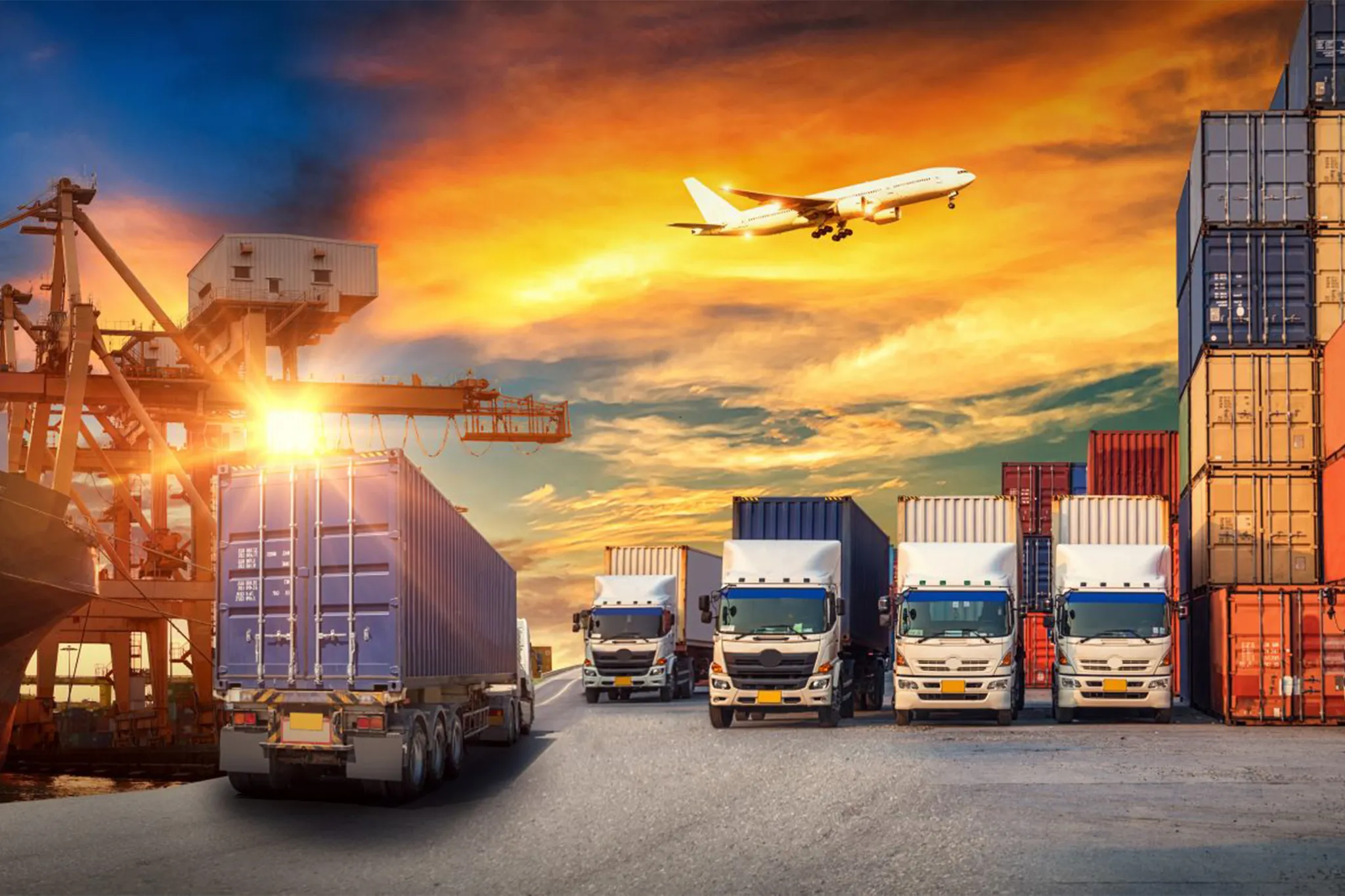
 A meeting on Measures Taken and Action Plan for improving India’s Logistics Performance Index (LPI) ranking was held under the chairpersonship of Special Secretary (Logistics), DPIIT, MoCI on Friday with the nodal officers of the LPI dedicated cell formed in eleven Stakeholder Ministries/Departments. 


The dedicated cell meets every fortnight to assess the measures taken and outcomes achieved in improving performance across six parameters of LPI including (i) Customs., (ii) Infrastructure (iii) Ease of arranging shipments (iv) Quality of logistics services (v) Tracking and Tracing and (vi) Timeliness. 

SmtSumitaDawra, Special Secretary (Logistics) DPIIT, during her opening remarks, highlighted that the targeted action plan is important to improve the logistics efficiency of the country and thereby India’s ranking in the World Bank LPI. She added that the measures taken by the stakeholder Ministries/ Departments will be showcased to the World Bank LPI team. 

During the meeting, Ministries/ Departments presented the action plan, and best practices were showcased. 

Mr. VivekVerma, Secretary, of the Land Ports Authority of India (LPAI), highlighted thatLPAI has implemented a Land Port Management System (LPMS) to digitiseoperations and facilitate a secure electronic flow of information between all stakeholders at the Integrated check posts (ICPs). The system is reducing the dwell time of cross-border movements (trade and passenger), enhancing the efficiency of customs and border management clearance, and improving the timely delivery of shipments.  He added that LPAI has been successful in reducing the dwell time from 57 days to less than 24 hours. 

Mr. Manoj Gangeya, ED (Planning), Ministry of Railways, stated about various initiatives that MoR is planning across six parameters of LPI. This includes 100% electrification of railway tracks, increasing CAPEX to INR 2.6 lakh crore in FY24 to improve the speed and volume of freight transport in the country, and the implementation of Eastern and Western dedicated freight corridors is likely to increase the average speed of freight trains, thereby by reducing transit time and inventory cost to customers. Additionally, the development of rail containerisationat ports and freight terminals is expected to increase the rail container loading from 80 million MT recorded last year to 3 times by FY31.  MoR is also checking the feasibility of railway siding at Land Ports to promote multi-modal connectivity. 

Mr. Ajay Kumar, CEO, AAICLAS highlighted the airport capacity building which is being undertaken at Kolkata with a target to construct an upgraded/new facility by December 2025. An air cargo village in an area of 37 acres approx. in Delhi (Jewar airport) is also being planned with an investment of 1200Cr which is likely to be commissioned by Dec 2024.

Mr. Rituraj Mishra, Deputy Secretary (Ports) presented the various initiatives that have been planned to improve logistics efficiency. Some of them include the automation of weighbridges, improving scanning facilities at the ports, increasing DPD/ DPE share to 80% by rail, and streamlining and simplifying processes by creating Standard Operating Procedures (SoPS) across all the ports. 

Mr. R. Ananth, Director, CBIC highlighted that a Custom Revenue Control Laboratories (CRCL) will be launched in Guwahati by December 23 which will assist in field formations in chemical analysis of samples of various trade commodities.

In her closing remarks, the Special Secretary added that these initiatives with a targeted intervention will improve logistics efficiency in the country. Further, the good practices by Ministries will help in impressing the idea of objective-based assessment in LPI calculation to the World Bank. In this regards, she suggested: 

  • Ministries/Departments including CBIC, MoCA, MoRTH, MoR, and MoPSW to share the initiatives, best practices, and interventions planned to address the gap/ issues pertaining to Ministries in the form of an action plan with a timeline in coordination with User Ministries (Coal, Steel, DGFT) and NICDC

  • A systematic approach needs to be followed to communicate the initiatives and good practices of Ministries/ Departments to the stakeholders which will improve the perception of the logistics sector in India 

The eleven Stakeholder Ministries/Departmentsincludes Land Ports Authority of India (LPAI), M/o Civil Aviation, M/o Railways, M/o Port Shipping and Waterways (MoPSW), M/o Coal, M/o Civil Aviation (MOCA), CBIC, M/o Steel, and, D/o Commerce, Directorate General of Foreign Trade (DGFT) and, National Industrial Corridor Development Corporation Limited (NICDC). 

**

WHO and the Ministry of Ayush signed the Traditional and Complementary Medicine 'Project Collaboration Agreement'

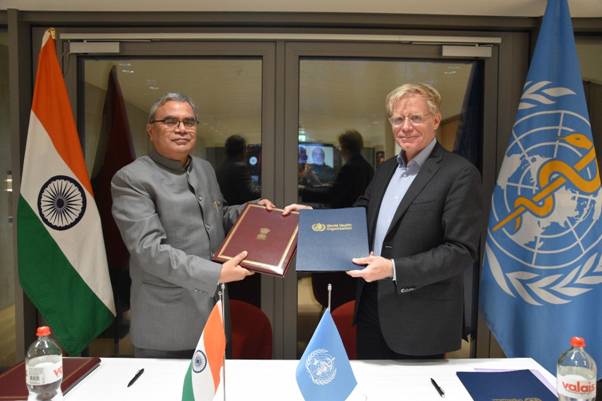
 The Ministry of Ayush and World Health Organization (WHO) have signed Traditional and Complementary Medicine ‘Project Collaboration Agreement’ late last night in Geneva. The main objective of this agreement is to standardize Traditional and Complementary Medical Systems, integrate their quality and safety aspects into the National Health System, and disseminate them at the international level. Through this cooperation agreement, efforts will be made to connect Traditional and Complementary Medical Systems with the mainstream of the National Health System. To fulfil this objective, Traditional Medicine Global Strategy 2025-34 will be prepared by WHO with the support of the Ministry of Ayush.

Other major objectives of the agreement include efforts to strengthen the system of training and practice in the field of Complementary Medicine System ‘Siddha’, formulation of guidelines for the listing of Traditional and Complementary Medicines, safety and related efforts, etc. An International Herbal Pharmacopoeia of herbs found in South-East Asia will be developed by the Ministry in collaboration with WHO. Efforts will be made under this agreement to integrate evidence-based Traditional and Complementary Medicines with the National Health System, conservation and management of biodiversity and medicinal plants, etc.

Congratulating everyone on this occasion, Union Ayush Minister Shri Sarbananda Sononwal said that India has been the center of culture of many traditional and alternative medical systems since ancient times. Such global efforts by the Ministry to strengthen the National Health System will definitely give India a global identity in the field of healthcare services and promote medical tourism in India. This effort of the Ministry is one more step taken towards the global success of India.

Ayush Secretary, Vaidya Rajesh Kotecha, said, in his virtual message during the signing in event that the first phase of this agreement, 2023-28, will prove to be a milestone in the global development of Traditional and Complementary Medical System. According to Bruce Aylward, Assistant Director General, Universal Health Coverage and Life Course Division, WHO, this collaboration agreement will bring Traditional and Complementary Medicine Systems into the mainstream of India’s National Health System and serve the objective of global healthcare and well-being. India’s Permanent Representative to the United Nations, Indra Mani Pandey, who signed the agreement on the behalf of Indian government, said, “India is committed to working with WHO to strengthen Traditional Medicine Systems globally and especially in supporting fellow developing countries in promoting their own traditional medicine systems.”

A total of two ‘Project Collaboration Agreements’ have already been signed by the Ministry of Ayush with WHO. The first contract was signed in 2016 to take Traditional Medical systems like Yoga, Ayurveda, Unani, and Panchakarma to the global level and the second contract was signed in 2017 to strengthen the system of Ayurveda, Unani and Siddha medical systems.

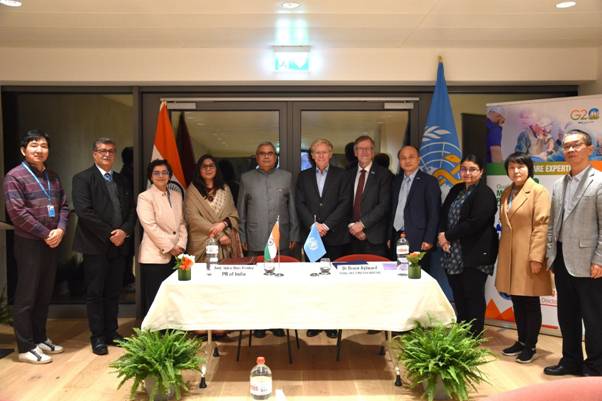
This agreement was signed at an event organized in Geneva city, Switzerland. Shri Indra Mani Pandey, Permanent Representative of India to the United Nations, on behalf of the Ministry of Ayush, and Dr. Bruce Aylward, Assistant Director General, Universal Health Coverage and Life Course Division, on behalf of WHO. 

***

Eduindex News

 Eduindex News covers diverse subjects such as:


  1. Academic Research: Updates on recent research findings, scholarly publications, and academic conferences across different disciplines.

  2. Educational Policy: Discussions and analysis of educational policies, reforms, and developments at local, national, and international levels.

  3. Higher Education: Information on universities, colleges, courses, admissions, and trends in higher education globally.

  4. Student Resources: Tips, guides, and resources for students, including study techniques, career advice, and opportunities for internships or scholarships.

  5. Teaching and Learning: Insights into innovative teaching methods, classroom strategies, and educational technologies that enhance the learning experience.

  6. Educational Events: Coverage of seminars, workshops, webinars, and educational events happening around the world.

Eduindex News aims to cater to educators, researchers, students, and anyone interested in the field of education. It serves as a platform for sharing knowledge, fostering discussions, and keeping the audience informed about the latest developments and trends in education and academia.

two-day International Conference-cum-Exhibition on ‘Aerospace & Aviation in 2047’ in New Delhi

 The Aeronautical Society of India (AeSI) is organising an International Conference-cum-Exhibition on ‘Aerospace & Aviation in 2047’ at Yashobhoomi Convention Centre in New Delhi on November 18 & 19, 2023. President Smt Droupadi Murmu, the Chief Guest of the event, will inaugurate the Conference-cum-Exhibition. The Guests of Honour will include Minister of State (Independent Charge) for Science & Technology and MoS, Prime Minister’s Office Dr Jitendra Singh; Minister of State for Civil Aviation and Road Transport & Highways General (Dr) VK Singh (Retd) and Raksha Rajya Mantri Shri Ajay Bhatt.

This conference-cum-exhibition is being organised to commemorate 75 years of excellence of the AeSI. The inaugural session of the event will include the release of Compendium on 75 years of aerospace & aviation journey in India as well as Vision Document 2047. The event will focus on India’s journey in the field over the last 75 years, showcasing the achievements, technological advancements and the role of great visionaries.

The event will be attended by 1,500 delegates including dignitaries, international experts, scientists, industrialists, academia, start-ups and students. About 200 industries and MSMEs, including more than 75 start-ups, will showcase indigenous capabilities at the exhibition. Many heads of organisations/departments will deliver visionary talks during the conference.

The conference will consist of technical sessions with speakers from Safran, Rolls Royes, Lockheed Martin, MIT USA, Cranefield UK along with prominent Scientist/Technologist/Service officers from the Indian side. The event will also feature a start-up challenge that spans the length and breadth of the country. The finalists will present their innovative ideas and products, along with their vision for India’s aerospace growth by 2047. Many other events are also planned to engage with the youth.

The AeSI was established in 1948 with the Prime Minister as Patron-in-chief to promote aerospace and aviation in the country. The objective of the society is to promote the advancement and nationwide diffusion of the knowledge of aeronautical sciences and aircraft engineering among various streams including industry, academia and research laboratories.

The AeSI has provided significant leadership in the domain of aerospace and aviation with outstanding luminaries as its members and Presidents that include Dr APJ Abdul Kalam, Dr Satish Dhawan, Dr VS Arunachalam, Dr VK Saraswat etc. It has been a catalyst for the growth of India’s aerospace industry and fostered collaborations between the government, private sector and academia to nurture a robust aerospace ecosystem.

The society is represented by distinguished aerospace professionals from research organisations, aerospace industries and academia. Former Secretary, Department of Defence R&D & Chairman DRDO Dr G Satheesh Reddy is its present President and Chairman, ISRO Shri S Somanath is the President-Elect.

****

Making Human Resources Future Ready

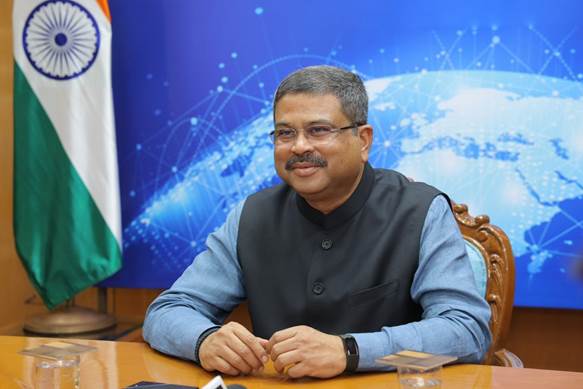
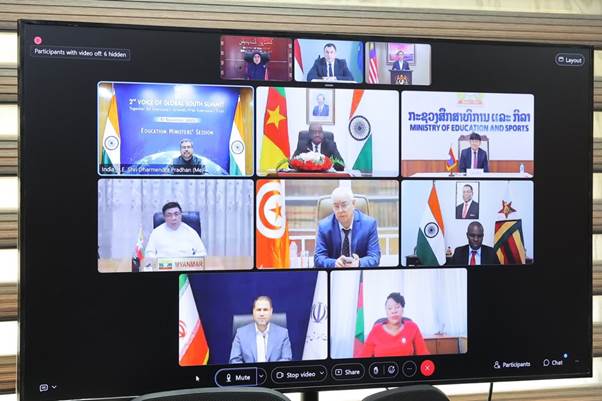
 Union Minister for Education and Skill Development & Entrepreneurship, Shri Dharmendra Pradhan, chaired the Education Ministers’ Session at 2nd Voice of Global South Summit held today in New Delhi. The summit, operating under the theme ‘Together for everyone’s growth, with everyone’s trust,’ addressed critical issues, particularly in the field of education. The Education Ministers deliberated on the theme of ‘Making human resources future-ready’.

Ministers/ Dignitaries of 14 countries from the Global South – Botswana, Brunei Darussalam, Georgia, Tunisia, Iran, Lao PDR, Malawi, Myanmar, Republic of Palau, Democratic Republic of São Tomé and Príncipe, Albania, Malaysia, Zimbabwe, Cameroon – participated virtually in the session and shared their insights.

 Shri Dharmendra Pradhan, in his opening remarks, welcomed the participating Ministers and reaffirmed India’s commitment to champion the voice of the Global South under leadership of Prime Minister Shri Narendra Modi.

Highlighted India’s pivotal role in leading discussions on these issues at the G20 Education Minister’s Meeting, Shri Pradhan emphasised on the significance of collaborative efforts in developing a resilient, equitable, inclusive, and sustainable education and skilling ecosystem. The G20 New Delhi Leaders’ Declaration acknowledged the importance of investing in human capital development.

Shri Pradhan informed the participating Ministers on how India’s National Education Policy (NEP) 2020, being implemented under the leadership of the PM Shri Narendra Modi, is bringing holistic transformation to India’s learning and skilling landscape. He also remarked that NEP as a philosophical document can act as a template for emerging economies towards developing comprehensive strategies and agile policies. Stressing on the importance of shared aspirations, Shri Pradhan, called for common strategies, leveraging the twin pillars of education and skill development.

Other Ministers in their address, shared success stories, challenges faced and strategies to address them. They unequivocally commended India’s effort to strengthen cooperation in the fields of education and skilling among the countries of the Global South.

The Education Ministers from the participating countries agreed on the need to work together for an accessible, equitable, inclusive, and sustainable future through quality education. Underlining the importance of investing in human capital development and to address the global skill divide, the Ministers agreed on the need to provide skilling, reskilling and upskilling opportunities to create a future-ready workforce aligned to the demands of the industry.

The Education Ministers also reiterated shared commitment to overcome the digital divide for all learners by addressing the barriers to technological infrastructure and work collectively to develop technology ecosystems and learning resources, including in local languages that are affordable and easily accessible. They underlined the central role of all teachers and education staff all over the world in promoting education and the need to foster an environment including through capacity building and exchange programmes that will enable teachers and staff to thrive in their profession.

The Ministers agreed to encourage collaborative solutions, innovations, sharing of best practices to promote quality teaching, learning and skilling as well as foster academic collaborations among educational institutions as well as encouraging student and faculty exchange programs.

Appreciating the fellow Ministers for their valuable ideas, Shri Pradhan expressed his confidence that with collective efforts, the South-South cooperation will grow from strength to strength. India will work ‘Together for Everyone’s Growth, With Everyone’s Trust’ for global well-being, an equitable world order and for a brighter global future, he added.

The summit builds upon the foundation laid during the Inaugural Voice of Global South Summit in January 2023, which focused on uniting voices and purposes from 125 countries of the Global South, reflecting India’s commitment to addressing key priorities of the developing world, particularly in education and skill development.

The 2nd Voice of Global South Summit aims to serve as a platform to share the outcomes of various G20 meetings, sustain momentum generated from the previous summit, and discuss ways to achieve shared aspirations for inclusive and equitable international development. Deliberations will also focus on harnessing digital technologies to bridge the digital divide and strengthening cooperation in developing life, technical, and vocational skills. The outcomes of the summit are expected to inform the deliberations at the upcoming G20 Virtual Summit hosted by India on 22nd November 2023.

There are 8 Ministerial sessions during the Summit. The Summit, with the theme ‘Together, for Everyone’s Growth, with Everyone’s Trust’ would focus on sharing with countries of the Global South the key outcomes achieved in various G20 meetings over the course of India’s Presidency. Key ideas and suggestions emerging from the members of the Global South at the 2nd VOGSS will also be informed during the next G-20 Virtual Summit, to be hosted by India on 22 November 2023.

*****

India Art, Architecture & Design Biennale” at Red Fort

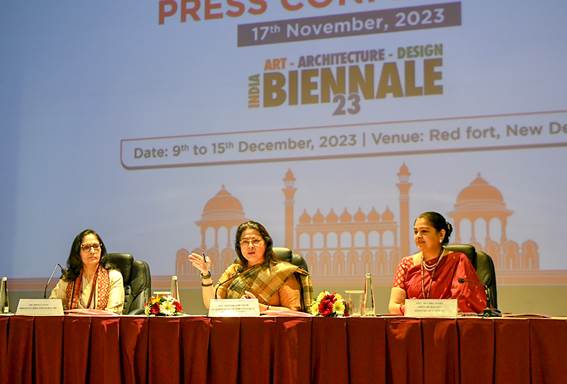
 The Ministry of Culture is organizing India Art, Architecture and Design Biennale 2023 at Red Fort, to be inaugurated on 8th December 2023. Following the Inaugural & VIP preview, the exhibitions along with panel discussions, workshops and the art bazaar will be held from 9th to 15th December and will be open to public. The keynote addresses by international artists, architects, and designers, public art installations, art bazaar and cultural programs are the major attractions of the Biennale. The pavilions set up as part of the Biennale will be on display till the 31st of March 2024.

Building on the success of past events like the International Museum Expo & Festival of Libraries, the Biennale seeks to create a prominent global cultural event, comparable to those in Venice, Sao Paulo, and Dubai. Inspired by the Prime Minister’s directive to establish five cultural spaces in India, including one at the Red Fort, IAADB’23 is an innovative initiative to highlights India’s diverse art, architecture and design.

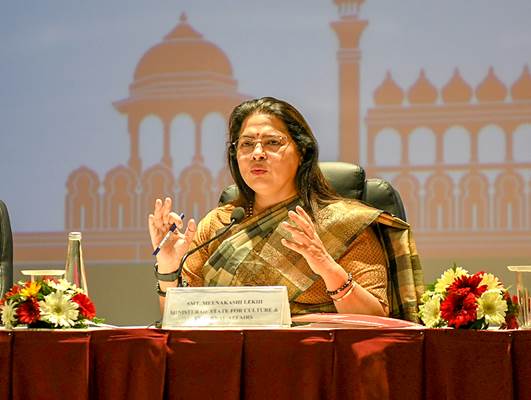
Addressing a curtain raiser press conference at National Museum, here today, Minister of State for Culture and External Affairs Smt. Meenakashi Lekhi said that the biennale showcases a diverse range, including traditional artisans, contemporary designers, curators, and thought leaders. The Biennale is an innovative initiative to celebrate the rich tapestry of our country’s artistic heritage, spanning ancient, modern, contemporary and tech-driven art, architecture and design, said the Minister.

The week-long event is organised around daily themes, each aimed at showcasing different aspects of India’s rich cultural heritage. Seven esteemed curators are involved in IAADB’23, ensuring a captivating experience that combines physical and digital exhibitions, interactive installations, sessions and panel discussions. Expertly curated catalogues will accompany each exhibition along with a comprehensive coffee table book for the entire event.

The curated pavilions at the event offer a fascinating journey through diverse aspects of India’s cultural heritage. Mr. Aditya Arya guides visitors through Pravesh exploring the symbolism of doors and gateways. Ms. Anjchita B Nair curates “Bagh-e-Bahar,” a pavilion delving into the concept of gardens as universes. Mr. Amit Pasricha takes on “Sthaypatya” exploring the timeless design and architectural resilience of temples. “Sampravah” is curated by Mr. Ratish Nanda and Mr. Vikramjit Rooprai, focusing on Baolis in India. Ms. Shikha Jain and Ms. Adriana A. Garreta present “Vismaya” a pavilion celebrating India’s post-independence architectural splendour. Mr. Anubhav Nath brings forth “Deshaj”: exploring folk art and design traditions. Finally, Ms. Swati Janu curates “Samatva” an exploration of women’s contribution to architecture.

In addition to the above, the Ministry also invited artists and curators to submit their work for IAADB’23 through an open call on social media. The Ministry received 560 queries and 260 submissions of which 150 entries were selected and will be on display at the venue. In conjunction with the IAADB’s mandate for inclusivity, a Student Biennale is also being organised from the 9th of December at the Lalit Kala Akademi and will serve as a platform for emerging talent to showcase creativity and imagination.

The India Art, Architecture & Design Biennale is set to be a unique event that aims to mobilise the community of artists and designers by providing a platform for both established and emerging artists. Its goal is to energize cultural and creative industries by fostering dialogue among practitioners in art, architecture, and design.

****

Indo-Pacific Economic Framework for Prosperity (IPEF)

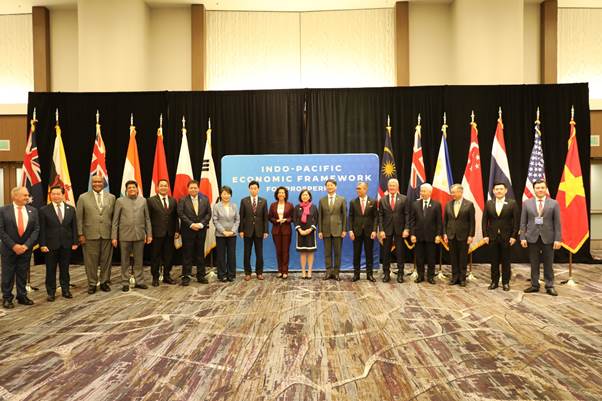
 The third Indo-Pacific Economic Framework for Prosperity (IPEF) Ministerial Meeting was held in San Francisco, California on 14 November 2023 hosted by the US. Union Minister for Commerce and Industry, Consumer Affairs, Food and Public Distribution, and Textiles, Shri Piyush Goyal participated in the Ministerial meeting.

IPEF was launched jointly by the USA and other partner countries of the Indo-Pacific region on May 23, 2022 at Tokyo. IPEF has 14 partner countries including Australia, Brunei, Fiji, India, Indonesia, Japan, Republic of Korea, Malaysia, New Zealand, Philippines, Singapore, Thailand, Vietnam & USA. It seeks to strengthen economic engagement among partner countries with the goal of advancing growth, peace and prosperity in the region.

The framework is structured around four pillars relating to Trade (Pillar I); Supply Chains (Pillar II); Clean Economy (Pillar III); and Fair Economy (Pillar IV). India had joined Pillars II to IV of IPEF while it has an observer status in Pillar-I.

At this Ministerial Meeting, negotiations under the IPEF Pillar-III (Clean Economy), Pillar IV (Fair Economy) and the Agreement on the Indo-Pacific Economic Framework for Prosperity (which seeks to establish a ministerial-level council and a commission) were substantially concluded. Moreover, following the substantial conclusion of the negotiations on the IPEF Supply Chain Agreement in May 2023, the IPEF Ministers signed the IPEF Supply Chain Agreement during the Ministerial Meeting. Pillar-wise Press Statement was issued at the end of the San Francisco Ministerial meeting highlighting the contours and the efforts planned under each of the substantially concluded Pillars (link below).

Under the Clean Economy (Pillar-III), IPEF partners are aiming to advance cooperation on research, development, commercialization, availability, accessibility, and deployment of clean energy and climate friendly technologies, and facilitate investment towards climate-related projects in the region. During his intervention under this Pillar, Shri Goyal emphasized the need for increased collaboration among partners on research and development of innovative and affordable climate friendly technologies. Further, Shri Goyal stressed the need to prioritize implementation of Cooperative work programmes envisaged under this pillar, including hydrogen supply chain initiative and other proposals in the pipeline such as India’s proposal for biofuels and e-waste recycling.

Under the Fair Economy (Pillar-IV), IPEF partners aim to strengthen implementation of effective anti-corruption and tax measures to boost commerce, trade, and investment among IPEF economies. During his intervention under this Pillar, Shri Goyal highlighted enhancing information sharing among partners, facilitating asset recovery and strengthening cross-border investigations and prosecutions as the key benefits to emerge from the Agreement. Further, he highlighted that this will strengthen the joint resolve to fight against corruption, money laundering and terror financing.

* Link to Pillar II-IV San Francisco IPEF Statement

***

Global Infrastructure and Investment (PGII) &amp; Indo-Pacific Economic Framework for Prosperity (IPEF) Investors Forum

 Union Minister for Commerce and Industry, Consumer Affairs, Food and Public Distribution and Textiles, Shri Piyush Goyal, participated in the Investor Forum of the Partnership for Global Infrastructure and Investment (PGII) & Indo-Pacific Economic Framework for Prosperity (IPEF). The Forum, a moderated discussion, was co-hosted by U.S. Secretary of Commerce Ms. Gina Raimondo and Senior Advisor to the President Mr. Amos Hochstein with the discussion centred on collaborative actions and shared priorities to increase private investment in the Indo-Pacific.

The Forum was also attended by Ministers and senior officials from IPEF partner countries including the Prime Minister of Fiji, His Excellency Mr. Sitiveni Rabuka, and Minister of Trade of Korea His Excellency Mr. Dukgeun Ahn; and corporate leaders including Co-CEO of KKR Joseph Bae; Chairman and CEO of BlackRock Larry Fink; CEO of Citi Jane Fraser; Founder and Chairman of Fortescue Andrew Forrest; Founding Partner of Global Infrastructure Partners Matthew Harris; Founding Partner, Chairman and CEO of Global Infrastructure Partners Adebayo Ogunlesi; President, CIO and CFO of Alphabet and Google Ruth Porat; Founder and CEO of RockCreek Afsaneh Beschloss; and Founding Partner and Executive Chair of TPG Jim Coulter.

U.S. Secretary of Commerce Gina Raimondo in her address to the forum highlighted the continuing partnership between India and USA through the Green Transition Fund co-created by U.S. International Development Finance Corporation (DFC) and National Investment and Infrastructure Fund (NIIF) aimed at providing climate impact benefits and accelerating the development of clean-energy transition projects in India through investments in solar, energy storage, and e-mobility.

The Minister in his address extended his appreciation to IPEF partners on the conclusion of negotiations on Pillar-III (Clean Economy) and Pillar-IV (Fair Economy) and emphasised on India’s commitment to enhancing ease of doing business, ushering in transparency in business regulatory ecosystem, delivering sustainable growth and development.

Thereafter, the Minister participated at the APEC Informal Leader’s Dialogue where he highlighted India’s environmental leadership in successfully meeting the renewable energy target of 175 gigawatt nine years ahead of its target. Additionally, he also called upon the world leaders to join hands as a global community to construct a future where sustainability is not a distant aspiration but a way of life and where climate action is not a burden but an opportunity for innovation and growth.

As part of day’s engagements, the Minister joined the world leaders at IPEF Leader’s Meeting. The engagement was attended by several world leaders including His Excellency Mr. Joe Biden, President of the United States of America. Several IPEF initiatives such as Critical Minerals dialogue, Investment Accelerator, Catalytic Fund, Investor Forum, IPEF Networks etc were announced during the meeting.

Besides participating at the PGII Investor Forum, APEC engagements, including the dinner reception for APEC Leaders, and IPEF Leaders’ meetings, the Minister during the day held several bilateral and one-to-one meetings with world leaders and corporate giants. He met H.E. Mr. Juan Carlos Mathews, Minister of Foreign Trade and Tourism of Peru, and discussed ways to enhance bilateral trade and investment linkages, reviewed progress of bilateral FTA negotiations and suggested expedited conclusion. The Minister also met Mr. Alex Rogers, President, Qualcomm Technology Licensing & Global Affairs and discussed the vast opportunities for collaboration that India’s rapidly evolving semiconductor ecosystem & robust innovation landscape offers to companies like Qualcomm.

****